

Look Twice: How to Tell Juvenile Bald and Golden Eagles Apart
5 minute read –
These young raptors may look alike at first glance, but their feathers, legs, and eyes tell a story.
At First Glance, They Can Totally Trick You
If you’ve ever looked up and spotted a massive dark eagle soaring overhead and thought, “Is that a Golden? No, wait. Juvenile Baldie?” you are absolutely not alone.
These birds can look incredibly similar when you’re only seeing silhouettes or quick flyovers. Even at the Yukon Wildlife Preserve, where we see eagles regularly, we still have moments where a distant speck in the sky sparks that tiny flicker of curiosity.
If you slow down and look closely, the differences are actually quite striking.
Left: A juvenile Bald Eagle with its yellow feet and part of its legs exposed. Right: A Juvenile Golden Eagle with fully feathered legs, all the way to it’s feet.
Right now, our Animal Care Team is caring for a juvenile golden eagle, but in the past, we’ve admitted several juvenile bald eagles for care. Seeing these two species up close, sometimes side by side, makes it incredibly fun to compare them. You start noticing details you might not notice from a quick glance.
If you are able to clearly see their legs you’ll note that Juvenile Bald Eagles have more of their yellow feet and legs exposed – compared to the Golden Eagle that appears to be wearing some fancy feathered pants.


In the slides above, you can clearly see Bald eagles have a chunkier head and heavy, hooked bill even as juveniles.
The Golden eagles have a slimmer, more streamlined head. They also rock the tell tale golden tips on their head feathers.
While both young Bald and Golden eagles have dark brown eyes, as they age they do change. Bald eagle eyes, lighten to a yellow whereas the Golden eagles eyes turn a more amber hue.


Now here’s where people most often get tripped up – plumage patterns!
Juvenile Golden eagles:
Juvenile golden eagles are mostly a rich, dark brown overall, giving them a uniform appearance compared to young bald eagles. They also have warm golden feathers on the back of the head and neck, which is where their name comes from, even in youth. One of the most reliable features of a juvenile golden eagle is the bold white band across the tail feathers and the clean white patches at the base of the wings. These white areas are crisp and well-defined, and they gradually disappear as the bird matures, fading into the darker brown of adulthood.
Juvenile Bald eagles:
Juvenile bald eagles look much more irregular. Instead of clean patterns, they show patchy white and brown mottling across the body, wings and tail. No two young bald eagles look exactly alike, and they won’t develop the iconic white head and tail until they are four or five years old. As they age, the white feathers on the head and tail slowly increase, becoming more noticeable each year. This gradual shift in plumage is one of the major differences between the two species when they’re young, helping distinguish juvenile bald eagles from juvenile golden eagles.
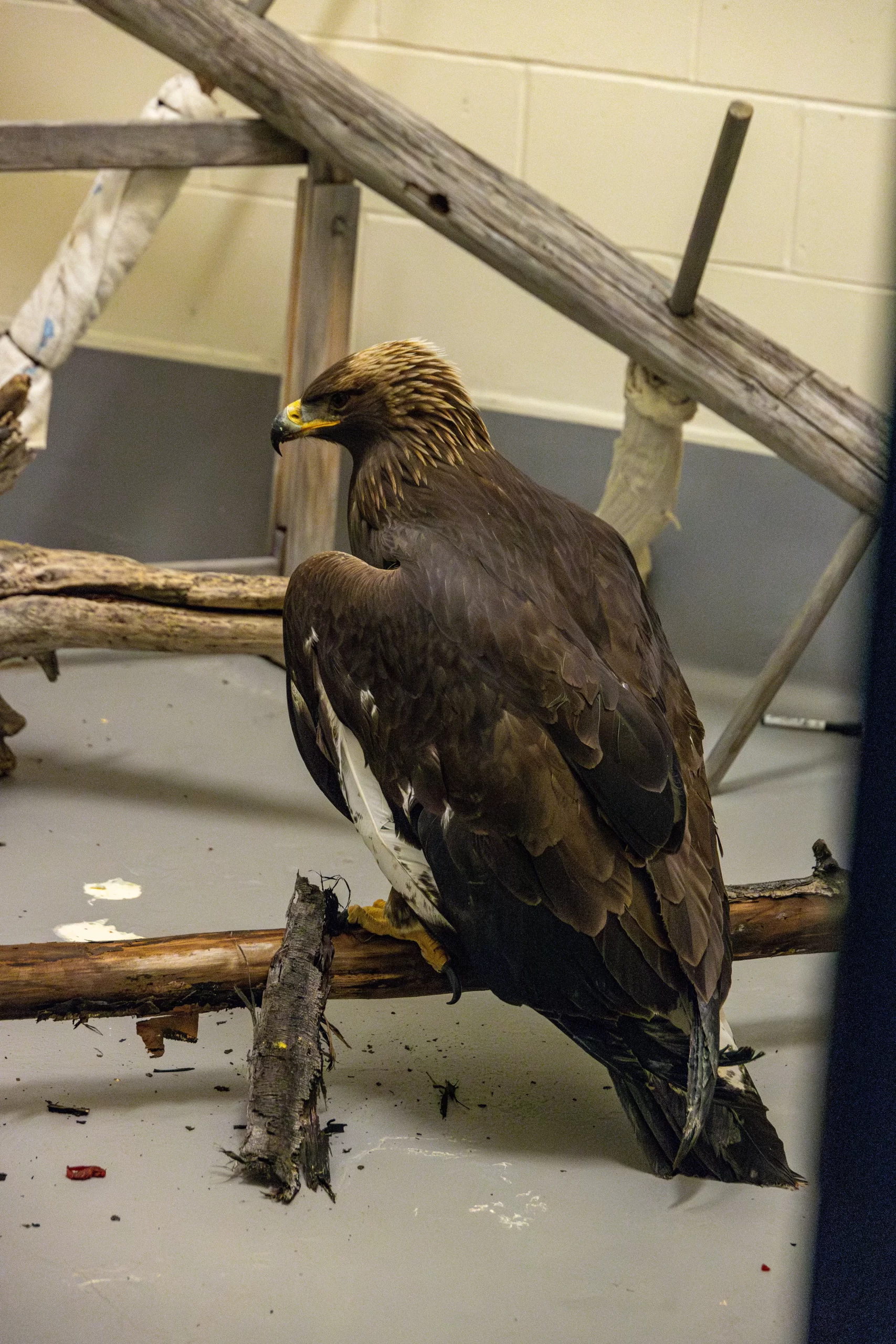


Up close its both easy to see how you could get them mixed up and easy to see their differences. This sequence of photos offers side by side comparisons. Can you tell which is which?
Juvenile eagles can look deceptively similar at first glance, but a closer look at legs, wing and tail pattern and head shape — plus tracking how their eyes and plumage change over time — reveals the differences. These traits make each species unique and fascinating to observe.
Every eagle that comes through our rehab program relies on specialized care, safe housing and dedicated staff — all powered by the generosity of people who care about Yukon wildlife.
If you enjoyed learning about these incredible birds and want to help us continue rescuing, rehabilitating and releasing wildlife, please consider making a donation today.
Your gift directly supports animals in our care — including the eagles featured in this story.
❤️ Thank you for helping Yukon’s wild lives take flight again.

Brittney Forsythe
She/Her - Visitor Services Coordinator
Brittney joined the Wildlife preserve in the summer of 2023. Growing up on Northern Vancouver Island, surrounded by the temperate rainforest, nature and animals have always been a part of her life. It exploded into a passion, when she started her dog walking business in 2017 and she began spending 6-7 days a week in the forest, rain or shine! This sparked an even deeper appreciation for the cyclical nature of the land and how all of the plants & animals work together symbiotically. She is forever ‘that girl’ on the hike, pointing out different rocks and plants, explaining their origin or what they could be used for medicinally. Brittney and her dog Cedar relocated to the Yukon to help care for 31 sled dogs. She is so excited to expand her local knowledge as a part of the Preserve team.
0 Comments