The Curious Case of Dewlaps: Moose and Their Underappreciated and Mysterious Neck Accessories

The Curious Case of Dewlaps: Moose and Their Underappreciated and Mysterious Neck Accessories

The Curious Case of Dewlaps: Moose and Their Underappreciated and Mysterious Neck Accessories

10 minute read

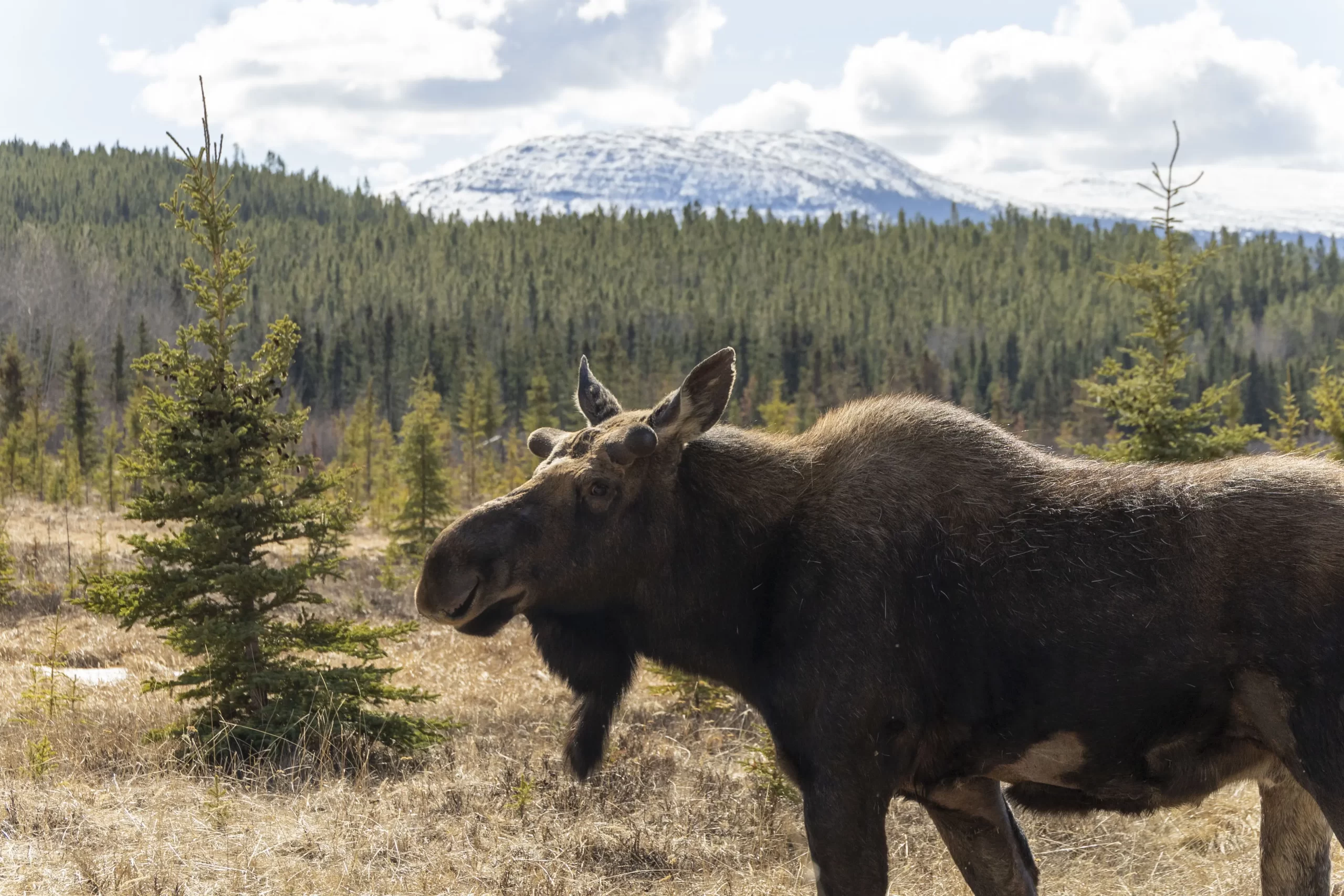
When you think of a moose, you might picture an iconic Canadian creature with long legs, a majestic set of antlers, and the undeniable air of someone who really doesn’t care about traffic. What might not come immediately to mind is the subtle yet striking neck accessory that moose wear with… well, little to no fanfare: the dewlap. Yes, that’s right—moose, with their immense size and serene grace, sport a fleshy flap of skin dangling beneath their throat.
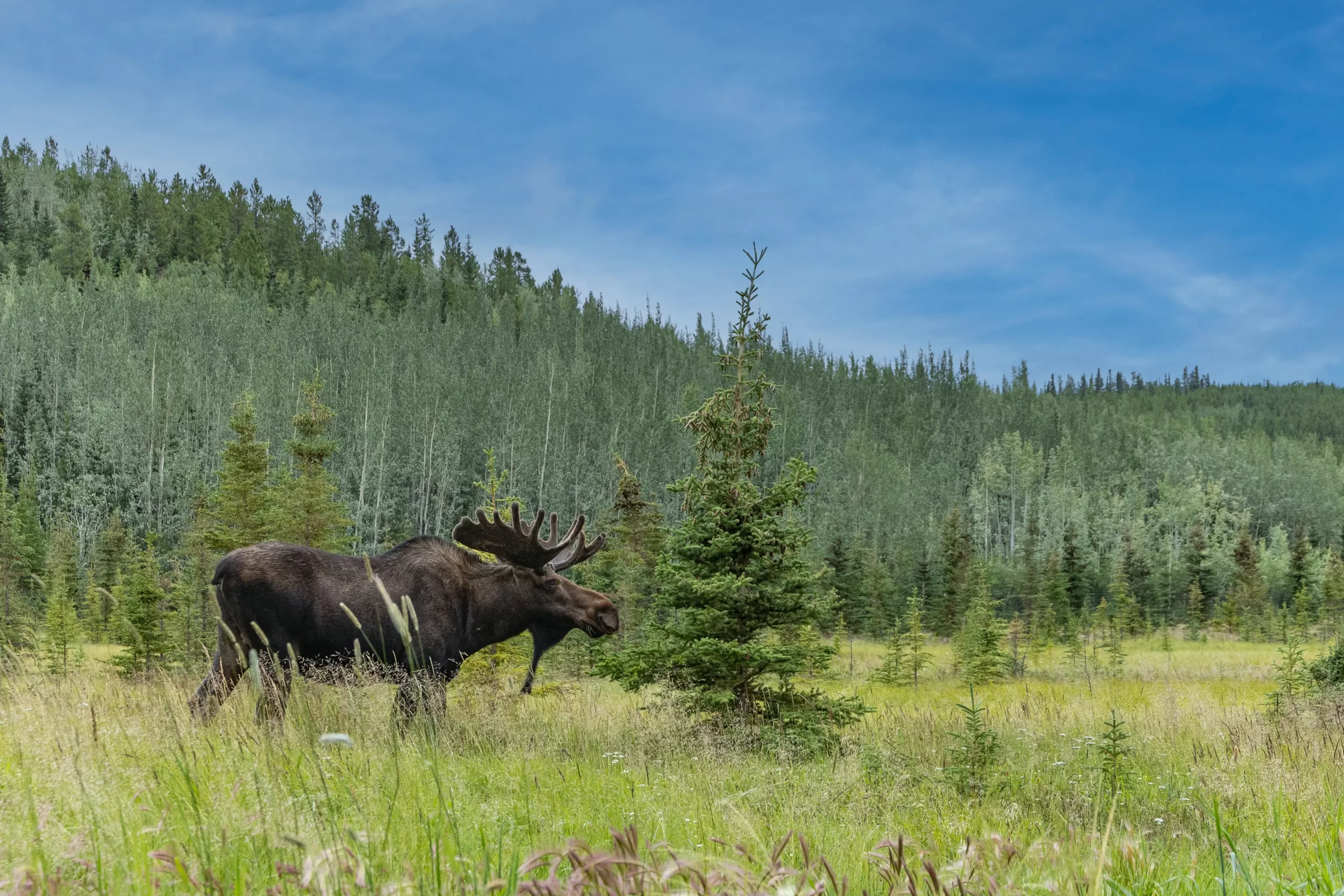
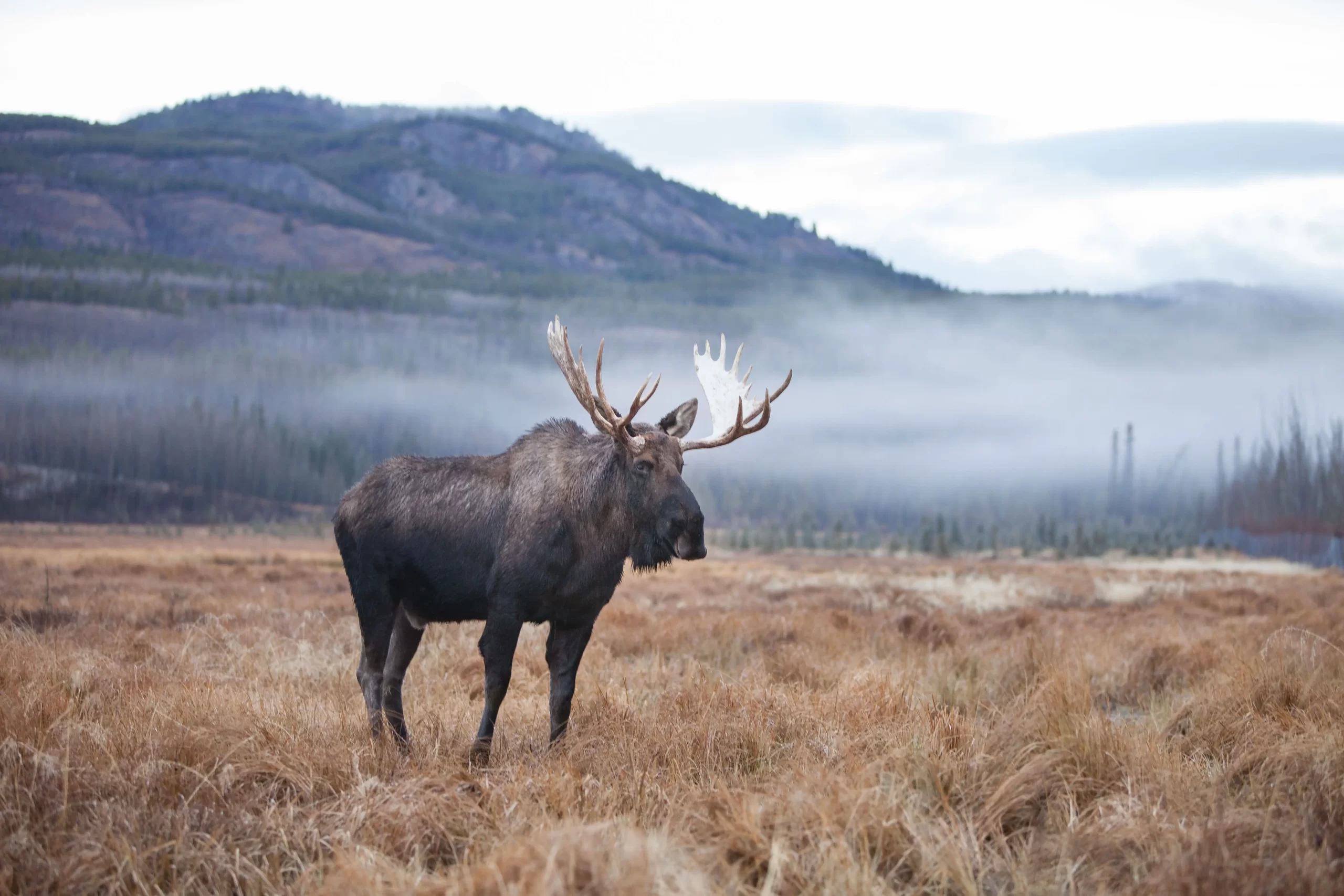
If you’ve ever had the privilege (or slight anxiety) of encountering a moose here at the Yukon Wildlife Preserve, or on a cross-country road trip, you’ve maybe noticed this particular feature. But what is it, and why does it exist? Let’s explore this underappreciated anatomical feature with a mix of scientific curiosity and the lighthearted humor it deserves.

What is a Dewlap, Anyway?

A dewlap is essentially a flap of skin that hangs from the neck, or throat of an animal and while it may seem like just an odd fashion statement, it often serves practical purposes. Dewlaps appear in all kinds of animals—like lizards, cows, chickens, rabbits, and yes, moose. Depending on the species, dewlaps help with everything from sexual selection, to staying cool to general communication. In moose, the dewlap isn’t just a bizarre fashion accessory, it’s also a multi-purpose tool in their biological toolkit – we think!

Watson on the left, Marsh on the right. 2023-making Watson 4 years old and Marsh 2 years old in this photo. Notice the dewlap difference?

Fun Fact: a dewlap on a moose is also called a bell. If you’re a bird, that fold of skin is called a wattle. For rabbits, dewlaps are basically nature’s way of saying, “Congrats, you’re all grown up now!” Female rabbits flaunt these fluffy neck pillows as a sign of sexual maturity. Later, when they have babies, they even pluck the thicker fur grown here to line the nest. Birds and reptiles, on the other hand, can take it up a notch with their flashy neck frills—bright, colorful, and often retractable like the world’s fanciest pop-up tent, perfect for showing off in romantic or territorial drama. 


Sitana ponticeriana. Photo by Niranjan Sant from Lizards in an Evolutionary Tree. 

But when it comes to ungulates, like moose, their dewlaps remain a mystery. It’s the unsolved cold case of the animal kingdom, stubbornly dodging scientific scrutiny. Nature can be funny like that sometimes.

Moose Practical Fashion: Is It About to Take Off?

Let’s address the most important question right off the bat: Do moose know they’re rocking a dewlap? Probably not. But if they did, we imagine it would make them feel pretty cool—like the one guest at a party with a trendy outfit no one else can pull off.  In the moose world, the dewlap is one of those things you don’t really see in everyday fashion. While antlers get all the glory in the animal kingdom, these enigmatic ornaments quietly steal the show in these hoofed animals. 

Moose, who roam the colder reaches of North America, use their dewlaps to help cool off in warmer weather. Male and female moose have dewlaps though their sizes differ considerably with, naturally, the male dewlap being larger than the females. The loose skin beneath their throat appears to expand and contract, and become more or less furry based on seasons which would help release heat from their bodies. This means that on a hot Yukon day (don’t worry, we don’t have too many of those), the dewlap might help prevent a moose from overheating as they browse lazily in the wild.

Moose September 2013 - Justine Benjamin. Cow and bull moose in rut season.

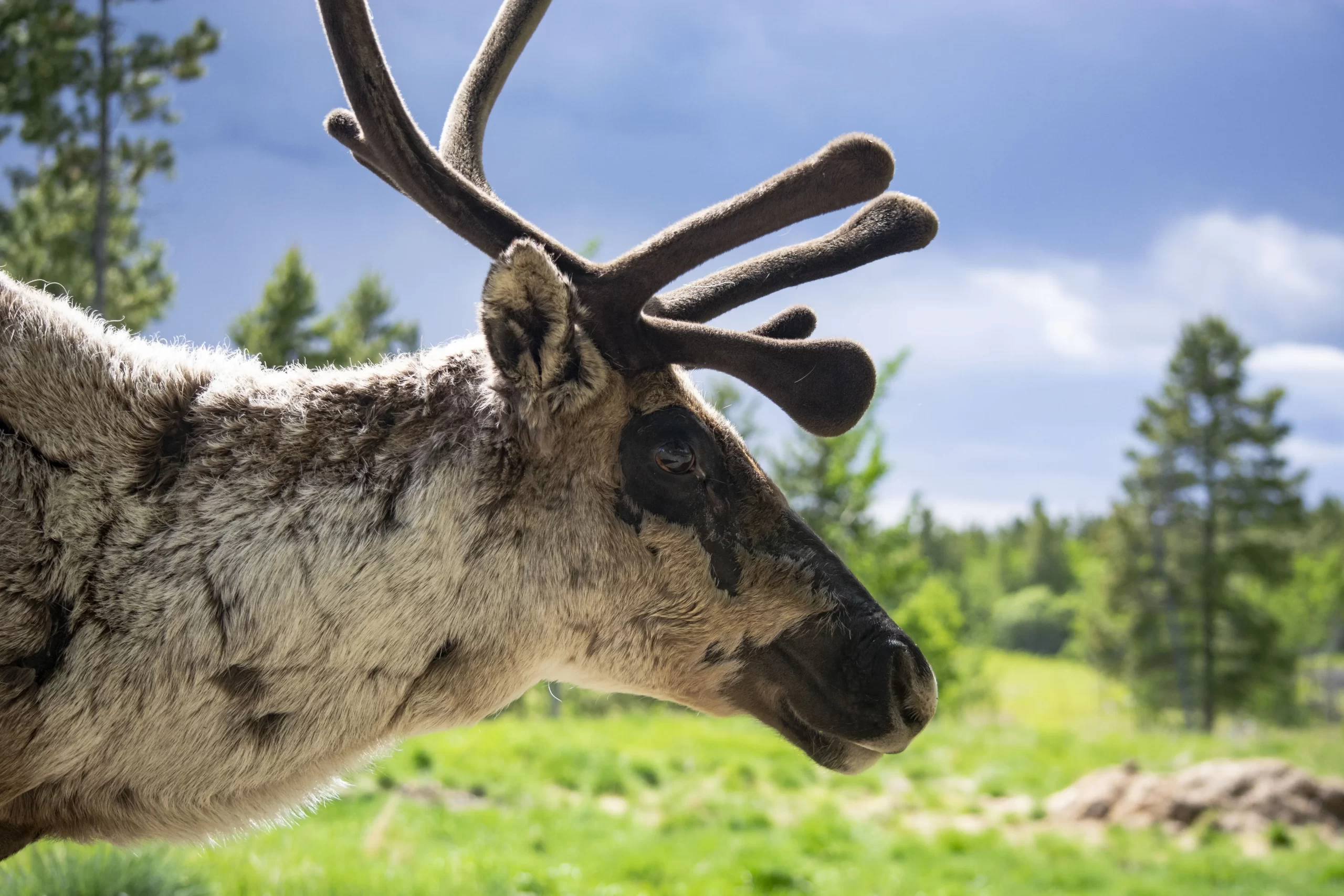
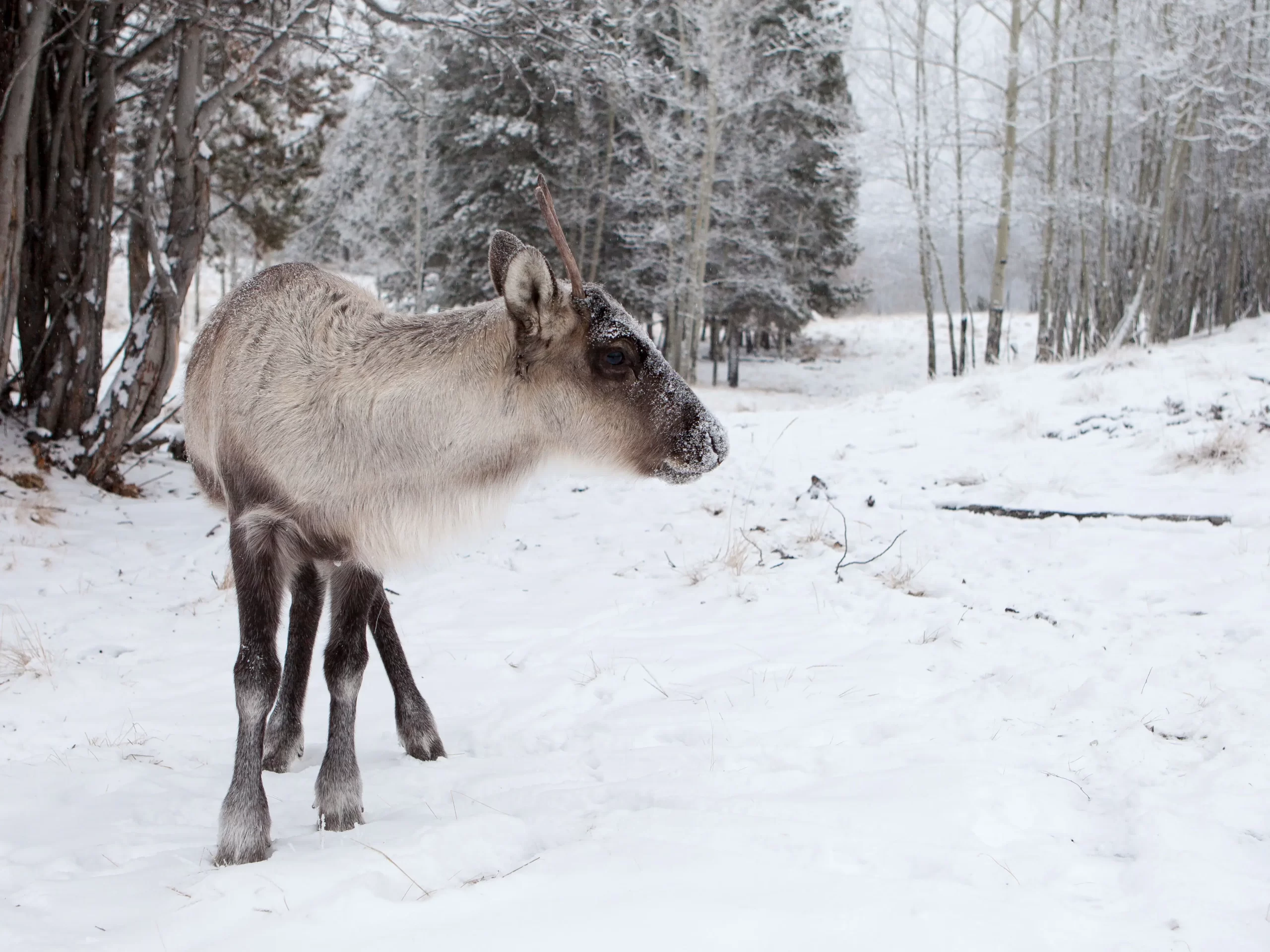
This statement might be contested by research from ungulates evaluated from Bro-Jørgensen given the need to thermoregulate (dissipate heat) is rather limited when you live in a more predominantly cold-climate than comparatively the eland antelopes of South Africa. Large ungulates like bison, elk, and yak do not present this caruncle; they may have evolved alternative, behavioural, cooling mechanisms that are less ‘cool looking’! But, wait, what about caribou? Technically, they fall under the 400kg threshold of the study and live in a cold climate and though they (males particularly) seem to rock the dewlap… sort of, theirs is more of a budget-friendly version compared to the moose’s deluxe mode.
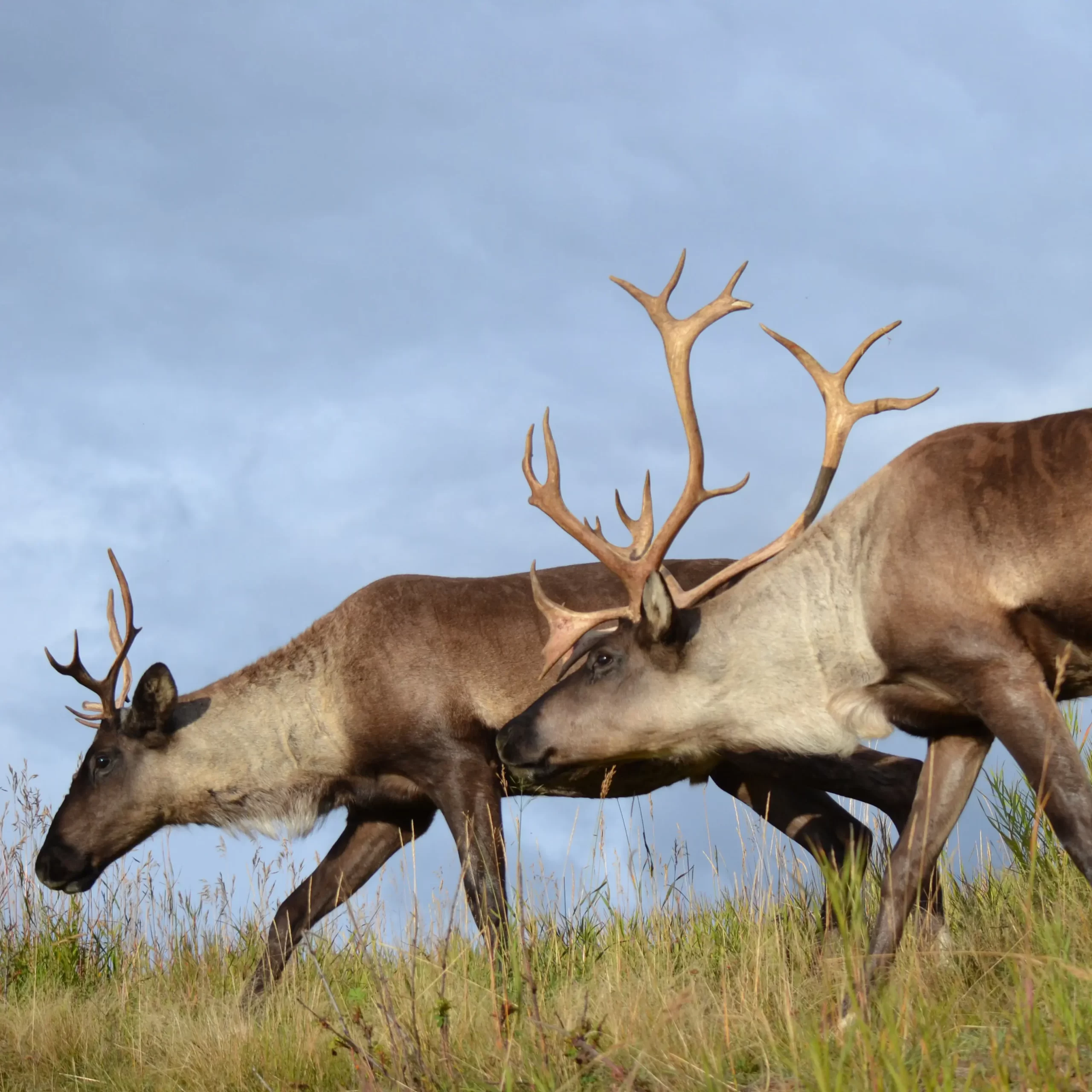
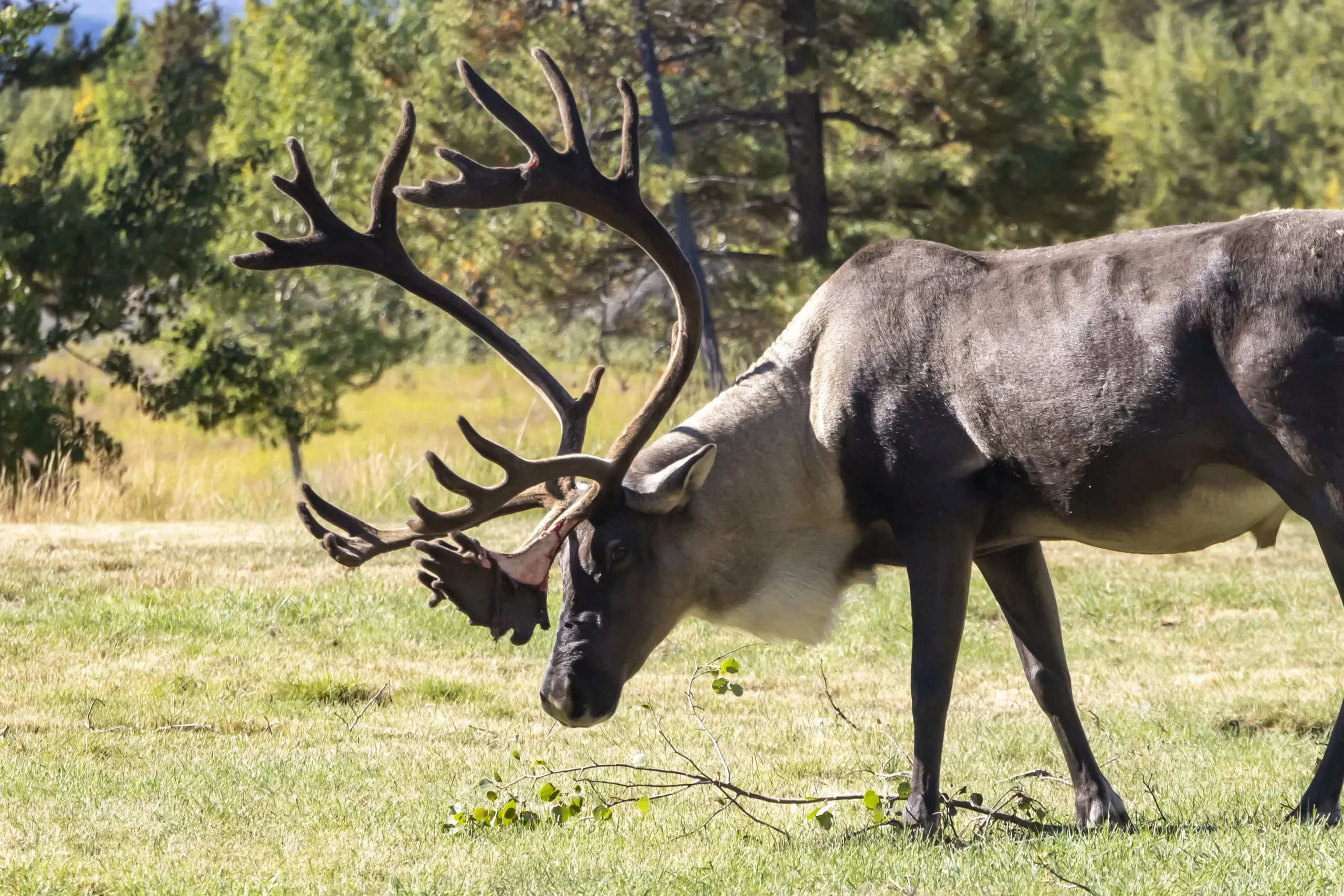
(We’ll admit we’re pretty perplexed that both moose and caribou have flappy neck skin but wouldn’t be considered in the list of animals with evolutionary cooling mechanisms as they both are amazing swimmers, spending a lot of time in water and thus being able to cool themselves via this method—alas we will stick to moose necks!)  We appreciate that Bro-Jørgensen recognizes investigations into ungulate dewlap purposes has been left largely unexplored and for some reason, lizards have stolen all the scientists’ attention. 

Dewlaps and Courtship: The Moose Dating Scene

If you thought moose were all about antlers for impressing mates, think again. Dewlaps are also, or alternatively to thermoregulation, thought to be involved in courtship. During mating season, male moose seem to have enlarged dewlaps to make themselves appear more impressive. After all, what’s a little extra neck real estate if it helps you woo the ladies? This trait can also be found in male leopards—alongside aging the dewlap grows, similar to a lion’s mane thickening, scientists believe this growth helps in intra and inter-specific interactions—the important sexual selection kinds of interactions for attracting mates and staving off competitors.
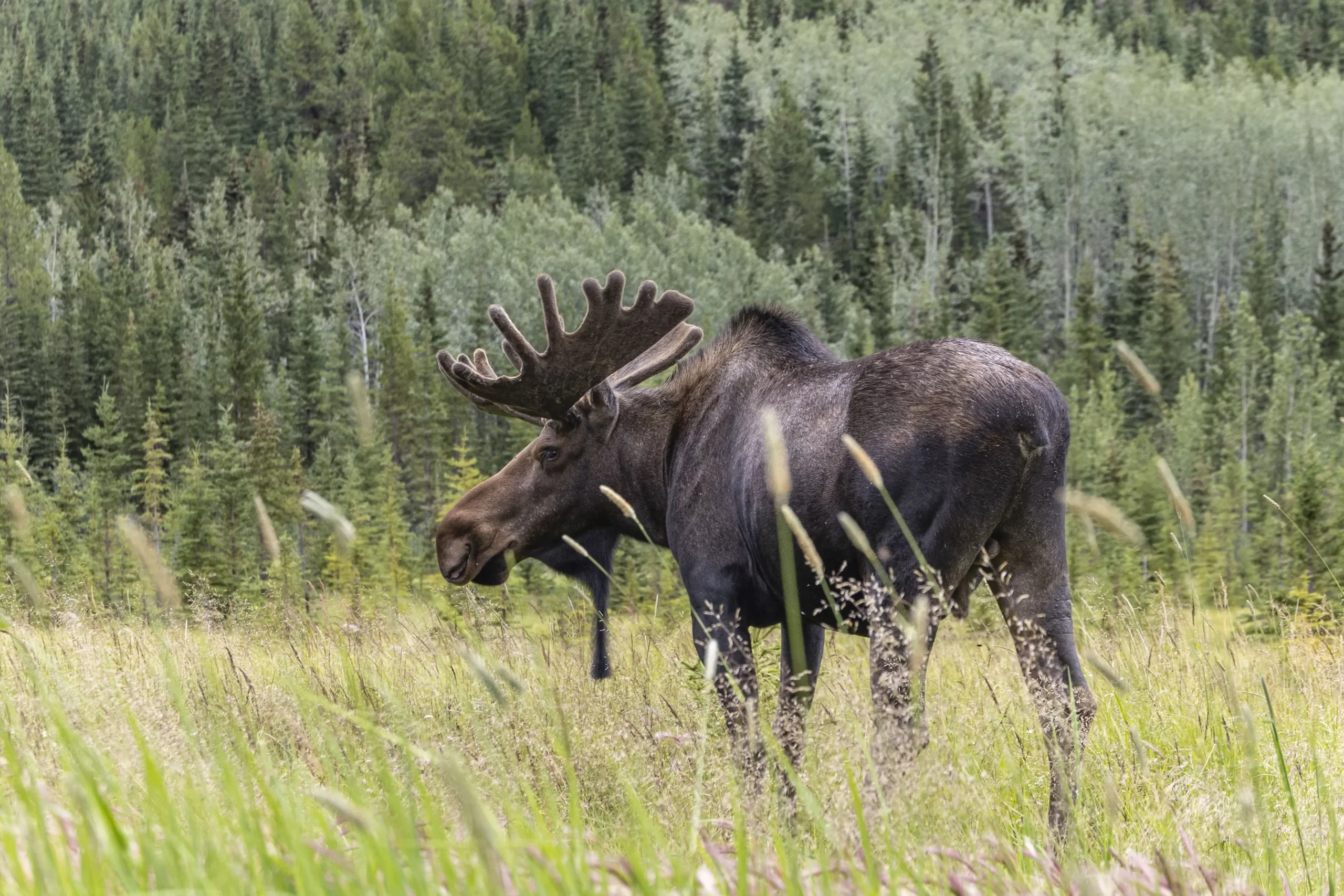


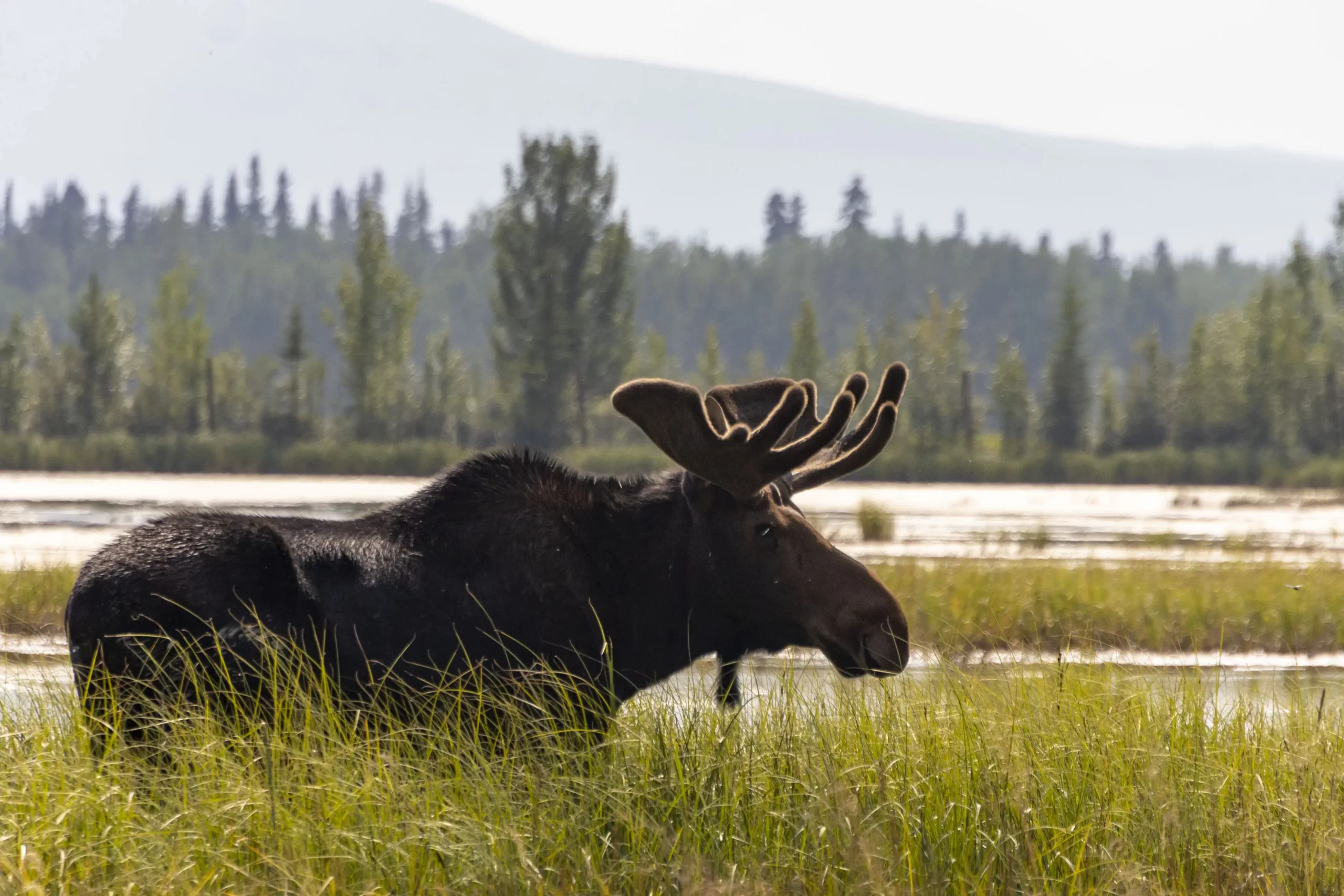
Moose Bull Watson in Summer 2024 and Winter 2024 show a side view of the animal and its dewlap. It appears larger by possibly being more hairy in the winter for protection of the extra skin. In summer lighter and able to dissipate heat like its less hair covered ears in the summer.

In some species (like lizards), males will flare their dewlaps out to signal dominance or interest in a mate. While moose don’t exactly go full “show-off” mode with their dewlaps, the extra skin could play a role in their mating rituals. After all, being a moose isn’t all about looking tough with those antlers—it’s also about managing the subtler art of, well, neck presentation. 
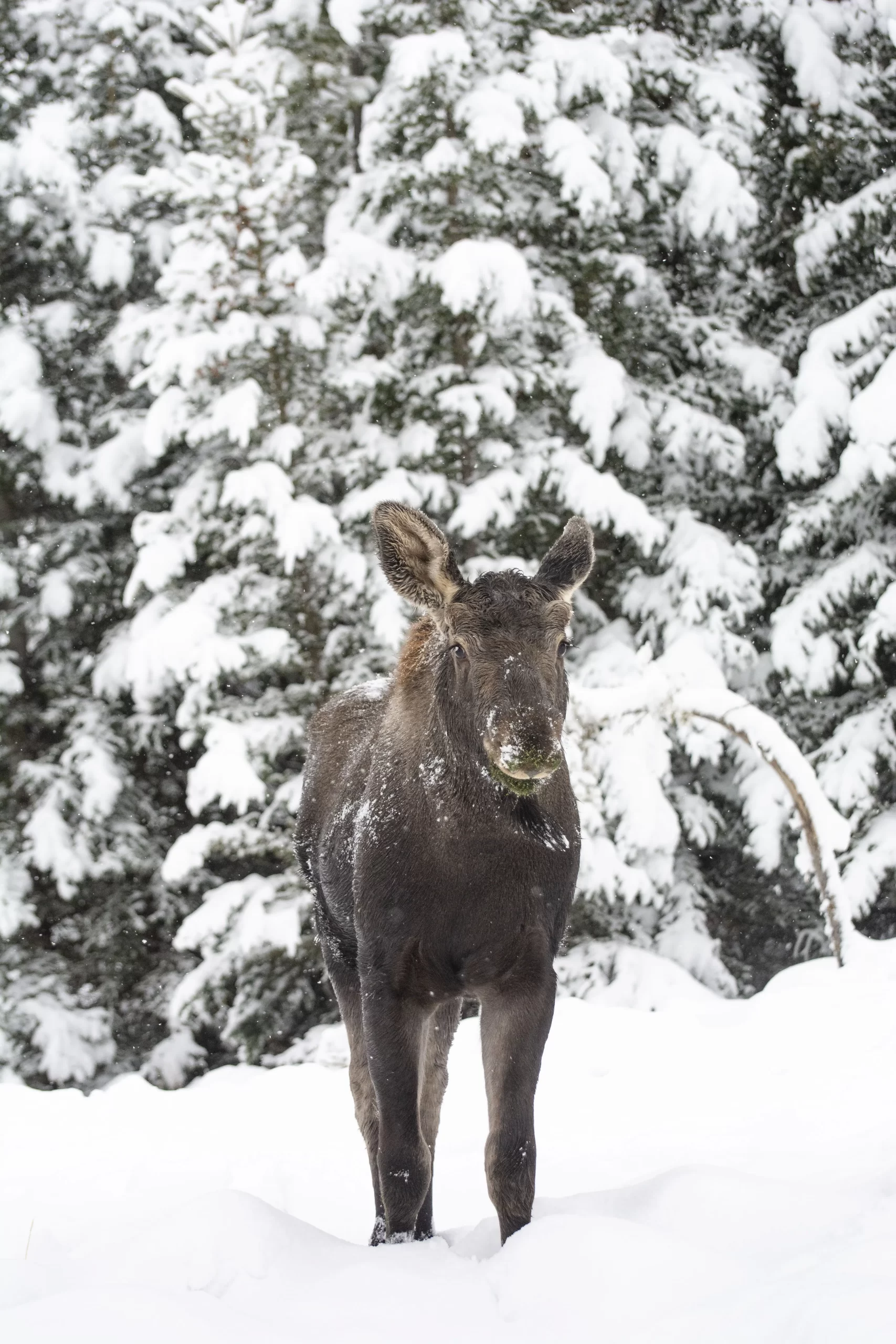
These photos from young to old, left to right, are of Watson. We see from photos, the size of the dewlap appears to become larger over time. Bro-Jørgensen also explores the idea of the dewlap (in elands) being a detterent to predators as the side view makes the animal look larger and perhaps more intimidating. This would align with mature, genetically inclined animals having a larger dewlap. Though this was taken further and scarring on the dewlap was tested, exploring its advantages or disadvantages to protecting the common area of attack on prey by predators in some inter-species interactions.

A “Dewlap-umentary” Moment

Imagine a scene straight out of a nature documentary: A lone moose stands amidst the wild, its dewlap gently swaying in the wind as it scans the horizon. It’s a thing of beauty, really. But then, a rival moose appears on the scene—let the neck flap show begin! Not much behaviour present in ungulates, as seen in lizards and birds, but the moose may posture, showing off their large body size and then bam – side view of an impressive neck dangle and their rival runs away in fear – perhaps a convincing illusion.

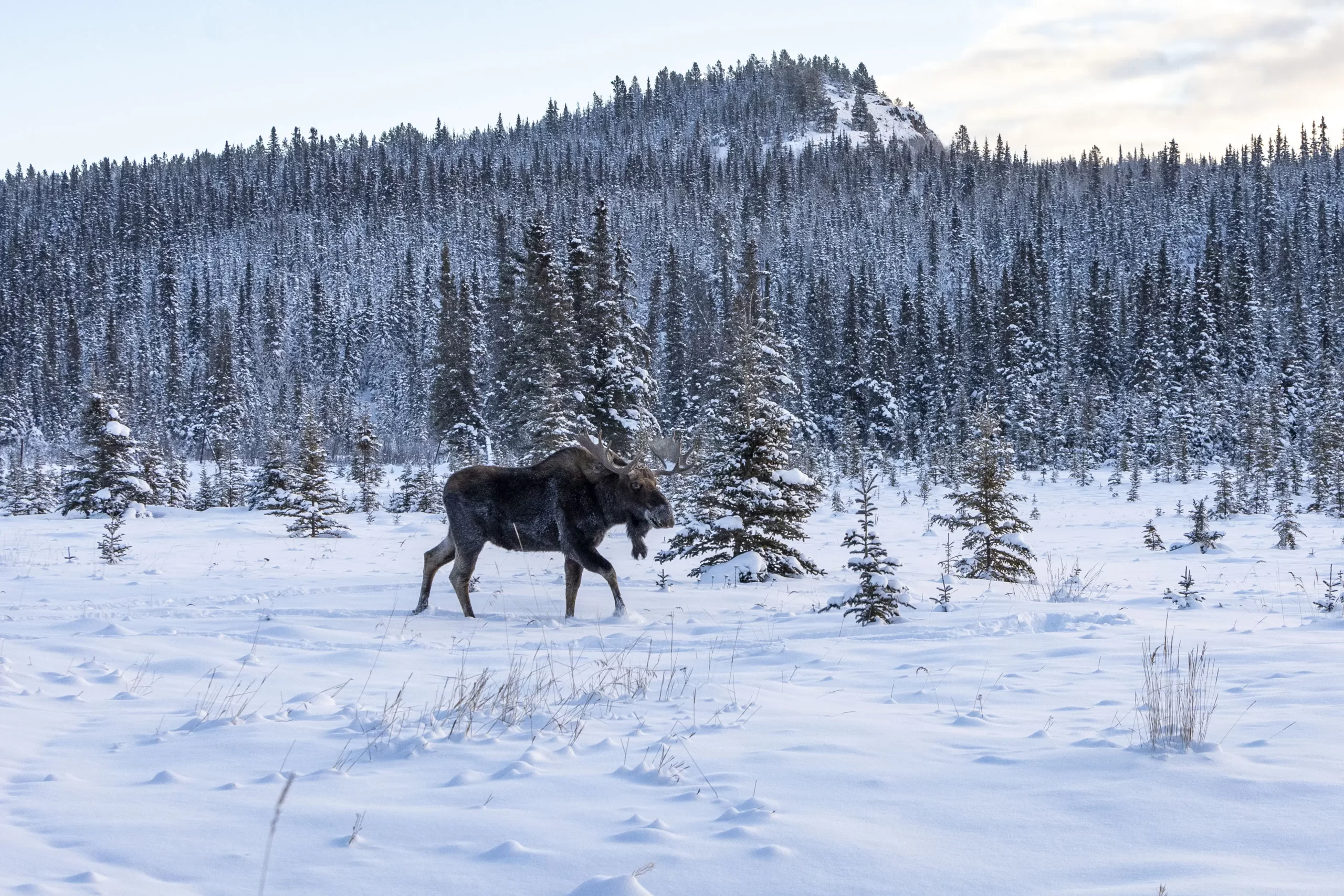
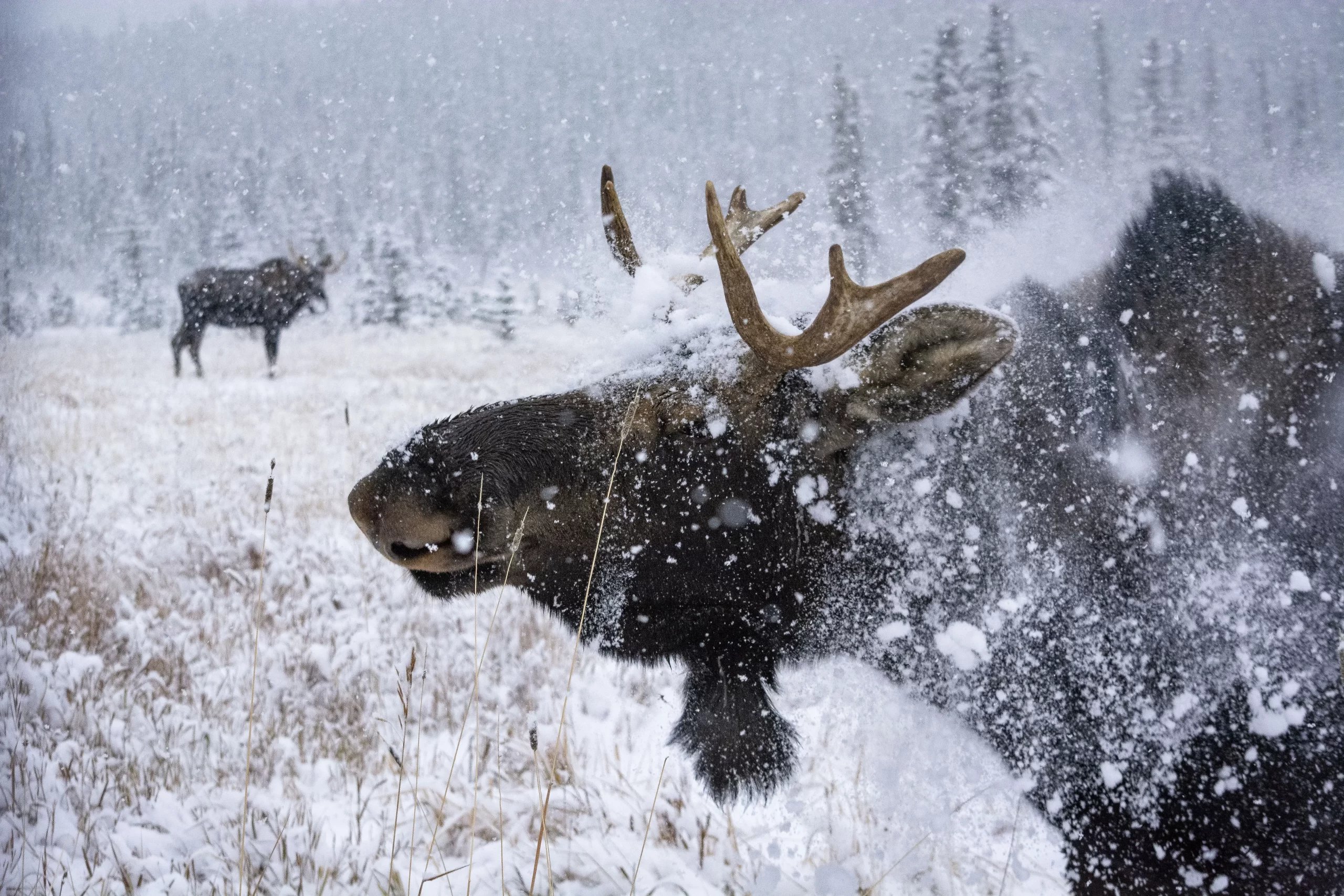
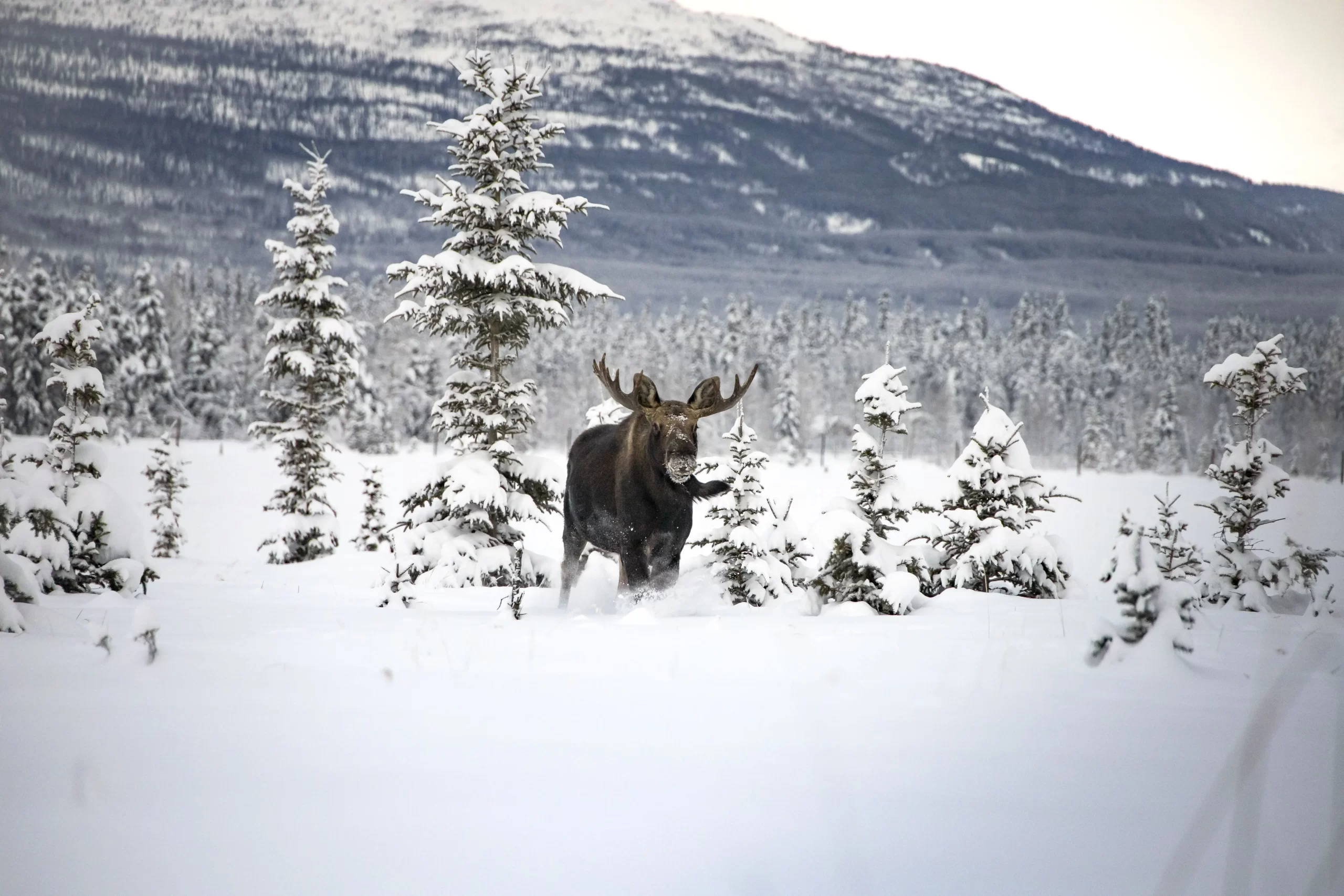
Winter Snow and two moose bull October 2020 29 YWP Lindsay Caskenette

Wrapping It Up: A Love Letter to the Dewlap

So, the next time you visit the Yukon Wildlife Preserve and you catch sight of a moose strolling majestically past, don’t just look up at the antlers or marvel at their towering size. Look down (or, more accurately, look to the side) and take a moment to appreciate the dewlap. Despite all the brainpower spent pondering this, no one really knows why moose have dewlaps. Is it a fashion statement? A built-in scarf for chilly mornings? Who knows!
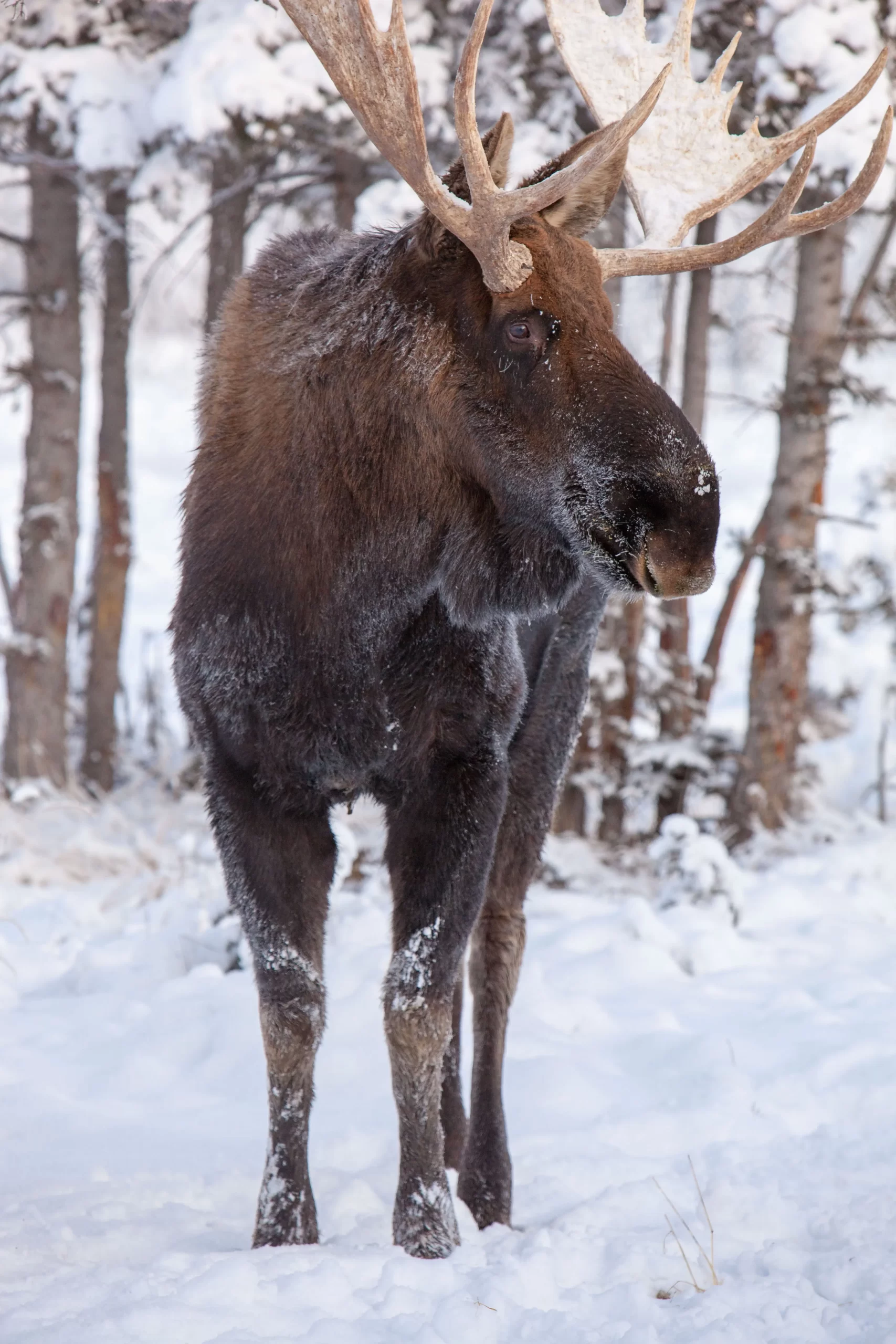
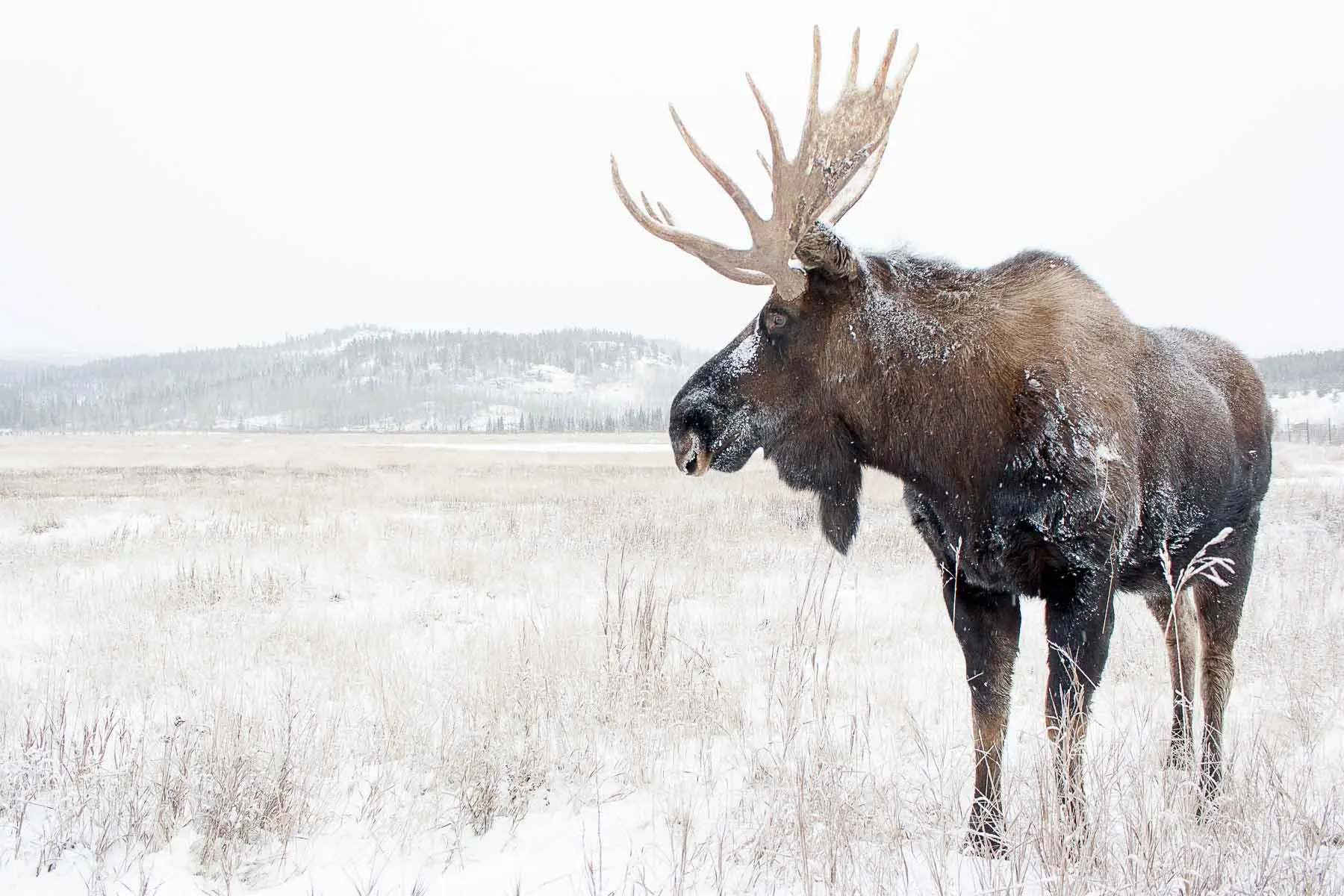
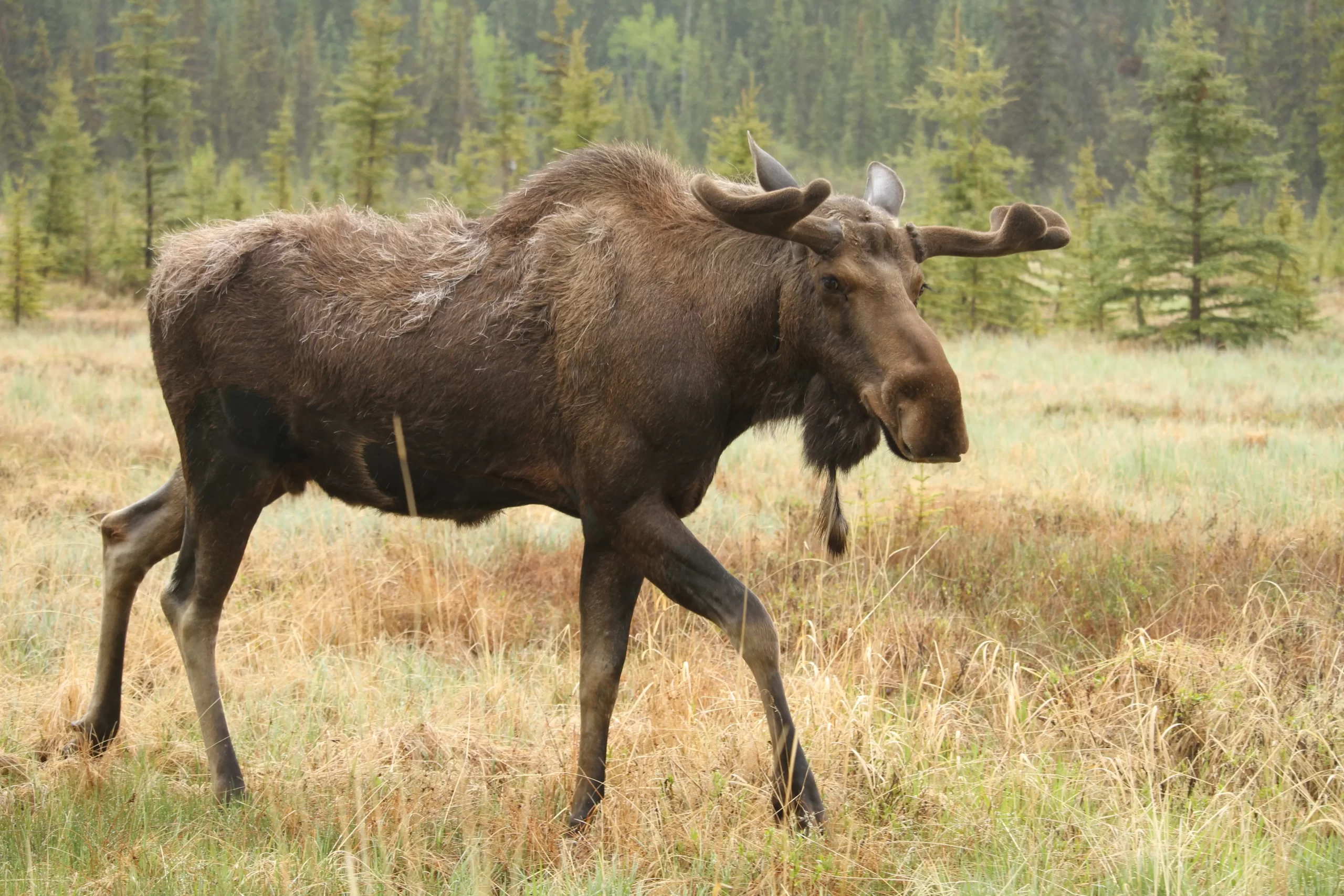
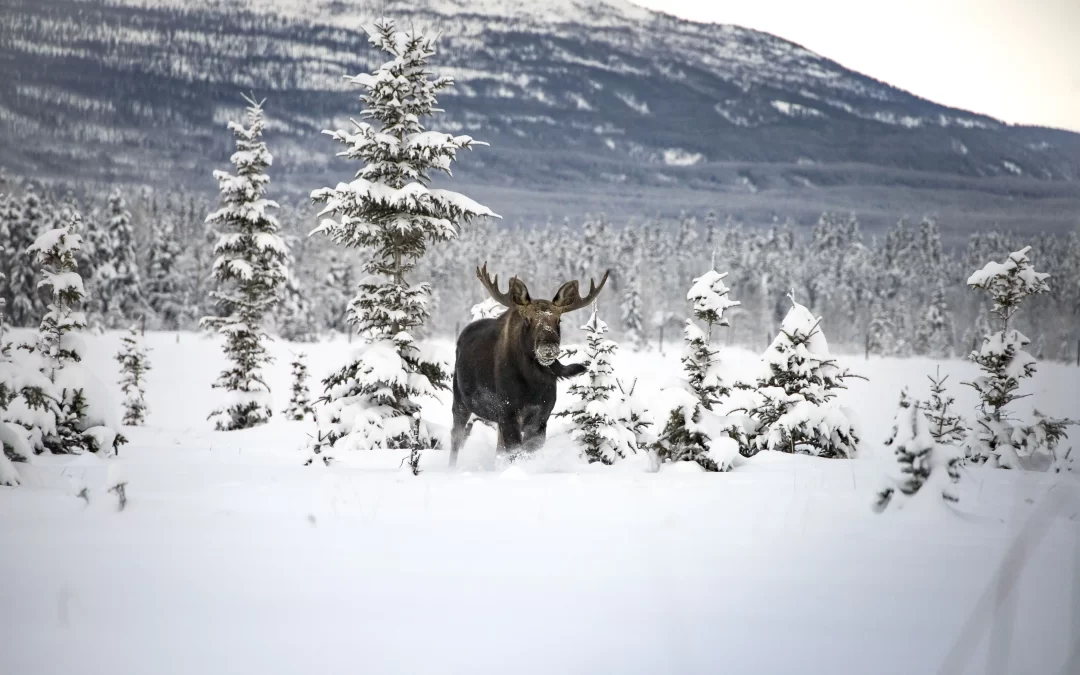
moose in snow . The bull shows off his impressive size, antlers and dewlap.  Jake Paleczny.

Since both male and female moose have them and they don’t seem to offer any major survival or dating perks, scientists think basically, ungulates got their dewlaps through evolutionary peer pressure, but not the same kind as lizards and birds. While birds and lizards are out there with their flashy, look-at-me neck bling for dating or drama, ungulates might’ve evolved their dewlaps for totally different reasons—like a mysterious club no one’s quite figured out yet. The dewlap might just be a leftover from moose ancestors—like a trendy accessory that’s fallen out of style but still hangs around (sciencey talk calls this a vestigial trait).
Moose watson Jan 22YWP winter L.Caskenette dewlap swing - would this intimidate or attract you - if of course you were a moose?

In the world of wildlife, the moose’s dewlap is mysterious, beautiful, and—if we’re being honest—just a little bit stylish. Who knew that this flappy neck skin would be so fascinating? Certainly not us. But we’re glad we found out. Wait, what exactly did we find out!?

Resources:

Bro-Jørgensen, J. Evolution of the ungulate dewlap: thermoregulation rather than sexual selection or predator deterrence?Front Zool 13, 33 (2016). https://doi.org/10.1186/s12983-016-0165-x

Baeckens, Simon et al. “The brown anole dewlap revisited: do predation pressure, sexual selection, and species recognition shape among-population signal diversity?.” PeerJ vol. 6 e4722. 8 May. 2018, doi:10.7717/peerj.4722

Jonathan Losos. How Many Times have lizard Dewlaps Evolved? August 12, 2011.

Photo credits: L.Caskenette, J.Benjamine, J.Paleczny, M. Mark., (unless otherwise noted).


Lindsay Caskenette

Lindsay Caskenette

Manager Visitor Services

Lindsay joined the Wildlife Preserve team March 2014. Originally from Ontario, she came to the Yukon in search of new adventures and new career challenges. Lindsay holds a degree in Environmental Studies with honours from Wilfrid Laurier University and brings with her a strong passion for sharing what nature, animals, and the environment can teach us.
867-456-7400
Lindsay@yukonwildlife.ca

Explore by Category

Explore by Author

What’s That Scat?

What’s That Scat?

What’s That Scat?

4 minute read.
As we are out enjoying some of the many trails the Yukon has to offer, we often have to watch our step to make sure we’re not putting our boots in something smelly! These unexpected trail obstacles can be great indicators of whose habitat we are walking into, what they are eating, and how they are digesting it. Just like us, many animals have dynamic diets, and will eat what is available. Scat can be interesting but can also spread diseases, even to humans, so it should be looked at and not touched, especially by our furry companions.

Bears

Black bears are opportunistic omnivores who will eat whatever food they can find, including fish, fruit, meat, insects, and herbs and grasses. Grizzlies have a similar diet, but tend to favour high-energy meat and insects more than the smaller black bears. Like their diets, bear scat appearance is quite varied, and often contains fragments of their last meal, like seeds, bits of berries, or small animal bones. Wildlife Interpreter Maureen recounts seeing a landscape covered in red wine-coloured piles that were actually scat from grizzlies that had eaten a lot of cranberries!

Light brown bear scat with seeds visible.

Bears are relatives of mammalian carnivores, they have a digestive system similar to carnivores, without a cecum or extended large intestine. This limits how efficiently they can process leafy plant material and they must eat a lot if they are relying on these foods, which is common in the spring. As a result, when a bear eats a lot of plant material their scat often has a green tinge from the undigested grasses or a fibrous appearance. Typically, their scat is brown or black and tapered, though sometimes it can appear as more globular if it is loose. Grizzly scat tends to be a bit wider and larger piles than black bear scat. It can be hard to distinguish between the two, but both should make a hiker cautious of the trail ahead. Remember bear spray and noisemakers and stay bear safe!

Left to right: Older bear scat; bear scat that is darker brown in colour with grasses visible.

If you’re interested in getting involved in bear research, the Operation Ursus Research using Scat (OURS) project is aimed at estimating the Yukon grizzly and black bear populations using DNA available in bear scat. Lucile leads the study and shares the project story Bear Poo and You with YWP.

Canines

Foxes, wolves, and coyotes are more exclusively carnivorous than bears, but may occasionally eat berries and seeds. Their digestive system is similar to that of a bear, as is their scat. Wolves’ stomachs are specially adapted to hold a lot of food so that after a hunt they can get their share of the reward. Additionally, their stomach is very acidic to kill off any pathogens in the meat. It is tubular and tapered and may contain bits of bones, fur, or berries. It may be lighter, as it varies from tan to dark brown in colour. It is, however, smaller than bear scat: fox scat is about 1.25 cm in diameter, coyote scat is about 2 cm, and wolf scat is usually at least 2.5 cm in diameter.

Wolf scat with fur visible.

There will likely be much less of it as well. Foxes often defecate in obvious areas to mark their territory. The Wildlife Preserve exists as an ecosystem within a larger ecosystem and foxes are one of the many wild animals that visit. They seem to like to use the boardwalks at the front cabin to do their business!

Foxes often defecate in obvious places to mark their territory.

Left photo credit: L.Caskenette.

Feline – Lynx

Unlike generalist bears and canines, lynxes are specialists. Snowshoe hares are their primary food source, and can make up 75% of their winter diet. Meat is highly digestible, meaning that most of what is consumed can be broken down and absorbed easily. Lynx digestive systems, therefore, have shorter small intestines relative to body size and less developed caecum than canines.

Lynx scat of varying ages among grass.

Their scat is black, tubular and tapered, and does not have so much undigested material as the bears or canines. It is also very smelly. Like a house cat, they will cover their scat with dirt or snow, probably to hide their presence from nearby animals. Also like house cats, they often defecate in the same latrine over and over, which can be seen in our lynx habitat.

Lynx, like house cats, often poop in the same places every time. This is one of the latrines in the lynx habitat at the Preserve.

Cervids

The Yukon has a great variety of cervids (antler bearing animals) or members of the deer family. Their diets, digestive systems, and scat have many similarities. In general, they produce uniform, dark brown or black oval-shaped pellets, which result from uniform movements of smooth muscles in the large intestine and its sphincters.

From left to right: Caribou, moose, mule deer and elk. Photo Credit: L.Caskenette & J.Paleczny.

Their diets are often high in fibrous, dry tree materials like leaves and twigs, which is why their feces forms pellets. If they are eating more grasses, in the summer, it may appear softer and more clumpy. Cervids are all ruminants which means that their stomachs have four compartments: the rumen, the reticulum, the omasum and the abomasum.  This allows for fermentation by bacteria and other processes that break down vegetation. This is part of the reason that cervid scat does not have as much undigested material as the carnivores’, despite their plant diet having less digestible material. In addition, they will regurgitate their food and chew it again, also called chewing their cud!

Left to Right: Soft caribou scat clumps together versus caribou scat in pellet form.

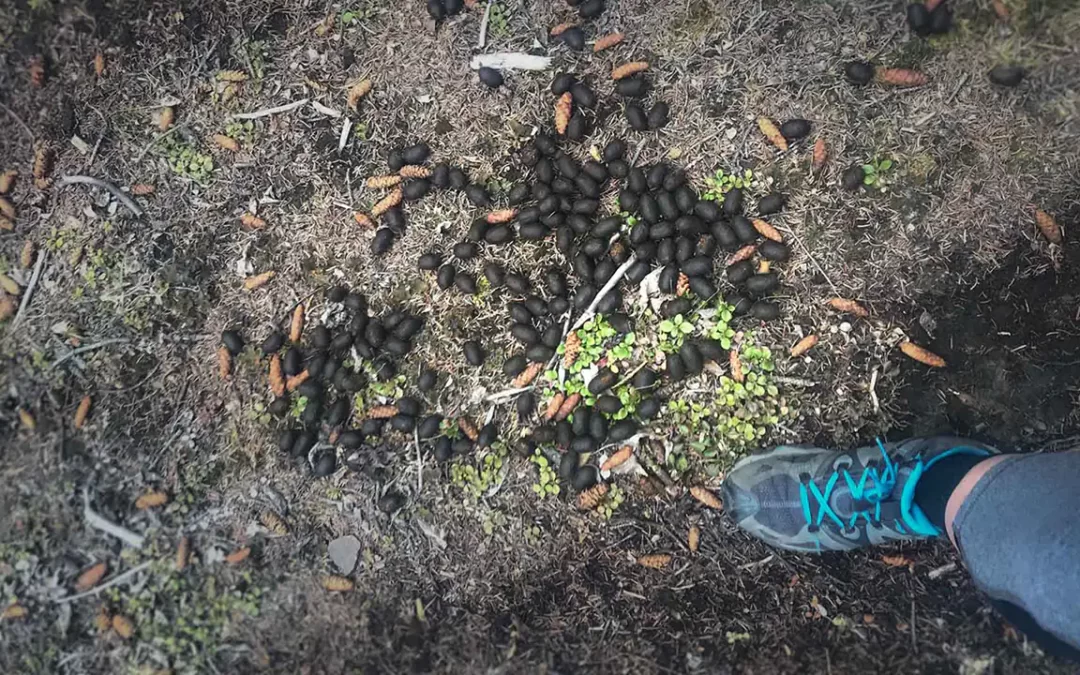
Deer pellets are small, about 1 cm in diameter, and are left in piles of many pellets. They defecate an average of 13 times per day! Elk scat is similar but 1-1.5 cm in diameter, and moose scat is even larger at 1.5-2 cm in diameter. Deer and elk pellets are rounder than moose pellets.

Softer deer scat often clumps together as seen here.

Moose are more strictly browsers, that eat only tree materials, so mostly their pellets are harder. Caribou scat appears somewhat more rough than deer or moose scat. It is often in harder pellet form in the winter when they eat a lot of lichens and sedges. In the summer, when their diet switches to grasses and vegetation with a high moisture content, their scat often forms larger soft clumps.

Moose scat in pellet form, darker brown because it’s older.

Bovids

There are also a wide variety of bovids (horn bearing animals) in the Yukon. Our mountain sheep, mountain goats, muskox, and bison are all ruminants, just like the cervids. They are all herbivores who eat a variety of grasses, sedges, seedlings, and leaves.

Left to Right: Muskox, bison, mountain goat, thinhorn sheep. Photo Credit: L. Caskenette

Muskox, mountain goats, and thinhorn mountain sheep also form pellet scat, even when their diets consist largely of grass. That’s because their digestive tracts are highly evolved to reabsorb as much water as possible, likely an adaptation to their arid alpine (goats and sheep) and tundra (muskox) habitats.

Sheep scat forms pellets.

Goats have varied diets that includes browse, shrubs, lichens, grasses, and even trees. Their alpine foraging sites may be sparse, which doesn’t allow them to be picky eaters. Muskoxen eat grasses, forbs (herbaceous flowering plants), and willows, which they often have to dig out from the frozen arctic ground by smashing the permafrost with their heads and pawing the ice pieces out of the way. Mountain sheep eat mostly grasses and some other low growing sedges.

Muskox scat.

Bison scat is distinct from all the other ruminants mentioned above, because it forms an indistinct pile. Their diet is also primarily grasses and other low-lying herbaceous plants, but they may eat some willows and twigs. Grasses would make their scat more loose, but we’re taking suggestions for what makes their scat so different from the other grass-loving bovids!

Bison patty.

Hopefully after hearing all of these scat facts you can see scat as more than just something gross to be avoided on the side of the trail. It can tell you who’s habitat you are in, but also what they have been eating. It is interesting to watch it change throughout the season. Of course biologists may be able to find out way more about an animal through their scat, for instance genetic samples or presence of pathogens. There is so much to learn from the scat around us!
Although all the different scat we explored above is only a small number of animals, all species do it and we encourage you to:

1. Explore other species scat/defecation/poop – whatever you want to call it!

2. Pack out yours and your furry companions (yours domestic canines) poo in the backcountry and wilderness places you visit!

3. Sing the Scat Rap Song!  

It starts with an S and it ends with a T
It comes out of you
and it comes out of me
I know what you’re thinking
But don’t call it that
Let’s be scientific, and call it SCAT
It was a piece of scat
(PIECE OF SCAT!)

You can find it on the ground
It’s usually colored brown
It is shaped in a mound
It is a piece of scat
(PIECE OF SCAT!)

You can smell it with your nose
It’s gonna decompose
It’s where the fungus grows
It is a piece of scat
(PIECE OF SCAT!)

Birds flying through the air
Look out! Beware!
It landed in your hair
It was a piece of scat
(PIECE OF SCAT!)

I was hiking through the fog
When I saw a big log
It came from a dog
It was a piece of scat
(PIECE OF SCAT!)

I was tired of TV
I was checking out the trees
I could smell it on the breeze
It was a piece of scat
(PIECE OF SCAT!)

I know it’s kind of gory
But it’s a true story
It marks territory
It is a piece of scat
(PIECE OF SCAT!)

I picked up a chicken
And something was drippin’
It wasn’t finger-lickin’
It was a piece of scat
(PIECE OF SCAT!)

A squirrel ate a nut
Digested in its gut
It came out of its butt
It was a piece of scat
(PIECE OF SCAT!)

If you park your car
By the woods or a field
You might find something on your windshield
Full of berries
Both purple and white
You just got bombed by a bird in flight
It was a piece of scat
(PIECE OF SCAT!)

Photo Credit: Sophia Slater or as otherwise credited.
References:

Alaska Department of Fish and Game. Caribou (Rangifer tarandus granti) sign. ADFG. 

Blood, D.A. Mountain sheep. Hinterlands Who’s Who. 

Blood, D.A. (2000). Mountain Goat in British Columbia. British Columbia Ministry of Environment Land and Parks.

Bosch, G., Hagen-Plantinga, E., & Hendriks, W. (2015). Dietary nutrient profiles of wild wolves: Insights for optimal dog nutrition? British Journal of Nutrition, 113(S1), S40-S54. doi:10.1017/S0007114514002311

Keith, L.B. Canada lynx. Hinterland’s Who’s Who. 

Central Sierra Environmental Resource Center (2018, June 25). What scat can tell you about your wildlife neighbors. CSERC

Costello, C.M., Cain, S.L., Pils, S., Frattaroli, L., Haroldson, M.A., & van Manen, F.T. (2016). Diet and macronutrient optimization in wild Ursids: A comparison of grizzly bears with sympatric and allopatric black bears. PLoS ONE, 11(5).

Gray, D.R. Muskox. Hinterland’s Who’s Who. 

Hatch, K., Roeder, B., Buckman, R., Gale, B., Bunnell, S., Eggett, D., Auger, J., Felicetti, L., & Hilderbrand, G. (2011). Isotopic and gross fecal analysis of American black bear scats. Ursus, 22(2), 133–140. 

Howard, W.T., Hutjens, M., Kilmer, L., Linn, A., Otterby, D., & Shaver, R. (2021). The ruminant digestive system. University of Minnesota Extension

Winand, C.J. (2008, September). Deer Pelletology. Buckmasters Magazine

Sophia Slater

Sophia Slater

Wildlife Interpreter & Animal Care Assistant

Sophia is one of the Interpretive Wildlife Guides and animal care assistants at the Preserve. She is new to the Yukon and moved here from Ontario, where she just graduated with a Bachelor of Science in Biology from Nipissing University. Hiking mountains is her newfound passion while she’s here, and she’s hoping to summit as many as she can this summer. At the preserve, she loves getting to talk to and learn from guests who come from all over the Yukon and beyond about their experiences with wildlife.

Explore by Category

Explore by Author