I Have to Sell!

I Have to Sell!

animal stories

This article was made possible thanks to support from the Yukon 125 Fund. Learn the incredible history of the Yukon Wildlife Preserve, and Yukon Game Farm from the people of the past through this series of articles.

Danny Nowlan is one of Yukon’s colourful, and at times, notorious characters. He was a polarizing figure who cared deeply for animals and connecting them to kids. He was also the subject of one of Yukon’s most expensive trials ever. His work on the Yukon Game Farm would eventually result in the creation of the Yukon Wildlife Preserve. That is a legacy that is still experienced by many Yukoners – although many of the stories are not known or well understood. 

The stories of Danny Nowlan are important threads that are woven through the tapestry of Yukon’s recent history. This project gives us the opportunity to capture and share this history before its lost. This includes the opportunity to celebrate the positive lasting legacy and to learn about and grapple with the challenging aspects of this legacy. 

In 2023 historian Sally Robertson collected oral histories from more than a dozen people who knew Danny. Out of this work, Sally wrote a series of stories about Danny and his adventures.

(9 minute read)

Danny and Erika Nowlan had a dream, and the Yukon Game Farm was established in the mid-1960s. Danny had to struggle several times over the years to keep the Yukon Game Farm operating. It was never profitable until the falcon breeding program was in place. Until 1990, the Nowlans were in business to raise breeding stock and sell young animals to international zoos and wildlife farms. In the case of birds of prey, their market was falconers wherever they happened to live. A Dall’s sheep ram might occasionally bring $2,000 and a trained gyrfalcon might be sold for $13,000, but there were many animals on the Farm, and they all needed care and a constant supply of huge quantities of food.  

Danny considered selling the Yukon Game Farm in the 1970s, when it seemed there would be never-ending bank loans. This was a time when Danny had close friendships with Yukon Game Branch employees, both guardians (Conservation Officers) and biologists. Government biologist Dave Mossop came to Danny with a plan to replenish Yukon’s wild stock of peregrine falcons. This was successful and, building on that, the Yukon Game Farm purchased gyrfalcons from the government and embarked on a successful breeding program.

Danny with Gyrfalcon


Danny needed even more money to establish the infrastructure and so, instead of selling the whole property he tried to subdivide and sell some lots along the Hot Springs Road. The government prohibited the sale and Danny’s attitude toward bureaucracy started changing towards antipathy. In the end, the approach of a government official elicited a yell of ‘cops’ from Danny and furious barking from his well-trained dogs. Followed by Danny’s famous laugh.

Prohibited from selling titled property, Danny instead sold 999-year leases. The government challenged this sale, and Danny won in court, so the parcels became titled land. Selling the road frontage kept him in business for a while, and also had the advantage of providing some protection for the animals. Before they were moved away from the road, there were incidents of animals being injured and one ram sheep with trophy-sized horns was killed.

In the mid-1980s, Danny, his second wife Uli, and well-respected biologist Dave Mossop were arrested and dragged into court on charges associated with the capture and illegally selling of endangered falcons to wealthy Saudi Arabians.  Operation Falcon was an undercover operation that started in the United States and reached into the Yukon. The Yukoners were judged not guilty of all charges, but the trial affected reputations and bank accounts. After the trial, the Game Farm’s elaborate infrastructure for breeding, raising, and replenishing wild stocks was in shambles, and Danny and Uli were no longer able to realize a profit from selling the birds they were so successful at raising.

In the 1980s, elk farming became a profitable business in Canada and Danny was quick to acquire a herd of about 300 animals. He and a number of other Yukoners became successful elk farmers before the Korean market for Canadian elk antlers and velvet collapsed. Some elk farmers in the United States changed their operations to hunt farms, places where hunters could pay to shoot animals. The only legal option in the Yukon was the sale of elk meat, and that was not part of Danny’s vision of an educational preserve to showcase Yukon wildlife. He told a friend that the day he had to sell a pound of elk meat was the day he was out of business.

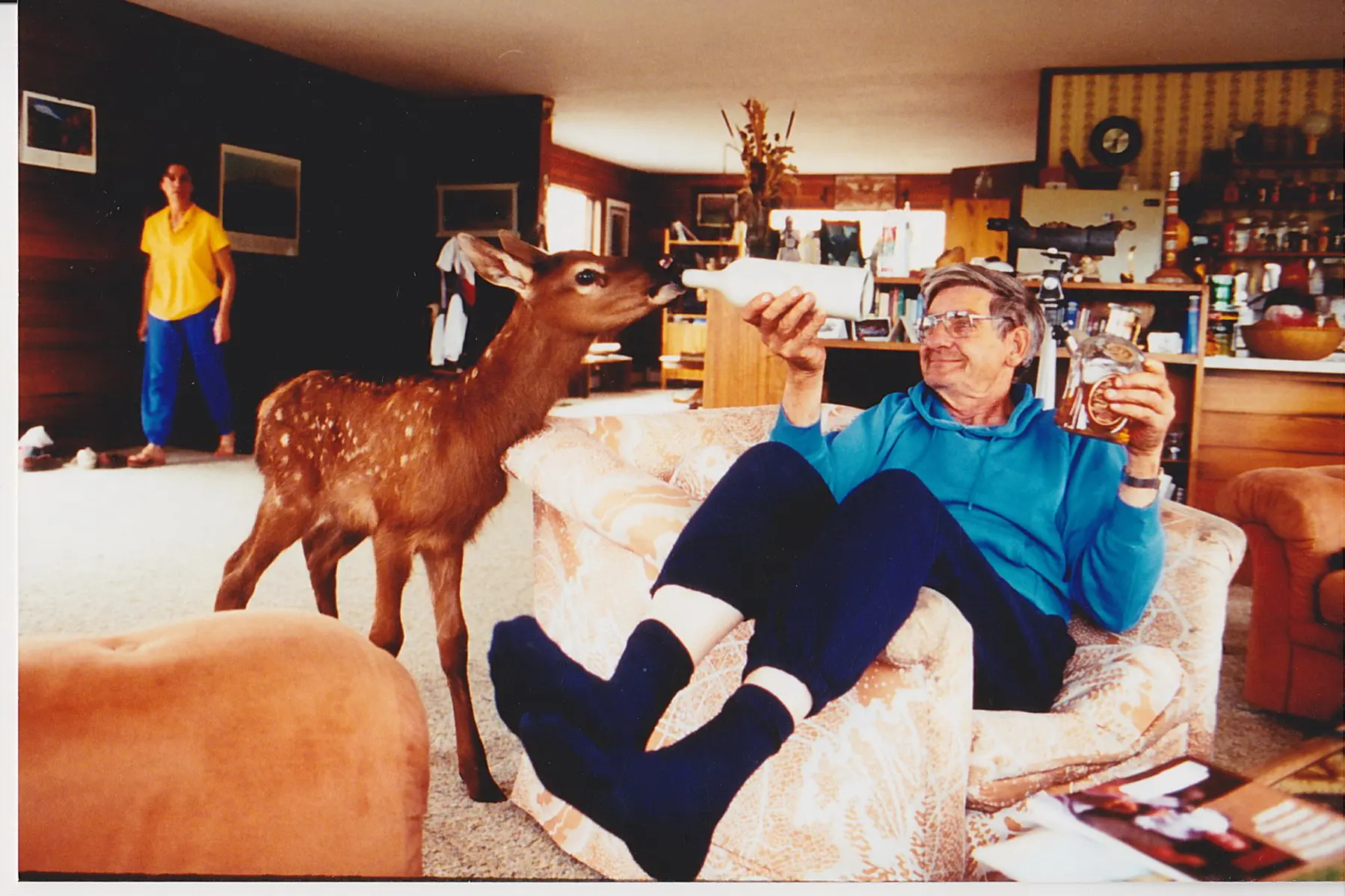
Elmer-1st and Danny especially favorite elk bull came from Chuck and Clara from California 1983 visit.


Fortunately, just at this time the Nowlans were approached by Holland America to provide a tourist attraction for the company’s bus tours. This was in line with Danny’s vision. He needed to upgrade the roads and fences, and acquire more northern species, but the Nowlans were still able to sell animals and care for the injured and abandoned ones that were constantly being dropped off at their door.  This change in direction was formalized by a change in name; the Yukon Game Farm became the Yukon Wildlife Preserve in 1989.

Original logo created by Peregrine Nowlan in 1989 when the name change occured from Yukon Game Farm. Later when the facility was sold and run as a non-profit the name remained and the logo updated to its current version.

Around 2000, Danny was once again faced with the serious problem of keeping the operation in business. Animal sales were still an option, but there was a dawning awareness in Canada of spreading diseases affecting wildlife. Danny needed permits to move animals across borders, and these became increasingly difficult to obtain. The matter came to a head for the Yukon Wildlife Branch when public attention was drawn to one of Danny’s mountain goats that appeared on a steep hill across the North Klondike Highway from the sod farm. Government officials were worried about the transmission of disease from domestic animals to wildlife, and two escaped mountain goats could have travelled past agricultural farms containing domestic goats.

Danny was unable to recapture his animals, and the Yukon government’s Philip Merchant came to the rescue with a helicopter and a tranquilizer gun. The story of the capture is a harrowing tale for another time, but no animal (human or goat) was terribly injured, and Danny was presented with the bill. 

Danny said, “I want to go fishing” and he started looking for buyers. He could have made a lot of money by letting a developer divide the Game Farm into acreages. Many Yukoners were reluctant to see this happen, and the Friends of the Yukon Wildlife Preserve was established in 2002. The Board of Directors included successful businesspeople, educators, and wildlife biologists who recognized the Preserve’s potential economic, preservation, and educational worth to the Yukon. The society tried to raise funds to buy and operate the facility as a business, and they received support from individuals and potential partners.
In July 2003, the Yukon Fish and Wildlife Management Board wrote a letter to support a proposal where a not-for-profit society would run the facility with assistance from the Yukon Government, as long as the facility obtained accreditation from the Canadian Association of Zoos and Aquariums. The government, for many reasons, was reluctant to commit to any involvement at that time, and the Board of Directors dissolved the Friends of the Yukon Wildlife Preserve association in August 2003.

The public facing entrance to the Yukon Wildlife Preserve. Photo Rebecca August 2004.

There are many opinions about why the government persuaded a number of the original Friends and others to form an operating society, and then purchased the Yukon Game Farm in April 2004. Danny talked to the media and there was considerable public pressure in support of the sale. It was, and remains, a controversial decision especially for those opposed to seeing wildlife in pens. However, the Yukon Wildlife Preserve is a delight for children of all ages, and the expansive habitats created by Danny Nowlan make the residents very happy.

About his ability to get things done, Wendy Brassard says Danny would get these ideas and he wouldn't abandon them. He wouldn't just let them die or turn away from them. He'd think about it, he'd read because there was no Internet back then, he'd make phone calls, and the next thing you know, everything's changed. And he just kept evolving. He was such a good example of ingenuity and resourcefulness, and never say die. Just if you think it's right and it's going to work and it's a good thing? Do it.” David Smiley says Danny was an amazing character; that guy was different. Both good and bad. He had a rough side and he had a Grade 3 education. But he could develop a plan that somebody from a university would have trouble figuring out the nuances. He was a good planner. Randy Hallock concluded that Danny was interesting and always full of ideas. He just built the place and not much could stop him. He had ideas, and he made them work. People telling him ‘no’ just made him that much more driven. 

Minister Dixon, Department of Environment, Yukon Government and YWPOS board member Bill Klasson.
Photo taken 2013 on the signing of a 5 year agreement.

David Mossop is involved with the Game Farm in its current form as the Yukon Wildlife Preserve. He says it's interesting that all these years later, they haven't changed anything. It's basically exactly as Danny and Erika envisioned it – except brought to fruition a lot more. Their idea was to create something where the children of the Yukon could come and see the creatures that live here. And that's basically what happened.

The memories that were collected during this oral history project speak to the impact that Danny had on so many friends, kids, and animals - and the Nowlans’ legacy remains intact for Yukoners and Yukon visitors. We think Erika would be proud to see a fully realized wildlife preserve with its visitation of wide-eyed children. Uli Nowlan often visits the facility and keeps a watchful eye on the operation. Danny didn’t become an avid fisherman, but he did relax knowing his animals, and his legacy, were in good hands. 

• • •

On June 12, 2004, was the Grand Opening of the Preserve!

Danny Nowlan Life and Death - June 4th, 1929 - October 23rd, 2011.

Photos gratefully provided by Uli Nowlan.

Sally Robinson, October 2023
with words from interviews with Uli Nowlan, David Mossop, Philip Merchant, Wendy Brassard, Randy & Maria Hallock, David Ford. 

Sally Robinson

Sally Robinson

Vintage Ventures - Researcher & Writer

Sally is currently an independent consultant in the heritage field. Throughout her career, after working 20 years with Yukon museums as a researcher, curator and exhibit designer/producer, she joined the Yukon Government to work for 16 years as the Historic Sites Interpretive Planner.

Lindsay Caskenette

Lindsay Caskenette

Manager Visitor Services

Lindsay joined the Wildlife Preserve team March 2014. Originally from Ontario, she came to the Yukon in search of new adventures and new career challenges. Lindsay holds a degree in Environmental Studies with honours from Wilfrid Laurier University and brings with her a strong passion for sharing what nature, animals, and the environment can teach us.
867-456-7400
Lindsay@yukonwildlife.ca

Explore by Category

Explore by Author

The Curious Case of Dewlaps: Moose and Their Underappreciated and Mysterious Neck Accessories

The Curious Case of Dewlaps: Moose and Their Underappreciated and Mysterious Neck Accessories

animal stories

by Lindsay Caskenette | Jan 30, 2025

10 minute read

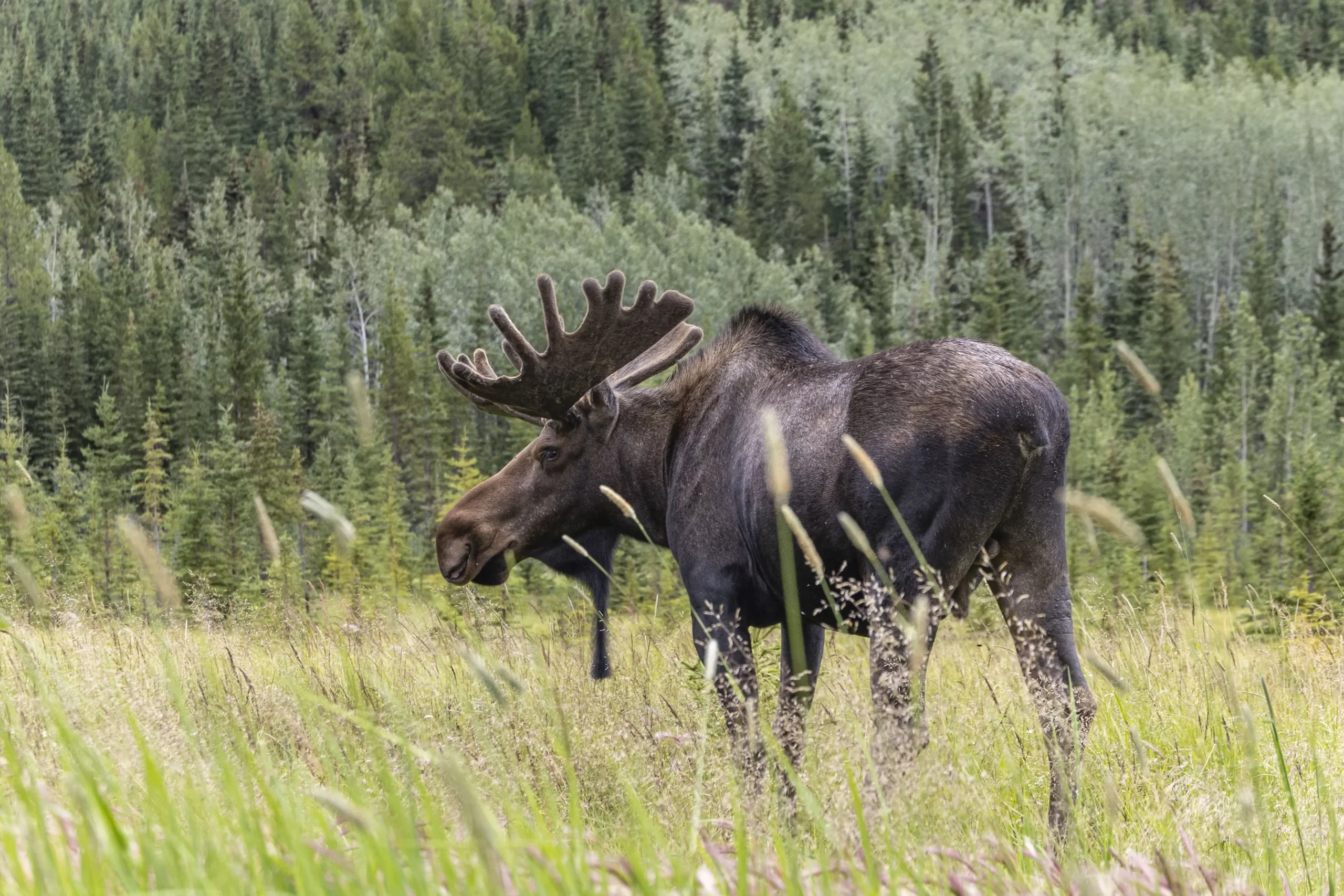
When you think of a moose, you might picture an iconic Canadian creature with long legs, a majestic set of antlers, and the undeniable air of someone who really doesn’t care about traffic. What might not come immediately to mind is the subtle yet striking neck accessory that moose wear with... well, little to no fanfare: the dewlap. Yes, that’s right—moose, with their immense size and serene grace, sport a fleshy flap of skin dangling beneath their throat.

If you've ever had the privilege (or slight anxiety) of encountering a moose here at the Yukon Wildlife Preserve, or on a cross-country road trip, you’ve maybe noticed this particular feature. But what is it, and why does it exist? Let’s explore this underappreciated anatomical feature with a mix of scientific curiosity and the lighthearted humor it deserves.

What is a Dewlap, Anyway?

A dewlap is essentially a flap of skin that hangs from the neck, or throat of an animal and while it may seem like just an odd fashion statement, it often serves practical purposes. Dewlaps appear in all kinds of animals—like lizards, cows, chickens, rabbits, and yes, moose. Depending on the species, dewlaps help with everything from sexual selection, to staying cool to general communication. In moose, the dewlap isn’t just a bizarre fashion accessory, it's also a multi-purpose tool in their biological toolkit - we think!

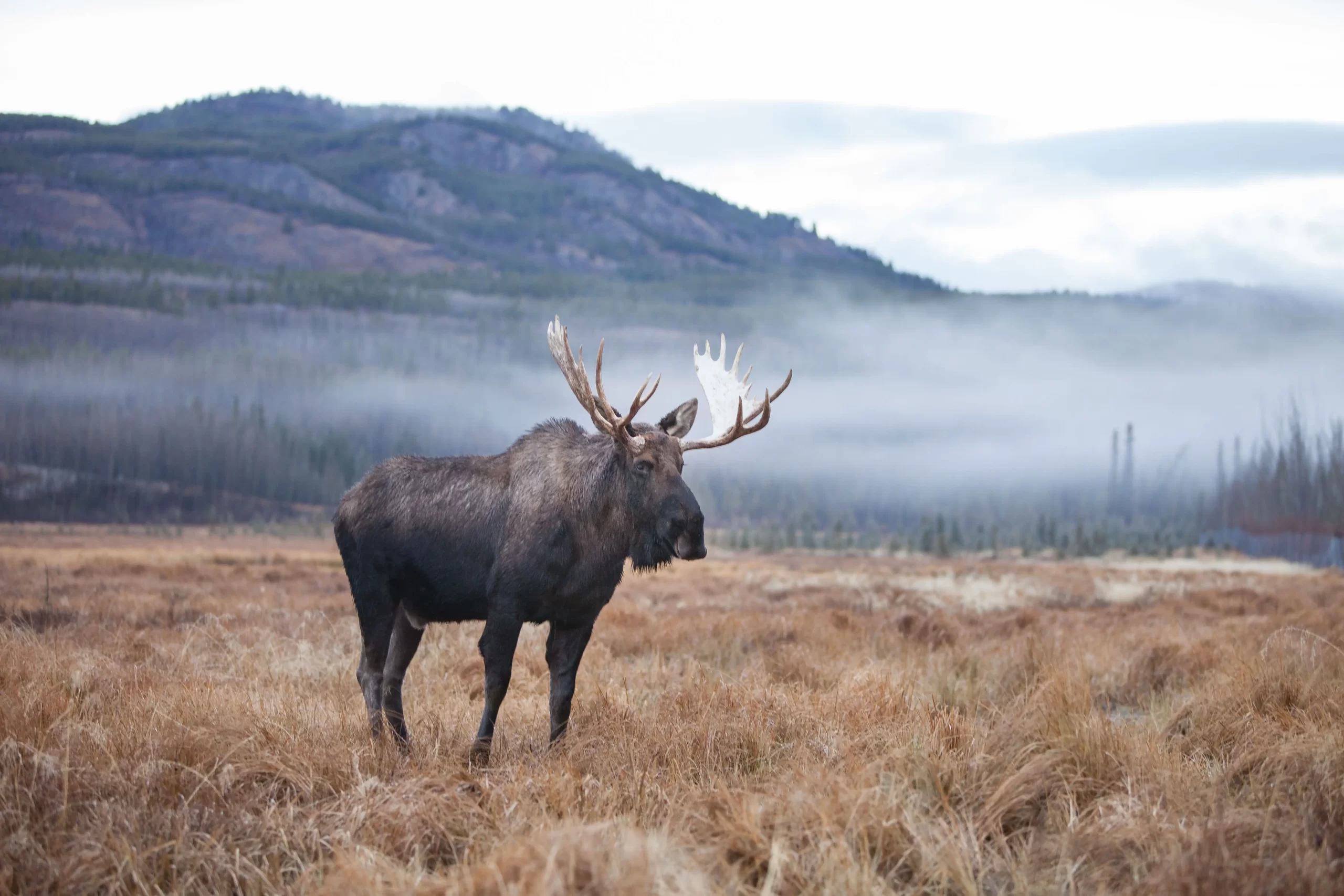
Watson on the left, Marsh on the right. 2023-making Watson 4 years old and Marsh 2 years old in this photo. Notice the dewlap difference?

Fun Fact: a dewlap on a moose is also called a bell. If you’re a bird, that fold of skin is called a wattle. For rabbits, dewlaps are basically nature’s way of saying, “Congrats, you’re all grown up now!” Female rabbits flaunt these fluffy neck pillows as a sign of sexual maturity. Later, when they have babies, they even pluck the thicker fur grown here to line the nest. Birds and reptiles, on the other hand, can take it up a notch with their flashy neck frills—bright, colorful, and often retractable like the world’s fanciest pop-up tent, perfect for showing off in romantic or territorial drama. 


Sitana ponticeriana. Photo by Niranjan Sant from Lizards in an Evolutionary Tree. 

But when it comes to ungulates, like moose, their dewlaps remain a mystery. It’s the unsolved cold case of the animal kingdom, stubbornly dodging scientific scrutiny. Nature can be funny like that sometimes.

Moose Practical Fashion: Is It About to Take Off?

Let’s address the most important question right off the bat: Do moose know they’re rocking a dewlap? Probably not. But if they did, we imagine it would make them feel pretty cool—like the one guest at a party with a trendy outfit no one else can pull off.  In the moose world, the dewlap is one of those things you don’t really see in everyday fashion. While antlers get all the glory in the animal kingdom, these enigmatic ornaments quietly steal the show in these hoofed animals. 

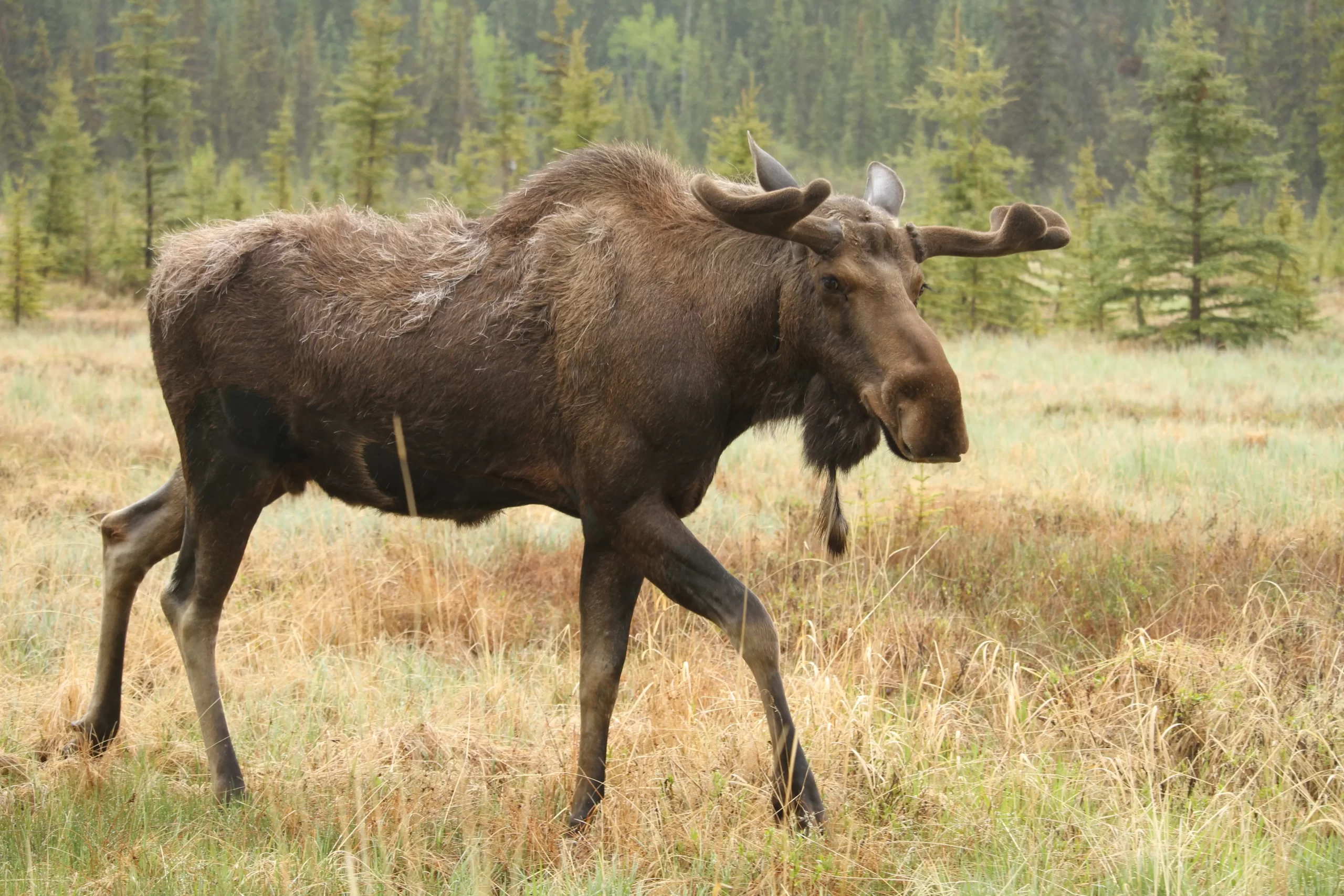
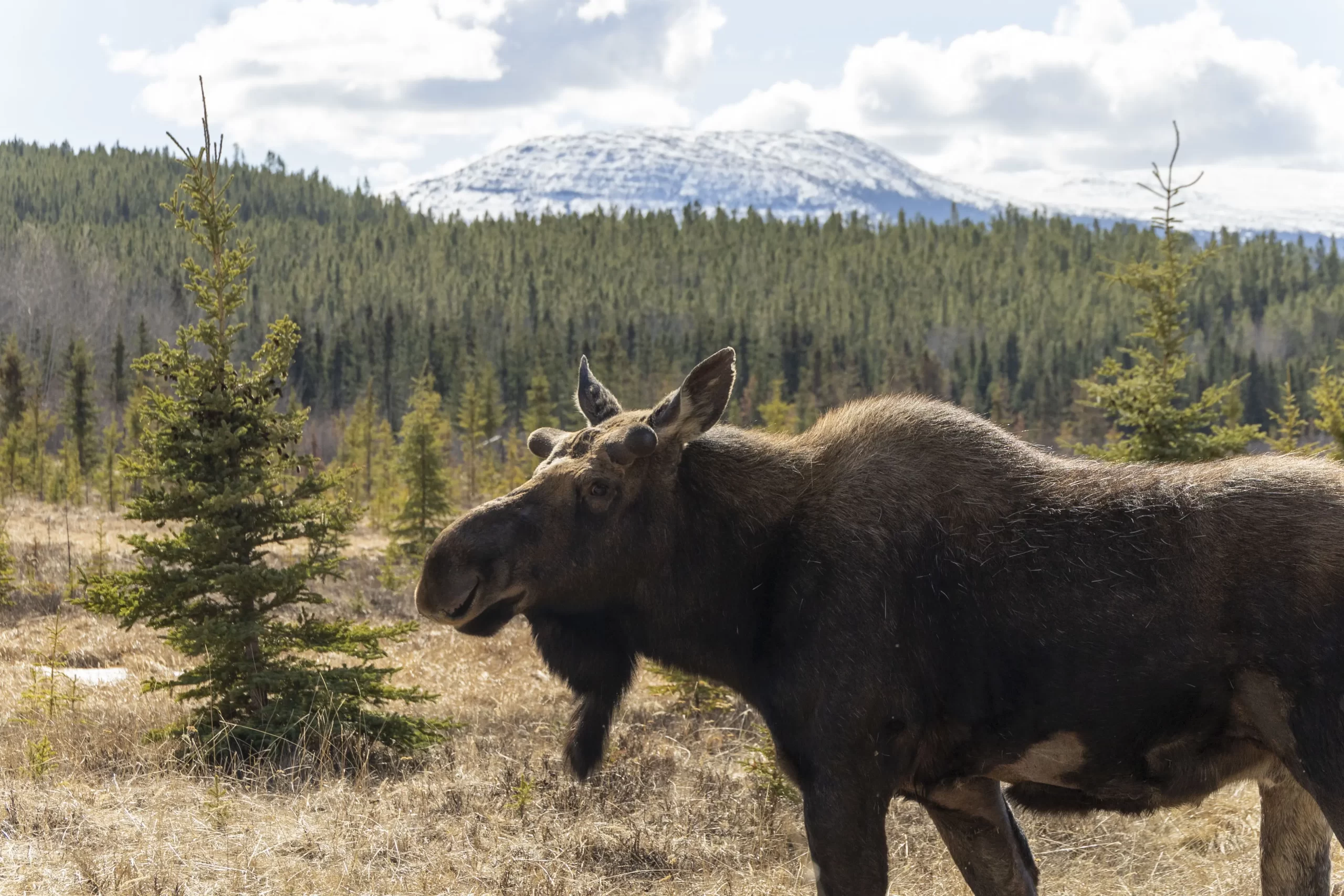
Moose, who roam the colder reaches of North America, use their dewlaps to help cool off in warmer weather. Male and female moose have dewlaps though their sizes differ considerably with, naturally, the male dewlap being larger than the females. The loose skin beneath their throat appears to expand and contract, and become more or less furry based on seasons which would help release heat from their bodies. This means that on a hot Yukon day (don’t worry, we don’t have too many of those), the dewlap might help prevent a moose from overheating as they browse lazily in the wild.

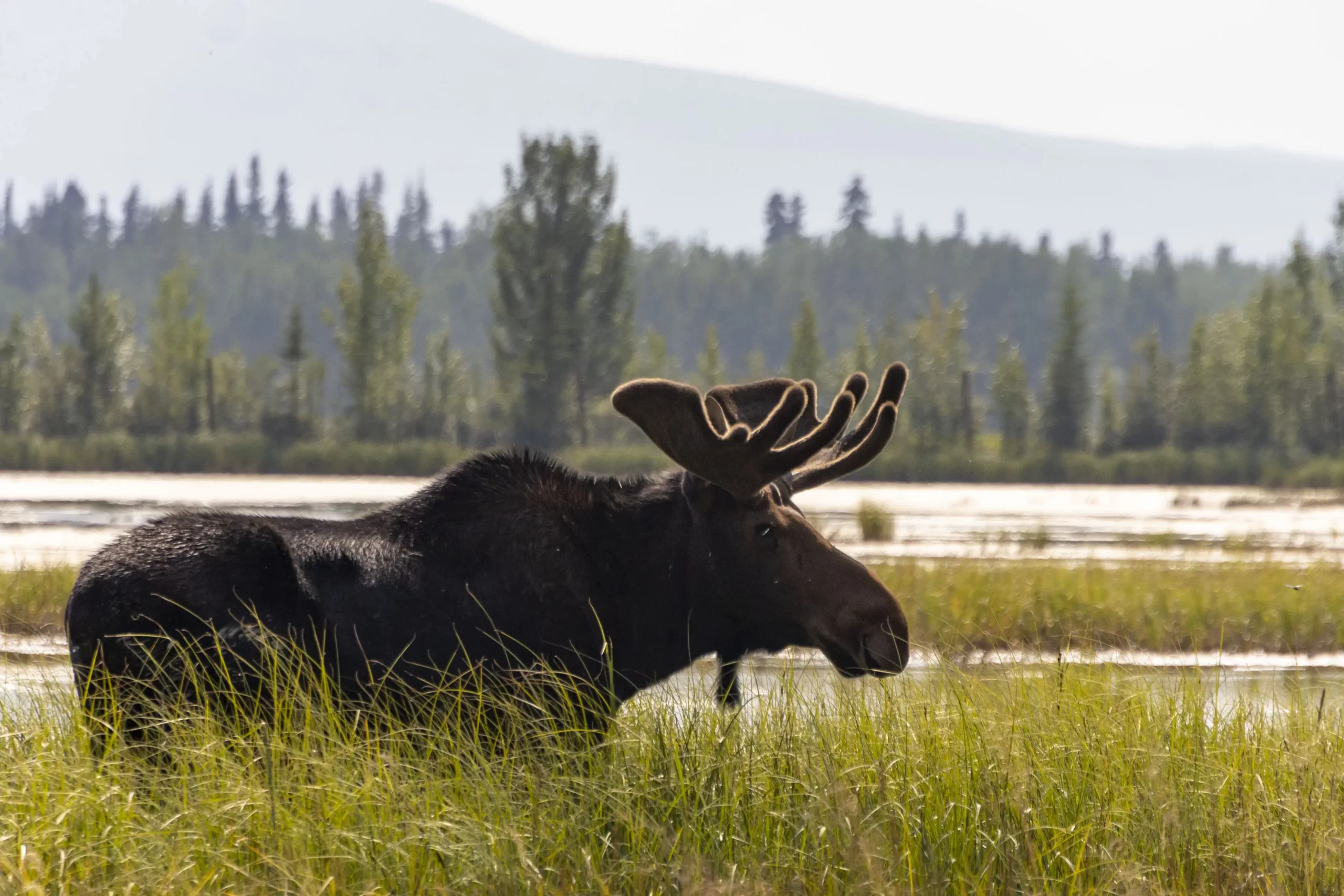
Moose September 2013 - Justine Benjamin. Cow and bull moose in rut season.

This statement might be contested by research from ungulates evaluated from Bro-Jørgensen given the need to thermoregulate (dissipate heat) is rather limited when you live in a more predominantly cold-climate than comparatively the eland antelopes of South Africa. Large ungulates like bison, elk, and yak do not present this caruncle; they may have evolved alternative, behavioural, cooling mechanisms that are less ‘cool looking’! But, wait, what about caribou? Technically, they fall under the 400kg threshold of the study and live in a cold climate and though they (males particularly) seem to rock the dewlap… sort of, theirs is more of a budget-friendly version compared to the moose’s deluxe mode.

(We’ll admit we’re pretty perplexed that both moose and caribou have flappy neck skin but wouldn’t be considered in the list of animals with evolutionary cooling mechanisms as they both are amazing swimmers, spending a lot of time in water and thus being able to cool themselves via this method—alas we will stick to moose necks!)  We appreciate that Bro-Jørgensen recognizes investigations into ungulate dewlap purposes has been left largely unexplored and for some reason, lizards have stolen all the scientists' attention. 

Dewlaps and Courtship: The Moose Dating Scene

If you thought moose were all about antlers for impressing mates, think again. Dewlaps are also, or alternatively to thermoregulation, thought to be involved in courtship. During mating season, male moose seem to have enlarged dewlaps to make themselves appear more impressive. After all, what’s a little extra neck real estate if it helps you woo the ladies? This trait can also be found in male leopards—alongside aging the dewlap grows, similar to a lion’s mane thickening, scientists believe this growth helps in intra and inter-specific interactions—the important sexual selection kinds of interactions for attracting mates and staving off competitors.


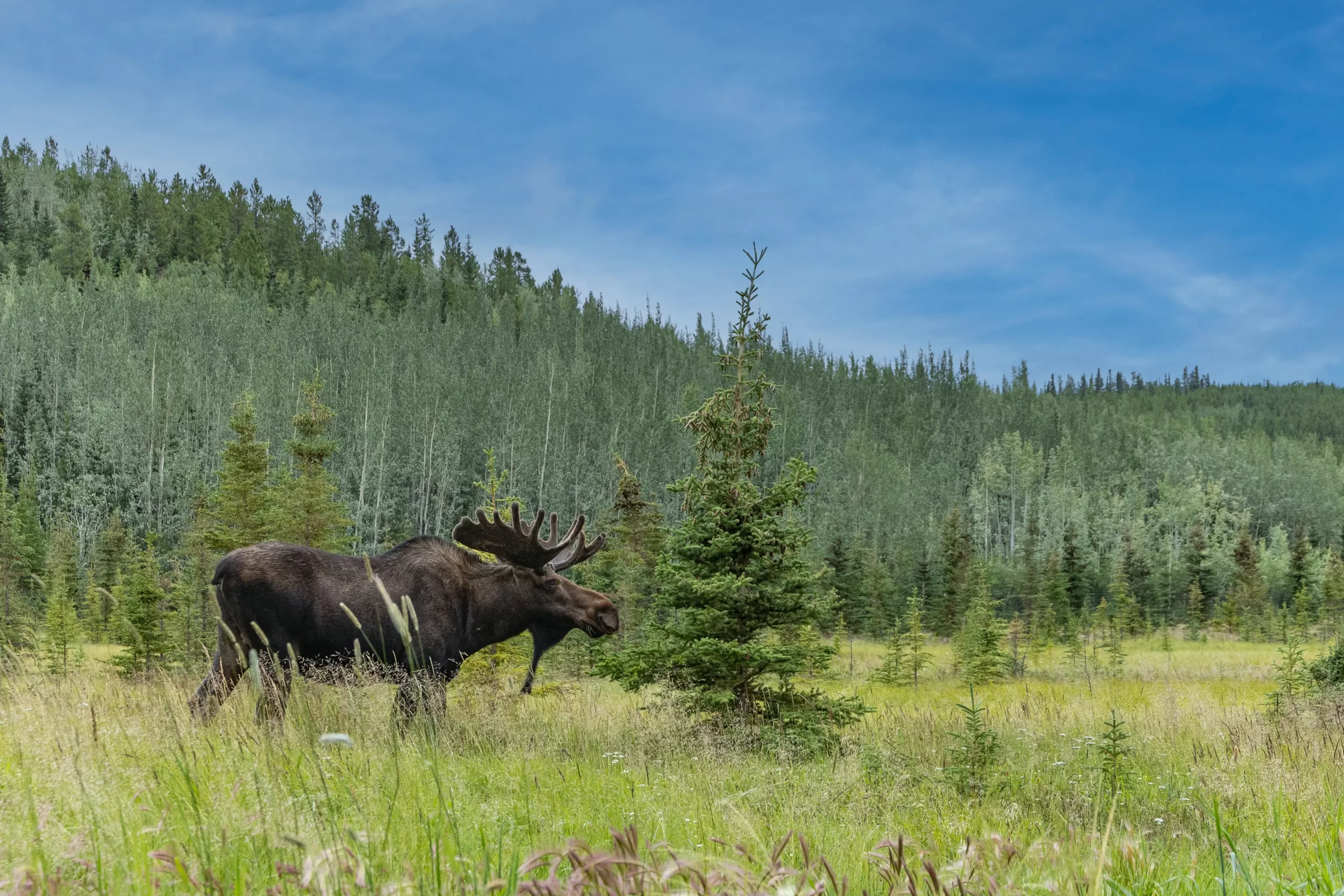
Moose Bull Watson in Summer 2024 and Winter 2024 show a side view of the animal and its dewlap. It appears larger by possibly being more hairy in the winter for protection of the extra skin. In summer lighter and able to dissipate heat like its less hair covered ears in the summer.

In some species (like lizards), males will flare their dewlaps out to signal dominance or interest in a mate. While moose don’t exactly go full "show-off" mode with their dewlaps, the extra skin could play a role in their mating rituals. After all, being a moose isn't all about looking tough with those antlers—it’s also about managing the subtler art of, well, neck presentation. 

These photos from young to old, left to right, are of Watson. We see from photos, the size of the dewlap appears to become larger over time. Bro-Jørgensen also explores the idea of the dewlap (in elands) being a detterent to predators as the side view makes the animal look larger and perhaps more intimidating. This would align with mature, genetically inclined animals having a larger dewlap. Though this was taken further and scarring on the dewlap was tested, exploring its advantages or disadvantages to protecting the common area of attack on prey by predators in some inter-species interactions.

A "Dewlap-umentary" Moment

Imagine a scene straight out of a nature documentary: A lone moose stands amidst the wild, its dewlap gently swaying in the wind as it scans the horizon. It’s a thing of beauty, really. But then, a rival moose appears on the scene—let the neck flap show begin! Not much behaviour present in ungulates, as seen in lizards and birds, but the moose may posture, showing off their large body size and then bam - side view of an impressive neck dangle and their rival runs away in fear - perhaps a convincing illusion.

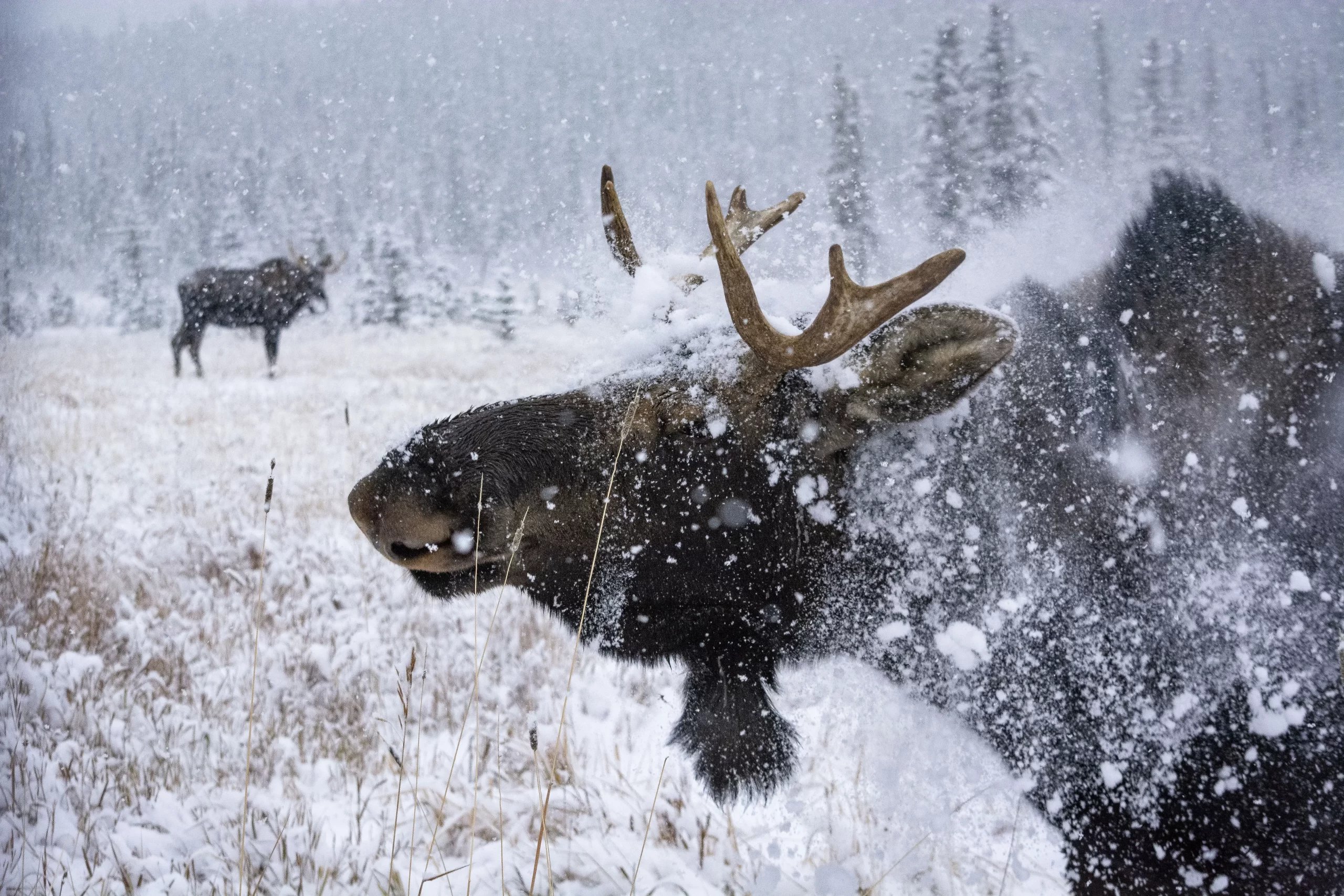
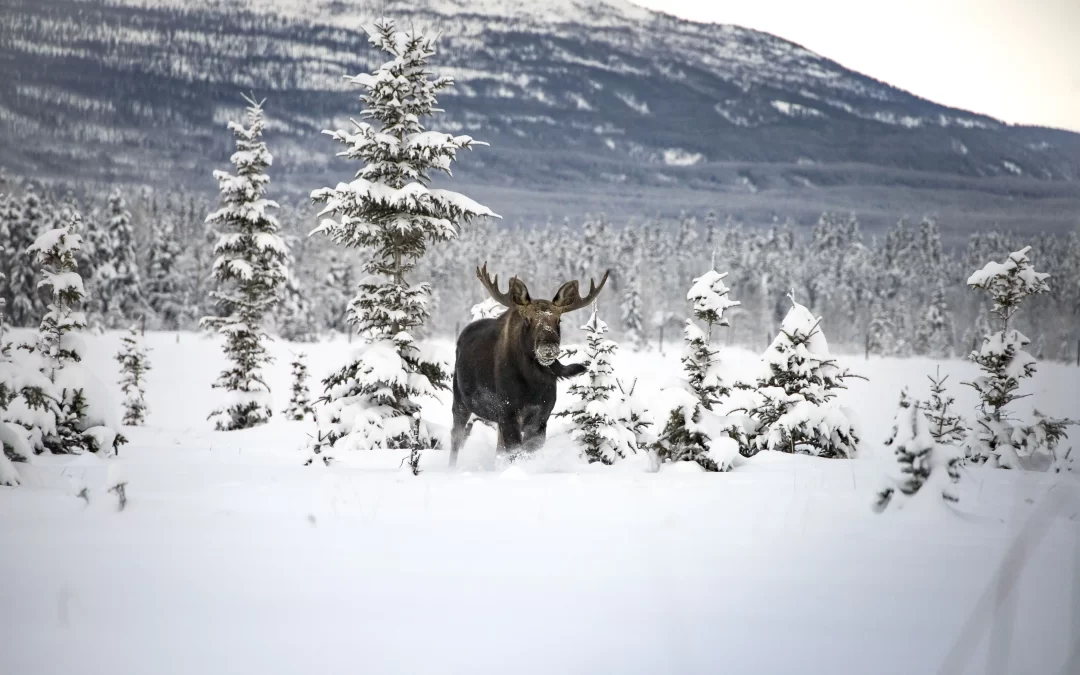
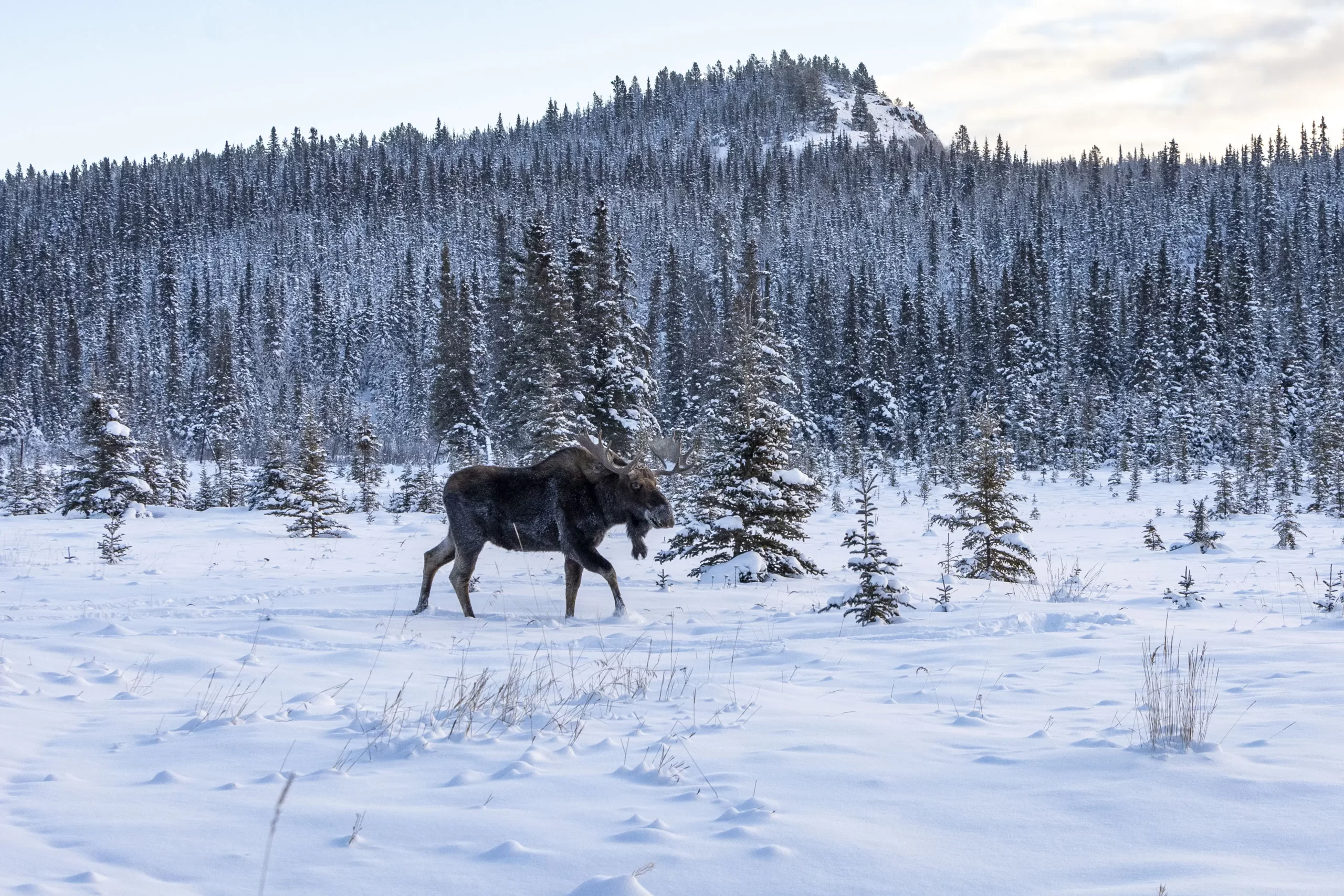
Winter Snow and two moose bull October 2020 29 YWP Lindsay Caskenette

Wrapping It Up: A Love Letter to the Dewlap

So, the next time you visit the Yukon Wildlife Preserve and you catch sight of a moose strolling majestically past, don't just look up at the antlers or marvel at their towering size. Look down (or, more accurately, look to the side) and take a moment to appreciate the dewlap. Despite all the brainpower spent pondering this, no one really knows why moose have dewlaps. Is it a fashion statement? A built-in scarf for chilly mornings? Who knows!

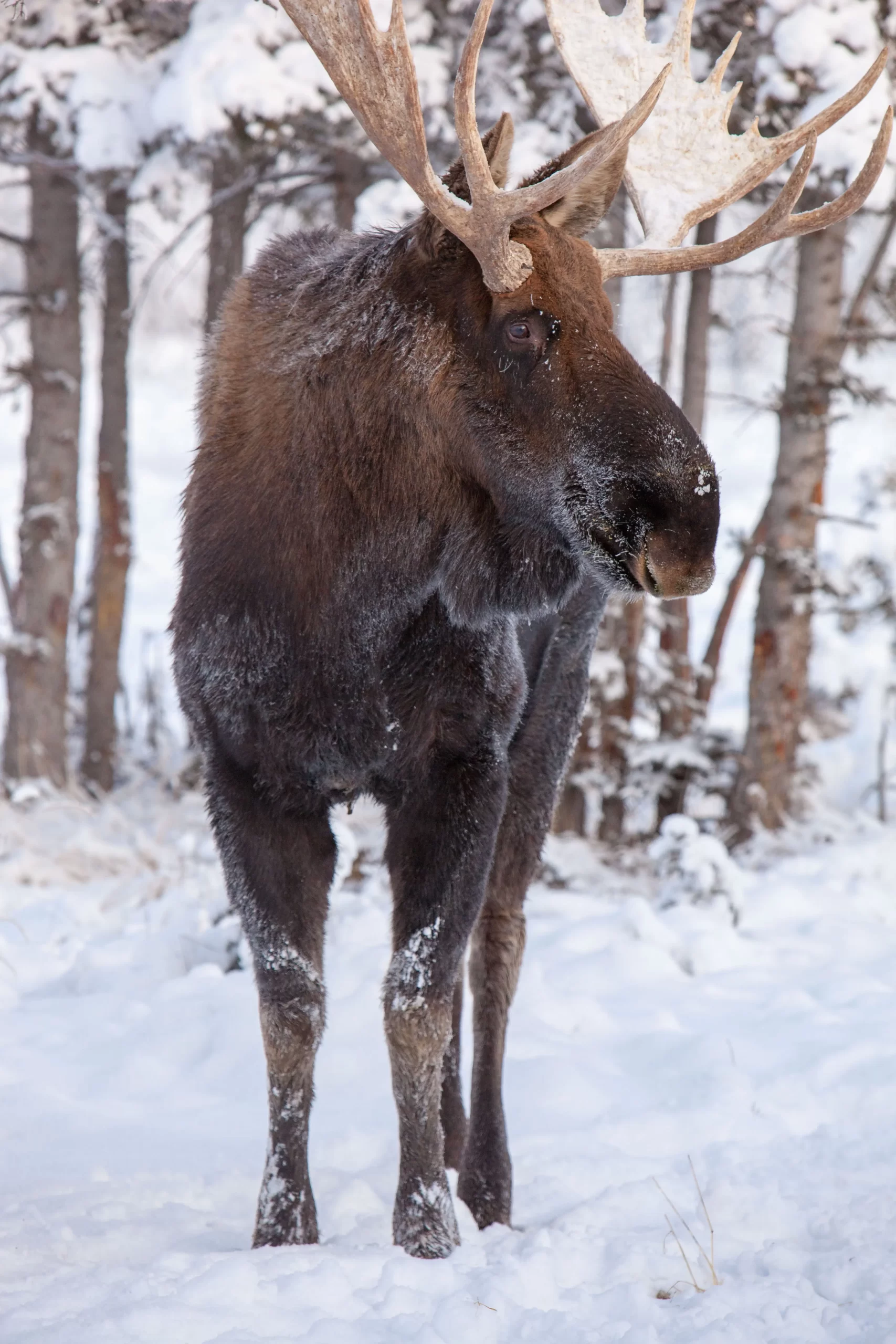
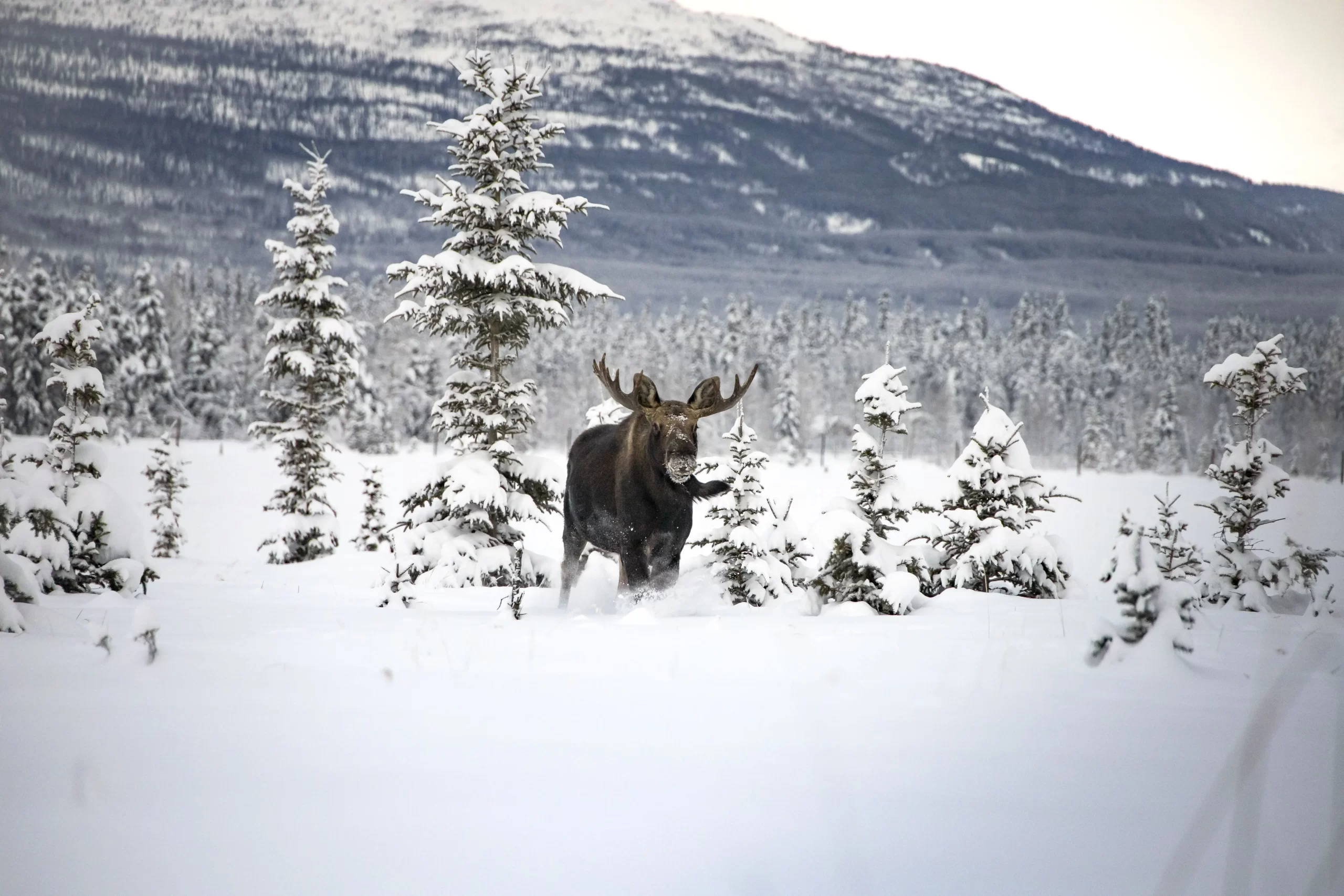
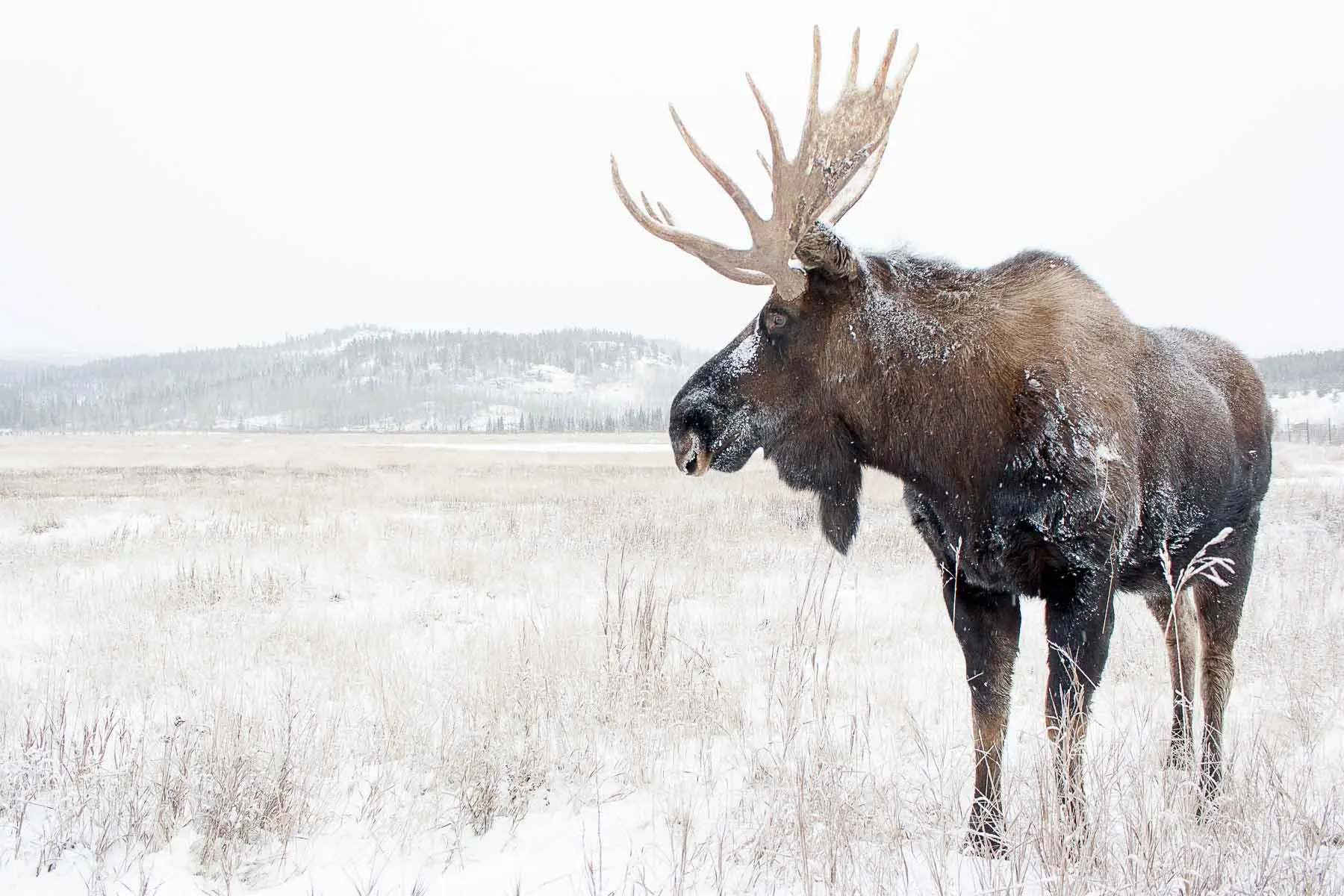
moose in snow . The bull shows off his impressive size, antlers and dewlap. Jake Paleczny.

Since both male and female moose have them and they don't seem to offer any major survival or dating perks, scientists think basically, ungulates got their dewlaps through evolutionary peer pressure, but not the same kind as lizards and birds. While birds and lizards are out there with their flashy, look-at-me neck bling for dating or drama, ungulates might’ve evolved their dewlaps for totally different reasons—like a mysterious club no one’s quite figured out yet. The dewlap might just be a leftover from moose ancestors—like a trendy accessory that’s fallen out of style but still hangs around (sciencey talk calls this a vestigial trait).

Moose watson Jan 22YWP winter L.Caskenette dewlap swing - would this intimidate or attract you - if of course you were a moose?

In the world of wildlife, the moose's dewlap is mysterious, beautiful, and—if we’re being honest—just a little bit stylish. Who knew that this flappy neck skin would be so fascinating? Certainly not us. But we’re glad we found out. Wait, what exactly did we find out!?

Resources:

Bro-Jørgensen, J. Evolution of the ungulate dewlap: thermoregulation rather than sexual selection or predator deterrence?Front Zool 13, 33 (2016). https://doi.org/10.1186/s12983-016-0165-x

Baeckens, Simon et al. “The brown anole dewlap revisited: do predation pressure, sexual selection, and species recognition shape among-population signal diversity?.” PeerJ vol. 6 e4722. 8 May. 2018, doi:10.7717/peerj.4722

Jonathan Losos. How Many Times have lizard Dewlaps Evolved? August 12, 2011.

Photo credits: L.Caskenette, J.Benjamine, J.Paleczny, M. Mark., (unless otherwise noted).


Lindsay Caskenette

Lindsay Caskenette

Manager Visitor Services

Lindsay joined the Wildlife Preserve team March 2014. Originally from Ontario, she came to the Yukon in search of new adventures and new career challenges. Lindsay holds a degree in Environmental Studies with honours from Wilfrid Laurier University and brings with her a strong passion for sharing what nature, animals, and the environment can teach us.
867-456-7400
Lindsay@yukonwildlife.ca

Explore by Category

Explore by Author

Bonaparte’s Gull Release

Bonaparte’s Gull Release

animal stories

by Lindsay Caskenette | Jun 25, 2024

4 minute read - 

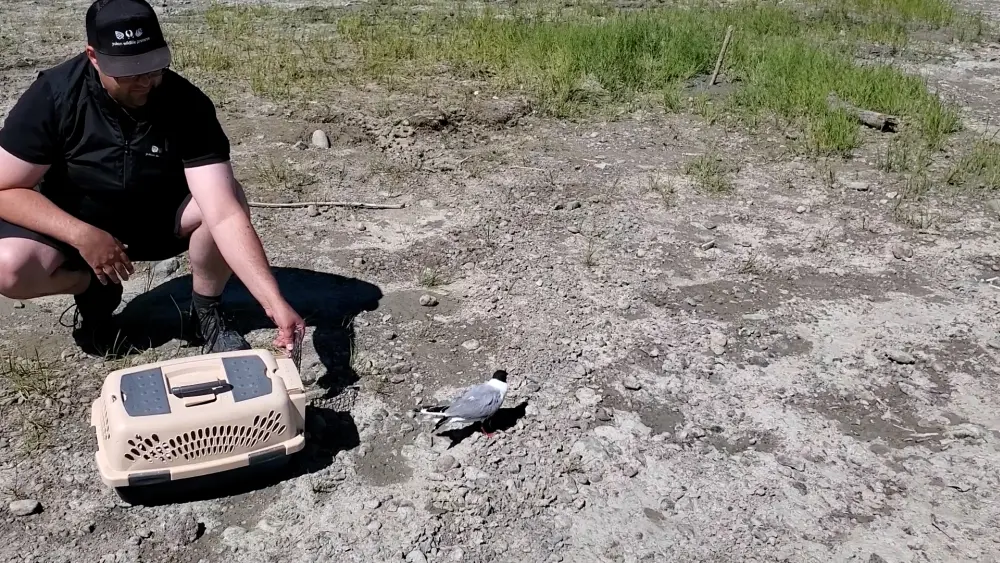
A Bonaparte's gull was brought into the Wildlife Rehabilitation Centre at the Yukon Wildlife Preserve after it was found flightless on the side of the road. The bird has no significant injuries, some feather damage and was likely concussed. A short time in the centre to recover, eat fish and get strong meant a successful release of the animal to Tàa'an Män — Lake Laberge on the traditional territory of the Ta'an Kwach'an Council.

Lindsay Caskenette

Lindsay Caskenette

Manager Visitor Services

Lindsay joined the Wildlife Preserve team March 2014. Originally from Ontario, she came to the Yukon in search of new adventures and new career challenges. Lindsay holds a degree in Environmental Studies with honours from Wilfrid Laurier University and brings with her a strong passion for sharing what nature, animals, and the environment can teach us.
867-456-7400
Lindsay@yukonwildlife.ca

Explore by Category

Explore by Author

Faces of the Preserve: Doug

Faces of the Preserve: Doug

animal stories

by Doug Caldwell | May 12, 2023

12 min read -

It takes passion and love for Yukon’s wild spaces and the wildlife that inhabit it, to support the Yukon Wildlife Preserve - a non-profit organization dedicated to the education and protection of Yukon’s natural spaces. 

Meet our Wildlife Interpreter Doug! Here he shares his unique and fascinating life story that led him to not only to the Yukon but eventually to the Wildlife Preserve.

"I was born in Victoria, BC in the mid 50s and am the eldest of four children. Mom said I was born with an extra helping of curiosity. We were the typical nuclear family of the day. Both my parents enjoyed camping and the outdoors, so we did that a lot. I can remember wet, rainy days in a small tent on the beach near Tofino or in one of the provincial parks up island. When I was around seven, we quit the tent and graduated to a small travel trailer for our camping shelter.

We kids explored everything that did not run away as we got closer. Each year we would expand our knowledge of the forest plants and animals, the rocks, waterways and seashore to see what we could collect as we explored and combed the beaches with our shoulders sunburned from squatting in tidal pools observing all the life they contained. Mom was ever diligent to make sure nothing that was dead or could die found its way into the trailer or the back seat of the car. I had to empty my pockets into a plastic pail before I could enter…it was a rule!

One morning, my sister Sharon found a tiny grey kitten snuggled up to the warm rocks of the campfire at Ivy Green Provincial Park. That was the only creature we were ever permitted to take home with us and that cat named Smoky lasted a good long time as I recall, probably because it was spoiled terribly compared to the life of a feral animal trying to make a living in the wilderness.

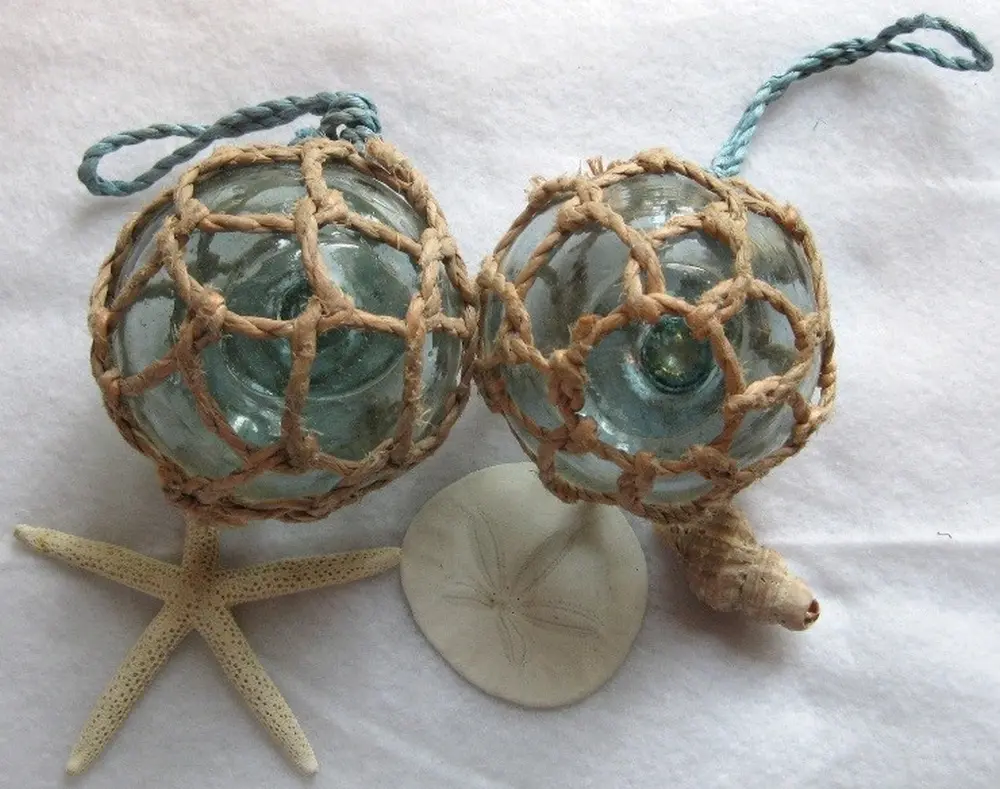
My siblings and I lived in a time that is far removed from today. Back then flotsam on the beach may have included Japanese fishing floats hand-blown from coarse green glass and wrapped in netting woven from long eel grass. We hunted sand dollars of all colours & sizes (the best ones were at Tribune Bay on Hornby Island), crustacean shells, wave-polished glass and stones, crustaceans and hermit crabs out shopping for a new shell to call home, and the jetsam that washed in on the previous high tides. Each day was fresh and new waiting to be discovered, poked, prodded and inspected.

Flotsam on the beach may have included Japanese fishing floats hand-blown from coarse green glass and wrapped in netting woven from long eel grass

Sometimes we would find something that we had seen in a nature book our paternal grandfather had given as a gift, so returning home the book was found and we would learn more about our latest discovery.  My grandfather was hopeful that we kids would take an interest in the natural world, and he would buy us books to inspire our curiosity to all facets of the earth and all that crawls on it. He gifted us with the complete Time Life series of the natural world and an annual subscription to National Geographic. I still have those books and I will sometimes open one and be transported back to the big green chair in our living room sitting next to my grandfather’s spirit as I re-read the descriptions of animals or the planet and how it all works as a singular complex biological entity. 

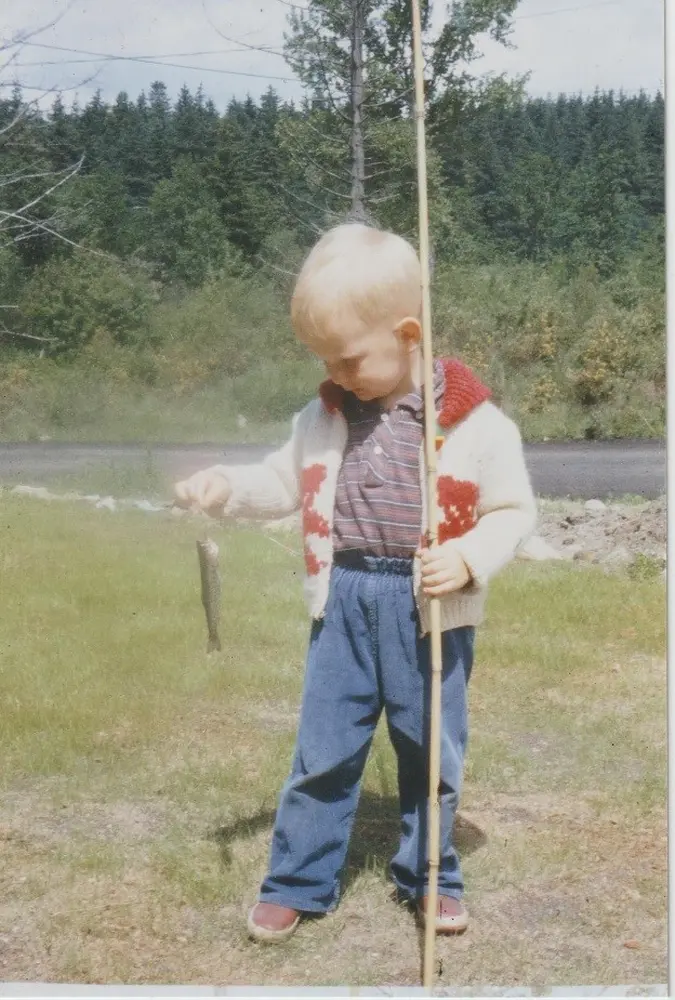
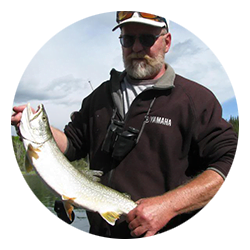
My grandfather was a keen and accomplished angler who infected my dad as a kid with the same passion for testing wits with fish. Grandpa and dad passed this affliction to my brothers and I, and we would often be on the Malahat long before the sun came up; my brother Dave and I slept in the back seat while Dad and Uncle John navigated us to that day’s selected fishing spot. The Cowichan, or Englishman’s River, the Oyster and Gold Rivers, Sooke and Campbell River and many others, were flogged with fly patterns and spinners for rainbows, sea-run cutthroat, seasonal salmon and steelhead. Sometimes we drove along an old logging road to get to a special spot my dad fished with grandpa when he was our age.

Doug's First Fish!

My first fish!

My grandfather was a significant contributor to my perspectives today and I often recall his comments from my childhood when I am telling our visitors about the wildlife here at the Preserve. Back then it was called ecology, today it’s called environmentalism. In each time frame it is still a profound love of our world and all the creatures that live with us.”

When I was twelve the family moved to the mainland and we settled in the cattle farming region of south Surrey. I won’t bore you with my teen years, suffice to say I was right and all those who opposed me were not.

After graduating high school at Lord Tweedsmuir High School in Cloverdale, I worked various jobs in the marine sector from maintenance to a deckhand on a salmon trawler to eventually a trained mechanic with the Mercury Marine in Burnaby, B.C.  

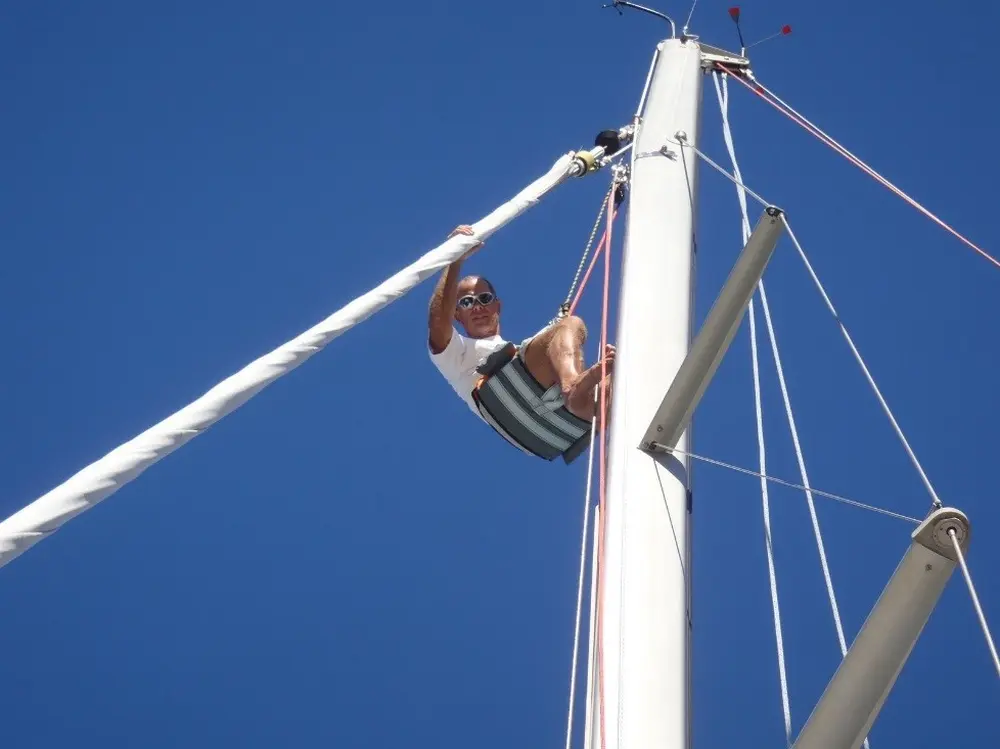
“Being a not-so-big-kinda guy I often got the jobs working down in the oily dank and sour bilges and honestly I quickly developed a dislike for that working environment, so I began to learn about navigational gear and other electronics that don’t live in the bilges, rather they cling high up on the masts and elevated superstructures where a skill-testing climb was required. I quit being a bilge rat and became a mast monkey. I spent a few years installing and repairing radio gear, radar systems, and similar equipment in boats, aircraft, cars and trucks.

My mast monkey days!

Time passed and I met and married my wife Chris. In the fall of 1976, I was recruited for a job working as a marine mechanic for the National Geographic’s support depot in Perth, Australia. At the same time my dad had a business venture here in Whitehorse he wanted me to work in. Two job offers: One hot - one cold. My mom ended up making the choice for us as she quite passionately said she was not going to sit on an airplane for 15 bloody hours to visit her grandchildren. We moved to Whitehorse.

For our first two years in the Yukon, I spent working to get my dad’s business up and running, then I worked at Sea-Land Recreational fixing boats until I jumped out of one and injured my knee which would require 8 weeks in a cast. Thus began my four year gig at CKRW as an announcer/operator- a DJ in common terms. I loved that job; playing music and informing the audience of the day’s events. But we had another baby on the way which required more income, so without another job waiting, I quit the radio business in 1984 and looked for new employment opportunities which led me to a different kind of radio business.

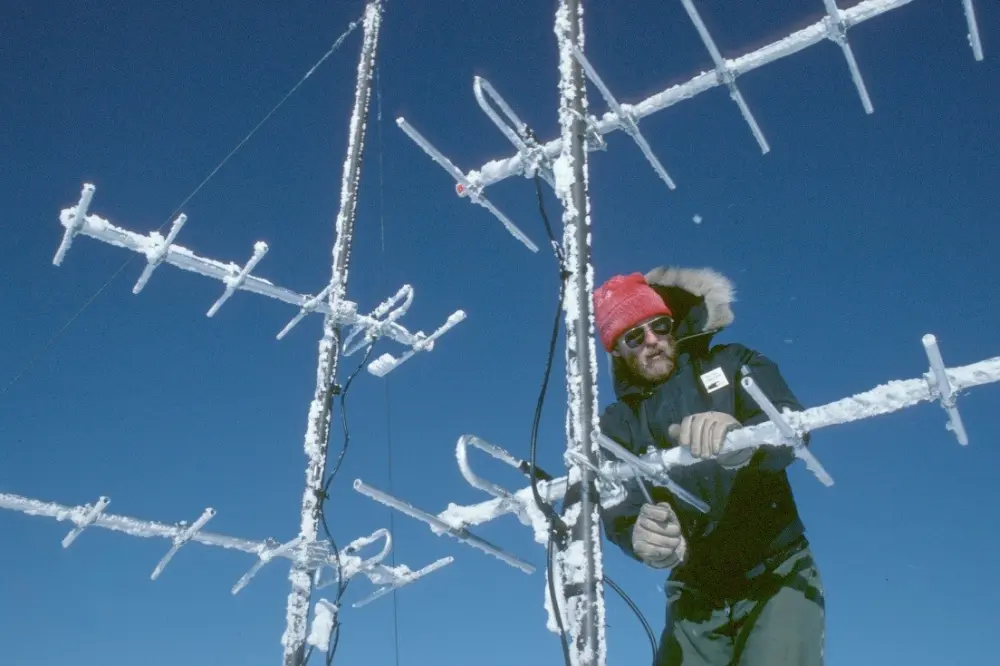
Next, I accepted a job with Total North Communications which took me to many remote wilderness locations all across the North as we installed remote communications systems for mining camps, exploration ventures, governments, community radio and TV stations, and mountaintop repeater systems which put us right in the middle of the wilderness.

Repraing the Carcross TV system.

I got paid to travel to exotic remote northern places that people pay dearly to visit and experience. While working in the Kluane National Park area on a mountaintop, young Dall sheep would be sniffing in our toolboxes unafraid as we were quite probably the first humans they had ever seen. We watched from the safety of a helicopter as the namesake grizzly of the Golden Bear Mine south of Atlin tore apart a repeater box we thought would be bear-proof…we were wrong. One trip into the far north we had to land the Twin Otter on the frozen tundra, roll a couple fuel drums off the plane and pump the fuel into the plane as a group of caribou watched from some distance. Then we put everything back into the plane and resumed our travel before it got too dark.

Left to right: Refueling the Carcross TV systems on Caribou Mountain; Repeater cornshell Kluane National Park; Installing a repeater near Kluane Lake. 

This job took me to some awe-inspiring locations, often where humans had not yet made footprints. I met some truly amazing people and had some adventurous experiences, some of which prompted my wife to beg me to quit field work and find something safer. Hard landing a helicopter is not a crash, but she saw things differently than I, so after the third hard landing I gave up field work and moved upstairs into sales and marketing and got fat.

In 1991 I was hired on with the Yukon Government’s Executive Council Office to work in policy and communications and the next 25 years went by in a blur. In 2016, I retired from my formal working career with the government, but I don’t sit still very well and needed something to do.

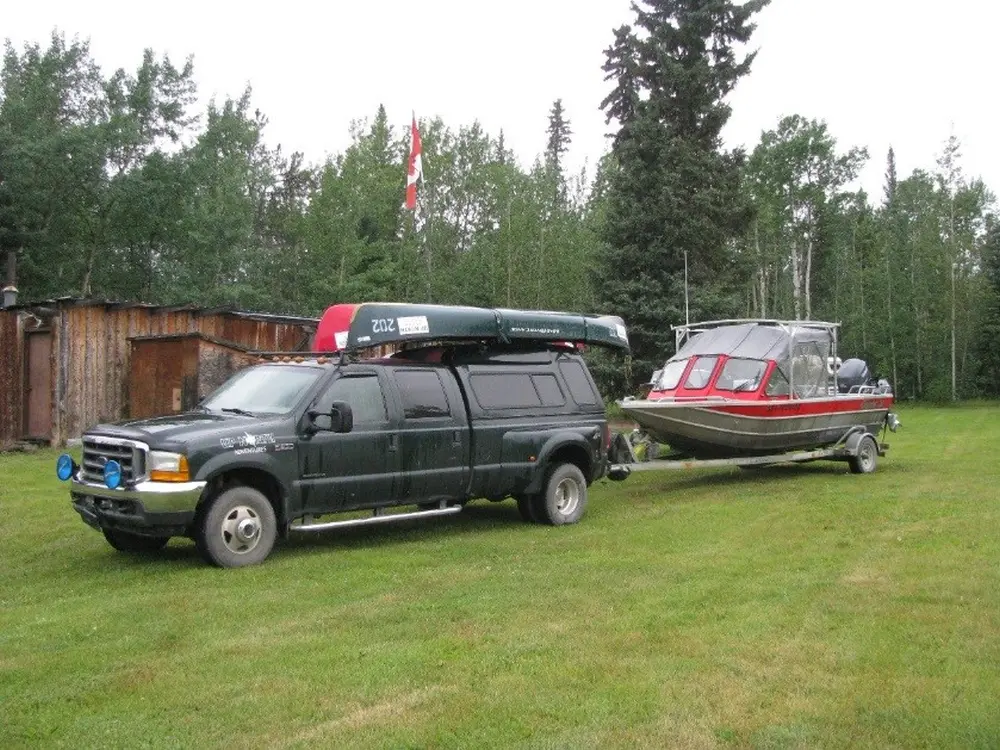
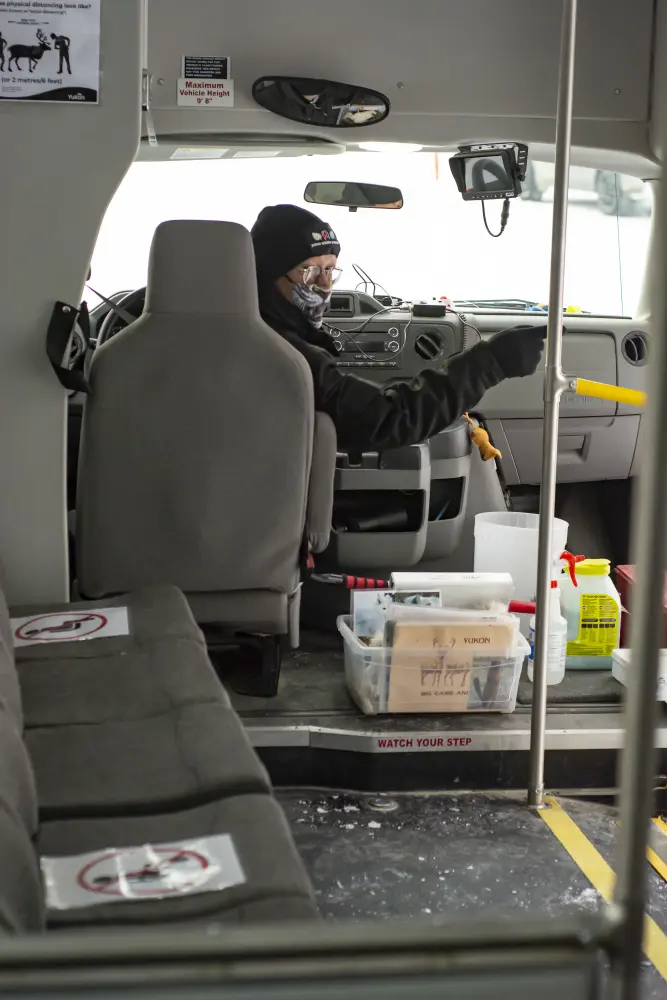
After a month of completing chores around the house and finishing the ‘honey-do’ list, Up North Adventures called to ask if I would be interested in piloting their rough water support boat used to ferry canoe tour groups through the rough and dangerous waters of Lake Laberge and a few other Yukon water systems. Additionally, I would guide fishing parties in search of our local fish species. Inspired by working in that wilderness setting once again, I thought I was set for the rest of my working days. I had a portable office that met my needs very well.”

My portable office for a few years!

After an injury however, a change of pace was needed.

"I saw the job posting here at the Preserve and I considered this would be a great place to work based on previous visits with my grandchildren, and the lack of heavy lifting suited me as I hoped to grow gracefully into my autumn years.

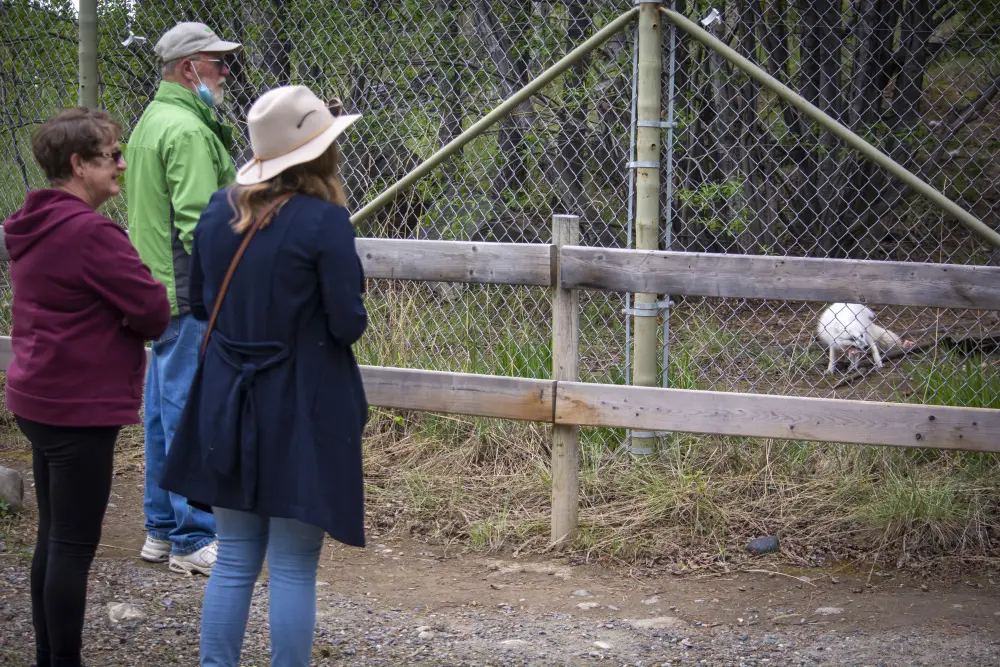
Doug shares stories with guests about the Arctic Fox.
Photo credit: L.Caskenette

When hired and oriented to my new role as a Wildlife Interpreter it took some time for me to become satisfied with the tour presentation I had created. There is so much to share in just the limited hour and a half of a bus tour. Then one day, my memory took me back to one of those chats with my grandfather explaining the world around us and I then knew what my goal here at the Preserve was and I have been refining my tour presentations ever since. I have a presentation now for each season focusing on what the animals are doing at that time in their lives.

I have made it my mission to try and inspire young people to have the same sense of awe and wonder of our natural world as I did when it was explained to me in ways I understood and appreciated. So that’s my focus today - I want to inspire the next generations to love, understand and admire our natural wilderness and the ecology that makes it work.

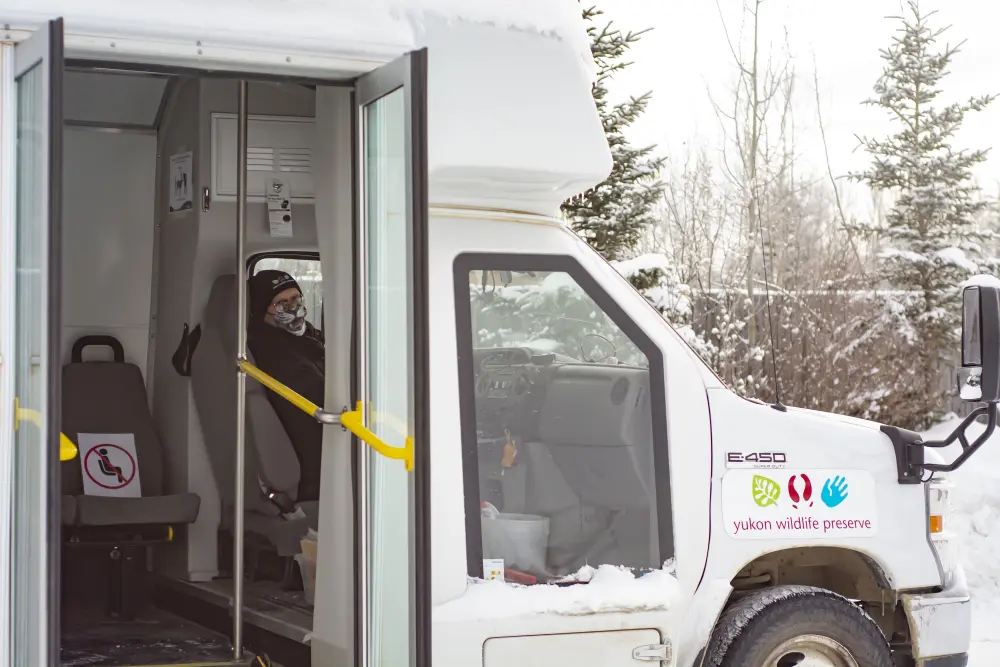
Guided bus tours are offered daily at the Preserve. Book online!
Photo credit: L.Caskenette

Getting to know our visitors is another part of the job I love. Our international visitors are often drawn here by the romantic stories of the Gold Rush and other days gone by in the North. Many of them hope to see the iconic animals of our unspoiled paradise and learn more about them. I am happy to report we often make some long-held wishes come true for these people as they see a real live moose, musk ox, or other favourite creature up close for the first time. Many visitors are already awestruck with the Yukon and have questions about living here and enduring the cold winters, viewing the Aurora and how we cope without all the big-city conveniences they are familiar with. Some of our elderly visitors are transported back to the memories of their childhood when indoor plumbing was a luxury few had in their homes, very few owned automobiles and the technologies of today were promoted in Popular Mechanics.”

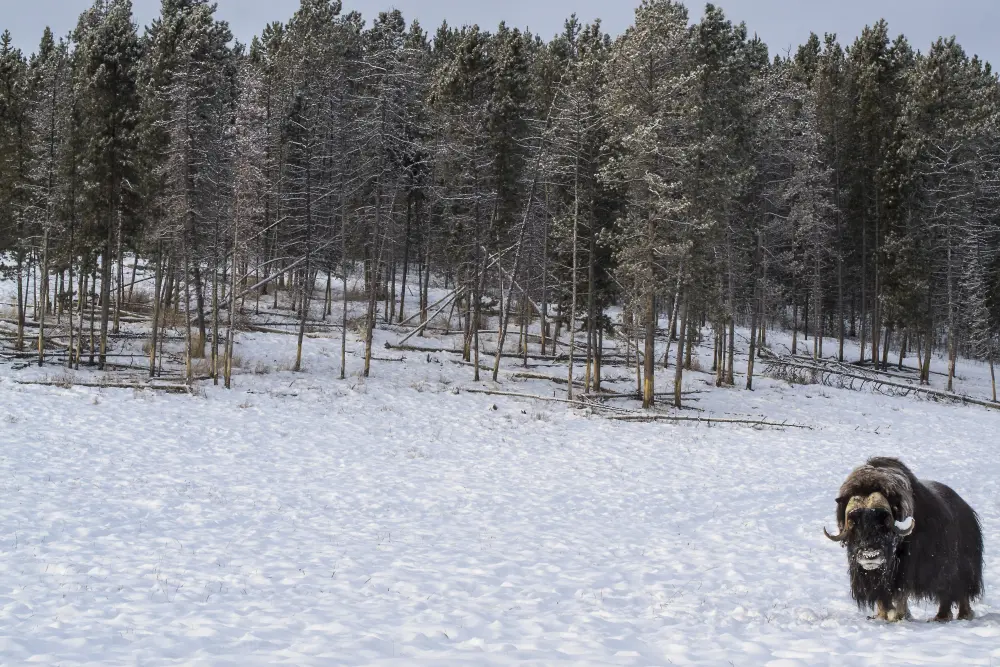
Northern and Arctic icons, moose and muskox.
Photo credit: L.Caskenette

Over the past five years, Doug has met quite a number of people from different walks of life, but a few occasions have stuck out to him.

“One was in the winter of 2018 when a couple from Barcelona toured the Preserve. They were the only ones on the bus and it was around 20 below and we had stopped at the muskox platform for a closer look. I told them about the animals and their natural environment and answered their questions. The lady walked closer to the fence and Jesse, one of our cow musk oxen slowly walked through the snow towards her and stopped so they were only about ten feet apart, face to face with just the wire fence between them. They remained silently staring at each other this way for a bit of time until we got back on the bus. Seated behind me, I could hear the couple quietly speaking in Spanish with some very impassioned tones until the lady began to cry softly. Later in the tour she came to me and apologised for being so emotional.

She could not explain why she felt the way she did but was grateful she had connected with the musk ox and how it was meaningful for her and she would remember it always.

Face to face with Northern wildlife.
Photo credit: L.Caskenette

During my introductory comments on the bus I want people to relax and enjoy themselves and participate rather than just staring out the windows. So as an icebreaker to promote dialog I often point to one of them and ask “What’s your favourite animal in the whole world?” Some need some time to think about it before answering while others answer almost immediately. I have heard everything from horses, dogs and common pets to tarantulas, anacondas, giraffes and polar bears. Animals they adored as kids still have a special appeal for them. It’s that inner-child I want to connect with and helping them to recall being a kid helps to make that happen more easily. I often see the expression on people’s faces that says, “Ask me next!””

Join Doug for a guided bus tour
Photo credit: L.Caskenette

Doug is one of the integral members of the Yukon Wildlife Preserve and his passion helps to connect visitors to Yukon’s iconic wildlife and the habitat in which they live. Next time you visit, stop in and say hello to Doug or share your own story. 

“I have a wonderful opportunity to help our visitors to better understand and appreciate the natural world around us, how it came to be, how it works and how we can help to ensure it continues as it has for millions of years. Kids are keen to know more and I figure if I can help them to understand Nature better, they’ll be inspired to protect it better than previous generations have. As my grandfather demonstrated to me all those years ago, knowledge of our natural world is key to this success. So, I hope I do as good a job with our visitors as he did with me.”

Stories by Doug Caldwell. Read more from Doug. Photos - Doug Caldwell unless otherwise noted.

Doug Caldwell

Doug Caldwell

Wildlife Interpreter

Doug is one of the Interpretive Wildlife Guides here at the Preserve. An avid angler and hunter he has a broad knowledge of Yukon’s wilderness and the creatures that live here. With a focus on the young visitors to the Preserve, Doug takes the extra time to help our guests to better appreciate the many wonders of the animal kingdom here in the Yukon.

Explore by Category

Explore by Author

Busy Times & Hungry Critters in Care

Busy Times & Hungry Critters in Care

animal stories

by Lindsay Caskenette | Aug 3, 2021

This story was originally published July 10 2021 in the e-blast newsletter to Yukon Wildlife Preserve's membership.

Are you a member but don't receive these email Newsletters?  Contact us at info@yukonwildlife.ca to update your email preferences.

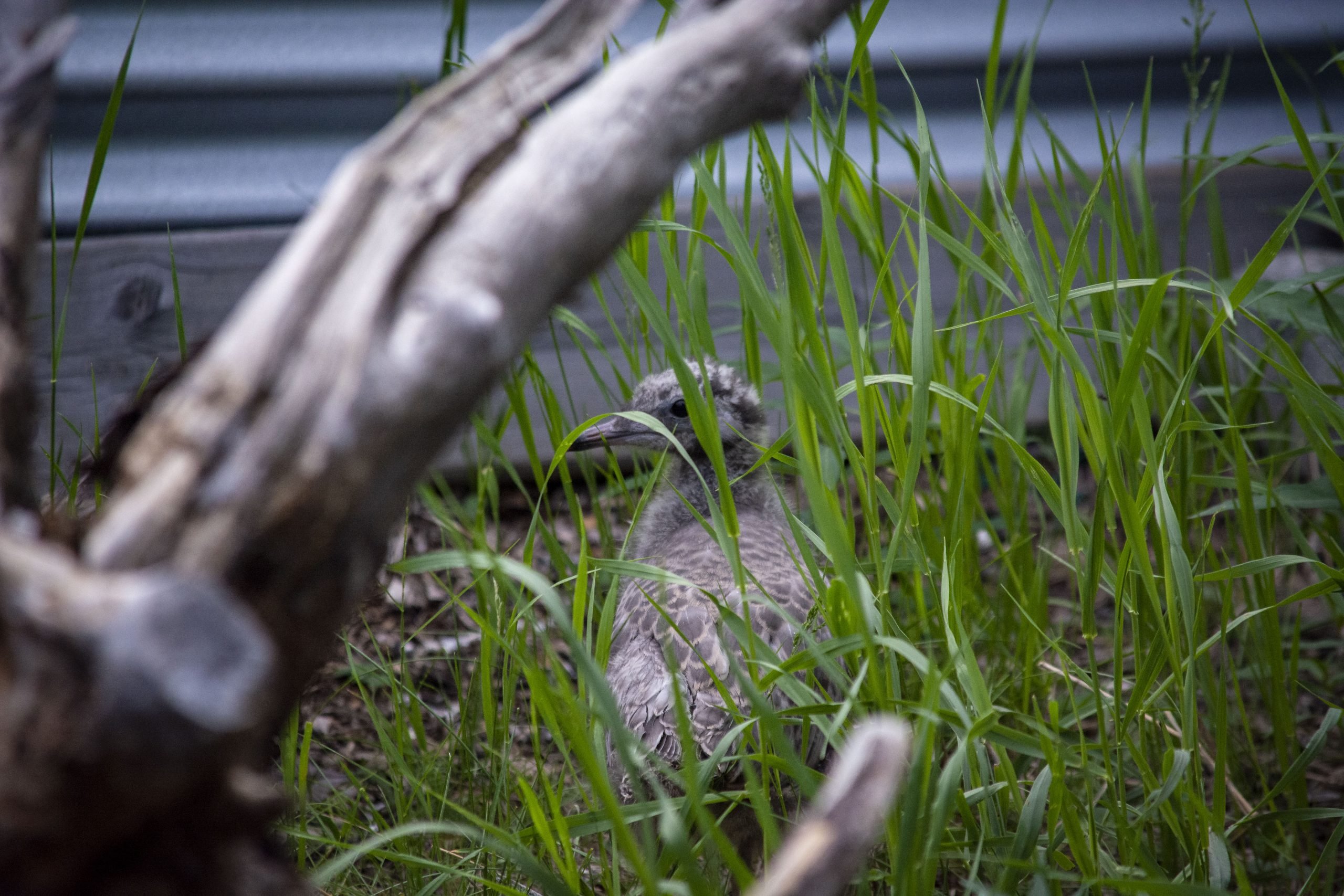
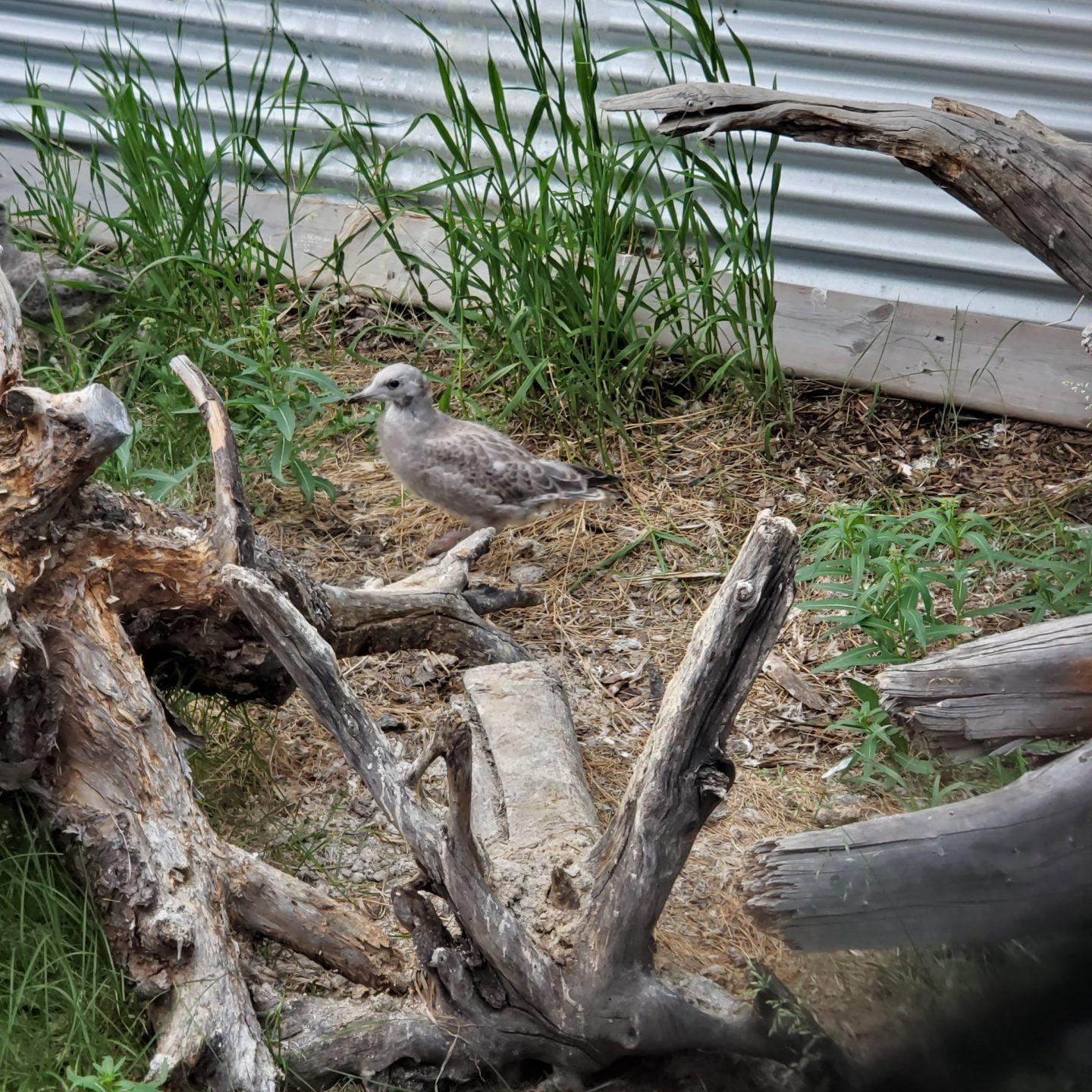
Mew Gull x2

Location found - Downtown.

Admitted on June 15th after the nest was lost. Conservation Officers brought the animals to the Preserve.

This pair are in an outdoor aviary where they are growing fast and eat mice 3 times a day.

• • •

Juvenile Mew Gull with Wing Injury

Also found downtown but admitted more recently on July 7th. This individual has fractures to its right wing and a large hematoma but depsite its injuries is in good body and remains active and alert. 

The animal is on low dose medication for pain and inflammation and the wing is immobilized. It remains under observation before it will move in with the other gulls outside. 

• • •

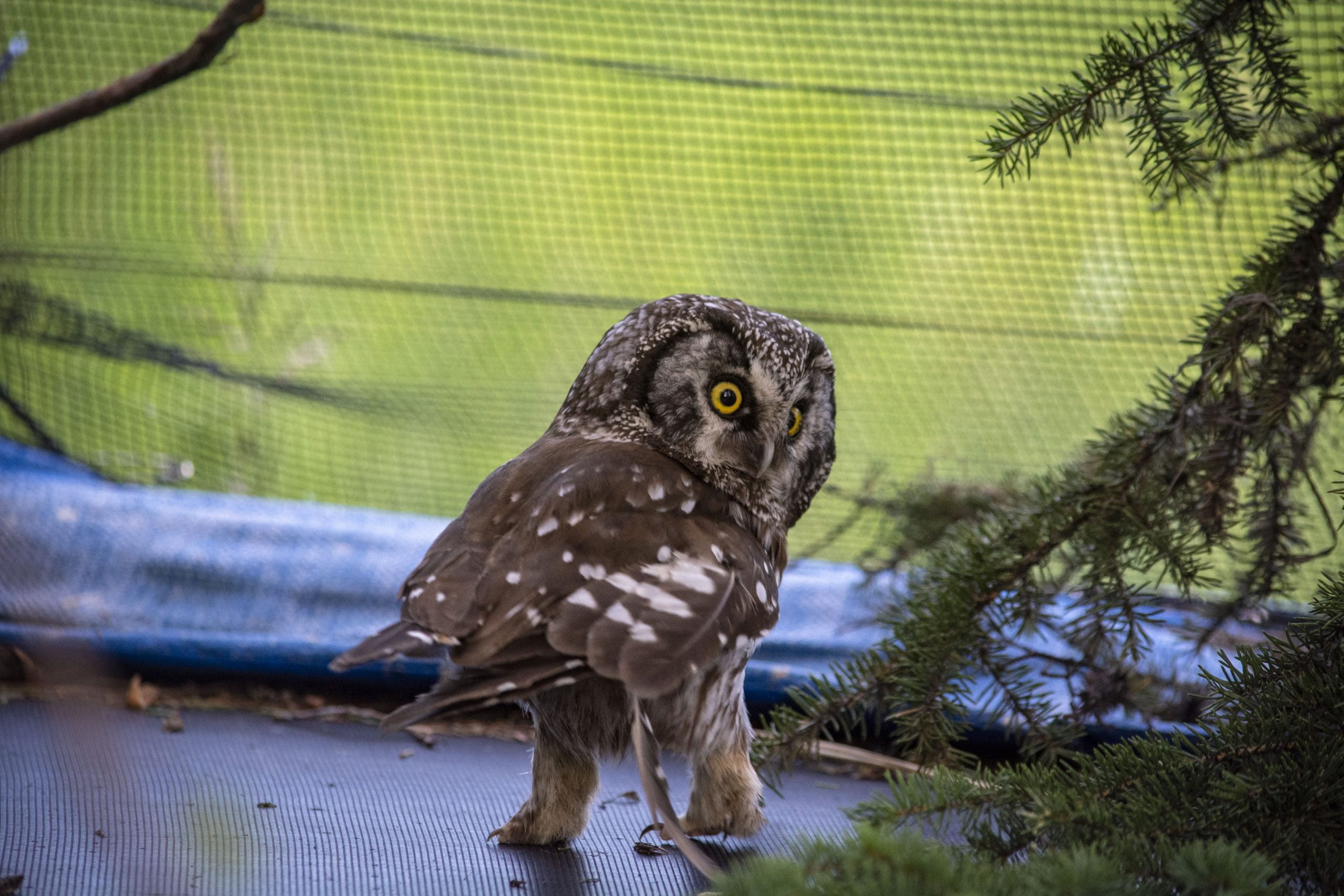
Boreal Owl

Admitted June 28th, this tiniest of Yukon owls was rescued from an attack by a domestic dog. While the animal came in with mild ataxia (lack of coordination) it's doing relatively well. It's missing primary and secondary feathers on both wings but with time and regular mice feedings twice a day the owl should be a good candidate for release when ready.

• • •

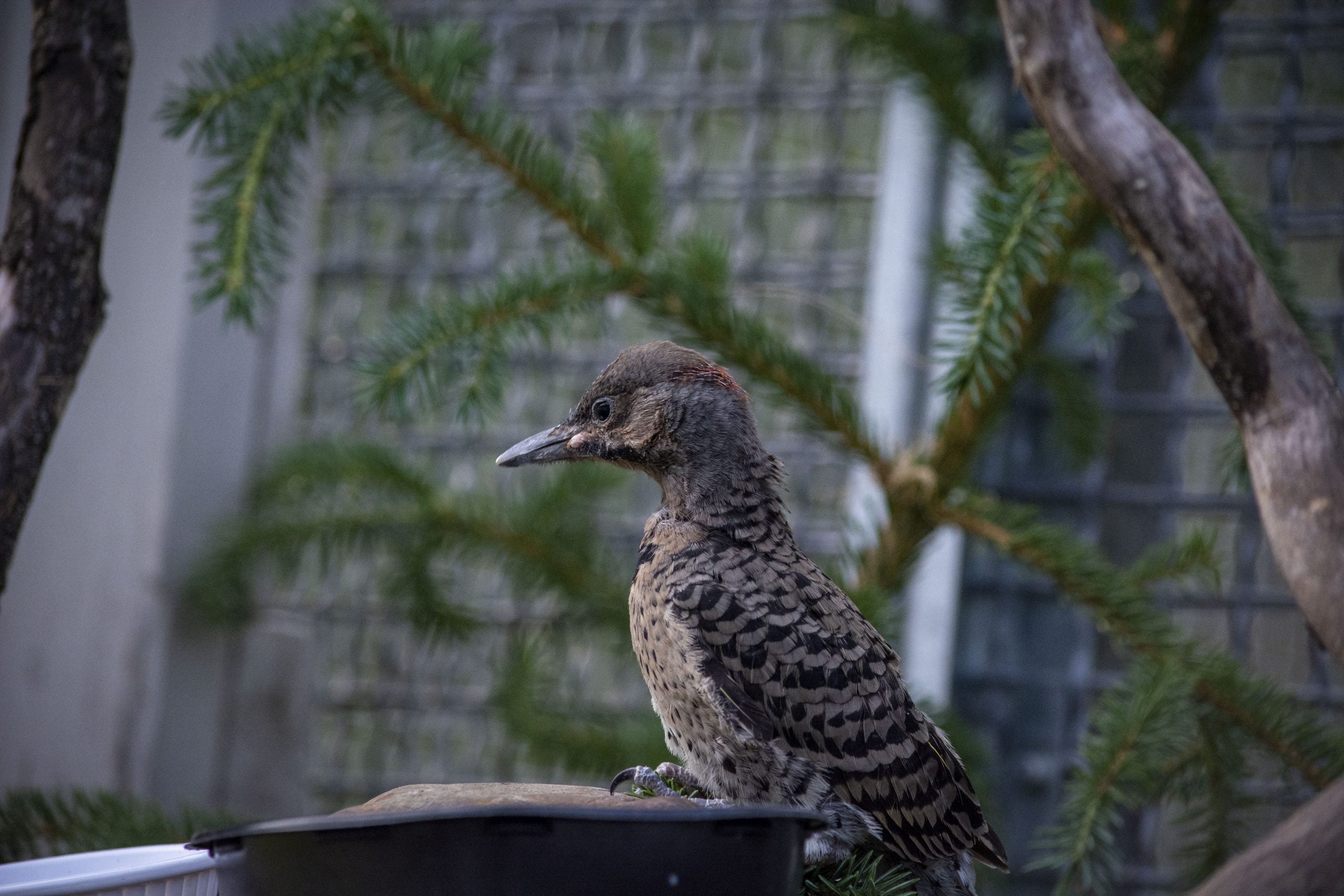
Juvenile Northern Flicker

Location found - Takhini Hot Springs Rd area. 

Admitted on June 27th after the young animal fell out of its nest and was at risk of predation. 

Plan for recovery and release with time and lots of mealworm feedings throughout the day and small mice.

• • •

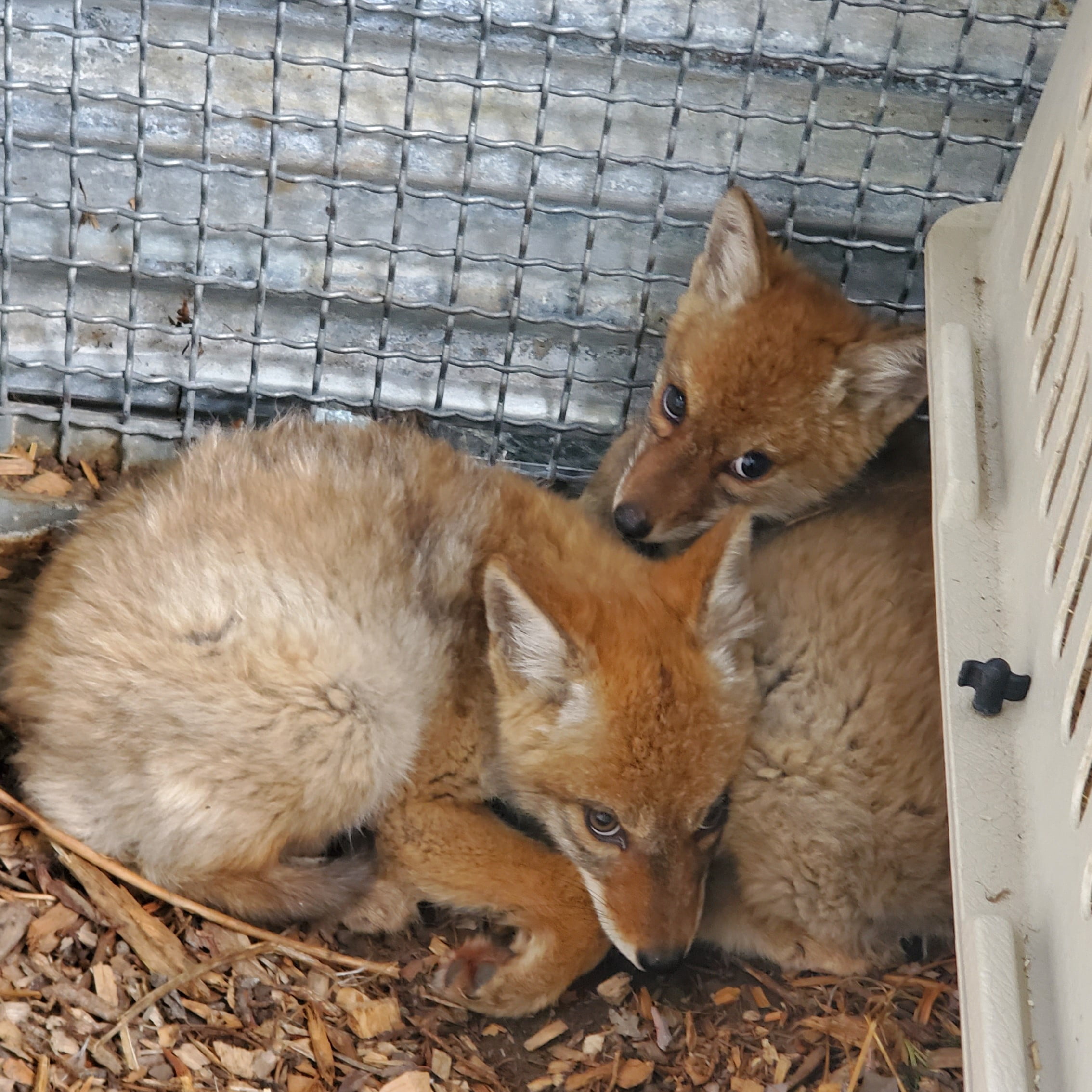
Coyote Pups

2 male coyote pups, about 6 - 8 weeks old, were admitted to the Rehabilitation Centre on July 5th after they were found, suspected to be orphaned, in the Marsh Lake area by members of the public. 

The pups eat 3 times a day and their appetites are growing. Along with a puppy formula, every feeding they consume 4 mice and 2 whole quail each. 

• • •

Each of these animals face challenging times ahead but the Wildlife Preserve Animal Care Team, including Veterinarian, Dr. Maria Hallock, are working 7 days a week, near 20 hours a day to ensure each of these animals are given the best possible chance for recovery and release back into the wild. 

We could use your support to aid in these animal's recovery - please consider donating. Help us keep Yukon wild at heart ♥

• • •

Lindsay Caskenette

Lindsay Caskenette

Manager Visitor Services

Lindsay joined the Wildlife Preserve team March 2014. Originally from Ontario, she came to the Yukon in search of new adventures and new career challenges. Lindsay holds a degree in Environmental Studies with honours from Wilfrid Laurier University and brings with her a strong passion for sharing what nature, animals, and the environment can teach us.
867-456-7400
Lindsay@yukonwildlife.ca

Explore by Category

Explore by Author