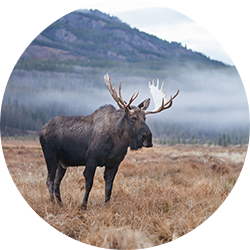
Bull On Encounter!

Bull On Encounter!

animals

by Bree Parker | Mar 30, 2020

Right place right time! Animal Care Assistant, Bree Parker spends day after day diligently supporting our veterinarian Dr. Maria Hallock in caring for, feeding and ensuring the well-being of our collection of wildlife residents. 

Equally as important and valuable as literally providing food for the animals also is observing the animals. Observation is a critical part of our animal care process. This is when staff ensure an individual animal's behaviour is normal. Observing them eating, moving and interacting helps us know that animal is content and full-filling life needs. Signs something is off can include: the animal has a limp; they are not coming to the feed stations and eating; or, they are not socializing in a typical  herd group. These observations could indicate that there might be an ailment to the individual that deserves closer observation or possibly even intervention. However, sometimes this observation can be quite enlightening, it can catch incredible moments of animal encounters and wild behaviours we strive for our individuals to be able to fulfill.  

We've been waiting for the young bull to drop his antler for months now. . .

Bree starting filming this interaction simply because she thought it was fascinating and humorous to see the younger bull (on the left) asserting dominance with another bull, an older bull, with no antlers. Then everything got pretty exciting, pretty quickly!  "We've been waiting for the younger bull to drop his antlers for months now. The older bulls lost theirs in December" said Bree.

This is typical to have individuals vary on antler shed timing, especially between different aged individuals related to sexual maturity. Over the next several months both these individuals, along with all our antler-bearing cervid's (like moose, elk and mule deer) will be re-growing their antlers in preparation for fall. Alas, as another rut season comes and goes, so too will their antlers!

Bree Parker

Bree Parker

Animal Care Assistant

All animal lover to her very core! Bree has had a menagerie of pets over the years, including mice, crayfish and a hedgehog. After completing her Environmental Technician diploma at Seneca College, she realized her true calling was with animals, sending her back to Ontario this coming fall for University of Guelph Ridgetown Campus’s Veterinary Technology program. Bree is always eager to learn new facts about the animals at the Preserve that she can share with visitors.

Explore by Category

Explore by Author

Gifts of the North

Gifts of the North

animals

by Lindsay Caskenette | Dec 17, 2019

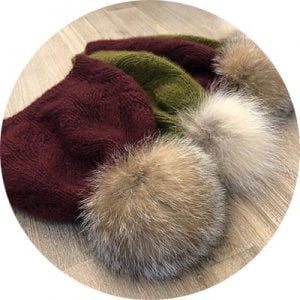
This time last year we released a very special limited edition hat (or toque as we Canadians like to call it). It was the product of generous Yukon businesses who care about Yukon's wildlife.  The 5 premium toques included a donation to the Preserve. They sold out in just a day and a half!

The partnerships have continued to grow and we're really excited to release 2 different limited edition toque styles (4 available of each style) again this Christmas! These toques were made exclusively in the north, inspired by the north. The Yukon is home to incredible people who love to celebrate and honour the uniqueness of this land. This hat directly supports the diverse community that makes this place and its people so unique!

These limited edition hats go on sale at the Preserve on Friday, December 20th.

Hand-knitted in Whitehorse

Last year we were fortunate enough to connect with a very under-the-radar knitting talent, Liz Sutton of Treeline Knits located right here in Whitehorse. Liz, like the other featured small business owners, weaved from passionate hobby into notable entrepreneurs. She balances this passion with a full time job, a love of running and sharing time with friends and her fluffy companions in Yukon’s grand landscapes. Each of these 8 hats were hand knitted and fashioned by Liz Sutton, especially for the Yukon Wildlife Preserve.


Toque 1: Local Hand Dyed 100% Candian Merino Wool

For the first toque, Liz sourced her wool from a little northern yarn shop with a big heart called Itsy Bitsy Yarn Store, located in downtown Whitehorse. The owner, Heather Sealey pours her heart into her store, into sharing her love and knowledge of knitting to every customer she encounters, and into encouraging and inspiring the local and northern flare.

Heather prides herself on working with other local proprietors who produce yarns, locally made wood and antler buttons, other Yukon made accessories, and in the case of this hat, local hand-dyed yarns. Crux Fibres is a product of local Brittany Vogt whose little hobby quickly turned into a business, “Dyeing yarn became an avenue for my deep desire to master creative arts. Playing with professional dyes and quality yarn isn’t easy, it’s a real challenge, but once you get over that crux, that difficult part and start to see the complimentary dance in the water, a real beautiful thing happens. A tapestry of colour emerges”. Who doesn’t love when passion turns into profit and pride in a beautiful piece of art. The wool Brittany uses is 100% Canadian merino wool.


Toque 2: Canadian Muskox Qiviut Blend

For the second toque, Liz worked with Itsy Bitsy Yarn Store to source qiviut from Nunavut Qiviut.

Nunavut Qiviut in turn sources arctic fibres from the Kugluktuk area of the Yukon’s more eastern territorial neighbour, Nunavut. Here, and across the circumpolar north, wonderfully woolly, ice-age creatures roam the barren landscape. Muskox are formidable animals of the arctic whom managed to survive an era that most animals (including the woolly mammoth) did not. Muskox are both a majestic and extraordinary creature, not only because of its luxurious fibre but its remarkable place in history. Today, muskox continue to provide an incredible and valuable support system to the people and communities of this shared landscape.

The Inuit name for muskox is Umingmack, “the animal with skin like a beard.” The undercoat wool belonging to this animal gives it the ability to thrive in the extreme arctic environment but also is an animal harvested by Inuit’s for traditional purposes like winter sleeping mats, protein for elders and families.

Nunavut Qiviut works with these local harvesters and community members to purchase the qiviut wool for fibre production. This on the ground activity by Nunavut Qiviut supports food security, a wage economy, cultural continuity and traditional Inuit lifestyles in an ethical and fair manner.

Sustainably Trapped in the Yukon

A toque isn’t complete without a pom-pom. This year, Liz sourced furs through the Yukon Trappers Association and Yukon Wild Furs. Yukon Wild Furs donated locally and sustainably harvested lynx from Indigenous trapper and educators, George Bahm and Chris Hobbis’ trapline located in the South Canol Road area.

Owner of Yukon Wildlife Furs, Vanessa Aegirsdottir, might possibly have the smallest gift shop in the Yukon in square feet. But her mission is huge: “being an education beacon for Indigenous culture and worldviews”.

Bahm also sees great value in sharing fur harvesting practices with consumers and their relationship with the land. Wild fur trapping can be sustainable, ethically sourced and support traditional lifestyle when a fair price is offered for the fur as opposed to farmed furs.

To the people who buy them, Bahm said they’re deepening their connection to the Yukon and the people who’ve trapped for generations.

I tell people that when they’re wearing fur we ask them to be mindful of the fact that an animal has given its life so we can adorn ourselves with its feathers, with its fur and by wearing those items they’re forever in a relationship with an animal. It’s more than just a pair of earrings.

A Community That’s Wild at Heart

The Yukon Wildlife Preserve is a non-profit charitable organization. In the 1970’s Danny Nowlan started accepting and caring for injured and orphaned wildlife at the Yukon Game Farm. Nearly 50 years later the Preserve continues to care for Yukon’s most vulnerable animals. Today we are a living centre of Yukon’s species that connects more than 30,000 visitors to the natural world, each year.

Find out more about what the  donation with the purchase of the hat means for the Preserve at donate.yukonwildlife.ca .

These toques represents so much more than fashion and warmth! It symbolizes the values and lifestyles of this unique territory and the people and animals that call it home. By purchasing this hat, you are supporting the people, their businesses and the land and animals of the north - Liz Sutton of Treeline Knits, Itsy-Bitsy Yarn Store, Yukon Wild Fur and local trappers, Brittany Vogt of Crux Fibres, Nunavut Qiviut, Yukon Wildlife Preserve - Wildlife Rehabilitation and a community that is wild at heart!
Lindsay Caskenette

Lindsay Caskenette

Manager Visitor Services

Lindsay joined the Wildlife Preserve team March 2014. Originally from Ontario, she came to the Yukon in search of new adventures and new career challenges. Lindsay holds a degree in Environmental Studies with honours from Wilfrid Laurier University and brings with her a strong passion for sharing what nature, animals, and the environment can teach us.

867-456-7400
Lindsay@yukonwildlife.ca

Explore by Category

Explore by Author

Pouncing Fox

Pouncing Fox

animals

by Julie Kerr | Dec 17, 2019

A red fox streaks by on a snowy November morning.  I stop my activity, pivot and watch through the window.  While I am inside and the fox is outside, it is so close to the window of my home that I know any movement on my part will translate to sound, making this wild animal aware of my presence:  potentially altering the behaviour I hope to witness.

The fox runs through the snow in a straight line across my yard and suddenly stops.  Its head rotates one way, then the other – placing the fox’s ears at slightly different distances and angles from the sound, helping pinpoint prey location.  Sounds like the scurrying rustles of small mammals underneath the snow – mammals such as voles living in the subnivean space. 

The fox stops moving completely.  Yet it is not still.  It vibrates, becoming a coiled bundle of energy as it readies itself and suddenly, in a giant leap it pounces!  Straight up and out and then down, landing buried face first in the snow – to the depth of its ears.

The fox comes up from the snow and twists around, looking behind it – did the prey escape?  I watch as the fox swivels and rotates its head, again, before quivering to the build up to leap in a POUNCE.  It continues to come up, quickly looking one way, and then the other, as its prey evades capture.

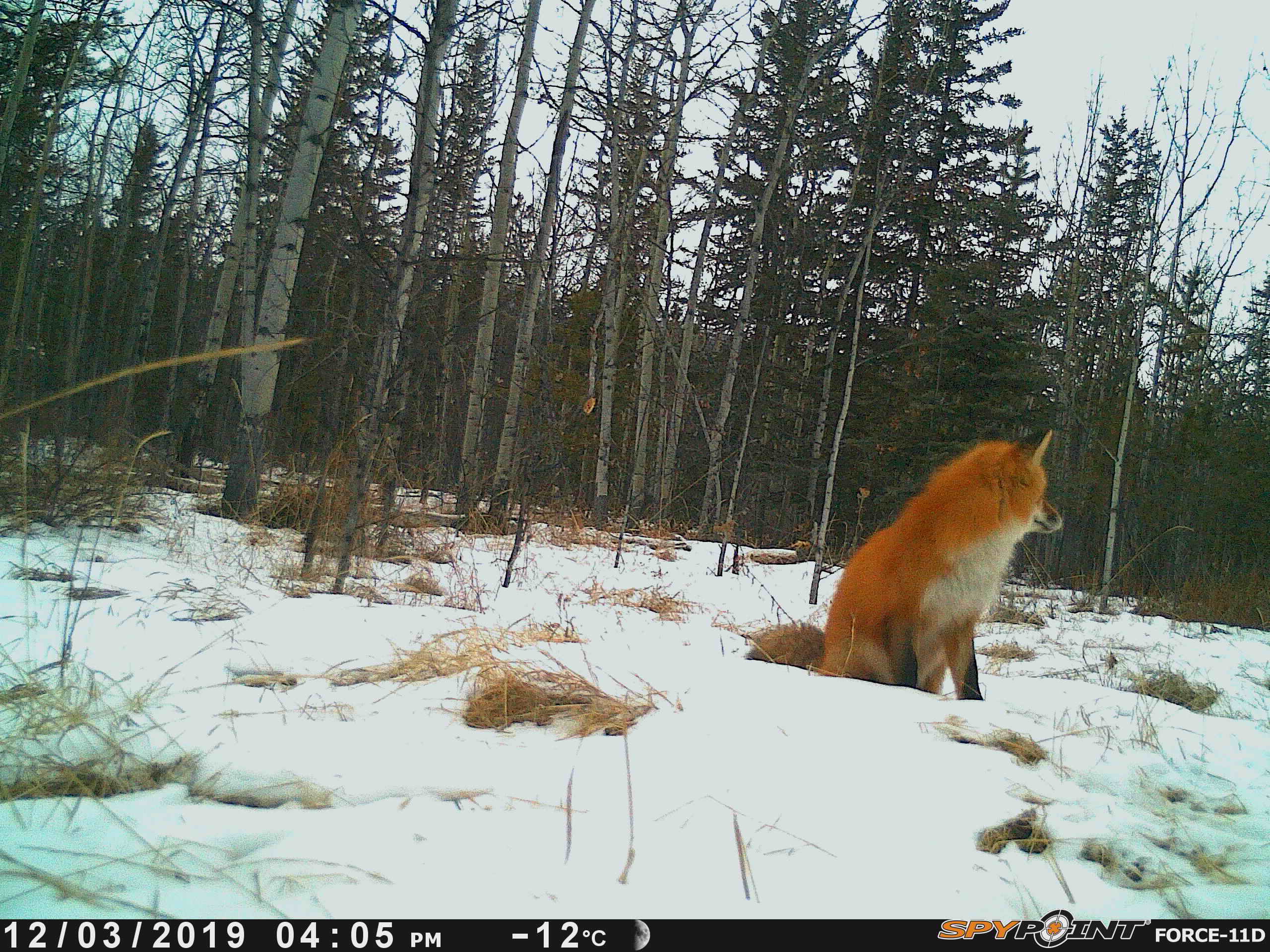
Trail cam photos from the author's yard shows the red fox running through the property, intently listening and even approaching the entrance to its den. 

Small mammals living in the subnivean space – the layer between the snow cover and the ground, often have excellent hearing and a detailed knowledge of their extensive tunnel system under the snow, which allows fast escape reactions.  In order to successfully hunt this prey, a red fox needs to minimize the sound it makes so as to not alert its prey – even if that prey lives under the snow.  A fox can execute a silent, surprise attack by lunging from a still position, from some distance away.

These actions repeat for several minutes – each time the fox swivels its head to locate its prey, then stays extremely still while building its energy before leaping to POUNCE.  Until the time that the fox has a vole in its mouth.  Successful hunt!

Or is it?  Now, I watch the red fox throw the vole in its mouth in to a snow bank with a flick of its head.  I watch the fox hunt this vole again.  And again…..this scenario happens several times – perhaps the vole is fighting back or perhaps the fox is playing or perhaps it is simply ensuring its meal is unable to escape.

Finally, the red fox runs through my yard, with its meal in its mouth and I think I’ll watch it consume well-needed winter calories.  Yet, the red fox has one more surprise in store for me.  I watch it search several locations, before choosing one to its liking, and it buries the vole under the snow, using its muzzle to dig down, deposits its prey, and then covers the cache tidily with snow.  Satisfied with its caching, the red fox trots out of my yard, knowing it has secured food for the future. 

What a treasure to witness such unguarded and natural behaviour; although I confess I do wonder – are there many similar caches buried in my yard?

Julie Kerr

Julie Kerr

Visitor Services Coordinator

Julie is a Registered Veterinary Technologist, living and working in Whitehorse since 2012. She joined the team in May 2018. She is passionate about wildlife, nature and living in a conscious manner with both. Her free time is spent outdoors observing wild animals and ecosystems; her connection to the natural world around her brings great joy – joy she loves to share with anyone interested. Honestly? Work and life blend rather seamlessly.

Explore by Category

Explore by Author

Strong Supporters – Major Donation

Strong Supporters – Major Donation

animals

by Kirk Cameron | Oct 6, 2019

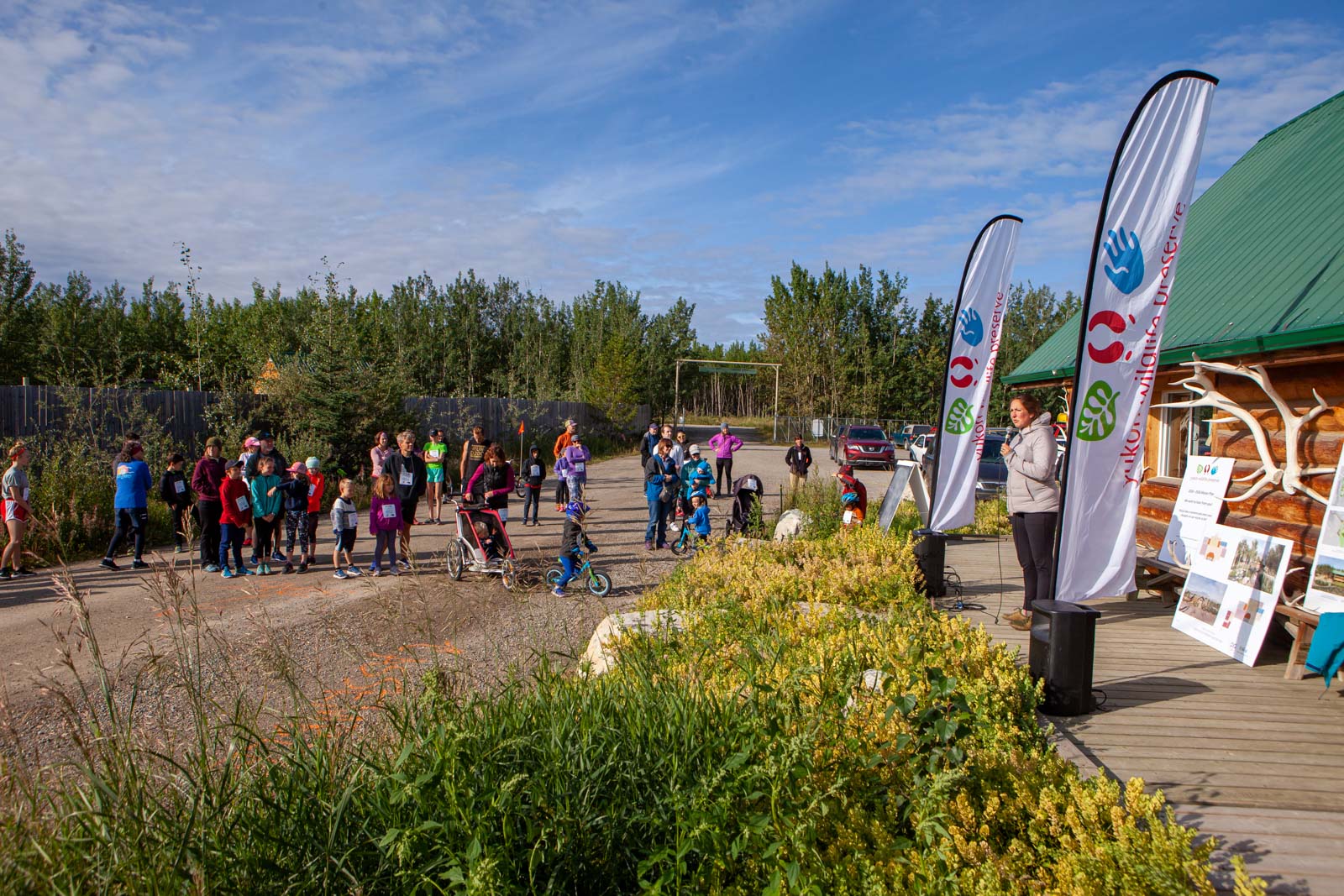
A small ceremony took place at the Yukon Wildlife Preserve the morning of August 19 just before families took off on the annual Run Wild event. On this sunny day, Steve Smyth and his son Andrew presented to the Preserve’s President, Alexandra Tait and Executive Director, Jake Paleczny a cheque for $25,000, the largest donation by anyone in the history of the Preserve since it was turned over to the Operating Society in 2004.

The Wildlife Preserve was the dream of the original owners, Danny Nowlan, who established what was then called the Yukon Game Farm in 1967. One of the reasons for the Yukon government’s purchase of the Preserve and the establishment of the Operating Society to oversee its management is the extraordinary costs of looking after injured animals that are frequently brought to the Preserve for rehabilitation. This is a very expensive service that the Preserve provides to Yukon, and one that is not supported by the base funding granted to the Operating Society by the Government of Yukon. It is for this reason that the contribution by Steve, his wife Julie and son Andrew is so critical to the work of the Preserve.

President, Alexandra Tait welcomes participants to the 2019 Run Wild event and introduces Steven Smyth, donor and long-time supporter of the Yukon Wildlife Preserve.

We have an incredible group of Yukoners who have embraced the Preserve as a jewel in Yukon, whether for research, education, animal rehabilitation, tourism or recreation. There are many quiet supporters who have donated both time and money to this institution. Steve and his family have stepped up in a big way to generously give to this great cause. Steve is one of those quiet Yukoners who continues to give to our society. He moved to Yukon in 1971 and worked in management positions in government until he retired in 2007, including the Department of Environment around the time that the Preserve was purchased. In those days he was responsible for the Preserve assets as the Operating Society was set up to take this over.

In other ways Steve has given much to this territory. He has been a Justice of the Peace for 38 years and has held appointments on a number of boards: Yukon Legal Education (14 years); the Law Society of Yukon (18 years); Motor Transport Board (7 years); Arctic Institute of North America (lifetime member); Yukon Agriculture Association Board; Yukon Science Institute; Dispute Resolution Board; Yukon JP Association Executive, Family Mediation Canada, Mediation Yukon, and the Institute of Public Administration of Canada (Yukon Regional Group), and; Friends of the Yukon Archives Society.

The foundation for his commitment comes from his family. His father and mother, Ron and Evelyn, worked for many years in the Yukon public service. His brother, Randy, spent years building Yukon infrastructure for General Enterprises and other construction companies and spent time farming outside of Dawson. Driven by his strong interest in the evolution of government in Yukon, Steve is the co-author of Yukon’s Constitutional Foundations. He has published many papers on similar governance topics, and completed a PhD in Northern Studies from the University of Alaska, Fairbanks in 2005. He links this interest in Yukon’s constitutional and political evolution with institutions like the Wildlife Preserve. So many issues relating to this evolution, whether Land Claims, Court decisions on topics like the Peel Watershed, and Devolution of land and resources from Canada to Yukon, are all part of a vision for better local management of natural resources and habitat which are central values in the continued operation of the Wildlife Preserve. 

He sees the Preserve as pivotal to the experiential learning curriculum of the Yukon Education system.

Asked about his 30 year vision for the Yukon Wildlife Preserve, Steve feels it can be an internationally recognized research facility in a world where the impact of climate change on habitat and wildlife is central. He sees a future with stronger ties with other academic research institutions such as the Arctic Institute of North America and other southern Universities with northern research programs. He sees the Preserve as pivotal to the experiential learning curriculum of the Yukon Education system.

Steve’s wish is that the Operating Society will find the resources to write a book on the history of the Preserve to capture its interesting and instructive journey.

On a personal note, Steve really enjoys the moose. He would like to see wolverines at the Preserve if the opportunity presents.

Ultimately, Steve and his family bring their core conviction to Yukon and to the Preserve. The Board of the Wildlife Preserve wish to express their deep gratitude for the family’s commitment to the future of the Yukon Wildlife Preserve.

Kirk Cameron

Kirk Cameron

Board of Directors

Kirk Cameron (pictured second from right) has been a long-standing board member and supporter of the Yukon Wildlife Preserve. Kirk was a founding Director in the Preserve’s transition. Born in Yukon, Kirk’s professional path has been predominantly working as a public servant across Canada’s Northwest. This has allowed him to work along side Steve and some
shared visions for the Yukon and the Yukon Wildlife Preserve. Kirk is also a strong silent supporter of our community.

board@yukonwildlife.ca

Explore by Category

Explore by Author