A Tale of Chasing the Sun and Losing the Clock

A Tale of Chasing the Sun and Losing the Clock

mountain goat

Mar 28, 2025

6 min read - this is a crosspost from Avery's website Snail Tales.

I think about how my first few months living in the Yukon feel like the drawn-out, long sunrises and sunsets up here. They are often multicoloured, with bright hues and dark contrasts, and they seem to last ages. This is, apparently, all because of the Earth’s tilt and rotation. I was asking everyone about this my first few weeks here. I needed to understand why the sun seems to take longer to rise, fall and hover at the horizon compared to anywhere I’ve ever been. Turns out when you're farther north, the sun takes a much shallower angle as it rises and sets! Instead of popping straight up and down like it does near the equator, it moves more horizontally across the sky.
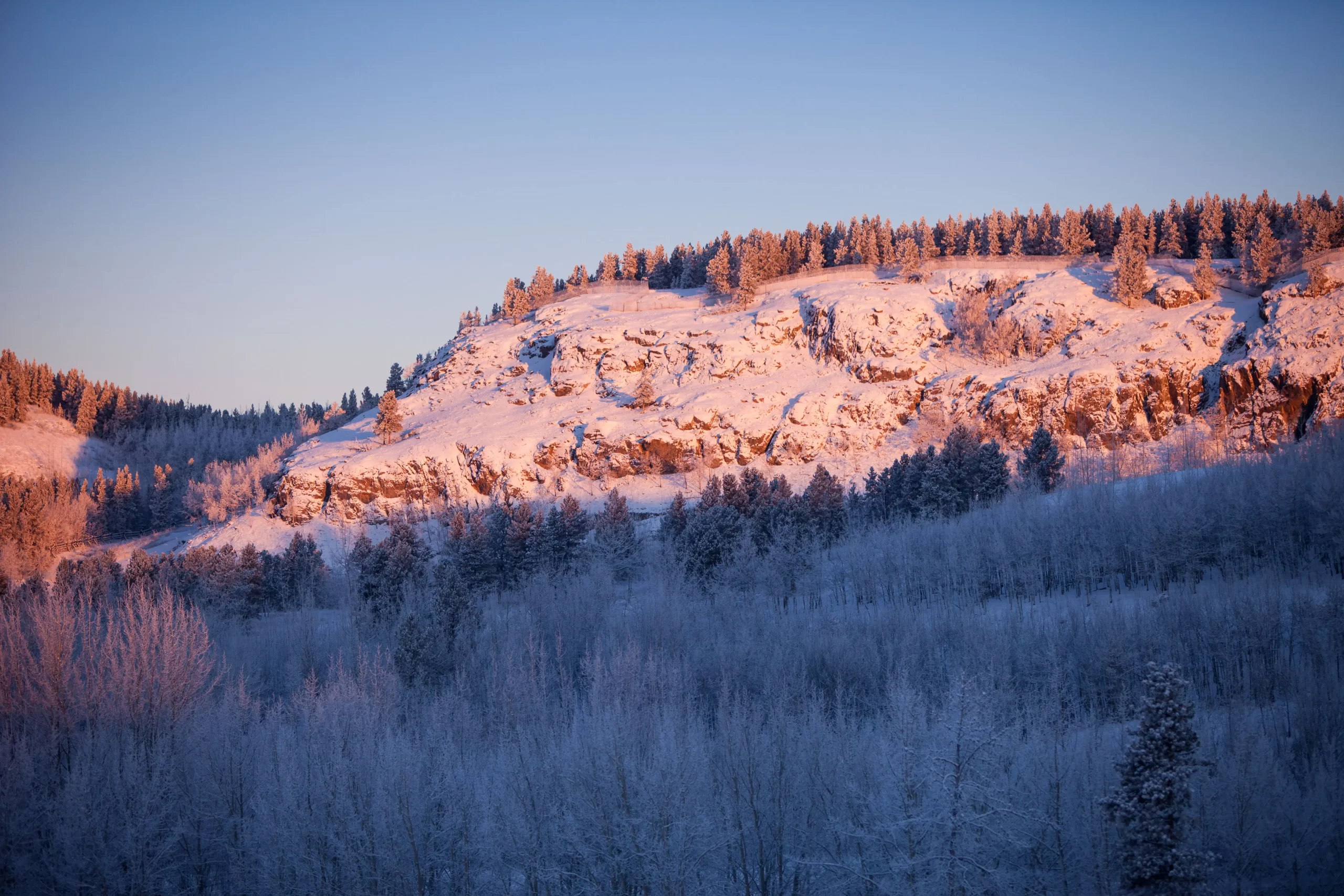
sunrise and mountain goat cliff. The skie is illuminating pink as the slow winter sunrise occurs.

Mountain goat cliff illumiated pink in the long winter sunrise. Photo credit: Jake Paleczny.

This makes the transition between night and day stretch out longer. Someone said to me, “Think of it like a ball rolling up and over a hill—if it goes straight up and down, it’s quick, but if it follows a more gradual slope, it takes longer. That’s basically what the sun is doing near the poles.” I’m thinking of making an animation of this to try to make more sense of it physically. This effect gets even more extreme as you go farther north. It’s why there is midnight sun near the summer solstice, and in winter, it gives us the long, drawn-out sunrises and sunsets that I have cherished and gawked at almost every day since I moved up. The territory is a mix of extremes: light and darkness, with a lot of expansive grey and blue sky in between. It’s 10am as I write this and the clouds are pink with sunrise.

drawing by Avery of her cabin home in the boreal forest.

Drawing by Avery Elias. The cabin I rent in the Boreal Forest. 

Sometimes I feel like time is flying and I can’t seem to muster the energy to chase it. But just as the sun moves differently up here, my sense of time has changed too. The other day I was working a shift at the Yukon Wildlife Preserve and I asked my coworkers what they think about our relationship to time versus other animal’s relationship with it. 

We got into a discussion about how time in the sense of minutes and hours is an abstract human-constructed concept. We are the only animals that track time like this. Every other animal seems to be deeply connected to their internal clocks and their circadian rhythms.

Humans are obsessed with time and trying to name it; we think we can control it, track it, chase it, kill it, steal it, make it and run out of it. The more time I spend with the wildlife in the Yukon, the more absurd and ridiculous these ideas become.
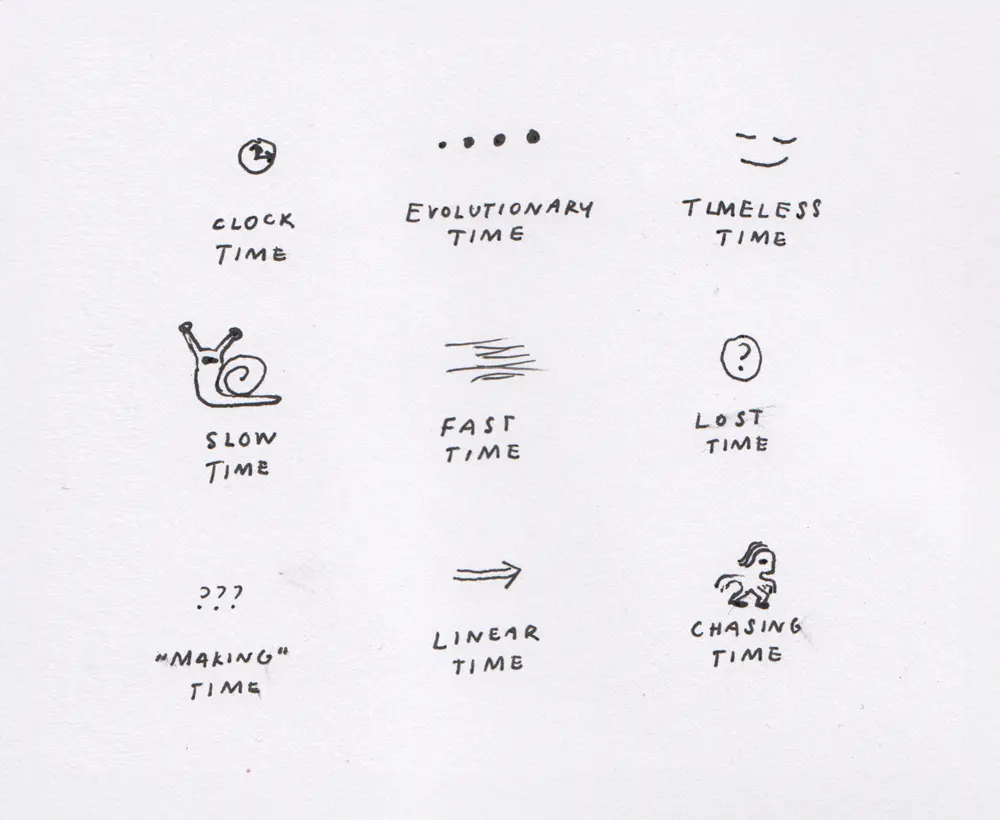
Illustration showing how we, humans think of time. By Avery Elias.

Illustration by Avery showing our connection with time. 

The sun lingering on the horizon up here sometimes gives me the illusion of time stretching. I’ve started to feel that slowness elsewhere, like when I’m alone observing the musk ox. Here’s what I wrote in my journal one morning:

Being around the musk ox, I leave my personal human sense of clock time. I feel something different. I wonder if it is “evolutionary time”. The musk ox are an ancient species — they are considered ice age survivors. I learned today that they are one of the oldest surviving large herbivores on Earth. I am pulled into the physical and spiritual around them. Maybe that’s a different place to be from the linear, the daily clock we all measure our “own” minutes, hours, days, weeks, years by. The musk ox is not keeping track of time in this way. They use their internal clocks. All the animals here do.

Muskox bulls in winter at the Preserve. photo credit Avery Elias.
They never let me get too close, which is probably best. The musk ox are able to run up to 60km/hour and can be an aggressive species.


After the discussion with my coworkers, I ponder this difference between the way we think of time and the relationship the musk ox have with it. Is it a contributor to the illusion of separation we’ve created between us and the wildlife? Between human beings and the natural world? It only took a few shifts working at the Yukon Wildlife Preserve to realize I was sensing something powerful and healing about the places I’ve been spending time in— the preserve, the North, and my cabin in the Boreal forest*.

I couldn’t stop thinking about the illusion I had been living under— the idea that we are separate from the animals and the wild. Far away in our cities, being raised to believe that humans are the centre of everything. We’ve elevated ourselves but we are simply part of nature like the rest of these animals. It feels silly to have to even state this and maybe many of you already understand it. But I grew up in a big city and it’s taken me living in a forest, in a territory with one of the lowest population densities in the world to really make some sense of it.

*The boreal forest, also known as the snow forest, is a biome characterized by snowy winters and freezing temperatures. It’s the world's largest land biome. This forest converts carbon dioxide into oxygen on a massive scale (the air is very good up here ☺ ). The snow stays on the ground for many, many months.


Muskox bulls in winter at the Preserve. photo credit Avery Elias.
A quote I wrote in a sketchbook that feels fitting.


Learning from the wild

I heard a term recently: Ecological Identity. It bears the questions: Who are we in relation to nature? How do we fit with what’s around us? I wrote that the musk ox are considered ice age survivors. When I give my tours to visitors at the preserve, people are often shocked and intrigued by this information. I like to remind them that we as homo sapiens are also ice age survivors! Multiple ice ages* in fact: at least two in the last 200,000 years. 

Yet our evolutionary paths have remarkably diverged. The lives of the musk ox are still closely attuned to the rhythms of nature, as they were during the ice age. When I’m around them, it feels evident that they are living in harmony with their surroundings. I sense that they are in a deep state of attention. In a way, are they living in the timeless? We’ve created cities and systems that can obscure the natural rhythms of day and night, the seasons, and the ecosystems around us. These differences highlight not just how far we’ve come, but also how much we might still learn from the creatures who remain deeply connected to this earth we share. The only time I’ve been able to feel this kind of harmony for an extended period is when I’m on long camping trips or boat rides where I feel almost lost in the sea. It makes me think that my over-structured, calendar relationship with time is like a surface-level experience of life. Like the restless, choppy waves at the surface of the ocean.

The musk ox relationship with time might be more like the water deep below the surface, where things appear calm and more still. In a way, I feel consoled by the lesson of the musk ox on this day. If the Yukon’s light has changed how I see time, the musk ox has helped how I feel it.

 *When people say “the last ice age”, they’re usually referring to the last glacial period (that ended around 10,000 years ago), when ice sheets covered much more of the planet. I recently learned from my coworker at the preserve, Danial, that scientifically speaking, we're technically still living in an ice age since there is permanent ice at the poles. What we're in now is an interglacial period, meaning a warmer phase within an ongoing ice age. If things followed the natural cycle, we'd eventually head back into a glacial period, but human-driven climate change is disrupting that pattern.
Min Height: auto
Min Height: auto
Width: auto
Width: auto
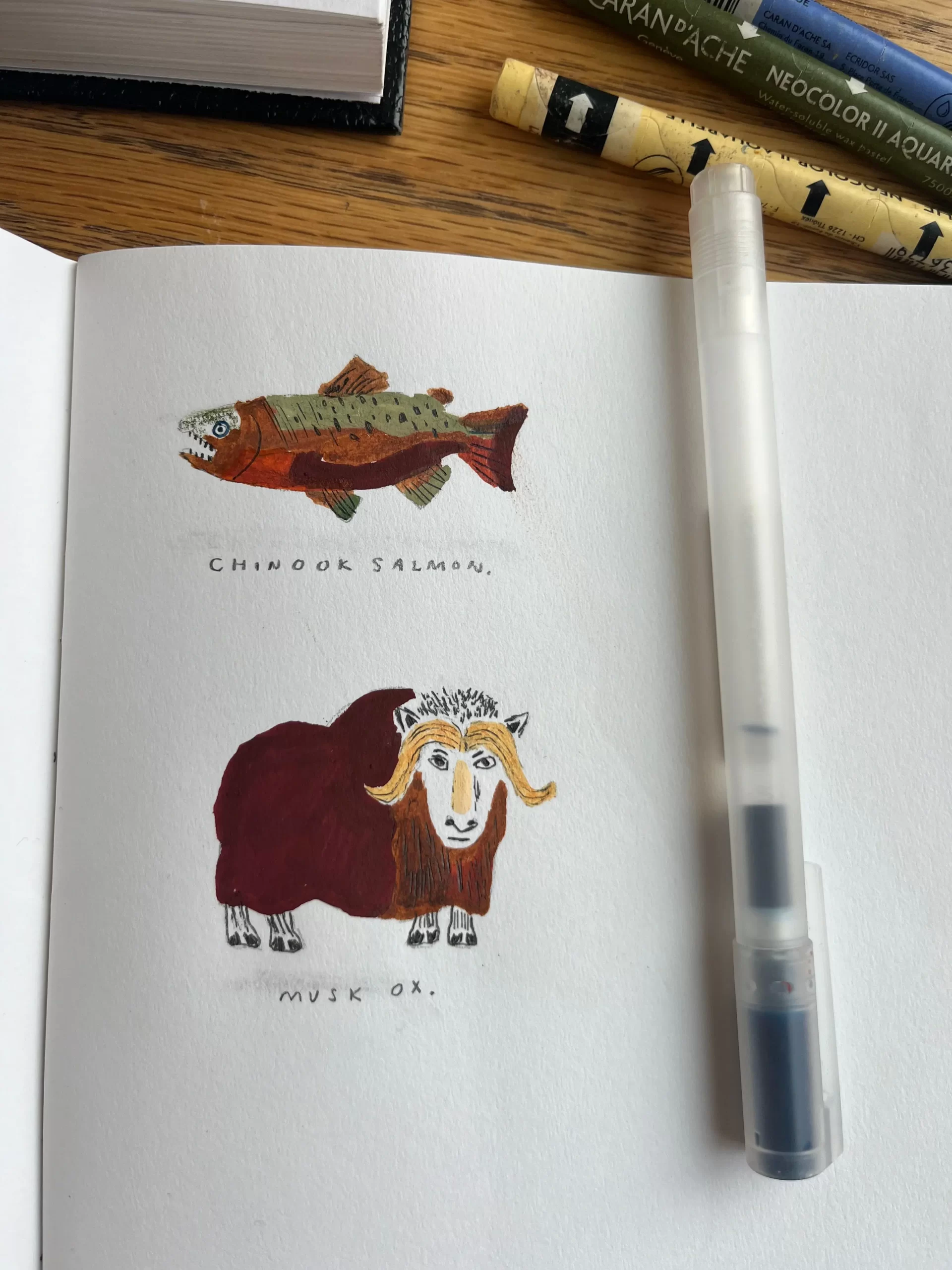
Illustrations by Avery of a muskox and a chinook salmon.
There are endless things I love about the musk ox, most importantly their horns in the shape of moustaches.


Anywho, that’s all the *time* I have for today. Maybe time isn’t something to track, chase, or control. Maybe, like the musk ox and the Yukon sun, it’s something to settle into.

Remember: there’s no time like the present!

I would love to hear any thoughts that are sparked from reading or tales of your own. There’s a comment section below.


Thanks for taking the scenic route with me,

Avery Elias

Avery Elias

She/Her - Wildlife Interpreter

Avery’s journey to the Yukon Wildlife Preserve began during a vacation in August 2024, when she was living in Vancouver and looking for a quieter, wilder life. Having spent the past two summers on farms in Oregon and the Vancouver area, Avery was drawn to the wild beauty and close-knit community of the Yukon. Now, she’s excited to join the team as a wildlife interpreter. Outside the preserve, Avery works as an illustrator, animator, painter, and digital designer, collaborating with local businesses and pursuing her own creative projects.
Explore by Category

Explore by Author

Meet Elsa the Mountain Goat

Meet Elsa the Mountain Goat

mountain goat

by Lindsay Caskenette | Apr 12, 2024

1 minute read - 

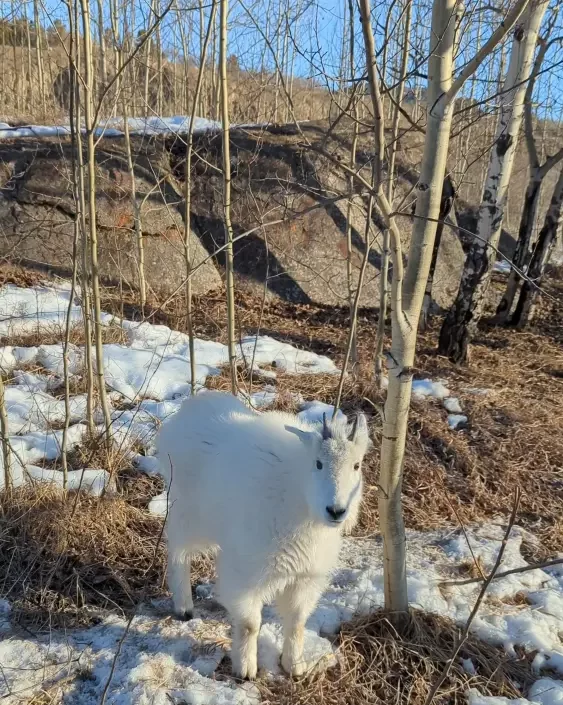
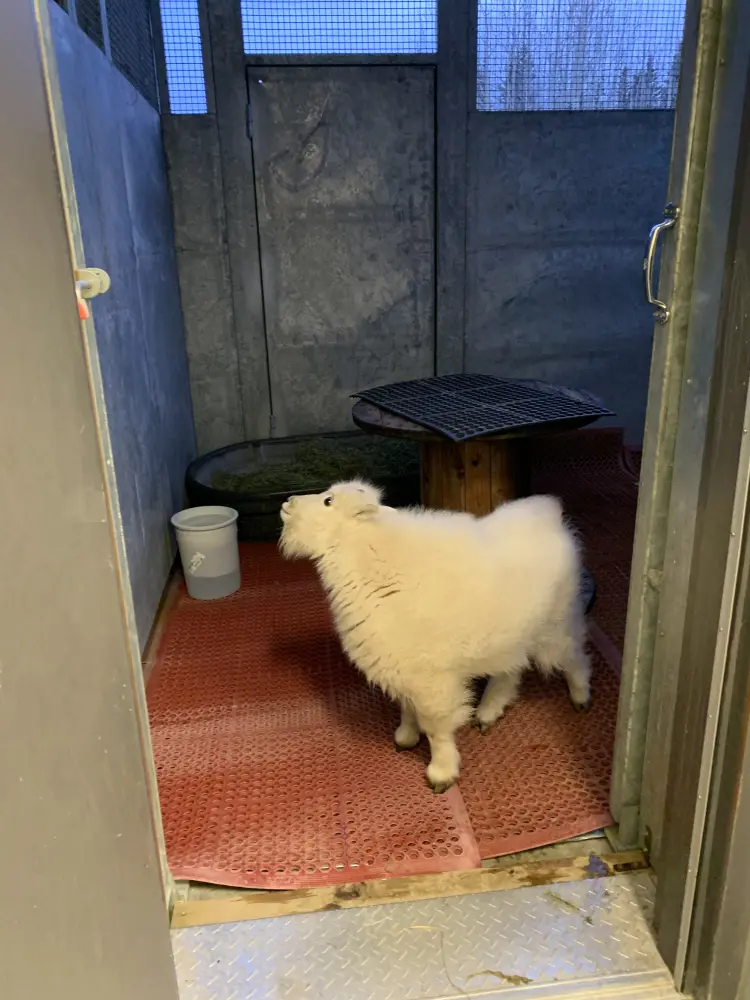
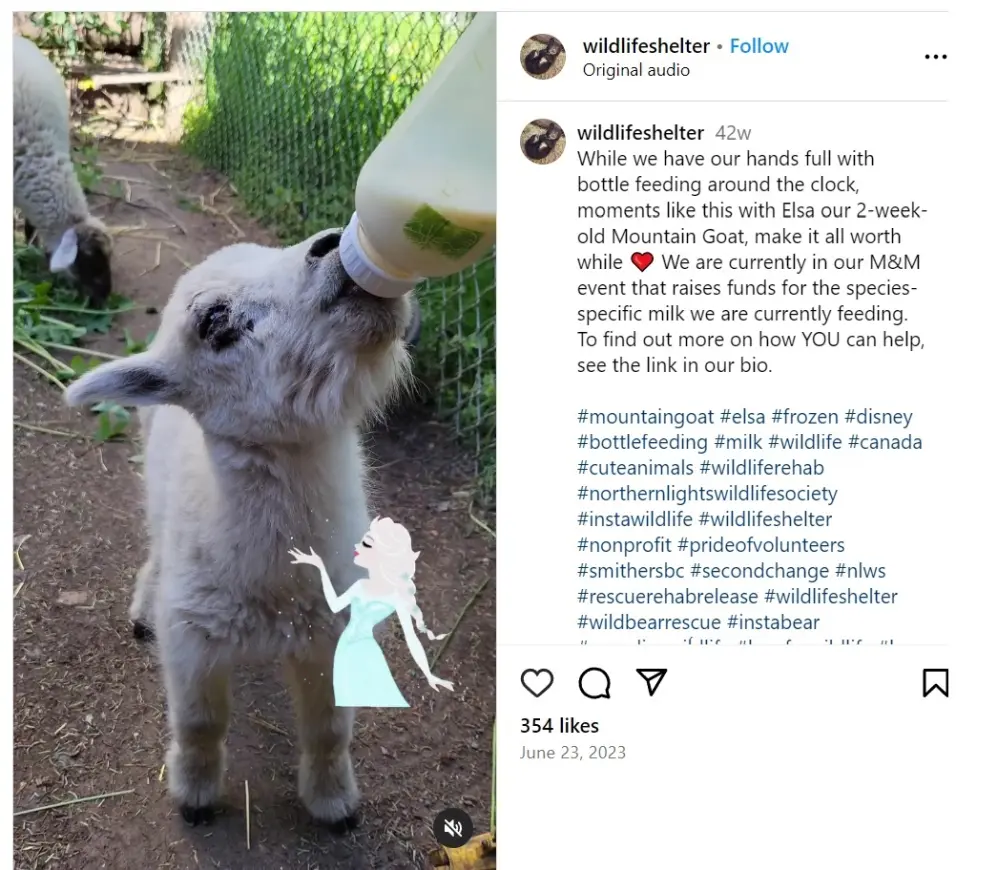
Meet Elsa, the mountain goat! She came from Northern Lights Wildlife Society in Smithers B.C located within The Witset First Nation is a First Nations band government of the Wet'suwet'en people of Witset, British Columbia, Canada. She was brought there in June, 2023 at about 1 week old.  She was brought to this wildlife shelter after she was swept down river - it's not sure, the details, how or why, but she was orphaned and injured at that point when she was found by rangers working on the land.

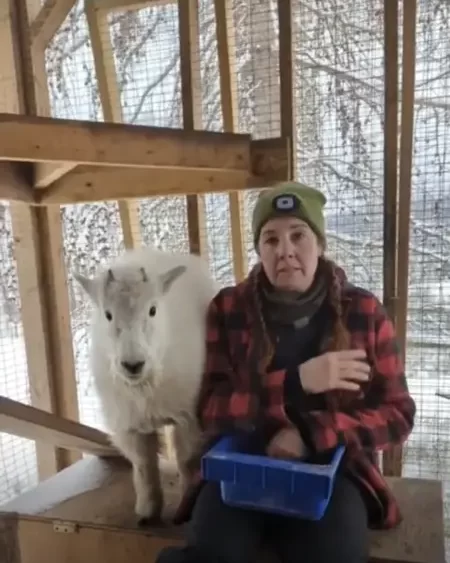
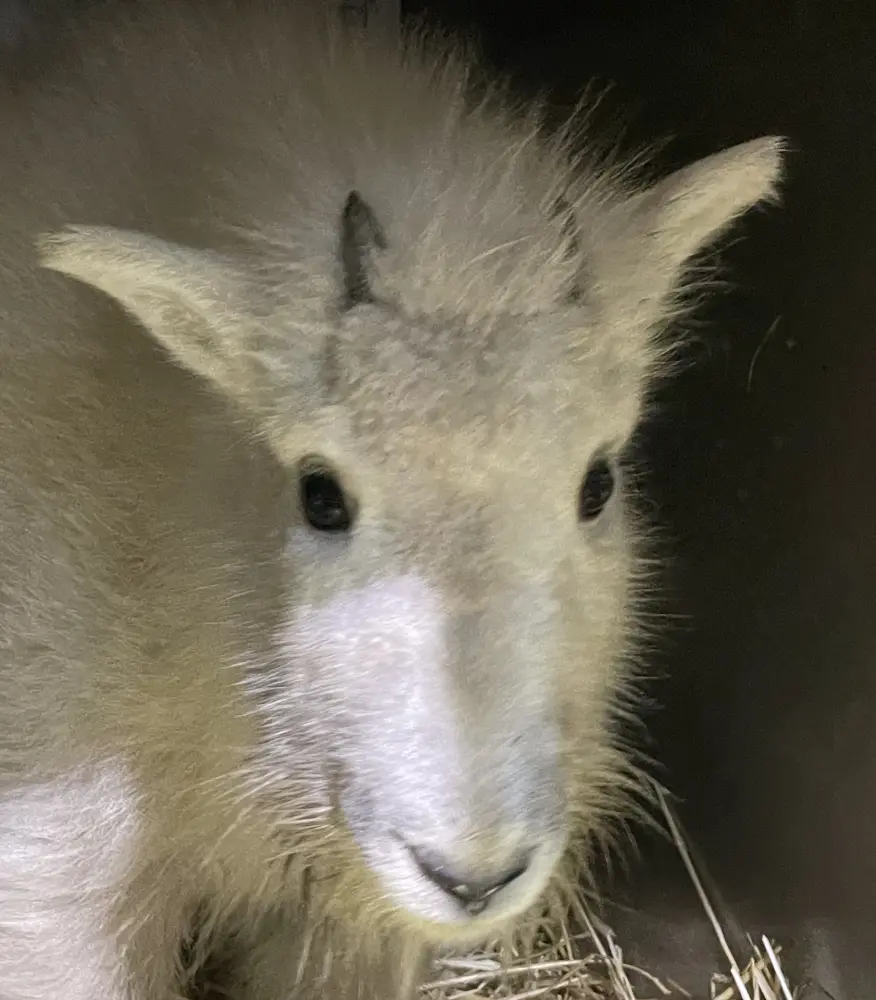
She had several cuts and lacerations, she lost a few baby teeth. She was taken care of incredibly well by the staff and volunteers at the Northern Lights Wildlife Society. 

You can watch a few of these videos of her care and progress via their social media.

Elsa the queen of the North. Mountain goat rescue from BC wildlife Shelter. Elsa 1 week june 2023

By August, Elsa recovered fully from her injuries and complications that came after. Such challenges are bound to happen with wildlife, especially with an animal so young and under considerable stress and change. 

Elsa the mountain goat ice queen of the North 2 months old and recovered and eating well.

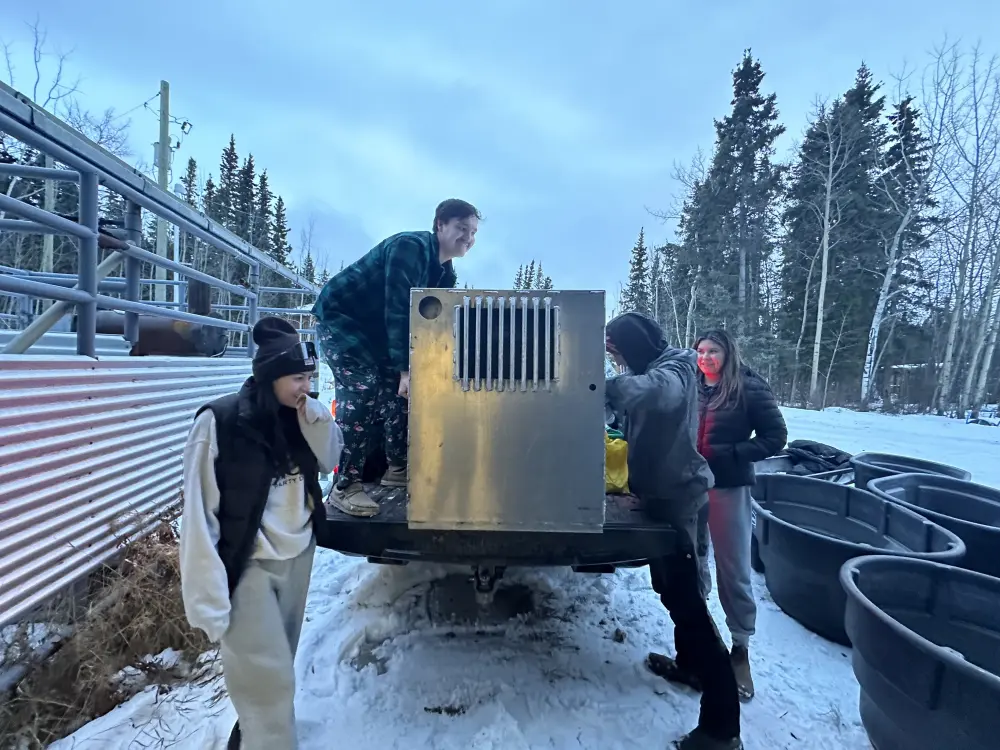
The little queen, Elsa continued to grow and by early winter she was ready for transport to the Yukon Wildlife Preserve for her long-term home. Since the goat was coming from another jurisdiction, in fact, one outside of the Yukon Territory, necessary coordination and import permits were required before her transport and arrival. With all the 'red tape' out of the way the Preserve now needed to consider how to get her to the Yukon, the quickest and safest way. Since the Wildlife Shelter is in Northern British Columbia, an Air North Transport was not an option, as it has been with other rehabilitation animals, though those animals were mostly headed South and back to the wild, not North and into long-term care. 

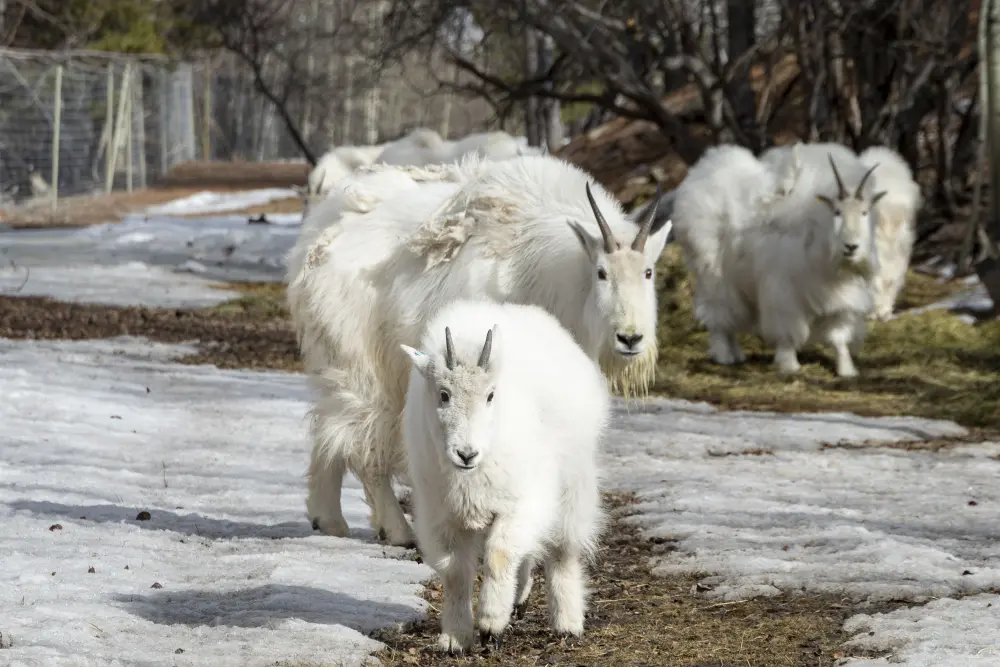
Elsa, the mountain goat, just a few days before her big move to the big leagues which means to the big cliff in the background with the nannies.

Community connections started this journey for Elsa and it continued through her successful transportation by an incredible offering as described below by Rebecca Bradford-Andrew, Manager, First Nation Education Advocates for Yukon First Nation Education Directorate. 

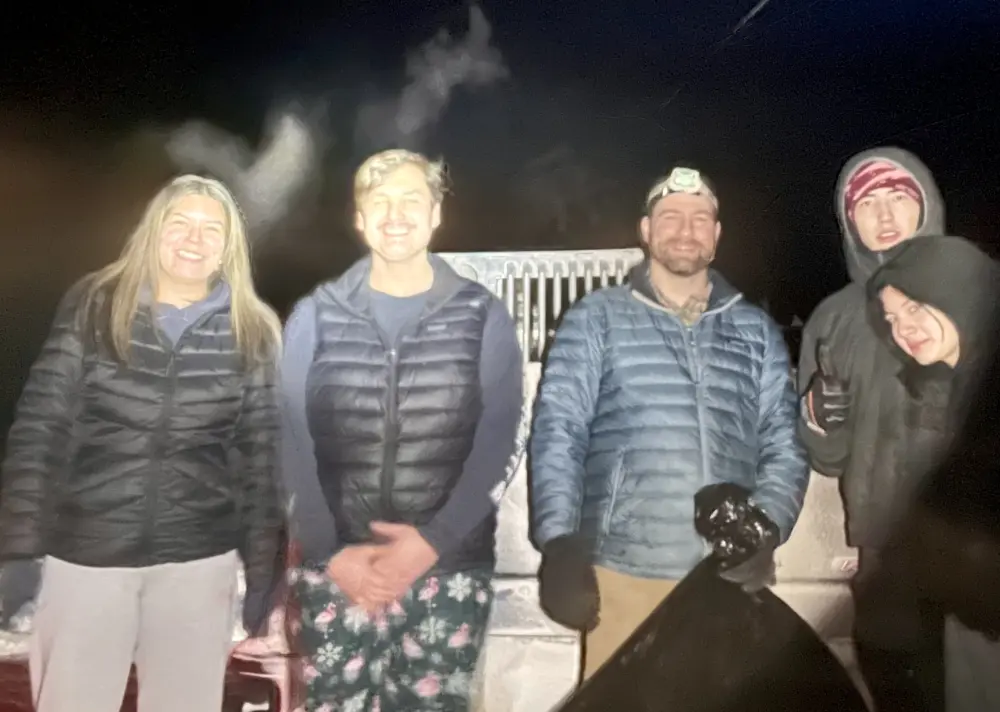
Wild orphaned Nanny goat Elsa from the remote mountains of Northen BC. transportation from her rescue facility to Whitehorse was provided by teenagers, a team of young wildlife enthusiasts from the Yukon First Nation Education Directorate (YFNED) ( a Jordan's Principle-funded Initiative).

These local teens work to build community and culture by supporting indigenous students in Yukon schools. They strive to be role models for youth by doing good deeds and stepping in where needed. Thank you Dr.Hallock and your team for including us in this wonderful opportunity to collaborate for our community!

The YFNED, an indigenous-led educational organization, supports traditional, land-based learning opportunities.

The YWP has been educating people for years, and Yukon students have much to learn about eco-systems, evolution, and herd dynamics, with a strong, healthy mountain goat population their textbooks, and the beautiful cliffs of the YWP their classroom.

Edone daga eti’e (For the good of the child).

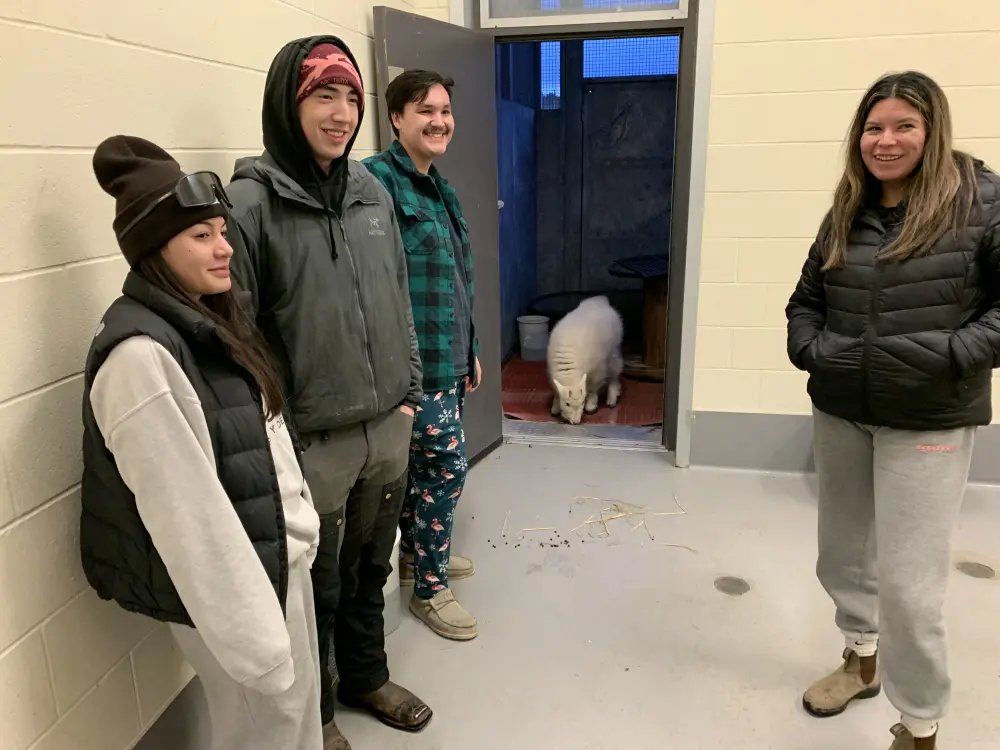
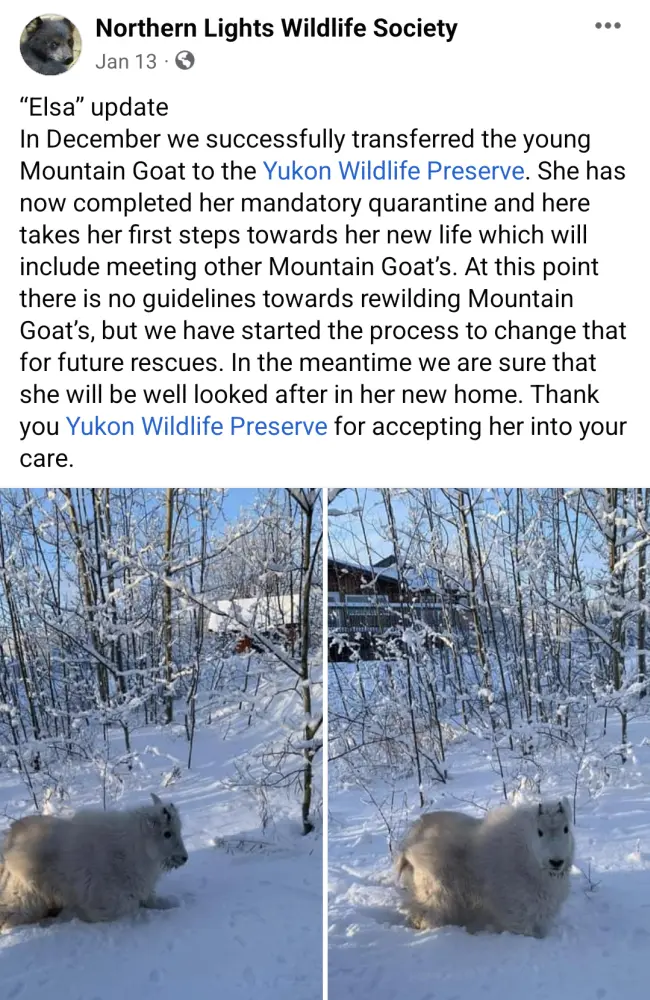
Elsa arrived December 12, 2023 to the Wildlife Rehabiliation Centre where for the next 30 days would be in quarantine. This is a mandatory isolation while testing occurred and medication was administered by Preserve's Animal Care team to ensure her eventual integration to the collection of goats would not pose any risks. Of course, the ice queen of the North, passed with flying crystals . . . er., colours!

In mid January Elsa was brought to her temporary, small rocky mountain habitat as she got bigger, before joining the big leagues, on the big mountain cliff at the Preserve. She was a delight and distraction for staff at the office where she would be spotted through windows being a goat - bounding around, climbing the rocks and being unbelievably cute!  

Social media link to the posting by NLWS about Elsa's arrival.

April 9th, 2024 Elsa joined the group of mountain goats at the Preserve and can be spotted living her best goat life thanks to people, community, collaboration and their great care of iconic North American wildlife in need of second chances.

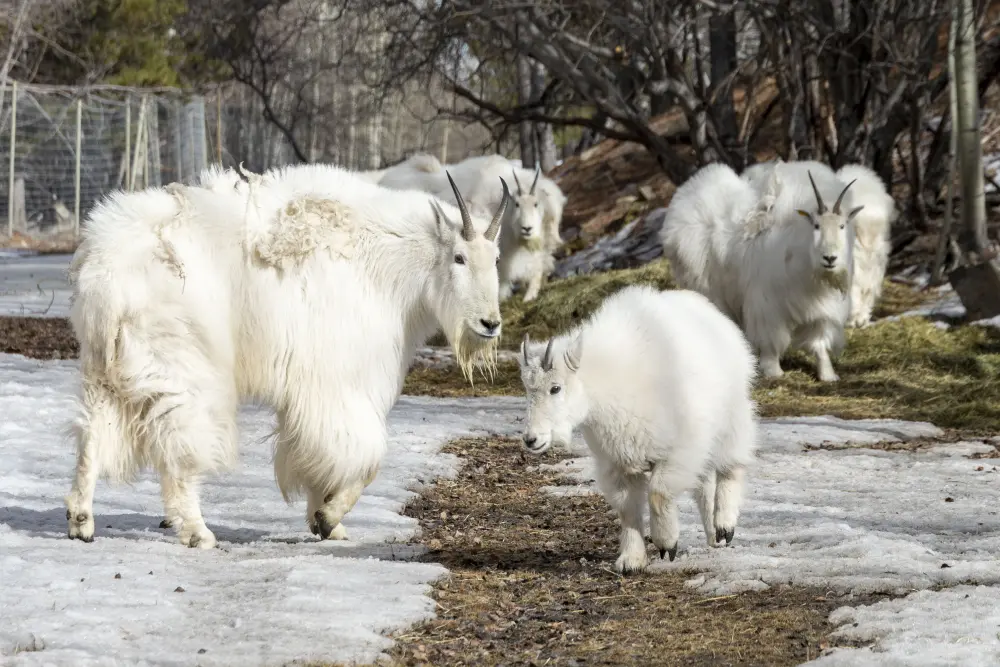
Elsa the mountain goat with the nanny group.

Elsa, the mountain goat lives at the Yukon Wildlife Preserve which is the Traditional Territory of the Kwanlin Dün First Nation and Ta’an Kwäch’än Council.

Elsa the mountain goat introduced to the nanny group. B.Forsythe

The 2 above photos were taken April 30, 2025 of Miss Elsa being a goat!

Photo credits: Northern Lights Wildlife Society, YFNED - Yukon First Nations Education Directorate, L.Caskenette, B.Forsythe.

Lindsay Caskenette

Lindsay Caskenette

Manager Visitor Services

Lindsay joined the Wildlife Preserve team March 2014. Originally from Ontario, she came to the Yukon in search of new adventures and new career challenges. Lindsay holds a degree in Environmental Studies with honours from Wilfrid Laurier University and brings with her a strong passion for sharing what nature, animals, and the environment can teach us.

867-456-7400
Lindsay@yukonwildlife.ca

Explore by Category

Explore by Author

Fall In to Autumn

Fall In to Autumn

mountain goat

by Julie Kerr | Sep 19, 2020

5 minute read - 

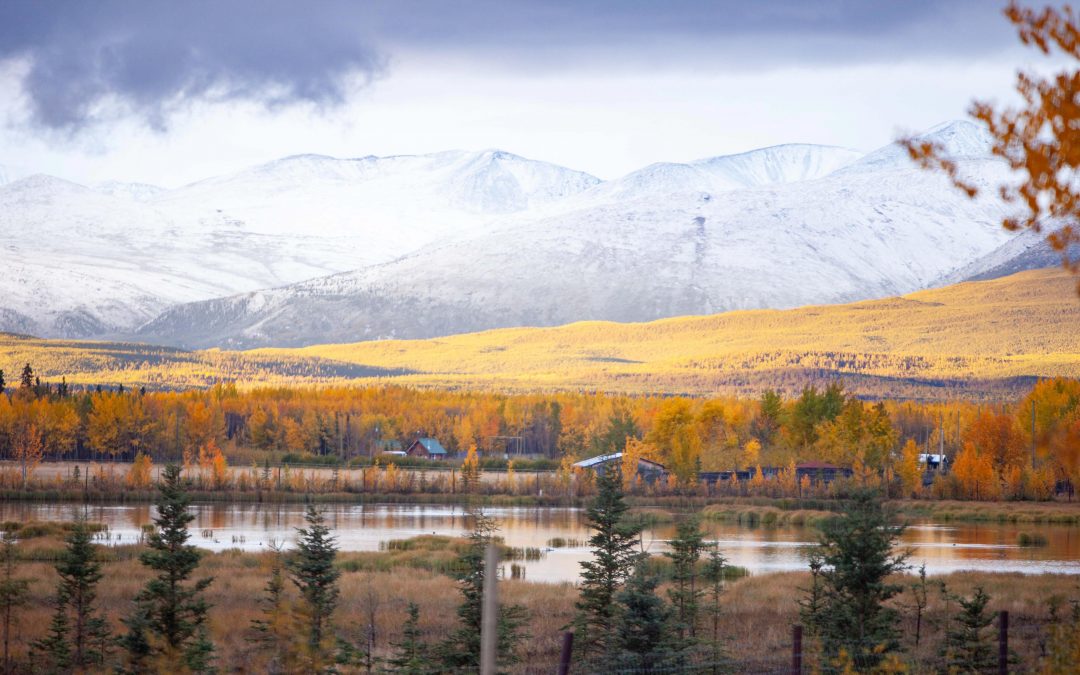
Autumn is a season of change! It’s the bridge which helps us transition from summer towards winter. What a beautiful bridge it is, with leaves blazing colour in vibrant hues of red, orange and yellow. Fireweed has flowered and the leaves are crimson. Against this backdrop the first snows fall on the mountaintops.

Birds begin their migration back to their southern overwintering grounds, after a summer spent mating, nesting, rearing young, and eating well. Before we see the V’s flying overhead, we often hear them honking and calling to each other.

In the world of ungulates, it is the time of the rut. Antlered animals have finished growing this season’s antlers; their velvet has sloughed off and now they sport their hardened, ready-to-duel finery. We can see and hear as the males clash, challenging each other for the right to breed the females. Elk stags bugle, bull moose softly grunt - calling to interested females in the area and warning off competing males.

Watson, in the foreground, has shed the velvet on his first year's full antler growth.

Those with horns are also clashing. This looks less like a duel and more like a train crash. Thinhorn Mountain Sheep rams, both Stone and Dall subspecies, run at each other and smash heavy horns together - the echo of this collision ricochets like a rifle shot. Muskox bulls have been rumbling since early August, chasing each other, establishing dominance and finally banging horns as they work to impress the females for breeding rights.
We begin to notice a lack of Arctic Ground Squirrel activity. We no longer hear the constant shrill warnings as nearby predators hunt; where are these industrious rodents? Hibernation comes early - females are already underground for the long winter ahead, and the last of the males aboveground continue to harvest and stockpile their midden, into early October. Predators such as Red Foxes can be seen traveling from one burrow-entrance to another…..looking for a disappearing meal of ground squirrel which used to be in abundance. Soon they’ll be gone completely, hibernating through the winter, under a thick layer of blanketing snow - but not just yet.

Autumn means hibernation is coming.  We've noticed a lessening of Arctic Ground Squirrel activity at Yukon Wildlife Preserve.

Humans are adding clothing layers, finding sweaters, mitts and toques in storage. We need these warm additions on the crisp, cold autumn mornings. Afternoon sunshine heats up; we turn our faces to the sun and shed those layers - it’s not winter yet! So too are the animals growing coats of winter fur, wool and hair. Mountain goats have spent all summer shedding last winter’s wool; almost immediately it’s time to grow in this winter’s layer of hair. Arctic Foxes are beginning to add some white to their brown and grey camouflage. They not only change colour with their winter fur, they also add seeming bulk. All those layers of white fluffy fur help them stay warm, maintain body core temperature and thrive in the harsh winter environment of the Far North.
Enjoying this short season is highly recommended - there’s nothing as seasonally relevant or celebratory as jumping into a pile of autumnal leaves. Cranberries are ripening, harvesting continues. Underneath the beauty of the changing season, there is a sense of urgency. Whether we are human or animal, we know winter is coming, and while it’s not here yet, time and opportunity are limited to eat, put enough weight on, or store food to survive the coming months.

Summer is over, the cycle continues. Autumn is the clear signal to prepare for what’s ahead. Fall in to Autumn; experience the sights and sounds with enjoyment, wherever you are.

Julie Kerr

Julie Kerr

Visitor Services Coordinator

Julie is a Registered Veterinary Technologist, living and working in Whitehorse since 2012. She joined the team in May 2018. She is passionate about wildlife, nature and living in a conscious manner with both. Her free time is spent outdoors observing wild animals and ecosystems; her connection to the natural world around her brings great joy – joy she loves to share with anyone interested. Honestly? Work and life blend rather seamlessly.

Explore by Category

Explore by Author

Mountain Slopes – Yukon Wildlife Preserve

Mountain Slopes – Yukon Wildlife Preserve

mountain goat

Sep 5, 2020

11 min read -

The Yukon Wildlife Preserve features eleven iconic northern animal species, but if you look closely at each of the three primary habitats on the Preserve you’ll see many more species than “only” eleven. The three primary habitats include: grasslands, wetlands and mountain slopes. Each of these habitat types support animal and plant species that have evolved together over millions of years resulting in communities where they all make a living and contribute different values to the continuing health of their specific habitat. In this three-part series we’ll review each habitat and examine the greater community it represents, concluding with mountain slopes.

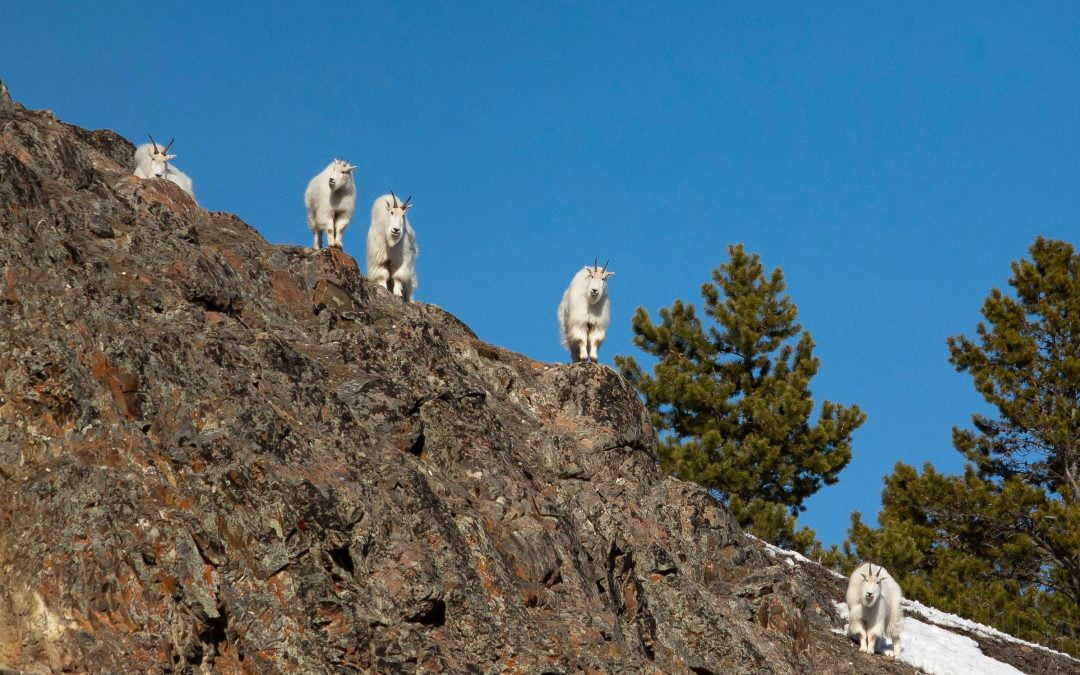
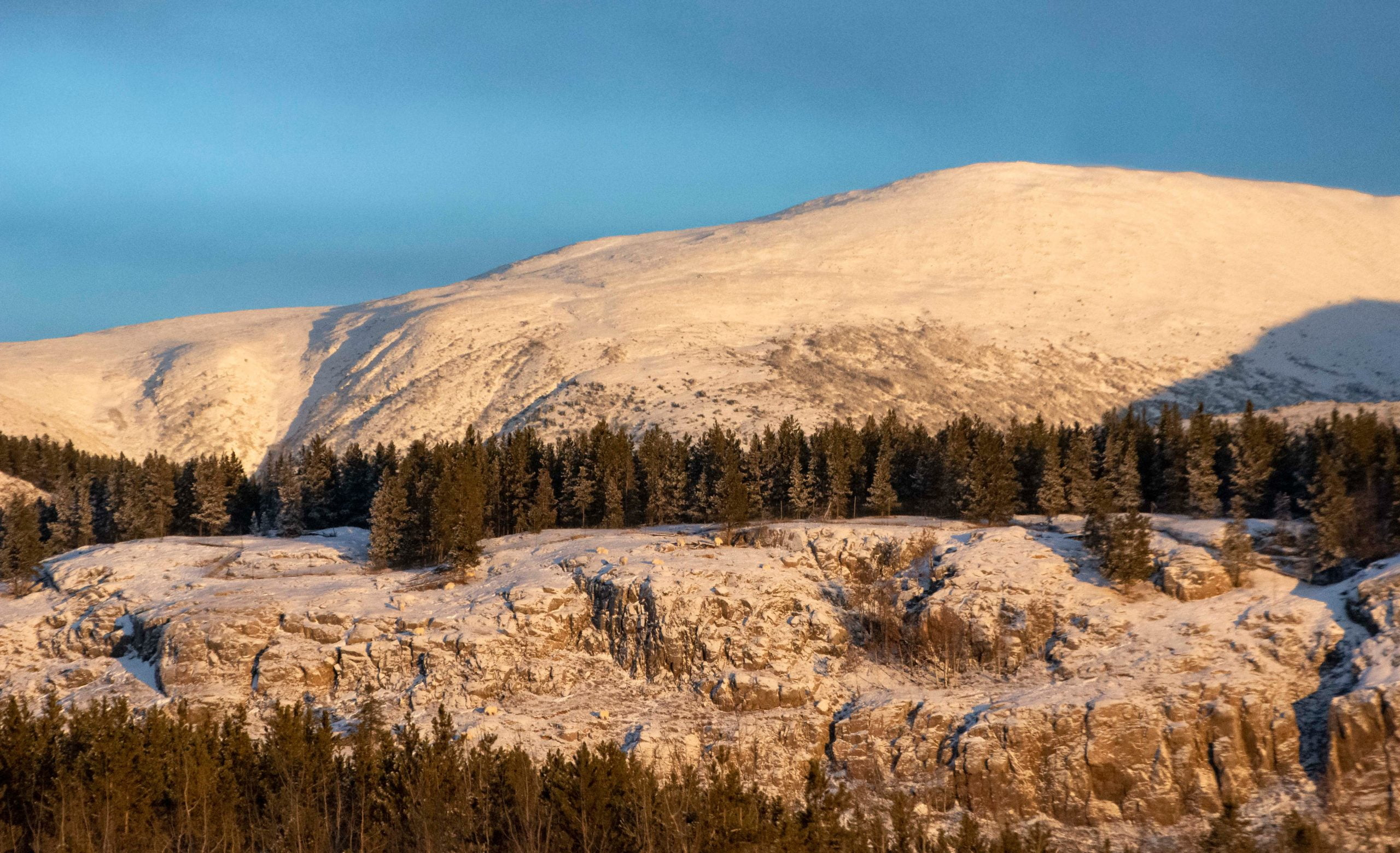
Mountain goats on their cliff habitat at Yukon Wildlife Preserve

Looking around the local landscape we easily see the topographic differences near to us and in the distance. These elevational changes of the geography influence how animals move, reproduce and make a living. Some have evolved physical adaptations providing them with advantages to live in different habitats compared to other species.

Some creatures have evolved to live on the rock faces of mountainsides, while others are better equipped to live in the valleys often near rivers and other water bodies. Some other species can live easily on all land types, like the Caribou that often travel great distances over all types of terrain along their migration paths.

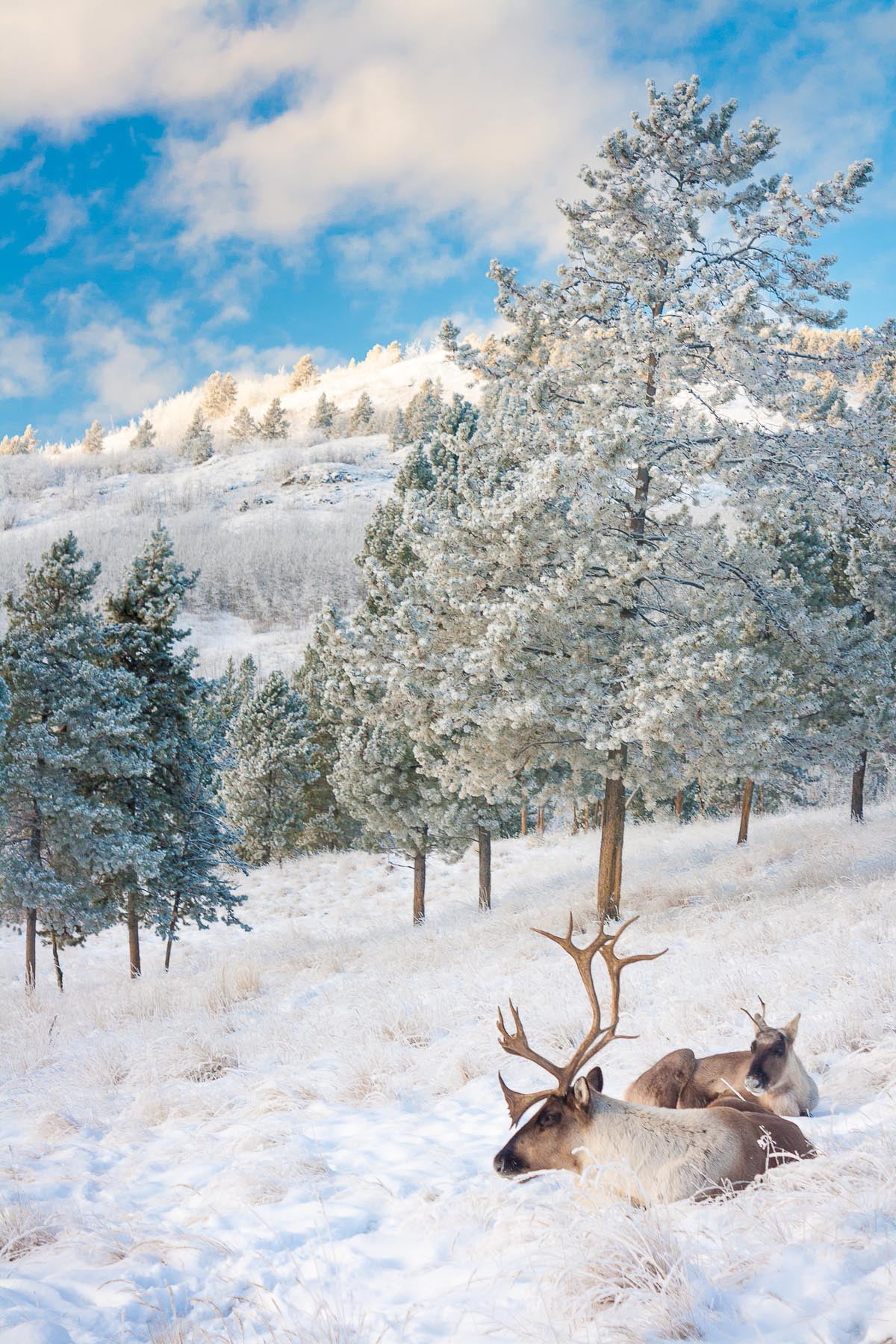
 Caribou often travel great distances over all types of terrain along their migration paths.

The land all around us is in a continual state of change as it has been since time began. The Preserve is located within the Takhini River Valley. The river is south of us, only a few hundred meters away. Glaciers filled this valley up until about thirteen thousand years ago. While they were here, the glaciers altered the landform in some very dramatic ways as they bulldozed great areas of soil and rock, gravel and forested areas resulting in what we can see today. Look at the mountain tops across the valley and you’ll see the smooth rounded tops where the glaciers ground them down; and the other mountains with jagged and pointed tops indicating where the glaciers did not have a similar impact because they did not grow that high. However erosion is still at work as the influences of wind, rain, ice and snow continue to alter the landscape.

This type of landform provides a spectrum of variables that influence the safety, nourishment, and rearing of offspring that many species have adapted to over thousands of their generations.

Going back millions of years, many species evolved due to the influences of what they prefer to eat and where that food source could be easily found throughout the year. For example, beavers depend on wooded vegetation and while trees grow on mountain slopes, beavers had greater opportunity and benefit to feed on the vegetation that grows next to waterways, so beavers evolved to be more adept at swimming and thriving in an aquatic environment that also sustains certain species of trees that beavers adapted to thrive on.

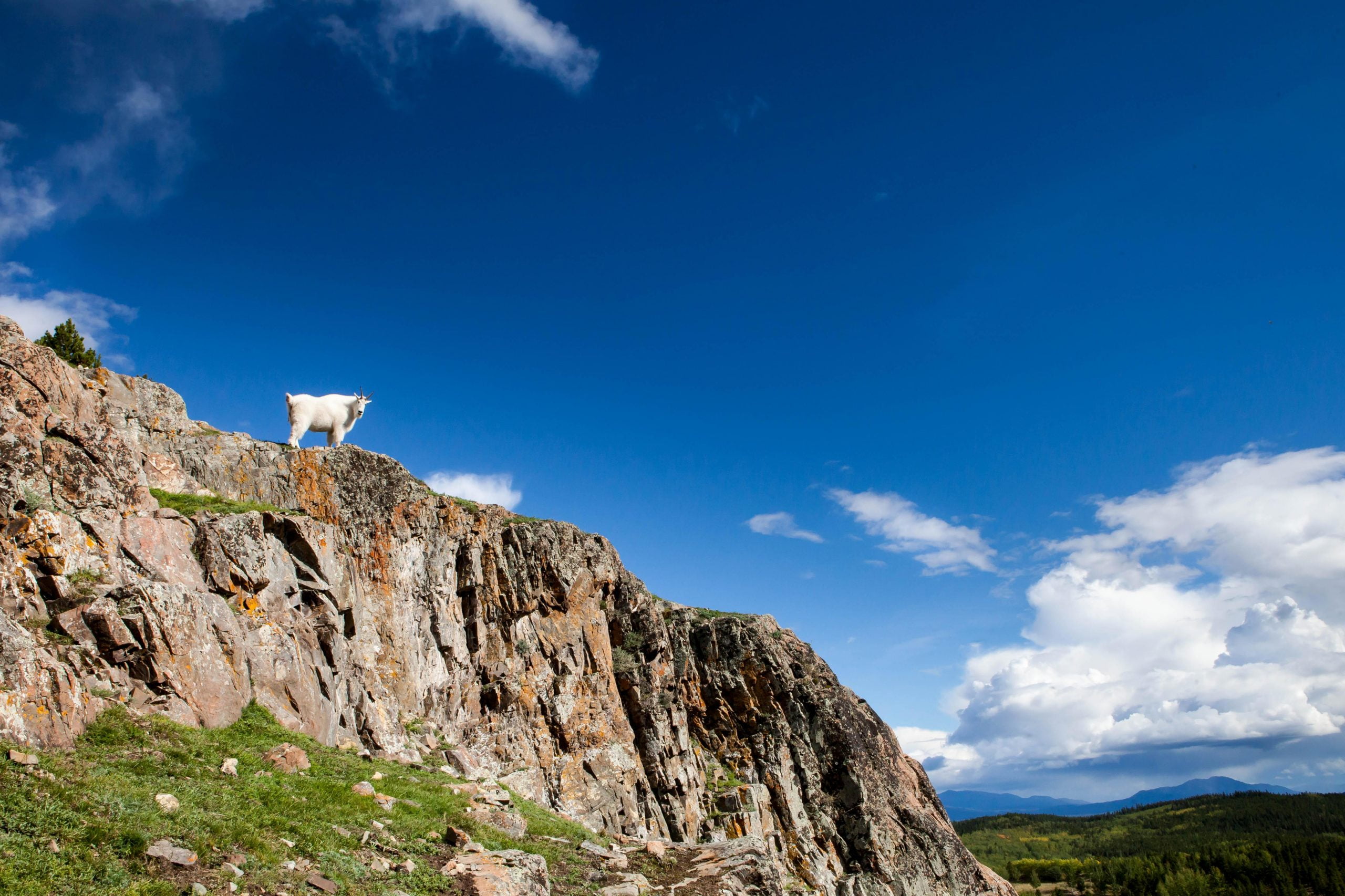
Mountain Goats and Sheep are the megafauna species featured in the rocky habitats here on the Preserve, They evolved specialized hooves and muscle groups to allow them to move quickly, and safely, on the various rock types found on these slopes.

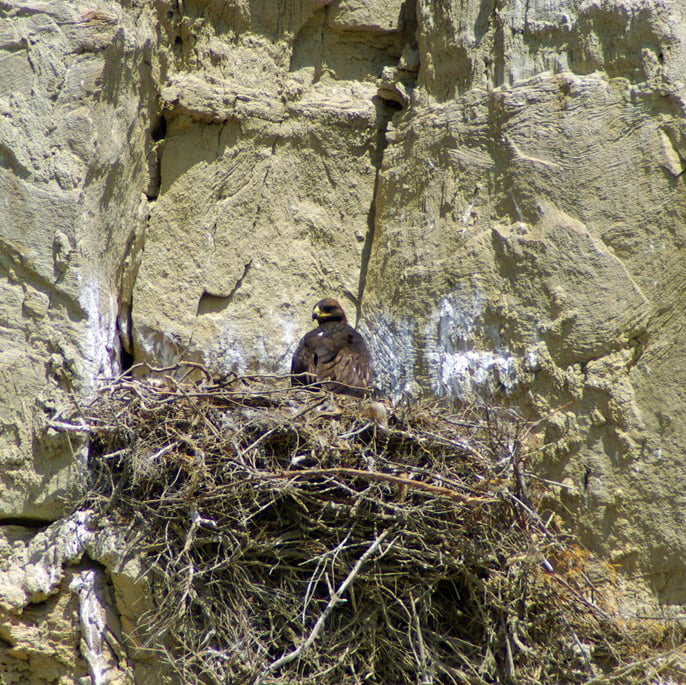
Of course there are numerous other species present here as well and while they have not evolved noticeable physical adaptations to live on the rocks, they have learned how best to live in this habitat and find the resources required to raise a family and make a living. Our ever-roaming foxes are often seen walking among the goats on the rock faces in their never-ending search for food. Many birds will nest on rocky crags and outcroppings as the precarious nature of these do provide some level of protection against predators like the fox. Eagles, hawks and owls often select a high perch on the rocks as they scan the area looking for their next meal. They often build nests in the protected areas in a crack high up a rock face to take advantage of these lookout positions.

Golden eagle nest on Lake Lebarge's eastern shores early 2000's.  Photo D. Caldwell

Rodents also make their homes within the jumbles of rocks hoping they have chosen a safe place to raise a family. Members of the weasel family, including Pine Martin, mink, weasels and even the cunning Wolverine will seek a suitable place to den among the rock slides as well as the forested areas nearby. Bears of course also seek out suitable places in the rocks to den and hibernate over winter.There are no bears denning on the Preserve at this time that we are aware of.

Also not present on the Preserve, are other creatures like Marmots and Pikas that typically make their homes high up in the rocks and mountains of the Yukon, Some species seem to be very widespread and can be found in a variety of Yukon habitat types. While some others are localised to specific geographic locations or elevations where they have the greatest opportunity for success. The ubiquitous Arctic Ground Squirrel also favours mountain sides to make a home.

Keep in mind that numerous natural influences like wildfires, landslides, avalanches and similar disruptions may alter the living conditions for a number of animals that will need to go in search of a new home to raise a family. The same may happen when a grizzly bear selects a den near a favoured grazing area of sheep or goats. To remain safe, the sheep will seek out a new grazing area well away from predators and other dangers.

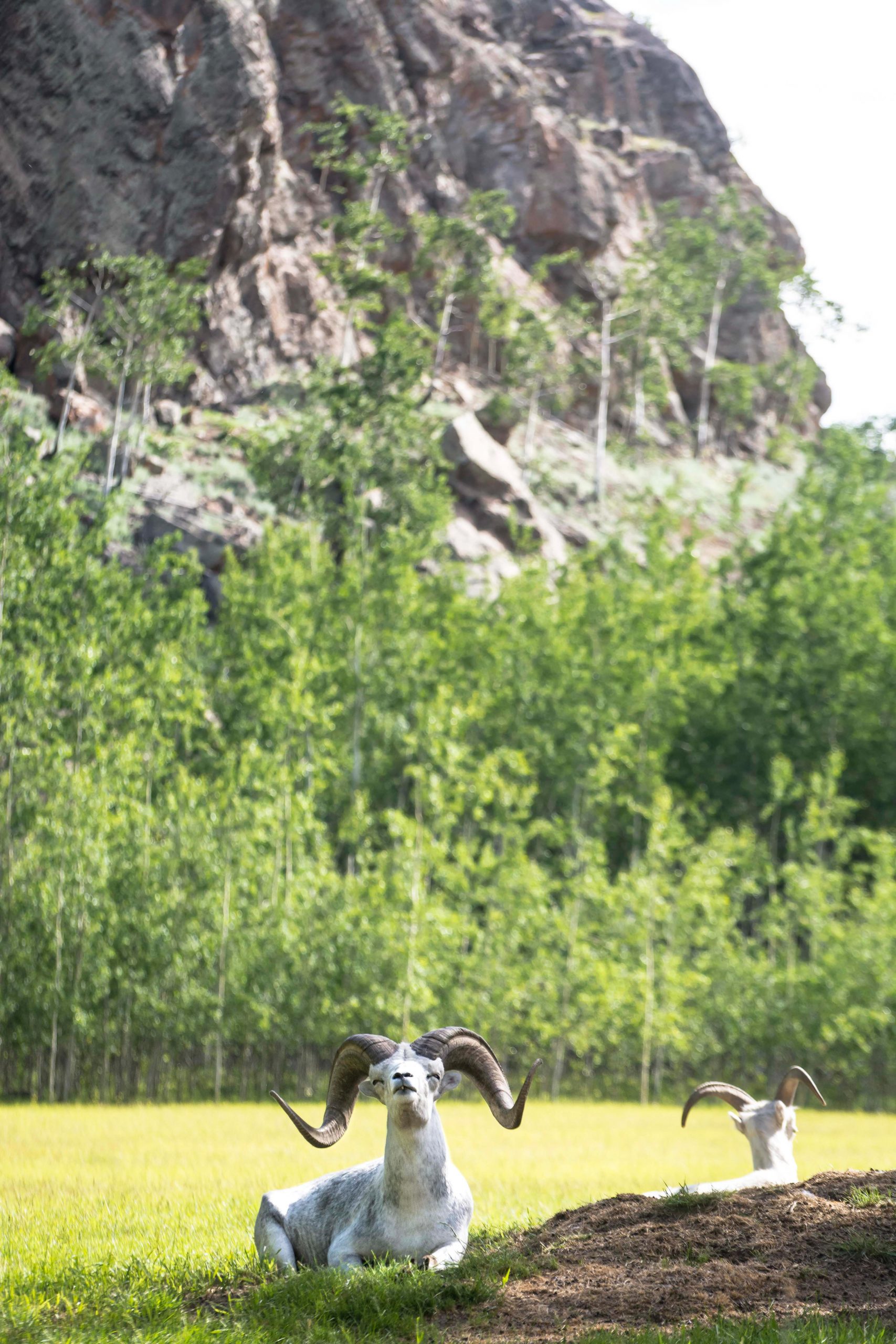
Thinhorn Sheep rams enjoy sunshine in their predator-free grazing grounds at Yukon Wildlife Preserve.  In the background we see the sheep-accessible cliffs within their habitat.

Rocky habitats are not without their dangers. During the winter season ice will form in small cracks and crevices within the rocks, as the ice becomes colder and swells it further fractures the rock sometimes making it dangerous in that it may break away completely and fall further down the slope.

Gravel screes are the deposits of smaller rocks, pebbles and dirt that have fallen from above and form a skirt of loose materials at the base of a rock face. These can be difficult for mammals to walk on quietly and safely and as such provide another level of security for the creatures that dwell on the mountainsides. Flash floods caused by voluminous rainfall and spring snowmelt can also be dangerous for the creatures that live on the rocks.

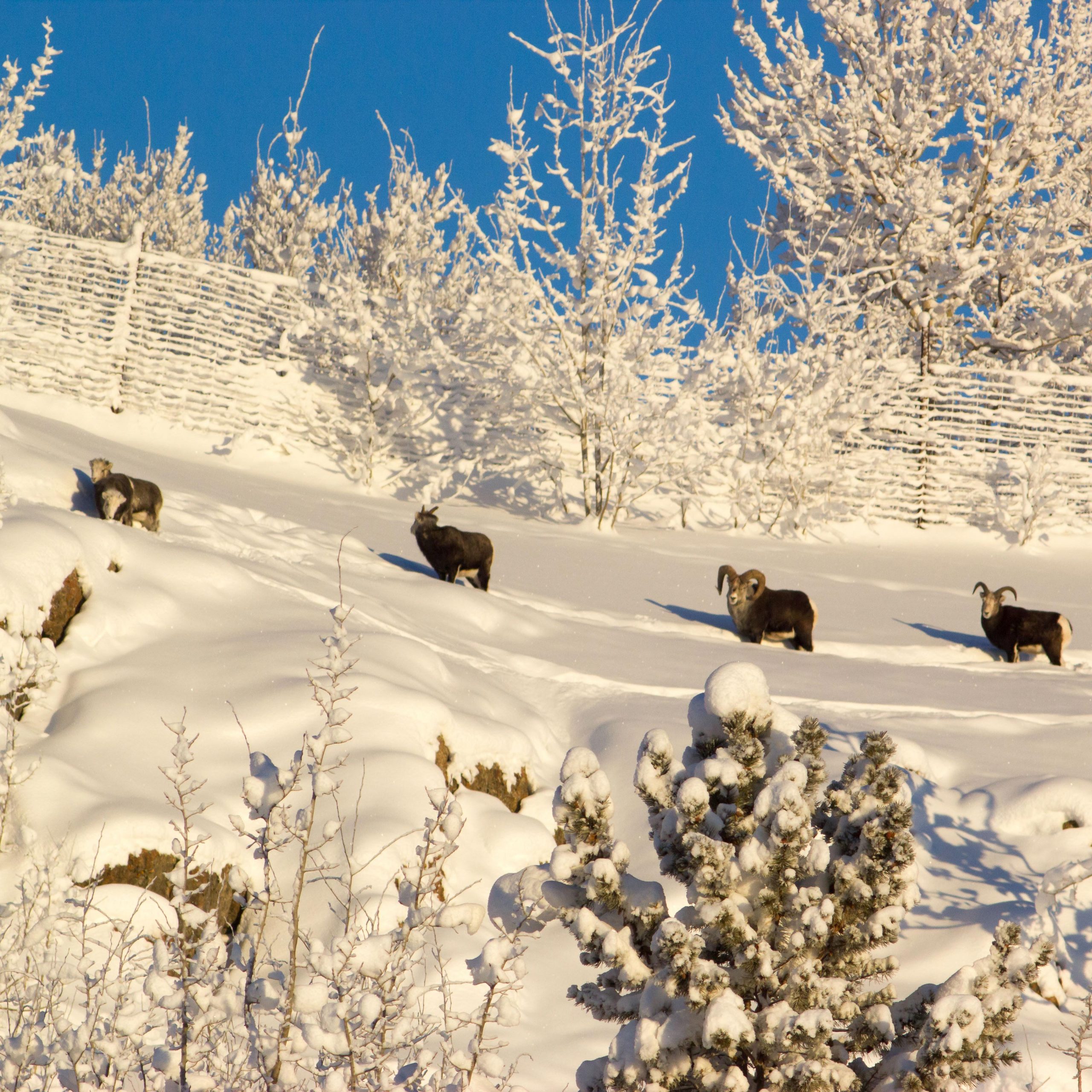
Rocky habitats are not without their dangers, which change based on the season.  Here, Thinhorn Mountain Sheep walk through deep snow along the cliff edge at Yukon Wildlife Preserve.

Because rocks warm in the sun and hold that warmth after the sun sets, some rock faces are preferred by early arriving bird species, like raptors, that will nest there to get started on raising the offspring that may hatch while snow still lies on the ground. Raptor parents teach the offspring how and where to hunt after they have learned to fly. They have lots to do within a short seasonal weather pattern, so nesting in the warmth of the rock faces provides them with an advantage to raising a healthy next generation.

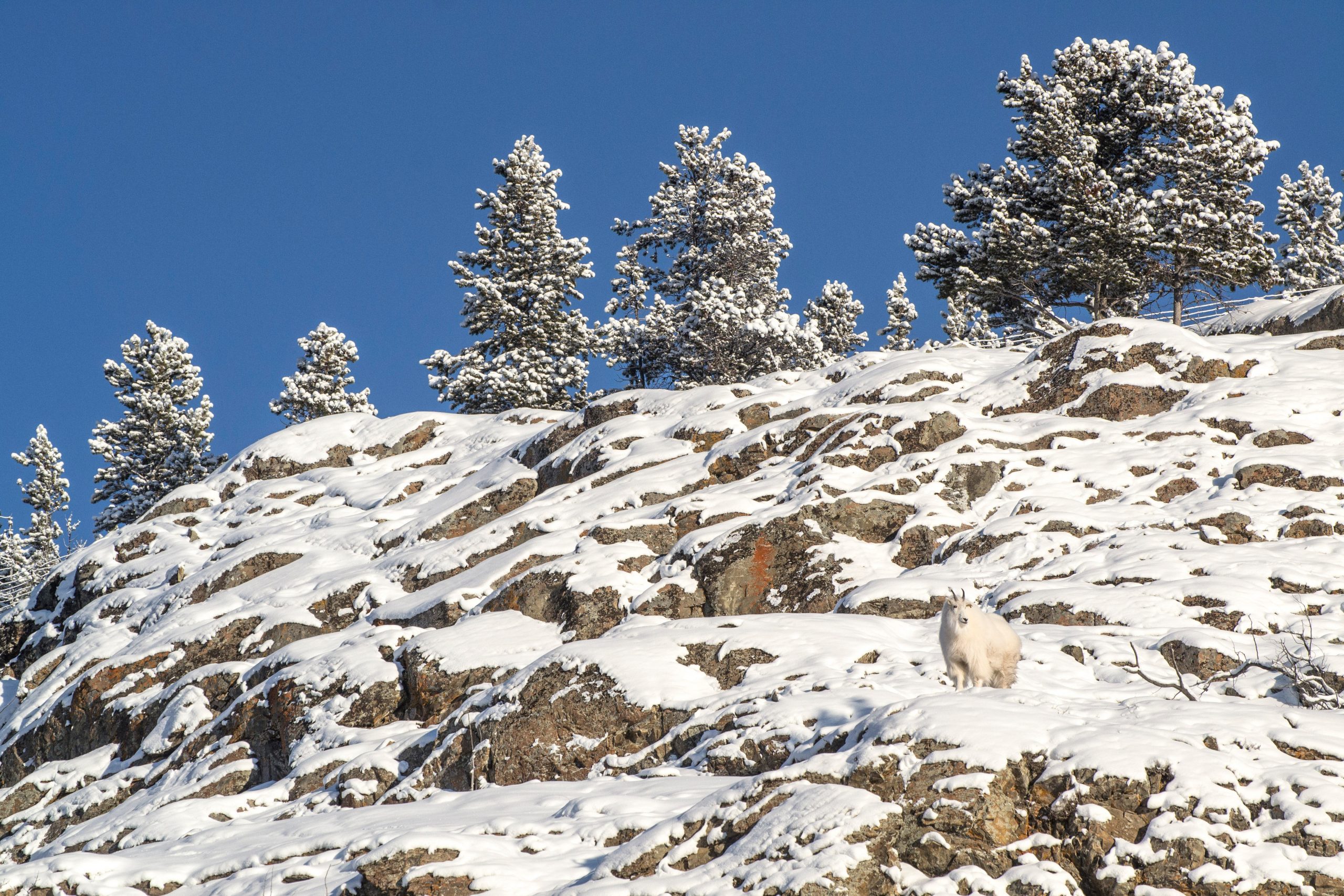
Like all other habitats on the Preserve, winter brings some profound changes to mountain slopes the animals must literally take in stride. The goats and sheep cannot run and frolic on the snow covered rock faces as they do in the ice-free season. They pay closer attention to where they travel and may use alternate trail systems during these times to prevent slips and falls. They still make it look much easier than it is and they sometimes look quite smug as they look down at us staring up at them from the road.

The spring thaw also introduces new dangers as the warming rocks may cause the ice to melt from beneath, creating loose patches that can break away when a foot is placed on them. Meltwater cascading down the slope is another seasonal hazard the creatures are well conditioned to avoid. Staying warm and dry is its own reward when the chill winds blow high up on the rocks.

As the ice and snow melt away and the winter white gives way to the browns and greens of spring and the migratory populations return for another summer in the Yukon, the many animals species return to raise their families and prepare them for a life that continues to transform and evolve due to climate change and the other forces of nature like earthquakes, wildfires, floods and the influences of mankind.

It may appear that some animal species are well established and very set in their ways, however they are evolving each day to maximize new opportunities provided by an ever-changing planet and the relationships between their habitats and their ability to get what they need to survive. We humans may not notice these changes right away as they can be quite subtle and appear meaningless to us. An example of this is the recent addition of crows and hummingbirds to the Yukon. They are expanding their summer ranges north as the climate warms and they can find enough nectar producing flowers to sustain them as they explore new habitats in the north. The flowering plants they depend on are also moving further north and their presence here will result in other changes that may take us some time to see and understand as they move into habitats presently occupied by the traditional species we normally focus on. Change is all around us, but it can be difficult to see clearly or understand the scope of these changes.

So take the time to look beyond the megafauna and other species we consider to be normal, you may see something astounding. Just ask Whitehorse bird enthusiast Cameron Eckert who found and photographed an adult female Calliope Hummingbird, on Herschel Island in June of 2017, 1,800 km north of its traditional breeding range.

Doug Caldwell

Doug Caldwell

Wildlife Interpreter

Doug is one of the Interpretive Wildlife Guides here at the Preserve. An avid angler and hunter he has a broad knowledge of Yukon’s wilderness and the creatures that live here. With a focus on the young visitors to the Preserve, Doug takes the extra time to help our guests to better appreciate the many wonders of the animal kingdom here in the Yukon.

Explore by Category

Explore by Author

Mother’s Day Tribute

Mother’s Day Tribute

mountain goat

1.5 Min Video - 

Whether we are human or a furry animal, we can’t do it without our Mothers! They nurture and care for us, setting us on the path to a healthy and successful life.  Join us in this tribute to mothers everywhere, of all shapes and sizes.

Maybe you were my birth mom, maybe you’re the mom that helped me later. Anyway you slice it, you’re the best.

Thanks Mom!

Lindsay Caskenette & Julie Kerr

Lindsay Caskenette & Julie Kerr

Visitor Services Manager and Visitor Services Coordinator

Lindsay and Julie love to share the Preserve the same way they explore life – full on and full of adventure!  They have a collective love of:  Animals....Lindsay dogs, Julie foxes; Adventure.... Lindsay dog mushing, Julie extreme camping;  both take on animal personas during story telling.  Together they support the Preserve with a strong Visitor Services presence and often, they even get work done (this happens most often when the other one is out of the office).   

867-456-7400
 info@yukonwildlife.ca

Explore by Category

Explore by Author