The Quiet Isn’t Empty

The Quiet Isn’t Empty

The Quiet Isn’t Empty

3 minute read

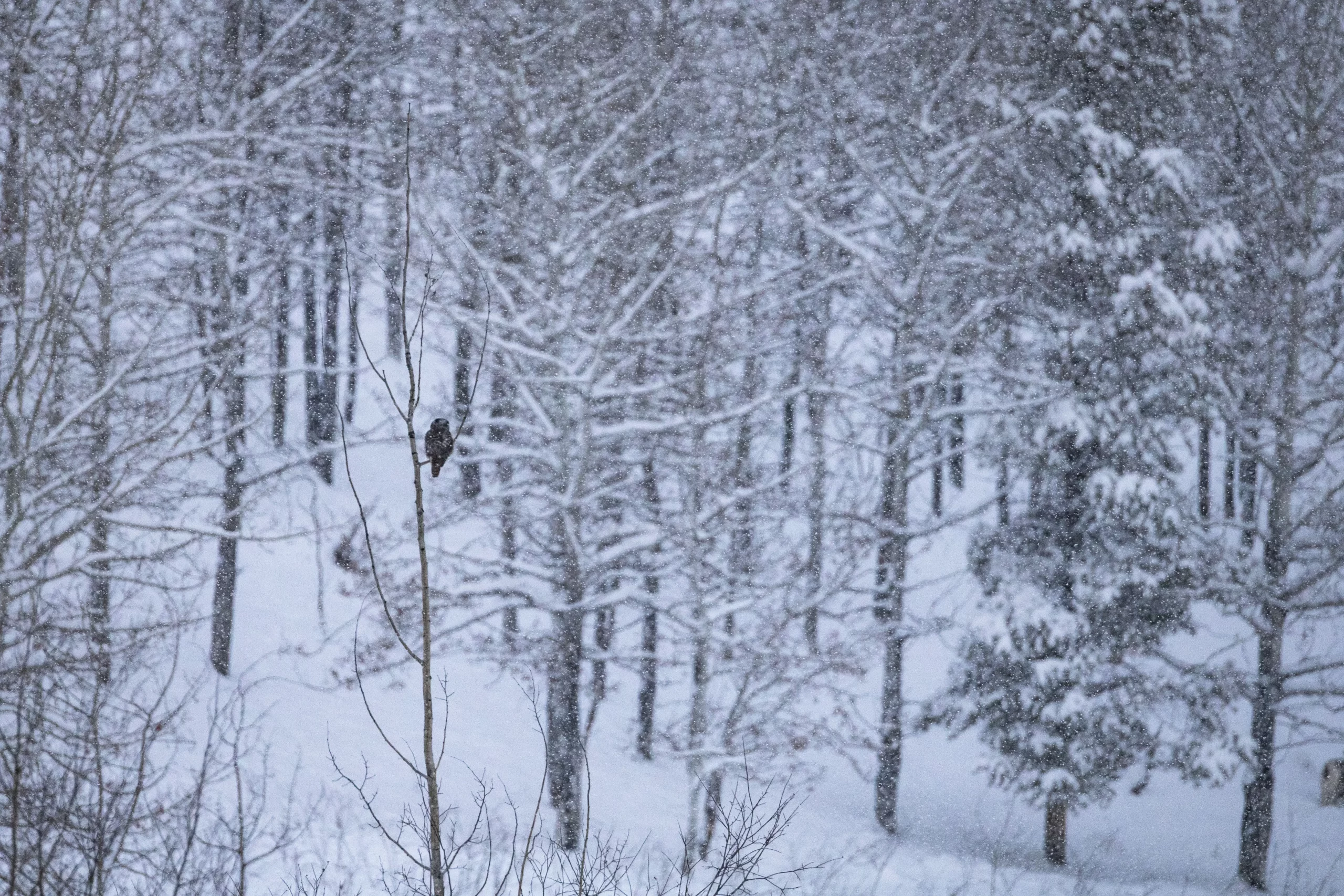
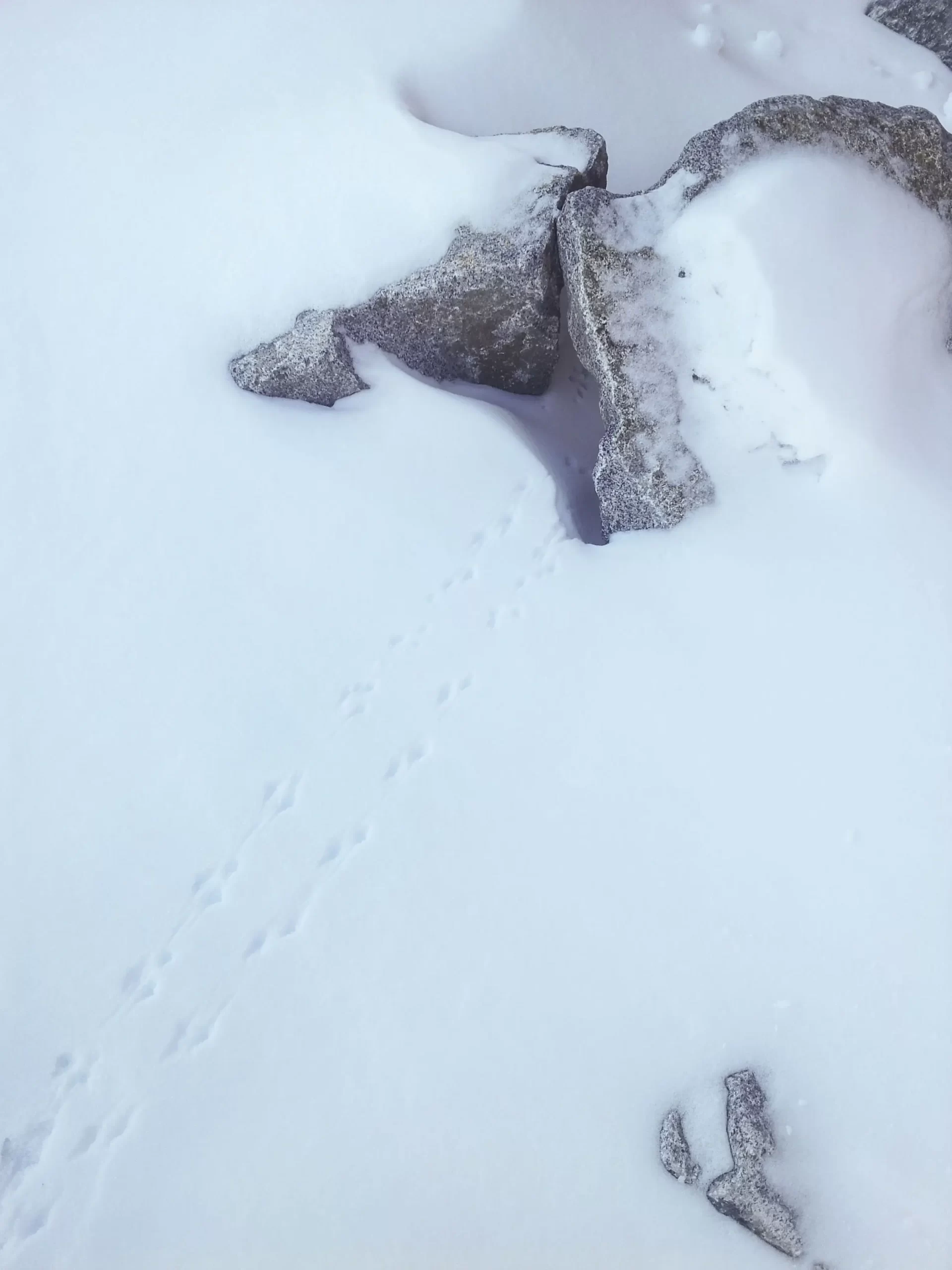
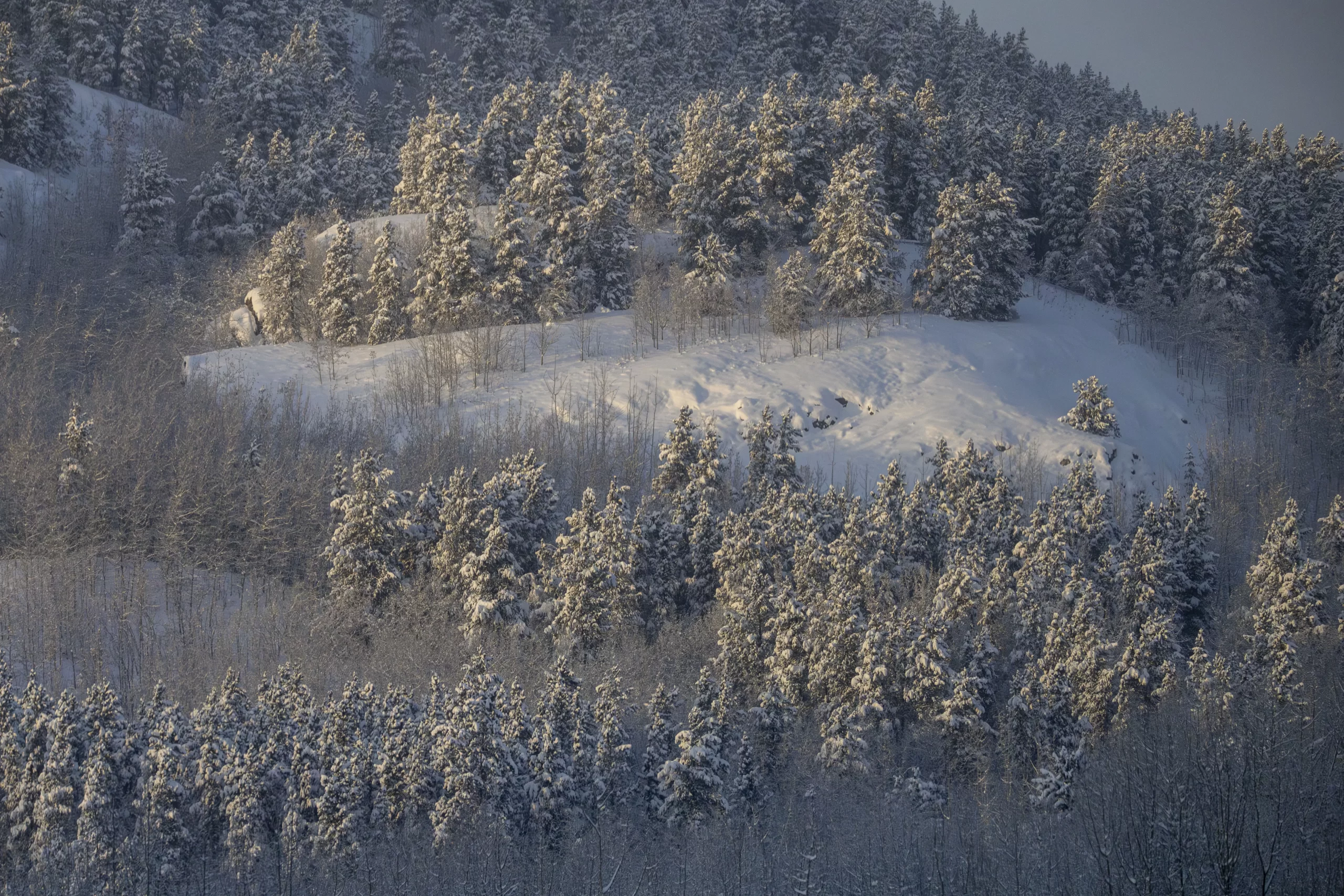
The snow lay thick and quiet across the Yukon and the Yukon Wildlife Preserve, softening the edges of the land and turning the hillside into a winter canvas. At first glance, it seems still, but a closer look tells a different story.

Cold snowy morning light on the mountain goat cliff at the Yukon Wildlife Preserve.  Credit J. Paleczny

Those criss-crossing tracks aren’t random doodles, they’re proof that the animals have been busy. At the Preserve, the sheep set the best route across the slope and once formed, stick to this path of least resistance. 
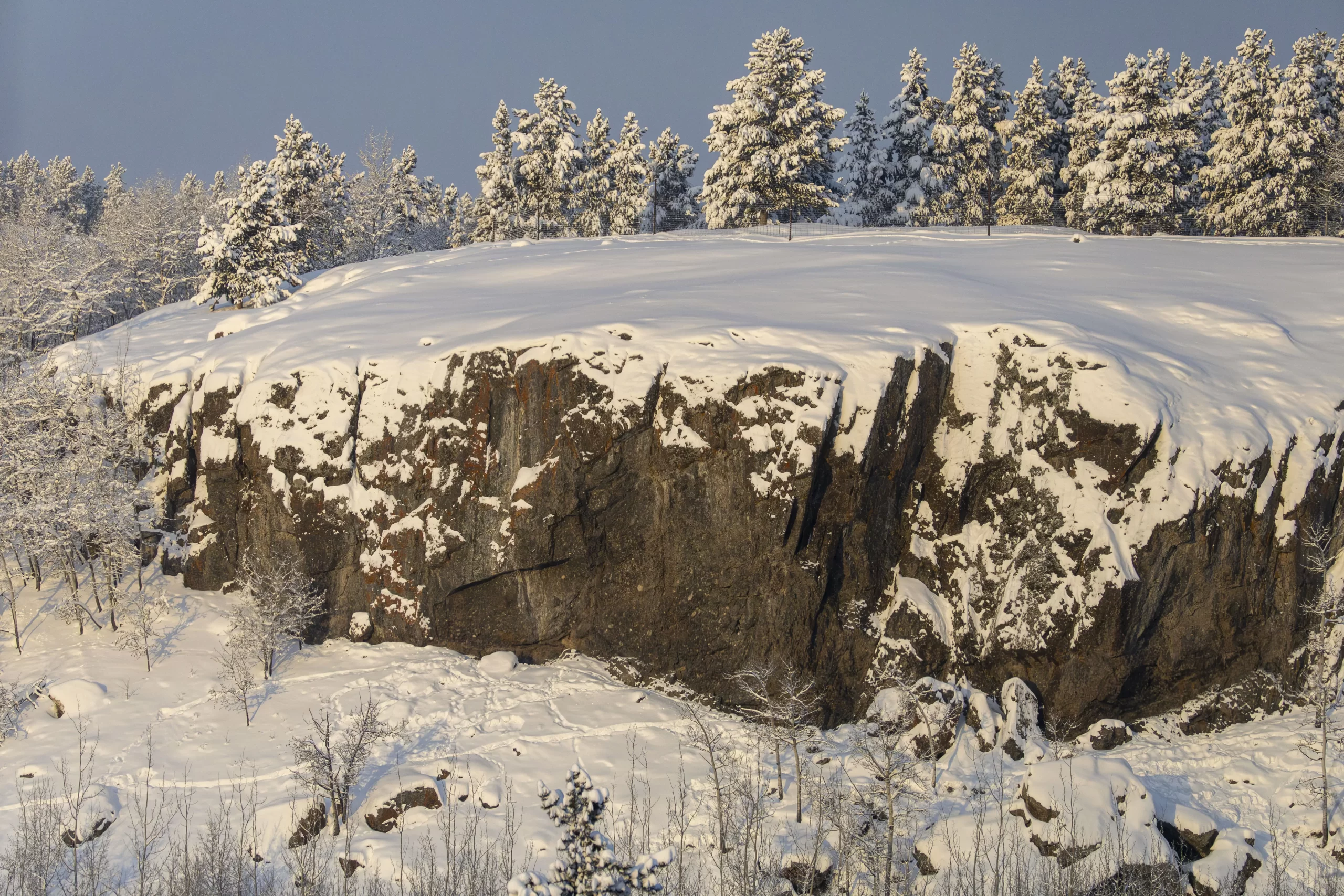
Cold snowy morning light on the mountain goat cliff at the Yukon Wildlife Preserve. Credit J. Paleczny

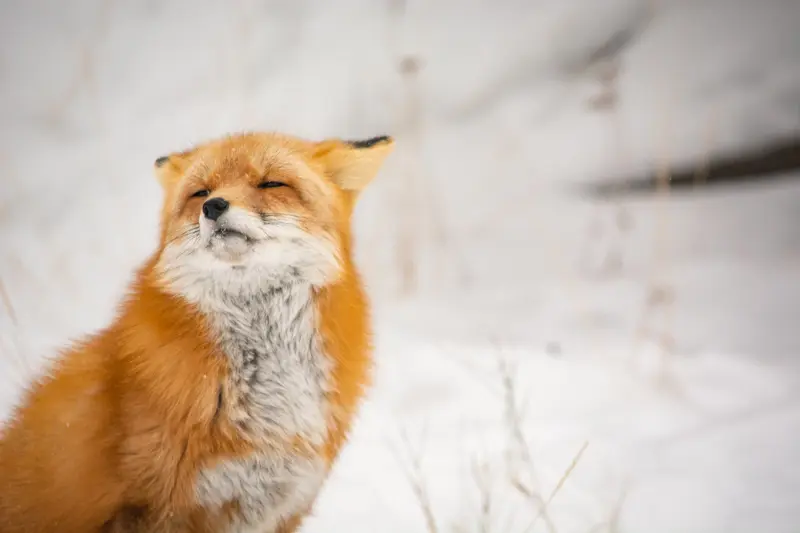
 Beyond, a fox is on patrol, a hare in a hurry, deer are deep in the woods. Winter doesn’t slow things down as much as it changes the rules. 

Cold snowy morning light on the mountain goat cliff at the Yukon Wildlife Preserve. Credit J. Paleczny

Thick winter coats do the heavy lifting, wide hooves act like built-in snowshoes, and many animals conserve energy by moving only when it’s worth it. 
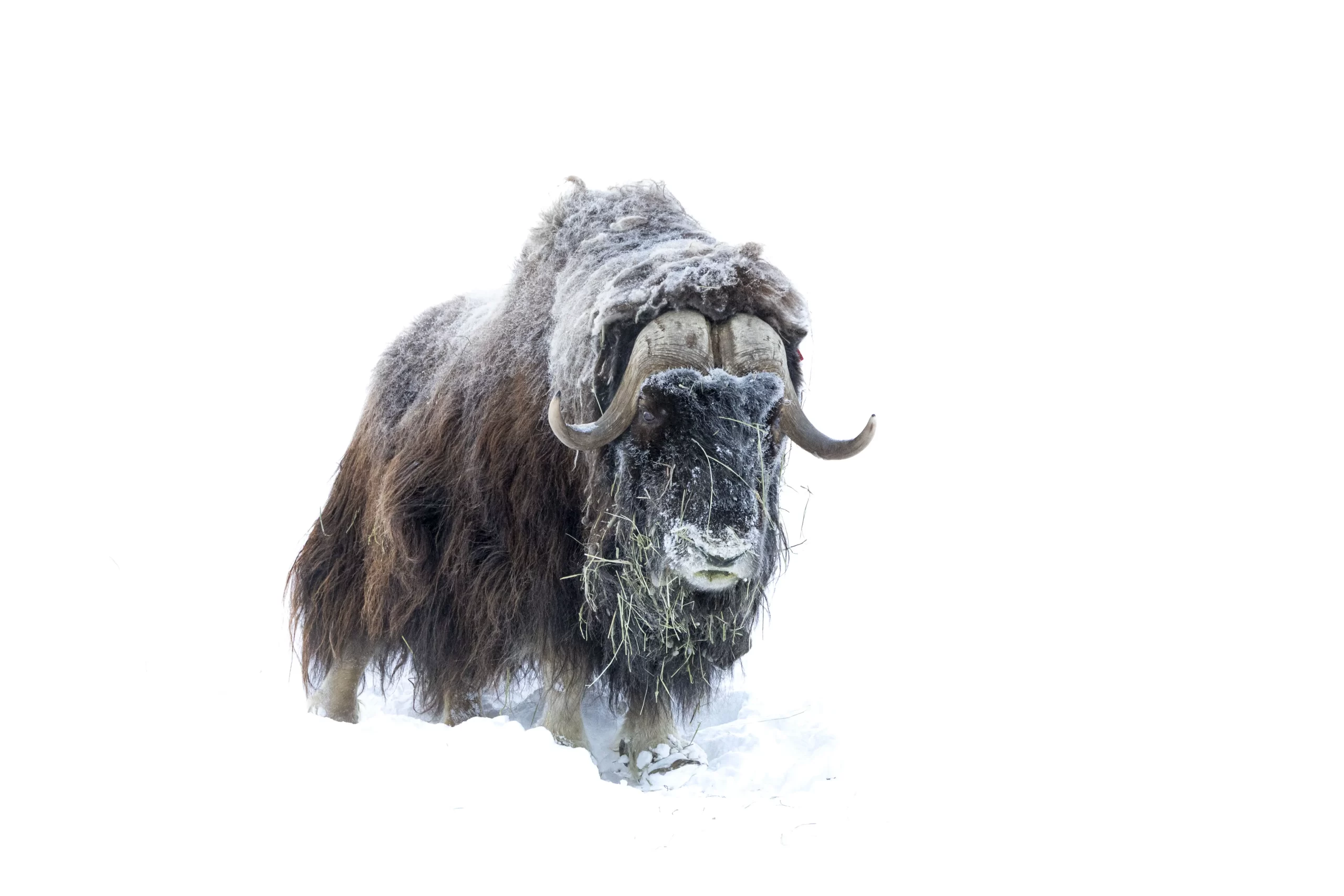
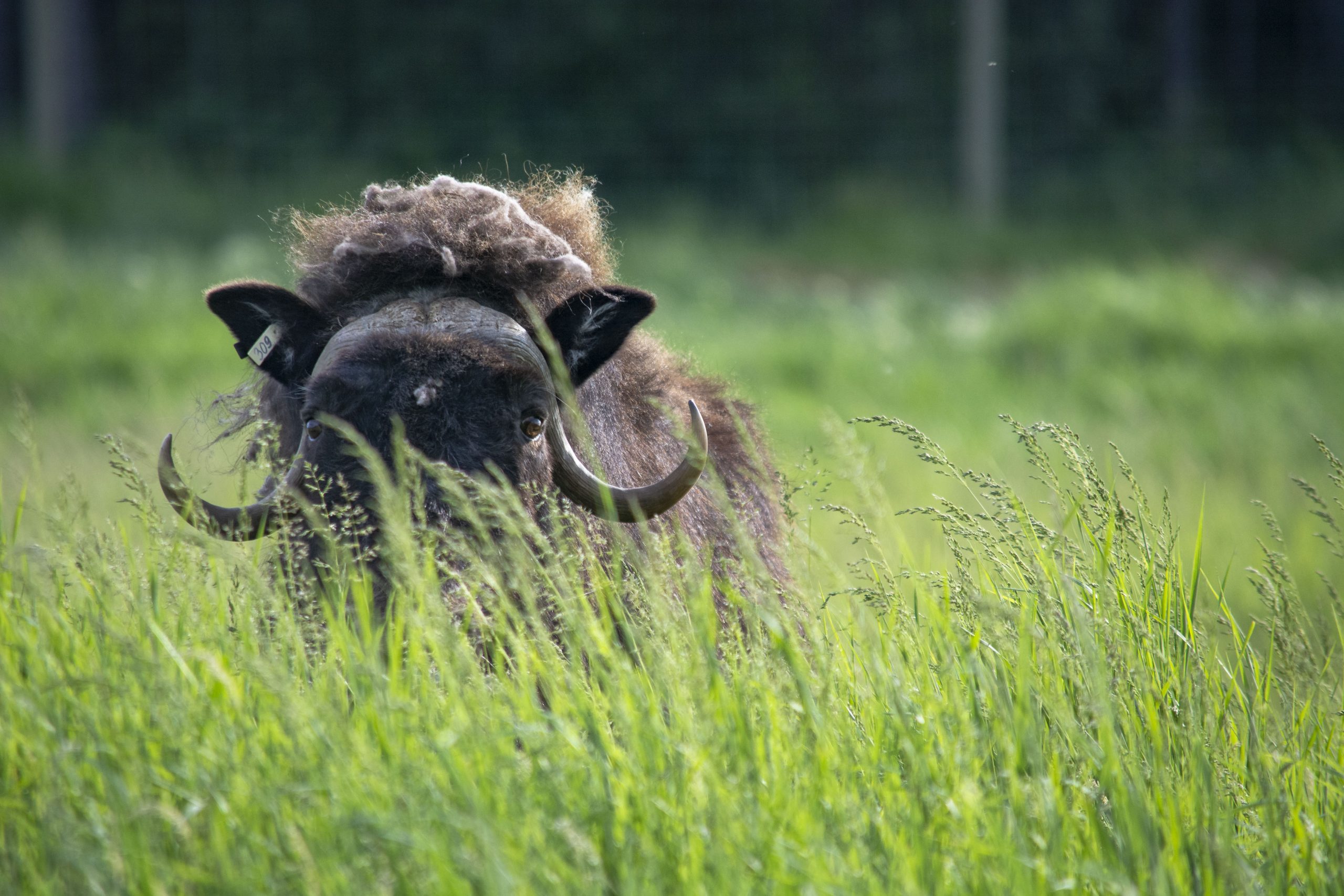
muskox ain white out snow conditions at the Yukon Wildlife Preserve. J. Paleczny

When the wind picks up, trees, rock faces, and deep snowbanks become natural windbreaks, much cozier than they look. Beneath all that snow, insulated and sheltered, small mammals tunnel and rest, protected from the harshest cold.
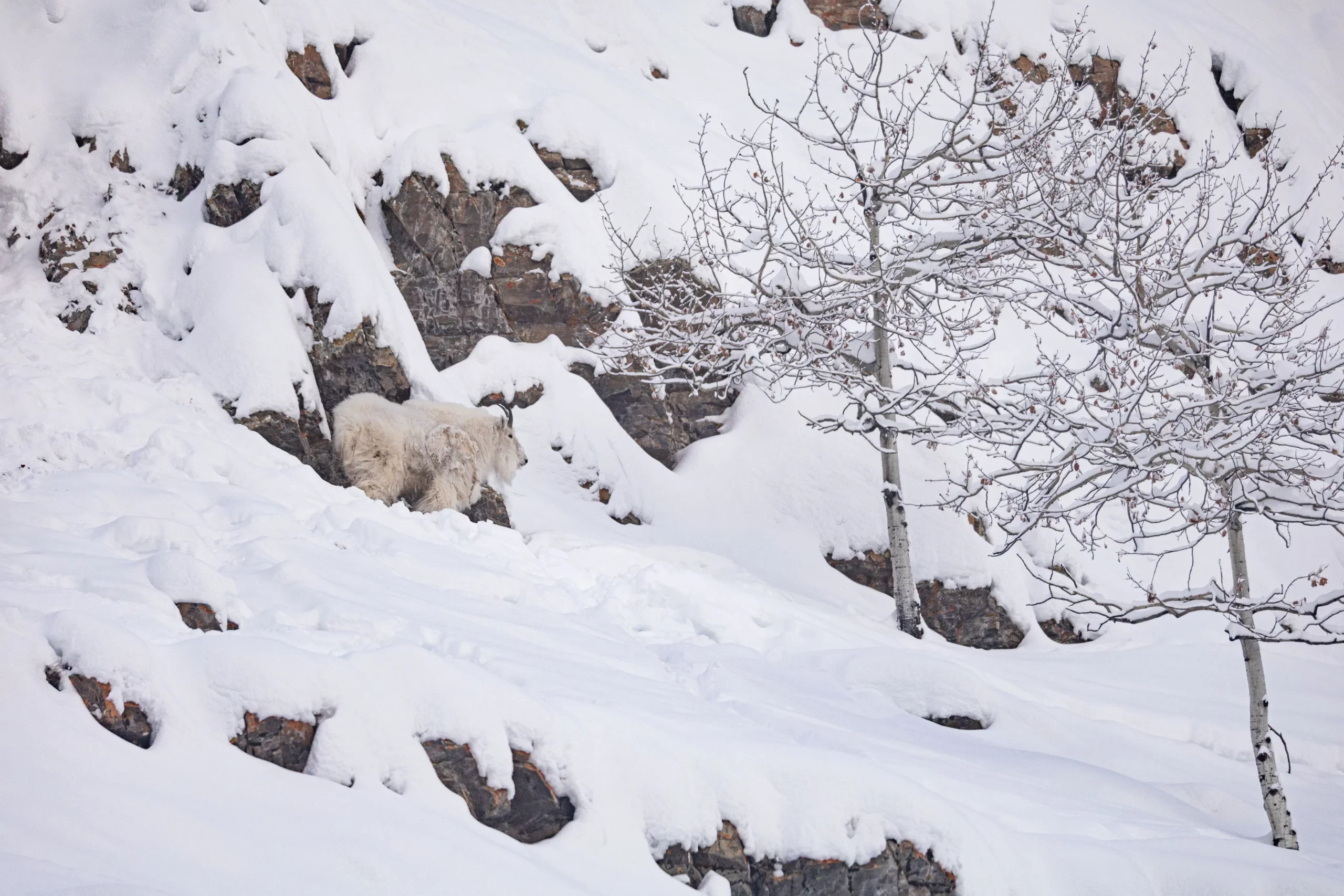
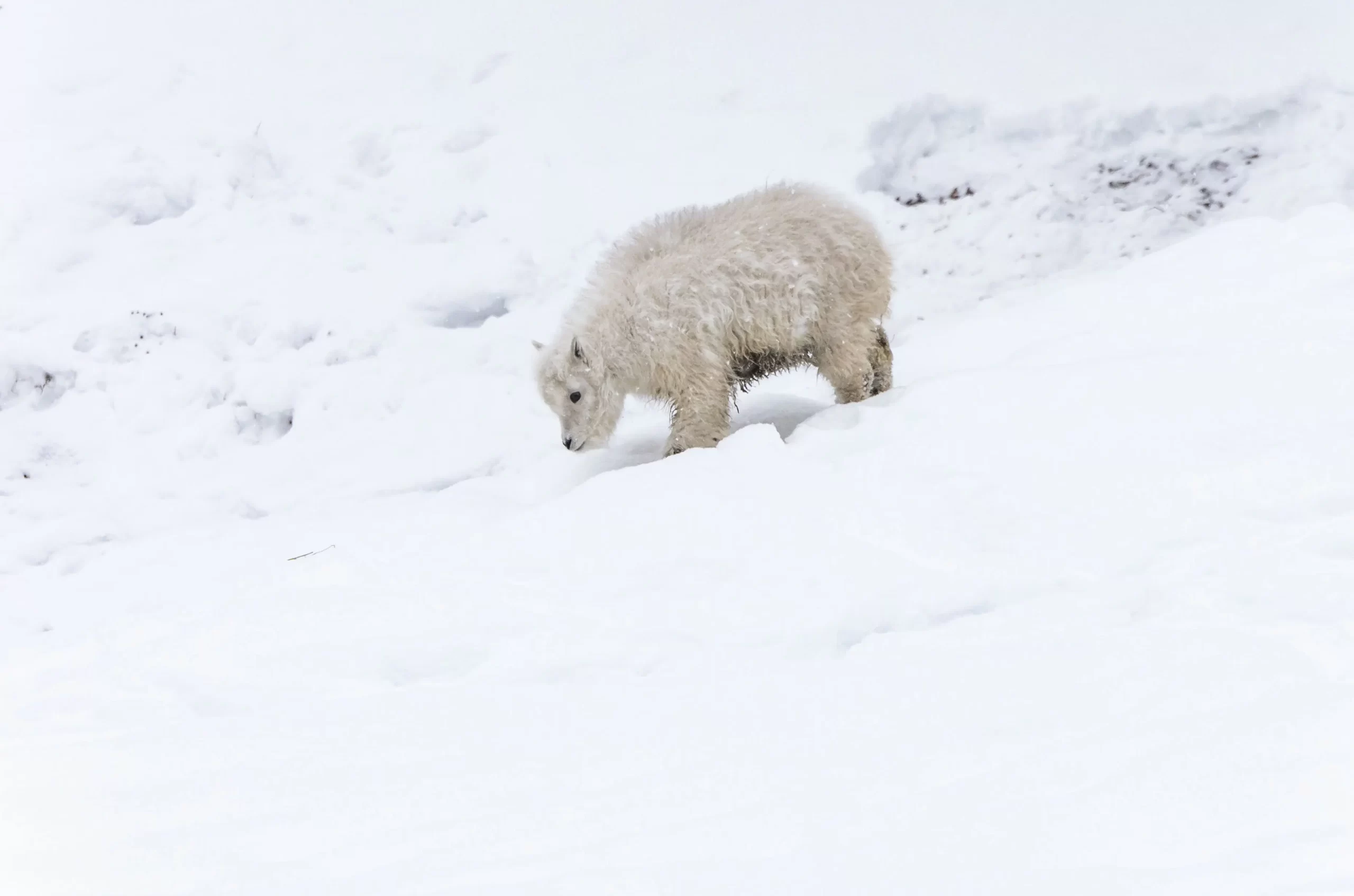
Mountain goat in a snowy mountain landscape at the Yukon Wildlife Preserve. L. Caskenette

The Yukon, winter is not a season of silence, it’s a season of resilience. Every track tells a story of endurance, and every snowy landscape holds evidence of life shaped by the North.

Lindsay Caskenette

Lindsay Caskenette

Manager Visitor Services

Lindsay joined the Wildlife Preserve team March 2014. Originally from Ontario, she came to the Yukon in search of new adventures and new career challenges. Lindsay holds a degree in Environmental Studies with honours from Wilfrid Laurier University and brings with her a strong passion for sharing what nature, animals, and the environment can teach us.
867-456-7400
Lindsay@yukonwildlife.ca

Explore by Category

Explore by Author

The Patience of a One-Eyed Owl

The Patience of a One-Eyed Owl

The Patience of a One-Eyed Owl

6 – 8 minute read

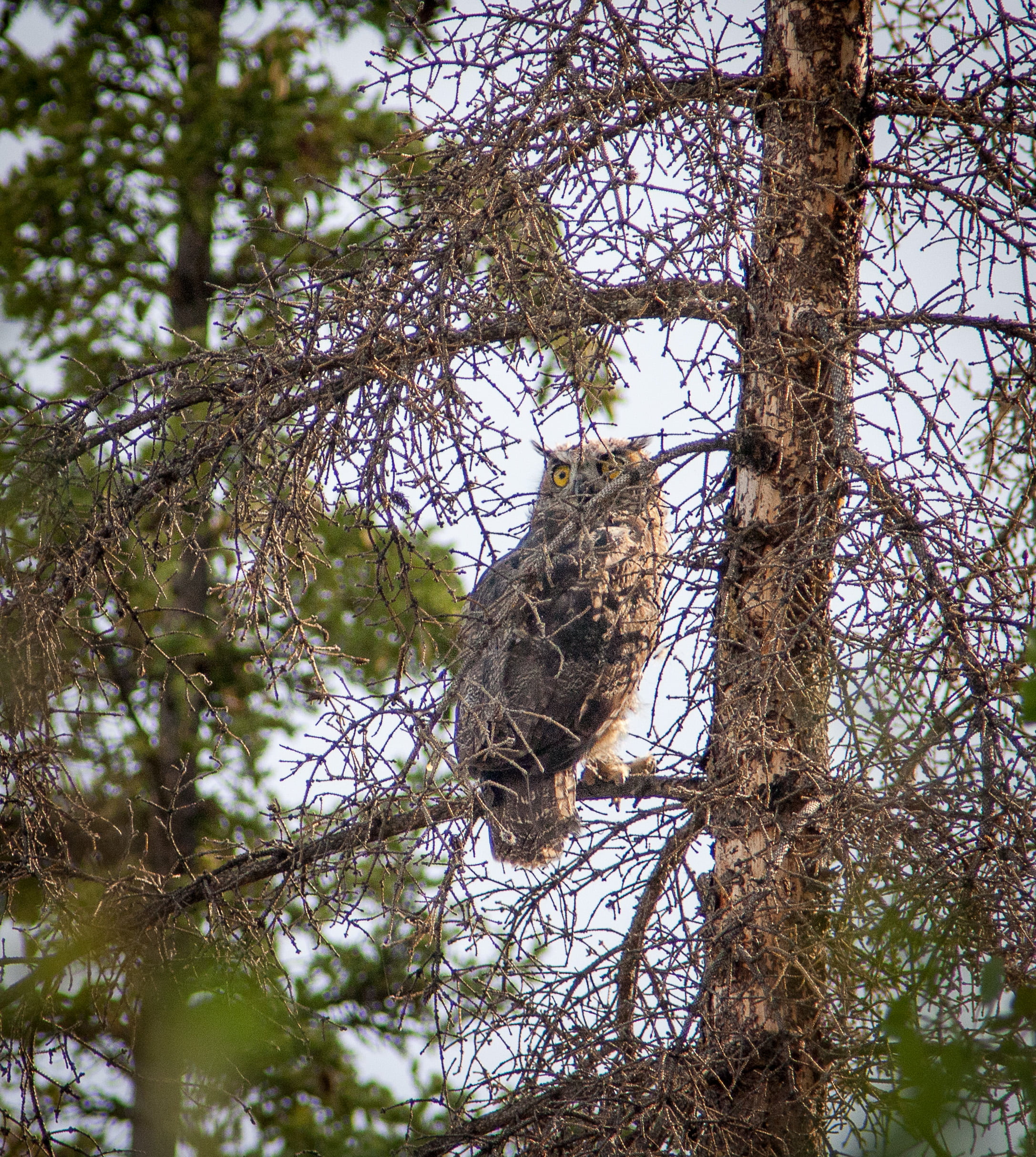
It is dusk turning to night, with darkness enveloping the forest. Stationed in a tree on the side of a road hides a predator, whose yellow eyes reflect with the passing headlights of cars driving by. This owl is currently listening, not only to the engines of vehicles and the sounds of gravel being kicked into the air, but for tiny rustling in the underbrush across this treacherous path.

The ‘great horns’ on this owl are not their ears; instead, they have an opening on both sides of their head to take in the sounds bouncing off the facial disc of feathers around their face. One of these openings is slightly higher on their skull, allowing for the sounds of this noisy prey to enter one ear a fraction of a second faster than the other. As this owl twists their head, they finally pinpoint the location of their prey, following with their eyes to the exact location the creature is hiding. As they zone in and begin to take flight, all sounds except for the scurrying prey begin to fade. The great horned owl narrows its eyes on their target, taking in the flow of air around their silent wings whilst beginning the slight movements they need to grasp with their talons.

All of a sudden, in this brief moment of time, a life is imperiled; a flash of light enters the owl’s vision from their right side and the world goes blacker than the night they surround themselves in.

The road is a deadly location for many animals; vehicles can collide with wildlife passing through, garbage and trash commonly finds itself on its side, and carnivores often use these areas to hunt those animals taking advantage of the weedy species growing in abundance. Not only do predators hunt those in the underbrush, but they also find themselves on the sides of roads waiting for foolish prey to cross the area with no cover.

This photo captures another rehabilitated and released great horned owl at the Yukon Wildlife Preserve. It highlights how roadways provide convenient hunting grounds for owls that perch where the forest and our roadways meet. Photo credit: B. Forsythe

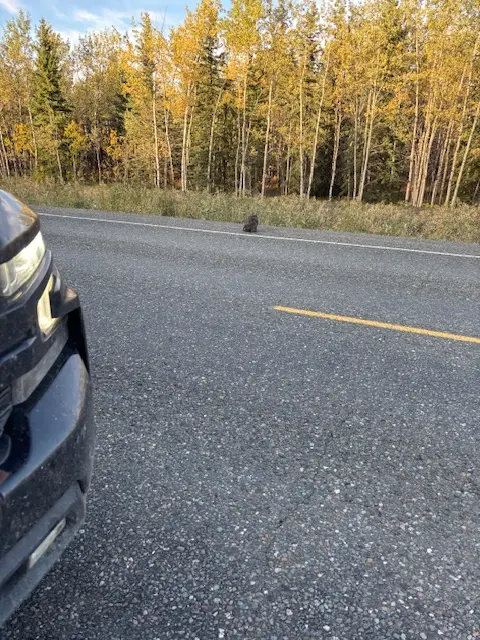
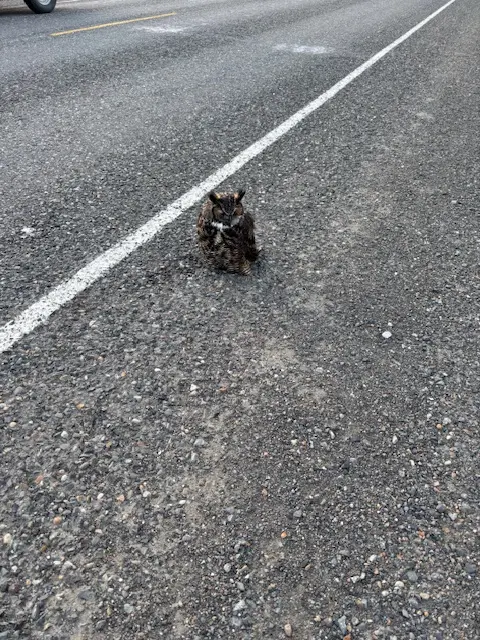
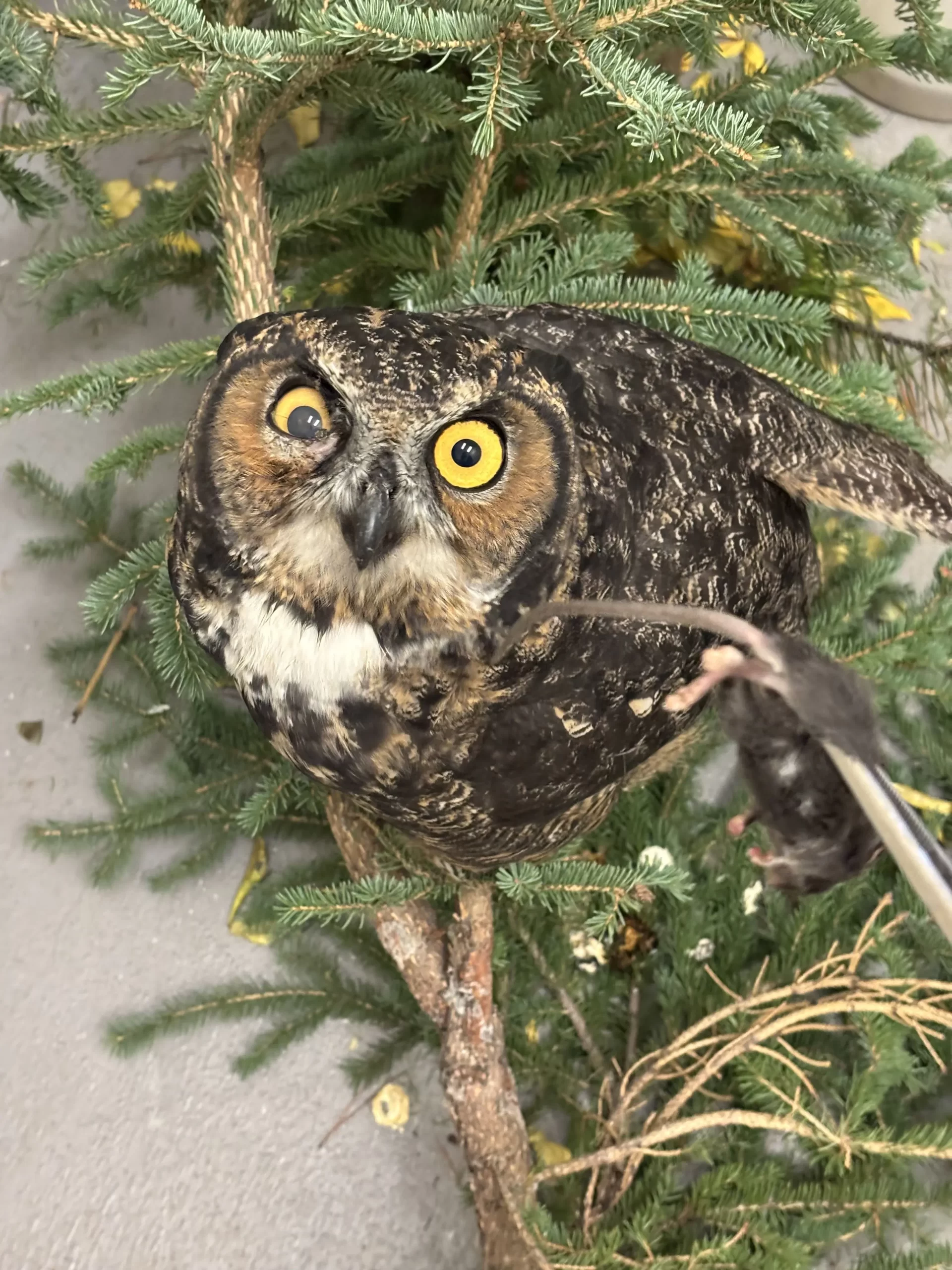
A great horned owl that has recently entered our rehab center was one such predator. When they were first admitted into our charge, our animal care team was told by rescuer Sonya Bingley that they were struck by a car, north of Braeburn, resulting in difficulty flying and their right eye remaining swollen shut.

Photo by Sonya Bingley. Sonya spotted the owl on the side of the road while driving just North of Braeburn, Mayo/Klondike Hwy, Yukon. 

After some brief examinations led by the veterinarians at AlpineVet and initial attempts at feeding, the owl was visually responding to our team’s actions using their left eye, but had a lack of ferocity that is normally expected from birds of prey. The intake exam looked at the owl’s entire body, determining that the only major injury was to their right eye.

As there was most certainly head trauma, the lights were kept low while we gave them pain medication and encouraged them to eat. During this process they were extremely patient with being handled, prodded, and even picked up in their entirety. The meals they would eat were few and far between, and the rare times that they would flap their wings were when being picked up too briskly. Alongside this, their ability to balance when being picked up or placed down was lacking, often resulting in the bird tumbling when attempting to walk. 

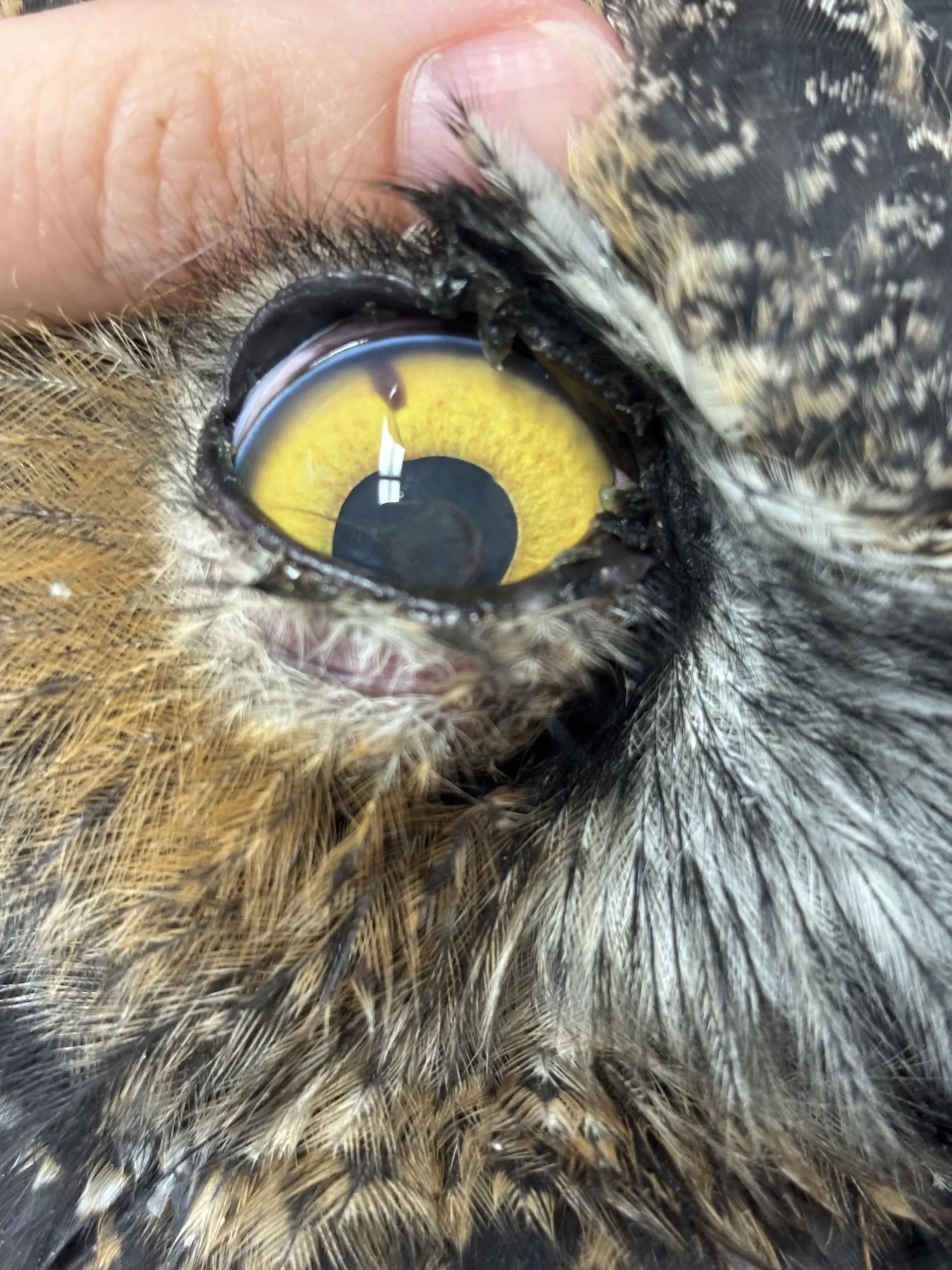
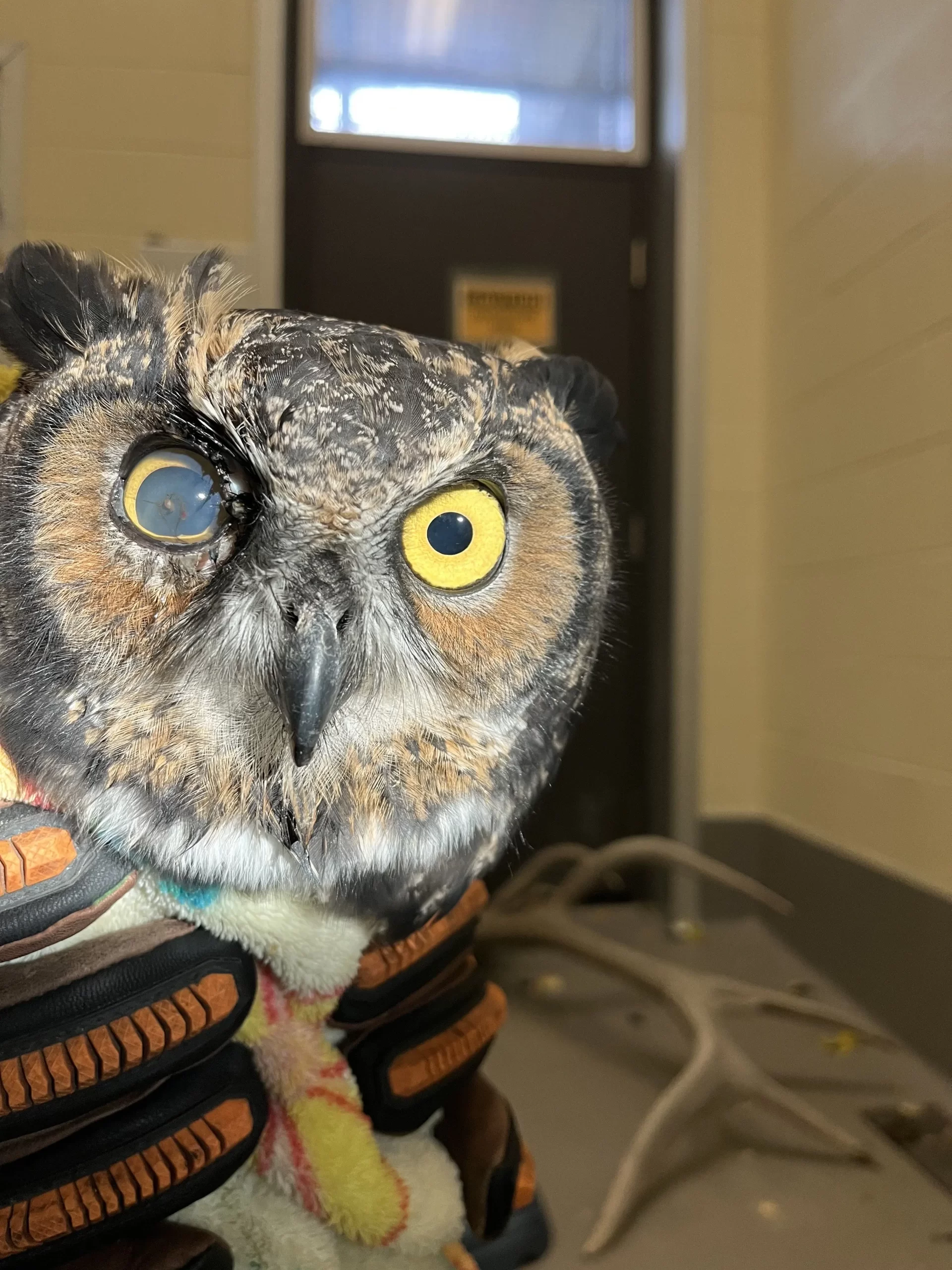
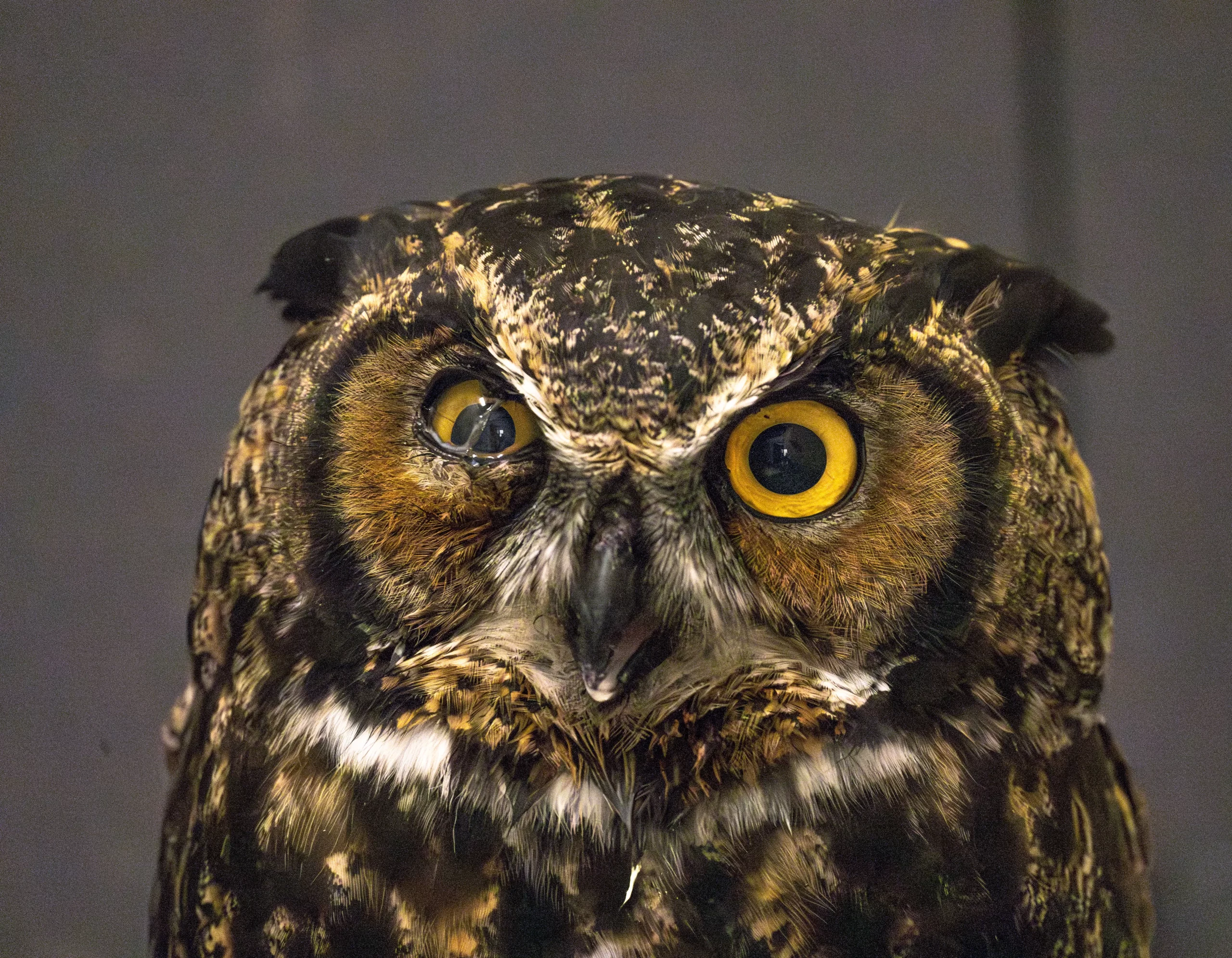
When the owl was initially received and the intake examination was concluded, a closer look at their right eye was needed, noting that it was swollen shut upon arrival. After opening the eye to get a brief look, both eyes were responsive to light and continued to be for multiple days in our care. Their right eye became less swollen as the days passed, however the owl kept squinting and their attitude remained dull with continuing signs of pain. Alongside this, the eye itself continued exhibiting changes each day, with signs of haemorrhaging and debris floating in front of the pupil, likely from a tear in the iris. Eventually the right eye lost its ability to react to light, and the owl was taken into another examination with AlpineVet, determining that the eye was now non-visual.

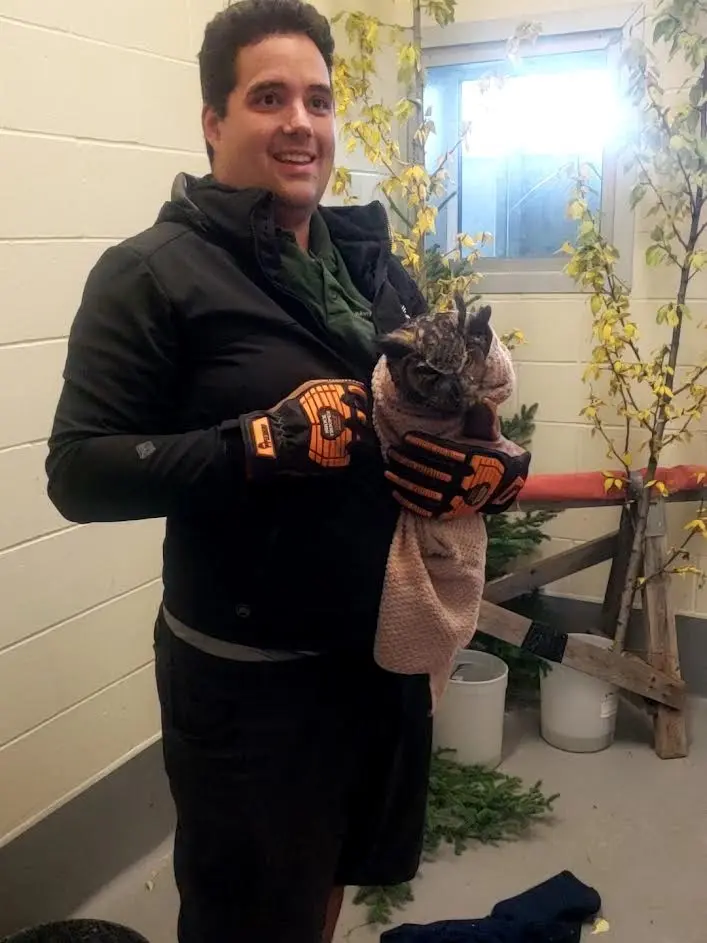
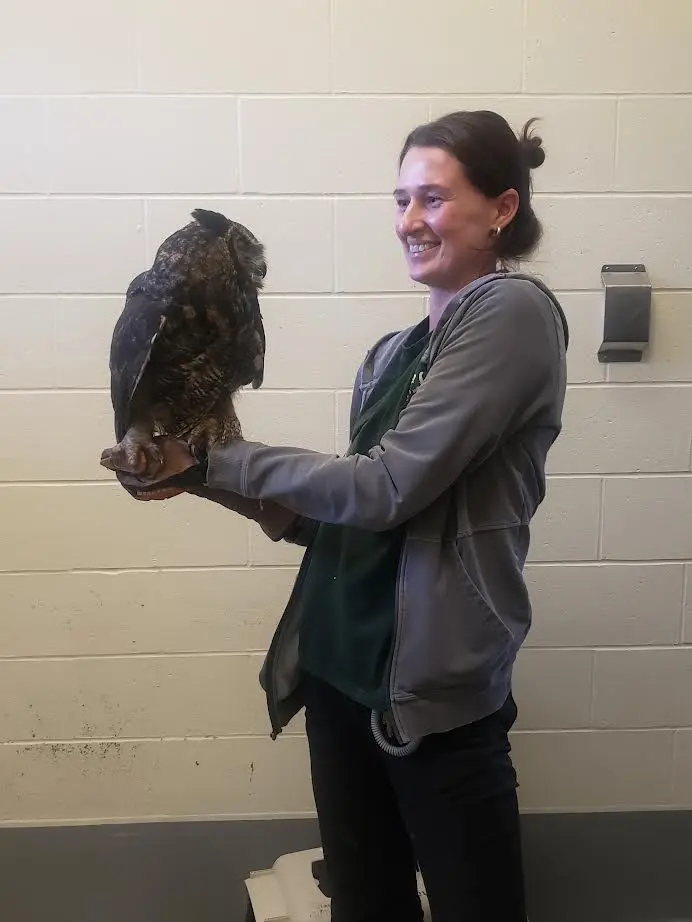
Neil explaining owl handling. Neil teaching the animal care staff how to properly pick up and wrap the owl to minimize injury during handling. Neil, Manager of Education and Programming, has history working in B.C., at an avian rescue centre.

Having concerns about a raptor being released into the wild with a single eye, inhibiting a key sense that they use to hunt, talks of all kinds were happening behind-the-scenes regarding eye surgery and the potential hazards of removing their eye completely.

Eventually, the preserve decided to reach out to experts in the field of raptor rehab in BC, an organization ironically known as OWL. The call we had was extremely informative, and we asked a few questions regarding the owl’s lack of hunger, balance, and whether or not a single-eyed owl could possibly be released successfully.

Their response eased our fears, they have had cases exactly like this one, and not only were owls with one eye common in their rehab center, they were also great candidates for successful release into the wild. 

Alexis, Wildlife Care and Rehabilitation Technician and veterinary technician handles the bird during an examination. 

For owls struck by vehicles, eyes are commonly injured and need removal; however, through this call we found out that surgery to remove the eye is almost never necessary. Prior to this, we knew of two options for eye surgery that worked for owls: enucleation, the process of completely removing an eyeball from its socket by severing its connections with the brain; and evisceration, where the cornea of the eye and all of its inner contents are removed, leaving the sclera (white, fibrous outer shell of the eye) intact.

In terms of the successful release of an owl back into the wild, evisceration has a better success rate as that surgery minimizes the disruption to the owl’s facial disc. The facial disc of an owl is the concave formation of feathers around their face that directs sounds into their ears, which is what allows them to continue hunting prey in 3D space even when one eye is missing. However, through our call with OWL we learned of a third option for eye removal, simply leaving it.

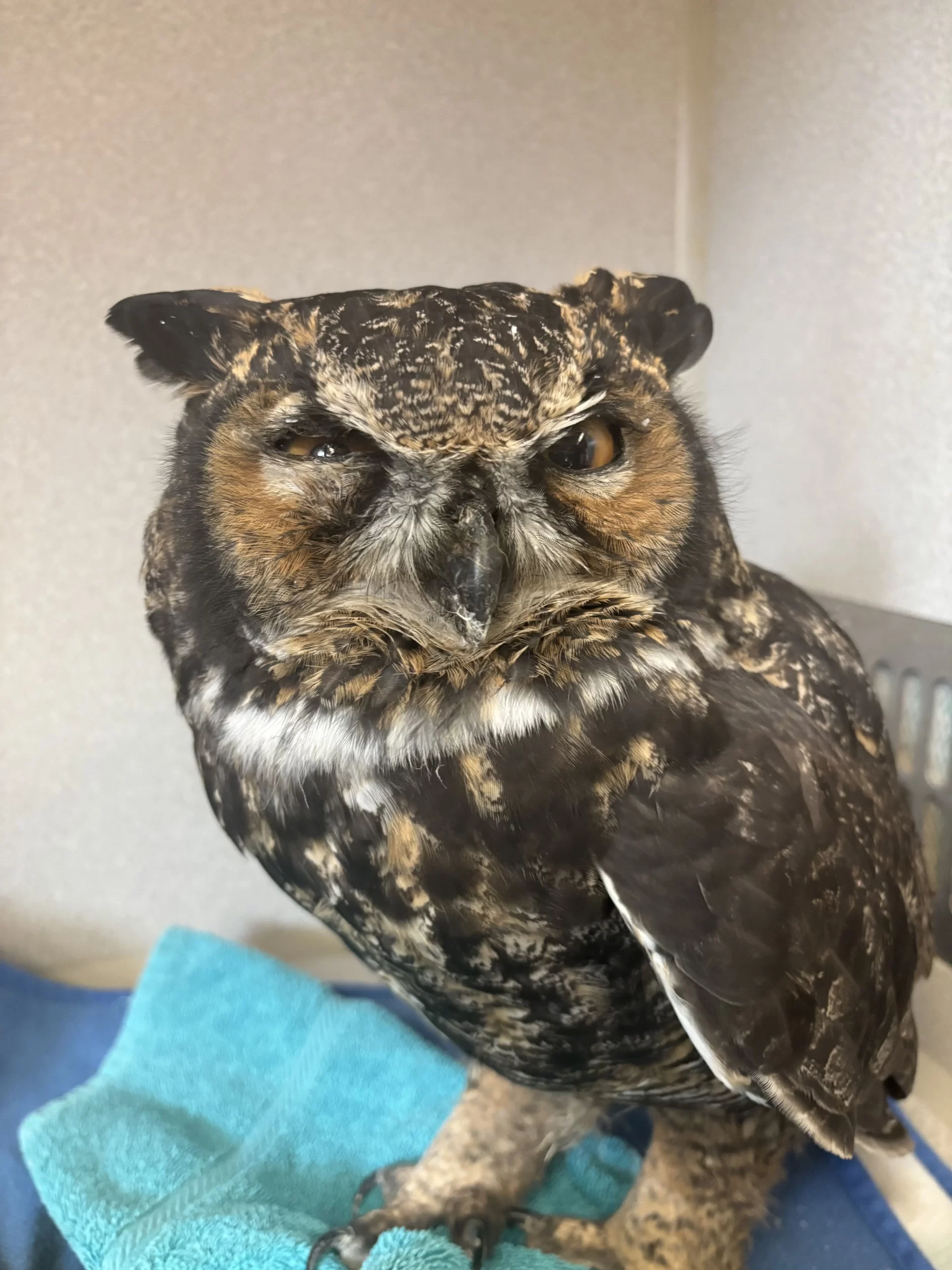
Close up view of the eye 3 weeks after being found and admitted to the centre. Great horned owl, Sept 2025 YWP. Photo Credit: L.Caskenette

Owls are able to allow their damaged eyeball to naturally degrade whilst in its socket, eventually making the orbital empty whilst not disturbing the fragile feathers around the owl’s facial disc. With three options presented to our animal care team for handling this eye-boggling problem, we continue to weigh our options whilst allowing the owl to regain their strength. They have made incredible progress thus far but still need to recover from their injuries, work their flight muscles out, and try hunting live prey before we release them. Of course, plans for rehab always seem easier at the beginning, and many things can go awry; but we will continue to play it by ear as situations arise.

With patience, we hope this owl will recover slowly but surely, gaining their vigour and ferocity back so we can reintroduce them into the wild. 

• • •

Read an update on how the owl is doing – November 2025. 

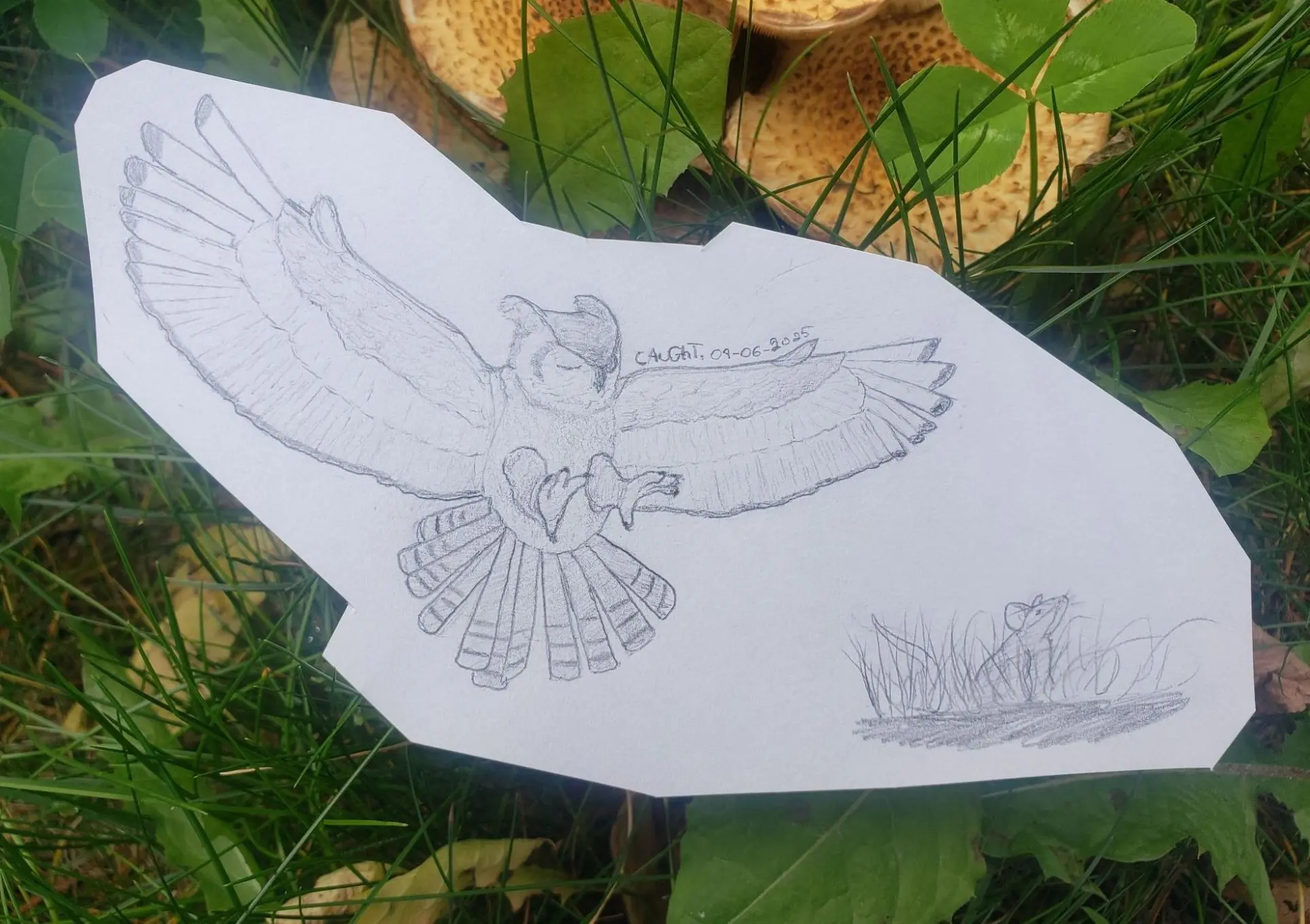
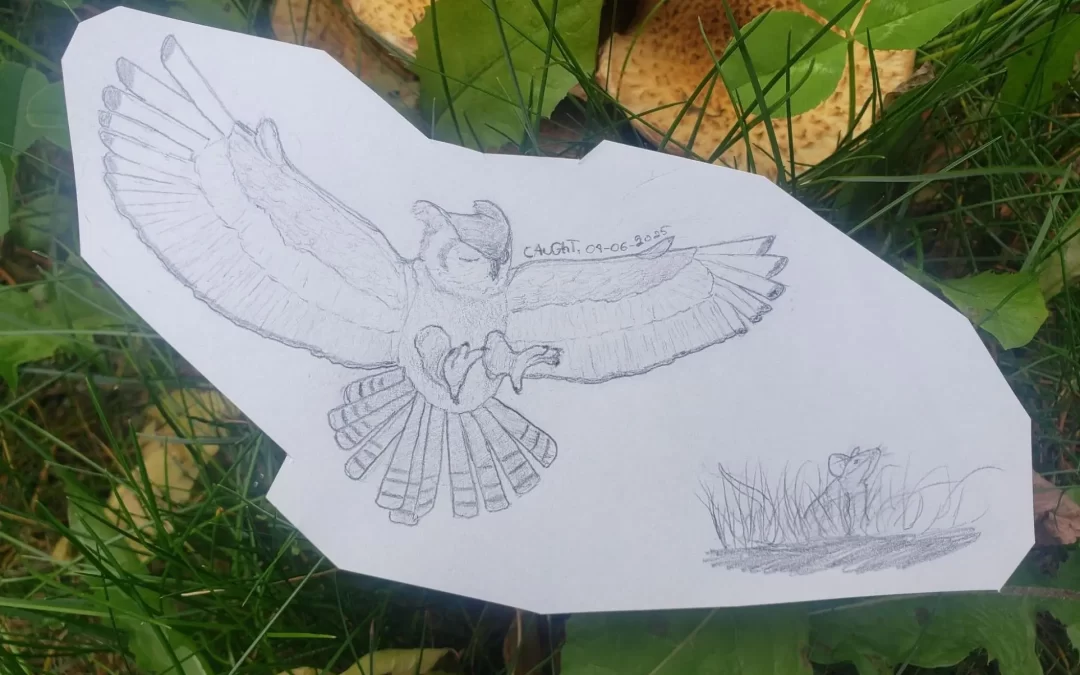
Created by Connor Dennhardt, titled ‘CAuGhT’.

All donations go towards the betterment of our rehab center and animal care team.

There is a comment section below for any thoughts that may have stirred from this story!

Thank you for your patience in reading this post.

Sonya Bingley was travelling the Klondike highway when they noticed an animal on the side of the road. Sonya was able to ensure the bird got the helped it needed. If you come across wildlife you suspect needs help check out what to do here

Connor Dennhardt

Connor Dennhardt

He/Him - Forester Educator

Connor grew up in Thunder Bay Ontario,  where he developed an interest in nature and exploring the outdoors. From his adventures, he learned how to thrive in the wilderness and learn to have fun even in the harshest of winters. His passion made him pursue an HBSa in Animal Sciences, where he earned the foundations of biology and found his love of science. His interests eventually led him to study in Svalbard, Norway; where he learned extensive amounts of information about the Arctic from researchers across the globe. From there, he has worked as a researcher within Quetico Provincial Park, a bee farm in Southern Ontario, and now has returned to the north as a Forester/Educator here at the YWP. He knows we aren’t quite in the Arctic, but he’s happy making it that much closer to his true calling.

Explore by Category

Explore by Author

Coexisting Through The Cold

Coexisting Through The Cold

Coexisting Through The Cold

4 minute read –

As the summer season gives way to autumn, creatures of all kinds will begin to prepare for the coldest time of year, when temperatures may become dangerous if appropriate shelter is not acquired.

Animals of course off-set the cold by growing thicker, denser coats to insulate against the chill. Also in preparation for this chill, the animals go into hyperphagia where they gorge on food to put on a layer of fat which provides two primary values: Fat can perform similar to an insulating blanket keeping the animal warmer against physical contact with the frozen ground and the cold breezes. The fat can also perform like a battery with energy stored in the form of carbohydrates providing the animal with the nutrients required during this challenging time of year to keep warm and muscles flexible.

Some animals have evolved to avoid all the extra work and discomfort of the winter by either migrating to warmer climes in the south or hibernating in a cozy den or other shelter. 

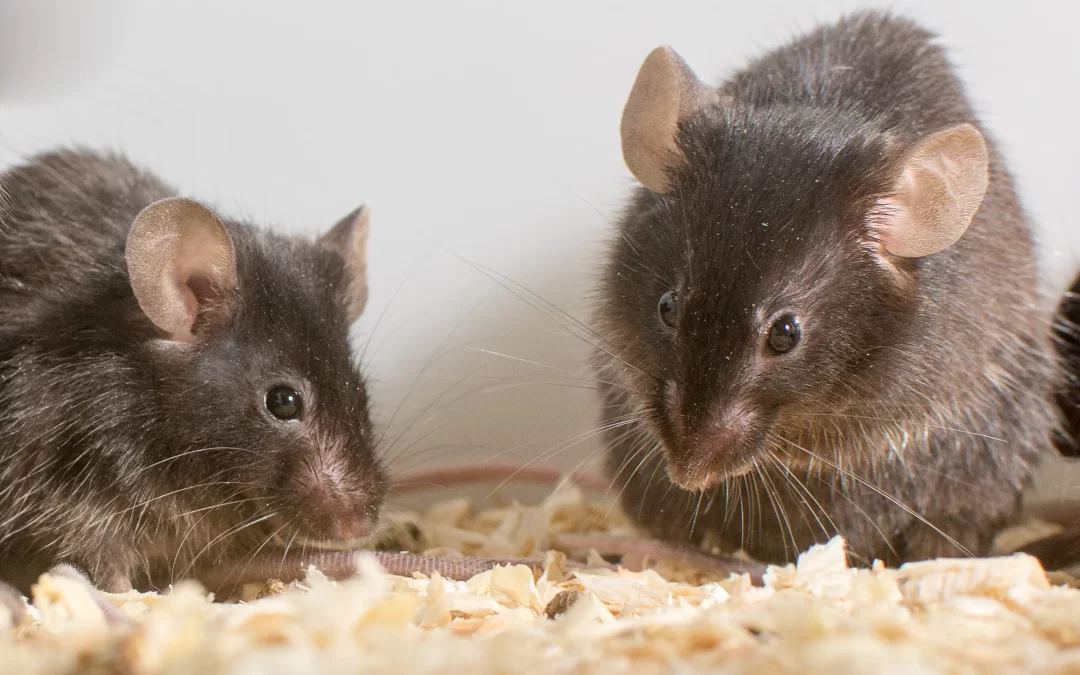
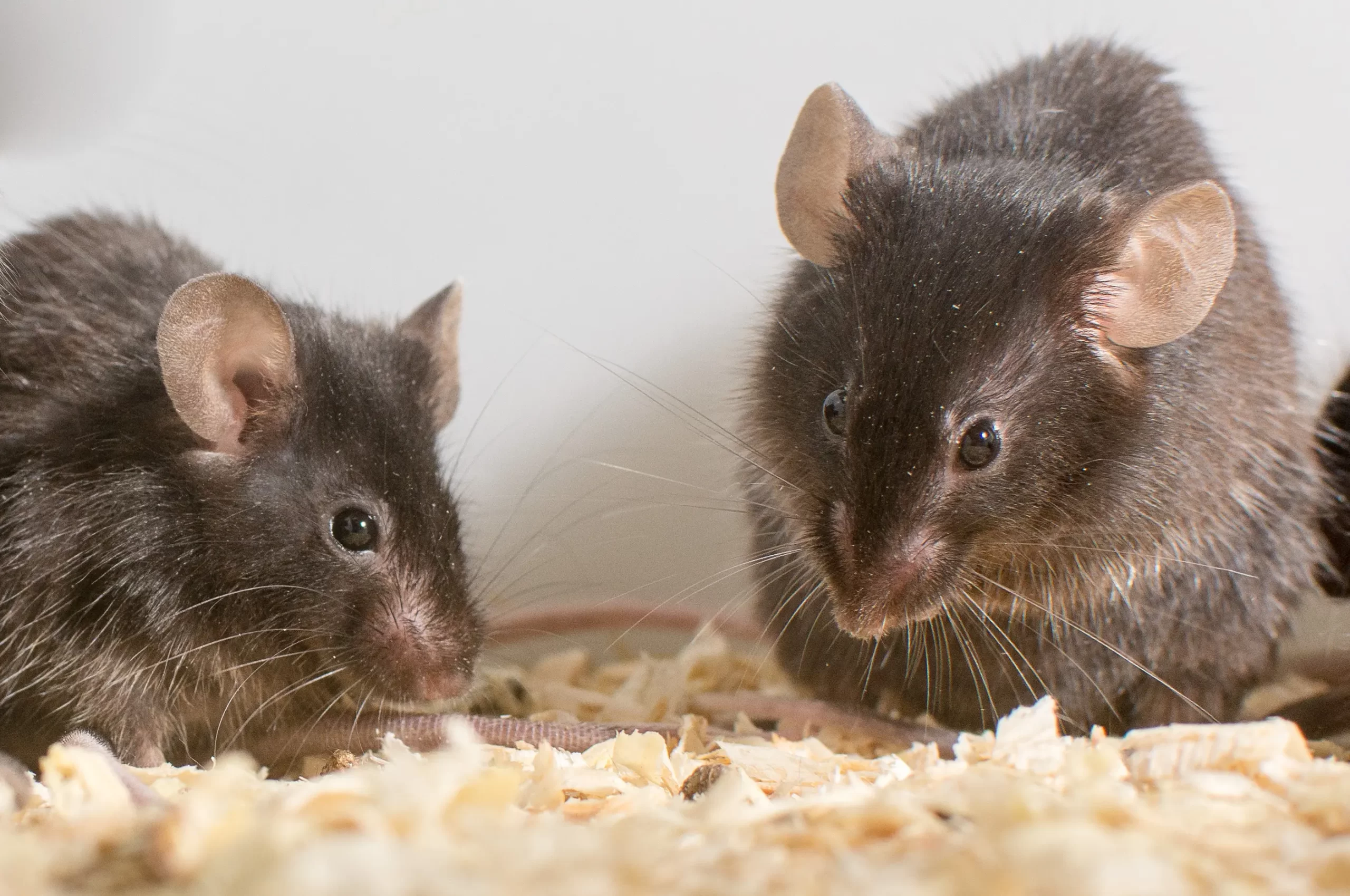
Autumn is the time when smaller creatures who do not hibernate go exploring for a warm, safe place to spend the winter, and human homes are very attractive for mice and similar rodents. Our homes have everything they desire including protection against the elements, water and if no food is available such as a pet’s food in a bowl on the floor, the rodents will instinctively bring their own harvested supplies from outside your home.

Rodents can bring much more than seeds, grasses and dried berries into your home, they may also introduce infections as well as their copious droppings and urine tracks. Hantavirus is a virus that is found in the urine, saliva, or droppings of infected deer mice and some other wild rodents. Hantavirus may be fatal for some people exposed to it.

So the task is to prevent these little rodents from entering your home and there are a number ways it can be done successfully. Step one is to review the past history of finding mice in your home. If you have a cat, this problem may not exist for you as a good mouser can eliminate much of the problem before it gets into your home.

None-the-less, examine the outside perimeter of your home in search of places where the rodents may enter. Mice climb very well so look at the whole building, not just the foundation. A trick to help find the routes the mice take around your home may be accomplished in the dark of night with a ultra-violet light which will fluoresce the urine trails mice create, providing you with their most used routes and points of entry into your home

If mice are already living in your house, the task will be how to eliminate them effectively. Mankind has developed a number of ingenuous methods to dispatch rodents and we are always on the lookout for a “Better mousetrap”. Again, a kitty-cat works wonders, and natural solutions are most often the optimum.

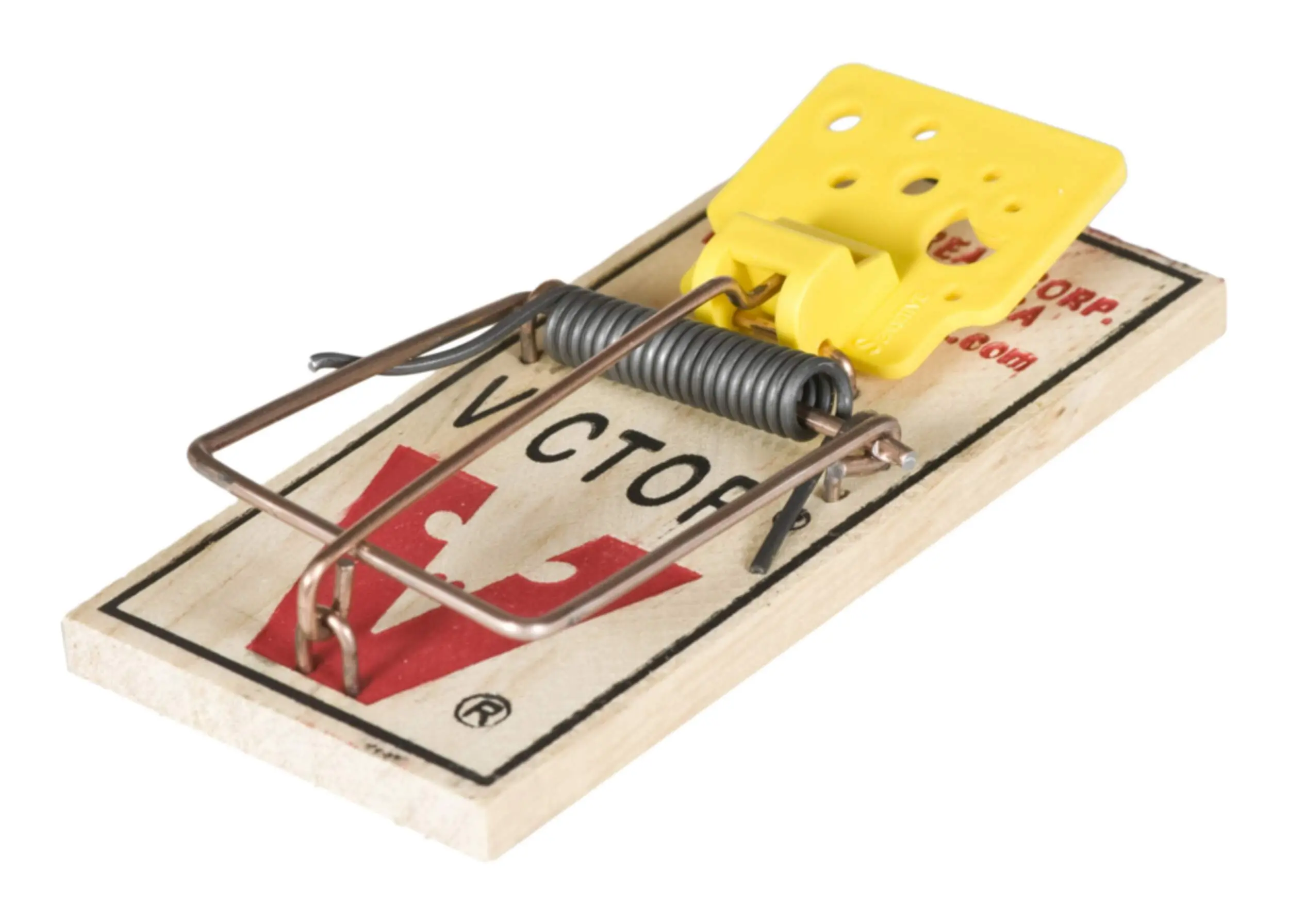
There are a variety of mouse traps available depending on your ethics in eliminating pest rodents. Oddly a greater concern for eradicating these small creatures leans to more humane ways to deal with the pests. Poison may appear to be more humane than the Victor snap trap or the morally superior live trap which allows live caught mice to be set free in another location. Whatever your position on humane pest trapping and eradication, the effects of the eradication methods used should not be transferred to other species to suffer from.

The old Victor snap trap is perhaps the most common and effective tool for this purpose, but if you prefer a more humane capture method, live traps are available and work well, but must be monitored to ensure the captured mouse does not perish if not released in due time.

It is wise to plan where you will release the captured mouse to ensure it will not trek back to your home. Some studies have shown that mice will travel up to 100 meters from their nests in search of food, while others have found they can travel several kilometers if necessary, to return to their nests

Sticky traps that immobilize the creature with a strong adhesive work well, but many consider them to be a cruel and punishing method as the animal will perish from starvation or dehydration. These sticky pads may also become attached to cat paws and dog noses and can be difficult to remove.

I must be honest here – I do not recommend poisons of any kind to eliminate pests of any species. Poisons are the weapon that keeps on killing even beyond the target species you originally wanted to remove.

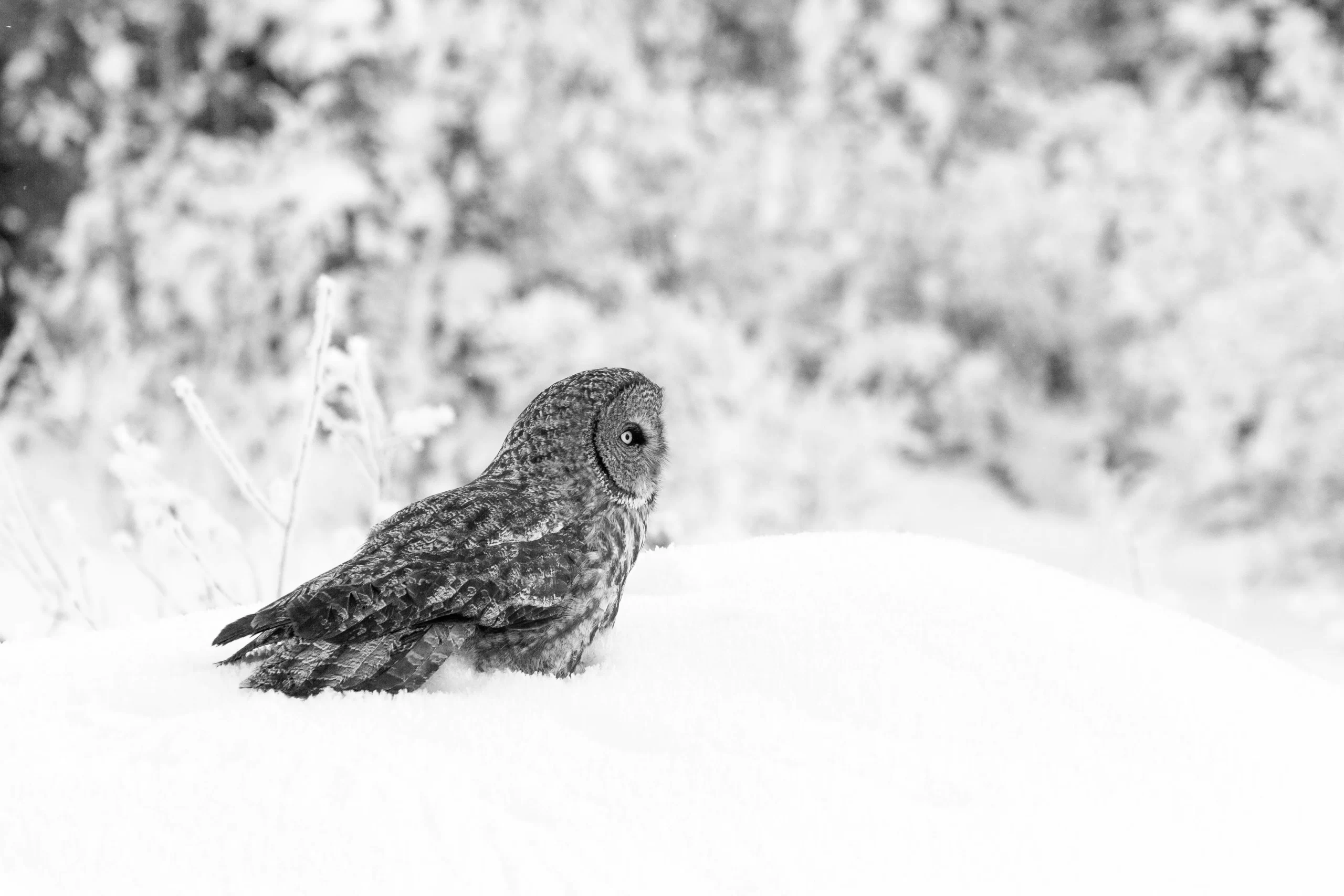
There is growing concern for the health of owls and other raptor species worldwide due to the increasing use of rodenticides to eliminate mice, rats and similar pests. It’s a simple thing to understand by connecting the dots: Mice eat the poison, owls and other creatures eat the poisoned mice, the poison levels build up in those that eat the mice leading to their eventual death, and it is not a quick and painless death either. Some poisons are anticoagulants causing the animal to bleed to death internally.

Other poisons alter the body chemistry, sometimes causing a slow painful death as muscles twist and contort while primary organs such as lungs, livers and kidneys stop functioning. Other poisons promote the rodent body to dehydrate, which is also a punishing and slow process for the animal to eventually succumb.

Poison is being used more often because it is easier for humans to set it and forget it. Deploy the poison, sit back and wait for things to die. I suspect some of this is because many people do not like to be involved with rodents either dead or alive, so the out of sight-out of mind effect outweighs using mechanical traps that require humans to remove the cadavers and reset the trap now covered in mouse germs. Disposable rubber gloves are an effective and affordable way of protecting yourself while clearing and resetting a trap. Remember to wash your hands thoroughly after all the dirty work is done.

As autumn shifts toward winter, all creatures adapt in their own way—whether by growing thicker coats, storing fat, migrating, or seeking shelter. For many small rodents, that shelter can unfortunately be our homes. Just as wildlife relies on natural strategies to survive the cold, we too have choices in how we manage their presence. By opting for thoughtful, humane methods of prevention and control, we can protect both our households and the health of the wider ecosystem that depends on balance and respect.

Doug Caldwell

Doug Caldwell

Wildlife Interpreter

Doug is one of the Interpretive Wildlife Guides here at the Preserve. An avid angler and hunter he has a broad knowledge of Yukon’s wilderness and the creatures that live here. With a focus on the young visitors to the Preserve, Doug takes the extra time to help our guests to better appreciate the many wonders of the animal kingdom here in the Yukon.

Explore by Category

Explore by Author

How Do Animal Communicate?

How Do Animal Communicate?

How Do Animal Communicate?

20 minute read –

How Animals Talk: An Introduction

All creatures communicate with one another and others by using the primary methods of sound, sight, touch, body language (visual cues) and scent. 

The Limits of Human Senses

Some of these communications methods are not as pronounced for we humans as we did not evolve the superior abilities with our senses to make a living on the landscape and protect ourselves, we evolved the big brain instead. Humans are not physically equipped to detect the many subtle elements within a particular scent or distinguish all individual scents that may be present at a common location. Our olfactory systems are not that well developed. Our hearing range is also limited in comparison to various species that can hear much higher and lower frequencies than average humans. So too our vision abilities where animals have some very envious advantages with their eyesight. Some animals can easily see in the dark, some can see greater distances than us, while others can see colours beyond our range of vision – some into the infrared portion of the natural light spectrum. One can only imagine what insects perceive with their Arthropod or compound eyes.

Sound: Nature’s Symphony

Other creatures like the Musk Ox have evolved communications techniques as adaptations to where they live. In the high arctic where Musk Ox are naturally found, winds blow hard over the tundra and most high frequency sounds are distorted or obliterated by a strong wind. Over many thousands of years Musk Ox evolved to produce a low frequency vocal sound that travels much further and is undistorted by moderate winds. Calves, when communicating with cows or each other, bleat. The pitch of the bleat lowers with maturity. Adults have deeper voices that sound closer to roars and rumbles. Adults also grunt and snort at each other in close proximity. When they are grunting these low frequency sounds it is sometimes possible to feel the vibrations in your chest rather than hear the sounds they are making if you are standing close enough to them.

Human hearing is typically within the audible frequency range of 20 Hz to 20,000 Hz. Other species, such as bats and songbirds, produce sounds that are well beyond this limited hearing range of humans. Humans are missing much of the natural symphony in our wilderness because our hearing is not sufficient to hear higher frequencies. Many birds produce sounds that we cannot hear, but our cats and dogs and other wild creatures can.

Birds will often have more than one song which they may use to attract a mate or announce dangers, and while these songs may sound similar, they may have subtle differences that can mean a lot to other birds.

Most bird communications have subtle variations that may seem minor to humans. For example, the common Black-capped Chick-a-dee call is the familiar ‘chick a dee-dee-dee,’ but when alerting danger there is a noticeable increase in the number of dees announced and the increased repetition of the alert call.  

Mating songs and danger alerts are different by species and their songs will also change over the seasons, and some birds of the same species may have different songs that have evolved within a geographic community of that particular species.  Some other animals will come to know these alert sounds where the birds on guard will make all aware of potential dangers within a specific area. Ground squirrels perform similar audible warning alerts when dangers may be lurking nearby.

Woodpeckers make a wide range of vocal sounds but also rely on the sounds from their hammering on trees and other items to communicate to others. These hammerings also have subtle differences that mean different things that we can only speculate as to their meanings. Did woodpeckers invent their own form of Morse code, and is it different by woodpecker species?

Insects like the ant communicate by leaving scent trails (pheromones) if they are indicating a path to food or some other required resource. They also touch antennae in what is presumed to be a detailed method of communication. Moths and butterflies also depend on pheromone scents primarily for finding mates during their breeding cycle. 

Many animals have scent glands of various kinds which they use to mark their territorial boundaries or attract mates. These scent glands may be located on the legs, faces or near their genitals. Some animals must rub objects to deposit their scent while others like the skunk, felines and foxes can also eject their fluid scent some distance. Urine is often used as a scent marker for a variety of species.

Each communication option is limited by physical distance and environmental conditions, as such, the animal tends to communicate with the best option available to them at that time and within the environmental conditions of wind, smoke or precipitation or to avoid announcing their location to predators.

Sight is perhaps the most limited communications sense as it is dependent on available light, although some species have evolved superior eyesight for night viewing, all species are limited to how far they can see clearly, and again there is a spectrum of ability within the animal kingdom which is the result of many millions of generations that adapted to the environment in which they live. The environments the animals live in determines how their eyesight evolved over time. Those that dwell in caves and similar dark places are often close to blindness as they no longer depend on their eyes to navigate in their environment, their other senses have adapted to provide the information about their local environment.

Grassland animals have different sight requirements than animals that live in the forests and jungles. Grazing animals typically have their heads down to eat which has influenced much of their evolutionary development including how long their necks are, the location of their eyes and ears on their skulls, focal distances for both near and far objects and even the visual spectrum they have evolved to see. Caribou have the ability to see in infrared, allowing them to see more features of their vicinity like urine spots left by other animals such as wolves and other predators.

Sound as a communications tool is also limited by distance and influences such as wind or rain which can muffle sounds or distort them such as the rustle of leaves being blown by a strong wind. Some species have hearing that is superior to others, which also is an adaptation based on the environment they must make a living in. Some creatures will lay down and remain still when weather conditions corrupt sound volumes and create distortion, limiting their ability to hear potential dangers near them.

Scent: Messages on the Wind

Scent is perhaps the optimum communications sense animals use to remain aware of the world around them, and while scents may be blown on the wind or distorted or diluted in some way, scent travels further and more clearly than any other communications option. 

For an example of sensory limits, let’s examine the Grizzly Bear’s sensory abilities

  • In general terms a bear’s eyesight has an estimated range of about 40 meters depending on light conditions and bears have strong low-light vision abilities and some may have better or lesser sight abilities determined by age and genetics.
  • A bear’s hearing is over twice the sensitivity of human hearing and exceeds the human frequency ranges. It is said that bears can detect a human conversation at 300 meters and a camera shutter at 50 meters.
  • A bear’s sense of smell has been measured to be capable of detecting food up to 20 kilometers away in most environmental conditions, recognizing scents are also are carried some distances by the wind.

Clearly, scent detection is the optimum communications option available to bears and the majority of other animal species. To this end, they utilize scent marking to make sure others know of their presence.

Lynx, foxes and numerous other species mark their territory with scents they rub or spray onto selected trees or landmarks to define their range boundaries. These marker trees will often include scratch marks made by the animal’s claws which provide a visual clue in addition to the scent.

Scent is also a key indicator of estrus or when a female goes into heat alerting all the males that she is becoming ready to breed.

Male ungulates also employ scent to advertise their locations during their breeding cycles. A bull moose, caribou or elk will urinate on themselves to get their pheromone scent on the breeze and traveling to let both females and males know where they are and their readiness to breed. Predators such as bears and wolves will also detect these pheromones, but for them the message is: potential lunch is over that way.

Honeybees perform an elaborate “waggle dance” in the hive to inform others where new food resources can be found and may also leave a sent marker on the target location to further help hive-mates to locate the new food supply. Other insects utilize scent marking to communicate to their kind.

Sight: The Visual Language of Wildlife

Many bird species rely on their physical appearance for attracting mates. Male birds are usually more colourful and vocal so they attract the attention of any females that may be nearby. Females are not usually coloured as brightly and colourful as the males, partly because they must sit on a nest of eggs when camouflage is helpful for their protection. 

As noted above, Body Language is a common method used by animals to share information. For example, when large animals like bison, moose and mountain goats turn sideways to your view, they are saying:

“This is how big I am – Think before you intrude into my space.” They may also paw the ground with a hoof which might mean you missed the first message and now it’s time to move on…quickly.  

Whitetail and Mule deer stomp their feet to alert other members of their group that danger may be near and to be on the look-out. Wiggling of ears and rubbing against one another are also methods of body language. A head turned a certain way, lips pulled back and teeth exposed, snorting, head shaking, posturing and even running styles all are communication displays animals employ to communicate with each other. 

How animals hold their tails or move them is another signal used to express themselves. The position of the bison’s tail is also a great indication of body language. In addition to switching the tail back and forth to flush insects, frequent tail-switching occurs in a variety of situations, predominantly during play, such as chasing and bounding. You can judge a bison’s mood by watching its tail. When it hangs down and is swishing naturally, the animal is usually calm. But if the tail is sticking straight up, it may be ready to charge. Similarly, if the tail is raised and stiffly held 0° to 90° above the horizontal the animal is displaying some agitation. This is observed most frequently during trotting/running/bounding such as in playful chases, stampedes or in short charges. 

Most are familiar with when a dog is wagging its tail to mean it is happy, but it could mean something else entirely for a different species such as a cougar where tail movements can display uncertainty or building excitement or anxiety of the animal.

Body Language: Silent Conversations

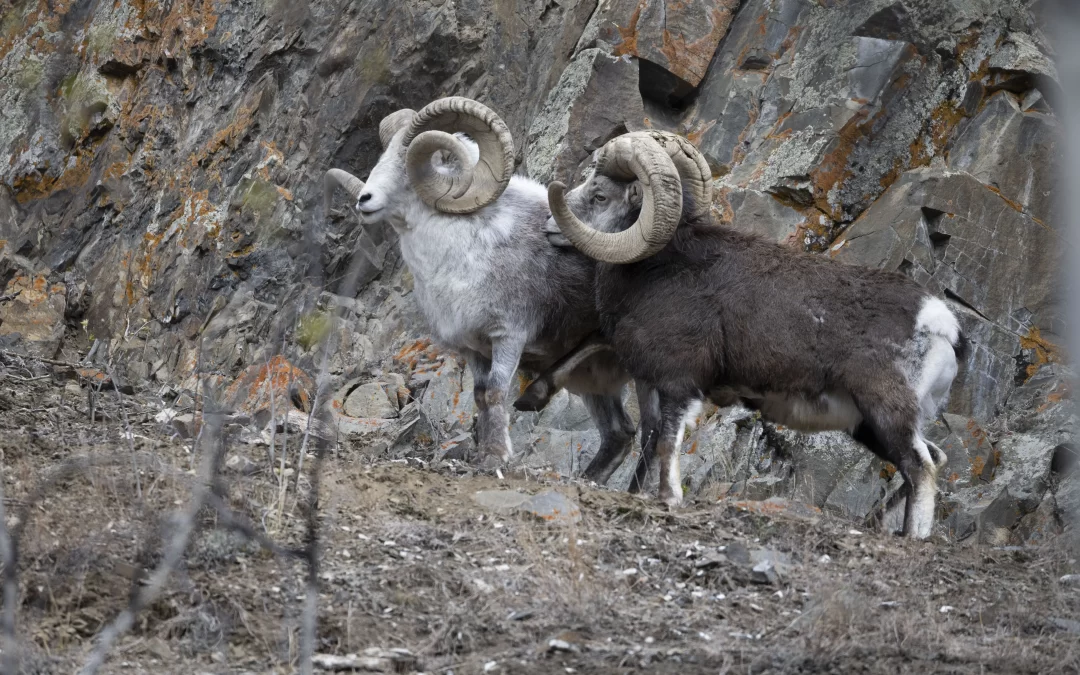
Watching the sheep rams you will see many ways they interact with each other. Some of this is easy to understand, like when one is coming to access the feed troughs and usually the younger boys get out of the way when they hear the warning grunts from the dominant elder rams. It is well known rams will get up on their hind legs and smash their horns together like in a mating fight. They may also interlace their horns gently and rub ears with each other or touch the other’s body in some fashion such as one animal rubbing a front leg against the ribs of another standing near. These gestures are common, and we are not always certain what they might mean, but the rams do not appear to be distressed by them, so perhaps it is a form of acknowledgement greeting like a handshake.  

Mountain goats appear to employ ESP between themselves, they do grunt and use body language, but there are times when one will walk into an area with a group of other goats that scatter when the other approaches and perhaps wiggles its ears in a particular way or some other gesture that’s difficult for us to perceive. This could also be a demonstration of herd hierarchy through body language or scent where the subordinates know who the boss is and give them lots of space. Some nanny goats display cuts and abrasions on their noses to signify there has been some physical communications in confirming who is dominate and who is subordinate within the herd.

The Role of Environment in Animal Communication

Waterfowl depend on a couple basic methods of communication. The most common is their vocal sounds, quacks and honks are answered back from birds already on the ground, and the incoming birds will also use their remarkable vision to look for others on the ground to confirm it is safe to land. That’s why decoys were invented for hunting as waterfowl are very cautious and are on the lookout for anything they may perceive as a danger waiting for them to land. Waterfowl on the ground employ other methods of communications such as flapping their wings while extending their necks or head bobbing to each other.

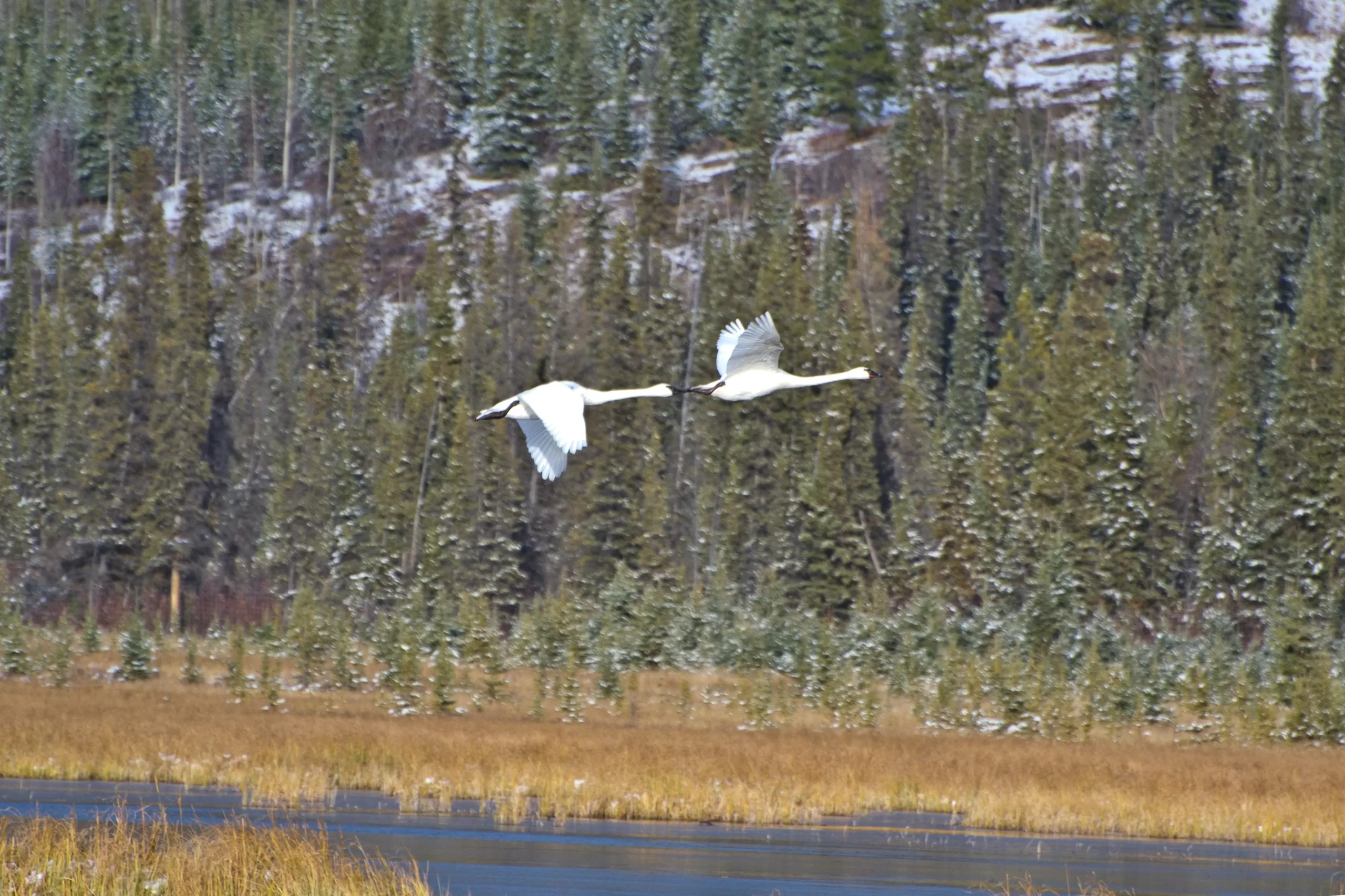
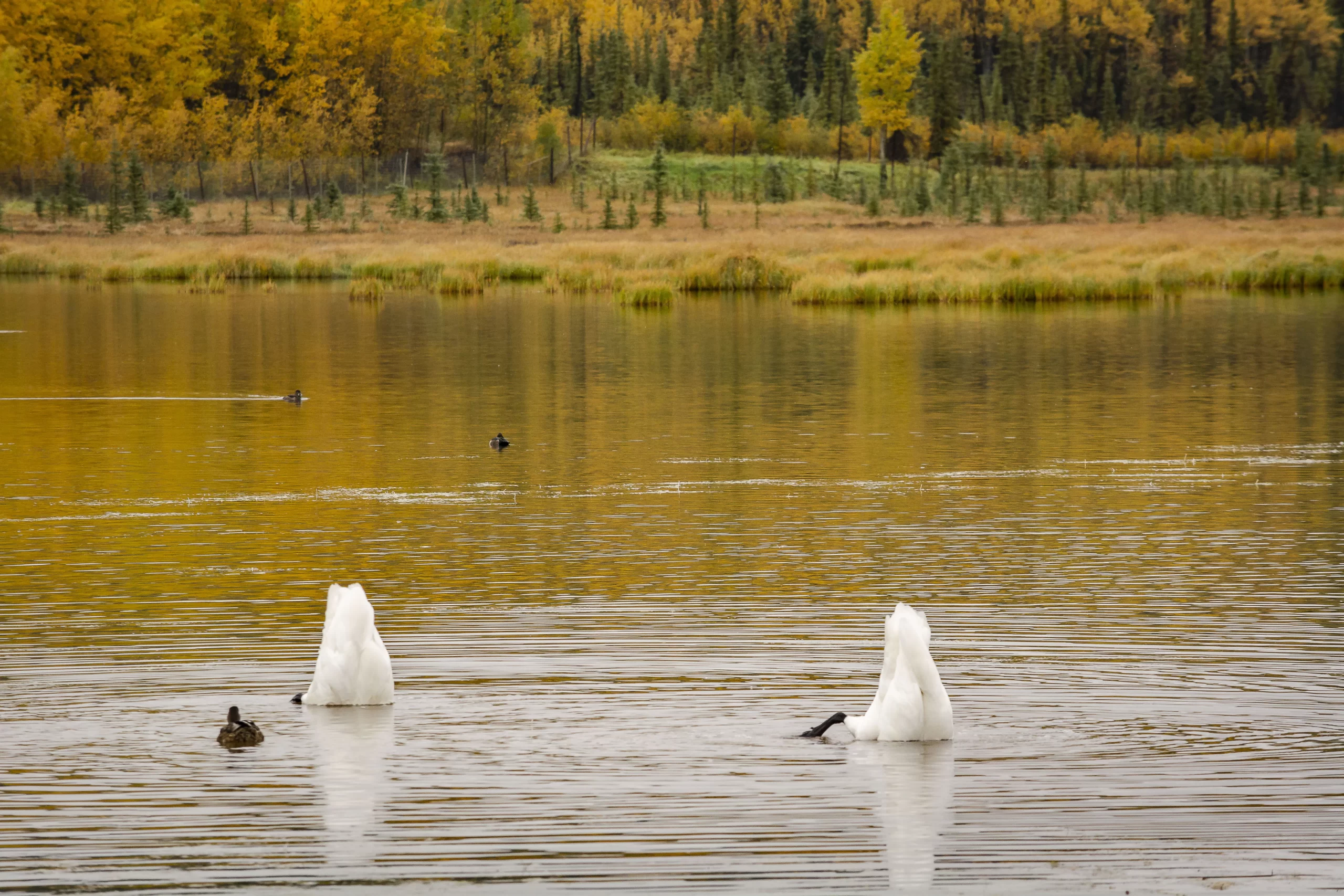
It is a myth that duck quacks do not echo. They do, but it may be difficult to hear the echo due to the geography of where ducks are typically found out on a body of water usually away from any echo-producing land formations to reflect the duck’s quack. Larger waterfowl like swans and geese are well known for their loud honks as they migrate overhead, they may also murmur with soft throat sounds as they paddle along the water, usually keeping offspring following in-line behind mom.

Have you ever taken your dog for a walk and notice it sniffs certain places and ignores others? They are searching for scent marks left by other animals. Often, they will urinate on the same spot to let others know they too were in this area. Some say an animal can determine when these scent marks were made, what kind of animal made it and if it is a regular known visitor to the area or if it is a new animal passing through. Similarly, canines are well known to sniff the back end of other canines as a form of introducing themselves and confirming who the other animal is.

Bears, lynx and some other species use a different tactic by selecting a tree, usually on a well used trail, and scratching the bark as high as they can reach. They also leave scent behind and probably some hairs from back-rubbing too. These trees become regular markers for other bears and animals. The scratch marks made by the bears indicate how large they are by their reach and whatever their scent reveals to the rest of the local area. 

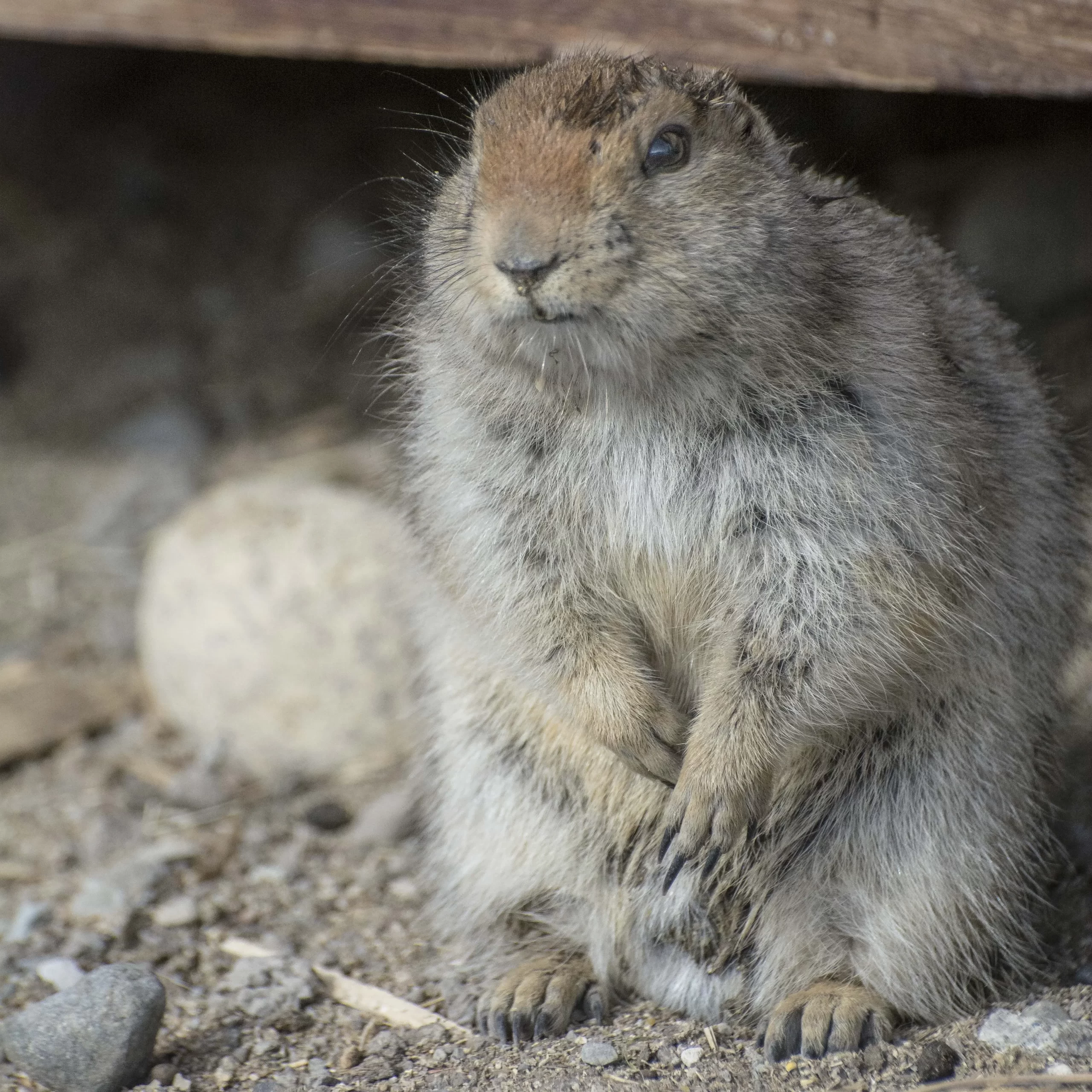
Arctic Ground Squirrels use their voices to alert others of dangers as they stand watch over their colonies. Watching for predators on the ground and from above; when a threat is sighted the animals begin their chirping and the danger signal is relayed around the area by others to ensure all know about the pending danger. Gophers may also communicate by wagging their tails at each other.

Some animals do not make sounds unless they are in some peril. The Snowshoe Hare depends on stealth and silence to remain healthy and alive, and as such they do not make regular sounds among themselves, but if they have been caught by a predator, they can scream their distress quite loud and clearly.

Most animals have a keen sense of hearing as it is a fundamental sense for their lives. Some species like the deer family have very mobile ears that move to better capture and hear a sound. Many times, a member of the cervid or deer family will give away its hiding location by moving its ears in response to a sound. An uncontrollable reflex, ear movements are similar to a cat’s tail in that the movement is a reflex and cannot be controlled easily.

Hearing is an important sense animals depend on and some creatures have remarkable hearing abilities. A regularly demonstrated example of this at the Preserve is during feeding time for the lynx and foxes. To prevent the animals here at the Preserve from developing a predictable routine, their feeding time is staggered somewhat day by day, but they all know the sound of the food truck and can hear it a substantial distance away. The local ravens, whiskey jacks and magpies know that sound too so when the food truck finally gets up to the carnivore habitats, everybody is in their places waiting for lunch to be served. The animals can distinguish between the food trucks and the tour buses and they know the bus never carries food, so they don’t get too excited when one of them shows up full of visitors.

Enhancing Your Wildlife Experience

While you are visiting the Preserve try to observe how the animals behave with one another and you will witness some of the subtle ways they communicate. 

You regular visitors to the Preserve may also notice the changes in the sounds the animals make at different times of the year. Spring sounds are commonly associated with breeding. Arriving migratory birds who do not yet have a mate, will sing their HERE I AM song to appeal to females also seeking a mate. In the springtime it is common to see and hear a robin at the very top of a tree on a still evening singing his heart out to attract a mate or claiming dominance of that particular area.

Once eggs are in the nest the females become silent to better hide their offspring from predators lurking nearby. Momma birds make sounds when dealing with the chicks like announcing the arrival of food or instructions to stay quiet and close to mom. Nesting Great Horned Owls will give a hoot when ravens are flying within eyesight, as ravens have been known to prey on eggs and hatchlings in nests they find, these warning hoots are very clear in their meanings.

For those keen to try their moose calls, our moose may appear to be uninterested because they have heard so many attempts that they don’t pay attention anymore, but like most creatures in the wild, they rely on stealth to survive so they don’t make sounds unless they need to, and moose only need to for a couple weeks each year during the fall rutting season. So, don’t feel bad if the moose don’t acknowledge your call. They probably heard you, but you don’t look or smell like a moose and it is not mating season. But you may hear them as they mumble or complain to one another when together at the feeding stations.

For birding enthusiasts, technology has provided some wonderful new tools to help identify bird species by their songs and visual image. Merlin in a free app developed by Cornell Laboratories. The app converts your cell phone to identify the species of birds by their songs and image. 

Communing with nature offers a wide range of stimulation for our human senses and is one of the primary reasons people like to experience the great outdoors. It provides a broad collection of sights, sounds and smells that stimulate our quality of life and tell the story of the environment you may be experiencing at that time.

Imagine how much more we could experience if we humans had the same sensory abilities as the various animals we admire.

Doug Caldwell

Doug Caldwell

Wildlife Interpreter

Doug is one of the Interpretive Wildlife Guides here at the Preserve. An avid angler and hunter he has a broad knowledge of Yukon’s wilderness and the creatures that live here. With a focus on the young visitors to the Preserve, Doug takes the extra time to help our guests to better appreciate the many wonders of the animal kingdom here in the Yukon.

Explore by Category

Explore by Author

Jesse the Moose

Jesse the Moose

Jesse the Moose

2 minute read –

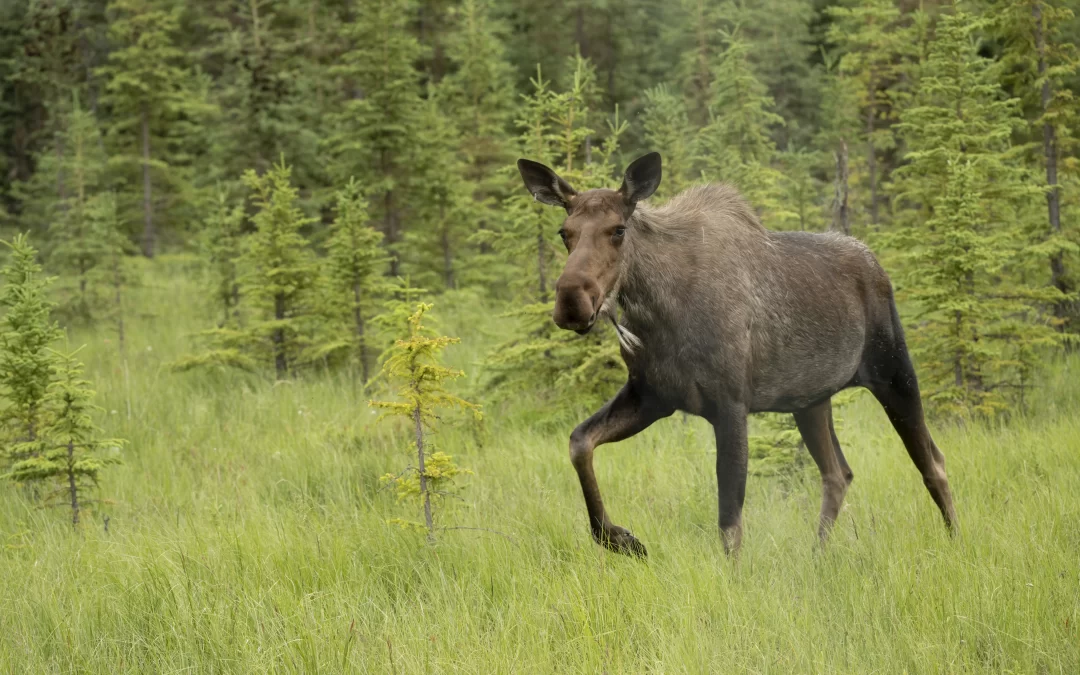
It was with profound sadness that the Yukon Wildlife Preserve (YWP) shared the death of Jesse, a cherished and iconic moose who had resided at the Preserve since 2016. The YWP’s Animal Care team made the difficult decision to euthanize Jesse on June 19, 2025 due to complications following a medical procedure.

An Old Injury

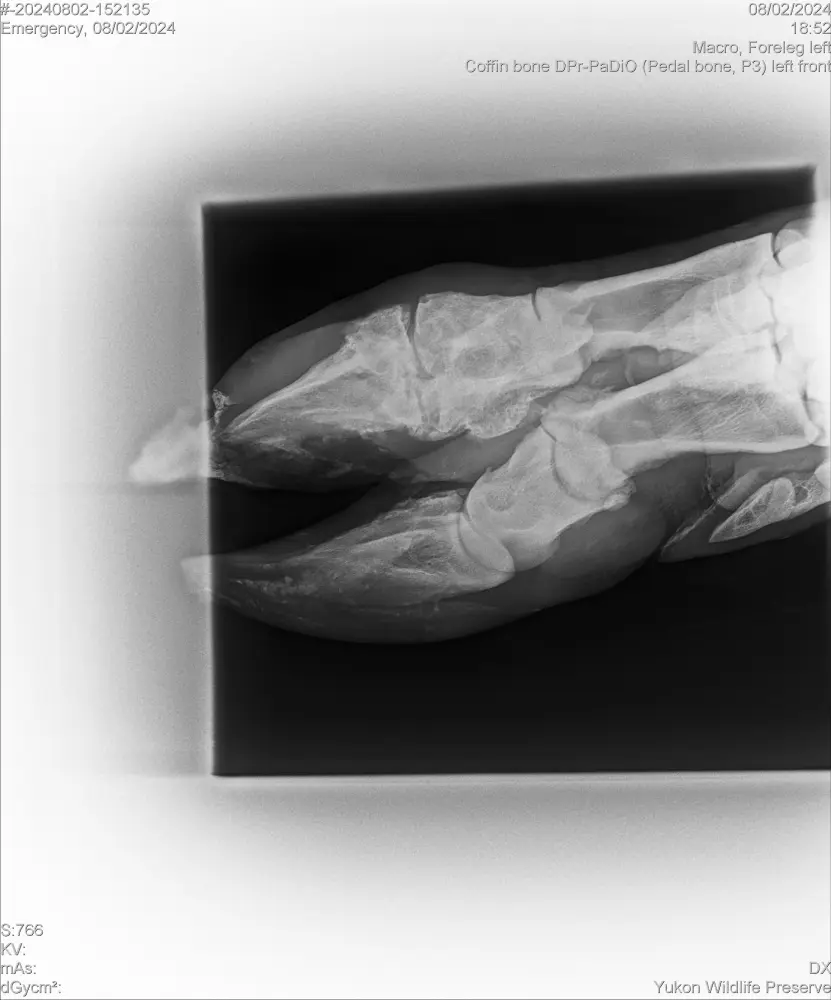
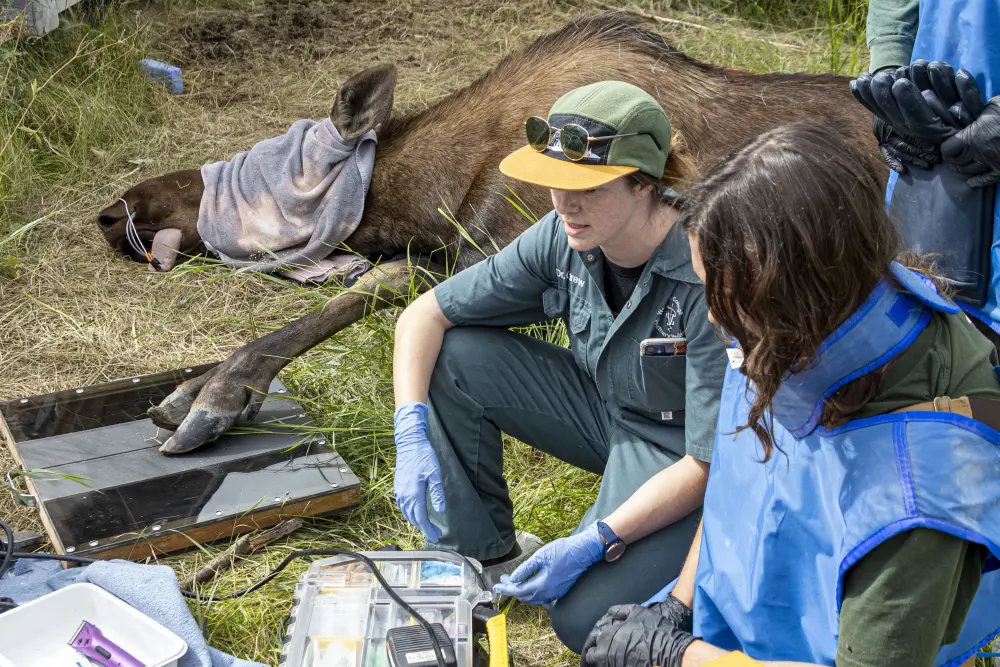
The YWP Animal Care team had been monitoring Jesse’s old hoof injury, which had become arthritic, causing her increasing discomfort and pain. The team had diligently monitored her condition, exploring options to alleviate her suffering and improve her quality of life. On Monday, June 17th, Veterinarian Dr. Cassandra Andrew and the YWP Animal Care team immobilized (anesthetized) Jesse to provide a targeted treatment for the affected hoof joint. While under anesthesia Jesse regurgitated contents from one of her stomachs – one of the risks of anesthesia in ruminants like moose. Recognizing the immediate risk, the team promptly cut the hoof treatment short, administered broad-spectrum antibiotics, and reversed the anesthesia.

Dr. Cassandra Andrew and the Animal Care Team check on Jesse’s hoof during in summer 2024.

Complications and Consequences

Upon waking, Jesse exhibited signs of respiratory distress, including coughing and more rapid breathing than normal, indicating that she had inhaled some of the regurgitated material. Later that day, the team provided additional medication to help reduce fever and inflammation. By Tuesday, June 18th, Jesse appeared to be more relaxed and showed initial signs of improvement as the team continued to monitor her closely.

However, during the morning check-in on Wednesday, June 19th, it was clear that Jesse’s condition had declined significantly overnight. She was suffering from what was suspected to be severe aspiration pneumonia (inhalation of foreign/food material into the lungs) and was struggling to breathe. Unfortunately treating such a severe condition can be quite invasive and would only be feasible with a domesticated animal in a clinical setting. The team made the difficult decision to euthanize Jesse without delay.

Dr. Andrew performed a gross necropsy, which confirmed extensive damage to her lungs and the severe pneumonia. The team is conducting additional tests to better understand Jesse’s overall health and to reveal potential future treatments for similar hoof injuries in other animals.

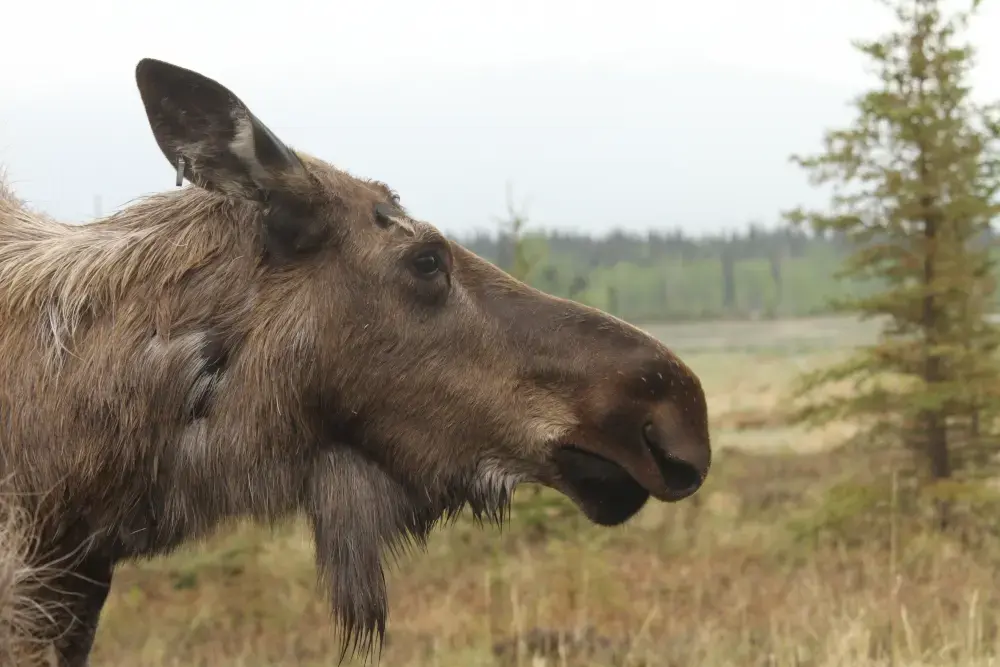
Jesse in June 2024

Jesse’s Story

“Jesse was a really special animal with a remarkable story who touched the hearts of many, both our staff and visitors alike,” said Jake Paleczny, Executive Director, Yukon Wildlife Preserve. “Her death is a big loss for our team and so many of our visitors who got to know her so well over her 9 years here. Our team made every possible effort to provide her with the best care, and we will honour her legacy by learning what we can to inform what we do for our moose in the future.”

Jesse’s remarkable journey at the Yukon Wildlife Preserve began in May 2016. At only a few weeks old and weighing just 47 pounds, dogs attacked her in the bush near Whitehorse, separating her from her mother. A quick-thinking teenager (named Jesse) carried the injured moose out and with some help, brought her to the Preserve. The dogs had gone after her neck, causing swelling that made it difficult for her to swallow and breathe. YWP staff provided 24-hour care, and for the first couple of nights, they were unsure if she would survive. For the first four days at the Preserve, Jesse couldn’t get up, and the team fed her via IV, offering small amounts of formula when she could manage it. With her injuries, it’s unlikely Jesse would have survived in the wild. Her comfort around humans meant she would reside at the Preserve permanently.

Jesse’s Impact

If you have a story or memory you’d like to share about Jesse, send it to jake@yukonwildlife.ca  and lindsay@yukonwildlife.ca. We’d like to share and celebrate the impactful experiences and relationships she was a part of.

The crazy snow winter which had packed snow so high people’s heads (and moose heads) were much closer to the top of the fence than normal and Jesse started stealing people’s touques right off their heads. She especially loved to target hat wearers’ taking selfies.
Pete, Wildlife Interpreter

We said our goodbye!
She knows and she listens—
She cried, I cried.
Michael, Senior Wildlife and Rehabilitation Technician

Above: Michael and Jesse on the morning of June 19.

Jake Paleczny

Jake Paleczny

He/Him - Executive Director/ CEO

Jake Paleczny is passionate about interpretation and education. He gained his interpretative expertise from a decade of work in Ontario’s provincial parks in addition to a Masters in Museum Studies from the University of Toronto. His interests also extend into the artistic realm, with a Bachelor of Music from the University of Western Ontario and extensive experience in galleries and museums.

867-456-7313
jake@yukonwildlife.ca

Explore by Category

Explore by Author