An Impertinent Question – What is the dumbest animal on the Preserve?

An Impertinent Question – What is the dumbest animal on the Preserve?

yukon

Jan 17, 2025 | 5 comments

3 min read - Cover photo credit Mark Newman.

The guest on my bus tour with the British accent began his comment, ‘this is an impertinent question, so you don’t have to answer it…

‘Oh’? I thought,

Winter Guided bus tour 2024L.Caskenette YWP black and white capture. A wildlife interpreter shares the Preserve with two guests through a one-of-a-kind experience of wildlife viewing. A must do while in the Yukon.

‘What is the dumbest animal on the Preserve?’ he continued.

We were at the Thinhorn rams with their big curly horns, and as if on cue, one of the older ones turned to us and gave us the most goggle-eyed dumbest look you could imagine. Everyone laughed and I didn’t have to answer.

Dall's Sheep Ram making a funny face but normal for a sheep sensing the air. Photo credit Mark Newman.

But how about we flip that question and ask instead, ‘What is the smartest animal on the Preserve?’ 

First, one might ask, what is intelligence?  One definition of intelligence is the ability to adapt to new situations and to learn from experience. However, a little bit of research reveals that we can’t really answer which species is more intelligent than another. Animals are well suited to what they need for survival through instinct and physical adaptations, (instinct is behaviour oriented and is defined as; ‘an inborn impulse or motivation to action typically performed in response to specific external stimuli’. Today instinct is generally described as a stereotyped, apparently unlearned, genetically determined behaviour pattern. While we can identify faster learners and slower learners within a species we can’t readily compare the intelligence of different species. Personally, I cannot dam up a creek using mud and sticks and my bare hands but does that mean I am dumber than a beaver. I hope not.

Personally, I cannot dam up a creek using mud and sticks and my bare hands but does that mean I am dumber than a beaver. I hope not.


We have learned that intelligence tests involving people can be culturally biased. Devising tests that try to fairly compare different animal species is even harder. In one test the animal subjects were required to learn a sequence of visual cues to receive a food reward. Monkeys learned quite quickly, rats more slowly. But rats have poor eyesight and when the cues were changed from visual to scented the rats learned as fast as the monkeys.

Even trying to compare dogs to captive wolves is problematic as a dog’s primary problem-solving tool is us. Ball rolls under the couch, get your human. Hungry, get your human. Need to go outside, get your human and so on.

Additionally, most animals have a good amount of persistence, especially when searching for  food. Hence the annual warnings from the conservation officers about the danger of having attractants in our yards in regarding bears. If, after weeks of trying, the fox finally manages to break into the hen house, is that persistence or intelligence or a combination of both? A captive wolf in a sanctuary during an experiment to test methods of non-lethal predator control challenged an electrified barrier 800 times! Now that’s persistence.

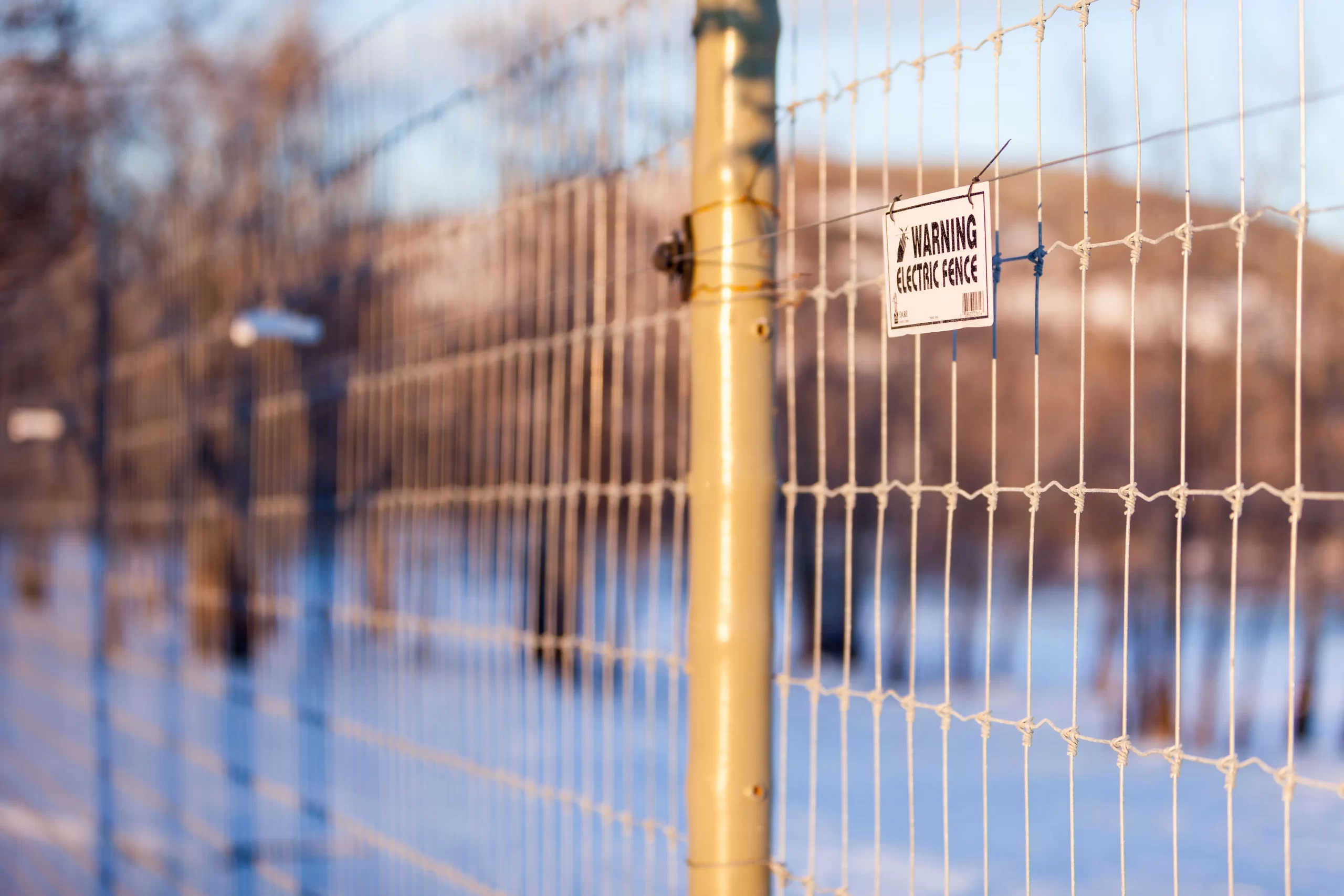
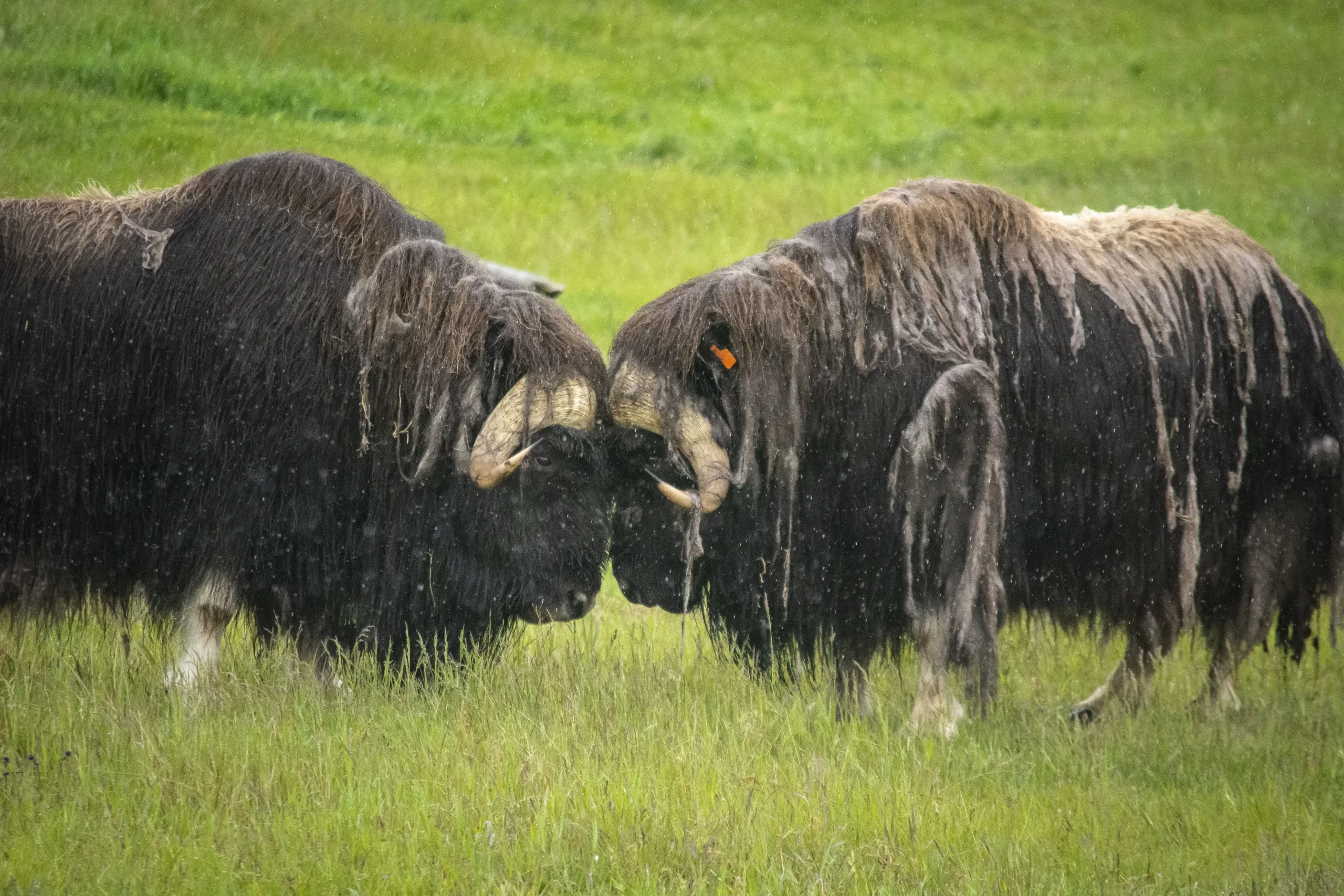
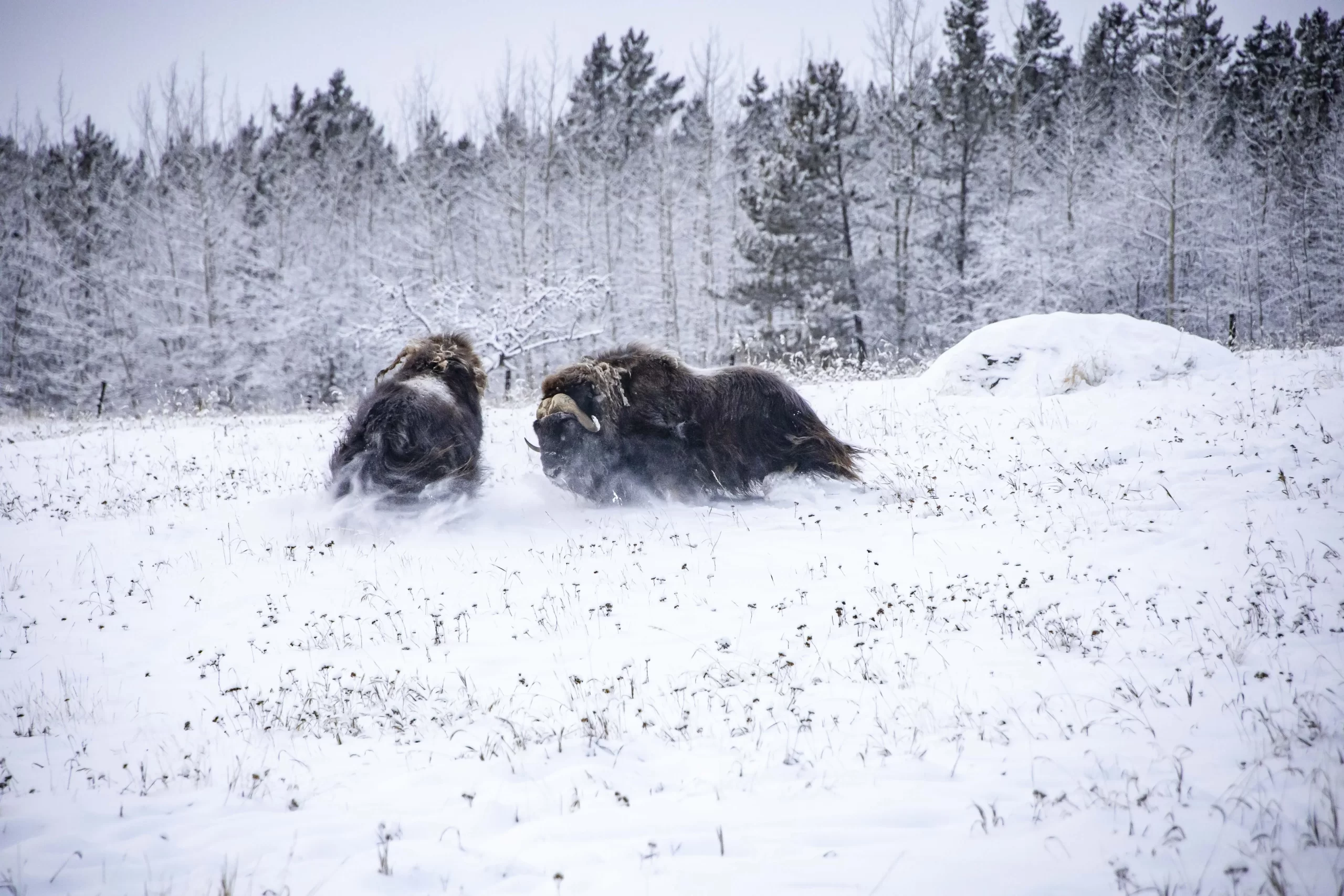
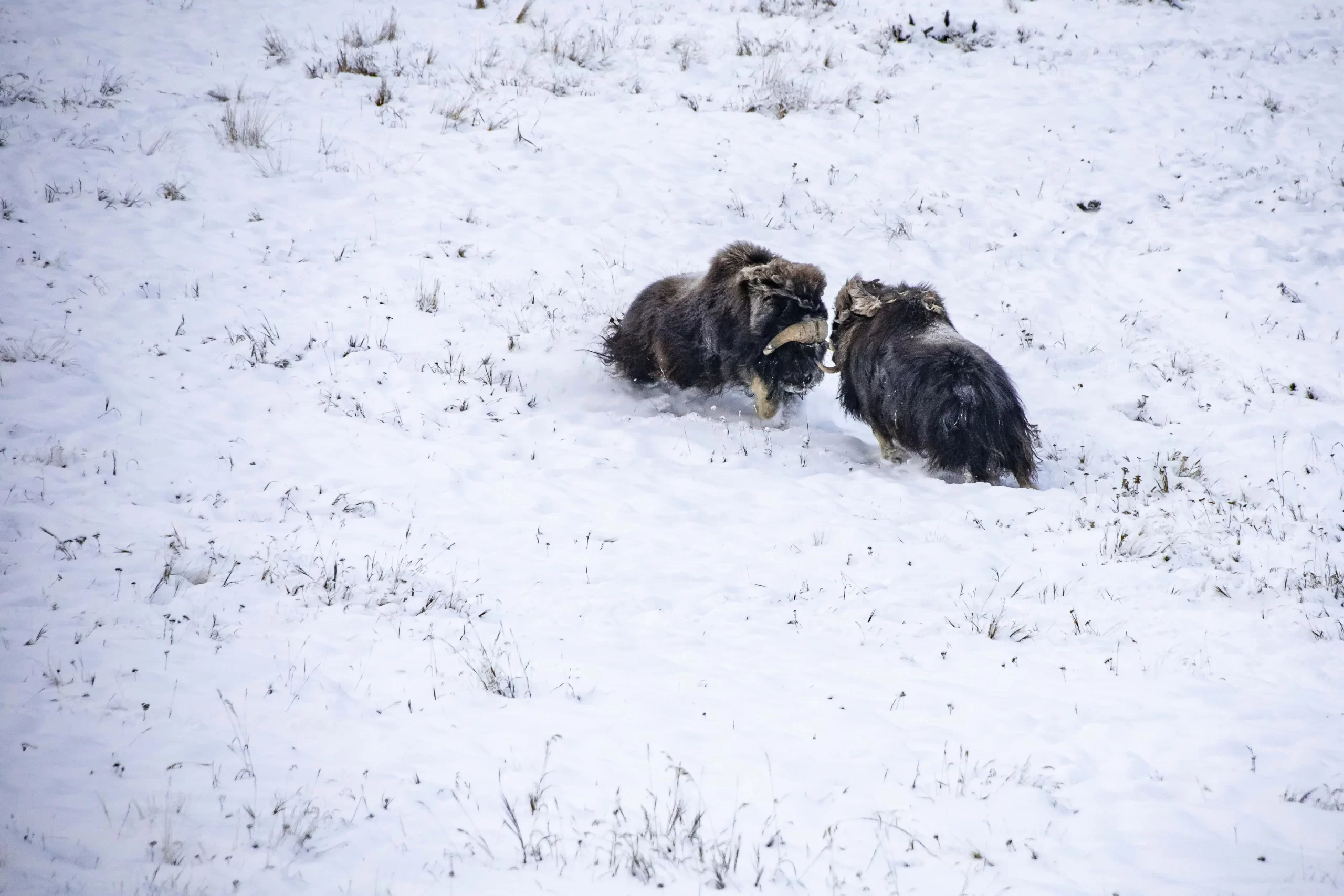
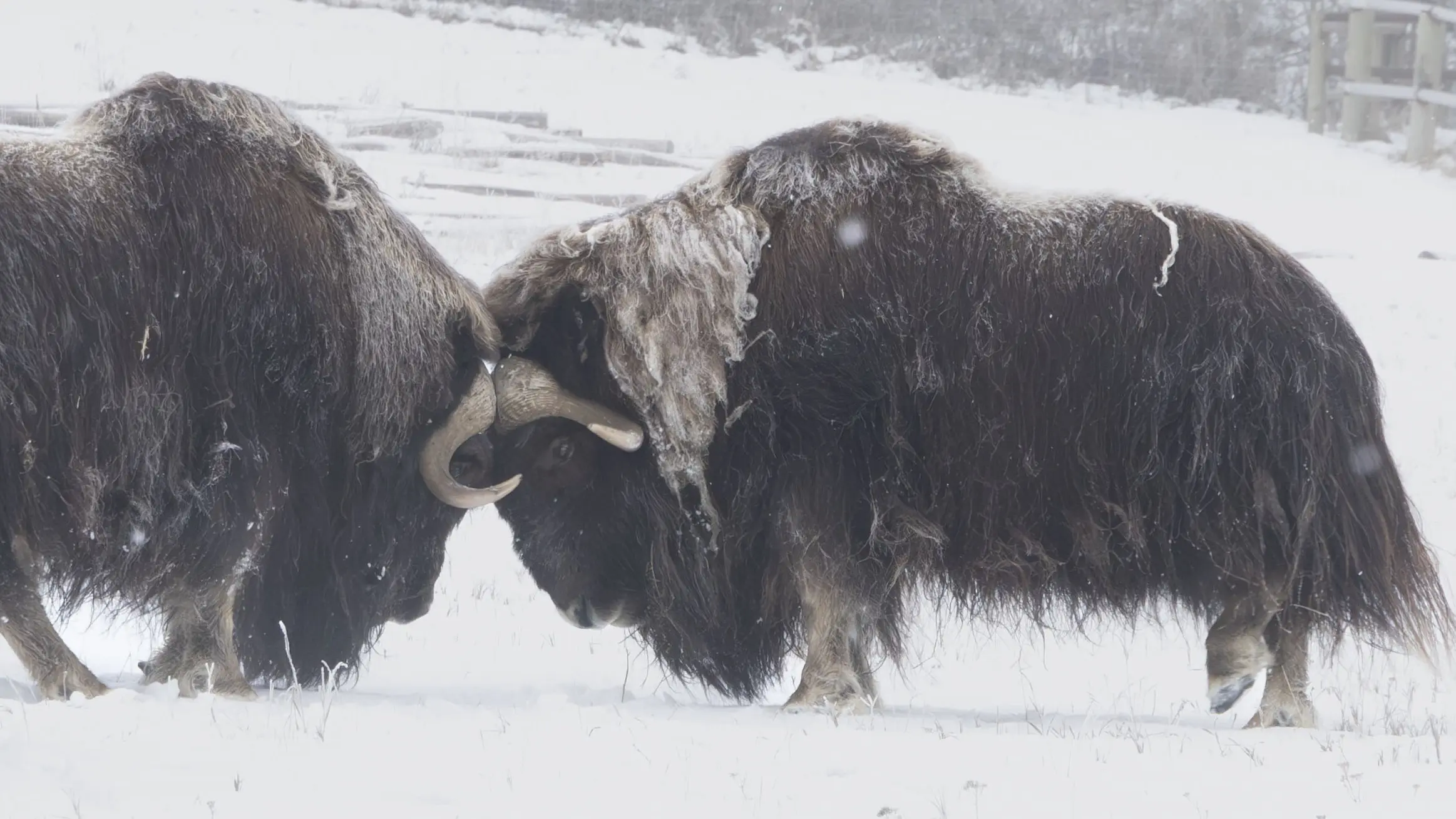
And if a captive muskox spends hours or even days ramming his boss (the flat bit of thick horn across his forehead) into a welded steel industrial gate separating him from the female muskox until it breaks; that is certainly persistent but is it intelligent? Nevertheless, the gates at the Preserve between the male and female muskox have been reinforced.
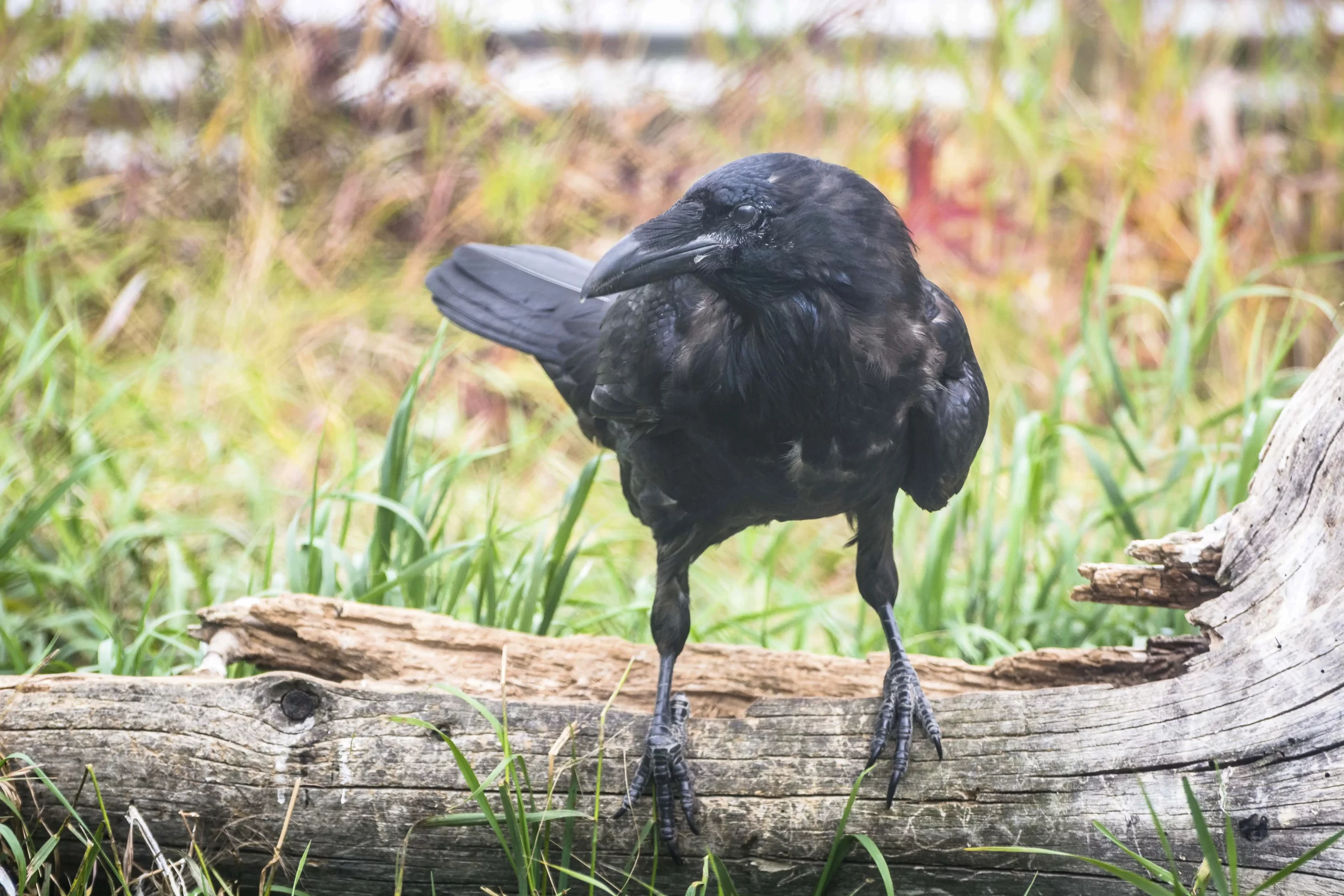
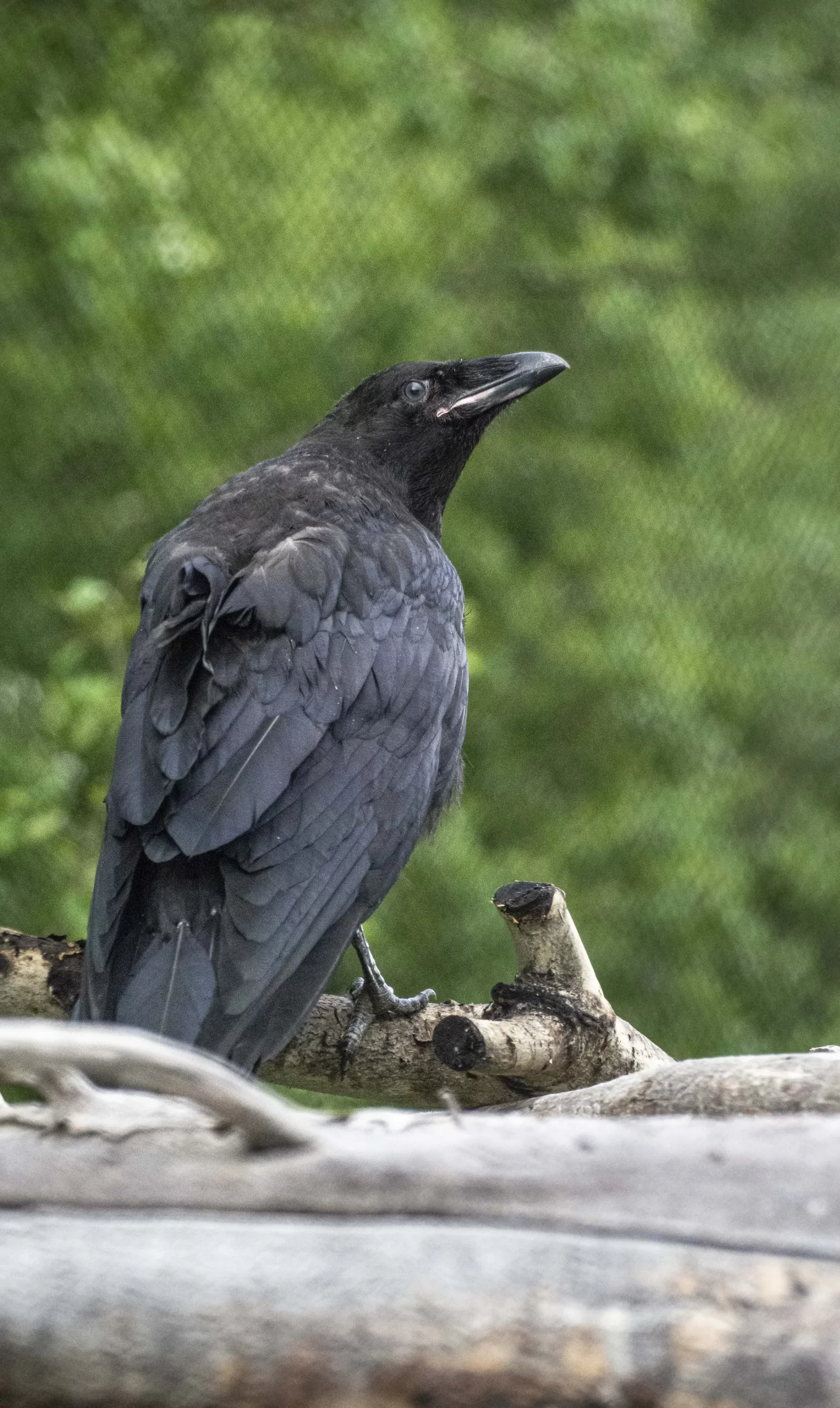
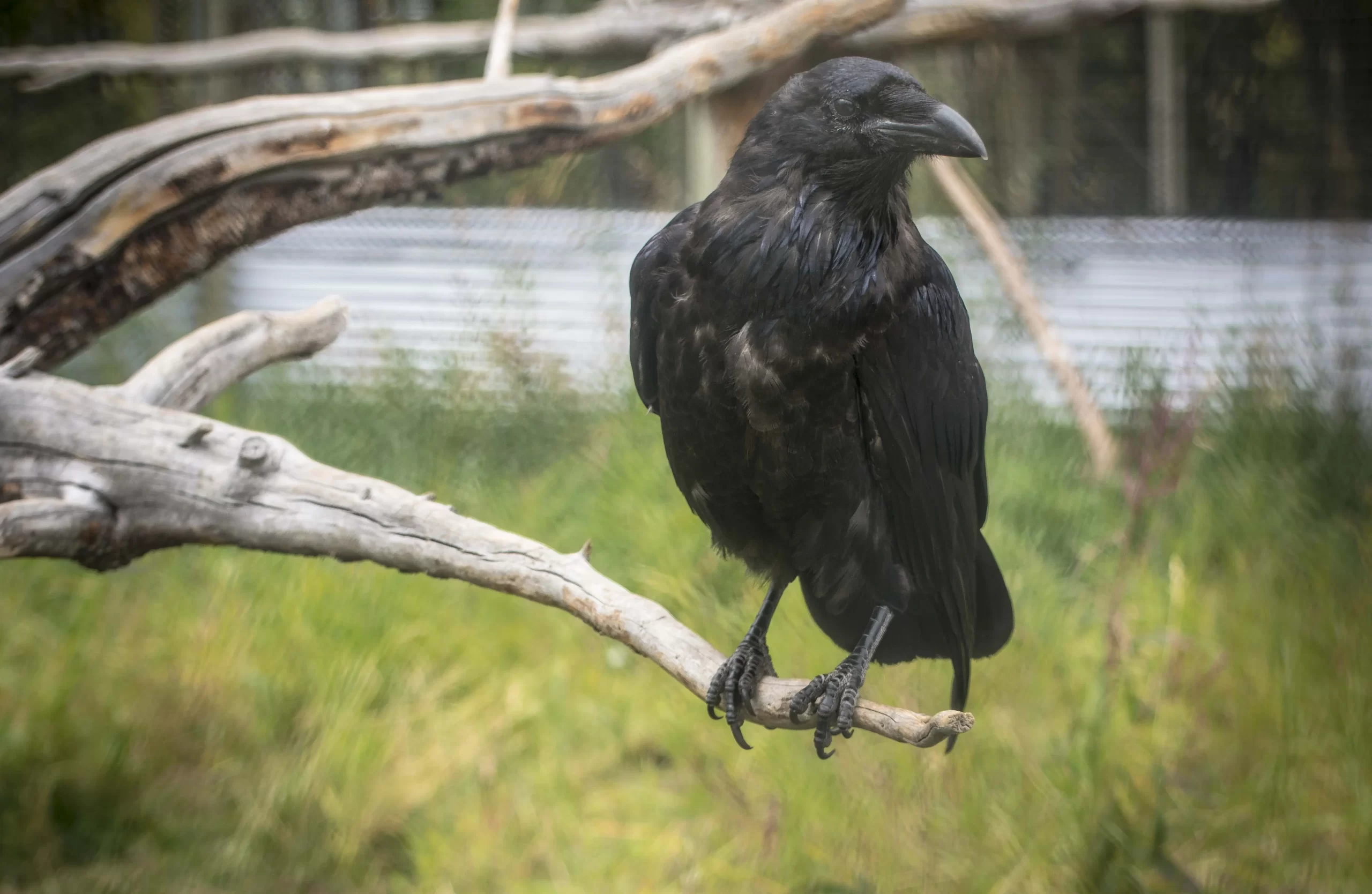
It is not difficult to suggest that predators probably have the most advanced ability to learn since their meals tend to run away and hide. They must continually adapt to fluid situations in order to eat. But the most amazing example of non-human learning I have run across is reported by Bernd Heinrich, author of, Ravens in Winter’, where he presented four groups of ravens with a puzzle consisting of pieces of meat hanging from strings.  One of the wild ravens, without having watched anyone else’s attempts, after pondering the problem for a period of time, flew straight to a perch above a hanging piece of meat, pulled the string up, put his foot on it to hold the slack and repeated the sequence until he had reeled in the piece of meat. First try.  Read the full account here

So, while they are not part of the Preserve’s collection, there are certainly ravens on the Preserve and they get my vote as smartest.

Pete Neilson

Pete Neilson

Wildlife Interpreter

'Sir' Pete grew up in suburban Southern Ontario north of Toronto. In the late 80's, he followed the lure of London and Service to the Yukon. 'Sir' Pete has lived off grid in the Yukon all along from a wall tent and later a tepee in his earlier years and now a small cabin near Twin lakes. He guided wilderness canoe trips many years in the 90's and early 2000's and got his first sled dog in ’91; currently he has 15 dogs for recreational mushing. 'Sir' Pete enjoys being at home or out with his dogs as much as he can.
Explore by Category

Explore by Author

Dawson City Bald Eagle

Dawson City Bald Eagle

yukon

by Lindsay Caskenette | Nov 1, 2024 | 0 comments

1 minute read - 

Imagine a bald eagle walking around, it’s like the fierce sky warrior forgot its wings. When it’s on the ground, its swagger is... questionable. Instead of the majestic glide we all picture, it’s more like a grumpy grandpa strutting through the yard, a bit hunched, stepping carefully as if it's got somewhere important to be. It’s as if it’s trying hard to act casual, but can’t quite hide the fact that it’s totally out of its element. You just know it’s thinking, “I’m supposed to be flying right now...”

mature bald eagle in rehabilitation

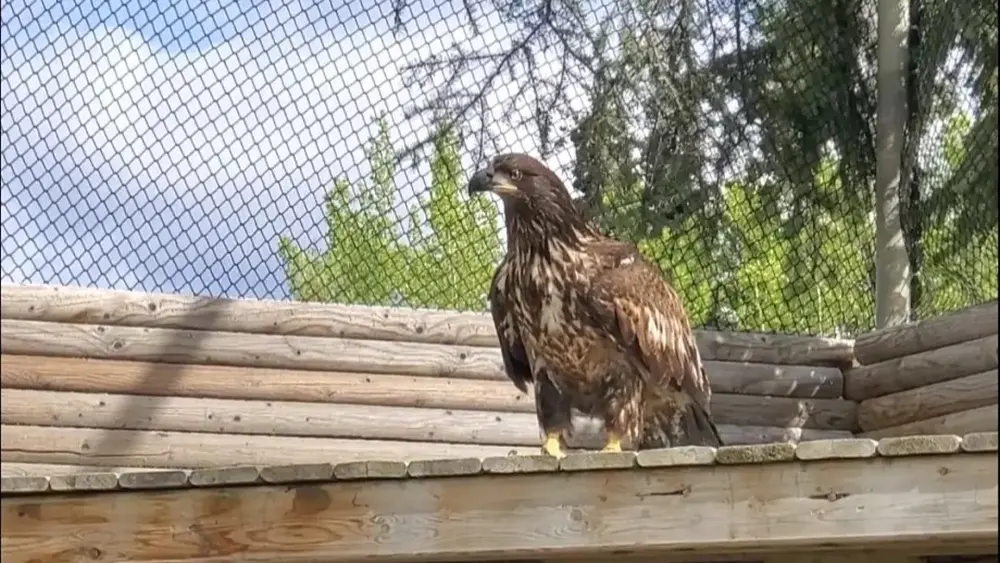
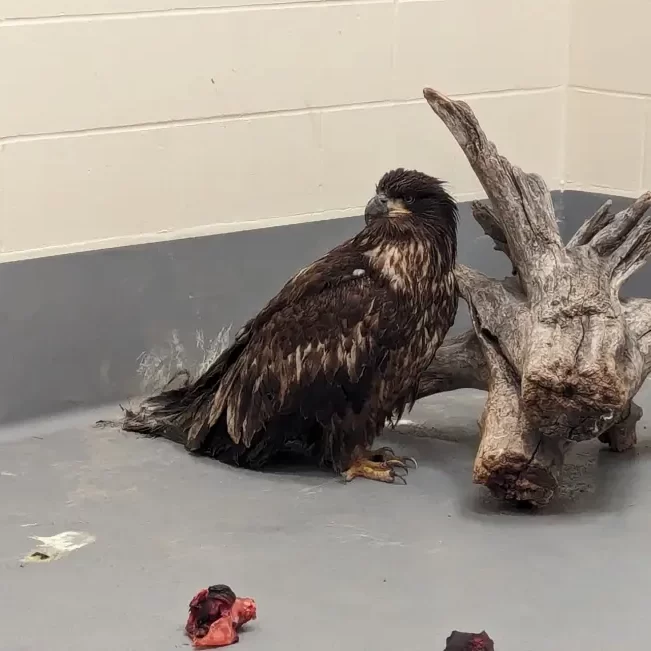
On October 18th, we admitted a juvenile bald eagle into the Wildlife Rehabilitation Centre. The young eagle came all the way from Dawson City. Apparently, this bird was found struttin' its stuff on the main street sidewalk of DC. This bird certainly was supposed to be flying but due to being slightly underweight, 4.4kg, not fueled well and muscles not strong enough, it was flightless. Damage to the tail feathers suggest it spent a fair amount of time, flightless. 

Old crow bald eagle upon arrival and admittance into the Wildlife Rehabilitation Centre at the Preserve. May 10th. Photo credit L.Caskenette

The eagle spent one week inside, eating well and gaining weight. The second week in care and until her release she is working on her flight hours, gaining strength before going back to the wild. 

On November 7th, 2024, at 6kg in weight and less than a month in our care, the juvenile bald eagle was returned to the wild, at Chasàn Chùa (McIntyre Creek). she was not transported back to Dawson City for the release.  This added travel can be stressful and Dawson City in the winter can be a challenging place for a young eagle to succed. 

Help us get them back on their wings. We could use your help. If you are able to support the care of these two animals, please consider donating. Every contribution makes a difference and as a non-profit charitable organization, you can receive a charitable tax receipt for your support. 

Photo credit: L. Caskenette

Lindsay Caskenette

Lindsay Caskenette

Manager Visitor Services

Lindsay joined the Wildlife Preserve team March 2014. Originally from Ontario, she came to the Yukon in search of new adventures and new career challenges. Lindsay holds a degree in Environmental Studies with honours from Wilfrid Laurier University and brings with her a strong passion for sharing what nature, animals, and the environment can teach us.

867-456-7400
Lindsay@yukonwildlife.ca

Explore by Category

Explore by Author

Breaking Down that Stink

Breaking Down that Stink

yukon

by Brittney Forsythe | Oct 18, 2024 | 1 comment

2 minute read - 

Nestled in the heart of the Takhini River Valley on the traditional territory of the of the Kwanlin Dün First Nation and the Ta'an Kwäch’än Council, is a haven for nature enthusiasts seeking a unique, immersive experience with Yukon’s native flora and fauna. Beyond the breathtaking landscapes and magnificent animal encounters, the Yukon Wildlife Preserve offers a unique opportunity to engage ALL of your senses. 364 days a year (we give the animals Christmas off,) you are invited into a sensory masterpiece. Visitors can witness the magic of nature through sight, sound, touch, and “ewww! What’s that smell!!??”

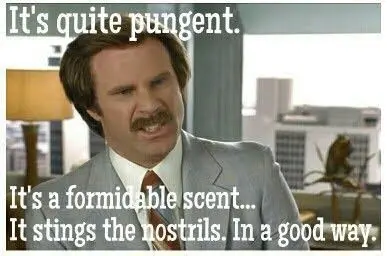
If you have visited us – especially during freeze up – you may have noticed a pungent odor… a formidable scent, around the preserve. No, that’s not Sex Panther by Odeon - or the outhouse…. It does smell like a bad fart though.

A quote from the movie Anchorman


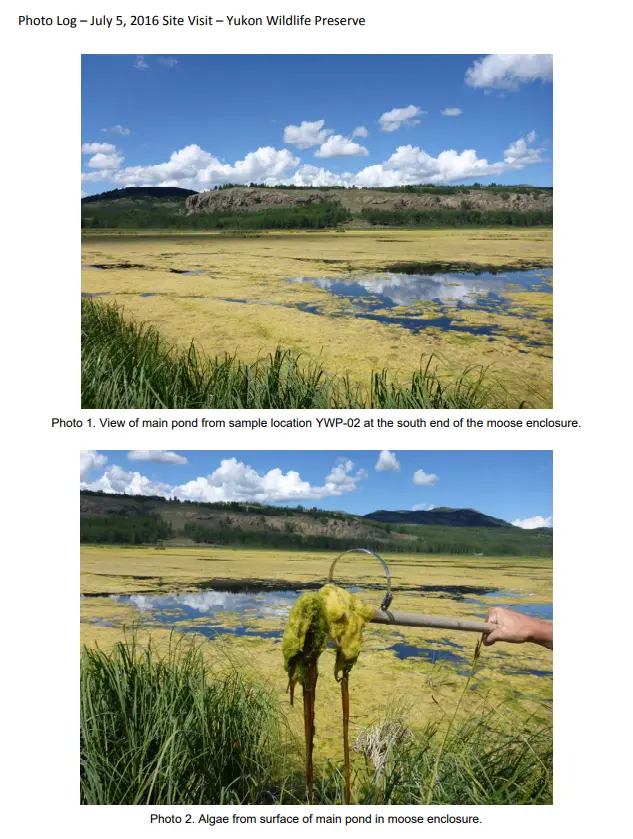
So, what is it? Well back in 2016 there was quite the algae bloom in the moose pond, which prompted a call to the scientists at the YG water department. They came out to investigate and what they found was quite interesting. I’ll admit that I’m no scientist, but I invite you to come along with me, as I do my best to “break this down” - This pun will make sense later...

Algea Bloom in the moose pond. Photo from the July 2016 report by John Minder Water Resource Technologist – Water Quality Crystal Beaudry A/ Water Quality Technologist

High Nutrient Availability with an absence of h2O:

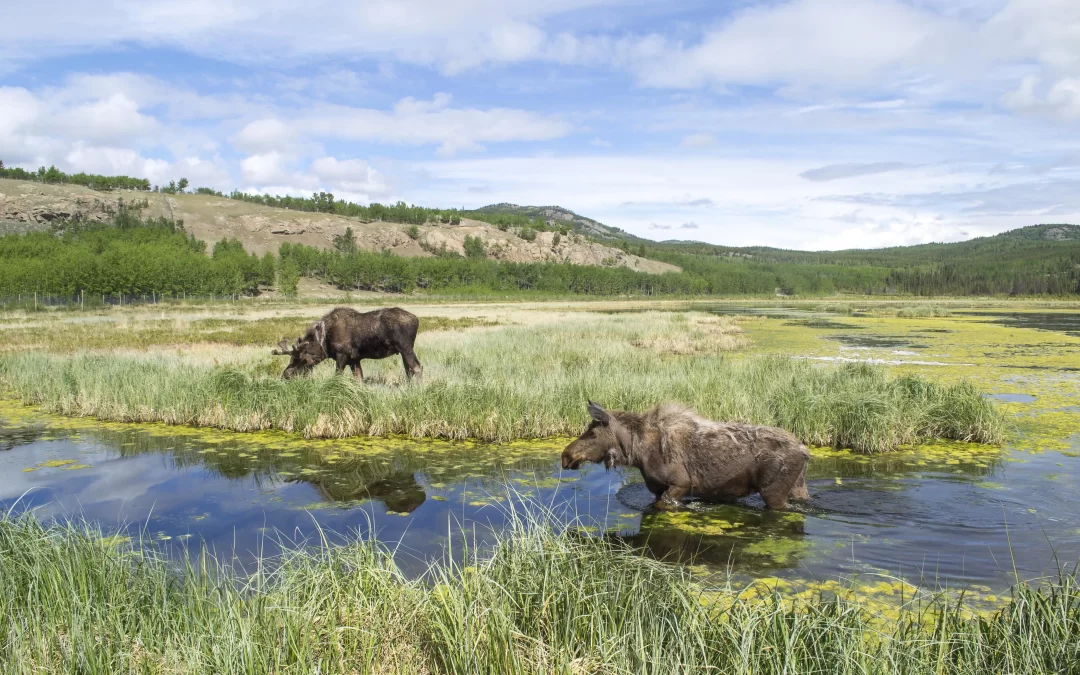
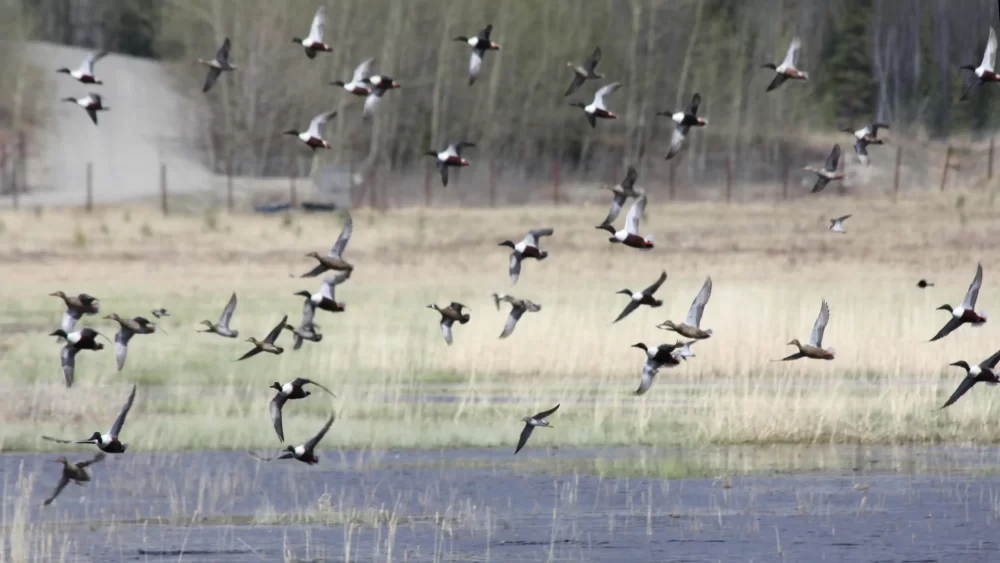
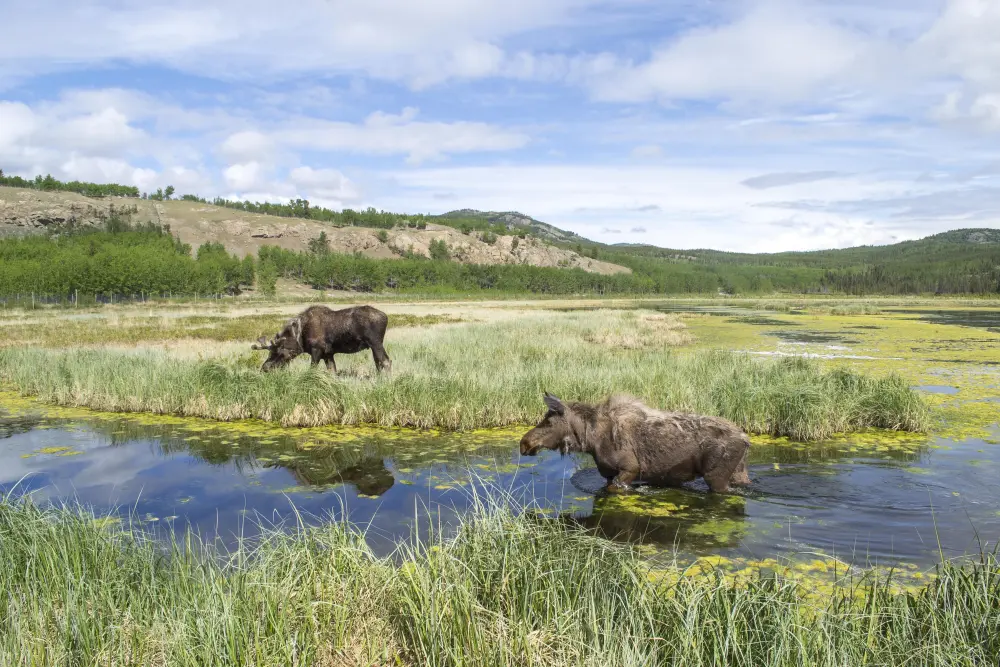
The moose pond at the preserve is a beautiful and diverse habitat. It supports much more than our annual moose swimming competition! Just kidding, although wouldn’t that be an event to witness? My money would be on Watson! Every year, migratory birds, from as far as South America, land on our very special pond. We have counted over 50 different species in the area at the height of spring.

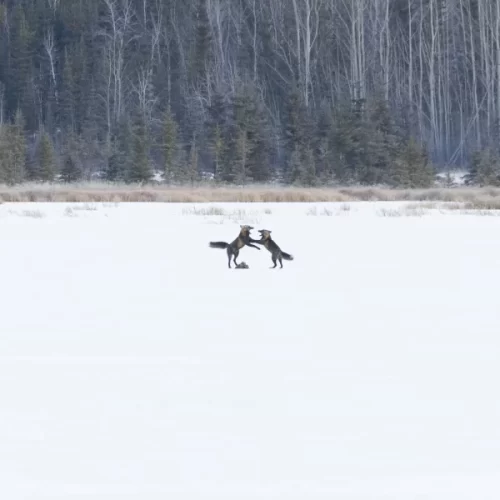
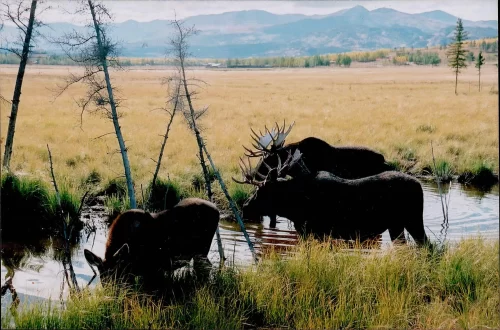
We also have muskrat, who call the pond home. You may have noticed their “push-ups” in winter (they look like a pile of dirt in the middle of the pond.) Our wild fox like to hunt the muskrat and will often use the frozen pond as a playground in the winter, checking each push-up and wrestling in between. Last but certainly not least, we have our Moose! For most of the year Jessie, Watson and its newest inhabitant Jake, reside in the moose habitat - using the pond to cool off in the summer heat and feasting on their favorite snacks that grow under water. So, needless to say, it’s a pretty happening place!
Migratory birds take off over the moose pond

Why is this so important? Well the scientists at YG discovered that the Moose pond exhibits characteristics of Hypereutrophic water, which is a fancy way of saying it's jam packed with nutrients - specifically phosphorus and nitrogen. Where do these nutrients come from? Well, the decay of natural organic matter like plants, moose feed, and … poop! Lots of poop, in the pond. This overabundance of nutrients allows plants and algae that thrive in this kind of environment, to fill the pond. When the plants and algae fill up the pond, oxygen levels deplete and this creates something called anoxic conditions – a crucial factor in the odorous equation.

an·ox·i·a - an absence of oxygen.

So, as the plants and algae take over the pond, there is less space for oxygen and this sets the stage for anoxic processes to begin. These conditions provide an ideal environment for the explosion of sulfate-reducing bacteria and these bacteria really get the party started. They are basically in there, having a massive feast, “breaking down” (remember that pun ) all the plants and poop, which ultimately leads to the production of hydrogen sulfide (H₂S) gas – the infamous "rotten egg" odor.

Sulphur Source:

Now our moose pond is special. Not only does it have the bacteria endlessly feasting on poop, but it also has another smelly source feeding the frenzy. High sulphate levels detected in 2016 pinpoint a substantial sulfur source in the area – we are located on the Hot Springs road after all!

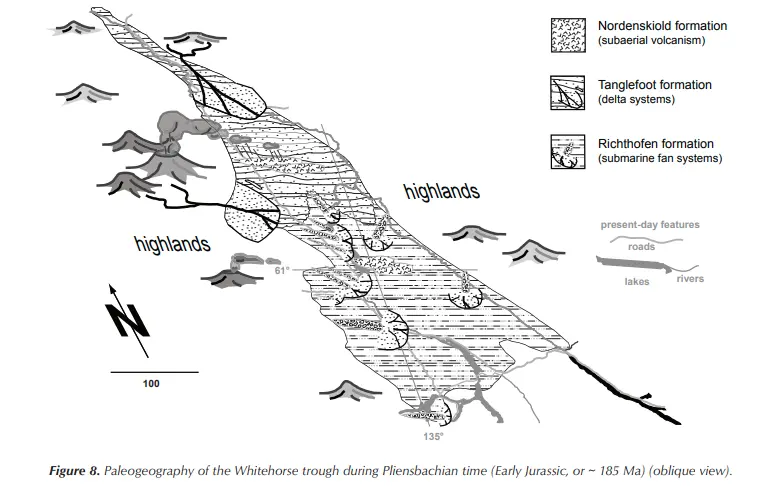
The potential origin of this sulfur lies in the surrounding rocks and beneath our feet.  The Richthofen Formation is a large rock formation, made up of sedimentary rock (think sandstone, limestone & shale) that was formed in the early Jurassic period. That’s around 200 million years ago! Sedimentary rock often starts as sediments carried in rivers and deposited in lakes and oceans. Eventually this sediment settled, the water dried up and it all became cemented to form rock.

Migratory birds take off over the moose pond

There is also groundwater and a local aquifer under our feet. As the ground water from rain, and spring melt flows over the mountains, into the valleys, into the ground and eventually to the aquifer, it slowly dissolves the sedimentary rock that was deposited here those millions of years ago. In this case, it's dissolving a lot of shale. As the water breaks down the shale, it actually causes a similar reaction as the pond, where sulphates are again the star. And what happens when the sulphates are the main course at the party? Anoxic conditions and fuel for H₂S-generating bacteria. AKA - Stink Bomb x2!

The Freeze-Up Factor:

Now another interesting factor here, are the seasons. Some parts of the year just stink more than others and freeze-up is generally the worst. The freeze-up of the ground, before the pond water, may hold the key to the intensified scent during this period. Normally, H₂S contained in groundwater would degas along its flowy journey. However, during freeze-up, the gas becomes trapped in the frozen ground. So instead of flowing along, this causes the gas to migrate up to the open water and makes an extra special smell around certain parts of the pond – this is noted mostly where the pond flows out and under the road, at the crossroads. This spot is always the last to freeze, therefore it offers a way out for the trapped gasses, concentrating the smell.

Conclusion:

When you combine low oxygen, nutrient abundance, water and 200-million-year-old rocks, we solve the great mystery of “What’s that smell??” at the Yukon Wildlife Preserve. So, you can stop side eyeing the other guests in your tour group. It's not the result of last night's taco Tuesday! Just nature being neat in all its complicated intertwined beauty!

This blog is my interperatation of the Monitoring Report – Yukon Wildlife Preserve Algae Bloom from 2016 conducted by Yukon Department of Environment Water Resources Branch Water Quality Section Prepared by: John Minder Water Resource Technologist – Water Quality & Crystal Beaudry A/ Water Quality Technologist

Brittney Forsythe

Brittney Forsythe

She/Her - Visitor Services Coordinator

Brittney joined the Wildlife preserve in the summer of 2023. Growing up on Northern Vancouver Island, surrounded by the temperate rainforest, nature and animals have always been a part of her life. It exploded into a passion, when she started her dog walking business in 2017 and she began spending 6-7 days a week in the forest, rain or shine! This sparked an even deeper appreciation for the cyclical nature of the land and how all of the plants & animals work together symbiotically. She is forever ‘that girl’ on the hike, pointing out different rocks and plants, explaining their origin or what they could be used for medicinally. Brittney and her dog Cedar relocated to the Yukon to help care for 31 sled dogs. She is so excited to expand her local knowledge as a part of the Preserve team.

867-456-7400
 Brittney@yukonwildlife.ca

Explore by Category

Explore by Author

JB the Moose

JB the Moose

yukon

by Lindsay Caskenette | Aug 23, 2024 | 4 comments

6 minute read

On August 15th 2024 the Preserve's Animal Care team with the support of one of our veterinarians', Dr. Julianna Campbell made the difficult decision to say goodbye to JB the moose. Her condition had declined rapidly over the last 6 weeks when our team noticed she was starting to look thin. She developed diarrhea which dramatically impacted her body condition. She had lost a significant amount of weight (she was estimated to be 200-300 lbs under her normal weight). Unfortunately in that time, physical exams and fecal / blood tests did not reveal the cause. Nor did she respond to attempted treatments. Despite enthusiastically eating browse, our Animal Care Team was seeing her increasingly displaying signs of distress or pain. She also now lacked the body condition to handle colder winter temperatures (and now the ability to regain the necessary body condition in the next couple of months). In order to mitigate her suffering we made the decision to euthanize her.

JB- Moose First Day May 26th, 2014 - Justine Benjamin

JB the moose. Summer 2024. Photo credit: Melissa Mark

The morning of the 15th, after she was immobilized the euthanizing drugs were administered and she passed away quickly and easily. Our Animal Care Team conducted a necropsy which includes a physical exam of the internal body systems as well as taking a series of tissue samples that will be sent out for testing. The goal is to understand the root cause of her sudden decline in health. Very preliminary necropsy results show hemorrhaging / ulcers in one of her stomachs and intestines, but understanding why will be more challenging. Once we have more information and a better understanding of what happened, we'll share more information. Testing of samples can take several weeks, so we won't know right away.

female, moose, snow, YWP - Whitehorse - Yukon JB the rehabilitated moose. Jake Paleczny

JB the moose. Winter 2016. Photo credit: Jake Paleczny

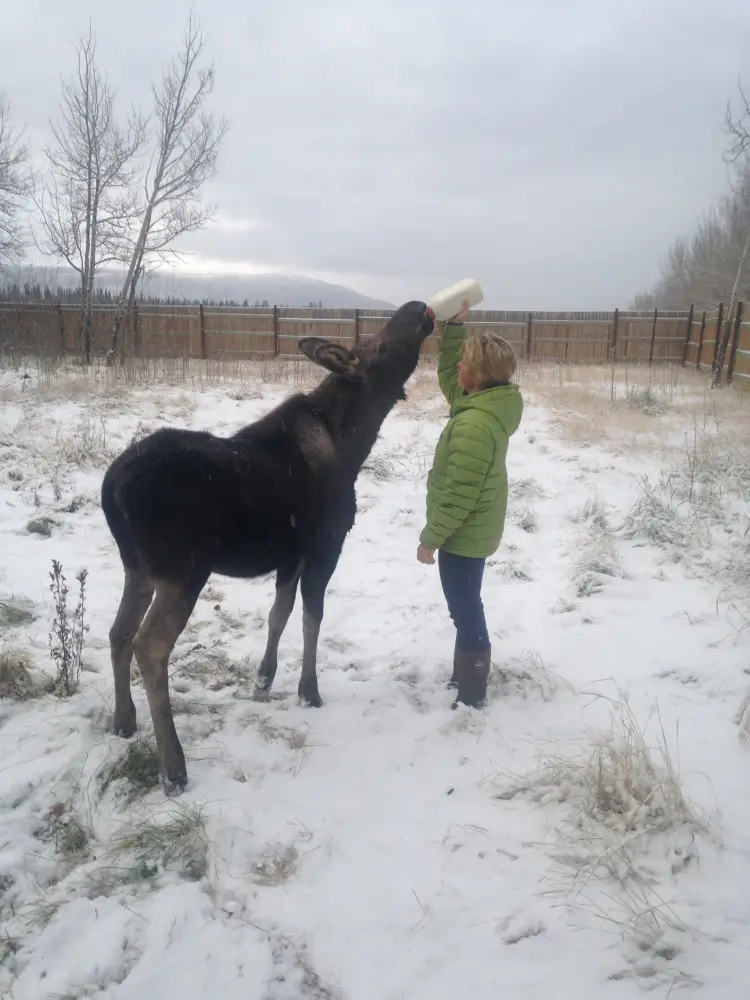
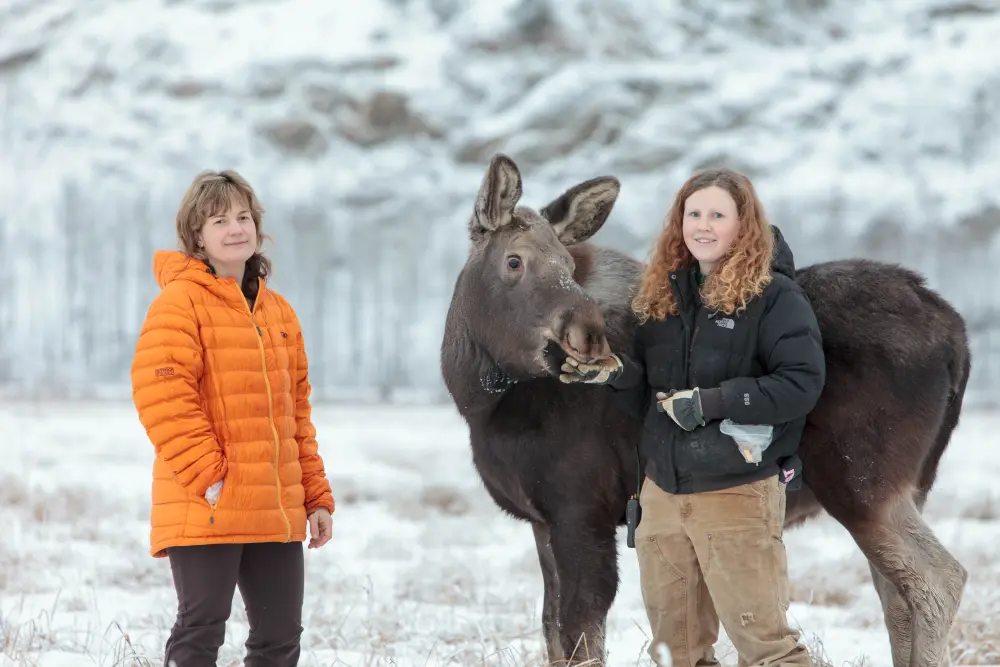
JB was well known to many visitors over the years. She was generally calm mannered and smaller than the other female moose, Jesse, who was 2 years younger than JB. Jesse has been known to have a lot more attitude and dominant behaviour.

JB- Moose First Day May 26th, 2014 - Justine Benjamin

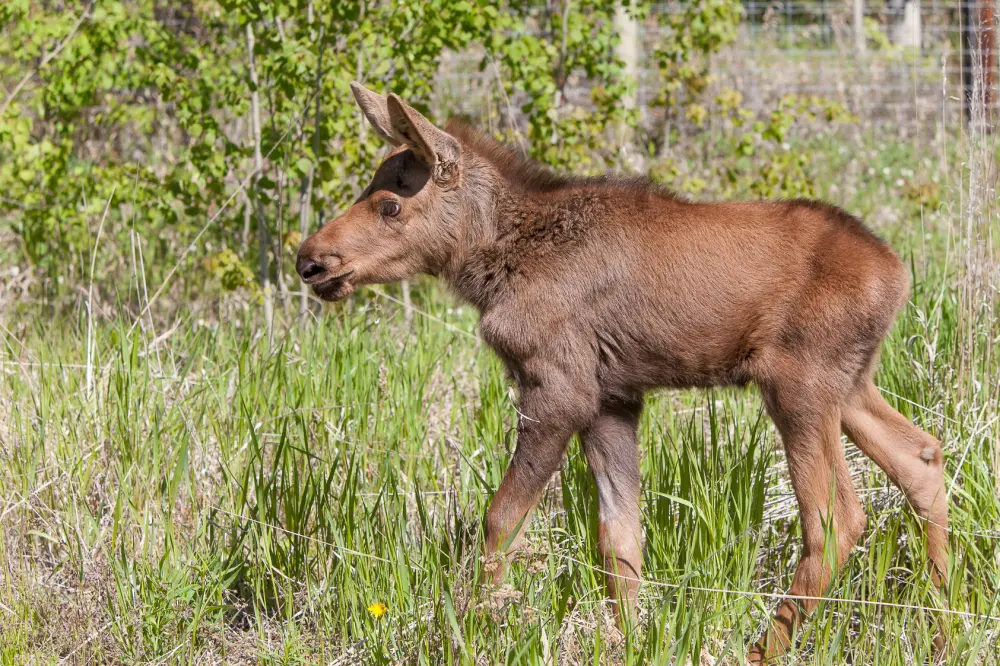
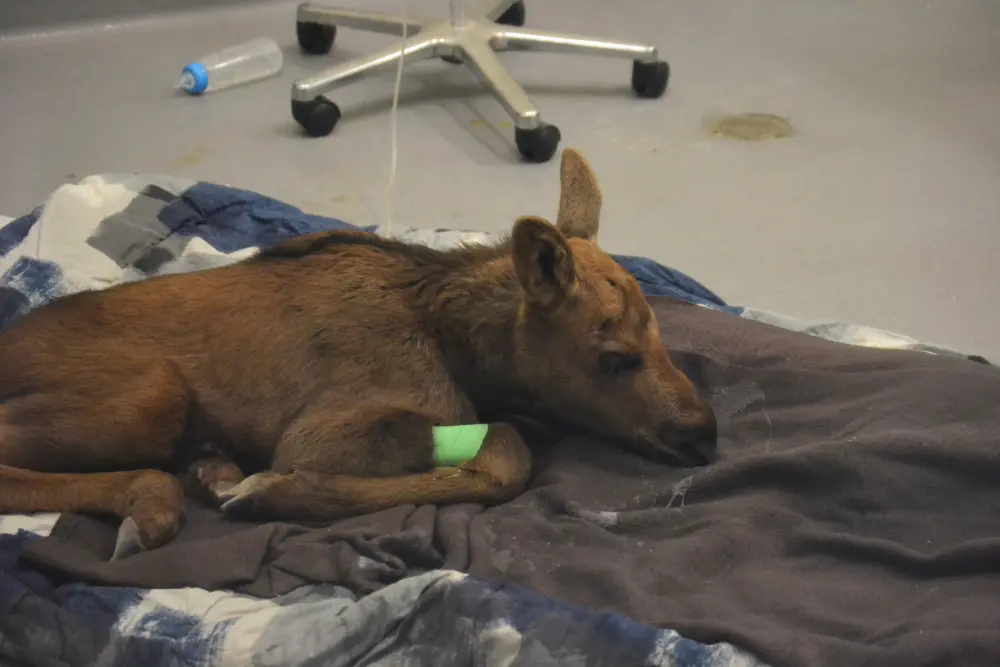
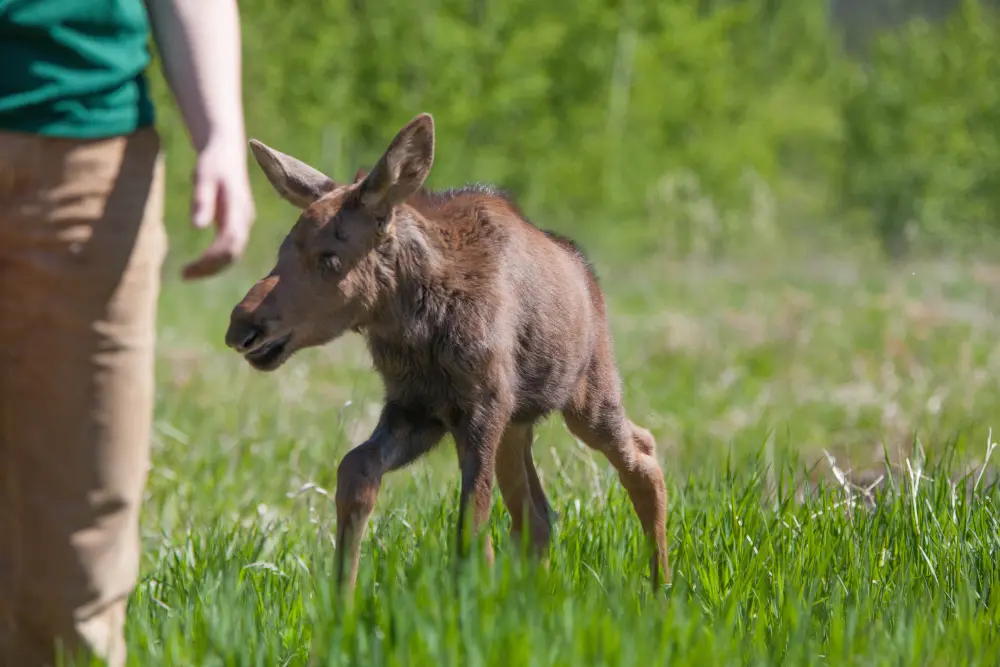
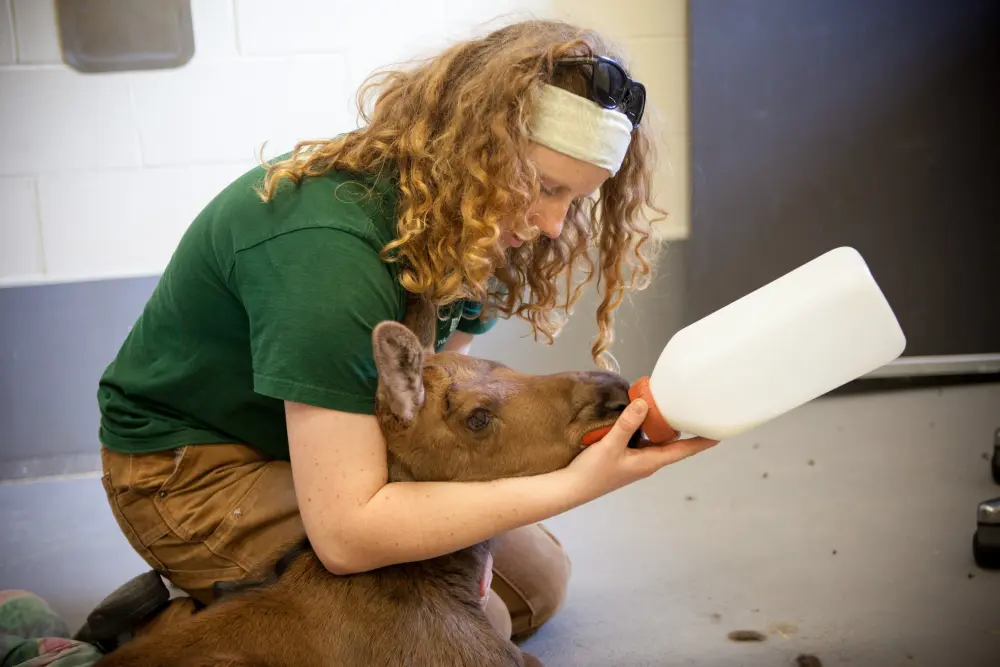
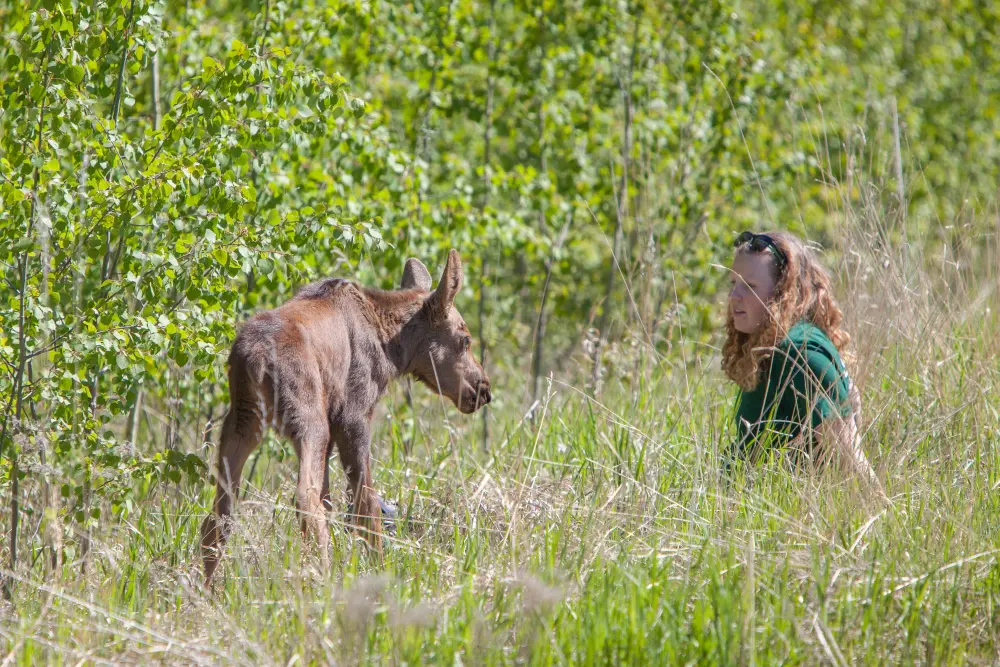
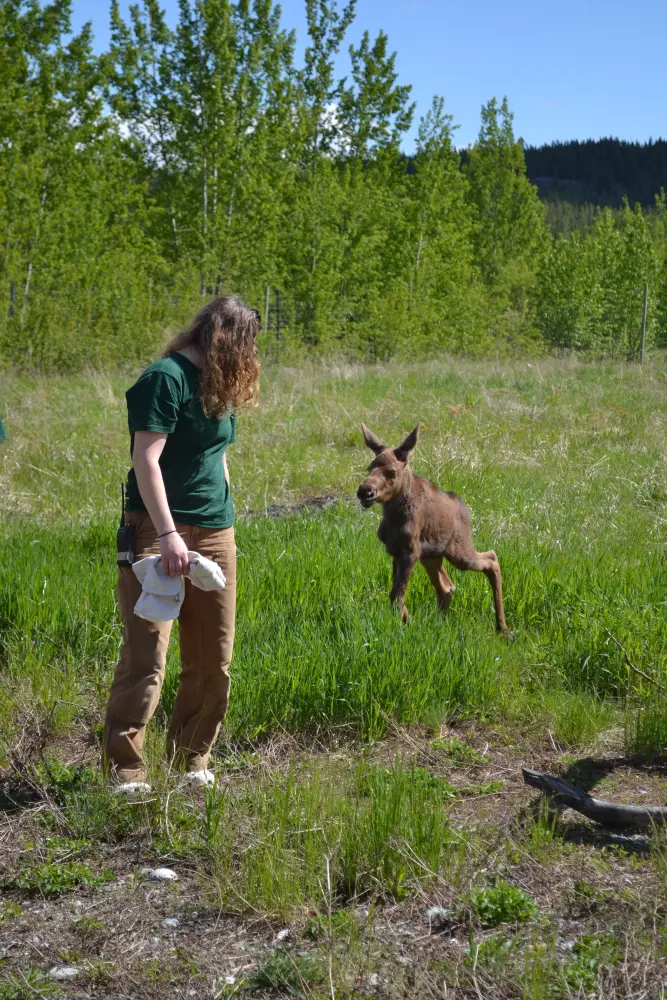
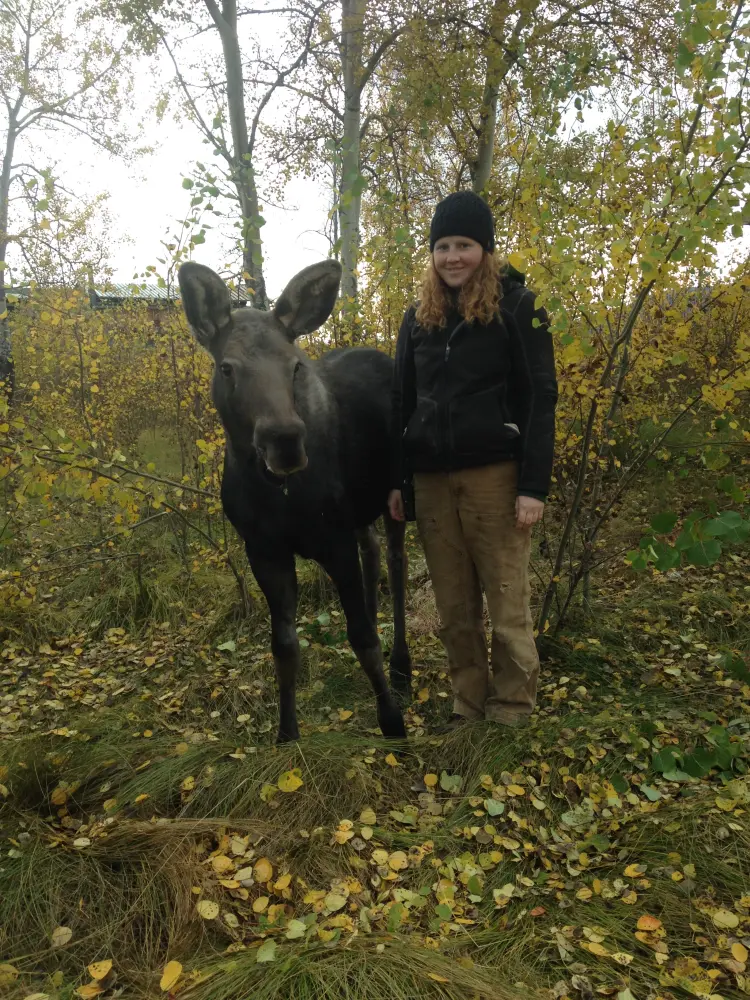
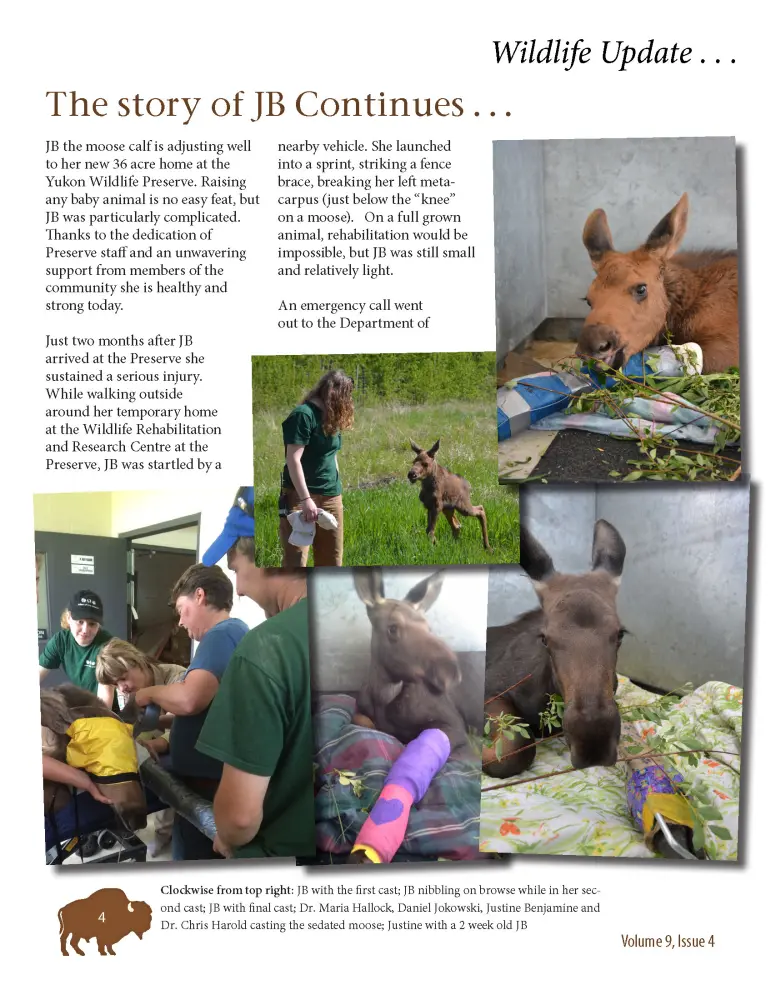
JB arrived as an orphaned moose in spring 2014. Orphaned moose are notoriously difficult to hand raise and we hadn't received an orphaned moose in many, many years. Under Dr. Maria Hallock, the Animal Care Team threw themselves at the situation - feeding every 3 hours at first, spending nights with her, etc.

JB- Moose First Day May 26th, 2014 - Justine Benjamin

JB the moose First Day. She arrived May 26th, 2014. Photo credit: Justine Benjamin

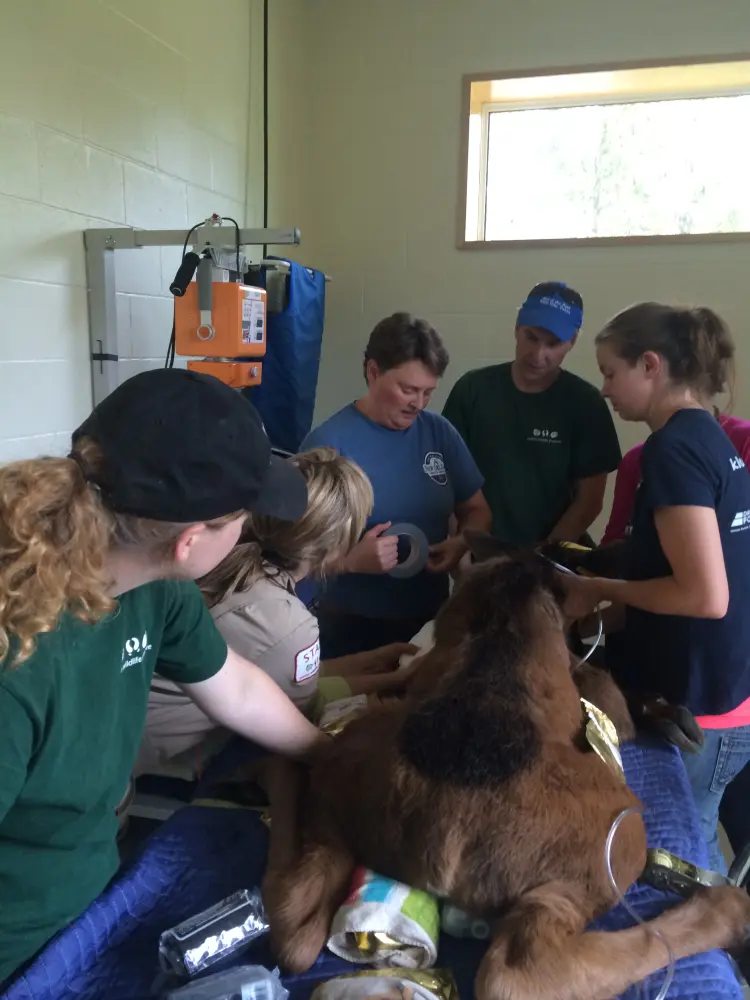
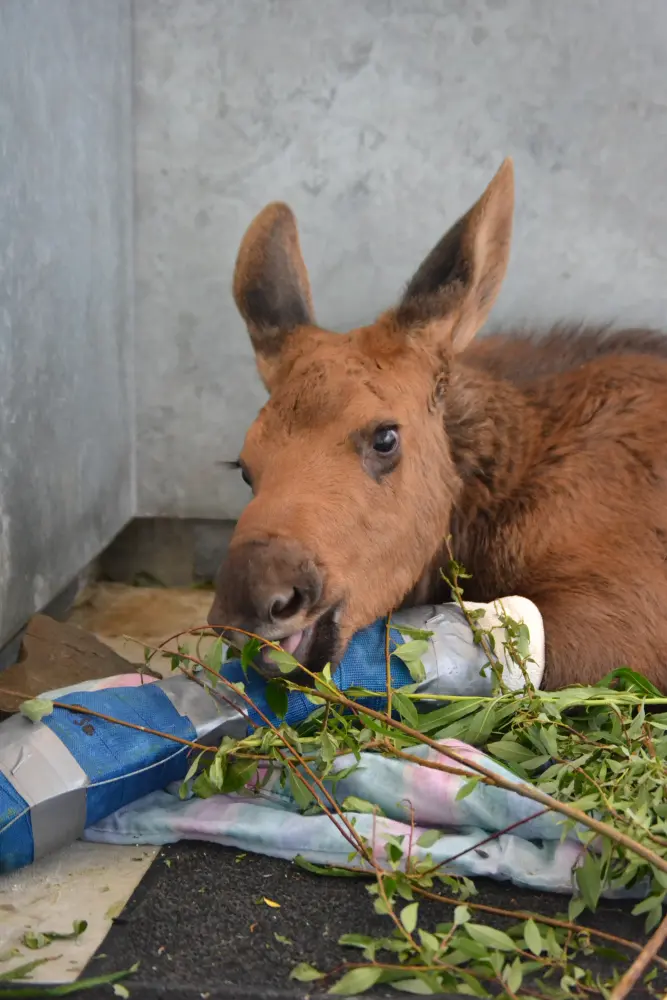
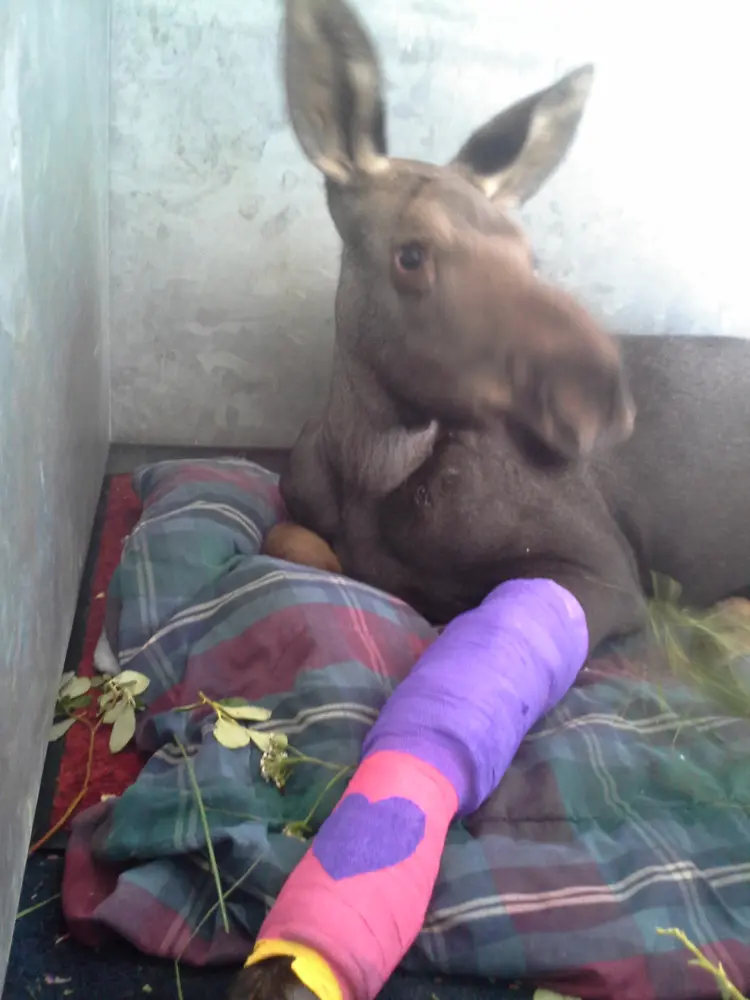
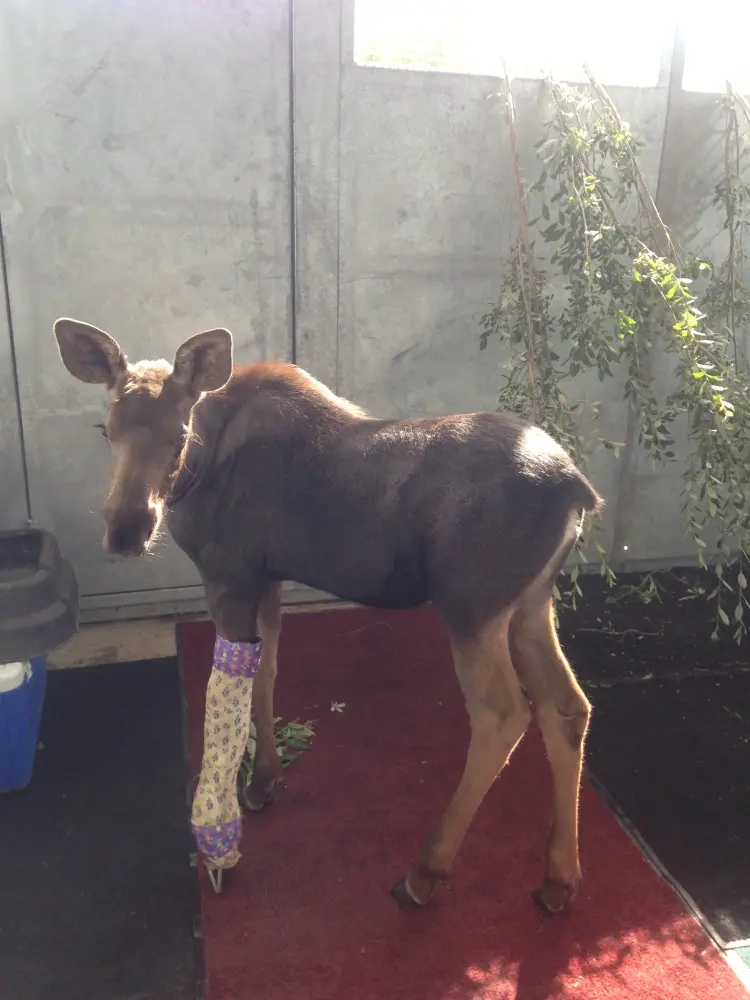
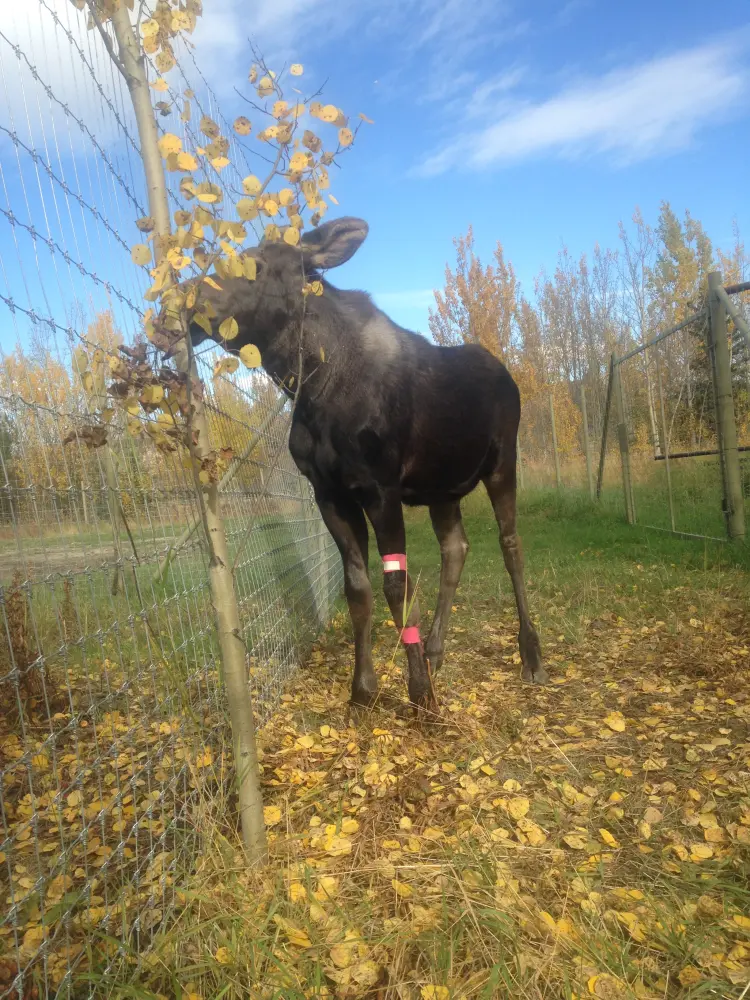
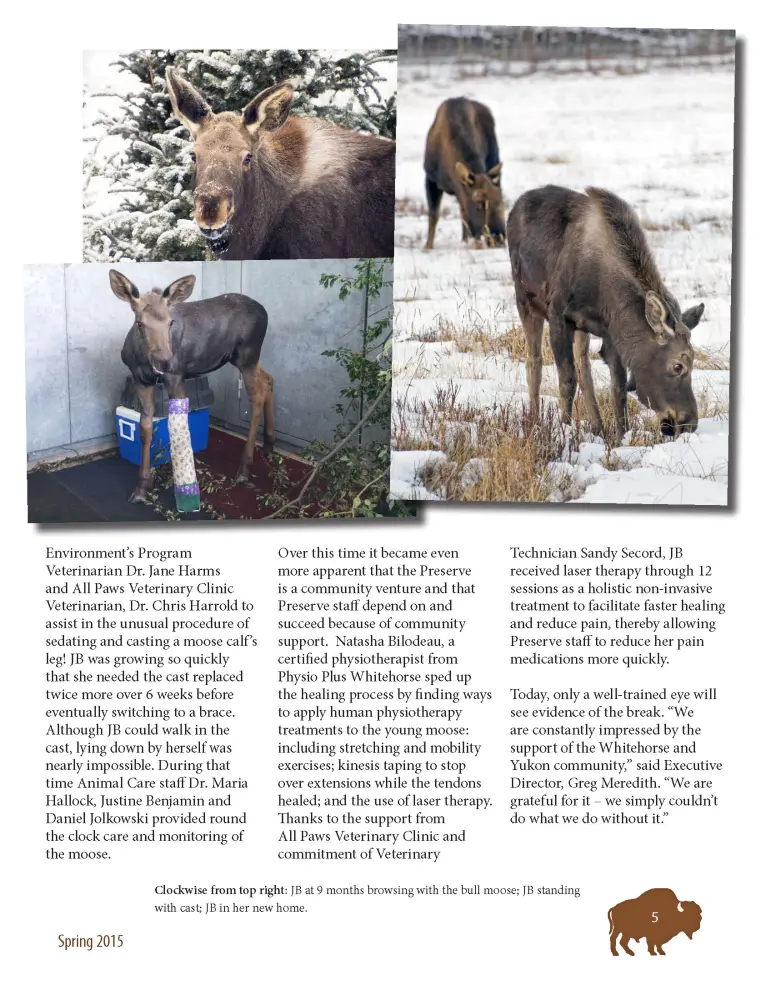
In a near-tragic twist, JB broke her leg. Although it might have been the end for any other moose, Maria put a cast on JB's leg. Because JB was growing so quickly the cast had to be cut off and redone just 2 weeks later, but eventually the cast came off. 

The Animal Care Team put in a huge effort that spring. Among others, Dr. Julianna was at the YWP as a summer student in 2014 and was part of the team that bottle raised JB.

Another person on the team that year was Justine Benjamin. Justine spent more time than anybody else with the young moose, right through to when she was moved into the main habitat in February 2015. 

Because of that special connection and dedication from Justine, Maria proposed we name the moose JB. Justine is now a part of our Board of Directors and Chair of the Animal Care Committee.

At that time we didn't have a laser therapy machine (for reducing inflammation) but All Paws Vet Clinic and their team continued their support of the moose, bringing out their machine for regular treatments. Further, we received support for a local physio therapist, Natasha Bilodeau after the brace was off to help continue the healing and recovery.  Normally we'd be starting to decrease our time spent with a calf, but with the cast leg she continued to need a lot of support. 

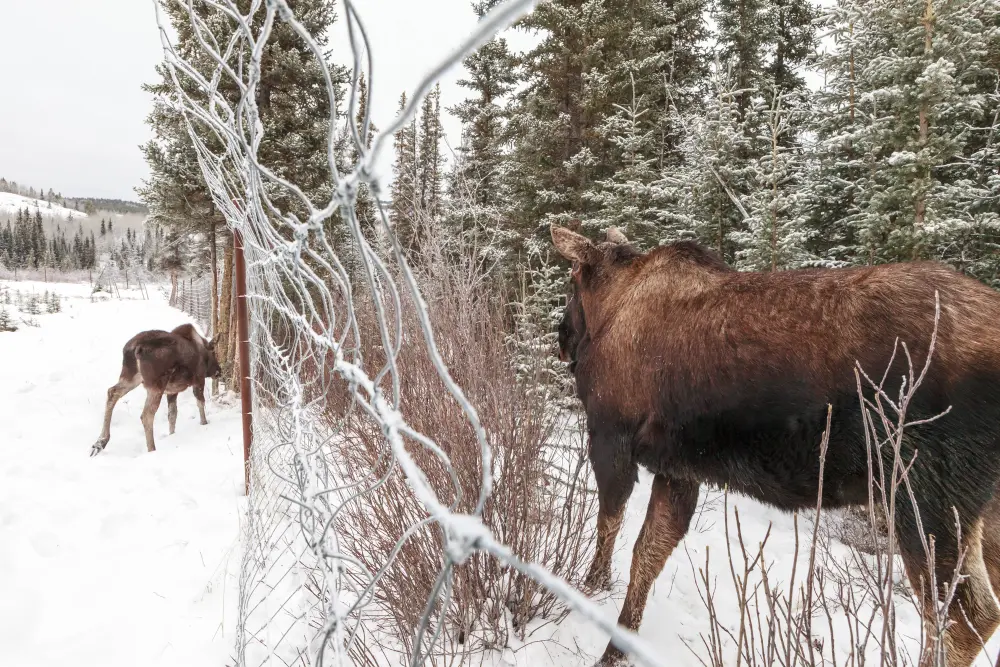
Later in the winter she was introduced into the main habitat with our bull moose. Years later as Jesse joined the group, the three of them roamed the 40 acre moose habitat. 

• • •

The following is an article created in our original newsletter, the Preserve Post in Spring 2015. 

• • •

The Yukon Wildlife Preserve is a zoological institution and a non-profit charity dedicated to connecting our visitors with the natural world. As ambassadors of the Yukon Wildlife Preserve’s animals, lands, and operations, the operating society proudly maintains populations of 10 species of Yukon wildlife in large natural habitats. The society also conducts educational programming and funds a wildlife rehabilitation program for Yukon’s injured and orphaned wildlife. The facilities and the level of care provided to the Preserve’s animals successfully meets the stringent criteria of Canada's Accredited Zoos and Aquariums, to which the Yukon Wildlife Preserve is a long-time member.

Lindsay Caskenette

Lindsay Caskenette

Manager Visitor Services

Lindsay joined the Wildlife Preserve team March 2014. Originally from Ontario, she came to the Yukon in search of new adventures and new career challenges. Lindsay holds a degree in Environmental Studies with honours from Wilfrid Laurier University and brings with her a strong passion for sharing what nature, animals, and the environment can teach us.

867-456-7400
Lindsay@yukonwildlife.ca

Jake Paleczny

Jake Paleczny

He/Him - Executive Director/ CEO

Jake Paleczny is passionate about interpretation and education. He gained his interpretative expertise from a decade of work in Ontario’s provincial parks in addition to a Masters in Museum Studies from the University of Toronto. His interests also extend into the artistic realm, with a Bachelor of Music from the University of Western Ontario and extensive experience in galleries and museums.

867-456-7313
jake@yukonwildlife.ca

Explore by Category

Explore by Author

Old Crow Bald Eagle

Old Crow Bald Eagle

yukon

by Lindsay Caskenette | Jun 12, 2024 | 0 comments

1 minute read - 

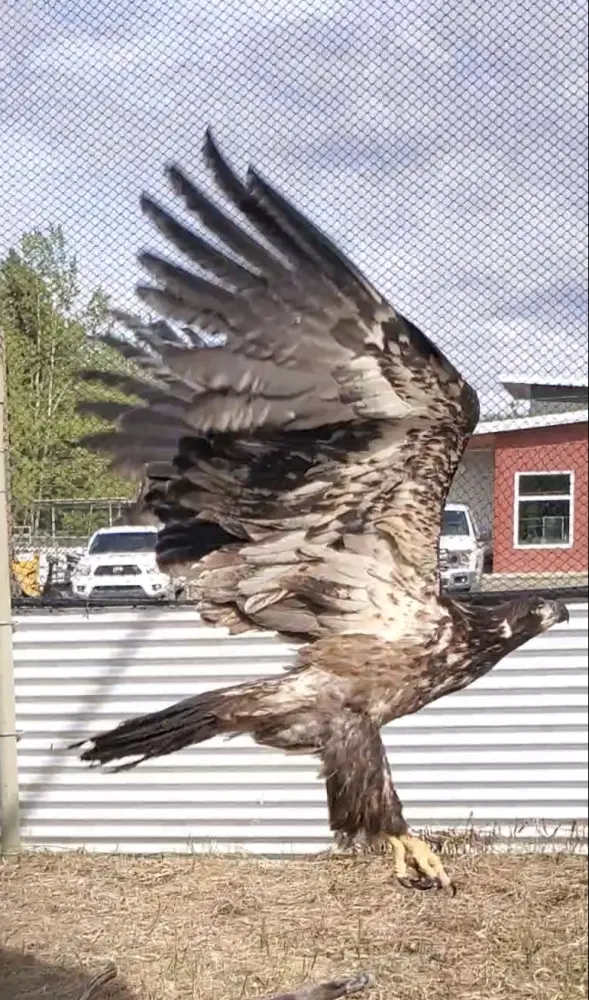
In the remote, fly-in community of Old Crow, on the Traditional Territories of Vuntut Gwitchin First Nations a juvenile bald eagle was found by Robert, at the dump, flightless and injured. The eagle was coaxed into a crate and eventually brought to the Yukon Wildlife Preserve after it made a stop in Dawson and caught a flight via Air North.  

Old crow bald eagle upon arrival and admittance into the Wildlife Rehabilitation Centre at the Preserve. May 10th. Photo credit L.Caskenette

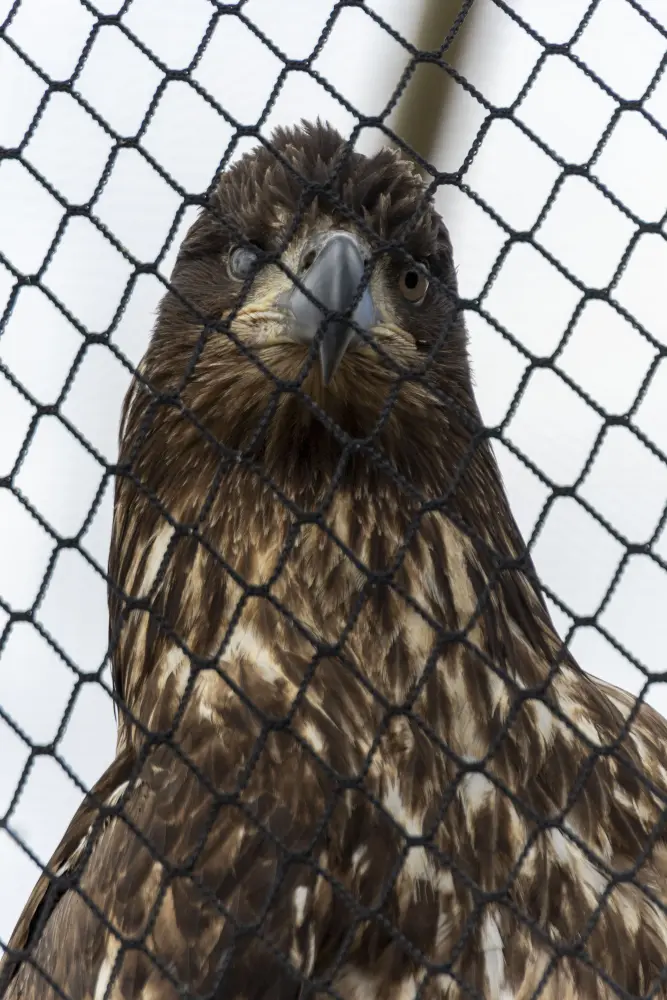
The bald eagle, thak tth'ak came to the Preserve's Wildlife Rehabilitation Centre on May 10th underweight (4.3kg) and with a OD (medical term for right eye) chronic corneal ulcer. 

mature bald eagle in rehabilitation

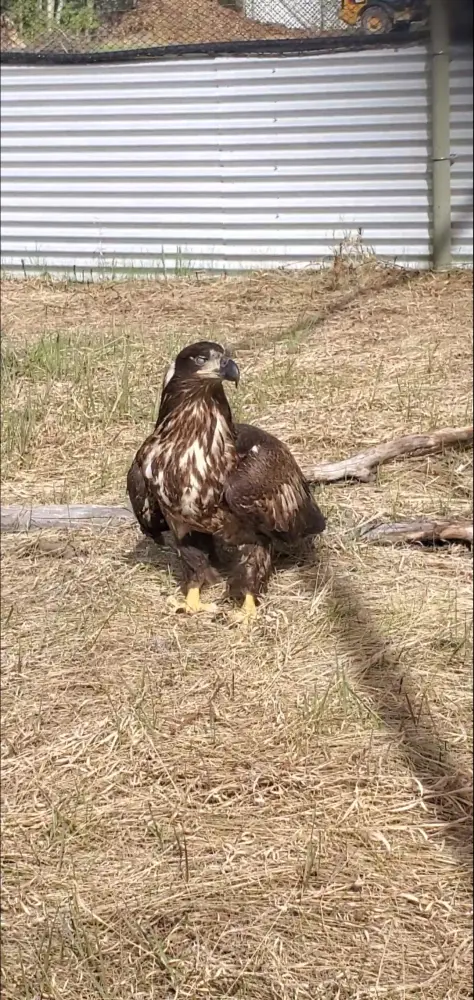
Likely a she, given the large size of the animal. She has gained sufficient weight, coming in at 4.83kg. She has been viewable in the aviary as she works to build up flight muscles. Now she is ready for her public release back to the wild this Friday. She has a cloudy eye but has been successful catching live food and as a predominantly scavenging animal she is likely to do quite alright back in the wild even with this limitation.

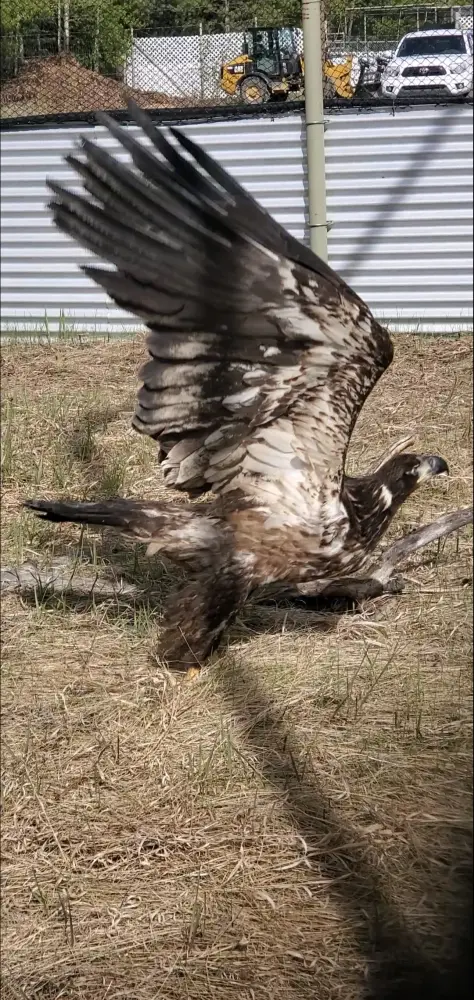
She will not be returned to Old Crow due to the long travel and stress concerns related to transfer. Instead, she was released outside of Whitehorse on Friday June 14th at 7pm. 

Around 40 people joined the event to send off the bird. Thank you to everyone who joined the release, it was a perfect evening. The sky welcomed us all without a drop of rain. Thank you to all who provided good vibes and sent off the eagle with strength and grace.

Thank you to Wylie, Corrine, and Thay K'i Anint'l for the prayer and blessing for this bird's return to the wild and resilience for a long eagle life. 

Thank you to everyone who helped this Eagle along its path to recovery. To Robert K who found the bird and ensured it got a second chance at life. To Norma, to the team at the Preserve that helped with the bird release event. To Air North for giving the bird some helping wings South to the Rehabiliation Centre.  Thank you, Masshi, Gunalchîsh????

She took her time deciding to soar but this allowed everyone to share in more details of her story, to practice patience and to grow our appreciation of her and others' incredible story of resilience. 

• • •

The beginning of June the Preserve welcomed a visitor who had, and later shared with us, an extraordinary experience with the eagle while it was recovering in the aviary. 

She shared with us the following:

I felt a very special spirit from her. A very conscious and intelligent bird.
I heard she didn't have a name. 
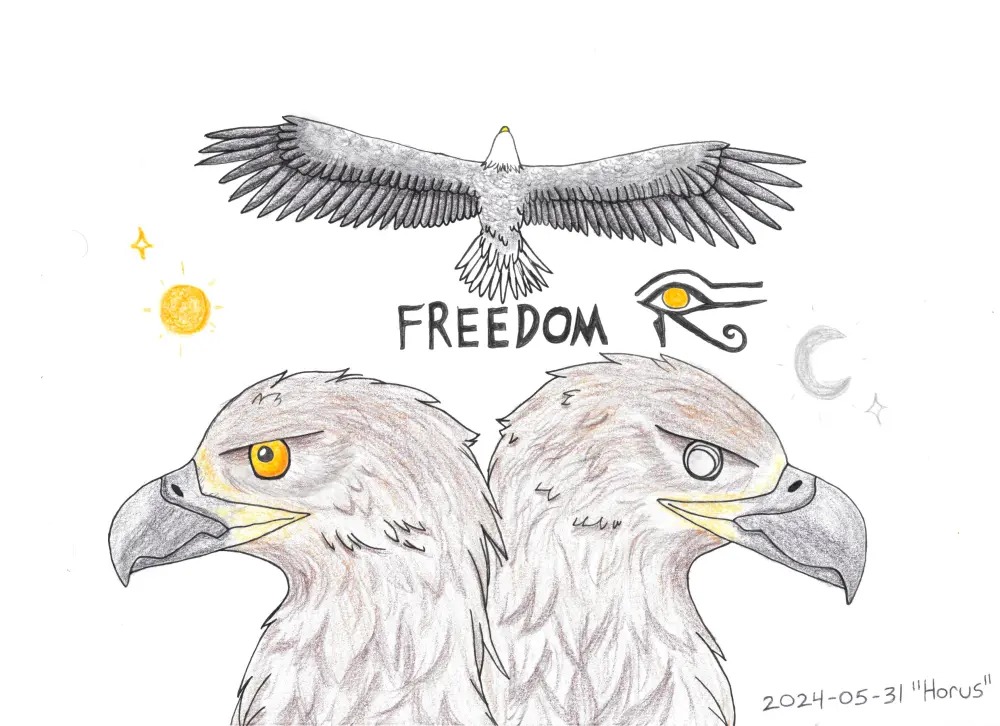
Horus came to mind for me because of her eyes and her mystical spirit.
"Horus, in ancient Egyptian religion, a god in the form of a falcon whose right eye was the sun or morning star, representing power and quintessence, and whose left eye was the moon or evening star, representing healing."
"Horus, in ancient Egyptian religion, a god in the form of a falcon whose right eye was the sun or morning star, representing power and quintessence, and whose left eye was the moon or evening star, representing healing." The old crow bald eagle was given and unofficial name by a visitor, Jasmine Colomby who also drew and shared this interpretation.

Help us get them back on their wings. We could use your help. If you are able to support the care of these two animals, please consider donating. Every contribution makes a difference and as a non-profit charitable organization, you can receive a charitable tax receipt for your support. 

Photo credit: B.Forsythe

Britt Forsythe

Britt Forsythe

Visitor Services Coordinator

Brittney joined the Wildlife preserve in the summer of 2023. Growing up on Northern Vancouver Island, surrounded by the temperate rainforest, nature and animals have always been a part of her life. It exploded into a passion, when she started her dog walking business in 2017 and she began spending 6-7 days a week in the forest, rain or shine! This sparked an even deeper appreciation for the cyclical nature of the land and how all of the plants & animals work together symbiotically. She is forever ‘that girl’ on the hike, pointing out different rocks and plants, explaining their origin or what they could be used for medicinally. Brittney and her dog Cedar relocated to the Yukon to help care for 31 sled dogs. She is so excited to expand her local knowledge as a part of the Preserve team.

 867-456-7400

 brittney@yukonwildlife.ca
 

Lindsay Caskenette

Lindsay Caskenette

Manager Visitor Services

Lindsay joined the Wildlife Preserve team March 2014. Originally from Ontario, she came to the Yukon in search of new adventures and new career challenges. Lindsay holds a degree in Environmental Studies with honours from Wilfrid Laurier University and brings with her a strong passion for sharing what nature, animals, and the environment can teach us.

867-456-7400
Lindsay@yukonwildlife.ca

Explore by Category

Explore by Author