Cute But Tough – The Arctic Fox

Cute But Tough – The Arctic Fox

animal adaptations

by Abi Horobin | May 22, 2020 | 0 comments

6 minute read – “Winter Is Here” series continues with a species well suited to cold conditions - Arctic Fox!   

The Arctic Fox is super cute, we all agree, but don’t be fooled by its appearance, this is one tough cookie! Often referred to by scientists as Chionophiles, meaning ‘snow lover’, it is one of only a few species that have adapted1Watch our 360 video on Arctic Fox Adaptations to thrive in the harshest of winter conditions and survive some of the lowest temperatures on earth, living year round in the Circumpolar arctic. So, how does this cute, yet tough, canid survive such an environment?

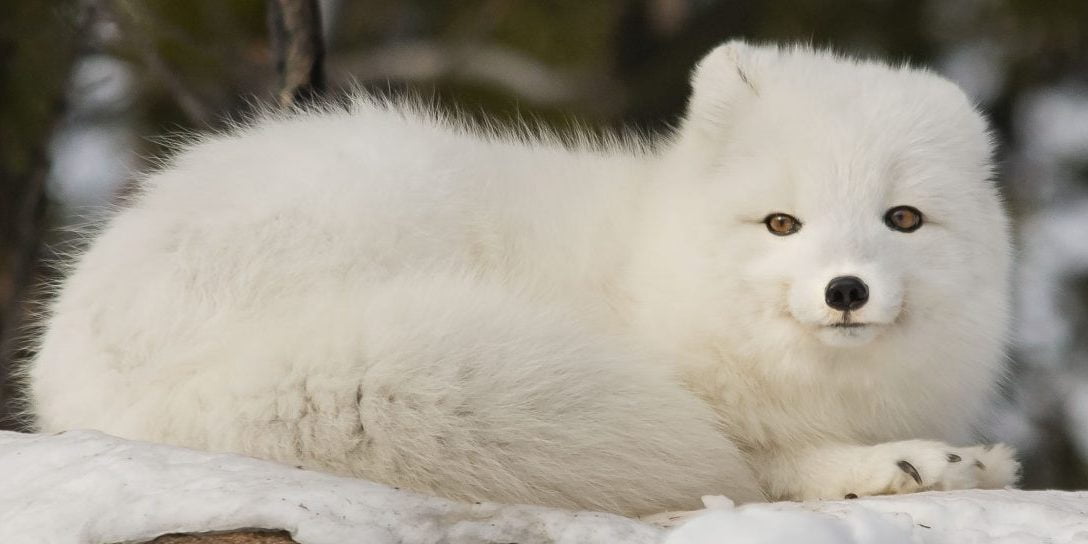
Wearing its winter coat of white, the Arctic Fox can easily be mistaken for a small mound of snow. In fact, they are so well camouflaged, visitors to Yukon Wildlife Preserve often have a hard time recognising one when it is only a feet away from them. The thick white tail covers the dark eyes and nose allowing the animal to almost disappear against the snowy background. The tail further acts to wrap around the body or cover the face for added insulating protection, whilst thick fur on the paws provides protection from the snow and ice and increases grip on slippery surfaces. As well as the ability to camouflage itself for protection against predators, the white colour is thought to have better insulating properties, with greater air pockets than coloured hair to trap body heat.
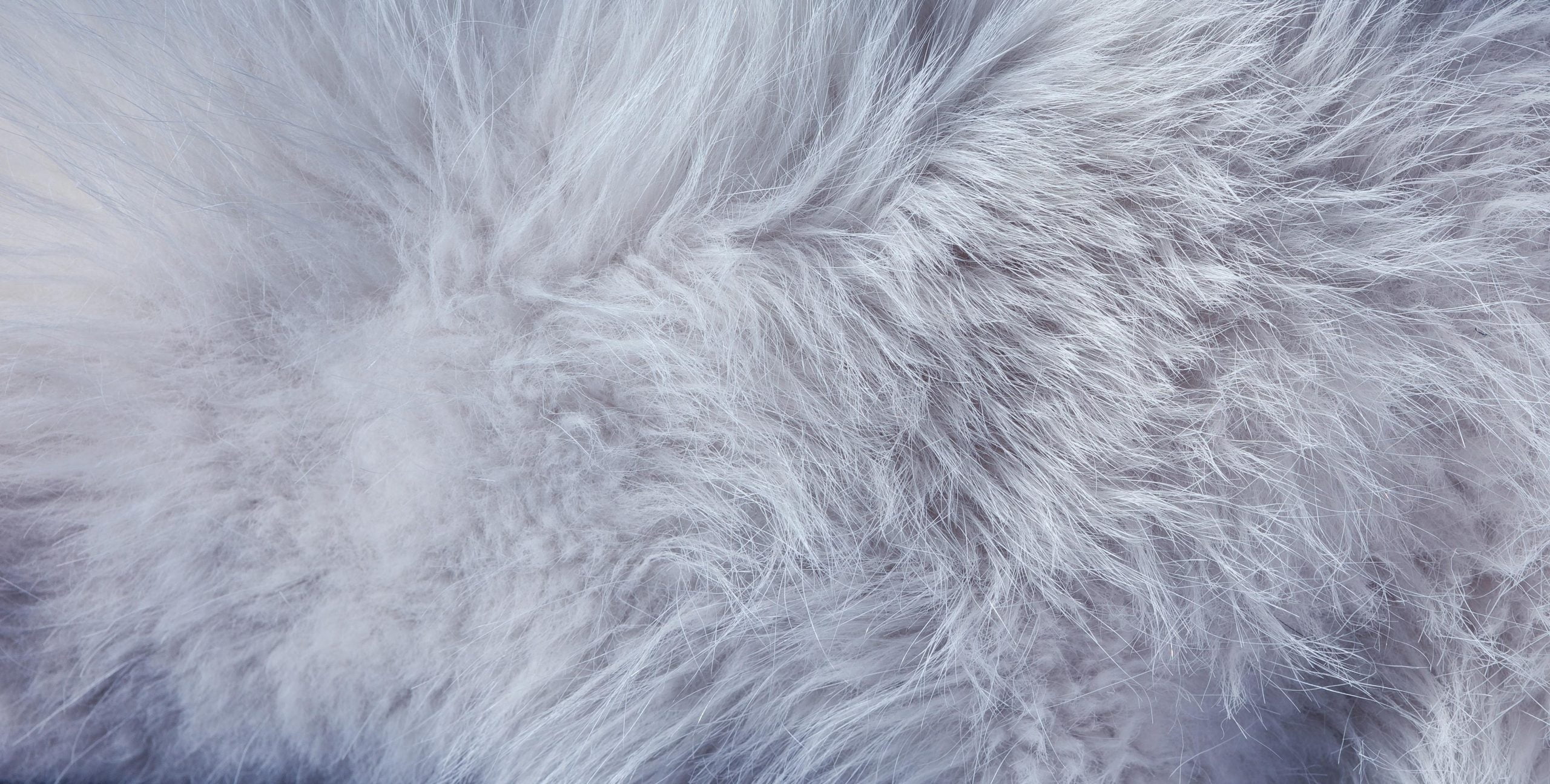
The depth of the fur is 200% greater in winter with a dense undercoat of 8 lbs and an estimated 20,000 hairs per cm2.  In comparison, humans have a range of approximately 124-200 hairs per cm2.

The Arctic Fox is not always fluffy and white, though. They shed their winter fur to a sleek summer coat, and are the only member of the Fox family who sheds to a different colour, making them quite unique. Instead of a thick white fur, they spend the arctic summer a colour-blend of browns and greys - allowing them to continue camouflaging to their environment year round.
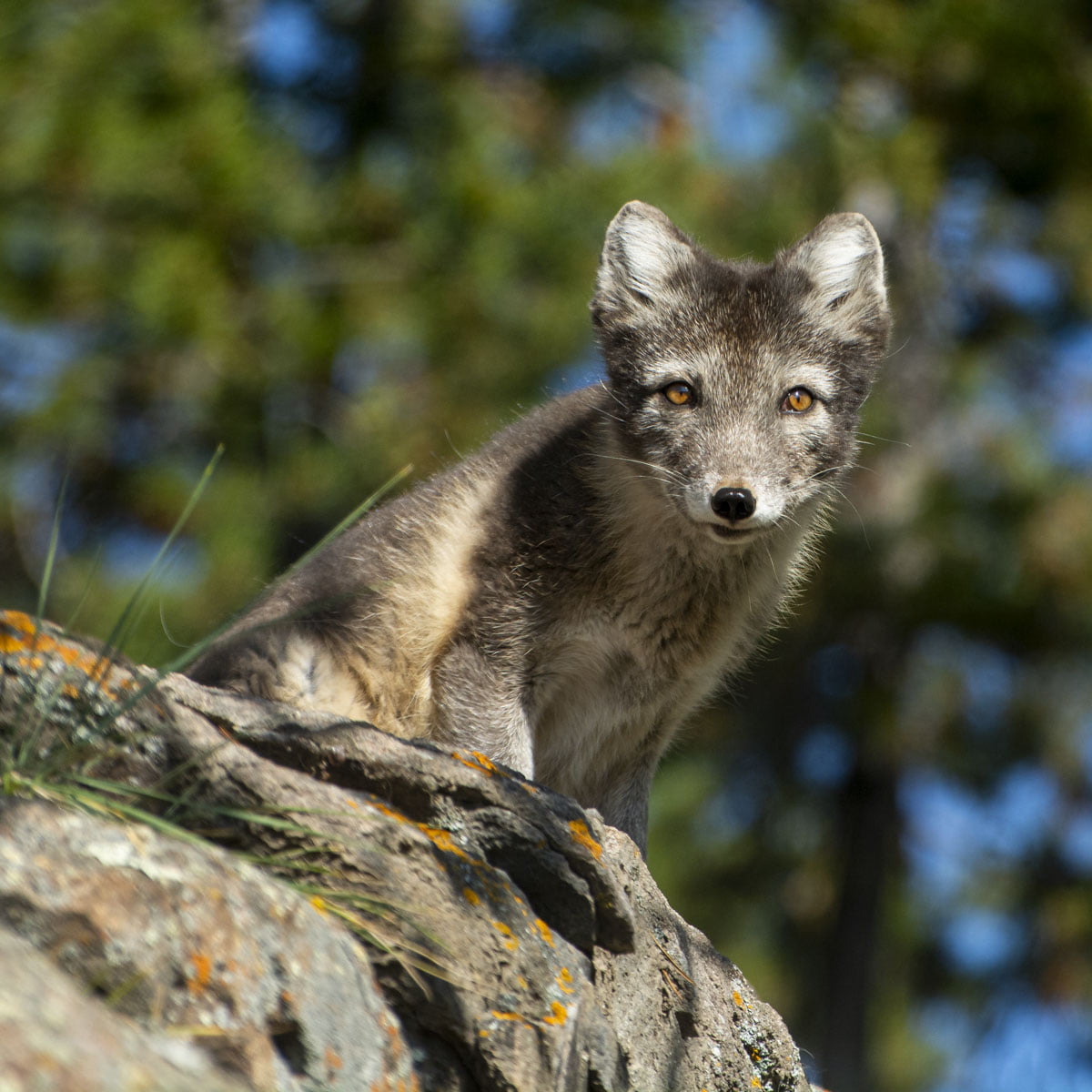
Arctic Fox is the only fox that sheds its winter coat to a different colour, allowing them to blend in to their environment year round.

A compact predator with small ears, a short snout, neck and legs, the Arctic Fox is much smaller than the Red Fox. This physical adaptation provides a low surface area to volume ratio which means there is less surface area from which to lose heat. This is one of the reasons that Arctic Fox will curl into a ball when resting - by reducing the exposed surface area, energy loss is less and heat retention is maximized. Front and hind legs are tucked underneath the body, exposing to the frigid air only the thickest, and warmest fur. The head is placed on the front paws, and the tail wraps around the face. Arctic Foxes are able to slow their winter basal metabolic rate to around 25% less than in the summer. These adaptations allow them to withstand brutally cold temperatures either curled up on the snow or taking shelter in an existing den under the snow pack. This also helps them to survive longer without food; important when food is scarce in the dead of arctic winter.
Keeping the blood flowing to the extremities is clearly important to an animal who spends its winter on the snow.  The Arctic Fox has adapted its blood flow through its legs and paws for ultimate comfort and for thriving in such harsh winter conditions. This impressive heat conserving adaptation is called the countercurrent heat exchange.

To understand how this works, let’s first look at what happens without the adaptation - in species like humans. Warm blood from the heart courses down the leg straight to the feet. If those feet are standing on icy-cold ground the warm blood will cool quickly and lots of energy will be used to keep the feet as warm as the body. This cooled blood then returns straight to the heart to be warmed, requiring more energy and resulting in an overall lower body temperature.
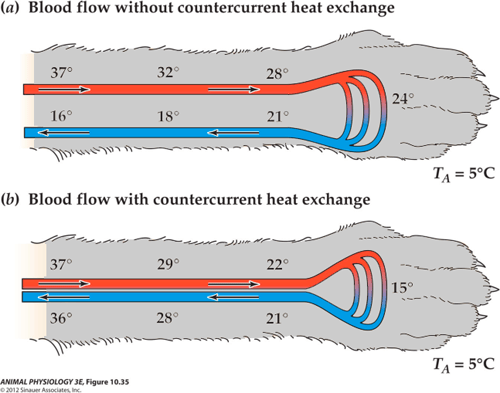
Source bio.miami.edu/dana/360/360F18_9c.html

Instead, this physiological adaptation in a species such as the Arctic Fox means that the vein and artery in the leg run very close together allowing warm blood going to the foot to heat up the cold blood returning from the foot. In a nutshell, the warm blood heats the returning colder blood that’s heading back up to the heart, and in exchange, the colder blood cools the warmer blood going to the feet. This means the feet are constantly cold, but just warm enough to keep the tissues from freezing. As a result, the overall body temperature is warmer, thanks to this neat energy-efficient system.

Omnivorous diets, meaning that both meat and plants are consumed, help keep the Arctic Fox adaptable to changing conditions. They are carnivorous in that they will eat meat - hunting small rodents like lemmings, but also scavenging from the kill sites of larger predators like wolves and polar bears. Much like a domestic dog may eat carrots and apples, the arctic fox will tolerate and consume foods such as bird eggs2Watch the Arctic Foxes at Yukon Wildlife Preserve get an Eggy Easter treat, berries and even seaweed.

 A behavioural adaptation to thriving when remaining in a harshly cold environment is to conserve energy by not moving a lot when it is really cold. Arctic foxes will hunt and cache food during warmer temperatures, remembering where those caches are, so that they have snacks available when they really need them - without having to expend energy when temperatures drop.
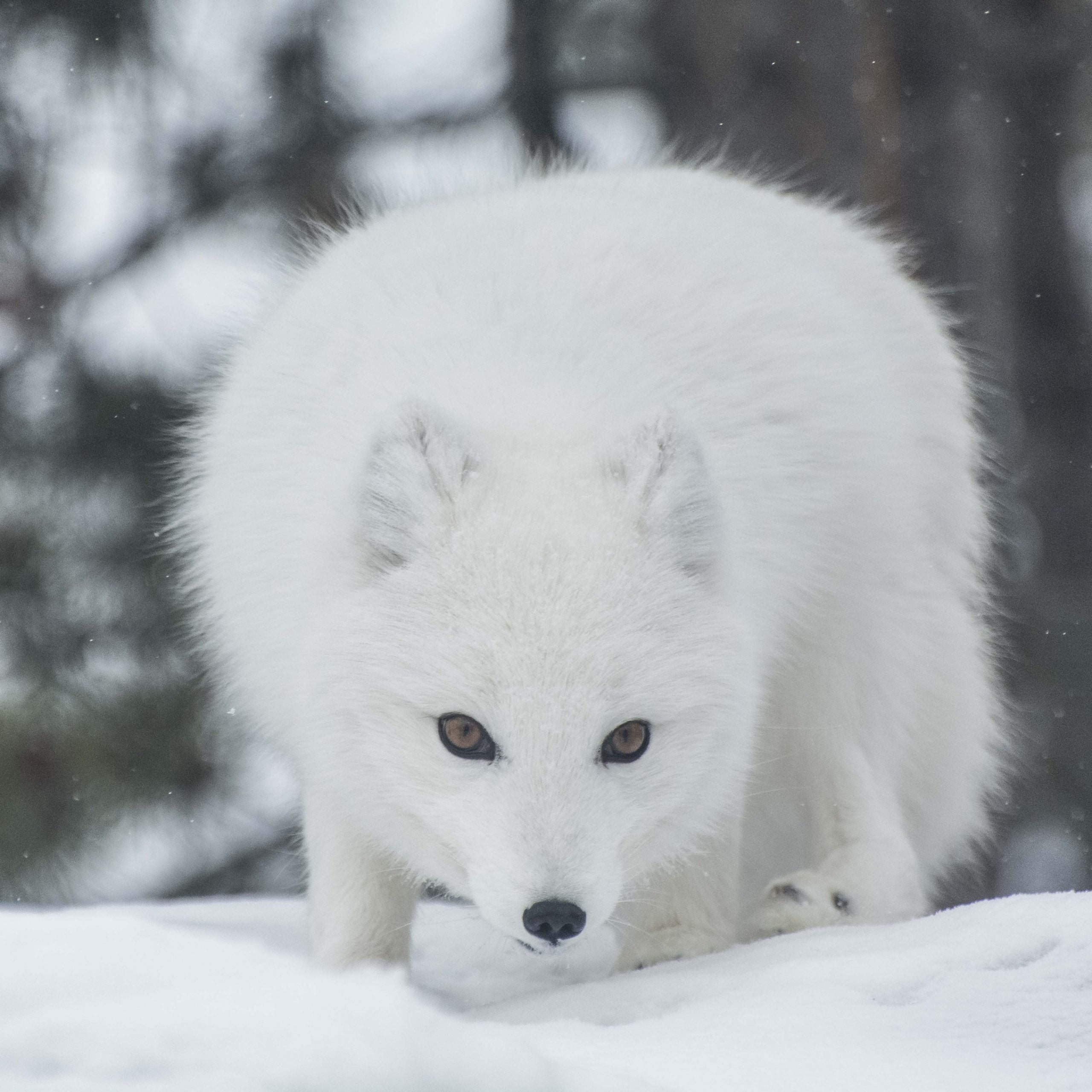
Between the highly specialized physiological and behavioural adaptations explored in this blog the Arctic Fox is well equipped. Far from being perceived as only cute and fluffy, this is actually a tough species living where few others do. The arctic tundra in winter presents a harsh, nearly inhospitable environment, but for the Arctic Fox, it’s home.

Watch this BBC Earth video detailing the trials of a young Arctic Fox learning to hunt lemmings here!
Ella Pollock Shepherd

Ella Pollock Shepherd

Animal Care Technician

Ella is currently studying at the University of British Colombia in Kelowna. She is studying Indigenous Studies as a Major and French as a minor. Born in Ottawa, Ontario; at age seven her parents moved her and her sister to the Yukon, and they haven't left since! Ella loves nothing more than being out in nature camping, fishing, hunting, and exploring. We are excited to have Ella and her great love for animals at the YWP.

Explore by Category

Explore by Author

Wandering Wood Bison

Wandering Wood Bison

animal adaptations

by Sarah Stuecker | Apr 28, 2020 | 0 comments

7 minute read - "Winter Is Here" series continues with the true behemoth of the north - Wood Bison! 

At first glance, the Wood Bison (Bison bison athabascae) seems to be ill-suited to live in the far North.  Especially when we think about its Southern cousin, the Plains Bison (Bison bison bison), which historically has made its home on the rolling hills and endless grasslands of the prairies.  It seems fairly safe to assume that compared to the prairies, it is a completely different game of horns to survive the winter in the Yukon.  Extended periods of extreme cold, a short growing season - hence relatively scarce food sources, combined with unforgiving, mountainous and swampy terrain pose a different set of challenges.  Yet bison are thriving - how do they do it?  Through a series of adaptations in structure, behaviour and physiology, we will see that Wood Bison are in fact quite at home in the far North.

The Wood Bison is a giant:  the largest living land mammal in North America.  Males can weigh up to 2000 pounds, which is up to 30% larger than its Southern relative; * roughly *  the difference between a SmartCar and a VW Golf.  In colder climates it actually pays to be bigger! Larger individuals (which have a smaller surface area-to-volume ratio) are better at retaining heat. This rule of nature is known as Bergmanns Rule. A pattern, where species tend to be larger in colder climates than similar species of the same genus living in warm climates, is certainly not law - not all species of nature comply with it.  Yet, bison do, and living large in a cold climate means the more fat you can store to help you get through winter. 1[Read more about the complexity of nature pertaining to Bergmanns Rule

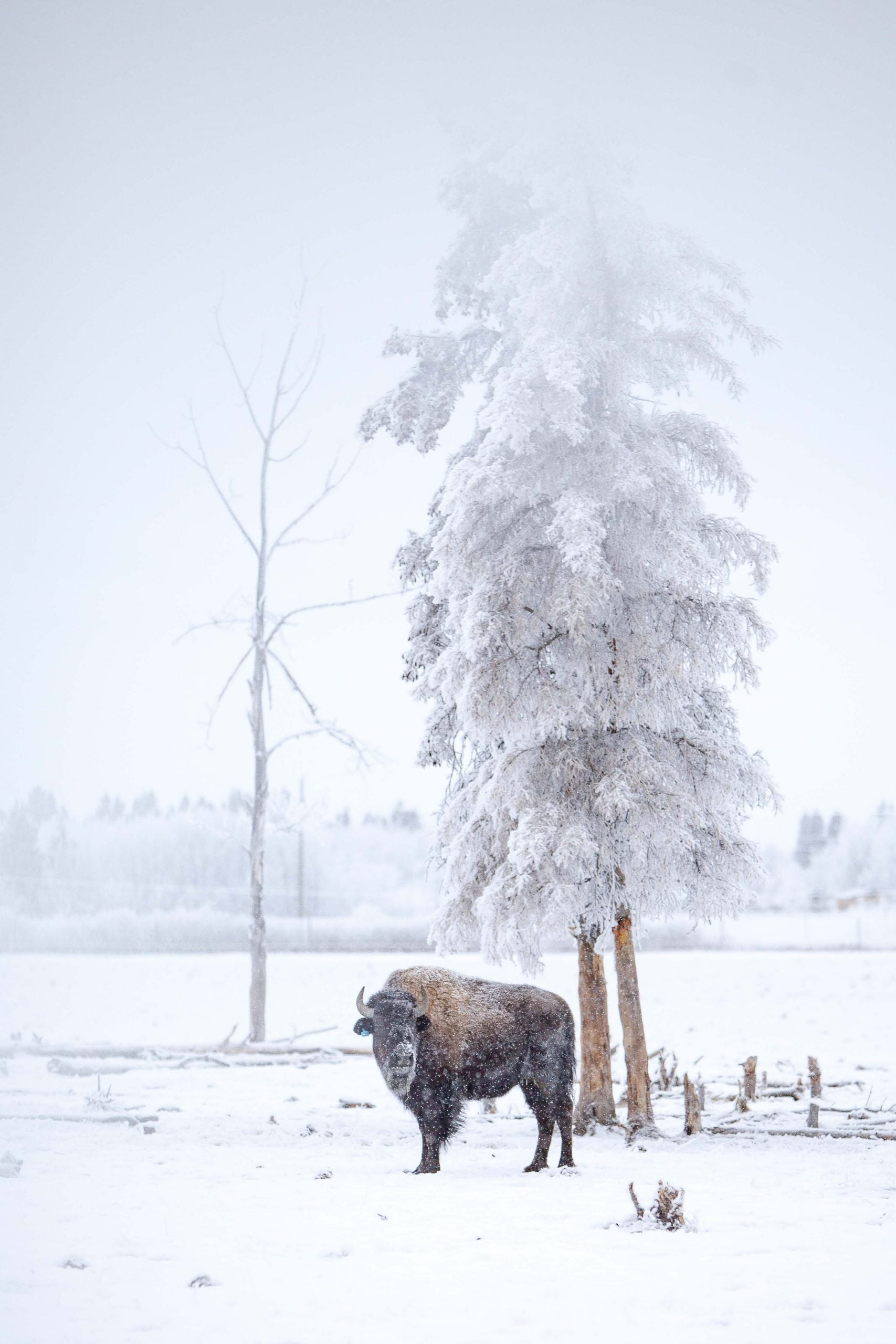
Two Wood Bison bulls at the Yukon Wildlife Preserve. Take note of the large shoulder hump and the massive head and broad face. 

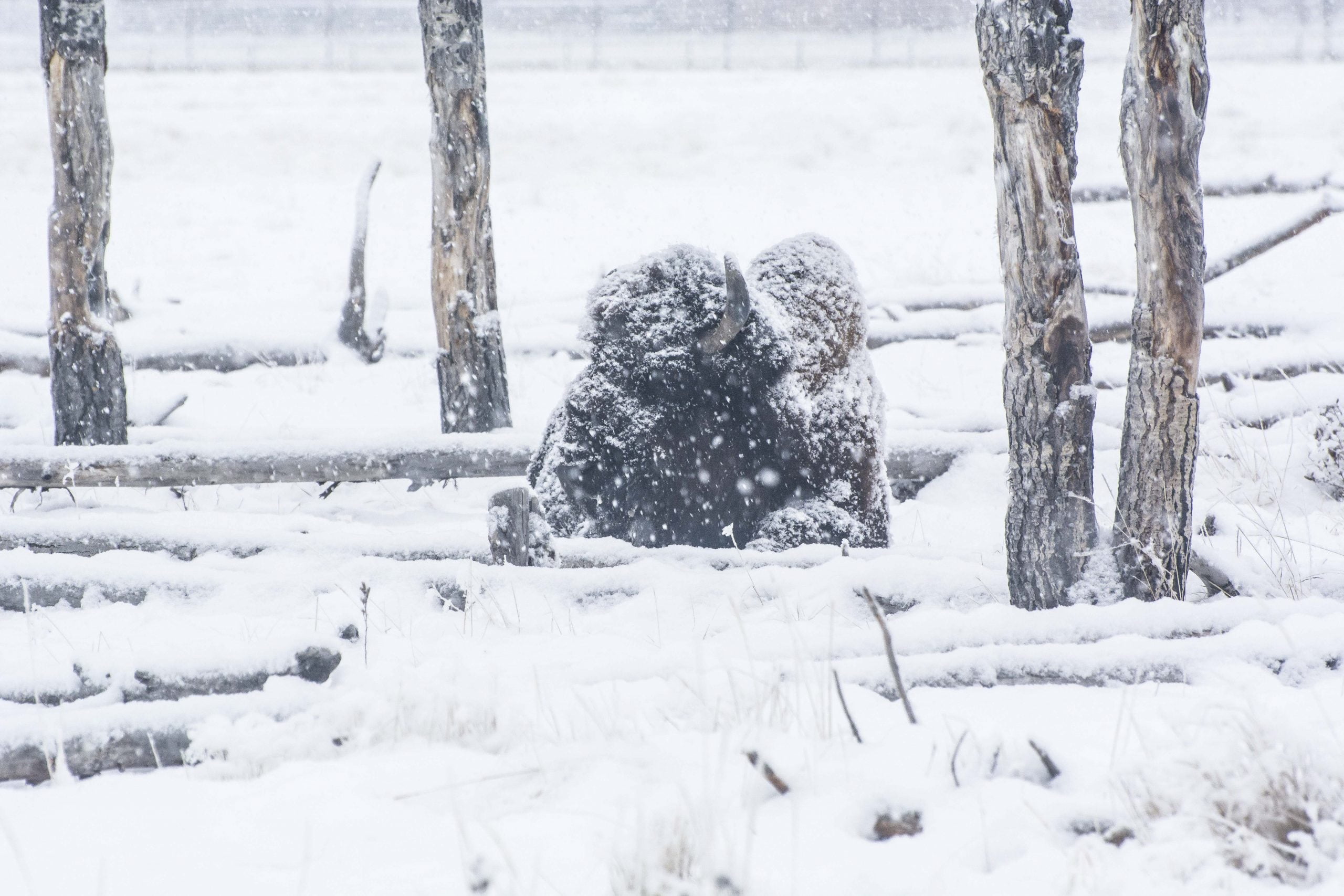
Beyond size, additional adaptations assure the success of Wood Bison including a very thick and woolly winter coat. This extremely dense coat of durable hair is so warm, combined with that retained body heat, and incredibly thick skin, falling snow that accumulates on its coat does not melt, thus keeping them dry and warm. 

Foraging for food in the winter is a challenge - summer vegetation is buried in deep snow and is of low nutritional value. Wood Bison “dig” for food by swinging their large, heavy heads. Within that big hump on their shoulders are long spines on the vertebrae, muscles and ligaments which support large neck muscles and the head. Now you know – that big odd hump on their shoulders is not just fat – it is a vital tool for their survival.

To manage decreased food availability and quality bison cannot just simply eat more food, more often, to sustain itself. As an ancillary adaptation, and most fascinatingly, Wood Bison are able to slow their metabolism during winter as a way to conserve energy. Just like cows, grass is a bison's staple food in the wild but it does not contain many nutrients in the winter. By slowing down their metabolism it also slows down digestion, thus the food is kept longer in the intestinal tract which allows them to draw more energy out of one feeding. Rather than putting out critical energy by digging through snow (with their giant head!) and foraging for food, they can instead conserve energy by slowing their metabolism and getting more available nutrition from one feeding. This slowed digestion is doing double duty for the bison. As they are able to squeeze every bit of nutrients from a feeding this anatomical process is also producing valuable internal body heat.

In the Yukon landscape, Bison have been roaming for millennia; first as the Steppe Bison, predecessor to the Wood Bison.  Due to a number of reasons however, they became extirpated in their Yukon homerange in the early 1900’s.  It is believed it may have been a combination of habitat loss due to climate change, disease and human predation.  In the 1980’s, the Yukon Government joined the National Wood-Bison Recovery Program and re-introduced a herd of about 170 bison.  Since then, Yukon’s wild Bison have re-adapted to life in the North - quite well too! Making best use of their terrain, they seek shelter in treed valleys when the weather gets nasty.  Interestingly, they can also be found on alpine plateaus up to 5000ft.  High altitude meadows are exposed to wind, which reduces the snow cover and allows the bison to find the underlying grass more easily. Typically good habitat for bison; however when winter weather patterns swing it can add additional challenges to these food driven behemoths. A sudden warming in the winter of 2018 caused peril for a few of these wandering bison.  2An odd case of bison death in the Yukon

Consciously or not, wood bison may make use of a weather phenomenon that sometimes occurs when temperatures drop:  the inversion layer. Under some conditions, a layer of cold dense air accumulates in the valleys and without wind, may stay there for days.  Meanwhile, on the mountain tops the air can be up to 20C degrees warmer - well worth undertaking the climb.  One could argue, with all science put aside and simply as the Kings and Queens of living large, they might like to hang out on top of their kingdom.  If this was me living out there, that’s what I would do!

These mighty large creatures might seem fairly sedentary but their numbers have grown strong and steadily since re-introduction. They have proven their adaptability to varying habitat; moving among forested stands and meadows, alongside caribou and moose, to wandering hill-side, among mountain sheep. They are a formidable ungulate, and one of the most, among the prey animals in the Yukon. Their massive size and mass consumption of greens is not to be mistaken for sluggish or unresponsive carriage. Wood Bison are intelligent animals that are quick on their feet when needed. Their ability to outrun predators such as wolves or humans is unprecedented. These monumental animals could quickly leave you in the snow-dust as they purposefully trek their northern landscape in order to thrive.

Sarah Stuecker

Sarah Stuecker

Wildlife Interpreter

As a wilderness guide, Sarah has spent many days out in the bush over the years. Sitting out there glued to the scope is just as fascinating to her as observing and following animal tracks in the depth of winter, trying to draw conclusions of what this particular critter might have been up to. Sarah is passionately sharing her stories as part of our team of wildlife interpreters. 


867-456-7300
 [email protected]

Explore by Category

Explore by Author

Cliff Hanger at Dawn!

Cliff Hanger at Dawn!

animal adaptations

Jan 17, 2020 | 0 comments

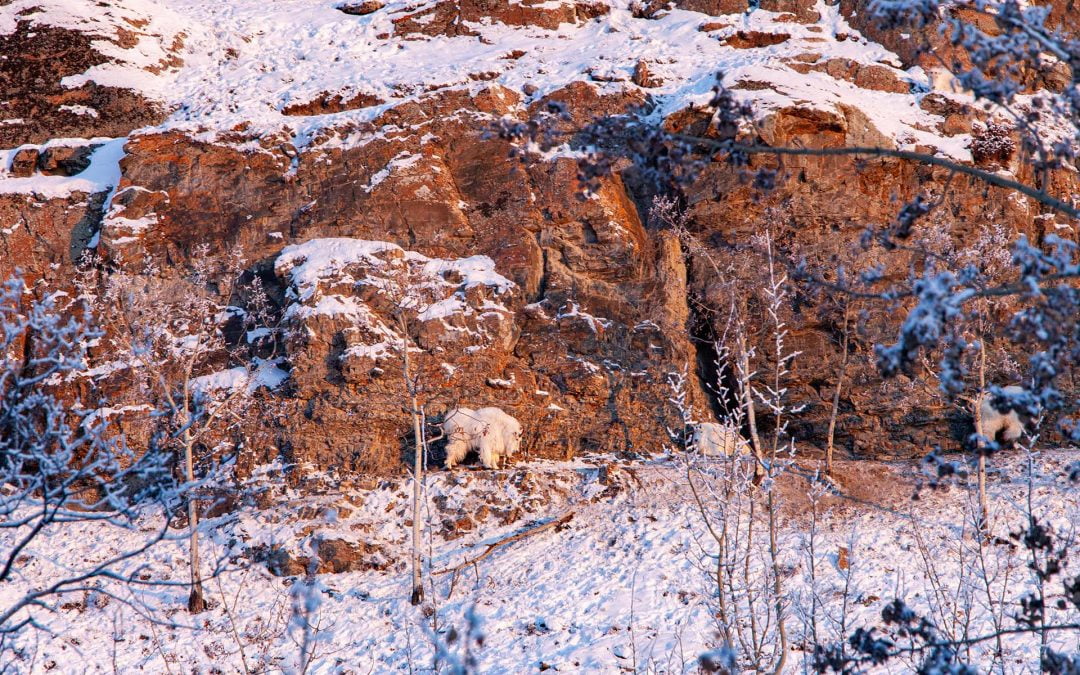
The rising sun bathes the cliffs in the rosy hues of dawn.  In a manner I can only describe as precarious, I watch, heart in mouth, as the billy goat stands on his back feet while on a sheer cliff slope.  His front legs dangle loose in the air, all the better to stretch and reach the last of this year’s leaves on the aspen before him.

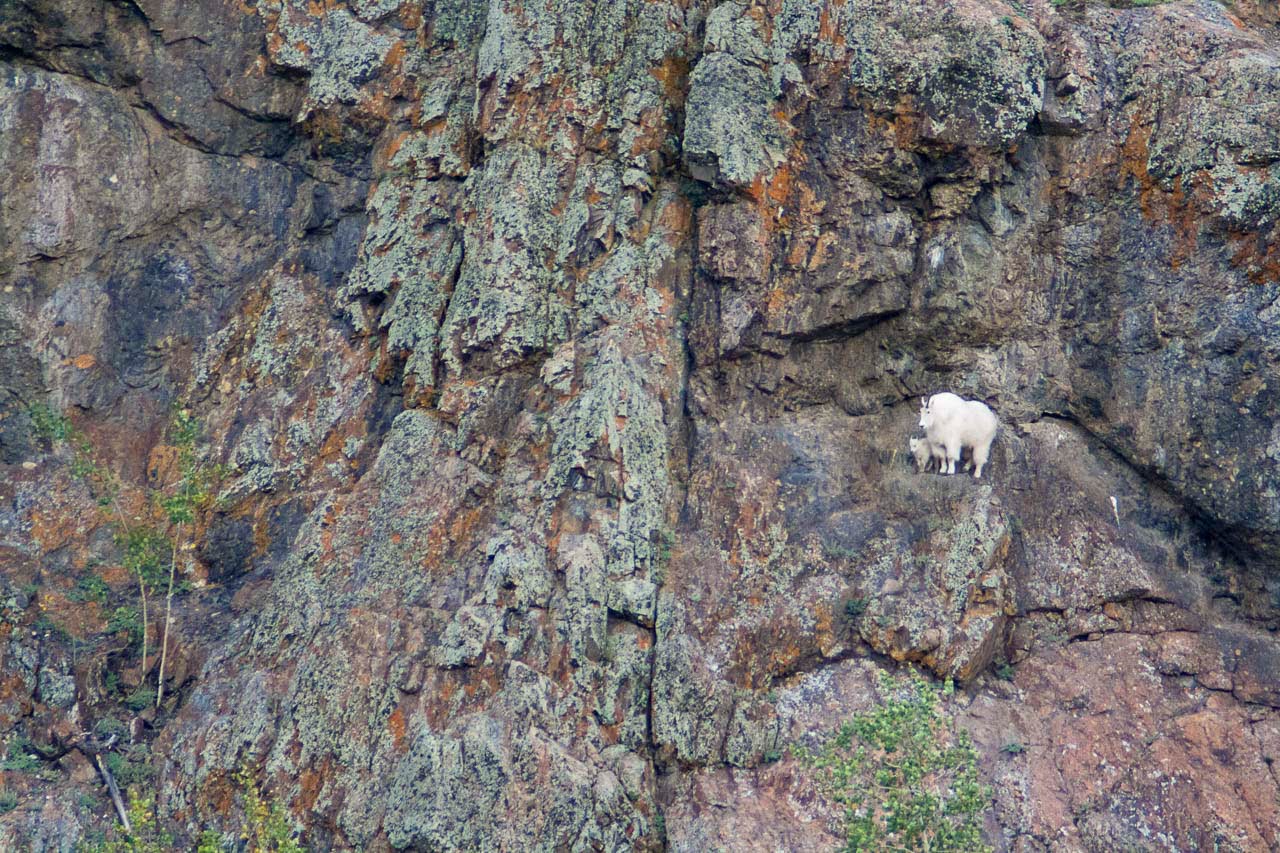
Of course, the billy is the male of the Rocky Mountain Goat and for him, there is nothing precarious about the scene depicted above.  Mountain goats are renowned for their surefootedness and what seems reckless and foolhardy from a human perspective is, in fact, just another day for the mountain goat.

What makes a mountain goat so agile in rocky cliff terrain?  The truth is they are well designed for their natural habitat.

Mountain Goats have short legs in relation to their overall size, placed close together; their centre of gravity is close to the ground and at the front of their body.  These things help the goat travel on narrow ledges. Muscular shoulders provide great strength for climbing. Finally, the hooves are specialized with rough textured pads and the toes have the ability to spread wide – this distributes the goat’s weight over a larger area.  Conversely, the toes can pinch together, which helps with traction when travelling downhill.

The science adds some understanding to the magic unfolding before me.  I am in awe with this landscape, this animal, this moment in time.   

Come be amazed.  Yukon Wildlife Preserve. 

Julie Kerr

Julie Kerr

Visitor Services Coordinator

Julie is a Registered Veterinary Technologist, living and working in Whitehorse since 2012. She joined the team in May 2018. She is passionate about wildlife, nature and living in a conscious manner with both. Her free time is spent outdoors observing wild animals and ecosystems; her connection to the natural world around her brings great joy – joy she loves to share with anyone interested. Honestly? Work and life blend rather seamlessly.

Explore by Category

Explore by Author