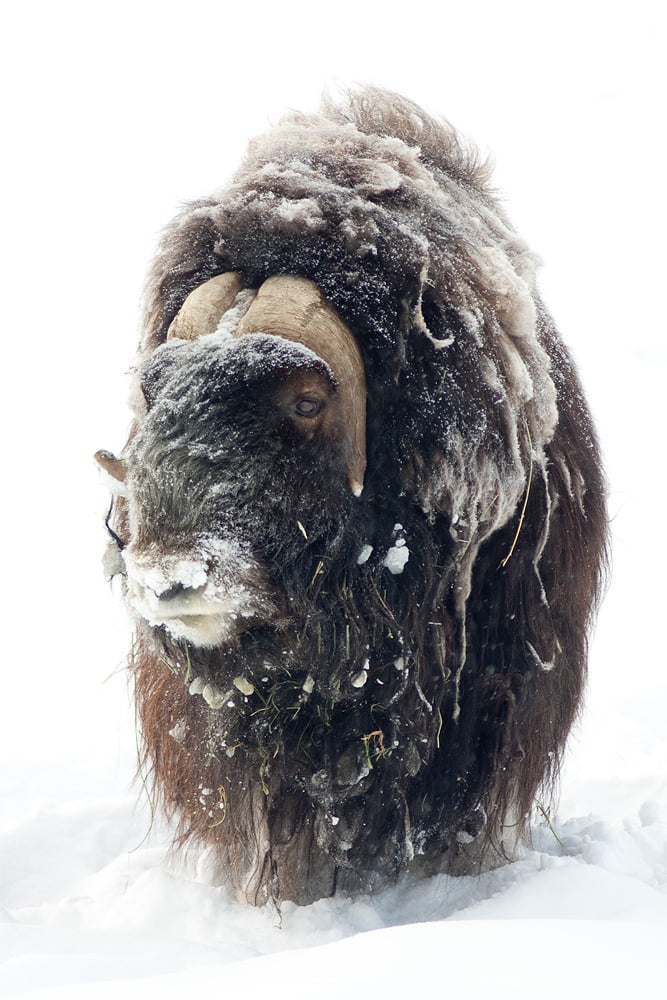
One behavioural adaptation to the cold is sometimes observed in howling blizzard conditions. Standing stoically in a tight group, Muskox have been able to withstand temperatures up to 70 degrees below zero. Only in the most severe weather will a Muskox lie down with its back to the wind as added protection. Another behavioural adaptation is to be slow moving and to not roam on long migrations like caribou do . This keeps energy output low and allows the large muskox to thrive on low quality food available in their area.
The Arctic Tundra, the only wild home to Muskox, enjoys winter for up to 8 months per year. By September there may be snow on the ground and muskoxen are well equipped with front hooves larger than hind, to dig through wind-blown crusted snow, to get to the food below - grasses, sedges and willows. Muskoxen typically feed in areas where the snow cover is relatively shallow (like valleys). It is usually easy for the Muskox to dig down to the food below, but when the snow crust makes it more challenging, they can lift and drop their head on to the crust to break through to gain access to vegetation.
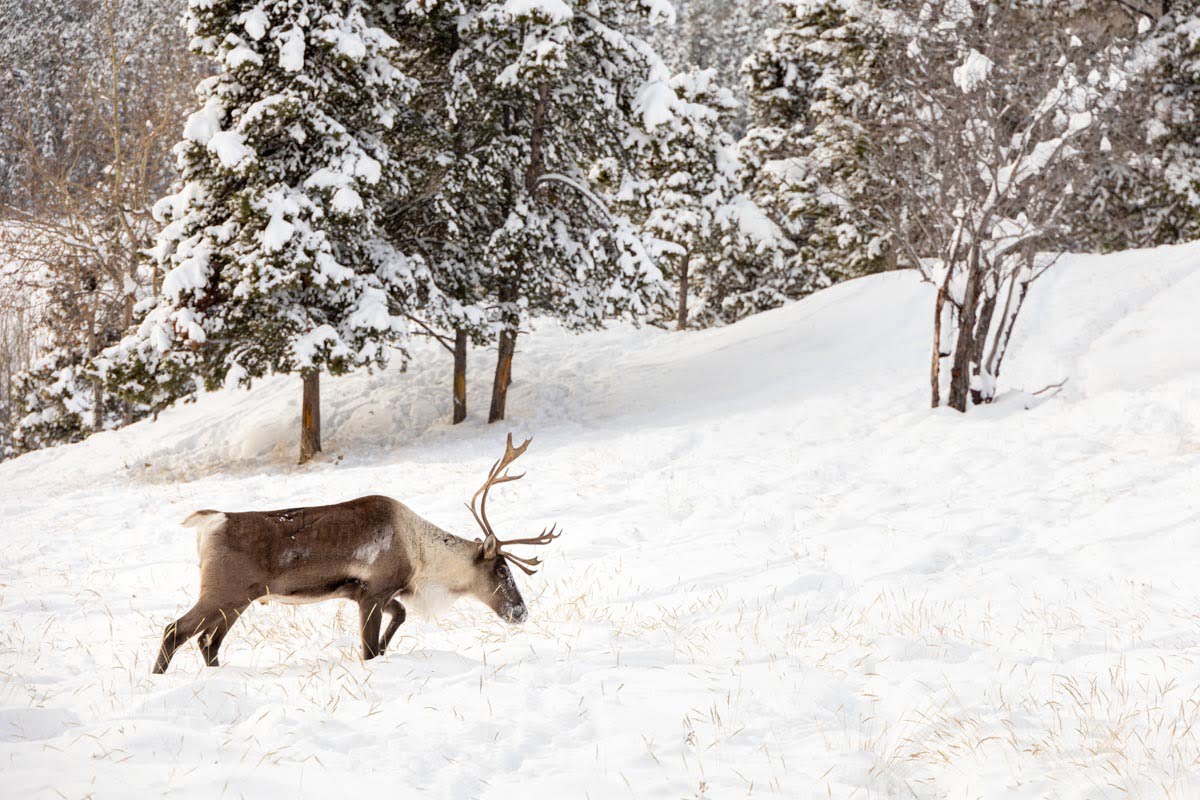
Where muskox find ways to meet their nutritional needs in a winter-barren landscape their predators, arctic wolves, just the same must test the muskoxen's formidable stay put mantra. As a survival adaption and anti-predator strategy, fight or flight physiological reaction is important for any prey animal. Many ungulates will choose flight at the sign of threat - fleeing to the protection of forests, like caribou, or to a precipice perfect for only a thinhorn sheep or mountain goat. However, without the protection of any trees; a low variety land form landscape and a dark skyline that merge into one seemingly endless marathon; it's critical to choose energy conservation, to stay put, and put up a fight through a protective ring. If the Muskox chose flight, it would be less favourable for those calves to keep up to a swiftly moving herd - unless you're the arctic wolf.
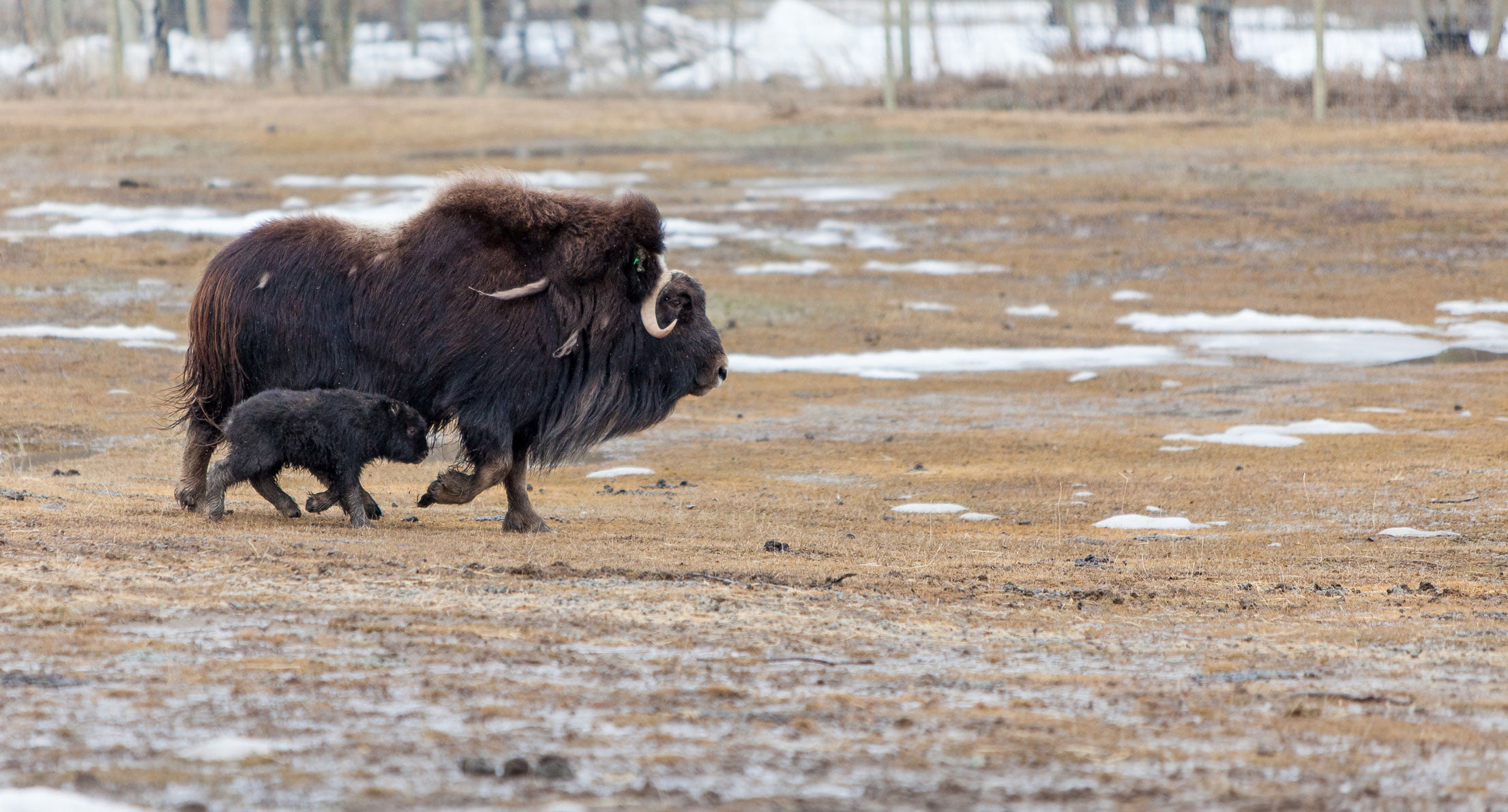
Muskox are built to last - they persevered through an ice age, after all! At the Yukon Wildlife Preserve, which is located in a more southern environment than their natural range, they are applying millennia worth of adaptions even in this niche. Their habitat intentionally faces north, with options for them to take rest in the shade provided by trees of our lower latitude. This further helps preserve a longer snow patch during a typically earlier spring thaw for our muskox, while their more northern and wild cousins still endure weeks to months of true winter. You might see them as dark bumps resting in the snow, apparently doing nothing. Now you know though, they are just doing what they do best - saving energy.










Recent Comments