I Have to Sell!

I Have to Sell!

babies

This article was made possible thanks to support from the Yukon 125 Fund. Learn the incredible history of the Yukon Wildlife Preserve, and Yukon Game Farm from the people of the past through this series of articles.

Danny Nowlan is one of Yukon’s colourful, and at times, notorious characters. He was a polarizing figure who cared deeply for animals and connecting them to kids. He was also the subject of one of Yukon’s most expensive trials ever. His work on the Yukon Game Farm would eventually result in the creation of the Yukon Wildlife Preserve. That is a legacy that is still experienced by many Yukoners – although many of the stories are not known or well understood. 

The stories of Danny Nowlan are important threads that are woven through the tapestry of Yukon’s recent history. This project gives us the opportunity to capture and share this history before its lost. This includes the opportunity to celebrate the positive lasting legacy and to learn about and grapple with the challenging aspects of this legacy. 

In 2023 historian Sally Robertson collected oral histories from more than a dozen people who knew Danny. Out of this work, Sally wrote a series of stories about Danny and his adventures.

(9 minute read)

Danny and Erika Nowlan had a dream, and the Yukon Game Farm was established in the mid-1960s. Danny had to struggle several times over the years to keep the Yukon Game Farm operating. It was never profitable until the falcon breeding program was in place. Until 1990, the Nowlans were in business to raise breeding stock and sell young animals to international zoos and wildlife farms. In the case of birds of prey, their market was falconers wherever they happened to live. A Dall’s sheep ram might occasionally bring $2,000 and a trained gyrfalcon might be sold for $13,000, but there were many animals on the Farm, and they all needed care and a constant supply of huge quantities of food.  

Danny considered selling the Yukon Game Farm in the 1970s, when it seemed there would be never-ending bank loans. This was a time when Danny had close friendships with Yukon Game Branch employees, both guardians (Conservation Officers) and biologists. Government biologist Dave Mossop came to Danny with a plan to replenish Yukon’s wild stock of peregrine falcons. This was successful and, building on that, the Yukon Game Farm purchased gyrfalcons from the government and embarked on a successful breeding program.

Danny with Gyrfalcon


Danny needed even more money to establish the infrastructure and so, instead of selling the whole property he tried to subdivide and sell some lots along the Hot Springs Road. The government prohibited the sale and Danny’s attitude toward bureaucracy started changing towards antipathy. In the end, the approach of a government official elicited a yell of ‘cops’ from Danny and furious barking from his well-trained dogs. Followed by Danny’s famous laugh.

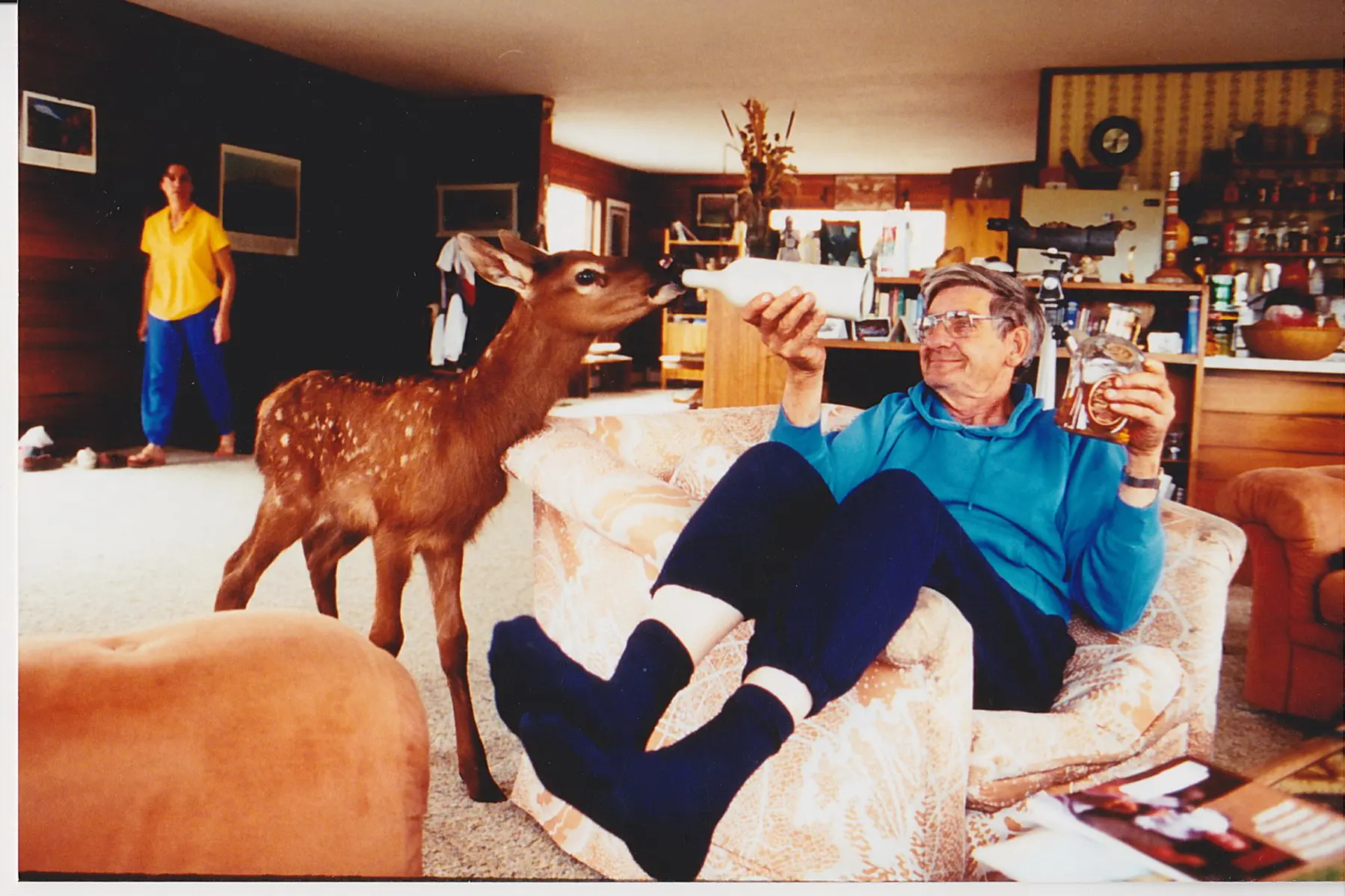
Prohibited from selling titled property, Danny instead sold 999-year leases. The government challenged this sale, and Danny won in court, so the parcels became titled land. Selling the road frontage kept him in business for a while, and also had the advantage of providing some protection for the animals. Before they were moved away from the road, there were incidents of animals being injured and one ram sheep with trophy-sized horns was killed.

In the mid-1980s, Danny, his second wife Uli, and well-respected biologist Dave Mossop were arrested and dragged into court on charges associated with the capture and illegally selling of endangered falcons to wealthy Saudi Arabians.  Operation Falcon was an undercover operation that started in the United States and reached into the Yukon. The Yukoners were judged not guilty of all charges, but the trial affected reputations and bank accounts. After the trial, the Game Farm’s elaborate infrastructure for breeding, raising, and replenishing wild stocks was in shambles, and Danny and Uli were no longer able to realize a profit from selling the birds they were so successful at raising.

In the 1980s, elk farming became a profitable business in Canada and Danny was quick to acquire a herd of about 300 animals. He and a number of other Yukoners became successful elk farmers before the Korean market for Canadian elk antlers and velvet collapsed. Some elk farmers in the United States changed their operations to hunt farms, places where hunters could pay to shoot animals. The only legal option in the Yukon was the sale of elk meat, and that was not part of Danny’s vision of an educational preserve to showcase Yukon wildlife. He told a friend that the day he had to sell a pound of elk meat was the day he was out of business.

Elmer-1st and Danny especially favorite elk bull came from Chuck and Clara from California 1983 visit.


Fortunately, just at this time the Nowlans were approached by Holland America to provide a tourist attraction for the company’s bus tours. This was in line with Danny’s vision. He needed to upgrade the roads and fences, and acquire more northern species, but the Nowlans were still able to sell animals and care for the injured and abandoned ones that were constantly being dropped off at their door.  This change in direction was formalized by a change in name; the Yukon Game Farm became the Yukon Wildlife Preserve in 1989.

Original logo created by Peregrine Nowlan in 1989 when the name change occured from Yukon Game Farm. Later when the facility was sold and run as a non-profit the name remained and the logo updated to its current version.

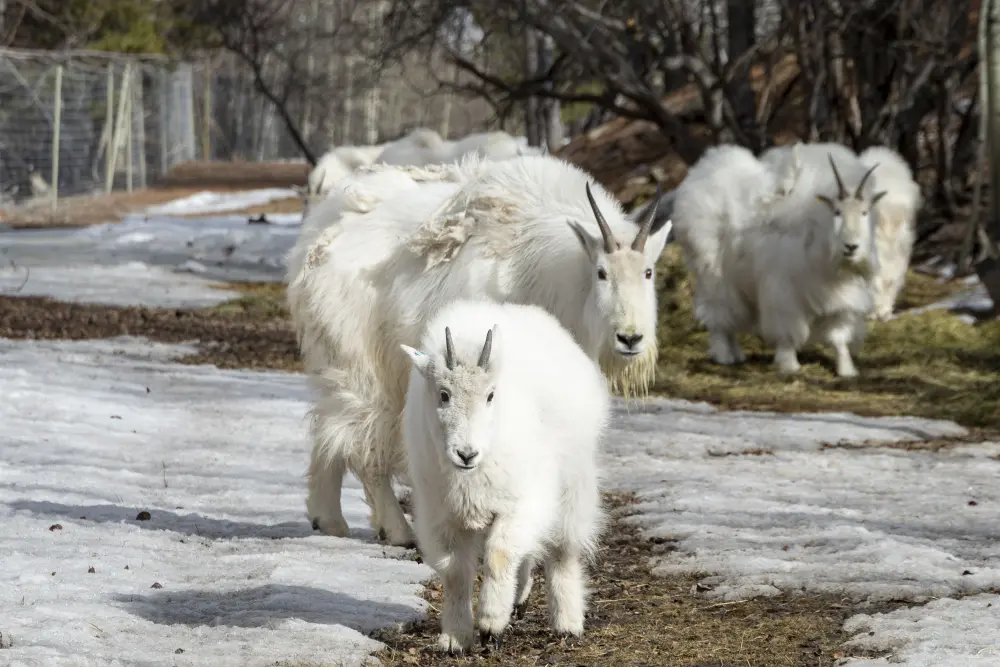
Around 2000, Danny was once again faced with the serious problem of keeping the operation in business. Animal sales were still an option, but there was a dawning awareness in Canada of spreading diseases affecting wildlife. Danny needed permits to move animals across borders, and these became increasingly difficult to obtain. The matter came to a head for the Yukon Wildlife Branch when public attention was drawn to one of Danny’s mountain goats that appeared on a steep hill across the North Klondike Highway from the sod farm. Government officials were worried about the transmission of disease from domestic animals to wildlife, and two escaped mountain goats could have travelled past agricultural farms containing domestic goats.

Danny was unable to recapture his animals, and the Yukon government’s Philip Merchant came to the rescue with a helicopter and a tranquilizer gun. The story of the capture is a harrowing tale for another time, but no animal (human or goat) was terribly injured, and Danny was presented with the bill. 

Danny said, “I want to go fishing” and he started looking for buyers. He could have made a lot of money by letting a developer divide the Game Farm into acreages. Many Yukoners were reluctant to see this happen, and the Friends of the Yukon Wildlife Preserve was established in 2002. The Board of Directors included successful businesspeople, educators, and wildlife biologists who recognized the Preserve’s potential economic, preservation, and educational worth to the Yukon. The society tried to raise funds to buy and operate the facility as a business, and they received support from individuals and potential partners.
In July 2003, the Yukon Fish and Wildlife Management Board wrote a letter to support a proposal where a not-for-profit society would run the facility with assistance from the Yukon Government, as long as the facility obtained accreditation from the Canadian Association of Zoos and Aquariums. The government, for many reasons, was reluctant to commit to any involvement at that time, and the Board of Directors dissolved the Friends of the Yukon Wildlife Preserve association in August 2003.

The public facing entrance to the Yukon Wildlife Preserve. Photo Rebecca August 2004.

There are many opinions about why the government persuaded a number of the original Friends and others to form an operating society, and then purchased the Yukon Game Farm in April 2004. Danny talked to the media and there was considerable public pressure in support of the sale. It was, and remains, a controversial decision especially for those opposed to seeing wildlife in pens. However, the Yukon Wildlife Preserve is a delight for children of all ages, and the expansive habitats created by Danny Nowlan make the residents very happy.

About his ability to get things done, Wendy Brassard says Danny would get these ideas and he wouldn't abandon them. He wouldn't just let them die or turn away from them. He'd think about it, he'd read because there was no Internet back then, he'd make phone calls, and the next thing you know, everything's changed. And he just kept evolving. He was such a good example of ingenuity and resourcefulness, and never say die. Just if you think it's right and it's going to work and it's a good thing? Do it.” David Smiley says Danny was an amazing character; that guy was different. Both good and bad. He had a rough side and he had a Grade 3 education. But he could develop a plan that somebody from a university would have trouble figuring out the nuances. He was a good planner. Randy Hallock concluded that Danny was interesting and always full of ideas. He just built the place and not much could stop him. He had ideas, and he made them work. People telling him ‘no’ just made him that much more driven. 

Minister Dixon, Department of Environment, Yukon Government and YWPOS board member Bill Klasson.
Photo taken 2013 on the signing of a 5 year agreement.

David Mossop is involved with the Game Farm in its current form as the Yukon Wildlife Preserve. He says it's interesting that all these years later, they haven't changed anything. It's basically exactly as Danny and Erika envisioned it – except brought to fruition a lot more. Their idea was to create something where the children of the Yukon could come and see the creatures that live here. And that's basically what happened.

The memories that were collected during this oral history project speak to the impact that Danny had on so many friends, kids, and animals - and the Nowlans’ legacy remains intact for Yukoners and Yukon visitors. We think Erika would be proud to see a fully realized wildlife preserve with its visitation of wide-eyed children. Uli Nowlan often visits the facility and keeps a watchful eye on the operation. Danny didn’t become an avid fisherman, but he did relax knowing his animals, and his legacy, were in good hands. 

• • •

On June 12, 2004, was the Grand Opening of the Preserve!

Danny Nowlan Life and Death - June 4th, 1929 - October 23rd, 2011.

Photos gratefully provided by Uli Nowlan.

Sally Robinson, October 2023
with words from interviews with Uli Nowlan, David Mossop, Philip Merchant, Wendy Brassard, Randy & Maria Hallock, David Ford. 

Sally Robinson

Sally Robinson

Vintage Ventures - Researcher & Writer

Sally is currently an independent consultant in the heritage field. Throughout her career, after working 20 years with Yukon museums as a researcher, curator and exhibit designer/producer, she joined the Yukon Government to work for 16 years as the Historic Sites Interpretive Planner.

Lindsay Caskenette

Lindsay Caskenette

Manager Visitor Services

Lindsay joined the Wildlife Preserve team March 2014. Originally from Ontario, she came to the Yukon in search of new adventures and new career challenges. Lindsay holds a degree in Environmental Studies with honours from Wilfrid Laurier University and brings with her a strong passion for sharing what nature, animals, and the environment can teach us.
867-456-7400
Lindsay@yukonwildlife.ca

Explore by Category

Explore by Author

Meet Elsa the Mountain Goat

Meet Elsa the Mountain Goat

babies

by Lindsay Caskenette | Apr 12, 2024 | 6 comments

1 minute read - 

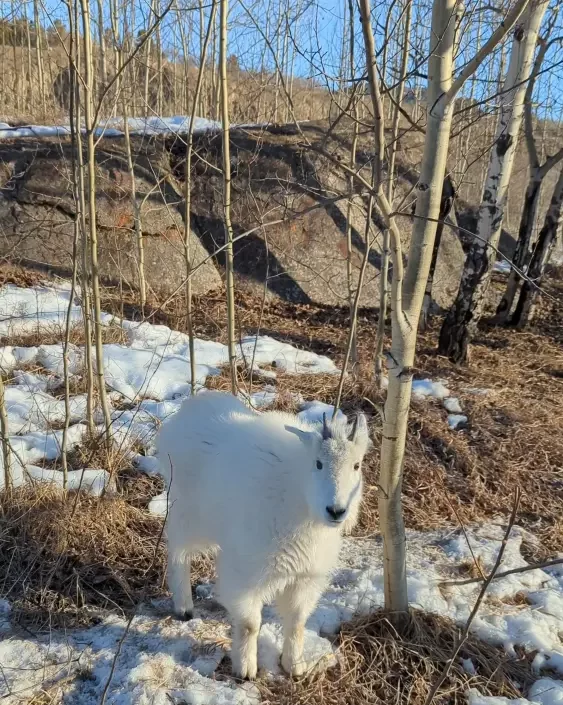
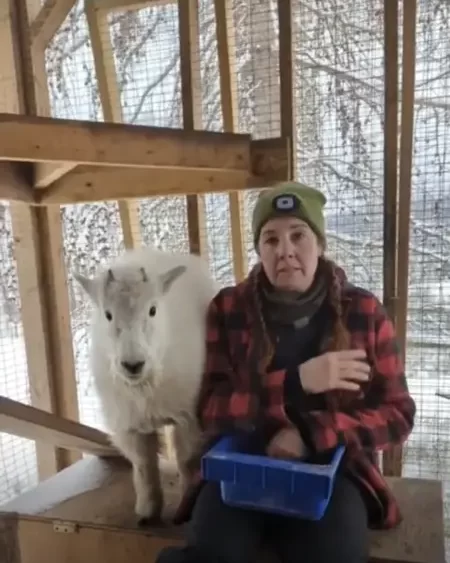
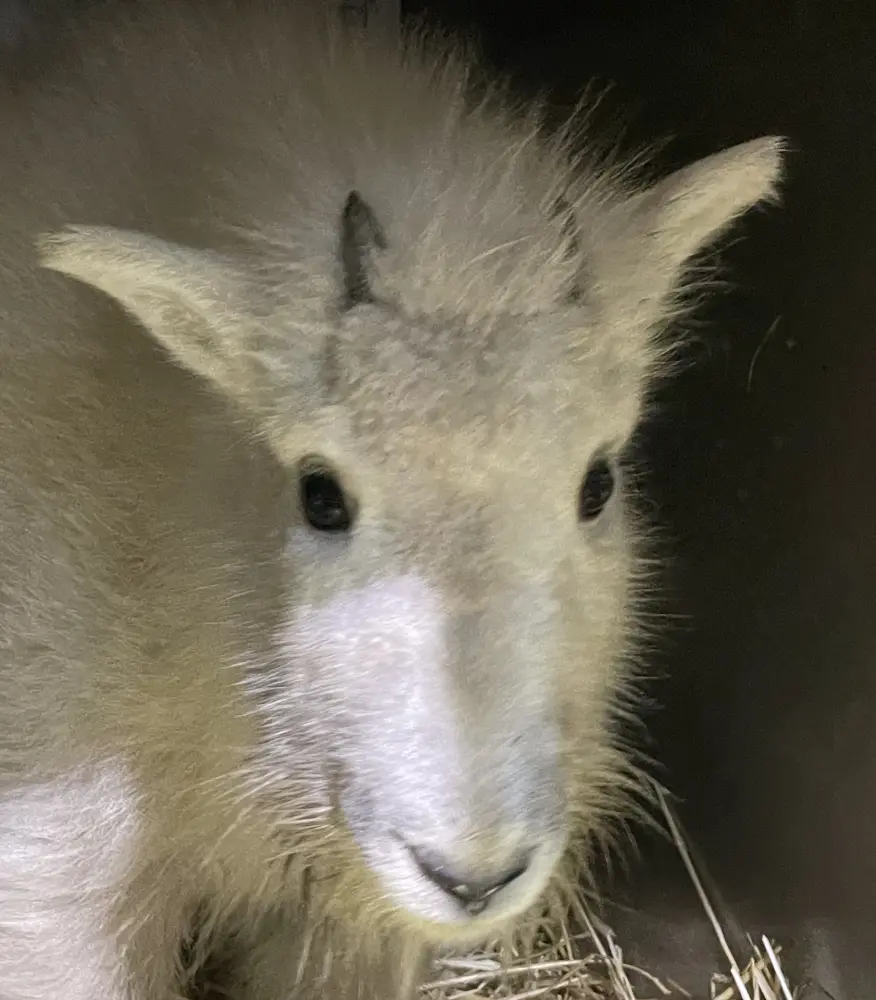
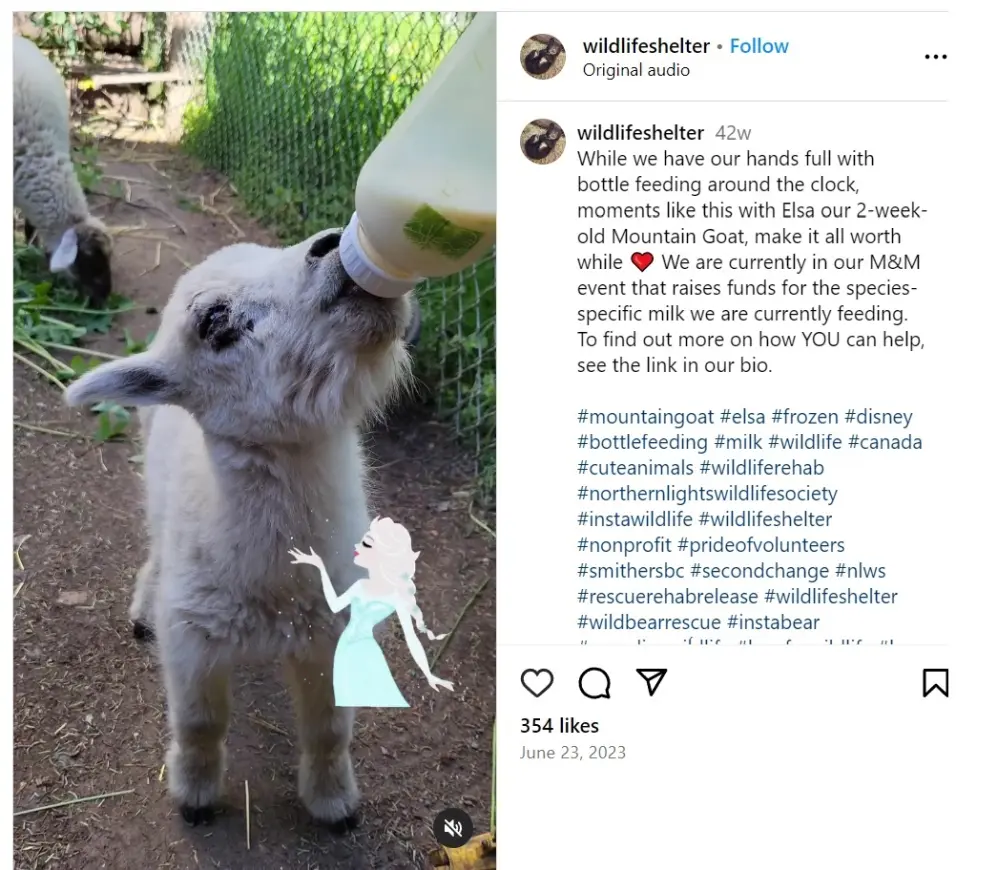
Meet Elsa, the mountain goat! She came from Northern Lights Wildlife Society in Smithers B.C located within The Witset First Nation is a First Nations band government of the Wet'suwet'en people of Witset, British Columbia, Canada. She was brought there in June, 2023 at about 1 week old.  She was brought to this wildlife shelter after she was swept down river - it's not sure, the details, how or why, but she was orphaned and injured at that point when she was found by rangers working on the land.

She had several cuts and lacerations, she lost a few baby teeth. She was taken care of incredibly well by the staff and volunteers at the Northern Lights Wildlife Society. 

You can watch a few of these videos of her care and progress via their social media.

Elsa the queen of the North. Mountain goat rescue from BC wildlife Shelter. Elsa 1 week june 2023

By August, Elsa recovered fully from her injuries and complications that came after. Such challenges are bound to happen with wildlife, especially with an animal so young and under considerable stress and change. 

Elsa the mountain goat ice queen of the North 2 months old and recovered and eating well.

The little queen, Elsa continued to grow and by early winter she was ready for transport to the Yukon Wildlife Preserve for her long-term home. Since the goat was coming from another jurisdiction, in fact, one outside of the Yukon Territory, necessary coordination and import permits were required before her transport and arrival. With all the 'red tape' out of the way the Preserve now needed to consider how to get her to the Yukon, the quickest and safest way. Since the Wildlife Shelter is in Northern British Columbia, an Air North Transport was not an option, as it has been with other rehabilitation animals, though those animals were mostly headed South and back to the wild, not North and into long-term care. 

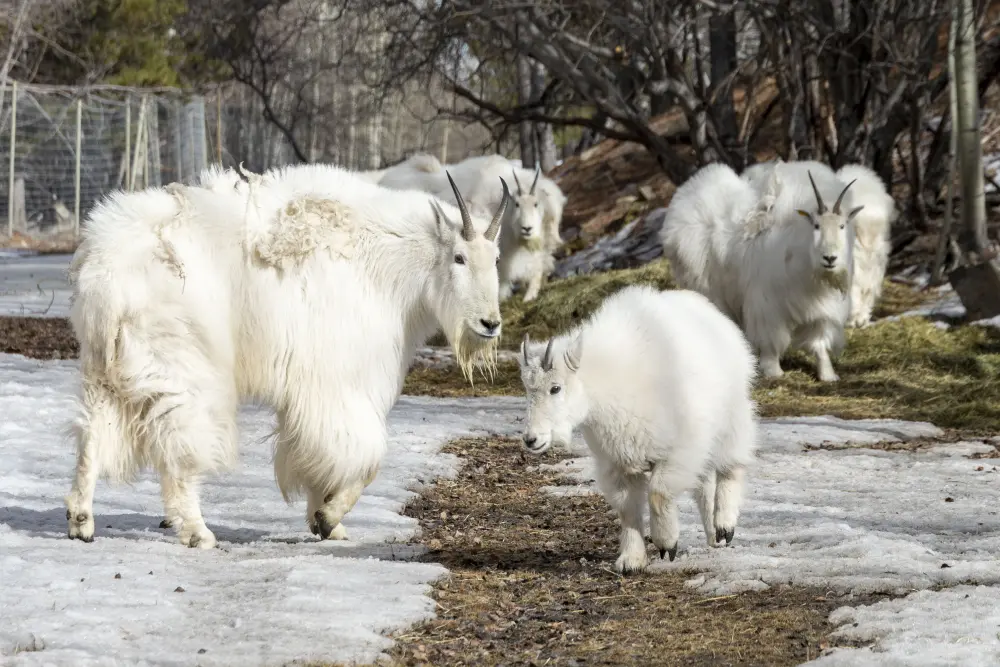
Elsa, the mountain goat, just a few days before her big move to the big leagues which means to the big cliff in the background with the nannies.

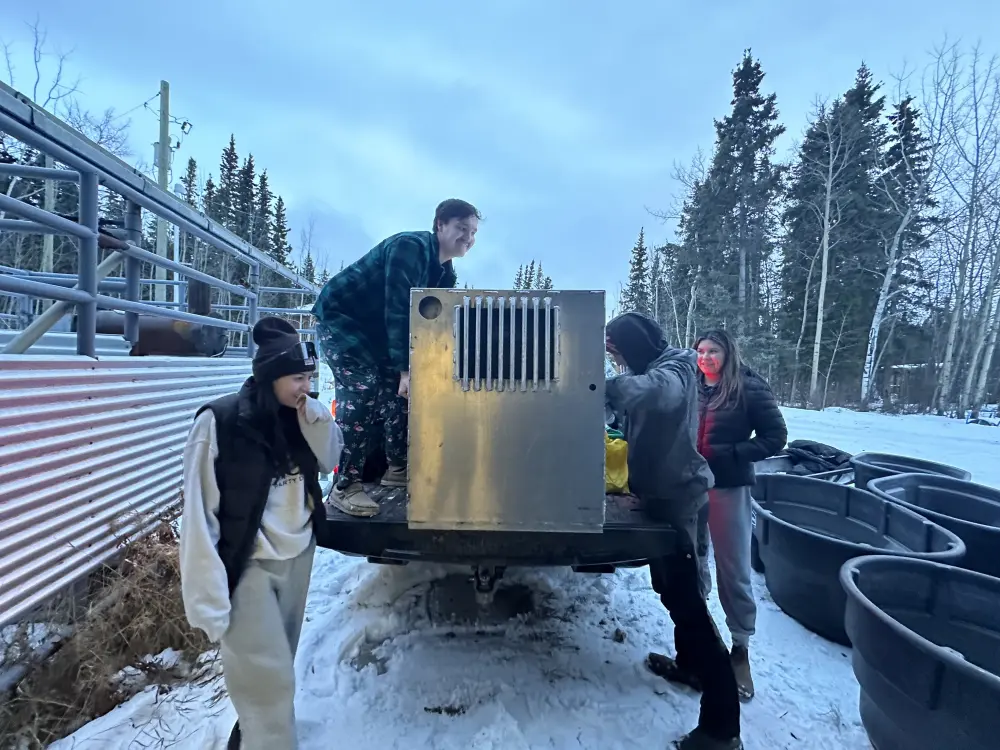
Community connections started this journey for Elsa and it continued through her successful transportation by an incredible offering as described below by Rebecca Bradford-Andrew, Manager, First Nation Education Advocates for Yukon First Nation Education Directorate. 

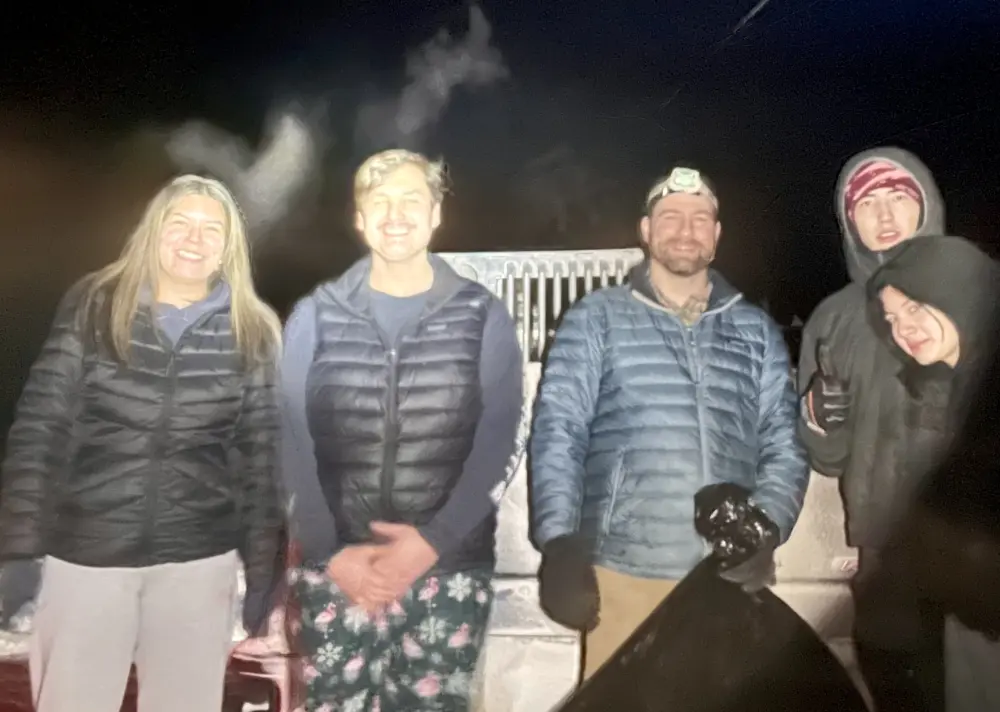
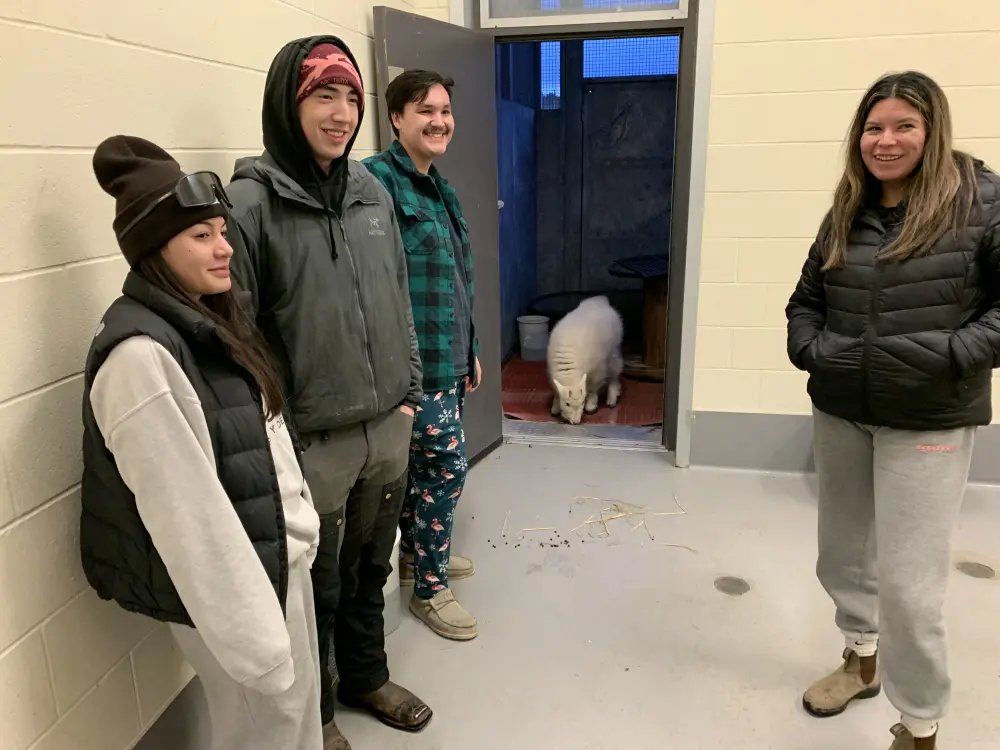
Wild orphaned Nanny goat Elsa from the remote mountains of Northen BC. transportation from her rescue facility to Whitehorse was provided by teenagers, a team of young wildlife enthusiasts from the Yukon First Nation Education Directorate (YFNED) ( a Jordan's Principle-funded Initiative).

These local teens work to build community and culture by supporting indigenous students in Yukon schools. They strive to be role models for youth by doing good deeds and stepping in where needed. Thank you Dr.Hallock and your team for including us in this wonderful opportunity to collaborate for our community!

The YFNED, an indigenous-led educational organization, supports traditional, land-based learning opportunities.

The YWP has been educating people for years, and Yukon students have much to learn about eco-systems, evolution, and herd dynamics, with a strong, healthy mountain goat population their textbooks, and the beautiful cliffs of the YWP their classroom.

Edone daga eti’e (For the good of the child).

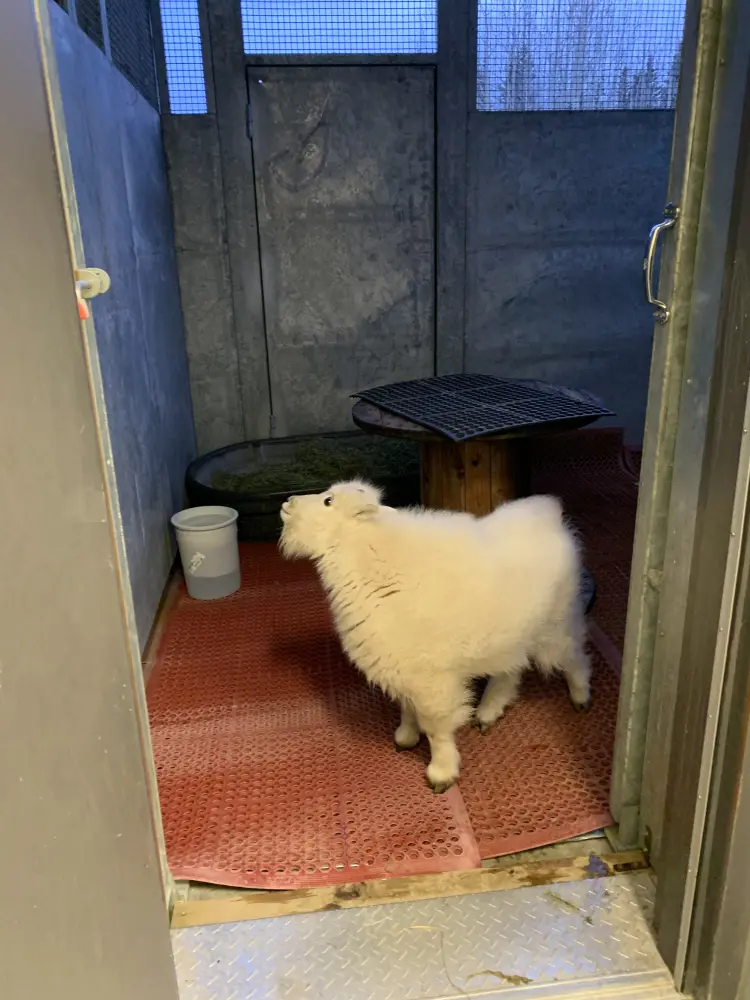
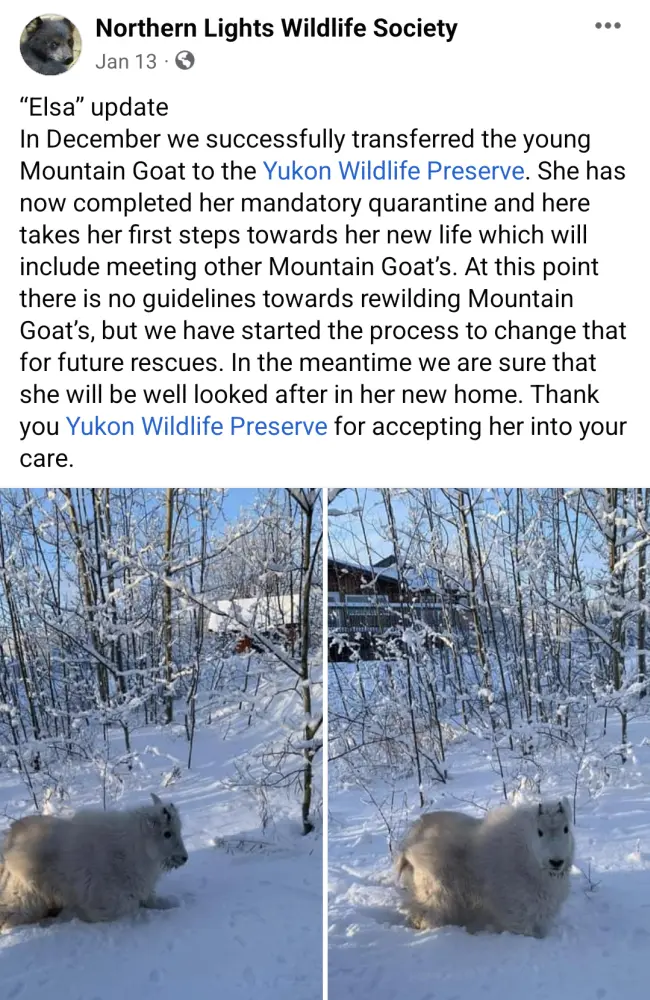
Elsa arrived December 12, 2023 to the Wildlife Rehabiliation Centre where for the next 30 days would be in quarantine. This is a mandatory isolation while testing occurred and medication was administered by Preserve's Animal Care team to ensure her eventual integration to the collection of goats would not pose any risks. Of course, the ice queen of the North, passed with flying crystals . . . er., colours!

In mid January Elsa was brought to her temporary, small rocky mountain habitat as she got bigger, before joining the big leagues, on the big mountain cliff at the Preserve. She was a delight and distraction for staff at the office where she would be spotted through windows being a goat - bounding around, climbing the rocks and being unbelievably cute!  

Social media link to the posting by NLWS about Elsa's arrival.

April 9th, 2024 Elsa joined the group of mountain goats at the Preserve and can be spotted living her best goat life thanks to people, community, collaboration and their great care of iconic North American wildlife in need of second chances.

Elsa the mountain goat with the nanny group.

Elsa, the mountain goat lives at the Yukon Wildlife Preserve which is the Traditional Territory of the Kwanlin Dün First Nation and Ta’an Kwäch’än Council.

Elsa the mountain goat introduced to the nanny group. B.Forsythe

The 2 above photos were taken April 30, 2025 of Miss Elsa being a goat!

Photo credits: Northern Lights Wildlife Society, YFNED - Yukon First Nations Education Directorate, L.Caskenette, B.Forsythe.

Lindsay Caskenette

Lindsay Caskenette

Manager Visitor Services

Lindsay joined the Wildlife Preserve team March 2014. Originally from Ontario, she came to the Yukon in search of new adventures and new career challenges. Lindsay holds a degree in Environmental Studies with honours from Wilfrid Laurier University and brings with her a strong passion for sharing what nature, animals, and the environment can teach us.

867-456-7400
Lindsay@yukonwildlife.ca

Explore by Category

Explore by Author

Misunderstood Moose

Misunderstood Moose

babies

Sep 25, 2020 | 3 comments

5 min read -

You have most likely heard the phrase “Don’t judge a book by it’s cover”, implying that captivating stories can be hidden behind bland book covers. Similarly, at one time or another many of us have been judged or have judged others based on their outward appearance. Judging others based on their appearance can lead to us underestimating other people's abilities. Have you ever been underestimated? How did it feel? Due to their funny-looking, long snouts, and gangly, plodding bodies, moose are often underestimated. People tend to view moose as gentle, slow-moving animals, and often don’t associate moose with characteristics such as agile and fierce. Cartoons1Like Bullwinkle the Moose can perpetuate this impression by displaying moose as slow, friendly Canadians. But don’t be deceived by this common misperception. Though moose may look unassuming, they are capable of performing impressive athletic feats in order to find food and avoid predators.

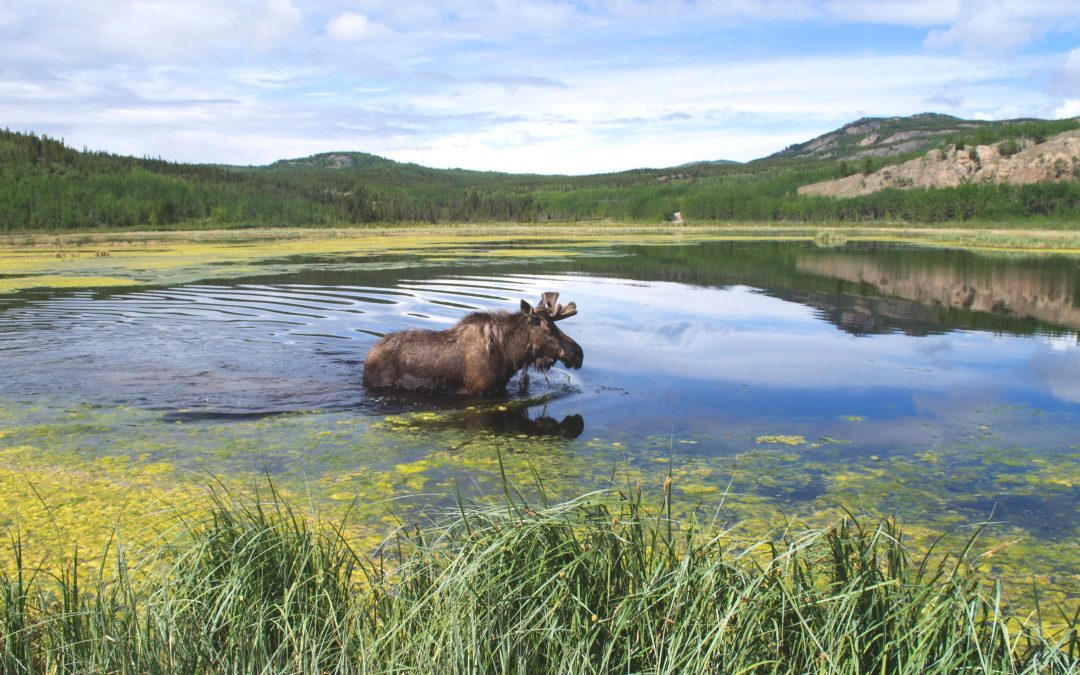
Despite their appearance, moose can easily propel themselves through water in order to find food. While otters, beavers, and other mammals that are known for their swimming ability have lean bodies and webbed feet which allow them to easily glide through the water, moose are heavy-set and have hoofed feet. Despite their size and hooved feet, moose have the advantage of being tall, and their long legs help propel their large bodies through the water. Moose also have hollow hairs, which help them stay buoyant while swimming.2National Park Service With these advantages, moose can swim as fast as 9.5 km per hour. By comparison, most humans only swim at the pace of 3 km per hour. Moose’s ability to swim quickly allows them to travel in search of food while reducing stress on their joints. Water also helps protect moose from predators because it is more difficult for predators to sneak up on them when they are in the water.3Moose Facts 

Moose swimming across Lake Laberge.  Photo credit D. Caldwell.

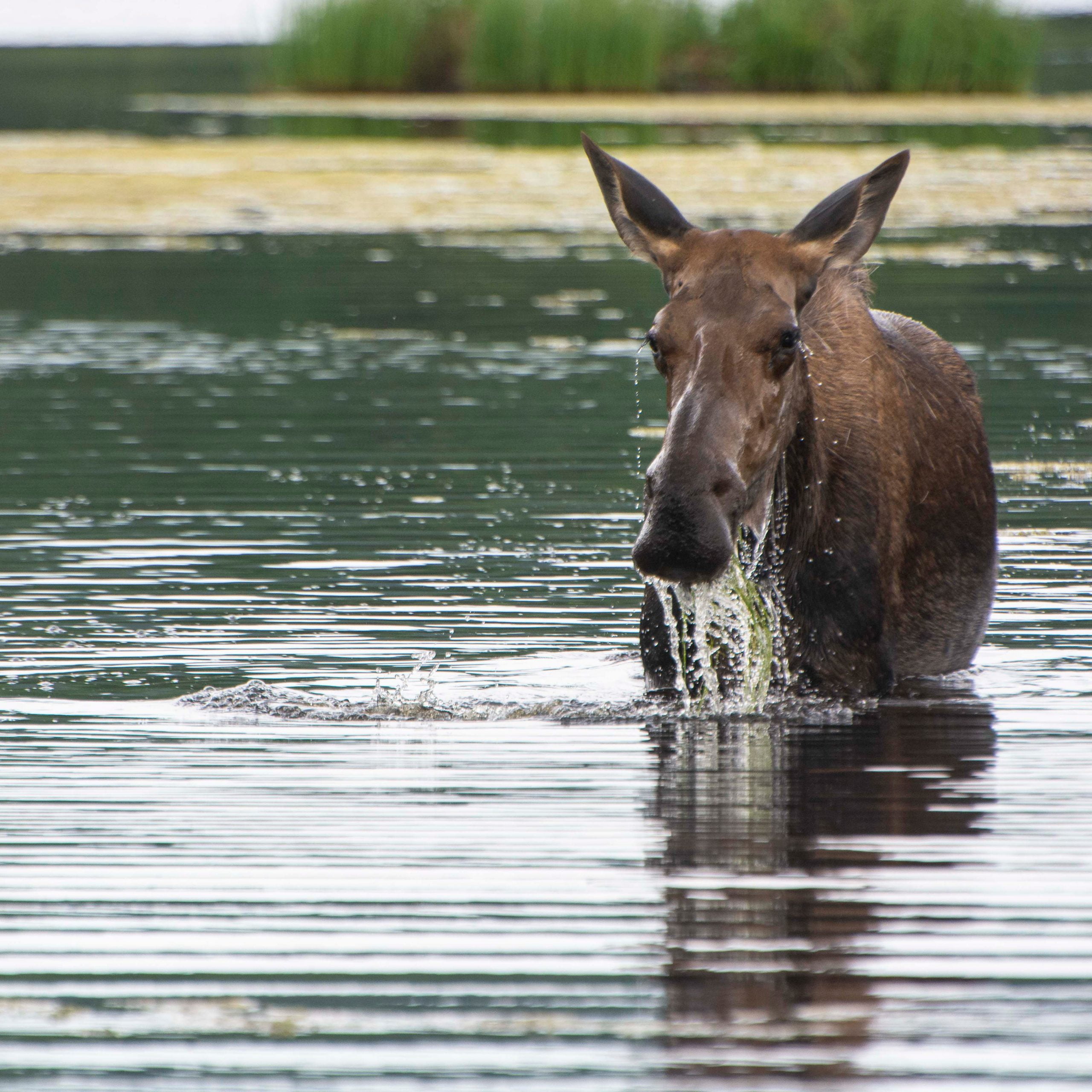
Photo Credit Johanna Marglowski

Moose also have adaptations that allow them to dive underwater to eat nutrient rich aquatic plants.4National Geographic To prevent water from rushing up their noses, moose have flaps that close in their nostrils. These flaps allow them to hold their breath underwater for up to 50 seconds5Holding breath Ecology and Management of the North American Moose and help them to dive up to 6 m (20 ft) underneath the water surface!6Hinterland Who's Who After a winter of sparse food resources, aquatic plants provide essential energy to both pregnant cows (female moose), and to bulls (male moose) as they regrow their antlers.

In addition to swimming, moose are also capable of running at high speeds. Being the tallest member of the deer family, a moose can stand around 6 feet tall at the shoulder, which is as tall as some professional basketball players.7National Geographic Even though moose might be too gangly to make great basketball players, their height and long legs allow them to run very fast. A moose calf can outrun the average human after only 5 days of life,8National Geographic while an adult moose can charge at a pace of 56 km per hour, and maintain a pace of 32 km per hour over longer periods. For perspective, during his world record 100 metre dash Usain Bolt ran at an average pace of 44 km per hour. However, moose do not run fast to set world records, their speed provides them protection by enabling them to run away from wolves and other quick-moving predators.

Furthermore, despite the perception of being friendly, moose are actually effective fighters. Though they sometimes use their speed to outrun predators, an experienced and healthy moose is capable of defending itself against wolves by standing its ground and fighting.9Wolves of the Yukon by Bob Hayes Moose will protect their sides by standing next to trees and high shrubs, and then use their powerful legs to stomp or kick attacking wolves, hitting them with their deadly hooves. A powerful strike from a moose’s sharp hooves can result in injury to or even kill a wolf. 

Even young moose are large animals.  The photos show 2 moose bulls; on the left a young 1 year old and on the right a more mature bull of many years of age.

So, are moose really the plodding, polite animals that cartoons depict them as? Have you ever underestimated moose based on their goofy-looking appearance? As we have seen, instead of being slow, and plodding, moose are impressive athletes. Moose are capable of swimming through and under water, which allows them to more easily travel in search of food and access the nutrients they need during pregnancy and to grow antlers. Moose are also capable of running at high speeds and of fighting off other animals, which helps them survive attacks from wolves and other predators. Each of these athletic capabilities are important survival mechanisms that help moose thrive in the wild.

Tasha Mazurkewich

Tasha Mazurkewich

Wildlife Interpreter

Tasha is a self-proclaimed animal enthusiast and adventurer. Originally from British Columbia, she enjoys skiing, hiking, and all things outdoors. She is happiest when she is climbing a mountain with her pup. Having recently moved up north, she has enjoyed learning about Yukon’s wildlife and landscape and is excited to share the new knowledge she has learned with visitors to the wildlife preserve

Explore by Category

Explore by Author

Playful Prey

Playful Prey

babies

by Rebecca Carter | Aug 28, 2020 | 0 comments

6 minute read -

As many of us know from watching our dogs, cats, or children at home, young animals love to play and they play often. Play behaviour has been observed in many mammals and even in reptiles1Burghardt, G. M. (2015). Play in fishes, frogs and reptiles. Current Biology, 25, 9-10. and octopuses!2Kuba, M. J., Byren, R. A., Meisel, D. V., & Mather, J. A. (2006). When do octopuses play? Effects of repeated testing, object type, age, and food deprivation on object play in Octopus vulgaris. Journal of Comparative Psychology, 120, 184-190.   While you and I can easily imagine what play looks like, researchers still want to learn more about the function play serves in an animal’s life.

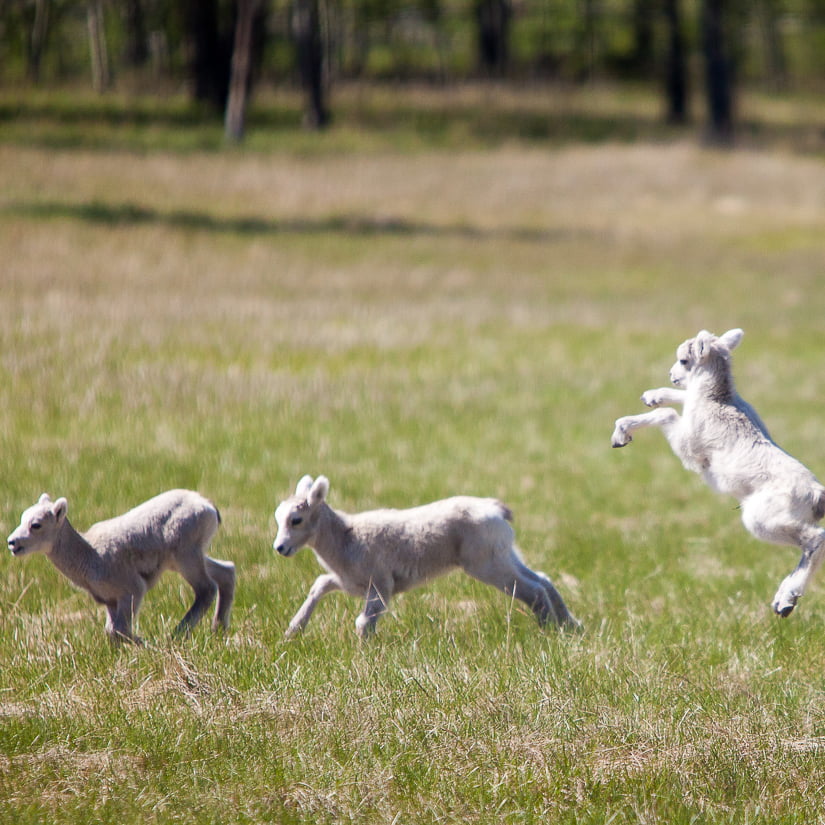
Young animals love to play and they play often. Play behaviour has been observed in many mammals and even in reptiles and octopuses!  Seen here at Yukon Wildlife Preserve, lambs of Thinhorn mountain sheep frolic in the spring sunshine.

The majority of play in wild animals occurs when the individual is young, then becoming very infrequent (if occurring at all) in adults. Other behaviours are either expressed throughout an animal’s entire life such as eating, sleeping, and social behaviours, or are expressed at a certain time due to biological constraints, like mating behaviours that only occur when an animal is capable of reproducing. But play itself isn’t constrained by biology, so being concentrated during a particular time makes play an extremely unique behaviour that must have some key role in the animal’s development.

Play also often resembles other behaviours that show up later in life.3Pellis, S. M., & Pellis, V. (2009). The playful brain: venturing to the limits of neuroscience. Oxford, U.K.: Oneworld.  Think about puppies that jump on each other with their mouths open, teeth showing, and playfully going for each other's necks, or kittens that quietly hunch down and pounce on a toy. These animals are essentially practicing for either settling dominance disputes between pack members or becoming a fierce predator respectively. Play in prey animals like ungulates (hooved animals) often mimics their predator avoidance strategies, which may be giving playful prey an advantage in survival.4 Byers, J. A. (1984). Play in ungulates. In P. K. Smith (Ed.), Play in animals and humans (pp. 5-41). Oxford, U.K.: Basil Blackwell.

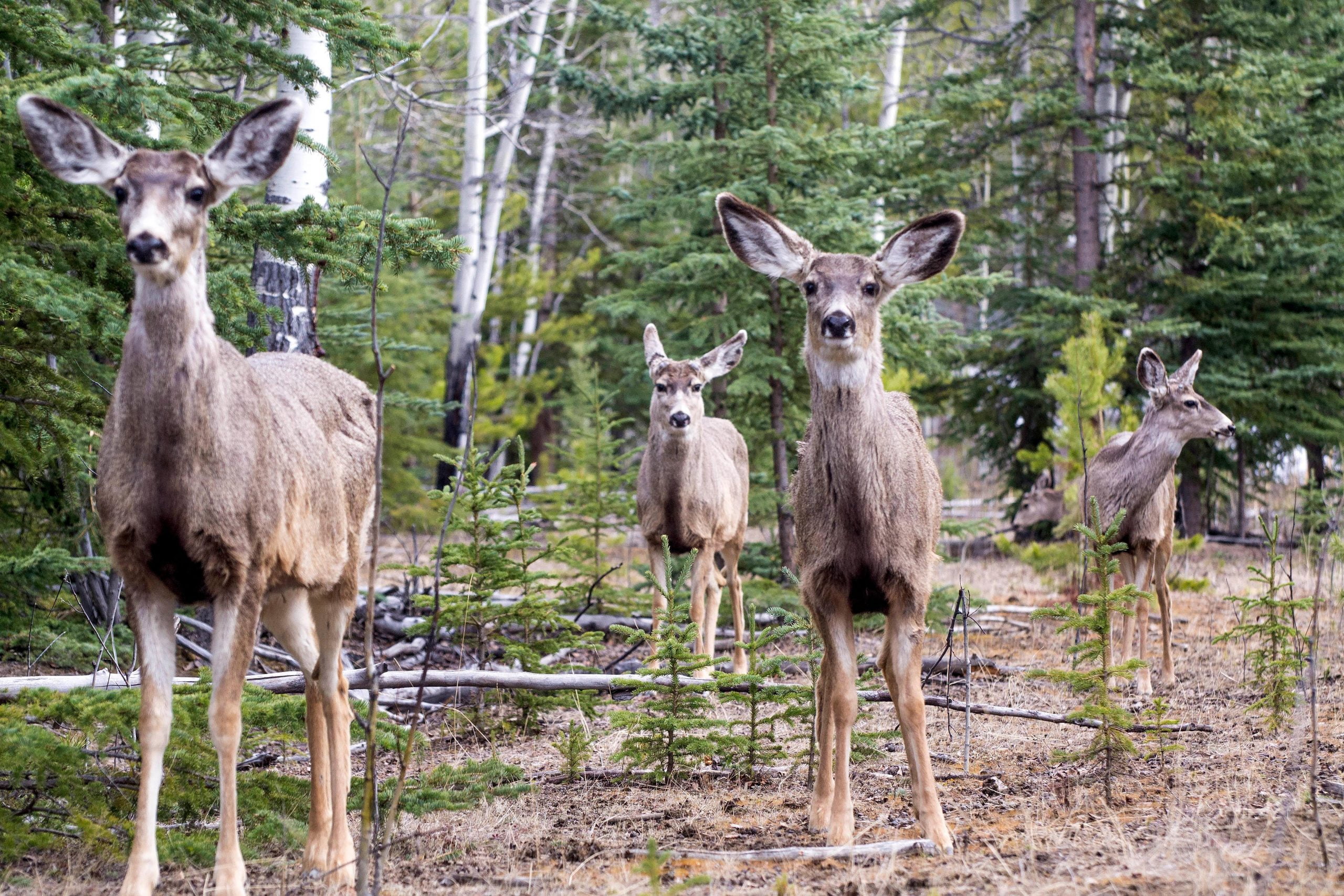
Taking what we know about play and what mysteries remain to be revealed in specific species, I looked at the play behaviour in mule deer fawns to see if this pattern of play behaviour mimicking antipredator behaviour held in this species of deer.

To avoid losing fawns to predators in the summer, mule deer females rely on a good defense that often involves a coordinated effort of multiple females. In the winter, both males and females of all ages form large social groups which lowers their individual risk of being attacked. Knowing that mule deer adults are social and rely on being able to communicate with one another especially in stressful situations, the fawns should spend most of their time playing with each other to really build on these social skills, right?

What I love most about nature is that usually our simple assumptions don’t actually hold true.

In comparison with the closely related white-tailed deer, who use their speed and agility to out-run predators and will not defend their young, the fawns of both species played very similarly, instead of matching to their antipredator strategies.5Carter, R. N., Romanow, C. A., Pellis, S. M., & Lingle. S. (2019). Play for Prey: do deer fawns play to develop antipredator tactics or to prepare for the unexpected? Animal Behaviour, 156, 31-40.

So what is happening here?

Thinking back to the timing of play, when this behaviour is most common in an animal’s life is also when the cerebellum (the part of the brain responsible for movement and coordination) is undergoing the most growth and rapidly building connections between cells. This growth is influenced by the animal’s experiences at the time, leading us to believe that play may help with modifying the brain’s development by creating more connections in the cerebellum, increasing the animal’s ability to perform movements.6Byers, J. A., & Walker, C. (1995). Refining the motor training hypothesis for the evolution of play. American Naturalist, 146, 25-40.

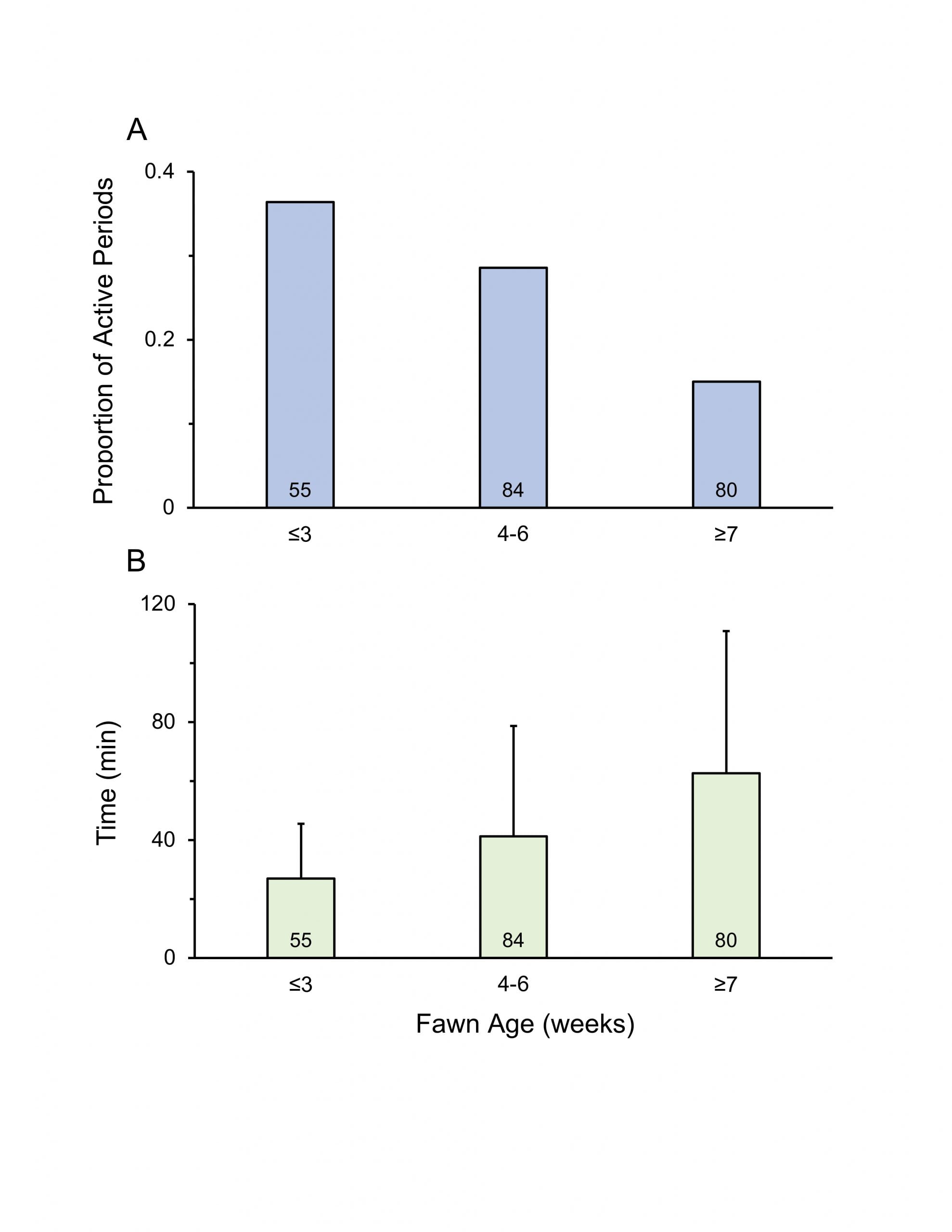
The fawns followed the timing trend with the majority of play occurring when the fawns were less than four weeks old, decreasing as the fawns got older despite becoming more active during their days overall.7Carter, R. N., Romanow, C. A., Pellis, S. M., & Lingle. S. (2019). Play for Prey: do deer fawns play to develop antipredator tactics or to prepare for the unexpected? Animal Behaviour, 156, 31-40.

Figure 1. (A) The proportion of active time in which mule deer fawns of different ages played and (B) The average duration of active time for mule deer fawns at different ages.

During play, fawns spent most of their time running, stotting, and rapidly turning around while remaining close to their mom. Running and exploring the area where you are likely spending the most time, may give fawns the opportunity to learn how to navigate their surroundings and be better prepared to escape a predator.

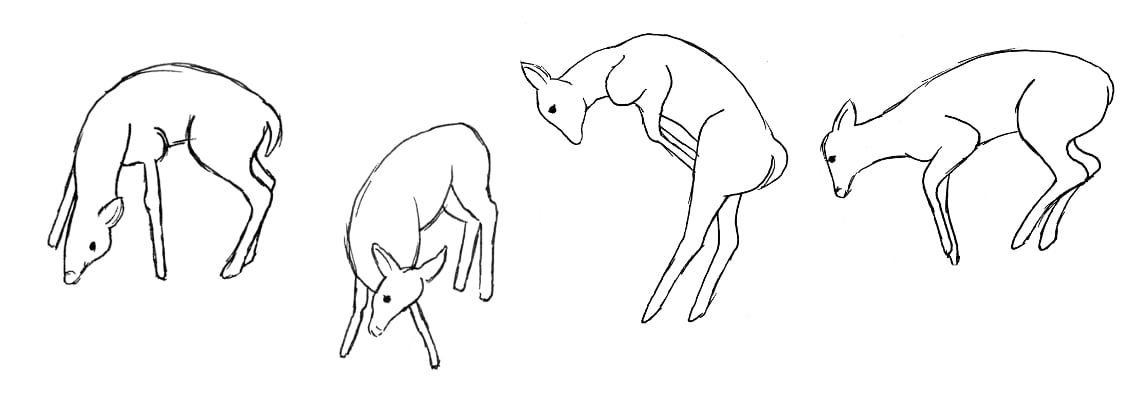
Mule deer fawns also liked to perform chaotic twisty and twitchy movements during play that caused them to stumble around and almost lose their balance (though in a couple of instances the fawns did fall over!). These are what are known as “self-handicapping” movements in play and are thought to help a baby animal learn the limits of their bodies and how to correct themselves when they are close to losing their footing.8Spinka, M., Newberry, R. C., & Bekoff, M. (2001). Mammalian play: Training for the unexpected. Quarterly Review of Biology, 76, 141-168.

Figure 2. Sequence of self-handicapping movements during a fawn's play.  Play Sketch based off of a video recording of play.

Imagine if a deer was trying to outrun a coyote, and that deer trips on a clump of grass. If that deer had spent time playing in a way that threw them off-balance, then they may have an easier time correcting themselves and continuing on, increasing their chance of survival.

Another part of the brain is involved here and that is the prefrontal cortex. This region is right behind your forehead and is responsible for planning, decision making, regulating emotions, and developing social skills.9Pellis, S. M., Pellis, V. C., & Himmler, B. T. (2014). How play makes for a more adaptable brain: A comparative and neural perspectives. American Journal of Play, 7, 73-98.  Animals who are not given the chance to play show an increased stress and fear response when experiencing a novel situation and have difficulty interacting with other individuals as adults. The prefrontal cortex, like the cerebellum, undergoes a lot of growth and development when an animal is young, overlapping again when animals are the most playful.10van den Berg, C. L., Hol, T., van Ree, J. M., Spruijt, B. M., Everts, H., & Koolhaas, J. M. (1999). Play is indispensable for an adequate development of coping with social challenges in the rat. Developmental Psychobiology, 34, 129-138.

Instead of mule deer fawns playing to develop their specific antipredator strategy (using a coordinated defence against predators), play may more generally improve the fawn’s overall physical and emotional resilience as they grow into adulthood, gaining and refining the skills they need for their survival. The occurrence of play directly impacting survival has been found in grizzly bears,11 Fagen, R., & Fagen, J. (2009). Play behaviour and multi-year juvenile survival in free- ranging brown bears, Ursus arctos. Evolutionary Ecology Research, 11, 1-15. feral horses,12Cameron, E. Z., Linklater, W. L., Stafford, K. J., & Minot, E. O. (2008). Maternal in- vestment results in better foal condition through increased play behaviour in horses. Animal Behaviour, 76, 1511-1518. and mountain goats 13Théoret-Gosselin, R., Hamel, S., & Côté, S. D. (2015). The role of maternal behavior and offspring development in the survival of mountain goat kids. Oecologia, 178, 175-186. with the most playful cubs, foals, and kids being more likely to survive into adulthood.

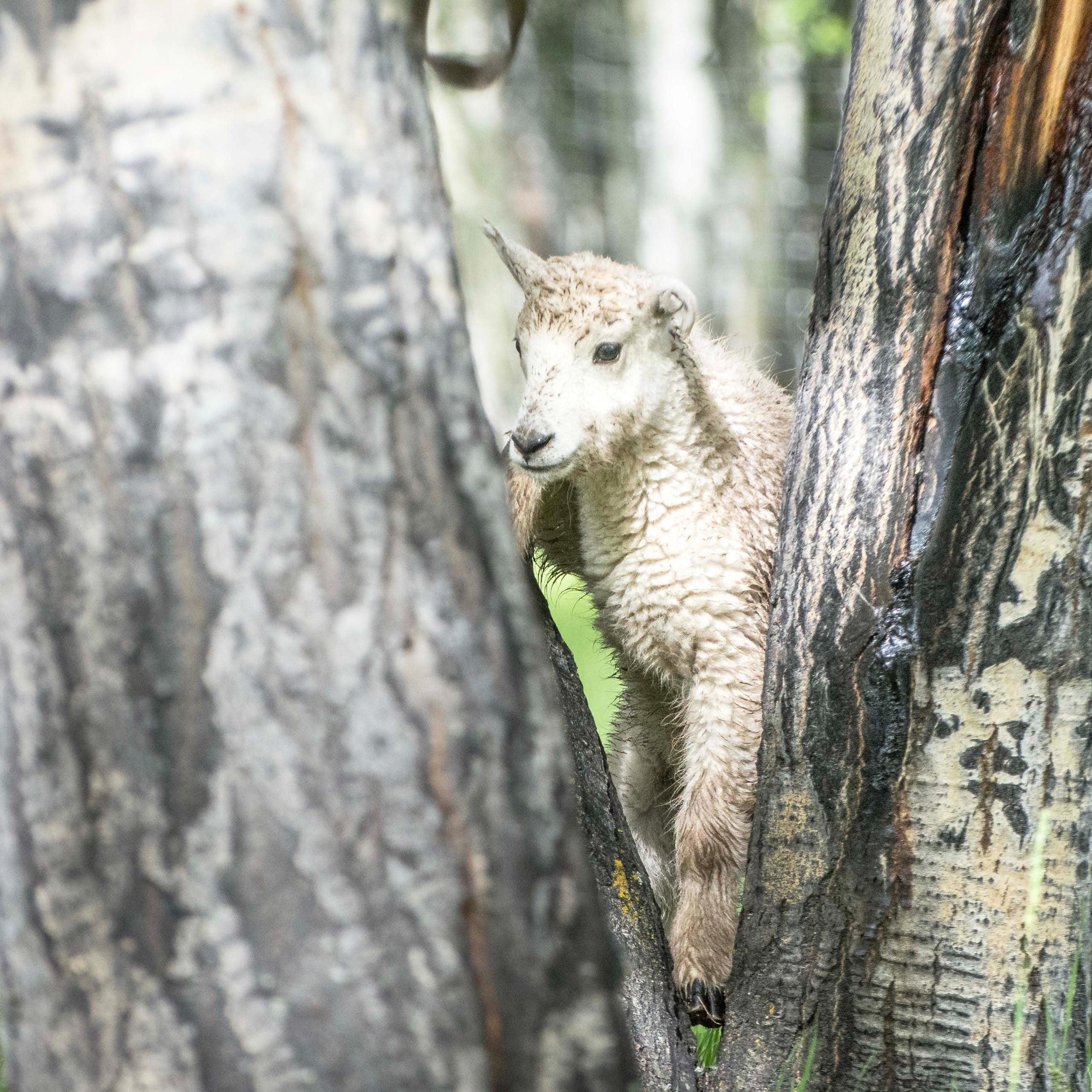
Mountain Goat kid exploring its habitat at Yukon Wildlife Preserve.   The occurrence of play directly impacting survival has been found in grizzly bears, feral horses, and mountain goats with the most playful cubs, foals, and kids being more likely to survive into adulthood.

Playing by running and jumping around builds up the fawn’s strength, endurance, and coordination – all necessary for a prey animal’s survival. Also adding in those unique self-handicapping movements that twist and disorient the fawn may help to train them both physically and emotionally for dealing with unexpected, stressful situations akin to coming face-to-face with a predator.

Play is such a common and well-known behaviour that we see it every day and could point it out at any given time, yet in terms of its function for different animals, it remains a complex and fascinating behaviour. We think of play as a fun and relaxing activity yet it seems to have a critical impact on an animal’s survival by facilitating the development of crucial motor and cognitive skills.

So next time you are watching your pets play in the backyard or your children roughhousing in the living room, you can think of all the complex brain and motor skill development that is happening as well!

Rebecca Carter

Rebecca Carter

Senior Wildlife Interpreter

Rebecca joined the Wildlife Preserve in the summer of 2020 after moving from Manitoba to the beautiful and wild Yukon. Rebecca earned a degree in Biology with honours from the University of Winnipeg studying behaviour in mule deer (one of her top 20 favourite animals.. it’s hard to choose!). She loves connecting with others through nature and sharing stories and knowledge about the animals at the preserve with visitors.

867-456-7400
rebecca@yukonwildlife.ca

Explore by Category

Explore by Author

Moose on the Move

Moose on the Move

babies

by Jake Paleczny | Jul 25, 2020 | 0 comments

3:47 video

Our young orphaned moose has outgrown his room in the Preserve's Research and Rehabilitation Centre. Today he's on the move to a new - much larger - outdoor enclosure.  He will spend the next few months in this larger space, with food to browse as he continues to grow .  But first, we have to get him to his new home.

Learn how the Animal Care team at Yukon Wildlife Preserve safely and successfully moves this moose calf.


Jake Paleczny

Jake Paleczny

He/Him - Executive Director/ CEO

Jake Paleczny is passionate about interpretation and education. He gained his interpretative expertise from a decade of work in Ontario’s provincial parks in addition to a Masters in Museum Studies from the University of Toronto. His interests also extend into the artistic realm, with a Bachelor of Music from the University of Western Ontario and extensive experience in galleries and museums.

867-456-7313
jake@yukonwildlife.ca

Explore by Category

Explore by Author