Old Crow Bald Eagle

Old Crow Bald Eagle

conservation

by Lindsay Caskenette | Jun 12, 2024

1 minute read - 

In the remote, fly-in community of Old Crow, on the Traditional Territories of Vuntut Gwitchin First Nations a juvenile bald eagle was found by Robert, at the dump, flightless and injured. The eagle was coaxed into a crate and eventually brought to the Yukon Wildlife Preserve after it made a stop in Dawson and caught a flight via Air North.  
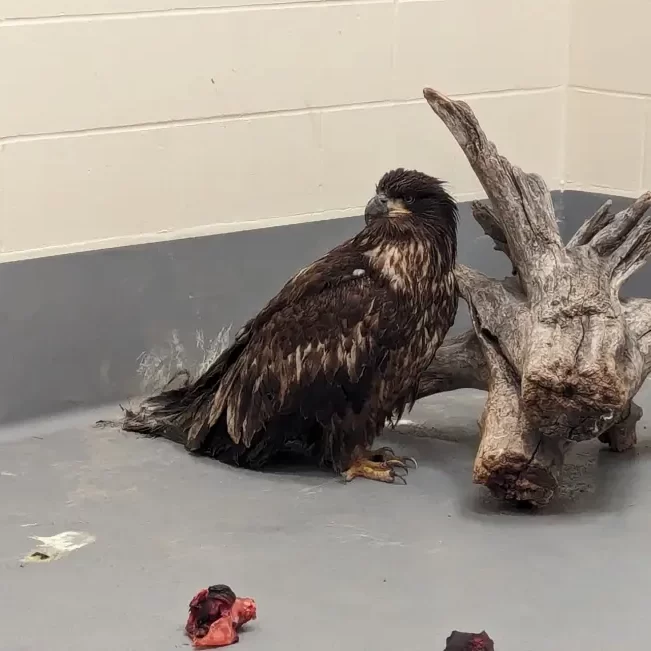
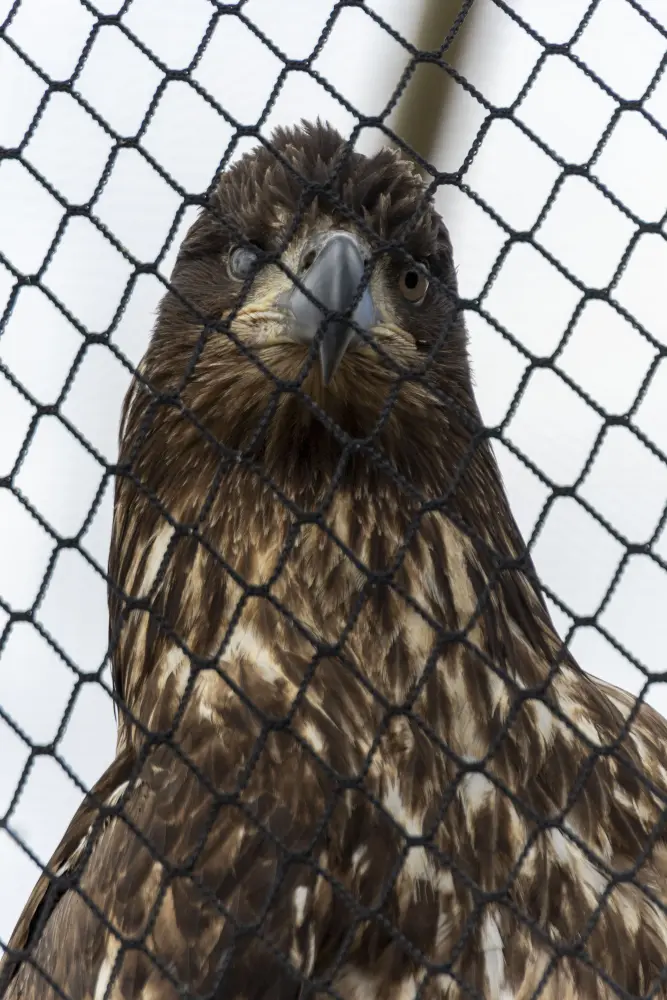
Old crow bald eagle upon arrival and admittance into the Wildlife Rehabilitation Centre at the Preserve. May 10th. Photo credit L.Caskenette

The bald eagle, thak tth'ak came to the Preserve's Wildlife Rehabilitation Centre on May 10th underweight (4.3kg) and with a OD (medical term for right eye) chronic corneal ulcer. 

mature bald eagle in rehabilitation

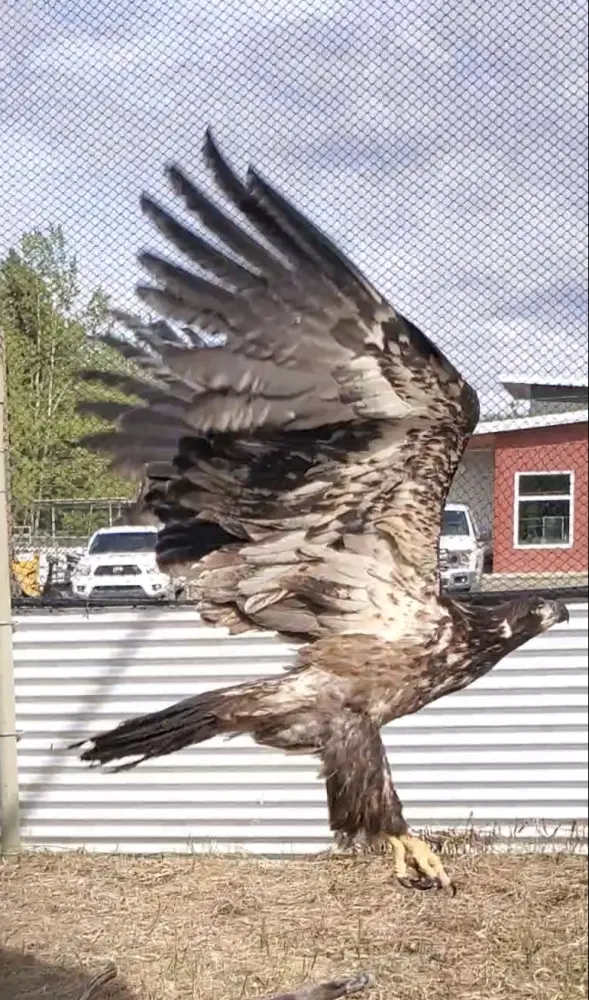
Likely a she, given the large size of the animal. She has gained sufficient weight, coming in at 4.83kg. She has been viewable in the aviary as she works to build up flight muscles. Now she is ready for her public release back to the wild this Friday. She has a cloudy eye but has been successful catching live food and as a predominantly scavenging animal she is likely to do quite alright back in the wild even with this limitation.
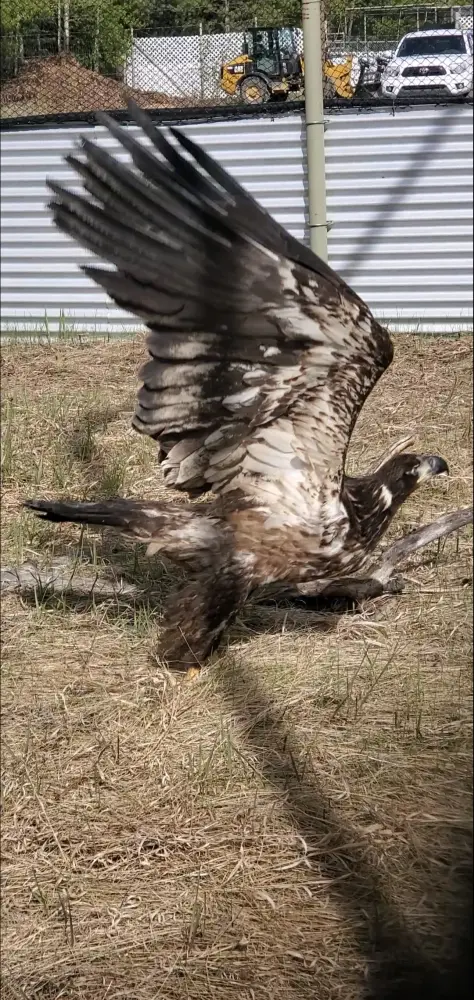
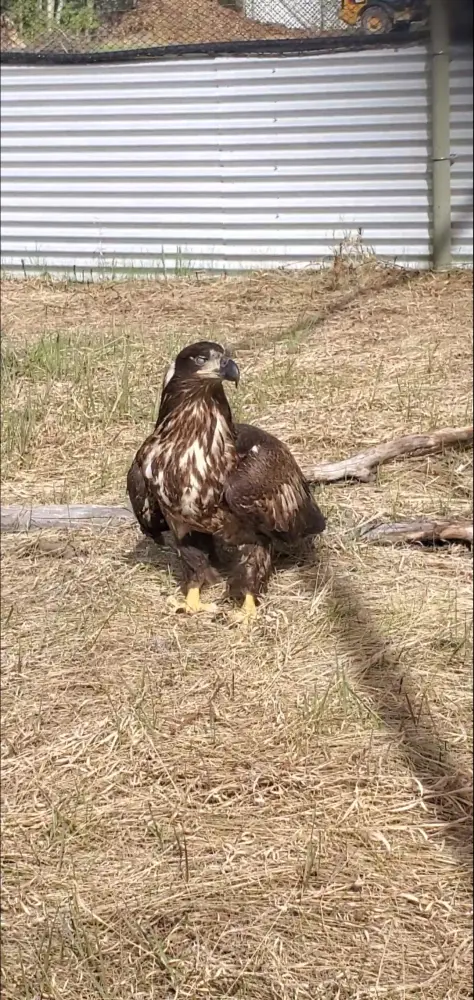
She will not be returned to Old Crow due to the long travel and stress concerns related to transfer. Instead, she was released outside of Whitehorse on Friday June 14th at 7pm. 

Around 40 people joined the event to send off the bird. Thank you to everyone who joined the release, it was a perfect evening. The sky welcomed us all without a drop of rain. Thank you to all who provided good vibes and sent off the eagle with strength and grace.

Thank you to Wylie, Corrine, and Thay K'i Anint'l for the prayer and blessing for this bird's return to the wild and resilience for a long eagle life. 

Thank you to everyone who helped this Eagle along its path to recovery. To Robert K who found the bird and ensured it got a second chance at life. To Norma, to the team at the Preserve that helped with the bird release event. To Air North for giving the bird some helping wings South to the Rehabiliation Centre.  Thank you, Masshi, Gunalchîsh????

She took her time deciding to soar but this allowed everyone to share in more details of her story, to practice patience and to grow our appreciation of her and others' incredible story of resilience. 

• • •

The beginning of June the Preserve welcomed a visitor who had, and later shared with us, an extraordinary experience with the eagle while it was recovering in the aviary. 

She shared with us the following:

I felt a very special spirit from her. A very conscious and intelligent bird.
I heard she didn't have a name. 
Horus came to mind for me because of her eyes and her mystical spirit.
"Horus, in ancient Egyptian religion, a god in the form of a falcon whose right eye was the sun or morning star, representing power and quintessence, and whose left eye was the moon or evening star, representing healing."
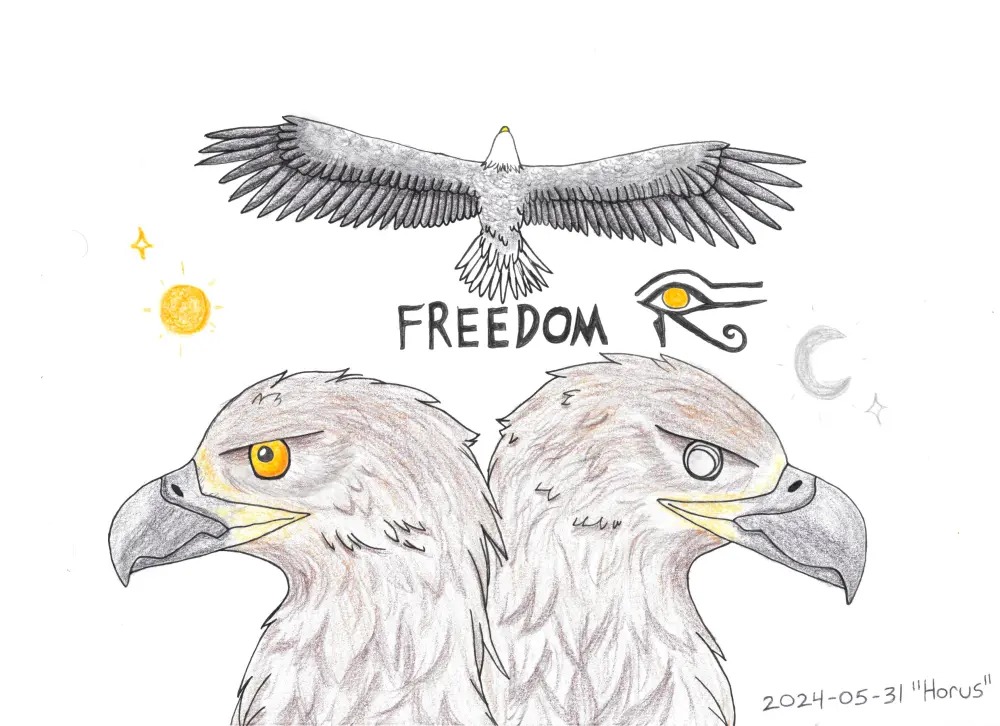
"Horus, in ancient Egyptian religion, a god in the form of a falcon whose right eye was the sun or morning star, representing power and quintessence, and whose left eye was the moon or evening star, representing healing." The old crow bald eagle was given and unofficial name by a visitor, Jasmine Colomby who also drew and shared this interpretation.

Help us get them back on their wings. We could use your help. If you are able to support the care of these two animals, please consider donating. Every contribution makes a difference and as a non-profit charitable organization, you can receive a charitable tax receipt for your support. 

Photo credit: B.Forsythe

Britt Forsythe

Britt Forsythe

Visitor Services Coordinator

Brittney joined the Wildlife preserve in the summer of 2023. Growing up on Northern Vancouver Island, surrounded by the temperate rainforest, nature and animals have always been a part of her life. It exploded into a passion, when she started her dog walking business in 2017 and she began spending 6-7 days a week in the forest, rain or shine! This sparked an even deeper appreciation for the cyclical nature of the land and how all of the plants & animals work together symbiotically. She is forever ‘that girl’ on the hike, pointing out different rocks and plants, explaining their origin or what they could be used for medicinally. Brittney and her dog Cedar relocated to the Yukon to help care for 31 sled dogs. She is so excited to expand her local knowledge as a part of the Preserve team.

 867-456-7400

 brittney@yukonwildlife.ca
 

Lindsay Caskenette

Lindsay Caskenette

Manager Visitor Services

Lindsay joined the Wildlife Preserve team March 2014. Originally from Ontario, she came to the Yukon in search of new adventures and new career challenges. Lindsay holds a degree in Environmental Studies with honours from Wilfrid Laurier University and brings with her a strong passion for sharing what nature, animals, and the environment can teach us.

867-456-7400
Lindsay@yukonwildlife.ca

Explore by Category

Explore by Author

How are Animals Named?

How are Animals Named?

conservation

Nov 22, 2023

11 min read -

Throughout history, various languages and cultures have contributed to a wide - and often confusing - vocabulary used to describe animals' genders, the young stages of their lives and what they may be called when they are gathered together in groups.

Mule deer:
Males are called bucks. Females are called does & young are fawns.
A group of deer are often called a herd but more fun versions include a bevy, a bunch, a rangale or a parcel
- though a parcel is often in reference to a group of young deer.

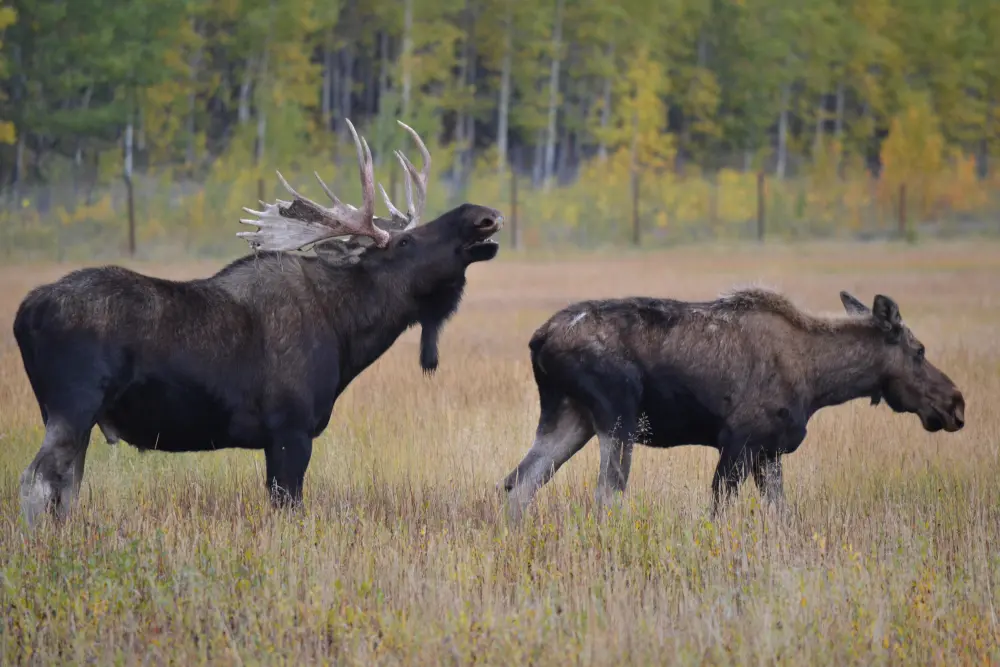
Historically, adjectives were the labels of choice to communicate animal gender identifiers. A broad selection of these labels has resulted - which are not universally applied, even within the same species. For example: in the deer family or Cervidae, males are identified as bucks and females are called does. In moose, and caribou - also members of the Cervidae family - males are called bulls and females are called cows while elk males are referred to as stags.

Cervids
From left to right - moose, caribou and Elk.
Males are called bulls (elk are called stags) and females are called cows.

Generally these cervids in groupings would be called herds (though moose are not actually herd animals) while elk can be also called a gang - watch out!

Not limited to just fur-bearing creatures, these titles are applied to other species and there are often departures from the naming conventions used. Rabbits are called bucks and does while steelhead trout males are called bucks, with females being called hens rather than does.

There is also a vast difference in the scientific naming of all creatures. Over the centuries a number of early scientists attempted to establish a format to classify animal groups. Ancient Chinese created the first recorded reference in 2700 BC, but it was quite limited and focused primarily on flora (vegetation) of their geographic region. 

Check out our Facebook post to learn more about Vulpes vulpes; not all red foxes are created equally but all are a red fox!

  1. Remember Fox and the Hound? A male is called a tod (sometimes a reynard or a dog), while females are referred to as vixens.
  2. Young are most commonly called kits but can also go by cubs, or pups.
  3. The collective noun to describe a group of foxes are a skulk, earth or a leash! These names are related to fox behaviour corresponding respectively as a group hunting together, a mama fox with her kits, and a group of domesticated or captive foxes as a leash.

Now, there are other foxes including Arctic fox (Vulpes lagopus), swift fox (Vulpes velox), fennec fox (Vulpes zerda), and others across the world for a total of 12 species that comprise the largest genus, Vulpes.

Smaller classifications exist within the genus Urocyon which include the gray fox. The only extant species of fox belonging to the Otocyon genus is that of the bat-eared fox found in the African savanna.

Ancient Greek philosopher and scientist Aristotle described a large number of natural groups, and although he ranked them from simple to complex, his order was not an evolutionary one. He was far ahead of his time in separating invertebrate animals into different groups and was aware that whales, dolphins, and porpoises had mammalian characters and were not fish. The Aristotelian method dominated classification for many centuries. During this period, it provided a procedure for attempting to define living things through careful analysis, it neglected the variations between living things.

In 1758 Carolus Linnaeus, who is usually regarded as the founder of modern taxonomy and whose books are considered the beginning of modern botanical and zoological nomenclature, drew up rules for assigning names to plants and animals. He was the first to use binomial nomenclature consistently. Although he introduced the standard hierarchy of class, order, family, genus, and species, his main success in his own day was providing workable keys, making it possible to identify plants and animals from his cataloging. Linnaeus was the father of the Field Guide.

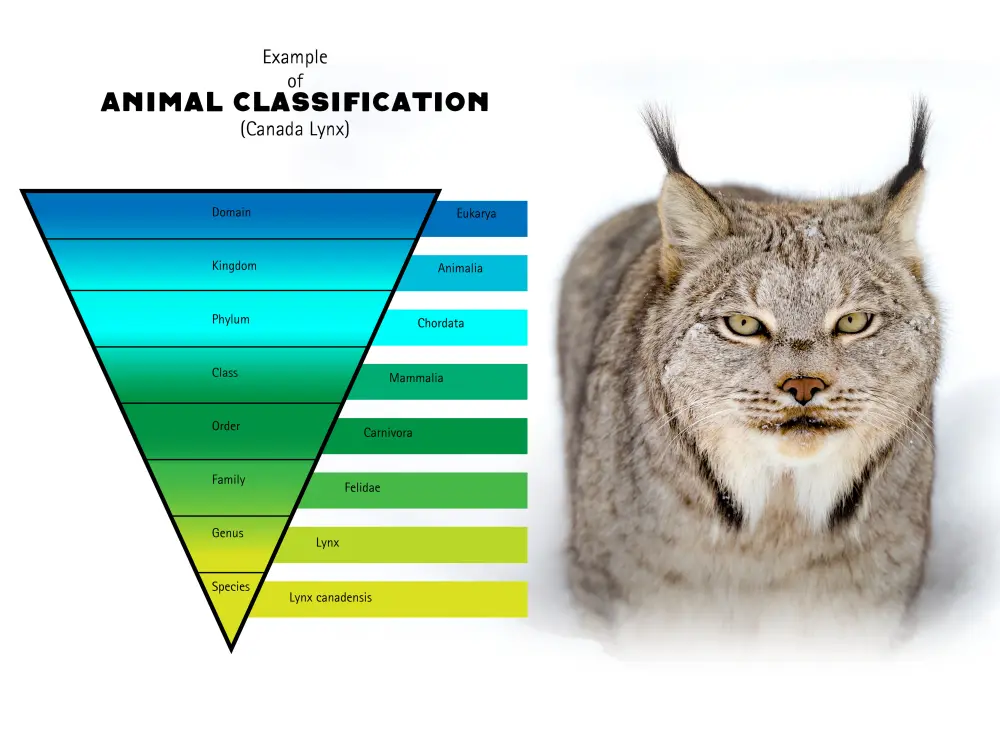
Lynx classification

Over the centuries a number of paleontologists, biologists, and scientists contributed to refining Taxonomy as we know it today. Perhaps the most notable of these was Charles Darwin - who explained his theory of evolution by describing how animals changed over time, yet still remained within specific categories in taxonomy.

Below is a table defining each classification of steppe Bison, the 15,000-year-old ancestor of today’s wood bison. As you can see, their classifications are not much different, other than identifying wood bison as a sub-species.

While their scientific classifications are very similar, the animals themselves were quite different. Steppe bison persisted through the great extinction of the last Ice Age up until about 5,400 years ago. A relatively recent find in Whitehorse city limits proves steppe bison persisted giving rise to the bison seen in the Yukon today but are not the direct descendants of the steppe bison.

Darwin’s famous illustration The Tree of Life displays the evolutionary relationships between species. This idea caused a great deal of controversy when he concluded that mankind evolved from the apes which was contrary to the religious teachings of the day.

Muskox and bison - both species are members of the Bovidea family. In this family, males are called bulls and females are called cows. The young are called calves and groups of both species are referred to as "herds". But that is where the line is drawn for their nomenclatures. The Inuit name for muskox is "omingmak," which means "the animal with the skin like a beard." Geographically, today's populations of muskox and bison do not overlap and their adaptions to winter survival as a result are very different.

We can see from this phylogenetic tree how bovids (horn bearing) and cervids (antler bearing) are related to each other. The animals with icons represent those species at the Yukon Wildlife Preserve. The Yukon has 9 of the 11 ungulates of North America, excluding the bighorn sheep and pronghorn antelope. What's also interesting to note is that mountain goats are their own genus and muskox are more closely related to sheep and goats than they are bison!

When we dive into the scientific name we can see how the classifications carry over. For instance muskox, Ovibos, share genus naming from sheep and cow. Caribou or Rangifer tarandus is reindeer in Latin, from the Greek tárandos, also meaning reindeer. So when someone asks you the difference between caribou and reindeer, you can say, nothing! (Except, reindeer fly!)

Classification tree for ungulates bovid and cervid

(Note: this a general phylogenetic tree; it is not complete and does not represent accurate branch length for amount of genetic change and complexities of sub-taxa).

Beyond the labels used for animal species, their offspring also suffer from a variety of descriptors to classify their young age. There are calves, fawns, foals, pups, cubs, kittens, chicks, hatchlings, fry and owlets to name a few. Yes, there is a lot to remember, but with practice you can master the various names used to identify animal difference.

These descriptor variations also extend to the words used to describe a group of an individual species. There are herds, colonies, congresses, tribes, swarms, flocks, droves, clutches, packs, murders, litters, pods, braces, convocations, gangs, schools, hordes, gaggles, bands, and numerous other words used to describe a group of same-species creatures. There are even names given to groupings of animals that are, in fact, unlikely to group together given their territorial and/or solitary nature - like owls, moose or wolverines.

Even within a class of animals like birds, its a complex web of classification and further to each species' grouping names.

Birds:

  • In general - Flock
  • Eagle - convocation
  • Falcon - cast
  • Owl - parliament, stare or wisdom
  • Swallows - flight, gulp
  • Swans - bevy, wedge
  • Ptarmigans - covey
  • Ravens - unkindness, rave, conspiracy
  • Magpies - tiding, mischief
  • Grouse - pack, covey
  • Crane - sedge
  • Ducks - raft in water and skein when flying
    • mallards on the ground can be called a sord
  • Geese - gaggle
  • Loons - asylum


Other mammals:

  • Squirrel - scurry
  • Wild canids, dogs - pack
  • Goats - tribe
  • Otters - romp
  • Porcupines - prickle
  • Voles - colony
  • Wolverines - mob
  • Martens - richness

Invertebrates:

  • Bees - grist, hive or swarm
  • Caterpillars - army
  • Flies - business

Amphibians (no reptiles in the Yukon):

  • Frogs - army
  • Toads - knot

Fish:

  • Trout - school
  • Salmon - bind, draught or run

It's an interesting read to understand the many different words used to describe an animal’s gender, how they are identified when they are youngsters and in groups together. Of course, the list above is centered on animals that make their home in the Yukon - imagine some of the animals that live in your neck of the woods, or places you've travelled to, and what those animals' naming classifications may be.

What is more, the naming of animal's as described by history must also recognize that many of these species, (beyond the few mentioned like Wapati and Omingnak), also hold Traditional and First Nation naming of animals that are descriptive, communicating the animals' place, use or spiritual significance.

Do you have any interesting or favourite animal classification terms/names? Share them with us in the comment section below!

Doug Caldwell

Doug Caldwell

Wildlife Interpreter

Doug is one of the Interpretive Wildlife Guides here at the Preserve. An avid angler and hunter he has a broad knowledge of Yukon’s wilderness and the creatures that live here. With a focus on the young visitors to the Preserve, Doug takes the extra time to help our guests to better appreciate the many wonders of the animal kingdom here in the Yukon.

Lindsay Caskenette

Lindsay Caskenette

Manager Visitor Services

Lindsay joined the Wildlife Preserve team March 2014. Originally from Ontario, she came to the Yukon in search of new adventures and new career challenges. Lindsay holds a degree in Environmental Studies with honours from Wilfrid Laurier University and brings with her a strong passion for sharing what nature, animals, and the environment can teach us.

867-456-7400
Lindsay@yukonwildlife.ca

Explore by Category

Explore by Author

The Dangerous and the Benign: distinguishing between big scary bugs

The Dangerous and the Benign: distinguishing between big scary bugs

conservation

by Joelle Ingram | Mar 25, 2021

This article was made possible thanks to support from the Environmental Awareness Fund. Engage and educate yourself in this 10-part blog series, about Yukon Biodiversity.

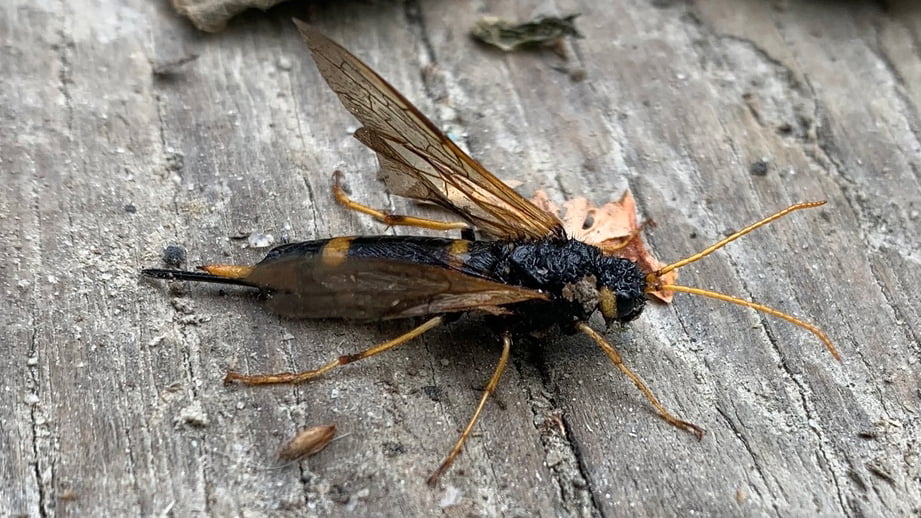
Banner Photo:  Yellow-tailed Horntail.  Photo credit: iNaturalist griffontrail in Dawson YT.

12 minute read - 

I think we can all agree that the past year has been pretty rough with the fires and the pandemic and the political unrest. When you add the appearance of large and intimidating Asian giant hornets on our fair continent, it makes it feel like we’re living through some biblical plagues. For those of you who have not been hysterically following the news, the Asian giant hornet (aka “the murder hornet”) is a massive hornet that earned its ominous nickname from its fun habit of decapitating hundreds of bees at a time and then carrying off the bee babies (the babees) to feed its own young. Also they sometimes kill people. Yikes. In the spring of 2020, they added to the general calamity that was all of last year by popping up in Washington, DC where the U.S. residents were understandably upset to have this horrible serial killer hornet added to their ecosystem.

iNaturalist observation of an Asian giant hornet.  No iNaturalist observations are to date recorded in Canada.  Photo Credit (c) Wonwoong Kim, all rights reserved

Obviously, the North American invasion by Asian giant hornets wasn’t kept secret and word traveled all the way to our remote territory. It’s probably because of this news that when a large insect with a prominent “stinger” and suspiciously hornet-like colouring was spotted during the Yukon Wildlife Preserve Bioblitz, some people got very nervous! But fear not, fellow Yukoners! The Yukon is a deeply unappealing habitat for the coast-loving murder hornets. The insect that garnered so much attention at the Bioblitz due to its large, scary appearance and prominent butt-spike is only a threat to felled trees. This benign bug is a horntail also known as a “wood wasp” (of the family Siricidae) and it could not be less like the invasive death machine it was mistaken for.

On the Left:  Yellow-tailed Horntail.  Found in Yukon.  iNaturalist Photo Credit M_Mossop

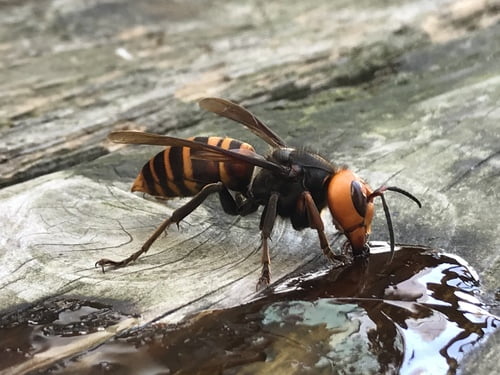
On the Right:  Asian giant Hornet.  Not found in Yukon.  iNaturalist Photo Credit (c) Alpsdake, some rights reserved (CC BY-SA)

Before we examine these insects in detail, a quick addendum. While scientists and academic types should never let personal bias cloud their research, I am not a scientist nor particularly academic so prepare for some bias. I HATE insects of the wasp/hornet variety. I mean the kind of loathing that would start a centuries long blood feud between families in olden times. Yes, they get props for being pollinators in their spare time but oooooh my god. These stripey menaces ruin every summer outdoor dining experience by completely disregarding your personal space and then rendering your beverage undrinkable after they drown themselves in it. Also, if they sting me, I die and that dynamic would sour any relationship. With that out of the way, let’s meet these bugs!

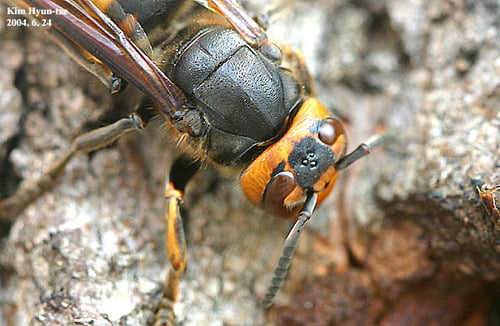
The Asian giant hornet or Vespa mandarinia (which sounds like a particularly elegant moped) is aptly named as it is the world’s largest hornet! Worker hornets are 3.5 cm long while queens get up to 5 cm. Their wingspans range between 4-7 cm which is probably more bug than the average person wants to deal with. If their size isn’t a giveaway, their large orange heads and black eyes make them very recognizable.

iNaturalist observation Asian giant hornet.  Photo credit: (c) Kim, Hyun-tae, some rights reserved (CC BY)

Unlike a lot of other hornets and wasps, these big hornets only nest in the ground. They favour forested areas in coastal environments which is bad news for our west-coast brethren but good news for the Yukon which is notably low on hospitable coastal regions. During the one-year life cycle of a nest, worker hornets usually forage alone and mostly hunt for beetles. The dark and sinister nature of these hornets rears its head in the fall when the colony needs a lot of protein to raise the next generation of queens.

In order to bring in the protein required to beef up their queens, workers abandon solo-foraging missions and band together for group raids. These raids attack high-value targets like the hives of honeybees or even the hives of other hornets. When these raiding parties hit a hive, they decapitate all the adults like they’re doing a re-enactment of the French Revolution then cart off the brood for food. These murder hornets really live up to the moniker as they can kill off thousands of bees in a few hours. Bees are already on a dangerous decline and Asian giant hornets can absolutely devastate local bee populations. This makes their appearance in America and Canada especially concerning.

Although the sudden appearance of murder hornets would be very on-brand for 2020, Asian giant hornets have been in North America before. They were discovered in Nanaimo, BC in August 2019 when beekeepers found a destroyed nest with a whole heap of headless bees outside of it. Their appearance in Washington is just an extension of their coastal conquest. Fortunately, the number of murder hornets in North America is still pretty low. This is good news for humans as people deaths from Asian giant hornets are usually due to disturbing a nest and incurring many stings. Unless you have an allergy (like some people who wrote this article), you have high chances of surviving a murder hornet attack if you have less than fifty stings. Rest easy, I guess? That being said, the Washington State Department of Agriculture had to order special suits to study Asian giant hornets because their massive stingers can pierce through normal beekeeping gear so maybe rest less easily.

It’s time to ease yourself into the warm waters of relief because the horntails that hang out in the Yukon are nothing like this. They’re not invasive, they don’t sting, and unless you’re a dead tree, they pose absolutely zero risk to your health and wellbeing. Yes, wood wasps are also intimidatingly large and similar in size to Asian giant hornets. They range in size between 1-4 cm with females tending to be larger than their male counterparts. Horntails get their name from their cornus: a stinger-shaped plate on the back of their body. Horn. Tail. Geddit? Even though it looks like a stinger, rest assured that it isn’t. Horntails don’t sting or produce venom and don’t really have any defenses other than looking scary. Females in particular look like they have a MASSIVE stinger but it’s actually an ovipositor that helps them lay their eggs into the wood of conifer trees.

iNaturalist image Yellow-tailed Horntail.  Whitehorse YT  Photo credit:  Jake Paleczny

Here’s a fun fact: female horntails have a symbiotic relationship with a fungus! Similar to horntails, basidiomycete wood decay fungi enjoys a nice rotting log. Female horntails help this fungus spread to new locations by carrying bits of it in a specialized pouch on their abdomen. When the female lays her eggs, she also deposits the fungus inside the rotting wood. The horntail also benefits from this arrangement as the larvae get to snack on the fungus after they hatch.

Unlike the newly arrived murder hornet, we’ve probably had horntails in the Yukon as long as we’ve had conifer trees. The reason you might not run into them all the time is that they spend most of their lives inside a tree. After a female lays her hundreds and hundreds of eggs in the wood of a felled or rotting tree, the young hang out in that log for 1-3 years. After they emerge from their timber home as a fully grown adult, they only live for 3-4 weeks! Because they spend so much time in wood, young adults sometimes show up inside people’s homes because the lumber they’ve been tunneling around in has been used as construction material. So they’re not out there murdering bees and giving horrible stings but they can occasionally give you a nasty surprise by exploding out of your new rocking chair.

iNaturalist Yukon.  Yellow-tailed Horntail.  Photo Credit:  Bruce Bennett

I hope your fears are assuaged and you won’t dread painful stings and bee death when you encounter a big scary bug in the Yukon wilds. The horntail might be intimidating in appearance, but it’s a passive insect that just wants to spend most of its life noodling around in a tree. Asian giant hornets are definitely horrible nightmare insects that were probably manifested into existence as punishment for our sins but at least they’re horrible nightmare insects that don’t live up here.

iNaturalist Asian giant hornet resting on human hand.  Photo credit:  (c) elfsama, some rights reserved (CC BY-NC)

Joelle Ingram

Joelle Ingram

Human of Many Talents

Joelle is a former archaeologist, former wildlife interpreter, and a full-time random fact enthusiast. She received her master’s degree in anthropology from McMaster University. One of the four people who read her thesis gave it the glowing review “It’s a paper that would appeal to very specific group of people,” which is probably why only four people have read it. Her favourite land mammal is a muskox, her favourite aquatic mammal is a narwhal. She thinks it’s important that you know that.

867-456-7400
 info@yukonwildlife.ca

Explore by Category

Explore by Author

Love for the Lynx

Love for the Lynx

conservation

by Lindsay Caskenette | Feb 13, 2021

This story was originally published February 13, 2021 in the e-blast newsletter to Yukon Wildlife Preserve's membership.

Are you a member but don't receive these email Newsletters?  Contact us at info@yukonwildlife.ca to update your email preferences.

While the ungulates have already gone through their languages of love the carnivores are just getting started!

It's a great time to hear the courtship calls from the lynx, arctic fox and red foxes. While the two species of foxes are the same gender (red foxes - males, arctic foxes - females), our lynx group consists of a male and two females and all three lynx will remain in the habitat together this season.

In past years we have separated the male to eliminate breeding potential - an important practice to manage our animal collection and animal numbers. This year however the lynx will be left together to let nature take its course!

Our 3-legged male has never bred before nor has our younger female, who turns 7 this spring, so we do not have any history to give indication of sexual success. Our other female, who is now 13 years old, has successfully reared offspring in her younger days - most recently in 2014. If breeding is successful we could expect kittens in mid - late May. YWP collection growth and stability is a consideration for breeding given the age of our male, also 13 years. Further to that, BC Wildlife Park in Kamloops, a CAZA accredited facility, will also look to add to their population by accepting a litter of siblings. This potential breeding will be an important contribution to lynx genetics and the Species Survival Plan given how unique (completely unrepresented actually), his genetics are among captive populations.

It's all up to the animals and only time will tell if these individuals are successful.

Lynx at Yukon Wildlife Preserve L to R:  3-legged male circa 2018 and kitten circa 2014.

All Photos credit:  Jake Paleczny

Lindsay Caskenette

Lindsay Caskenette

Manager Visitor Services

Lindsay joined the Wildlife Preserve team March 2014. Originally from Ontario, she came to the Yukon in search of new adventures and new career challenges. Lindsay holds a degree in Environmental Studies with honours from Wilfrid Laurier University and brings with her a strong passion for sharing what nature, animals, and the environment can teach us.
867-456-7400
Lindsay@yukonwildlife.ca

Explore by Category

Explore by Author

A Convocation of Eagles

A Convocation of Eagles

conservation

by Lindsay Caskenette | Jan 22, 2021

What do the dates; August 7th, September 21st, and October 20th have in common?  Well, each of these days the Yukon Wildlife Preserve's Wildlife Rehabilitation Centre received a new patient, with each those being an eagle. It started with the Golden Eagles arrival from Watson Lake, followed by a Bald Eagle from Jake's Corner, and another Bald Eagle from Mayo.  While an arrival of an animal, into the centre for care by the team at the Preserve, isn't distinctive; it is unusual to receive an influx of eagles in the fall.

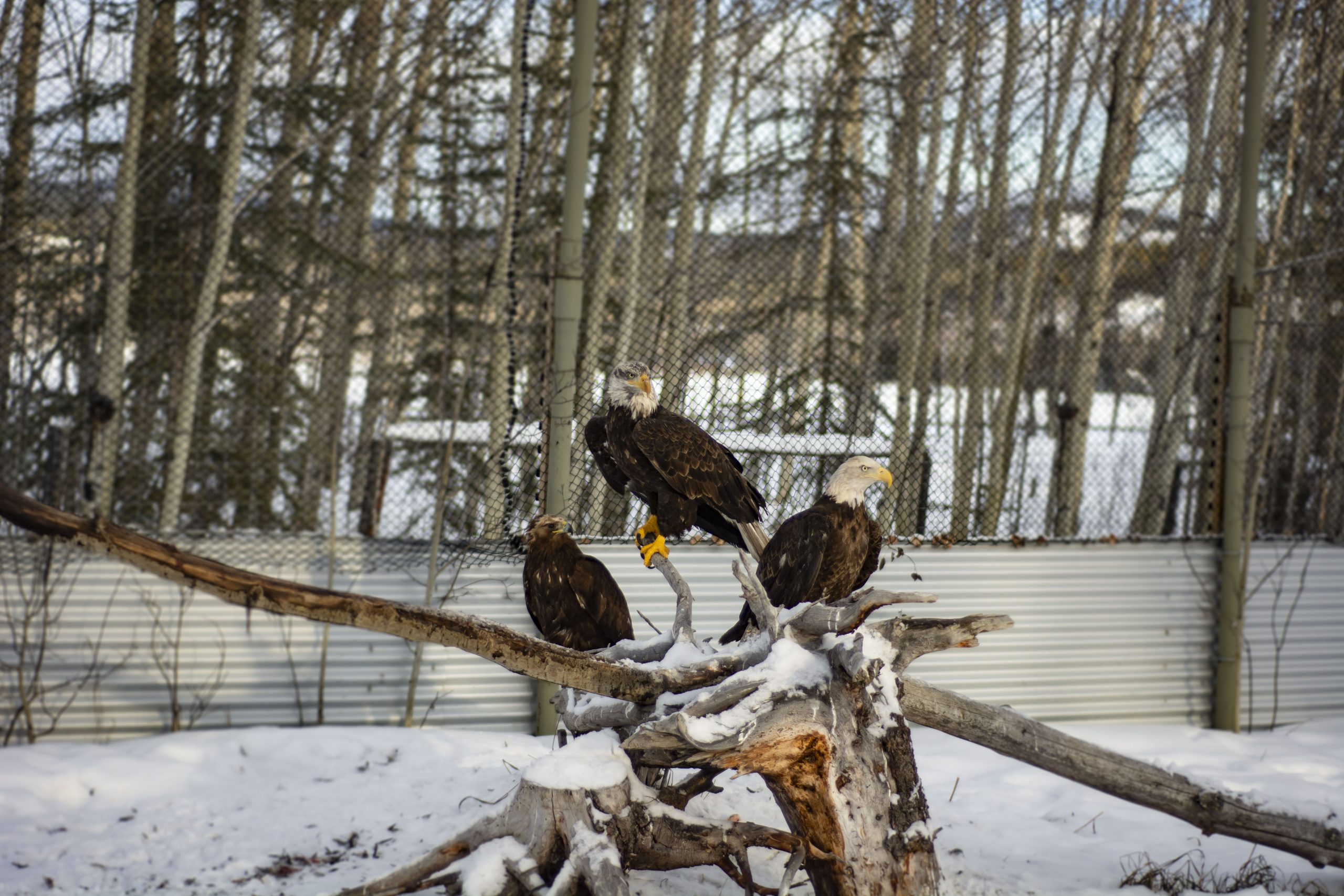
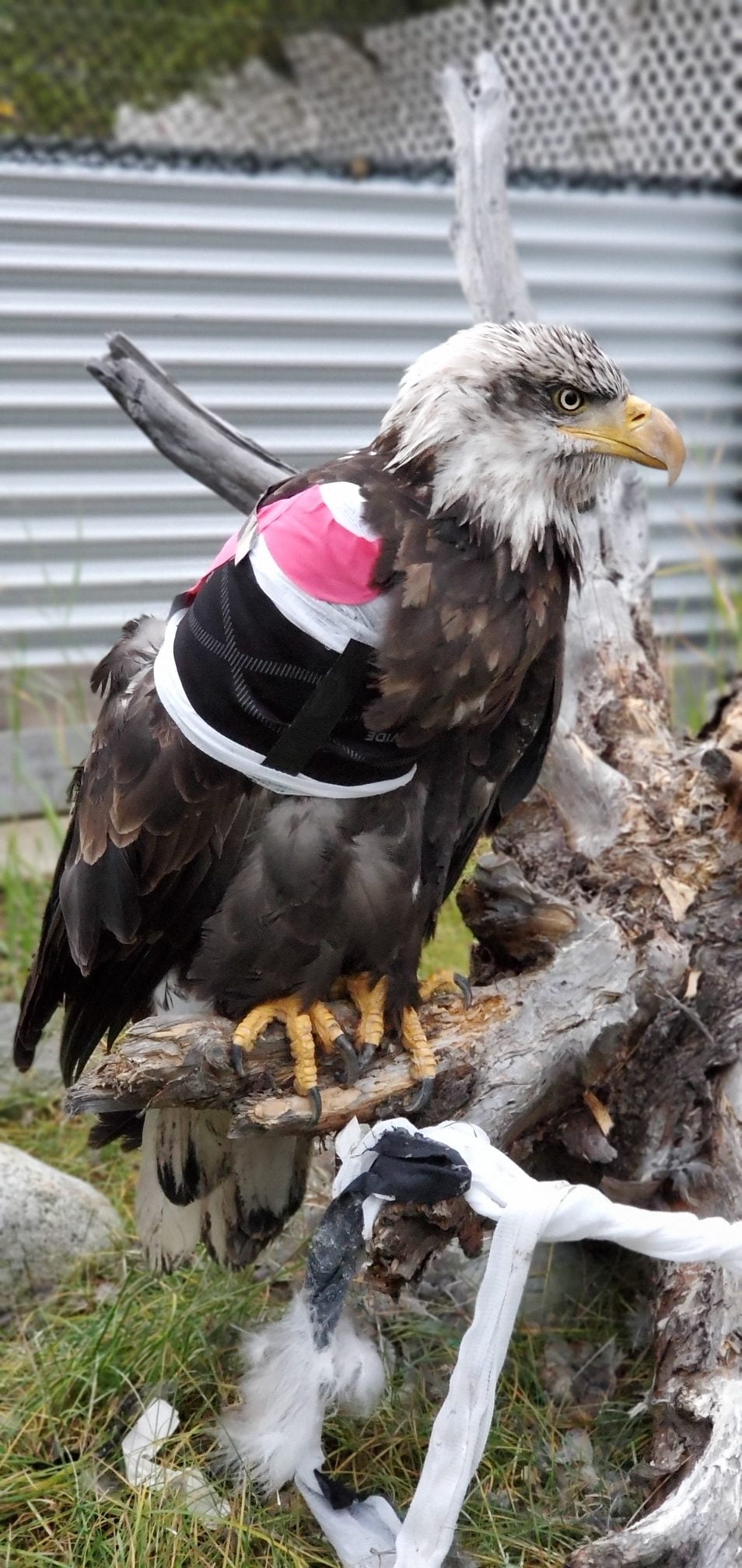
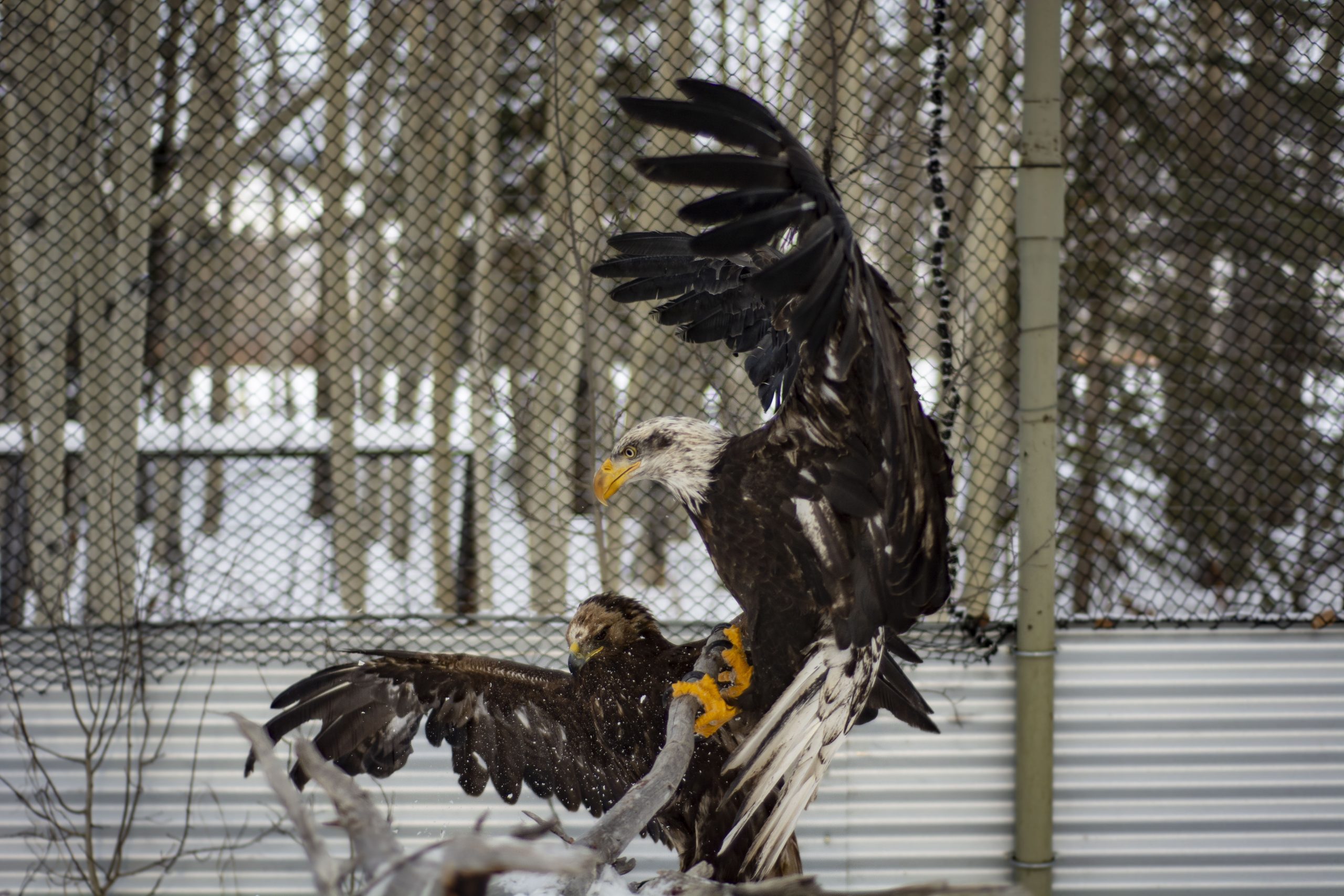
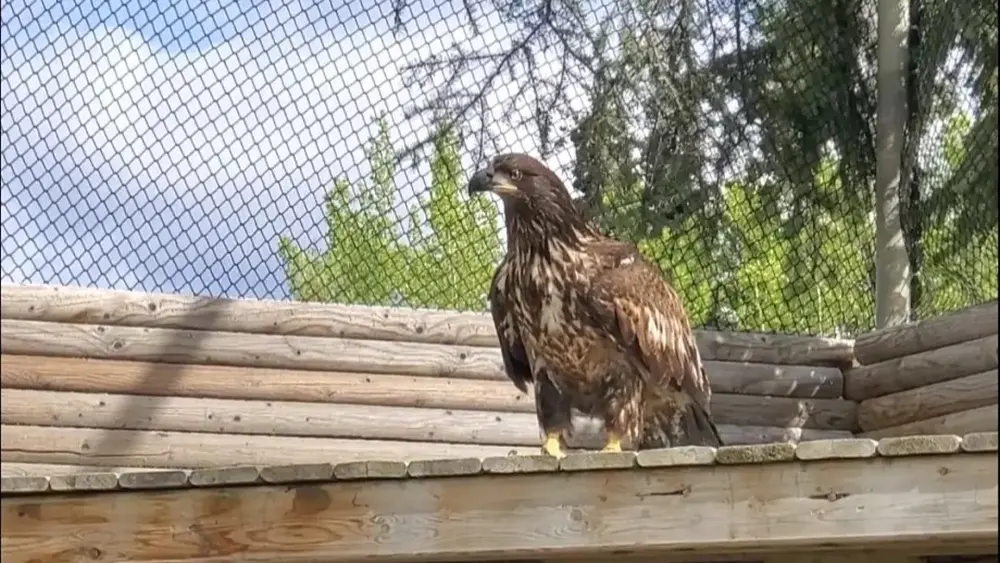
Seen from left to right is the Golden Eagle, the younger Bald Eagle with scapular injury from Jake's Corner, and the older Bald Eagle with carpal infection from Mayo.

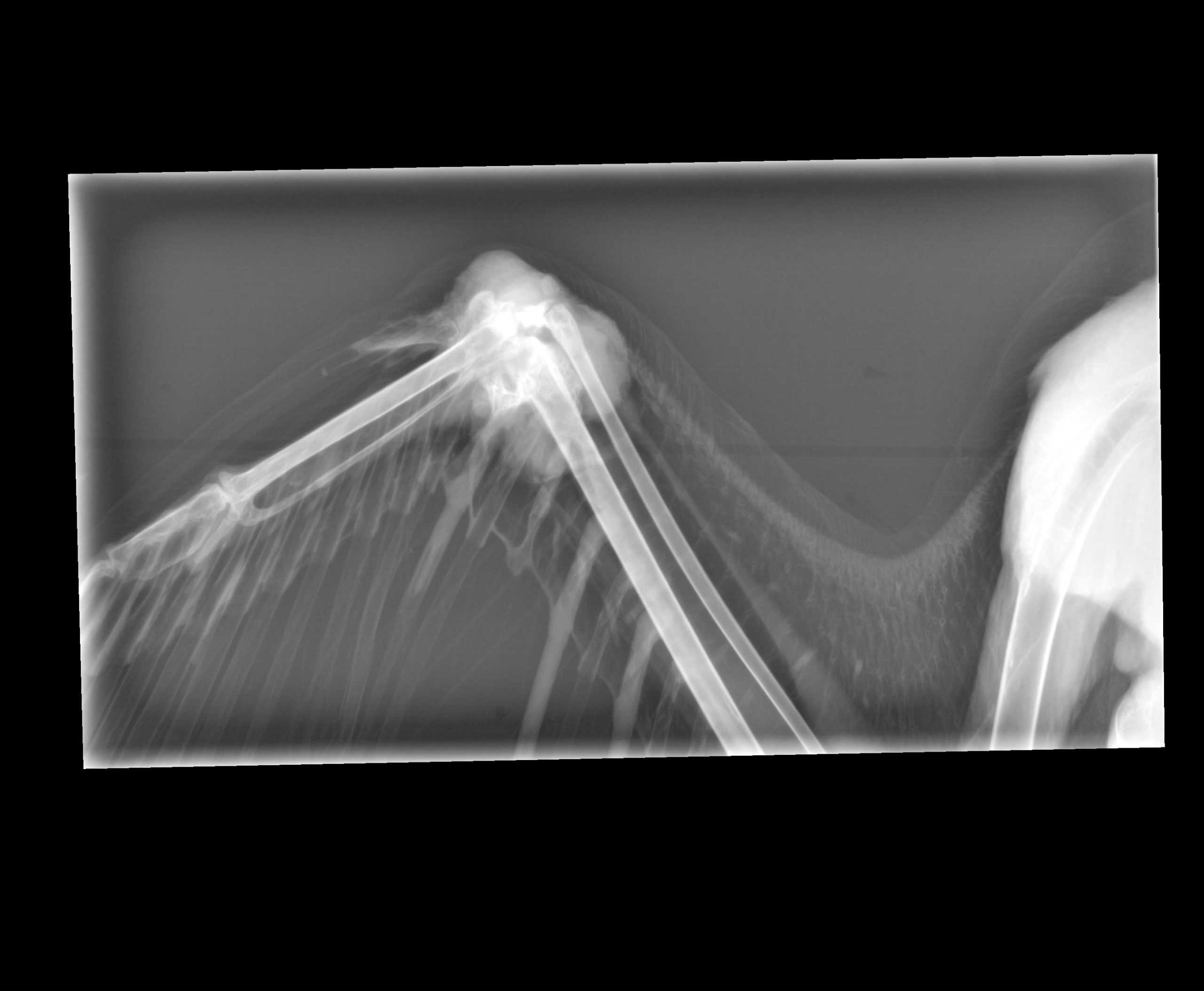
Over the years, the Rehabilitation Centre has admitted many eagles - both golden and bald. Some of these occasions have occurred to eaglets, some adults. Some of these have been due to injury to the individual - like from a nest blowing over in strong winds (they're nests are built over years and with time can weigh hundreds of pounds, which for our small northern trees can sometimes be just too much to support).1https://www.nationaleaglecenter.org/eagle-nesting-young/ Often times, we do not know the circumstances around an animals ailment but can gain insight from x-rays as to why an animal might be behaving differently than we might expect - like the successful juvenile bald eagle rehabilitation from summer 2020. A common thread for many of these eagles is admittance timing - usually in the Spring and Summer. 

Several months have passed since the three birds Fall time admittance. This time has allowed each eagle recovery, to some degree but there's much road ahead still for them each. We'll start first with the younger, (white with brown head) Bald Eagle from Jake's Corner.  A fracture to the scapular caused the animal to be flightless in the wild. The injury has healed. The wing was wrapped for 2 months to immobilize the wing but this does cause muscle atrophy - just like in humans who are casted following a bone break. The eagle was contained in a small aviary to help reduce its movements to maintain fracture alignment and eventual bone fusion.

Once this stage of recovery was met, the eagle was moved into the large aviary. This is an important phase of the recovery process for the bird -  movement and flight tests. This individual can fly, and will spend the rest of the winter building up flight muscles in the aviary to support its probable return to the wild in the spring!

The older (full white head) Bald Eagle who suffered from severe chronic infection of the right carpal joint was initially treated with a small hope that even though the integrity of the joint was compromised the eagle might still be able to fly well enough and survive in the wild after the infection was controlled and the wing healed. However, based on most current radiographic imaging and physical exam, done by Dr. Maria Hallock and the Animal Care team, the prognosis is poor. While the infection is cleared and the joint has healed, its integrity is compromised - this will prevent the eagle from being able to fly uninhibited. Observations of the animal in the large aviary has seen it able to gain lift up to 6 feet and fly off the perch within the aviary but unable to maintain latitude for more than 20 feet. 

The Preserve will continue to care for this individaul through the remainder of the winter. We will continue to monitor and observe its behaviour.

Finally, the Golden Eagle has had the longest and most challenging recovery of the three. While we are happy to report that the left foot has recovered from the infection due to porcupine quills; the right foot is severely compromised due to the infection. This has resulted in multiple bone dissolution and loss of the skeletal and ligamentous integrity of the foot and consequently loss of its function. The bird can perch but cannot grasp effectively with the right foot. The bird still has a long way to its full recovery. At this time it does not look probable for the bird to be released back into the wild sucessfully due to this loss of functionality in the foot - an important tool for a bird of bird such as this to capture its food to survive.

The x-ray image of the Golden Eagle's feet shows significantly compromised structure between the right and the left. The left foot was imaged with the banadaging on his feet still. The Golden Eagle is observed to be perching, and with the other birds, more and more. This is a postive progression from when he was often observed resting on stomache and on the ground, rathern than higher perch.

Each of these birds are on their own path to recovery. The Preserve continues to provide care through, mostly now, feeding and observation. These birds eat a lot! If you are able to support the ongoing care of these animals please consider donating to the Wildlife Rehabiliation and Resaearch Centre Fund.

While we progress through winter and meet spring the Preserve's Animal Care team will reevaluate each individual and their release back to the wild or the alternative. The alternatives could include remaining at the Yukon Wildlife Preserve to live out their life and offer education and an opportunity to personally connect with such a magnificent creature. This will be a significant investment, up to a 25 year commitment, given the birds average lifespan and food requirements, however that the Preserve may not be able to provide this given the expenses. Another alternative may be to place them in another animal care facility or CAZA accredited institution.  Time will tell, to be continued . . .

Photo credits:  L. Caskenette

Lindsay Caskenette

Lindsay Caskenette

Manager Visitor Services

Lindsay joined the Wildlife Preserve team March 2014. Originally from Ontario, she came to the Yukon in search of new adventures and new career challenges. Lindsay holds a degree in Environmental Studies with honours from Wilfrid Laurier University and brings with her a strong passion for sharing what nature, animals, and the environment can teach us.

867-456-7400
Lindsay@yukonwildlife.ca

Explore by Category

Explore by Author