The Patience of a One-Eyed Owl

The Patience of a One-Eyed Owl

The Patience of a One-Eyed Owl

6 – 8 minute read

It is dusk turning to night, with darkness enveloping the forest. Stationed in a tree on the side of a road hides a predator, whose yellow eyes reflect with the passing headlights of cars driving by. This owl is currently listening, not only to the engines of vehicles and the sounds of gravel being kicked into the air, but for tiny rustling in the underbrush across this treacherous path.
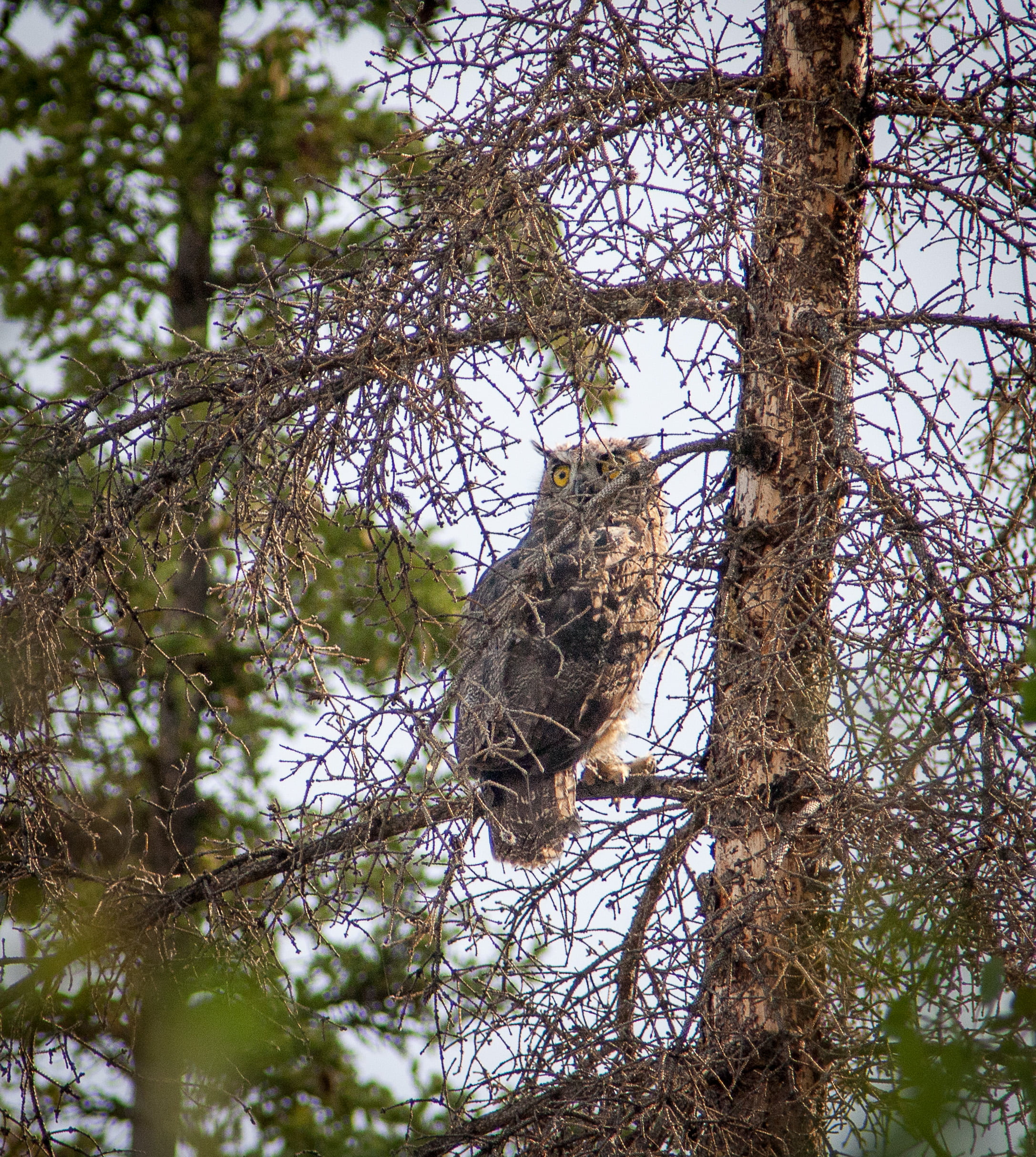
The ‘great horns’ on this owl are not their ears; instead, they have an opening on both sides of their head to take in the sounds bouncing off the facial disc of feathers around their face. One of these openings is slightly higher on their skull, allowing for the sounds of this noisy prey to enter one ear a fraction of a second faster than the other. As this owl twists their head, they finally pinpoint the location of their prey, following with their eyes to the exact location the creature is hiding. As they zone in and begin to take flight, all sounds except for the scurrying prey begin to fade. The great horned owl narrows its eyes on their target, taking in the flow of air around their silent wings whilst beginning the slight movements they need to grasp with their talons.

All of a sudden, in this brief moment of time, a life is imperiled; a flash of light enters the owl’s vision from their right side and the world goes blacker than the night they surround themselves in.

The road is a deadly location for many animals; vehicles can collide with wildlife passing through, garbage and trash commonly finds itself on its side, and carnivores often use these areas to hunt those animals taking advantage of the weedy species growing in abundance. Not only do predators hunt those in the underbrush, but they also find themselves on the sides of roads waiting for foolish prey to cross the area with no cover.

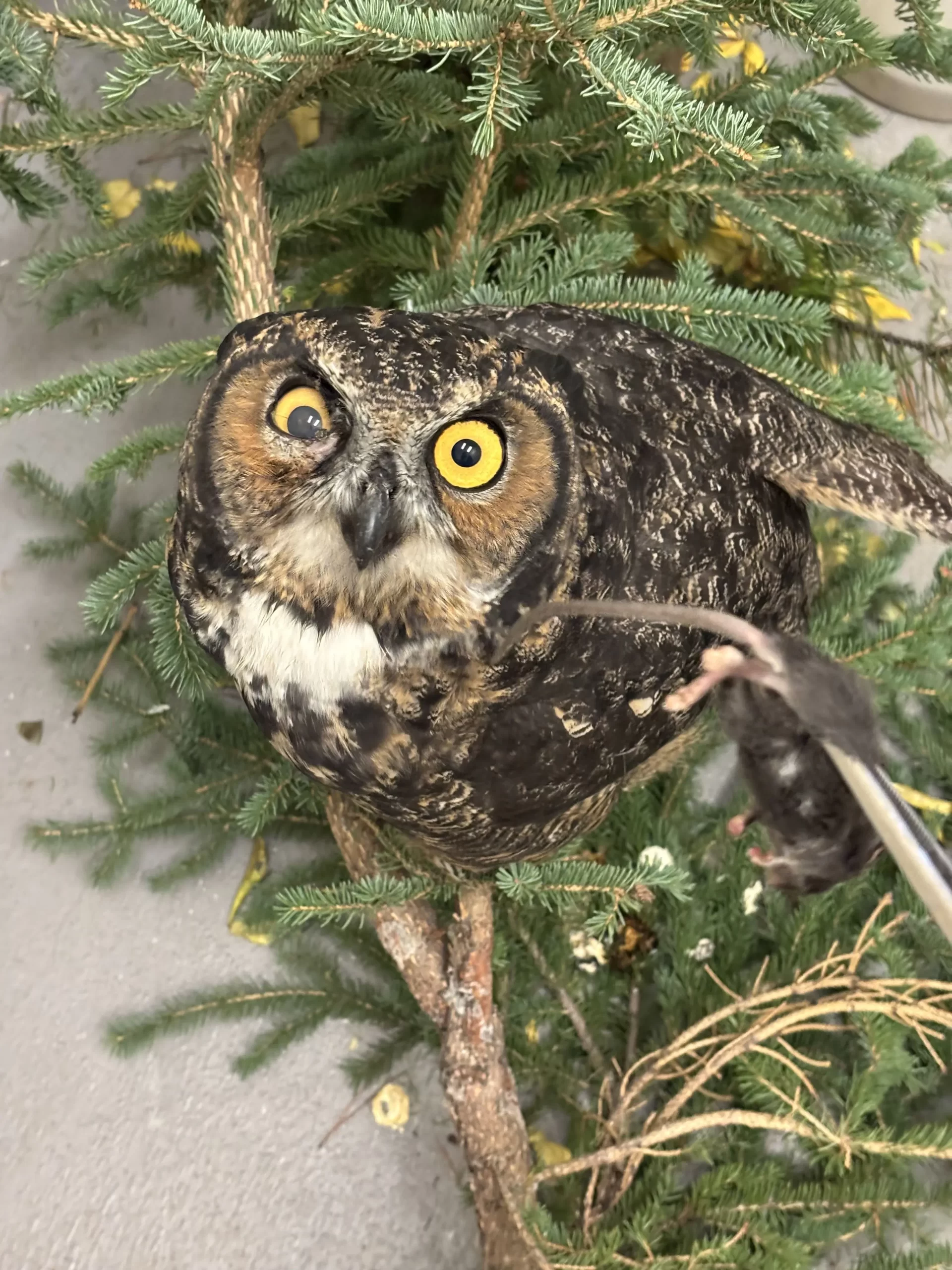
This photo captures another rehabilitated and released great horned owl at the Yukon Wildlife Preserve. It highlights how roadways provide convenient hunting grounds for owls that perch where the forest and our roadways meet. Photo credit: B. Forsythe

A great horned owl that has recently entered our rehab center was one such predator. When they were first admitted into our charge, our animal care team was told by rescuer Sonya Bingley that they were struck by a car, north of Braeburn, resulting in difficulty flying and their right eye remaining swollen shut.
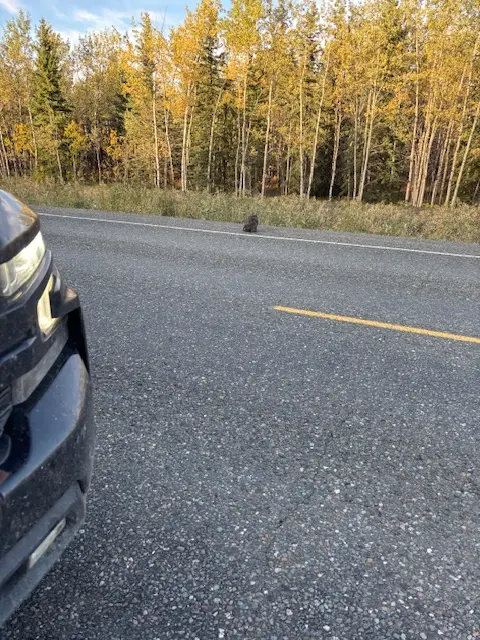
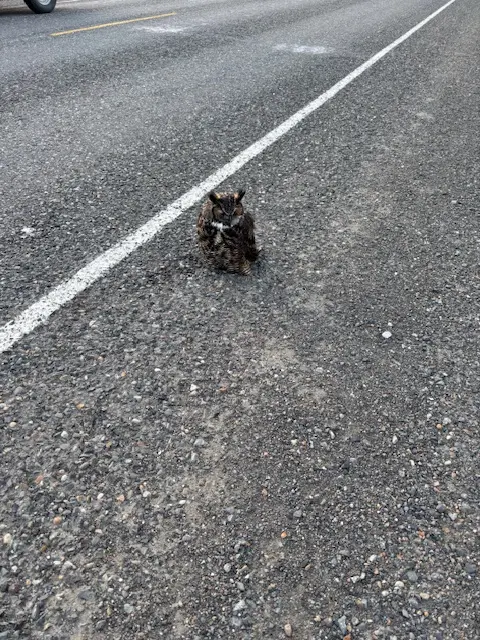
Photo by Sonya Bingley. Sonya spotted the owl on the side of the road while driving just North of Braeburn, Mayo/Klondike Hwy, Yukon. 

After some brief examinations led by the veterinarians at AlpineVet and initial attempts at feeding, the owl was visually responding to our team’s actions using their left eye, but had a lack of ferocity that is normally expected from birds of prey. The intake exam looked at the owl’s entire body, determining that the only major injury was to their right eye.
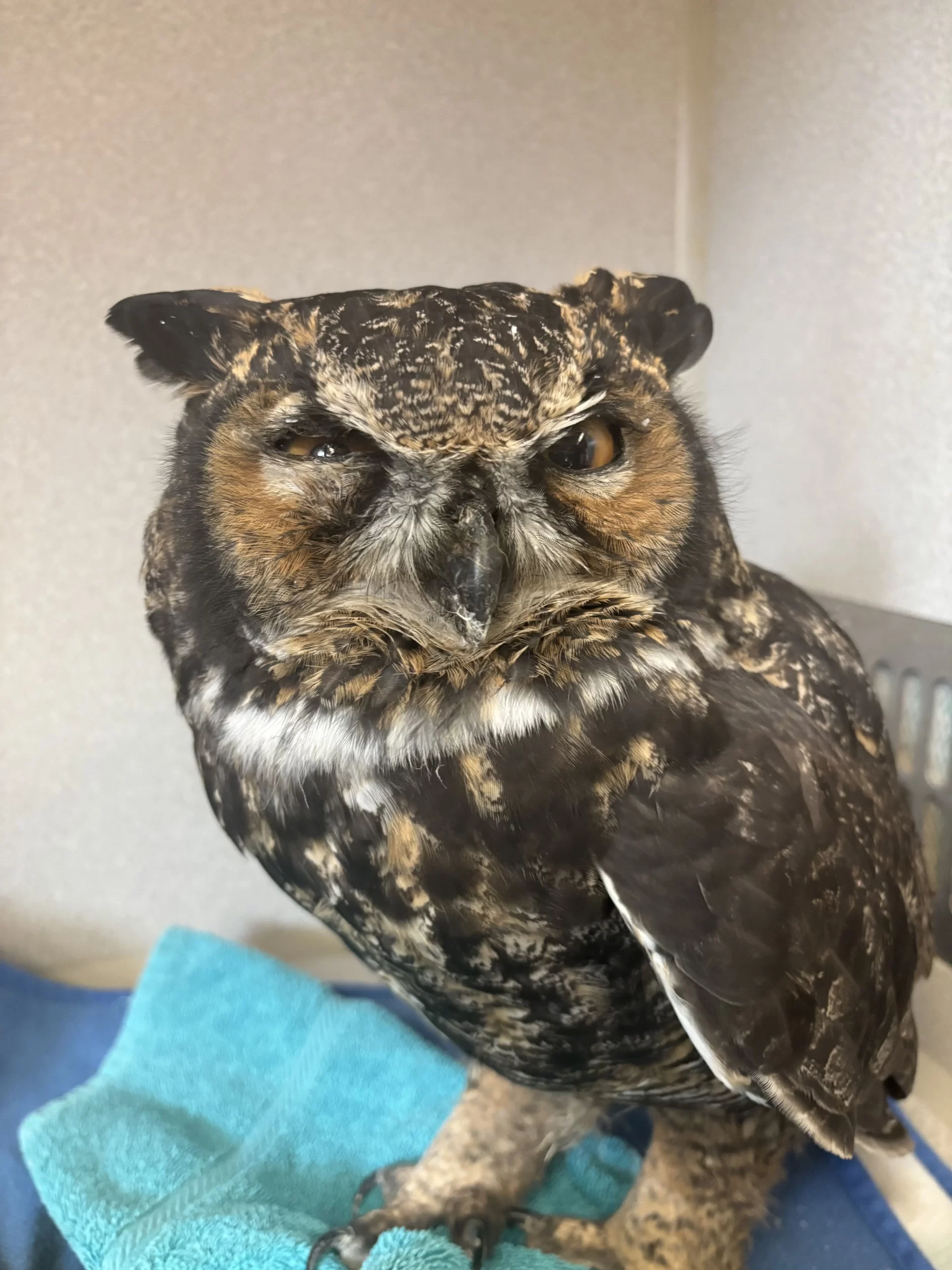
As there was most certainly head trauma, the lights were kept low while we gave them pain medication and encouraged them to eat. During this process they were extremely patient with being handled, prodded, and even picked up in their entirety. The meals they would eat were few and far between, and the rare times that they would flap their wings were when being picked up too briskly. Alongside this, their ability to balance when being picked up or placed down was lacking, often resulting in the bird tumbling when attempting to walk. 
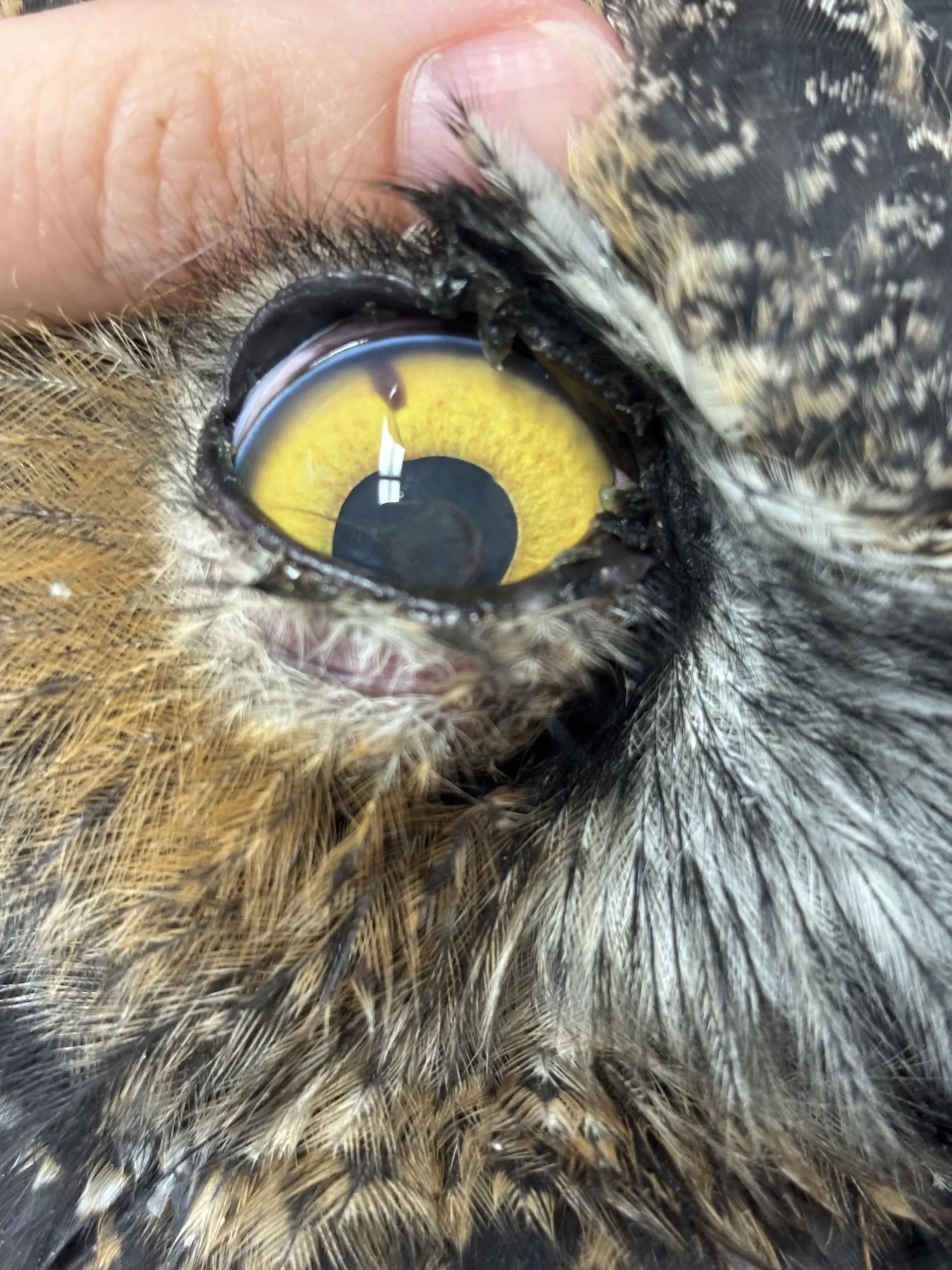
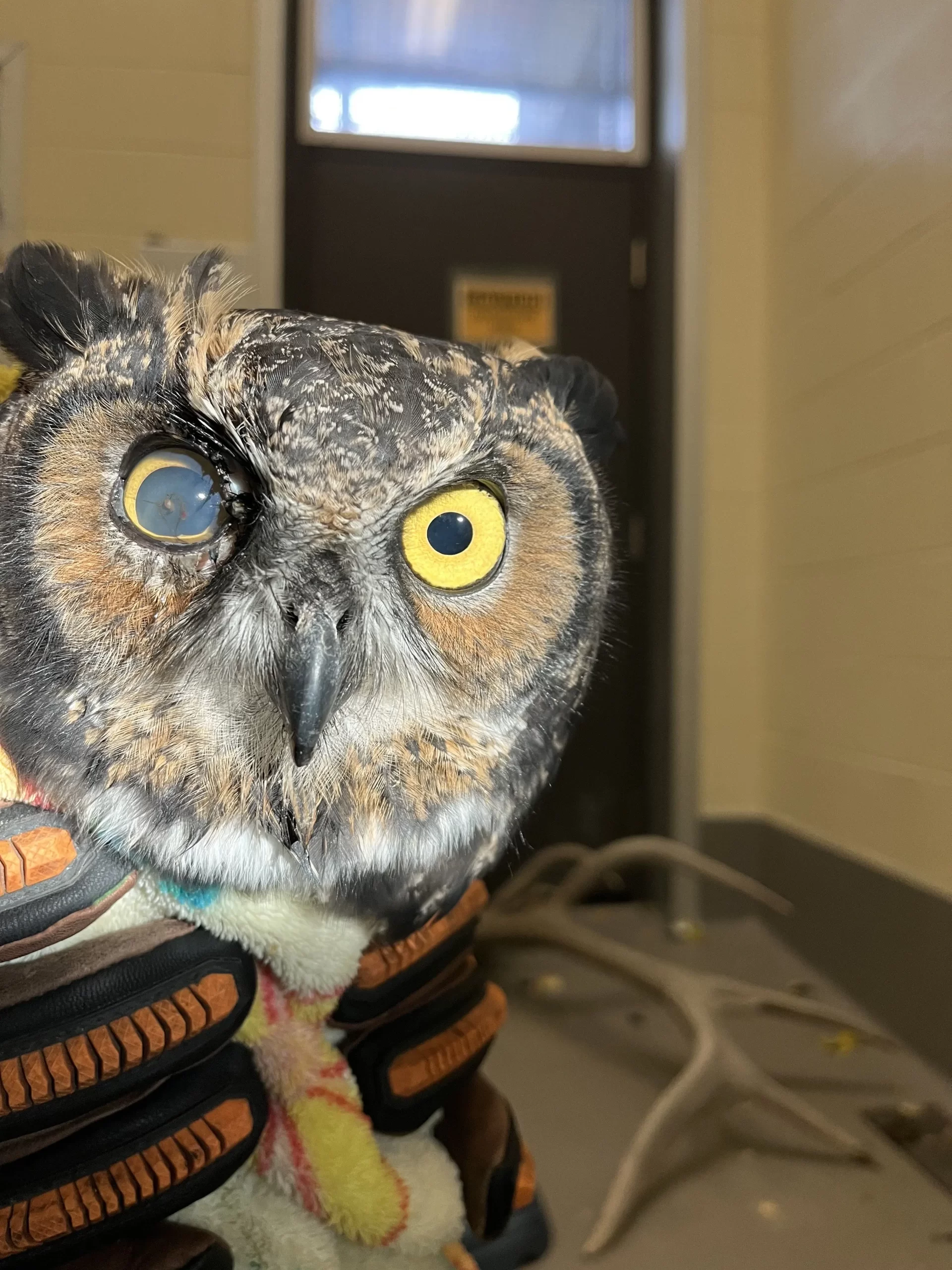
When the owl was initially received and the intake examination was concluded, a closer look at their right eye was needed, noting that it was swollen shut upon arrival. After opening the eye to get a brief look, both eyes were responsive to light and continued to be for multiple days in our care. Their right eye became less swollen as the days passed, however the owl kept squinting and their attitude remained dull with continuing signs of pain. Alongside this, the eye itself continued exhibiting changes each day, with signs of haemorrhaging and debris floating in front of the pupil, likely from a tear in the iris. Eventually the right eye lost its ability to react to light, and the owl was taken into another examination with AlpineVet, determining that the eye was now non-visual.
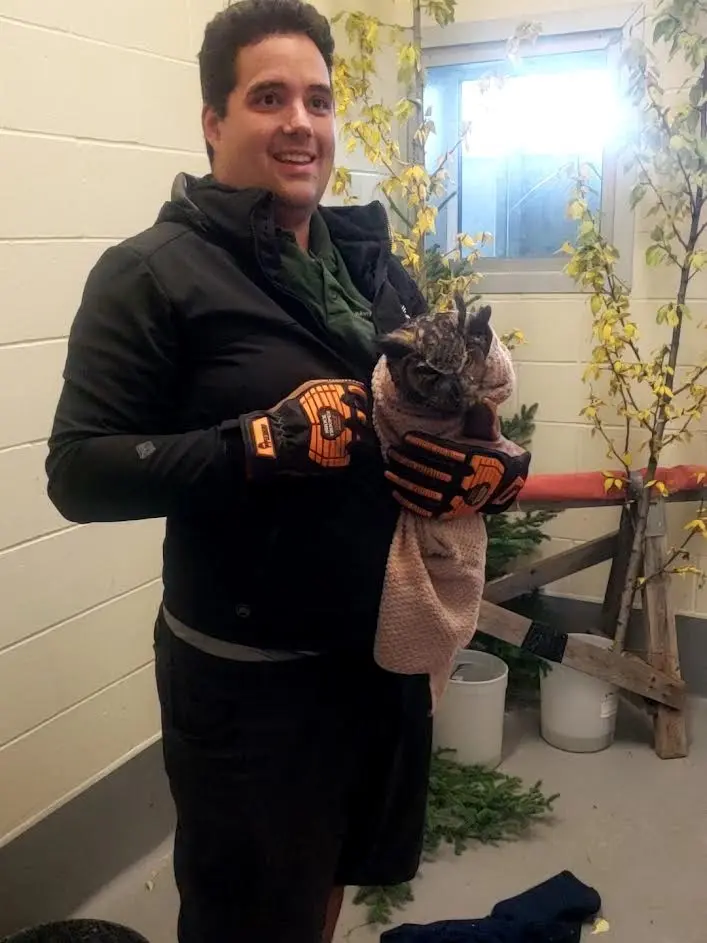
Neil explaining owl handling. Neil teaching the animal care staff how to properly pick up and wrap the owl to minimize injury during handling. Neil, Manager of Education and Programming, has history working in B.C., at an avian rescue centre.

Having concerns about a raptor being released into the wild with a single eye, inhibiting a key sense that they use to hunt, talks of all kinds were happening behind-the-scenes regarding eye surgery and the potential hazards of removing their eye completely.

Eventually, the preserve decided to reach out to experts in the field of raptor rehab in BC, an organization ironically known as OWL. The call we had was extremely informative, and we asked a few questions regarding the owl’s lack of hunger, balance, and whether or not a single-eyed owl could possibly be released successfully.

Their response eased our fears, they have had cases exactly like this one, and not only were owls with one eye common in their rehab center, they were also great candidates for successful release into the wild. 
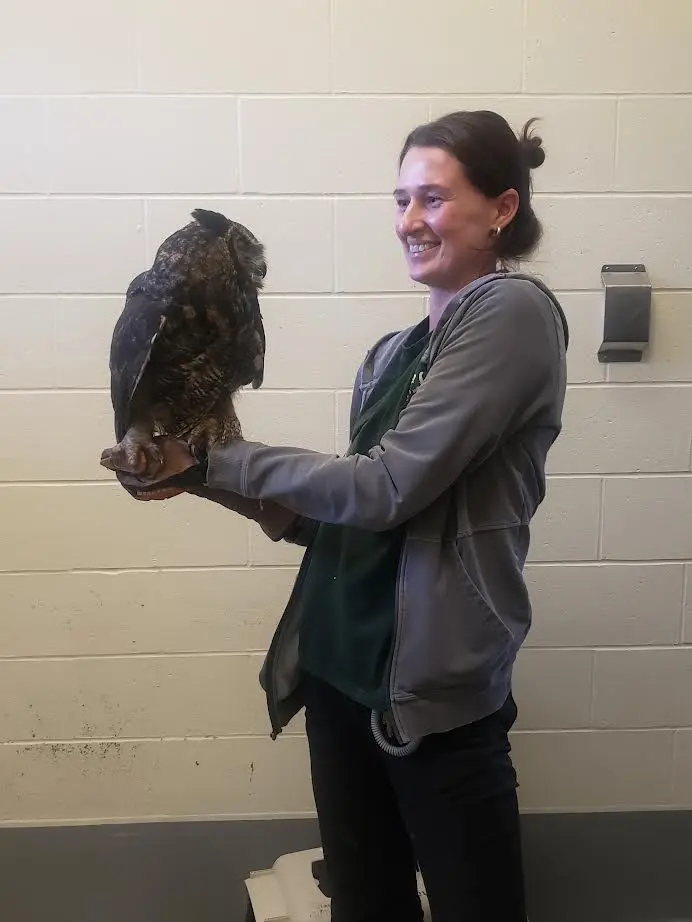
Alexis, Wildlife Care and Rehabilitation Technician and veterinary technician handles the bird during an examination. 

For owls struck by vehicles, eyes are commonly injured and need removal; however, through this call we found out that surgery to remove the eye is almost never necessary. Prior to this, we knew of two options for eye surgery that worked for owls: enucleation, the process of completely removing an eyeball from its socket by severing its connections with the brain; and evisceration, where the cornea of the eye and all of its inner contents are removed, leaving the sclera (white, fibrous outer shell of the eye) intact.

In terms of the successful release of an owl back into the wild, evisceration has a better success rate as that surgery minimizes the disruption to the owl’s facial disc. The facial disc of an owl is the concave formation of feathers around their face that directs sounds into their ears, which is what allows them to continue hunting prey in 3D space even when one eye is missing. However, through our call with OWL we learned of a third option for eye removal, simply leaving it.
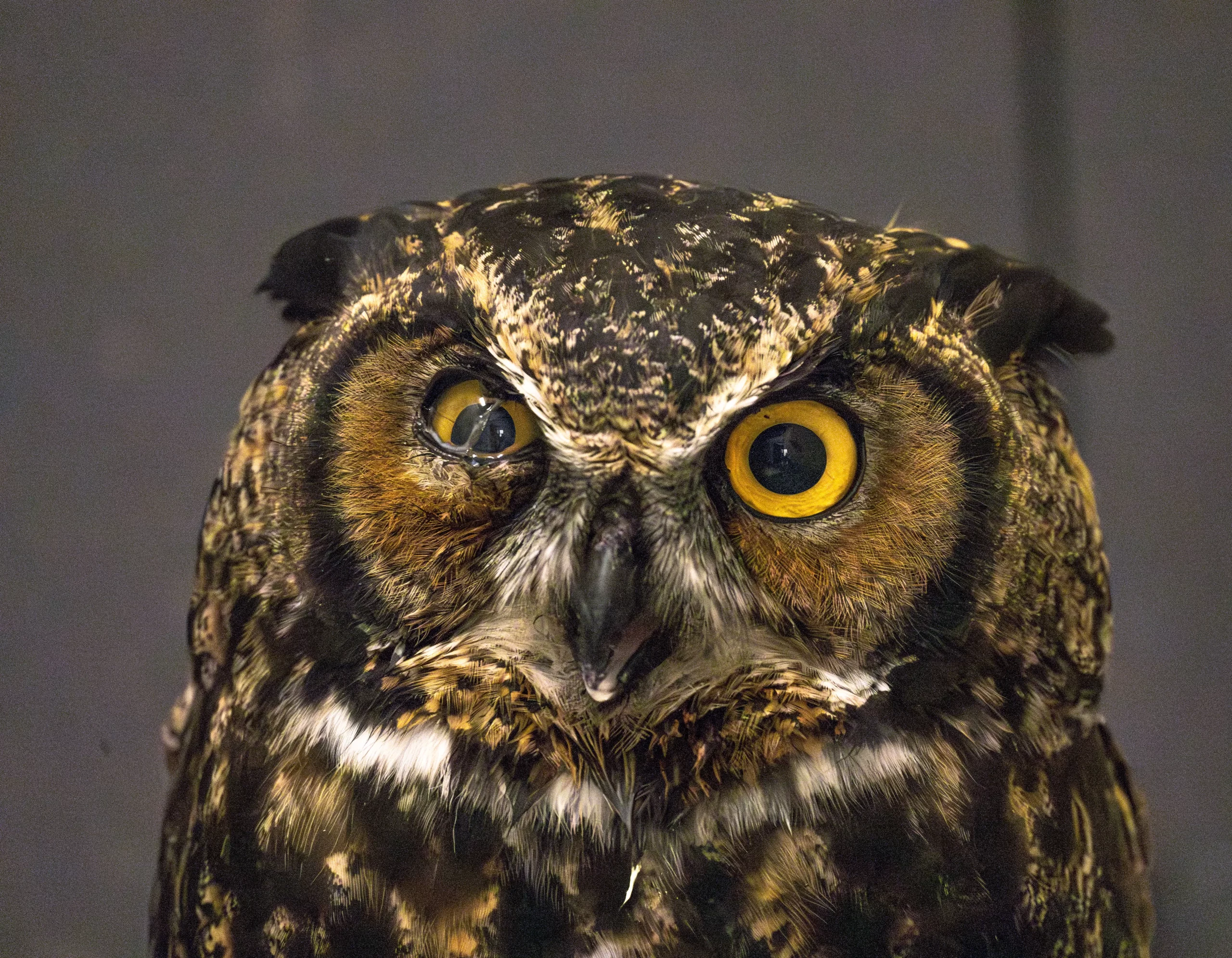
Close up view of the eye 3 weeks after being found and admitted to the centre. Great horned owl, Sept 2025 YWP. Photo Credit: L.Caskenette

Owls are able to allow their damaged eyeball to naturally degrade whilst in its socket, eventually making the orbital empty whilst not disturbing the fragile feathers around the owl’s facial disc. With three options presented to our animal care team for handling this eye-boggling problem, we continue to weigh our options whilst allowing the owl to regain their strength. They have made incredible progress thus far but still need to recover from their injuries, work their flight muscles out, and try hunting live prey before we release them. Of course, plans for rehab always seem easier at the beginning, and many things can go awry; but we will continue to play it by ear as situations arise.

With patience, we hope this owl will recover slowly but surely, gaining their vigour and ferocity back so we can reintroduce them into the wild. 

• • •

Read an update on how the owl is doing – November 2025. 

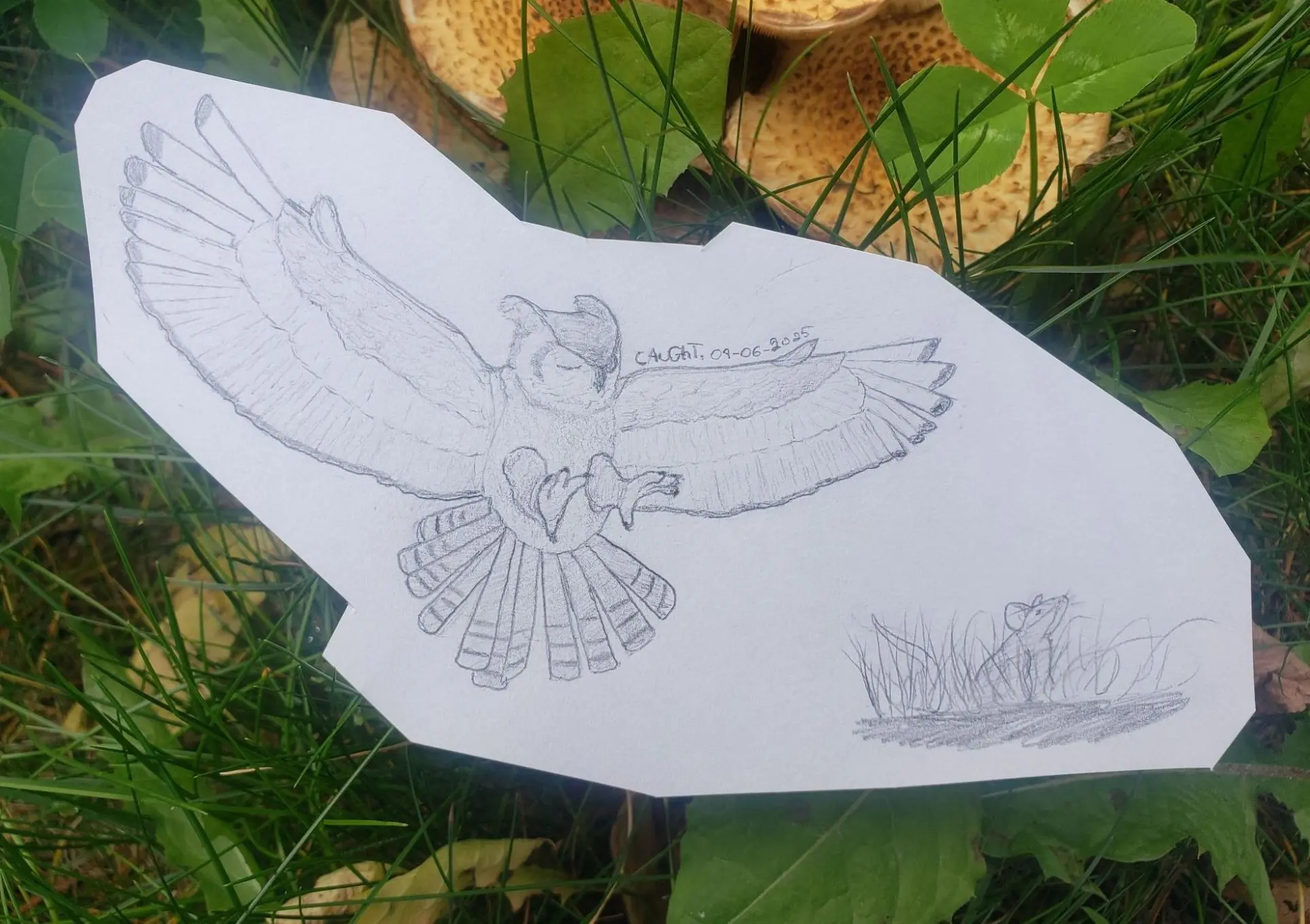
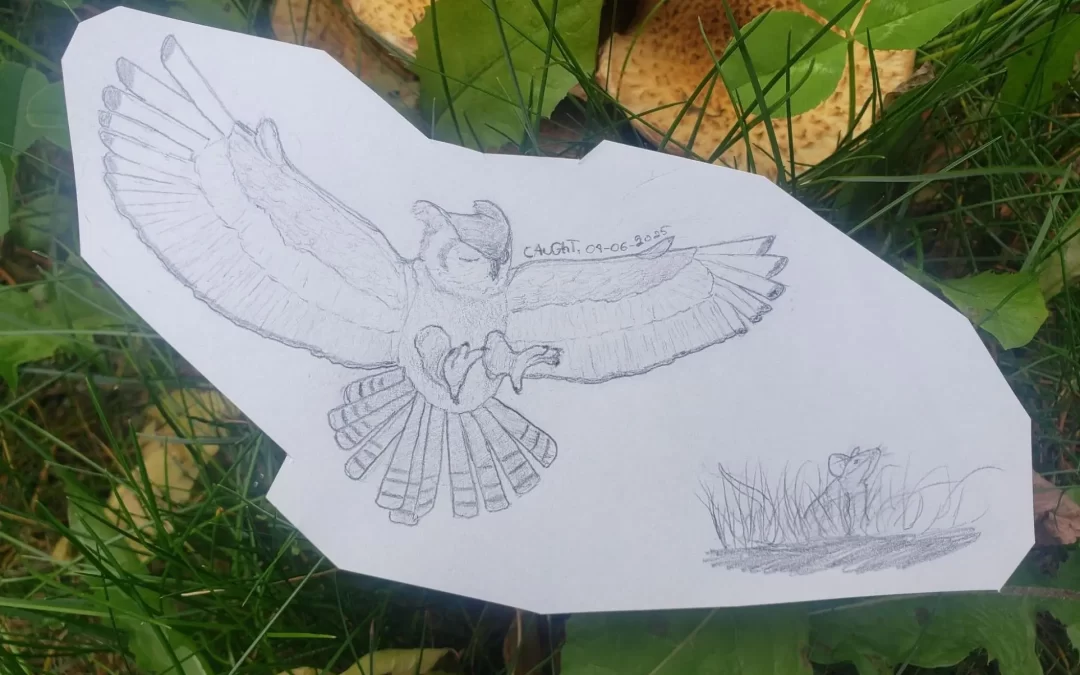
Created by Connor Dennhardt, titled ‘CAuGhT’.

All donations go towards the betterment of our rehab center and animal care team.

There is a comment section below for any thoughts that may have stirred from this story!

Thank you for your patience in reading this post.

Sonya Bingley was travelling the Klondike highway when they noticed an animal on the side of the road. Sonya was able to ensure the bird got the helped it needed. If you come across wildlife you suspect needs help check out what to do here

Connor Dennhardt

Connor Dennhardt

He/Him - Forester Educator

Connor grew up in Thunder Bay Ontario,  where he developed an interest in nature and exploring the outdoors. From his adventures, he learned how to thrive in the wilderness and learn to have fun even in the harshest of winters. His passion made him pursue an HBSa in Animal Sciences, where he earned the foundations of biology and found his love of science. His interests eventually led him to study in Svalbard, Norway; where he learned extensive amounts of information about the Arctic from researchers across the globe. From there, he has worked as a researcher within Quetico Provincial Park, a bee farm in Southern Ontario, and now has returned to the north as a Forester/Educator here at the YWP. He knows we aren’t quite in the Arctic, but he’s happy making it that much closer to his true calling.
Explore by Category

Explore by Author

Coexisting Through The Cold

Coexisting Through The Cold

Coexisting Through The Cold

4 minute read –

As the summer season gives way to autumn, creatures of all kinds will begin to prepare for the coldest time of year, when temperatures may become dangerous if appropriate shelter is not acquired.

Animals of course off-set the cold by growing thicker, denser coats to insulate against the chill. Also in preparation for this chill, the animals go into hyperphagia where they gorge on food to put on a layer of fat which provides two primary values: Fat can perform similar to an insulating blanket keeping the animal warmer against physical contact with the frozen ground and the cold breezes. The fat can also perform like a battery with energy stored in the form of carbohydrates providing the animal with the nutrients required during this challenging time of year to keep warm and muscles flexible.

Some animals have evolved to avoid all the extra work and discomfort of the winter by either migrating to warmer climes in the south or hibernating in a cozy den or other shelter. 

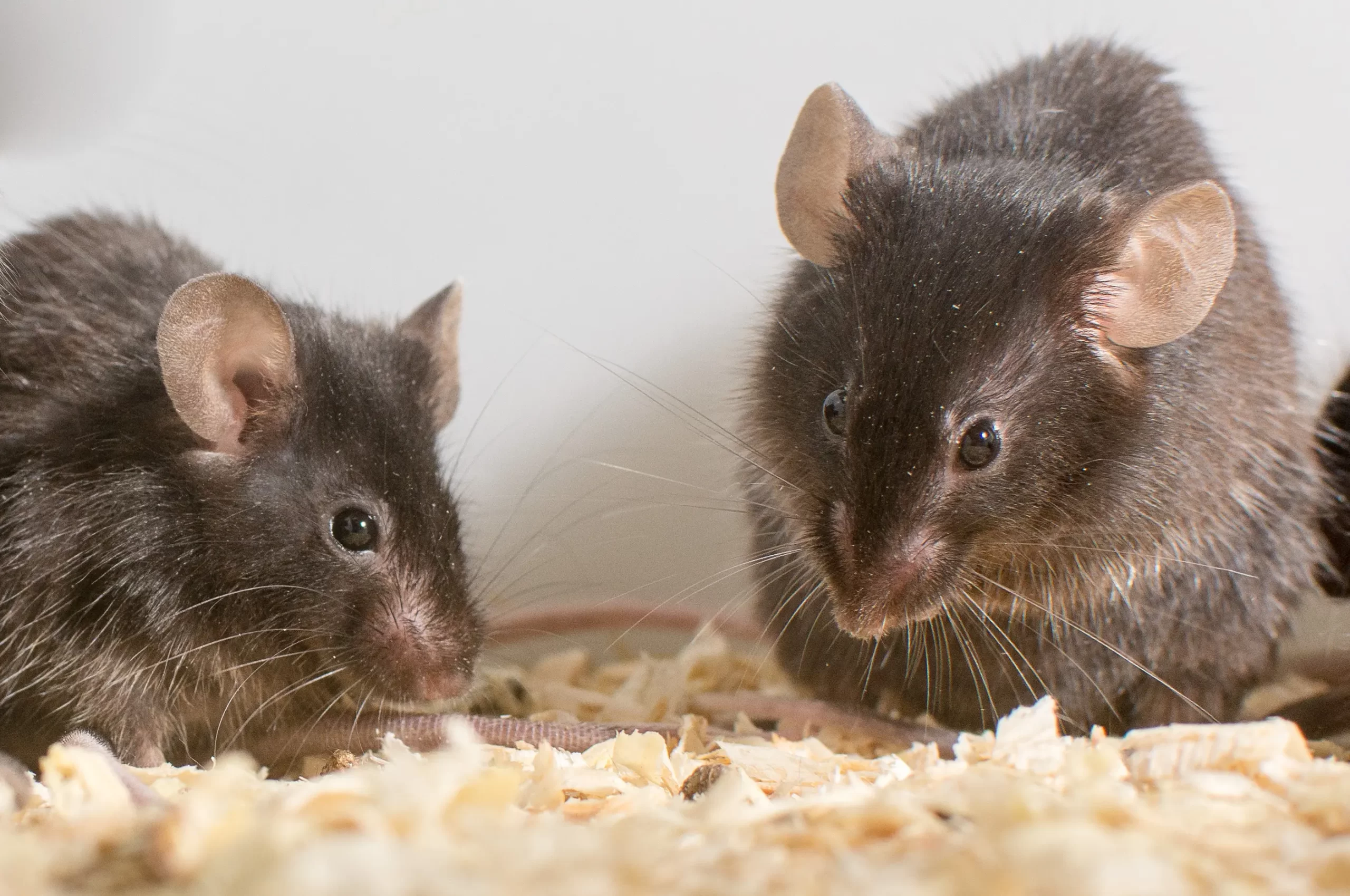
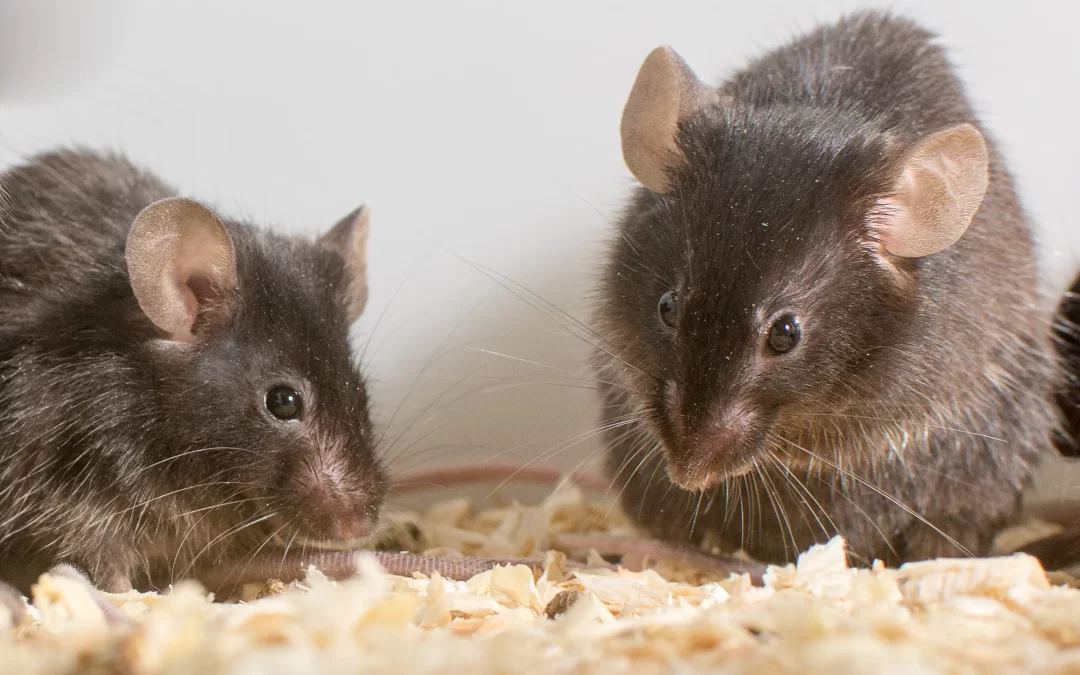
Autumn is the time when smaller creatures who do not hibernate go exploring for a warm, safe place to spend the winter, and human homes are very attractive for mice and similar rodents. Our homes have everything they desire including protection against the elements, water and if no food is available such as a pet’s food in a bowl on the floor, the rodents will instinctively bring their own harvested supplies from outside your home.

Rodents can bring much more than seeds, grasses and dried berries into your home, they may also introduce infections as well as their copious droppings and urine tracks. Hantavirus is a virus that is found in the urine, saliva, or droppings of infected deer mice and some other wild rodents. Hantavirus may be fatal for some people exposed to it.

So the task is to prevent these little rodents from entering your home and there are a number ways it can be done successfully. Step one is to review the past history of finding mice in your home. If you have a cat, this problem may not exist for you as a good mouser can eliminate much of the problem before it gets into your home.

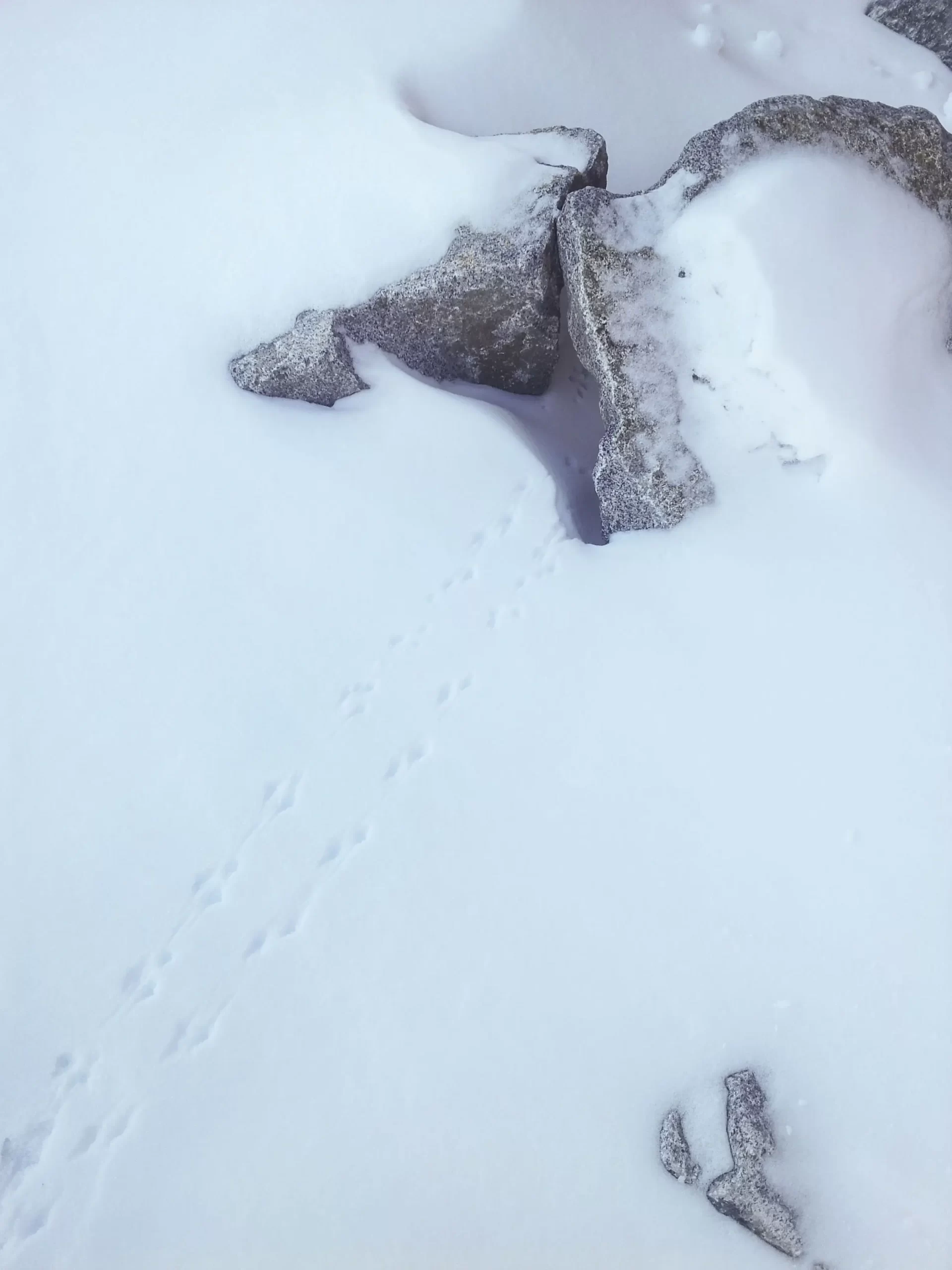
None-the-less, examine the outside perimeter of your home in search of places where the rodents may enter. Mice climb very well so look at the whole building, not just the foundation. A trick to help find the routes the mice take around your home may be accomplished in the dark of night with a ultra-violet light which will fluoresce the urine trails mice create, providing you with their most used routes and points of entry into your home

If mice are already living in your house, the task will be how to eliminate them effectively. Mankind has developed a number of ingenuous methods to dispatch rodents and we are always on the lookout for a “Better mousetrap”. Again, a kitty-cat works wonders, and natural solutions are most often the optimum.

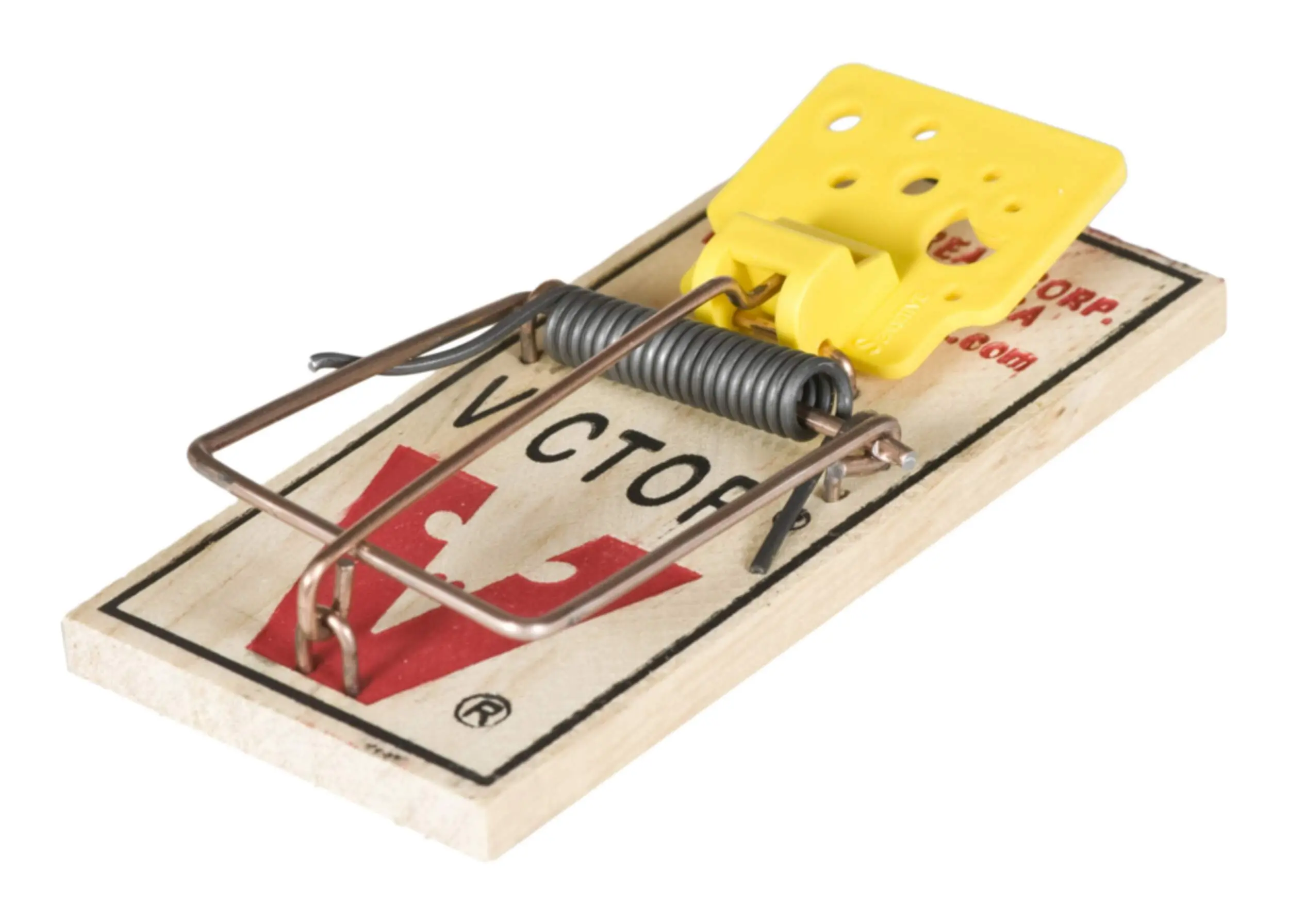
There are a variety of mouse traps available depending on your ethics in eliminating pest rodents. Oddly a greater concern for eradicating these small creatures leans to more humane ways to deal with the pests. Poison may appear to be more humane than the Victor snap trap or the morally superior live trap which allows live caught mice to be set free in another location. Whatever your position on humane pest trapping and eradication, the effects of the eradication methods used should not be transferred to other species to suffer from.

The old Victor snap trap is perhaps the most common and effective tool for this purpose, but if you prefer a more humane capture method, live traps are available and work well, but must be monitored to ensure the captured mouse does not perish if not released in due time.

It is wise to plan where you will release the captured mouse to ensure it will not trek back to your home. Some studies have shown that mice will travel up to 100 meters from their nests in search of food, while others have found they can travel several kilometers if necessary, to return to their nests

Sticky traps that immobilize the creature with a strong adhesive work well, but many consider them to be a cruel and punishing method as the animal will perish from starvation or dehydration. These sticky pads may also become attached to cat paws and dog noses and can be difficult to remove.

I must be honest here – I do not recommend poisons of any kind to eliminate pests of any species. Poisons are the weapon that keeps on killing even beyond the target species you originally wanted to remove.

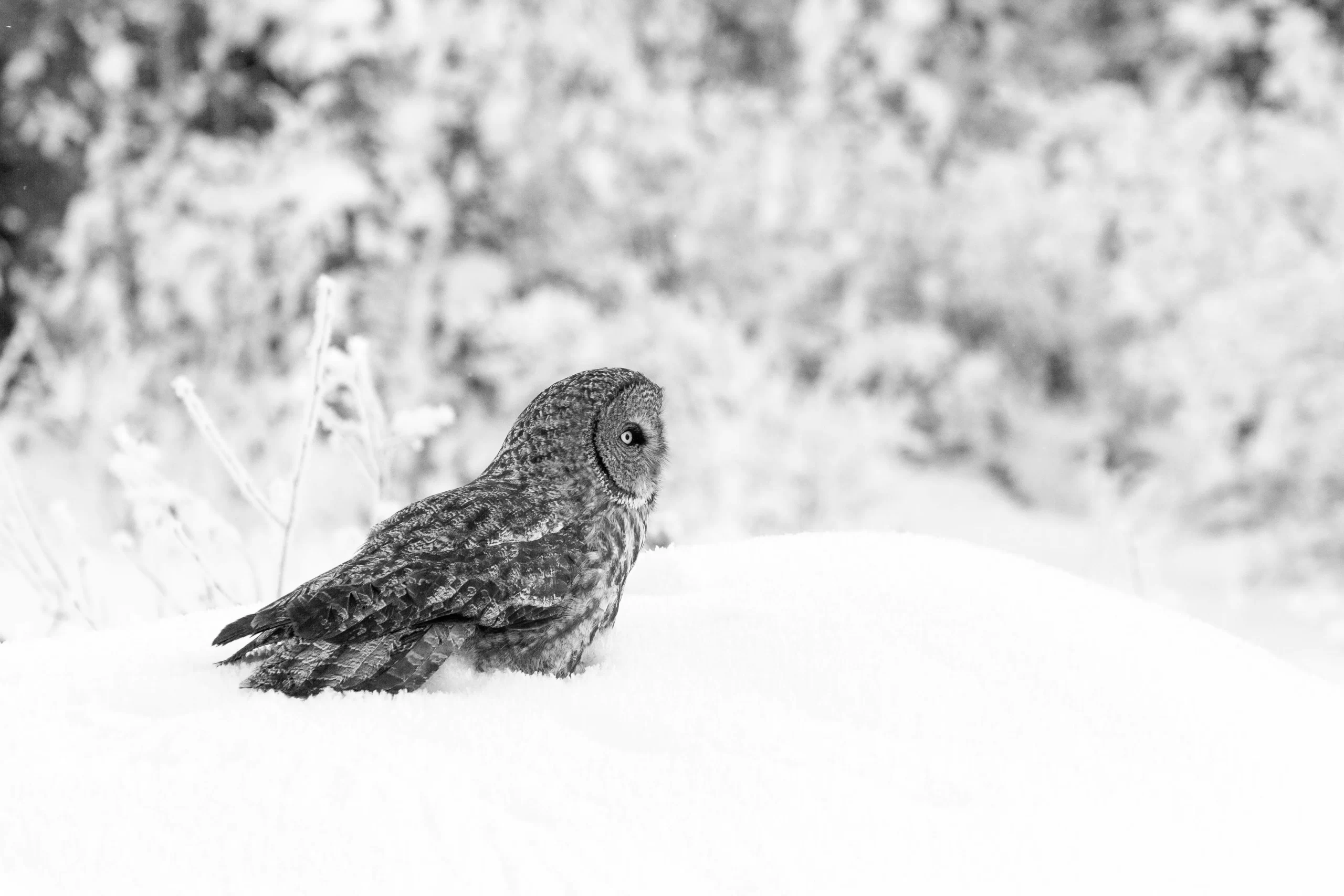
There is growing concern for the health of owls and other raptor species worldwide due to the increasing use of rodenticides to eliminate mice, rats and similar pests. It’s a simple thing to understand by connecting the dots: Mice eat the poison, owls and other creatures eat the poisoned mice, the poison levels build up in those that eat the mice leading to their eventual death, and it is not a quick and painless death either. Some poisons are anticoagulants causing the animal to bleed to death internally.

Other poisons alter the body chemistry, sometimes causing a slow painful death as muscles twist and contort while primary organs such as lungs, livers and kidneys stop functioning. Other poisons promote the rodent body to dehydrate, which is also a punishing and slow process for the animal to eventually succumb.

Poison is being used more often because it is easier for humans to set it and forget it. Deploy the poison, sit back and wait for things to die. I suspect some of this is because many people do not like to be involved with rodents either dead or alive, so the out of sight-out of mind effect outweighs using mechanical traps that require humans to remove the cadavers and reset the trap now covered in mouse germs. Disposable rubber gloves are an effective and affordable way of protecting yourself while clearing and resetting a trap. Remember to wash your hands thoroughly after all the dirty work is done.

As autumn shifts toward winter, all creatures adapt in their own way—whether by growing thicker coats, storing fat, migrating, or seeking shelter. For many small rodents, that shelter can unfortunately be our homes. Just as wildlife relies on natural strategies to survive the cold, we too have choices in how we manage their presence. By opting for thoughtful, humane methods of prevention and control, we can protect both our households and the health of the wider ecosystem that depends on balance and respect.

Doug Caldwell

Doug Caldwell

Wildlife Interpreter

Doug is one of the Interpretive Wildlife Guides here at the Preserve. An avid angler and hunter he has a broad knowledge of Yukon’s wilderness and the creatures that live here. With a focus on the young visitors to the Preserve, Doug takes the extra time to help our guests to better appreciate the many wonders of the animal kingdom here in the Yukon.

Explore by Category

Explore by Author

The Early Years

The Early Years

The Early Years

This article was made possible thanks to support from the Yukon 125 Fund. Learn the incredible history of the Yukon Wildlife Preserve, and Yukon Game Farm from the people of the past through this series of articles.

Danny Nowlan is one of Yukon’s colourful, and at times, notorious characters. He was a polarizing figure who cared deeply for animals and connecting them to kids. He was also the subject of one of Yukon’s most expensive trials ever. His work on the Yukon Game Farm would eventually result in the creation of the Yukon Wildlife Preserve. That is a legacy that is still experienced by many Yukoners – although many of the stories are not known or well understood. 

The stories of Danny Nowlan are important threads that are woven through the tapestry of Yukon’s recent history. This project gives us the opportunity to capture and share this history before its lost. This includes the opportunity to celebrate the positive lasting legacy and to learn about and grapple with the challenging aspects of this legacy. 

In 2023 historian Sally Robertson collected oral histories from more than a dozen people who knew Danny. Out of this work, Sally wrote a series of stories about Danny and his adventures.

(6 minute read)

Erika Nowlan. Photo gratefully provided by Sabrina Nowlan.

Danny Nowlan and his first wife, Erika, bought the land that eventually became the Yukon Wildlife Preserve in 1963. In typical Danny fashion, the purchase was less than straightforward and contained details useful to a talented story-teller – as Danny was. Harry Gordon-Copper owned the Hot Springs, and he owned this land – a place where White Pass and Yukon Route pastured their horses in the early 1900s. Erika sold her house in Whitehorse for some cash, and they gave Harry a stereo system purchased and kept from their previous business running the White River Lodge on the Alaska Highway. They had the land but no money to develop it, so Danny got a grazing lease west of the Hot Springs and started raising horses to sell to the outfitters.

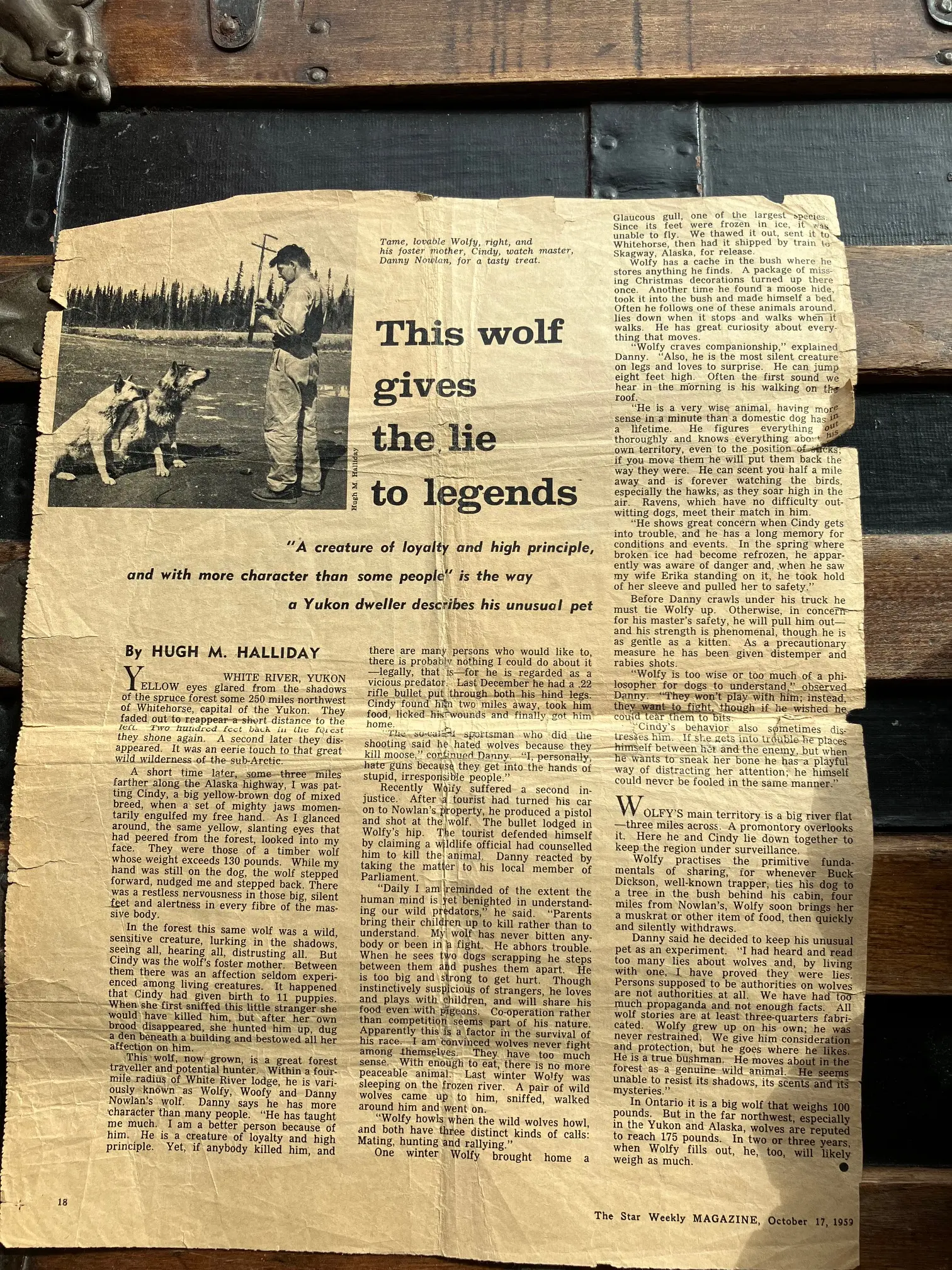
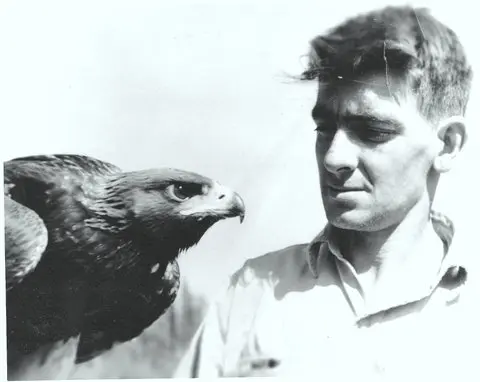
Danny and Erika dreamed of developing a place where northern animals were shown in a home-like environment for educational and conservation purposes. Danny had a way of understanding wildlife that astounded those who knew him. He had a reputation as an expert in training eagles and falcons, and the wolf he raised at White River was the topic of a magazine article. 

Wolfy Article – The Star Weekly Magazine, October 17, 1959
This wolf gives the lie to legends by Hugh M. Halliday.

He thought that keeping wildlife breeding stock and selling animals to southern zoos and game farms would allow him to have enough money to run the Game Farm activities, feed the animals, and provide him and his wife and children with at least three good meals a day. He had no idea what obstacles lay ahead of him – but even knowing them would not have slowed him down or discouraged him. Danny was full speed ahead, full time.

Danny Nowlan with a golden eagle.

Like the time he brought a little Porter locomotive from an abandoned railway near Dawson. He thought a little steam train could carry people around the property, and the kids would love it. He took his 5-ton vehicle up to Dawson to pick up the more than 10-ton locomotive. It was a wild ride to Whitehorse, with Danny running the truck into snowbanks along the road to slow the vehicle. The truck’s brakes were not up to the job and by the time they reached Whitehorse they were burned out. Danny always had big ideas, and he usually backed them up with detailed and practical plans. The little railway did not pan out.

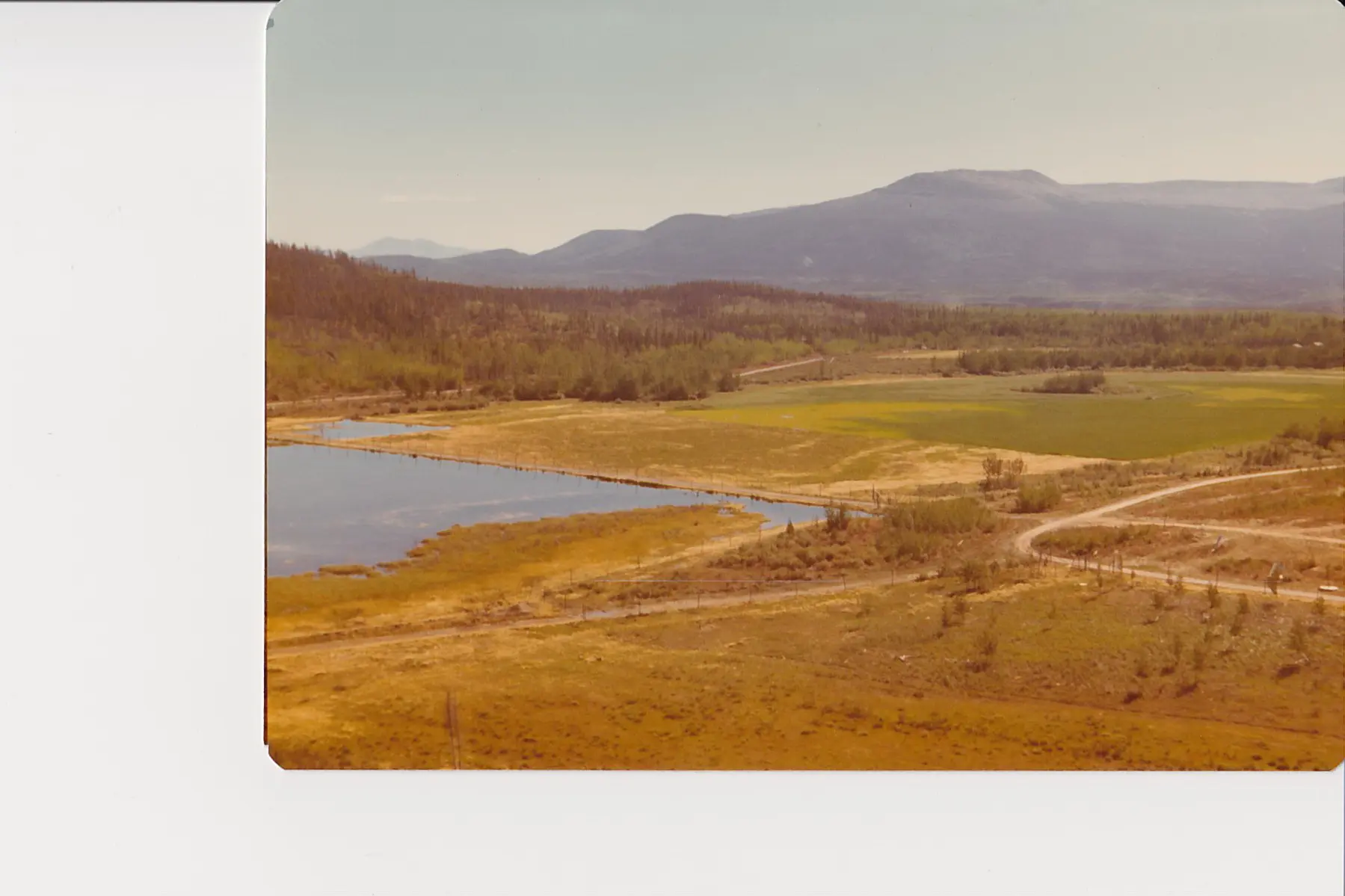
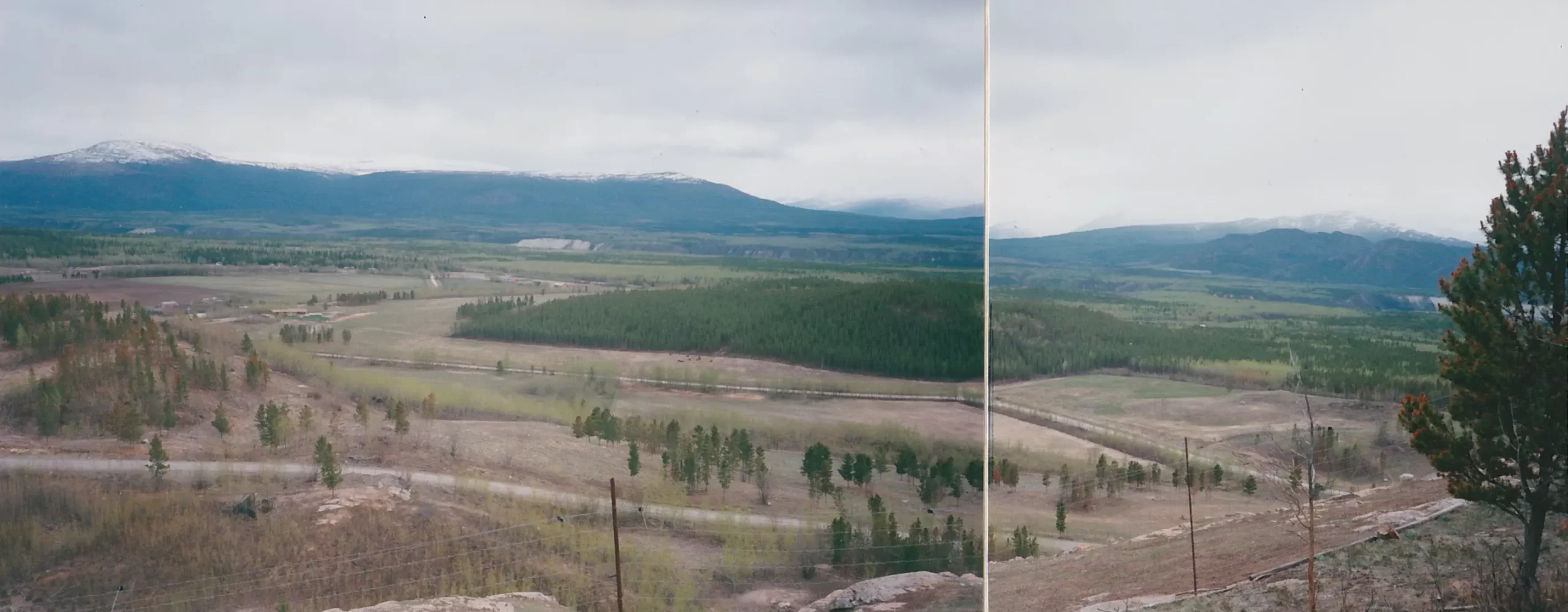
When the Nowlans purchased the property, it had a variety of high and low land, but the central feature was a wetland where today there is a big field.  The property needed roads and trails to be accessible for visitors and, although the marsh attracted wildlife, it was not part of Danny’s vision. At a local auction, he picked up a large earth mover (“scraper”) and a D8 caterpillar tractor with a cable-controlled blade (“cable cat”). This machinery was difficult to operate but it would be instrumental in building roads through the property – and Danny had a bigger plan than just roads.

He built a dam across the drainage from the cliffs to dry out the wetland and create a pasture for first mule deer and later bison. A pond developed behind the dam, and it attracted migratory birds and small mammals. The small animals attracted fox and coyotes, so the next step was fencing. He used whatever came to hand, including 3” pipe from the CANOL pipeline, an ill-fated World War Two project. He put a fence around an area with a small herd of grazing mule deer, and the Game Farm had its first large residents.

Some of the early buildings on the Game Farm were interesting. Danny bought the Yukon’s first airport hanger and moved it out to his property. His daughter Peregrine remembers two baby bears living under it. The Nowlans’ little home by the road did double duty as an animal hospital as Danny brought in wounded and abandoned animals. An owl with a broken wing was put in Erika’s book room and it roosted there on a shelf. She was forever cleaning owl poop off her books. A baby mink always wanted to swim. He joined the kids at bath time, and he developed a terrible habit of swimming in the toilet bowel if someone left the lid up at night. 
Sabrina Nowlan with a Dall lamb. Danny’ and Erika’s second daughter, born 1965 and lived 17 years on the farm and in Whitehorse. Photo provided by Sabrina Nowlan.

One night Erika screamed and woke the kids because a wet mink was running around inside her sleeping bag. She loved animals and endured a lot of chaos. Like the time Danny put their four-year-old daughter Sabrina astride a moose called Susiecue. The moose took off, and Danny was yelling for it to come back and shaking a bucket of oats. Sabrina went for quite a ride and remained completely fearless. Erika was not impressed.

Dall’s sheep were to be the Game Farm’s main attraction. They are magnificent creatures, they can be difficult for the ordinary person to see in the wild, and there was a market for them in southern zoos and game farms. After obtaining the necessary permits, a crew of hardy folk set off to capture some breeding stock at Thechàl Dhâl (Sheep Mountain) near Kluane Lake. Danny’s kids, Peregrine and Sabrina, looked after those first little lambs and kept them in their bedrooms. Wildlife biologist Manfred Hoefs was in the capture group. At that time, Manfred was a graduate student studying Dall’s Sheep horns. Danny, who had a Grade 2, a Grade 3, or a Grade 6 education (depending on who he was talking to), was famous for the amount of research he did on animals and their habitat. He was also famous for the number of useful contacts he developed with experts in many fields. Manfred continued to visit the sheep on the Game Farm for many, many years and established a Dall’s Sheep horn measuring protocol that the Yukon Wildlife Branch used to build a valuable and still-used research dataset.

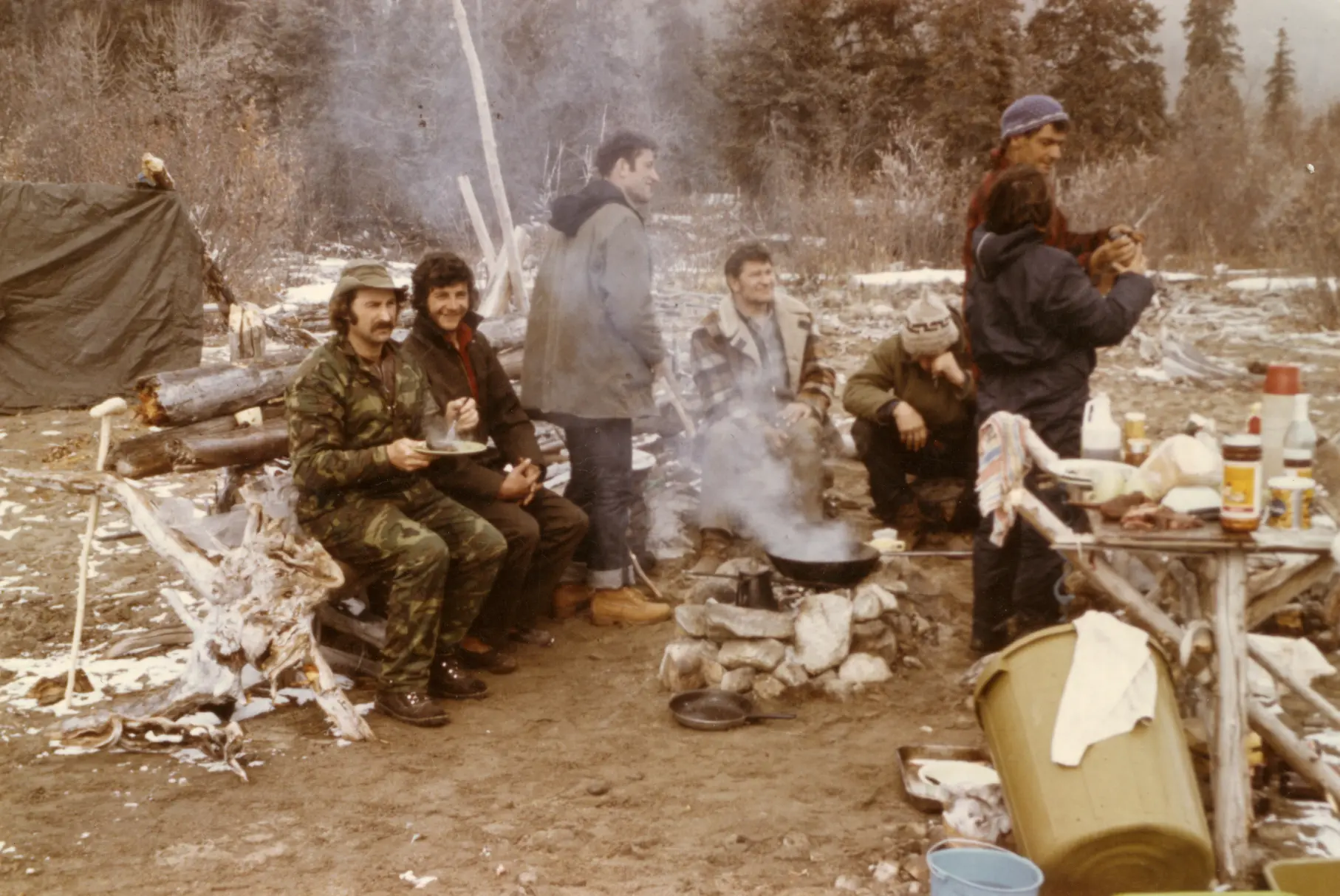
Sheep camp for sheep capture – from left to right: Unknown, Teddy Yardley, Herb Zollweg, Unknown, Unknown, Danny Nowland and Erika Nowlan

All of Danny’s friends enjoyed a good story, and one of them involved the Game Farm sheep and the road building equipment. Danny was never very careful with equipment, and the machinery ended up sitting in the sheep enclosure. Manfred came to the Farm one time and found the rams all lined up and running at one of the scraper’s huge tires. They would bang into the rubber, bounce off, and run at it again. Manfred said they were loving it – the best thing they had ever hit in their lives. They just kept going – bang, bang, bang. Sort of like Danny – living and loving life to the fullest.

• • •

Photo gratefully provided by Uli Nowlan unless otherwise noted.

Sally Robinson, October 2023
with words from interviews with Peregrine Nowlan, Sabrina Nowlan and David Mossop.

Sally Robinson

Sally Robinson

Vintage Ventures - Researcher & Writer

Sally is currently an independent consultant in the heritage field. Throughout her career, after working 20 years with Yukon museums as a researcher, curator and exhibit designer/producer, she joined the Yukon Government to work for 16 years as the Historic Sites Interpretive Planner.

Lindsay Caskenette

Lindsay Caskenette

Manager Visitor Services

Lindsay joined the Wildlife Preserve team March 2014. Originally from Ontario, she came to the Yukon in search of new adventures and new career challenges. Lindsay holds a degree in Environmental Studies with honours from Wilfrid Laurier University and brings with her a strong passion for sharing what nature, animals, and the environment can teach us.

867-456-7400
Lindsay@yukonwildlife.ca

Explore by Category

Explore by Author

Aspen Seeds Needed

Aspen Seeds Needed

Aspen Seeds Needed

5 minute read –

Beginning this spring and continuing over the next three years, Yukon Seed and Restoration in partnership with Yukon Government’s Wildland Fire Management Branch will collect 6,000 g of native Trembling aspen (Populus tremuloides) seed to use in projects throughout the territory for its fire resistant characteristics. This will include planting in the Whitehorse south fuel break, a 365 hectare fuel break being built to protect the city in case of a severe wildfire.

The Yukon climate is characterized by a short growing season, cold temperatures, and limited water availability. These specific environmental conditions require Yukon native seeds to be used in this project to give the trees the best chance at survival.

Have a favourite trembling aspen stand? Let us know on iNaturalist! Photo credit: Sophia Slater, YSR.

We are aiming to collect aspen seed from the Southern Lakes and Yukon Plateau North/Central ecoregions, but are interested in populations all over the territory. 

Who Are We?

Yukon Seed and Restoration, or YSR, is a plant focused environmental consulting company majority owned by the Na-Cho Nyäk Dun Development Corporation. We provide ecological restoration through land reclamation projects, honourable harvesting of Yukon native plant species, and invasive species management. 

We strive to make the land good through our work with First Nation, industry, and government clients. 

(Some of) our team. Photo Credit: Ainsley Taggett, YSR

One of the ways we support ongoing restoration work across the Yukon is through the Yukon Native Seed Bank and our Hudzi ni plant processing facility. We aim replace non-native seeds used on restoration projects with Yukon native seed that is better suited to our northern climate. We also develop workshops and programming to build capacity throughout the Yukon.

Aspen Identification

Trembling aspen is a deciduous tree that grows up to 20 m tall. They are a clonal species that reproduce by sending out shoots along their lateral roots. In a small area, most likely all individual aspen stems are genetically the same. They are dioecious, meaning that individuals are either male or female, and the female trees produce the seeds. 

Trembling aspen have smooth greenish-white, sometimes powdery, bark with black markings. The bark does not peel like on birch trees. The leaves are smooth and round with a nearly flat base and a pointed tip. They shake or tremble in the wind, giving the tree its name.

Trembling aspen bark (left), leaves (middle), and stand (right). Photo credits: YSR (left, middle), Ainsley Taggett, YSR (right).

On average, male trees flower in late April, and females in early May. Identifying flowering populations helps us to prepare for seed collection. Flowering male catkins are 2.5-7 cm long and red with white fluff, whereas flowering female catkins are 2-5 cm long and less conspicuous than their male counterparts.

Flowering male catkin (left) and flowering female catkin (right). Photo credits: iNaturalist (left), Hilary Lefort, YSR (right).

Aspen seed collection is a very time sensitive task. Later in May, female catkins turn green and lengthen. Eventually the seed pods open, releasing the white, fluffy seeds. Once the aspen seeds start to fluff out, it may only be 48-72 hours before the entire seed crop has dispersed. Usually this falls around the end of May or beginning of June, so beginning in mid-May we check on stands frequently to assess the seed crop, looking at the fruiting female catkins and breaking them open to see the seed inside.

We aim to collect the female catkins when they are green (left), just before the seeds are released. We can confirm their readiness by looking at the seed: yellowy seed (middle) is immature, and brown seed (right) is mature. Photo credits: iNaturalist (left), Moench (middle, right).

Aspens and Fire

Wildfire plays a critical role in Yukon ecosystems and has been used traditionally by Yukon First Nations to manage forests. However, due to a history of fire suppression and an increase in temperatures caused by climate change, fires are becoming more frequent and more severe in the territory.

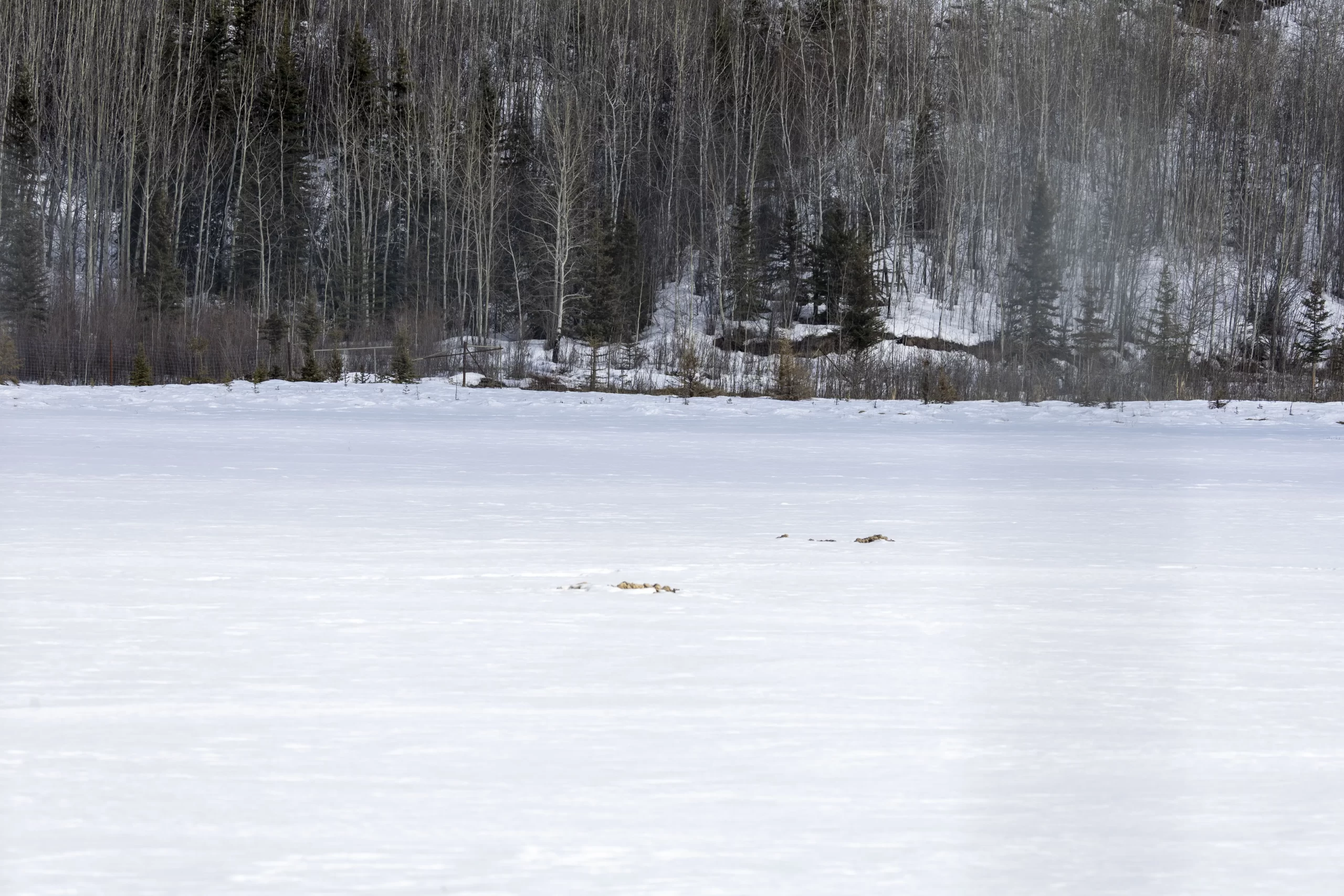
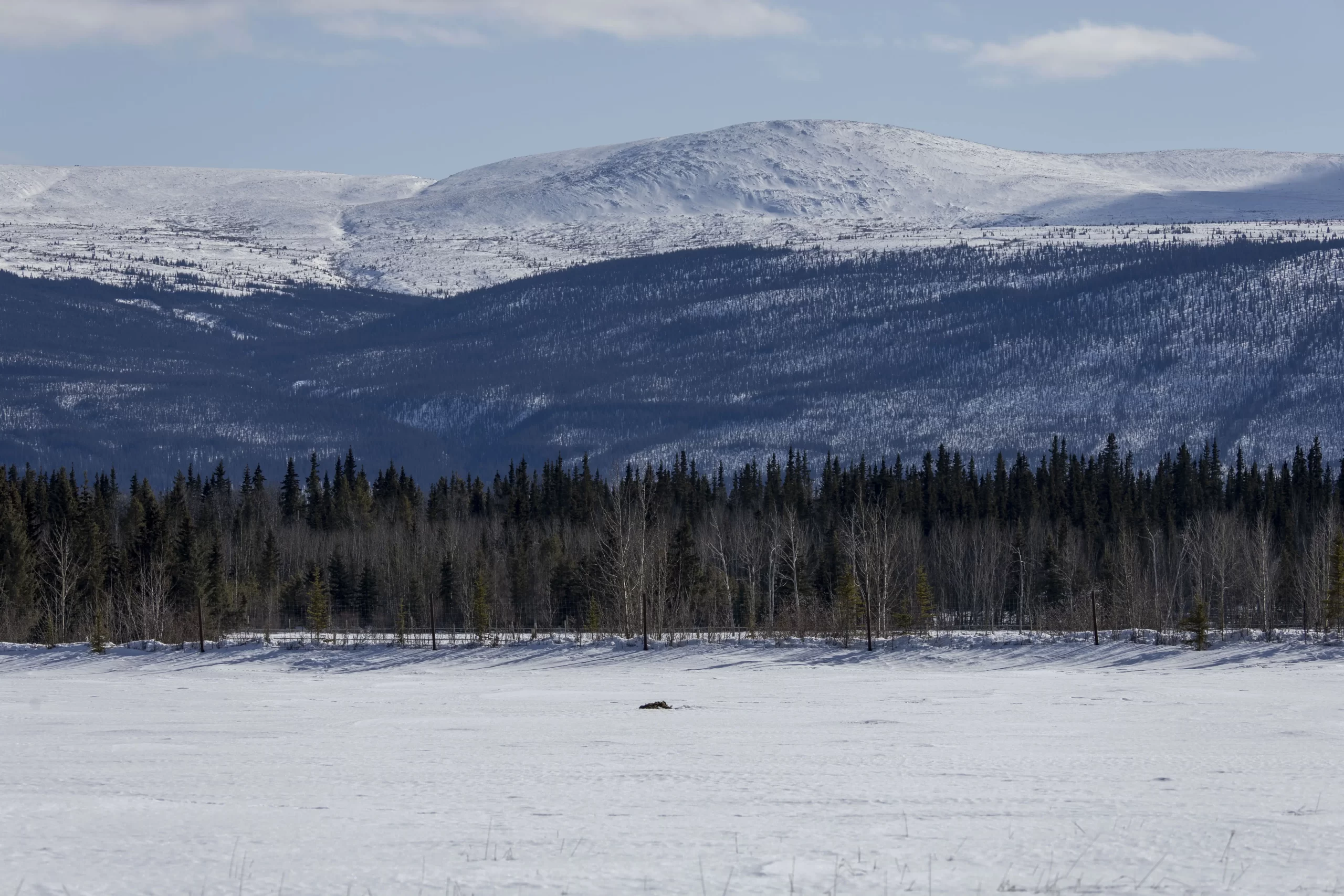
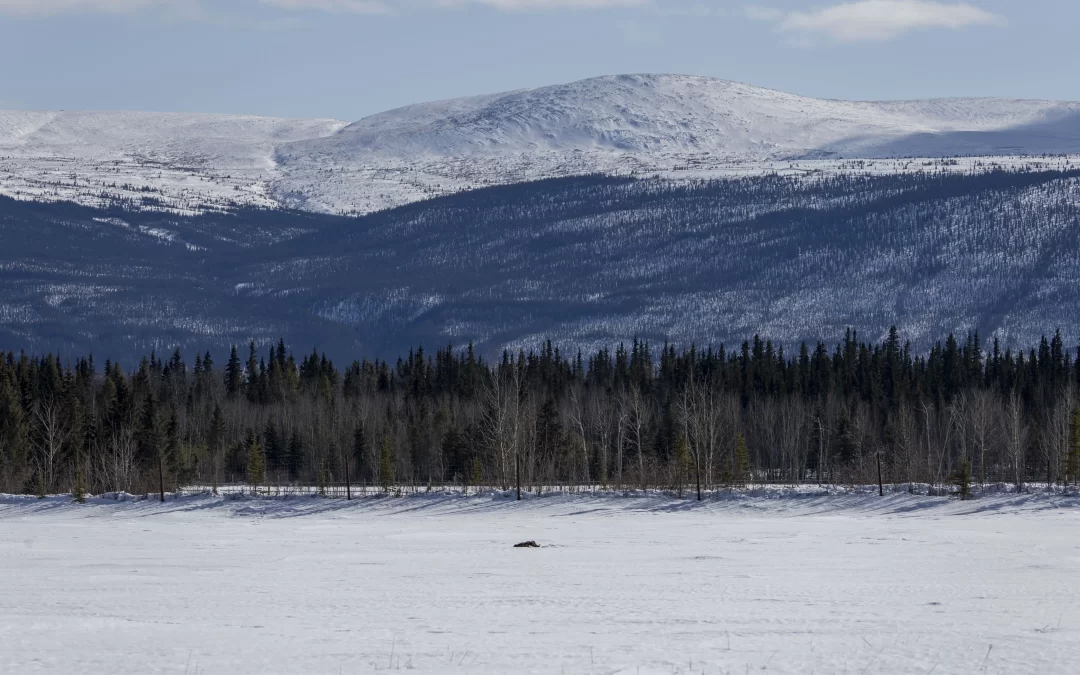
Pushup from a muskrat in the Preserve's Moose Pond with a wide view of the land including snowy mountains and boreal forest. Photo Credit; Rebecca Carter.

The Ethel Lake burn near Mayo/Stewart Crossing. Photo credit: Naomi Butterfield, YSR.

Conifer trees like white spruce and lodgepole pine pose a greater risk than deciduous trees in wildfires, because of their flammable bark, relatively high density, and buildup of ground and ladder fuels. Deciduous trees like trembling aspen are relatively fire resistant due to their higher moisture content, lower density, limited ladder fuels, and shading of the understory, which protects it from moisture loss. Additionally, trembling aspen grows quickly in burned soil.

How Can You Help?

This scale of project will require many aspen populations. Over the next three years, if you see aspen populations with lots of trees, and specifically with female flowers/catkins (see Aspen Identification), let us know!

Join our iNaturalist platform to tag populations of reproductive aspens and contribute to the reforestation of the fuel break. Email photos and locations to us at matthew@yukonseed.ca.

If you are interested in helping out with collections, we are looking for casual labour and volunteers at the end of May and June. Stay tuned to our Facebook for seed collection dates. Contact matthew@yukonseed.ca for more information or to get involved.

References

Government of Alberta. 3 August 2012. How different tree species impact the spread of wildfire. Government of Alberta. Available from: https://www1.agric.gov.ab.ca/$department/deptdocs.nsf/all/formain15744/$FILE/tree-species-impact-wildfire-aug03-2012.pdf 

Mackinnon A, Pojar J, Coupé J. 2021. Plants of Northern British Columbia, Expanded Second Edition.

Moench RD. Aspen Seed Collection. Part of Nursery Information Series. For Colorado State Forest Service.

Shinneman DJ, Baker WL, Rogers PC, Kulakowski D. 2013. Fire regimes of quaking aspen in the Mountain West. Forest Ecology and Management, 299: 22-34.

Sophia Slater

Sophia Slater

Intermediate Restoration Ecologist

Sophia was one of the Interpretive Wildlife Guides and animal care assistants at the Preserve. She moved to the Yukon from Ontario, where she just graduated with a Bachelor of Science in Biology from Nipissing University.  Now you can find her at Yukon Seed and Restoration as an Intermediate Restoration Ecologist or summiting the many beautiful mountains in the Yukon this summer! 

Explore by Category

Explore by Author

The Humble Dzäna

The Humble Dzäna

The Humble Dzäna

8 minute read –

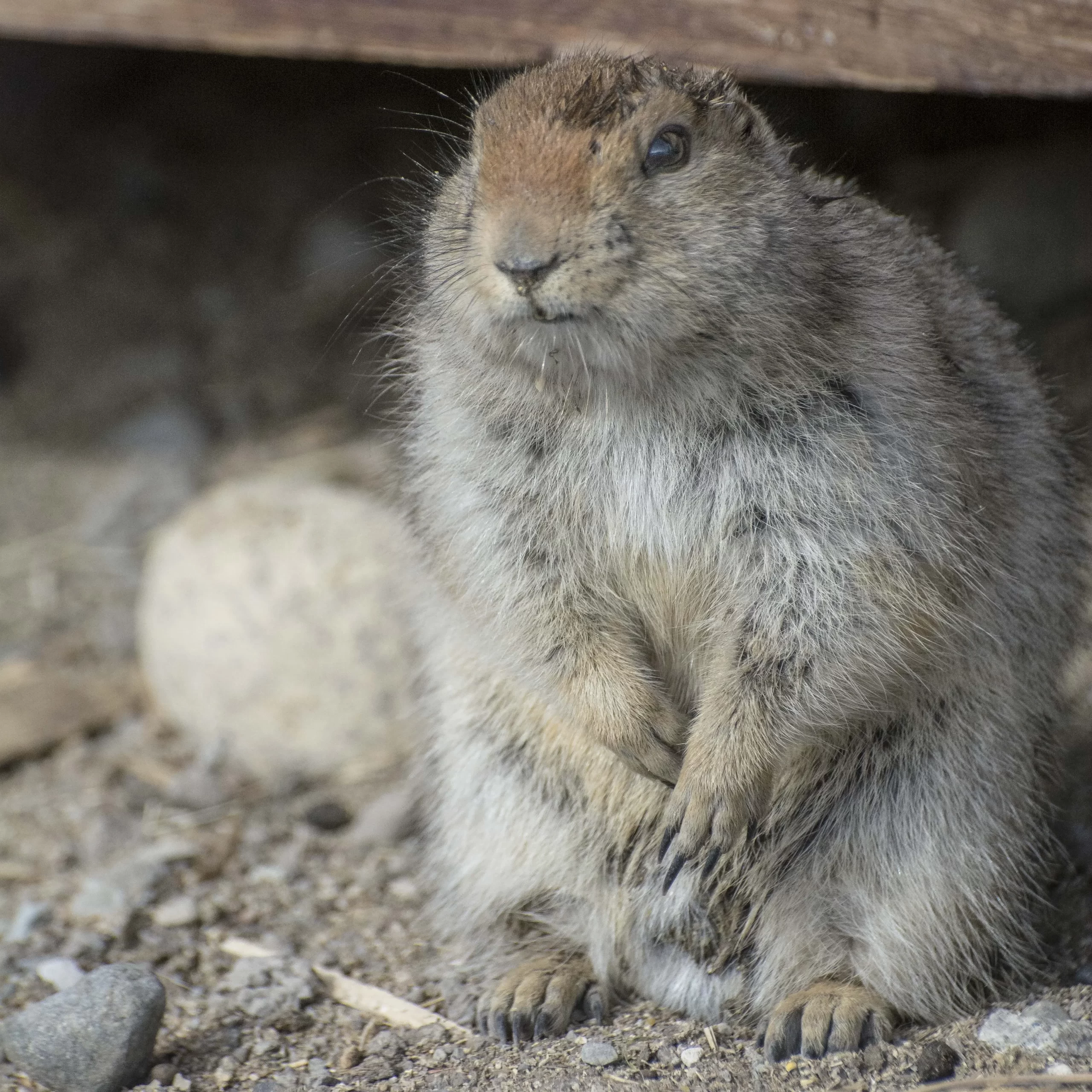
When welcoming folks to the Yukon Wildlife Preserve, us interpreters in the Front Cabin often say something along the lines of “you’ll find 10 Yukon animals here,” referring to the ones in our care and pictured on our map. But of course, so many other animals call the Preserve home too. Like the tsäl (sik sik/gopher/arctic ground squirrel) who are the 11th unofficial species that you can find above ground only in the spring and summer!

Another newer resident on the Preserve are the dzäna (muskrats). A mansion of a muskrat lodge has emerged in the moose pond over the past year and has remained visible even when covered by snow this winter! While guiding a bus tour recently, this seemling isolated home became the center of attention while we were looking for the elusive kanday (moose). The visitors and I mused “how many muskrats are in that thing?!” I did know a pair of muskrats had moved into the marsh a couple of years ago, and now maybe there’s a whole family living there hosting many parties (yes, I had to force that line so I can say that a group of muskrats are called a “party”). 

But while joking on my tour, I realised that I did not know much about this animal and this inspired me to dedicate some time to the humble muskrat.  

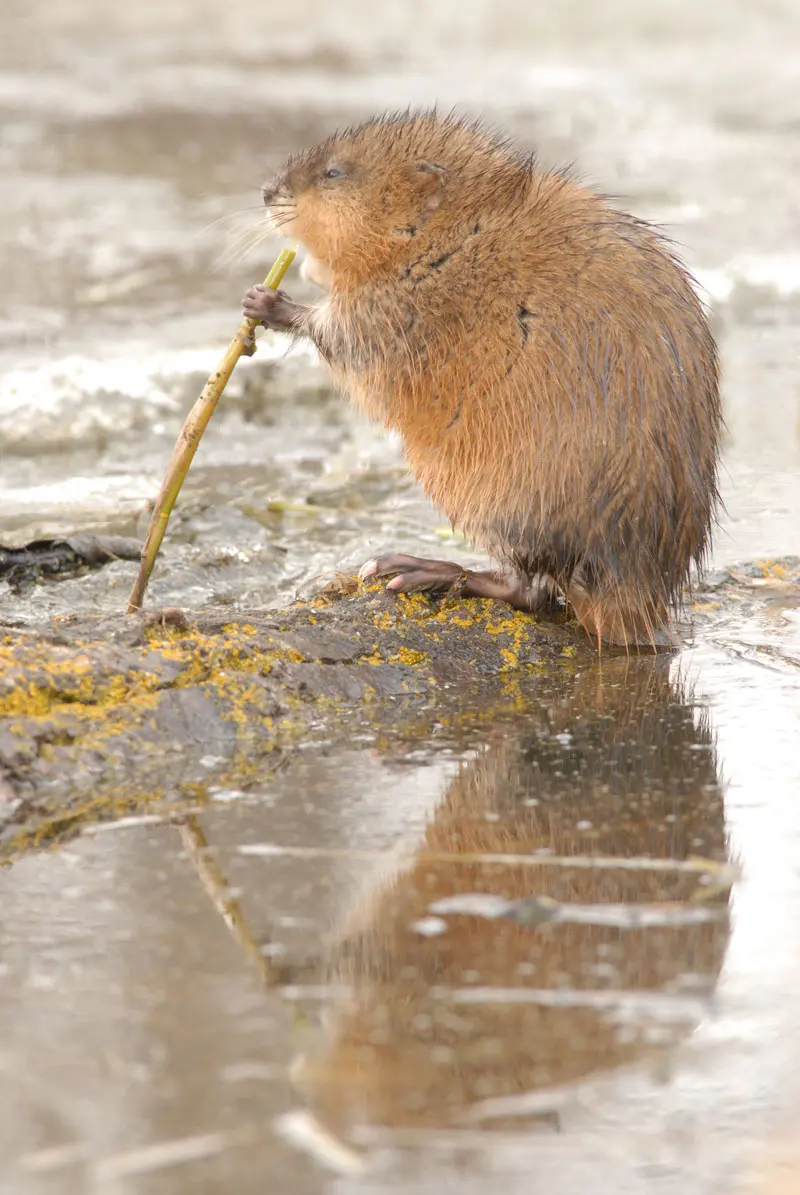
Muskrat copyright and photo credit: Derald-Lobay

Muskrats are often confused with tsà’ (beavers), and though they are very similar, they are not closely related at all. This is a neat example of convergent evolution: two animals may end up looking the same and acting in similar ways because of the shared environment that they live in. Both muskrats and beavers are semi-aquatic rodents, have water-resistant brown and sleek fur, build their lodges in shallow water or along the water’s edge, and forage on the surrounding plants.

When I told my partner that I was writing about muskrats, he made sure that I was including the story of muskrat’s heroic act. Growing up in Manitoba, we both learned about the special place the muskrat holds in Cree and Anishinaabe Creation stories.

Small details can vary with the storyteller but muskrat’s role remains the same. 

As written in his book Ojibway Heritage, elder Basil H. Johnston from Wasauksing First Nation begins the story with the Great Flood, where only the birds and water animals survived and Sky Woman came to rest on the back of a turtle. She asked the water animals to dive to the bottom and collect soil so that she can create land. Many animals – the loon, the mink, the beaver – dove down, down, down but none returned with soil. All seemed hopeless. Finally, the little muskrat softly said “I’ll go.” Everyone laughed as there was no way the tiny muskrat could make it to the bottom when all of the other animals had failed. Despite being ridiculed, the determined muskrat disappeared into the water and was gone for a long time. The animals and Sky Woman stared helplessly into the water until muskrat finally floated to the surface. Sky Woman lifted muskrat’s body onto the turtle and there, clutched tightly in muskrat’s paw, was a small clump of Earth. She took the Earth and spread it on the back of the turtle. The wind began to blow while Sky Woman and the animals danced together, spreading the Earth farther until it grew into Turtle Island. The animals celebrated and mourned together for without muskrat’s great sacrifice, Earth and all life would not exist. I personally like the story ending with Sky Woman breathing life back into muskrat’s little body so that he can celebrate too.

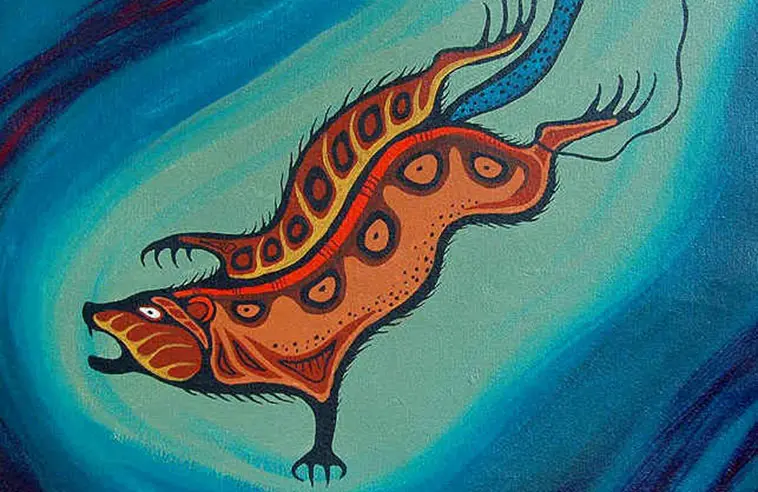
A traditional Anishinabe inspired Painting by: Carl Ray (1943 – 1979) of a muskrat. The Muskrat reminds us to be open to the creative possibilities of living in balance with Creation.

This story intertwines many moral and ethical values tied together with ecological knowledge. Muskrats are indeed very small, weighing only 2-to-4 pounds compared to the much larger 40-to-70 pound beavers. They are incredible swimmers and can dive underwater for 15-20 minutes at a time. When they dive, their heart rate slows and their body temperature plummets to help them conserve oxygen. Small hairs between their toes and their long, rat-like tail helps to propel them through the water. These are all helpful adaptations when you need to forage for plants and food all winter since muskrats do not store food like beavers. It’s no wonder that the small but mighty muskrat could swim to the bottom of the water with all of these traits.

Instead of building dams and lodges made from felling trees like beavers, muskrats build their lodge homes and feeding huts (called push-ups) out of plants like cattails, sedges, and reeds, packed together with mud. As in the story, their front paws are small with long claws for digging and holding building material, and their homes are shaped like the ball of Earth they held on to.

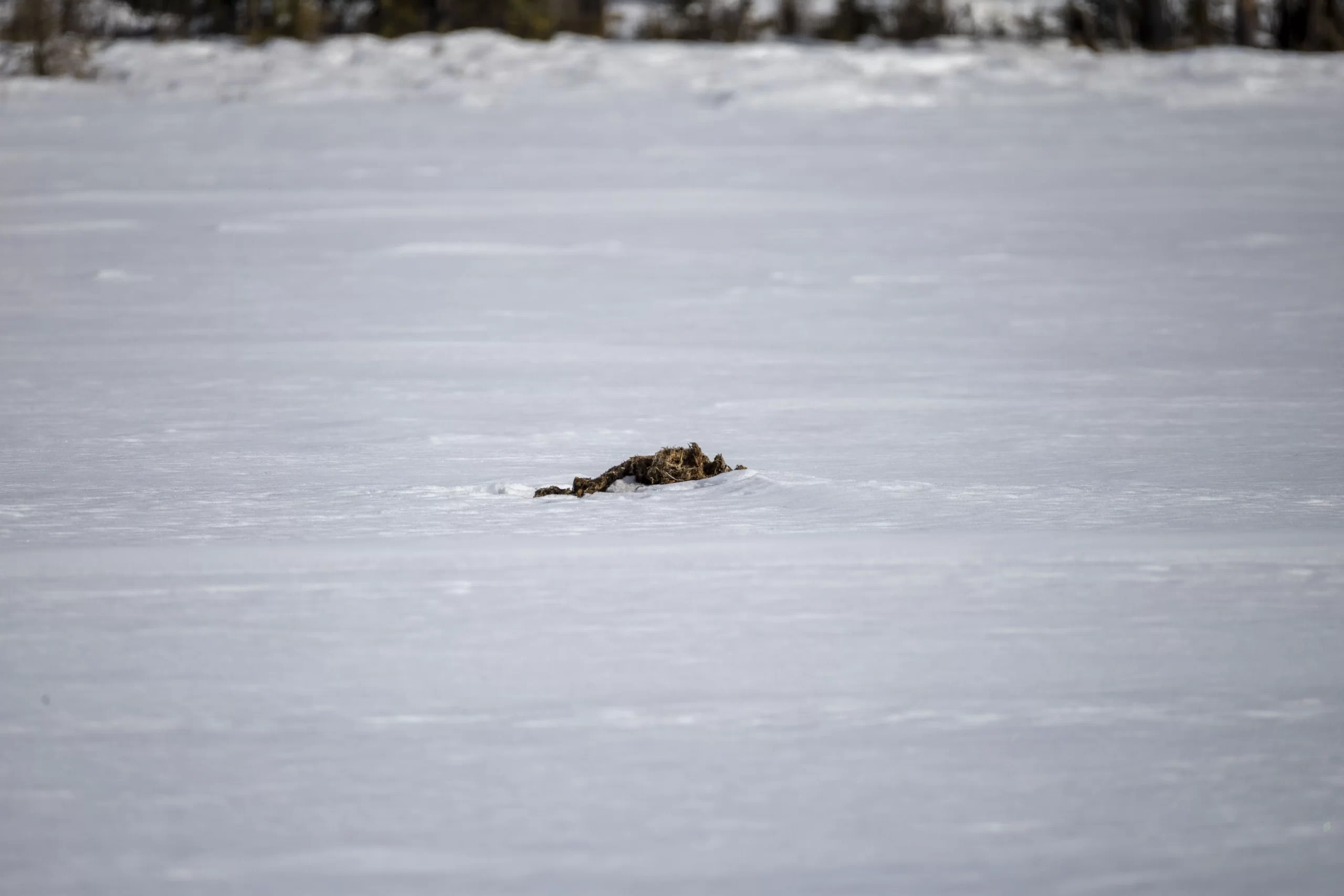
a brown blob of earth pushes up through the snowy icy surface of the moose habitat pond where a muskrat makes its home. Photo Credit; Rebecca Carter.

A brown blob of earth pushes up through the snowy icy surface of the moose habitat pond where a muskrat family makes its home. Photo Credit: Rebecca Carter.

In the winter, you may see push-ups on frozen ponds and lakes. When the water begins to freeze, muskrats will chew a hole in the ice and push up clumps of material, creating an enclosed and insulated resting hut on top of the ice. Like ice fishing shacks on a lake, muskrats can pop out of the water and take a break from swimming long distances, have some lunch and take a breather all while staying protected from the harsh elements and predators.

These push-ups are also fast frozen piles of fresh plants that offer higher levels of protein, nitrogen, and other nutrients that are lacking in the low quality winter plants. These push-ups are great food sources for caribou, moose and bison and may help them make it through the winter with a nutrient boost. In the summer, waterfowl and marsh birds lounge and nest on the lodges, while snakes and reptiles use the muskrat tunnels and homes for places to rest and thermoregulate. I can’t help but think of muskrat’s desire and determination to help collect Earth as a parallel to the muskrat’s push-ups and lodges for providing food and shelter for other animals throughout the year.

a brown blob of earth pushes up through the snowy icy surface of the moose habitat pond where a muskrat makes its home. Photo Credit; Rebecca Carter.

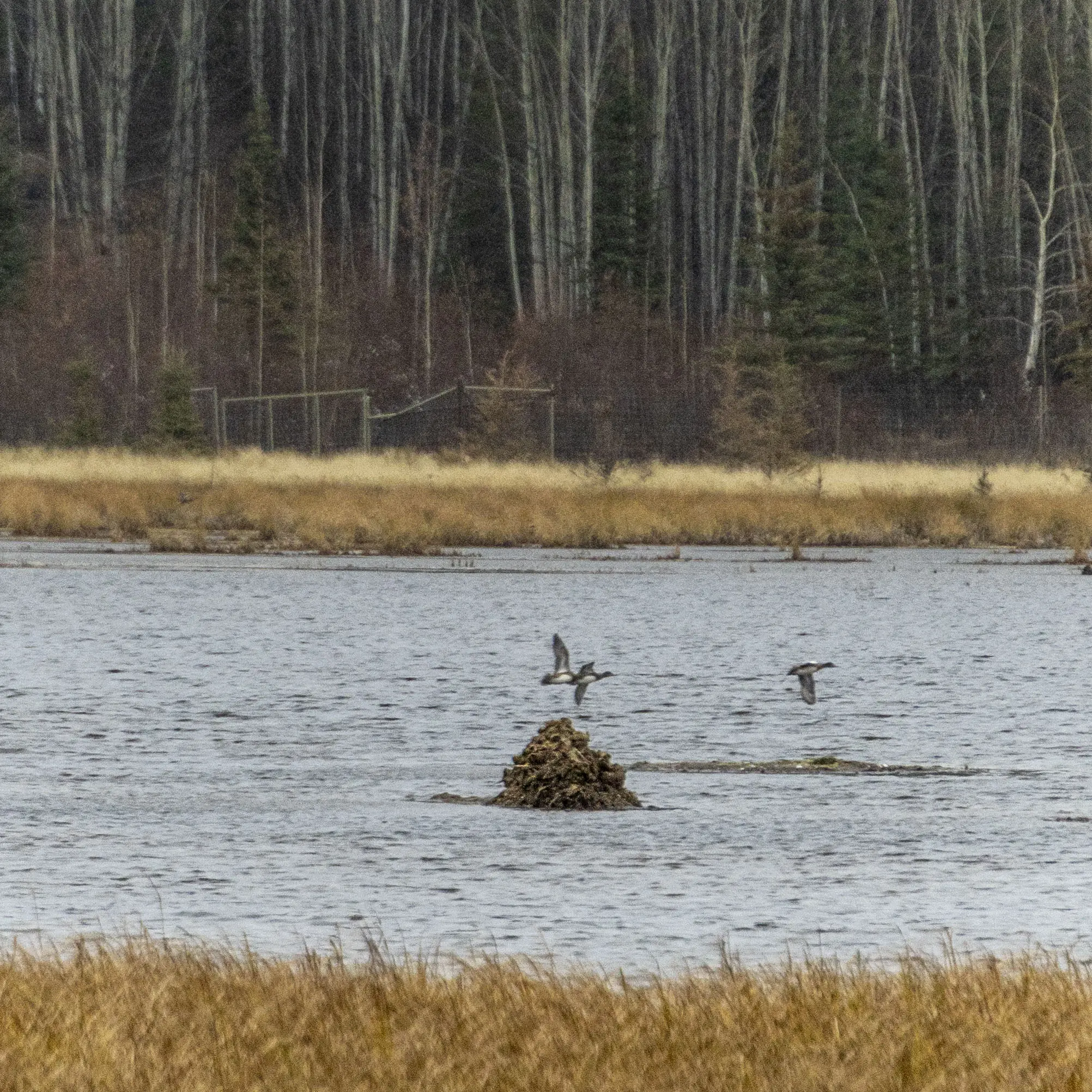
Fall, muskrat pushup with birds soaring above the pushup. Photo credit: Britt Forsythe.

Muskrats are also resilient and adaptable. They can have 2-3 litters per year with an average of 6 kits per litter making their population relatively resistant to disease, predation pressures, and they can survive through drought years by eating a variety of foods and getting water from the plants. Despite this resilience, there is emerging evidence that muskrat populations are declining across North America. The exact cause remains unclear for these declines, but a loss of critical wetland habitats and the connectivity between wetlands may have a large impact on populations.

I read this quote from elder Benton Banai that is fitting here:

 “No matter that marshes have been drained and their homes destroyed in the name of progress, the muskrats continue to grow and multiply. The Creator has made it so muskrats will always be with us because of the sacrifice that our little brother made for all of us many years ago when the Earth was covered with water.”

Muskrats play such an important role in the ecology of wetlands, Indigenous cultures and economic importance for trappers that we cannot overlook the muskrats and their habitat needs. One of the values that we can learn from the Creation story is that humans and animals are interconnected and living together harmoniously ensures the survival of all. 

Pushup from a muskrat in the Preserve's Moose Pond with a wide view of the land including snowy mountains and boreal forest. Photo Credit; Rebecca Carter.

From the muskrat, we can learn to be determined and courageous when faced with a seemingly impossible task, to cooperate and help one another, to do acts not for the recognition but because it is the right thing to do, and to honour and respect all creatures regardless of their size. So the next time you visit the Wildlife Preserve, see if you could spot the small, humble, determined dzäna in the marsh. We can and do have a lot to learn from our wildlife companions.

References

Department of Environment. 2024. Common Muskrat. Yukon Government, Department of Enivronment. https://yukon.ca/en/common-muskrat

Errington, P.L. 1939. Reaction of muskrat populations to drought. Ecology, 20(2): 168-186. 

Hindle, A.G., et al. 2006. Body cooling and the diving capabilities of muskrats (Ondatra zibethicus) A test of the adaptive hypothermia hypothesis. Comparative Biochemistry and Physiology, 114: 232-241. https://sci-hub.se/10.1016/j.cbpa.2006.03.001 

Hinterland Who’s Who. 1986. Muskrat. Environment and Climate Change Canada, Canadian Wildlife Federation. https://www.hww.ca/en/wildlife/mammals/muskrat.html

Jung, T.S., Stotyn, S.A., and Larter, N.C. 2019. Freezer meals: comparative value of muskrat (Ondatra zibethicus) push-ups as late-winter forage for a northern ungulate. European Journal of Wildlife Research, 65:61.https://doi.org/10.1007/s10344-019-1301-7

MacGregor, D. 2013. Teachings from the Muskrat. Muskrat Magazine. https://muskratmagazine.com/teachings-from-the-muskrat/

Sadowski, C., & Bowman, J. 2021. Historical surveys reveal a long-term decline in muskrat populations. Ecology and Evolution, 11(12): 7557-7568. https://doi.org/10.1002/ece3.7588

Yukon Native Language Centre. 2002. Southern Tutchone Noun Dictionary. Retrieved from: https://ynlc.ca/

Rebecca Carter

Rebecca Carter

Senior Wildlife Interpreter

Rebecca joined the Wildlife Preserve in the summer of 2020 after moving from Manitoba to the beautiful and wild Yukon. Rebecca earned a degree in Biology with honours from the University of Winnipeg studying behaviour in mule deer (one of her top 20 favourite animals.. it’s hard to choose!). She loves connecting with others through nature and sharing stories and knowledge about the animals at the preserve with visitors.

867-456-7400
rebecca@yukonwildlife.ca

Explore by Category

Explore by Author