Face to Face With the Wild: Kids

Face to Face With the Wild: Kids

Face to Face With the Wild: Kids

5 minute read 
 

Yukon Kids

It’s a warm and sunny Wednesday in July. After driving past Jesse the moose, some handsome sheep, and innumerable little squirrels I step off the bus with 22 eager campers following. We’re just about to head out for a little walk. But then… I catch one little camper frolicking around in her bare feet.

“Jasmine! Where are your shoes?”

“Shoes?! I don’t need those: I’m a Yukon kid!”
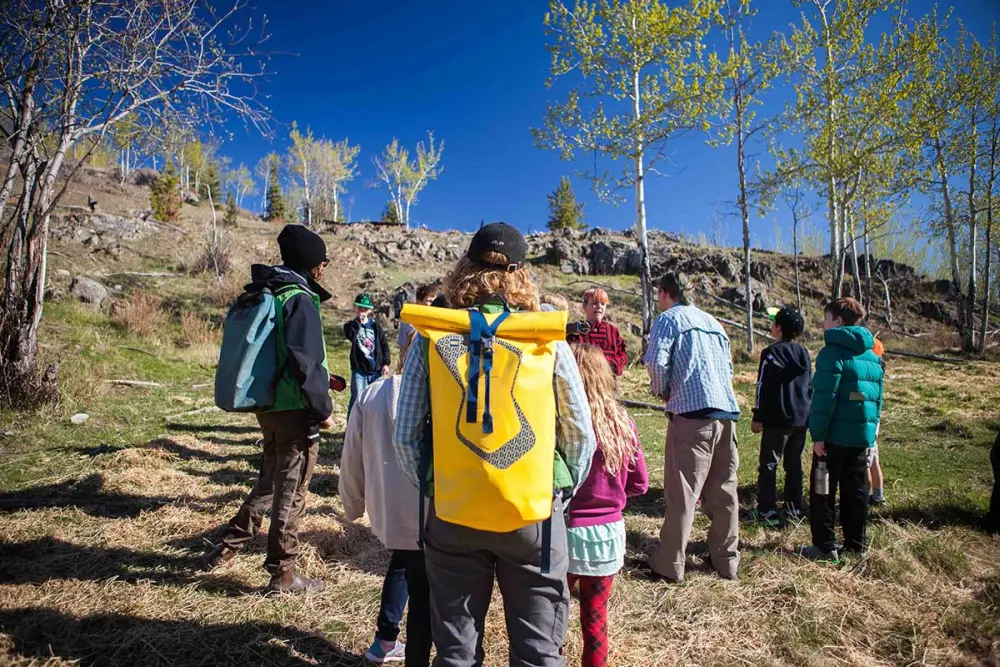
Campers sometimes teach the instructors at YWP school programs.

Sometimes it’s the campers who teach us educators about their favorite plants and animals.

Hidden Kids

On a normal trip to the Preserve it’s easy to get lost in our own experiences. After all, how can you not? When you see golden sunshine through the grass; when you and the little muskox lock eyes; or when one of our guides tells a chilling story. These experiences are what we come for, but we aren’t the only visitors here.

The Yukon Wildlife Preserve sees over one thousand students and campers come through our doors every year. Winter and spring school programs, Swan Haven programs, March Break Nature camp, and summer nature camps are all in our calendar. The Wildlife Preserve has its own department dedicated to bringing enriching and educational experiences to Yukon youth. As an outdoor educator this what first brought me to the Preserve, and it’s also one of the things that I think makes the Preserve a very special place.

Unfortunately, the public doesn’t often get to hear about all of the incredible experiences we offer students and children. If you, like me, are a little too old to attend these wonderful programs I’m here to tell you that you’re also in luck! I’ve done all the running around – the booger wiping, rule giving, question answering, and “yes, you can go pee”ing – so you don’t have to. Join me as I take a walk down Memory Lane, looking back at this last year with our Education team. But be prepared to take chances, make mistakes, get messy. So let’s tie up our shoes and get Face to Face with: The Wild Kids of the Yukon.

Kids holding up moose antlers outside in the snow.

A happy student trying on their new favorite hat.

Time to Plan

Though our ears are still ringing from a summer full of campers, it’s a very different story in our office this time of year. Our Manager of Education and Programming sits quietly and plans for the year to come.

‘Have we sent all the thank-you cards?’

‘How many more plastic animals do we need to buy?’

‘Where do I even buy a plastic muskox?’

We ruminate at length on these pressing topics. After all, one missing muskox now may break the heart of a muskox-loving little boy eight months later. And so, slowly, we debrief the past year and plan into the next.

Cool Kids

​February comes creeping up and at this point we (Education and Programming) are a very tiny snowball at the top of a very large hill. Our winter programs are the little kick that gets us going. A modest start to a full year of programming. This time of year, our programs focus on winter ecology and cold weather adaptations.

With a sizeable (750-acre) classroom, we bring students along our trails in order to teach through hands-on experience and keen observation. So, let’s throw on our jackets with the grade sevens and head out for our famous February caribou program!

Students have a positive close encounter with one of our bull caribou.

Campers getting a special experience with one of our caribou bulls.

March Break

​Slowly, March comes crawling along. By this time, we’re feeling ready for the busy spring and summer seasons. We have our programs all neat and tidy, but the Preserve has turned a somber shade of winter. We’re all aching for something: A little sunlight, some warm weather, a hot cup of cocoa… or, some more students! Last year’s March Break Nature Camp hosted 10 campers, a real VIP experience.

Though we do plan and structure the days, it’s the campers who really have the final say in the day’s events. We want our campers fully engaged, so we try our best to tailor the camp to their interests. If that means spending some extra time with the caribou then we throw on an extra layer, step into the enclosure, and get a closer look at our campers’ favorite ungulates.

Kids doing outdoor experiential programming in the outdoors in Yukon.

Educator Erin Cartan taking her campers to the Gunnar Nilsson & Mickey Lammers Research Forest.

We Talk Swan

As the snow starts to melt and the sun starts to burgeon it’s a HONK, of all things, that prompts our first drive out to Swan Haven. Working with the YG Department of Environment we move our operations to Marsh Lake and start talking Swans with grade two, three, and five classes at the beginning of April.

After our education team gets a Swan Masterclass from bird biologists Jukka Jantunen and Margaret Campbell, we welcome hundreds of students to share the joy of birding with some of our favorite feathered friends. Together we tell the story of Yukon swans, look through scopes to observe their behaviours, play dress-up, and make our own mock-migration. We do all this in hopes of fostering respect and appreciation for all Yukon wildlife.
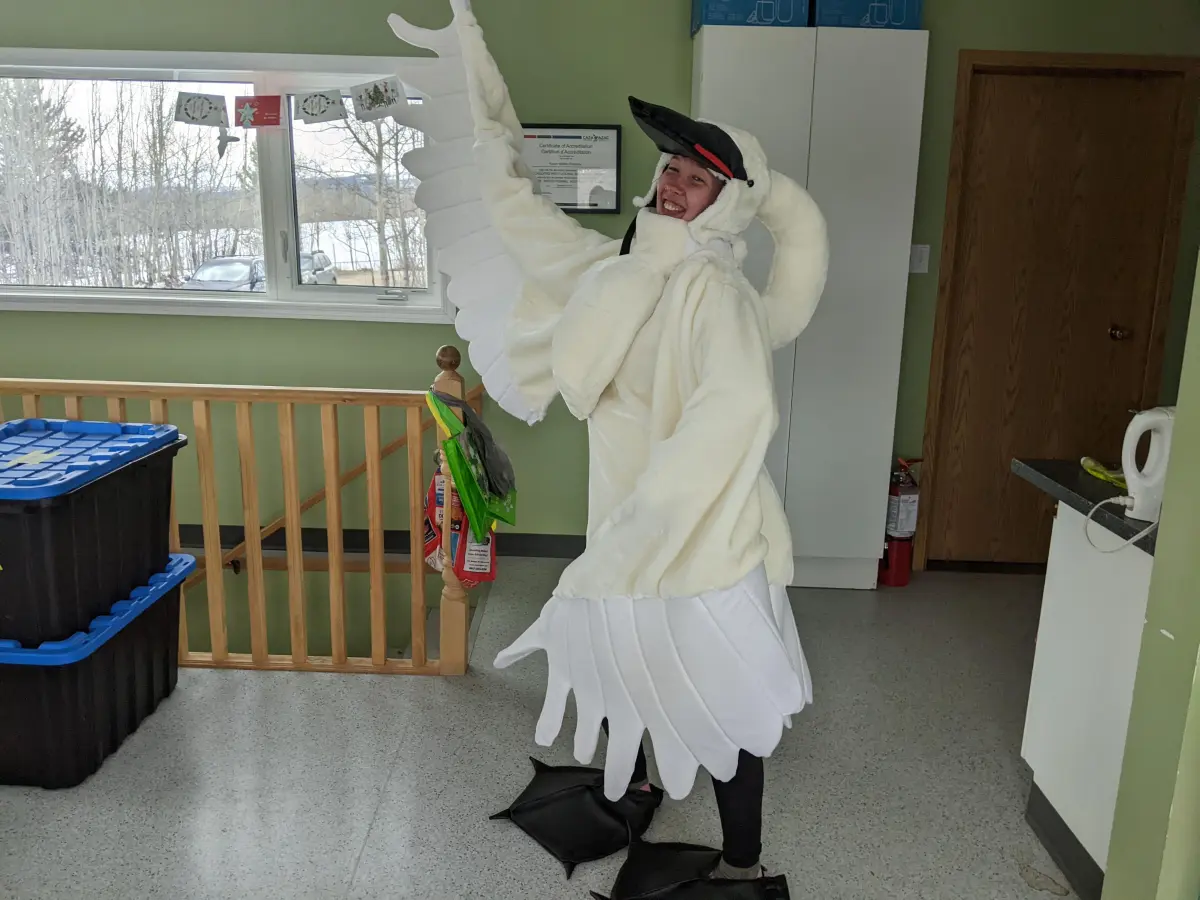
Swan Costume for Swan Haven Programming

Manager of Education and Programming, Madison Rushton, trying out our new and improved swan suit.

The Ball Gets Rolling

Though the snow on our peaks is slowly melting by early May, the snowball we call ‘Education and Programming’ is growing both in size and speed. It’s now time for our Spring Programs! Life is waking up and starting to buzz here on the Preserve. Together with the students we try to find each and every little buzz, bumble, and sign of life. Our Yukon-famous benthic macroinvertebrate studies (a.k.a. lookin’ for bugs in the pond), large scale Predator vs. Prey game, and animal charades are crowd pleasers amongst the little ones. Lots of fun and games for these students, and they haven’t the slightest clue they’re actually learning.

Once that’s all over, snow is the last thing on anyone’s mind. But, our ‘Education and Programming’ snowball is reaching its crescendo with the YWP Summer Nature Camps! It’s all hands on-deck at this point; three wildlife educators, nine weeks of camp, and nearly two hundred campers. The whirlwind that ensues is filled with a tremendous amount of fun. Fishing, barbecues, forts, flower picking, popsicles, dress-up, story time, nap-time, camp-time, and eventually, home-time are all to be expected.

At last, our ears ringing from nearly seven months of outdoor education and nature programming, we pat each other on the back and have our own well-deserved nap-time. But don’t forget, once we’re ready to open our eyes and stretch our arms, we get to do it all over again!

Students dip-netting for all the bugs and critters they can find.

Students dip-netting for all the bugs and critters they can find.

Naptime

Though working with children can be exhausting it’s also extraordinarily rewarding. Moments of growth in our students fuel us educators with energy and inspiration. And the best part? We’re learning just as much from them as they do from us.

While teaching at the Preserve I often think back to my own outdoor education experiences as a child. Downtown Toronto certainly offered less opportunities than the pristine boreal, but the richness of those experiences was all the same.

Now that I think about it, I remember one particular experience at the Toronto Island Nature School. We were playing a game of Predator vs. Prey and I felt like the luckiest boy. I had the opportunity to play my favorite animal; the wolf. I ran under a bush, prepared myself, and waited eagerly for the game to start. TWEEEET went the whistle and THUMP THUMP went my feet.

“Seth! Where are your shoes?”

“Shoes?! I don’t need shoes, I’m a wolf!”
Seth Brown

Seth Brown

Visitor Services Coordinator

Passionate about the environment, art, and education, Seth has been working as an environmental educator since 2017. Off the preserve, you can find him playing in the mountains; on skis in the winter and with a paddle in the summer. Having moved to the Yukon and joined the preserve in April 2022, he’s excited to learn and explore!
867-456-7400
seth@yukonwildlife.ca

Explore by Category

Explore by Author

The Dangerous and the Benign: distinguishing between big scary bugs

The Dangerous and the Benign: distinguishing between big scary bugs

The Dangerous and the Benign: distinguishing between big scary bugs

This article was made possible thanks to support from the Environmental Awareness Fund. Engage and educate yourself in this 10-part blog series, about Yukon Biodiversity.

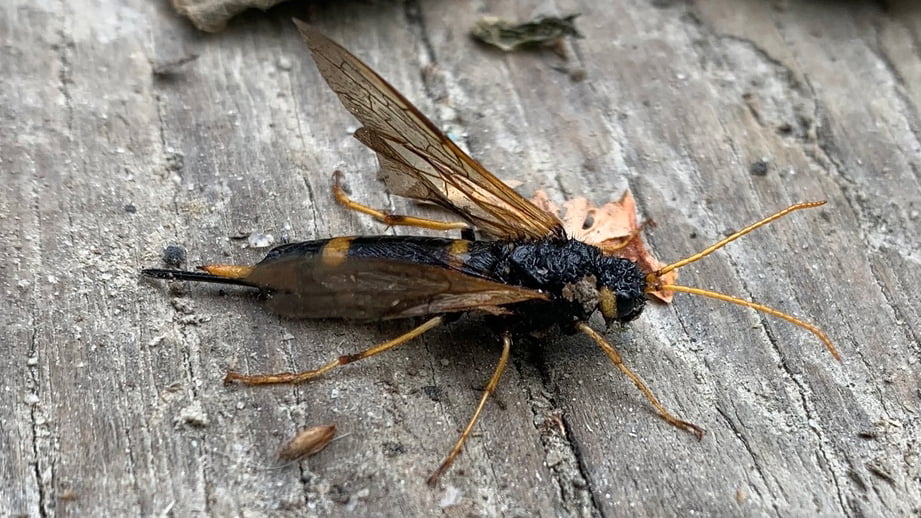
Banner Photo:  Yellow-tailed Horntail.  Photo credit: iNaturalist griffontrail in Dawson YT.

12 minute read – 

I think we can all agree that the past year has been pretty rough with the fires and the pandemic and the political unrest. When you add the appearance of large and intimidating Asian giant hornets on our fair continent, it makes it feel like we’re living through some biblical plagues. For those of you who have not been hysterically following the news, the Asian giant hornet (aka “the murder hornet”) is a massive hornet that earned its ominous nickname from its fun habit of decapitating hundreds of bees at a time and then carrying off the bee babies (the babees) to feed its own young. Also they sometimes kill people. Yikes. In the spring of 2020, they added to the general calamity that was all of last year by popping up in Washington, DC where the U.S. residents were understandably upset to have this horrible serial killer hornet added to their ecosystem.

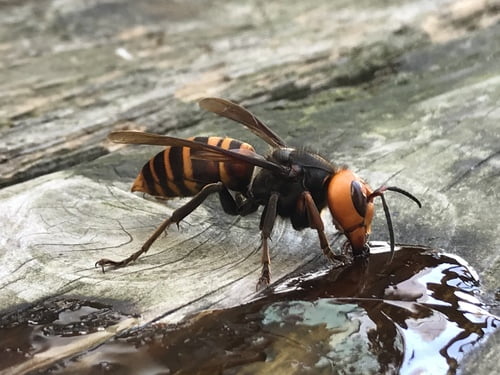
iNaturalist observation of an Asian giant hornet.  No iNaturalist observations are to date recorded in Canada.  Photo Credit (c) Wonwoong Kim, all rights reserved

Obviously, the North American invasion by Asian giant hornets wasn’t kept secret and word traveled all the way to our remote territory. It’s probably because of this news that when a large insect with a prominent “stinger” and suspiciously hornet-like colouring was spotted during the Yukon Wildlife Preserve Bioblitz, some people got very nervous! But fear not, fellow Yukoners! The Yukon is a deeply unappealing habitat for the coast-loving murder hornets. The insect that garnered so much attention at the Bioblitz due to its large, scary appearance and prominent butt-spike is only a threat to felled trees. This benign bug is a horntail also known as a “wood wasp” (of the family Siricidae) and it could not be less like the invasive death machine it was mistaken for.

On the Left:  Yellow-tailed Horntail.  Found in Yukon.  iNaturalist Photo Credit M_Mossop

On the Right:  Asian giant Hornet.  Not found in Yukon.  iNaturalist Photo Credit (c) Alpsdake, some rights reserved (CC BY-SA)

Before we examine these insects in detail, a quick addendum. While scientists and academic types should never let personal bias cloud their research, I am not a scientist nor particularly academic so prepare for some bias. I HATE insects of the wasp/hornet variety. I mean the kind of loathing that would start a centuries long blood feud between families in olden times. Yes, they get props for being pollinators in their spare time but oooooh my god. These stripey menaces ruin every summer outdoor dining experience by completely disregarding your personal space and then rendering your beverage undrinkable after they drown themselves in it. Also, if they sting me, I die and that dynamic would sour any relationship. With that out of the way, let’s meet these bugs!

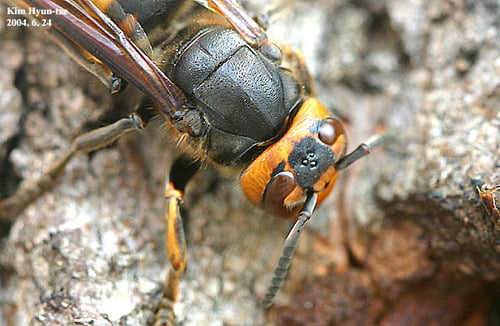
The Asian giant hornet or Vespa mandarinia (which sounds like a particularly elegant moped) is aptly named as it is the world’s largest hornet! Worker hornets are 3.5 cm long while queens get up to 5 cm. Their wingspans range between 4-7 cm which is probably more bug than the average person wants to deal with. If their size isn’t a giveaway, their large orange heads and black eyes make them very recognizable.

iNaturalist observation Asian giant hornet.  Photo credit: (c) Kim, Hyun-tae, some rights reserved (CC BY)

Unlike a lot of other hornets and wasps, these big hornets only nest in the ground. They favour forested areas in coastal environments which is bad news for our west-coast brethren but good news for the Yukon which is notably low on hospitable coastal regions. During the one-year life cycle of a nest, worker hornets usually forage alone and mostly hunt for beetles. The dark and sinister nature of these hornets rears its head in the fall when the colony needs a lot of protein to raise the next generation of queens.

In order to bring in the protein required to beef up their queens, workers abandon solo-foraging missions and band together for group raids. These raids attack high-value targets like the hives of honeybees or even the hives of other hornets. When these raiding parties hit a hive, they decapitate all the adults like they’re doing a re-enactment of the French Revolution then cart off the brood for food. These murder hornets really live up to the moniker as they can kill off thousands of bees in a few hours. Bees are already on a dangerous decline and Asian giant hornets can absolutely devastate local bee populations. This makes their appearance in America and Canada especially concerning.

Although the sudden appearance of murder hornets would be very on-brand for 2020, Asian giant hornets have been in North America before. They were discovered in Nanaimo, BC in August 2019 when beekeepers found a destroyed nest with a whole heap of headless bees outside of it. Their appearance in Washington is just an extension of their coastal conquest. Fortunately, the number of murder hornets in North America is still pretty low. This is good news for humans as people deaths from Asian giant hornets are usually due to disturbing a nest and incurring many stings. Unless you have an allergy (like some people who wrote this article), you have high chances of surviving a murder hornet attack if you have less than fifty stings. Rest easy, I guess? That being said, the Washington State Department of Agriculture had to order special suits to study Asian giant hornets because their massive stingers can pierce through normal beekeeping gear so maybe rest less easily.

It’s time to ease yourself into the warm waters of relief because the horntails that hang out in the Yukon are nothing like this. They’re not invasive, they don’t sting, and unless you’re a dead tree, they pose absolutely zero risk to your health and wellbeing. Yes, wood wasps are also intimidatingly large and similar in size to Asian giant hornets. They range in size between 1-4 cm with females tending to be larger than their male counterparts. Horntails get their name from their cornus: a stinger-shaped plate on the back of their body. Horn. Tail. Geddit? Even though it looks like a stinger, rest assured that it isn’t. Horntails don’t sting or produce venom and don’t really have any defenses other than looking scary. Females in particular look like they have a MASSIVE stinger but it’s actually an ovipositor that helps them lay their eggs into the wood of conifer trees.

iNaturalist image Yellow-tailed Horntail.  Whitehorse YT  Photo credit:  Jake Paleczny

Here’s a fun fact: female horntails have a symbiotic relationship with a fungus! Similar to horntails, basidiomycete wood decay fungi enjoys a nice rotting log. Female horntails help this fungus spread to new locations by carrying bits of it in a specialized pouch on their abdomen. When the female lays her eggs, she also deposits the fungus inside the rotting wood. The horntail also benefits from this arrangement as the larvae get to snack on the fungus after they hatch.

Unlike the newly arrived murder hornet, we’ve probably had horntails in the Yukon as long as we’ve had conifer trees. The reason you might not run into them all the time is that they spend most of their lives inside a tree. After a female lays her hundreds and hundreds of eggs in the wood of a felled or rotting tree, the young hang out in that log for 1-3 years. After they emerge from their timber home as a fully grown adult, they only live for 3-4 weeks! Because they spend so much time in wood, young adults sometimes show up inside people’s homes because the lumber they’ve been tunneling around in has been used as construction material. So they’re not out there murdering bees and giving horrible stings but they can occasionally give you a nasty surprise by exploding out of your new rocking chair.

iNaturalist Yukon.  Yellow-tailed Horntail.  Photo Credit:  Bruce Bennett

I hope your fears are assuaged and you won’t dread painful stings and bee death when you encounter a big scary bug in the Yukon wilds. The horntail might be intimidating in appearance, but it’s a passive insect that just wants to spend most of its life noodling around in a tree. Asian giant hornets are definitely horrible nightmare insects that were probably manifested into existence as punishment for our sins but at least they’re horrible nightmare insects that don’t live up here.

iNaturalist Asian giant hornet resting on human hand.  Photo credit:  (c) elfsama, some rights reserved (CC BY-NC)

Joelle Ingram

Joelle Ingram

Human of Many Talents

Joelle is a former archaeologist, former wildlife interpreter, and a full-time random fact enthusiast. She received her master’s degree in anthropology from McMaster University. One of the four people who read her thesis gave it the glowing review “It’s a paper that would appeal to very specific group of people,” which is probably why only four people have read it. Her favourite land mammal is a muskox, her favourite aquatic mammal is a narwhal. She thinks it’s important that you know that.

867-456-7400
 info@yukonwildlife.ca

Explore by Category

Explore by Author

A Beginner’s Guide to iNaturalist:

A Beginner’s Guide to iNaturalist:

A Beginner’s Guide to iNaturalist:

This article was made possible thanks to support from the Environmental Awareness Fund. Engage and educate yourself in this 10-part blog series, about Yukon Biodiversity.

5 minute Read and 8:58 minute Video

How to explore the biodiversity in your own backyard:

Hey there! Are you feeling isolated (and who isn’t in this remote territory, during this plague year, in the cold months)? Would you like to connect to nature? Have you considered iNaturalist? It’s a groovy app available on your phone or computer and it’s essentially an encyclopedia to the wide variety of living organisms in your local area and across the globe.

If you’re new to the app, let me give you the basics. First, go outside. Catch some of the fleeting winter sun, take in some fresh air, and observe your surroundings. Next, spot an interesting organism (plant, animal, bug, algae, etc.) and take a nice, full frame photo of it and upload it to the iNaturalist app. Congratulations! You are now an observer and this thing you have photographed is the first of your (many) observations.
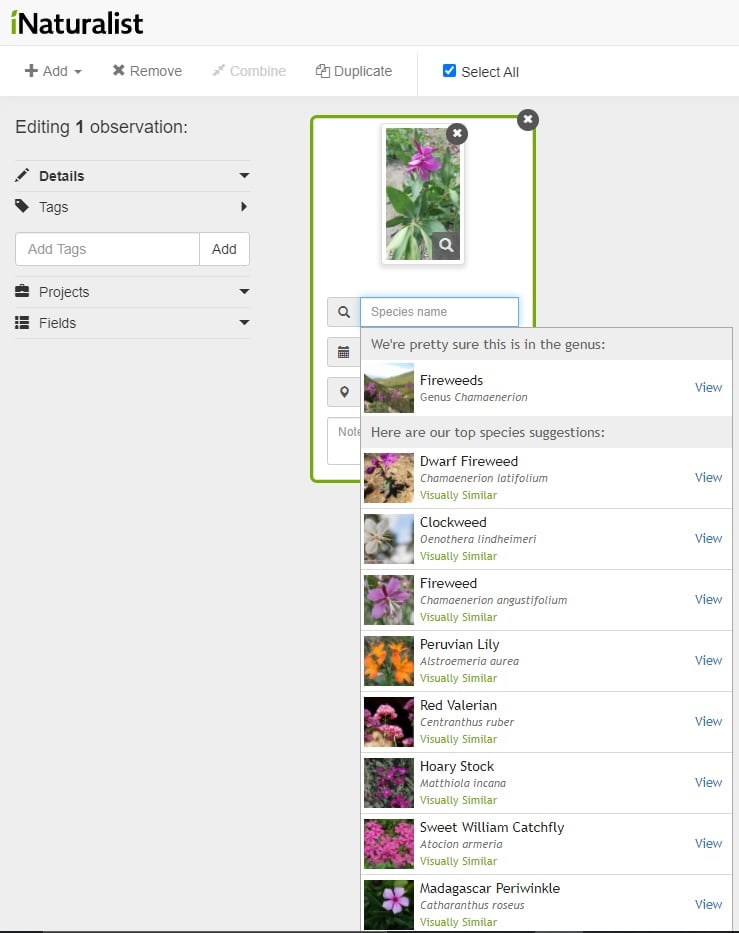
Once you have a photo uploaded, it’s time to build a profile for your observation. Tell us what species you photographed, the date the photo was taken, and where it was located. Not sure what you took a photo of? Not a problem. If you take a peek at the screenshot below, you can see a handy dandy drop-down menu that shows up when you click on the species field and suggests, based on your photo, what species you might have photographed. As you can see, the top suggestion for my photo of dwarf fireweed was… dwarf fireweed! What! WITCHCRAFT (which is code for programming I am both impressed by and don’t understand).

iNaturalist – once you upload your photo you can use the drop down photo suggestion prompt to help identify what in fact you are looking at!

If the dark magic of the iNaturalist app suggested species list doesn’t give you a likely answer, someone else can. This is where the identifiers come into play. The iNaturalist community plays host to specialists and seasoned outdoors enthusiasts whose expertise can put a name to the mystery organisms in your photos.
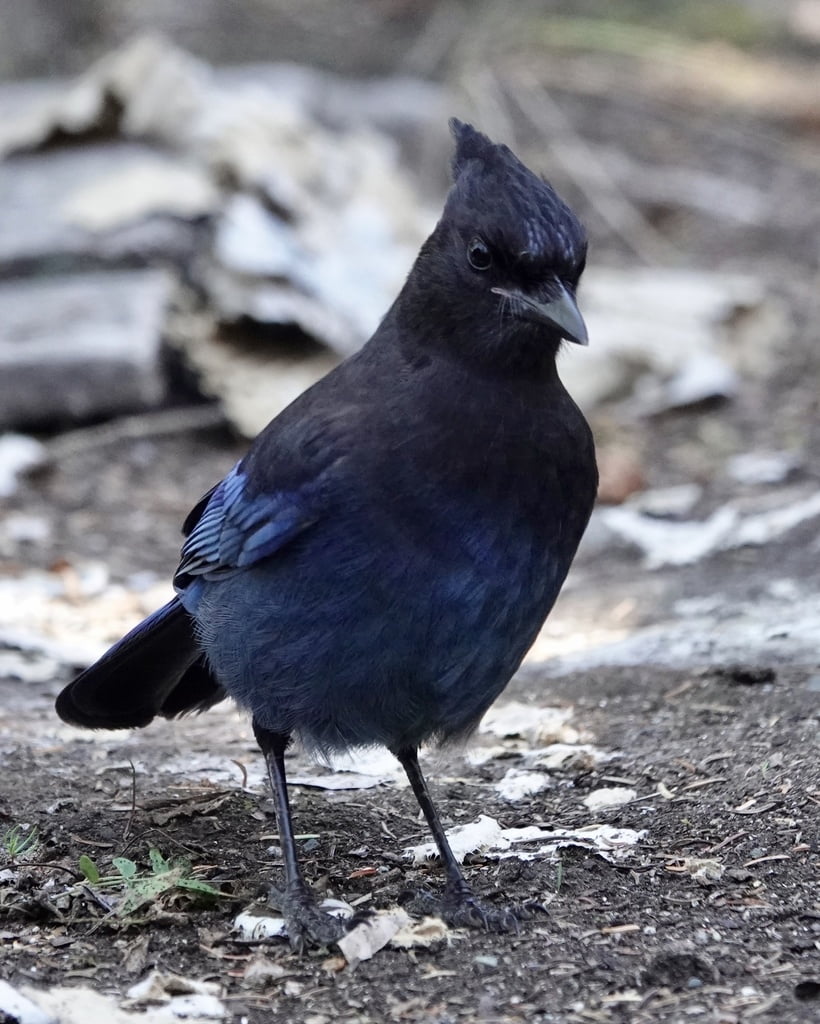
But wait, it’s winter. The insects are dead or dreaming, the fish are under a sizeable roof of ice, and the foliage is exceptionally non-existent. This is all true but that doesn’t mean there aren’t a lot of biodiversity discoveries you can make in the snowy months, far from it in fact. The bird populations in the Yukon change significantly from season to season; the water birds may be gone but the bohemian waxwings are lovely this time of year. We’re also experiencing a rare bird event this winter with the appearance of Steller’s jays. The Steller’s jay is the provincial bird of British Columbia and has only been noted en-masse in the territory twice before this: in 2006 and 1994. This showy blue-black corvid would make a charming addition to your list of iNaturalist observations.

A steller’s jay observed in Carcross, Yukon. Photo Credit Cameron Eckert iNaturalist

But wait, there’s more. Act now and you can take advantage of one of the finest animal observing methods gifted to you by winter: animal tracks. Sure, you can spot footprints in mud during the warmer months but the winter offers an endless white canvas for animal feet. Yes, you can also upload photos of animal footprints. Not only do you get to identify the beasties wandering through your neighbourhood but you also learn to identify them even when they aren’t there. That’s some Sherlock level business.

If you don’t feel like meandering outside (and as we move into the colder days, who could blame you), you can check out your local biodiversity from the comfort of your own home. Remember how you enter the location of your observations? That means all observations are placed in a map that lets you check which organisms have been observed in your area or in the destination of your choice.

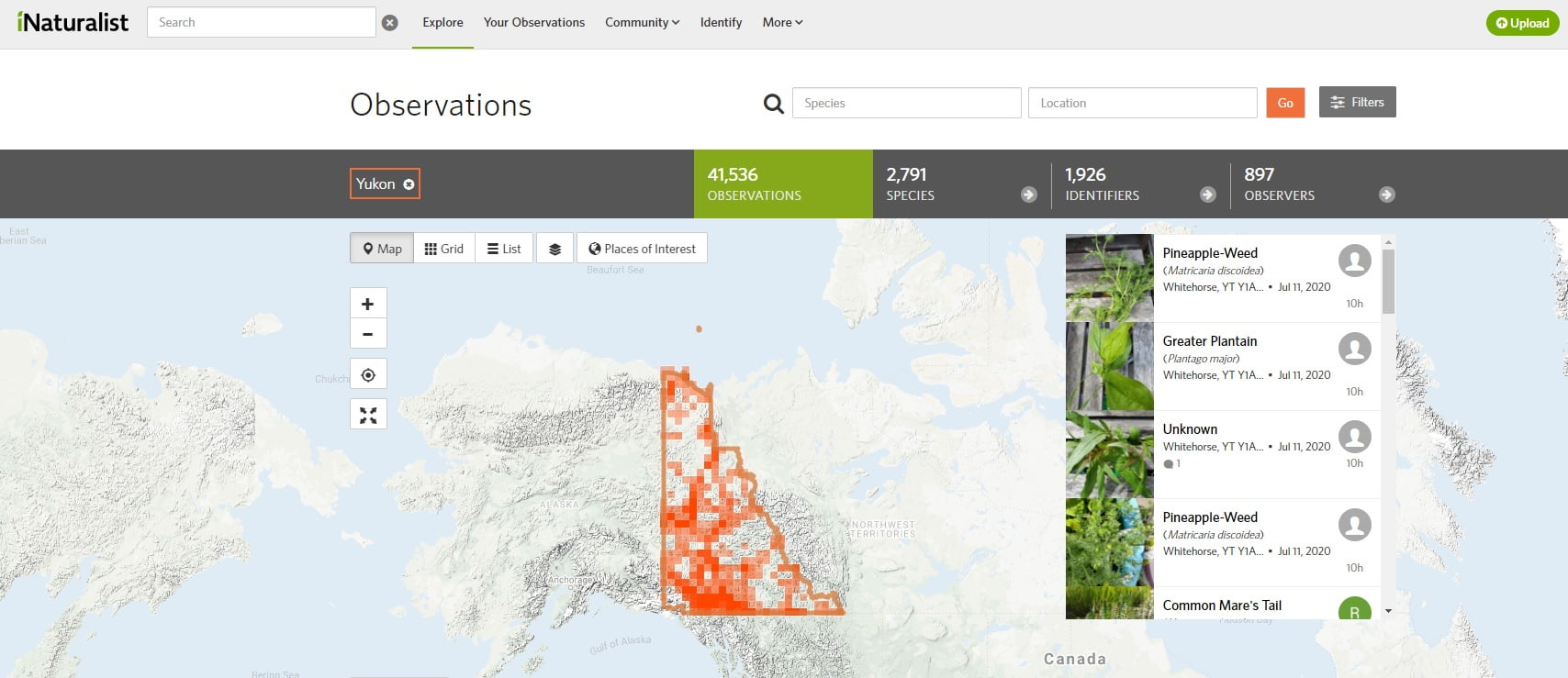
All the observations in a given region can be seen from a map view. You can then click on each instance to learn more about the obeservation.

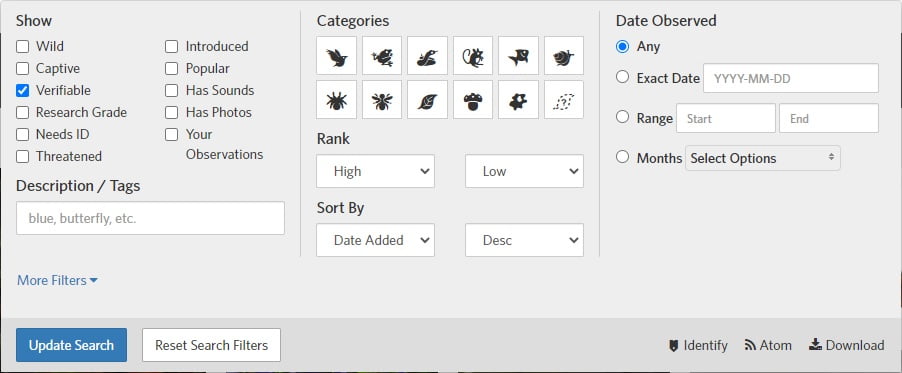
Not interested in your home range? No problem, check in on the gibbon observations in Asia, gaze upon the Macaw palm of South America. The iNaturalist map is a wonderful worldwide experience in biodiversity. You can peruse different species in far-ranging areas based on your interests. iNaturalist lets you check out the organisms based on category (frog, insect, flower, etc.), status (wild, threatened, introduced, needs ID, etc.), and date of observation. Mix it up, check it out, and find something new.

Explore iNaturalist through various categories including species, status, and date of observation. 

The iNaturalist app is an approachable means of connecting professionals and the public for the benefit of biodiversity research. The annual Bioblitzes are a great example of this. A Bioblitz is used to determine the health and diversity of an ecosystem by bringing together the local community of both specialists and the enthusiastic public to observe and record as many species as possible in a limited area within an equally limited timeframe to create a “snapshot” of the living things in a specific region. Outside of general curiosity, the data from a Bioblitz can inform decisions about wildlife management and future research.
The 2020 Yukon Bioblitz was held at our very own Yukon Wildlife Preserve in the short span of July 8-10 2020. Not to brag, but the Wildlife Preserve is a great local for a Bioblitz because it’s composed of a diverse array of habitats including forests, meadows, and wetlands which in turn host a variety of plant, animal, and fungi species. Unfortunately, the intentional residents of the Wildlife Preserve were not included in the Bioblitz observations. It would be very impressive to add a muskox or a lynx to your iNaturalist observation repertoire but if they’re full-time residents of the Wildlife Preserve, they’re not necessarily representative of the type or amount of these species that would be present in this area. Alas.

Over the three days of the 2020 Bioblitz, a horde of experts (like Dan Peach – mosquito man) and the public (including me) descended upon the Wildlife Preserve to document every and any species they came across. Even without the residents of the Wildlife Preserve, there were over 400 species recorded during the Bioblitz. That’s a lot! For a little perspective, this count includes:

The Count List
  • 2 species of algae
  • 1 amphibian
  • 22 species of beetle
  • 62 bird species
  • 12 species of moss
  • 1 centipede
  • 18 species of flies
  • 57 species of fungi and lichens
  • 11 species of true bugs
  • 31 species of bees, wasps, ants
  • 18 species of butterflies and moths
  • 8 mammal species
  • 7 species of snails
  • 11 species of dragonflies
  • 1 grasshopper
  • 1 pot worm
  • 8 spider species
  • 182 species of vascular plants
  • And a partridge in a pear tree
  • (Just kidding, partridges aren’t indigenous to the Yukon.)
  • (And neither are pear trees.)
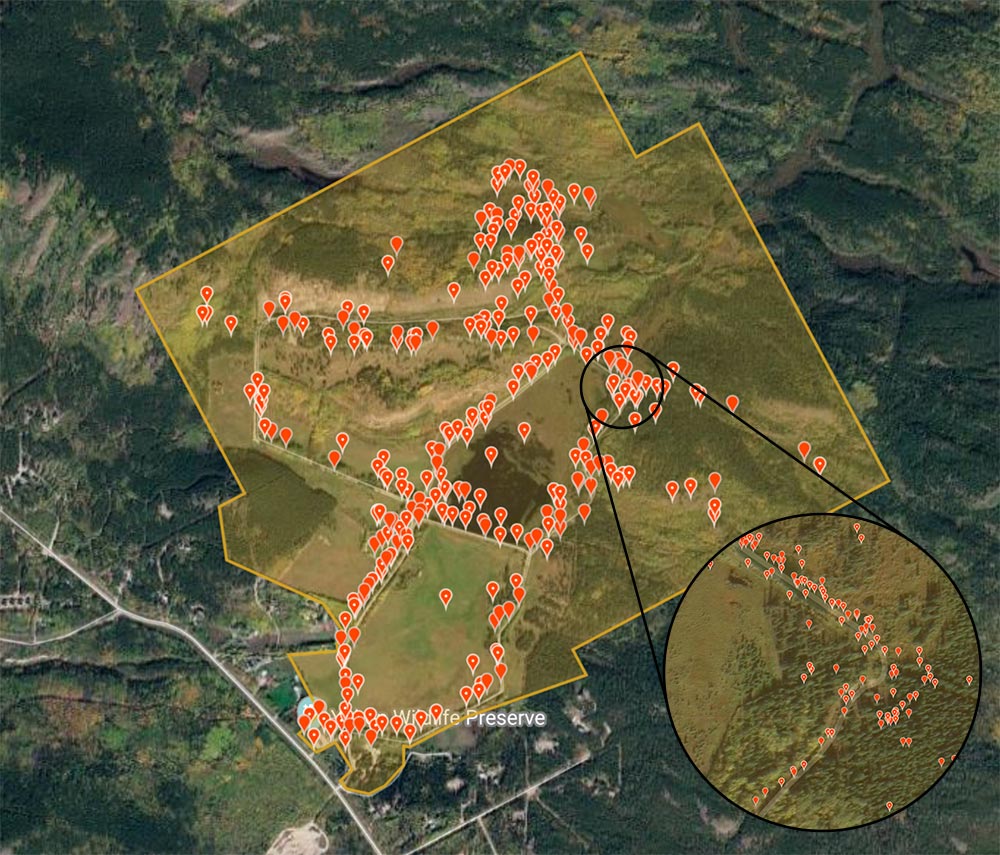
For the full species list and the distribution map, check it out here!

The Bioblitz provides a snapshot of what’s present in the territory but there are 482,443 km² of territory to explore. Imagine what else you could find. Get out there, observe, record, and have a good time!

Video shot and edited by Jake Paleczny.

Joelle Ingram

Joelle Ingram

Human of Many Talents

Joelle is a former archaeologist, former wildlife interpreter, and a full-time random fact enthusiast. She received her master’s degree in anthropology from McMaster University. One of the four people who read her thesis gave it the glowing review “It’s a paper that would appeal to very specific group of people,” which is probably why only four people have read it. Her favourite land mammal is a muskox, her favourite aquatic mammal is a narwhal. She thinks it’s important that you know that.

867-456-7400
 info@yukonwildlife.ca

Explore by Category

Explore by Author

1 Mosquito, 2 Mosquito . . .

1 Mosquito, 2 Mosquito . . .

1 Mosquito, 2 Mosquito . . .

This article was made possible thanks to support from the Environmental Awareness Fund. Engage and educate yourself in this 10-part blog series, about Yukon Biodiversity.

10 minute Read plus 3:47 minute video. Banner image photo credit: John Borden.

Mosquitoes: the blood-sucking embodiment of tinnitus. Let’s talk about them. If you are a Yukon resident, I’m sure you are painfully aware that our triangle shaped territory plays host to a truly astonishing number of these whining winged menaces. They rise from their slumber in early spring before the ice has even left the lakes to make all your outdoor activities a little bit more annoying. And itchy.

Photo Credit: Dan Peach

Mosquito evasion is a popular summer pastime here in the North so it might seem wild that people would actively seek out mosquitos but that’s the case for many entomologists who go out and willing get bitten by these bugs for science. Dr. Dan Peach from the University of British Columbia recently conducted a mosquito study in the Yukon which identified thirty odd different species of mosquitos including a few that have never been recorded in the territory before!

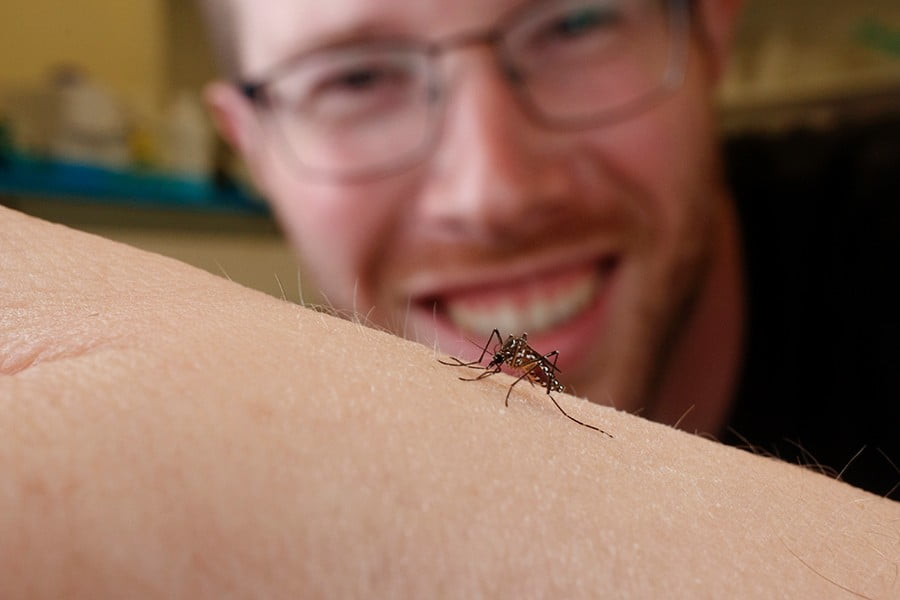
Dan Peach, a PhD candidate in SFU’s Department of Biological Sciences, feeds a mosquito. Photo Credit SFU News.

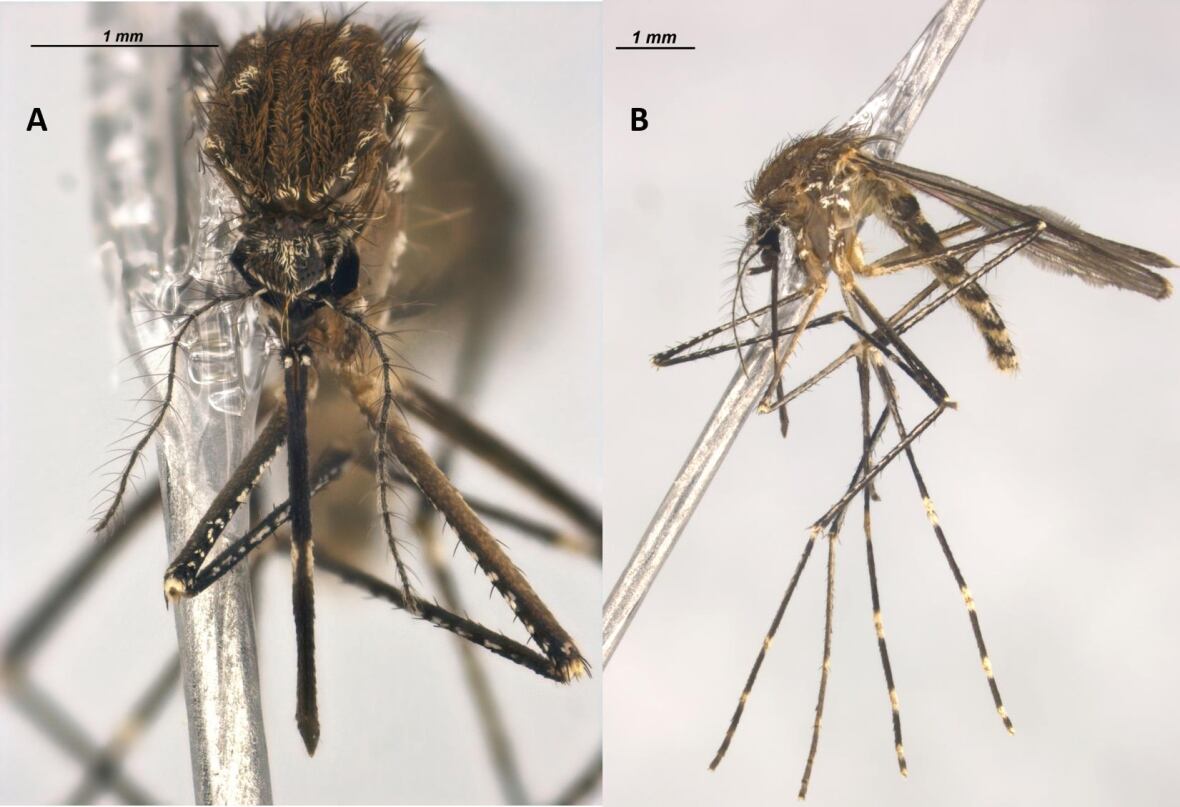
Researchers use the shape and relative size of a mosquito’s body parts to identify which type it is as well as scale patterns, colour, and hairs. Obviously, identifying these traits on an insect that could comfortably hang out on a dime isn’t easy. Mosquito identification usually requires a microscope, but experienced researchers can identify different species with the naked eye if the mosquito is holding still. It’s a weird party trick but you could get a lot of mileage out of it during a Yukon summer.

In his studies, Peach has had to be bitten by mosquitos more than 100,000 times. In the works for him is a peer-reviewed guide to Yukon mosquitos. This photo was taken during Yukon Wildlife Preserve-hosted Yukon Bioblitz in summer 2020. Photo Credit: Vince Federoff, Whitehorse Star

The Yukon actually has a long a long history of mosquito research; the first formal record of a mosquito collected in the territory was in 1904. That being said, mosquito surveys aren’t frequent. Before Dr. Peach’s survey, the last mosquito collecting spree was conducted in the early ‘70s. Now you may be asking yourself, “why oh why would anyone want to survey mosquitoes?”

Just like any survey related to biodiversity, it’s important for understanding and monitoring our local ecosystems and improving our understanding of our planet as a whole. Just because something is horrible and bitey doesn’t mean it isn’t ecologically significant and interesting. For example, you may or may not know that only female mosquitoes drink blood while males stick to a diet of plant nectar. That’s right, mosquitoes are pollinators just like bees, bats, butterflies, and… other creatures whose names may or may not start with B. Female mosquitoes also drink plant juice but they do need additional protein to produce eggs and that’s where the blood portion of their diet comes in.

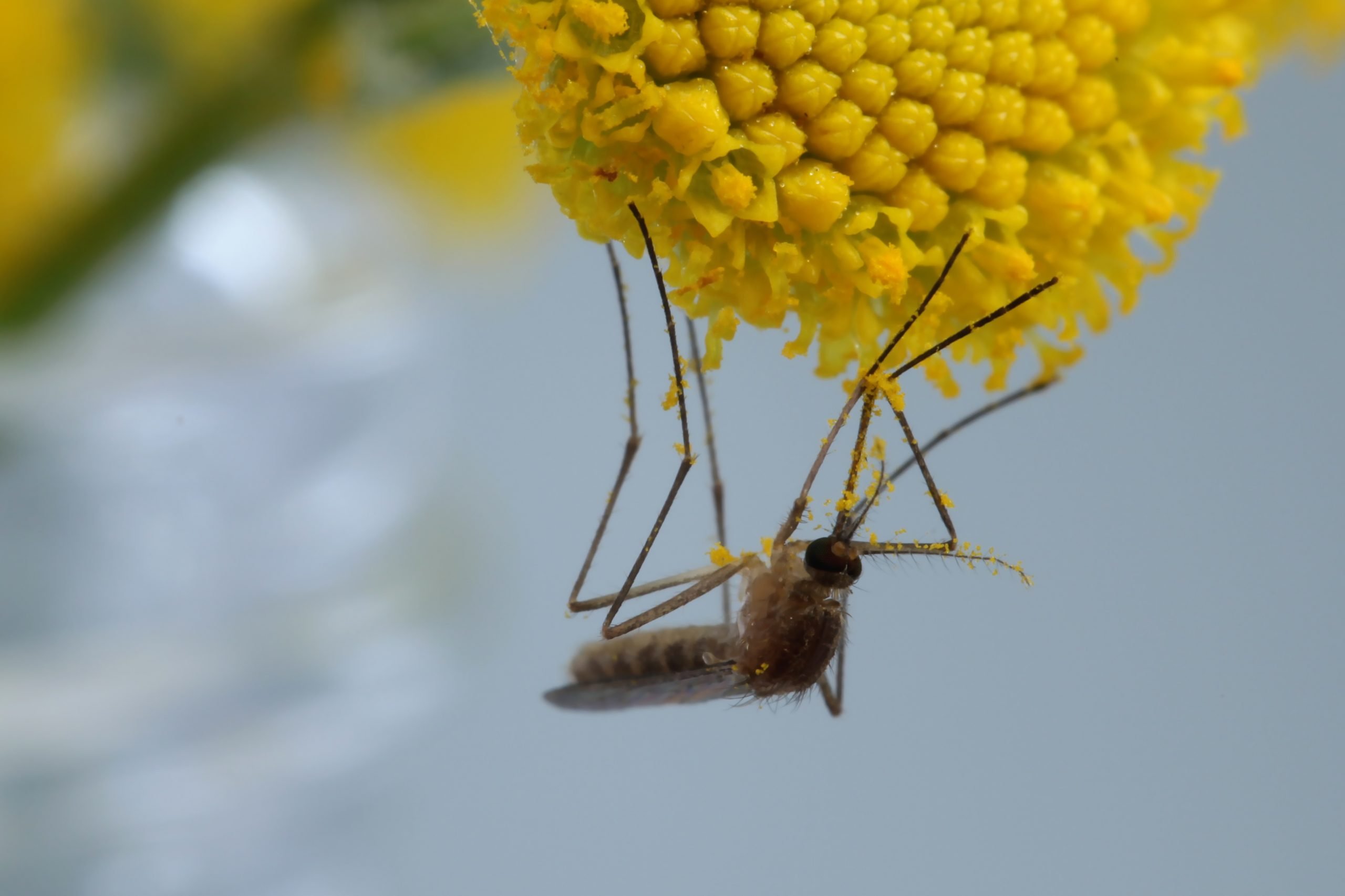
A female Culex pipiens cleans tansy pollen from her proboscis. Photo Credit Mike Hrabar.

Because there is such a diverse array of mosquitoes in the Yukon, I’m not going to get into all of them here (if you want the complete list of every type of mosquito identified in the Yukon, check out Dr. Peach’s mosquito guide for all your mozzie needs coming soon). Instead, I’d like to offer you a sampler pack of what the Yukon mosquito community has to offer starting with my personal favourite, Culex territans. When you’re being eaten alive by clouds of biting bugs during the summer months, I can almost guarantee that none of them are C. territans. See, unlike many other species of mosquito, C. territans rarely if ever feed on warm blooded creatures and instead feed exclusively on amphibians. Amphibians, you know, like frogs. Frogs who are notorious for eating bugs. Bold move, C. territans!

Anopheles earlei is sometimes referred to as “Canada’s national mosquito” and it’s not because it smells of maple syrup and has strong opinions about hockey. During the winter, we are blessedly bug free as they all either die or go into hibernation. Canada’s national mosquito got its title due to its interesting hibernation habits: the females like to hibernate en masse inside beaver lodges! Another fun fact about A. earlei is that before the 2020 Bioblitz (a biodiversity survey conducted in a specific area for a limited amount of time. In this case, our very own Wildlife Preserve!), this particular mosquito hadn’t been reported in the Yukon since 1919, a whole entire century ago.

Footage from Dr. Dan’s visit during the 2020 Yukon Bioblitz conducted at the Yukon Wildlife Preserve. Video shot and edited by Jake Paleczny. 

Speaking of gaps in recording, let me introduce our third contestant: Aedes euedes. Up until 2019, A. euedes has never been recorded in the Yukon. This doesn’t mean they haven’t been here, but when there are multiple decades between surveys, some things might slip between the cracks. What else is lurking out there? Only future biodiversity surveys will tell!

While these three species are relatively rare, the most common mosquitoes in the Yukon belong to a group called “snowmelt mosquitoes” which sounds kind of pretty until you remember it’s referring to tiny airborne vampires. Like any species that survives and thrives in the North, snowmelt mosquitoes need to be pretty hearty. Instead of laying their eggs in lakes, ponds, or marshes, they use depressions in the ground that are temporarily filled with water during the early spring melt (hence the name). These pools formed by snow melted on sunny spring days will often freeze over at night, but snowmelt mosquitoes can survive in chilly water and fluctuating temperatures. Their chosen spawning puddles gives these bugs a bit of an advantage: they avoid getting eaten by critters that live in permanent bodies of water like fish or other bugs. Using puddles that thaw while bigger bodies of water are still frozen also gives them a leg up on the relatively brief snow-free seasons.

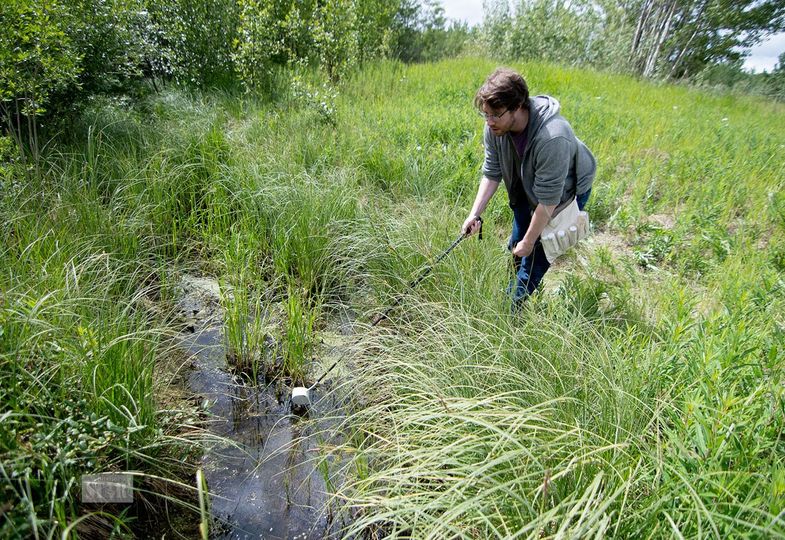
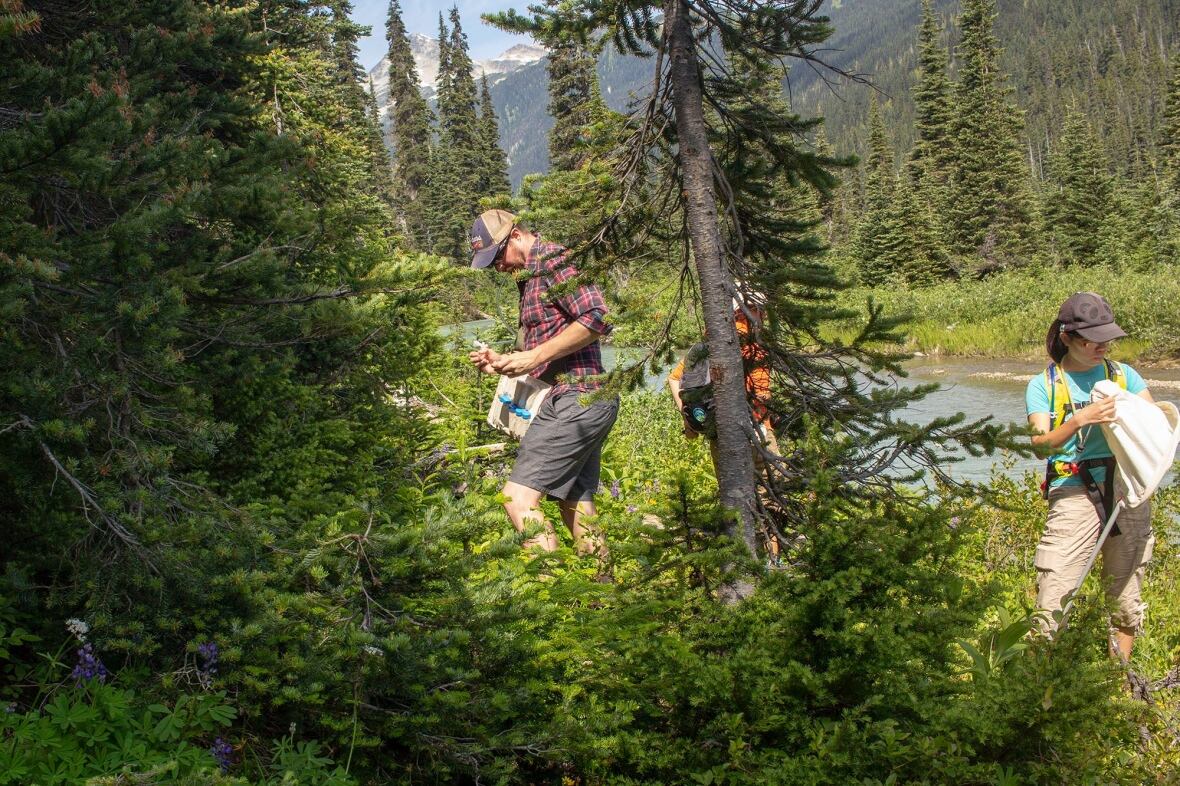
Researchers collect mosquitos in the dense forest of the Yukon. Photo Credit: Dan Peach

One of these snowmelt mosquitoes, Aedes communis, is often found in treed areas and it is a known vector (an agent that carries and transmits a disease) for snowshoe hare virus. While this is a bummer for snowshoe hares, it isn’t a problem for humans unless we get a huge dose of it and even then, it just presents as flu-like symptoms.

Culex tarsalis may be less common in the Yukon than A.communis, but as far as mosquitoes goes, it’s much more intimidating. Known as the “Western Encephalitis Mosquito” and “the mother of all vectors”, it’s a known vector for West Nile virus, several forms of encephalitis, and a long list of other diseases. For those not in the know, encephalitis is a swelling of the brain often caused by a viral infection and has symptoms ranging from aches and fatigue to hallucinations and seizures. It’s not great.

Close up of Culex tarsalis, a species of mosquito that Dr. Dan Peach was the first to confirm is found in Yukon. Photo Credit: Daniel Peach/Journal of the Entomological Society of British Columbia).

But fear not, citizen! While we have mosquitoes in the Yukon that could transmit diseases to people, they don’t and here’s why: In order for mosquito to give you a virus, it needs to be carrying that virus in the first place. Even if the mosquito was carrying a transmittable virus, the virus needs heat to multiply itself enough to the point where it would be too much for the human immune system to deal with. What do we not have in the Yukon? Heat. On the whole, the Yukon is just too chilly for mosquito-born disease to exist let alone thrive. I hope this gives you a feeling of relief as you bask in our -40 C winters.

You see, mosquitoes are diverse in their diets, behaviours, and characteristics, which just helps highlight the fact that the Yukon is wonderfully rich in biodiversity. This is something we should all appreciate even if it applies to insects that sometimes siphon your blood.

Joelle Ingram

Joelle Ingram

Human of Many Talents

Joelle is a former archaeologist, former wildlife interpreter, and a full-time random fact enthusiast. She received her master’s degree in anthropology from McMaster University. One of the four people who read her thesis gave it the glowing review “It’s a paper that would appeal to very specific group of people,” which is probably why only four people have read it. Her favourite land mammal is a muskox, her favourite aquatic mammal is a narwhal. She thinks it’s important that you know that.

867-456-7400
 info@yukonwildlife.ca

Explore by Category

Explore by Author

Arctic Fox Adaptations in 360 Video

Arctic Fox Adaptations in 360 Video

Arctic Fox Adaptations in 360 Video

4 min video – watch in either English or French – 

Surviving in the North is not for everyone. Those who make it need more than strength and endurance, they also need the ability to adapt to a challenging climate! Arctic Foxes are well-adapted to their frozen home in many ways. To learn more, watch this curriculum based video for schoolkids of all ages, then check out our website!

As you can see, the Arctic Foxes here at the Yukon Wildlife Preserve still have their winter coats on, but take a look at their muzzle for darker bits of fur showing through – that’s a sign they have begun shedding their winter coat.  These foxes might look cute, but they have also adapted to thrive in a really tough environment.

Survivre dans le Nord n’est pas pour tout le monde. Ceux qui survivent ont besoin de force, d’endurance et de capacité à s’adapter à un climat difficile! Les renards arctiques sont bien adaptés à leur habitat froid de plusieurs façons. Pour en apprendre plus sur les renards arctiques, regardez cette vidéo pour les étudiants – de toutes âges et visitez notre site web!

Education Team

Education Team

This 360 video is brought to you by the hard work and creativity of the Education team at Yukon Wildlife Preserve.  French translation for 2020 has been provided by Anna Tölgyesi.

Explore by Category

Explore by Author