Meet Elsa the Mountain Goat

Meet Elsa the Mountain Goat

mountain goats

by Lindsay Caskenette | Apr 12, 2024 | 0 comments

1 minute read - 

Meet Elsa, the mountain goat! She came from Northern Lights Wildlife Society in Smithers B.C located within The Witset First Nation is a First Nations band government of the Wet'suwet'en people of Witset, British Columbia, Canada. She was brought there in June, 2023 at about 1 week old.  She was brought to this wildlife shelter after she was swept down river - it's not sure, the details, how or why, but she was orphaned and injured at that point when she was found by rangers working on the land.

She had several cuts and lacerations, she lost a few baby teeth. She was taken care of incredibly well by the staff and volunteers at the Northern Lights Wildlife Society. 

You can watch a few of these videos of her care and progress via their social media.
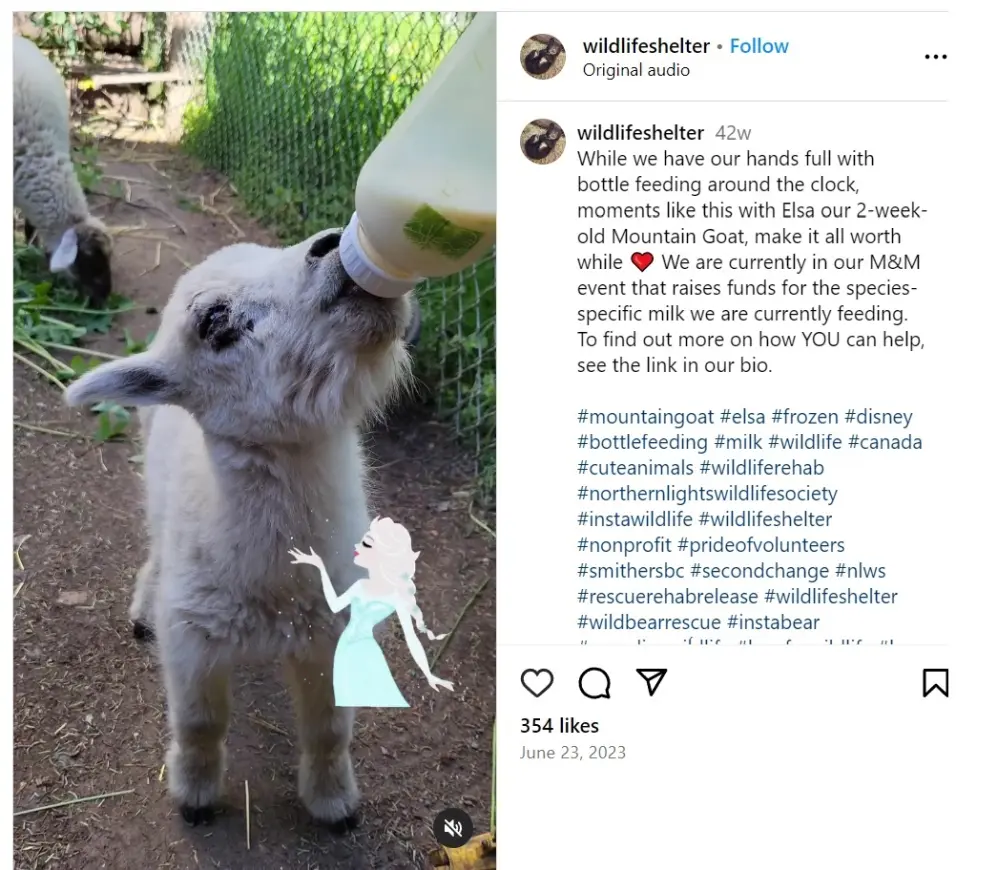
Elsa the queen of the North. Mountain goat rescue from BC wildlife Shelter. Elsa 1 week june 2023

By August, Elsa recovered fully from her injuries and complications that came after. Such challenges are bound to happen with wildlife, especially with an animal so young and under considerable stress and change. 

Elsa the mountain goat ice queen of the North 2 months old and recovered and eating well.

The little queen, Elsa continued to grow and by early winter she was ready for transport to the Yukon Wildlife Preserve for her long-term home. Since the goat was coming from another jurisdiction, in fact, one outside of the Yukon Territory, necessary coordination and import permits were required before her transport and arrival. With all the 'red tape' out of the way the Preserve now needed to consider how to get her to the Yukon, the quickest and safest way. Since the Wildlife Shelter is in Northern British Columbia, an Air North Transport was not an option, as it has been with other rehabilitation animals, though those animals were mostly headed South and back to the wild, not North and into long-term care. 
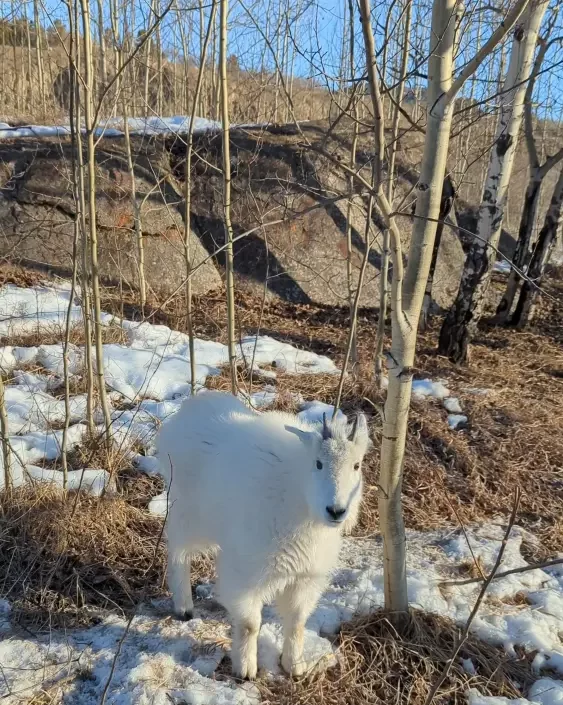
Elsa, the mountain goat, just a few days before her big move to the big leagues which means to the big cliff in the background with the nannies.

Community connections started this journey for Elsa and it continued through her successful transportation by an incredible offering as described below by Rebecca Bradford-Andrew, Manager, First Nation Education Advocates for Yukon First Nation Education Directorate. 

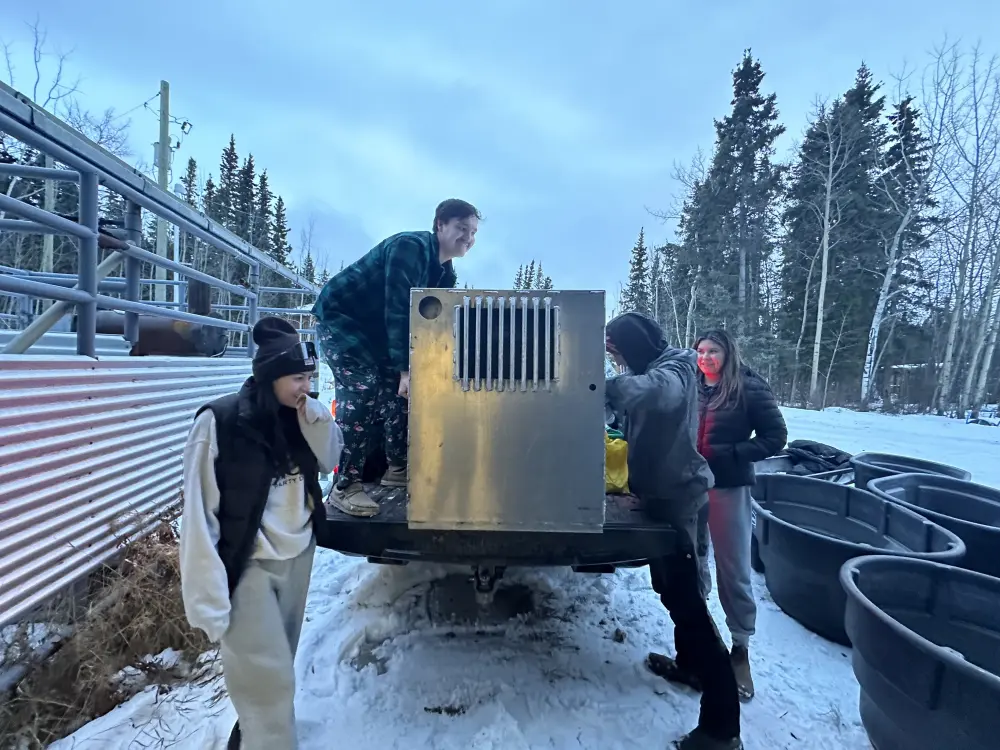
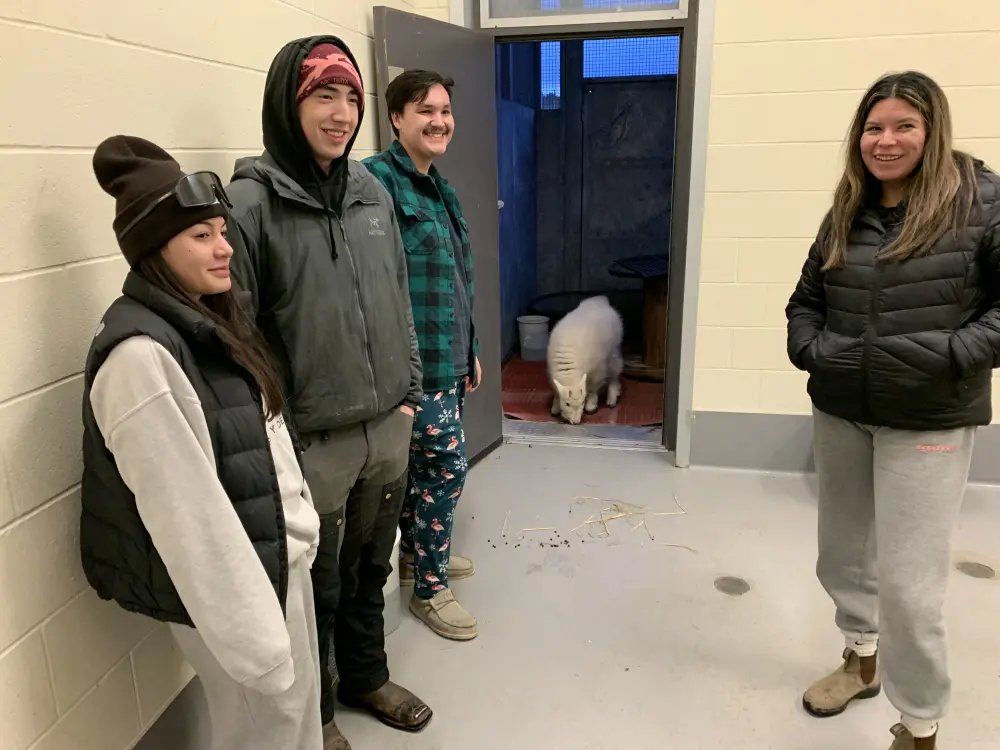
Wild orphaned Nanny goat Elsa from the remote mountains of Northen BC. transportation from her rescue facility to Whitehorse was provided by teenagers, a team of young wildlife enthusiasts from the Yukon First Nation Education Directorate (YFNED) ( a Jordan's Principle-funded Initiative).

These local teens work to build community and culture by supporting indigenous students in Yukon schools. They strive to be role models for youth by doing good deeds and stepping in where needed. Thank you Dr.Hallock and your team for including us in this wonderful opportunity to collaborate for our community!

The YFNED, an indigenous-led educational organization, supports traditional, land-based learning opportunities.

The YWP has been educating people for years, and Yukon students have much to learn about eco-systems, evolution, and herd dynamics, with a strong, healthy mountain goat population their textbooks, and the beautiful cliffs of the YWP their classroom.

Edone daga eti’e (For the good of the child).
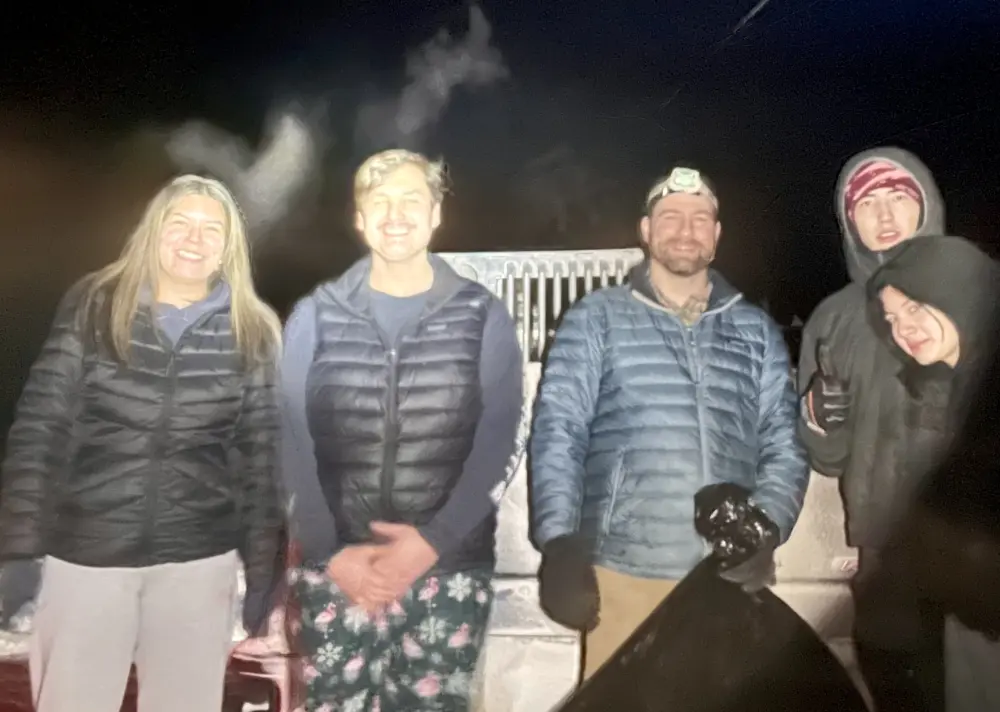
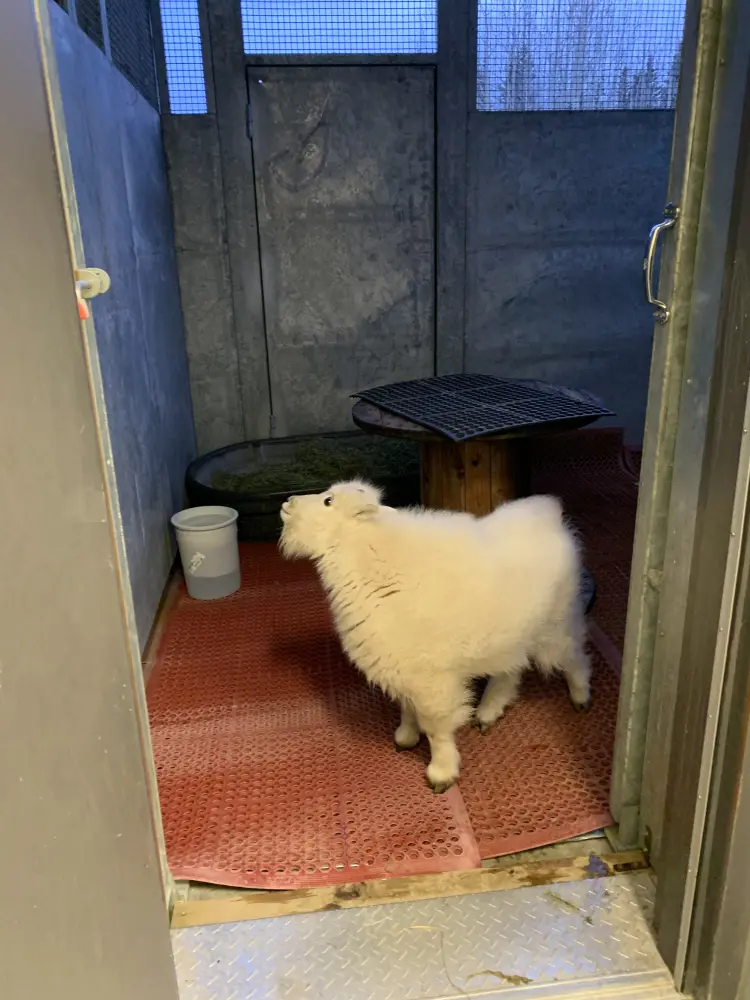
Elsa arrived December 12, 2023 to the Wildlife Rehabiliation Centre where for the next 30 days would be in quarantine. This is a mandatory isolation while testing occurred and medication was administered by Preserve's Animal Care team to ensure her eventual integration to the collection of goats would not pose any risks. Of course, the ice queen of the North, passed with flying crystals . . . er., colours!
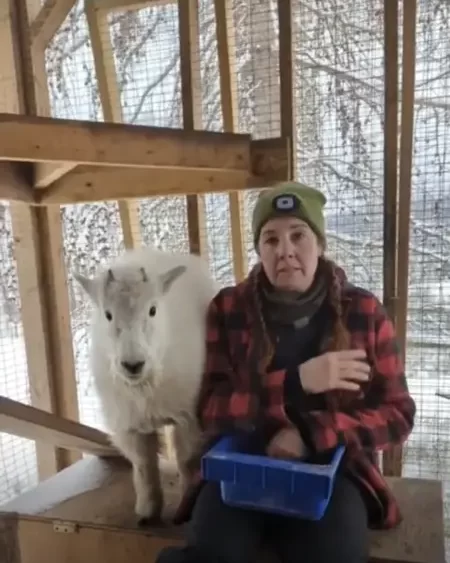
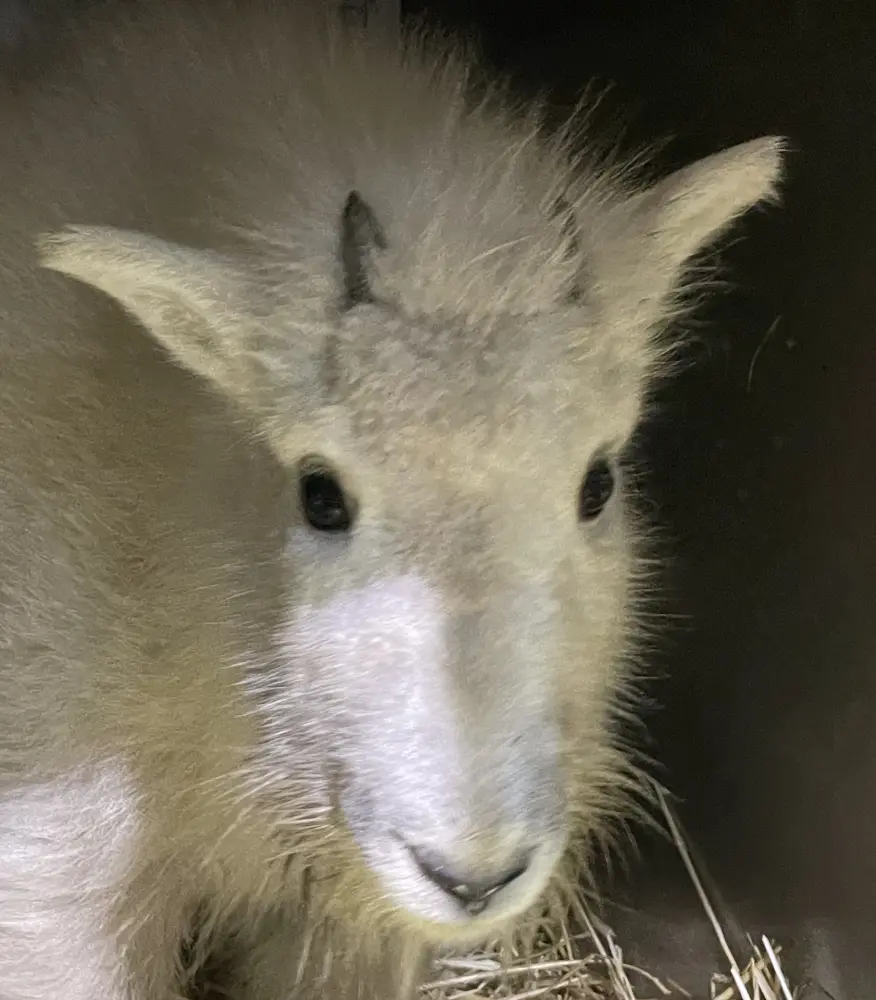
In mid January Elsa was brought to her temporary, small rocky mountain habitat as she got bigger, before joining the big leagues, on the big mountain cliff at the Preserve. She was a delight and distraction for staff at the office where she would be spotted through windows being a goat - bounding around, climbing the rocks and being unbelievably cute!  
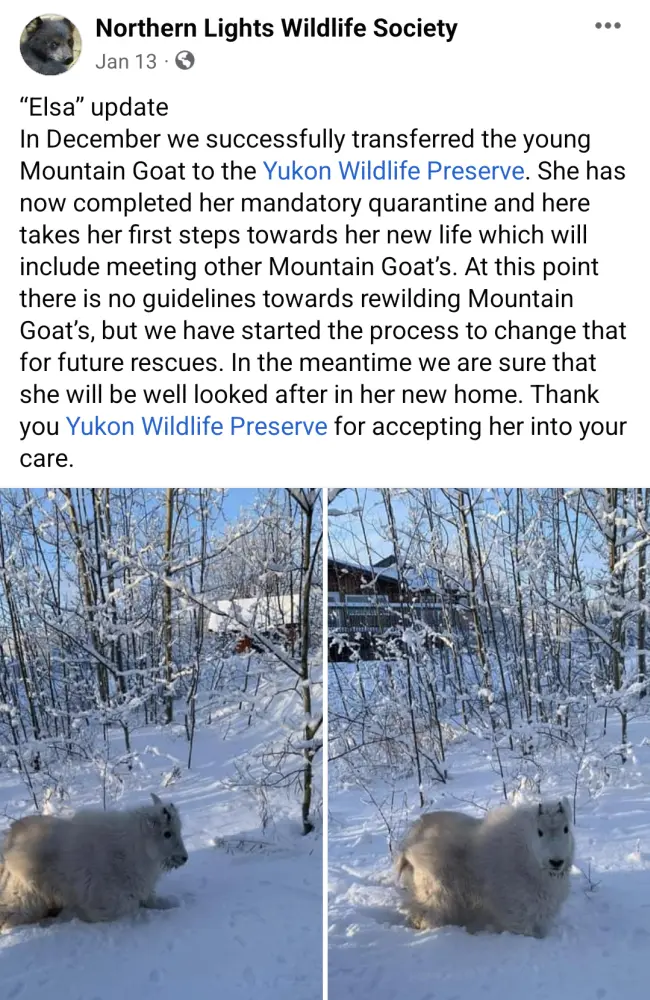
Social media link to the posting by NLWS about Elsa's arrival.

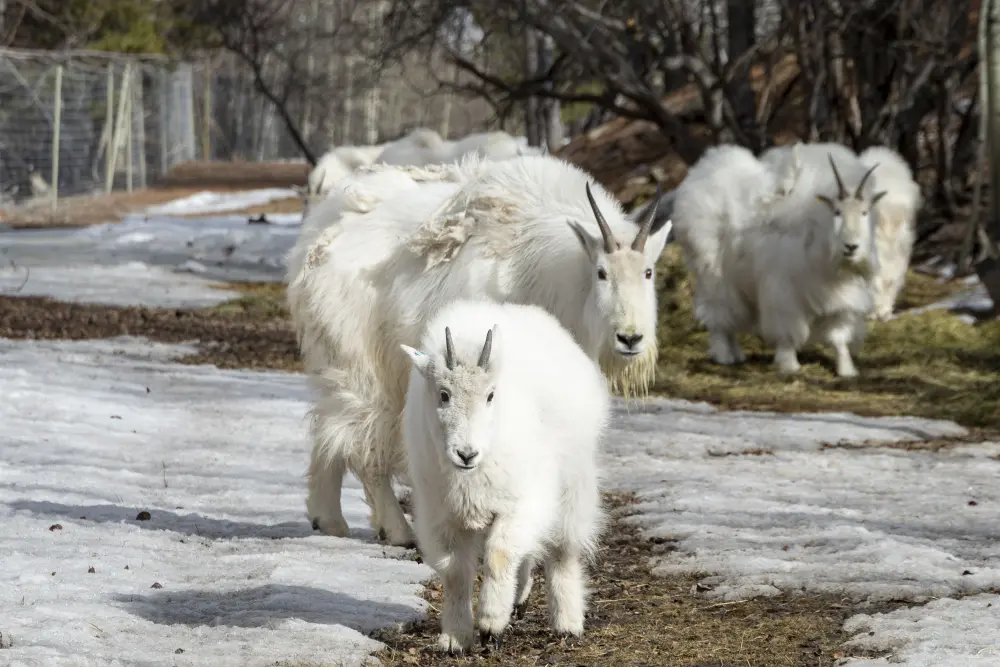
April 9th, 2024 Elsa joined the group of mountain goats at the Preserve and can be spotted living her best goat life thanks to people, community, collaboration and their great care of iconic North American wildlife in need of second chances.
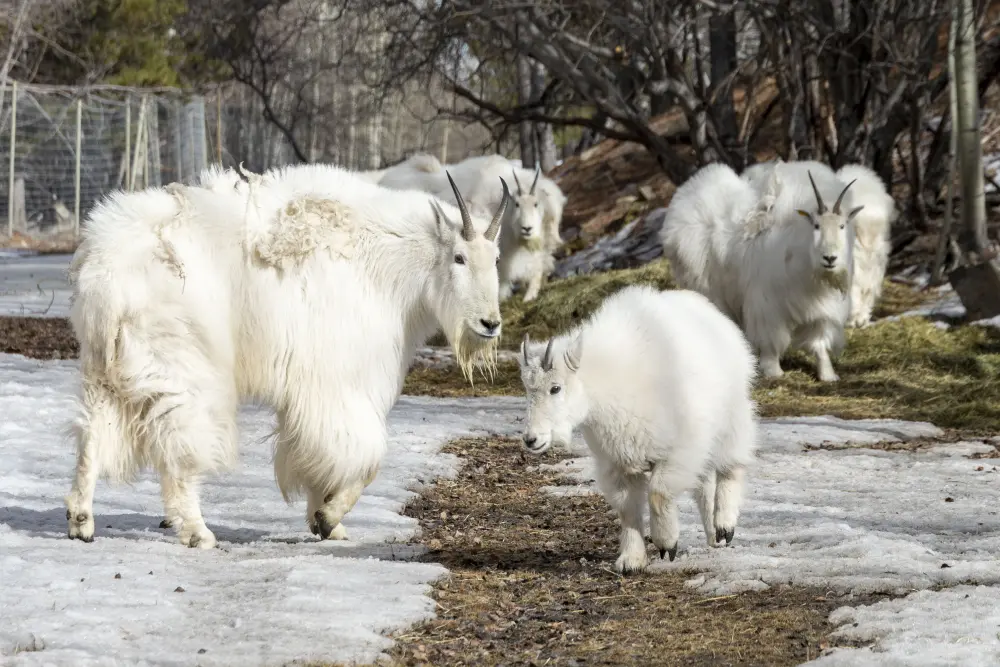
Elsa the mountain goat with the nanny group.

Elsa, the mountain goat lives at the Yukon Wildlife Preserve which is the Traditional Territory of the Kwanlin Dün First Nation and Ta’an Kwäch’än Council.

Elsa the mountain goat introduced to the nanny group. B.Forsythe

The 2 above photos were taken April 30, 2025 of Miss Elsa being a goat!

Photo credits: Northern Lights Wildlife Society, YFNED - Yukon First Nations Education Directorate, L.Caskenette, B.Forsythe.

Lindsay Caskenette

Lindsay Caskenette

Manager Visitor Services

Lindsay joined the Wildlife Preserve team March 2014. Originally from Ontario, she came to the Yukon in search of new adventures and new career challenges. Lindsay holds a degree in Environmental Studies with honours from Wilfrid Laurier University and brings with her a strong passion for sharing what nature, animals, and the environment can teach us.
867-456-7400
Lindsay@yukonwildlife.ca

Explore by Category

Explore by Author

Those Things On Their Heads – Antlers Vs. Horns

Those Things On Their Heads – Antlers Vs. Horns

mountain goats

by Doug Caldwell | Jan 27, 2023 | 0 comments

10 minute read -

In our modern language usage, some terms or words may be incorrectly applied when describing an item. For example: some people do not always distinguish between horns and antlers where they incorrectly refer to all animal headgear as horns. Antlers and horns are very different in a number of ways and these variations are the result of millions of years of evolution and adaptation for the animal species to live a healthy life in the environment they occupy.

Bovids, or members of the horn-bearing group of animals versus cervids, or members of the deer, antler-bearing group of animals. 
Photo left to right:  Mountain goat, bison, moose, caribou. 
Credit: L.Caskenette & J.Paleczny

Headgear has influenced many aspects of some species and how they conduct themselves through the year; including the obvious breeding cycle but also their comfort in the heat of summer and how they communicate and identify themselves visually.

Let’s begin with construction materials: Horns are made from keratin- the same material as your hair and fingernails- whereas antlers are made from bone. Horns are a two-part structure. An interior portion of bone (an extension of the skull) is covered by an exterior sheath grown by specialized hair follicles called keratin.

Horns grow from the base where it attaches to the animal’s skull, antlers grow from the tips. Antlers are grown only by males of the deer species except for Caribou where females grow lightweight antlers, an adaptation for their grazing in snow for lichen. Horns are present on both male and females of most horned species with the males typically having larger horns than the females. 

Bovid family of animals have horns and both females and males with grow these horns. Typically female horn growth is smaller than males. Sexual selection plays a role here for large displays in both horn and antler bearing animals.

Perhaps the greatest difference between horns and antlers is that antlers are shed and regrow each year, where horns are permanent and remain and grow with the animal for all its life, or until they get broken off. Once they are broken, they do not grow back. The animal will carry a damaged or missing horn for the rest of its life.  Antlers also factor into the breeding cycles of the males who employ them to demonstrate their virility and to impress the females.

Antlers too may become broken or removed completely due to carelessness or fighting. These will grow back, but not right away. The animal must wait for the annual antler shed-regrow cycle for that year to conclude, usually in mid-winter before a new antler will form during the next year’s cycle, this may cause the animal to be without an antler for up to a year. 

Horns appear to form earlier than antlers on younger animals such as goats or bison, where Mountain Goat kids will be displaying small pointed black horns within a few short weeks of its birth, while antler buds appear at several months or so after a calf or fawn is born. But once they are in place and growing, they grow quickly.

Left to right: Mountain goat kids show horn formation, easily seen against the white; Watson the moose shows nubs of antlers developing in his first winter of life in 2019. Bison calves also show horn development early on in life. 

Antler is the fastest growing tissue of any mammal on the planet. With a healthy diet and high caloric intake, a moose can put on as much as a pound of antler in a single day. In the scope of just eight months' growth, moose antler can grow from tiny buds as big as your thumb to gigantic antler racks measuring up to six feet across or 1.8 meters from tip to tip. A large moose’s antlers can weigh up to forty pounds or nearly 20 kilograms on average. Some very large moose antlers may weigh up to 75 pounds or 35 kilograms.

Credit Alaska News Source

Source credit: Alaska News Source

Back to construction for a moment; another key difference between horned and antlered animals is how the physiology of horns and antlers differ.

Horns have a central, conical bony core or cornual process that grows out from the frontal bone of the skull. On close examination of a horn you will see what appears to be layers of horn material (keratin) growing a new layer at the base which will grow longer over time and become thicker with subsequent new layers of keratin forming as the animal ages.

After 6 months of age, the bone becomes hollow and the space within it is continuous with the frontal sinuses. The surface of the bone is rigid and porous and is covered with an internal surface which keratinizes and forms the protective covering of the horn. The new horn produced at the base is soft and often transparent giving the horn a glossy appearance. Horn growth function is similar to how the cuticle on your fingers and toes produce the nails.

Source credit: Talmudology

Antlers however attach to the animal’s skull between the eye and ear at a place called the pedicel where they will grow to full size for that year over about eight to ten months. The antlers separate from the skull at the point of attachment, the pedicel.

Antlers separate from the skull at the pedicel, typically in the winter months.

The antler side is called the corona and forms a bone to bone connection with the pedicel on the skull that is remarkably strong until the its time to shed that year’s antlers. There is a chemical influence when the animal’s hormones change following the rut and seasonal progress that causes the bone between the corona and the pedicel to dissolve where eventually it weakens enough that the skull can no longer support the weight of the antler and it falls off. Both antlers may fall off at the same time, but it is common for both antlers to fall off over a couple of days.

Horns are mostly hollow, white antlers are made up of less dense, sponge-like bone called the trabecular that has been highly vascularized during formation allowing blood to flow to the tips of the antlers to facilitate their growth. Antlers require blood to grow while horns do not.

While antlers are covered in velvet, they are also engorged with blood which provides another important benefit besides growing the antler. As animals do not perspire or sweat in any way, they must expel excessive body heat by panting as many animals do. Antlers perform like radiators where body heat is expelled by the blood-filled antlers.

Ears of most deer species shed the fur and hair off them in the warmer months so they too can dissipate body heat. If they would let you, you could take the pulse of an antlered animal by finding a blood vessel on their fuzzy antler and placing your fingers on it to feel the beat of his heart. Don’t try this at home…or anywhere else.

Both horns and antlers have also been used by people since prehistoric times for tools of various kinds.   The hollow nature of horns has made them desirable for spoons, scoops and hand shovels or scrapers while the strength and hardness of antlers has often found them to be the material of choice for making hunting points for spears and arrow heads. Antler has also been a popular material for handles of tools like knives and axes.

Creativity and need, guided the early peoples to adapt and modify both horns and antlers for a wide variety of tools and other purposes to better their quality of life. They have often been used to make buttons for clothing or ornamentation. Antlers have been carved into needles for sewing of clothes, shelter and similar products, Horns were popular as gun powder containers as they would prevent the powder from getting wet and were easy to carry and measure the appropriate amount of powder into the firearm.

Yukon art Hints of Easter by Faye Chamberlain, 2021. Yukon Permanent Art Collection.

Both antlers and horns provide important functions for the animals that grow them so they may live healthy, secure lives. Their headgear has also influenced many of their social behaviors that have developed and evolved over the centuries. These include mating rituals and protective activities against potential predators.

Most of us have seen sheep rams rearing up on their hind legs and pounding their horns against another ram in courtship competitions, but they may use their horns to communicate in less violent ways. Rams may interlace their horns and gently rub ear to ear as a form of communication that we can only guess what it means.

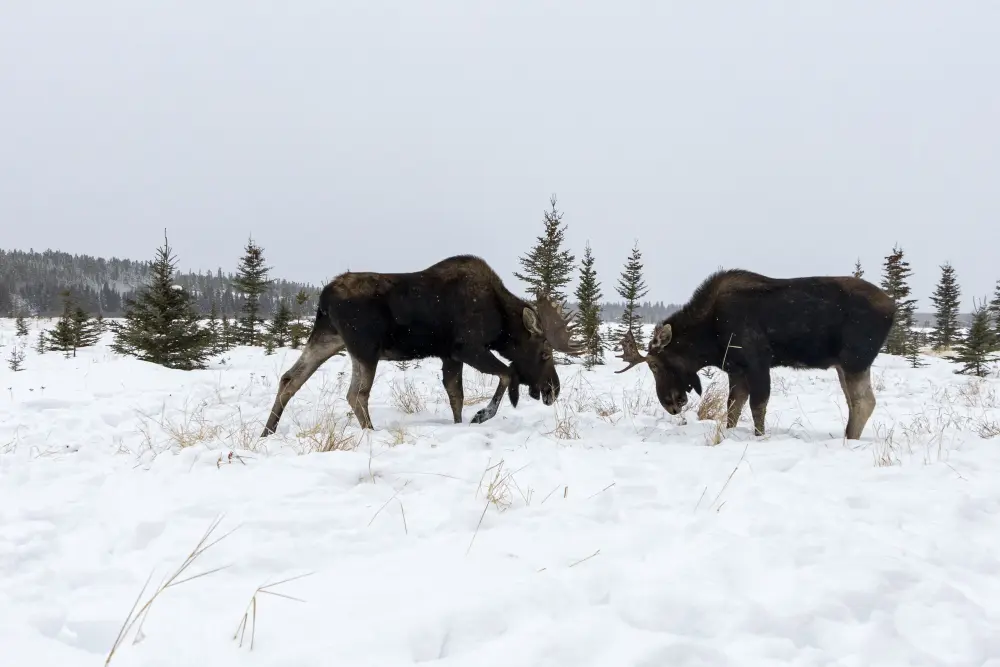
Antlered animals also employ their antlers as a means to communicate for example when two young bulls will use their antlers to joust or push each other around like a game of reverse tug o war.

Antlers are also a means of displaying size and age which will determine their social order of who is dominant and who is subordinate. From a distance the size of the antler rack quickly displays the animal’s placement in the local social order, typically around the breeding season or rut when many male moose may gather in an area for an opportunity to breed with cow moose drawn to the area by pheromones carried in the wind.

Bulls with smaller antlers will size each other up based on their antler racks and determine their chances of winning a fight with a larger bull.

Animal headgear serves a number of important benefits for the creatures that grew them. Humans have also found inventive and beneficial uses for both antlers and horns once the animals are finished using them. Humans often use antlers and horns for tools, but they can also be transformed into wonderful works of art. Nature provides.

Doug Caldwell

Doug Caldwell

Wildlife Interpreter

Doug is one of the Interpretive Wildlife Guides here at the Preserve. An avid angler and hunter he has a broad knowledge of Yukon’s wilderness and the creatures that live here. With a focus on the young visitors to the Preserve, Doug takes the extra time to help our guests to better appreciate the many wonders of the animal kingdom here in the Yukon.

Explore by Category

Explore by Author

Doctor visit:  Mountain Goats!

Doctor visit: Mountain Goats!

mountain goats

by Julie Kerr | May 14, 2020 | 0 comments

8 min read - 

During daily rounds to check on the health of the residents, Animal Care staff notice that the eldest male goat, Geronimo, appears to have a cracked hoof. Staff veterinarian Dr. Maria Hallock is concerned he may have cracked it close to the blood supply. This leaves him open to the possibility of an infection, which is more likely with spring weather – melting snow and lots of mud.

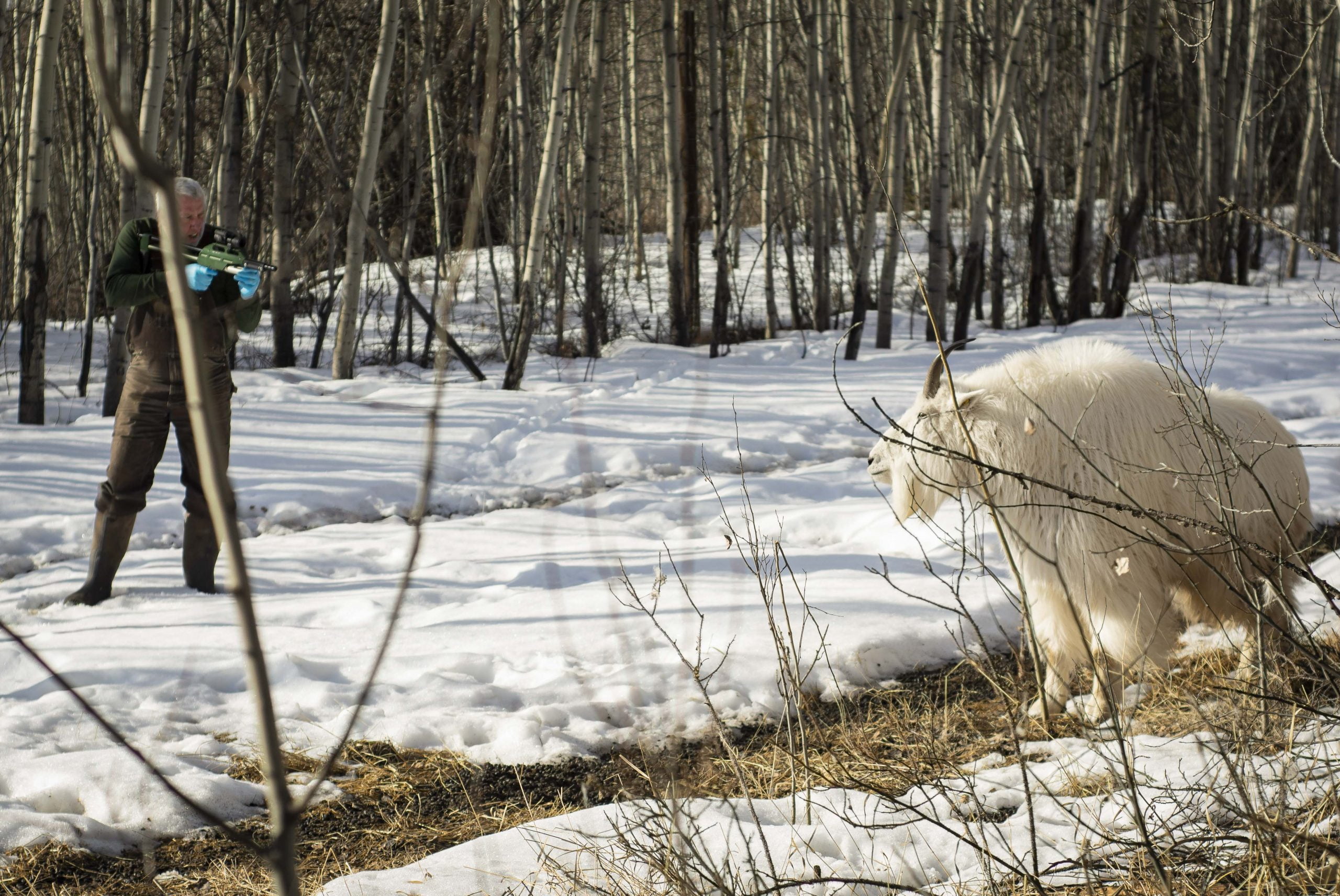
The wildlife residents at Yukon Wildlife Preserve are not trained. This keeps them as wild as possible, but it does make medical procedures an interesting challenge. Most medical procedures are performed under general anesthesia to minimize stress to the animal as well as to ensure safety of the staff handling the animal. While some animals are cooperative enough to receive their sedative medication via hand injection, most of them require a distance delivery of the drug via various equipment such as jabpole, blowpipe and dartgun.

Randy, Director of Operations, uses a dartgun for distance delivery of sedative drugs to the young male, or billy, goat. 

The team gathers... but the mountain goats are not interested in participating. So, the team gathers the following day, to try again. Geronimo is successfully sedated – but here’s the thing about mountain goat personalities – their tolerance to their peers showing vulnerability is low to none. If a rival shows weakness, the other goats will come in to finish him off with his very sharp horns. Given the situation and the close proximity of a second male, or billy, there is a great safety concern to Geronimo during his recovery period. Therefore, Dr. Maria decides to use this opportunity to sedate and trim the younger billy’s hooves, as well as clean up any winter hoof overgrowth.

Hooves and horns are composed of keratin - the same protein as hair and nails. Just like in the wild, Rocky Mountain Goats at Yukon Wildlife Preserve will wear down their hooves by walking on the rocks in preferred cliff habitat. During winter, with snow covering the cliffs, it is more challenging for the goats to wear down their own hooves. Even so, not all the resident goats will require hoof trims, but some individuals do – things like older age, genetics and nutrition all contribute.

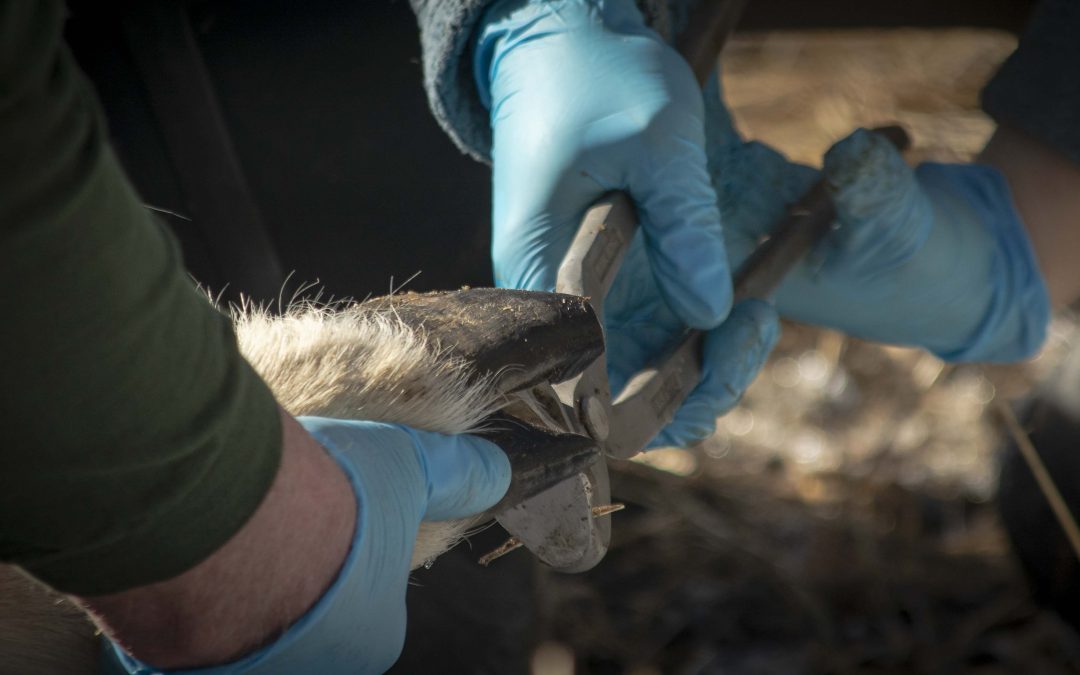
Hooves and nails are both composed of the same protein, keratin.  Trimming hooves is not unlike humans trimming their fingernails, or taking their pet dog to the vet for a nail trim. 

Dr. Maria and Randy begin trimming hooves, Julie monitors Geronimo's health while under general anesthetic as Ensio records times and values such as heart rate. 

Once the goats are sedated, we cover their eyes so they won’t be stimulated by light, and team members start taking and recording vital signs – heart rate, breathing rate, and temperature, to name a few. Since Geronimo is an older goat, he is also put on intranasal oxygen throughout the procedure. Dr. Maria and Randy get busy trimming the hooves, to make the procedure as quick and safe as possible, so we can wake the goats up, as soon as we can.

The eldest billy, Geronimo, receives intranasal oxygen. During the procedure to trim his cracked hoof, his eyes are covered to avoid stimulating him.  Here, Julie monitors vital signs such as heart rate, breathing rate and temperature as Dr. Maria works to quickly trim hooves.

We are happy to report that although Geronimo had indeed cracked his hoof, the crack did not communicate with the blood supply, so he’s at less risk of an infection from his hoof. Essentially…. he had a broken fingernail…

Geronimo's hoof after being trimmed.  The right toe was trimmed bluntly due to the crack in the hoof.  The left toe is the "normal" shape after trimming 

Both billy goats are woken up from sedation at the same time - we don’t want to risk any fighting of a rival!  In order to wake the goats up, they are given injections of sedative reversals.

Julie injects sedative reversal intramuscularly.

The time is noted and recorded so we know when to expect Geronimo to waken.  

Veterinary medical costs quickly add up. Even this simple, fast procedure cost $60 per goat for anesthetic drugs, antibiotics and pain control. Hidden costs include expertise, labour and supplies such as syringe and needles.  

We also administer an injection of antibiotics which will last for 3 days, to mitigate any potential infection arising from either hoof injury or the drug injection site.  Within minutes of waking up, both goats are heading their own way, to get back to the normal routine of being Rocky Mountain Goats.

Photo and Video Credit: L. Caskenette

Julie Kerr

Julie Kerr

Visitor Services Coordinator

Julie is a Registered Veterinary Technologist, living and working in Whitehorse since 2012. She joined the team in May 2018. She is passionate about wildlife, nature and living in a conscious manner with both. Her free time is spent outdoors observing wild animals and ecosystems; her connection to the natural world around her brings great joy – joy she loves to share with anyone interested. Honestly? Work and life blend rather seamlessly.

Explore by Category

Explore by Author