Cute But Tough – The Arctic Fox

Cute But Tough – The Arctic Fox

northern animals

by Abi Horobin | May 22, 2020

6 minute read – “Winter Is Here” series continues with a species well suited to cold conditions - Arctic Fox!   

The Arctic Fox is super cute, we all agree, but don’t be fooled by its appearance, this is one tough cookie! Often referred to by scientists as Chionophiles, meaning ‘snow lover’, it is one of only a few species that have adapted1Watch our 360 video on Arctic Fox Adaptations to thrive in the harshest of winter conditions and survive some of the lowest temperatures on earth, living year round in the Circumpolar arctic. So, how does this cute, yet tough, canid survive such an environment?

Wearing its winter coat of white, the Arctic Fox can easily be mistaken for a small mound of snow. In fact, they are so well camouflaged, visitors to Yukon Wildlife Preserve often have a hard time recognising one when it is only a feet away from them. The thick white tail covers the dark eyes and nose allowing the animal to almost disappear against the snowy background. The tail further acts to wrap around the body or cover the face for added insulating protection, whilst thick fur on the paws provides protection from the snow and ice and increases grip on slippery surfaces. As well as the ability to camouflage itself for protection against predators, the white colour is thought to have better insulating properties, with greater air pockets than coloured hair to trap body heat.
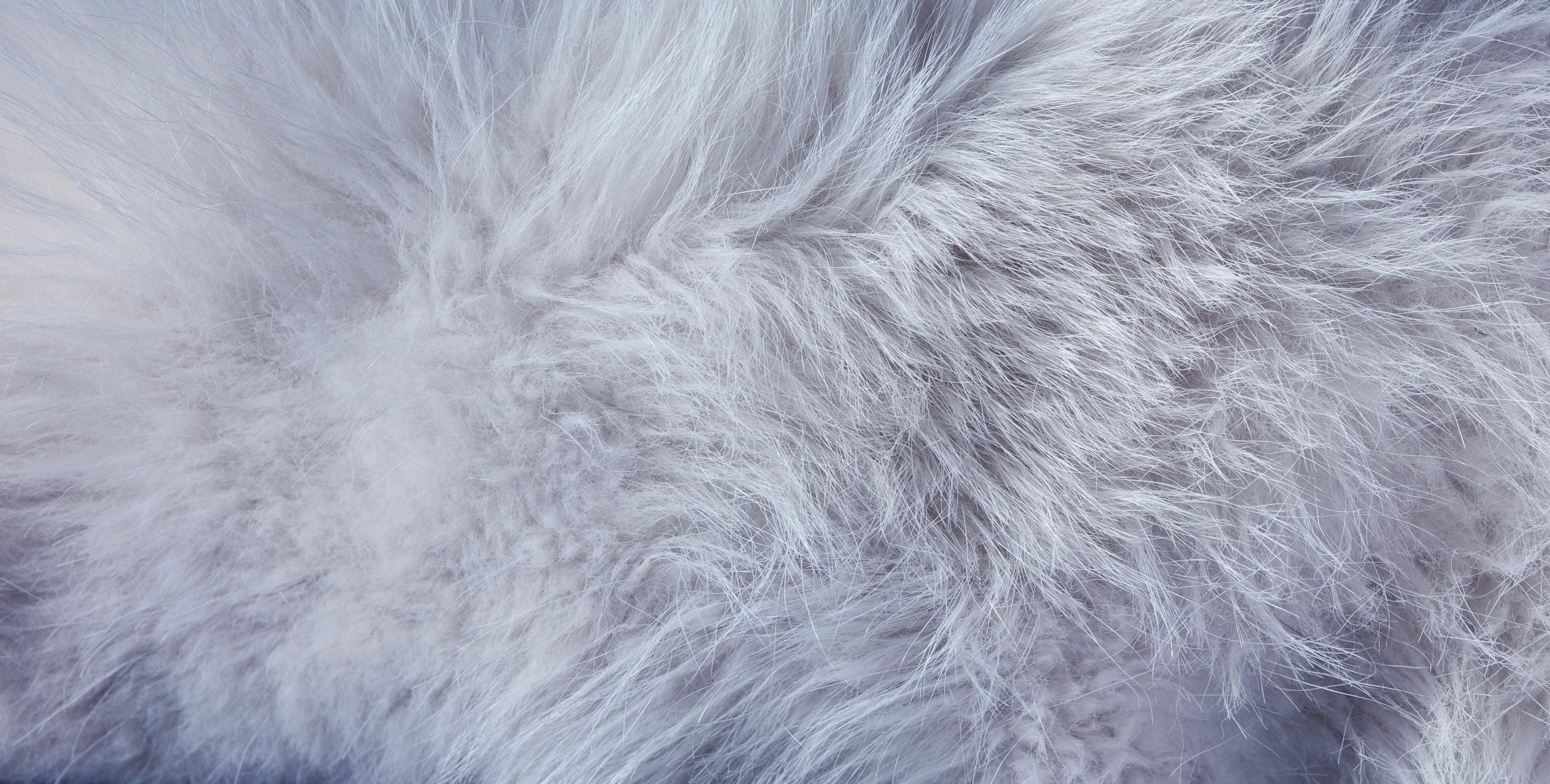
The depth of the fur is 200% greater in winter with a dense undercoat of 8 lbs and an estimated 20,000 hairs per cm2.  In comparison, humans have a range of approximately 124-200 hairs per cm2.

The Arctic Fox is not always fluffy and white, though. They shed their winter fur to a sleek summer coat, and are the only member of the Fox family who sheds to a different colour, making them quite unique. Instead of a thick white fur, they spend the arctic summer a colour-blend of browns and greys - allowing them to continue camouflaging to their environment year round.
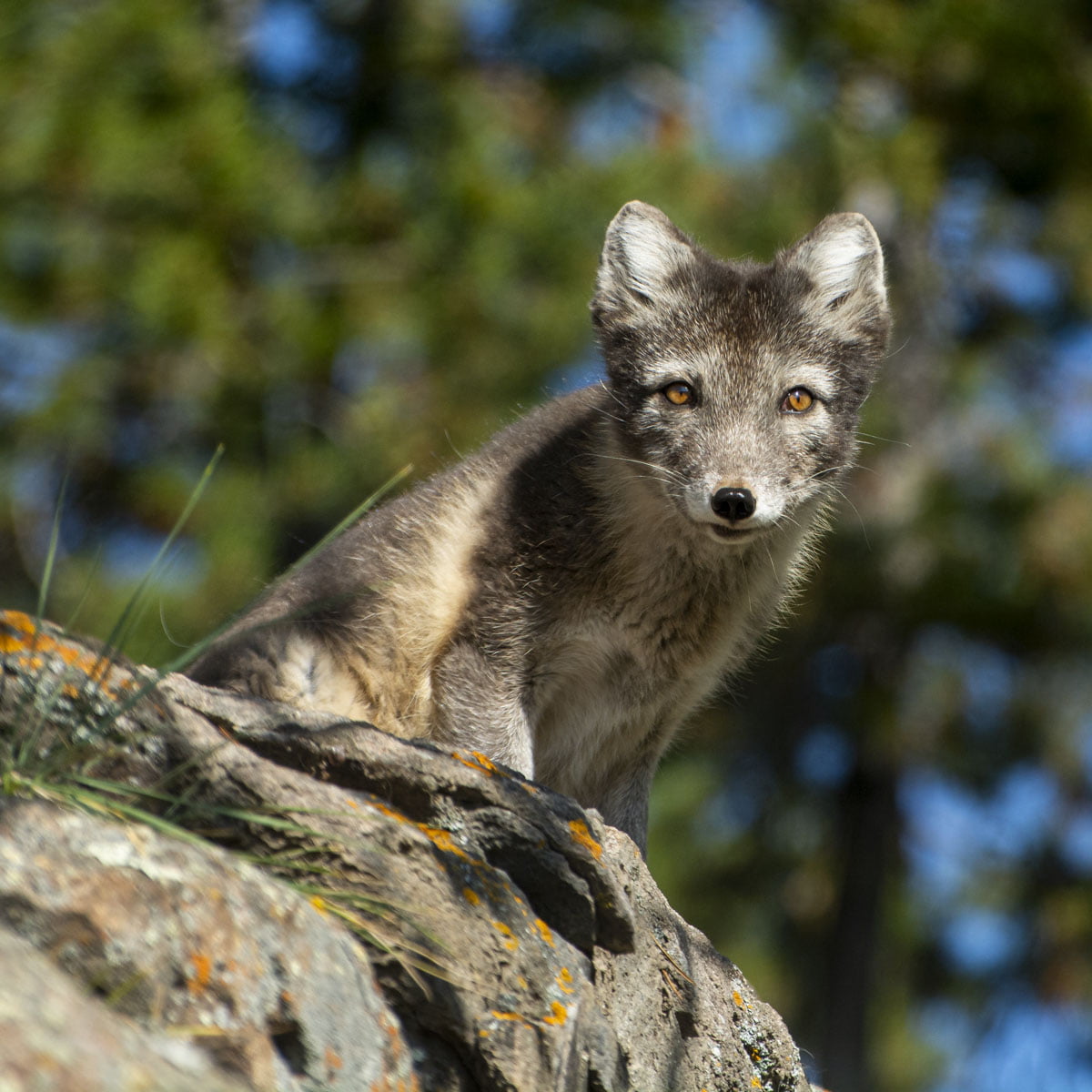
Arctic Fox is the only fox that sheds its winter coat to a different colour, allowing them to blend in to their environment year round.

A compact predator with small ears, a short snout, neck and legs, the Arctic Fox is much smaller than the Red Fox. This physical adaptation provides a low surface area to volume ratio which means there is less surface area from which to lose heat. This is one of the reasons that Arctic Fox will curl into a ball when resting - by reducing the exposed surface area, energy loss is less and heat retention is maximized. Front and hind legs are tucked underneath the body, exposing to the frigid air only the thickest, and warmest fur. The head is placed on the front paws, and the tail wraps around the face. Arctic Foxes are able to slow their winter basal metabolic rate to around 25% less than in the summer. These adaptations allow them to withstand brutally cold temperatures either curled up on the snow or taking shelter in an existing den under the snow pack. This also helps them to survive longer without food; important when food is scarce in the dead of arctic winter.
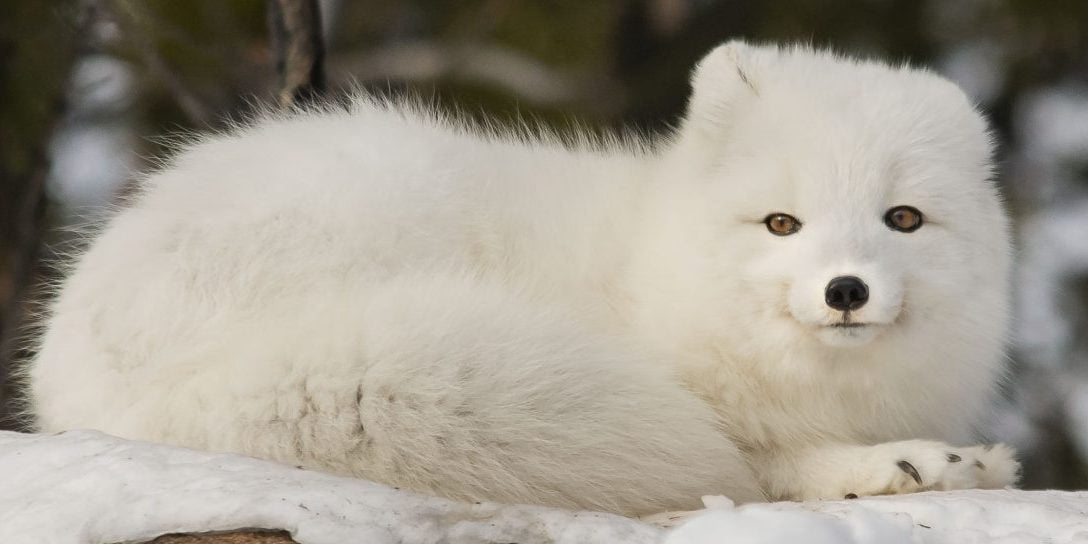
Keeping the blood flowing to the extremities is clearly important to an animal who spends its winter on the snow.  The Arctic Fox has adapted its blood flow through its legs and paws for ultimate comfort and for thriving in such harsh winter conditions. This impressive heat conserving adaptation is called the countercurrent heat exchange.

To understand how this works, let’s first look at what happens without the adaptation - in species like humans. Warm blood from the heart courses down the leg straight to the feet. If those feet are standing on icy-cold ground the warm blood will cool quickly and lots of energy will be used to keep the feet as warm as the body. This cooled blood then returns straight to the heart to be warmed, requiring more energy and resulting in an overall lower body temperature.
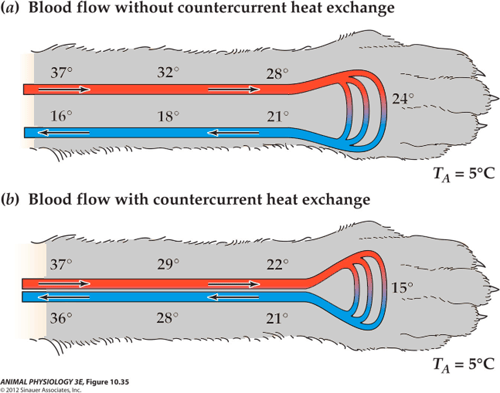
Source bio.miami.edu/dana/360/360F18_9c.html

Instead, this physiological adaptation in a species such as the Arctic Fox means that the vein and artery in the leg run very close together allowing warm blood going to the foot to heat up the cold blood returning from the foot. In a nutshell, the warm blood heats the returning colder blood that’s heading back up to the heart, and in exchange, the colder blood cools the warmer blood going to the feet. This means the feet are constantly cold, but just warm enough to keep the tissues from freezing. As a result, the overall body temperature is warmer, thanks to this neat energy-efficient system.

Omnivorous diets, meaning that both meat and plants are consumed, help keep the Arctic Fox adaptable to changing conditions. They are carnivorous in that they will eat meat - hunting small rodents like lemmings, but also scavenging from the kill sites of larger predators like wolves and polar bears. Much like a domestic dog may eat carrots and apples, the arctic fox will tolerate and consume foods such as bird eggs2Watch the Arctic Foxes at Yukon Wildlife Preserve get an Eggy Easter treat, berries and even seaweed.

 A behavioural adaptation to thriving when remaining in a harshly cold environment is to conserve energy by not moving a lot when it is really cold. Arctic foxes will hunt and cache food during warmer temperatures, remembering where those caches are, so that they have snacks available when they really need them - without having to expend energy when temperatures drop.
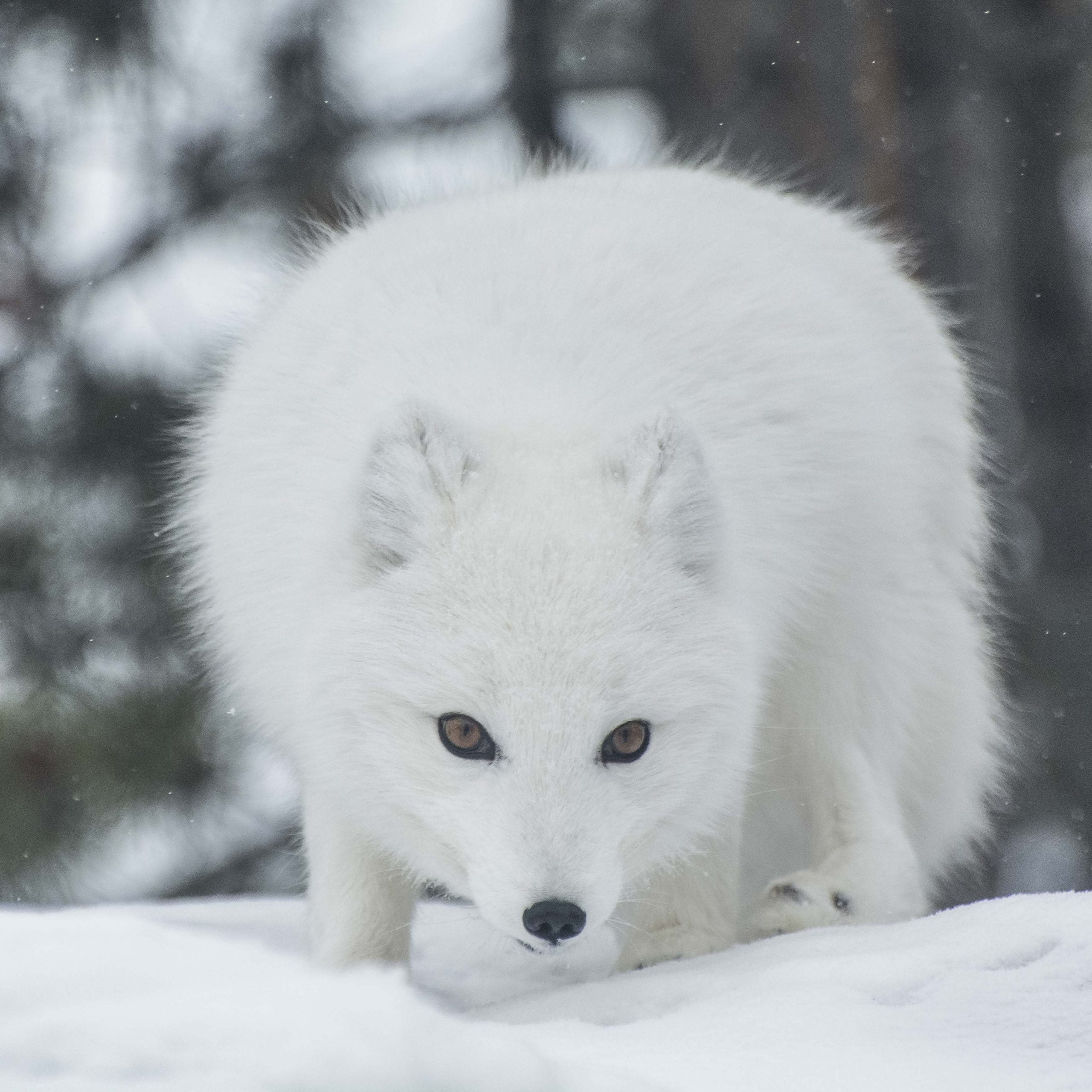
Between the highly specialized physiological and behavioural adaptations explored in this blog the Arctic Fox is well equipped. Far from being perceived as only cute and fluffy, this is actually a tough species living where few others do. The arctic tundra in winter presents a harsh, nearly inhospitable environment, but for the Arctic Fox, it’s home.

Watch this BBC Earth video detailing the trials of a young Arctic Fox learning to hunt lemmings here!
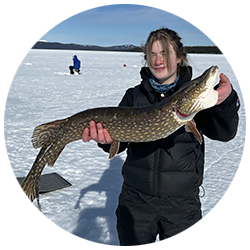
Ella Pollock Shepherd

Ella Pollock Shepherd

Animal Care Technician
Ella is currently studying at the University of British Colombia in Kelowna. She is studying Indigenous Studies as a Major and French as a minor. Born in Ottawa, Ontario; at age seven her parents moved her and her sister to the Yukon, and they haven't left since! Ella loves nothing more than being out in nature camping, fishing, hunting, and exploring. We are excited to have Ella and her great love for animals at the YWP.

Explore by Category

Explore by Author

Mother’s Day Tribute

Mother’s Day Tribute

northern animals

1.5 Min Video - 

Whether we are human or a furry animal, we can’t do it without our Mothers! They nurture and care for us, setting us on the path to a healthy and successful life.  Join us in this tribute to mothers everywhere, of all shapes and sizes.

Maybe you were my birth mom, maybe you’re the mom that helped me later. Anyway you slice it, you’re the best.

Thanks Mom!

Lindsay Caskenette & Julie Kerr

Lindsay Caskenette & Julie Kerr

Visitor Services Manager and Visitor Services Coordinator

Lindsay and Julie love to share the Preserve the same way they explore life – full on and full of adventure!  They have a collective love of:  Animals....Lindsay dogs, Julie foxes; Adventure.... Lindsay dog mushing, Julie extreme camping;  both take on animal personas during story telling.  Together they support the Preserve with a strong Visitor Services presence and often, they even get work done (this happens most often when the other one is out of the office).   

867-456-7400
 info@yukonwildlife.ca

Explore by Category

Explore by Author

First Baby of Spring!

First Baby of Spring!

northern animals

by Jake Paleczny | May 8, 2020

1.5 Min Video - 

Spring is for babies!  Our first baby of 2020 is a Wood Bison, born Sunday, May 3.  Executive Director, Jake, was in the right place at the right time with a spotting scope and camera to share this footage of the bison calf within its first hour of life.

The calf is shaky on its legs as one of the young herd members comes to investigate.  That comes as some surprise, and causes Mom to step in to offer support.  Bison mothers are very protective, so generally, we want to view them from a distance.  We'll update once we can get close enough to identify if the calf is a boy or girl.

Watch more of the essence of spring!

Jake Paleczny

Jake Paleczny

He/Him - Executive Director/ CEO

Jake Paleczny is passionate about interpretation and education. He gained his interpretative expertise from a decade of work in Ontario’s provincial parks in addition to a Masters in Museum Studies from the University of Toronto. His interests also extend into the artistic realm, with a Bachelor of Music from the University of Western Ontario and extensive experience in galleries and museums.

867-456-7313
jake@yukonwildlife.ca

Explore by Category

Explore by Author

Wildlife Q&A

Wildlife Q&A

northern animals

5 Min Video - 

We love finding out what makes kids curious!  We asked kids to send us their video questions about the Preserve and Yukon’s wildlife.  Watch the video to hear YWP staff answer:

  1. Do Caribou go in big groups?  And if they do, how big of groups do they go in?
  2. How do mountain goats climb?
  3. Do bunnies only eat carrots or not?
  4. How can people help the wildlife preserve?

Are you a kid? Do you have questions about Yukon Wildlife Preserve or Yukon wildlife? Send your video question to us at info@yukonwildlife.ca. (Some help from parents may be required 😉 )

Jake Paleczny

Jake Paleczny

He/Him - Executive Director/ CEO

Jake Paleczny is passionate about interpretation and education. He gained his interpretative expertise from a decade of work in Ontario’s provincial parks in addition to a Masters in Museum Studies from the University of Toronto. His interests also extend into the artistic realm, with a Bachelor of Music from the University of Western Ontario and extensive experience in galleries and museums.

867-456-7313
jake@yukonwildlife.ca

Explore by Category

Explore by Author

Wild Spring Adventure!

Wild Spring Adventure!

northern animals

6 minute read (and/or) watch the video!

Spring is the sign of new life! It’s the circle of life intertwined and flourishing from increased sunlight.

It’s a time of birds migrating. Some, like swans, stop only a short time on their way to nesting grounds further north; some stay for the season, like the chickadee and bluebird - they build nests, attract mates and raise their families.

There’s a saying - “Spring is in the air” - that implies a renewal of spirit and perhaps a bit of friskiness in certain species, like Red Foxes, that may lead to becoming parents to this year’s young (or perhaps they already ARE parents!). Of course, some species breed in the autumn, so that as spring progresses, we will start to see babies being born - at Yukon Wildlife Preserve we are hopeful that we will see Bison, then Caribou calves in the coming weeks and months. We expect to see wild fox kits and ducklings as well.

At the Preserve, Arctic Ground Squirrels started popping their heads above ground April 7 this year, with the males the first to break their winter hibernation. Juveniles and females are soon to follow their lead. We see, sitting on the cliffs and soaring above fields, birds of prey like bald eagles, coming in to hunt this prolific prey species. Spring is a notable return of the constant cry of alarm calls of ground squirrels, as their many predators hunt them from land or sky - displaying the full Circle of Life.

New growth has begun with grasses and early flowers like crocuses, to name only two plant species. This is important nutrition to many animals after a long cold winter, and grazers like Thinhorn Mountain Sheep can be found on south facing slopes, enjoying the tender new shoots, and the ease of eating, now that the deep snow has melted.

Crocuses are one of the first signs of spring - and important nutrition to many animals after a long cold winter.  Here we see a very early crocus found by the authors on their spring adventure hike at Yukon Wildlife Preserve.   Photo by Lindsay Caskenette

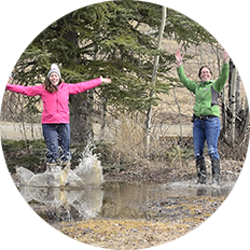
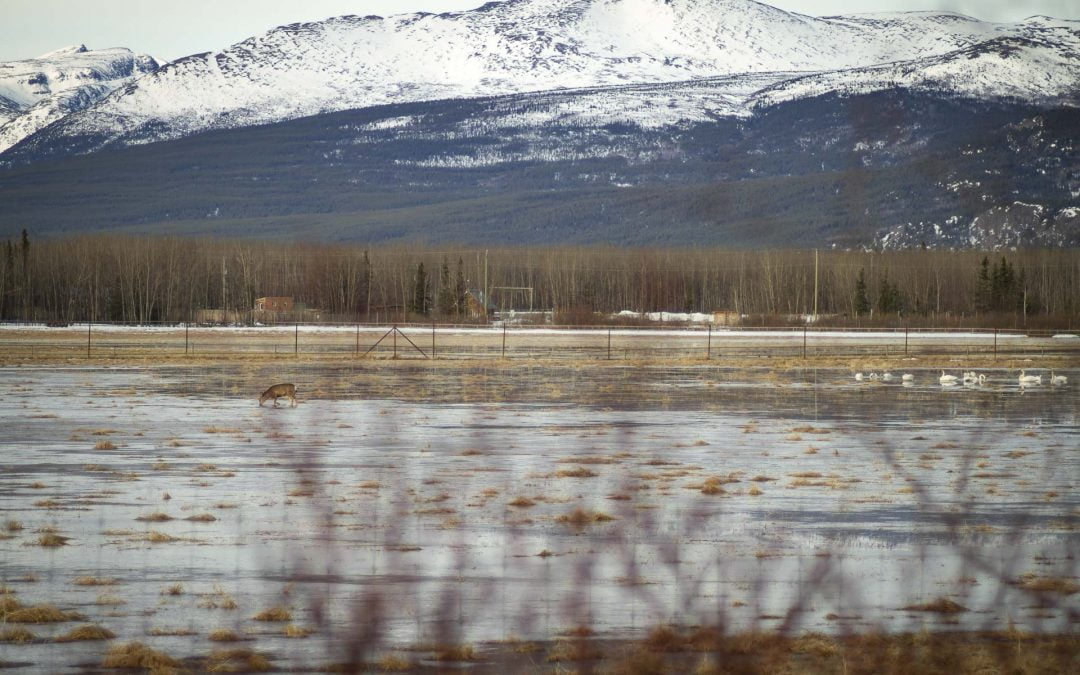
Water, water, water everywhere! Swans have returned with a splash - their honking fills the air with the best kind of noise as they stop over to feed while on their long migration to their northern nesting grounds . There is a year round marsh in the moose habitat at the Preserve, but the seasonal one next door in the mule deer habitat seems to be preferred by the swans - to the seeming curiosity of one of the female mule deer.  Everyone seems to love jumping and running through puddles, no matter how big or small the puddle…..or animal…..moose, humans and muskox! After a winter of conserving energy while food is scarce and energy is focused to survival, jumping in a puddle can lead to manic runs around the yard (or habitat). It seems spring can be about fun and burning off extra energy!

Swans have a long migration in the spring - open water at Yukon Wildlife Preserve is a frequent stop over for food and rest by migratory birds.  Some, like bluebirds, stay for the season, some, like the swan, typically move on to nesting grounds further north.  Photo Lindsay Caskenette

When you need a meal, sometimes you have to “spring” into action. Lynx are natural jumpers and we took the opportunity to provide enrichment to our resident lynx females by placing their food in trees. In the wild, lynx prefer snowshoe hare and will use powerful leaps to catch their meal within only a few “springs”....we mean jumps…..

Limited smells in winter mean that spring unearths a plethora of new scents on the air. Red Fox have an excellent sense of smell, making it easy for them to follow their nose to food sources. When they’ve eaten their fill, they will cache extra food as snacks for later. They keep an eye and ear out to avoid anyone following them to their cache site - other foxes and many birds in the Corvidae Family - grey jays, magpies, and ravens are known to steal their snacks.

Whether you’re human or animal, winter coats are shedding - and that wool, hair and fur can be found on the environment - rocks, trees, and fences (and sometimes finds its way into lining the nests of birds and small mammals like ground squirrels…..)  Shedding coats leads to a period of time not known for its fashion sense….and much shagginess in animals like bison.

Winter is over and the cycle of the year continues. Spring arrives, bringing increased sunlight and changes in everyone’s behaviour and appearance - humans and animals alike. We shed layers, feel the sun on our faces, enjoy the smells and the sounds of life renewing around us. We experience a rejuvenation of our spirits. Be well and enjoy spring, wherever you are.

Lindsay Caskenette & Julie Kerr

Lindsay Caskenette & Julie Kerr

Visitor Services Manager and Visitor Services Coordinator

Lindsay and Julie love to share the Preserve the same way they explore life – full on and full of adventure!  They have a collective love of:  Animals....Lindsay dogs, Julie foxes; Adventure.... Lindsay dog mushing, Julie extreme camping;  both take on animal personas during story telling.  Together they support the Preserve with a strong Visitor Services presence and often, they even get work done (this happens most often when the other one is out of the office).   

867-456-7400
 info@yukonwildlife.ca

Explore by Category

Explore by Author