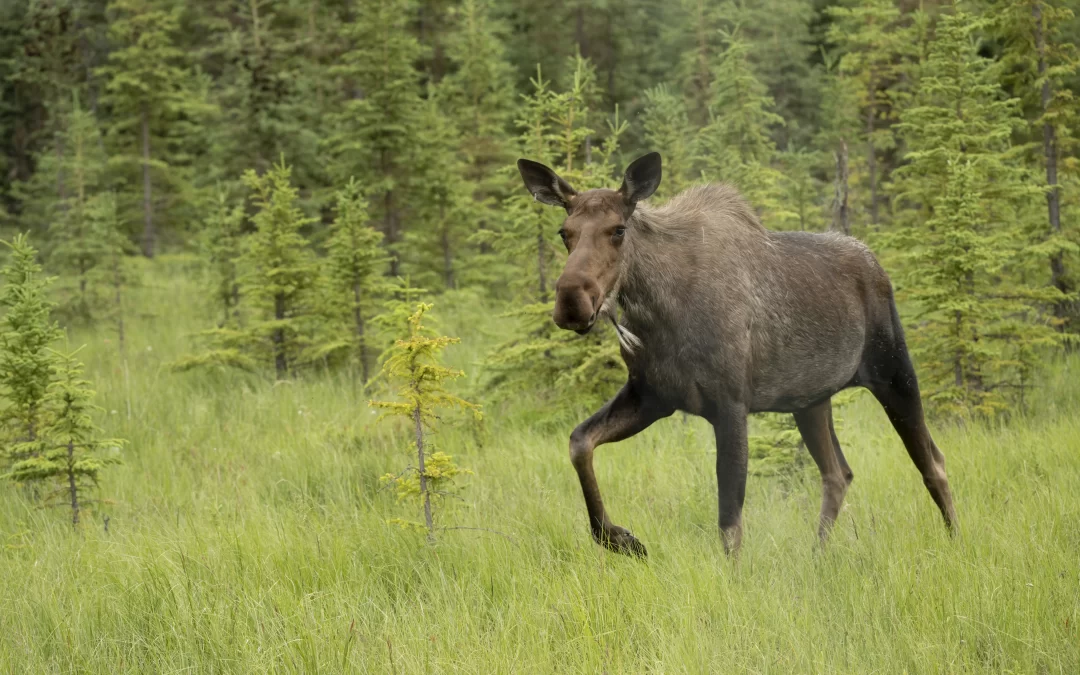
Jesse the Moose

Jesse the Moose

northern animals

by Jake Paleczny | Jun 19, 2025

2 minute read -

It was with profound sadness that the Yukon Wildlife Preserve (YWP) shared the death of Jesse, a cherished and iconic moose who had resided at the Preserve since 2016. The YWP’s Animal Care team made the difficult decision to euthanize Jesse on June 19, 2025 due to complications following a medical procedure.

An Old Injury

The YWP Animal Care team had been monitoring Jesse’s old hoof injury, which had become arthritic, causing her increasing discomfort and pain. The team had diligently monitored her condition, exploring options to alleviate her suffering and improve her quality of life. On Monday, June 17th, Veterinarian Dr. Cassandra Andrew and the YWP Animal Care team immobilized (anesthetized) Jesse to provide a targeted treatment for the affected hoof joint. While under anesthesia Jesse regurgitated contents from one of her stomachs - one of the risks of anesthesia in ruminants like moose. Recognizing the immediate risk, the team promptly cut the hoof treatment short, administered broad-spectrum antibiotics, and reversed the anesthesia.
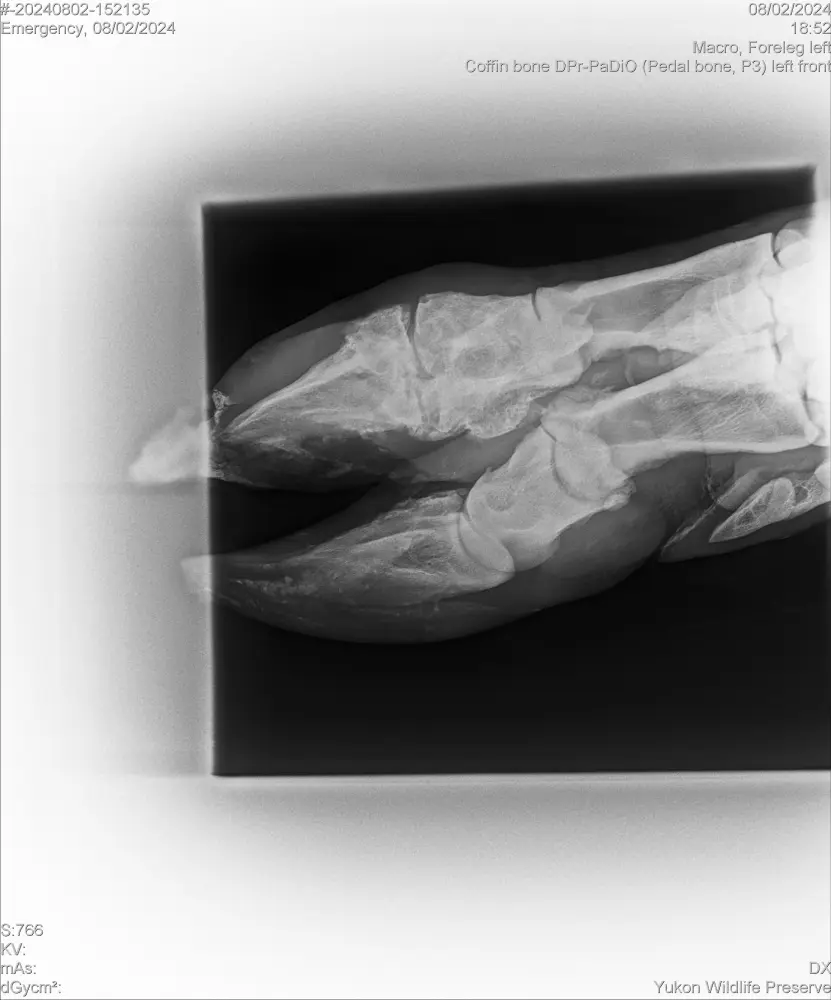
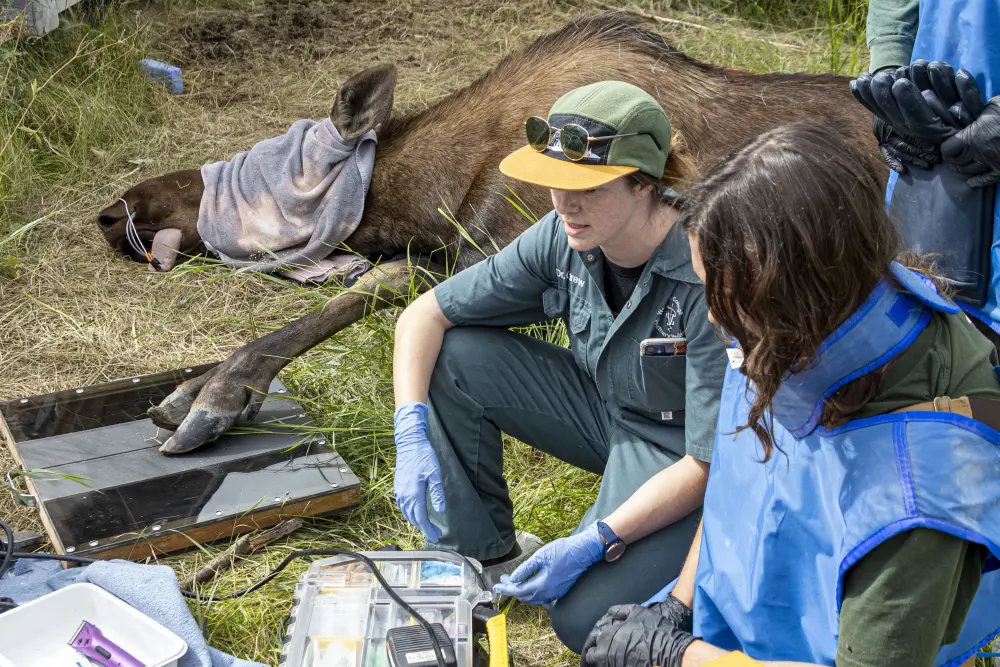
Dr. Cassandra Andrew and the Animal Care Team check on Jesse's hoof during in summer 2024.

Complications and Consequences

Upon waking, Jesse exhibited signs of respiratory distress, including coughing and more rapid breathing than normal, indicating that she had inhaled some of the regurgitated material. Later that day, the team provided additional medication to help reduce fever and inflammation. By Tuesday, June 18th, Jesse appeared to be more relaxed and showed initial signs of improvement as the team continued to monitor her closely.

However, during the morning check-in on Wednesday, June 19th, it was clear that Jesse's condition had declined significantly overnight. She was suffering from what was suspected to be severe aspiration pneumonia (inhalation of foreign/food material into the lungs) and was struggling to breathe. Unfortunately treating such a severe condition can be quite invasive and would only be feasible with a domesticated animal in a clinical setting. The team made the difficult decision to euthanize Jesse without delay.

Dr. Andrew performed a gross necropsy, which confirmed extensive damage to her lungs and the severe pneumonia. The team is conducting additional tests to better understand Jesse's overall health and to reveal potential future treatments for similar hoof injuries in other animals.
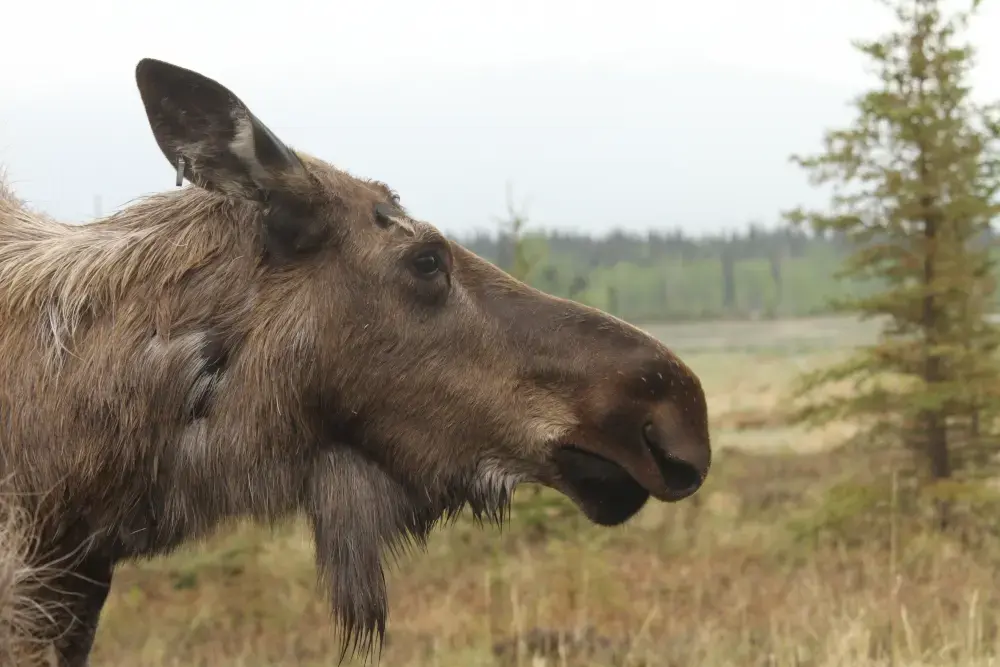
Jesse in June 2024

Jesse's Story

“Jesse was a really special animal with a remarkable story who touched the hearts of many, both our staff and visitors alike,” said Jake Paleczny, Executive Director, Yukon Wildlife Preserve. “Her death is a big loss for our team and so many of our visitors who got to know her so well over her 9 years here. Our team made every possible effort to provide her with the best care, and we will honour her legacy by learning what we can to inform what we do for our moose in the future.”

Jesse's remarkable journey at the Yukon Wildlife Preserve began in May 2016. At only a few weeks old and weighing just 47 pounds, dogs attacked her in the bush near Whitehorse, separating her from her mother. A quick-thinking teenager (named Jesse) carried the injured moose out and with some help, brought her to the Preserve. The dogs had gone after her neck, causing swelling that made it difficult for her to swallow and breathe. YWP staff provided 24-hour care, and for the first couple of nights, they were unsure if she would survive. For the first four days at the Preserve, Jesse couldn’t get up, and the team fed her via IV, offering small amounts of formula when she could manage it. With her injuries, it’s unlikely Jesse would have survived in the wild. Her comfort around humans meant she would reside at the Preserve permanently.

Jesse's Impact

If you have a story or memory you'd like to share about Jesse, send it to jake@yukonwildlife.ca  and lindsay@yukonwildlife.ca. We'd like to share and celebrate the impactful experiences and relationships she was a part of.

The crazy snow winter which had packed snow so high people's heads (and moose heads) were much closer to the top of the fence than normal and Jesse started stealing people's touques right off their heads. She especially loved to target hat wearers' taking selfies.
Pete, Wildlife Interpreter

We said our goodbye!
She knows and she listens—
She cried, I cried.
Michael, Senior Wildlife and Rehabilitation Technician
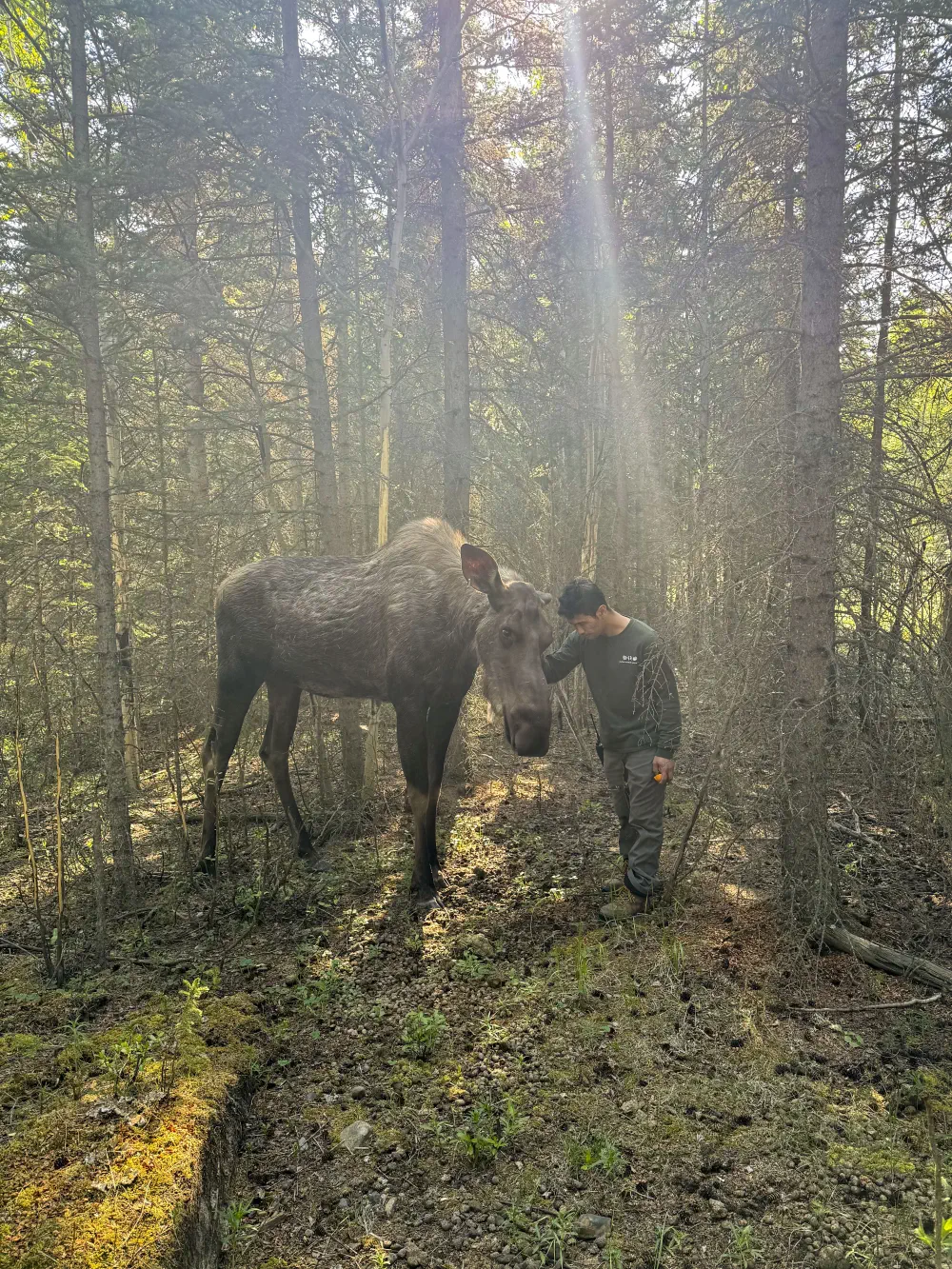
Above: Michael and Jesse on the morning of June 19.

Jake Paleczny

Jake Paleczny

He/Him - Executive Director/ CEO

Jake Paleczny is passionate about interpretation and education. He gained his interpretative expertise from a decade of work in Ontario’s provincial parks in addition to a Masters in Museum Studies from the University of Toronto. His interests also extend into the artistic realm, with a Bachelor of Music from the University of Western Ontario and extensive experience in galleries and museums.
867-456-7313
jake@yukonwildlife.ca

Explore by Category

Explore by Author

The Early Years

The Early Years

northern animals

by Sally Robinson | May 30, 2025

This article was made possible thanks to support from the Yukon 125 Fund. Learn the incredible history of the Yukon Wildlife Preserve, and Yukon Game Farm from the people of the past through this series of articles.

Danny Nowlan is one of Yukon’s colourful, and at times, notorious characters. He was a polarizing figure who cared deeply for animals and connecting them to kids. He was also the subject of one of Yukon’s most expensive trials ever. His work on the Yukon Game Farm would eventually result in the creation of the Yukon Wildlife Preserve. That is a legacy that is still experienced by many Yukoners – although many of the stories are not known or well understood. 

The stories of Danny Nowlan are important threads that are woven through the tapestry of Yukon’s recent history. This project gives us the opportunity to capture and share this history before its lost. This includes the opportunity to celebrate the positive lasting legacy and to learn about and grapple with the challenging aspects of this legacy. 

In 2023 historian Sally Robertson collected oral histories from more than a dozen people who knew Danny. Out of this work, Sally wrote a series of stories about Danny and his adventures.

(6 minute read)

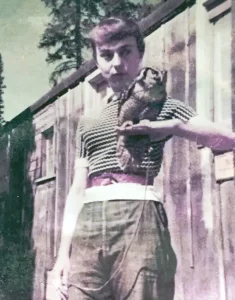
Erika Nowlan. Photo gratefully provided by Sabrina Nowlan.

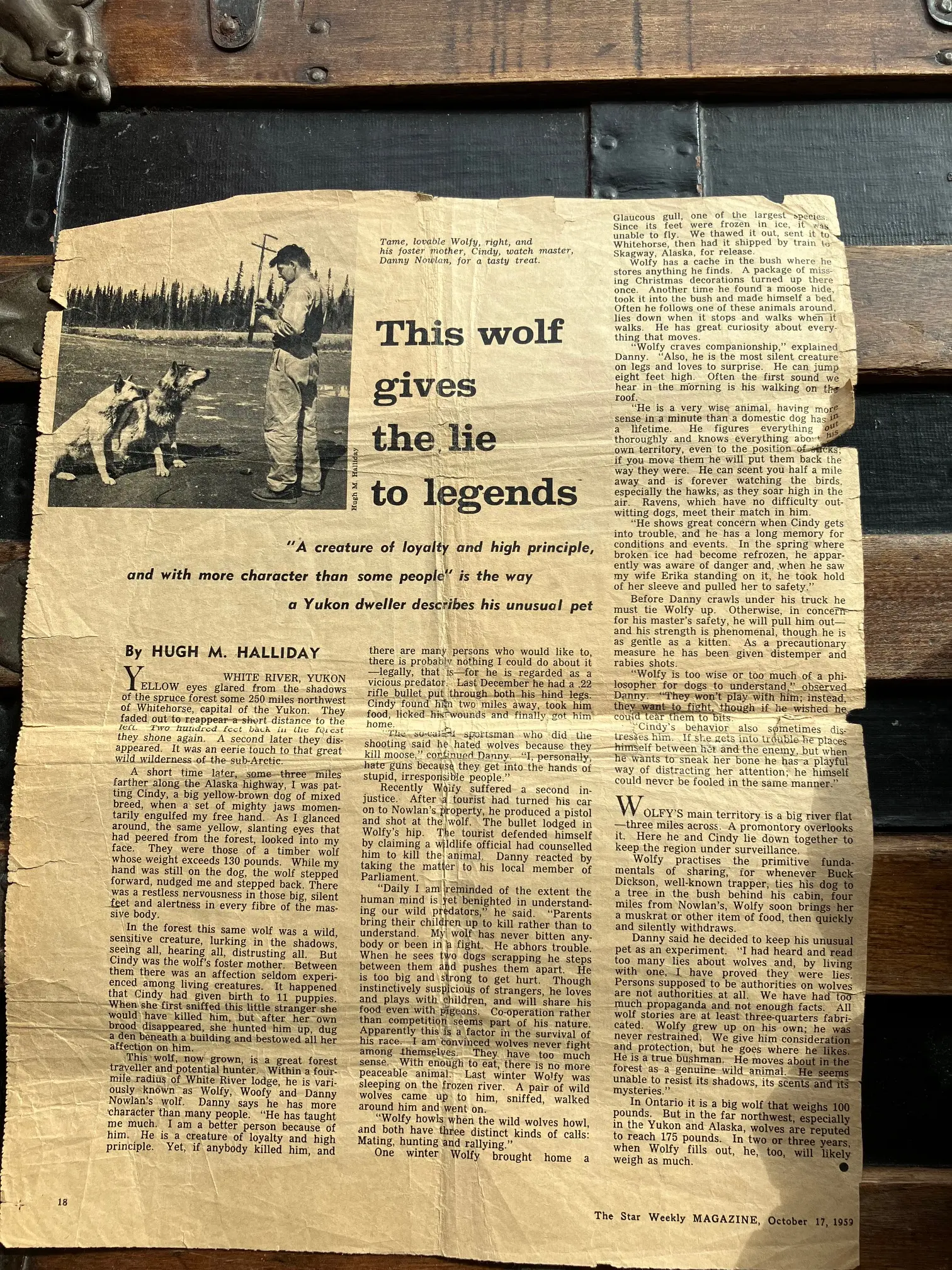
Danny and Erika dreamed of developing a place where northern animals were shown in a home-like environment for educational and conservation purposes. Danny had a way of understanding wildlife that astounded those who knew him. He had a reputation as an expert in training eagles and falcons, and the wolf he raised at White River was the topic of a magazine article. 

Wolfy Article - The Star Weekly Magazine, October 17, 1959
This wolf gives the lie to legends by Hugh M. Halliday.

He thought that keeping wildlife breeding stock and selling animals to southern zoos and game farms would allow him to have enough money to run the Game Farm activities, feed the animals, and provide him and his wife and children with at least three good meals a day. He had no idea what obstacles lay ahead of him – but even knowing them would not have slowed him down or discouraged him. Danny was full speed ahead, full time.

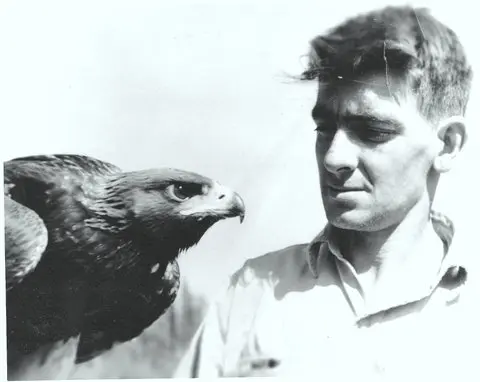
Danny Nowlan with a golden eagle.

Like the time he brought a little Porter locomotive from an abandoned railway near Dawson. He thought a little steam train could carry people around the property, and the kids would love it. He took his 5-ton vehicle up to Dawson to pick up the more than 10-ton locomotive. It was a wild ride to Whitehorse, with Danny running the truck into snowbanks along the road to slow the vehicle. The truck’s brakes were not up to the job and by the time they reached Whitehorse they were burned out. Danny always had big ideas, and he usually backed them up with detailed and practical plans. The little railway did not pan out.

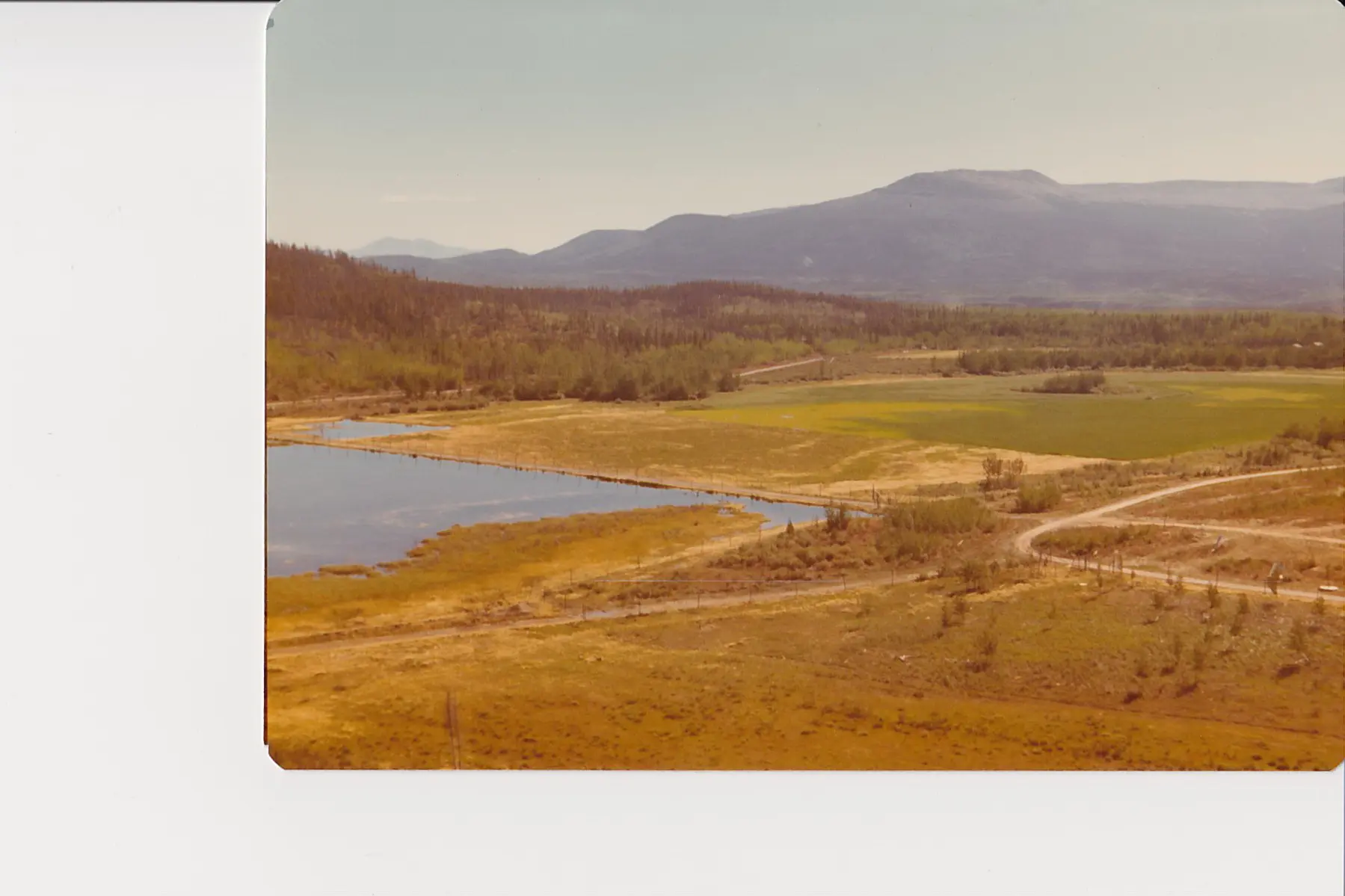
When the Nowlans purchased the property, it had a variety of high and low land, but the central feature was a wetland where today there is a big field.  The property needed roads and trails to be accessible for visitors and, although the marsh attracted wildlife, it was not part of Danny’s vision. At a local auction, he picked up a large earth mover (“scraper”) and a D8 caterpillar tractor with a cable-controlled blade (“cable cat”). This machinery was difficult to operate but it would be instrumental in building roads through the property - and Danny had a bigger plan than just roads.

He built a dam across the drainage from the cliffs to dry out the wetland and create a pasture for first mule deer and later bison. A pond developed behind the dam, and it attracted migratory birds and small mammals. The small animals attracted fox and coyotes, so the next step was fencing. He used whatever came to hand, including 3” pipe from the CANOL pipeline, an ill-fated World War Two project. He put a fence around an area with a small herd of grazing mule deer, and the Game Farm had its first large residents.

Some of the early buildings on the Game Farm were interesting. Danny bought the Yukon’s first airport hanger and moved it out to his property. His daughter Peregrine remembers two baby bears living under it. The Nowlans’ little home by the road did double duty as an animal hospital as Danny brought in wounded and abandoned animals. An owl with a broken wing was put in Erika’s book room and it roosted there on a shelf. She was forever cleaning owl poop off her books. A baby mink always wanted to swim. He joined the kids at bath time, and he developed a terrible habit of swimming in the toilet bowel if someone left the lid up at night. 

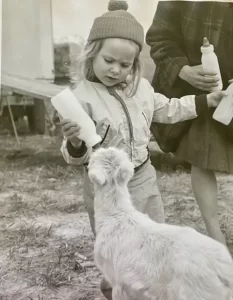
Sabrina Nowlan with a Dall lamb. Danny' and Erika's second daughter, born 1965 and lived 17 years on the farm and in Whitehorse. Photo provided by Sabrina Nowlan.

One night Erika screamed and woke the kids because a wet mink was running around inside her sleeping bag. She loved animals and endured a lot of chaos. Like the time Danny put their four-year-old daughter Sabrina astride a moose called Susiecue. The moose took off, and Danny was yelling for it to come back and shaking a bucket of oats. Sabrina went for quite a ride and remained completely fearless. Erika was not impressed.

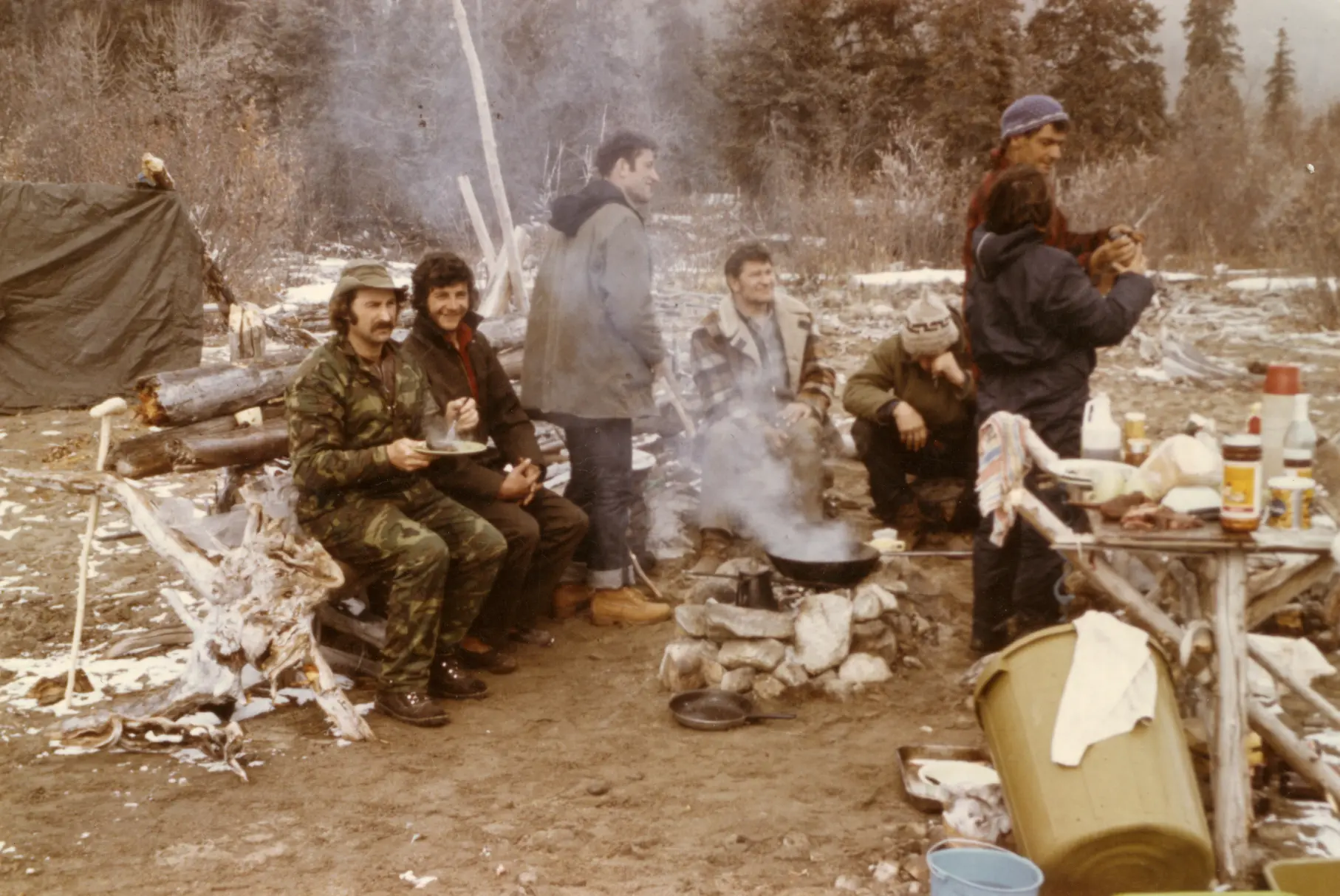
Dall’s sheep were to be the Game Farm’s main attraction. They are magnificent creatures, they can be difficult for the ordinary person to see in the wild, and there was a market for them in southern zoos and game farms. After obtaining the necessary permits, a crew of hardy folk set off to capture some breeding stock at Thechàl Dhâl (Sheep Mountain) near Kluane Lake. Danny’s kids, Peregrine and Sabrina, looked after those first little lambs and kept them in their bedrooms. Wildlife biologist Manfred Hoefs was in the capture group. At that time, Manfred was a graduate student studying Dall’s Sheep horns. Danny, who had a Grade 2, a Grade 3, or a Grade 6 education (depending on who he was talking to), was famous for the amount of research he did on animals and their habitat. He was also famous for the number of useful contacts he developed with experts in many fields. Manfred continued to visit the sheep on the Game Farm for many, many years and established a Dall’s Sheep horn measuring protocol that the Yukon Wildlife Branch used to build a valuable and still-used research dataset.
Sheep camp for sheep capture - from left to right: Unknown, Teddy Yardley, Herb Zollweg, Unknown, Unknown, Danny Nowland and Erika Nowlan

All of Danny’s friends enjoyed a good story, and one of them involved the Game Farm sheep and the road building equipment. Danny was never very careful with equipment, and the machinery ended up sitting in the sheep enclosure. Manfred came to the Farm one time and found the rams all lined up and running at one of the scraper’s huge tires. They would bang into the rubber, bounce off, and run at it again. Manfred said they were loving it – the best thing they had ever hit in their lives. They just kept going – bang, bang, bang. Sort of like Danny – living and loving life to the fullest.

• • •

Photo gratefully provided by Uli Nowlan unless otherwise noted.

Sally Robinson, October 2023
with words from interviews with Peregrine Nowlan, Sabrina Nowlan and David Mossop.

Sally Robinson

Sally Robinson

Vintage Ventures - Researcher & Writer

Sally is currently an independent consultant in the heritage field. Throughout her career, after working 20 years with Yukon museums as a researcher, curator and exhibit designer/producer, she joined the Yukon Government to work for 16 years as the Historic Sites Interpretive Planner.

Lindsay Caskenette

Lindsay Caskenette

Manager Visitor Services

Lindsay joined the Wildlife Preserve team March 2014. Originally from Ontario, she came to the Yukon in search of new adventures and new career challenges. Lindsay holds a degree in Environmental Studies with honours from Wilfrid Laurier University and brings with her a strong passion for sharing what nature, animals, and the environment can teach us.

867-456-7400
Lindsay@yukonwildlife.ca

Explore by Category

Explore by Author

Little Muskox, Big Journey

Little Muskox, Big Journey

northern animals

by Brittney Forsythe | May 25, 2025

2 minute read -

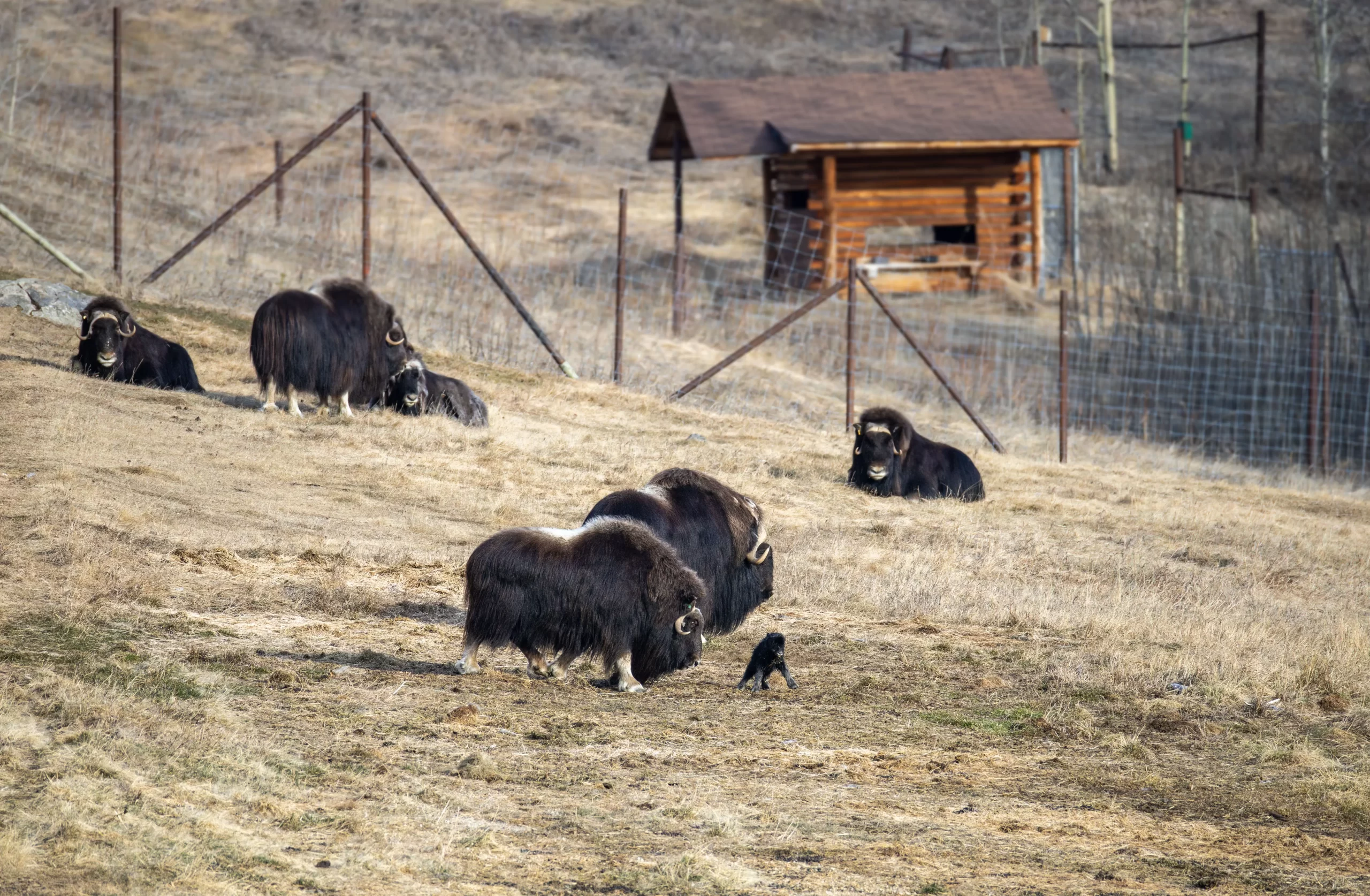
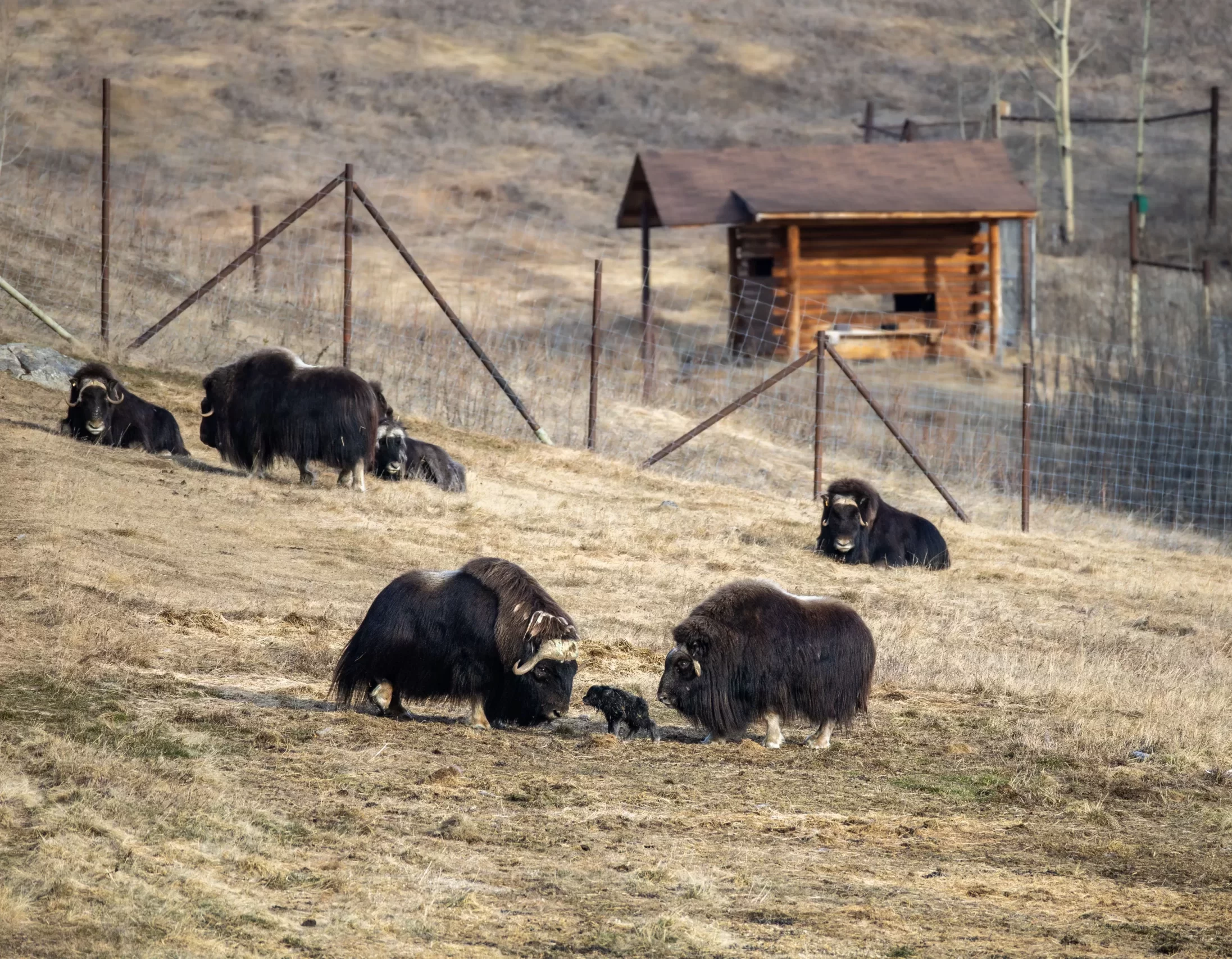
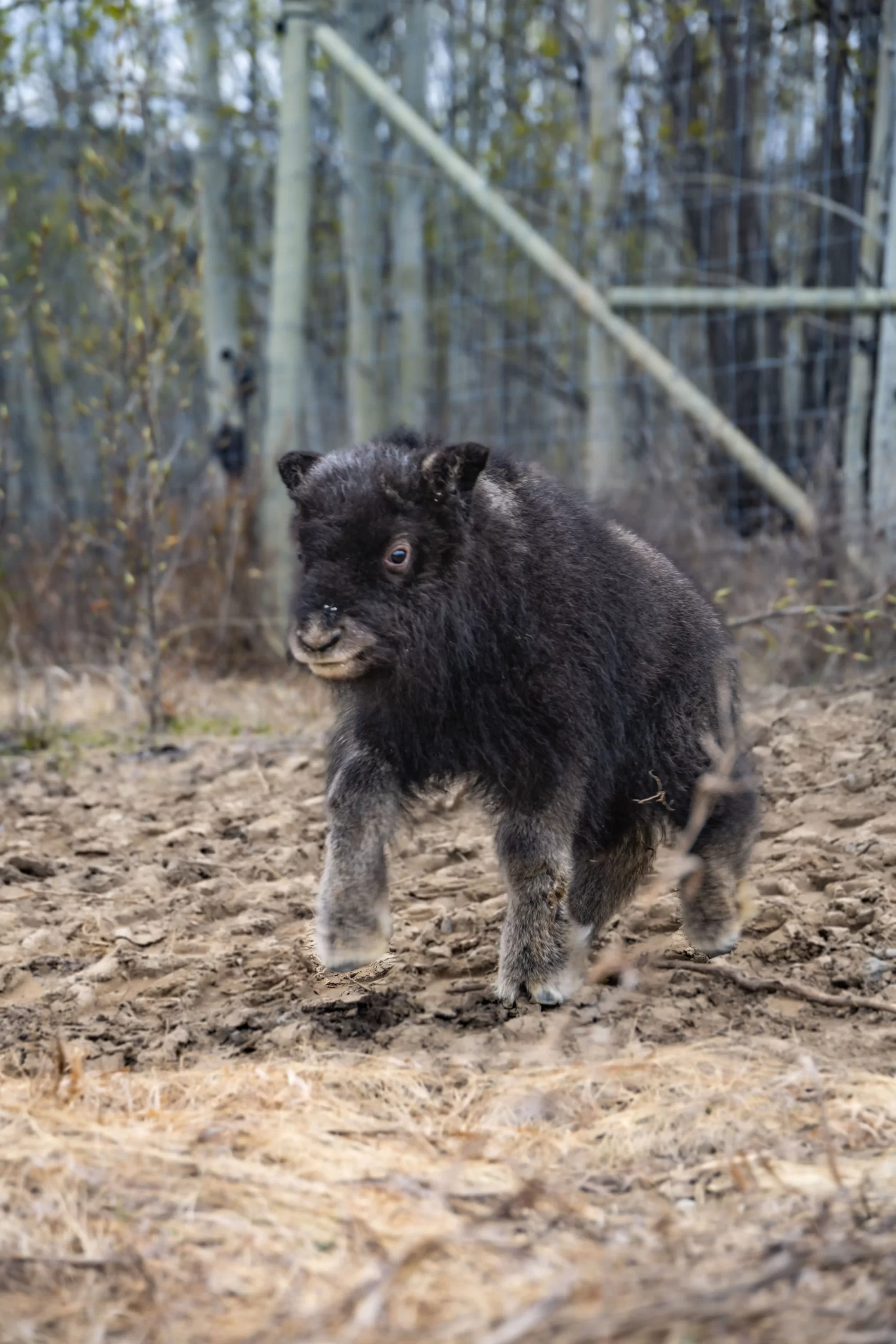
Nature is beautiful — and often unpredictable. On April 30th, the Yukon Wildlife Preserve welcomed its first muskox calf of the year. But shortly after his arrival, it became clear that something wasn’t quite right. Despite hopes for a strong maternal bond, the mother muskox wasn’t allowing the newborn to nurse. The reason for this rejection remained unclear —  the muskox bull was also seen interacting with the calf in a way that raised safety concerns.

Baby Muskox with Mom and Bull Photo Credit Jake Paleczny

To protect the calf, our team made the decision to intervene. He was brought into our Wildlife Rehabilitation Centre, where he began receiving around-the-clock care and 1L of specialized milk replacer daily. While it wasn’t the beginning we’d envisioned for him, the calf showed resilience and strength from the very start.

At the same time, the veterinary team kept a close watch on the mother muskox. When it became apparent she hadn’t passed her placenta, she was safely immobilized and given medication to support the process. After several days of monitoring in a separate enclosure, she recovered well and was eventually reunited with the rest of the herd.

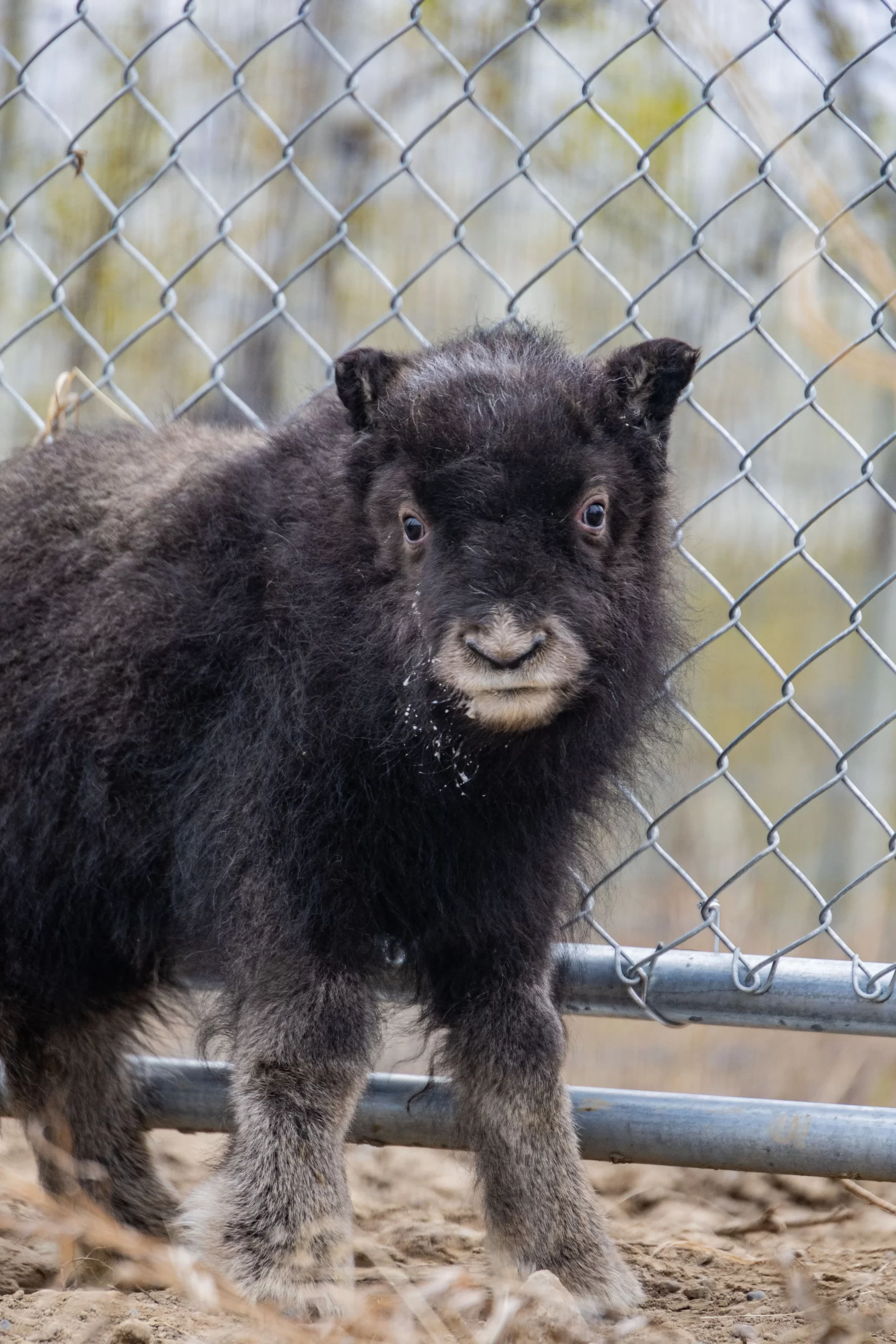
Baby Muskox Photo Credit Britt Forsythe

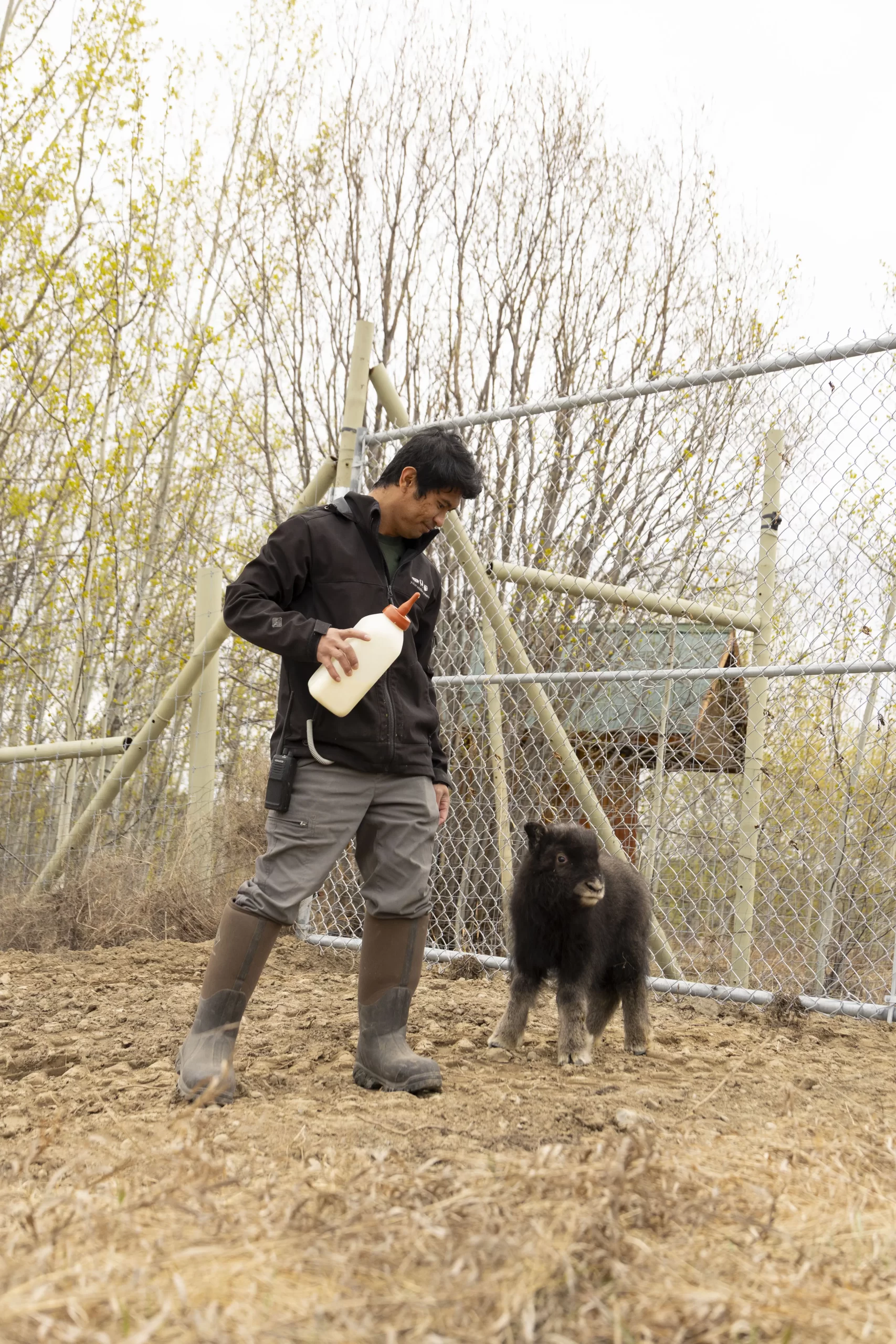
As for the little muskox calf — he’s growing quickly! On May 22nd, at just over three weeks old, he was moved out of the Rehabilitation Centre and into a transitional habitat adjacent to the main herd. This new space allows our team to continue feeding him safely while also helping him gradually reintroduce to his species — a gentle reminder that he is indeed a muskox, even if his first few weeks have looked a little different.

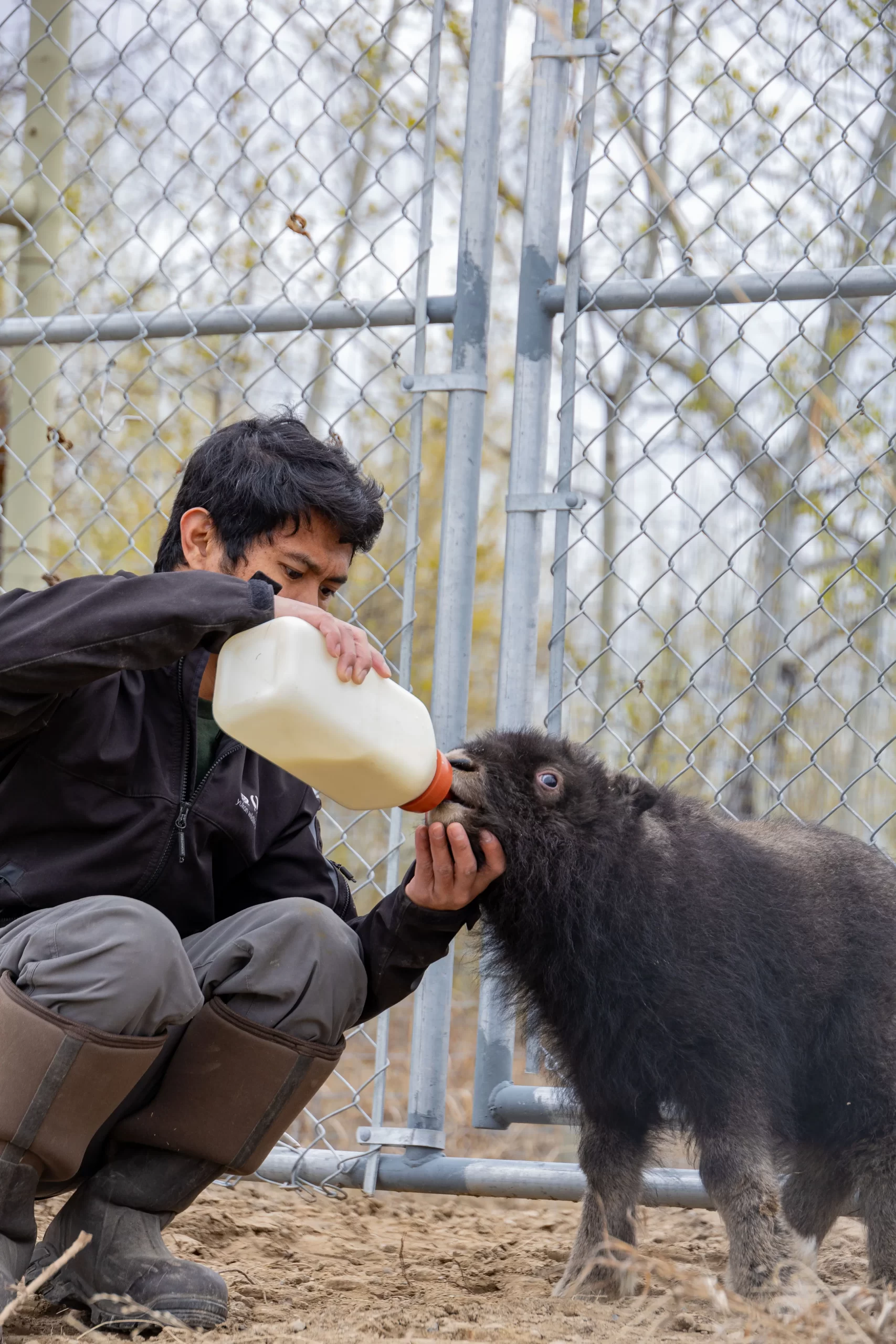
Though he’s still receiving bottle feedings and close care, he’s doing well. If you're visiting the Preserve, you might just catch a glimpse of him  — look up towards the office when standing at the Thinhorn Sheep Ewe's feeding station — but as always with muskox sightings, a zoom lens or binoculars will be your best friend!

Senior Wildlife Care and Rehabilitation Technician Michael Salilig feeding the baby muskox 

Photo credit: Britt Forsythe

Brittney Forsythe

Brittney Forsythe

She/Her - Visitor Services Coordinator

Brittney joined the Wildlife preserve in the summer of 2023. Growing up on Northern Vancouver Island, surrounded by the temperate rainforest, nature and animals have always been a part of her life. It exploded into a passion, when she started her dog walking business in 2017 and she began spending 6-7 days a week in the forest, rain or shine! This sparked an even deeper appreciation for the cyclical nature of the land and how all of the plants & animals work together symbiotically. She is forever ‘that girl’ on the hike, pointing out different rocks and plants, explaining their origin or what they could be used for medicinally. Brittney and her dog Cedar relocated to the Yukon to help care for 31 sled dogs. She is so excited to expand her local knowledge as a part of the Preserve team.

867-456-7400
 Brittney@yukonwildlife.ca

Explore by Category

Explore by Author

The Humble Dzäna

The Humble Dzäna

northern animals

by Rebecca Carter | Apr 10, 2025

8 minute read -

When welcoming folks to the Yukon Wildlife Preserve, us interpreters in the Front Cabin often say something along the lines of “you'll find 10 Yukon animals here,” referring to the ones in our care and pictured on our map. But of course, so many other animals call the Preserve home too. Like the tsäl (sik sik/gopher/arctic ground squirrel) who are the 11th unofficial species that you can find above ground only in the spring and summer!

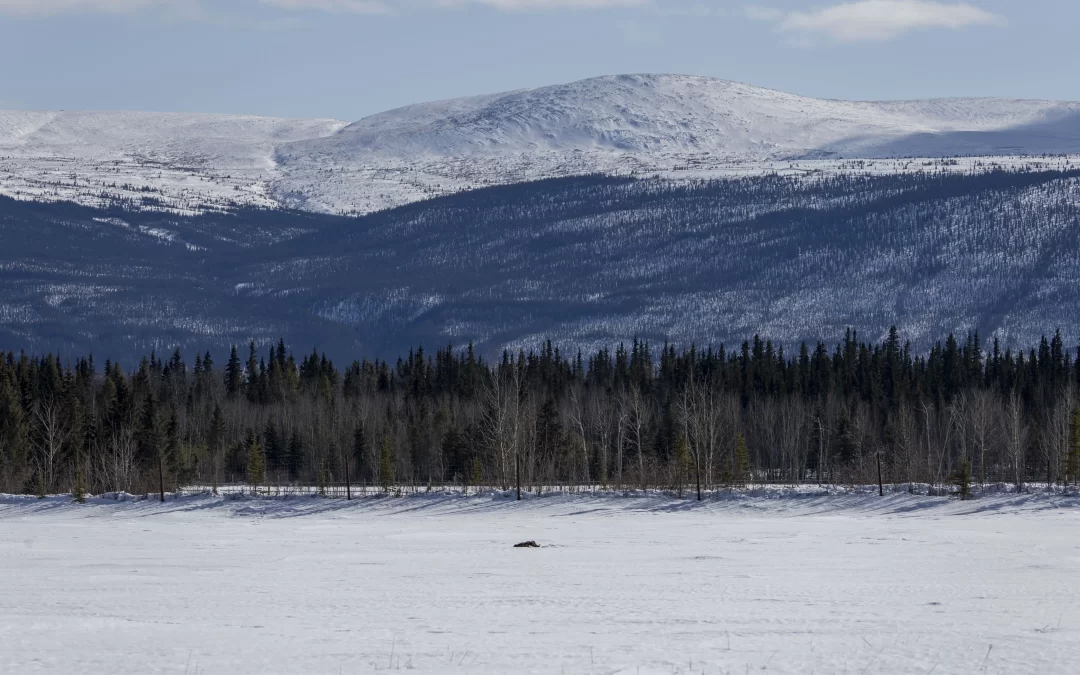
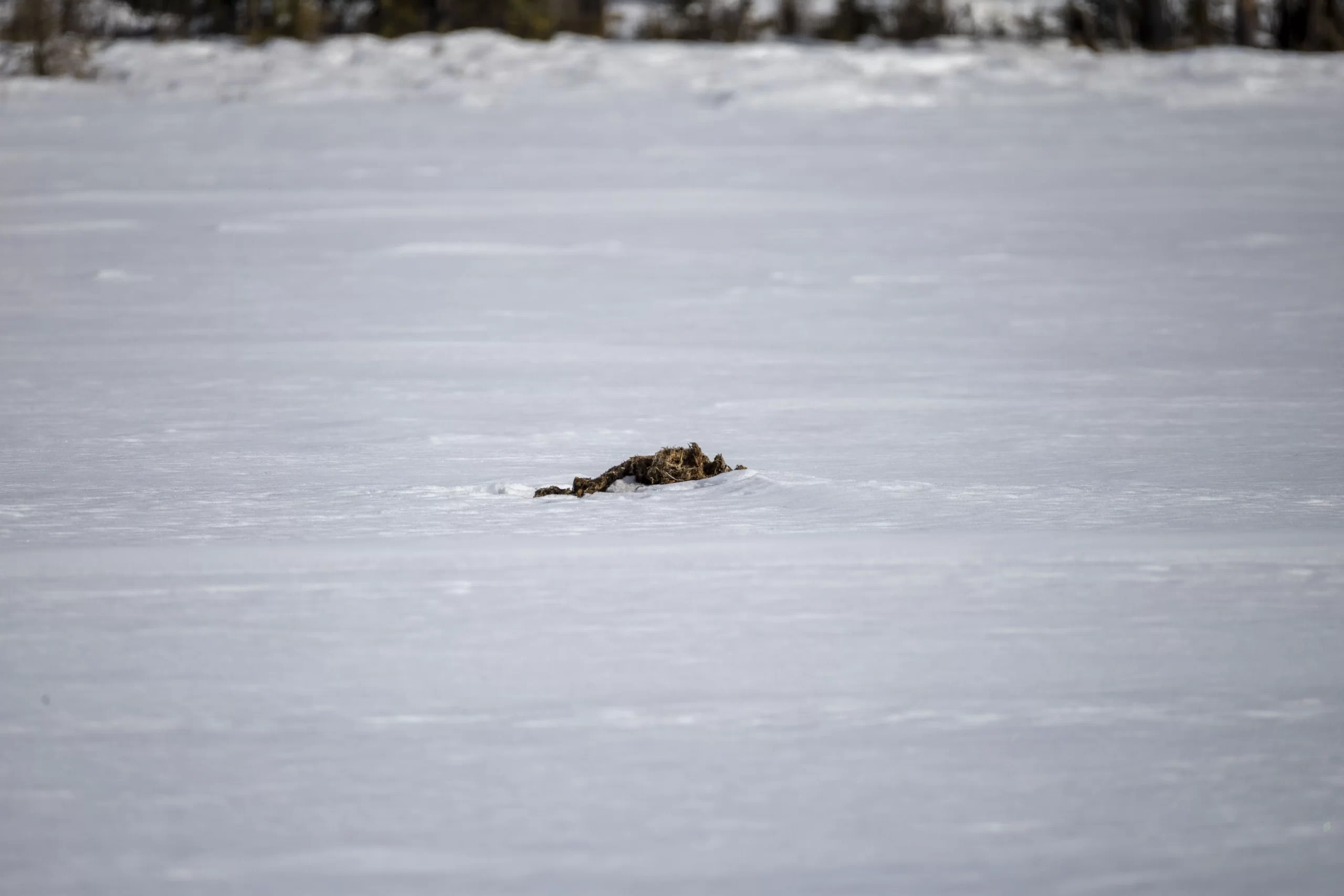
Another newer resident on the Preserve are the dzäna (muskrats). A mansion of a muskrat lodge has emerged in the moose pond over the past year and has remained visible even when covered by snow this winter! While guiding a bus tour recently, this seemling isolated home became the center of attention while we were looking for the elusive kanday (moose). The visitors and I mused “how many muskrats are in that thing?!” I did know a pair of muskrats had moved into the marsh a couple of years ago, and now maybe there’s a whole family living there hosting many parties (yes, I had to force that line so I can say that a group of muskrats are called a “party”). 

But while joking on my tour, I realised that I did not know much about this animal and this inspired me to dedicate some time to the humble muskrat.  

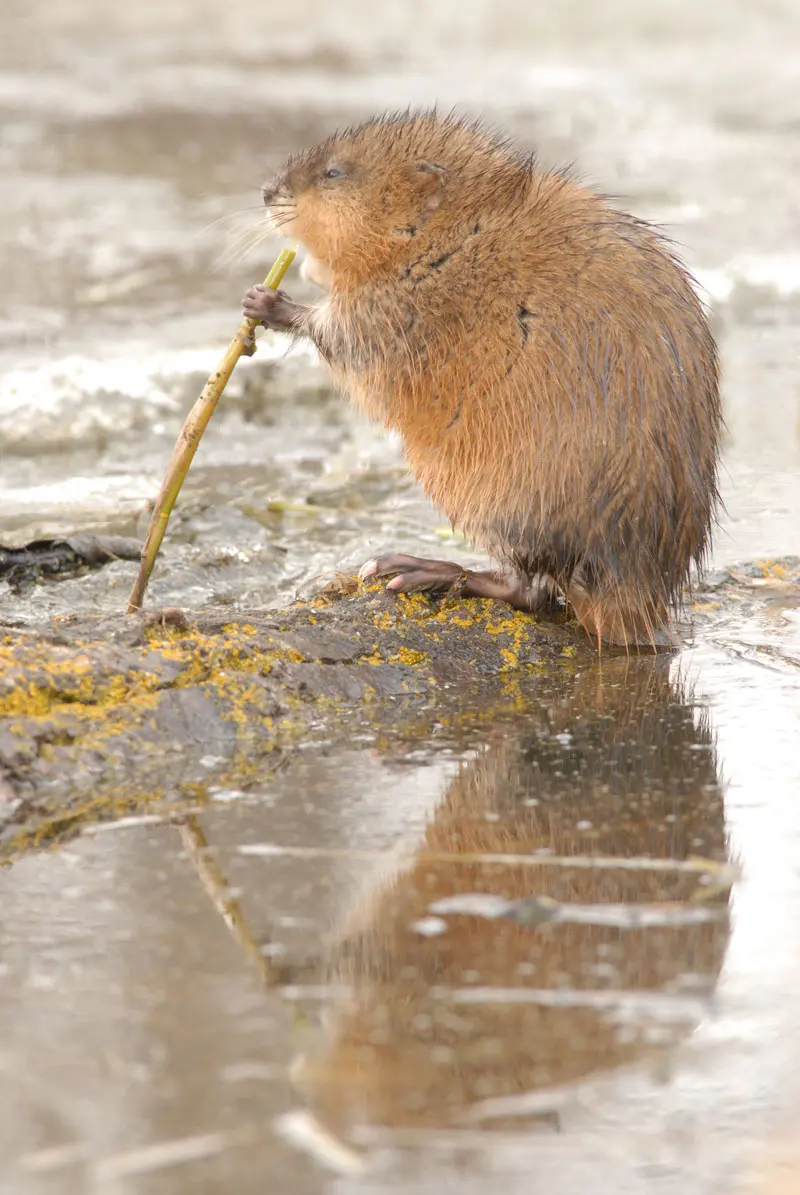
Muskrat copyright and photo credit: Derald-Lobay

Muskrats are often confused with tsà’ (beavers), and though they are very similar, they are not closely related at all. This is a neat example of convergent evolution: two animals may end up looking the same and acting in similar ways because of the shared environment that they live in. Both muskrats and beavers are semi-aquatic rodents, have water-resistant brown and sleek fur, build their lodges in shallow water or along the water’s edge, and forage on the surrounding plants.

When I told my partner that I was writing about muskrats, he made sure that I was including the story of muskrat’s heroic act. Growing up in Manitoba, we both learned about the special place the muskrat holds in Cree and Anishinaabe Creation stories.

Small details can vary with the storyteller but muskrat’s role remains the same. 

As written in his book Ojibway Heritage, elder Basil H. Johnston from Wasauksing First Nation begins the story with the Great Flood, where only the birds and water animals survived and Sky Woman came to rest on the back of a turtle. She asked the water animals to dive to the bottom and collect soil so that she can create land. Many animals - the loon, the mink, the beaver - dove down, down, down but none returned with soil. All seemed hopeless. Finally, the little muskrat softly said “I’ll go.” Everyone laughed as there was no way the tiny muskrat could make it to the bottom when all of the other animals had failed. Despite being ridiculed, the determined muskrat disappeared into the water and was gone for a long time. The animals and Sky Woman stared helplessly into the water until muskrat finally floated to the surface. Sky Woman lifted muskrat’s body onto the turtle and there, clutched tightly in muskrat's paw, was a small clump of Earth. She took the Earth and spread it on the back of the turtle. The wind began to blow while Sky Woman and the animals danced together, spreading the Earth farther until it grew into Turtle Island. The animals celebrated and mourned together for without muskrat’s great sacrifice, Earth and all life would not exist. I personally like the story ending with Sky Woman breathing life back into muskrat’s little body so that he can celebrate too.

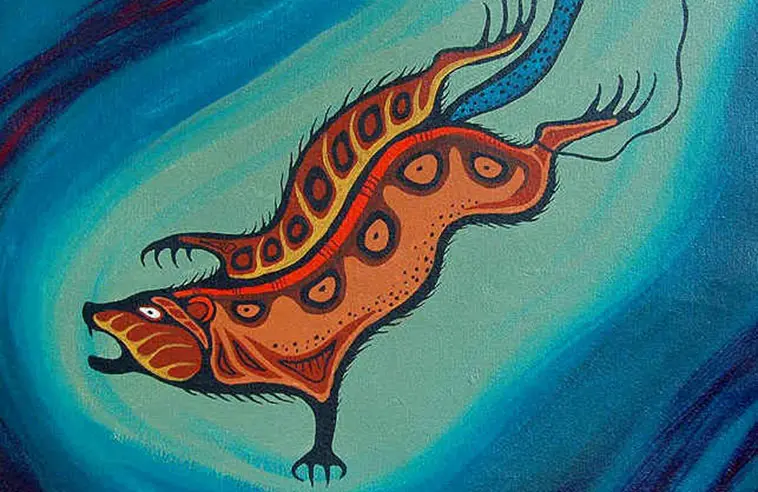
A traditional Anishinabe inspired Painting by: Carl Ray (1943 – 1979) of a muskrat. The Muskrat reminds us to be open to the creative possibilities of living in balance with Creation.

This story intertwines many moral and ethical values tied together with ecological knowledge. Muskrats are indeed very small, weighing only 2-to-4 pounds compared to the much larger 40-to-70 pound beavers. They are incredible swimmers and can dive underwater for 15-20 minutes at a time. When they dive, their heart rate slows and their body temperature plummets to help them conserve oxygen. Small hairs between their toes and their long, rat-like tail helps to propel them through the water. These are all helpful adaptations when you need to forage for plants and food all winter since muskrats do not store food like beavers. It’s no wonder that the small but mighty muskrat could swim to the bottom of the water with all of these traits.

Instead of building dams and lodges made from felling trees like beavers, muskrats build their lodge homes and feeding huts (called push-ups) out of plants like cattails, sedges, and reeds, packed together with mud. As in the story, their front paws are small with long claws for digging and holding building material, and their homes are shaped like the ball of Earth they held on to.

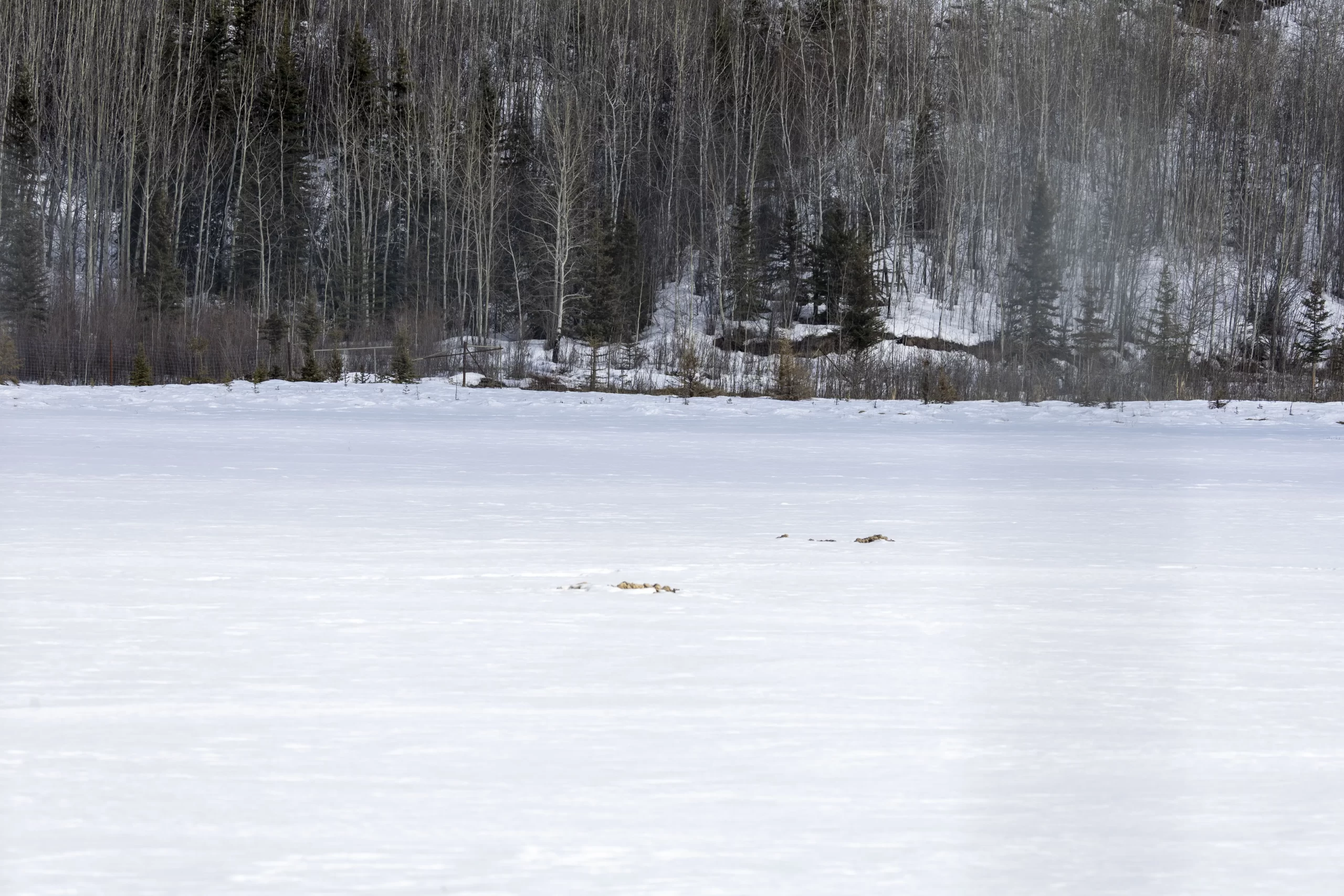
a brown blob of earth pushes up through the snowy icy surface of the moose habitat pond where a muskrat makes its home. Photo Credit; Rebecca Carter.

A brown blob of earth pushes up through the snowy icy surface of the moose habitat pond where a muskrat family makes its home. Photo Credit: Rebecca Carter.

In the winter, you may see push-ups on frozen ponds and lakes. When the water begins to freeze, muskrats will chew a hole in the ice and push up clumps of material, creating an enclosed and insulated resting hut on top of the ice. Like ice fishing shacks on a lake, muskrats can pop out of the water and take a break from swimming long distances, have some lunch and take a breather all while staying protected from the harsh elements and predators.

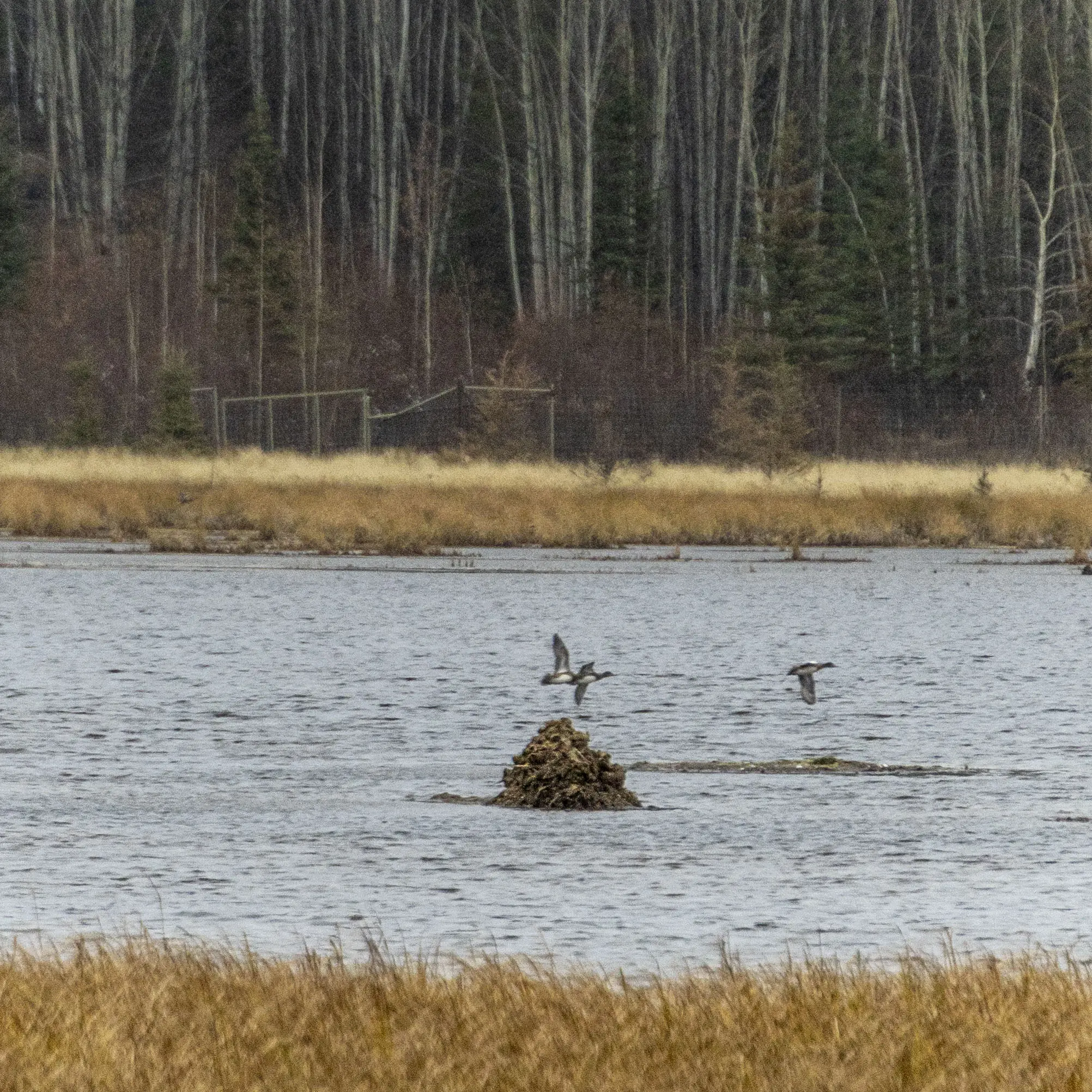
These push-ups are also fast frozen piles of fresh plants that offer higher levels of protein, nitrogen, and other nutrients that are lacking in the low quality winter plants. These push-ups are great food sources for caribou, moose and bison and may help them make it through the winter with a nutrient boost. In the summer, waterfowl and marsh birds lounge and nest on the lodges, while snakes and reptiles use the muskrat tunnels and homes for places to rest and thermoregulate. I can't help but think of muskrat's desire and determination to help collect Earth as a parallel to the muskrat’s push-ups and lodges for providing food and shelter for other animals throughout the year.

a brown blob of earth pushes up through the snowy icy surface of the moose habitat pond where a muskrat makes its home. Photo Credit; Rebecca Carter.

Fall, muskrat pushup with birds soaring above the pushup. Photo credit: Britt Forsythe.

Muskrats are also resilient and adaptable. They can have 2-3 litters per year with an average of 6 kits per litter making their population relatively resistant to disease, predation pressures, and they can survive through drought years by eating a variety of foods and getting water from the plants. Despite this resilience, there is emerging evidence that muskrat populations are declining across North America. The exact cause remains unclear for these declines, but a loss of critical wetland habitats and the connectivity between wetlands may have a large impact on populations.

I read this quote from elder Benton Banai that is fitting here:

 “No matter that marshes have been drained and their homes destroyed in the name of progress, the muskrats continue to grow and multiply. The Creator has made it so muskrats will always be with us because of the sacrifice that our little brother made for all of us many years ago when the Earth was covered with water.”

Muskrats play such an important role in the ecology of wetlands, Indigenous cultures and economic importance for trappers that we cannot overlook the muskrats and their habitat needs. One of the values that we can learn from the Creation story is that humans and animals are interconnected and living together harmoniously ensures the survival of all. 

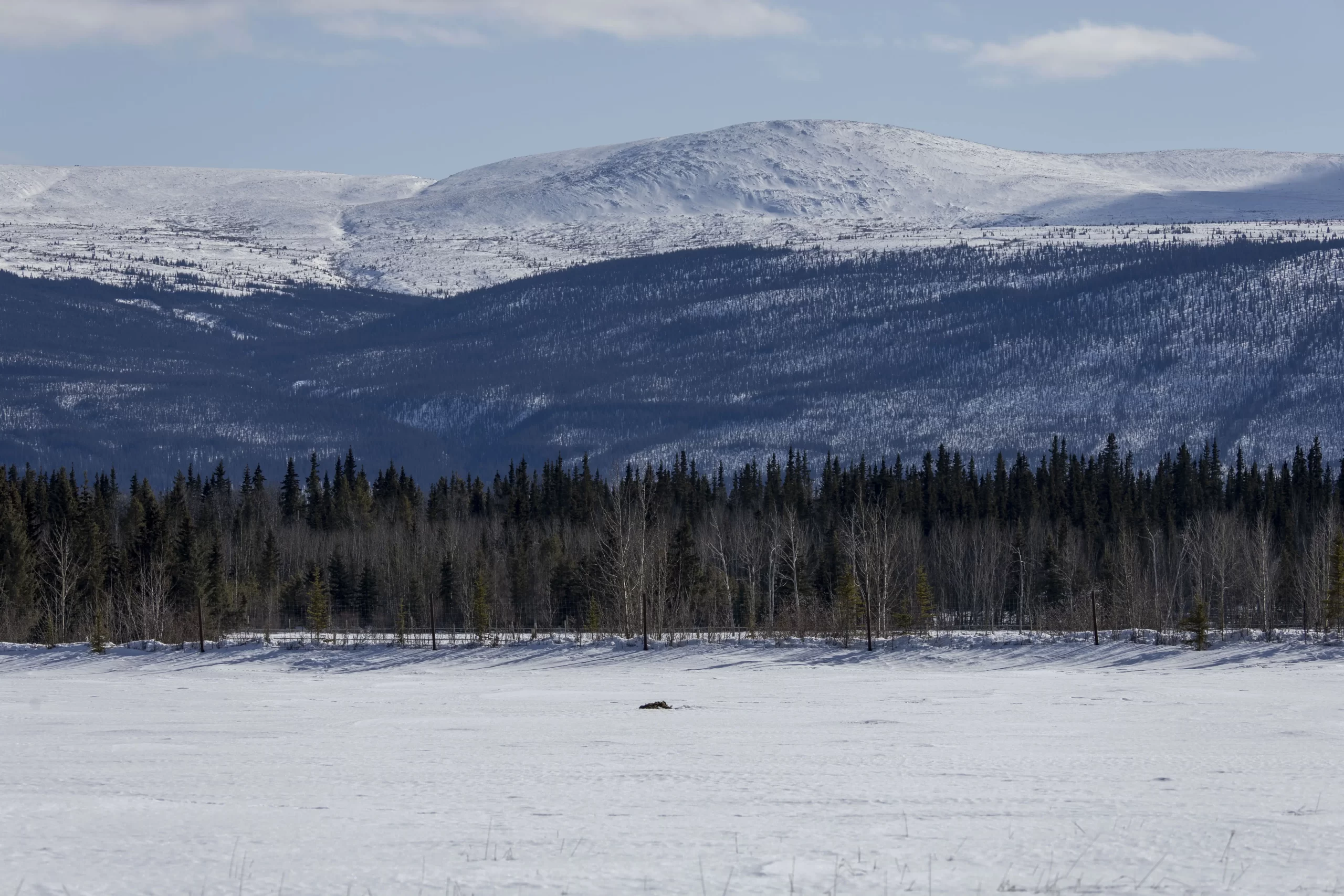
Pushup from a muskrat in the Preserve's Moose Pond with a wide view of the land including snowy mountains and boreal forest. Photo Credit; Rebecca Carter.

From the muskrat, we can learn to be determined and courageous when faced with a seemingly impossible task, to cooperate and help one another, to do acts not for the recognition but because it is the right thing to do, and to honour and respect all creatures regardless of their size. So the next time you visit the Wildlife Preserve, see if you could spot the small, humble, determined dzäna in the marsh. We can and do have a lot to learn from our wildlife companions.

References

Department of Environment. 2024. Common Muskrat. Yukon Government, Department of Enivronment. https://yukon.ca/en/common-muskrat

Errington, P.L. 1939. Reaction of muskrat populations to drought. Ecology, 20(2): 168-186. 

Hindle, A.G., et al. 2006. Body cooling and the diving capabilities of muskrats (Ondatra zibethicus) A test of the adaptive hypothermia hypothesis. Comparative Biochemistry and Physiology, 114: 232-241. https://sci-hub.se/10.1016/j.cbpa.2006.03.001 

Hinterland Who’s Who. 1986. Muskrat. Environment and Climate Change Canada, Canadian Wildlife Federation. https://www.hww.ca/en/wildlife/mammals/muskrat.html

Jung, T.S., Stotyn, S.A., and Larter, N.C. 2019. Freezer meals: comparative value of muskrat (Ondatra zibethicus) push-ups as late-winter forage for a northern ungulate. European Journal of Wildlife Research, 65:61.https://doi.org/10.1007/s10344-019-1301-7

MacGregor, D. 2013. Teachings from the Muskrat. Muskrat Magazine. https://muskratmagazine.com/teachings-from-the-muskrat/

Sadowski, C., & Bowman, J. 2021. Historical surveys reveal a long-term decline in muskrat populations. Ecology and Evolution, 11(12): 7557-7568. https://doi.org/10.1002/ece3.7588

Yukon Native Language Centre. 2002. Southern Tutchone Noun Dictionary. Retrieved from: https://ynlc.ca/

Rebecca Carter

Rebecca Carter

Senior Wildlife Interpreter

Rebecca joined the Wildlife Preserve in the summer of 2020 after moving from Manitoba to the beautiful and wild Yukon. Rebecca earned a degree in Biology with honours from the University of Winnipeg studying behaviour in mule deer (one of her top 20 favourite animals.. it’s hard to choose!). She loves connecting with others through nature and sharing stories and knowledge about the animals at the preserve with visitors.

867-456-7400
rebecca@yukonwildlife.ca

Explore by Category

Explore by Author

A Tale of Chasing the Sun and Losing the Clock

A Tale of Chasing the Sun and Losing the Clock

northern animals

Mar 28, 2025

6 min read - this is a crosspost from Avery's website Snail Tales.

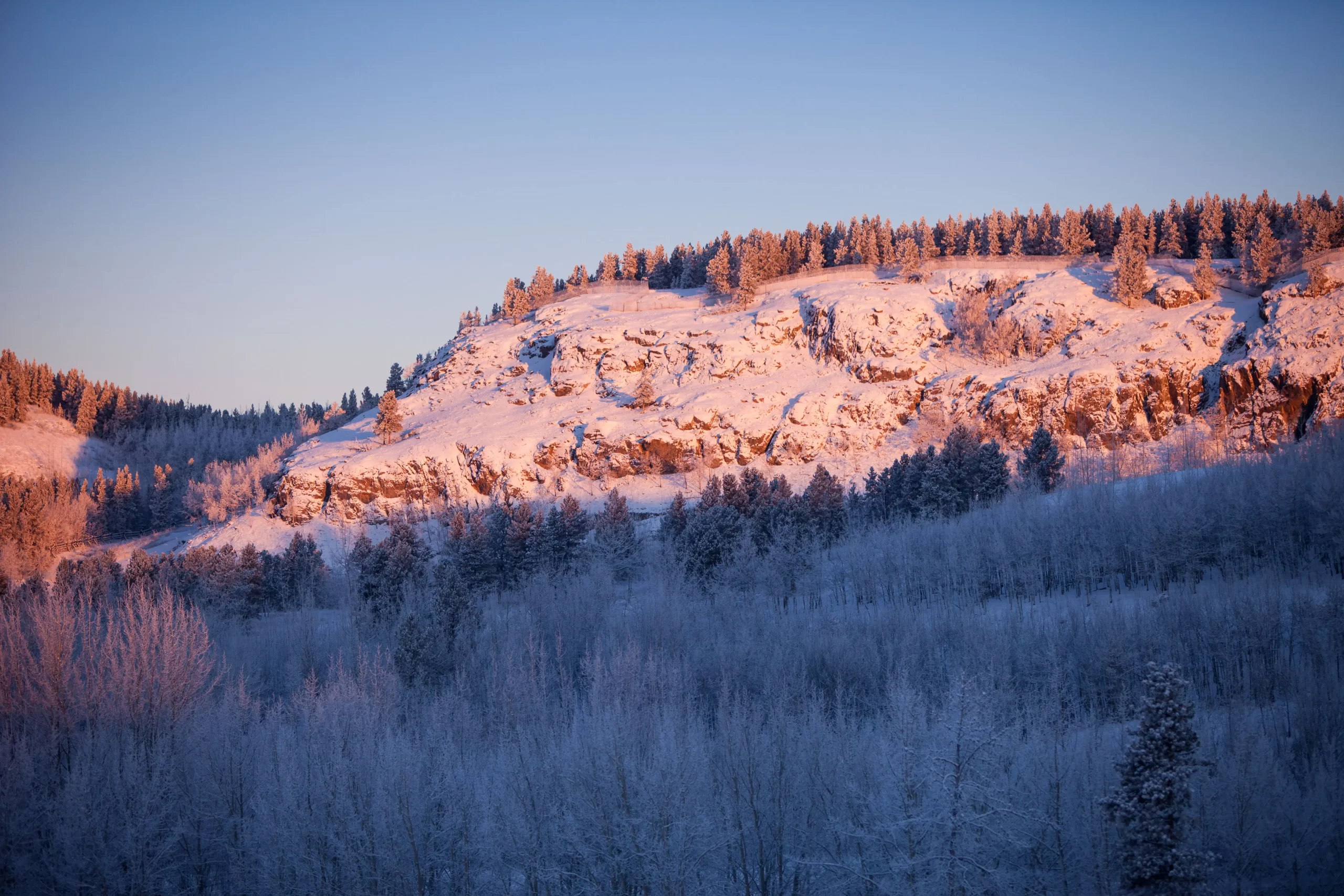
I think about how my first few months living in the Yukon feel like the drawn-out, long sunrises and sunsets up here. They are often multicoloured, with bright hues and dark contrasts, and they seem to last ages. This is, apparently, all because of the Earth’s tilt and rotation. I was asking everyone about this my first few weeks here. I needed to understand why the sun seems to take longer to rise, fall and hover at the horizon compared to anywhere I’ve ever been. Turns out when you're farther north, the sun takes a much shallower angle as it rises and sets! Instead of popping straight up and down like it does near the equator, it moves more horizontally across the sky.

sunrise and mountain goat cliff. The skie is illuminating pink as the slow winter sunrise occurs.

Mountain goat cliff illumiated pink in the long winter sunrise. Photo credit: Jake Paleczny.

This makes the transition between night and day stretch out longer. Someone said to me, “Think of it like a ball rolling up and over a hill—if it goes straight up and down, it’s quick, but if it follows a more gradual slope, it takes longer. That’s basically what the sun is doing near the poles.” I’m thinking of making an animation of this to try to make more sense of it physically. This effect gets even more extreme as you go farther north. It’s why there is midnight sun near the summer solstice, and in winter, it gives us the long, drawn-out sunrises and sunsets that I have cherished and gawked at almost every day since I moved up. The territory is a mix of extremes: light and darkness, with a lot of expansive grey and blue sky in between. It’s 10am as I write this and the clouds are pink with sunrise.

drawing by Avery of her cabin home in the boreal forest.

Drawing by Avery Elias. The cabin I rent in the Boreal Forest. 

Sometimes I feel like time is flying and I can’t seem to muster the energy to chase it. But just as the sun moves differently up here, my sense of time has changed too. The other day I was working a shift at the Yukon Wildlife Preserve and I asked my coworkers what they think about our relationship to time versus other animal’s relationship with it. 

We got into a discussion about how time in the sense of minutes and hours is an abstract human-constructed concept. We are the only animals that track time like this. Every other animal seems to be deeply connected to their internal clocks and their circadian rhythms.

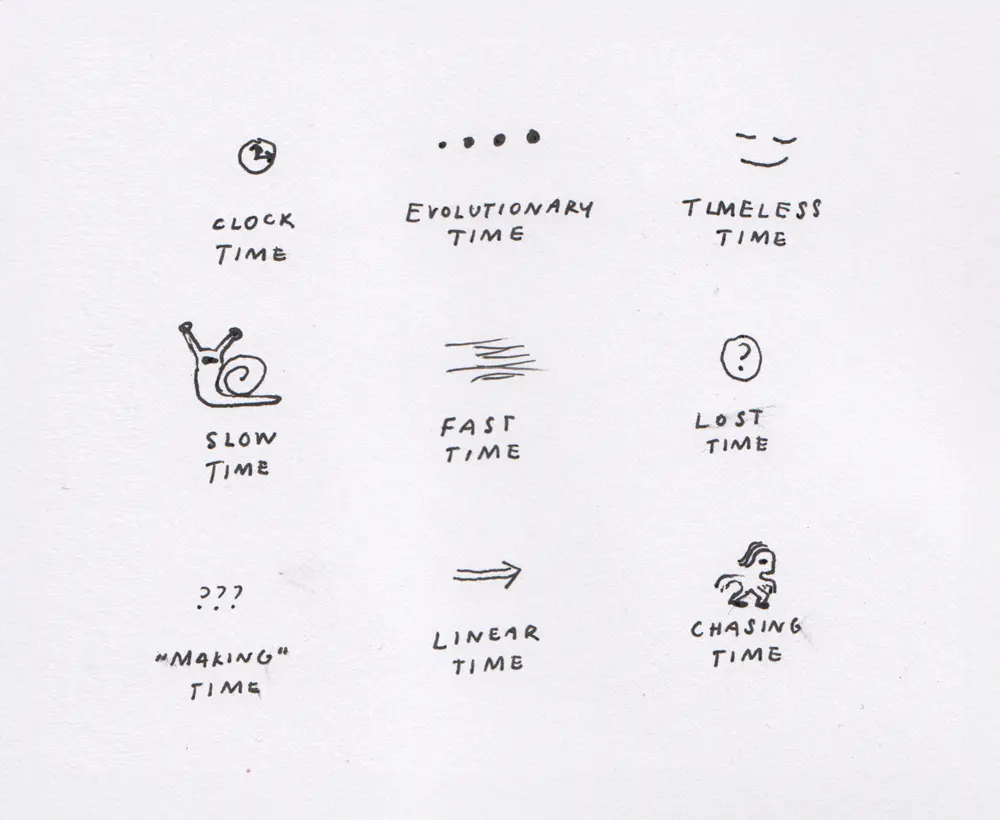
Humans are obsessed with time and trying to name it; we think we can control it, track it, chase it, kill it, steal it, make it and run out of it. The more time I spend with the wildlife in the Yukon, the more absurd and ridiculous these ideas become.

Illustration showing how we, humans think of time. By Avery Elias.

Illustration by Avery showing our connection with time. 

The sun lingering on the horizon up here sometimes gives me the illusion of time stretching. I’ve started to feel that slowness elsewhere, like when I’m alone observing the musk ox. Here’s what I wrote in my journal one morning:

Being around the musk ox, I leave my personal human sense of clock time. I feel something different. I wonder if it is “evolutionary time”. The musk ox are an ancient species — they are considered ice age survivors. I learned today that they are one of the oldest surviving large herbivores on Earth. I am pulled into the physical and spiritual around them. Maybe that’s a different place to be from the linear, the daily clock we all measure our “own” minutes, hours, days, weeks, years by. The musk ox is not keeping track of time in this way. They use their internal clocks. All the animals here do.

Muskox bulls in winter at the Preserve. photo credit Avery Elias.
They never let me get too close, which is probably best. The musk ox are able to run up to 60km/hour and can be an aggressive species.


After the discussion with my coworkers, I ponder this difference between the way we think of time and the relationship the musk ox have with it. Is it a contributor to the illusion of separation we’ve created between us and the wildlife? Between human beings and the natural world? It only took a few shifts working at the Yukon Wildlife Preserve to realize I was sensing something powerful and healing about the places I’ve been spending time in— the preserve, the North, and my cabin in the Boreal forest*.

I couldn’t stop thinking about the illusion I had been living under— the idea that we are separate from the animals and the wild. Far away in our cities, being raised to believe that humans are the centre of everything. We’ve elevated ourselves but we are simply part of nature like the rest of these animals. It feels silly to have to even state this and maybe many of you already understand it. But I grew up in a big city and it’s taken me living in a forest, in a territory with one of the lowest population densities in the world to really make some sense of it.

*The boreal forest, also known as the snow forest, is a biome characterized by snowy winters and freezing temperatures. It’s the world's largest land biome. This forest converts carbon dioxide into oxygen on a massive scale (the air is very good up here ☺ ). The snow stays on the ground for many, many months.


Muskox bulls in winter at the Preserve. photo credit Avery Elias.
A quote I wrote in a sketchbook that feels fitting.


Learning from the wild

I heard a term recently: Ecological Identity. It bears the questions: Who are we in relation to nature? How do we fit with what’s around us? I wrote that the musk ox are considered ice age survivors. When I give my tours to visitors at the preserve, people are often shocked and intrigued by this information. I like to remind them that we as homo sapiens are also ice age survivors! Multiple ice ages* in fact: at least two in the last 200,000 years. 

Yet our evolutionary paths have remarkably diverged. The lives of the musk ox are still closely attuned to the rhythms of nature, as they were during the ice age. When I’m around them, it feels evident that they are living in harmony with their surroundings. I sense that they are in a deep state of attention. In a way, are they living in the timeless? We’ve created cities and systems that can obscure the natural rhythms of day and night, the seasons, and the ecosystems around us. These differences highlight not just how far we’ve come, but also how much we might still learn from the creatures who remain deeply connected to this earth we share. The only time I’ve been able to feel this kind of harmony for an extended period is when I’m on long camping trips or boat rides where I feel almost lost in the sea. It makes me think that my over-structured, calendar relationship with time is like a surface-level experience of life. Like the restless, choppy waves at the surface of the ocean.

The musk ox relationship with time might be more like the water deep below the surface, where things appear calm and more still. In a way, I feel consoled by the lesson of the musk ox on this day. If the Yukon’s light has changed how I see time, the musk ox has helped how I feel it.

 *When people say “the last ice age”, they’re usually referring to the last glacial period (that ended around 10,000 years ago), when ice sheets covered much more of the planet. I recently learned from my coworker at the preserve, Danial, that scientifically speaking, we're technically still living in an ice age since there is permanent ice at the poles. What we're in now is an interglacial period, meaning a warmer phase within an ongoing ice age. If things followed the natural cycle, we'd eventually head back into a glacial period, but human-driven climate change is disrupting that pattern.

Min Height: auto
Min Height: auto
Width: auto
Width: auto
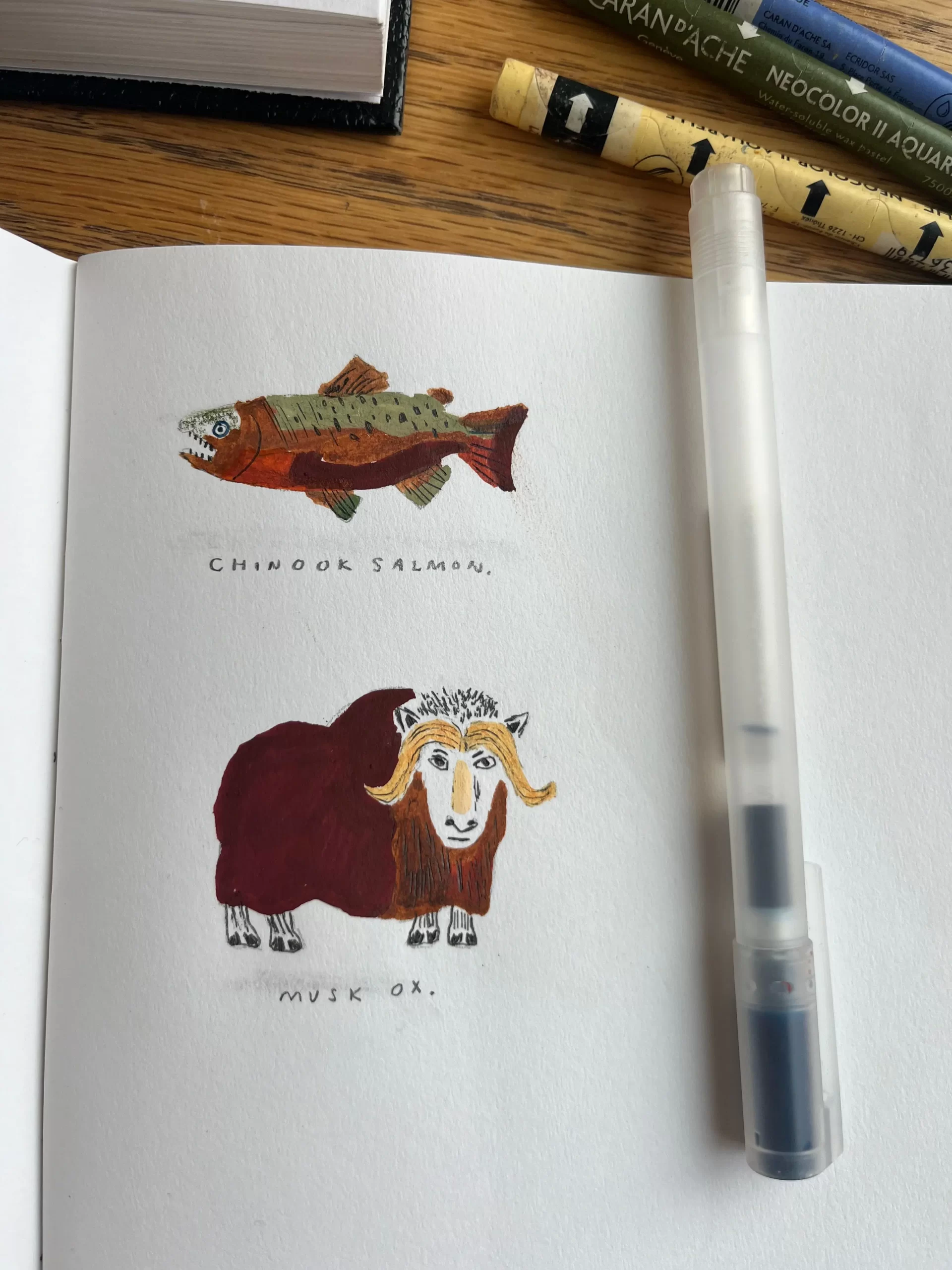
Illustrations by Avery of a muskox and a chinook salmon.
There are endless things I love about the musk ox, most importantly their horns in the shape of moustaches.


Anywho, that’s all the *time* I have for today. Maybe time isn’t something to track, chase, or control. Maybe, like the musk ox and the Yukon sun, it’s something to settle into.

Remember: there’s no time like the present!

I would love to hear any thoughts that are sparked from reading or tales of your own. There’s a comment section below.


Thanks for taking the scenic route with me,

Avery Elias

Avery Elias

She/Her - Wildlife Interpreter

Avery’s journey to the Yukon Wildlife Preserve began during a vacation in August 2024, when she was living in Vancouver and looking for a quieter, wilder life. Having spent the past two summers on farms in Oregon and the Vancouver area, Avery was drawn to the wild beauty and close-knit community of the Yukon. Now, she’s excited to join the team as a wildlife interpreter. Outside the preserve, Avery works as an illustrator, animator, painter, and digital designer, collaborating with local businesses and pursuing her own creative projects.

Explore by Category

Explore by Author