Carmacks Juvenile Bald Eagle Recovery

Carmacks Juvenile Bald Eagle Recovery

Carmacks Juvenile Bald Eagle Recovery

2.5 minute read – 

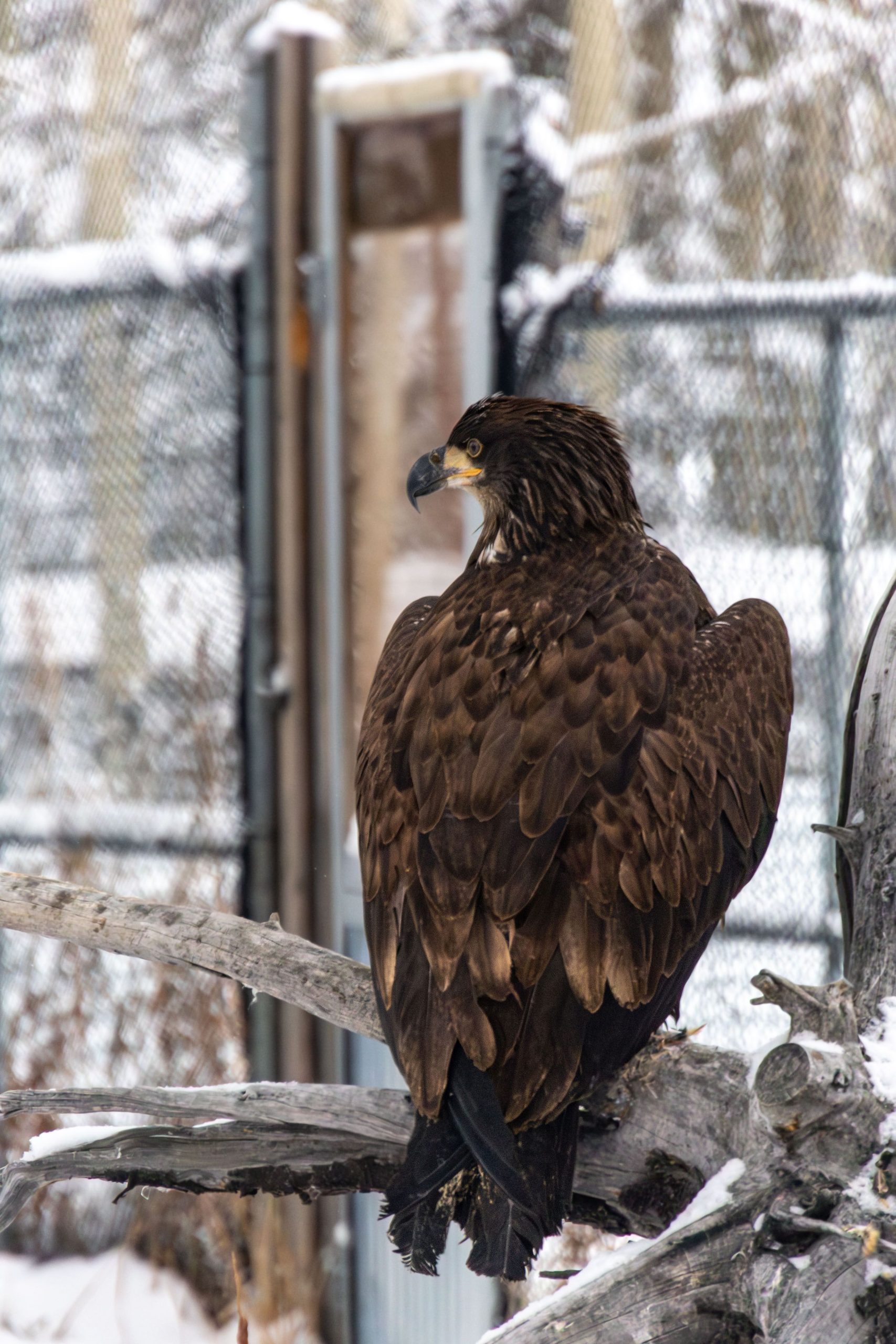
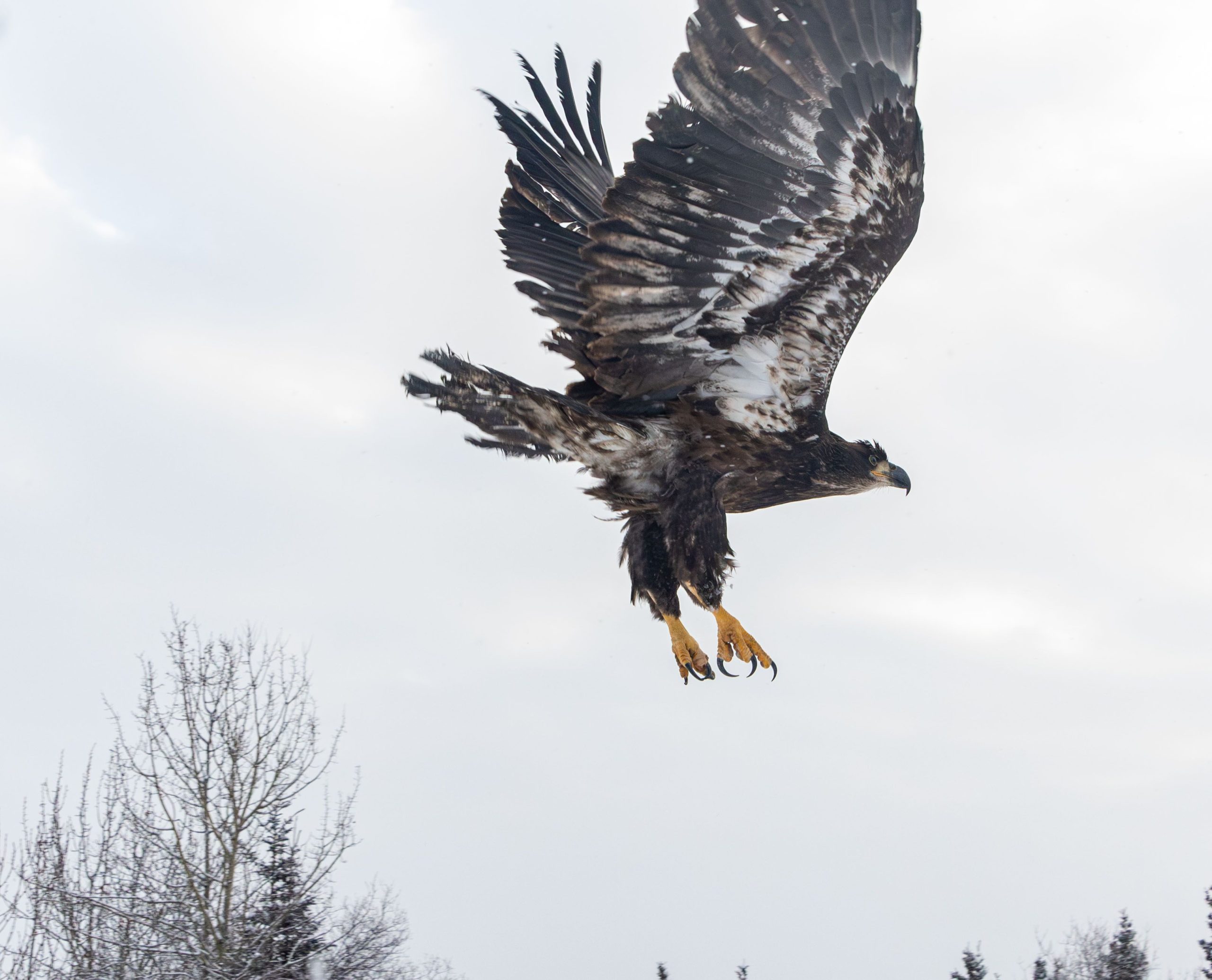
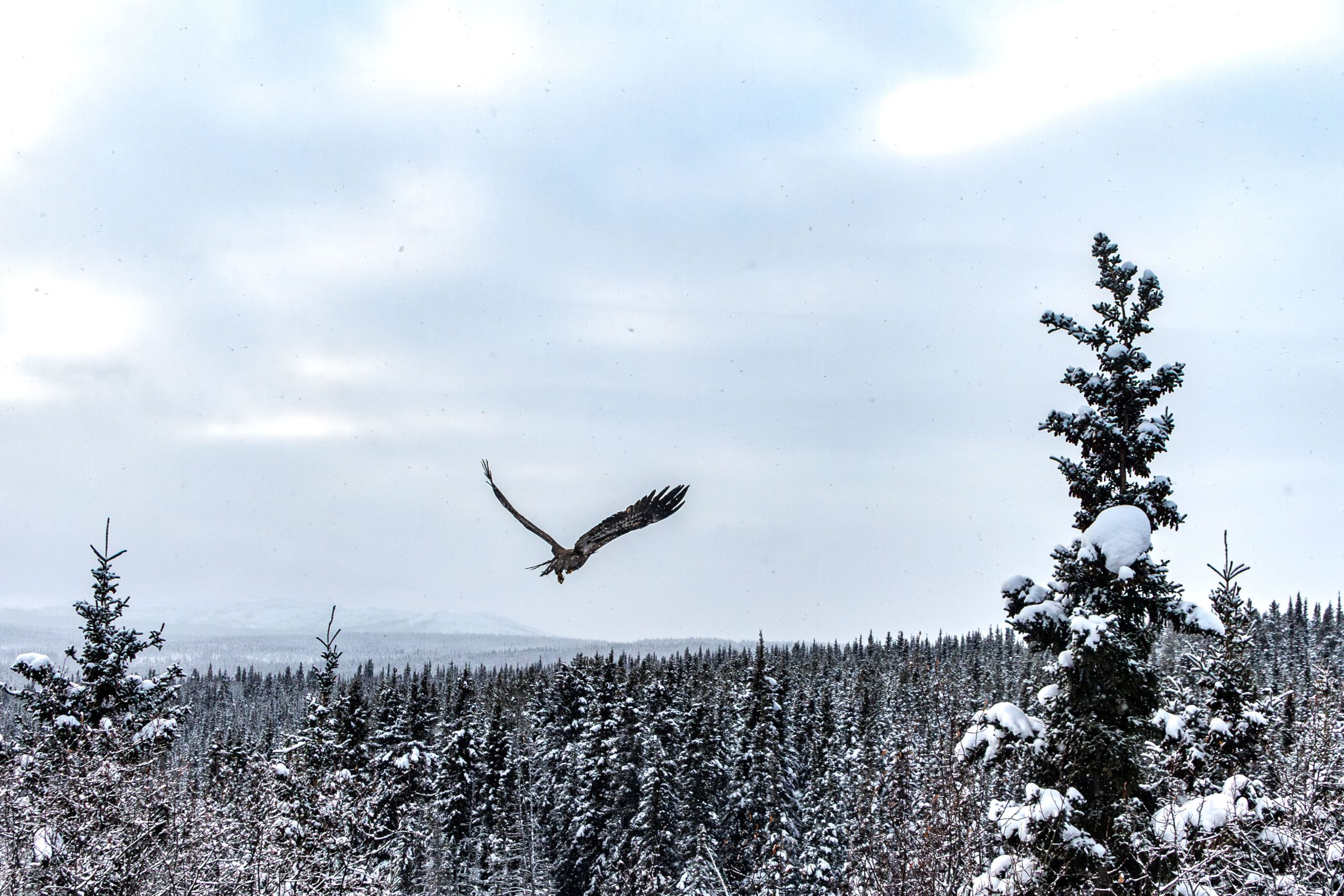
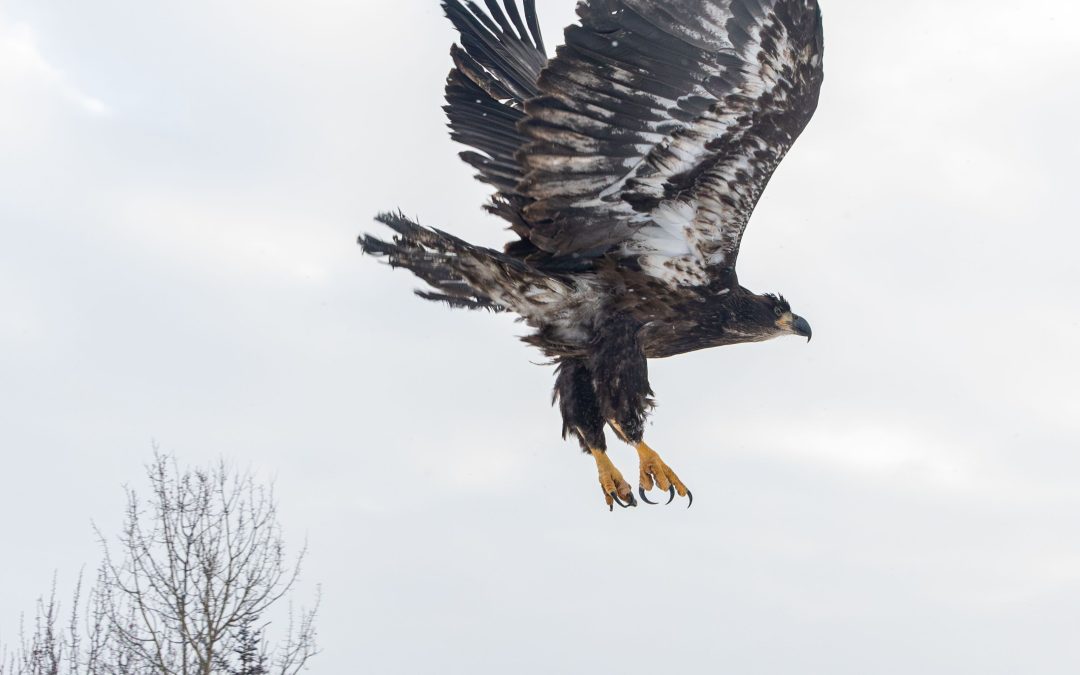
On November 27th another juvenile bald eagle made it way back to the wild, eagerly. A public release occurred with a very small group helping send it off. 
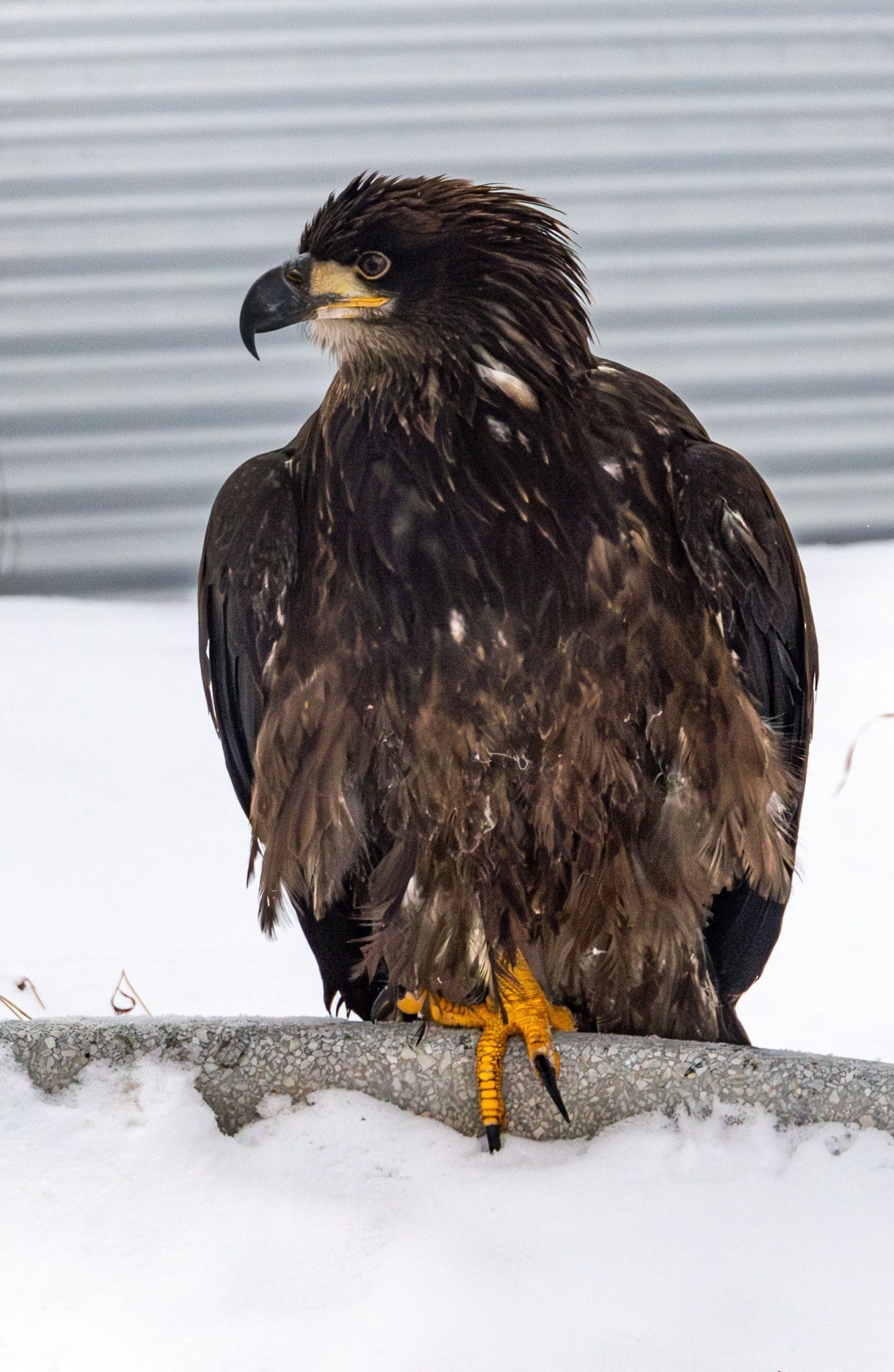
mature bald eagle in rehabilitation

On November 9th, A juvenile bald eagle was found struggling, entangled in barbed wire fencing in Carmacks. It was found thanks to Bob’s dogs, who alerted him of the eagle stuck. Bob is a resident of Carmacks and would not have noticed the bird, behind a large shed, had it not been for his dogs. He managed to remove the bird from the fencing. He dropped to the ground and wasn’t flying away after free. Bob approached it again and noticed it was shivering and lethargic. 
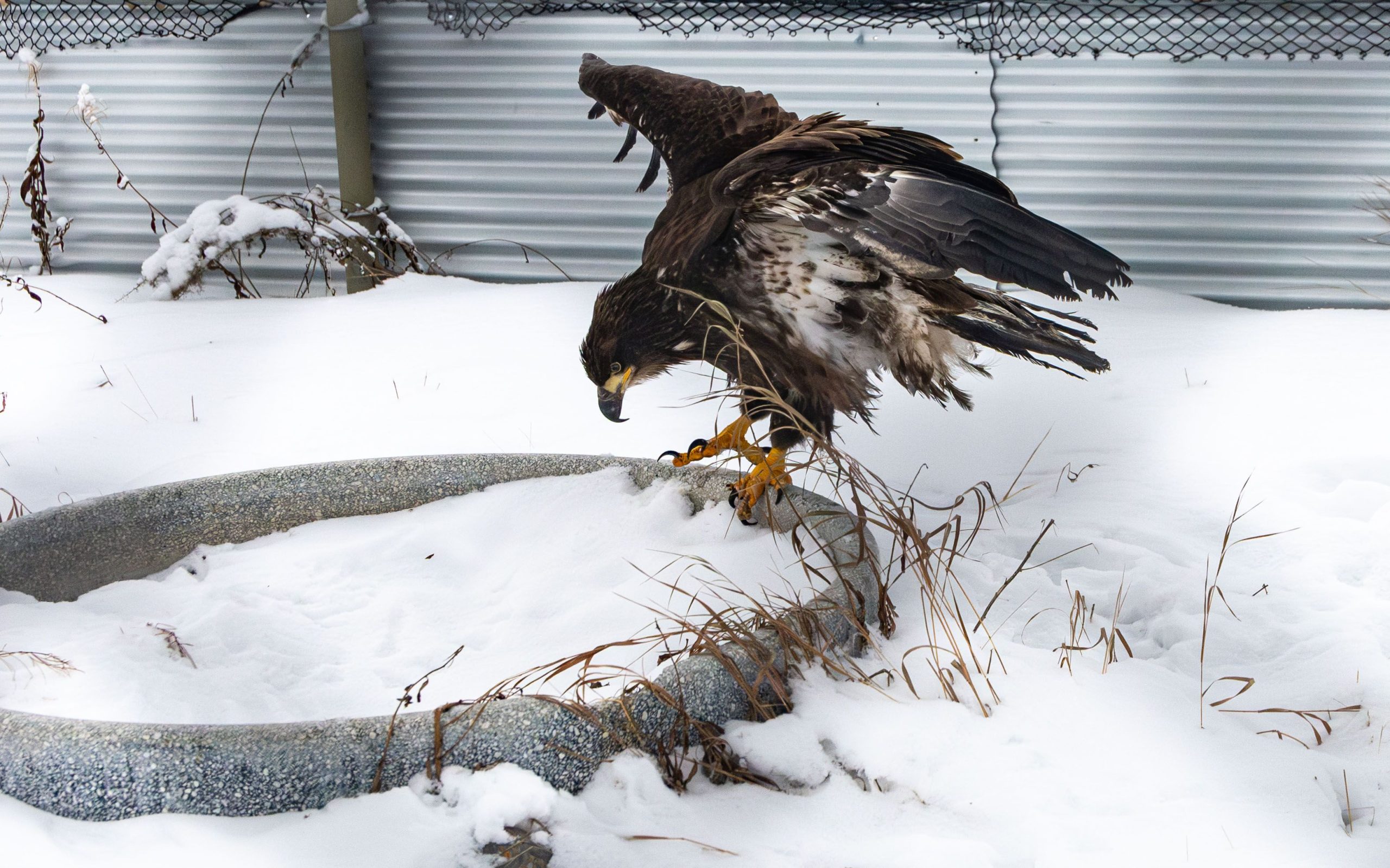
Old crow bald eagle upon arrival and admittance into the Wildlife Rehabilitation Centre at the Preserve. May 10th. Photo credit L.Caskenette

Bob called local Conservation Officer, Blake Vandecamp who eventually had the bird brought into care of the Wildlife Preserve’s Wildlife Rehabilitation Centre. 

Old crow bald eagle upon arrival and admittance into the Wildlife Rehabilitation Centre at the Preserve. May 10th. Photo credit L.Caskenette

The eagle weighed only 4kg and had some minor laceration injury to the wing and some swelling in the feet (likely due to the talons being caught up in the fencing. Like the Dawson City eagle, it was very happy to eat, and successfully captured live quail. Shortly before release the bird weighed 5.2kg. 
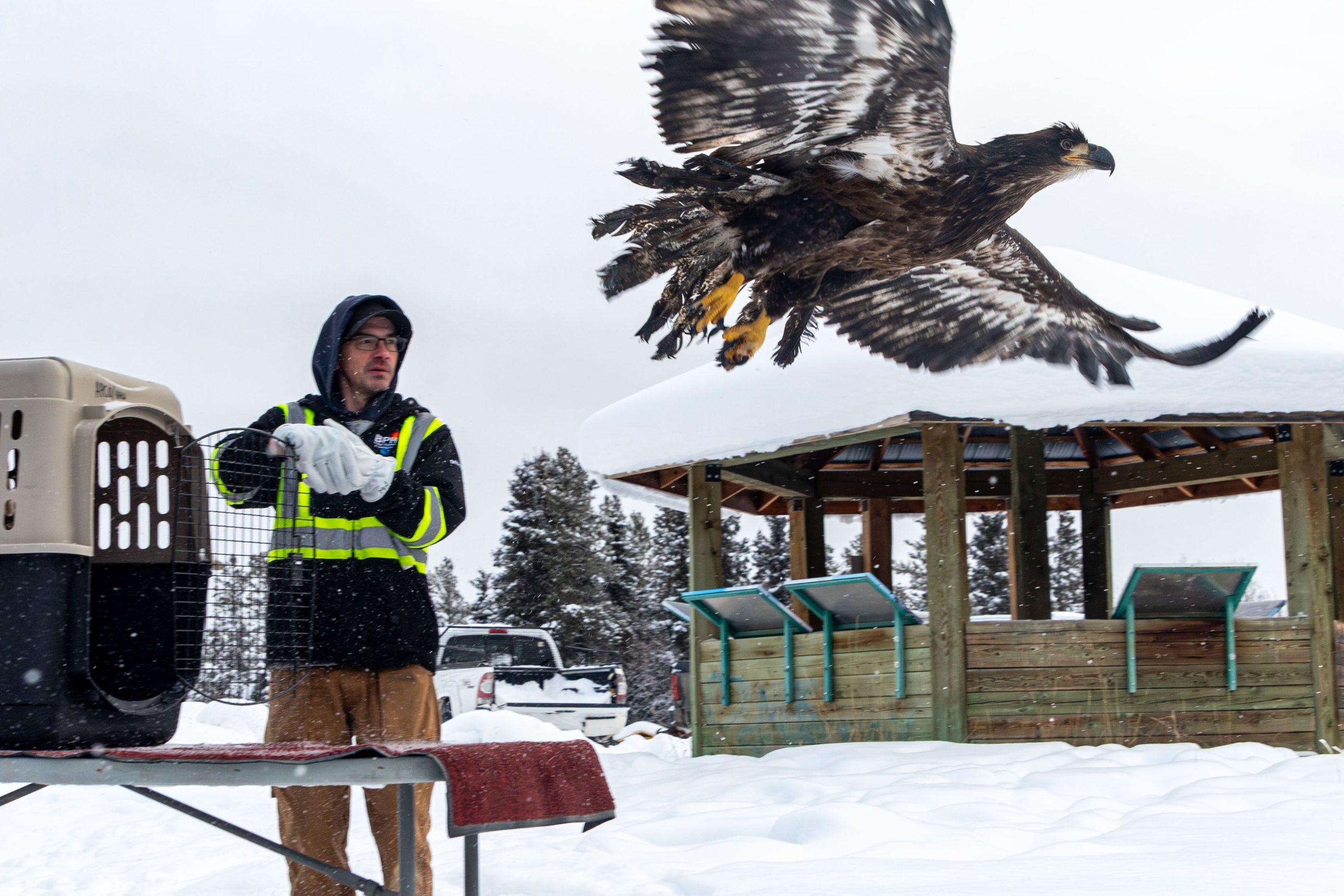
The choice to release it more locally was for a few reasons, including it being a juvenile and underweight possibly indicating unsuccessful hunting in the area it was found. While we generally try to rerelease in the location found, during winter we have elected to release where there are other known successful groups of eagles. 
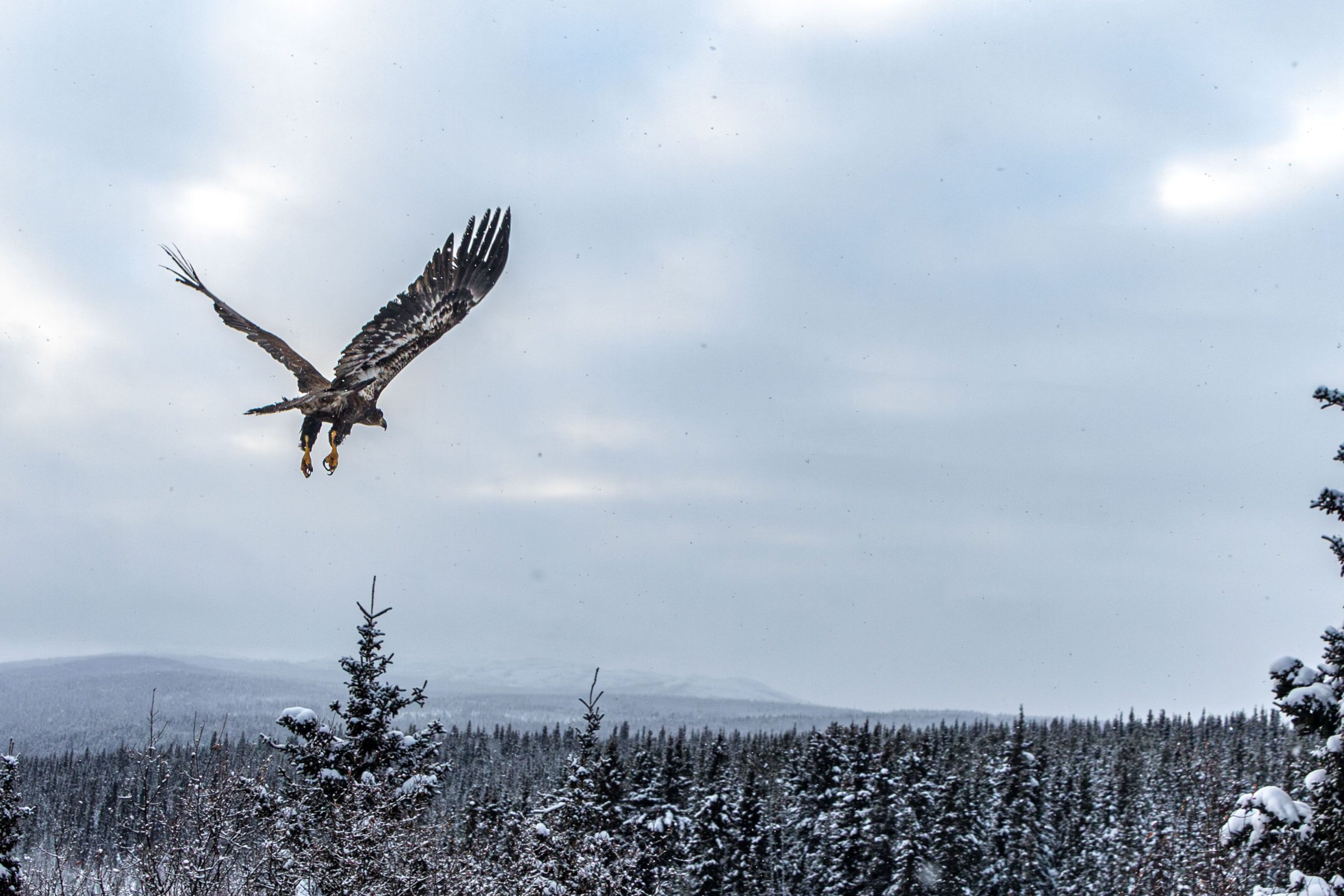
On November 27th, 2024, at 5.2kg in weight and less than a month in our care, the juvenile bald eagle was returned to the wild, at Chasàn Chùa (McIntyre Creek). Further, transport of an eagle long distances can be challenging due to limited personal to arrange this and it can add additional stress to the bird that we want to avoid if possible. While we are helping the animal while in our care, the animal doesn’t necessarily see it this way and it can be a stressful time. Just consider how you feel when you’re out of your comfort zone, your regular routines interrupted and you’re in an unfamiliar place while also  possibly sick or injured. 
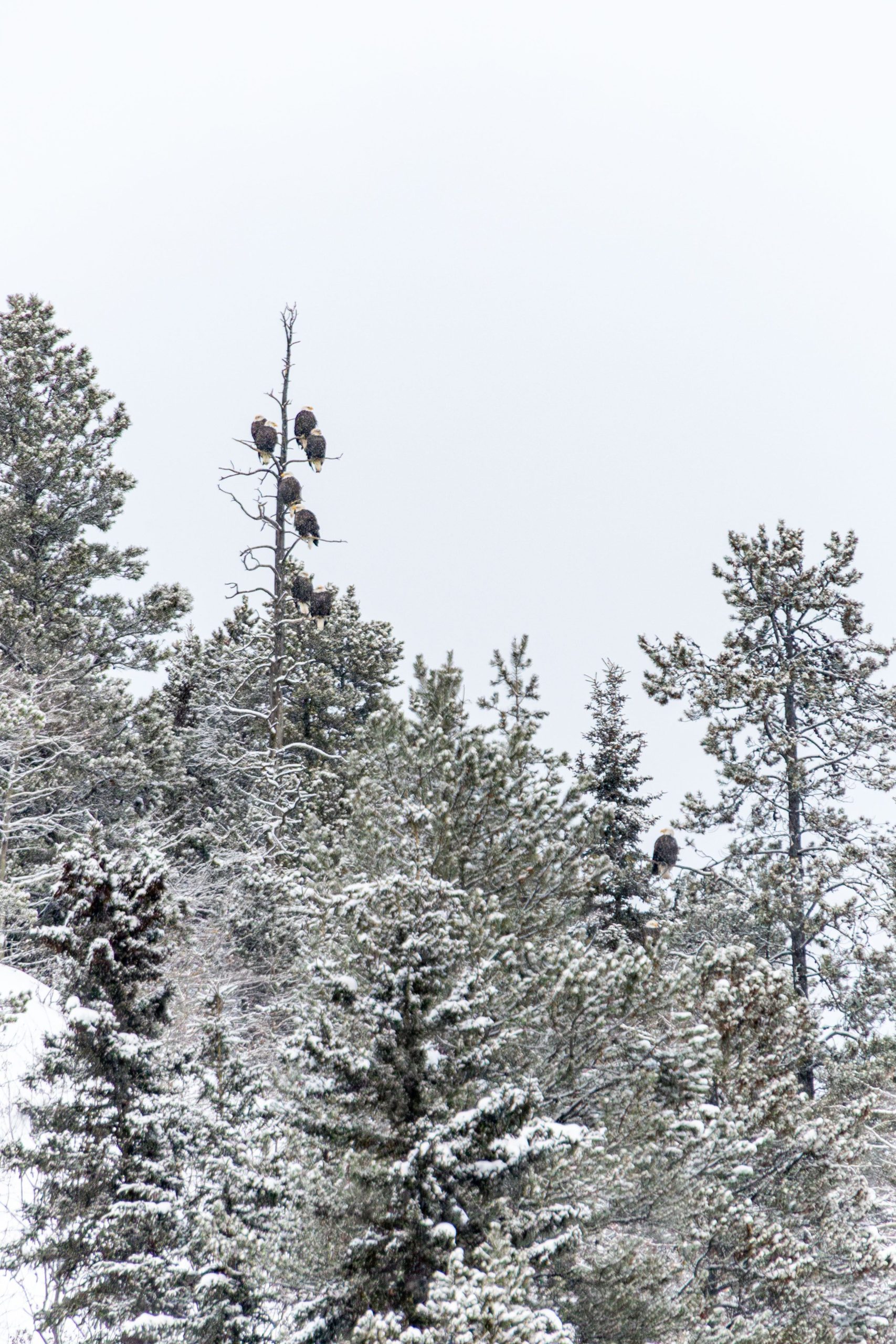
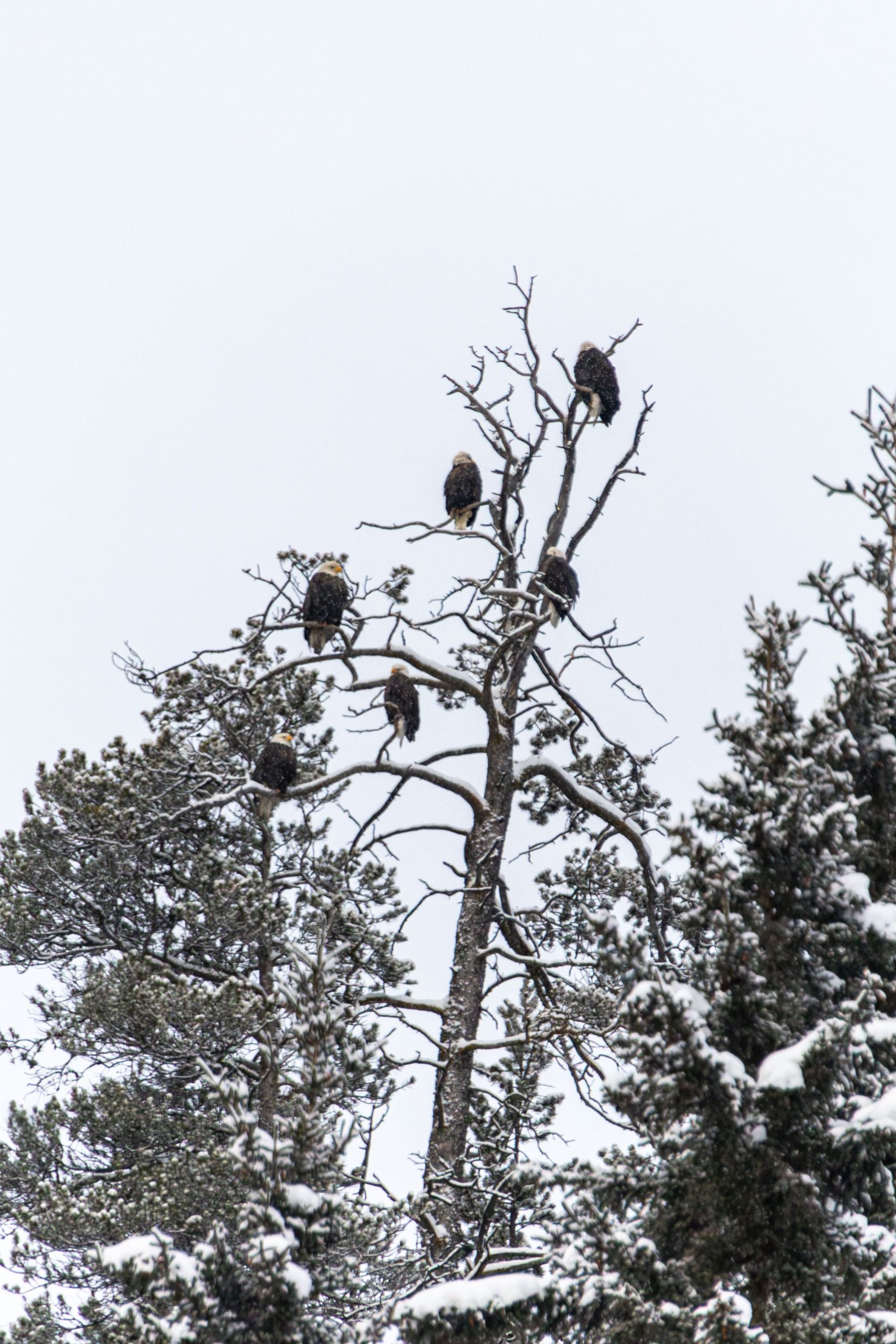
Several groups of bald eagle, mostly mature but a few immature are seen right near the release location. 📸L.Caskenette

Help us get them back on their wings. We could use your help. If you are able to support the care of these two animals, please consider donating. Every contribution makes a difference and as a non-profit charitable organization, you can receive a charitable tax receipt for your support. 

Photo credit: L. Caskenette

Lindsay Caskenette

Lindsay Caskenette

Manager Visitor Services

Lindsay joined the Wildlife Preserve team March 2014. Originally from Ontario, she came to the Yukon in search of new adventures and new career challenges. Lindsay holds a degree in Environmental Studies with honours from Wilfrid Laurier University and brings with her a strong passion for sharing what nature, animals, and the environment can teach us.
867-456-7400
Lindsay@yukonwildlife.ca

Explore by Category

Explore by Author

Meet Archie

Meet Archie

Meet Archie

1 minute read – 

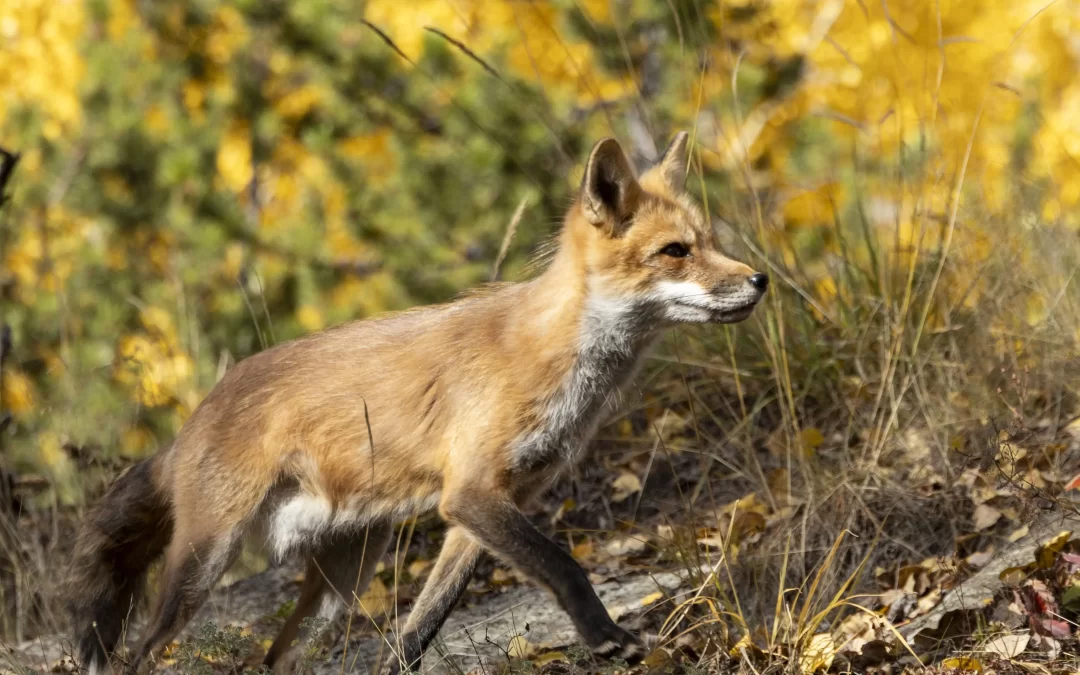
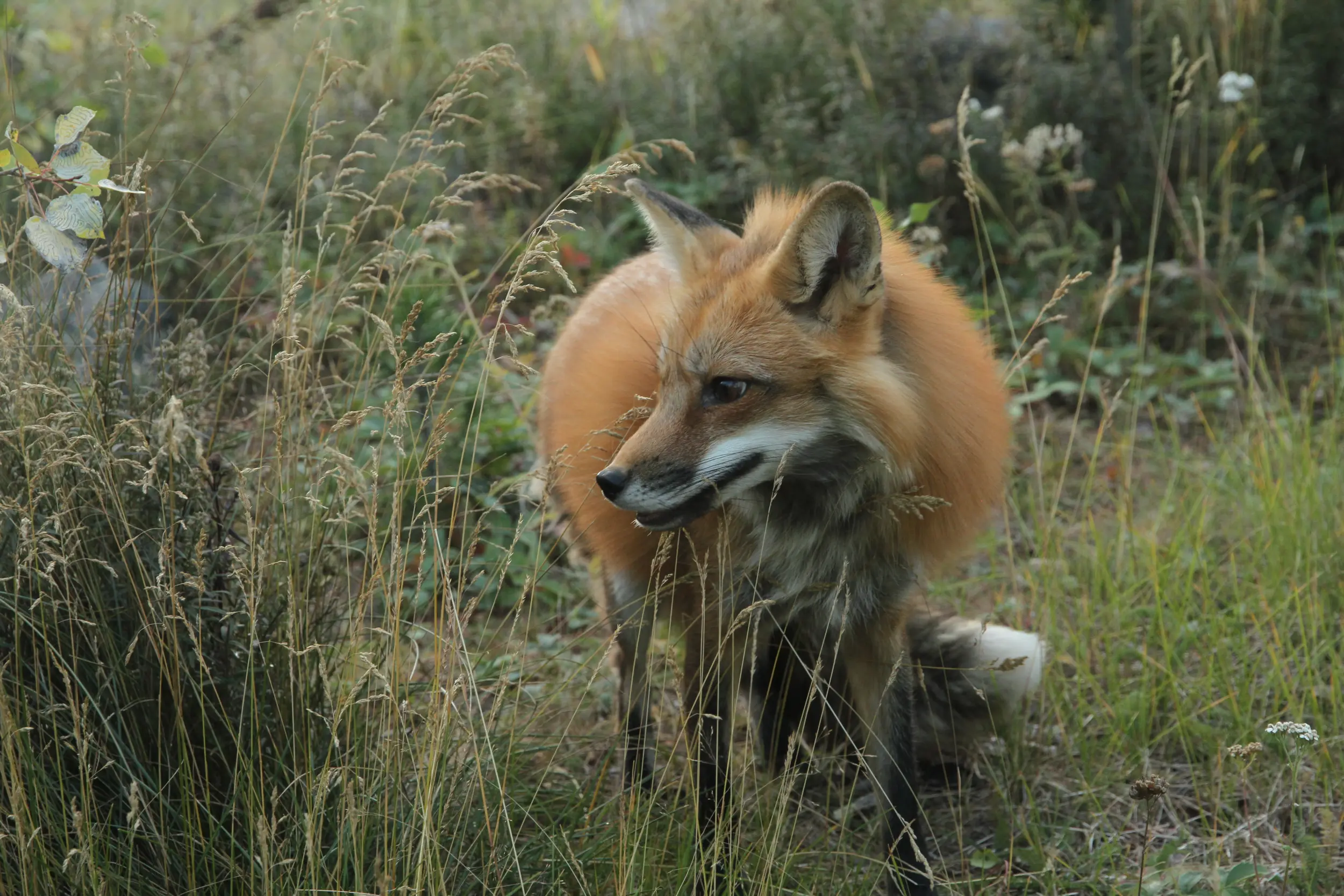
Say hello to a new member of the Preserve’s family, a red fox. This is Archie.

He came to the Preserve after being seized in B.C. by the Wildlife Branch of the British Columbia Provincial Government from an individual who did not have the appropriate permits for possession of wild animals for filming. 

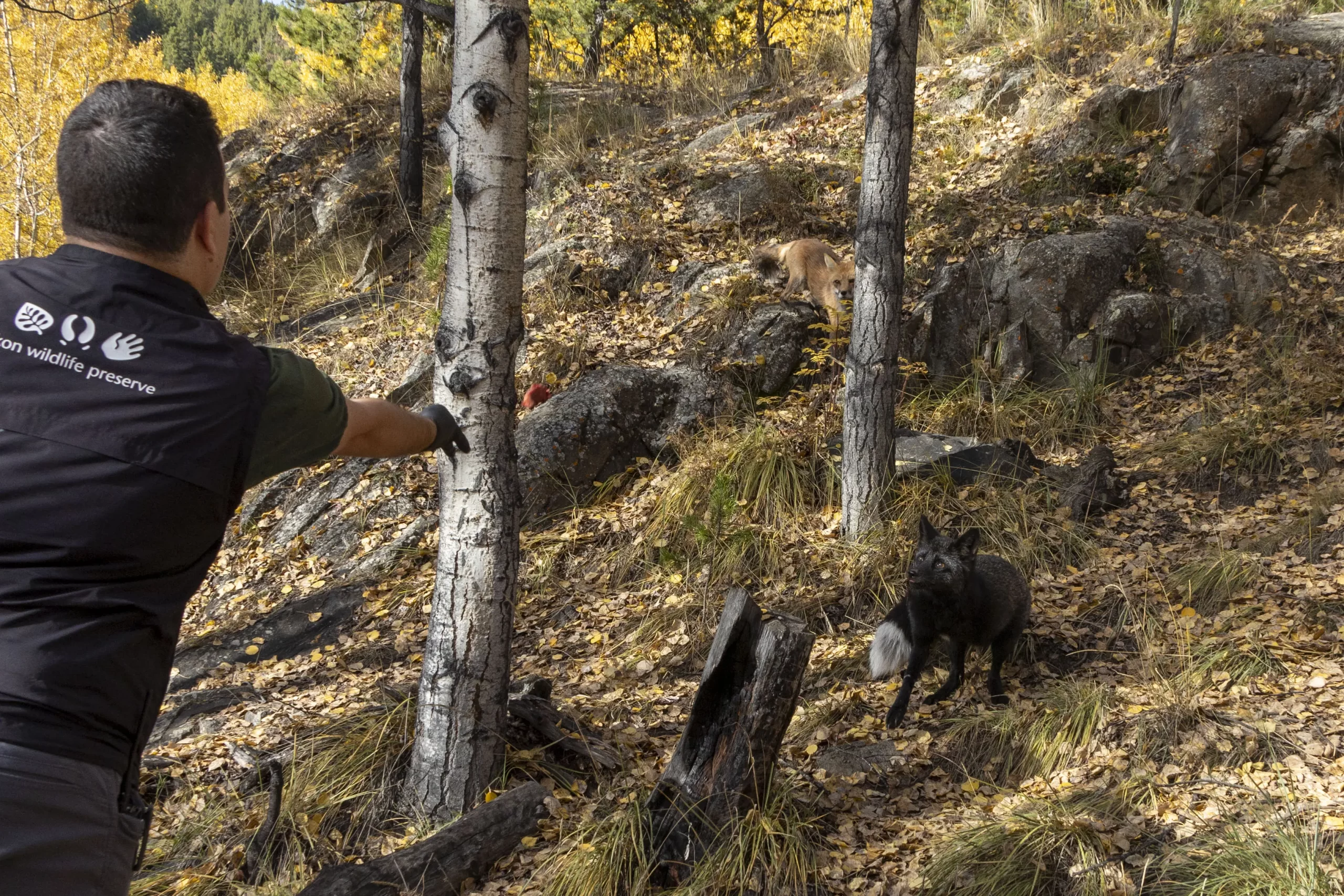
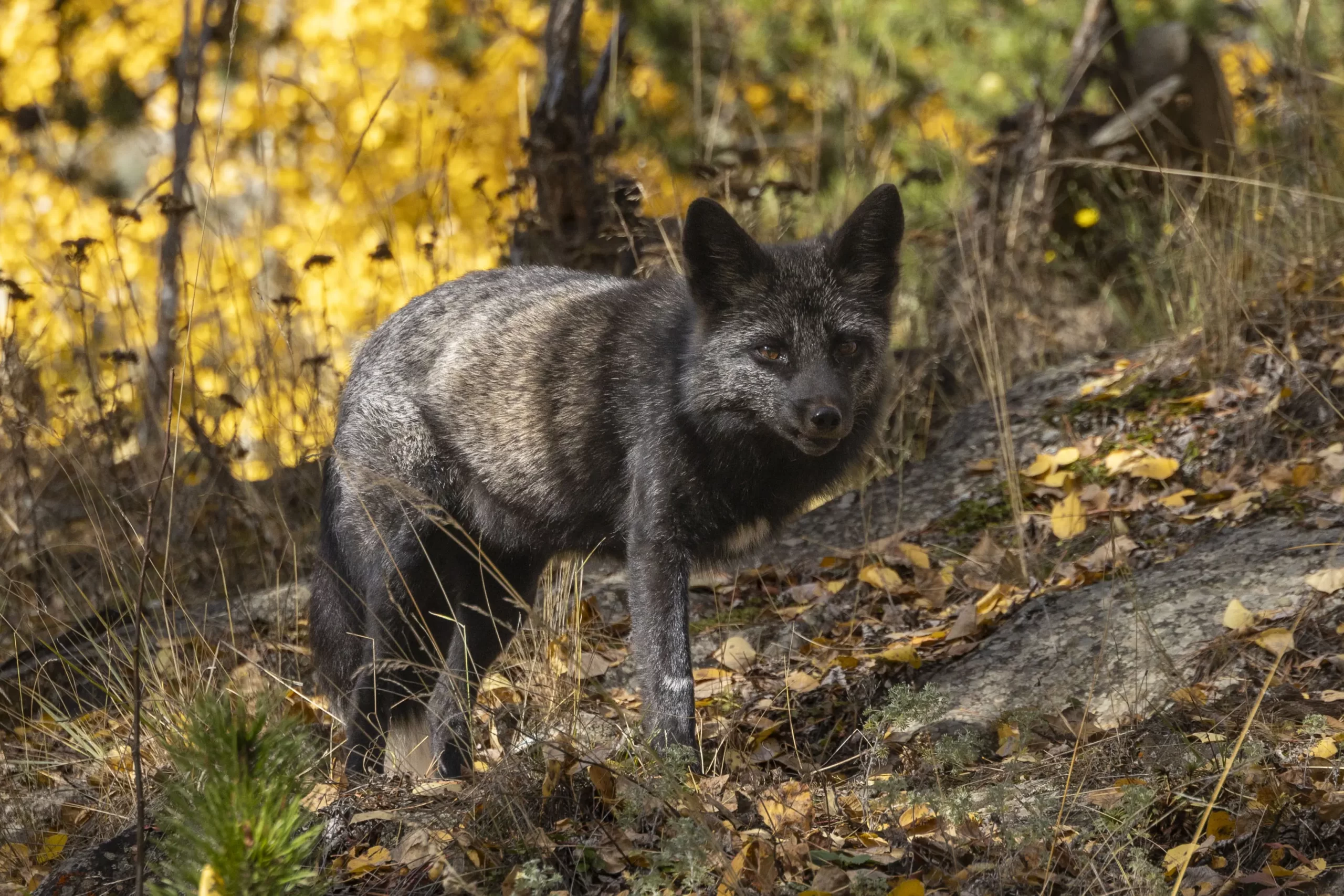
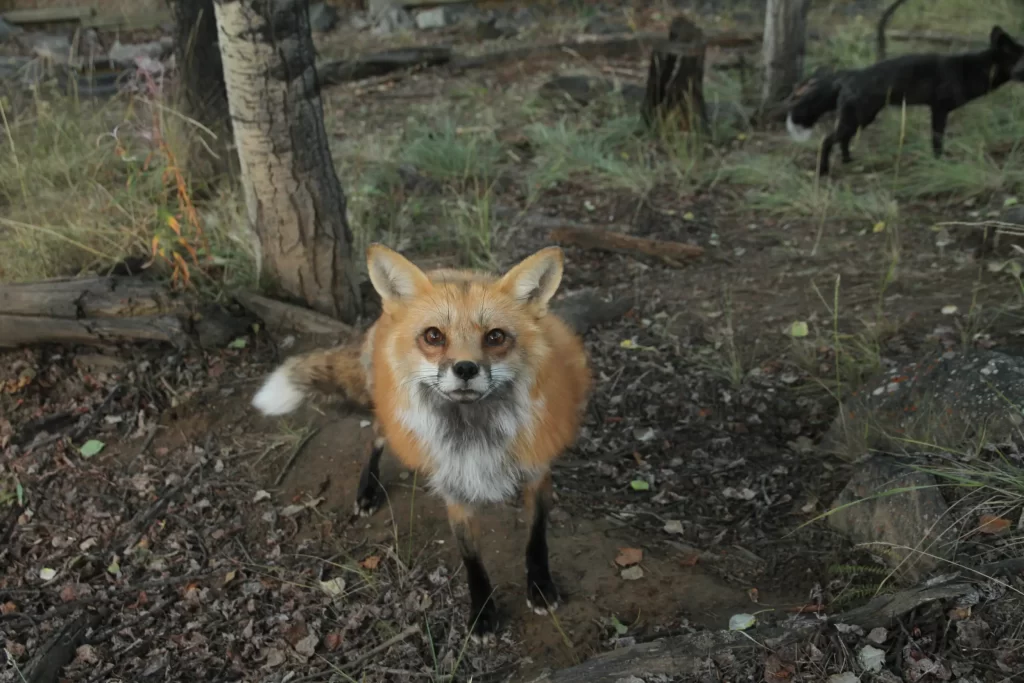
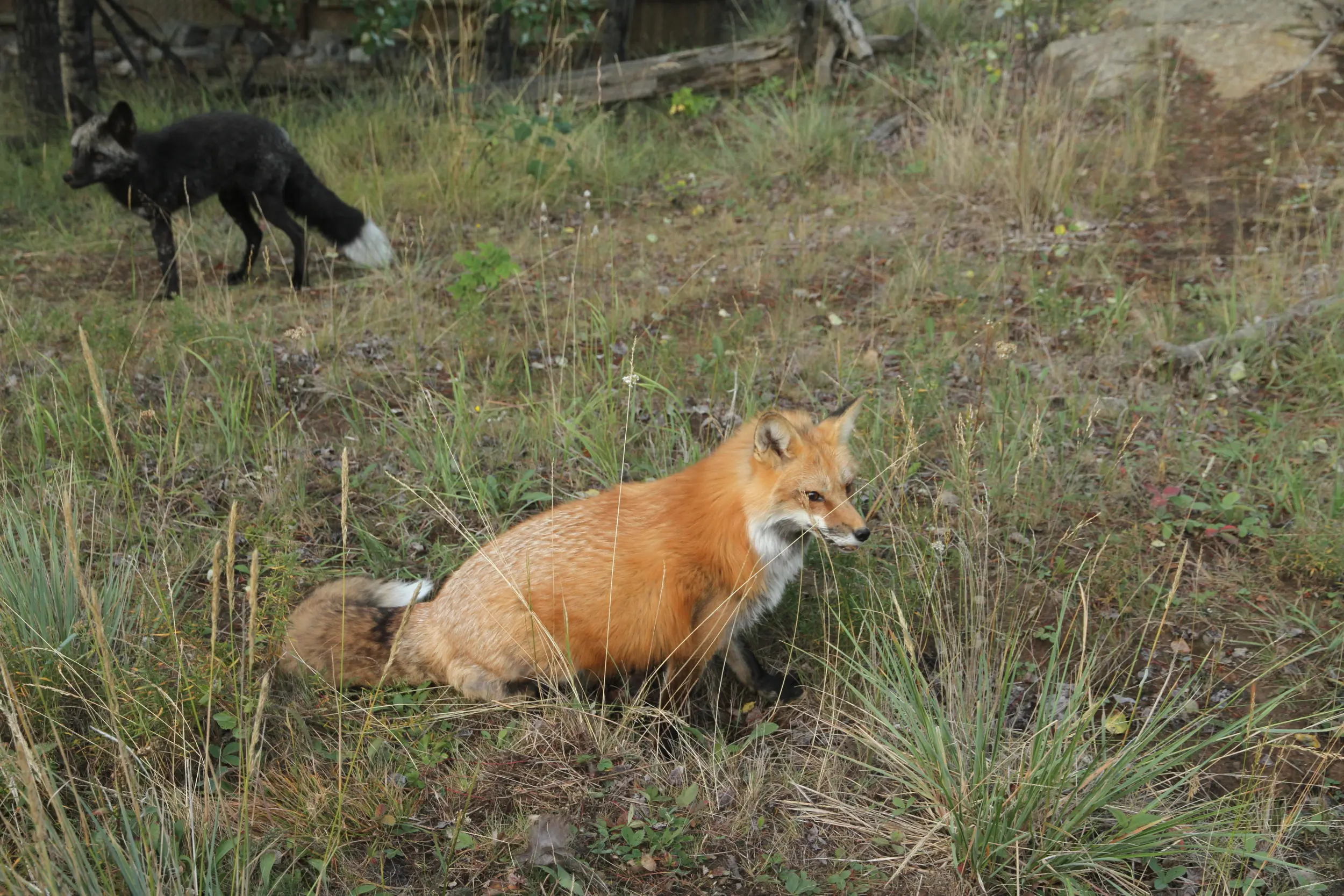
Archie the red fox looks towards the camera while silver stands in the distance

On July 3rd, Archie flew up to the Yukon. He arrived here at the preserve and spent a month in quarantine in the rehabilitation centre. This is a necessary procedure to animal import and eventual collection integration. Archie was also neutered.

During his time in quarantine, our dedicated animal care staff took their time with Archie. He was understandibly shy and cautious at first, but eventually started to warm up to them.  

On August 6th Archie was introduced to our 3-legged silver fox – Silver – in the red fox habitat. As you can see from these photos, Archie was a little overweight when he arrived. We lovingly describe this as “a little Chonky.” Since being integrated into our Red Fox habitat, Archie has been getting much more excersixe and socialization with Silver, staff and guests alike. 

Throughout the summer, our manager of Education & Programming – Neil, along with our animal care staff, have been working with Archie and Silver. With this added enrichment, they have learned some new behaviors and are getting much more comfortable everyday. Archie, with this added movement is now looking how a fox his age should look.

Photo Credit Britt Forsythe

Welcome to the preserve Archie! We look forward to continuing to work with you and get to know you.


Photo Credit to Melissa Mark, unless otherwise stated.

Lindsay Caskenette

Lindsay Caskenette

Manager Visitor Services

Lindsay joined the Wildlife Preserve team March 2014. Originally from Ontario, she came to the Yukon in search of new adventures and new career challenges. Lindsay holds a degree in Environmental Studies with honours from Wilfrid Laurier University and brings with her a strong passion for sharing what nature, animals, and the environment can teach us.
867-456-7400
Lindsay@yukonwildlife.ca

Brittney Forsythe

Brittney Forsythe

She/Her - Visitor Services Coordinator

Brittney joined the Wildlife preserve in the summer of 2023. Growing up on Northern Vancouver Island, surrounded by the temperate rainforest, nature and animals have always been a part of her life. It exploded into a passion, when she started her dog walking business in 2017 and she began spending 6-7 days a week in the forest, rain or shine! This sparked an even deeper appreciation for the cyclical nature of the land and how all of the plants & animals work together symbiotically. She is forever ‘that girl’ on the hike, pointing out different rocks and plants, explaining their origin or what they could be used for medicinally. Brittney and her dog Cedar relocated to the Yukon to help care for 31 sled dogs. She is so excited to expand her local knowledge as a part of the Preserve team.

867-456-7400
 Brittney@yukonwildlife.ca

Explore by Category

Explore by Author

Carrots for the Critters

Carrots for the Critters

Carrots for the Critters

This story was originally published December 12, 2020 in the e-blast newsletter to Yukon Wildlife Preserve’s membership.

Are you a member but don’t receive these email Newsletters?  Contact us at info@yukonwildlife.ca to update your email preferences.

Banner photo credit L. Caskenette

This territory is full of incredible people of the north and without a doubt Steve and Bonnie Mackenzie-Grieve are among them!

Steve and Bonnie own and operate the Yukon Grain Farm, not far from the Preserve. They are pillars of the community and work hard to produce and provide local – they also immensely support local.

Every year, the Yukon Grain Farm donates a giant bag of, often brightly coloured but not considered beautiful, vegetables to the Preserve and its critters. This year, 1000lbs or so of carrots came in. While they are bright orange, grown right on the banks of the beautiful Yukon River, the carrots themselves are not deemed beautiful by the human eye. Instead of wasting this bounty the animals will gladly enjoy them, ground into their regular diet, as enrichment over the months to come!

Thank you Yukon Grain Farm for your ongoing support to the north!

Lindsay Caskenette

Lindsay Caskenette

Manager Visitor Services

Lindsay joined the Wildlife Preserve team March 2014. Originally from Ontario, she came to the Yukon in search of new adventures and new career challenges. Lindsay holds a degree in Environmental Studies with honours from Wilfrid Laurier University and brings with her a strong passion for sharing what nature, animals, and the environment can teach us.
867-456-7400
Lindsay@yukonwildlife.ca

Explore by Category

Explore by Author

The Animals are Quite Fine Outside

The Animals are Quite Fine Outside

The Animals are Quite Fine Outside

5 minute read –

After a beautiful, drawn out fall (by Yukon standards), winter arrived in force at the end of October 2020. Record setting snowfall on November 2nd 2020 kicked winter into full gear. Shutdowns were widespread (including here at the Preserve). It was snow joke!

Now that we’ve dug ourselves out, we can offer winter wildlife viewing at its finest! Without leaves on the trees and a beautiful white backdrop, its easier to spot the animals (although the Arctic Foxes can be a bit tricky with their white winter coat). It is especially satisfying to watch animals in their element.

We sometimes get asked if we bring them inside when it gets cold. Apart from the obvious challenges of convincing the Mountain Goats to come down off their cliff, I think they all might get a little hot if they had to be inside. I don’t even want to think about “musk”ox in an enclosed space. And the Bison probably wouldn’t listen to us, even if we asked nicely. Anyway.

They are quite fine outdoors. If you’re not convinced, I give you:


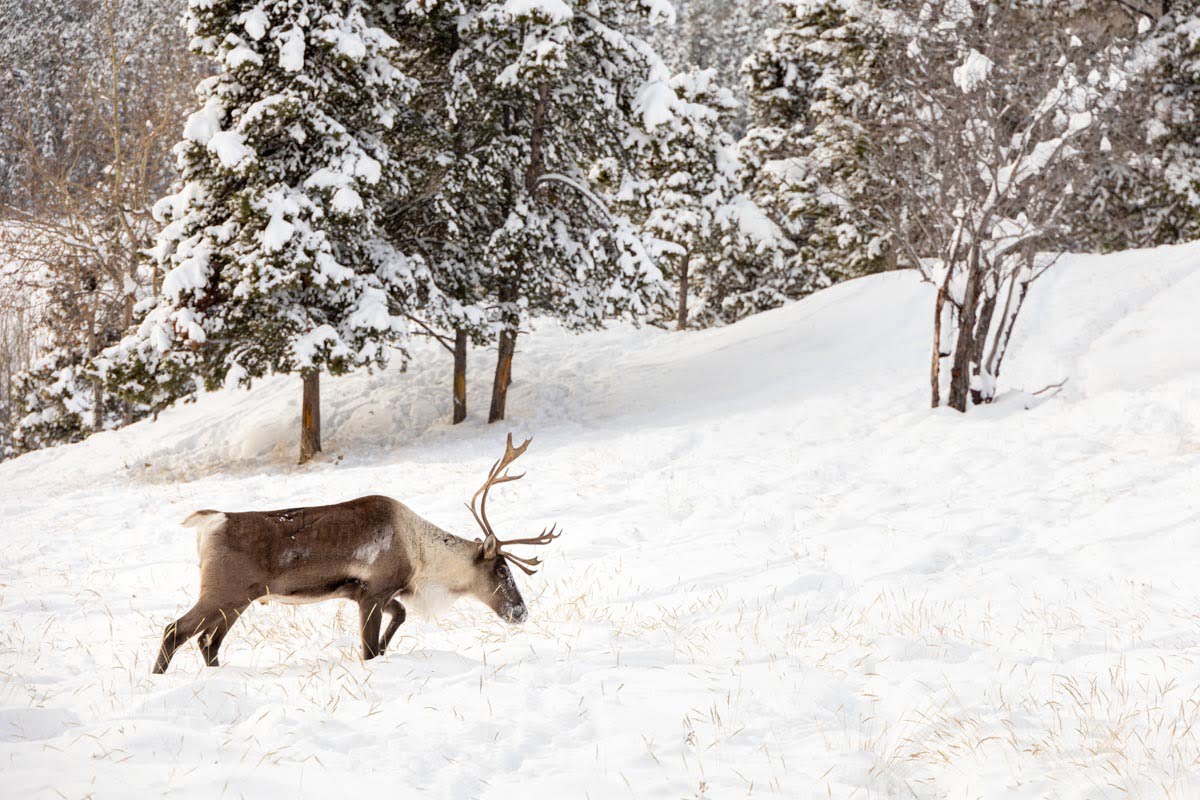
Exhibit A: Muskox and Caribou

Muskox and Caribou were wandering around with mammoths on the Beringian steppes during the last ice age. (For better or for worse, the giant beavers didn’t make it). The Preserve’s other ice age animal (and unofficial 13th species) the ground squirrel is much more sensible. They are currently napping right now instead trying to eat each other. While there’s been a lot of snow so far, it’s probably not as much as they had last ice age.

Rebecca spotting deer, in layered clothing to blend into the vegetation - Cora Romanow

Exhibit B: Arctic Foxes.

They also get around the north (quite fine, thank you very much). Incidentally, they may be illegally immigrating into Canada from Norway. This is probably because they are the bomb. By which I mean “Among mammals, the arctic fox has the best insulative fur of all.” In the same paper, they also note that Arctic Foxes don’t start shivering until somewhere below -40c. They’re not quite sure how cold it needs to get, because the scientists that tried, “…did not succeed, because they did not have the necessary equipment available to reach sufficiently low ambient temperatures.”

This Arctic Fox is not only warm, but also enjoying a pumpkin filled with meat treat. No tricks here.

Exhibit C: Mule Deer.

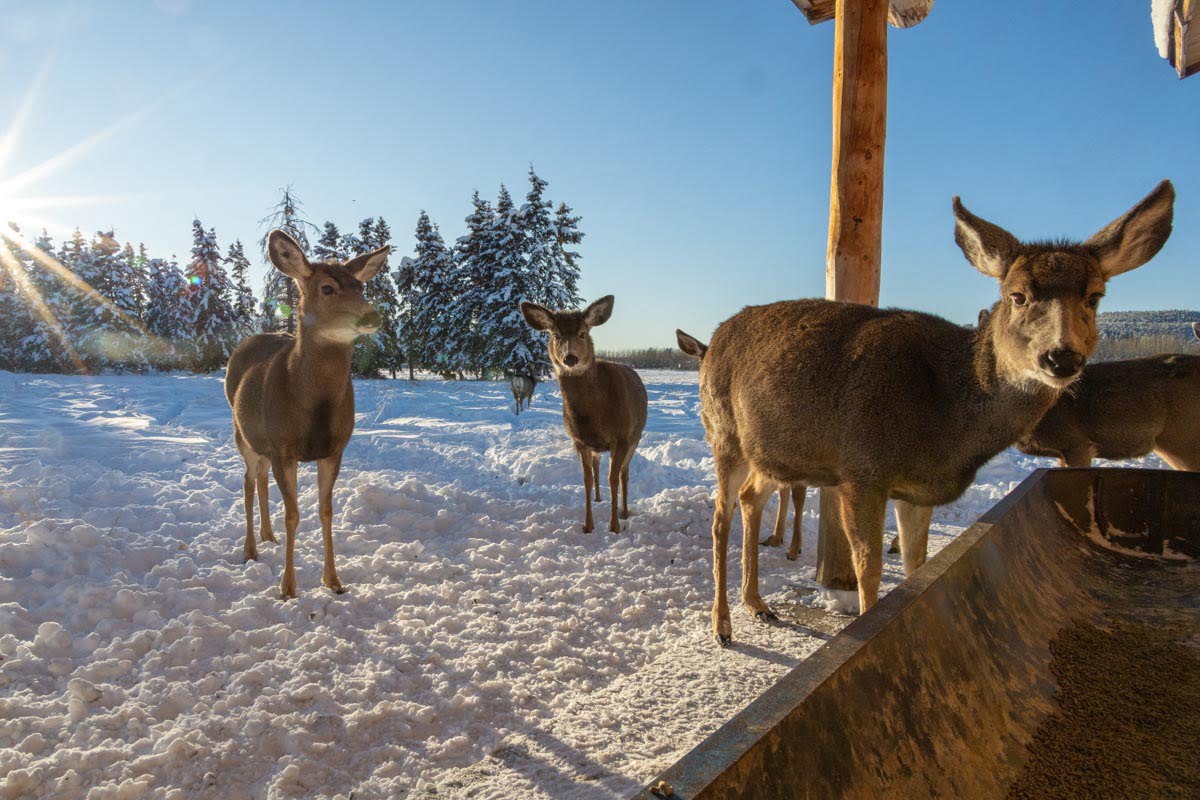
Now stay with me. I realize I’m skipping past a few animals to get to what is arguably the least “winterized” animal at the Preserve. Their large ears and delicate hooves say “I’m new here”. And that’s true – they were first sighted in the Yukon in the 1930s and 40s.

What’s so remarkable about Mule Deer is just how wide a range they now have. Several years ago I was camping in the dessert outside Phoenix, Arizona. And believe it or not, there were Mule Deer wandering around between the prickly pear cactuses! Meanwhile they are now seen as far North as Dawson City, Yukon!! They are simply remarkable animals (Rebecca will back me up on this) that deserve a lot more credit than they get.

And finally,

Exhibit D: Humans

It’s really just us that get hung up about the cold. Last January I had an excellent opportunity to  to make a questionable life choice and strip down to a thin long-sleeve shirt while standing beside a caribou at -35c. I decided to leave my pants on as well as my long underwear not to mention my wool snow pants. Even so, it was quite cold. Painfully cold. Luckily Josh Robertson, a PHD student studying animals with thermal cameras had his camera handy:

The bright yellow bits in the second image are all my heat escaping out into the atmosphere. The caribou is busy eating and clearly doesn’t care. (If you found this foray into thermal imaging unsatisfyingly brief, you’re in luck, we’ve got more on this in the works)!

The animals have got this.

If you haven’t experienced these Yukon species in their element, I highly recommend a trip to the Preserve. If you’re worried about the cold I recommend:

  • Walking (shivering is a metabolic way of warming your core temperature, but walking is a way more effective).
  • Bring some snacks (to fuel your internal furnace).
  • Wear warm clothes (and you know… maybe don’t strip down to pose with animals). Soft soled boots keep your feet flexing and therefore warm. A warm hat keeps the heat from leaking out the top.

I got around a couple days ago and took a few photos to give you a taste of what you’re missing out on! Click for bigger versions – and see if you can find any of the Preserve’s bigger “cats”.

Jake Paleczny

Jake Paleczny

He/Him - Executive Director/ CEO

Jake Paleczny is passionate about interpretation and education. He gained his interpretative expertise from a decade of work in Ontario’s provincial parks in addition to a Masters in Museum Studies from the University of Toronto. His interests also extend into the artistic realm, with a Bachelor of Music from the University of Western Ontario and extensive experience in galleries and museums.

867-456-7313
jake@yukonwildlife.ca

Explore by Category

Explore by Author

A-Moosing Move

A-Moosing Move

A-Moosing Move

This story was originally published October 24, 2020 in the e-blast newsletter to Yukon Wildlife Preserve’s membership.

Are you a member but don’t receive these email Newsletters?  Contact us at info@yukonwildlife.ca to update your email preferences.

Banner photo credit:  J. Paleczny

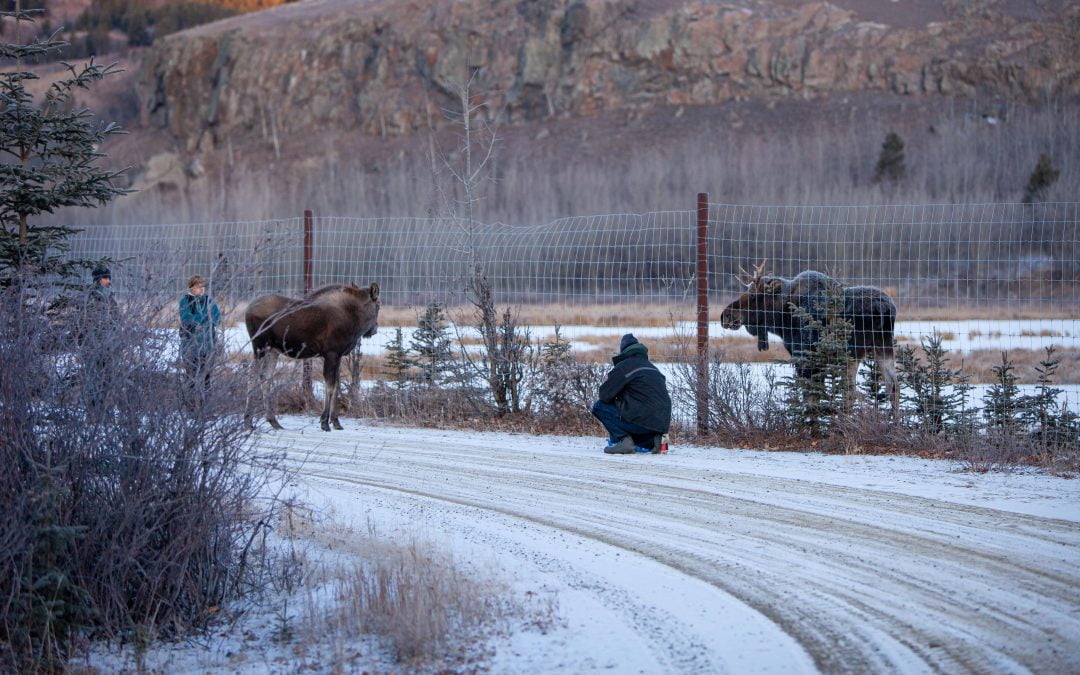
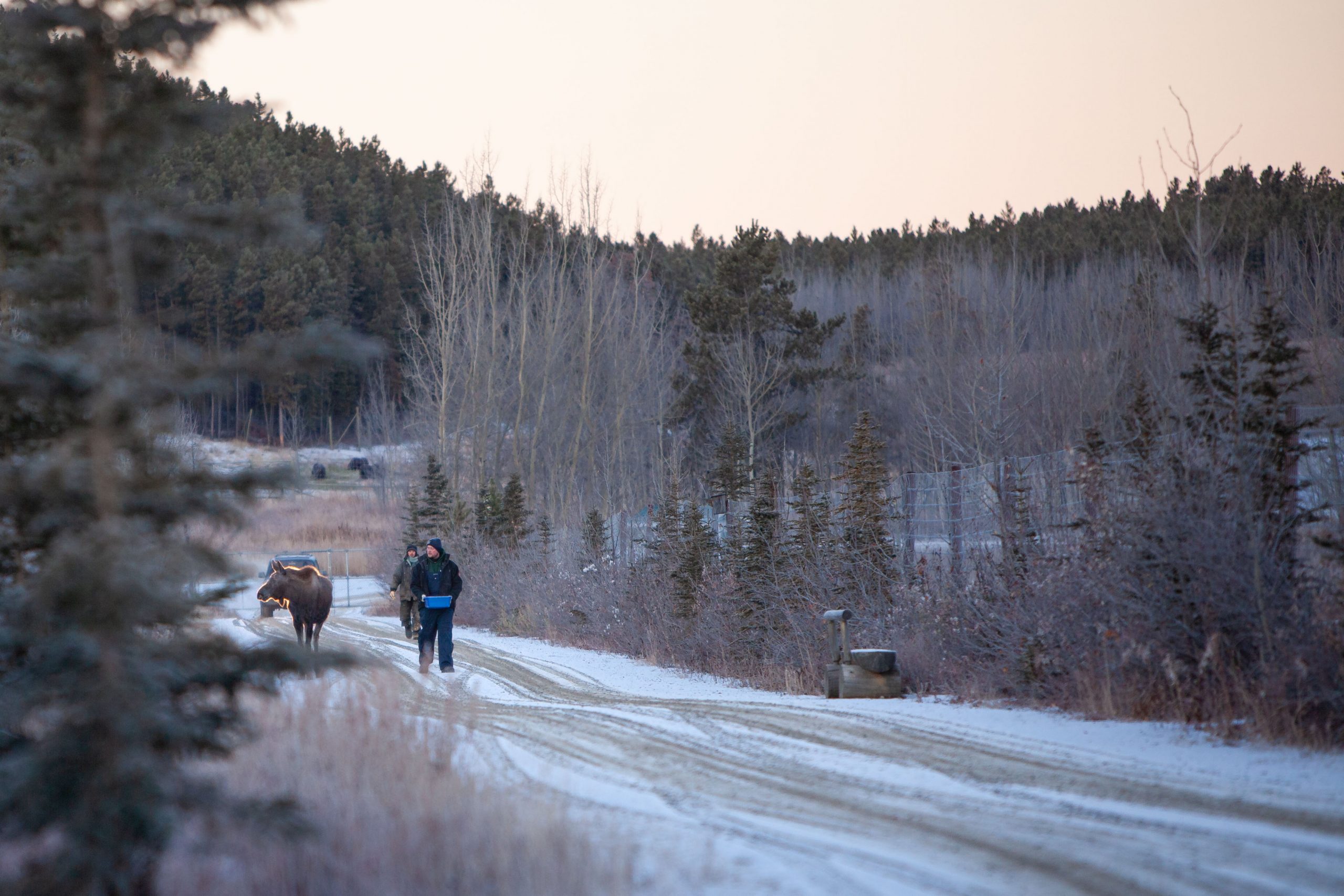
Early on Thursday morning (October 22), during those chilly hours before we are open to the public, the Animal Care team successfully moved the little male moose calf; walking from his temporary off-display habitat to the public viewing area near our other 4 moose.

Now you might be wondering how that happens, and safely. The wide roadways, snaking in a figure-8 through the Preserve are not only a means for you to explore the Preserve and its wildlife residents, they’re also the way in which we, using a series of gates and the fencing for each habitat, guide animals from one area to another.

This little male moose will spend time alone in this intermediate habitat (in between the 2 other males in the marsh habitat and the 2 females in the adjacent habitat) before being introduced in with the females.

He’s quite skittish, very cautious of new surroundings and people. While he remains in this secondary, temporary home a stand-off barrier is in place to ensure he feels he has enough space to be comfortable and explore his surroundings while reducing stress as he gets to know you, our visitors.

A trip down Memory Lane:  remember when this moose orphaned in July moved to his temporary off-display habitat?  And here’s the early October pre-A-Moosing Move update thanks to CBC Yukon!

Lindsay Caskenette

Lindsay Caskenette

Manager Visitor Services

Lindsay joined the Wildlife Preserve team March 2014. Originally from Ontario, she came to the Yukon in search of new adventures and new career challenges. Lindsay holds a degree in Environmental Studies with honours from Wilfrid Laurier University and brings with her a strong passion for sharing what nature, animals, and the environment can teach us.
867-456-7400
Lindsay@yukonwildlife.ca

Explore by Category

Explore by Author