Golden Opportunity: A Young Eagle’s Second Chance

Golden Opportunity: A Young Eagle’s Second Chance

veterinary medicine

by Lindsay Caskenette | Nov 7, 2025

6 - 8 minute read

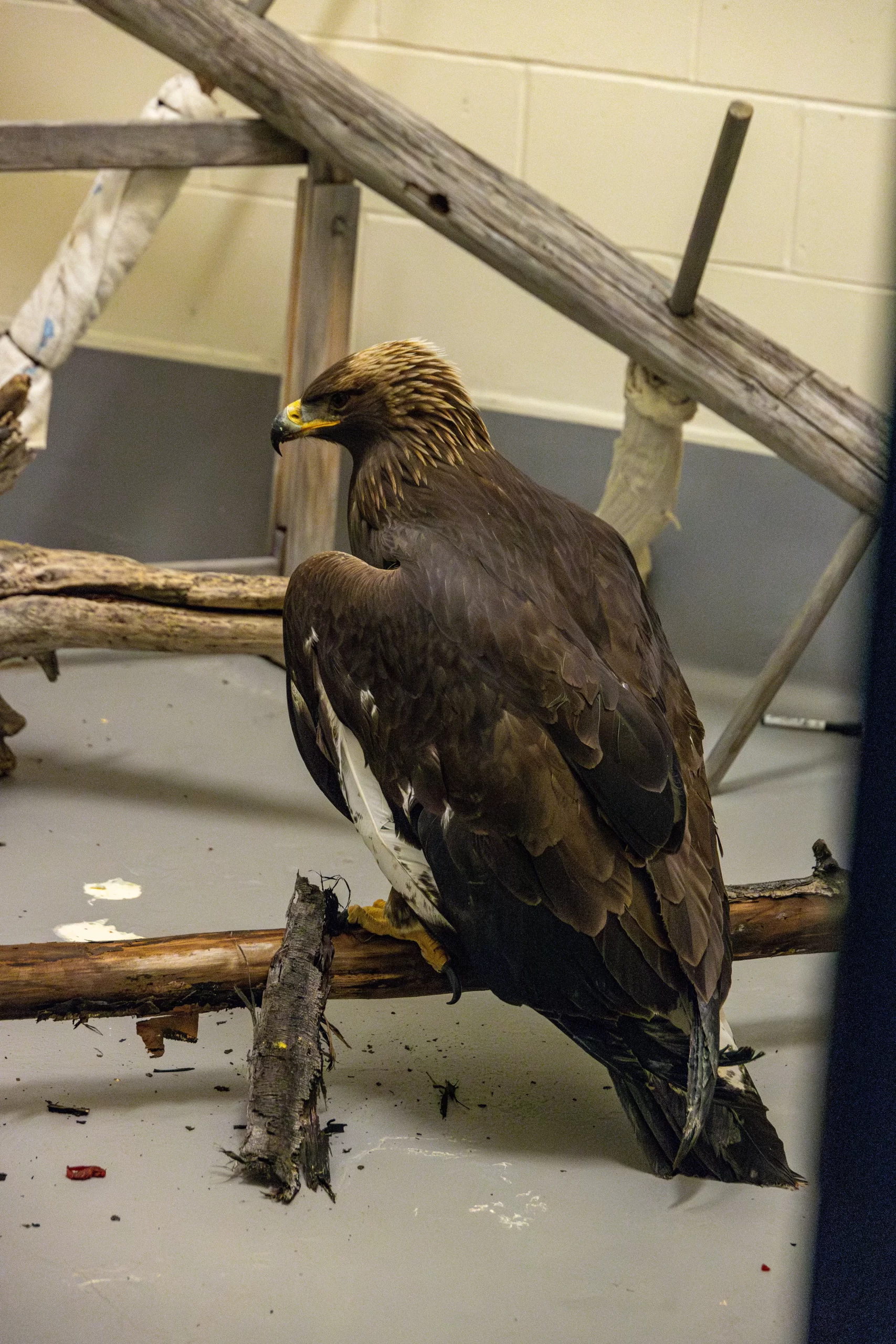
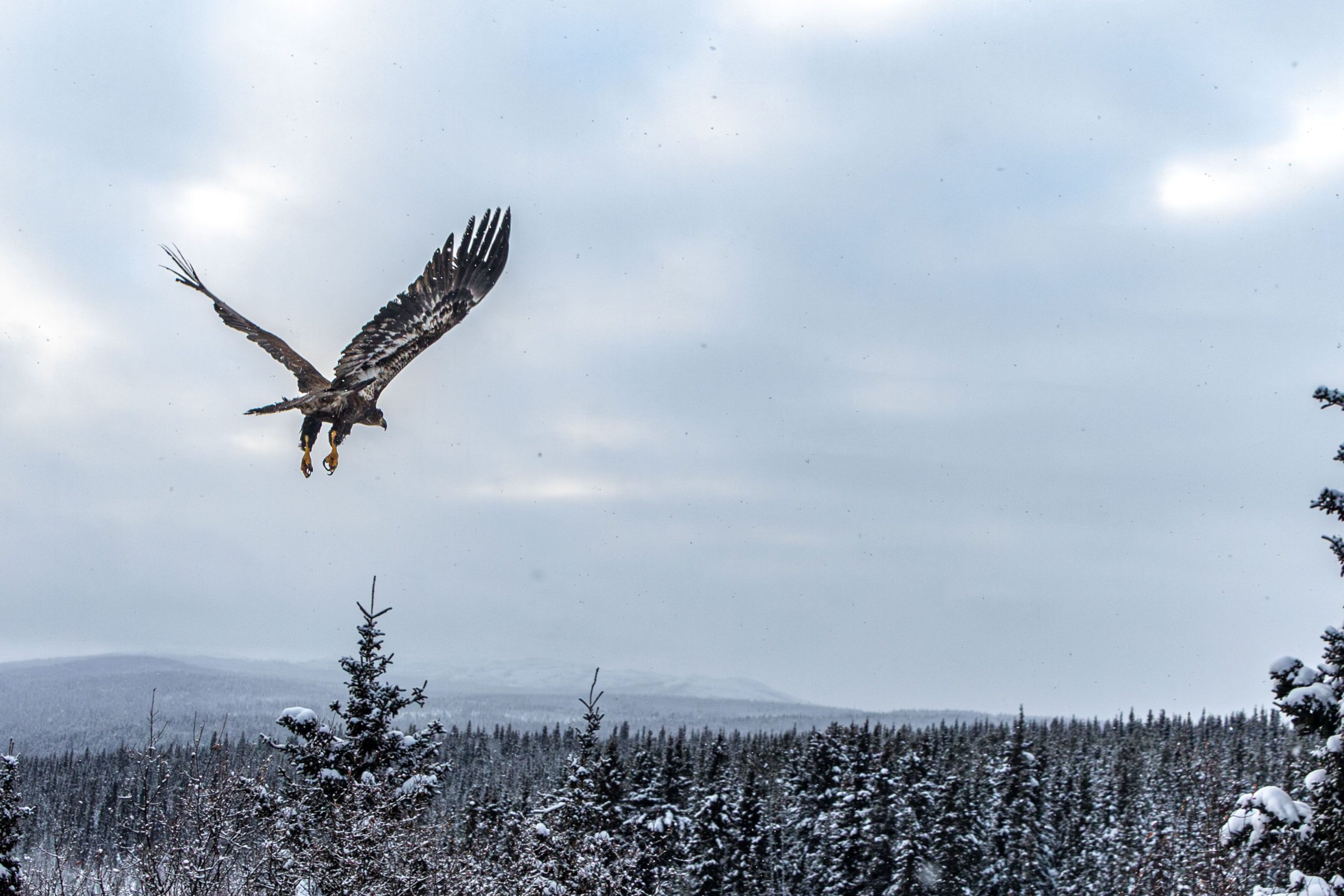
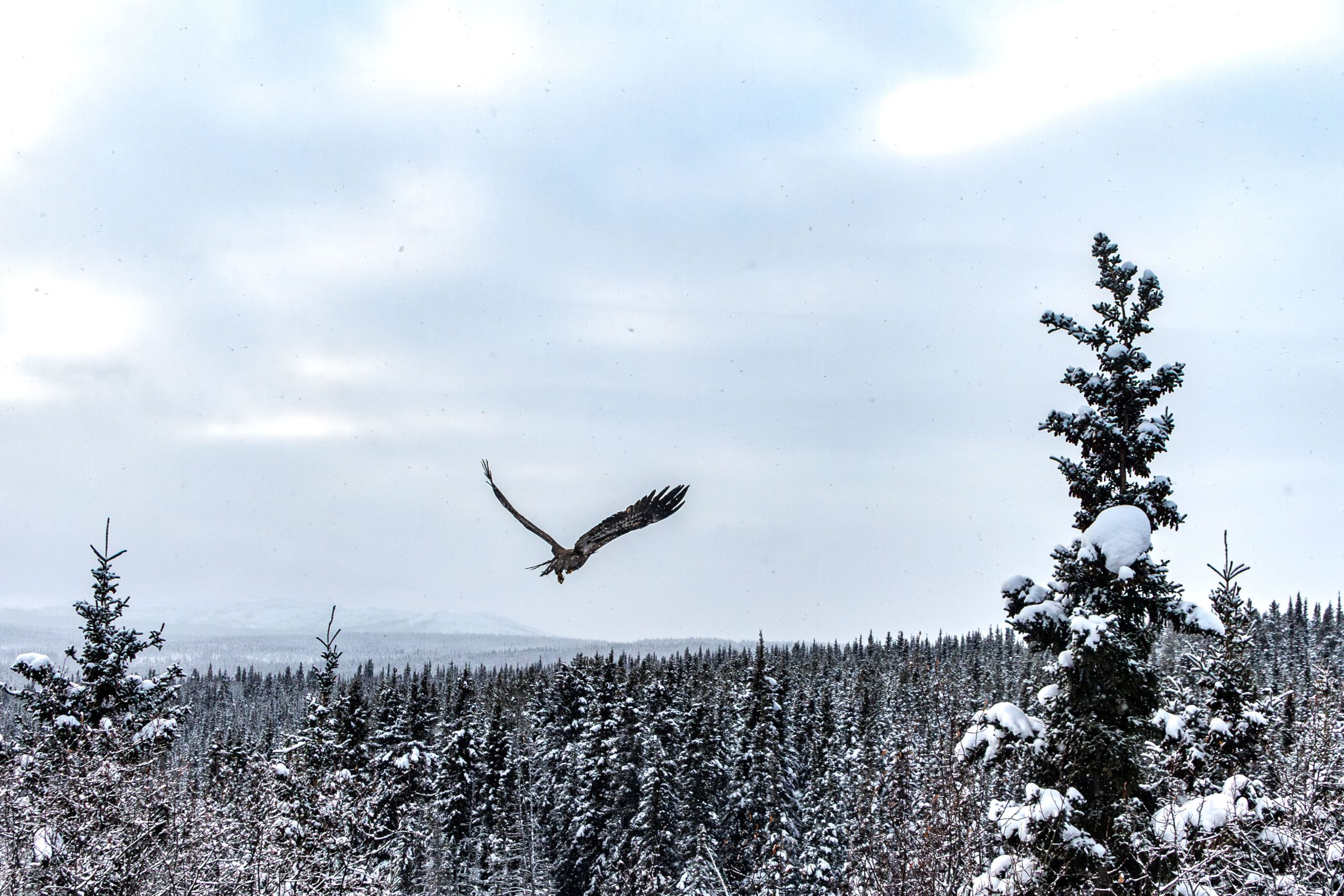
On November 5, 2025, the Yukon Wildlife Preserve’s Rehabilitation Centre admitted a new patient — a juvenile Golden Eagle, estimated to be about two years old, found in the Burwash Landing area.

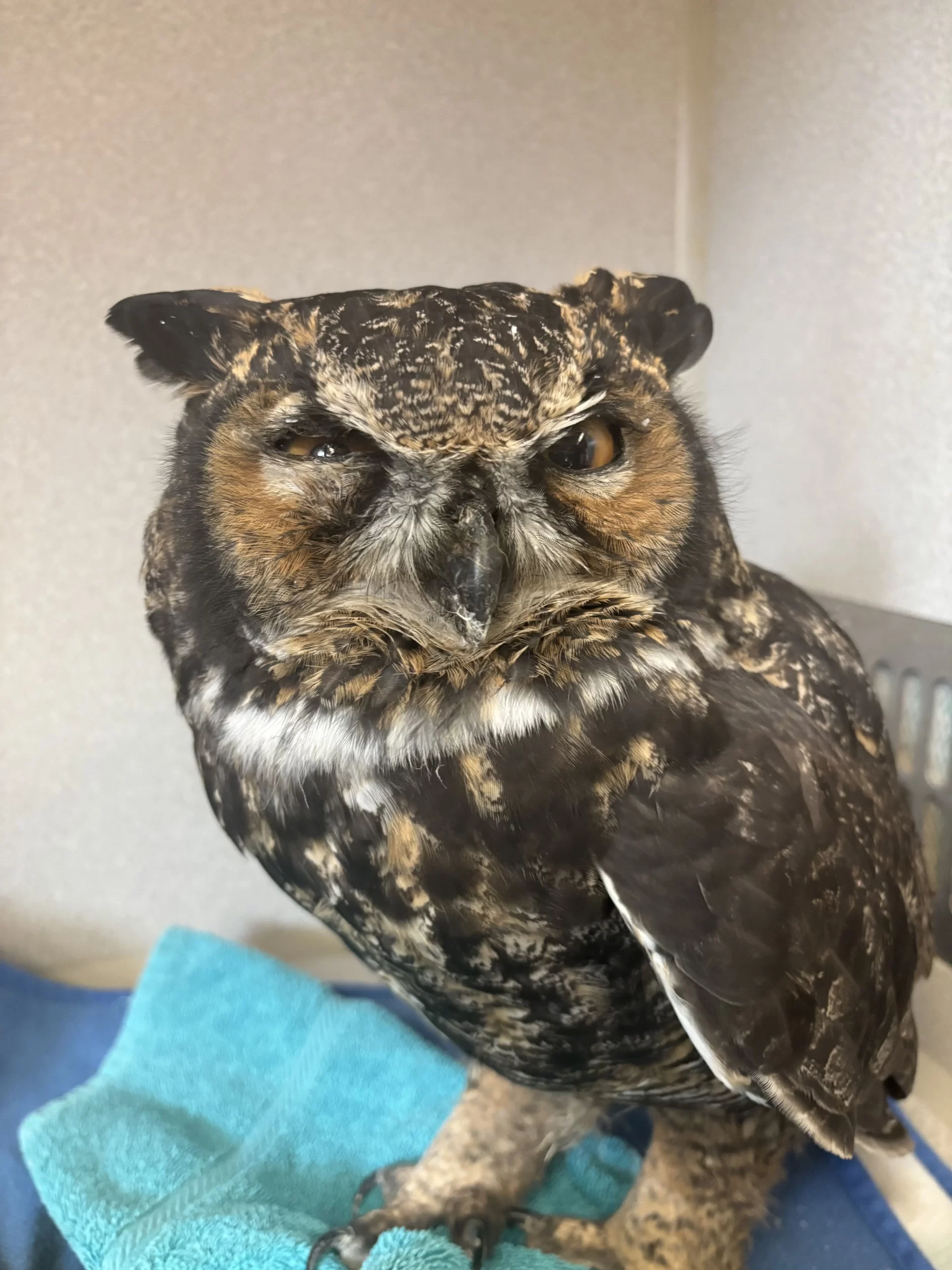
One-eyed great horned owl in care at the Yukon Wildlife Preserve Wildlife Rehabilitation Centre. photo credit Lindsay Caskenette

The eagle’s story began when a member of the public noticed something unusual — a large bird appearing to be stuck on a chimney. Concerned, they called Yukon Conservation Officers (COs) for help. Responding quickly, the officers discovered the eagle was indeed stuck, possibly frozen to the chimney. They carefully freed the bird and provided a safe, warm place for the night in a crate before contacting the Preserve the next morning

Vet assessment of the one-eyed great horned owl by Yukon Wildlife Preserve Animal Care team. Photo Credit: L.Caskenette

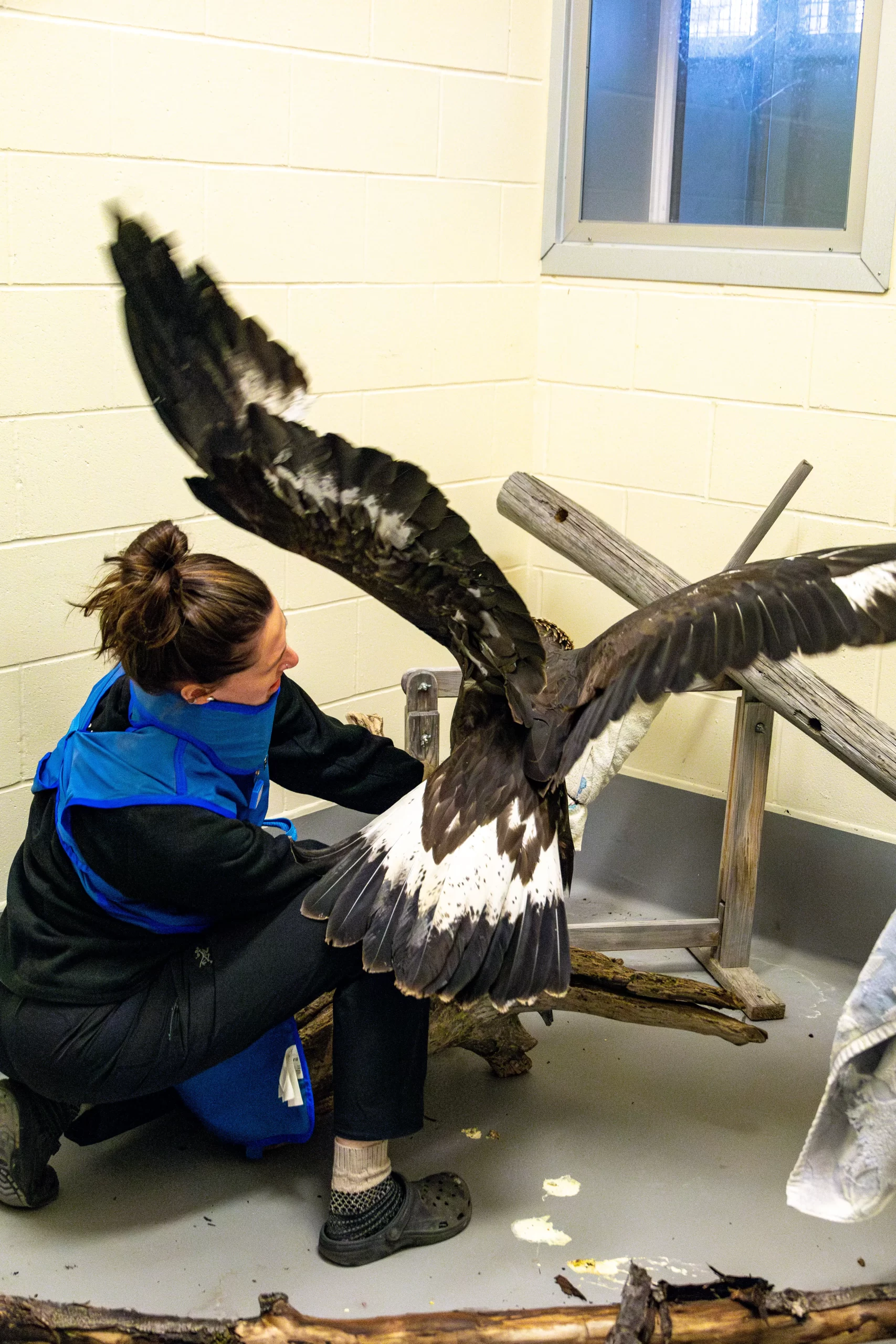
When the eagle arrived at the Preserve, the Animal Care team and veterinarian, Dr. Cori, began a full assessment. The eagle was notably calm — a good sign, given the stressful ordeal it had endured. Weighing in at 2.90 kg, the bird showed no palpable signs of fractures or dislocations. Neurological and sensory tests all appeared normal. However, the team did notice a few bent feathers on the left wing, a slight postural abnormality (the wing was being carried lower than normal), and a small ulcer on the right foot pad.

Encouragingly, the eagle ate with enthusiasm — and by the next day had already gained weight, tipping the scale at 3.2 kg! (We weren’t exaggerating when we said “enthusiastic eater.”)

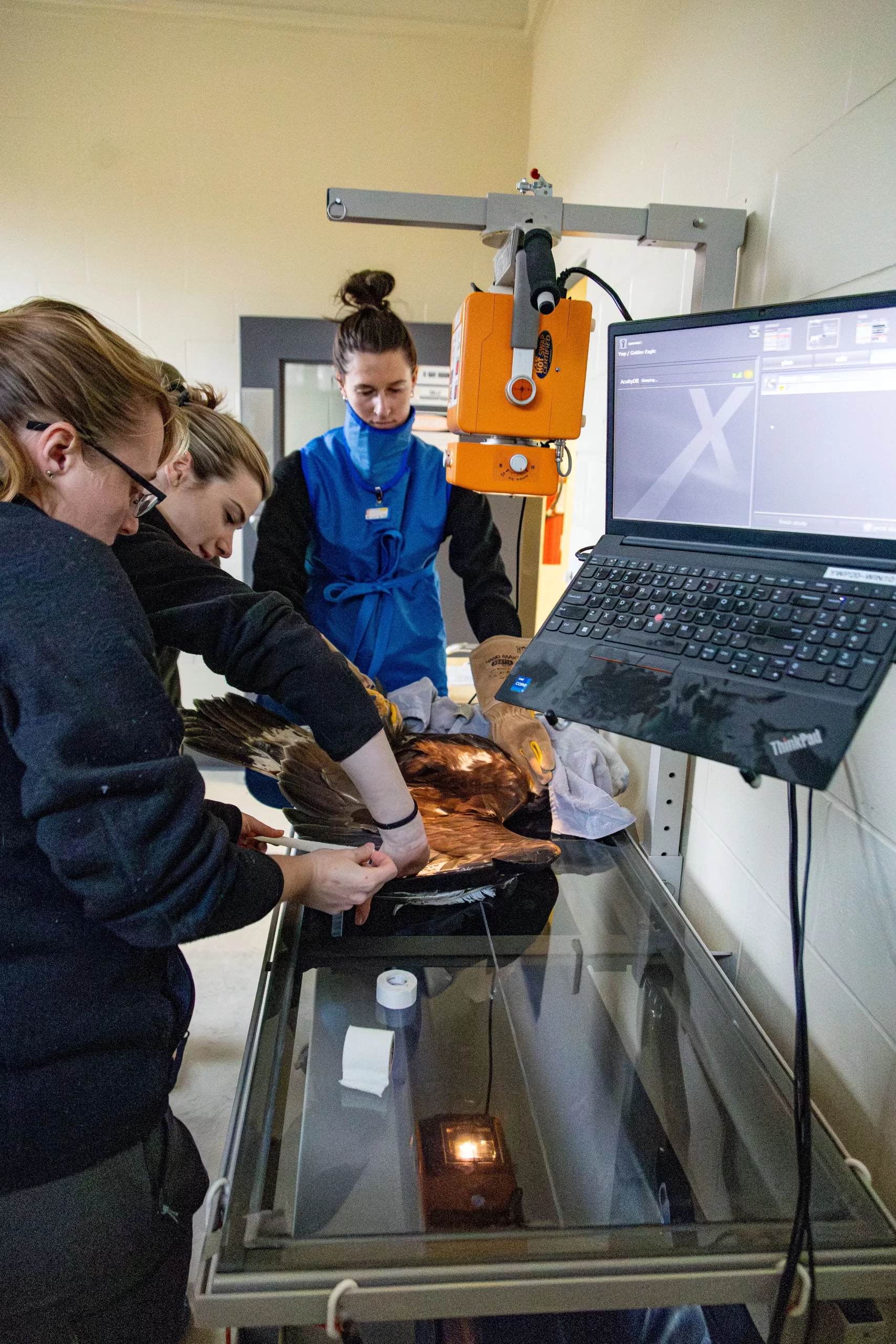
Golden eagle left wing injury - Widllife rehabilitation at the Yukon Wildlife Preserve. Photo credit Lindsay Caskenette. The animal care team xray the animal to further assess injury where no palpable fracture of dislocations were noted.

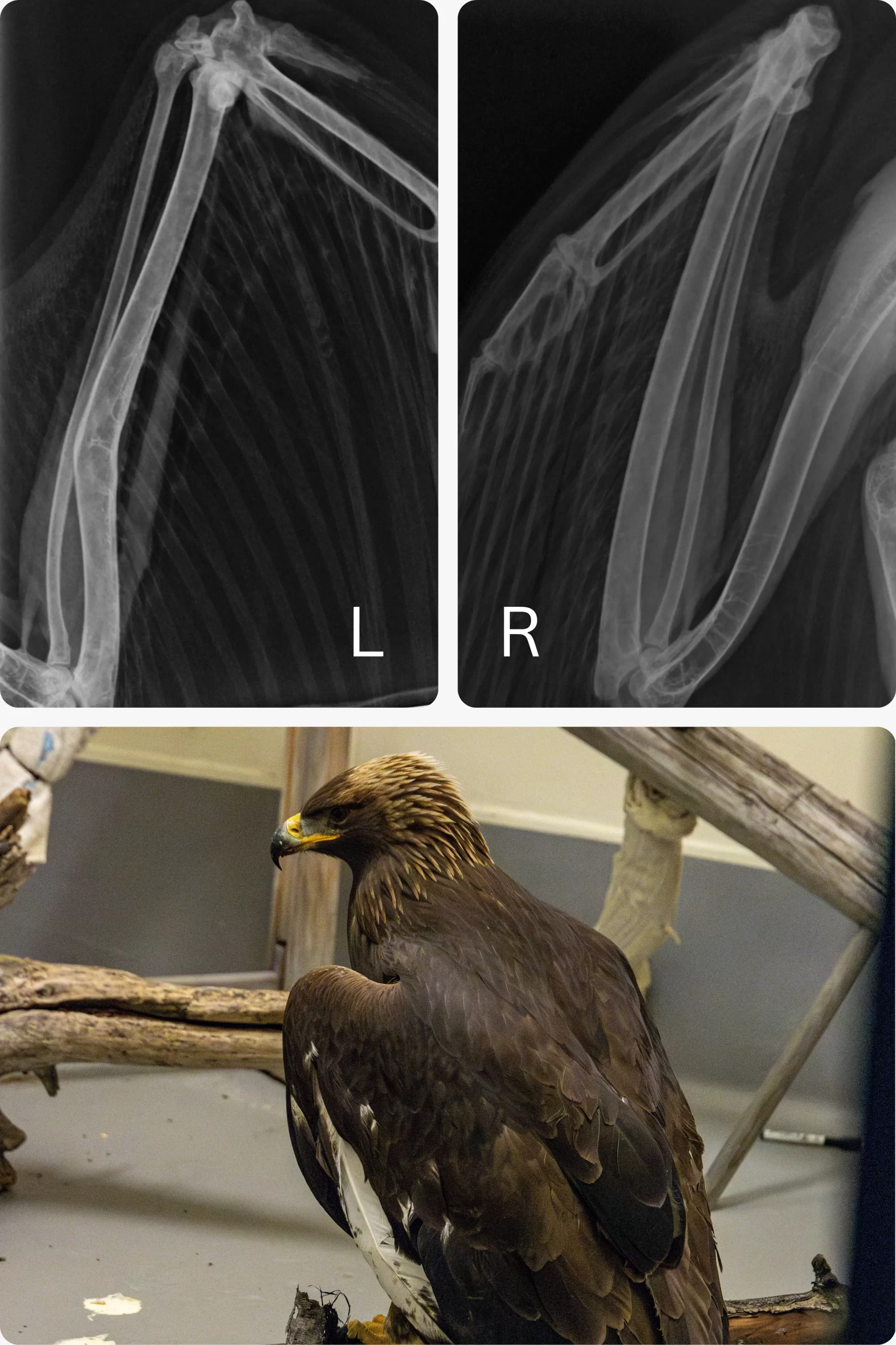
On November 6, x-rays revealed trauma to the left wing, explaining the low carriage and bent feathers. The team applied a figure-eight bandage to help stabilize the wing. Over the coming weeks, the eagle will remain under close observation, with routine checks and follow-up x-rays to monitor healing.

Golden eagle left wing injury - Widllife rehabilitation at the Yukon Wildlife Preserve. Campring the left and right xray of the eagle wings. Can you notice the difference?

Golden eagle wing injury - Widllife rehabilitation at the Yukon Wildlife Preserve. Comparing the left and right xray of the eagles' wings. Can you notice the difference?

This young eagle was found within the Traditional Territory of the Kluane First Nation, and its recovery journey is another reminder of how collective care — from the public, Conservation Officers, and the Wildlife Preserve team — can make a real difference for Yukon’s wildlife.

We extend our thanks to the member of the public who made the call, and to the Conservation Officer Services for their swift and compassionate response. Because of your actions, this eagle now has a fighting chance to heal, regain strength, and, hopefully, take to the skies once more.

If you’d like to support the care of this eagle and other wild patients, please consider donating to the Yukon Wildlife Preserve’s Wildlife Rehabilitation Program. Your contributions help provide the medical care, food, and facilities needed to give injured wildlife a second chance at life in the wild.

Lindsay Caskenette

Lindsay Caskenette

Manager Visitor Services

Lindsay joined the Wildlife Preserve team March 2014. Originally from Ontario, she came to the Yukon in search of new adventures and new career challenges. Lindsay holds a degree in Environmental Studies with honours from Wilfrid Laurier University and brings with her a strong passion for sharing what nature, animals, and the environment can teach us.

867-456-7400
Lindsay@yukonwildlife.ca

Explore by Category

Explore by Author

The Patience of a One-Eyed Owl

The Patience of a One-Eyed Owl

veterinary medicine

by Connor Dennhardt | Sep 19, 2025

6 - 8 minute read

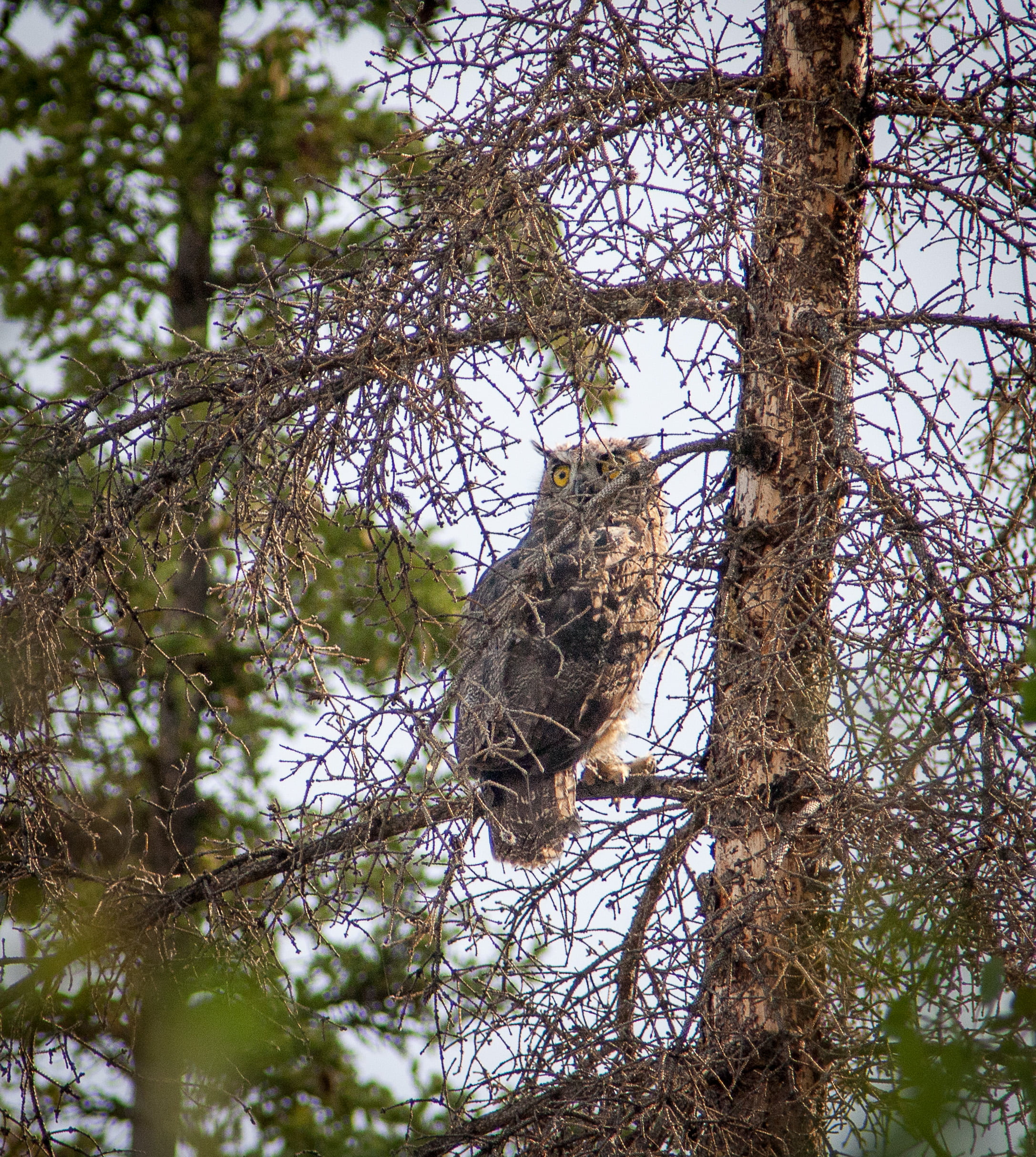
It is dusk turning to night, with darkness enveloping the forest. Stationed in a tree on the side of a road hides a predator, whose yellow eyes reflect with the passing headlights of cars driving by. This owl is currently listening, not only to the engines of vehicles and the sounds of gravel being kicked into the air, but for tiny rustling in the underbrush across this treacherous path.

The ‘great horns’ on this owl are not their ears; instead, they have an opening on both sides of their head to take in the sounds bouncing off the facial disc of feathers around their face. One of these openings is slightly higher on their skull, allowing for the sounds of this noisy prey to enter one ear a fraction of a second faster than the other. As this owl twists their head, they finally pinpoint the location of their prey, following with their eyes to the exact location the creature is hiding. As they zone in and begin to take flight, all sounds except for the scurrying prey begin to fade. The great horned owl narrows its eyes on their target, taking in the flow of air around their silent wings whilst beginning the slight movements they need to grasp with their talons.

All of a sudden, in this brief moment of time, a life is imperiled; a flash of light enters the owl's vision from their right side and the world goes blacker than the night they surround themselves in.

The road is a deadly location for many animals; vehicles can collide with wildlife passing through, garbage and trash commonly finds itself on its side, and carnivores often use these areas to hunt those animals taking advantage of the weedy species growing in abundance. Not only do predators hunt those in the underbrush, but they also find themselves on the sides of roads waiting for foolish prey to cross the area with no cover.

This photo captures another rehabilitated and released great horned owl at the Yukon Wildlife Preserve. It highlights how roadways provide convenient hunting grounds for owls that perch where the forest and our roadways meet. Photo credit: B. Forsythe

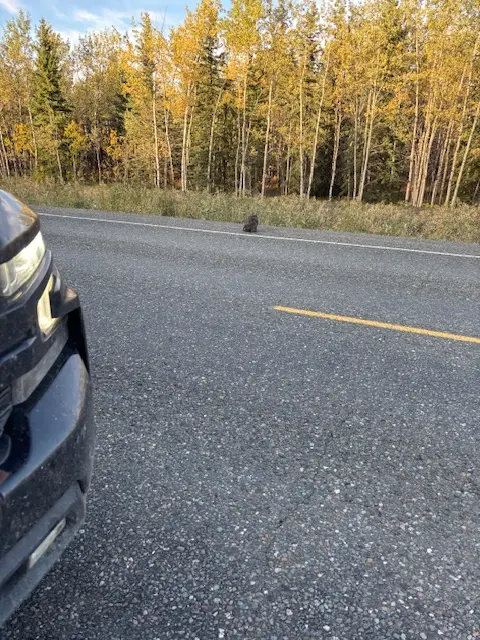
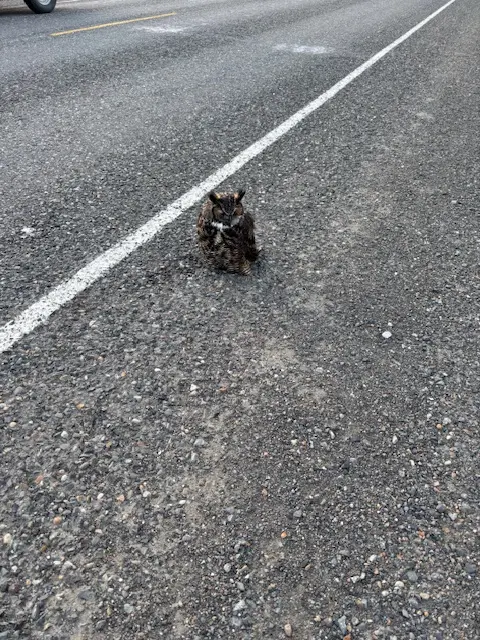
A great horned owl that has recently entered our rehab center was one such predator. When they were first admitted into our charge, our animal care team was told by rescuer Sonya Bingley that they were struck by a car, north of Braeburn, resulting in difficulty flying and their right eye remaining swollen shut.

Photo by Sonya Bingley. Sonya spotted the owl on the side of the road while driving just North of Braeburn, Mayo/Klondike Hwy, Yukon. 

After some brief examinations led by the veterinarians at AlpineVet and initial attempts at feeding, the owl was visually responding to our team's actions using their left eye, but had a lack of ferocity that is normally expected from birds of prey. The intake exam looked at the owl’s entire body, determining that the only major injury was to their right eye.

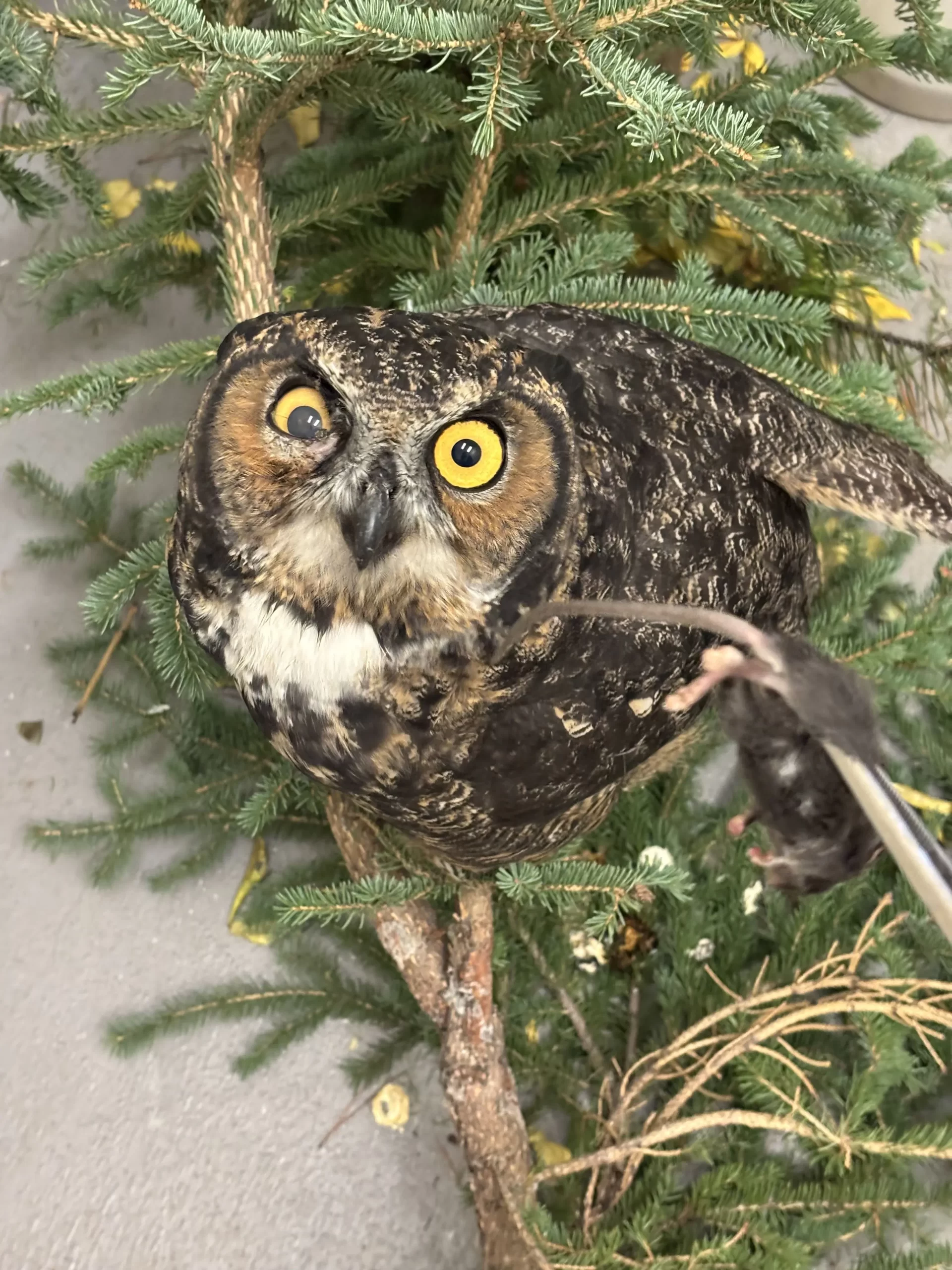
As there was most certainly head trauma, the lights were kept low while we gave them pain medication and encouraged them to eat. During this process they were extremely patient with being handled, prodded, and even picked up in their entirety. The meals they would eat were few and far between, and the rare times that they would flap their wings were when being picked up too briskly. Alongside this, their ability to balance when being picked up or placed down was lacking, often resulting in the bird tumbling when attempting to walk. 

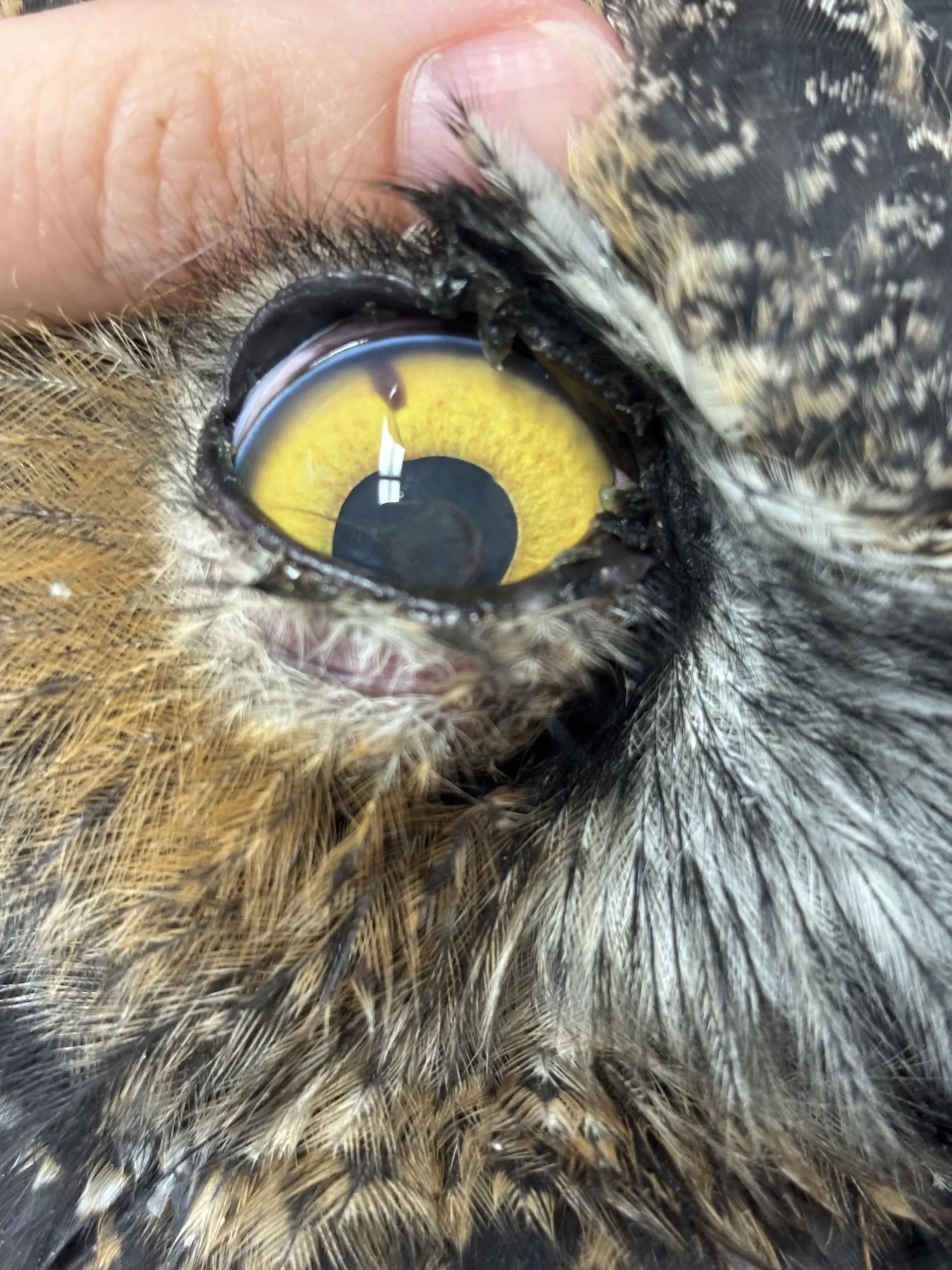
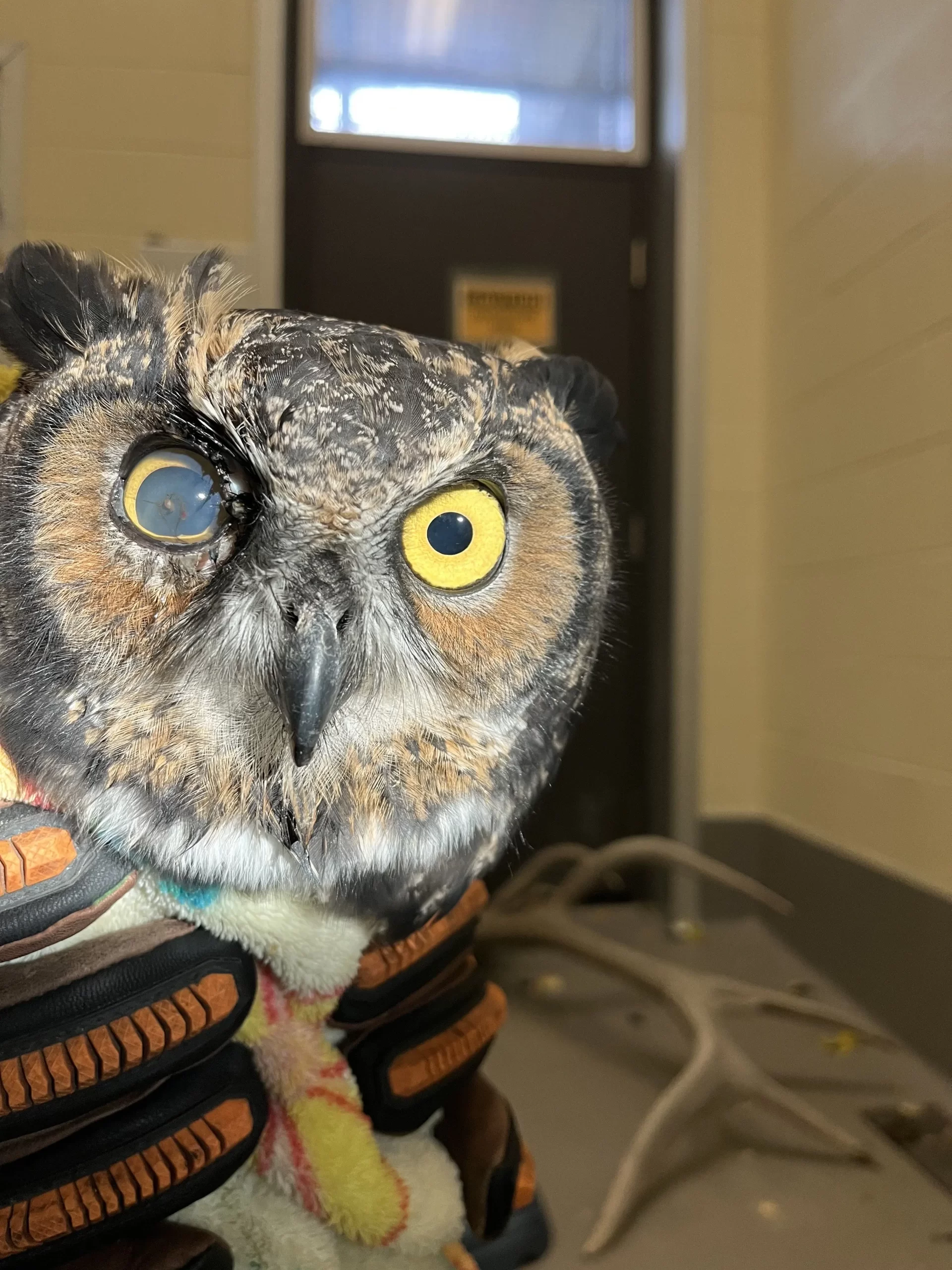
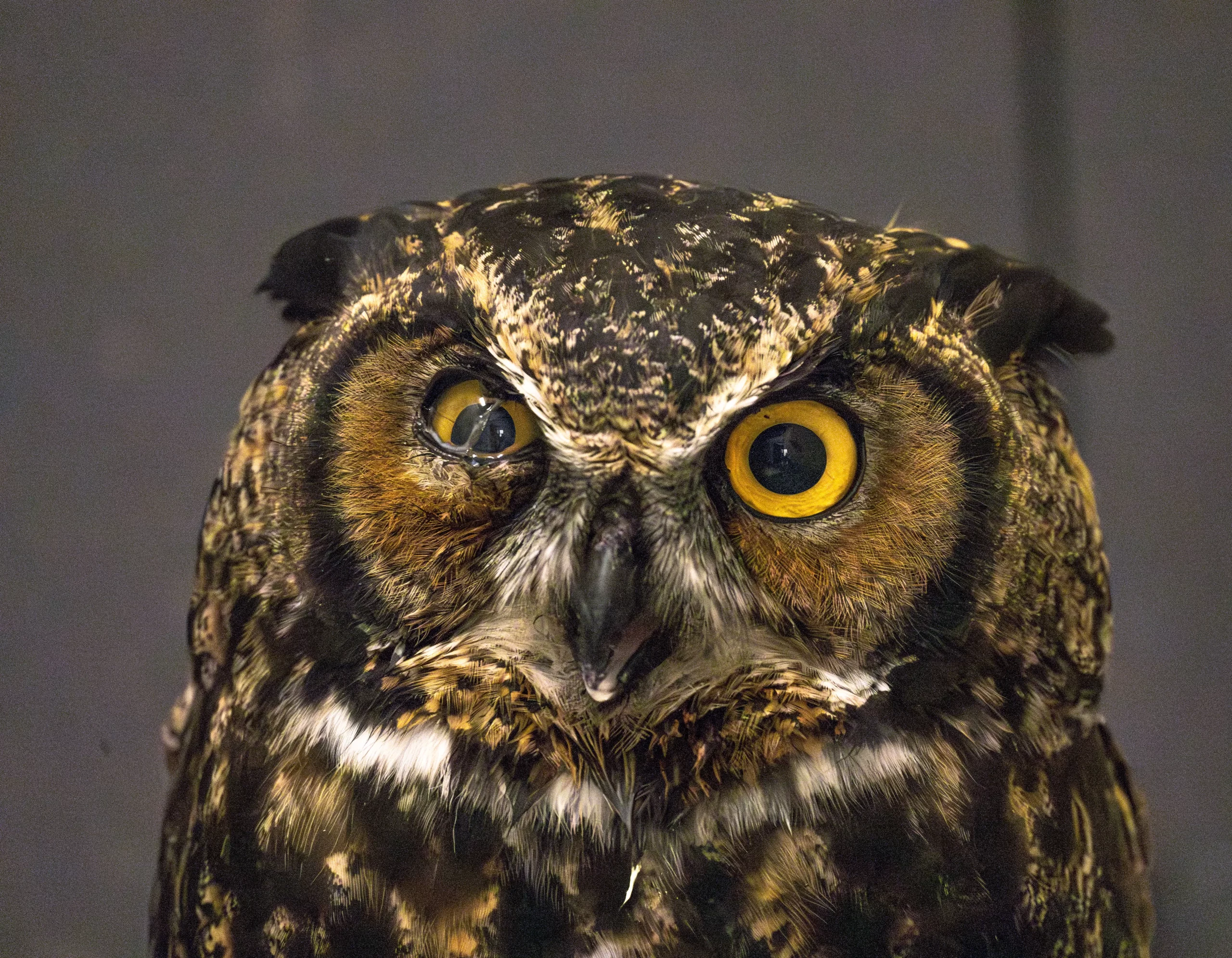
When the owl was initially received and the intake examination was concluded, a closer look at their right eye was needed, noting that it was swollen shut upon arrival. After opening the eye to get a brief look, both eyes were responsive to light and continued to be for multiple days in our care. Their right eye became less swollen as the days passed, however the owl kept squinting and their attitude remained dull with continuing signs of pain. Alongside this, the eye itself continued exhibiting changes each day, with signs of haemorrhaging and debris floating in front of the pupil, likely from a tear in the iris. Eventually the right eye lost its ability to react to light, and the owl was taken into another examination with AlpineVet, determining that the eye was now non-visual.

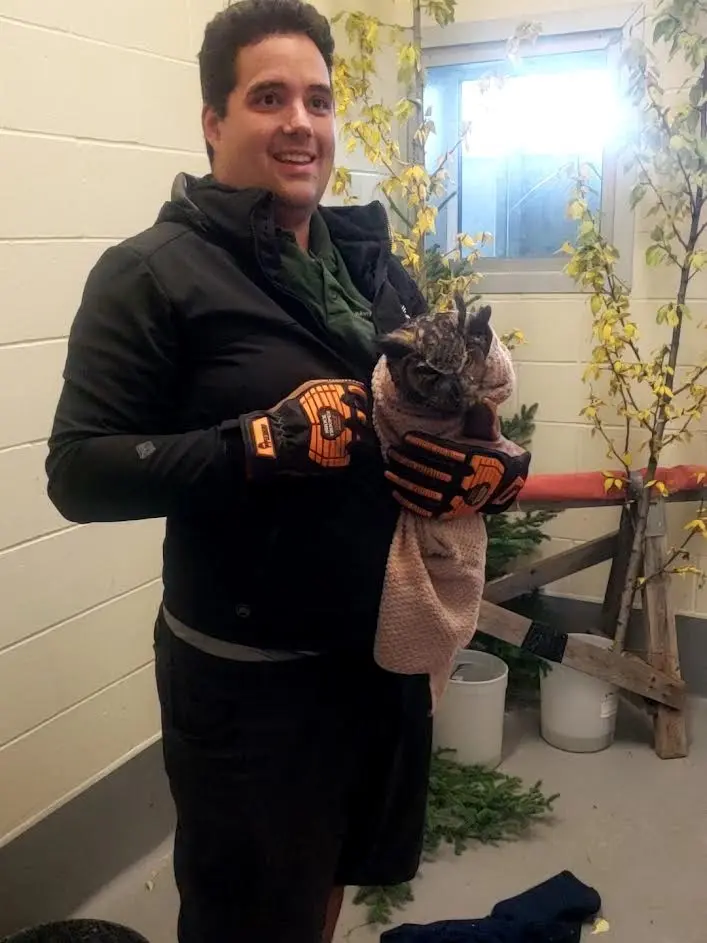
Neil explaining owl handling. Neil teaching the animal care staff how to properly pick up and wrap the owl to minimize injury during handling. Neil, Manager of Education and Programming, has history working in B.C., at an avian rescue centre.

Having concerns about a raptor being released into the wild with a single eye, inhibiting a key sense that they use to hunt, talks of all kinds were happening behind-the-scenes regarding eye surgery and the potential hazards of removing their eye completely.

Eventually, the preserve decided to reach out to experts in the field of raptor rehab in BC, an organization ironically known as OWL. The call we had was extremely informative, and we asked a few questions regarding the owl’s lack of hunger, balance, and whether or not a single-eyed owl could possibly be released successfully.

Their response eased our fears, they have had cases exactly like this one, and not only were owls with one eye common in their rehab center, they were also great candidates for successful release into the wild. 

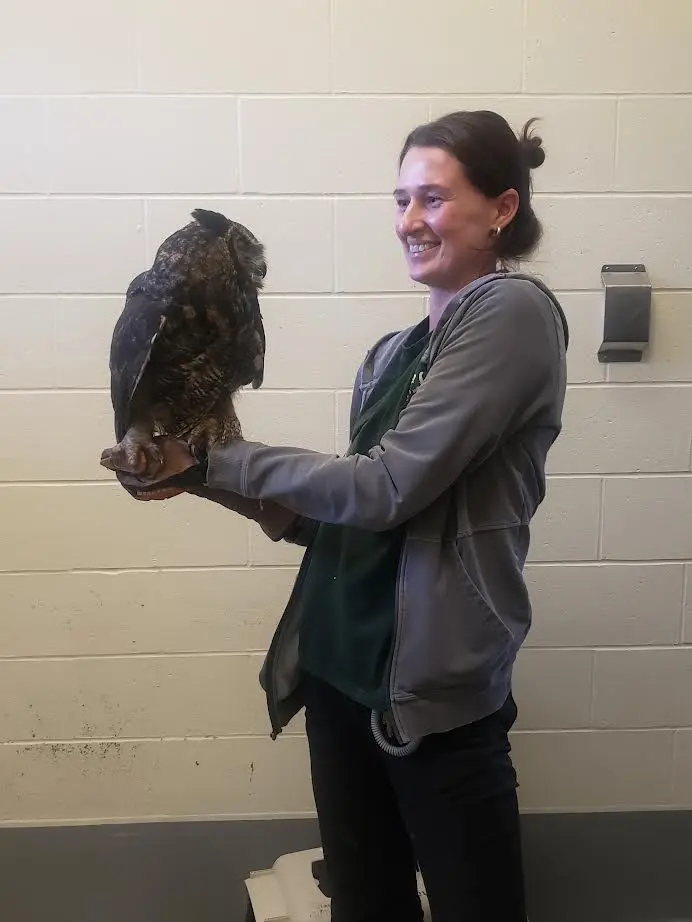
Alexis, Wildlife Care and Rehabilitation Technician and veterinary technician handles the bird during an examination. 

For owls struck by vehicles, eyes are commonly injured and need removal; however, through this call we found out that surgery to remove the eye is almost never necessary. Prior to this, we knew of two options for eye surgery that worked for owls: enucleation, the process of completely removing an eyeball from its socket by severing its connections with the brain; and evisceration, where the cornea of the eye and all of its inner contents are removed, leaving the sclera (white, fibrous outer shell of the eye) intact.

In terms of the successful release of an owl back into the wild, evisceration has a better success rate as that surgery minimizes the disruption to the owl’s facial disc. The facial disc of an owl is the concave formation of feathers around their face that directs sounds into their ears, which is what allows them to continue hunting prey in 3D space even when one eye is missing. However, through our call with OWL we learned of a third option for eye removal, simply leaving it.

Close up view of the eye 3 weeks after being found and admitted to the centre. Great horned owl, Sept 2025 YWP. Photo Credit: L.Caskenette

Owls are able to allow their damaged eyeball to naturally degrade whilst in its socket, eventually making the orbital empty whilst not disturbing the fragile feathers around the owl's facial disc. With three options presented to our animal care team for handling this eye-boggling problem, we continue to weigh our options whilst allowing the owl to regain their strength. They have made incredible progress thus far but still need to recover from their injuries, work their flight muscles out, and try hunting live prey before we release them. Of course, plans for rehab always seem easier at the beginning, and many things can go awry; but we will continue to play it by ear as situations arise.

With patience, we hope this owl will recover slowly but surely, gaining their vigour and ferocity back so we can reintroduce them into the wild. 

• • •

Read an update on how the owl is doing - November 2025. 

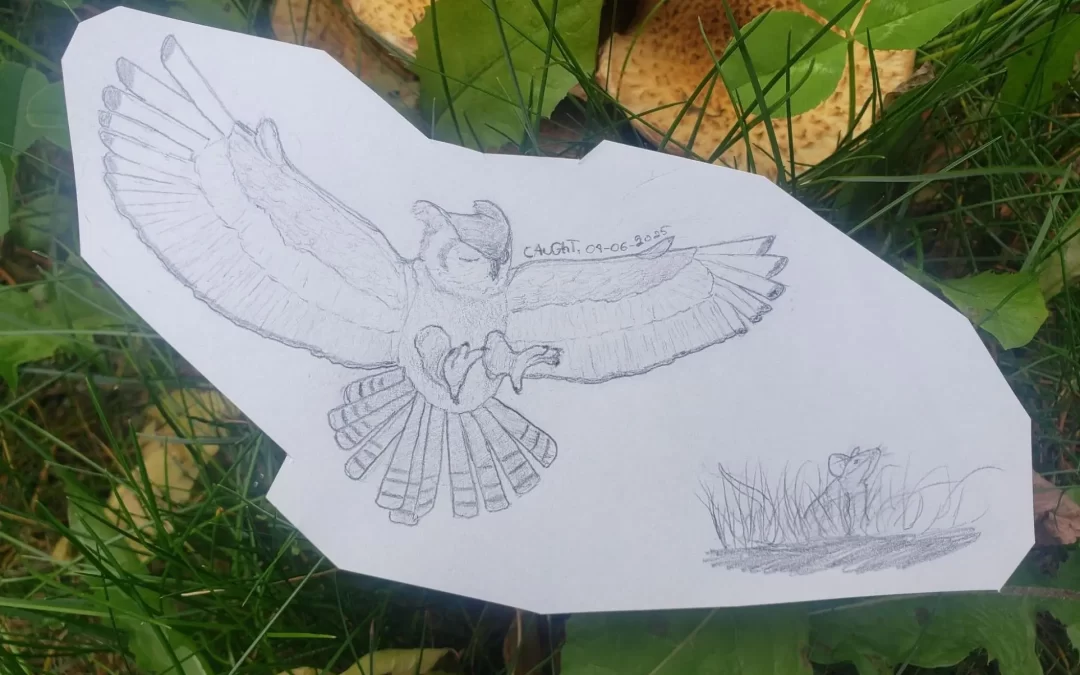
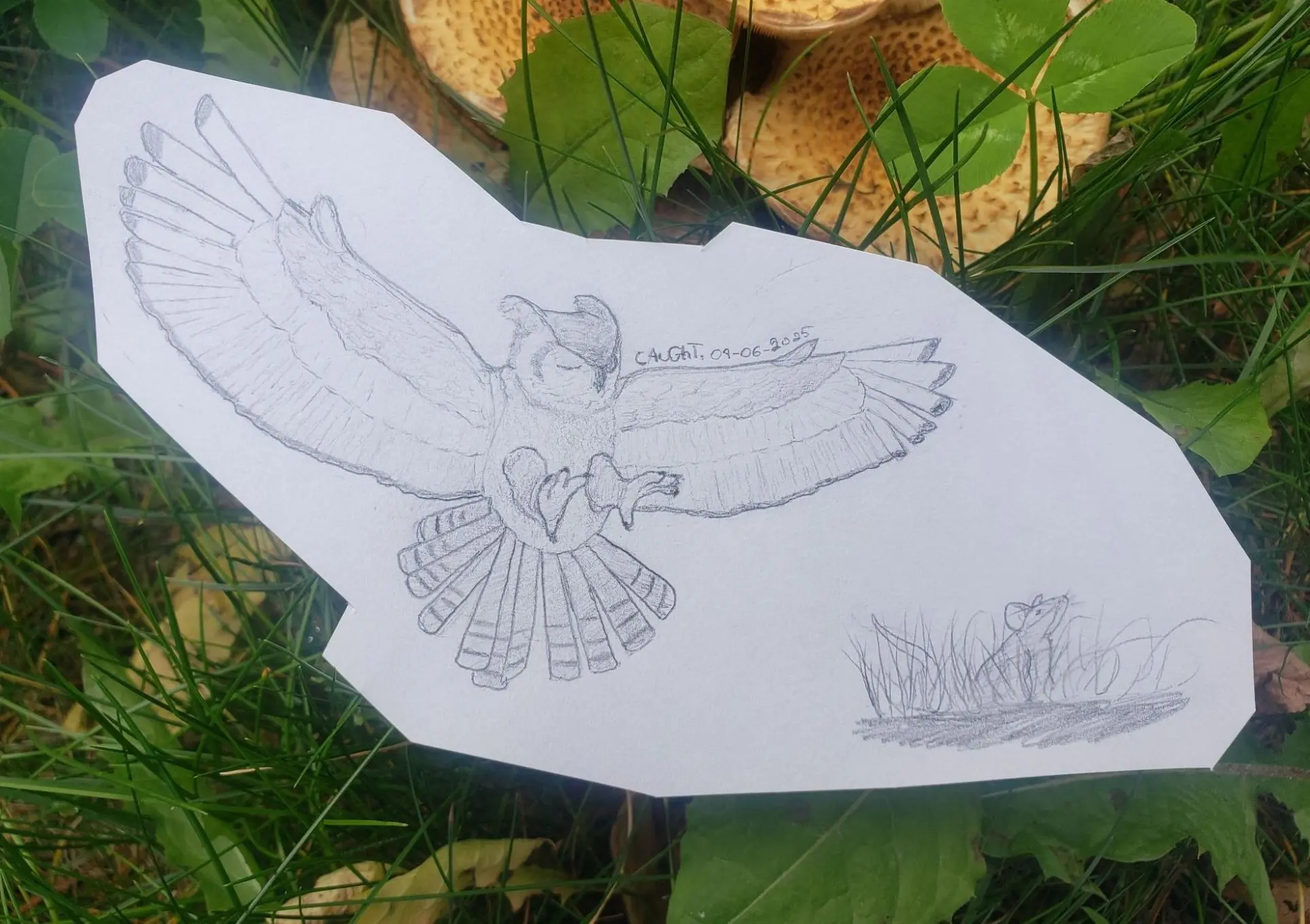
Created by Connor Dennhardt, titled ‘CAuGhT’.

All donations go towards the betterment of our rehab center and animal care team.

There is a comment section below for any thoughts that may have stirred from this story!

Thank you for your patience in reading this post.

Sonya Bingley was travelling the Klondike highway when they noticed an animal on the side of the road. Sonya was able to ensure the bird got the helped it needed. If you come across wildlife you suspect needs help check out what to do here

Connor Dennhardt

Connor Dennhardt

He/Him - Forester Educator

Connor grew up in Thunder Bay Ontario,  where he developed an interest in nature and exploring the outdoors. From his adventures, he learned how to thrive in the wilderness and learn to have fun even in the harshest of winters. His passion made him pursue an HBSa in Animal Sciences, where he earned the foundations of biology and found his love of science. His interests eventually led him to study in Svalbard, Norway; where he learned extensive amounts of information about the Arctic from researchers across the globe. From there, he has worked as a researcher within Quetico Provincial Park, a bee farm in Southern Ontario, and now has returned to the north as a Forester/Educator here at the YWP. He knows we aren't quite in the Arctic, but he's happy making it that much closer to his true calling.

Explore by Category

Explore by Author

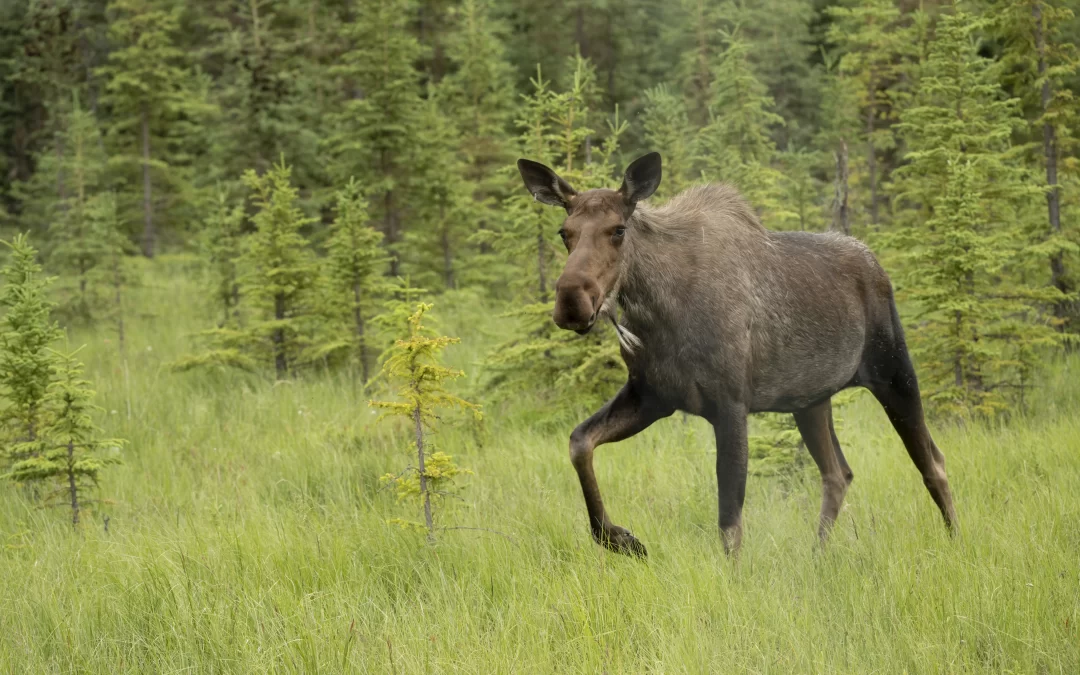
Jesse the Moose

Jesse the Moose

veterinary medicine

by Jake Paleczny | Jun 19, 2025

2 minute read -

It was with profound sadness that the Yukon Wildlife Preserve (YWP) shared the death of Jesse, a cherished and iconic moose who had resided at the Preserve since 2016. The YWP’s Animal Care team made the difficult decision to euthanize Jesse on June 19, 2025 due to complications following a medical procedure.

An Old Injury

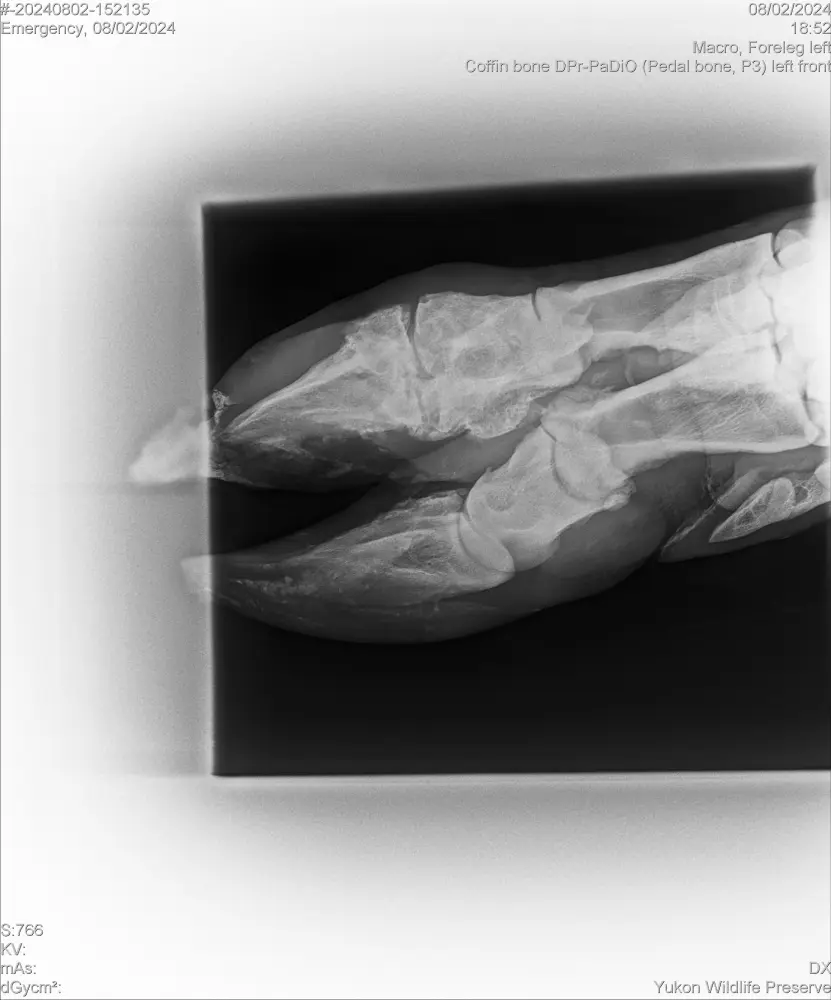
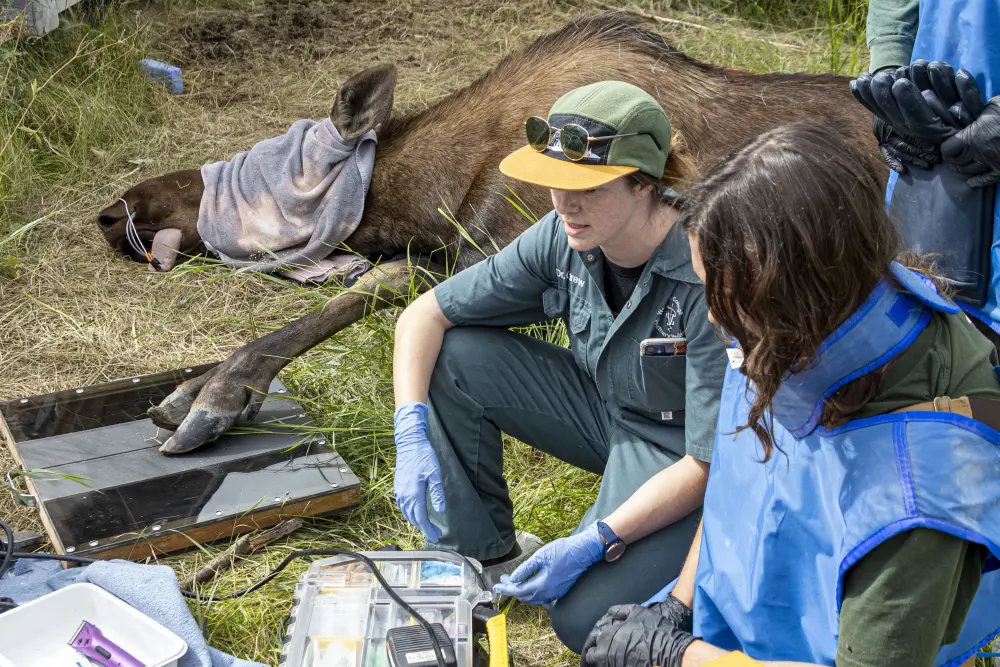
The YWP Animal Care team had been monitoring Jesse’s old hoof injury, which had become arthritic, causing her increasing discomfort and pain. The team had diligently monitored her condition, exploring options to alleviate her suffering and improve her quality of life. On Monday, June 17th, Veterinarian Dr. Cassandra Andrew and the YWP Animal Care team immobilized (anesthetized) Jesse to provide a targeted treatment for the affected hoof joint. While under anesthesia Jesse regurgitated contents from one of her stomachs - one of the risks of anesthesia in ruminants like moose. Recognizing the immediate risk, the team promptly cut the hoof treatment short, administered broad-spectrum antibiotics, and reversed the anesthesia.

Dr. Cassandra Andrew and the Animal Care Team check on Jesse's hoof during in summer 2024.

Complications and Consequences

Upon waking, Jesse exhibited signs of respiratory distress, including coughing and more rapid breathing than normal, indicating that she had inhaled some of the regurgitated material. Later that day, the team provided additional medication to help reduce fever and inflammation. By Tuesday, June 18th, Jesse appeared to be more relaxed and showed initial signs of improvement as the team continued to monitor her closely.

However, during the morning check-in on Wednesday, June 19th, it was clear that Jesse's condition had declined significantly overnight. She was suffering from what was suspected to be severe aspiration pneumonia (inhalation of foreign/food material into the lungs) and was struggling to breathe. Unfortunately treating such a severe condition can be quite invasive and would only be feasible with a domesticated animal in a clinical setting. The team made the difficult decision to euthanize Jesse without delay.

Dr. Andrew performed a gross necropsy, which confirmed extensive damage to her lungs and the severe pneumonia. The team is conducting additional tests to better understand Jesse's overall health and to reveal potential future treatments for similar hoof injuries in other animals.

Jesse in June 2024

Jesse's Story

“Jesse was a really special animal with a remarkable story who touched the hearts of many, both our staff and visitors alike,” said Jake Paleczny, Executive Director, Yukon Wildlife Preserve. “Her death is a big loss for our team and so many of our visitors who got to know her so well over her 9 years here. Our team made every possible effort to provide her with the best care, and we will honour her legacy by learning what we can to inform what we do for our moose in the future.”

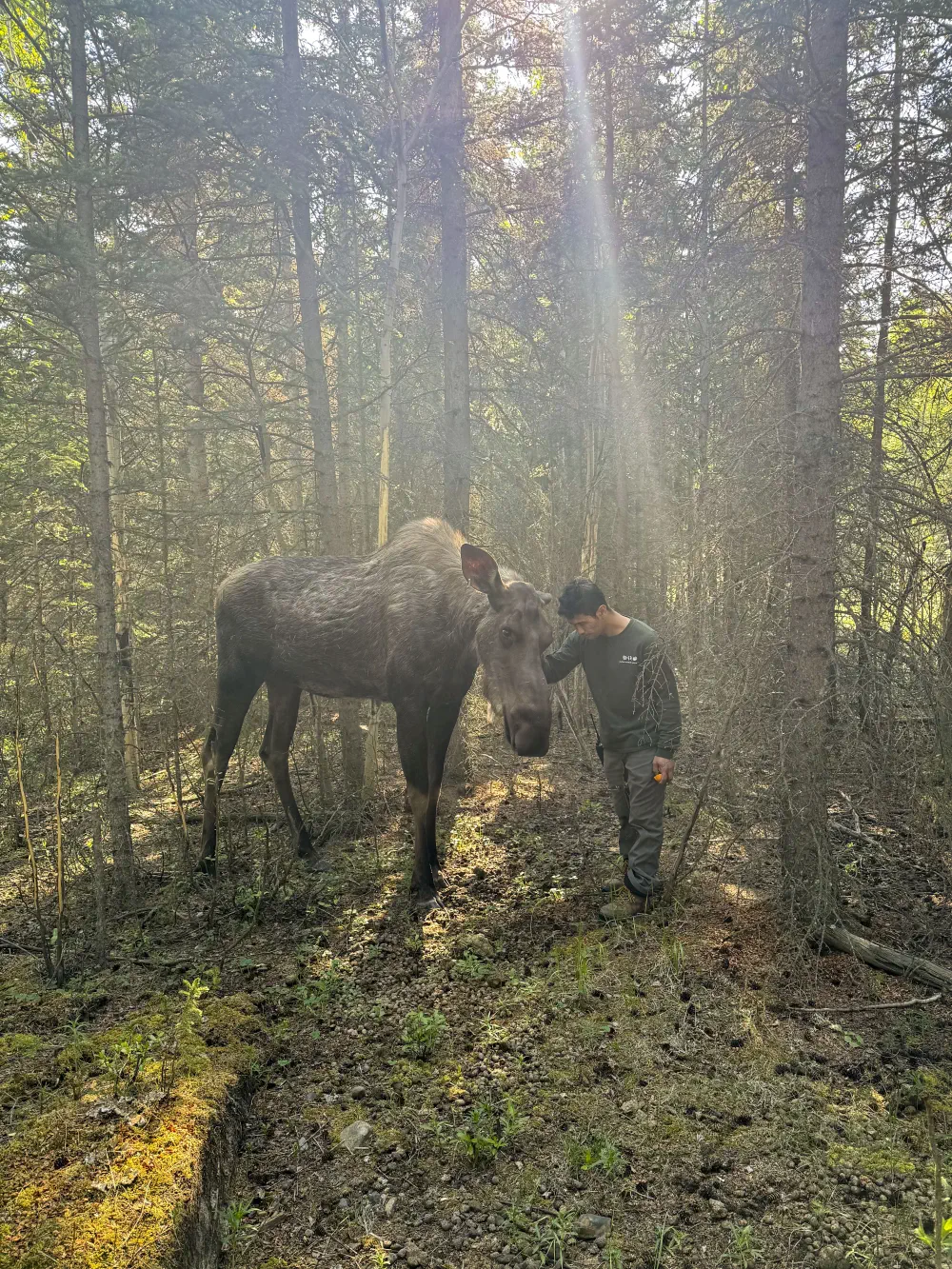
Jesse's remarkable journey at the Yukon Wildlife Preserve began in May 2016. At only a few weeks old and weighing just 47 pounds, dogs attacked her in the bush near Whitehorse, separating her from her mother. A quick-thinking teenager (named Jesse) carried the injured moose out and with some help, brought her to the Preserve. The dogs had gone after her neck, causing swelling that made it difficult for her to swallow and breathe. YWP staff provided 24-hour care, and for the first couple of nights, they were unsure if she would survive. For the first four days at the Preserve, Jesse couldn’t get up, and the team fed her via IV, offering small amounts of formula when she could manage it. With her injuries, it’s unlikely Jesse would have survived in the wild. Her comfort around humans meant she would reside at the Preserve permanently.

Jesse's Impact

If you have a story or memory you'd like to share about Jesse, send it to jake@yukonwildlife.ca  and lindsay@yukonwildlife.ca. We'd like to share and celebrate the impactful experiences and relationships she was a part of.

The crazy snow winter which had packed snow so high people's heads (and moose heads) were much closer to the top of the fence than normal and Jesse started stealing people's touques right off their heads. She especially loved to target hat wearers' taking selfies.
Pete, Wildlife Interpreter

We said our goodbye!
She knows and she listens—
She cried, I cried.
Michael, Senior Wildlife and Rehabilitation Technician

Above: Michael and Jesse on the morning of June 19.

Jake Paleczny

Jake Paleczny

He/Him - Executive Director/ CEO

Jake Paleczny is passionate about interpretation and education. He gained his interpretative expertise from a decade of work in Ontario’s provincial parks in addition to a Masters in Museum Studies from the University of Toronto. His interests also extend into the artistic realm, with a Bachelor of Music from the University of Western Ontario and extensive experience in galleries and museums.

867-456-7313
jake@yukonwildlife.ca

Explore by Category

Explore by Author

Carmacks Juvenile Bald Eagle Recovery

Carmacks Juvenile Bald Eagle Recovery

veterinary medicine

by Lindsay Caskenette | Dec 11, 2024

2.5 minute read - 

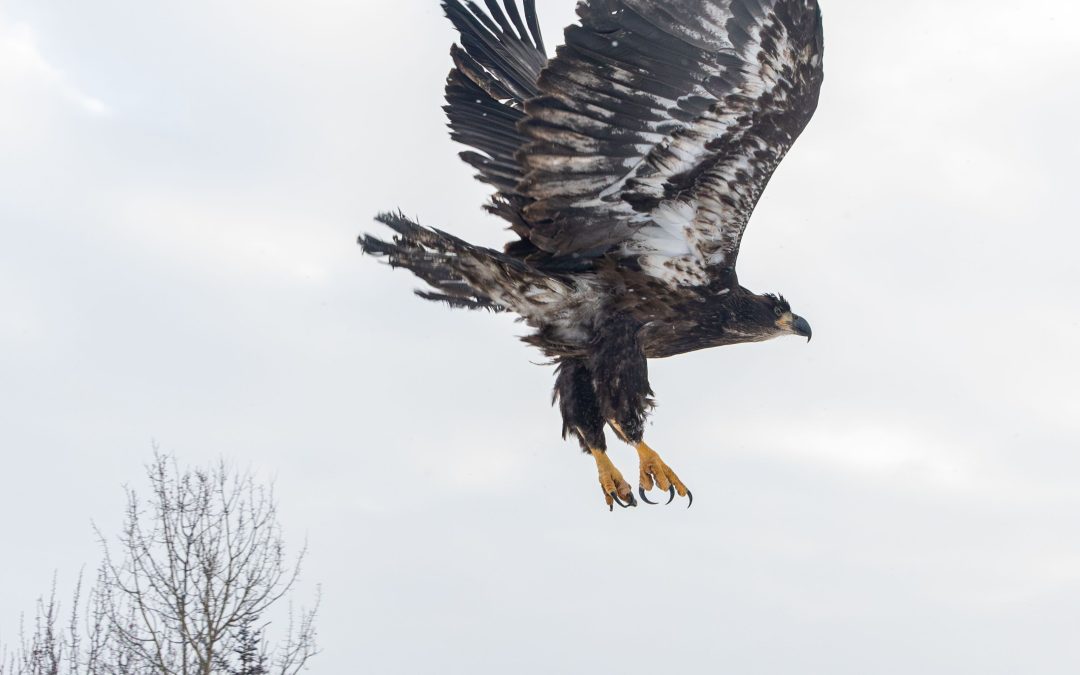
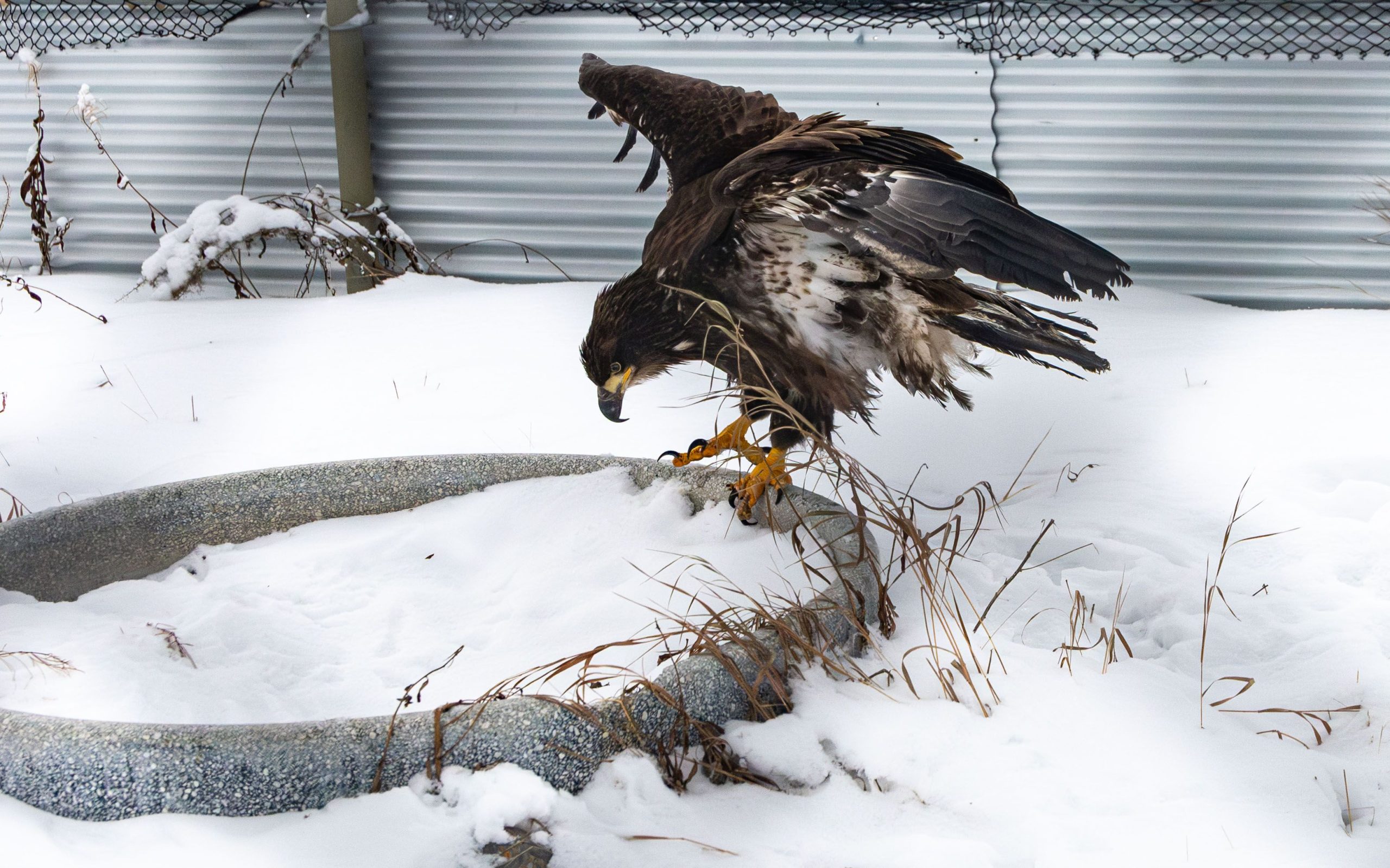
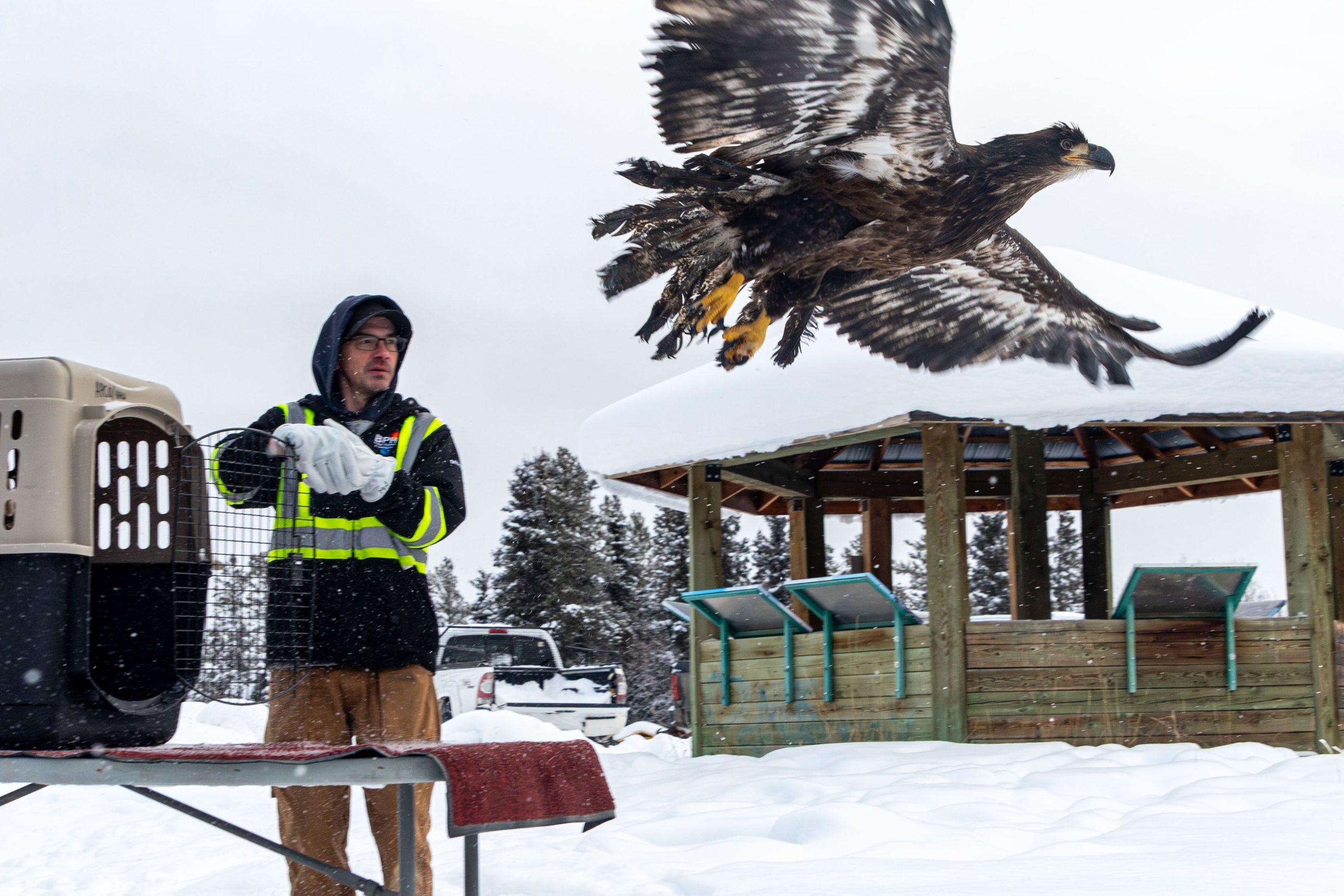
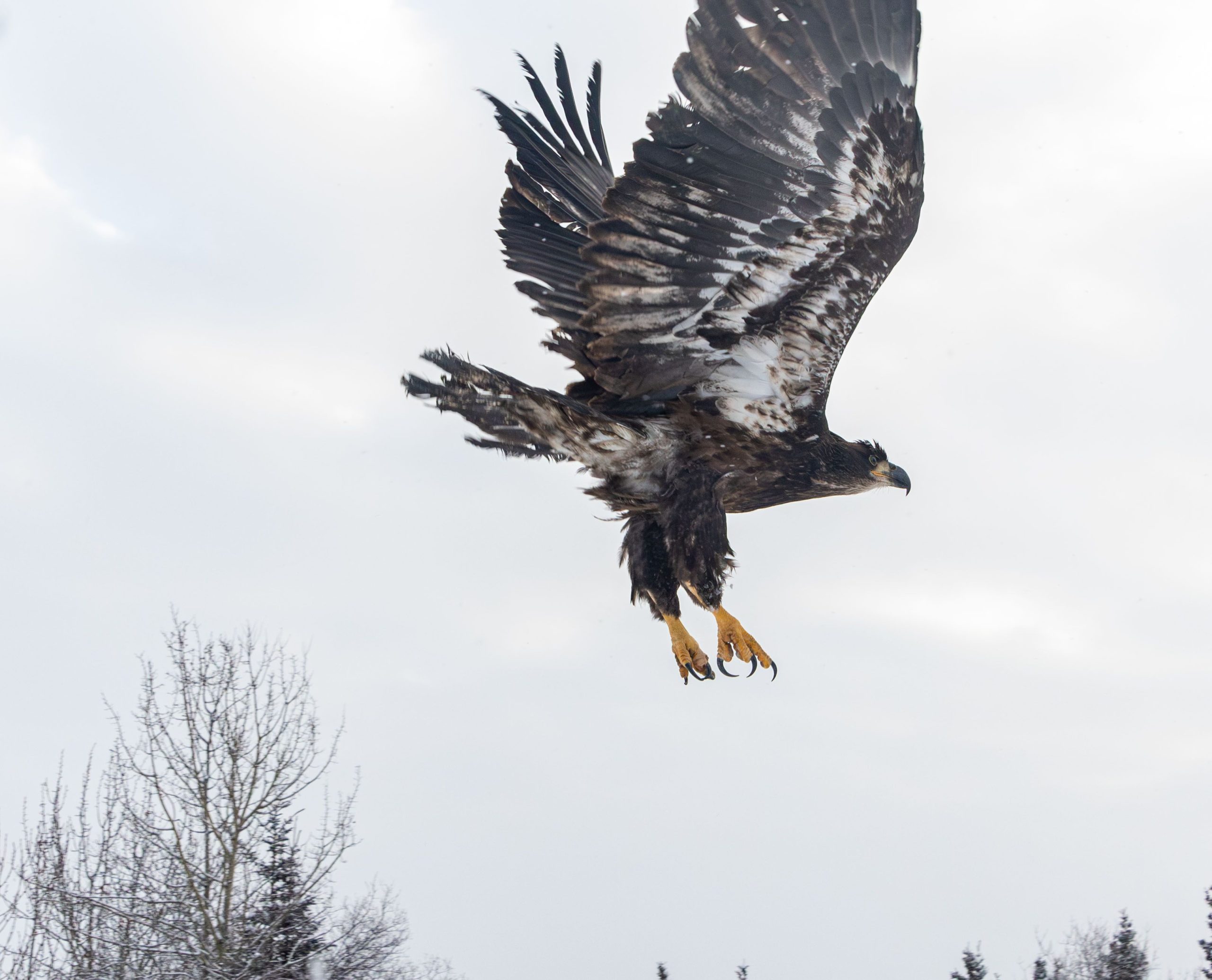
On November 27th another juvenile bald eagle made it way back to the wild, eagerly. A public release occurred with a very small group helping send it off. 

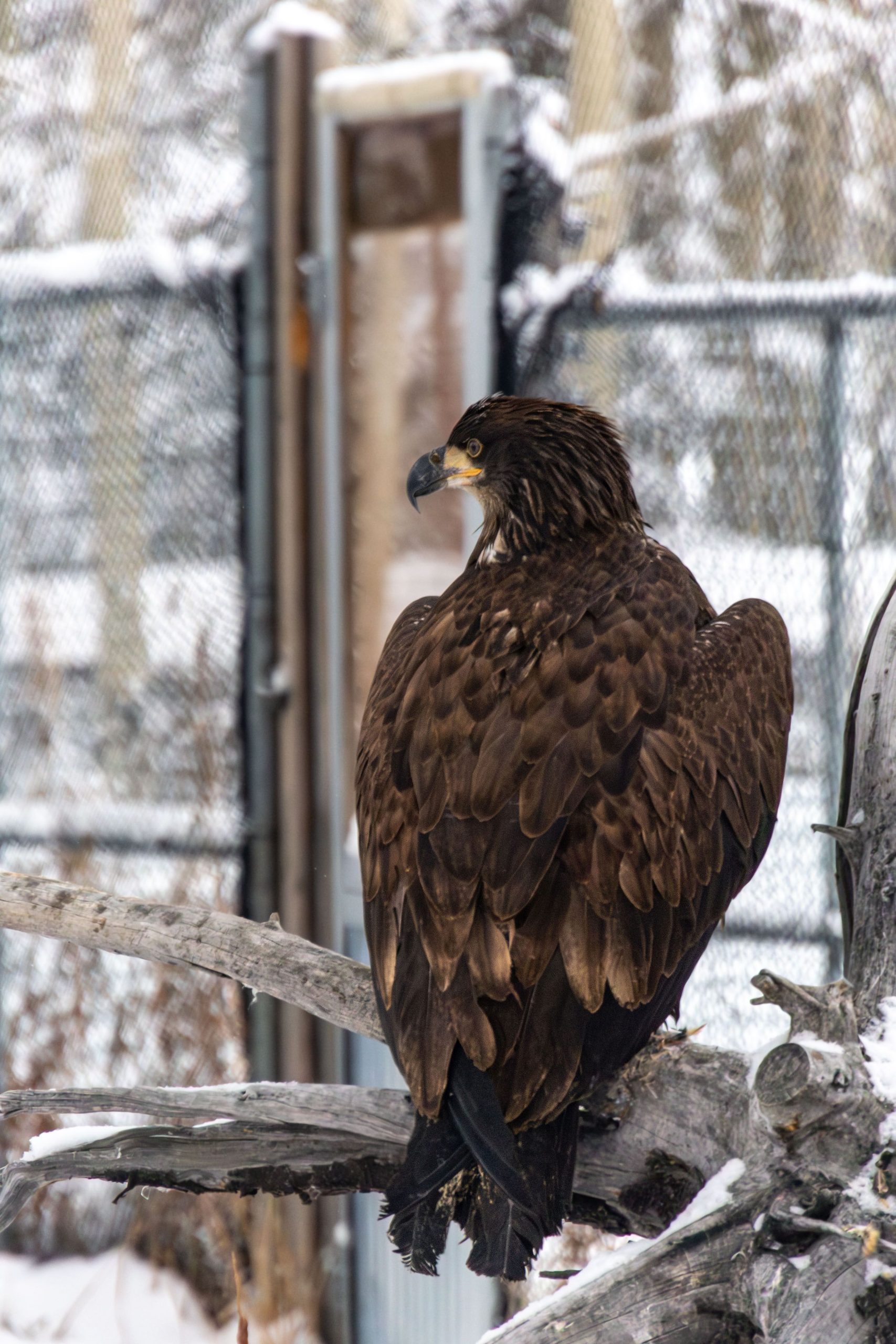
mature bald eagle in rehabilitation

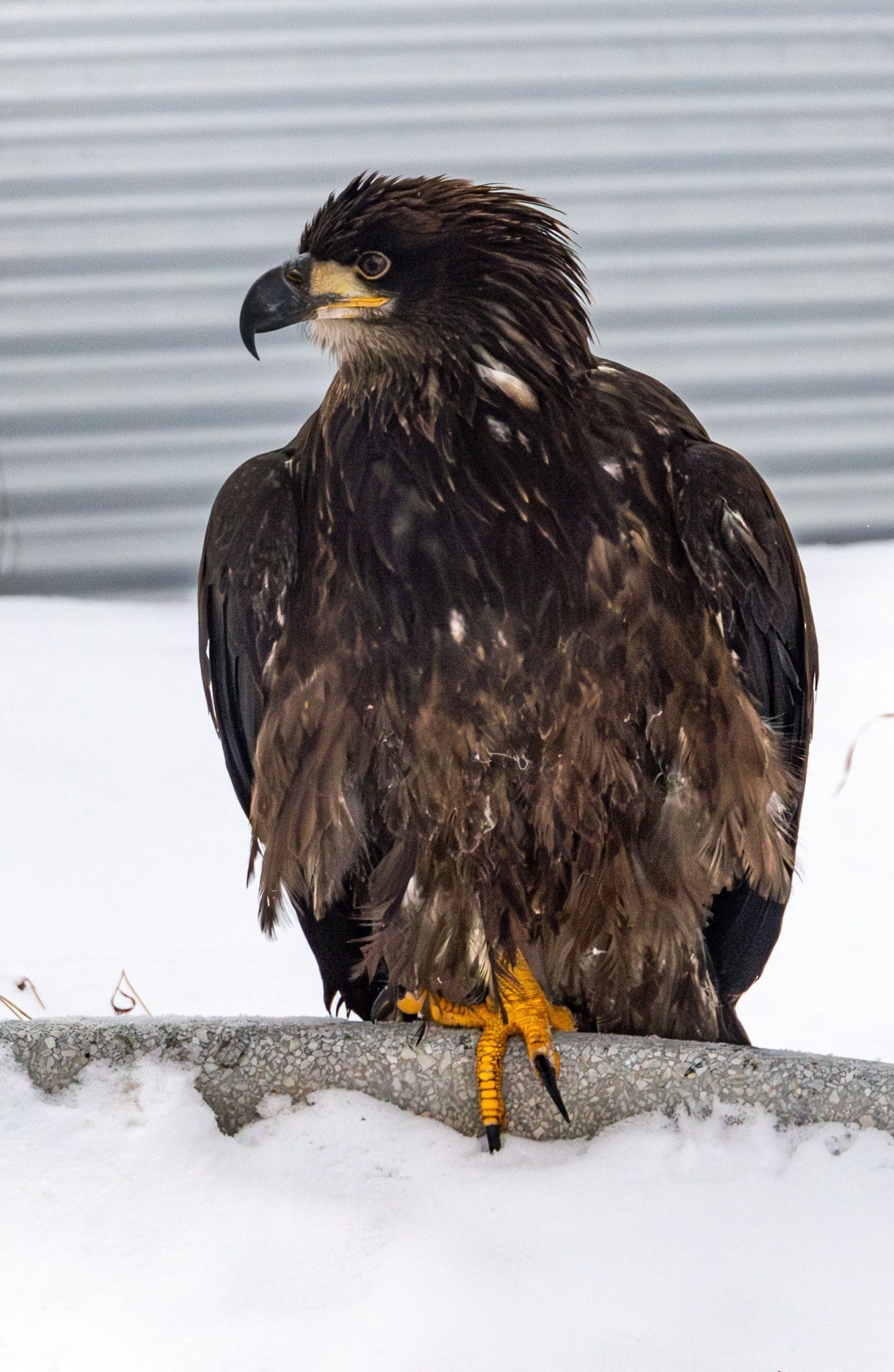
On November 9th, A juvenile bald eagle was found struggling, entangled in barbed wire fencing in Carmacks. It was found thanks to Bob's dogs, who alerted him of the eagle stuck. Bob is a resident of Carmacks and would not have noticed the bird, behind a large shed, had it not been for his dogs. He managed to remove the bird from the fencing. He dropped to the ground and wasn't flying away after free. Bob approached it again and noticed it was shivering and lethargic. 

Old crow bald eagle upon arrival and admittance into the Wildlife Rehabilitation Centre at the Preserve. May 10th. Photo credit L.Caskenette

Bob called local Conservation Officer, Blake Vandecamp who eventually had the bird brought into care of the Wildlife Preserve's Wildlife Rehabilitation Centre. 

Old crow bald eagle upon arrival and admittance into the Wildlife Rehabilitation Centre at the Preserve. May 10th. Photo credit L.Caskenette

The eagle weighed only 4kg and had some minor laceration injury to the wing and some swelling in the feet (likely due to the talons being caught up in the fencing. Like the Dawson City eagle, it was very happy to eat, and successfully captured live quail. Shortly before release the bird weighed 5.2kg. 

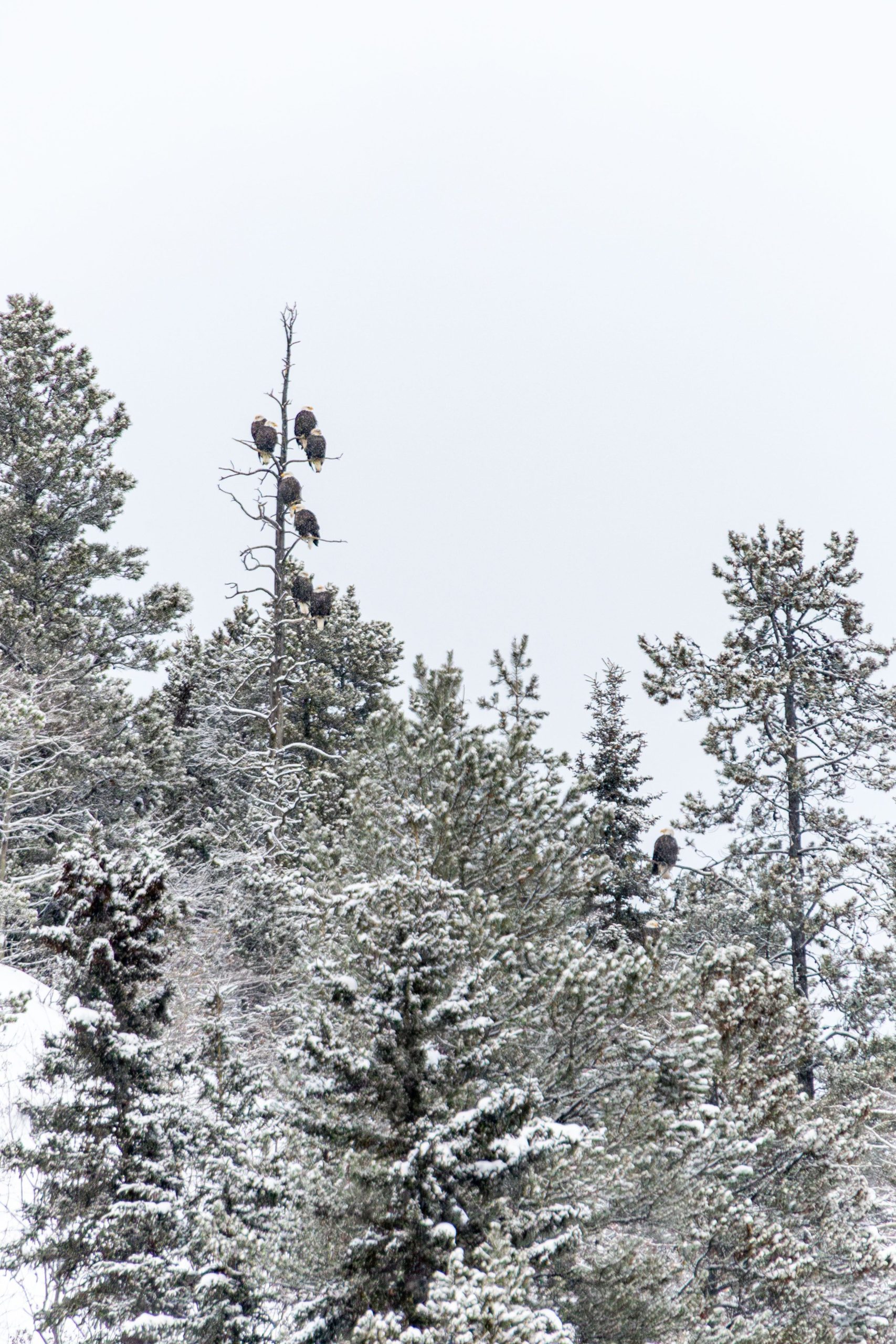
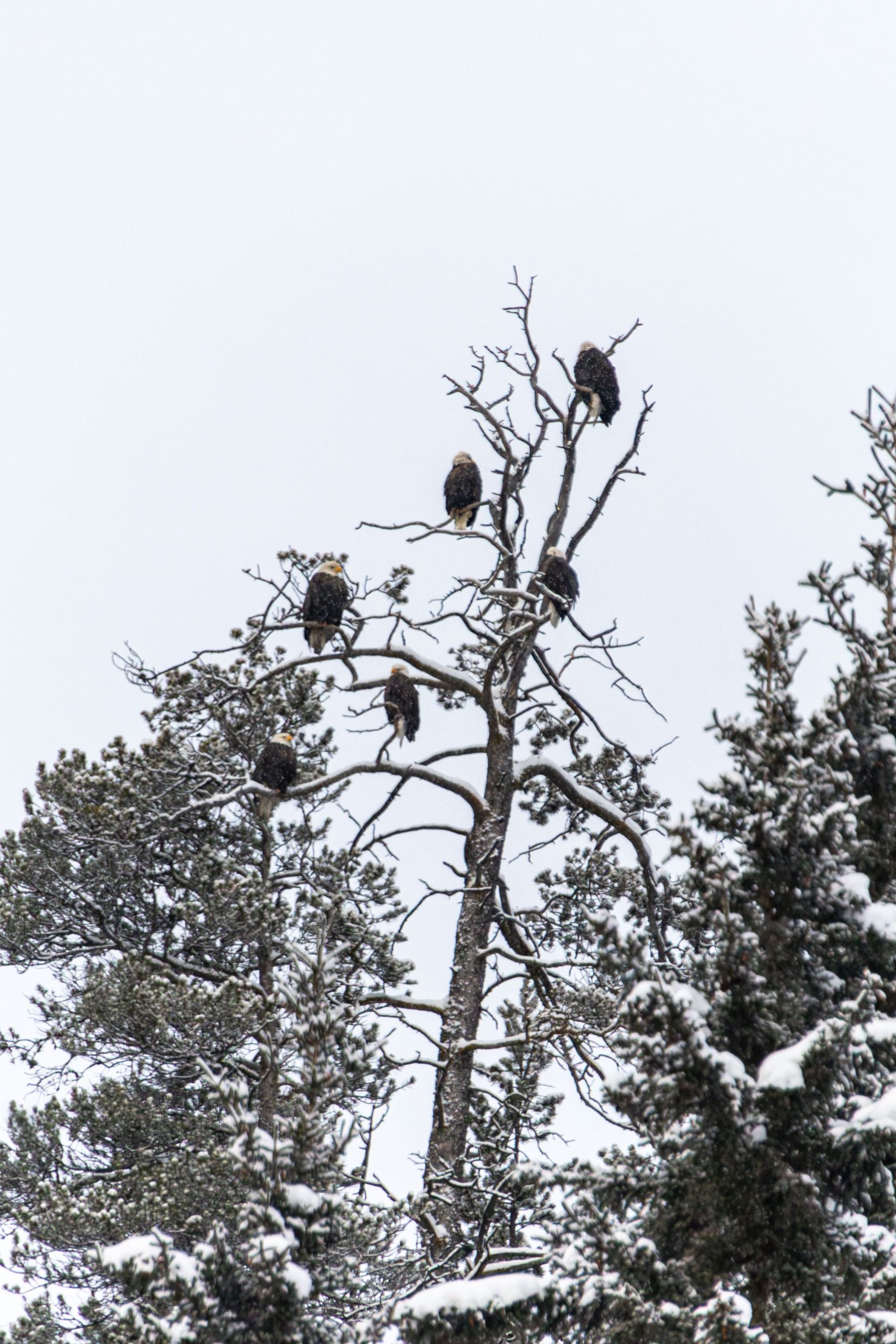
The choice to release it more locally was for a few reasons, including it being a juvenile and underweight possibly indicating unsuccessful hunting in the area it was found. While we generally try to rerelease in the location found, during winter we have elected to release where there are other known successful groups of eagles. 

On November 27th, 2024, at 5.2kg in weight and less than a month in our care, the juvenile bald eagle was returned to the wild, at Chasàn Chùa (McIntyre Creek). Further, transport of an eagle long distances can be challenging due to limited personal to arrange this and it can add additional stress to the bird that we want to avoid if possible. While we are helping the animal while in our care, the animal doesn't necessarily see it this way and it can be a stressful time. Just consider how you feel when you're out of your comfort zone, your regular routines interrupted and you're in an unfamiliar place while also  possibly sick or injured. 

Several groups of bald eagle, mostly mature but a few immature are seen right near the release location. 📸L.Caskenette

Help us get them back on their wings. We could use your help. If you are able to support the care of these two animals, please consider donating. Every contribution makes a difference and as a non-profit charitable organization, you can receive a charitable tax receipt for your support. 

Photo credit: L. Caskenette

Lindsay Caskenette

Lindsay Caskenette

Manager Visitor Services

Lindsay joined the Wildlife Preserve team March 2014. Originally from Ontario, she came to the Yukon in search of new adventures and new career challenges. Lindsay holds a degree in Environmental Studies with honours from Wilfrid Laurier University and brings with her a strong passion for sharing what nature, animals, and the environment can teach us.

867-456-7400
Lindsay@yukonwildlife.ca

Explore by Category

Explore by Author

A Lynx With a Legacy

A Lynx With a Legacy

veterinary medicine

by Lindsay Caskenette | Nov 22, 2024

6 minute read

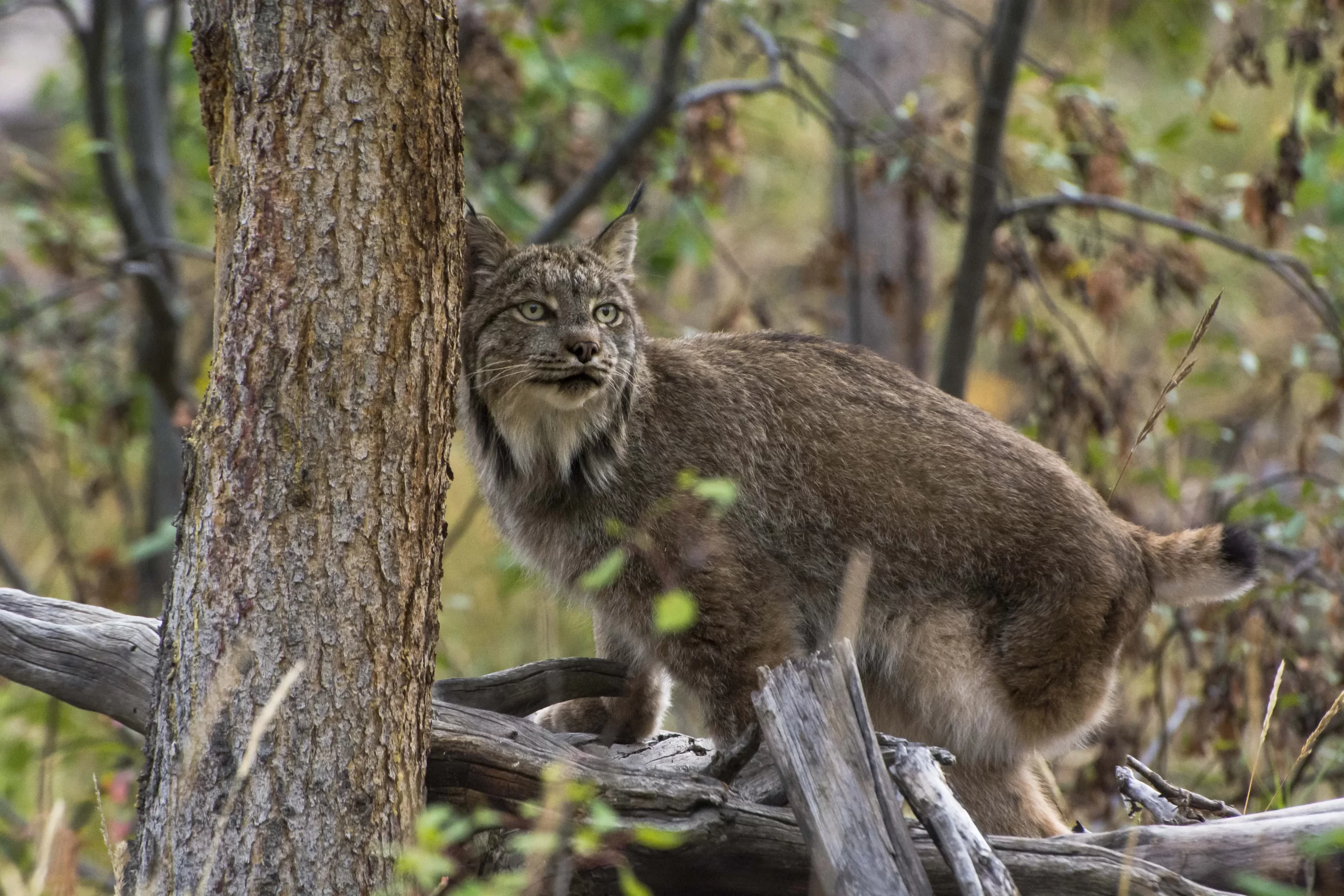
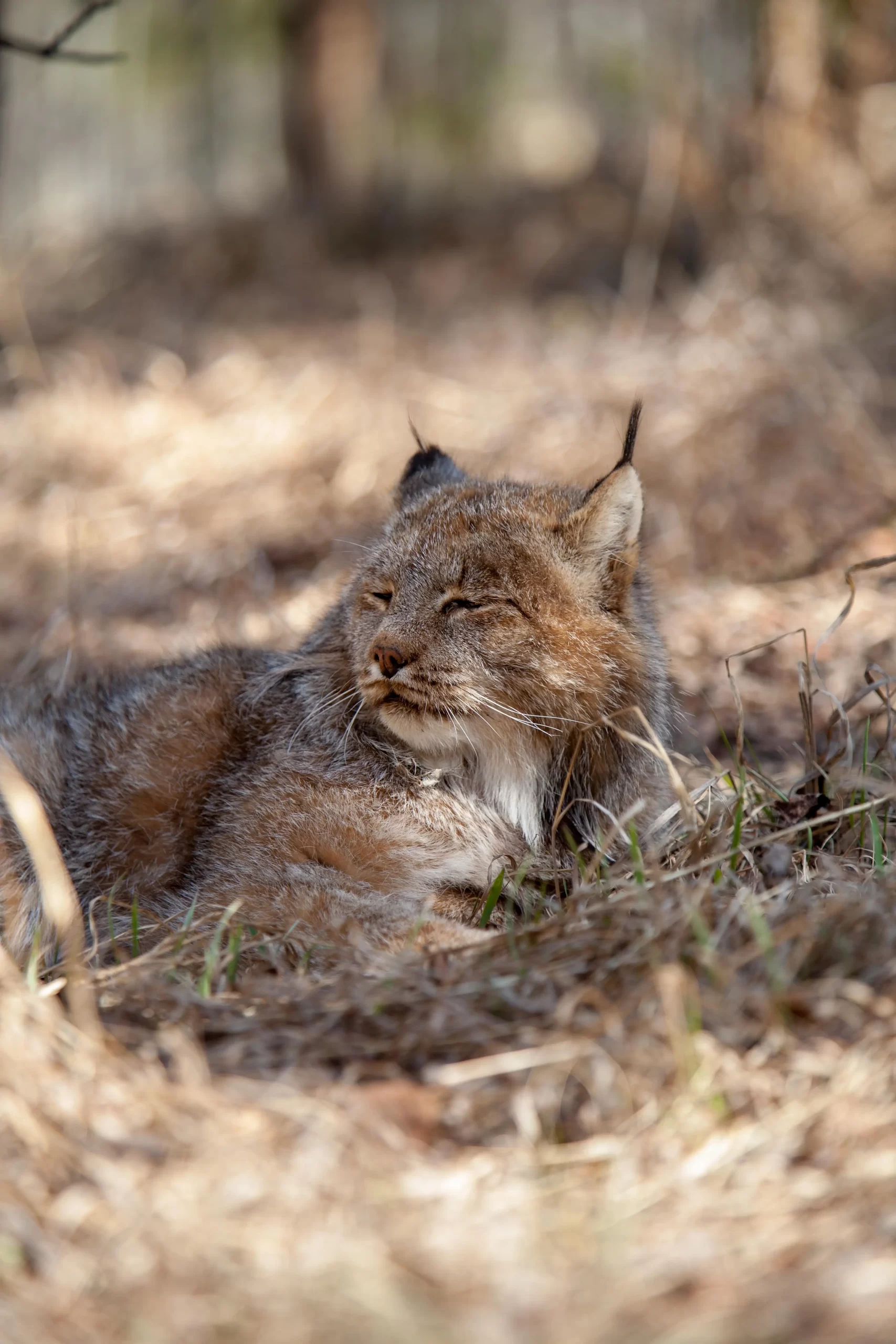
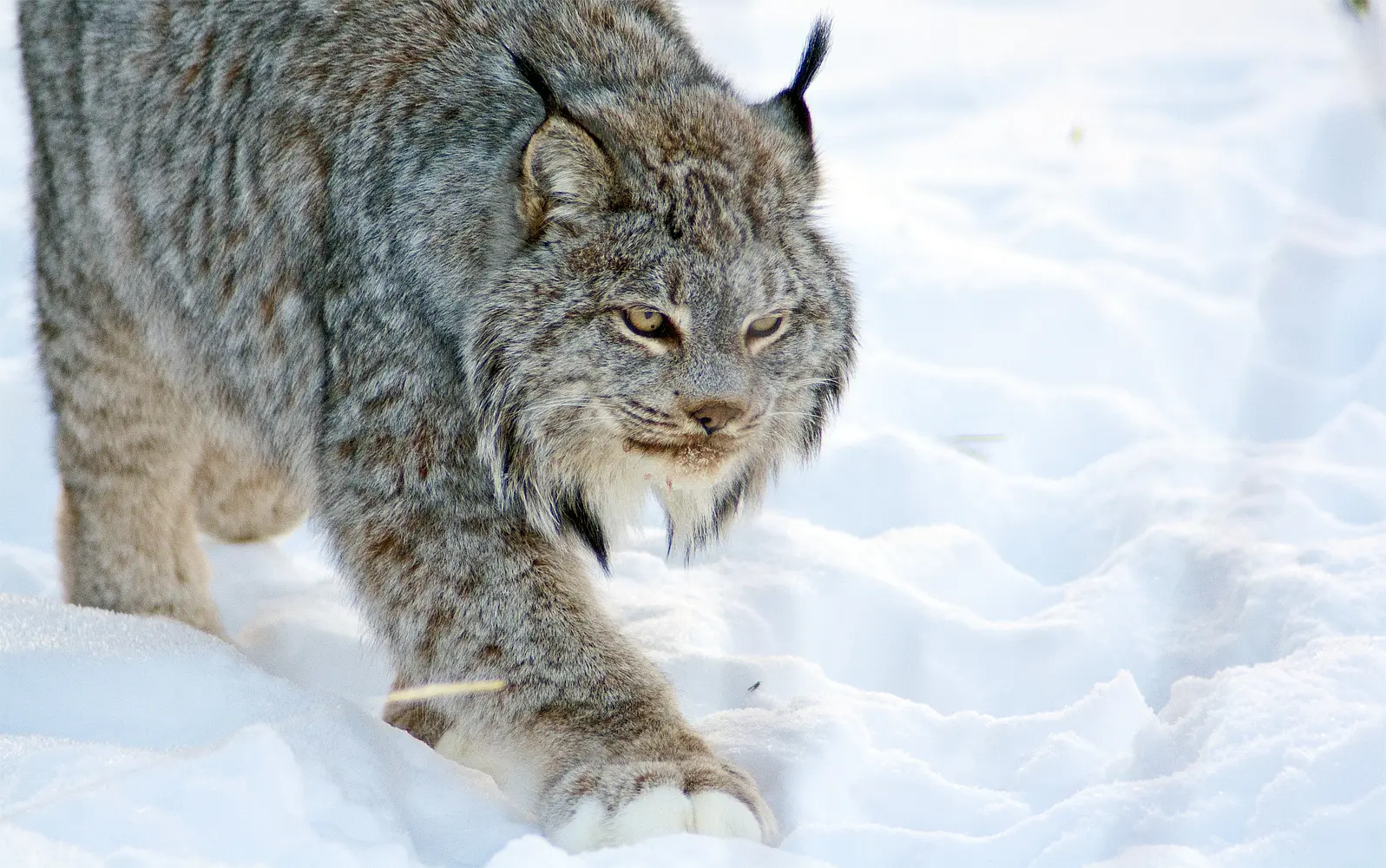
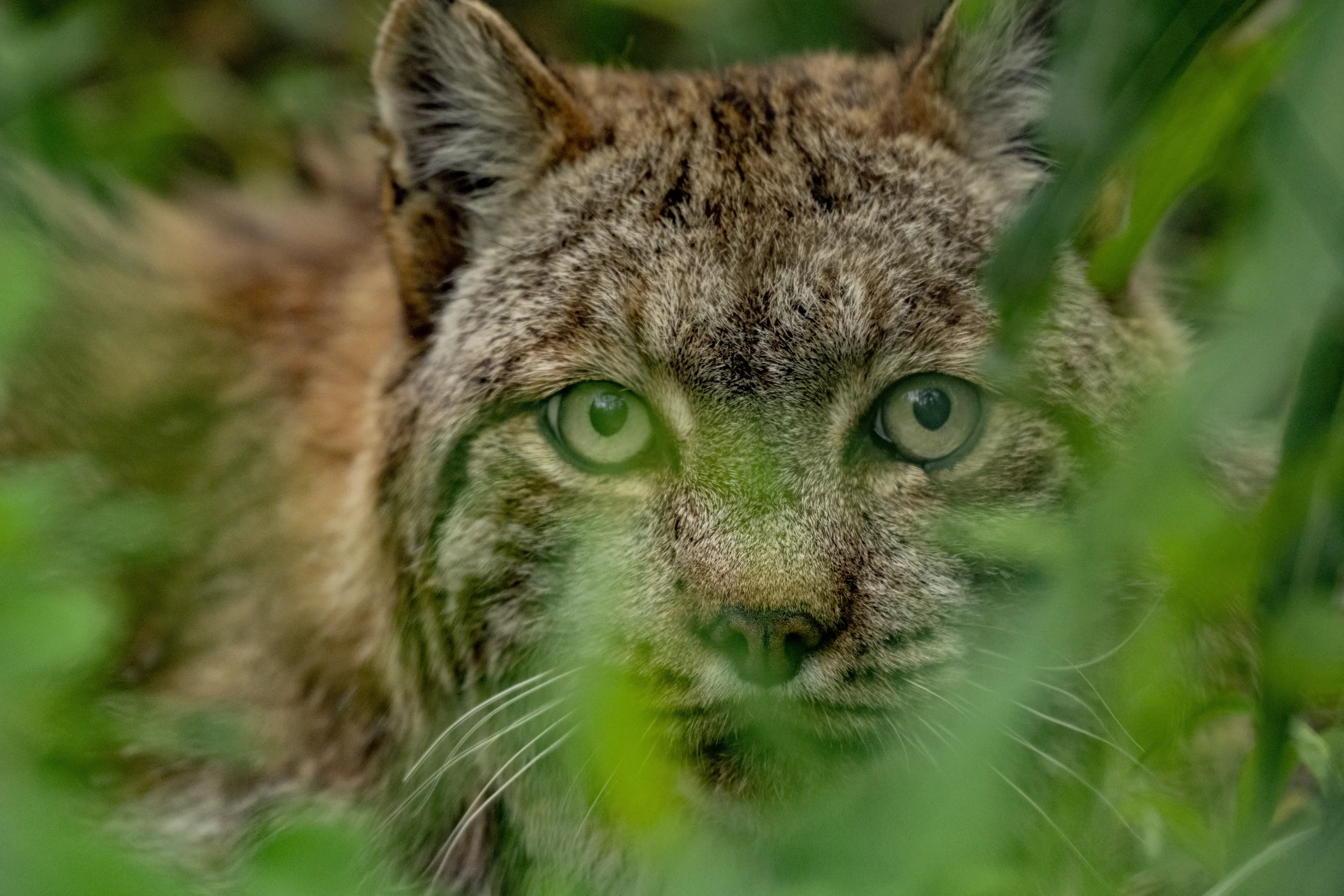
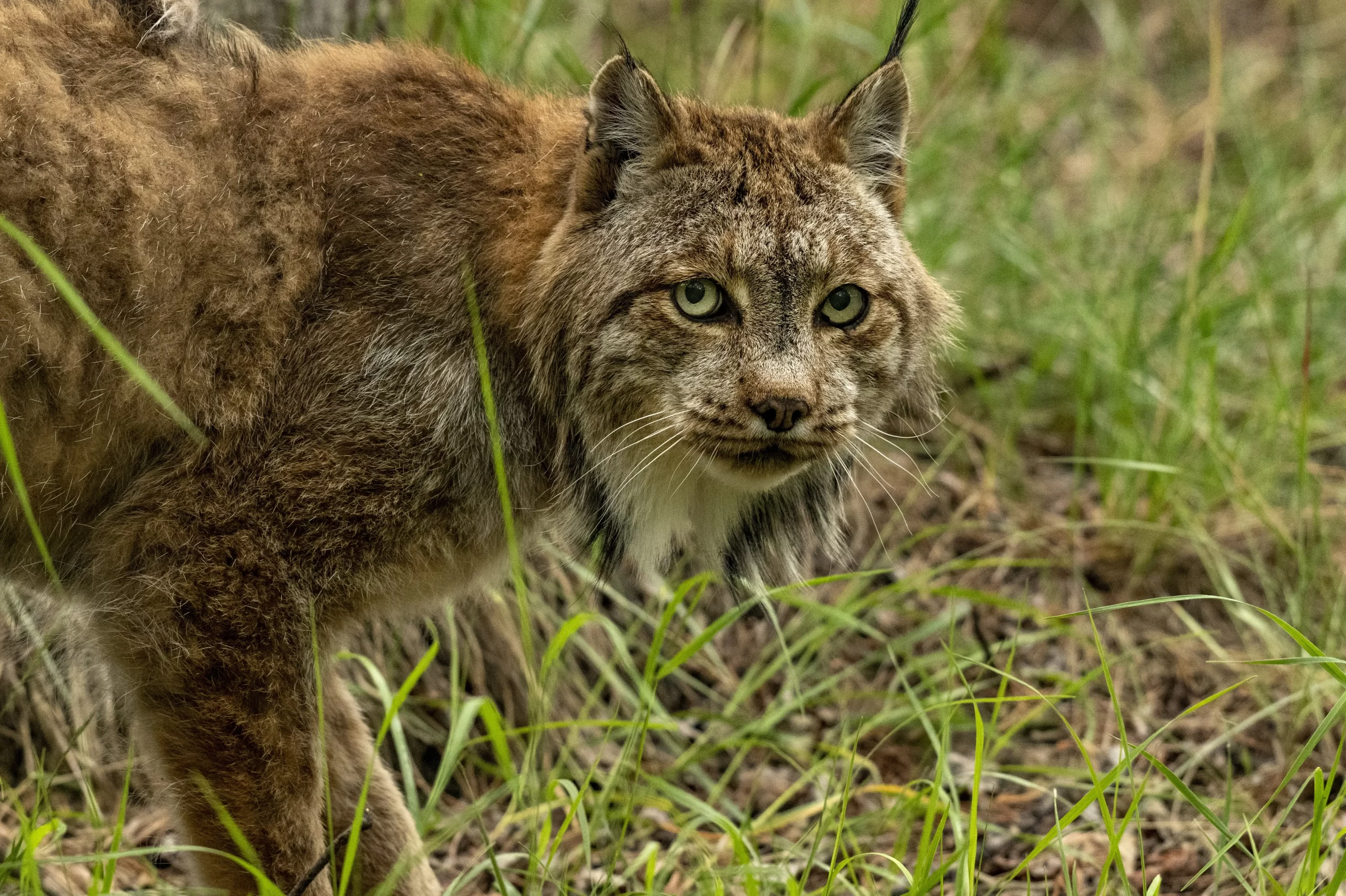
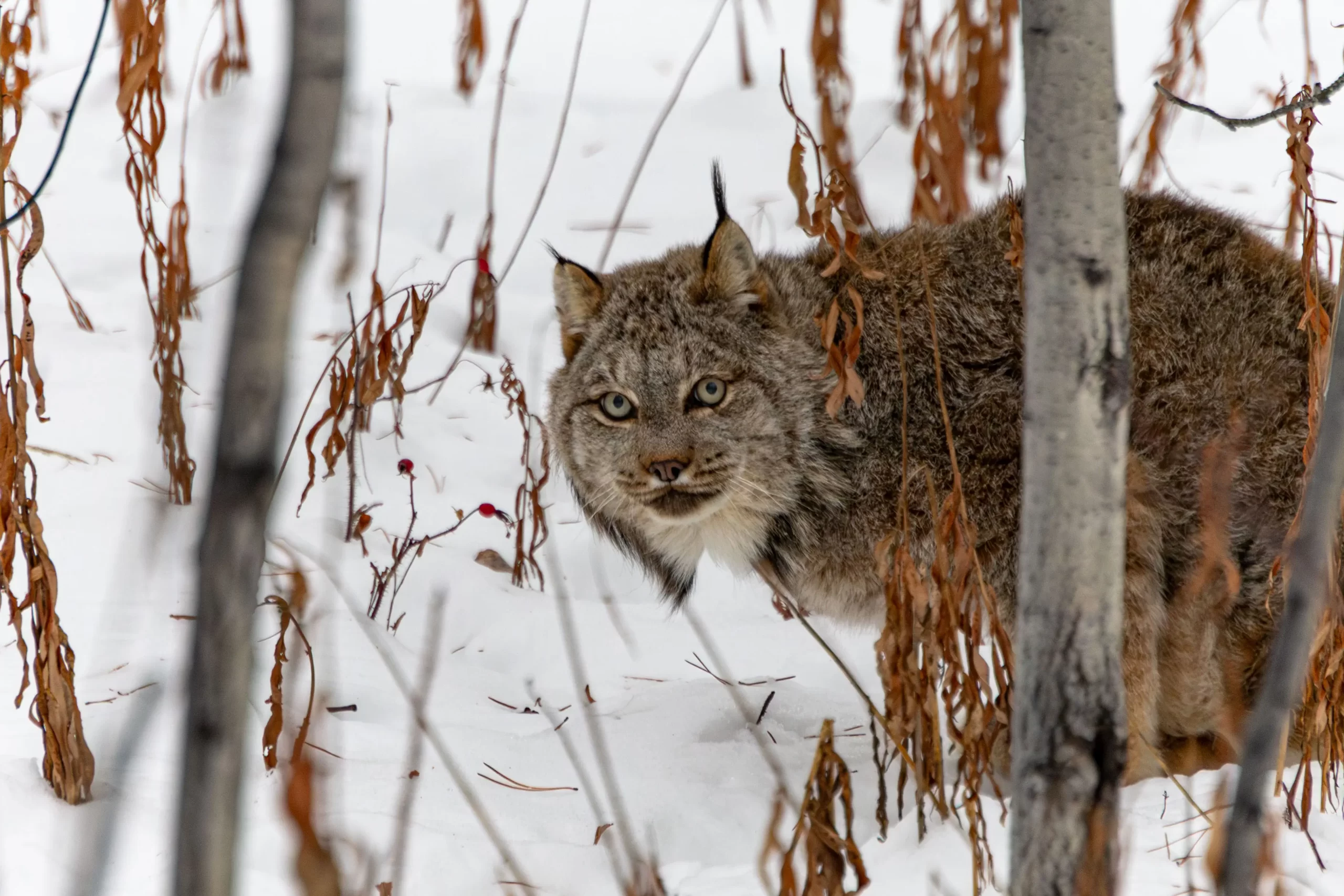
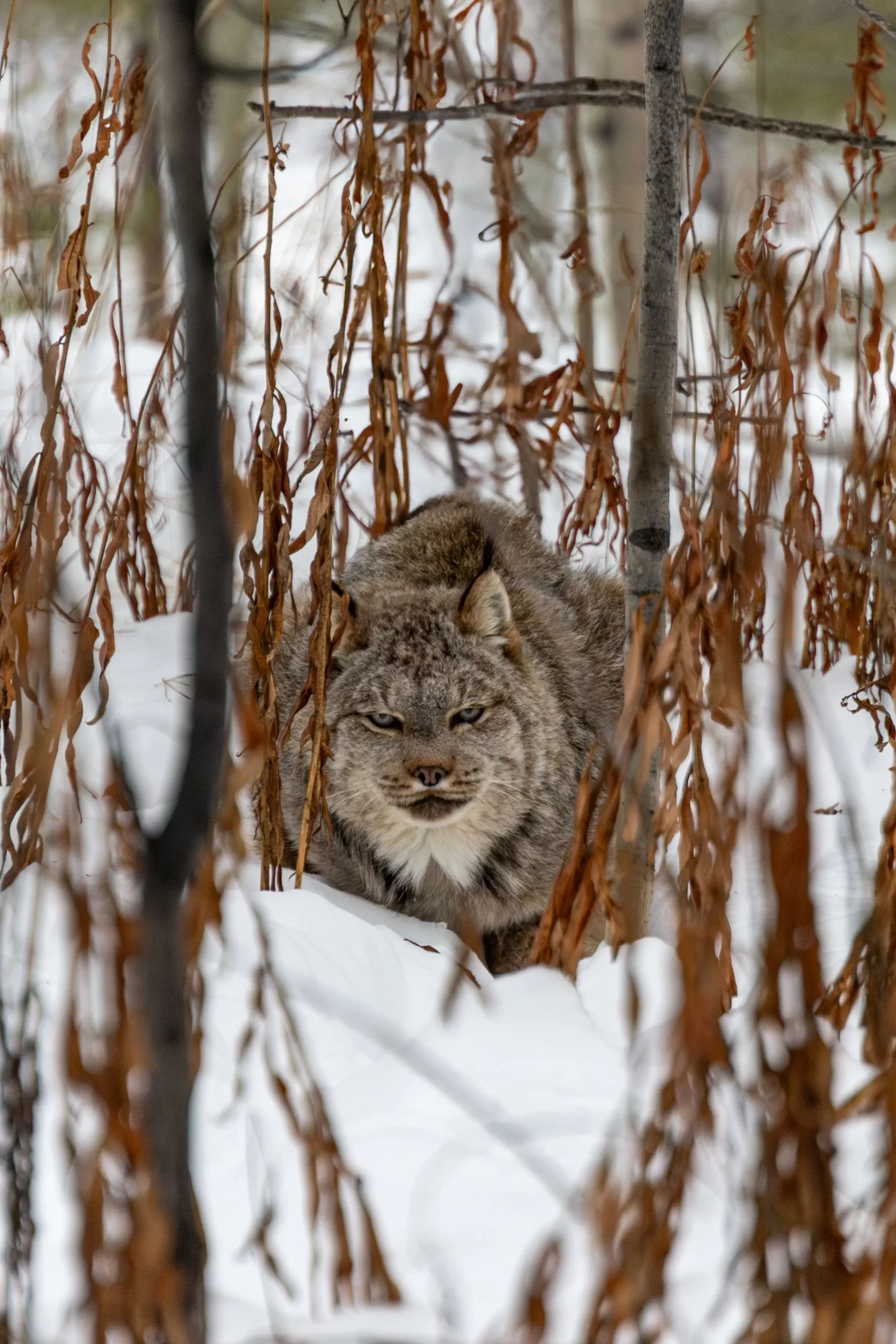
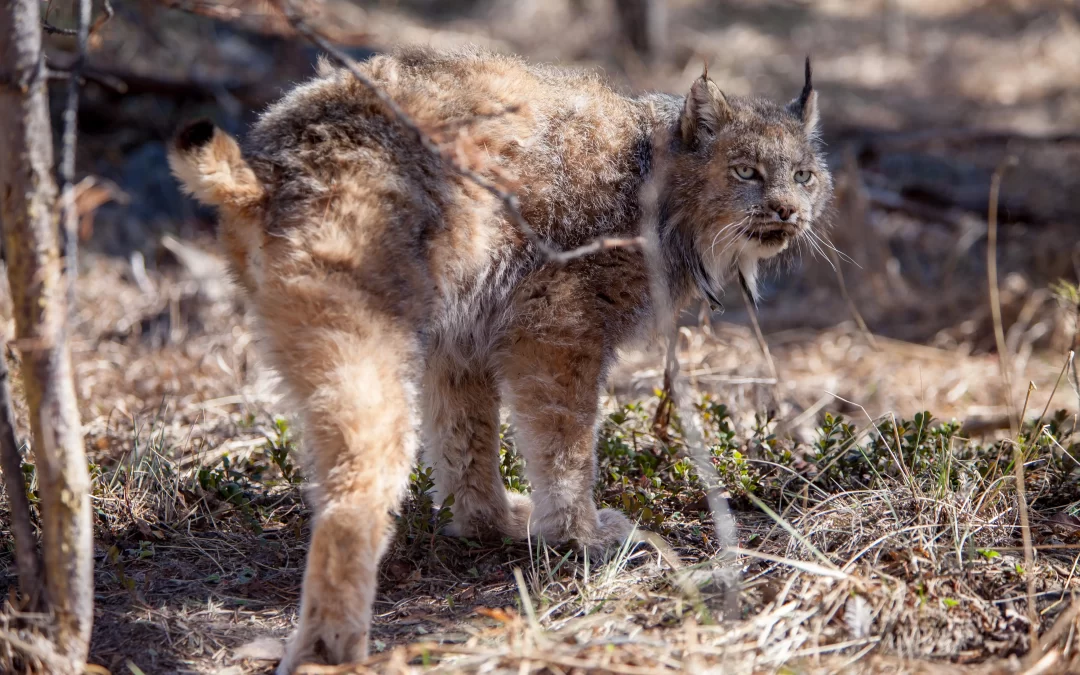
The Yukon Wildlife Preserve is deeply saddened to announce the passing of its beloved male lynx on Saturday, November 9th. This exceptional animal, who joined the Preserve’s collection in 2010, was a symbol of resilience and scientific importance, leaving behind a legacy that will not be forgotten.

JB- Moose First Day May 26th, 2014 - Justine Benjamin

Photo credit: L.Caskenette 2018

Born in the wild in 2008, the male lynx’s early life was marked by an unfortunate accident during a research project in the Edmonton, Alberta area. The injury required the amputation of his back left leg, a traumatic event that ultimately led to his rescue and relocation to the Yukon Wildlife Preserve. For the first eight years of his time at the Preserve, he remained behind the scenes, away from the public eye, while another male lynx, who had been part of the collection, cohabited with the other lynx.

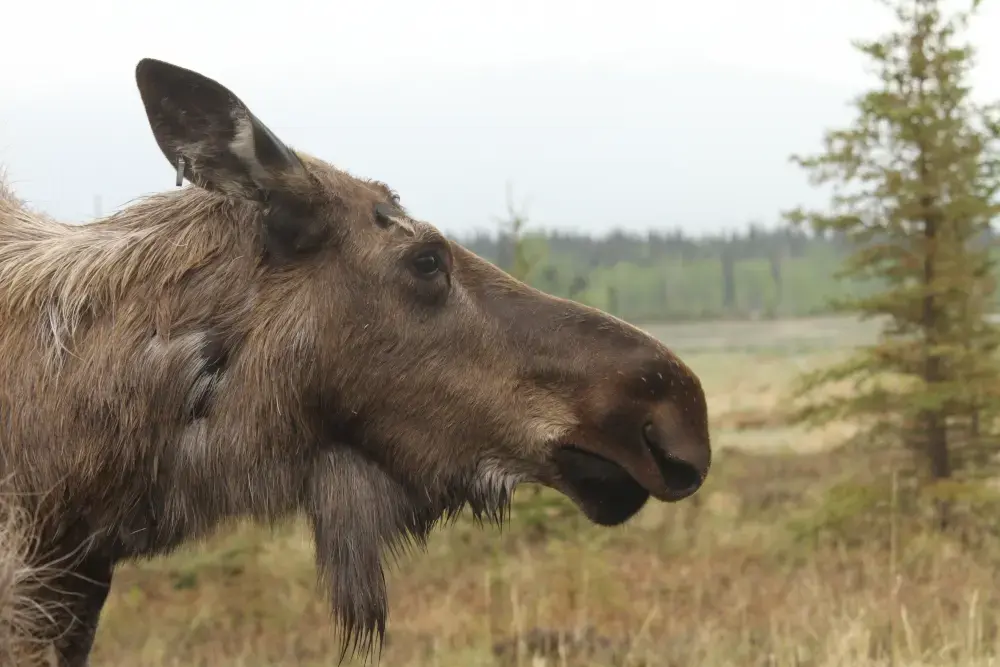
female, moose, snow, YWP - Whitehorse - Yukon JB the rehabilitated moose. Jake Paleczny

Photo credit: Jake Paleczny

The passing of this other male lynx, who lived to almost 21 years of age, in December 2017, allowed for the three-legged lynx to join the female lynx, and he quickly became a well-known and cherished resident of the Preserve. His unique physical appearance, the result of his injury, made him stand out as a symbol of adaptability and strength.

Male lynx photo taken 2013. Born in Summer 1997 died December 2017.

Photo credit: Jake Paleczny Male lynz born in 1997. Died in December of 2017. 

But the three-legged lynx was not only special because of his physical traits—his genetics were also extraordinary. His wild origins made him an invaluable member of the Species Survival Plan (SSP) program, where he was recognized for contributing genetically to the broader conservation effort for Canada lynx. As part of an ambitious scientific study in 2018, the Yukon Wildlife Preserve facilitated the mapping of this lynx’s genome in collaboration with the University of Toronto. This groundbreaking research provided insights into chromosome structure in mammals and offered important data for comparing the Canada lynx to the highly endangered Iberian lynx, helping to resolve scientific controversies surrounding the phylogenetic classification of this cat species.

Photo Credit : Ami Vitale National Geographic Male lynx summer 2024 three legged rescue lynx

Summer 2024. Photo credit: Ami Vitale National Geographic

Despite his distinct genetic heritage, the lynx’s time at the Preserve also had challenges. Although he made several attempts to breed with both the 2009 and 2014 female lynx, no successful litters were produced. Tragically, the one litter born to the older female lynx in 2021 did not survive. Despite these setbacks, the male lynx's contributions to both the Preserve’s mission and scientific research were invaluable.

Photo Credit : Ami Vitale National Geographic Male lynx summer 2024 three legged rescue lynx

Summer 2024. Photo credit: Ami Vitale National Geographic

The loss of this remarkable animal is a bittersweet moment for the team at the Yukon Wildlife Preserve. His resilience, both in the face of adversity and throughout his life, will be remembered by all who had the privilege of caring for him.

Taken November 5 2024. Photo credit: L.Caskenette

The Yukon Wildlife Preserve remains committed to preserving and protecting wildlife, and will continue to honor the legacy of this exceptional lynx as part of its broader conservation efforts. As we learn more from the necropsy details we will share. 

• • •

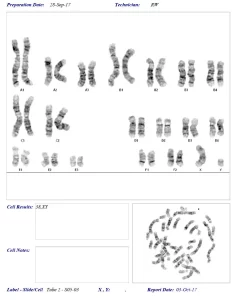
In 2017/2018 The Centre for Applied Genomics (TCAG), at The Hospital for Sick Children, and University of Toronto connected with the Preserve to ask for support to study chromosome structures in animals. As apart of the Canada 150 celebrations as well the genome mapping of several iconic Canadian speciesm including first a beaver, were completed. A blood sample was provided by our three legged lynx.

The karyotype (chromosome complement) of this resident Canada Lynx, was determined to be 38, XY (see picture). Having 38 chromosomes of the ascribed size is identical to that found in the domestic cat, indicating close relationship. The presence of a X- and a Y-chromosome confirmed the sex of the animal, as a male.

Background

The Centre for Applied Genomics (TCAG), at SickKids is headed by Stephen Scherer who is a recognized expert in the field of neurogenomics. Neurogenomics combines classical neurobiology (study of the brain) with the study of the genome (our genetic material) in the context of disease, such as Autism. The human genome is represented by a string of 4 chemical bases, over 3 billion bases long that is found in each cell of the body. The precise order or the sequence of these four chemical bases constitutes the organism's genome, which defines who and what the organism is, whether it is a cat, a bird, or a tree etc. Essentially, the genome is the organism's blueprint that is inherited to future generations. It is not hard to imagine that changes in the order of these bases in the genome could give rise to disease. In fact, most cancers are due to such changes, either due to plain bad luck or from exposure to chemicals or radiation and the like.

The technology exists to determine the "sequence" of the genome to give a heads up on disease or treatment. Scientists are in the era of the "$1,000 genome" a term coined by the marketing people. SickKids is the largest genome sequencing centre in Canada and they "sequence" about 10,000 patient genomes a year. You would recall the Human Genome is 3 billion bases long. But in order to produce a genome for only $1,000, the sequencing machine reproduces a patient's genome as tiny low cost pieces, 400 million of them in fact, with each piece only about 300 bases long. These highly fragmented pieces of the genome are useful only because we already sort of know what the human genome looks like. These pieces are mapped individually onto the official "Human Reference Genome" and the differences between the two sequences (i.e. bases that are different, missing, or extra bases inserted when compared to the mapped position on the Human Reference Genome) are tabulated to produce a list of "mutations" for each patient. The current (2017 reference) official "Human Reference Genome" took nearly 15 years to build from scratch (from little pieces) at a cost of more than $US 3 billion dollars, paid for by the US government and various philanthropic organizations. This reference-based mapping method for genome sequencing works, and many human disease-causing mutations have been identified in this way.

So what is the problem?

The problem is that sequencing a patient's genome by mapping and comparing short segments against the Human Reference Genome will not identify all the mutations. Many regions of a patient's genome could be so different from the Reference Genome such that many short pieces derived from patient would not map at all; hence, large segments of the patient's genome are not amenable to analysis. They estimate about 50% of mutations are missed. To get at all the mutations, they would need to move away from the current mapping approach and reconstruct the patient's entire genome from the little pieces from scratch. This is process is called "de novo sequencing" (new or from scratch) and is similar to how the original Human Reference Genome was constructed. The trick is that, unlike the creation of the Human Reference Genome, we cannot take 15 years and $3 billion dollars to assemble the genome of each patient.

So what are we doing?

We are now working on methods to perform de novo sequencing and genome assembly there are fast and cheap. To perfect de novo sequencing in an unbiased manner, we used a genome that previously had not been sequenced before. This was one of the reasons why we sequenced and assembled the Canadian Beaver Genome early this year. Other reasons, but just as important: it was Canada's 150 anniversary and the beaver was not only named after Canada (Castor canadensis), but it had played an important role in the founding of this country; it was great for educational and environmental outreach; and finally, we want to beat an American group who wished to sequence the genome of their beaver football team mascot. At the end, we decisively won the Beaver Genome Race and our paper was published in Feb this year (See attached). We even made the cover of the journal, and had great response form the media.

Why the Lynx?

Despite the good progress made on the de novo sequencing of the beaver genome, the process is still too expensive for routine use at the hospital. We have new ideas on how to make the process better and cheaper. Hence, we need another un-sequenced genome to test the system. Moreover, the beaver genome was so well received; we decided to perform de novo sequencing and assembly of up to ten or more notable animal, bird, fish or plant in the next couple of years. The actual number we would do would depend on how low we can drive the price down. The short list of candidates include the organisms that are named after Canada (there are over eighty of them), have notable ties with Canada, or have compelling scientific rationale.

This is where the Canada Lynx (Lynx canadensis) comes in. No one had sequenced a Canada Lynx so far. From a scientific perspective, a Canada Lynx genome sequence would address a lot of the controversies relating to the phylogenetic assignments of this branch of the cat family, and it would also allow a detail comparison with the recent published genome of the highly endangered Ilberian lynx. Finally, the lynx has considerable public appeal. To push the technical envelope, we aim to sequence and assemble the Lynx genome at less half the cost of beaver genome whilst keeping the quality at the same level. Eventually, we would arrive at an efficient and cost-effective process for clinical use.

The lynx and hare were perfect Canadian canditaed to kickstart the project. 
Lindsay Caskenette

Lindsay Caskenette

Manager Visitor Services

Lindsay joined the Wildlife Preserve team March 2014. Originally from Ontario, she came to the Yukon in search of new adventures and new career challenges. Lindsay holds a degree in Environmental Studies with honours from Wilfrid Laurier University and brings with her a strong passion for sharing what nature, animals, and the environment can teach us.
867-456-7400
Lindsay@yukonwildlife.ca

Explore by Category

Explore by Author