Wet Feet and Thinhorn Sheep

Wet Feet and Thinhorn Sheep

wildlife preserve

by Jessie Jacobs | Jul 29, 2026

6 minute read -

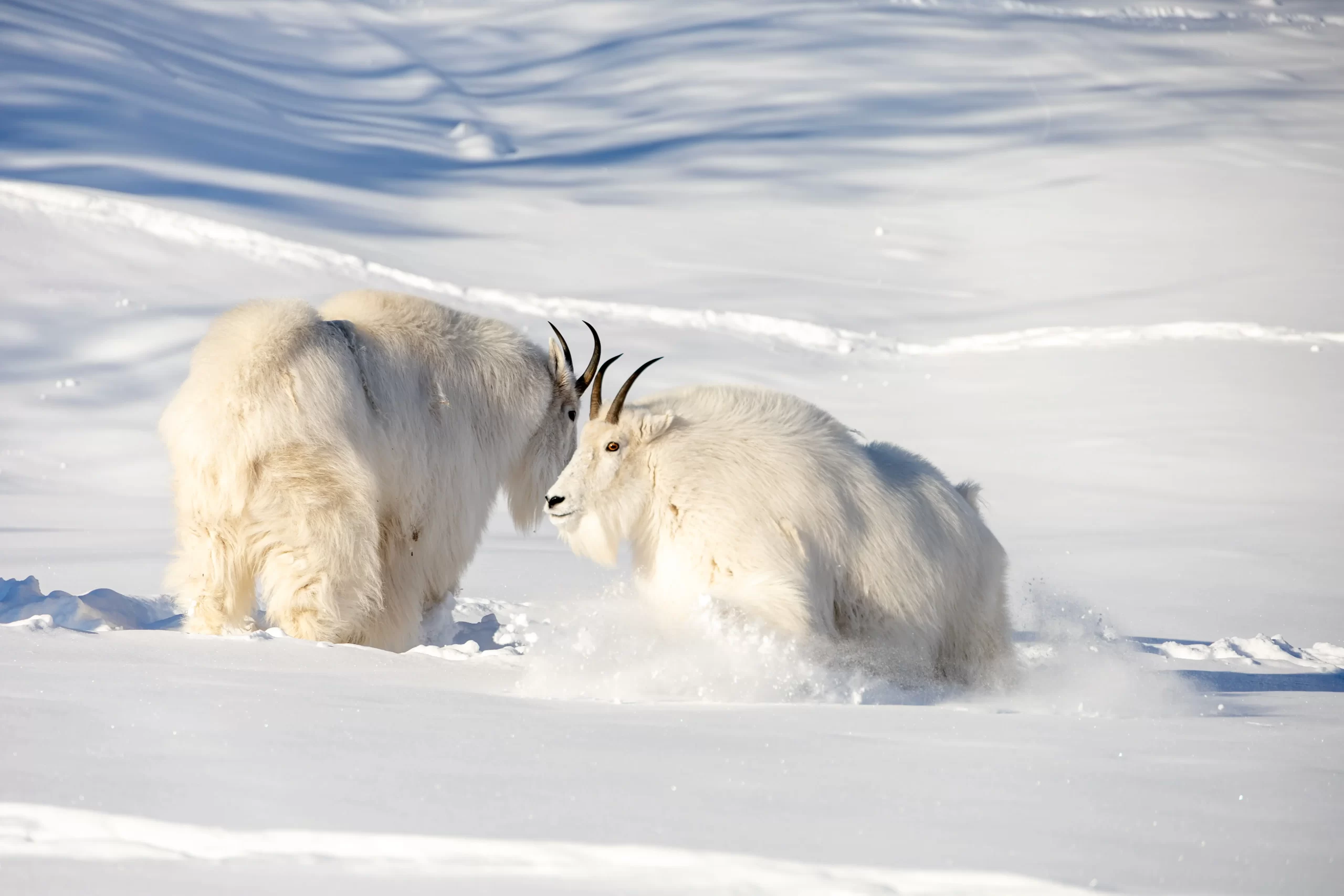
Just a few feet away, a yearling thinhorn sheep moved among the herd, unaware that she was about to become my most memorable patient. My heart raced as I waited to see if she had been successfully darted. The moment she was, our mission began.

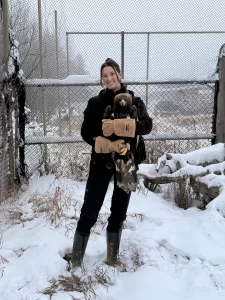
Alexis is the Preserves RVT. Alexis holding an eagle at the Yukon Wildlife Preserve in preperation to weigh the bird.The team's veterinary technician, Alexis, and I immediately jumped into action to keep the yearling in a safe, flat area, preventing her from running up the steep, rocky hill of the enclosure. Once she laid down and Alexis confirmed she was safely sedated, the preserve’s veterinarian, Dr. Huisman, and I waded through a large puddle that had formed from all the June rain to pack in our equipment.

With wet feet and adrenaline pumping, we quickly hooked her up to oxygen and monitoring equipment. In a field immobilization, every second counts. The team operated like a well-oiled machine; my job was to trim her hooves and place an ear tag. After what felt like only a few minutes, the sedation was reversed, and she was up finding her way back to the herd.

Getting to participate in a field immobilization stood out to me because of how different it is from how we are trained in veterinary school. At a traditional clinic, you have all your equipment perfectly laid out, and your patients typically walk through the front door. In wildlife medicine, the open field is your clinic. You have to pack in absolutely everything you might need, and your patients don't want anything to do with you.
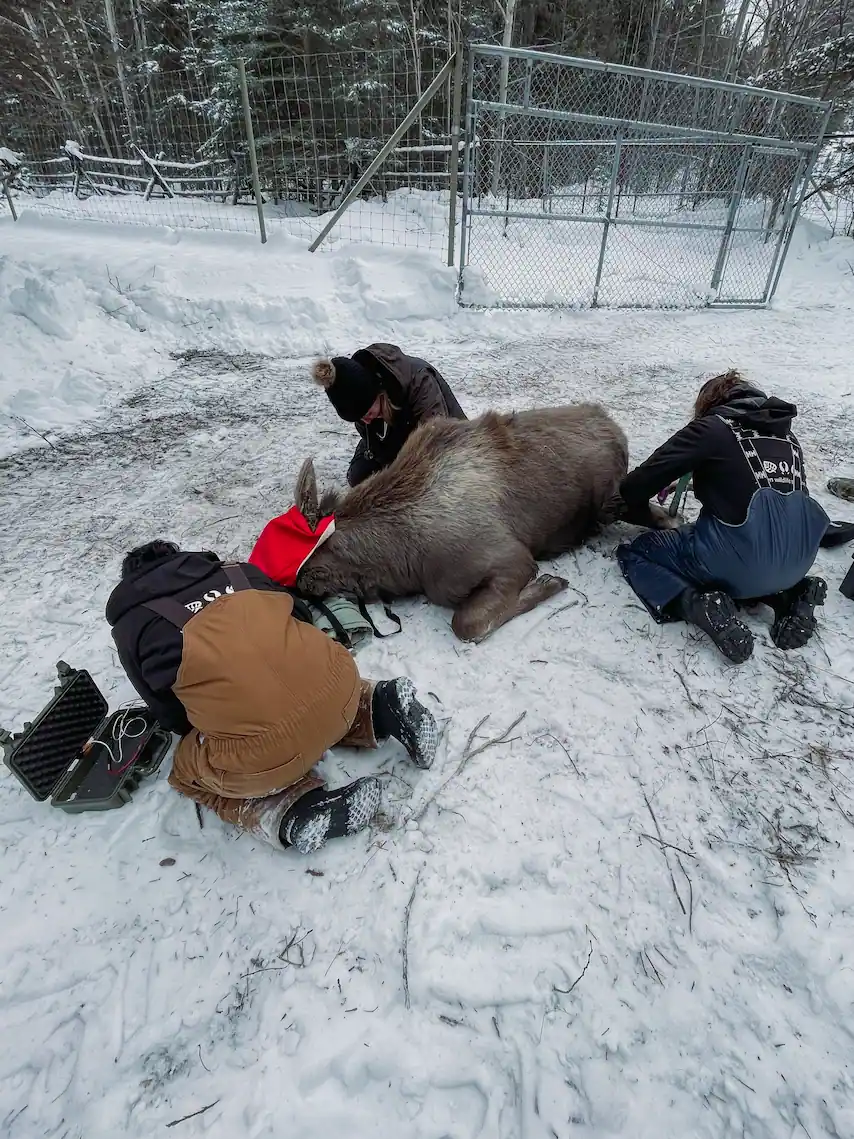
Field anesthesia requires an immense amount of strategy. You have to ensure the animal is in a safe area to lie down and to wake back up. Even the act of darting requires precision; the veterinarian can only dart in specific areas of the enclosures to guarantee no darts end up where people or other animals could be.
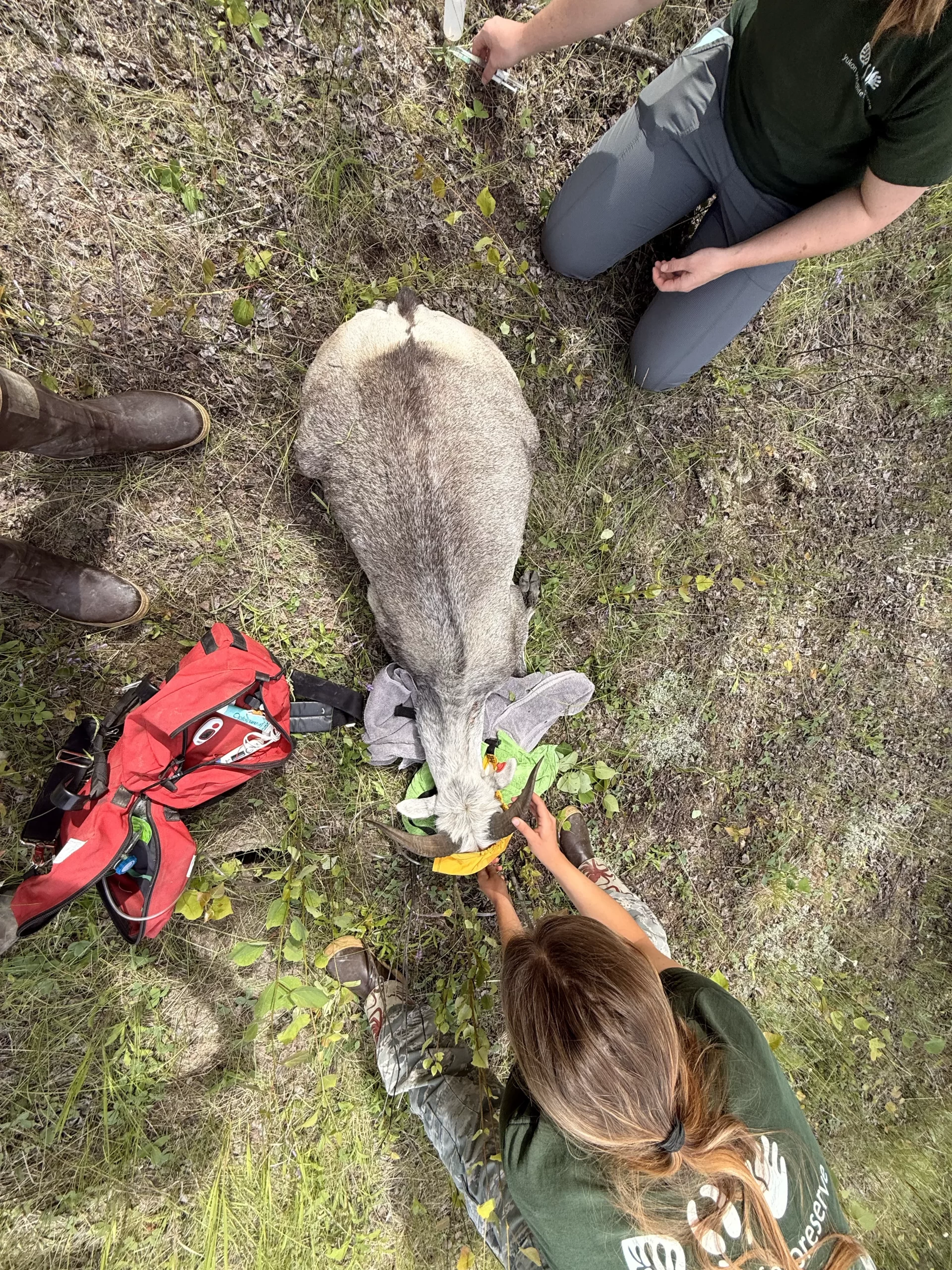
This experience taught me that wildlife immobilization relies on careful preparation, solid team communication, and strategic pre-planning. We started our day by locating the yearling to ensure she was in an appropriate area to be darted. Next, we packed and went through everything we needed for the procedure along with any extra supplies that could come in handy. Finally, we briefed as a team, mapping out everyone's specific role to ensure the highest standard of animal and human safety.
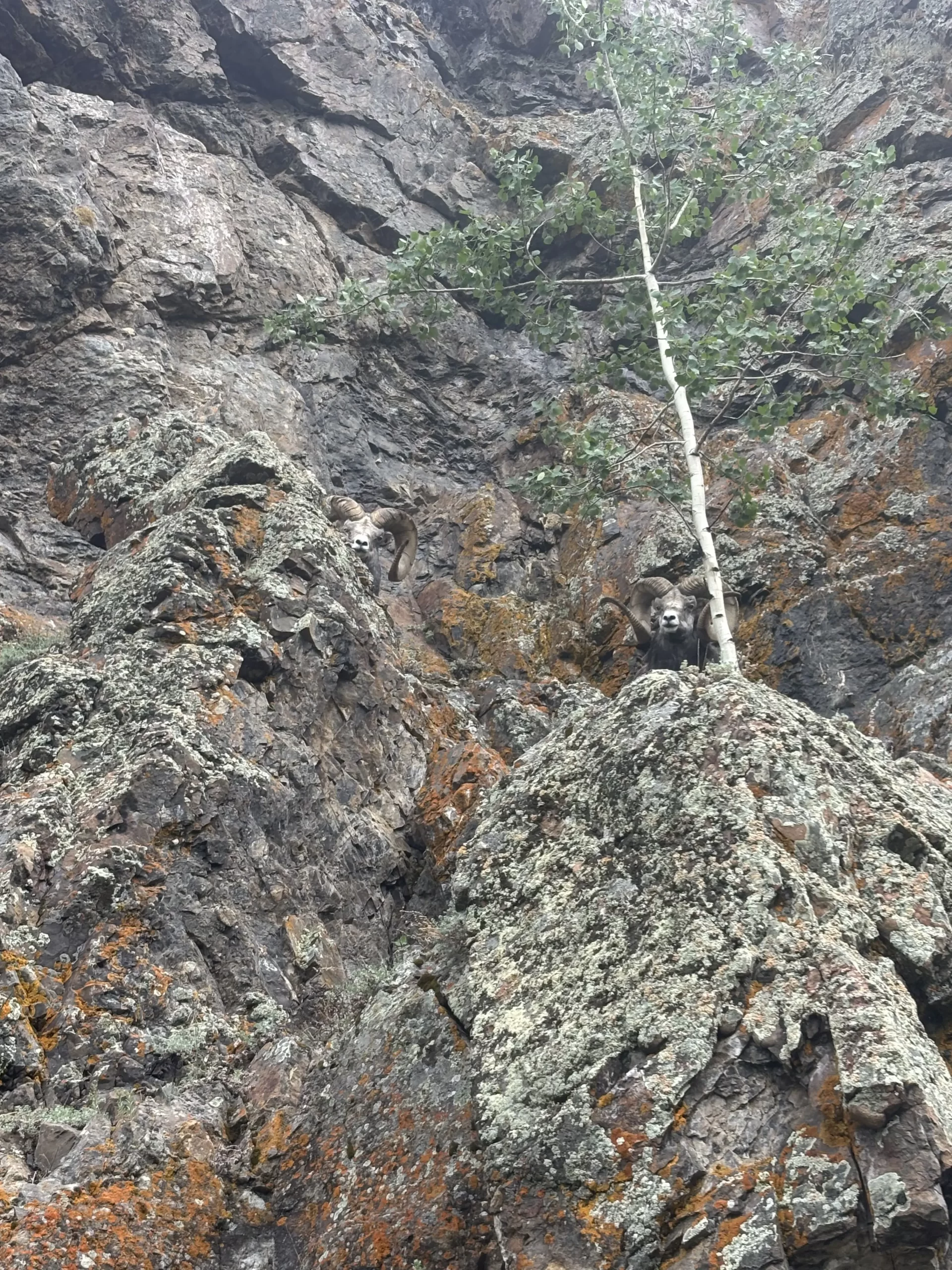
In our yearling’s case, this was her very first physical exam and hoof trim since she was lambed last year. During her sedation, we seized the low-stress opportunity to vaccinate and deworm her, which helps minimize the transmission of infectious diseases and parasites within the herd.

Immobilizations are a vital tool on the preserve and are done for various reasons. They allow the animal health team to provide essential care in a way that minimizes stress for the animal and ensures safety for the handlers. For animals requiring intensive medical care, the preserve does have a fully equipped indoor clinic.
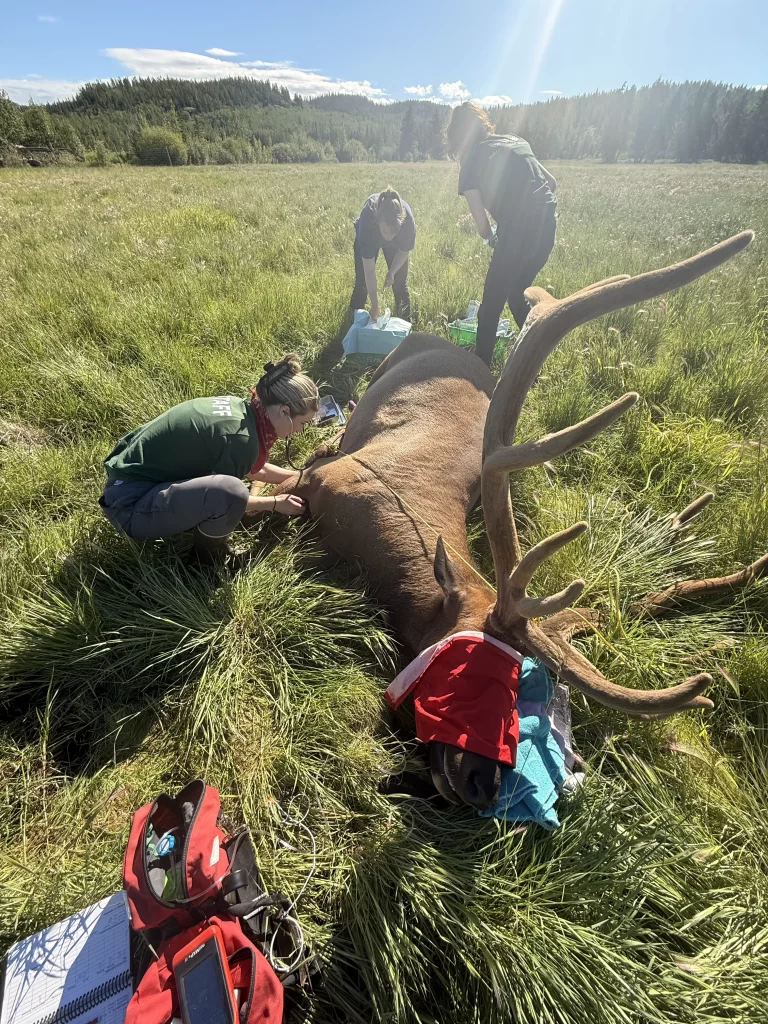
Every immobilization also allows an opportunity for data-gathering. Not only did we take many photos of her but also placed an ear tag allowing the animal care team to build her individual medical record. We also drew blood, which serves a dual purpose by screening the individual's health and providing a snapshot of the herd's overall wellness. Part of that sample is used to review mineral profiles, helping the animal care team make any changes necessary to the species-specific diets.
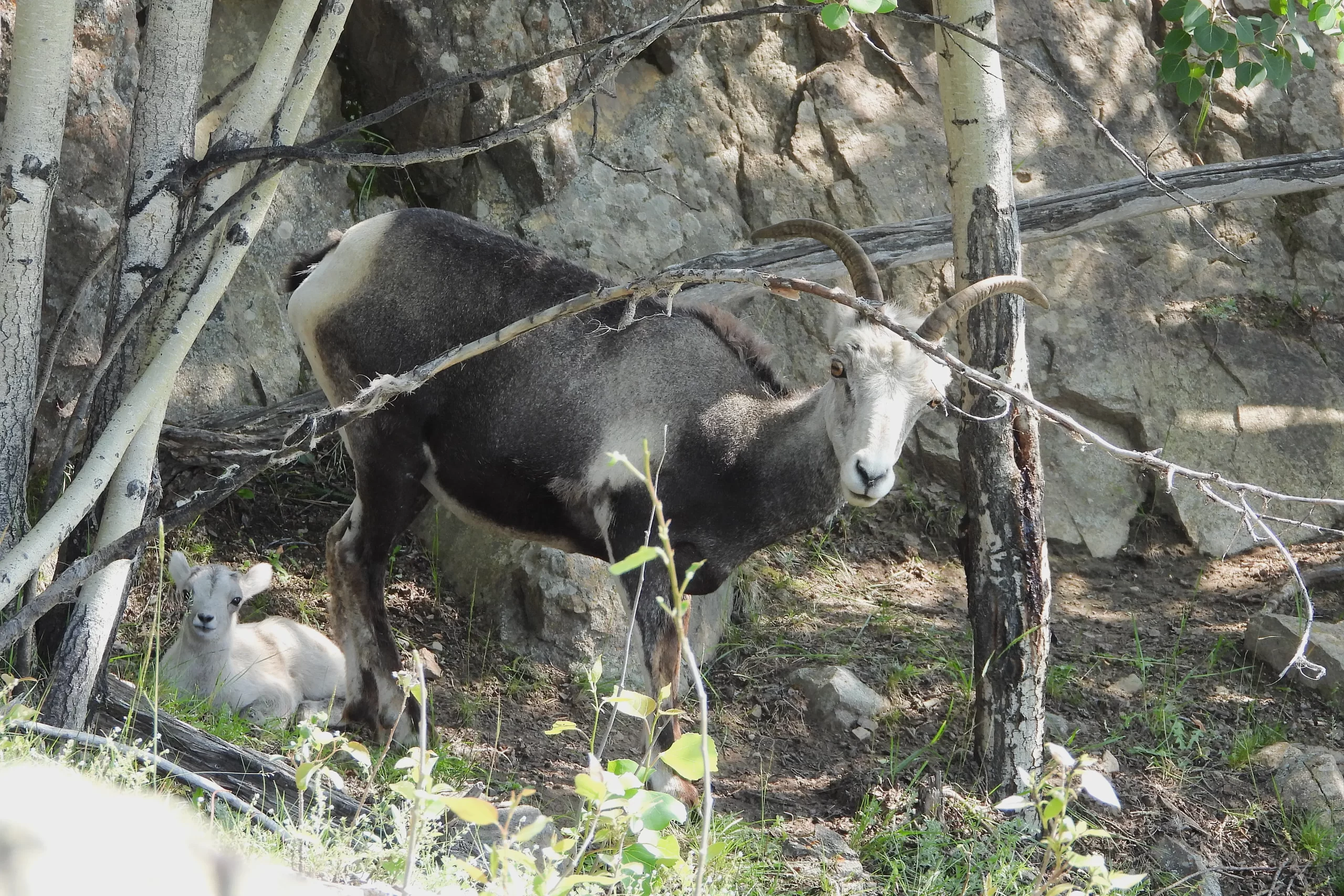
Most excitingly, the animal care team uses these blood samples to build their own datasheet. Given that these are wild animals, there is limited information on what a normal blood panel reference range looks like. Every sample allows for an opportunity to learn more about these species and in the long run contribute to wildlife science.

My time wasn't just spent on exciting sedations. Daily, I helped the animal care team feed the various resident species, which gave me an appreciation for their unique nutritional and husbandry needs.
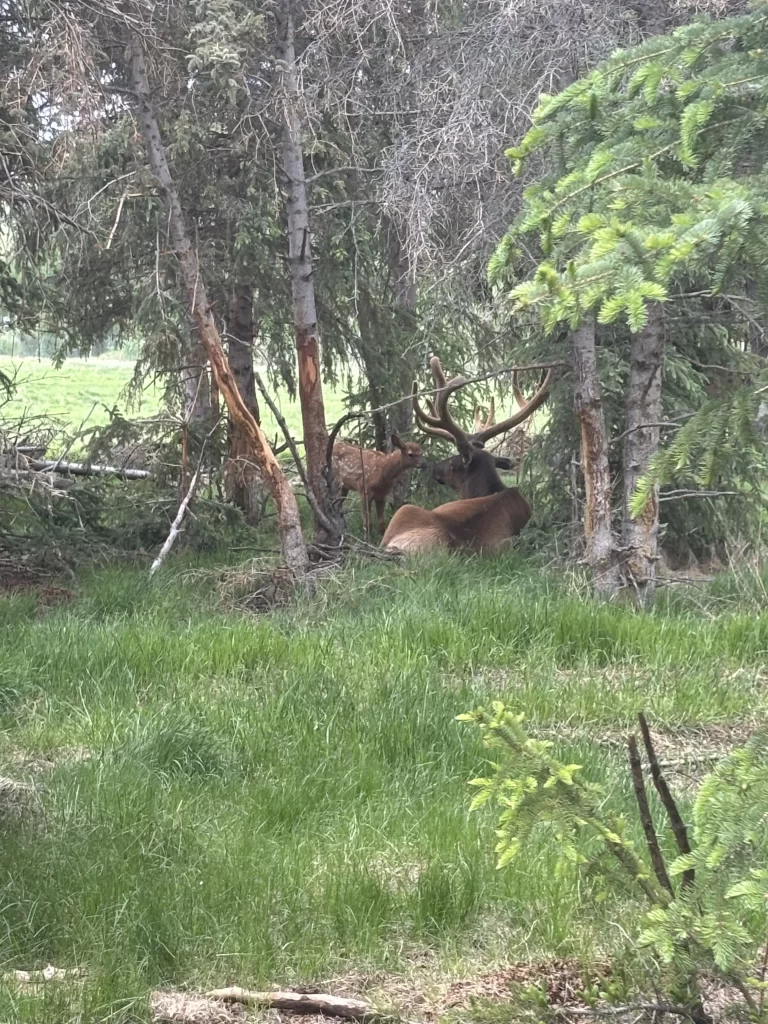
An elk fawn and stag are seen on the daily observation rounds done by the animal care team at the Yukon Wildlife Preserve. Observation of the animals is very important to ensure health and well-being of all individuals. Photo credit Jessie Jacobs.

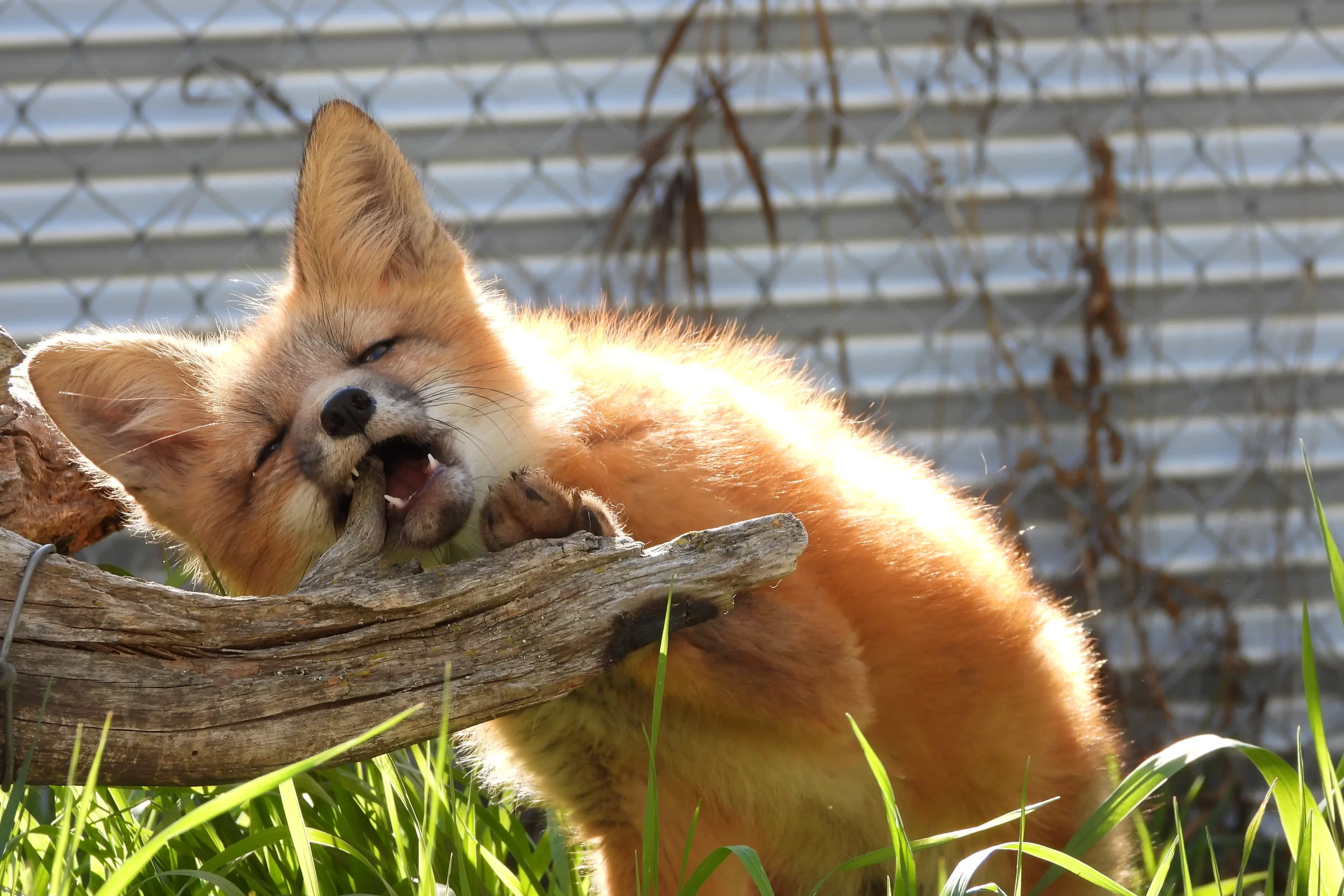
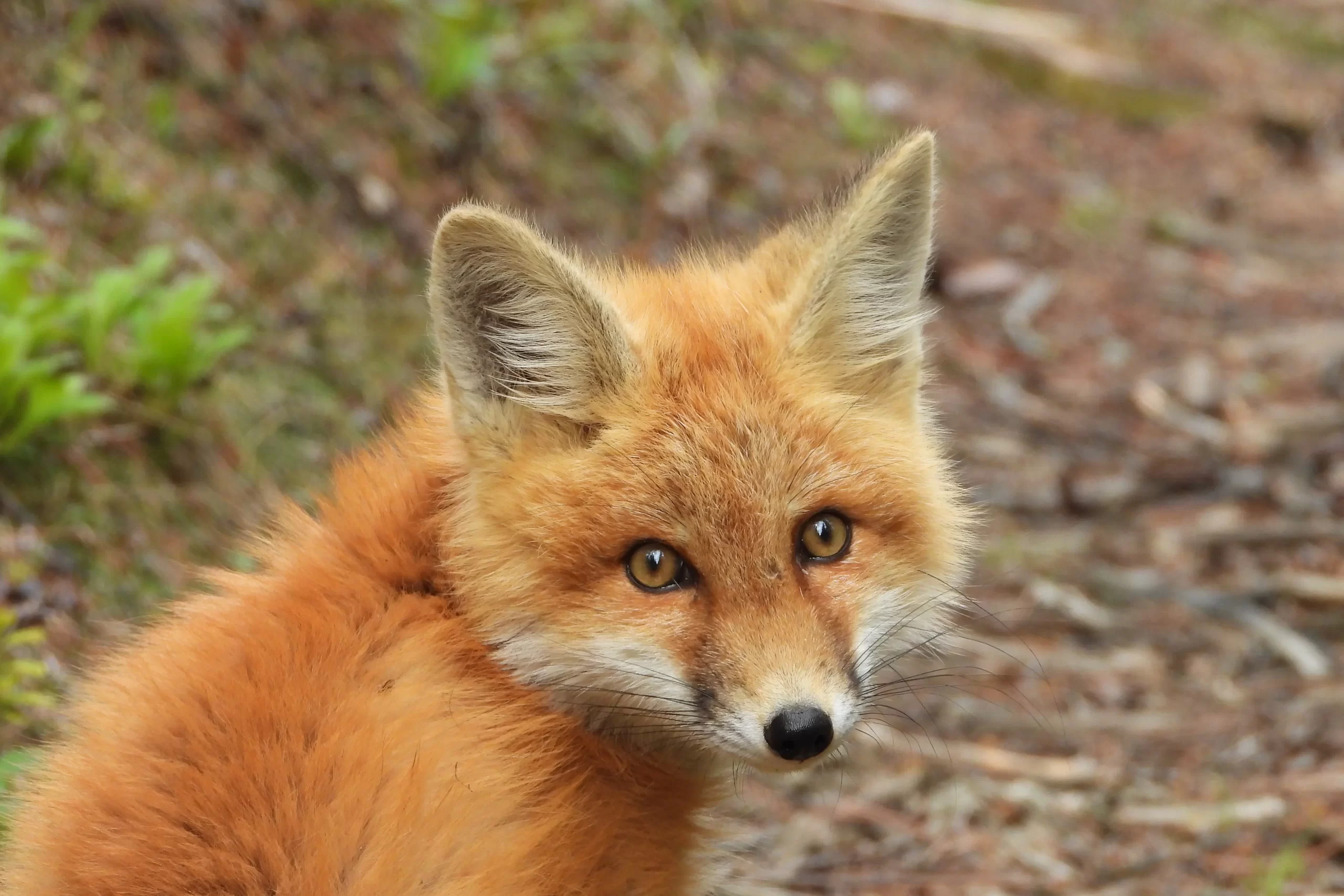
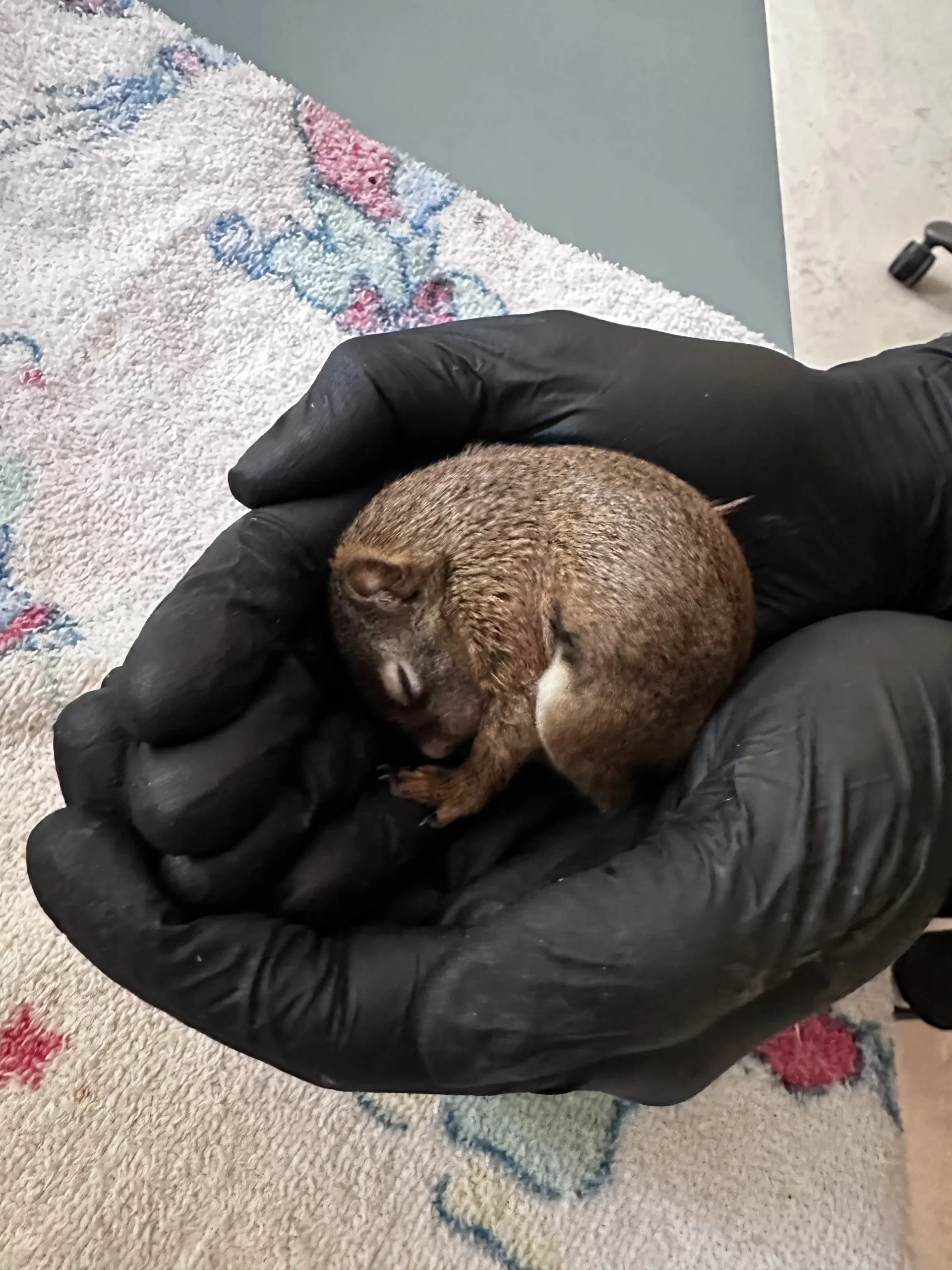
I also spent time at the rehabilitation center, which offers a totally different learning curve. The center cares for injured or orphaned animals turned in by the public. This means that certain handling and feeding protocols are in place to offer these animals the best chance for a successful return to the wild. A core highlight of my rotation was helping release two rehabilitated foxes back into the wild, a heartwarming experience that showcased how vital the preserve’s conservation work is for Yukon wildlife.
As a fourth-year veterinary student attending the Western College of Veterinary Medicine in Saskatoon, this rotation was incredibly valuable. Having been born and raised in Whitehorse, I was absolutely thrilled that my university allowed us the flexibility to seek out our own external rotation. It allowed me to return home to the Yukon, work alongside an inspiring mentor, and explore my passion for wildlife.

This rotation highlighted the unique problem solving skills required of a wildlife veterinarian, where delivering medical care looks much different than it does in domestic species. It also challenged me to develop my clinical observation skills to assess patients' health from a distance. Beyond the clinical work, It opened my eyes to the diverse career paths veterinary medicine offers.
If you are a student in veterinary medicine looking for a rotation that will challenge your critical thinking and give you hands-on experience, I highly recommend the preserve. You may just end up with the most exciting two weeks of your clinical year and a passion for wildlife medicine.

Jessie Jacobs

Jessie Jacobs

Veterinary Student

As a fourth-year veterinary student attending the Western College of Veterinary Medicine in Saskatoon, this rotation was incredibly valuable. Having been born and raised in Whitehorse, Jessie was absolutely thrilled that their university allowed them the flexibility to seek out their own external rotation. It allowed them to return home to the Yukon, work alongside an inspiring mentor, and explore their passion for wildlife.
Explore by Category

Explore by Author

The World Under the Snow

The World Under the Snow

wildlife preserve

by Pete Neilson | Mar 25, 2026

2 minute read -

After Whitehorse’s snowiest December on record along with a stretch of record-breaking cold (with temperatures dipping as low as -50°C across much of the Yukon) a person might wonder how animals get through it all. Even now, as of the end of March, all of the Yukon still sits under feet of snow.

Many bird species migrate, bears and ground squirrels hibernate, those that winter on top of the snow grow thick winter coats for extra insulation but what about the tiny animals like mice, voles and shrews?
Mice, voles and shrews cannot hibernate as their bodies are too small to retain heat without eating constantly. Shrews, small insect eating mammals, are especially vulnerable; their metabolism is so high they potentially need to consume as much as 3 times their body weight\day to survive. However, they have also evolved a very unique strategy; they actually shrink their body size, including brain and internal organs, in order to require less energy. 

We often hear the phrase ‘a blanket of snow’. Well does it really act as a blanket? Yes. Snow is a good insulator. Once snow depth reaches 6 inches or more it creates a warmer, more humid and wind free environment right at ground level. The temperature remains close to 0C, (32F) all winter. Fluffy, fresh snow (containing lots of trapped air) insulates better then icy or compacted snow. An old timer winter travel tip is to warm your feet by sitting with them under the snow at rest stops or while you eat.

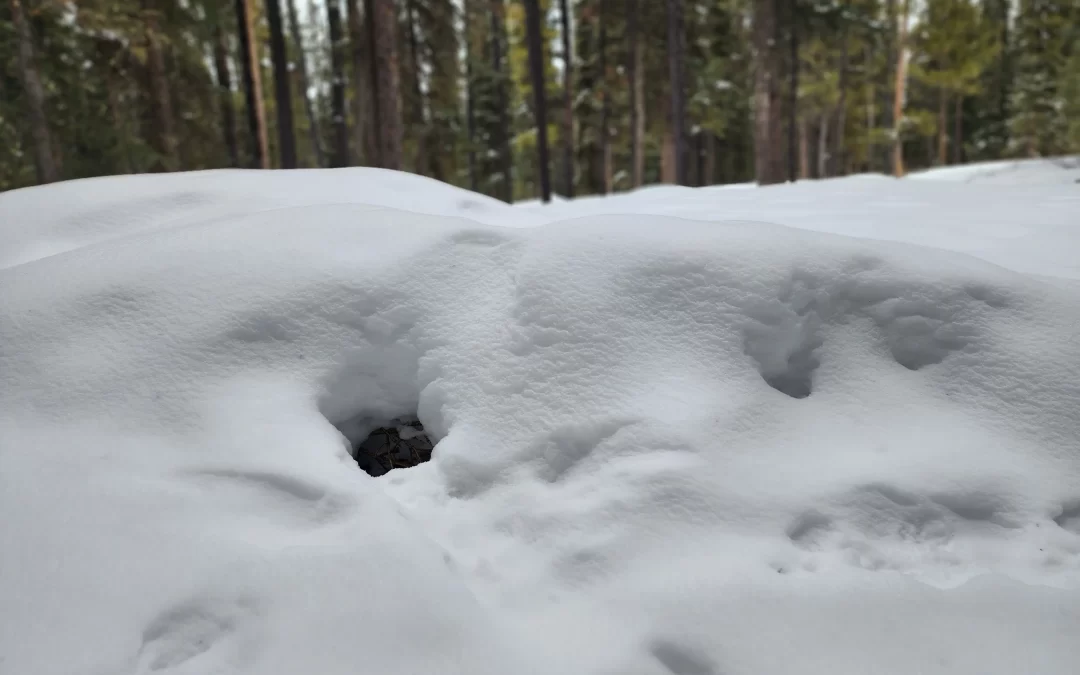
Squirrel prints lead to and from a hole in the snow. Beneath lies a fallen tree, creating a haven for small mammals.

Technically this zone under the snow is called the subnivean zone (sub=under, nivean=snow). This world under the snow provides a more stable environment than up at the surface, warmth from the ground helps crystallize the snow creating a small space right at ground level where the smaller critters can live during winter. Mice and voles store food (seeds, berries etc.), often making nests near their food caches living eating and sleeping under the snow. They also create a network of tunnels to move about and search for yet more food.

Chipmunks are a special case. They spend the winter in underground burrows, where they store large amounts of food to last them through the winter but they do not actually hibernate. They enter what is known as torpor, a state much like hibernation, but where they wake up every few days or weeks to eat and relive themselves before returning to torpor. On a very warm sunny winter day you may even see them briefly out on top of the snow. 

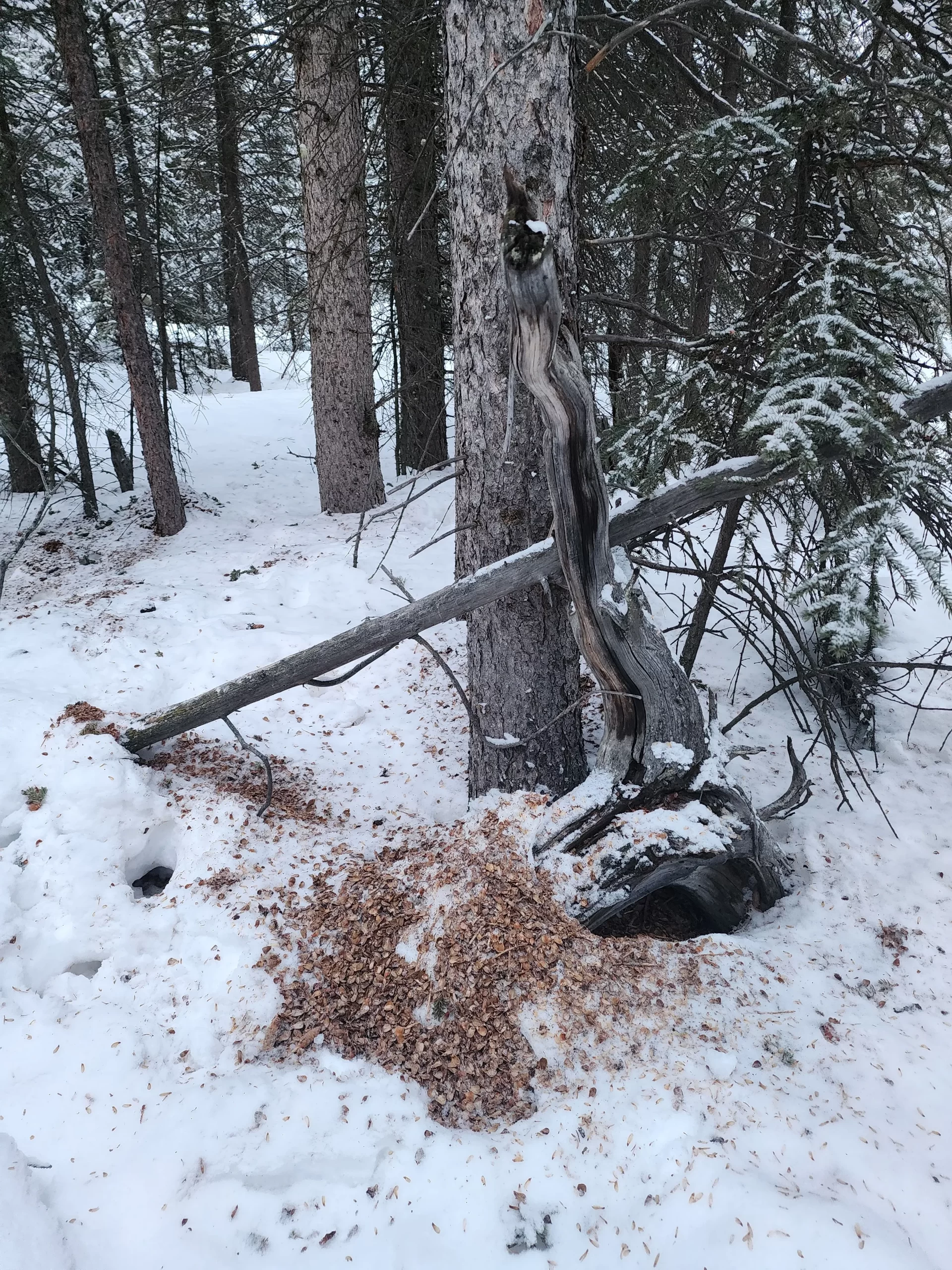
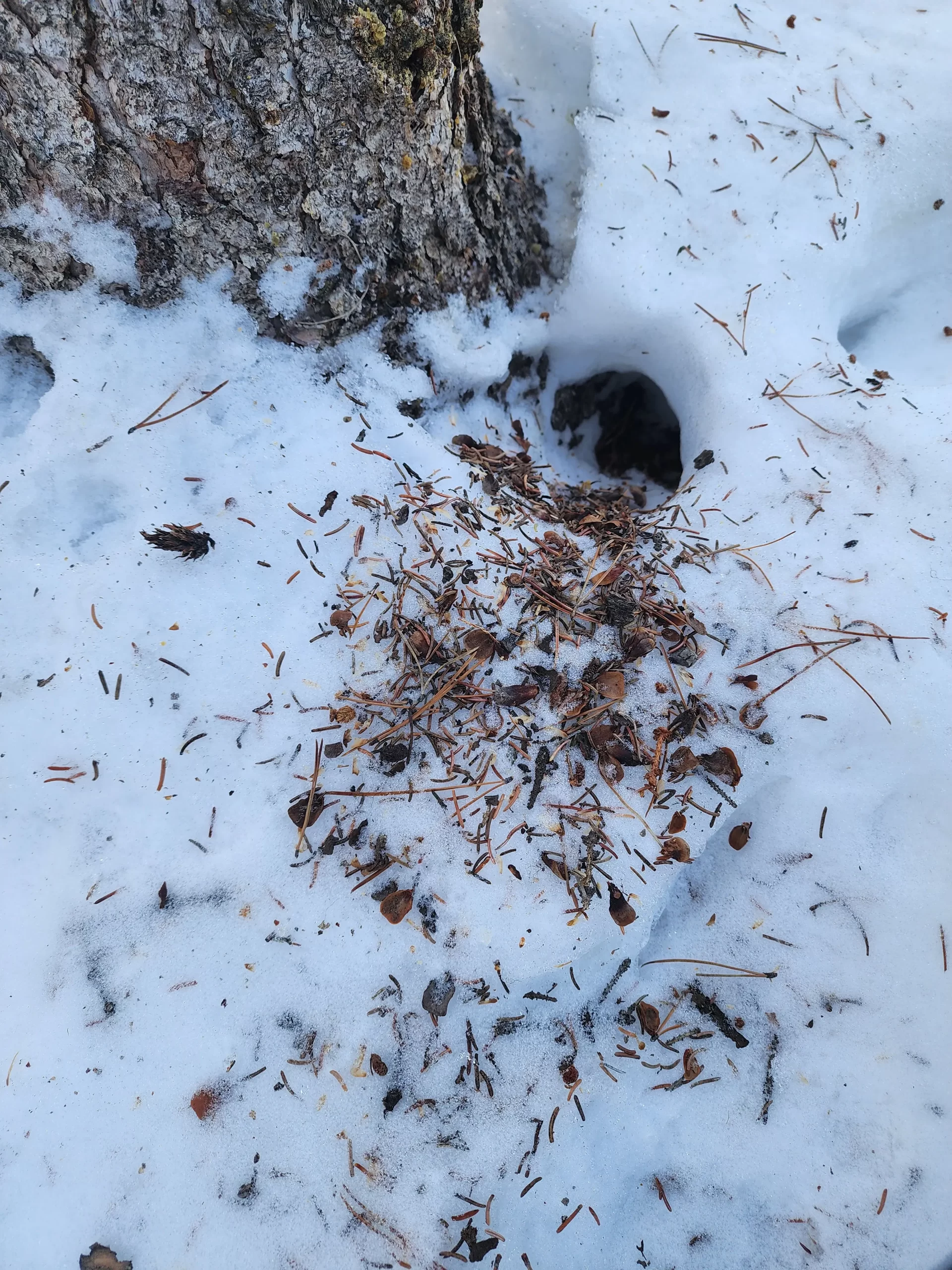
Red squirrels store food under the snow and dig down to get at it, but they don’t live under it. They create large middens of seed cones from pine and spruce during fall at the base of trees for their winter food. They also hide mushrooms in the branches of trees. They sleep in nests of dried grasses woven into large balls up in the trees.

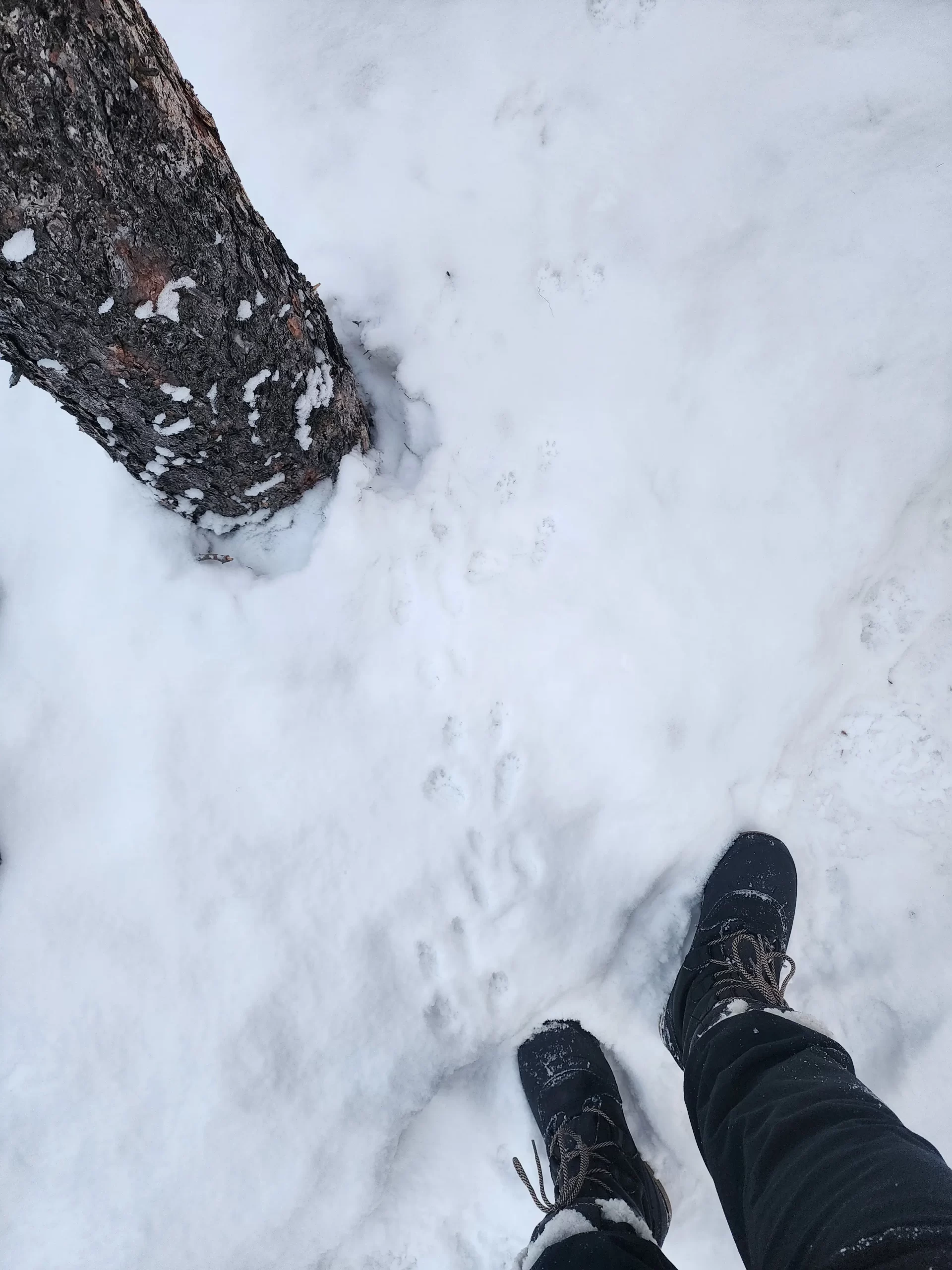
The photos on the left and right demonstrate squirrel middens. The photo in the middle shows squirrel prints in the snow.

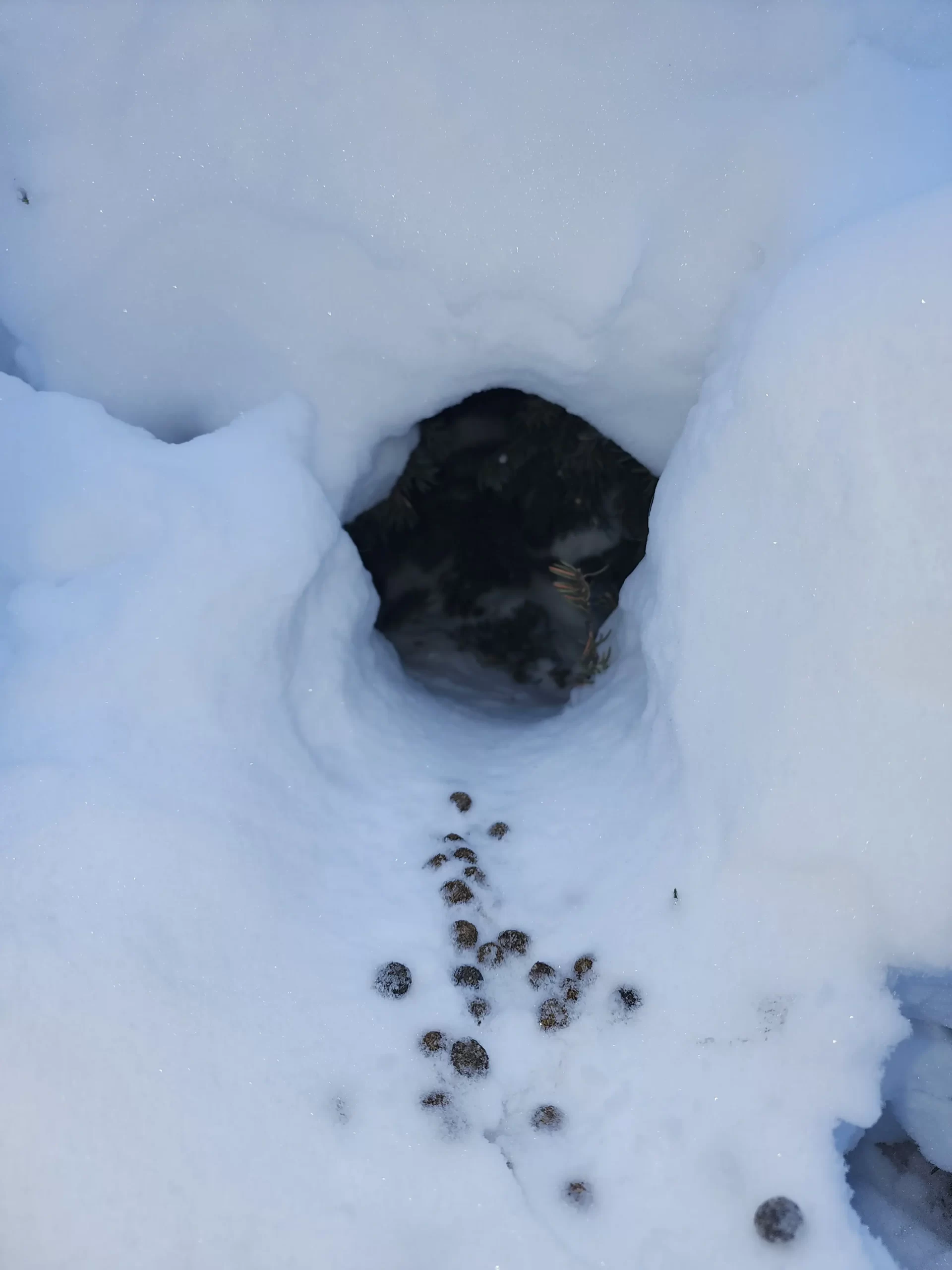
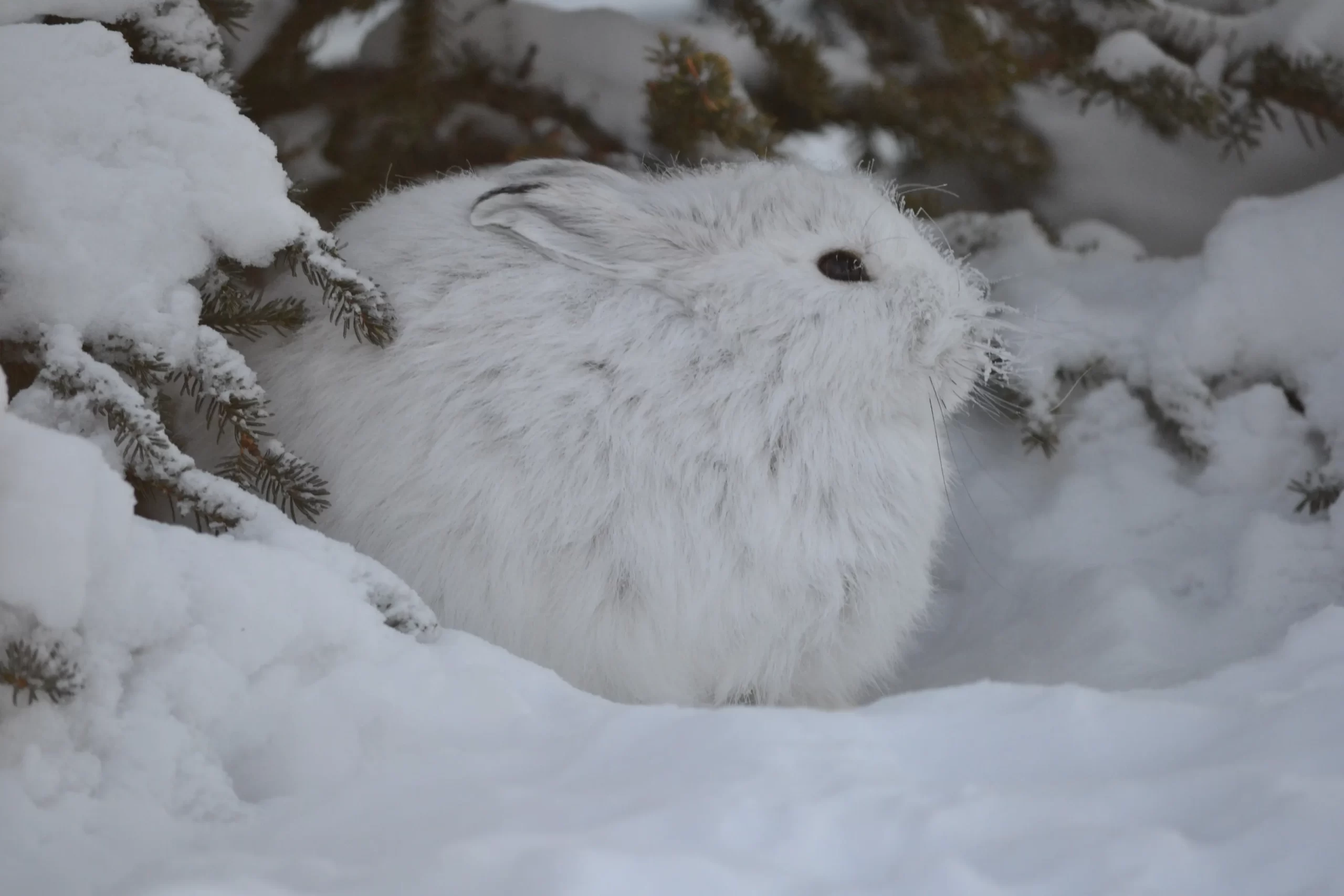
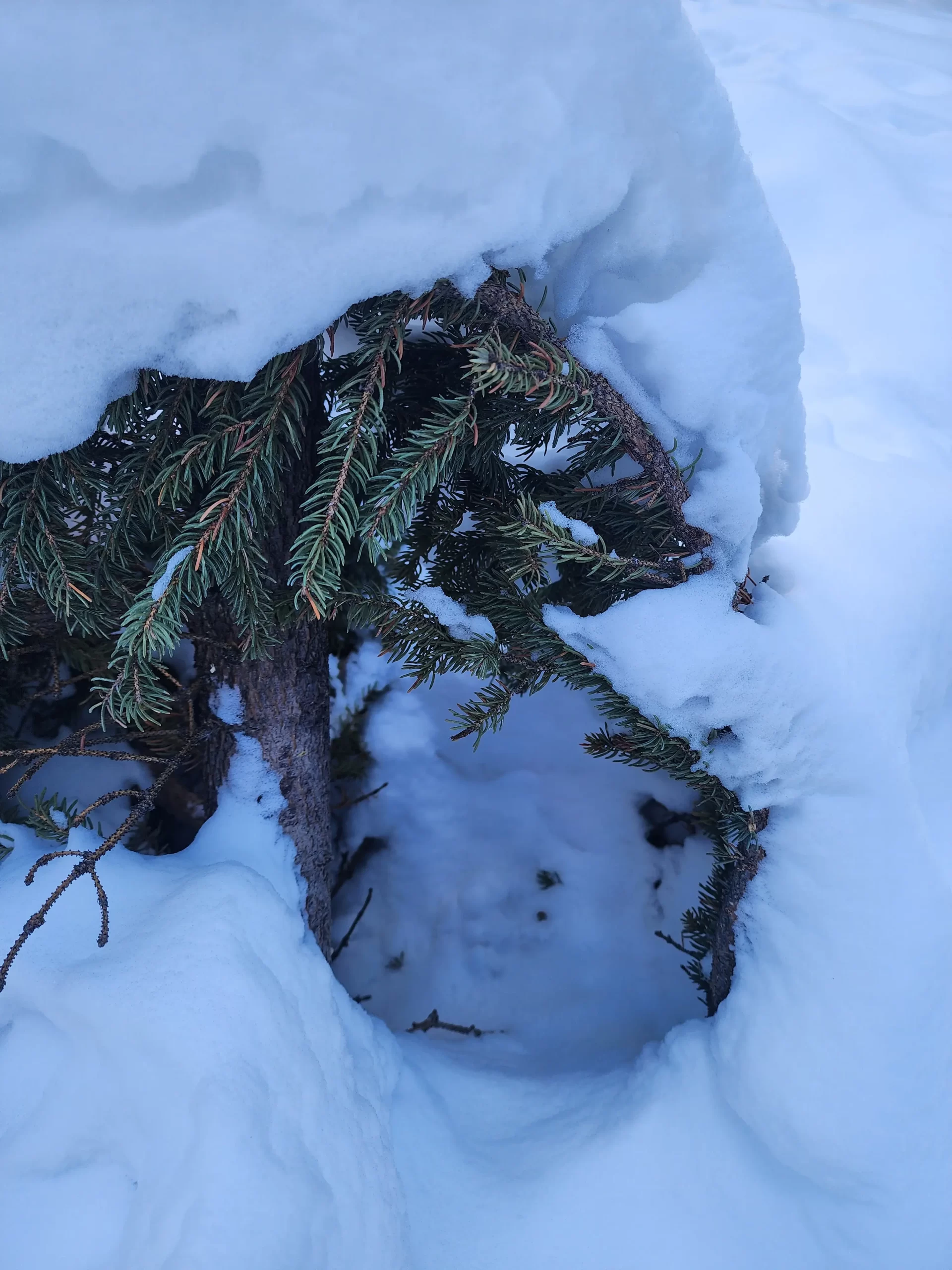
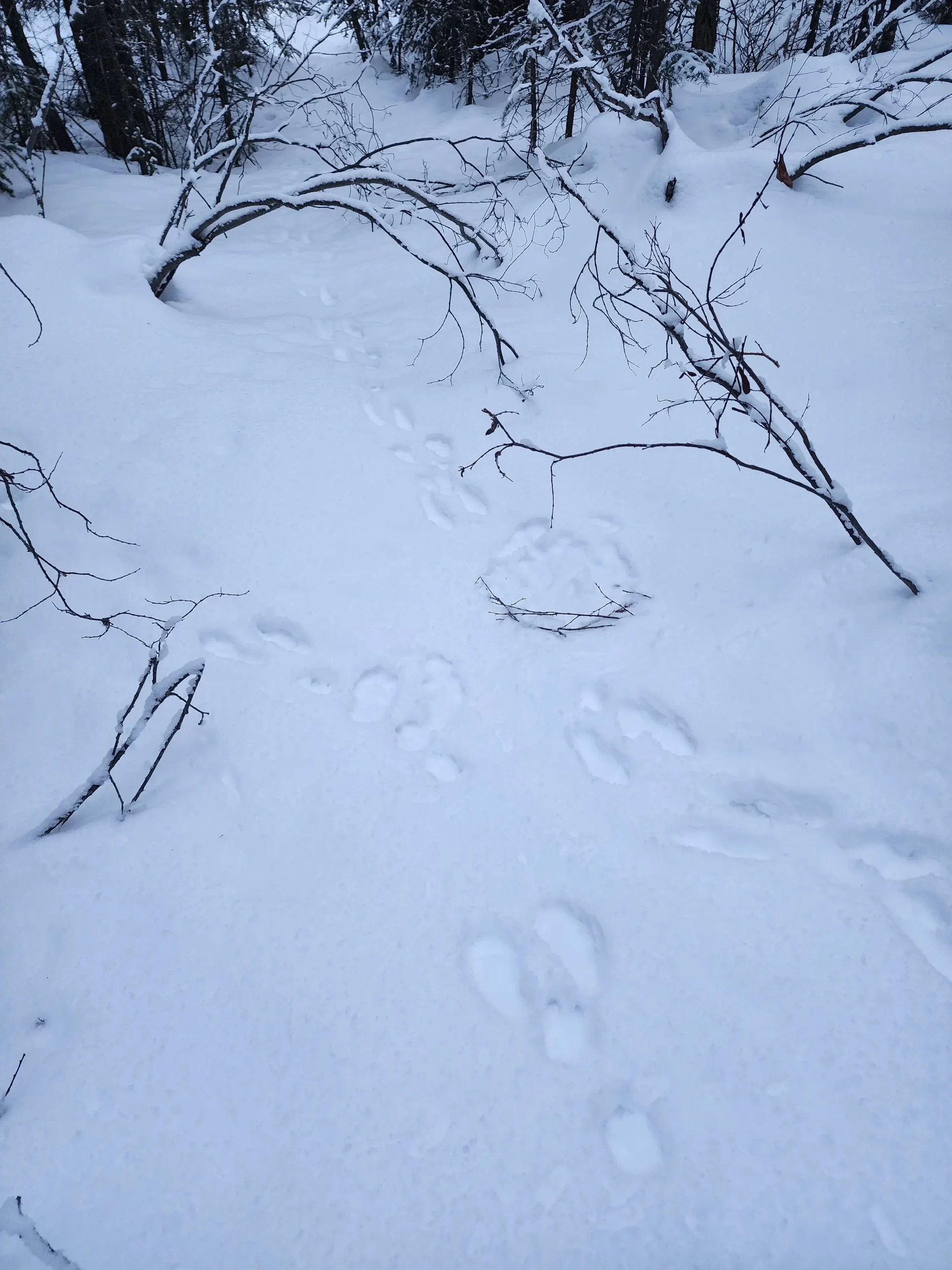
Both photos on the left show places where Snowshoe Hare have bed down. Photos on the right show a Snowshoe Hare and their prints.

Snowshoe hares spend their entire lives above the ground. Their large furry feet let them move easily across the snow and their white fur helps hide them from predators. They will burrow down under the snow a short way to feed on dry grasses from fall and snuggle down into the snow against a tree trunk to keep warm during colder weather.

In very cold weather grouse and ptarmigan access the world under the snow to stay warm. Grouse by flying straight into the snow cover, ptarmigan burrowing or flying into snowbanks up to a foot, sometimes in groups, creating sheltered roosts to last out the storm or the severe cold.

Predators such as foxes, coyotes, weasels and owls hunt the little ones under the snow. Weasels enter the tunnels directly to hunt, the others use their sharp hearing, listening for rustling noises as the ones under the snow scurry about, before pouncing on them.

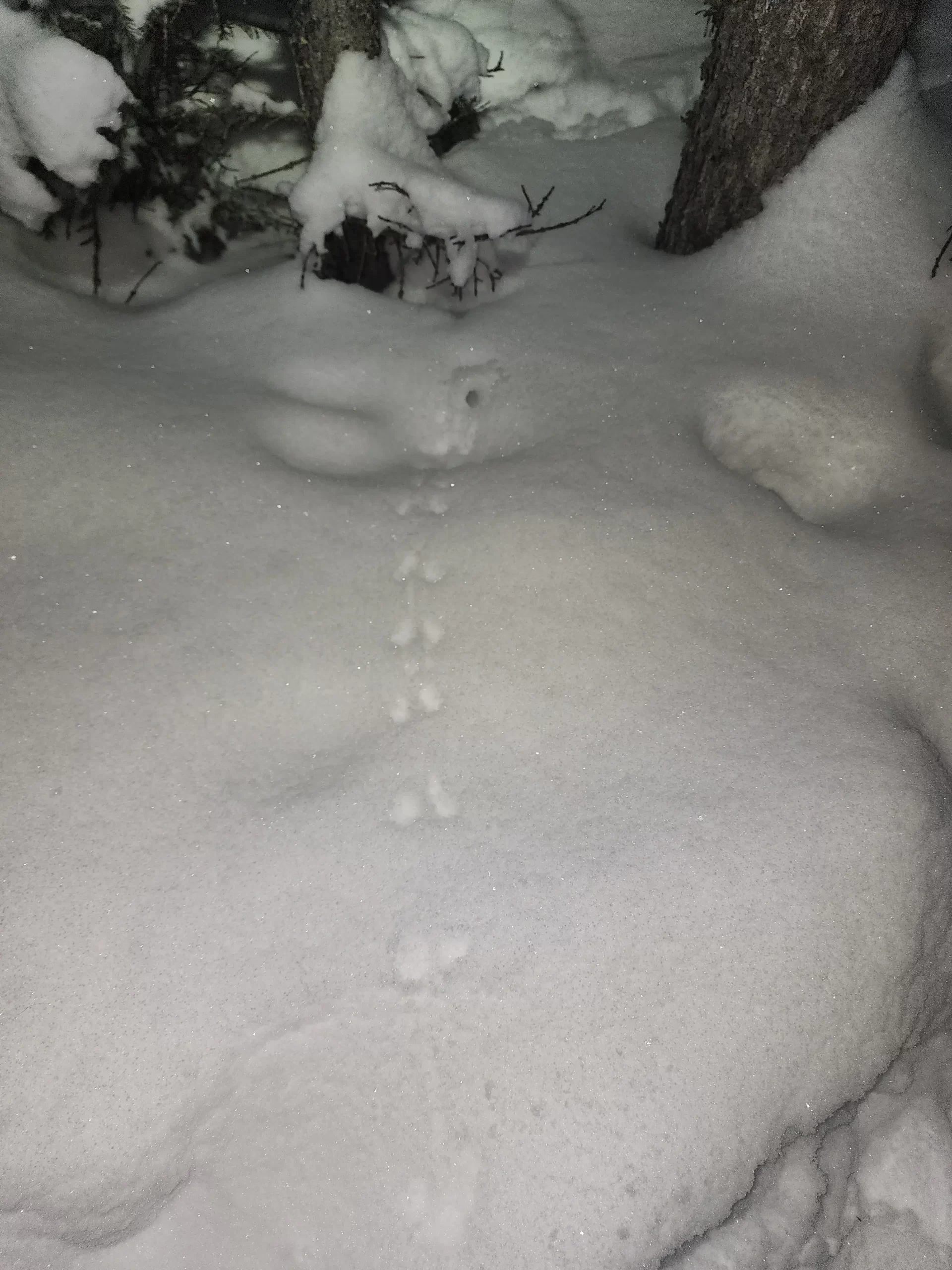
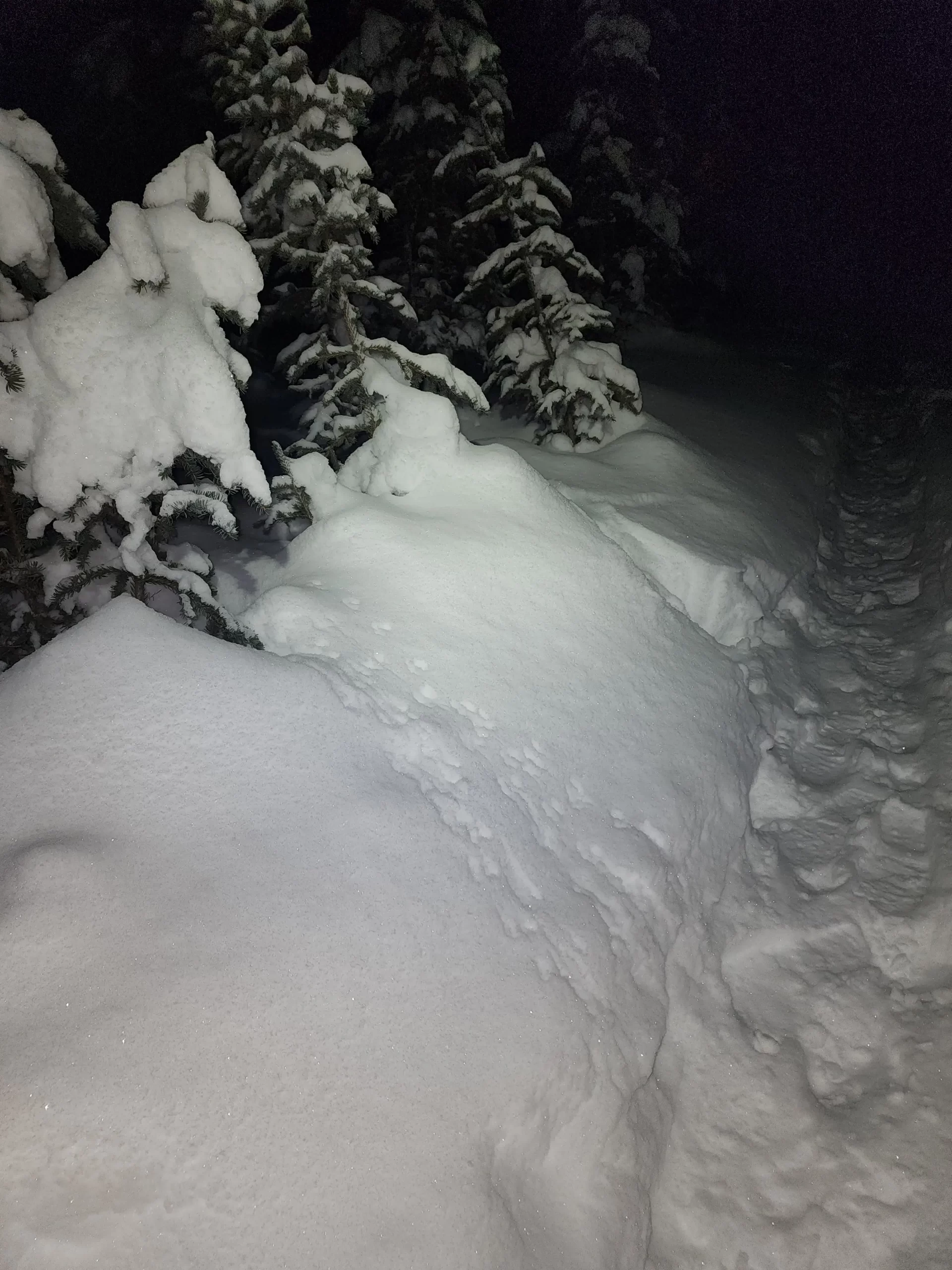
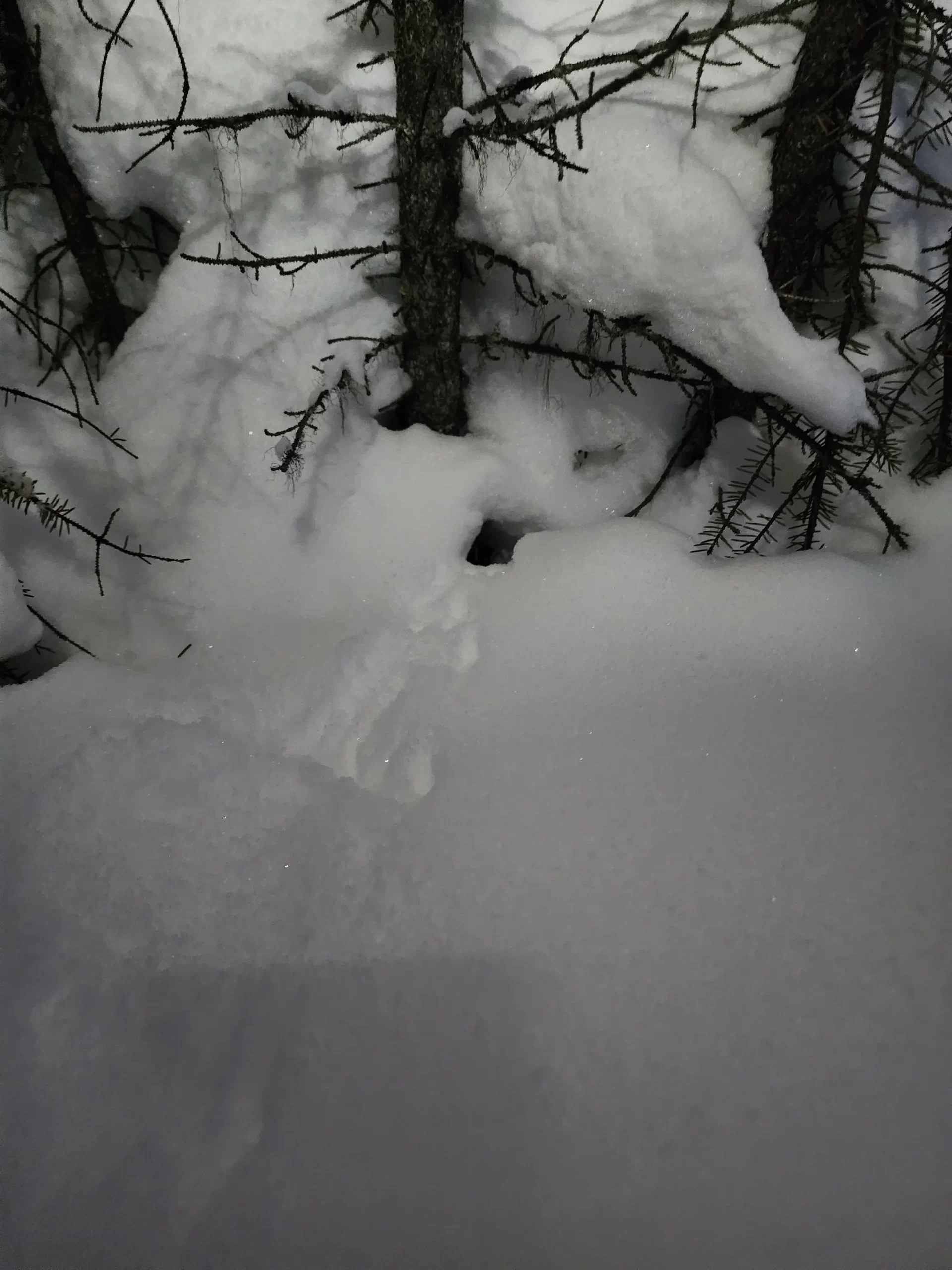
Photos above (taken at night) show tiny mouse prints leading from one snowy hideaway to another.

So next time the snow is sifting softly down as you gaze out the window, recall there are actually two worlds out there, one on top and one under the snow.

Pete Neilson

Pete Neilson

Wildlife Interpreter

'Sir' Pete grew up in suburban Southern Ontario north of Toronto. In the late 80's, he followed the lure of London and Service to the Yukon. 'Sir' Pete has lived off grid in the Yukon all along from a wall tent and later a tepee in his earlier years and now a small cabin near Twin lakes. He guided wilderness canoe trips many years in the 90's and early 2000's and got his first sled dog in ’91; currently he has 15 dogs for recreational mushing. 'Sir' Pete enjoys being at home or out with his dogs as much as he can.

Explore by Category

Explore by Author

How Do Animal Communicate?

How Do Animal Communicate?

wildlife preserve

by Doug Caldwell | Jul 15, 2025

20 minute read -

How Animals Talk: An Introduction

All creatures communicate with one another and others by using the primary methods of sound, sight, touch, body language (visual cues) and scent. 

The Limits of Human Senses

Some of these communications methods are not as pronounced for we humans as we did not evolve the superior abilities with our senses to make a living on the landscape and protect ourselves, we evolved the big brain instead. Humans are not physically equipped to detect the many subtle elements within a particular scent or distinguish all individual scents that may be present at a common location. Our olfactory systems are not that well developed. Our hearing range is also limited in comparison to various species that can hear much higher and lower frequencies than average humans. So too our vision abilities where animals have some very envious advantages with their eyesight. Some animals can easily see in the dark, some can see greater distances than us, while others can see colours beyond our range of vision - some into the infrared portion of the natural light spectrum. One can only imagine what insects perceive with their Arthropod or compound eyes.

Sound: Nature's Symphony

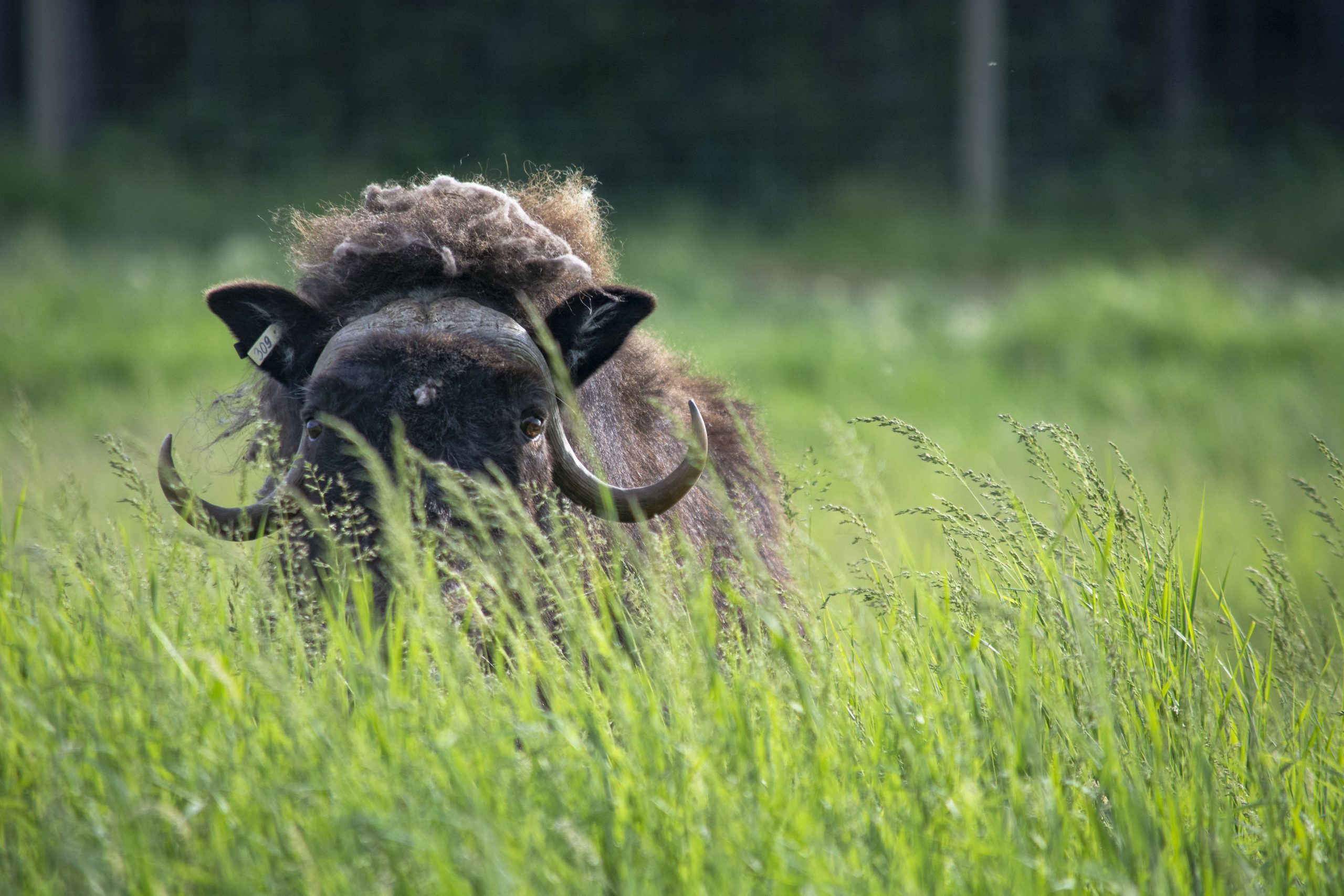
Other creatures like the Musk Ox have evolved communications techniques as adaptations to where they live. In the high arctic where Musk Ox are naturally found, winds blow hard over the tundra and most high frequency sounds are distorted or obliterated by a strong wind. Over many thousands of years Musk Ox evolved to produce a low frequency vocal sound that travels much further and is undistorted by moderate winds. Calves, when communicating with cows or each other, bleat. The pitch of the bleat lowers with maturity. Adults have deeper voices that sound closer to roars and rumbles. Adults also grunt and snort at each other in close proximity. When they are grunting these low frequency sounds it is sometimes possible to feel the vibrations in your chest rather than hear the sounds they are making if you are standing close enough to them.

Human hearing is typically within the audible frequency range of 20 Hz to 20,000 Hz. Other species, such as bats and songbirds, produce sounds that are well beyond this limited hearing range of humans. Humans are missing much of the natural symphony in our wilderness because our hearing is not sufficient to hear higher frequencies. Many birds produce sounds that we cannot hear, but our cats and dogs and other wild creatures can.

Birds will often have more than one song which they may use to attract a mate or announce dangers, and while these songs may sound similar, they may have subtle differences that can mean a lot to other birds.

Most bird communications have subtle variations that may seem minor to humans. For example, the common Black-capped Chick-a-dee call is the familiar ‘chick a dee-dee-dee,’ but when alerting danger there is a noticeable increase in the number of dees announced and the increased repetition of the alert call.  

Mating songs and danger alerts are different by species and their songs will also change over the seasons, and some birds of the same species may have different songs that have evolved within a geographic community of that particular species.  Some other animals will come to know these alert sounds where the birds on guard will make all aware of potential dangers within a specific area. Ground squirrels perform similar audible warning alerts when dangers may be lurking nearby.

Woodpeckers make a wide range of vocal sounds but also rely on the sounds from their hammering on trees and other items to communicate to others. These hammerings also have subtle differences that mean different things that we can only speculate as to their meanings. Did woodpeckers invent their own form of Morse code, and is it different by woodpecker species?

Insects like the ant communicate by leaving scent trails (pheromones) if they are indicating a path to food or some other required resource. They also touch antennae in what is presumed to be a detailed method of communication. Moths and butterflies also depend on pheromone scents primarily for finding mates during their breeding cycle. 

Many animals have scent glands of various kinds which they use to mark their territorial boundaries or attract mates. These scent glands may be located on the legs, faces or near their genitals. Some animals must rub objects to deposit their scent while others like the skunk, felines and foxes can also eject their fluid scent some distance. Urine is often used as a scent marker for a variety of species.

Each communication option is limited by physical distance and environmental conditions, as such, the animal tends to communicate with the best option available to them at that time and within the environmental conditions of wind, smoke or precipitation or to avoid announcing their location to predators.

Sight is perhaps the most limited communications sense as it is dependent on available light, although some species have evolved superior eyesight for night viewing, all species are limited to how far they can see clearly, and again there is a spectrum of ability within the animal kingdom which is the result of many millions of generations that adapted to the environment in which they live. The environments the animals live in determines how their eyesight evolved over time. Those that dwell in caves and similar dark places are often close to blindness as they no longer depend on their eyes to navigate in their environment, their other senses have adapted to provide the information about their local environment.

Grassland animals have different sight requirements than animals that live in the forests and jungles. Grazing animals typically have their heads down to eat which has influenced much of their evolutionary development including how long their necks are, the location of their eyes and ears on their skulls, focal distances for both near and far objects and even the visual spectrum they have evolved to see. Caribou have the ability to see in infrared, allowing them to see more features of their vicinity like urine spots left by other animals such as wolves and other predators.

Sound as a communications tool is also limited by distance and influences such as wind or rain which can muffle sounds or distort them such as the rustle of leaves being blown by a strong wind. Some species have hearing that is superior to others, which also is an adaptation based on the environment they must make a living in. Some creatures will lay down and remain still when weather conditions corrupt sound volumes and create distortion, limiting their ability to hear potential dangers near them.

Scent: Messages on the Wind

Scent is perhaps the optimum communications sense animals use to remain aware of the world around them, and while scents may be blown on the wind or distorted or diluted in some way, scent travels further and more clearly than any other communications option. 

For an example of sensory limits, let's examine the Grizzly Bear’s sensory abilities. 

  • In general terms a bear’s eyesight has an estimated range of about 40 meters depending on light conditions and bears have strong low-light vision abilities and some may have better or lesser sight abilities determined by age and genetics.
  • A bear's hearing is over twice the sensitivity of human hearing and exceeds the human frequency ranges. It is said that bears can detect a human conversation at 300 meters and a camera shutter at 50 meters.
  • A bear’s sense of smell has been measured to be capable of detecting food up to 20 kilometers away in most environmental conditions, recognizing scents are also are carried some distances by the wind.

Clearly, scent detection is the optimum communications option available to bears and the majority of other animal species. To this end, they utilize scent marking to make sure others know of their presence.

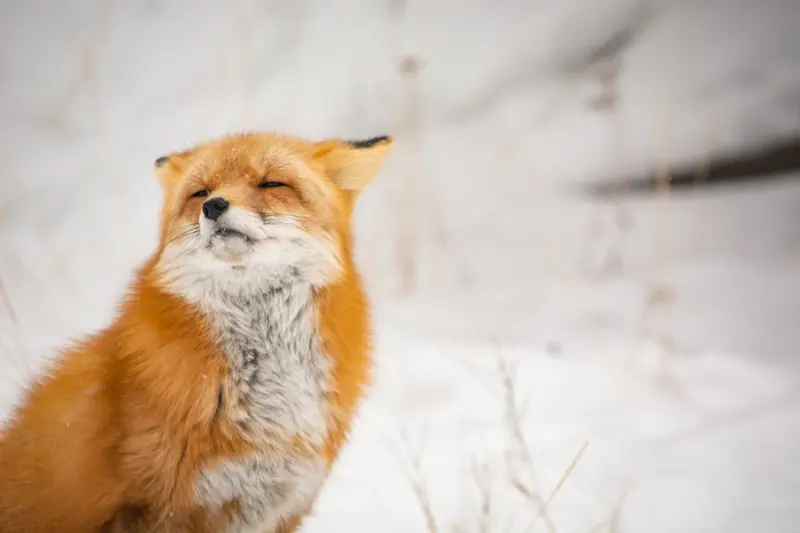
Lynx, foxes and numerous other species mark their territory with scents they rub or spray onto selected trees or landmarks to define their range boundaries. These marker trees will often include scratch marks made by the animal’s claws which provide a visual clue in addition to the scent.

Scent is also a key indicator of estrus or when a female goes into heat alerting all the males that she is becoming ready to breed.

Male ungulates also employ scent to advertise their locations during their breeding cycles. A bull moose, caribou or elk will urinate on themselves to get their pheromone scent on the breeze and traveling to let both females and males know where they are and their readiness to breed. Predators such as bears and wolves will also detect these pheromones, but for them the message is: potential lunch is over that way.

Honeybees perform an elaborate “waggle dance” in the hive to inform others where new food resources can be found and may also leave a sent marker on the target location to further help hive-mates to locate the new food supply. Other insects utilize scent marking to communicate to their kind.

Sight: The Visual Language of Wildlife

Many bird species rely on their physical appearance for attracting mates. Male birds are usually more colourful and vocal so they attract the attention of any females that may be nearby. Females are not usually coloured as brightly and colourful as the males, partly because they must sit on a nest of eggs when camouflage is helpful for their protection. 

As noted above, Body Language is a common method used by animals to share information. For example, when large animals like bison, moose and mountain goats turn sideways to your view, they are saying:

“This is how big I am - Think before you intrude into my space.” They may also paw the ground with a hoof which might mean you missed the first message and now it’s time to move on…quickly.  

Whitetail and Mule deer stomp their feet to alert other members of their group that danger may be near and to be on the look-out. Wiggling of ears and rubbing against one another are also methods of body language. A head turned a certain way, lips pulled back and teeth exposed, snorting, head shaking, posturing and even running styles all are communication displays animals employ to communicate with each other. 

How animals hold their tails or move them is another signal used to express themselves. The position of the bison’s tail is also a great indication of body language. In addition to switching the tail back and forth to flush insects, frequent tail-switching occurs in a variety of situations, predominantly during play, such as chasing and bounding. You can judge a bison’s mood by watching its tail. When it hangs down and is swishing naturally, the animal is usually calm. But if the tail is sticking straight up, it may be ready to charge. Similarly, if the tail is raised and stiffly held 0° to 90° above the horizontal the animal is displaying some agitation. This is observed most frequently during trotting/running/bounding such as in playful chases, stampedes or in short charges. 

Most are familiar with when a dog is wagging its tail to mean it is happy, but it could mean something else entirely for a different species such as a cougar where tail movements can display uncertainty or building excitement or anxiety of the animal.

Body Language: Silent Conversations

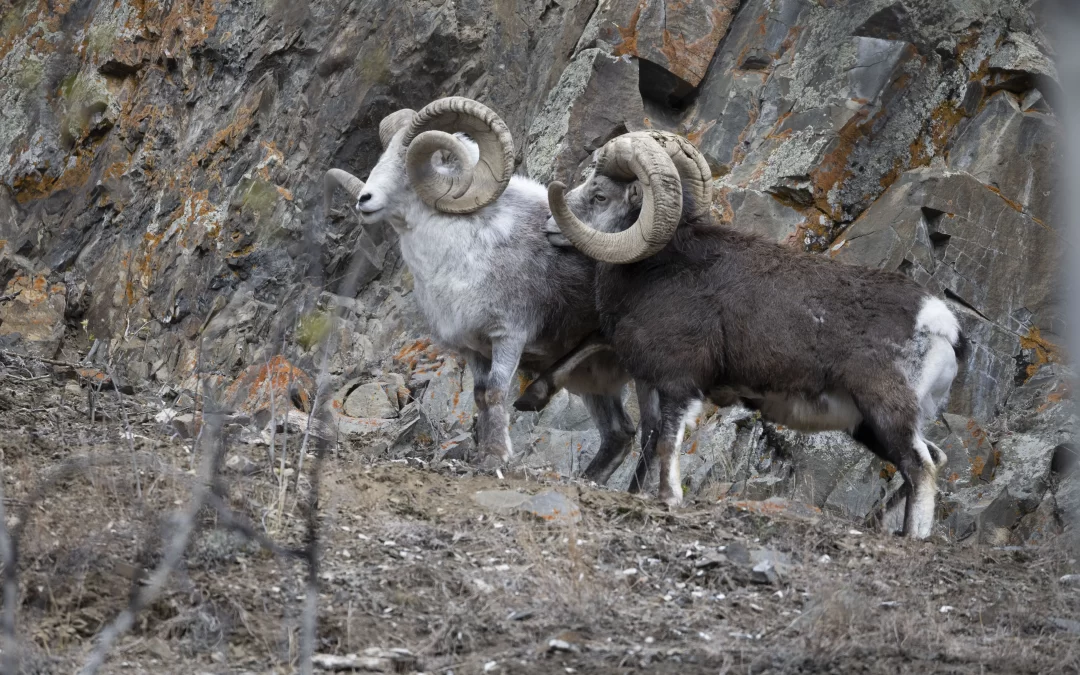
Watching the sheep rams you will see many ways they interact with each other. Some of this is easy to understand, like when one is coming to access the feed troughs and usually the younger boys get out of the way when they hear the warning grunts from the dominant elder rams. It is well known rams will get up on their hind legs and smash their horns together like in a mating fight. They may also interlace their horns gently and rub ears with each other or touch the other’s body in some fashion such as one animal rubbing a front leg against the ribs of another standing near. These gestures are common, and we are not always certain what they might mean, but the rams do not appear to be distressed by them, so perhaps it is a form of acknowledgement greeting like a handshake.  

Mountain goats appear to employ ESP between themselves, they do grunt and use body language, but there are times when one will walk into an area with a group of other goats that scatter when the other approaches and perhaps wiggles its ears in a particular way or some other gesture that’s difficult for us to perceive. This could also be a demonstration of herd hierarchy through body language or scent where the subordinates know who the boss is and give them lots of space. Some nanny goats display cuts and abrasions on their noses to signify there has been some physical communications in confirming who is dominate and who is subordinate within the herd.

The Role of Environment in Animal Communication

Waterfowl depend on a couple basic methods of communication. The most common is their vocal sounds, quacks and honks are answered back from birds already on the ground, and the incoming birds will also use their remarkable vision to look for others on the ground to confirm it is safe to land. That’s why decoys were invented for hunting as waterfowl are very cautious and are on the lookout for anything they may perceive as a danger waiting for them to land. Waterfowl on the ground employ other methods of communications such as flapping their wings while extending their necks or head bobbing to each other.

It is a myth that duck quacks do not echo. They do, but it may be difficult to hear the echo due to the geography of where ducks are typically found out on a body of water usually away from any echo-producing land formations to reflect the duck’s quack. Larger waterfowl like swans and geese are well known for their loud honks as they migrate overhead, they may also murmur with soft throat sounds as they paddle along the water, usually keeping offspring following in-line behind mom.

Have you ever taken your dog for a walk and notice it sniffs certain places and ignores others? They are searching for scent marks left by other animals. Often, they will urinate on the same spot to let others know they too were in this area. Some say an animal can determine when these scent marks were made, what kind of animal made it and if it is a regular known visitor to the area or if it is a new animal passing through. Similarly, canines are well known to sniff the back end of other canines as a form of introducing themselves and confirming who the other animal is.

Bears, lynx and some other species use a different tactic by selecting a tree, usually on a well used trail, and scratching the bark as high as they can reach. They also leave scent behind and probably some hairs from back-rubbing too. These trees become regular markers for other bears and animals. The scratch marks made by the bears indicate how large they are by their reach and whatever their scent reveals to the rest of the local area. 

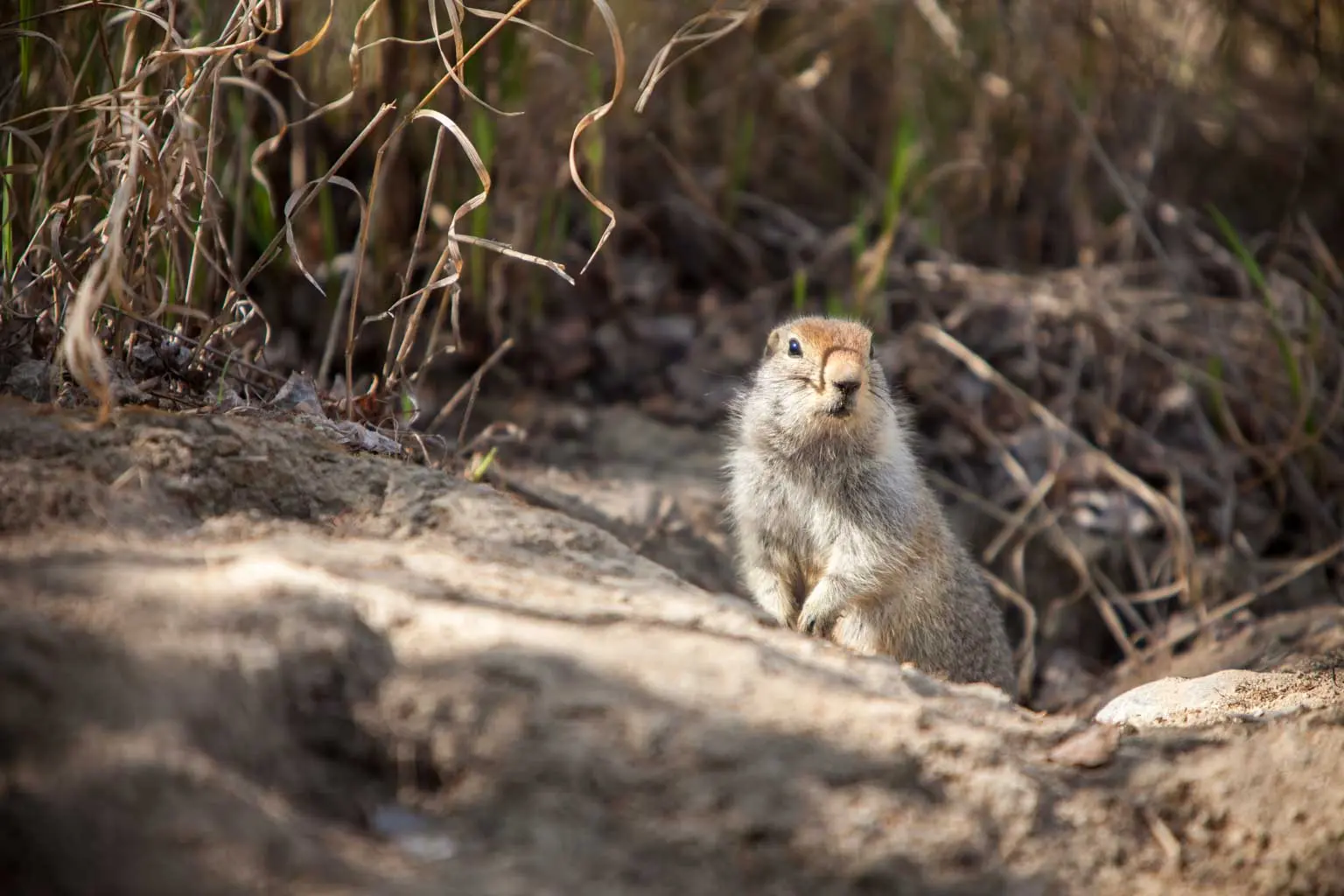
Arctic Ground Squirrels use their voices to alert others of dangers as they stand watch over their colonies. Watching for predators on the ground and from above; when a threat is sighted the animals begin their chirping and the danger signal is relayed around the area by others to ensure all know about the pending danger. Gophers may also communicate by wagging their tails at each other.

Some animals do not make sounds unless they are in some peril. The Snowshoe Hare depends on stealth and silence to remain healthy and alive, and as such they do not make regular sounds among themselves, but if they have been caught by a predator, they can scream their distress quite loud and clearly.

Most animals have a keen sense of hearing as it is a fundamental sense for their lives. Some species like the deer family have very mobile ears that move to better capture and hear a sound. Many times, a member of the cervid or deer family will give away its hiding location by moving its ears in response to a sound. An uncontrollable reflex, ear movements are similar to a cat’s tail in that the movement is a reflex and cannot be controlled easily.

Hearing is an important sense animals depend on and some creatures have remarkable hearing abilities. A regularly demonstrated example of this at the Preserve is during feeding time for the lynx and foxes. To prevent the animals here at the Preserve from developing a predictable routine, their feeding time is staggered somewhat day by day, but they all know the sound of the food truck and can hear it a substantial distance away. The local ravens, whiskey jacks and magpies know that sound too so when the food truck finally gets up to the carnivore habitats, everybody is in their places waiting for lunch to be served. The animals can distinguish between the food trucks and the tour buses and they know the bus never carries food, so they don’t get too excited when one of them shows up full of visitors.

Enhancing Your Wildlife Experience

While you are visiting the Preserve try to observe how the animals behave with one another and you will witness some of the subtle ways they communicate. 

You regular visitors to the Preserve may also notice the changes in the sounds the animals make at different times of the year. Spring sounds are commonly associated with breeding. Arriving migratory birds who do not yet have a mate, will sing their HERE I AM song to appeal to females also seeking a mate. In the springtime it is common to see and hear a robin at the very top of a tree on a still evening singing his heart out to attract a mate or claiming dominance of that particular area.

Once eggs are in the nest the females become silent to better hide their offspring from predators lurking nearby. Momma birds make sounds when dealing with the chicks like announcing the arrival of food or instructions to stay quiet and close to mom. Nesting Great Horned Owls will give a hoot when ravens are flying within eyesight, as ravens have been known to prey on eggs and hatchlings in nests they find, these warning hoots are very clear in their meanings.

For those keen to try their moose calls, our moose may appear to be uninterested because they have heard so many attempts that they don’t pay attention anymore, but like most creatures in the wild, they rely on stealth to survive so they don’t make sounds unless they need to, and moose only need to for a couple weeks each year during the fall rutting season. So, don’t feel bad if the moose don’t acknowledge your call. They probably heard you, but you don’t look or smell like a moose and it is not mating season. But you may hear them as they mumble or complain to one another when together at the feeding stations.

For birding enthusiasts, technology has provided some wonderful new tools to help identify bird species by their songs and visual image. Merlin in a free app developed by Cornell Laboratories. The app converts your cell phone to identify the species of birds by their songs and image. 

Communing with nature offers a wide range of stimulation for our human senses and is one of the primary reasons people like to experience the great outdoors. It provides a broad collection of sights, sounds and smells that stimulate our quality of life and tell the story of the environment you may be experiencing at that time.

Imagine how much more we could experience if we humans had the same sensory abilities as the various animals we admire.

Doug Caldwell

Doug Caldwell

Wildlife Interpreter

Doug is one of the Interpretive Wildlife Guides here at the Preserve. An avid angler and hunter he has a broad knowledge of Yukon’s wilderness and the creatures that live here. With a focus on the young visitors to the Preserve, Doug takes the extra time to help our guests to better appreciate the many wonders of the animal kingdom here in the Yukon.

Explore by Category

Explore by Author

I Have to Sell!

I Have to Sell!

wildlife preserve

This article was made possible thanks to support from the Yukon 125 Fund. Learn the incredible history of the Yukon Wildlife Preserve, and Yukon Game Farm from the people of the past through this series of articles.

Danny Nowlan is one of Yukon’s colourful, and at times, notorious characters. He was a polarizing figure who cared deeply for animals and connecting them to kids. He was also the subject of one of Yukon’s most expensive trials ever. His work on the Yukon Game Farm would eventually result in the creation of the Yukon Wildlife Preserve. That is a legacy that is still experienced by many Yukoners – although many of the stories are not known or well understood. 

The stories of Danny Nowlan are important threads that are woven through the tapestry of Yukon’s recent history. This project gives us the opportunity to capture and share this history before its lost. This includes the opportunity to celebrate the positive lasting legacy and to learn about and grapple with the challenging aspects of this legacy. 

In 2023 historian Sally Robertson collected oral histories from more than a dozen people who knew Danny. Out of this work, Sally wrote a series of stories about Danny and his adventures.

(9 minute read)

Danny and Erika Nowlan had a dream, and the Yukon Game Farm was established in the mid-1960s. Danny had to struggle several times over the years to keep the Yukon Game Farm operating. It was never profitable until the falcon breeding program was in place. Until 1990, the Nowlans were in business to raise breeding stock and sell young animals to international zoos and wildlife farms. In the case of birds of prey, their market was falconers wherever they happened to live. A Dall’s sheep ram might occasionally bring $2,000 and a trained gyrfalcon might be sold for $13,000, but there were many animals on the Farm, and they all needed care and a constant supply of huge quantities of food.  

Danny considered selling the Yukon Game Farm in the 1970s, when it seemed there would be never-ending bank loans. This was a time when Danny had close friendships with Yukon Game Branch employees, both guardians (Conservation Officers) and biologists. Government biologist Dave Mossop came to Danny with a plan to replenish Yukon’s wild stock of peregrine falcons. This was successful and, building on that, the Yukon Game Farm purchased gyrfalcons from the government and embarked on a successful breeding program.

Danny with Gyrfalcon


Danny needed even more money to establish the infrastructure and so, instead of selling the whole property he tried to subdivide and sell some lots along the Hot Springs Road. The government prohibited the sale and Danny’s attitude toward bureaucracy started changing towards antipathy. In the end, the approach of a government official elicited a yell of ‘cops’ from Danny and furious barking from his well-trained dogs. Followed by Danny’s famous laugh.

Prohibited from selling titled property, Danny instead sold 999-year leases. The government challenged this sale, and Danny won in court, so the parcels became titled land. Selling the road frontage kept him in business for a while, and also had the advantage of providing some protection for the animals. Before they were moved away from the road, there were incidents of animals being injured and one ram sheep with trophy-sized horns was killed.

In the mid-1980s, Danny, his second wife Uli, and well-respected biologist Dave Mossop were arrested and dragged into court on charges associated with the capture and illegally selling of endangered falcons to wealthy Saudi Arabians.  Operation Falcon was an undercover operation that started in the United States and reached into the Yukon. The Yukoners were judged not guilty of all charges, but the trial affected reputations and bank accounts. After the trial, the Game Farm’s elaborate infrastructure for breeding, raising, and replenishing wild stocks was in shambles, and Danny and Uli were no longer able to realize a profit from selling the birds they were so successful at raising.

In the 1980s, elk farming became a profitable business in Canada and Danny was quick to acquire a herd of about 300 animals. He and a number of other Yukoners became successful elk farmers before the Korean market for Canadian elk antlers and velvet collapsed. Some elk farmers in the United States changed their operations to hunt farms, places where hunters could pay to shoot animals. The only legal option in the Yukon was the sale of elk meat, and that was not part of Danny’s vision of an educational preserve to showcase Yukon wildlife. He told a friend that the day he had to sell a pound of elk meat was the day he was out of business.

Elmer-1st and Danny especially favorite elk bull came from Chuck and Clara from California 1983 visit.


Fortunately, just at this time the Nowlans were approached by Holland America to provide a tourist attraction for the company’s bus tours. This was in line with Danny’s vision. He needed to upgrade the roads and fences, and acquire more northern species, but the Nowlans were still able to sell animals and care for the injured and abandoned ones that were constantly being dropped off at their door.  This change in direction was formalized by a change in name; the Yukon Game Farm became the Yukon Wildlife Preserve in 1989.

Original logo created by Peregrine Nowlan in 1989 when the name change occured from Yukon Game Farm. Later when the facility was sold and run as a non-profit the name remained and the logo updated to its current version.

Around 2000, Danny was once again faced with the serious problem of keeping the operation in business. Animal sales were still an option, but there was a dawning awareness in Canada of spreading diseases affecting wildlife. Danny needed permits to move animals across borders, and these became increasingly difficult to obtain. The matter came to a head for the Yukon Wildlife Branch when public attention was drawn to one of Danny’s mountain goats that appeared on a steep hill across the North Klondike Highway from the sod farm. Government officials were worried about the transmission of disease from domestic animals to wildlife, and two escaped mountain goats could have travelled past agricultural farms containing domestic goats.

Danny was unable to recapture his animals, and the Yukon government’s Philip Merchant came to the rescue with a helicopter and a tranquilizer gun. The story of the capture is a harrowing tale for another time, but no animal (human or goat) was terribly injured, and Danny was presented with the bill. 

Danny said, “I want to go fishing” and he started looking for buyers. He could have made a lot of money by letting a developer divide the Game Farm into acreages. Many Yukoners were reluctant to see this happen, and the Friends of the Yukon Wildlife Preserve was established in 2002. The Board of Directors included successful businesspeople, educators, and wildlife biologists who recognized the Preserve’s potential economic, preservation, and educational worth to the Yukon. The society tried to raise funds to buy and operate the facility as a business, and they received support from individuals and potential partners.

In July 2003, the Yukon Fish and Wildlife Management Board wrote a letter to support a proposal where a not-for-profit society would run the facility with assistance from the Yukon Government, as long as the facility obtained accreditation from the Canadian Association of Zoos and Aquariums. The government, for many reasons, was reluctant to commit to any involvement at that time, and the Board of Directors dissolved the Friends of the Yukon Wildlife Preserve association in August 2003.

The public facing entrance to the Yukon Wildlife Preserve. Photo Rebecca August 2004.

There are many opinions about why the government persuaded a number of the original Friends and others to form an operating society, and then purchased the Yukon Game Farm in April 2004. Danny talked to the media and there was considerable public pressure in support of the sale. It was, and remains, a controversial decision especially for those opposed to seeing wildlife in pens. However, the Yukon Wildlife Preserve is a delight for children of all ages, and the expansive habitats created by Danny Nowlan make the residents very happy.

About his ability to get things done, Wendy Brassard says Danny would get these ideas and he wouldn't abandon them. He wouldn't just let them die or turn away from them. He'd think about it, he'd read because there was no Internet back then, he'd make phone calls, and the next thing you know, everything's changed. And he just kept evolving. He was such a good example of ingenuity and resourcefulness, and never say die. Just if you think it's right and it's going to work and it's a good thing? Do it.” David Smiley says Danny was an amazing character; that guy was different. Both good and bad. He had a rough side and he had a Grade 3 education. But he could develop a plan that somebody from a university would have trouble figuring out the nuances. He was a good planner. Randy Hallock concluded that Danny was interesting and always full of ideas. He just built the place and not much could stop him. He had ideas, and he made them work. People telling him ‘no’ just made him that much more driven. 

Minister Dixon, Department of Environment, Yukon Government and YWPOS board member Bill Klasson.
Photo taken 2013 on the signing of a 5 year agreement.

David Mossop is involved with the Game Farm in its current form as the Yukon Wildlife Preserve. He says it's interesting that all these years later, they haven't changed anything. It's basically exactly as Danny and Erika envisioned it – except brought to fruition a lot more. Their idea was to create something where the children of the Yukon could come and see the creatures that live here. And that's basically what happened.

The memories that were collected during this oral history project speak to the impact that Danny had on so many friends, kids, and animals - and the Nowlans’ legacy remains intact for Yukoners and Yukon visitors. We think Erika would be proud to see a fully realized wildlife preserve with its visitation of wide-eyed children. Uli Nowlan often visits the facility and keeps a watchful eye on the operation. Danny didn’t become an avid fisherman, but he did relax knowing his animals, and his legacy, were in good hands. 

• • •

On June 12, 2004, was the Grand Opening of the Preserve!

Danny Nowlan Life and Death - June 4th, 1929 - October 23rd, 2011.

Photos gratefully provided by Uli Nowlan.

Sally Robinson, October 2023
with words from interviews with Uli Nowlan, David Mossop, Philip Merchant, Wendy Brassard, Randy & Maria Hallock, David Ford. 

Sally Robinson

Sally Robinson

Vintage Ventures - Researcher & Writer

Sally is currently an independent consultant in the heritage field. Throughout her career, after working 20 years with Yukon museums as a researcher, curator and exhibit designer/producer, she joined the Yukon Government to work for 16 years as the Historic Sites Interpretive Planner.

Lindsay Caskenette

Lindsay Caskenette

Manager Visitor Services

Lindsay joined the Wildlife Preserve team March 2014. Originally from Ontario, she came to the Yukon in search of new adventures and new career challenges. Lindsay holds a degree in Environmental Studies with honours from Wilfrid Laurier University and brings with her a strong passion for sharing what nature, animals, and the environment can teach us.

867-456-7400
[email protected]

Explore by Category

Explore by Author

The Early Years

The Early Years

wildlife preserve

by Sally Robinson | May 30, 2025

This article was made possible thanks to support from the Yukon 125 Fund. Learn the incredible history of the Yukon Wildlife Preserve, and Yukon Game Farm from the people of the past through this series of articles.

Danny Nowlan is one of Yukon’s colourful, and at times, notorious characters. He was a polarizing figure who cared deeply for animals and connecting them to kids. He was also the subject of one of Yukon’s most expensive trials ever. His work on the Yukon Game Farm would eventually result in the creation of the Yukon Wildlife Preserve. That is a legacy that is still experienced by many Yukoners – although many of the stories are not known or well understood. 

The stories of Danny Nowlan are important threads that are woven through the tapestry of Yukon’s recent history. This project gives us the opportunity to capture and share this history before its lost. This includes the opportunity to celebrate the positive lasting legacy and to learn about and grapple with the challenging aspects of this legacy. 

In 2023 historian Sally Robertson collected oral histories from more than a dozen people who knew Danny. Out of this work, Sally wrote a series of stories about Danny and his adventures.

(6 minute read)

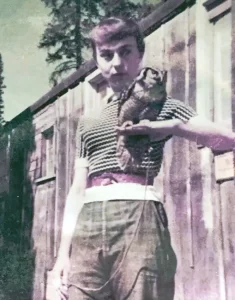
Erika Nowlan. Photo gratefully provided by Sabrina Nowlan.

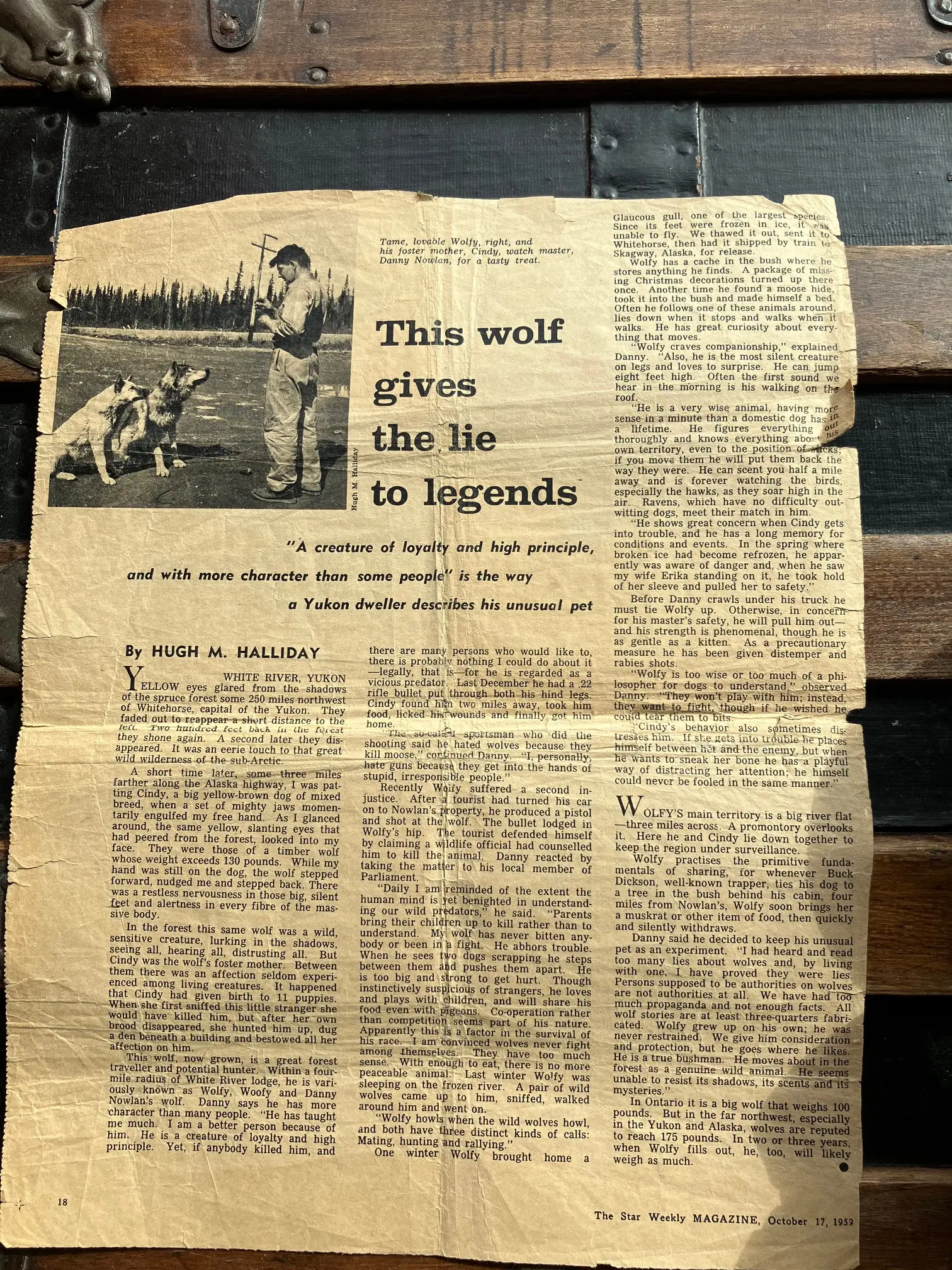
Danny and Erika dreamed of developing a place where northern animals were shown in a home-like environment for educational and conservation purposes. Danny had a way of understanding wildlife that astounded those who knew him. He had a reputation as an expert in training eagles and falcons, and the wolf he raised at White River was the topic of a magazine article. 

Wolfy Article - The Star Weekly Magazine, October 17, 1959
This wolf gives the lie to legends by Hugh M. Halliday.

He thought that keeping wildlife breeding stock and selling animals to southern zoos and game farms would allow him to have enough money to run the Game Farm activities, feed the animals, and provide him and his wife and children with at least three good meals a day. He had no idea what obstacles lay ahead of him – but even knowing them would not have slowed him down or discouraged him. Danny was full speed ahead, full time.

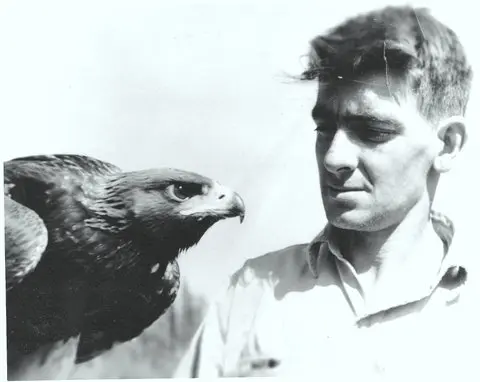
Danny Nowlan with a golden eagle.

Like the time he brought a little Porter locomotive from an abandoned railway near Dawson. He thought a little steam train could carry people around the property, and the kids would love it. He took his 5-ton vehicle up to Dawson to pick up the more than 10-ton locomotive. It was a wild ride to Whitehorse, with Danny running the truck into snowbanks along the road to slow the vehicle. The truck’s brakes were not up to the job and by the time they reached Whitehorse they were burned out. Danny always had big ideas, and he usually backed them up with detailed and practical plans. The little railway did not pan out.

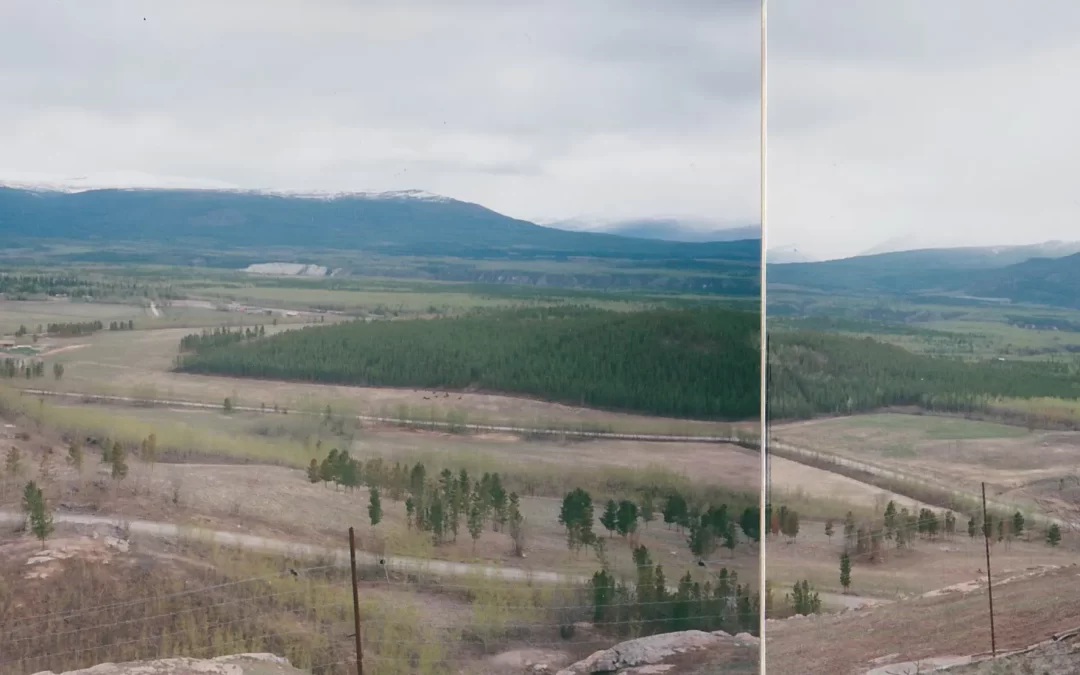
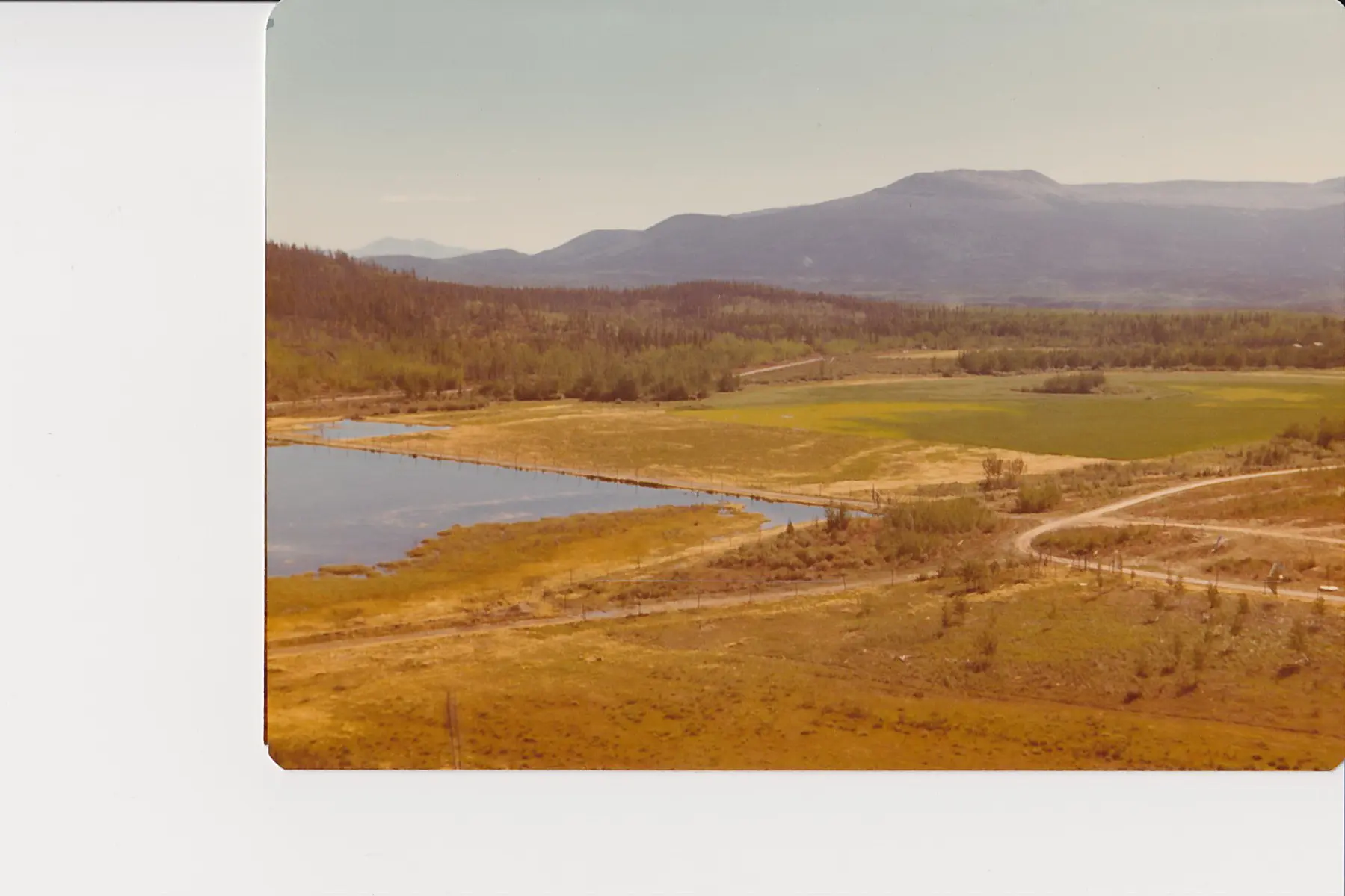
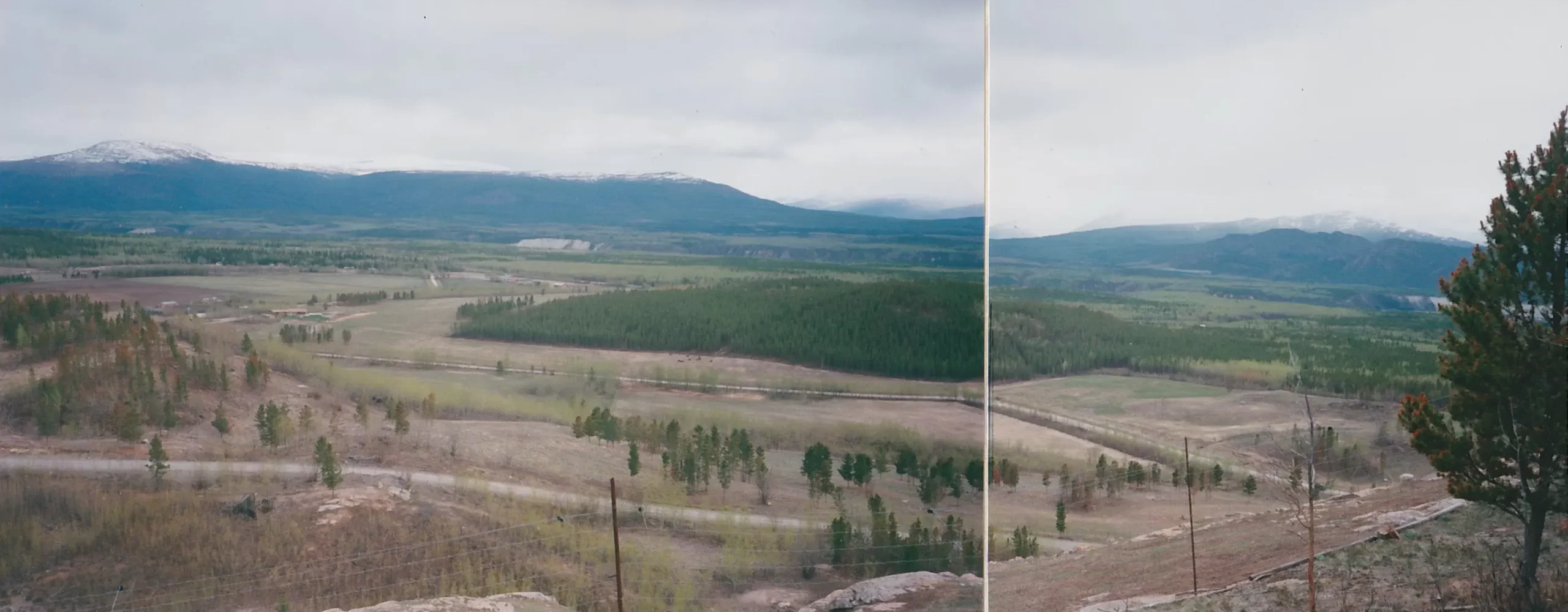
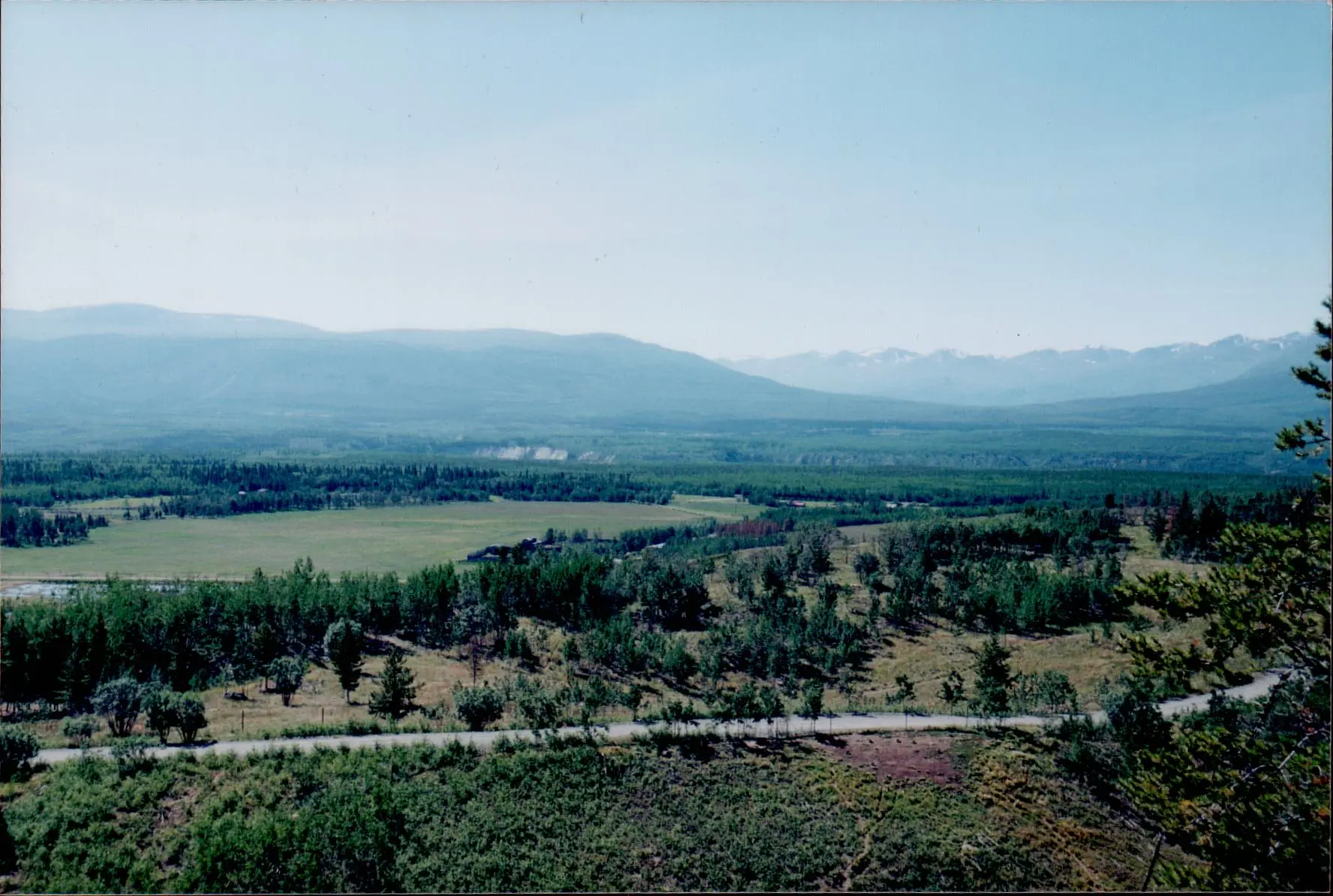
When the Nowlans purchased the property, it had a variety of high and low land, but the central feature was a wetland where today there is a big field.  The property needed roads and trails to be accessible for visitors and, although the marsh attracted wildlife, it was not part of Danny’s vision. At a local auction, he picked up a large earth mover (“scraper”) and a D8 caterpillar tractor with a cable-controlled blade (“cable cat”). This machinery was difficult to operate but it would be instrumental in building roads through the property - and Danny had a bigger plan than just roads.

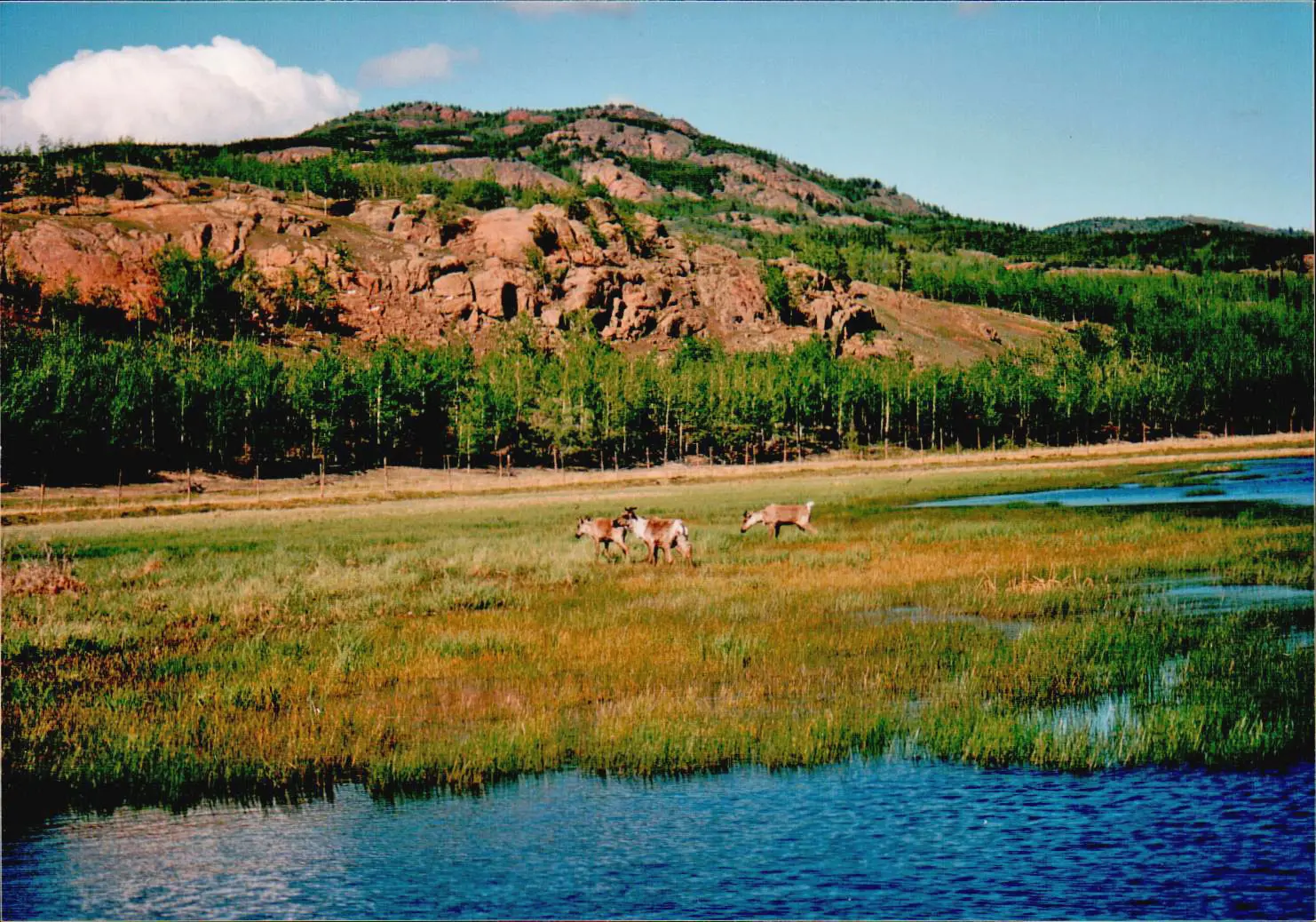
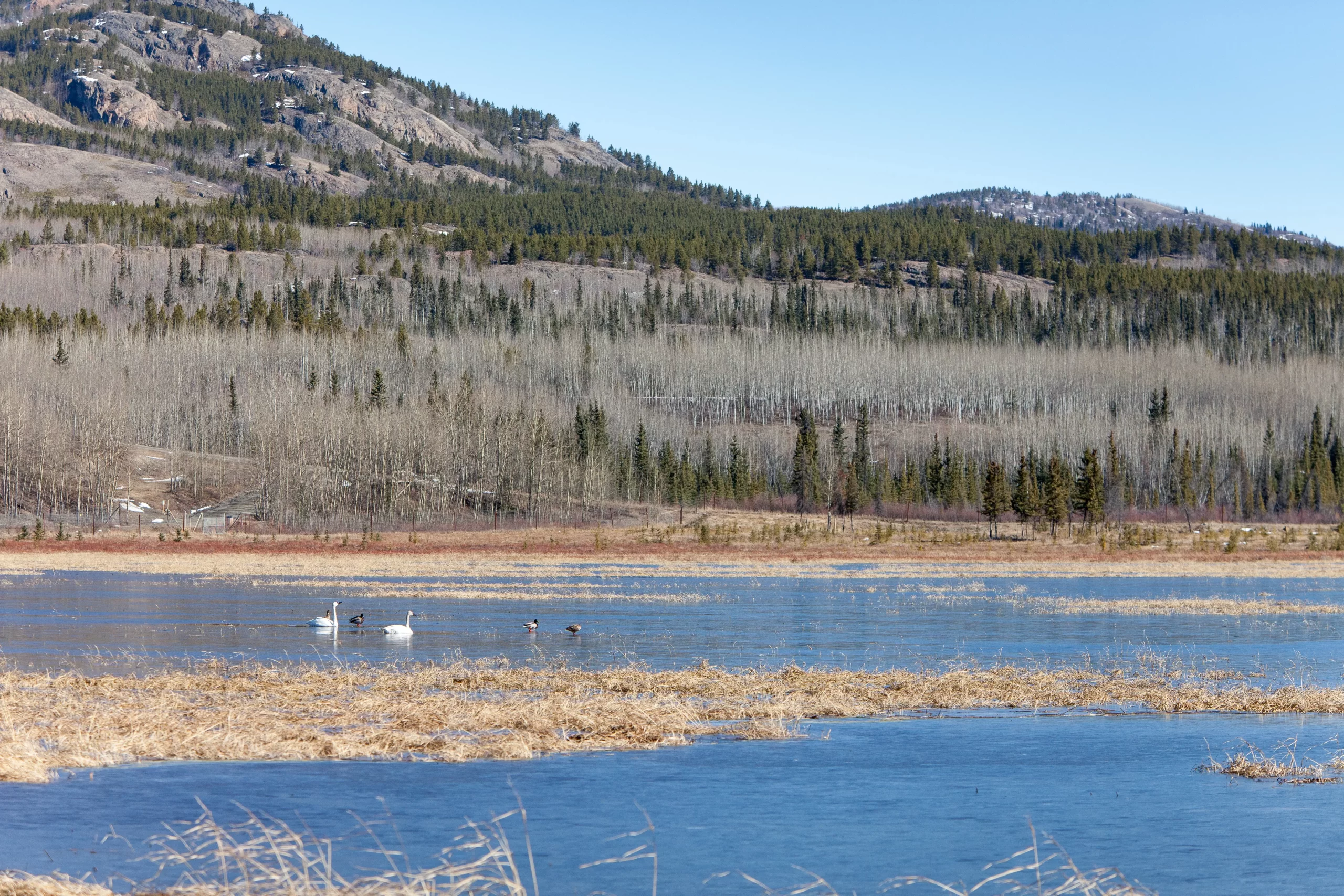
He built a dam across the drainage from the cliffs to dry out the wetland and create a pasture for first mule deer and later bison. A pond developed behind the dam, and it attracted migratory birds and small mammals. The small animals attracted fox and coyotes, so the next step was fencing. He used whatever came to hand, including 3” pipe from the CANOL pipeline, an ill-fated World War Two project. He put a fence around an area with a small herd of grazing mule deer, and the Game Farm had its first large residents.

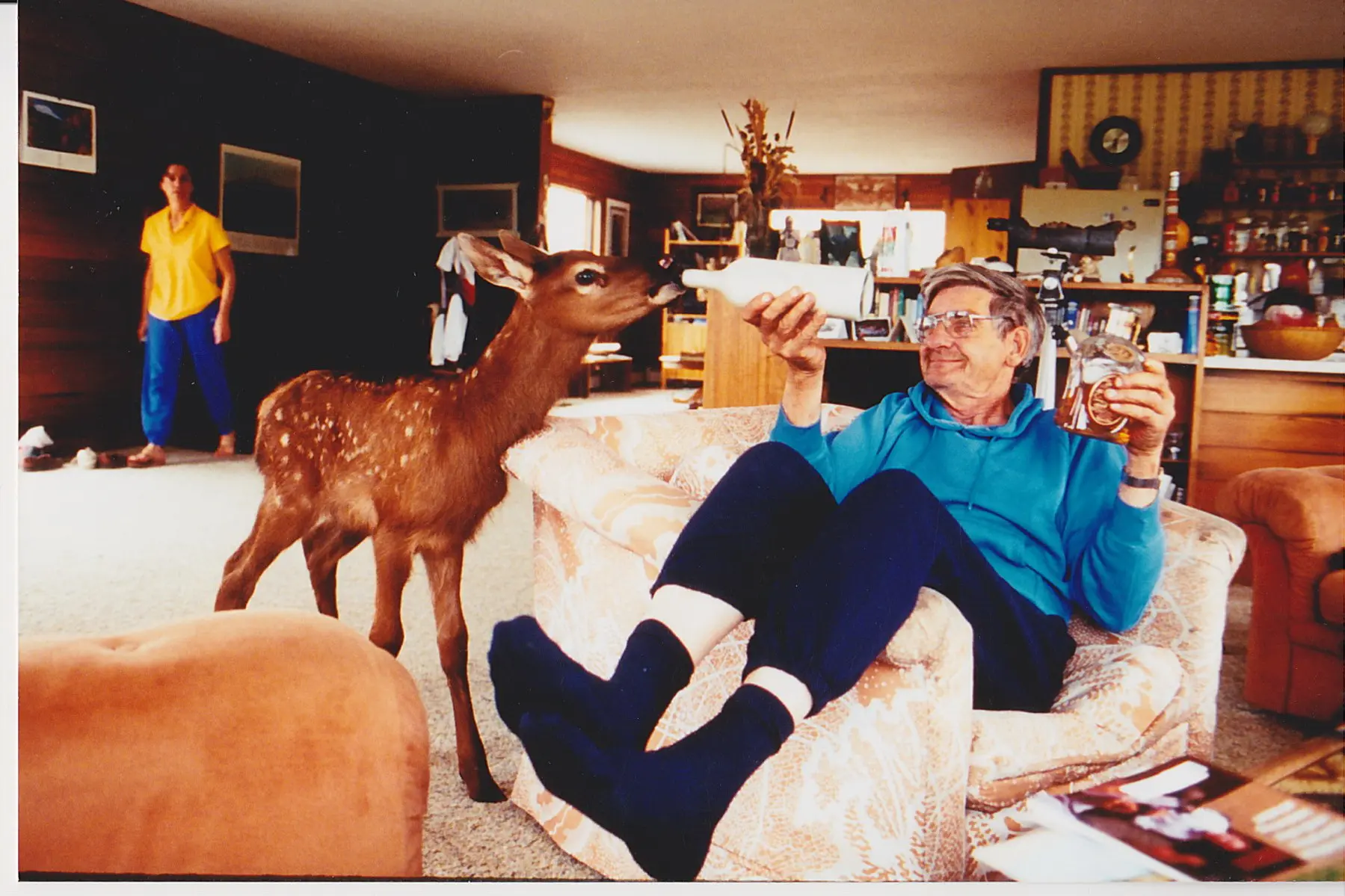
Some of the early buildings on the Game Farm were interesting. Danny bought the Yukon’s first airport hanger and moved it out to his property. His daughter Peregrine remembers two baby bears living under it. The Nowlans’ little home by the road did double duty as an animal hospital as Danny brought in wounded and abandoned animals. An owl with a broken wing was put in Erika’s book room and it roosted there on a shelf. She was forever cleaning owl poop off her books. A baby mink always wanted to swim. He joined the kids at bath time, and he developed a terrible habit of swimming in the toilet bowel if someone left the lid up at night. 

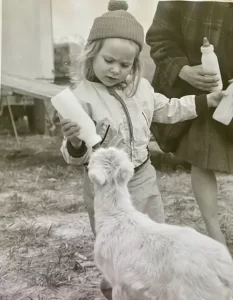
Sabrina Nowlan with a Dall lamb. Danny' and Erika's second daughter, born 1965 and lived 17 years on the farm and in Whitehorse. Photo provided by Sabrina Nowlan.

One night Erika screamed and woke the kids because a wet mink was running around inside her sleeping bag. She loved animals and endured a lot of chaos. Like the time Danny put their four-year-old daughter Sabrina astride a moose called Susiecue. The moose took off, and Danny was yelling for it to come back and shaking a bucket of oats. Sabrina went for quite a ride and remained completely fearless. Erika was not impressed.

Dall’s sheep were to be the Game Farm’s main attraction. They are magnificent creatures, they can be difficult for the ordinary person to see in the wild, and there was a market for them in southern zoos and game farms. After obtaining the necessary permits, a crew of hardy folk set off to capture some breeding stock at Thechàl Dhâl (Sheep Mountain) near Kluane Lake. Danny’s kids, Peregrine and Sabrina, looked after those first little lambs and kept them in their bedrooms. Wildlife biologist Manfred Hoefs was in the capture group. At that time, Manfred was a graduate student studying Dall’s Sheep horns. Danny, who had a Grade 2, a Grade 3, or a Grade 6 education (depending on who he was talking to), was famous for the amount of research he did on animals and their habitat. He was also famous for the number of useful contacts he developed with experts in many fields. Manfred continued to visit the sheep on the Game Farm for many, many years and established a Dall’s Sheep horn measuring protocol that the Yukon Wildlife Branch used to build a valuable and still-used research dataset.

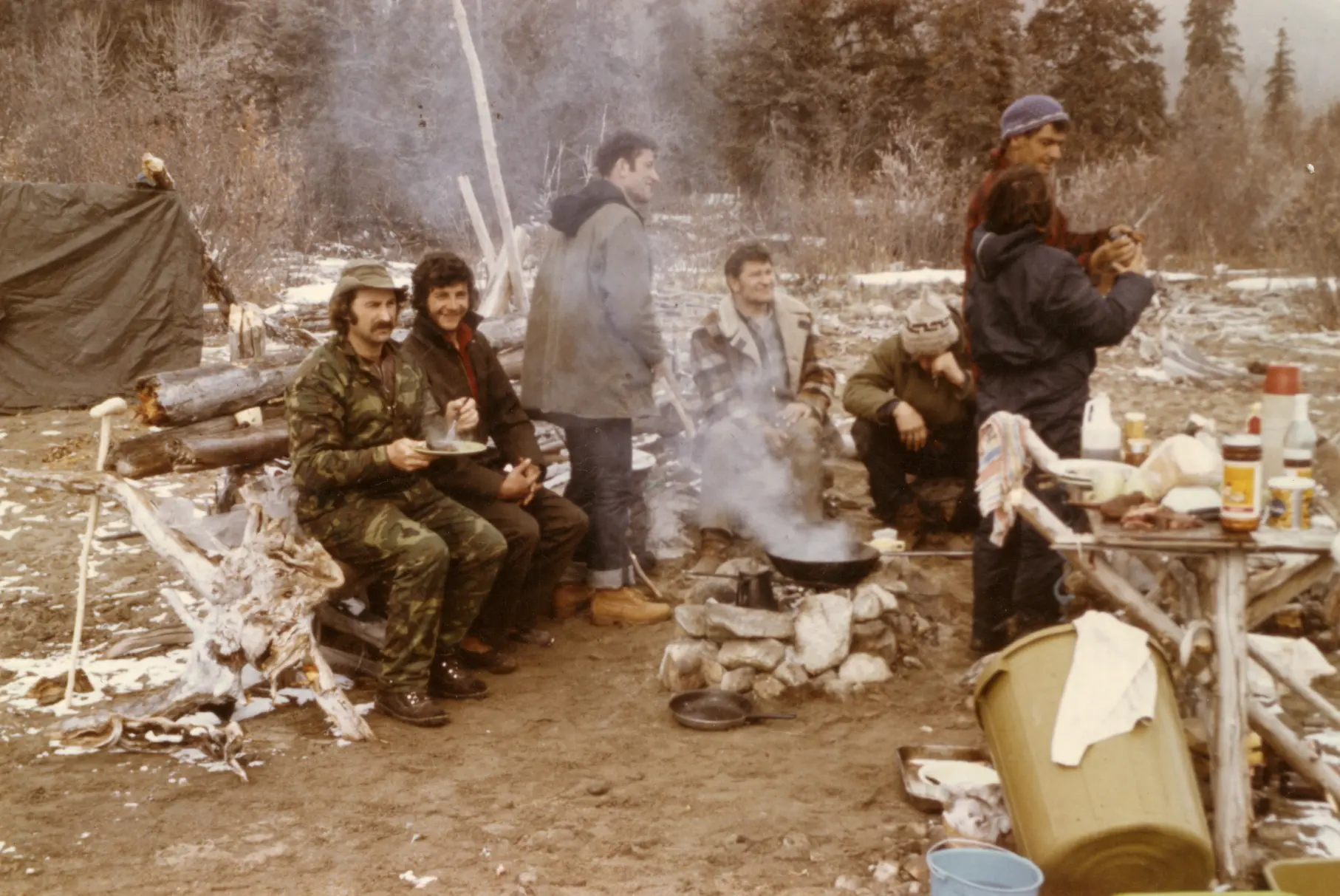
Sheep camp for sheep capture - from left to right: Unknown, Teddy Yardley, Herb Zollweg, Unknown, Unknown, Danny Nowland and Erika Nowlan

All of Danny’s friends enjoyed a good story, and one of them involved the Game Farm sheep and the road building equipment. Danny was never very careful with equipment, and the machinery ended up sitting in the sheep enclosure. Manfred came to the Farm one time and found the rams all lined up and running at one of the scraper’s huge tires. They would bang into the rubber, bounce off, and run at it again. Manfred said they were loving it – the best thing they had ever hit in their lives. They just kept going – bang, bang, bang. Sort of like Danny – living and loving life to the fullest.

• • •

Photo gratefully provided by Uli Nowlan unless otherwise noted.

Sally Robinson, October 2023
with words from interviews with Peregrine Nowlan, Sabrina Nowlan and David Mossop.

Sally Robinson

Sally Robinson

Vintage Ventures - Researcher & Writer

Sally is currently an independent consultant in the heritage field. Throughout her career, after working 20 years with Yukon museums as a researcher, curator and exhibit designer/producer, she joined the Yukon Government to work for 16 years as the Historic Sites Interpretive Planner.

Lindsay Caskenette

Lindsay Caskenette

Manager Visitor Services

Lindsay joined the Wildlife Preserve team March 2014. Originally from Ontario, she came to the Yukon in search of new adventures and new career challenges. Lindsay holds a degree in Environmental Studies with honours from Wilfrid Laurier University and brings with her a strong passion for sharing what nature, animals, and the environment can teach us.

867-456-7400
[email protected]

Explore by Category

Explore by Author