

A Day with an Animal Care Assistant
wildlife rehabilitation
8 minute read.
My name is Abbey, I am a part-time animal care assistant and part-time wildlife interpreter here at the Yukon Wildlife Preserve for the summer of 2021. I am a biology major at the University of Winnipeg. Fall 2021 I start my second year of my degree. One of my goals in life is to visit all three territories in Canada, with Nunavut already crossed off the Yukon was next on my list. The Wildlife Preserve offers me a chance to put my education to practice and help me decide which route in the biological field I want to pursue (I bet by the end of this post you can guess which route I am leaning towards). This post will discuss what I have experienced as an animal care assistant here at the Preserve and hopefully give some insight about what goes on behind the scenes for you the reader.
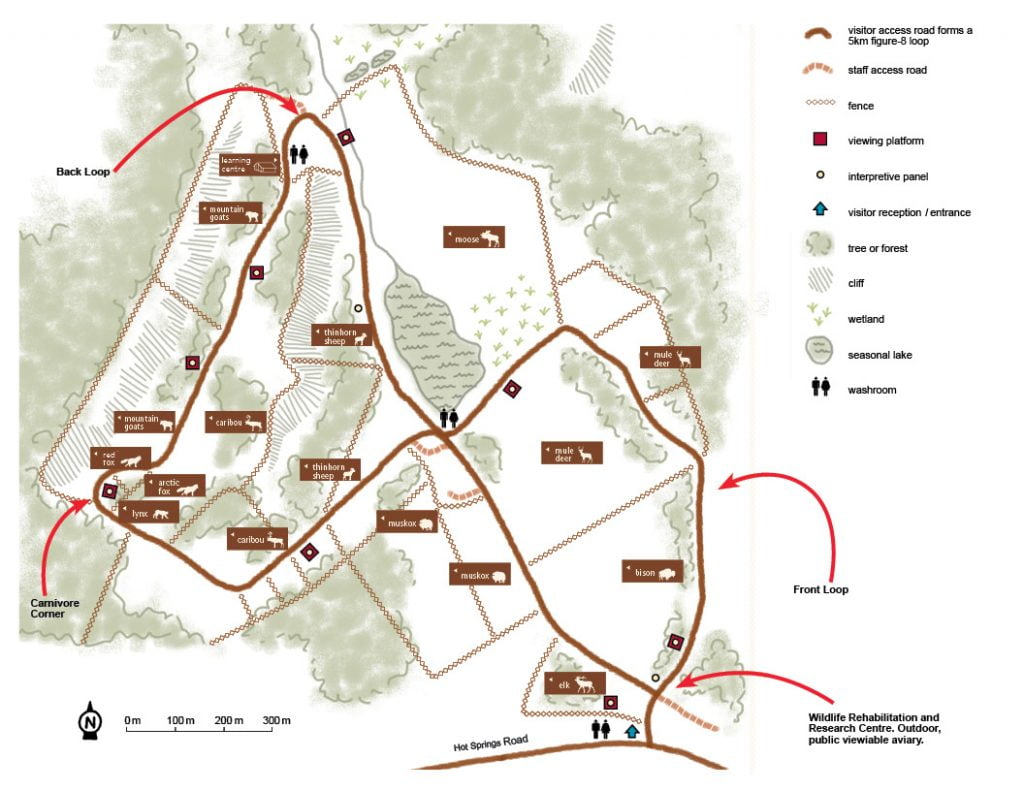
You may have been on the Preserve and been at the right place and time to see the animal care team at work. The animal care team works hard to keep the Preserve and rehabilitation animal’s happy and healthy. Working in animal care is never a stagnant job, animal needs change, babies are born, new rehabilitation animals arrive making this job ever changing. This post will follow my day around the preserve as an Animal Care Assistant starting in the Preserve’s Wildlife Rehabilitation and Research Centre, down to the first half of the lower loop up to the upper loop and back down to the second half to complete our figure eight.

This map shows the homes of each of the species in our collection located on the front and back loops of the figure 8 trail network. The Wildlife Rehabilitation Centre is located in staff access area.
Rehabilitation Centre
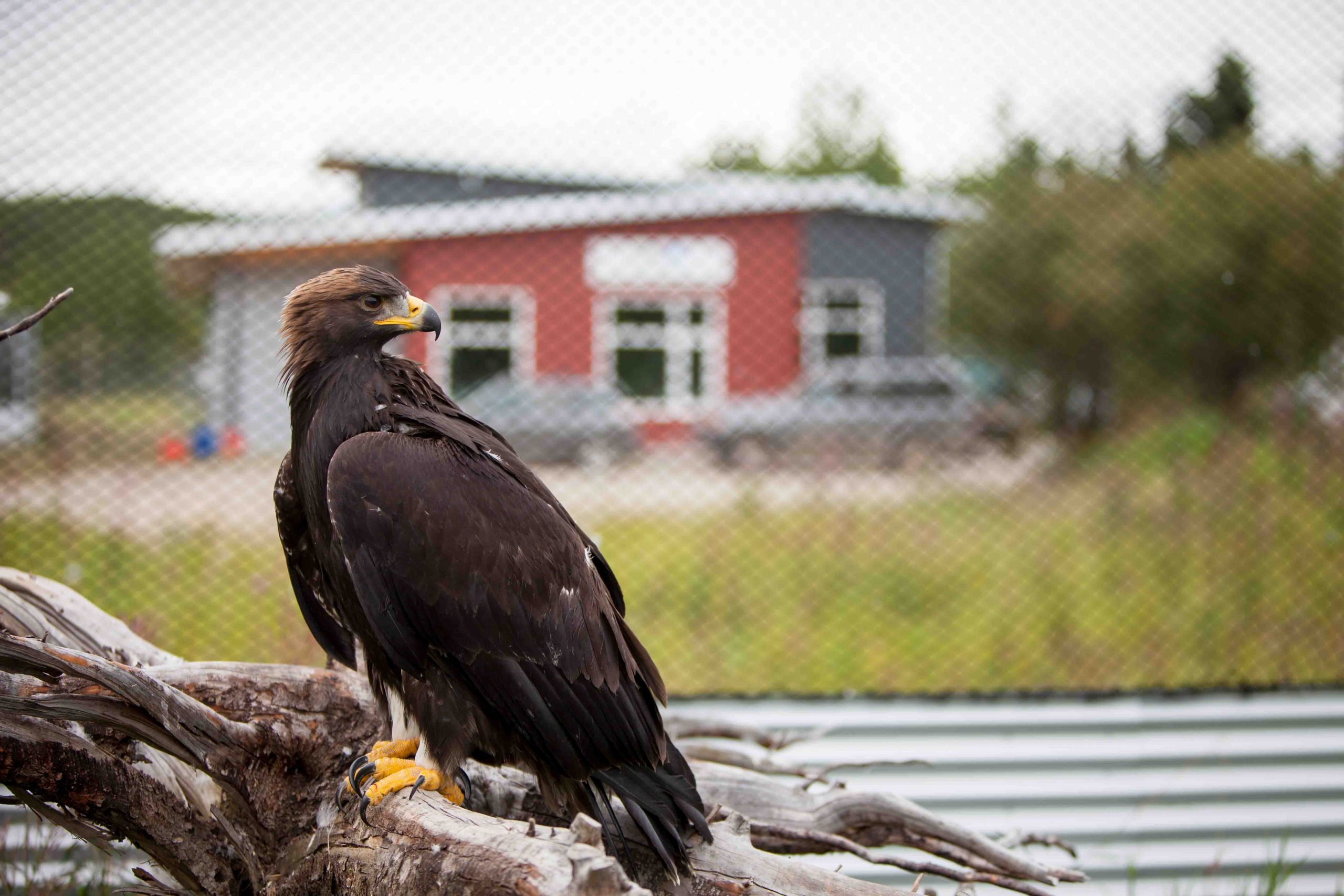
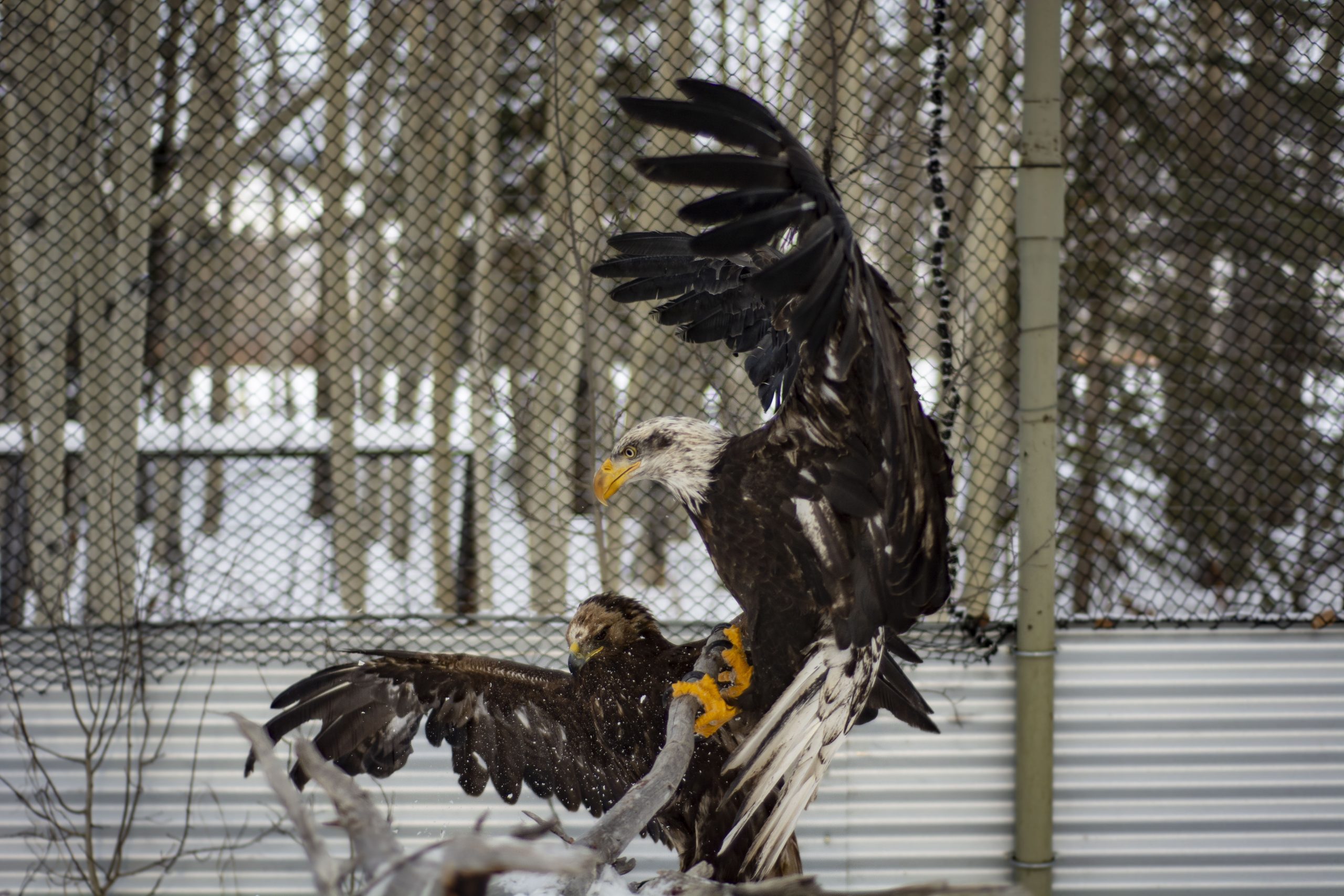
The Rehabilition Centre in the shadows of a golden eagle patient in the large outdoor aviary. Photo credit: J.Paleczny
To start off the day I check the animals that are in rehabilitation care to make sure their habitats are clean and that the animals are well - observation of animal behaviour is a very important role in animal care. In the rehabilitation center the animals we look after often have strict eating schedules which dictates what is done during my day and when. An example of this is the moose we received in late May of 2021. This calf is not shy and is always excited to eat! He gets almost too excited, so we have to slow him down. It's exactly like when your puppy eats way too fast and you have to find ways to slow them down. After feeding, we watch him until he defecates and lays down, this is an important step to ensure he is healthy and progressing how we would expect him to. As you continue reading this post you will recognize the particular theme of observing the animals' behaviors: this is to ensure the health of the animals in our care.
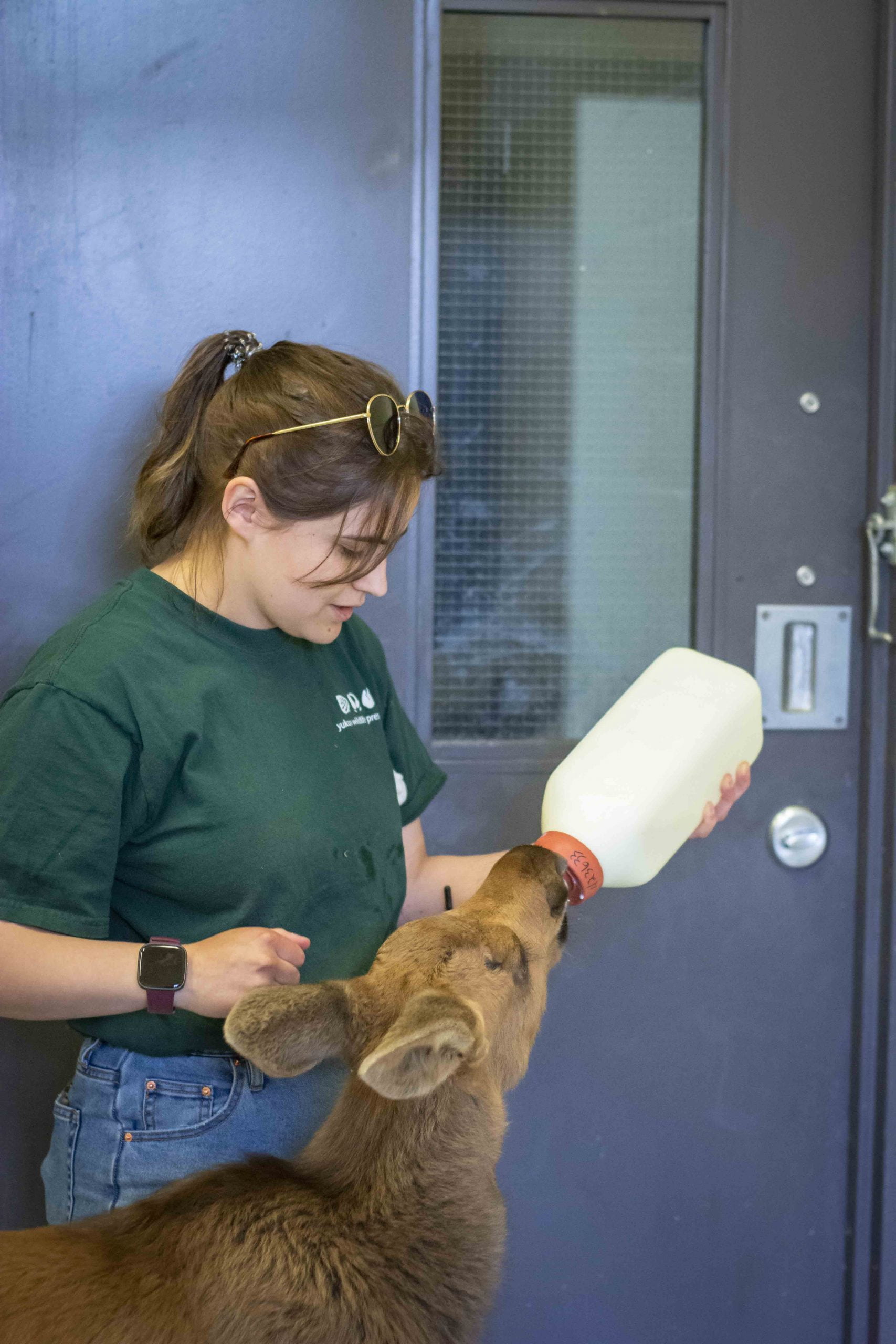
Next step is to prepare the feed for the collection animals. The caribou females eat a beet pulp mixture that you just add water to and it expands twice or three times the original amount. It almost looks like that elephant toothpaste science experiment but in slow motion! We also mix that with donated fresh fruit pulp. We’re very lucky to receive support from so many local organizations including grocery stores. Fun fact, caribou don’t like citrus or ginger, they’ll eat around it and leave it behind (so we sort that out and give it to the moose).
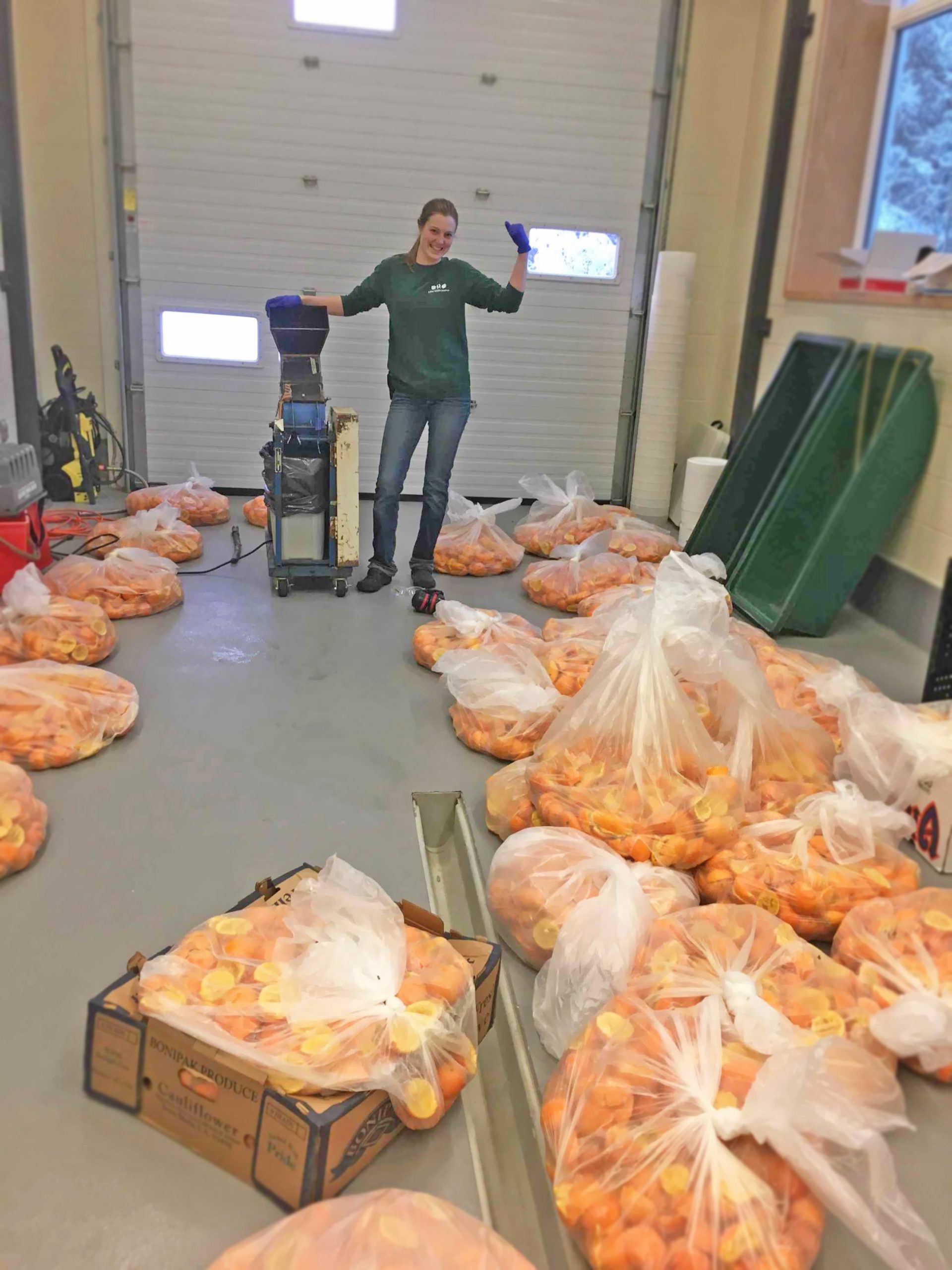
Oranges donated from Wykes Independent Grocer.
We then prepare the carnivore food. The arctic fox, red foxes and lynx all get a healthy amount of red meat and white meat. Once the food is prepared, which means to cut it up, weigh and portion it out per species it's placed in the fridge for later.

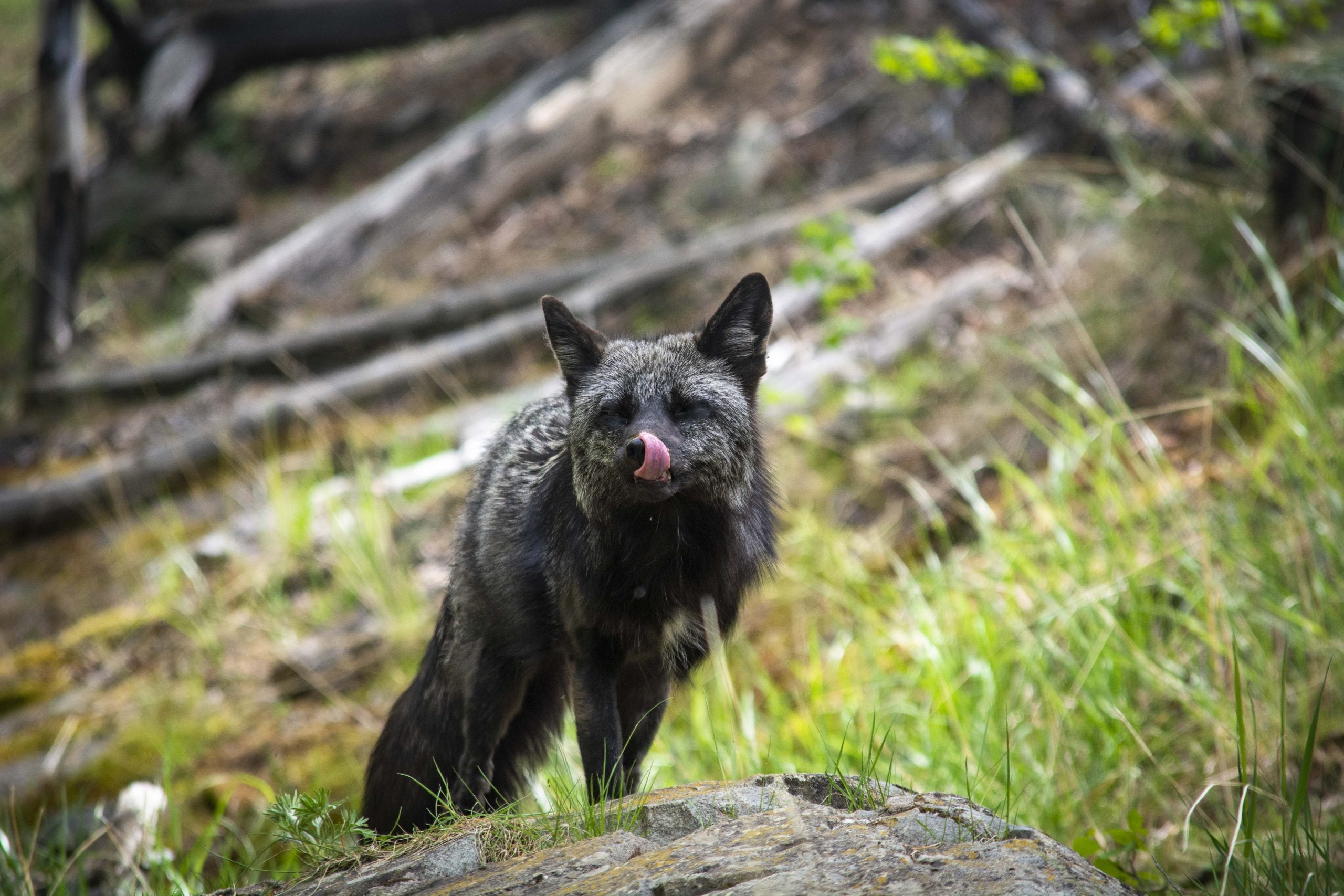
The silver fox enjoys lunch and is lip licking satisfied thanks to Animal Care staff food prep. Photo credit: L.Caskenette
We then head to the hay barn to get pellets for the muskox and bison. These two species don’t have a feed station attached to their habitats like the other ungulates, they are a bit too rough on their surroundings, so that means pellets are not stored at the habitat in the protective feed stations.
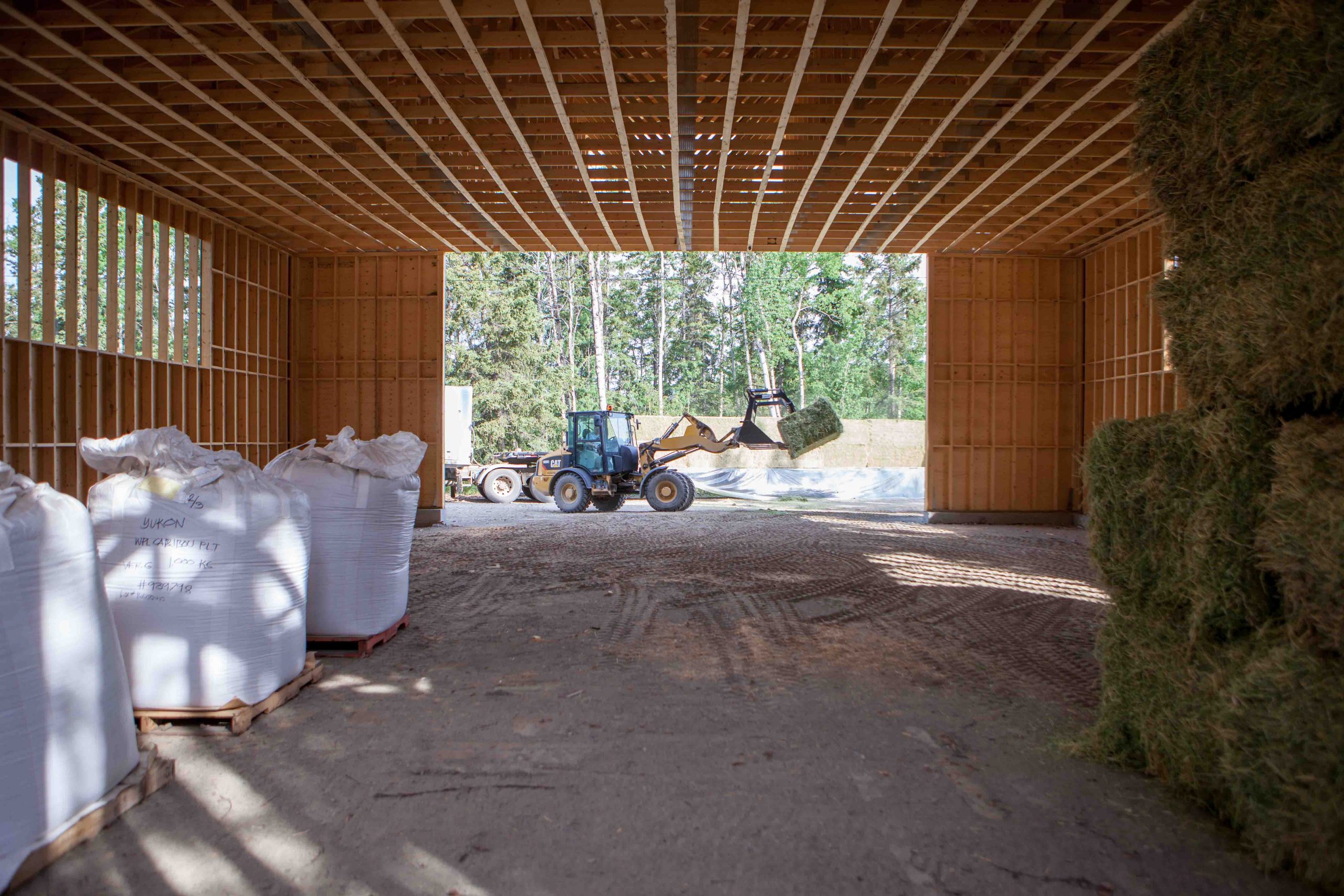

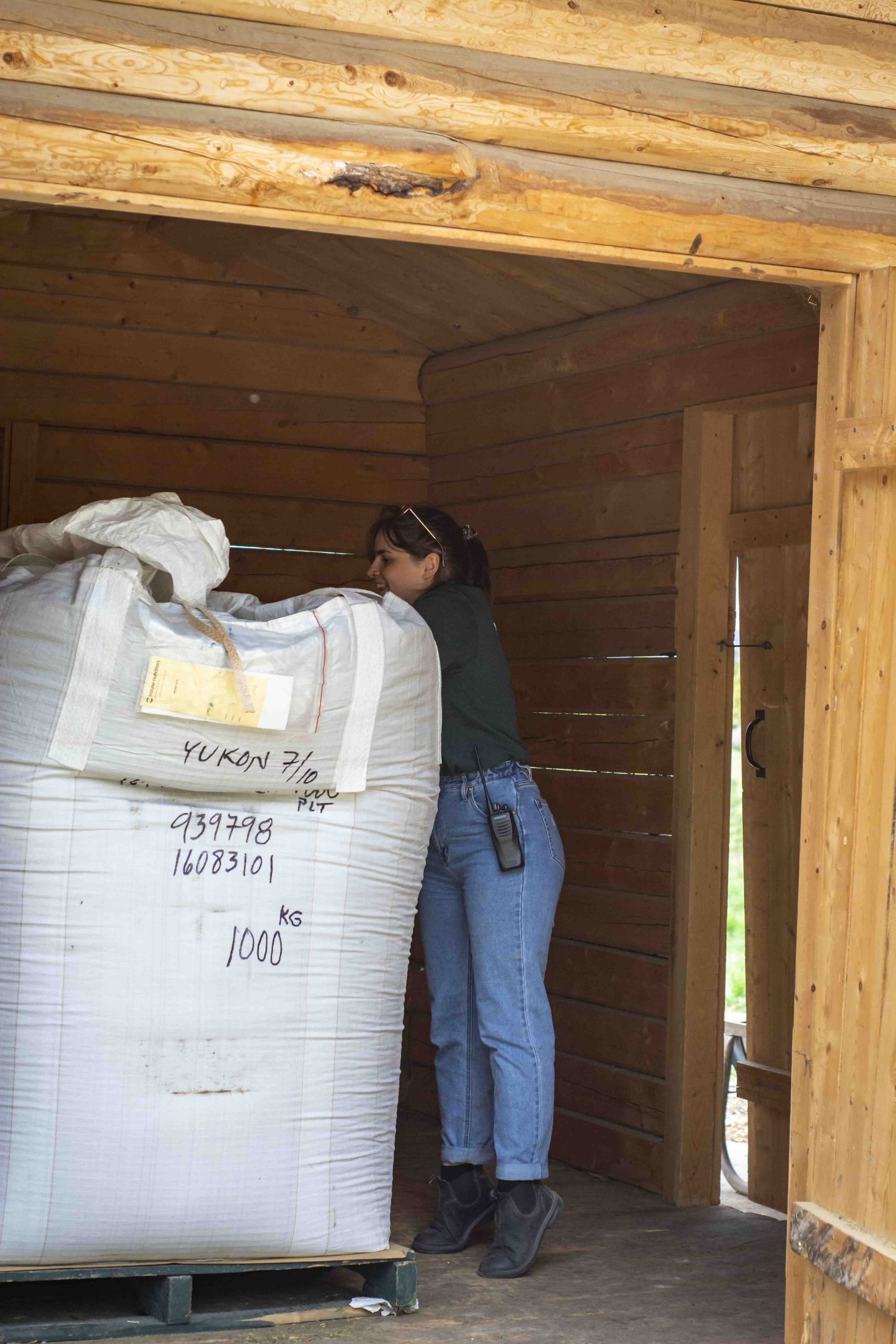
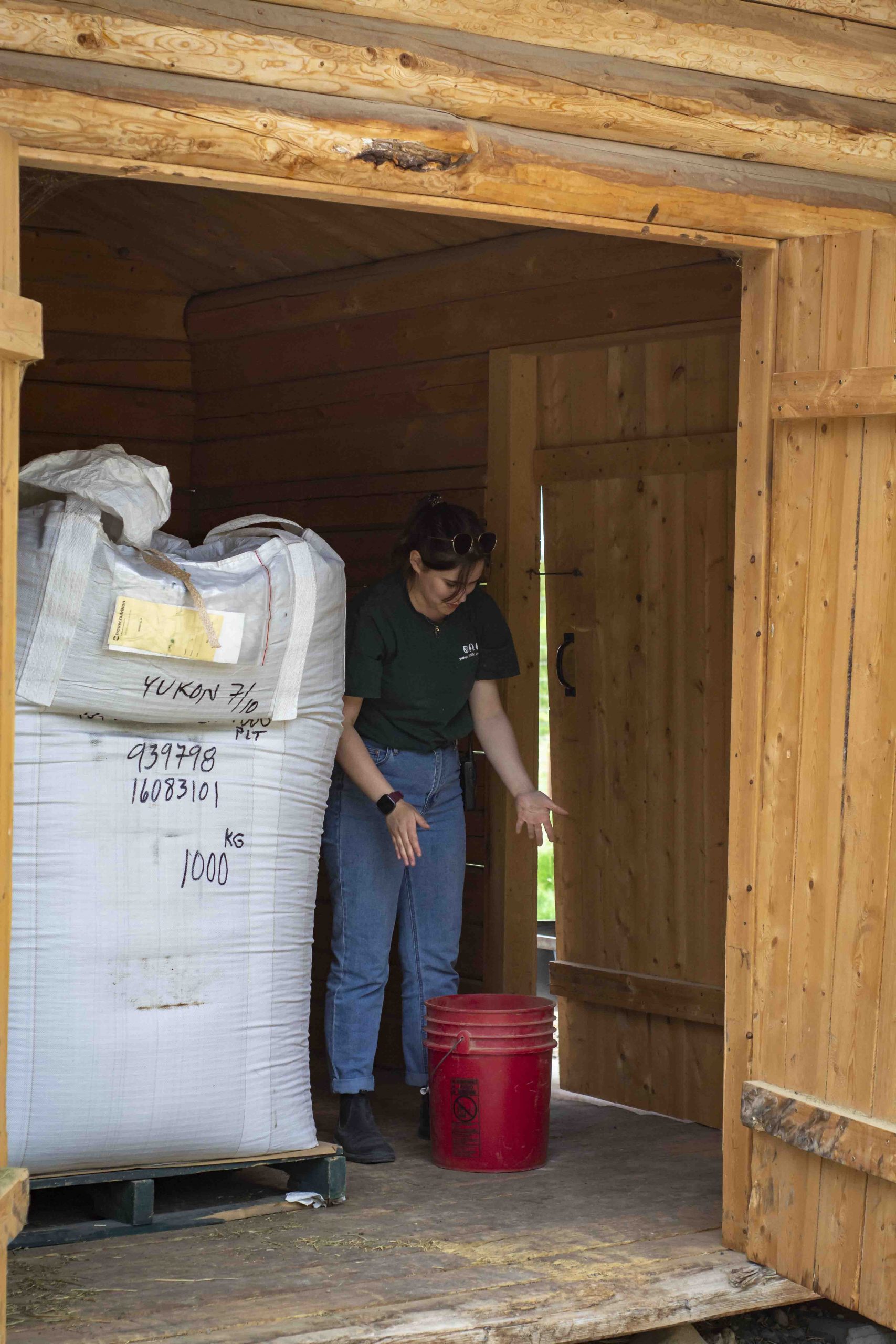
Getting pellets is no small feat, the first time I tried to fill a bucket it took me four tries to get a full bucket! For reference I am 5’0, and the bags are as tall as I am when they are full. Once we have our pellets ready, we load up the animal care truck and begin our tour around the preserve.
Front Loop
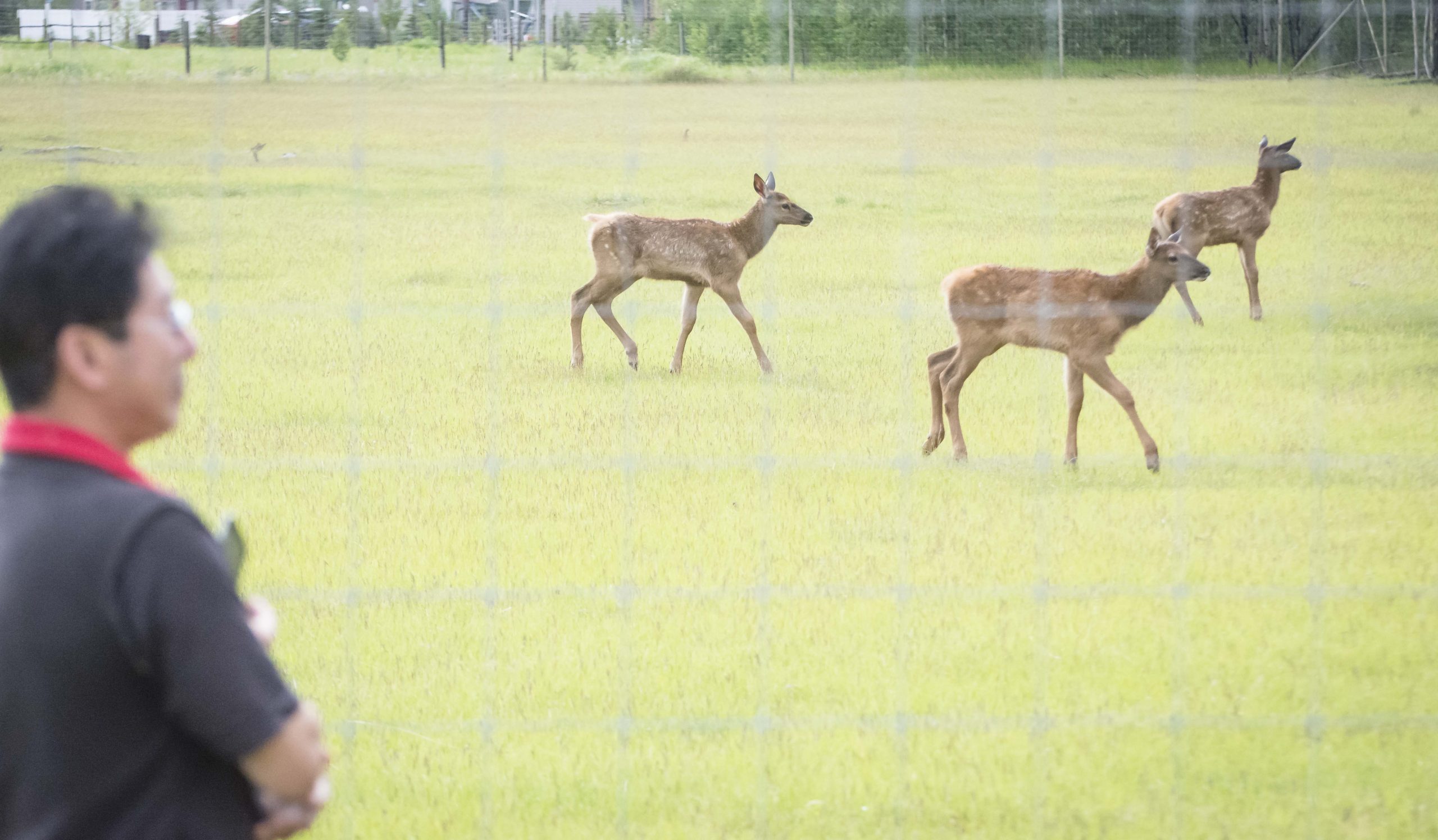
In this portion of the front loop or sometimes called the lower loop we will encounter the elk, bison, mule deer and moose in that order as we start counterclockwise on the loop. We begin first by making sure all the elk are present, look alert and healthy and then check their hay and water levels.


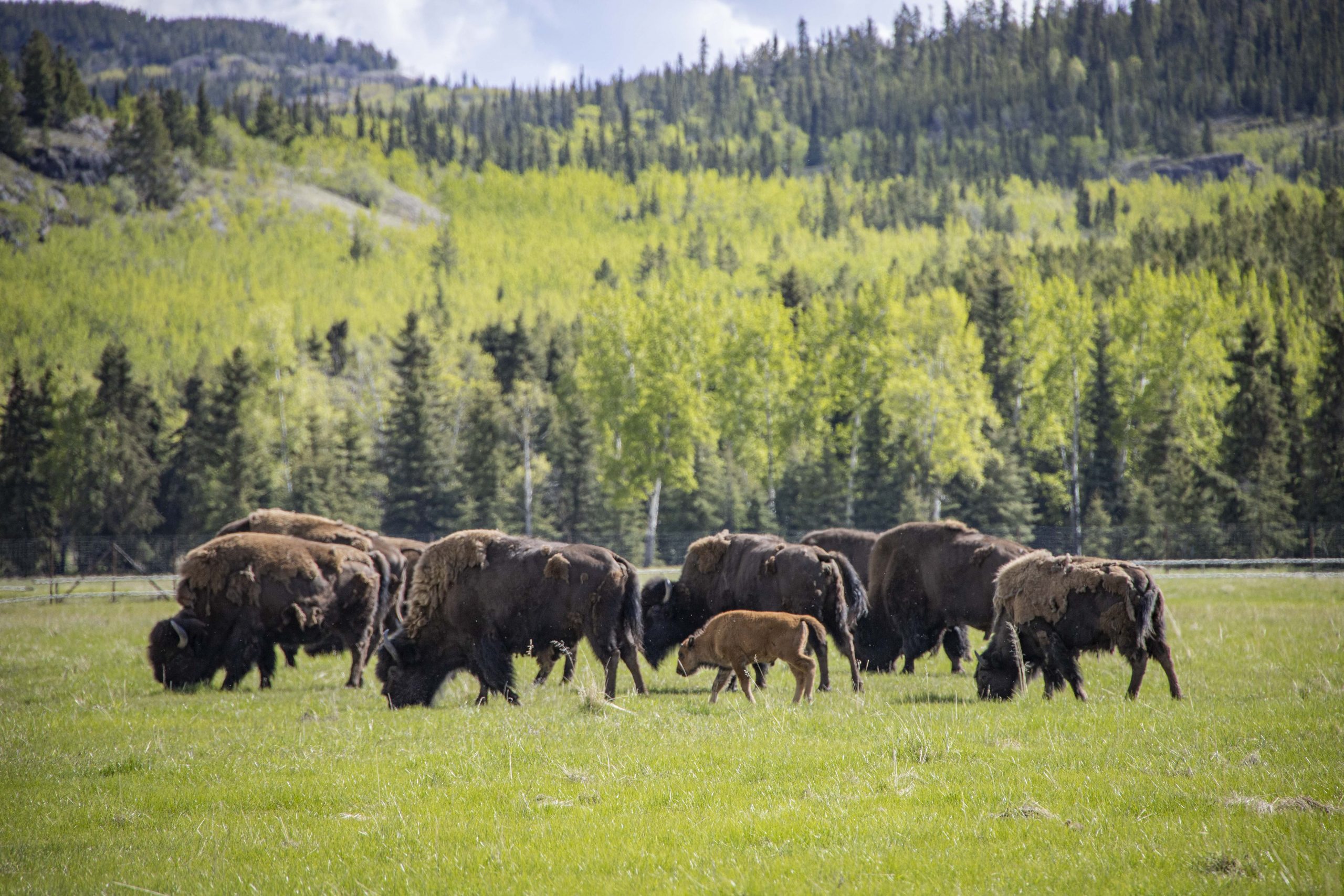
Then we stop at the bison who are usually laying or standing around as a group. These animals get their pellets poured in two straight, long lines on the ground so there is plenty of room to share between these big, big eaters. We hang around the habitat to count the animals and check them for any changes in behaviour. This is an important opportunity to make observations in any changes of health that can be reported to Dr. Maria Hallock, our full-time veterinarian. If anything is astray Dr. Hallock will investigate further but most days I get to see and learn the amazing behaviours of these animals.
After that, we head over to the mule deer where we first check their water and then head into the feeding station where we find their stored feed, tools, and the animal information sheet. Each animal information sheet is specific to the species, we count how many animals we see and how much they are fed. We also take the time to write down any observations of the animals whether it’s a mule deer with diarrhea or a moose acting out of character all observations are recorded and forwarded to Maria.
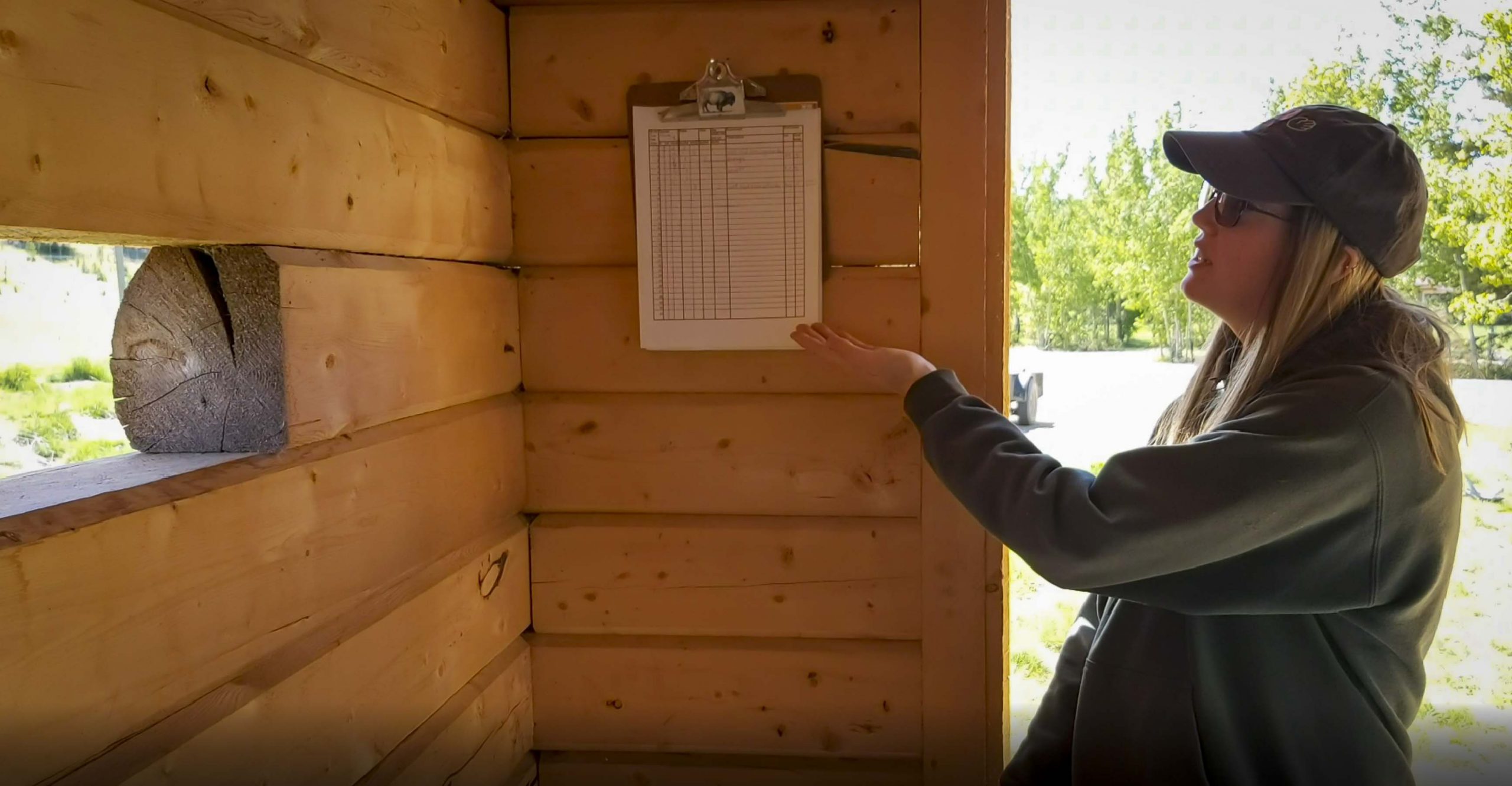
We use a scoop instead of a bucket to pour feed into their troughs (thank goodness). In the same shed we also feed our moose and again we scoop their feed into their troughs although they have a much bigger scoop so it's important to keep everything separate.
Back Loop
In the back loop we will find our thinhorn sheep, caribou and mountain goats. We move to our thinhorn sheep where we wear booties and gloves to protect them from outside pathogens. This species tends to be more susceptible to bacteria's so the Preserve biosecurity is heightened here when entering their habitat.


Left photo shows a thinhorn sheep sedated for a check up and hoof trimming. Right shows Outdoor Operations staff working on fencing within the ewe habitat. Both photos show staff wearing booties and gloves to help protect the animals against pathogens. Photo credit: J.Paleczny
This species has both pellets and hay in their feeding station. Learning to use a pitchfork has been a learning curve! Who knew something with so much space between each prong could carry so much?
We clean and remove excess hay and feces from the feeding stations which we compost. We head on over to the caribou (who were hoping will have babies this year) and whose food we mixed earlier.

Caribou cow and calf from summer 2019. Photo credit: J.Paleczny
We go into their habitat and create piles of the beet pulp. We then head to the mountain goats who are usually high up in the cliffs making counting them a tricky task! This species gets hay and pellets and a clean up just like the sheep do.
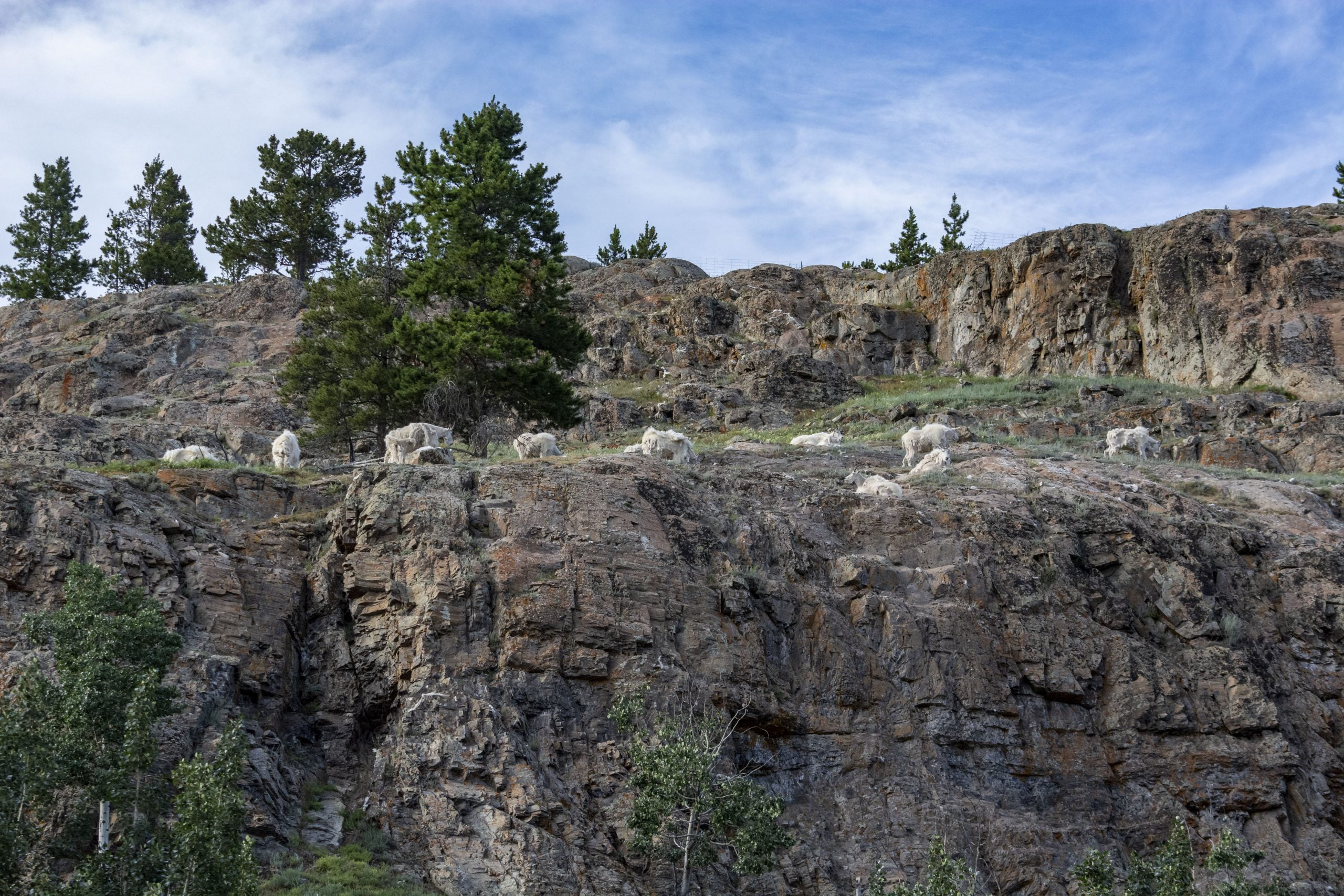
Mountain goats hang out on the cliff - it's safety and sometimes sun bathing! Photo credit: L.Caskenette
Although beware of Geronimo whose patience for humans is very thin! Every animal has a personality and some are more memorable than others. The first time I met him I thought he was ill only to find out he was just in a bad mood (he always is - he's a goat). To be fair when I say bad mood, he’s really just displaying signs of normal defensive behaviour that has been somewhat elevated due to his story as a kid.
Carnivore Corner
The back loop can be further divided into the Carnivore Corner where we will find the lynx, arctic foxes, and red foxes. The carnivore corner is where the most fun feedings occur! Sometimes we do themed enrichment feedings - check out our Halloween one!
We stop at the lynx who are usually waiting by the fence for food, I swear they hear the truck and spot the green jackets and come running! The females are most expectant and the odd time the male will be waiting too but he’s a little more reserved.
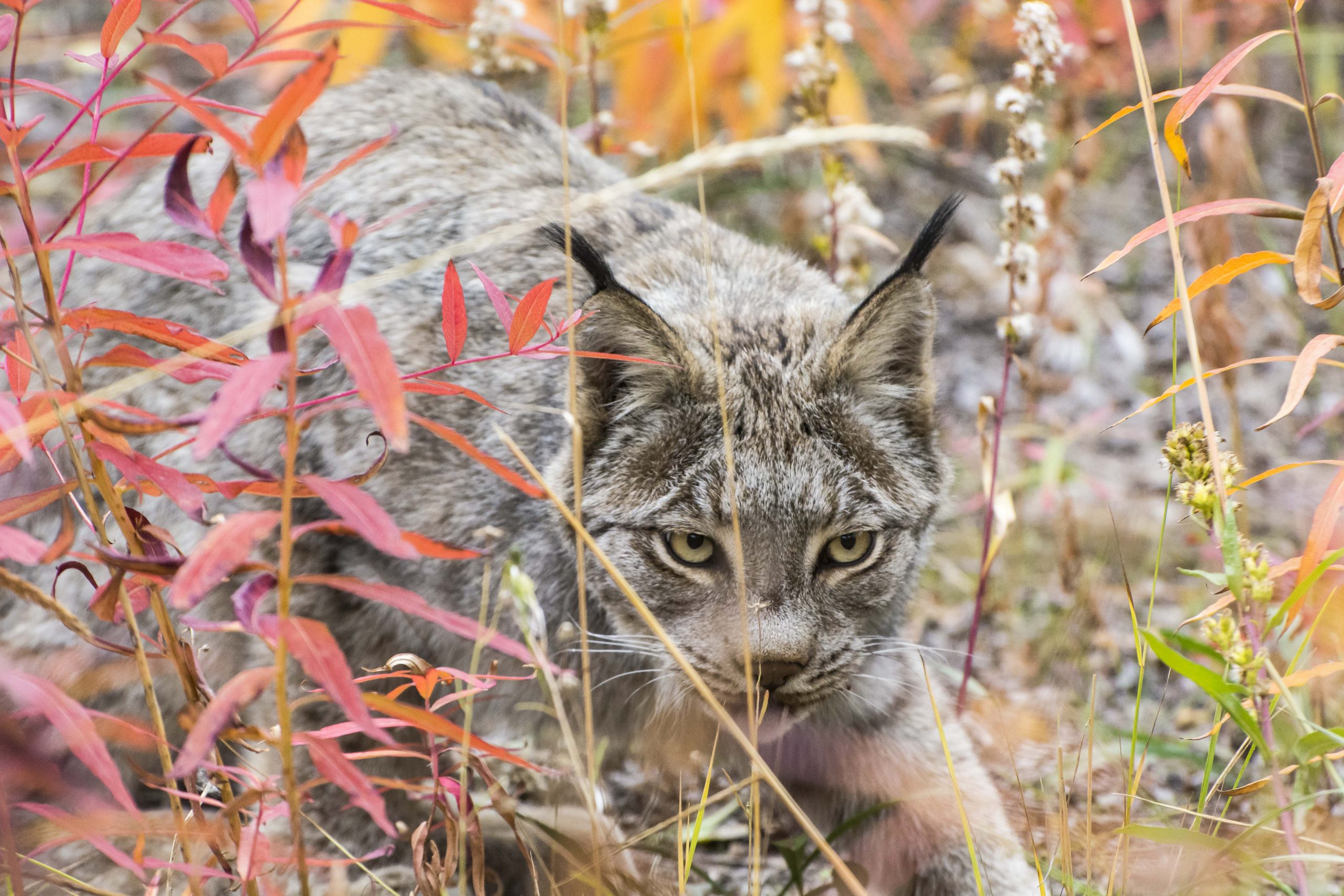
Lynx come in for feeding, intent but smooth movement towards the food. Photo credit: L.Caskenette
We head over to the arctic foxes who look super cute but throw in a piece of red meat into the mix and their carnivore side comes out. You can watch the arctic foxes feeding here!

Very cute, but also very ready for food! Photo credit: L.Caskenette
Next, we head over to the red foxes who are the funniest to feed! ‘Definitely’ the red fox makes the cutest yipping noises when he sees you pull up! What does a fox say you might ask? It sounds something similar to a yip and laugh mixed together. He will race around to get food before the silver fox does, I swear that silver fox has more patience than I’ve ever seen.
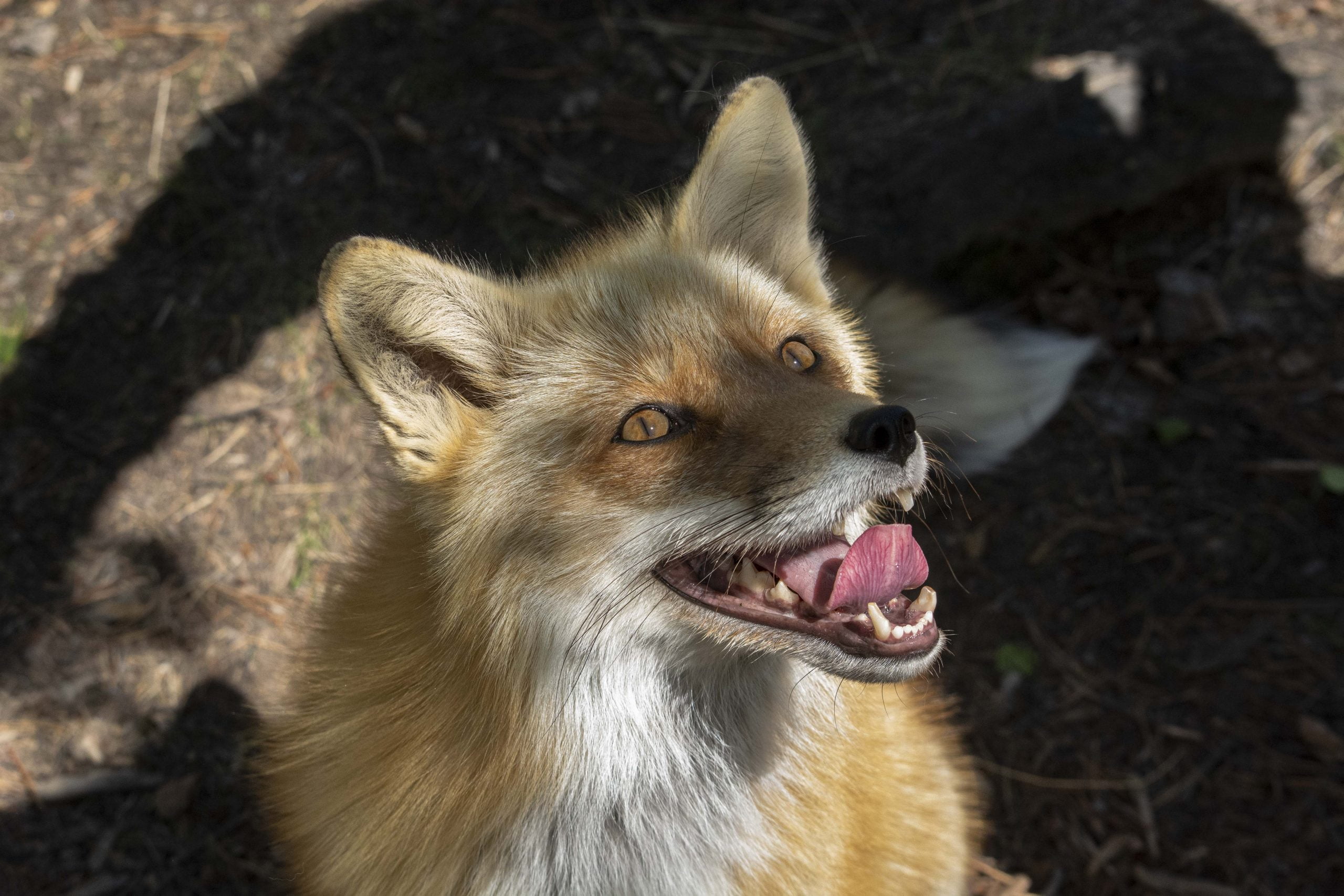
The red fox is always ready for food and will eat as much as he possibly can. What he can't, he will grab and go stash it. Don't worry, the silver fox gets his share - he goes and finds the red foxes stash in his own time. Photo credit: L.Caskenette
Front Loop - Round 2
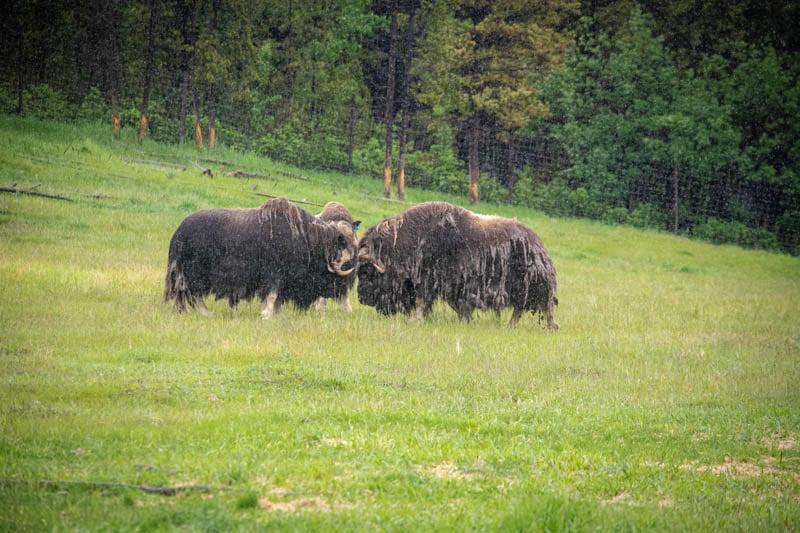
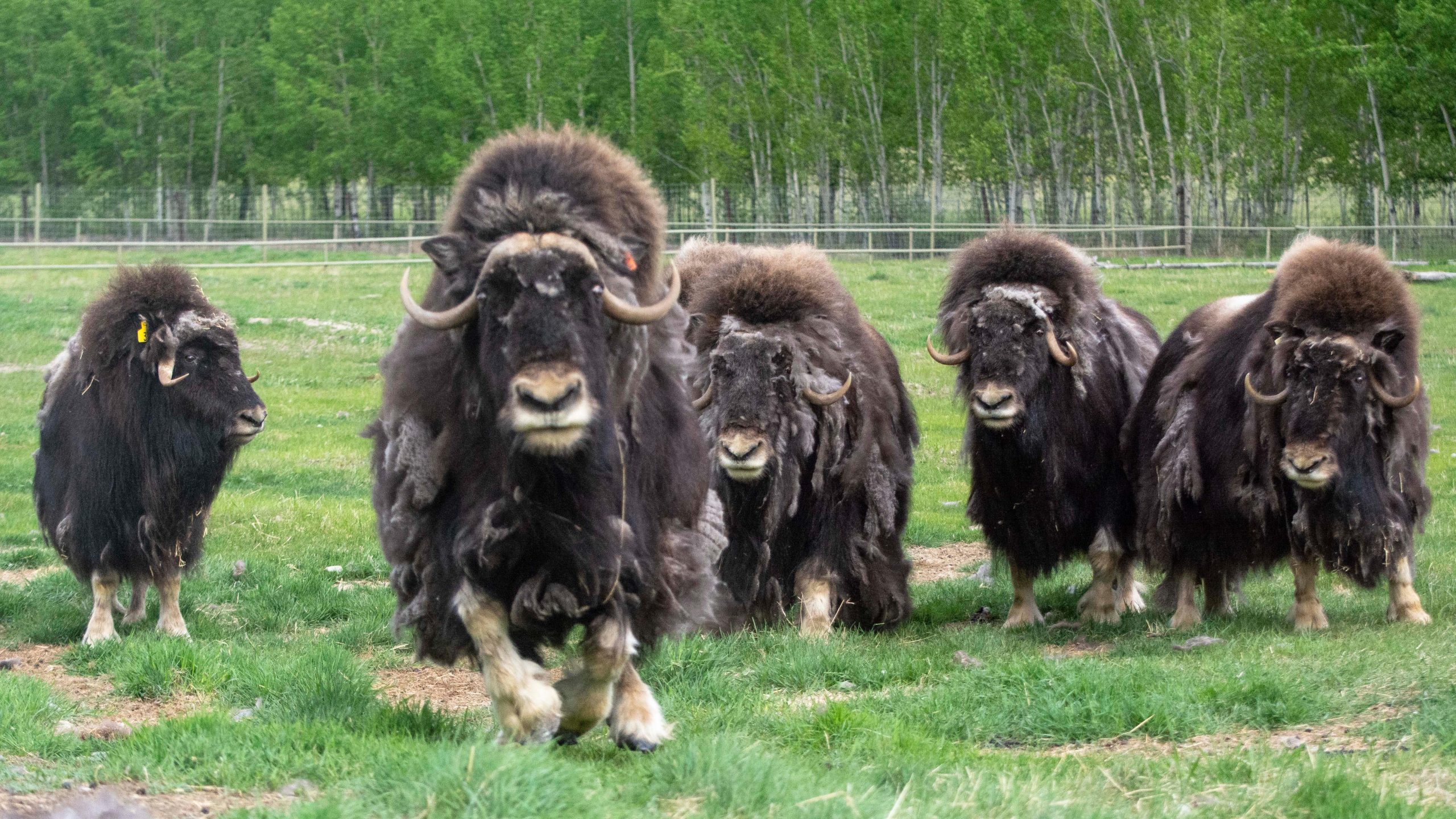
In the second half of the lower loop we feed the muskox and check in on the elk and bison habitats as we head back to the animal care building. We then head to my favourite animal, the muskox, which is the best part of my day in animal care. These guys have a special metal structure for handling and feeding that limits contact, increases safety for staff and provides shelter for the muskox and muskox supplemental feed.
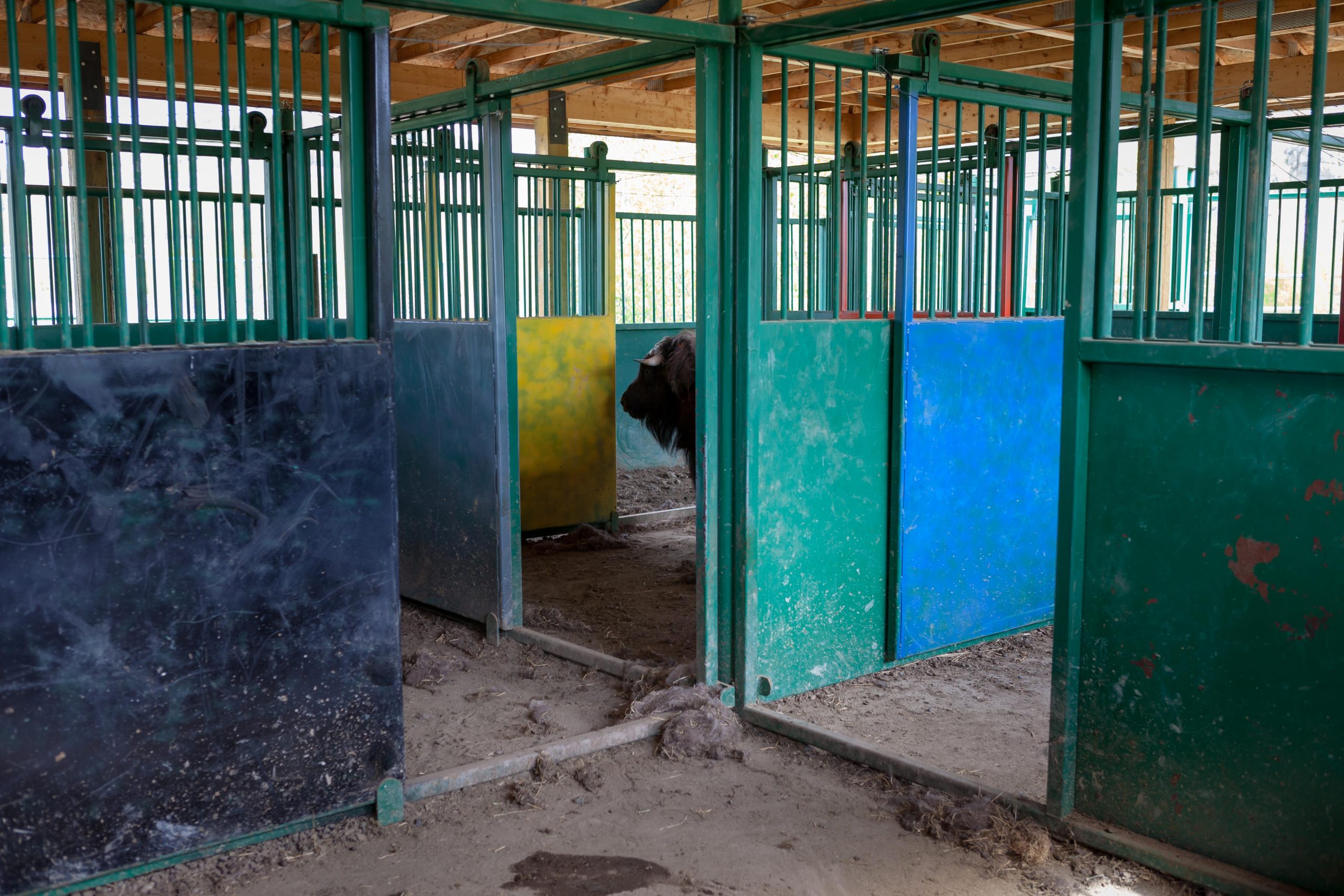
Muskox do not have feed stations. Instead, they have a metal handling and feeding structure to ensure the safety of both staff and muskox along with the longetivey of the building! Photo credit: J.Paleczny
Muskox are incredibly fierce with a social order that is largely based on an aggressive hierarchy but they are also protective of their herd. There's nothing more intimidating than a territorial, protective and potential in rut (mating season) muskox so it's best to keep your distance.


If the bison or the elk were too far away on my first look I will spend this time counting and watch for behavioral changes on this part of the loop.
All while this is happening, we have to be wary of our time for feeding our rehab animals on tight schedules. There is also time during the day to do some other tasks like creating habitats for our rehabilitation animals or doing some spring cleaning in some of the collection animals’ habitats. By the time this is all done my arm and back muscles are jelly and I am ready to hand off the torch to the next animal care assistant.
To conclude my time here at Yukon Wildlife Preserve is an experience I will never forget from feeding my favourite animal (the muskox) to finding a new passion in helping care for animals. While I came for a summer, for work, the Yukon and it's incredible fauna hold a strong place in my heart, summer 2022 can’t come soon enough! In the meantime and year-round you can go behind the scenes and witness the extreme care and diligent work that is required by Animal Care staff to care for all the animals at the Preserve through a variety of experience and tour options - check it out!

Abbey Mondor
Wildlife Interpreter & Animal Care Assistant
Abbey joined the preserve the summer of 2021 to continue a lifelong dream of experiencing all three of Canada’s territories. With Nunavut already crossed off, the yukon was the next on her list! Abbey is currently studying biology at the University of Winnipeg making this experience a perfect place for her to put her education to practice! Abbey works both in visitor services and animal care where her desire to care for wildlife has grown. Her favourite part about working on the preserve is learning about all the personalities of the animals here.









Recent Comments