Old Crow Bald Eagle

Old Crow Bald Eagle

wildlife viewing

by Lindsay Caskenette | Jun 12, 2024

1 minute read - 

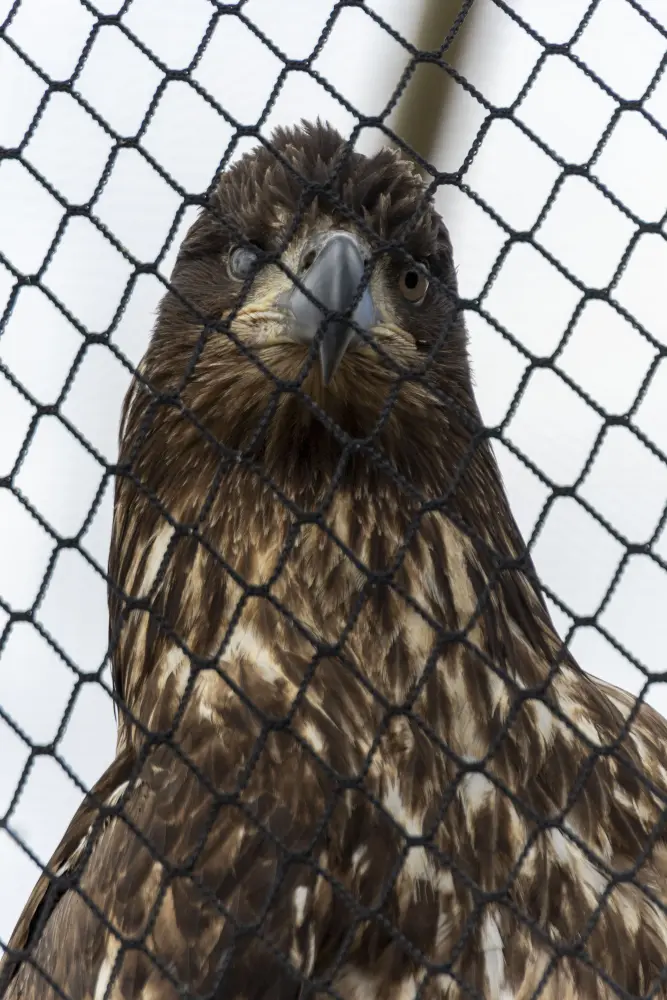
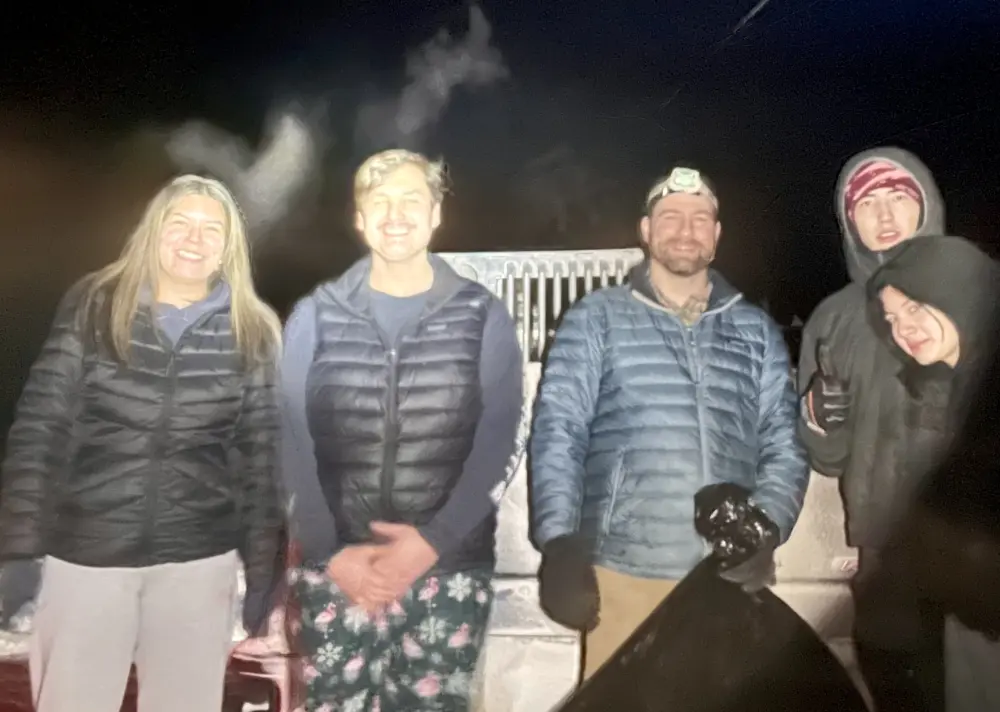
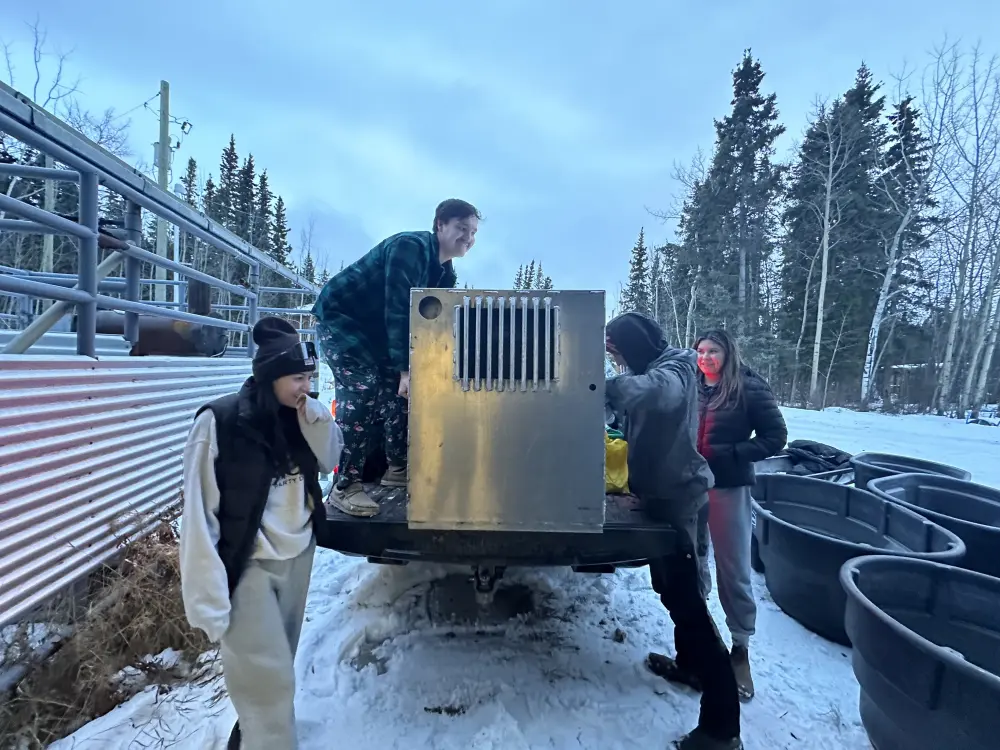
In the remote, fly-in community of Old Crow, on the Traditional Territories of Vuntut Gwitchin First Nations a juvenile bald eagle was found by Robert, at the dump, flightless and injured. The eagle was coaxed into a crate and eventually brought to the Yukon Wildlife Preserve after it made a stop in Dawson and caught a flight via Air North.  
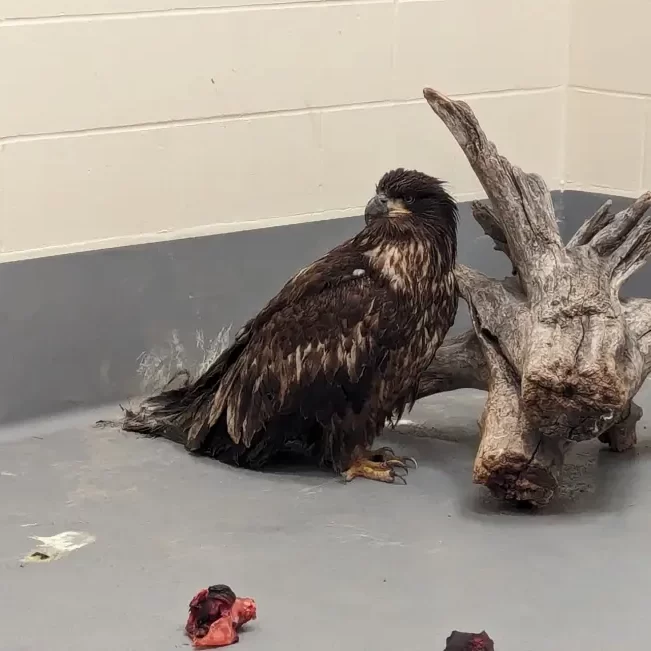
Old crow bald eagle upon arrival and admittance into the Wildlife Rehabilitation Centre at the Preserve. May 10th. Photo credit L.Caskenette

The bald eagle, thak tth'ak came to the Preserve's Wildlife Rehabilitation Centre on May 10th underweight (4.3kg) and with a OD (medical term for right eye) chronic corneal ulcer. 

mature bald eagle in rehabilitation

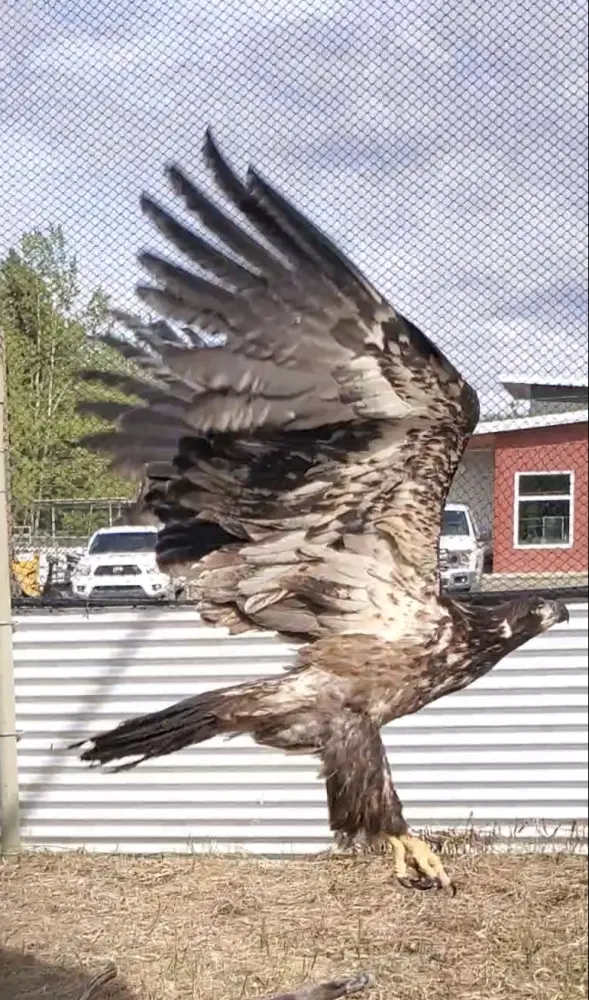
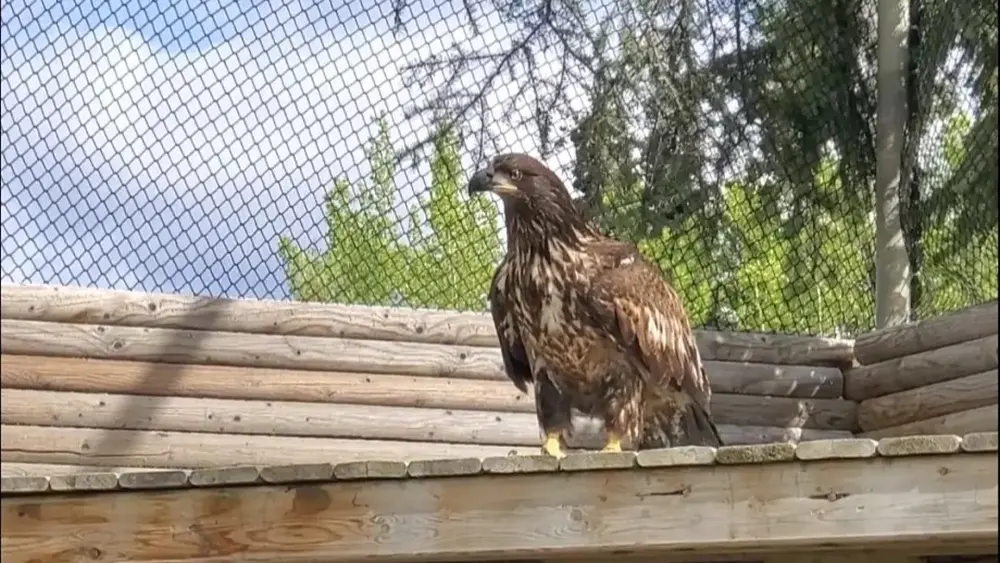
Likely a she, given the large size of the animal. She has gained sufficient weight, coming in at 4.83kg. She has been viewable in the aviary as she works to build up flight muscles. Now she is ready for her public release back to the wild this Friday. She has a cloudy eye but has been successful catching live food and as a predominantly scavenging animal she is likely to do quite alright back in the wild even with this limitation.
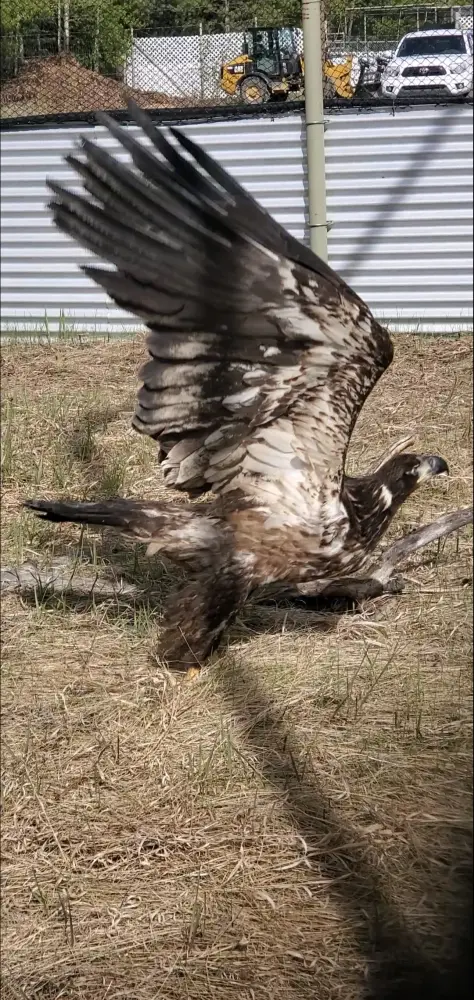
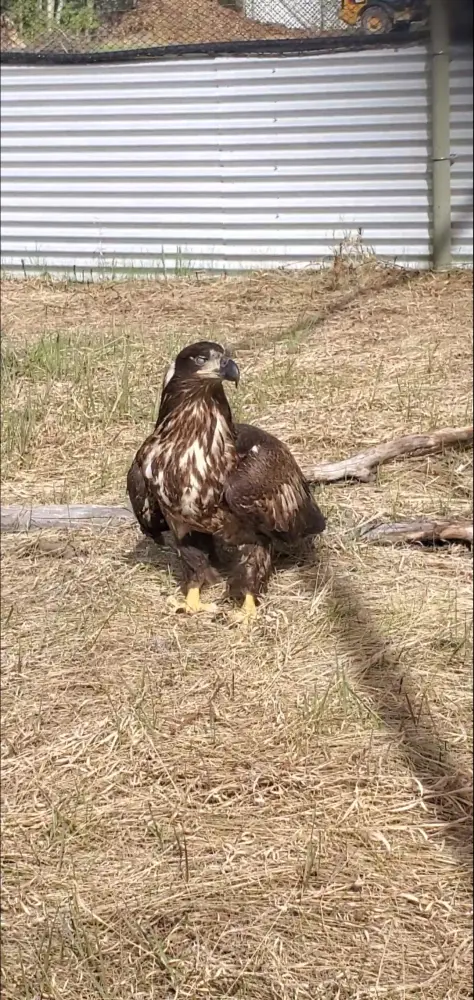
She will not be returned to Old Crow due to the long travel and stress concerns related to transfer. Instead, she was released outside of Whitehorse on Friday June 14th at 7pm. 

Around 40 people joined the event to send off the bird. Thank you to everyone who joined the release, it was a perfect evening. The sky welcomed us all without a drop of rain. Thank you to all who provided good vibes and sent off the eagle with strength and grace.

Thank you to Wylie, Corrine, and Thay K'i Anint'l for the prayer and blessing for this bird's return to the wild and resilience for a long eagle life. 

Thank you to everyone who helped this Eagle along its path to recovery. To Robert K who found the bird and ensured it got a second chance at life. To Norma, to the team at the Preserve that helped with the bird release event. To Air North for giving the bird some helping wings South to the Rehabiliation Centre.  Thank you, Masshi, Gunalchîsh????

She took her time deciding to soar but this allowed everyone to share in more details of her story, to practice patience and to grow our appreciation of her and others' incredible story of resilience. 

• • •

The beginning of June the Preserve welcomed a visitor who had, and later shared with us, an extraordinary experience with the eagle while it was recovering in the aviary. 

She shared with us the following:

I felt a very special spirit from her. A very conscious and intelligent bird.
I heard she didn't have a name. 
Horus came to mind for me because of her eyes and her mystical spirit.
"Horus, in ancient Egyptian religion, a god in the form of a falcon whose right eye was the sun or morning star, representing power and quintessence, and whose left eye was the moon or evening star, representing healing."
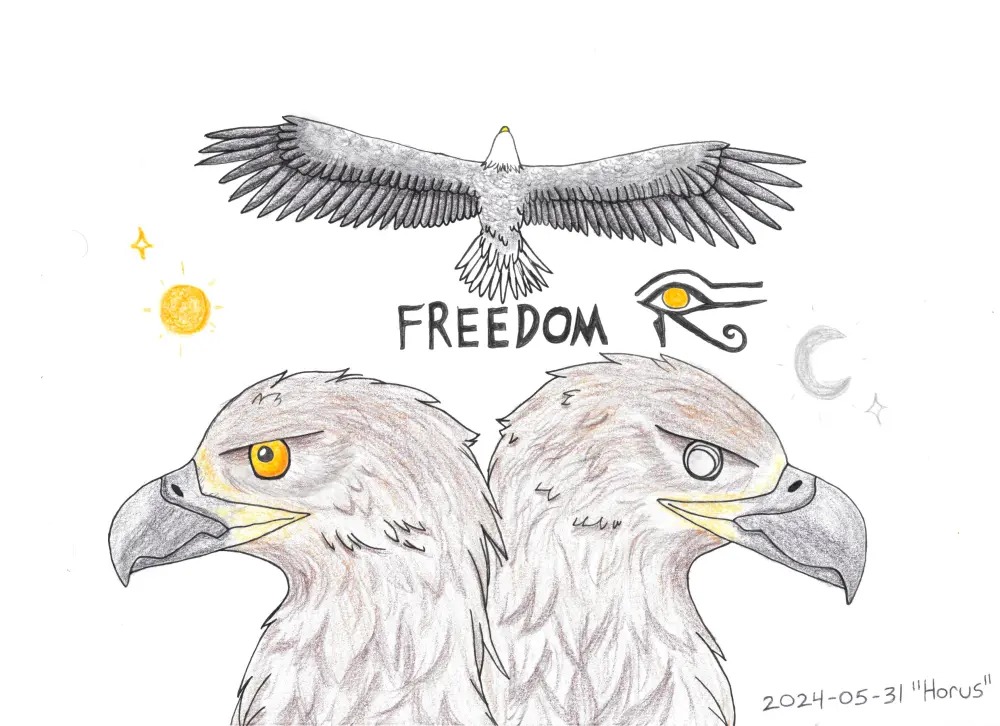
"Horus, in ancient Egyptian religion, a god in the form of a falcon whose right eye was the sun or morning star, representing power and quintessence, and whose left eye was the moon or evening star, representing healing." The old crow bald eagle was given and unofficial name by a visitor, Jasmine Colomby who also drew and shared this interpretation.

Help us get them back on their wings. We could use your help. If you are able to support the care of these two animals, please consider donating. Every contribution makes a difference and as a non-profit charitable organization, you can receive a charitable tax receipt for your support. 

Photo credit: B.Forsythe
Britt Forsythe

Britt Forsythe

Visitor Services Coordinator

Brittney joined the Wildlife preserve in the summer of 2023. Growing up on Northern Vancouver Island, surrounded by the temperate rainforest, nature and animals have always been a part of her life. It exploded into a passion, when she started her dog walking business in 2017 and she began spending 6-7 days a week in the forest, rain or shine! This sparked an even deeper appreciation for the cyclical nature of the land and how all of the plants & animals work together symbiotically. She is forever ‘that girl’ on the hike, pointing out different rocks and plants, explaining their origin or what they could be used for medicinally. Brittney and her dog Cedar relocated to the Yukon to help care for 31 sled dogs. She is so excited to expand her local knowledge as a part of the Preserve team.

 867-456-7400

 brittney@yukonwildlife.ca
 

Lindsay Caskenette

Lindsay Caskenette

Manager Visitor Services

Lindsay joined the Wildlife Preserve team March 2014. Originally from Ontario, she came to the Yukon in search of new adventures and new career challenges. Lindsay holds a degree in Environmental Studies with honours from Wilfrid Laurier University and brings with her a strong passion for sharing what nature, animals, and the environment can teach us.
867-456-7400
Lindsay@yukonwildlife.ca

Explore by Category

Explore by Author

Meet Elsa the Mountain Goat

Meet Elsa the Mountain Goat

wildlife viewing

by Lindsay Caskenette | Apr 12, 2024

1 minute read - 

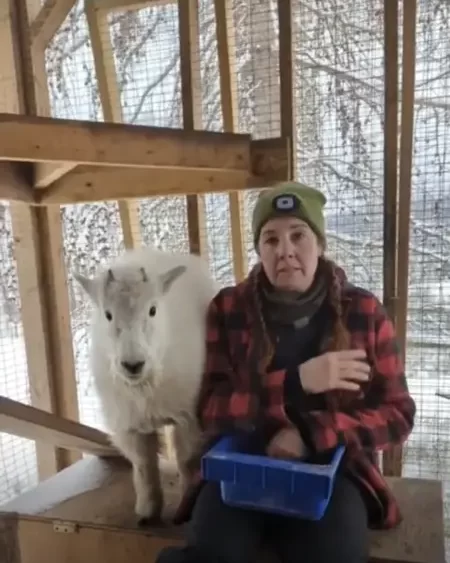
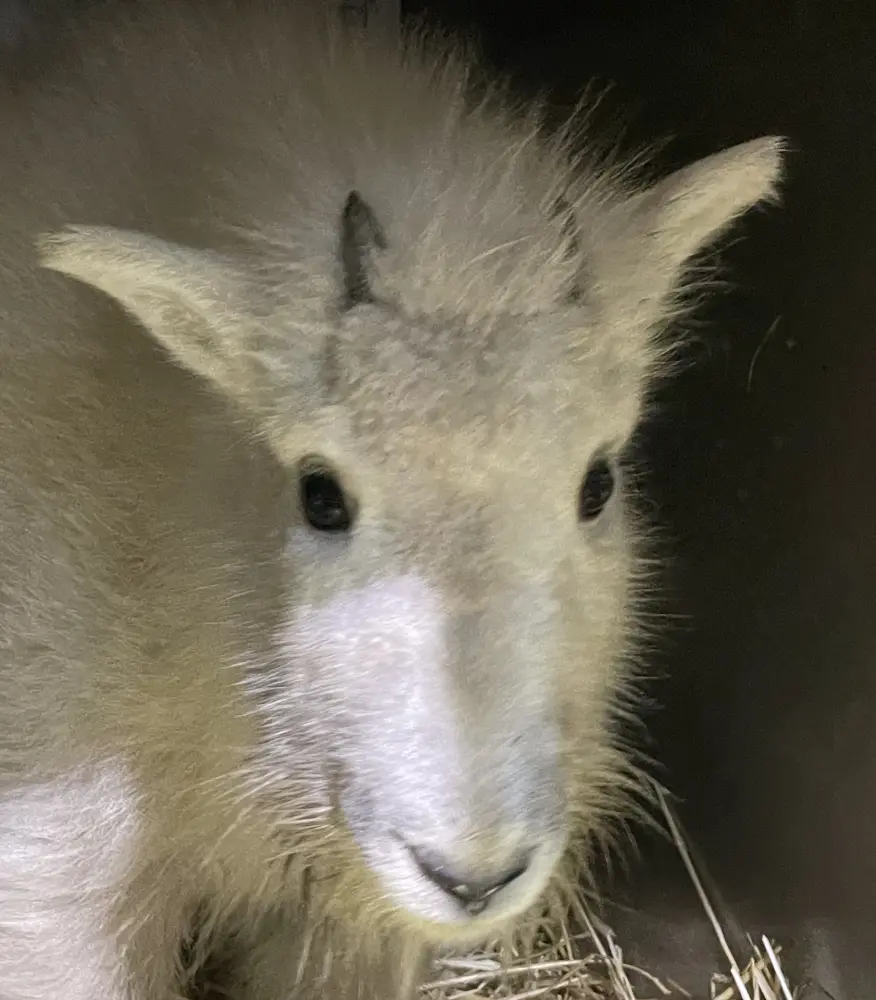
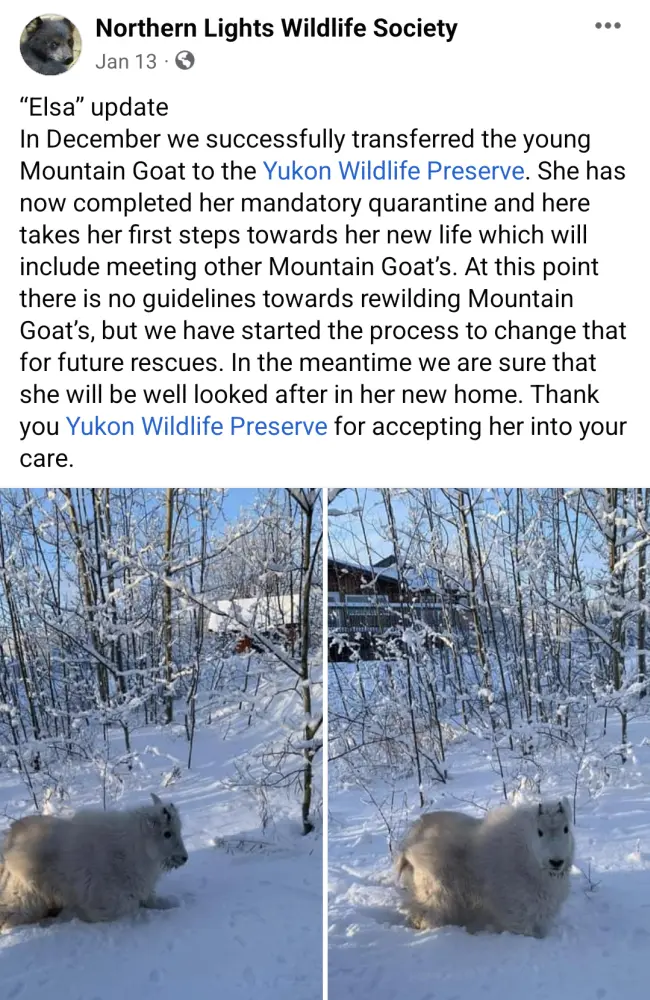
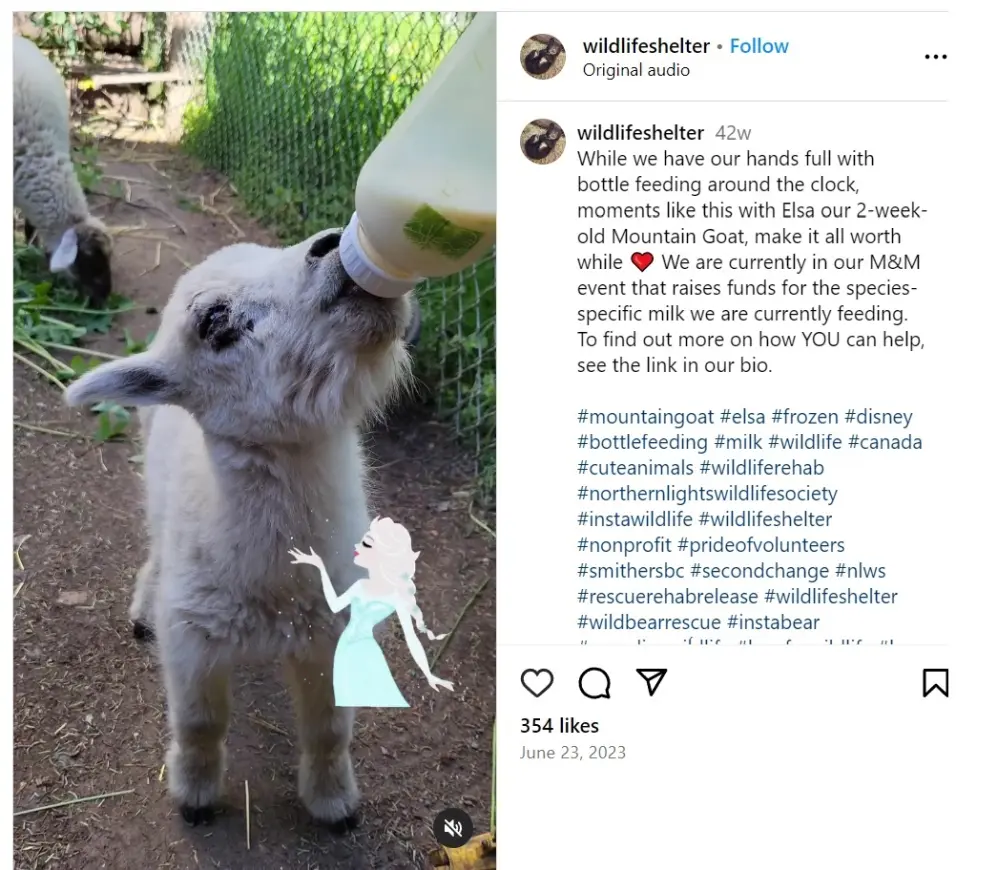
Meet Elsa, the mountain goat! She came from Northern Lights Wildlife Society in Smithers B.C located within The Witset First Nation is a First Nations band government of the Wet'suwet'en people of Witset, British Columbia, Canada. She was brought there in June, 2023 at about 1 week old.  She was brought to this wildlife shelter after she was swept down river - it's not sure, the details, how or why, but she was orphaned and injured at that point when she was found by rangers working on the land.

She had several cuts and lacerations, she lost a few baby teeth. She was taken care of incredibly well by the staff and volunteers at the Northern Lights Wildlife Society. 

You can watch a few of these videos of her care and progress via their social media.

Elsa the queen of the North. Mountain goat rescue from BC wildlife Shelter. Elsa 1 week june 2023

By August, Elsa recovered fully from her injuries and complications that came after. Such challenges are bound to happen with wildlife, especially with an animal so young and under considerable stress and change. 

Elsa the mountain goat ice queen of the North 2 months old and recovered and eating well.

The little queen, Elsa continued to grow and by early winter she was ready for transport to the Yukon Wildlife Preserve for her long-term home. Since the goat was coming from another jurisdiction, in fact, one outside of the Yukon Territory, necessary coordination and import permits were required before her transport and arrival. With all the 'red tape' out of the way the Preserve now needed to consider how to get her to the Yukon, the quickest and safest way. Since the Wildlife Shelter is in Northern British Columbia, an Air North Transport was not an option, as it has been with other rehabilitation animals, though those animals were mostly headed South and back to the wild, not North and into long-term care. 

Elsa, the mountain goat, just a few days before her big move to the big leagues which means to the big cliff in the background with the nannies.

Community connections started this journey for Elsa and it continued through her successful transportation by an incredible offering as described below by Rebecca Bradford-Andrew, Manager, First Nation Education Advocates for Yukon First Nation Education Directorate. 

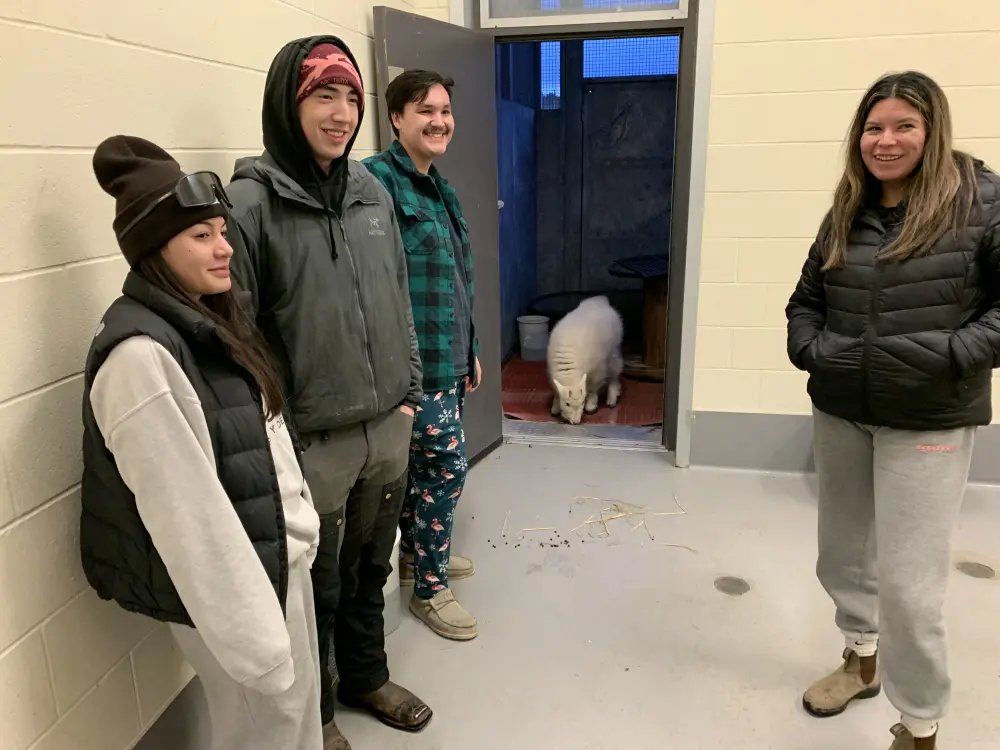
Wild orphaned Nanny goat Elsa from the remote mountains of Northen BC. transportation from her rescue facility to Whitehorse was provided by teenagers, a team of young wildlife enthusiasts from the Yukon First Nation Education Directorate (YFNED) ( a Jordan's Principle-funded Initiative).

These local teens work to build community and culture by supporting indigenous students in Yukon schools. They strive to be role models for youth by doing good deeds and stepping in where needed. Thank you Dr.Hallock and your team for including us in this wonderful opportunity to collaborate for our community!

The YFNED, an indigenous-led educational organization, supports traditional, land-based learning opportunities.

The YWP has been educating people for years, and Yukon students have much to learn about eco-systems, evolution, and herd dynamics, with a strong, healthy mountain goat population their textbooks, and the beautiful cliffs of the YWP their classroom.

Edone daga eti’e (For the good of the child).

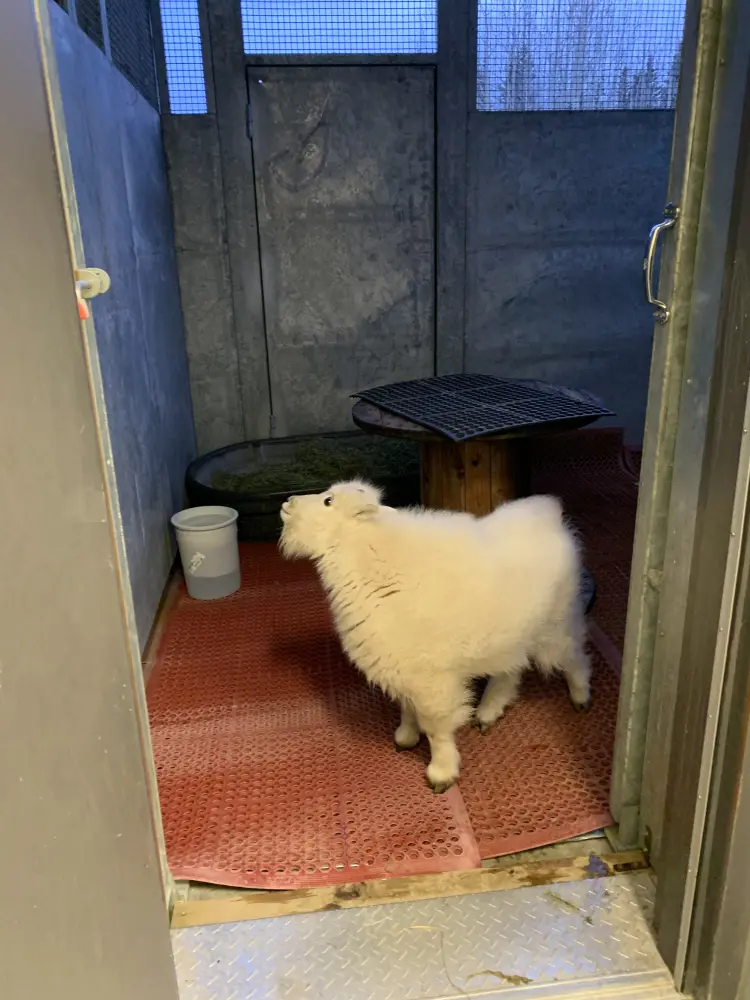
Elsa arrived December 12, 2023 to the Wildlife Rehabiliation Centre where for the next 30 days would be in quarantine. This is a mandatory isolation while testing occurred and medication was administered by Preserve's Animal Care team to ensure her eventual integration to the collection of goats would not pose any risks. Of course, the ice queen of the North, passed with flying crystals . . . er., colours!

In mid January Elsa was brought to her temporary, small rocky mountain habitat as she got bigger, before joining the big leagues, on the big mountain cliff at the Preserve. She was a delight and distraction for staff at the office where she would be spotted through windows being a goat - bounding around, climbing the rocks and being unbelievably cute!  

Social media link to the posting by NLWS about Elsa's arrival.

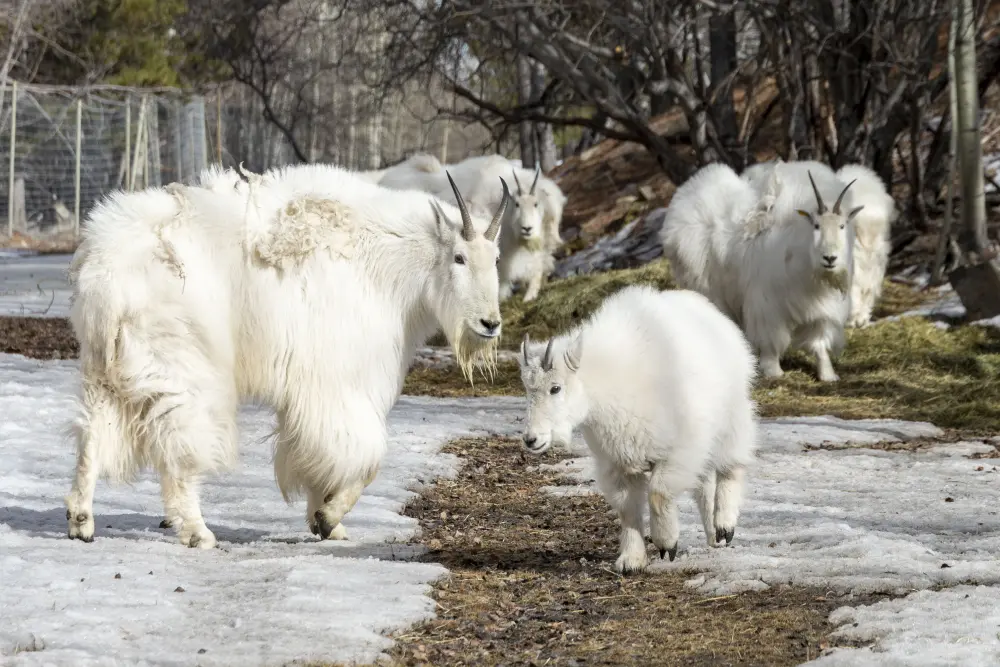
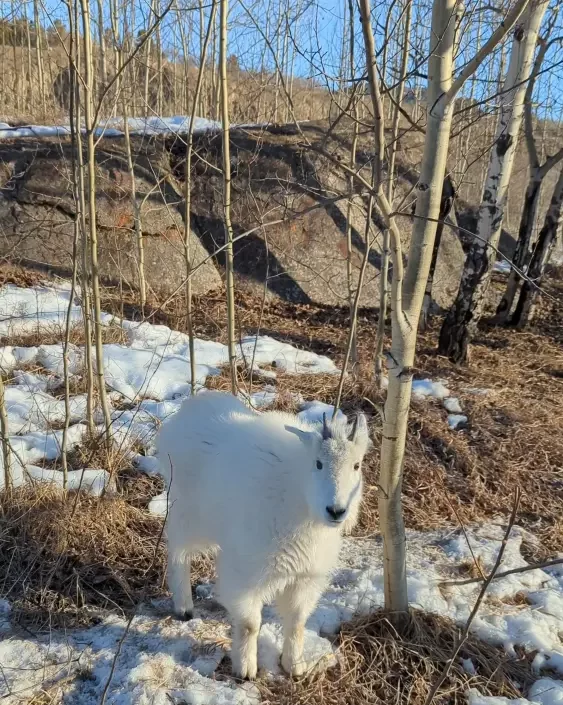
April 9th, 2024 Elsa joined the group of mountain goats at the Preserve and can be spotted living her best goat life thanks to people, community, collaboration and their great care of iconic North American wildlife in need of second chances.

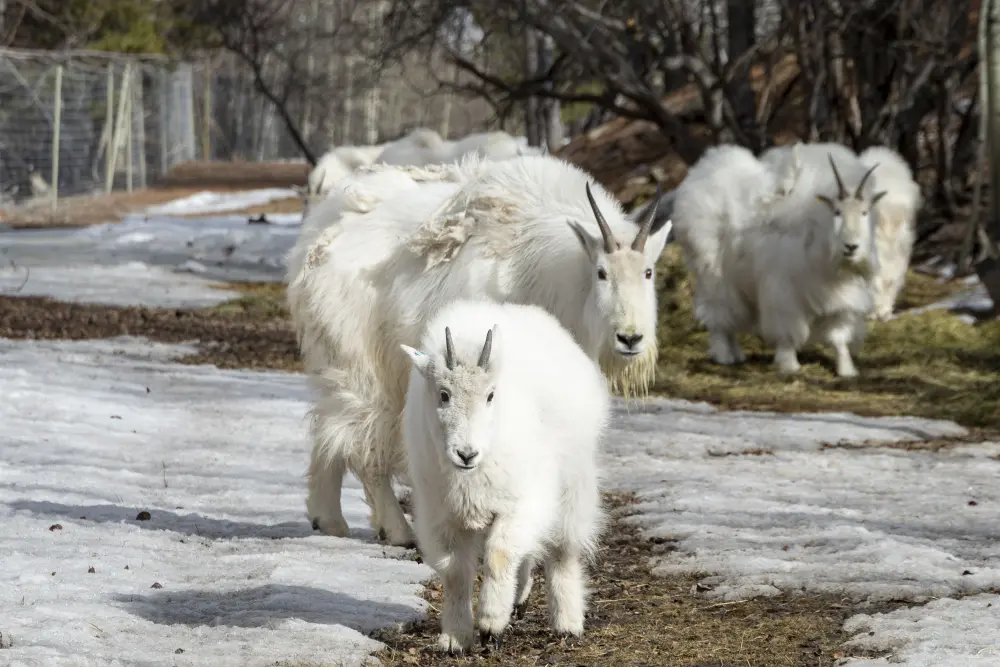
Elsa the mountain goat with the nanny group.

Elsa, the mountain goat lives at the Yukon Wildlife Preserve which is the Traditional Territory of the Kwanlin Dün First Nation and Ta’an Kwäch’än Council.

Elsa the mountain goat introduced to the nanny group. B.Forsythe

The 2 above photos were taken April 30, 2025 of Miss Elsa being a goat!

Photo credits: Northern Lights Wildlife Society, YFNED - Yukon First Nations Education Directorate, L.Caskenette, B.Forsythe.

Lindsay Caskenette

Lindsay Caskenette

Manager Visitor Services

Lindsay joined the Wildlife Preserve team March 2014. Originally from Ontario, she came to the Yukon in search of new adventures and new career challenges. Lindsay holds a degree in Environmental Studies with honours from Wilfrid Laurier University and brings with her a strong passion for sharing what nature, animals, and the environment can teach us.

867-456-7400
Lindsay@yukonwildlife.ca

Explore by Category

Explore by Author

How are Animals Named?

How are Animals Named?

wildlife viewing

Nov 22, 2023

11 min read -

Throughout history, various languages and cultures have contributed to a wide - and often confusing - vocabulary used to describe animals' genders, the young stages of their lives and what they may be called when they are gathered together in groups.

Mule deer:
Males are called bucks. Females are called does & young are fawns.
A group of deer are often called a herd but more fun versions include a bevy, a bunch, a rangale or a parcel
- though a parcel is often in reference to a group of young deer.

Historically, adjectives were the labels of choice to communicate animal gender identifiers. A broad selection of these labels has resulted - which are not universally applied, even within the same species. For example: in the deer family or Cervidae, males are identified as bucks and females are called does. In moose, and caribou - also members of the Cervidae family - males are called bulls and females are called cows while elk males are referred to as stags.

Cervids
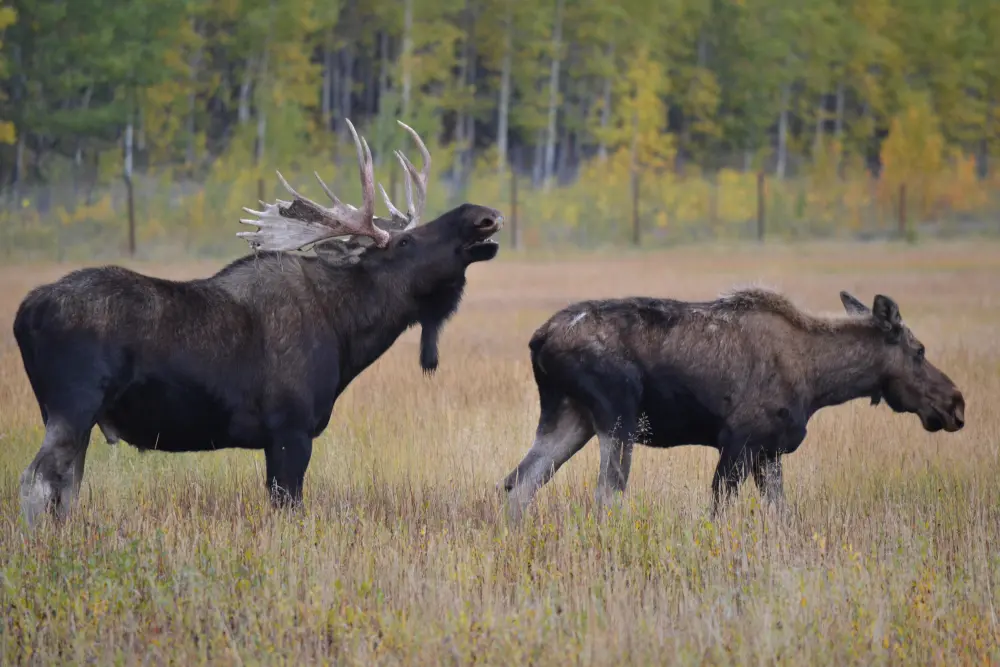
From left to right - moose, caribou and Elk.
Males are called bulls (elk are called stags) and females are called cows.

Generally these cervids in groupings would be called herds (though moose are not actually herd animals) while elk can be also called a gang - watch out!

Not limited to just fur-bearing creatures, these titles are applied to other species and there are often departures from the naming conventions used. Rabbits are called bucks and does while steelhead trout males are called bucks, with females being called hens rather than does.

There is also a vast difference in the scientific naming of all creatures. Over the centuries a number of early scientists attempted to establish a format to classify animal groups. Ancient Chinese created the first recorded reference in 2700 BC, but it was quite limited and focused primarily on flora (vegetation) of their geographic region. 

Check out our Facebook post to learn more about Vulpes vulpes; not all red foxes are created equally but all are a red fox!

  1. Remember Fox and the Hound? A male is called a tod (sometimes a reynard or a dog), while females are referred to as vixens.
  2. Young are most commonly called kits but can also go by cubs, or pups.
  3. The collective noun to describe a group of foxes are a skulk, earth or a leash! These names are related to fox behaviour corresponding respectively as a group hunting together, a mama fox with her kits, and a group of domesticated or captive foxes as a leash.

Now, there are other foxes including Arctic fox (Vulpes lagopus), swift fox (Vulpes velox), fennec fox (Vulpes zerda), and others across the world for a total of 12 species that comprise the largest genus, Vulpes.

Smaller classifications exist within the genus Urocyon which include the gray fox. The only extant species of fox belonging to the Otocyon genus is that of the bat-eared fox found in the African savanna.

Ancient Greek philosopher and scientist Aristotle described a large number of natural groups, and although he ranked them from simple to complex, his order was not an evolutionary one. He was far ahead of his time in separating invertebrate animals into different groups and was aware that whales, dolphins, and porpoises had mammalian characters and were not fish. The Aristotelian method dominated classification for many centuries. During this period, it provided a procedure for attempting to define living things through careful analysis, it neglected the variations between living things.

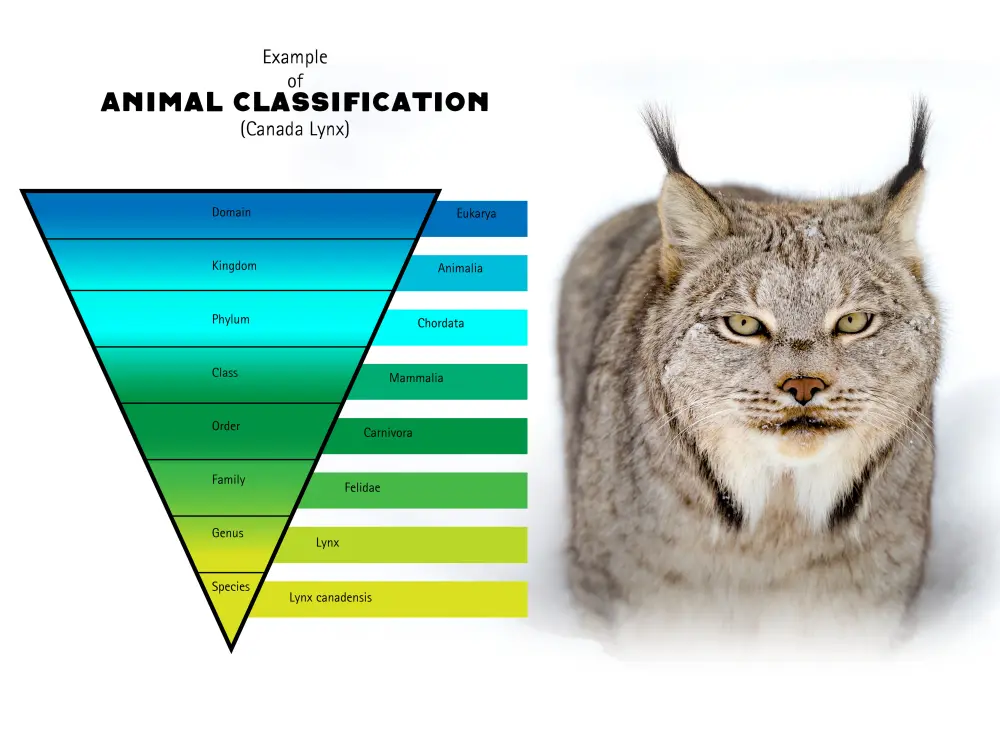
In 1758 Carolus Linnaeus, who is usually regarded as the founder of modern taxonomy and whose books are considered the beginning of modern botanical and zoological nomenclature, drew up rules for assigning names to plants and animals. He was the first to use binomial nomenclature consistently. Although he introduced the standard hierarchy of class, order, family, genus, and species, his main success in his own day was providing workable keys, making it possible to identify plants and animals from his cataloging. Linnaeus was the father of the Field Guide.

Lynx classification

Over the centuries a number of paleontologists, biologists, and scientists contributed to refining Taxonomy as we know it today. Perhaps the most notable of these was Charles Darwin - who explained his theory of evolution by describing how animals changed over time, yet still remained within specific categories in taxonomy.

Below is a table defining each classification of steppe Bison, the 15,000-year-old ancestor of today’s wood bison. As you can see, their classifications are not much different, other than identifying wood bison as a sub-species.

While their scientific classifications are very similar, the animals themselves were quite different. Steppe bison persisted through the great extinction of the last Ice Age up until about 5,400 years ago. A relatively recent find in Whitehorse city limits proves steppe bison persisted giving rise to the bison seen in the Yukon today but are not the direct descendants of the steppe bison.

Darwin’s famous illustration The Tree of Life displays the evolutionary relationships between species. This idea caused a great deal of controversy when he concluded that mankind evolved from the apes which was contrary to the religious teachings of the day.

Muskox and bison - both species are members of the Bovidea family. In this family, males are called bulls and females are called cows. The young are called calves and groups of both species are referred to as "herds". But that is where the line is drawn for their nomenclatures. The Inuit name for muskox is "omingmak," which means "the animal with the skin like a beard." Geographically, today's populations of muskox and bison do not overlap and their adaptions to winter survival as a result are very different.

We can see from this phylogenetic tree how bovids (horn bearing) and cervids (antler bearing) are related to each other. The animals with icons represent those species at the Yukon Wildlife Preserve. The Yukon has 9 of the 11 ungulates of North America, excluding the bighorn sheep and pronghorn antelope. What's also interesting to note is that mountain goats are their own genus and muskox are more closely related to sheep and goats than they are bison!

When we dive into the scientific name we can see how the classifications carry over. For instance muskox, Ovibos, share genus naming from sheep and cow. Caribou or Rangifer tarandus is reindeer in Latin, from the Greek tárandos, also meaning reindeer. So when someone asks you the difference between caribou and reindeer, you can say, nothing! (Except, reindeer fly!)

Classification tree for ungulates bovid and cervid

(Note: this a general phylogenetic tree; it is not complete and does not represent accurate branch length for amount of genetic change and complexities of sub-taxa).

Beyond the labels used for animal species, their offspring also suffer from a variety of descriptors to classify their young age. There are calves, fawns, foals, pups, cubs, kittens, chicks, hatchlings, fry and owlets to name a few. Yes, there is a lot to remember, but with practice you can master the various names used to identify animal difference.

These descriptor variations also extend to the words used to describe a group of an individual species. There are herds, colonies, congresses, tribes, swarms, flocks, droves, clutches, packs, murders, litters, pods, braces, convocations, gangs, schools, hordes, gaggles, bands, and numerous other words used to describe a group of same-species creatures. There are even names given to groupings of animals that are, in fact, unlikely to group together given their territorial and/or solitary nature - like owls, moose or wolverines.

Even within a class of animals like birds, its a complex web of classification and further to each species' grouping names.

Birds:

  • In general - Flock
  • Eagle - convocation
  • Falcon - cast
  • Owl - parliament, stare or wisdom
  • Swallows - flight, gulp
  • Swans - bevy, wedge
  • Ptarmigans - covey
  • Ravens - unkindness, rave, conspiracy
  • Magpies - tiding, mischief
  • Grouse - pack, covey
  • Crane - sedge
  • Ducks - raft in water and skein when flying
    • mallards on the ground can be called a sord
  • Geese - gaggle
  • Loons - asylum


Other mammals:

  • Squirrel - scurry
  • Wild canids, dogs - pack
  • Goats - tribe
  • Otters - romp
  • Porcupines - prickle
  • Voles - colony
  • Wolverines - mob
  • Martens - richness

Invertebrates:

  • Bees - grist, hive or swarm
  • Caterpillars - army
  • Flies - business

Amphibians (no reptiles in the Yukon):

  • Frogs - army
  • Toads - knot

Fish:

  • Trout - school
  • Salmon - bind, draught or run

It's an interesting read to understand the many different words used to describe an animal’s gender, how they are identified when they are youngsters and in groups together. Of course, the list above is centered on animals that make their home in the Yukon - imagine some of the animals that live in your neck of the woods, or places you've travelled to, and what those animals' naming classifications may be.

What is more, the naming of animal's as described by history must also recognize that many of these species, (beyond the few mentioned like Wapati and Omingnak), also hold Traditional and First Nation naming of animals that are descriptive, communicating the animals' place, use or spiritual significance.

Do you have any interesting or favourite animal classification terms/names? Share them with us in the comment section below!

Doug Caldwell

Doug Caldwell

Wildlife Interpreter

Doug is one of the Interpretive Wildlife Guides here at the Preserve. An avid angler and hunter he has a broad knowledge of Yukon’s wilderness and the creatures that live here. With a focus on the young visitors to the Preserve, Doug takes the extra time to help our guests to better appreciate the many wonders of the animal kingdom here in the Yukon.

Lindsay Caskenette

Lindsay Caskenette

Manager Visitor Services

Lindsay joined the Wildlife Preserve team March 2014. Originally from Ontario, she came to the Yukon in search of new adventures and new career challenges. Lindsay holds a degree in Environmental Studies with honours from Wilfrid Laurier University and brings with her a strong passion for sharing what nature, animals, and the environment can teach us.
867-456-7400
Lindsay@yukonwildlife.ca

Explore by Category

Explore by Author

Face to Face With the Wild: Kids

Face to Face With the Wild: Kids

wildlife viewing

by Seth Brown | Dec 9, 2022

5 minute read 


Yukon Kids

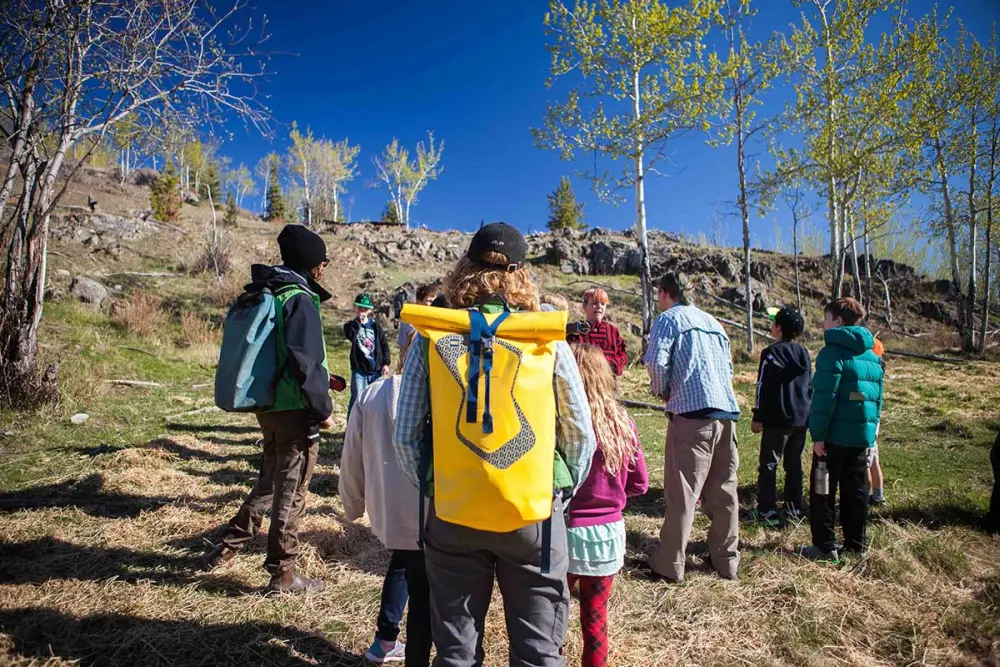
It’s a warm and sunny Wednesday in July. After driving past Jesse the moose, some handsome sheep, and innumerable little squirrels I step off the bus with 22 eager campers following. We’re just about to head out for a little walk. But then... I catch one little camper frolicking around in her bare feet.

“Jasmine! Where are your shoes?”

“Shoes?! I don’t need those: I’m a Yukon kid!”

Campers sometimes teach the instructors at YWP school programs.

Sometimes it's the campers who teach us educators about their favorite plants and animals.

Hidden Kids

On a normal trip to the Preserve it’s easy to get lost in our own experiences. After all, how can you not? When you see golden sunshine through the grass; when you and the little muskox lock eyes; or when one of our guides tells a chilling story. These experiences are what we come for, but we aren’t the only visitors here.

The Yukon Wildlife Preserve sees over one thousand students and campers come through our doors every year. Winter and spring school programs, Swan Haven programs, March Break Nature camp, and summer nature camps are all in our calendar. The Wildlife Preserve has its own department dedicated to bringing enriching and educational experiences to Yukon youth. As an outdoor educator this what first brought me to the Preserve, and it's also one of the things that I think makes the Preserve a very special place.

Unfortunately, the public doesn’t often get to hear about all of the incredible experiences we offer students and children. If you, like me, are a little too old to attend these wonderful programs I’m here to tell you that you’re also in luck! I’ve done all the running around – the booger wiping, rule giving, question answering, and “yes, you can go pee”ing – so you don’t have to. Join me as I take a walk down Memory Lane, looking back at this last year with our Education team. But be prepared to take chances, make mistakes, get messy. So let's tie up our shoes and get Face to Face with: The Wild Kids of the Yukon.

Kids holding up moose antlers outside in the snow.

A happy student trying on their new favorite hat.

Time to Plan

Though our ears are still ringing from a summer full of campers, it’s a very different story in our office this time of year. Our Manager of Education and Programming sits quietly and plans for the year to come.

‘Have we sent all the thank-you cards?’

‘How many more plastic animals do we need to buy?’

‘Where do I even buy a plastic muskox?’

We ruminate at length on these pressing topics. After all, one missing muskox now may break the heart of a muskox-loving little boy eight months later. And so, slowly, we debrief the past year and plan into the next.

Cool Kids

​February comes creeping up and at this point we (Education and Programming) are a very tiny snowball at the top of a very large hill. Our winter programs are the little kick that gets us going. A modest start to a full year of programming. This time of year, our programs focus on winter ecology and cold weather adaptations.

With a sizeable (750-acre) classroom, we bring students along our trails in order to teach through hands-on experience and keen observation. So, let’s throw on our jackets with the grade sevens and head out for our famous February caribou program!

Students have a positive close encounter with one of our bull caribou.

Campers getting a special experience with one of our caribou bulls.

March Break

​Slowly, March comes crawling along. By this time, we’re feeling ready for the busy spring and summer seasons. We have our programs all neat and tidy, but the Preserve has turned a somber shade of winter. We’re all aching for something: A little sunlight, some warm weather, a hot cup of cocoa… or, some more students! Last year's March Break Nature Camp hosted 10 campers, a real VIP experience.

Though we do plan and structure the days, it’s the campers who really have the final say in the day’s events. We want our campers fully engaged, so we try our best to tailor the camp to their interests. If that means spending some extra time with the caribou then we throw on an extra layer, step into the enclosure, and get a closer look at our campers' favorite ungulates.

Kids doing outdoor experiential programming in the outdoors in Yukon.

Educator Erin Cartan taking her campers to the Gunnar Nilsson & Mickey Lammers Research Forest.

We Talk Swan

As the snow starts to melt and the sun starts to burgeon it’s a HONK, of all things, that prompts our first drive out to Swan Haven. Working with the YG Department of Environment we move our operations to Marsh Lake and start talking Swans with grade two, three, and five classes at the beginning of April.

After our education team gets a Swan Masterclass from bird biologists Jukka Jantunen and Margaret Campbell, we welcome hundreds of students to share the joy of birding with some of our favorite feathered friends. Together we tell the story of Yukon swans, look through scopes to observe their behaviours, play dress-up, and make our own mock-migration. We do all this in hopes of fostering respect and appreciation for all Yukon wildlife.

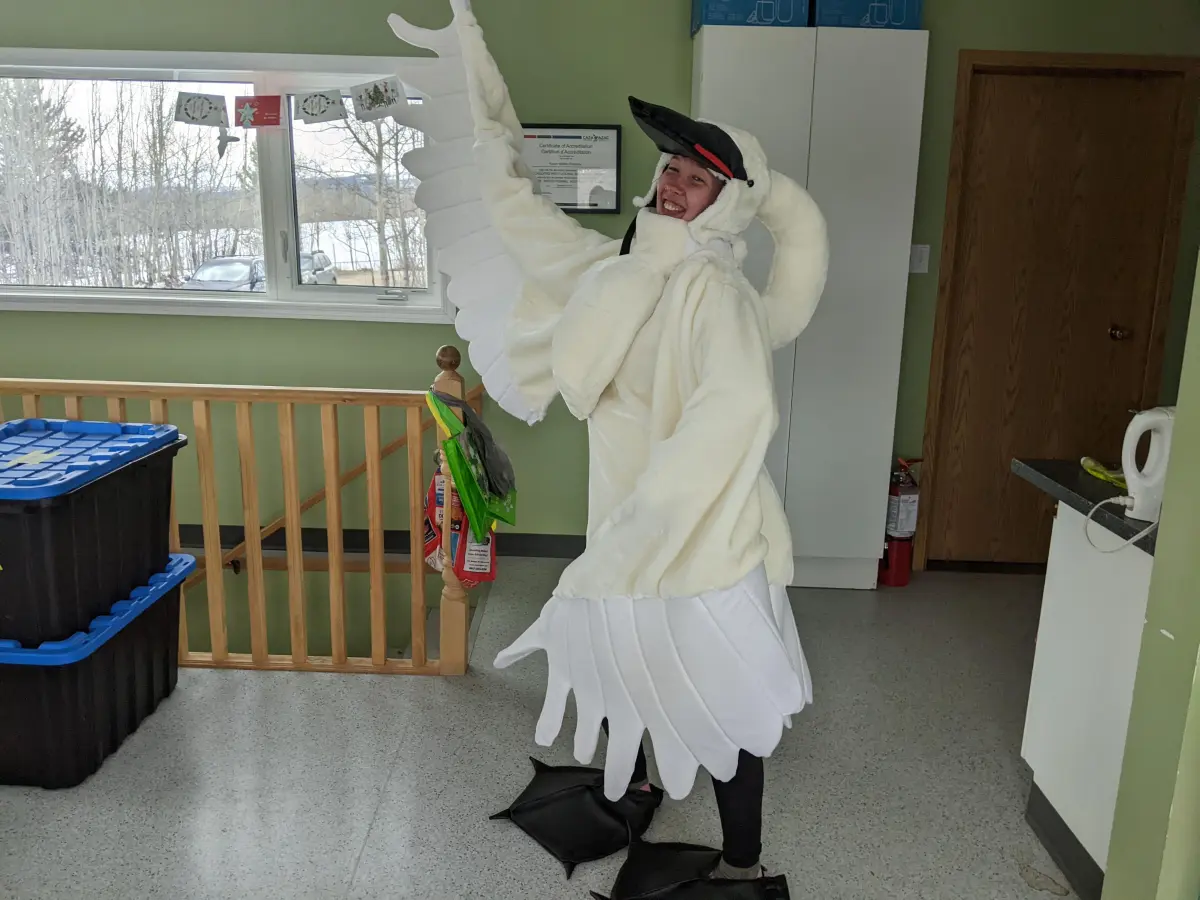
Swan Costume for Swan Haven Programming

Manager of Education and Programming, Madison Rushton, trying out our new and improved swan suit.

The Ball Gets Rolling

Though the snow on our peaks is slowly melting by early May, the snowball we call ‘Education and Programming’ is growing both in size and speed. It’s now time for our Spring Programs! Life is waking up and starting to buzz here on the Preserve. Together with the students we try to find each and every little buzz, bumble, and sign of life. Our Yukon-famous benthic macroinvertebrate studies (a.k.a. lookin' for bugs in the pond), large scale Predator vs. Prey game, and animal charades are crowd pleasers amongst the little ones. Lots of fun and games for these students, and they haven’t the slightest clue they’re actually learning.

Once that’s all over, snow is the last thing on anyone’s mind. But, our ‘Education and Programming’ snowball is reaching its crescendo with the YWP Summer Nature Camps! It’s all hands on-deck at this point; three wildlife educators, nine weeks of camp, and nearly two hundred campers. The whirlwind that ensues is filled with a tremendous amount of fun. Fishing, barbecues, forts, flower picking, popsicles, dress-up, story time, nap-time, camp-time, and eventually, home-time are all to be expected.

At last, our ears ringing from nearly seven months of outdoor education and nature programming, we pat each other on the back and have our own well-deserved nap-time. But don’t forget, once we’re ready to open our eyes and stretch our arms, we get to do it all over again!

Students dip-netting for all the bugs and critters they can find.

Students dip-netting for all the bugs and critters they can find.

Naptime

Though working with children can be exhausting it’s also extraordinarily rewarding. Moments of growth in our students fuel us educators with energy and inspiration. And the best part? We’re learning just as much from them as they do from us.

While teaching at the Preserve I often think back to my own outdoor education experiences as a child. Downtown Toronto certainly offered less opportunities than the pristine boreal, but the richness of those experiences was all the same.

Now that I think about it, I remember one particular experience at the Toronto Island Nature School. We were playing a game of Predator vs. Prey and I felt like the luckiest boy. I had the opportunity to play my favorite animal; the wolf. I ran under a bush, prepared myself, and waited eagerly for the game to start. TWEEEET went the whistle and THUMP THUMP went my feet.

“Seth! Where are your shoes?”

“Shoes?! I don’t need shoes, I’m a wolf!”

Seth Brown

Seth Brown

Visitor Services Coordinator

Passionate about the environment, art, and education, Seth has been working as an environmental educator since 2017. Off the preserve, you can find him playing in the mountains; on skis in the winter and with a paddle in the summer. Having moved to the Yukon and joined the preserve in April 2022, he’s excited to learn and explore!

867-456-7400
seth@yukonwildlife.ca

Explore by Category

Explore by Author

Why are red foxes so happy among us?

Why are red foxes so happy among us?

wildlife viewing

by Danette Moule | Jul 16, 2021

5.5 minute read. 

Red foxes are as familiar to any Yukoner as seeing their friend or colleague walking down the street. They are a welcome resident of Whitehorse, and most urban environments in Canada. Though many species numbers have declined since Europeans arrived to the shores of what is now North America, the red fox is the exception to the rule. Red fox populations have only increased since human settlements have grown and expanded. In fact, the red fox is one of the most widely distributed territorial mammals in the world.1even in the Arctic

So why are red fox numbers growing alongside human populations? One reason that the arrival of Europeans coincided with a growth in the red fox population in Canada is that Europeans brought foxes with them. There was already a species of native red fox living here at that time, so both native and non-native red foxes live in North America. Native red foxes are what we typically see in the north; they are the Canadian Boreal Forest species that colonised here shortly after the last glacial period, around 11,000 years ago. Non-native red foxes are found further south, where they were released by European settlers in the mid 1700s, for hunting purposes. However, introduced red foxes are not the only reason fox numbers have increased since colonisation. Though it is commonly thought that people are generally bad for wildlife, there are certain species that benefit greatly from people, and red foxes are one of them!

Despite red foxes having plenty of wildland in which to settle and bear their young, they’ve often chosen human settlements to set up shop. Red foxes are part of the group called ‘synanthropic species.’ These species live near humans and directly benefit from human-altered landscapes. Animals such as mice, rats, pigeons, racoons, skunks, and coyotes are synanthropic species. Red foxes, like these other animals, benefits from our landscape alterations, including gardens, bird feeders, garbage dumps, sheds, porches, and barns, all of which provide either suitable food or shelter, and often both. These species have learned how to exploit human settlements to their advantage, and they thrive in suburbs and cities that are in or near forests or fields. An ‘edge species’ lives at the border of two different habitat types, or ecotones, such as where forest meets grassland. A city like Whitehorse could be an ecotone in and of itself, since its boundaries are rich forest area. But in other cities such as large metropolises, humans have created habitats that very closely mimic an edge species’ natural environment. Gardens and yards that back onto bushy or forested area are perfect for red foxes and other edge species. Because rats, mice, and voles enjoy human suburban environments, red foxes have an abundant food source when living near people, not to mention the garbage that people inevitably leave lying around or in unsecured garbage cans.

Moreover, red foxes require shelter for denning, and the underside of sheds and decks, or your rotting wood pile all offer what a fox needs to rear its young. And because human settlements are typically near a water source, foxes will have access to that as well. Many gardeners also choose to provide bird baths or other water sources on their property, and this makes great habitat for all edge species, including foxes. A bushy yard near a field or forest is a great environment for a red fox, since they benefit from both the human environment and the natural landscape. And suburban environments offer fields where they can hunt, ditches with food and water, and woody parks which offer cover, safety, food, and denning opportunities. A great environment means large litter sizes, and high survival rates among young. The Wilderness City is the perfect environment for a red fox, and the perfect place for fox populations to thrive.

So human environments are great for red foxes, but how are red foxes great for people? As we’ve seen, our environments attract a variety of animals that people find a nuisance. Mice, rats, voles, and pigeons are all things that people don’t enjoy having in or around their house. Fallen fruit such as crab apples and berries attract mice into our yards, and without foxes, these animals can cause problems for people. Luckily, these animals are all great food sources for foxes. And people generally find foxes cute and enjoyable to observe. They aren’t threatening, even to children, and they generally won’t go after a full grown healthy cat. Foxes generally don’t cause problems for people who don’t have chickens or rabbits that they keep outside, and even then, modern fencing is good enough to often keep these animals safe. Foxes can carry rabies, which can cause problems for people, but in the Yukon, rabies is thankfully not a common disease. People have traditionally enjoyed keeping cats to help curb the rodent population, but cats also kill songbirds, and are one of the leading causes of songbird decline in North America. Foxes generally don’t kill songbirds, and subsist mostly on rodents and whatever they can scavenge. In other words, they eat what we don’t like.

Red foxes are the perfect species for urban populations, and because of this mutually beneficial relationship, fox populations will continue to grow and thrive alongside people. Come see our two resident red foxes next time you’re at the Wildlife Preserve!

This interpretetive panel is placed next to our fully fundraised Red Fox exhibit. It shares the story of red fox success across the Northern Hemisphere, from the Arctic to urban enviroments.

Photo credit: Danette Moule

Danette Moulé

Danette Moulé

Wildlife Interpreter

Danette is new to working at the Wildlife Preserve, but not new to appreciating it! Danette currently lives between the Yukon in summers, and BC / Alberta in the winters. She holds a Master's of Natural Resource Management, and has always been a big appreciator of wildlife and our natural world. Danette was raised in the mountains of western Canada, and is enjoying getting to know the north.

Explore by Category

Explore by Author