Red Fox in 360 Video

Red Fox in 360 Video

wildlife viewing

by Erin Jamieson | Jun 15, 2020

4.5 min video - watch in either English or French -

Wild and curious Red Foxes are a common sight in the Yukon. The natural adaptability and resourcefulness of this species makes them well-suited to coping with human presence, but sometimes they need us to remember that they are wild animals. To learn more, watch this curriculum based video for schoolkids of all ages and then check out our website!

Red Foxes are very curious and highly adaptable members of the Canid Family.  People often love to see foxes and enjoy being close to wildlife, but the temptation to feed them can cause problems.  Unlike the Red Fox in this photo who has been raised in human care, wild foxes can and should hunt their own food.  To make sure that wild foxes don’t come too close, we can keep things that attract them out of their reach. Keeping garbage, pet food, and anything that they might eat or steal kept safely out of the way is essential.

Les Renards roux sauvages et curieux sont communs à voir au Yukon. L’adaptabilité naturelle et l’ingéniosité de cette espèce les rendent bien adaptés à la présence humaine, mais il faut se rappeler qu’ils sont des animaux sauvages. Pour en apprendre plus sur les renards roux, regardez cette vidéo pour les étudiants - de toutes âges, et visitez notre site web!

Education Team

Education Team

This 360 video is brought to you by the hard work and creativity of the Education team at Yukon Wildlife Preserve.  French translation for 2020 has been provided by Anna Tölgyesi.

Explore by Category

Explore by Author

Arctic Fox Adaptations in 360 Video

Arctic Fox Adaptations in 360 Video

wildlife viewing

by Erin Jamieson | Jun 15, 2020

4 min video - watch in either English or French - 

Surviving in the North is not for everyone. Those who make it need more than strength and endurance, they also need the ability to adapt to a challenging climate! Arctic Foxes are well-adapted to their frozen home in many ways. To learn more, watch this curriculum based video for schoolkids of all ages, then check out our website!

As you can see, the Arctic Foxes here at the Yukon Wildlife Preserve still have their winter coats on, but take a look at their muzzle for darker bits of fur showing through - that’s a sign they have begun shedding their winter coat.  These foxes might look cute, but they have also adapted to thrive in a really tough environment.

Survivre dans le Nord n’est pas pour tout le monde. Ceux qui survivent ont besoin de force, d’endurance et de capacité à s'adapter à un climat difficile! Les renards arctiques sont bien adaptés à leur habitat froid de plusieurs façons. Pour en apprendre plus sur les renards arctiques, regardez cette vidéo pour les étudiants - de toutes âges et visitez notre site web!

Education Team

Education Team

This 360 video is brought to you by the hard work and creativity of the Education team at Yukon Wildlife Preserve.  French translation for 2020 has been provided by Anna Tölgyesi.

Explore by Category

Explore by Author

Muskox Get Shaggy

Muskox Get Shaggy

wildlife viewing

2 minute read - 

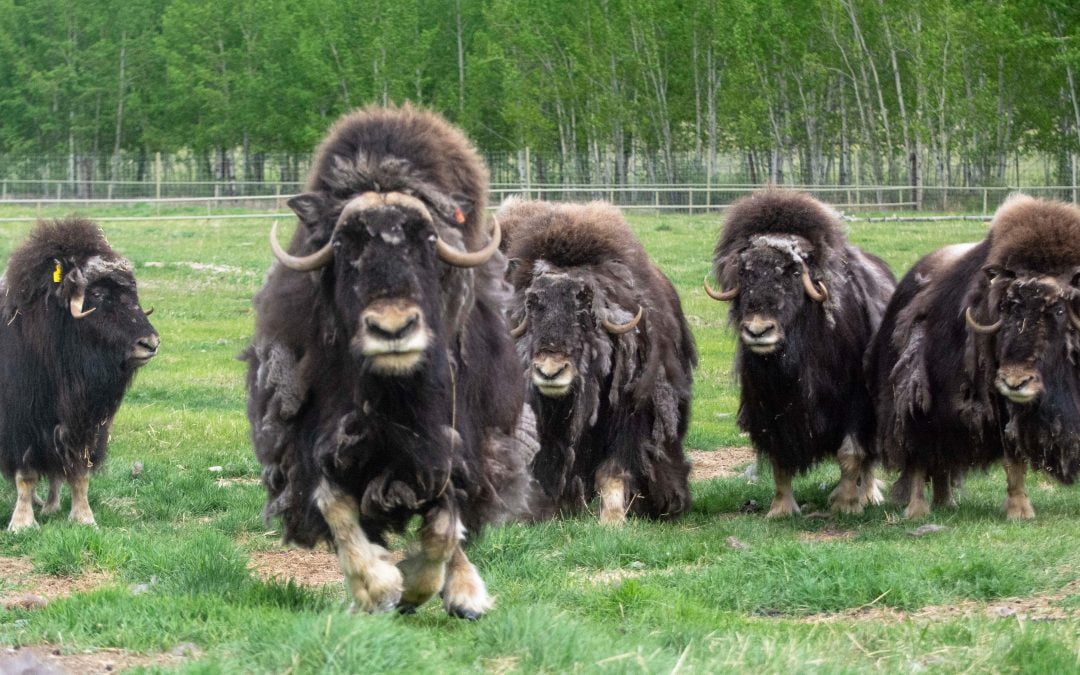
In late Spring, Muskox start to look pretty shaggy and not very impressive.  They look like they could use a good combing - why is that?

To best answer the question…..let’s first talk a bit about muskox.

Muskox live on the tundra of the high arctic. This is a harsh environment and to protect themselves from cold temperatures, blowing snow and a lack of protection like hills, mountains….or even trees….the muskox has evolved some physical adaptations to not only survive, but to thrive.

The focus of this article and video is one of those adaptations:  their hair coat.

In this photo, guard hairs are clearly a coarser, darker brown hair.  Qiviut appears fleecier, greyish or lighter brown in colour and appears in straggly patches from the shoulder, across the back and over the hip.

Muskox sport long guard hairs that reach all the way down to their hooves. This acts as “almost” a weather proofing - it keeps the wind, snow and ice out.

Qiviut is the underlayer hair - a soft, warm, fleecy undercoat. The two layers - guard hairs and qiviut, work together to keep the muskox warm and dry through the long arctic winters, which can last up to 8 months! 

During spring, the muskox shed their qiviut, otherwise they run the risk of overheating.  The qiviut comes off in long dense layers - making them appear straggly and patchy. The qiviut gets caught in the environment on rocks and bushes. Other animals like ground squirrels and birds will gather it up to line their nests.

Humans are another animal who will gather qiviut - but we do so in order to knit with this very soft, fine and warm fibre. While we can knit with 100% qiviut, it is sometimes blended with other fibres, such as sheep’s wool.

Adaptations like qiviut and guard hair must be working, because muskox has survived since the last ice age. Now, that’s impressive.

Photo and video credit L. Caskenette

Lindsay Caskenette & Julie Kerr

Lindsay Caskenette & Julie Kerr

Visitor Services Manager and Visitor Services Coordinator

Lindsay and Julie love to share the Preserve the same way they explore life – full on and full of adventure!  They have a collective love of:  Animals....Lindsay dogs, Julie foxes; Adventure.... Lindsay dog mushing, Julie extreme camping;  both take on animal personas during story telling.  Together they support the Preserve with a strong Visitor Services presence and often, they even get work done (this happens most often when the other one is out of the office).   

867-456-7400
 info@yukonwildlife.ca

Explore by Category

Explore by Author

Doctor visit:  Mountain Goats!

Doctor visit: Mountain Goats!

wildlife viewing

by Julie Kerr | May 14, 2020

8 min read - 

During daily rounds to check on the health of the residents, Animal Care staff notice that the eldest male goat, Geronimo, appears to have a cracked hoof. Staff veterinarian Dr. Maria Hallock is concerned he may have cracked it close to the blood supply. This leaves him open to the possibility of an infection, which is more likely with spring weather – melting snow and lots of mud.

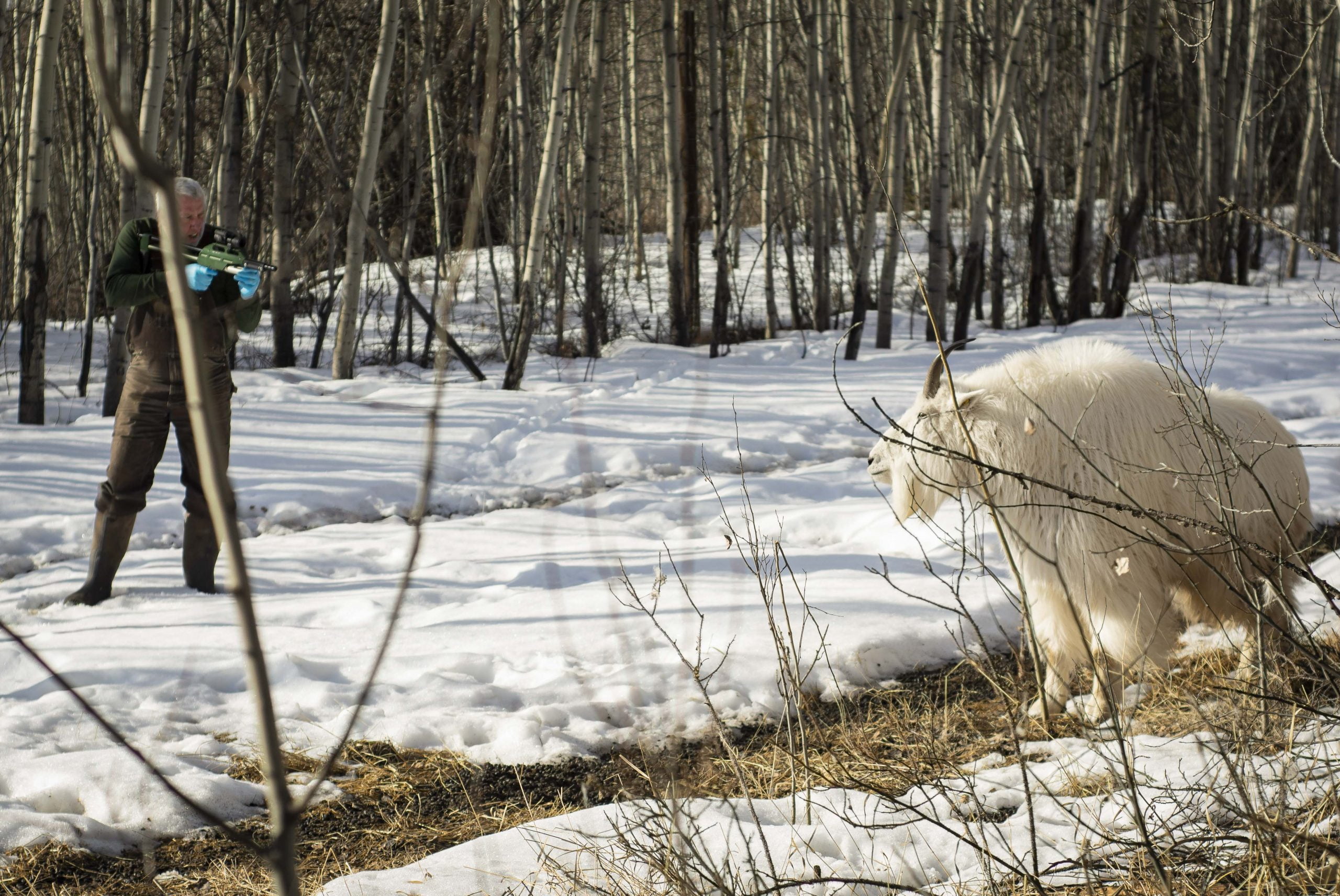
The wildlife residents at Yukon Wildlife Preserve are not trained. This keeps them as wild as possible, but it does make medical procedures an interesting challenge. Most medical procedures are performed under general anesthesia to minimize stress to the animal as well as to ensure safety of the staff handling the animal. While some animals are cooperative enough to receive their sedative medication via hand injection, most of them require a distance delivery of the drug via various equipment such as jabpole, blowpipe and dartgun.

Randy, Director of Operations, uses a dartgun for distance delivery of sedative drugs to the young male, or billy, goat. 

The team gathers... but the mountain goats are not interested in participating. So, the team gathers the following day, to try again. Geronimo is successfully sedated – but here’s the thing about mountain goat personalities – their tolerance to their peers showing vulnerability is low to none. If a rival shows weakness, the other goats will come in to finish him off with his very sharp horns. Given the situation and the close proximity of a second male, or billy, there is a great safety concern to Geronimo during his recovery period. Therefore, Dr. Maria decides to use this opportunity to sedate and trim the younger billy’s hooves, as well as clean up any winter hoof overgrowth.

Hooves and horns are composed of keratin - the same protein as hair and nails. Just like in the wild, Rocky Mountain Goats at Yukon Wildlife Preserve will wear down their hooves by walking on the rocks in preferred cliff habitat. During winter, with snow covering the cliffs, it is more challenging for the goats to wear down their own hooves. Even so, not all the resident goats will require hoof trims, but some individuals do – things like older age, genetics and nutrition all contribute.

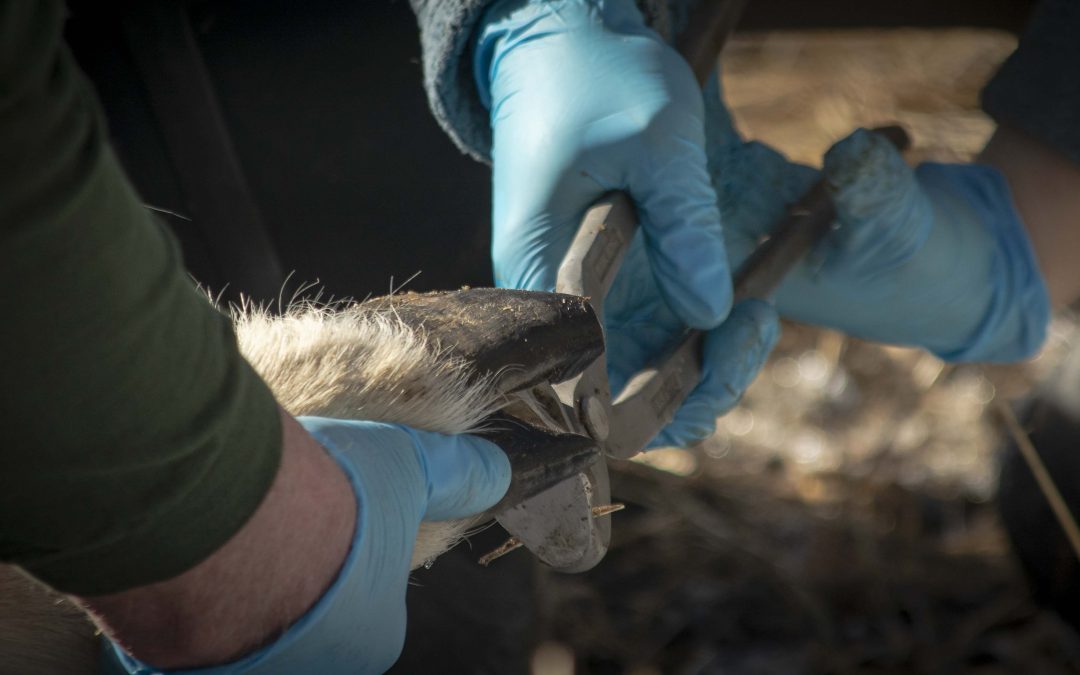
Hooves and nails are both composed of the same protein, keratin.  Trimming hooves is not unlike humans trimming their fingernails, or taking their pet dog to the vet for a nail trim. 

Dr. Maria and Randy begin trimming hooves, Julie monitors Geronimo's health while under general anesthetic as Ensio records times and values such as heart rate. 

Once the goats are sedated, we cover their eyes so they won’t be stimulated by light, and team members start taking and recording vital signs – heart rate, breathing rate, and temperature, to name a few. Since Geronimo is an older goat, he is also put on intranasal oxygen throughout the procedure. Dr. Maria and Randy get busy trimming the hooves, to make the procedure as quick and safe as possible, so we can wake the goats up, as soon as we can.

The eldest billy, Geronimo, receives intranasal oxygen. During the procedure to trim his cracked hoof, his eyes are covered to avoid stimulating him.  Here, Julie monitors vital signs such as heart rate, breathing rate and temperature as Dr. Maria works to quickly trim hooves.

We are happy to report that although Geronimo had indeed cracked his hoof, the crack did not communicate with the blood supply, so he’s at less risk of an infection from his hoof. Essentially…. he had a broken fingernail…

Geronimo's hoof after being trimmed.  The right toe was trimmed bluntly due to the crack in the hoof.  The left toe is the "normal" shape after trimming 

Both billy goats are woken up from sedation at the same time - we don’t want to risk any fighting of a rival!  In order to wake the goats up, they are given injections of sedative reversals.

Julie injects sedative reversal intramuscularly.

The time is noted and recorded so we know when to expect Geronimo to waken.  

Veterinary medical costs quickly add up. Even this simple, fast procedure cost $60 per goat for anesthetic drugs, antibiotics and pain control. Hidden costs include expertise, labour and supplies such as syringe and needles.  

We also administer an injection of antibiotics which will last for 3 days, to mitigate any potential infection arising from either hoof injury or the drug injection site.  Within minutes of waking up, both goats are heading their own way, to get back to the normal routine of being Rocky Mountain Goats.

Photo and Video Credit: L. Caskenette

Julie Kerr

Julie Kerr

Visitor Services Coordinator

Julie is a Registered Veterinary Technologist, living and working in Whitehorse since 2012. She joined the team in May 2018. She is passionate about wildlife, nature and living in a conscious manner with both. Her free time is spent outdoors observing wild animals and ecosystems; her connection to the natural world around her brings great joy – joy she loves to share with anyone interested. Honestly? Work and life blend rather seamlessly.

Explore by Category

Explore by Author

Mother’s Day Tribute

Mother’s Day Tribute

wildlife viewing

1.5 Min Video - 

Whether we are human or a furry animal, we can’t do it without our Mothers! They nurture and care for us, setting us on the path to a healthy and successful life.  Join us in this tribute to mothers everywhere, of all shapes and sizes.

Maybe you were my birth mom, maybe you’re the mom that helped me later. Anyway you slice it, you’re the best.

Thanks Mom!

Lindsay Caskenette & Julie Kerr

Lindsay Caskenette & Julie Kerr

Visitor Services Manager and Visitor Services Coordinator

Lindsay and Julie love to share the Preserve the same way they explore life – full on and full of adventure!  They have a collective love of:  Animals....Lindsay dogs, Julie foxes; Adventure.... Lindsay dog mushing, Julie extreme camping;  both take on animal personas during story telling.  Together they support the Preserve with a strong Visitor Services presence and often, they even get work done (this happens most often when the other one is out of the office).   

867-456-7400
 info@yukonwildlife.ca

Explore by Category

Explore by Author