First Baby of Spring!

First Baby of Spring!

wildlife viewing

by Jake Paleczny | May 8, 2020

1.5 Min Video - 

Spring is for babies!  Our first baby of 2020 is a Wood Bison, born Sunday, May 3.  Executive Director, Jake, was in the right place at the right time with a spotting scope and camera to share this footage of the bison calf within its first hour of life.

The calf is shaky on its legs as one of the young herd members comes to investigate.  That comes as some surprise, and causes Mom to step in to offer support.  Bison mothers are very protective, so generally, we want to view them from a distance.  We'll update once we can get close enough to identify if the calf is a boy or girl.

Watch more of the essence of spring!

Jake Paleczny

Jake Paleczny

He/Him - Executive Director/ CEO

Jake Paleczny is passionate about interpretation and education. He gained his interpretative expertise from a decade of work in Ontario’s provincial parks in addition to a Masters in Museum Studies from the University of Toronto. His interests also extend into the artistic realm, with a Bachelor of Music from the University of Western Ontario and extensive experience in galleries and museums.

867-456-7313
jake@yukonwildlife.ca

Explore by Category

Explore by Author

Wildlife Q&A

Wildlife Q&A

wildlife viewing

5 Min Video - 

We love finding out what makes kids curious!  We asked kids to send us their video questions about the Preserve and Yukon’s wildlife.  Watch the video to hear YWP staff answer:

  1. Do Caribou go in big groups?  And if they do, how big of groups do they go in?
  2. How do mountain goats climb?
  3. Do bunnies only eat carrots or not?
  4. How can people help the wildlife preserve?

Are you a kid? Do you have questions about Yukon Wildlife Preserve or Yukon wildlife? Send your video question to us at info@yukonwildlife.ca. (Some help from parents may be required 😉 )

Jake Paleczny

Jake Paleczny

He/Him - Executive Director/ CEO

Jake Paleczny is passionate about interpretation and education. He gained his interpretative expertise from a decade of work in Ontario’s provincial parks in addition to a Masters in Museum Studies from the University of Toronto. His interests also extend into the artistic realm, with a Bachelor of Music from the University of Western Ontario and extensive experience in galleries and museums.
867-456-7313
jake@yukonwildlife.ca

Explore by Category

Explore by Author

Wild Spring Adventure!

Wild Spring Adventure!

wildlife viewing

6 minute read (and/or) watch the video!

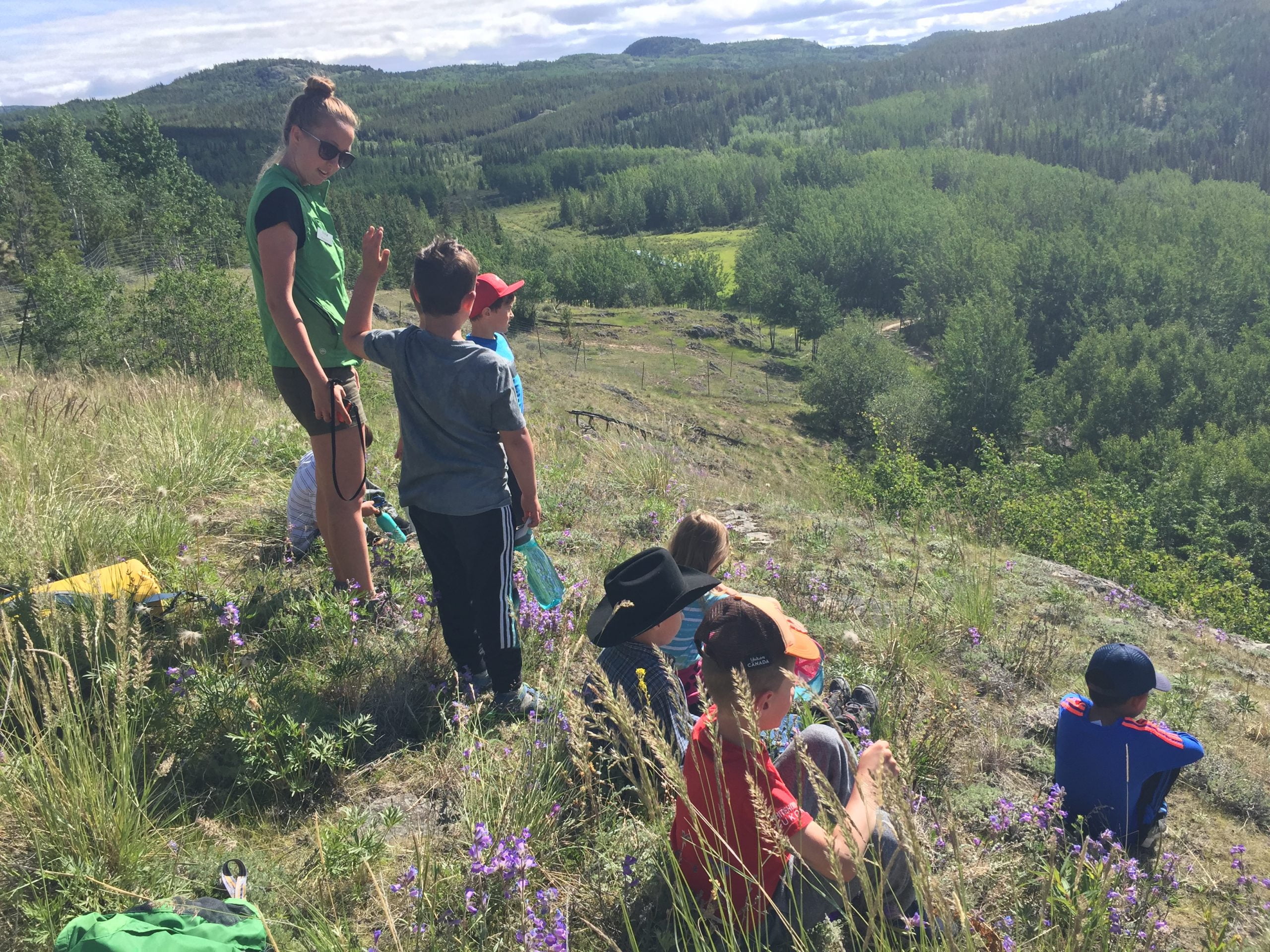
Spring is the sign of new life! It’s the circle of life intertwined and flourishing from increased sunlight.

It’s a time of birds migrating. Some, like swans, stop only a short time on their way to nesting grounds further north; some stay for the season, like the chickadee and bluebird - they build nests, attract mates and raise their families.

There’s a saying - “Spring is in the air” - that implies a renewal of spirit and perhaps a bit of friskiness in certain species, like Red Foxes, that may lead to becoming parents to this year’s young (or perhaps they already ARE parents!). Of course, some species breed in the autumn, so that as spring progresses, we will start to see babies being born - at Yukon Wildlife Preserve we are hopeful that we will see Bison, then Caribou calves in the coming weeks and months. We expect to see wild fox kits and ducklings as well.

At the Preserve, Arctic Ground Squirrels started popping their heads above ground April 7 this year, with the males the first to break their winter hibernation. Juveniles and females are soon to follow their lead. We see, sitting on the cliffs and soaring above fields, birds of prey like bald eagles, coming in to hunt this prolific prey species. Spring is a notable return of the constant cry of alarm calls of ground squirrels, as their many predators hunt them from land or sky - displaying the full Circle of Life.

New growth has begun with grasses and early flowers like crocuses, to name only two plant species. This is important nutrition to many animals after a long cold winter, and grazers like Thinhorn Mountain Sheep can be found on south facing slopes, enjoying the tender new shoots, and the ease of eating, now that the deep snow has melted.

Crocuses are one of the first signs of spring - and important nutrition to many animals after a long cold winter.  Here we see a very early crocus found by the authors on their spring adventure hike at Yukon Wildlife Preserve.   Photo by Lindsay Caskenette

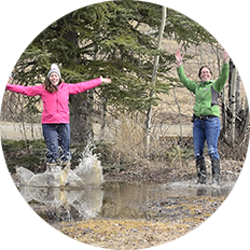
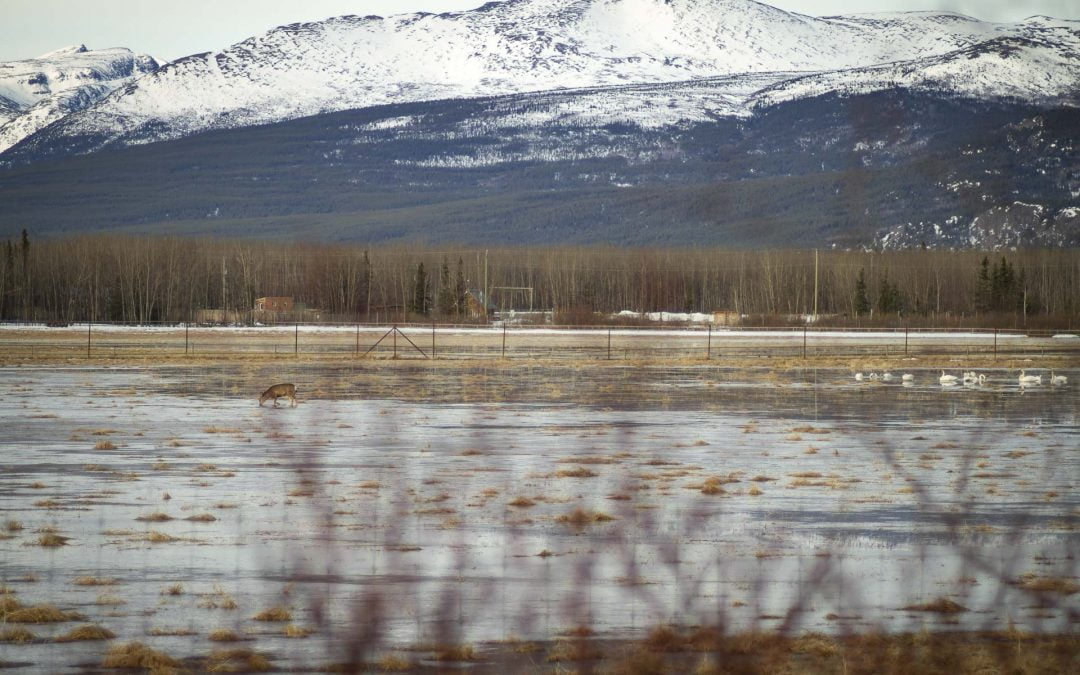
Water, water, water everywhere! Swans have returned with a splash - their honking fills the air with the best kind of noise as they stop over to feed while on their long migration to their northern nesting grounds . There is a year round marsh in the moose habitat at the Preserve, but the seasonal one next door in the mule deer habitat seems to be preferred by the swans - to the seeming curiosity of one of the female mule deer.  Everyone seems to love jumping and running through puddles, no matter how big or small the puddle…..or animal…..moose, humans and muskox! After a winter of conserving energy while food is scarce and energy is focused to survival, jumping in a puddle can lead to manic runs around the yard (or habitat). It seems spring can be about fun and burning off extra energy!

Swans have a long migration in the spring - open water at Yukon Wildlife Preserve is a frequent stop over for food and rest by migratory birds.  Some, like bluebirds, stay for the season, some, like the swan, typically move on to nesting grounds further north.  Photo Lindsay Caskenette

When you need a meal, sometimes you have to “spring” into action. Lynx are natural jumpers and we took the opportunity to provide enrichment to our resident lynx females by placing their food in trees. In the wild, lynx prefer snowshoe hare and will use powerful leaps to catch their meal within only a few “springs”....we mean jumps…..

Limited smells in winter mean that spring unearths a plethora of new scents on the air. Red Fox have an excellent sense of smell, making it easy for them to follow their nose to food sources. When they’ve eaten their fill, they will cache extra food as snacks for later. They keep an eye and ear out to avoid anyone following them to their cache site - other foxes and many birds in the Corvidae Family - grey jays, magpies, and ravens are known to steal their snacks.

Whether you’re human or animal, winter coats are shedding - and that wool, hair and fur can be found on the environment - rocks, trees, and fences (and sometimes finds its way into lining the nests of birds and small mammals like ground squirrels…..)  Shedding coats leads to a period of time not known for its fashion sense….and much shagginess in animals like bison.

Winter is over and the cycle of the year continues. Spring arrives, bringing increased sunlight and changes in everyone’s behaviour and appearance - humans and animals alike. We shed layers, feel the sun on our faces, enjoy the smells and the sounds of life renewing around us. We experience a rejuvenation of our spirits. Be well and enjoy spring, wherever you are.

Lindsay Caskenette & Julie Kerr

Lindsay Caskenette & Julie Kerr

Visitor Services Manager and Visitor Services Coordinator

Lindsay and Julie love to share the Preserve the same way they explore life – full on and full of adventure!  They have a collective love of:  Animals....Lindsay dogs, Julie foxes; Adventure.... Lindsay dog mushing, Julie extreme camping;  both take on animal personas during story telling.  Together they support the Preserve with a strong Visitor Services presence and often, they even get work done (this happens most often when the other one is out of the office).   

867-456-7400
 info@yukonwildlife.ca

Explore by Category

Explore by Author

Cliff Hanger at Dawn!

Cliff Hanger at Dawn!

wildlife viewing

Jan 17, 2020

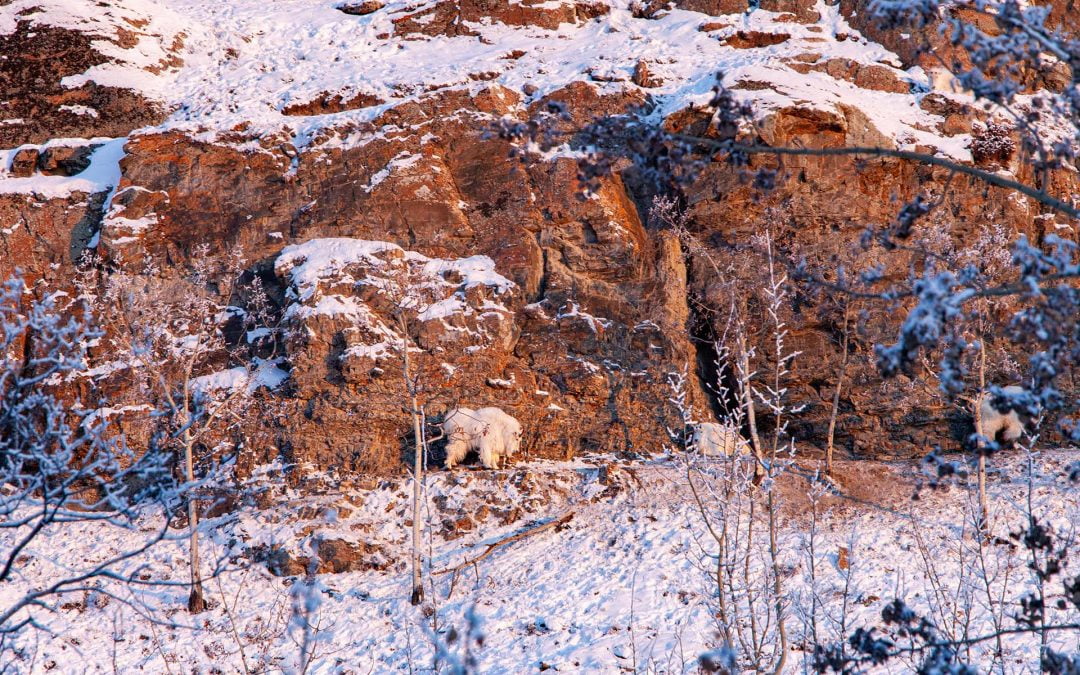
The rising sun bathes the cliffs in the rosy hues of dawn.  In a manner I can only describe as precarious, I watch, heart in mouth, as the billy goat stands on his back feet while on a sheer cliff slope.  His front legs dangle loose in the air, all the better to stretch and reach the last of this year’s leaves on the aspen before him.

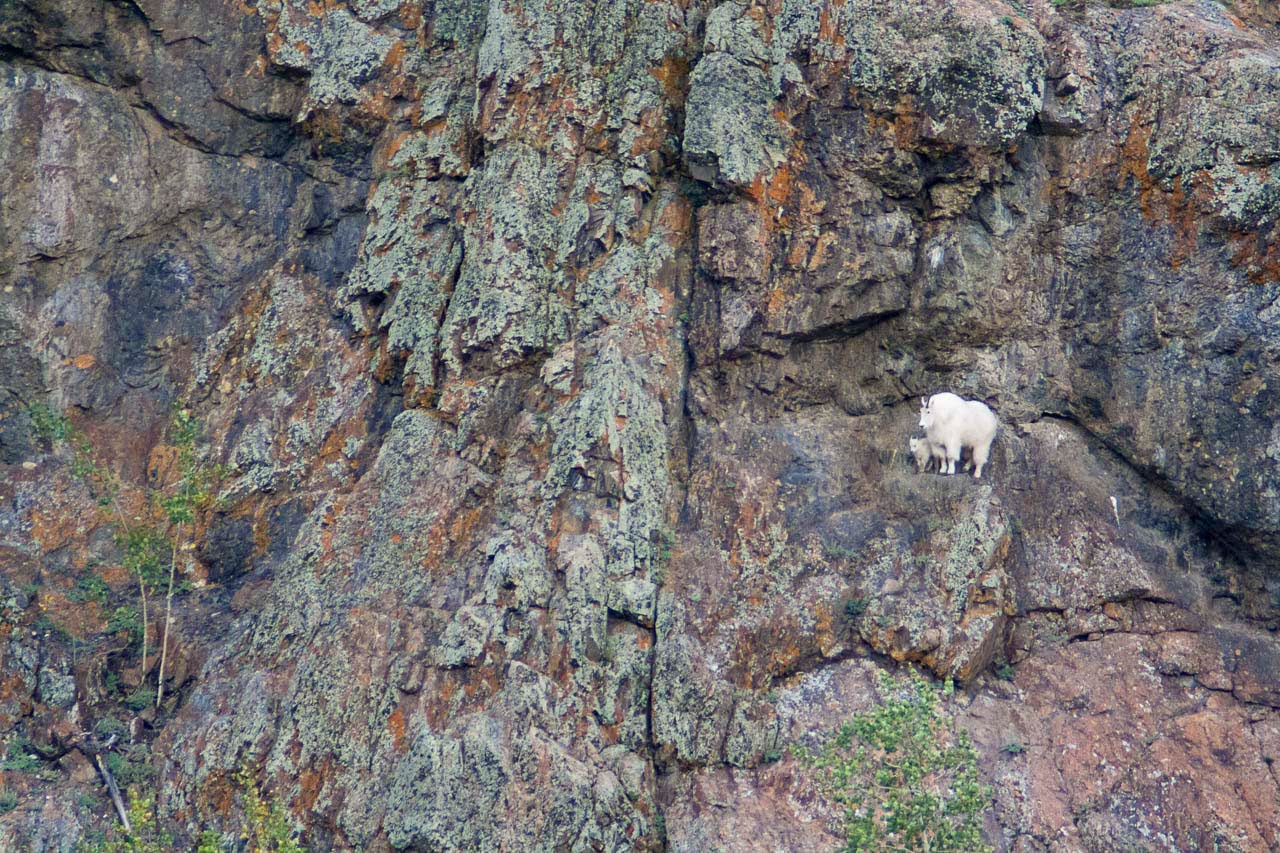
Of course, the billy is the male of the Rocky Mountain Goat and for him, there is nothing precarious about the scene depicted above.  Mountain goats are renowned for their surefootedness and what seems reckless and foolhardy from a human perspective is, in fact, just another day for the mountain goat.

What makes a mountain goat so agile in rocky cliff terrain?  The truth is they are well designed for their natural habitat.

Mountain Goats have short legs in relation to their overall size, placed close together; their centre of gravity is close to the ground and at the front of their body.  These things help the goat travel on narrow ledges. Muscular shoulders provide great strength for climbing. Finally, the hooves are specialized with rough textured pads and the toes have the ability to spread wide – this distributes the goat’s weight over a larger area.  Conversely, the toes can pinch together, which helps with traction when travelling downhill.

The science adds some understanding to the magic unfolding before me.  I am in awe with this landscape, this animal, this moment in time.   

Come be amazed.  Yukon Wildlife Preserve. 

Julie Kerr

Julie Kerr

Visitor Services Coordinator

Julie is a Registered Veterinary Technologist, living and working in Whitehorse since 2012. She joined the team in May 2018. She is passionate about wildlife, nature and living in a conscious manner with both. Her free time is spent outdoors observing wild animals and ecosystems; her connection to the natural world around her brings great joy – joy she loves to share with anyone interested. Honestly? Work and life blend rather seamlessly.

Explore by Category

Explore by Author