The Curious Case of Dewlaps: Moose and Their Underappreciated and Mysterious Neck Accessories

The Curious Case of Dewlaps: Moose and Their Underappreciated and Mysterious Neck Accessories

wildlife

by Lindsay Caskenette | Jan 30, 2025

10 minute read

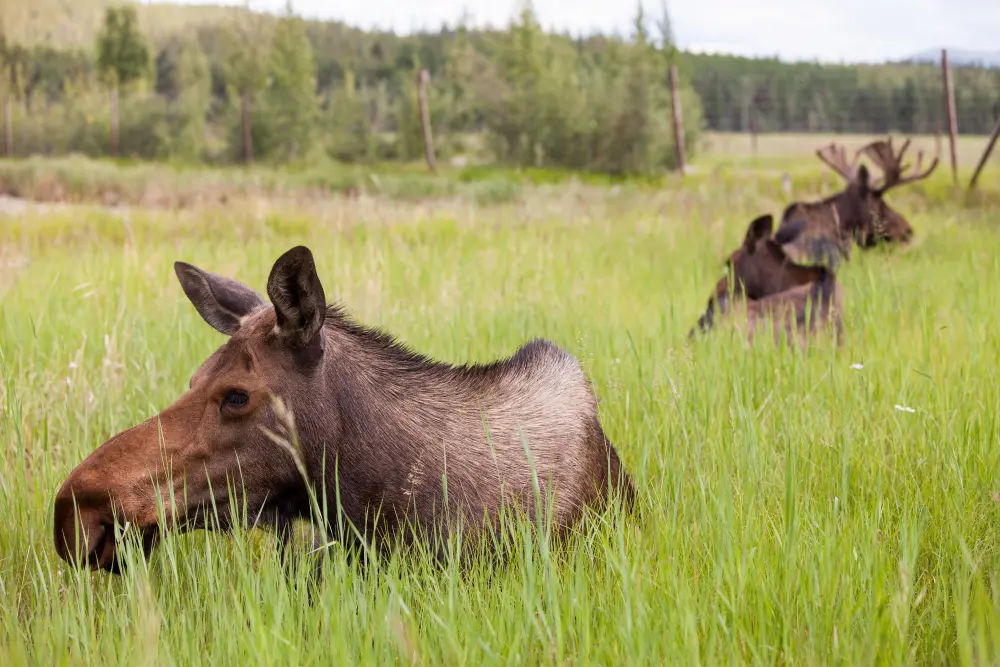
When you think of a moose, you might picture an iconic Canadian creature with long legs, a majestic set of antlers, and the undeniable air of someone who really doesn’t care about traffic. What might not come immediately to mind is the subtle yet striking neck accessory that moose wear with... well, little to no fanfare: the dewlap. Yes, that’s right—moose, with their immense size and serene grace, sport a fleshy flap of skin dangling beneath their throat.
If you've ever had the privilege (or slight anxiety) of encountering a moose here at the Yukon Wildlife Preserve, or on a cross-country road trip, you’ve maybe noticed this particular feature. But what is it, and why does it exist? Let’s explore this underappreciated anatomical feature with a mix of scientific curiosity and the lighthearted humor it deserves.

What is a Dewlap, Anyway?

A dewlap is essentially a flap of skin that hangs from the neck, or throat of an animal and while it may seem like just an odd fashion statement, it often serves practical purposes. Dewlaps appear in all kinds of animals—like lizards, cows, chickens, rabbits, and yes, moose. Depending on the species, dewlaps help with everything from sexual selection, to staying cool to general communication. In moose, the dewlap isn’t just a bizarre fashion accessory, it's also a multi-purpose tool in their biological toolkit - we think!

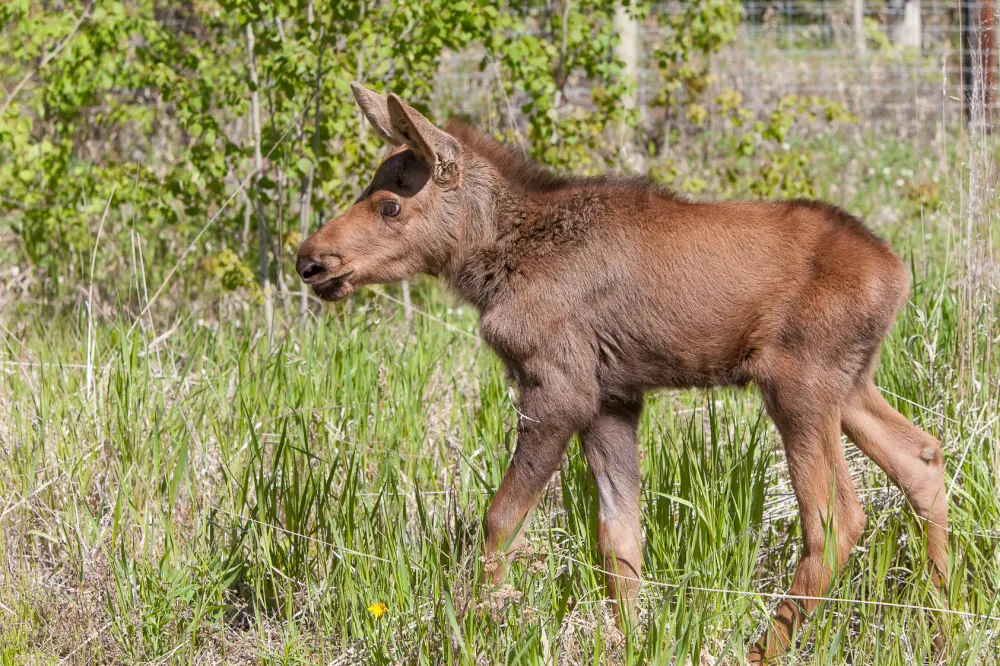
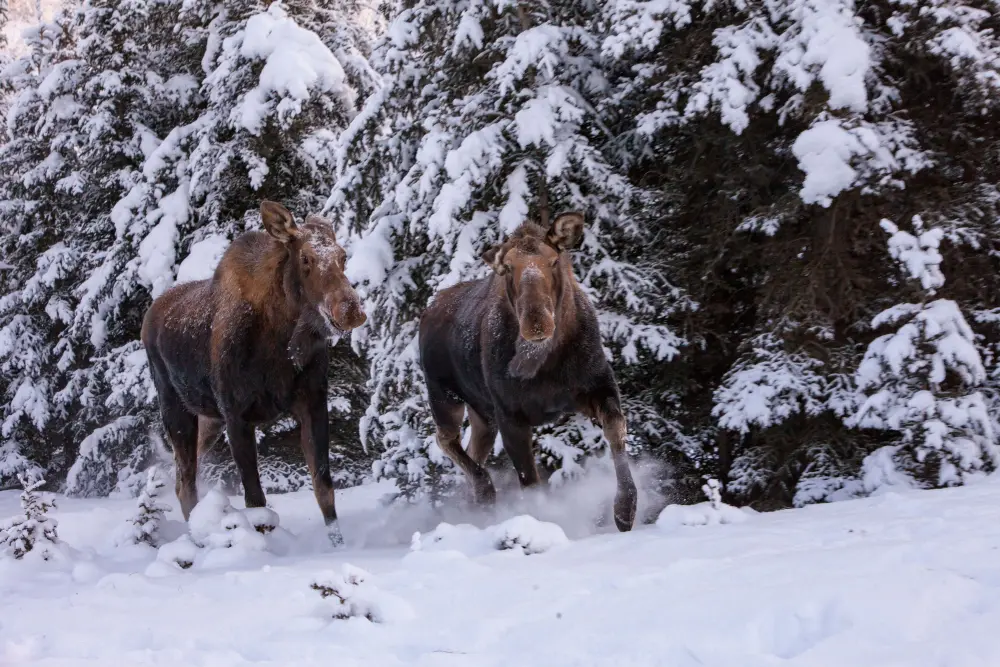
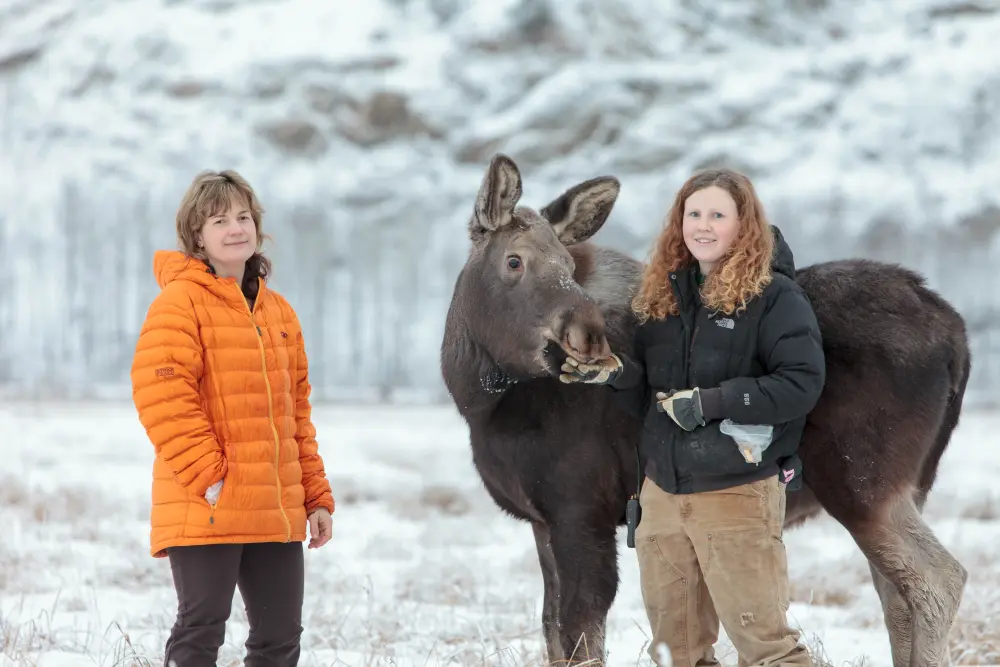
Watson on the left, Marsh on the right. 2023-making Watson 4 years old and Marsh 2 years old in this photo. Notice the dewlap difference?

Fun Fact: a dewlap on a moose is also called a bell. If you’re a bird, that fold of skin is called a wattle. For rabbits, dewlaps are basically nature’s way of saying, “Congrats, you’re all grown up now!” Female rabbits flaunt these fluffy neck pillows as a sign of sexual maturity. Later, when they have babies, they even pluck the thicker fur grown here to line the nest. Birds and reptiles, on the other hand, can take it up a notch with their flashy neck frills—bright, colorful, and often retractable like the world’s fanciest pop-up tent, perfect for showing off in romantic or territorial drama. 


Sitana ponticeriana. Photo by Niranjan Sant from Lizards in an Evolutionary Tree. 

But when it comes to ungulates, like moose, their dewlaps remain a mystery. It’s the unsolved cold case of the animal kingdom, stubbornly dodging scientific scrutiny. Nature can be funny like that sometimes.

Moose Practical Fashion: Is It About to Take Off?

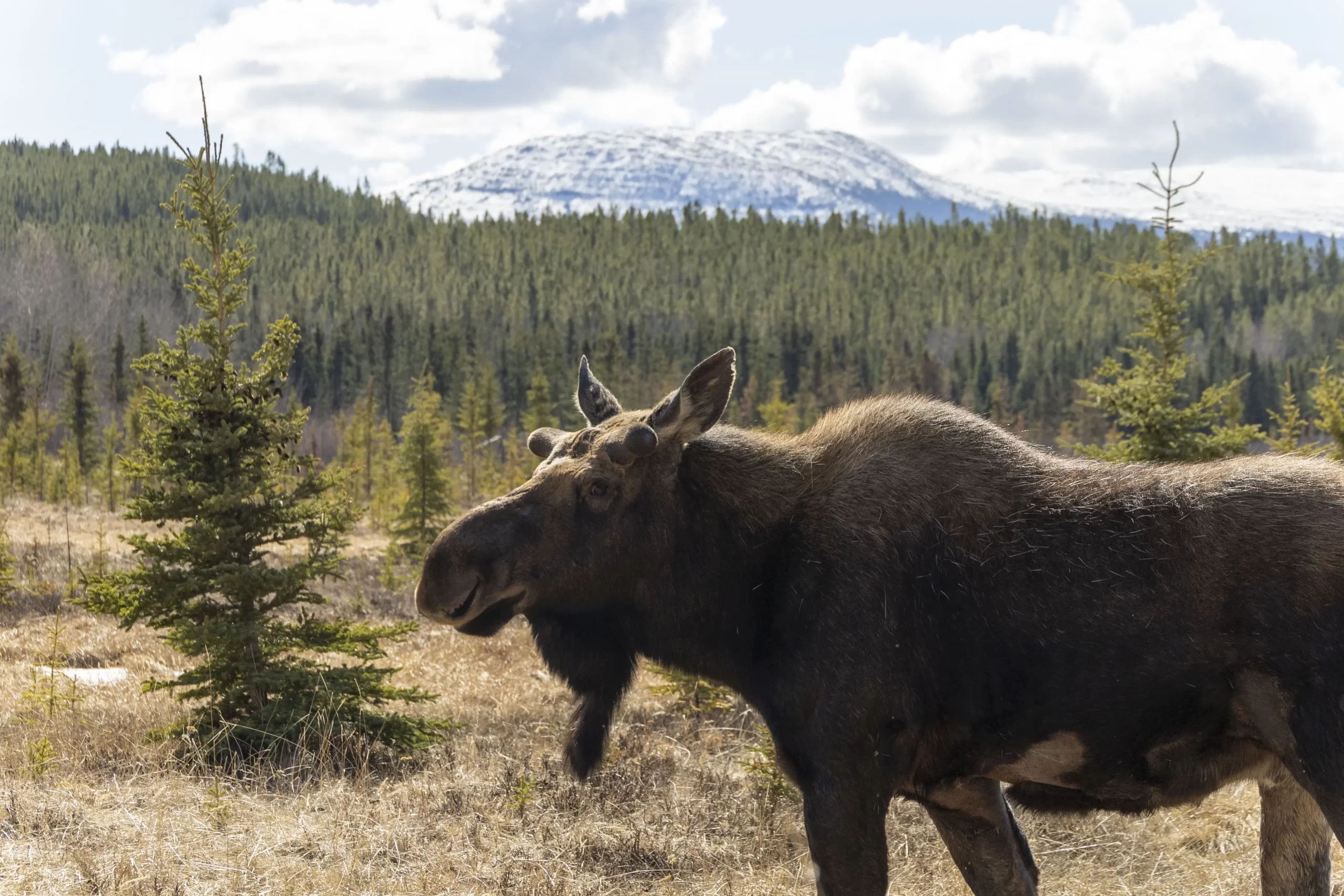
Let’s address the most important question right off the bat: Do moose know they’re rocking a dewlap? Probably not. But if they did, we imagine it would make them feel pretty cool—like the one guest at a party with a trendy outfit no one else can pull off.  In the moose world, the dewlap is one of those things you don’t really see in everyday fashion. While antlers get all the glory in the animal kingdom, these enigmatic ornaments quietly steal the show in these hoofed animals. 

Moose, who roam the colder reaches of North America, use their dewlaps to help cool off in warmer weather. Male and female moose have dewlaps though their sizes differ considerably with, naturally, the male dewlap being larger than the females. The loose skin beneath their throat appears to expand and contract, and become more or less furry based on seasons which would help release heat from their bodies. This means that on a hot Yukon day (don’t worry, we don’t have too many of those), the dewlap might help prevent a moose from overheating as they browse lazily in the wild.

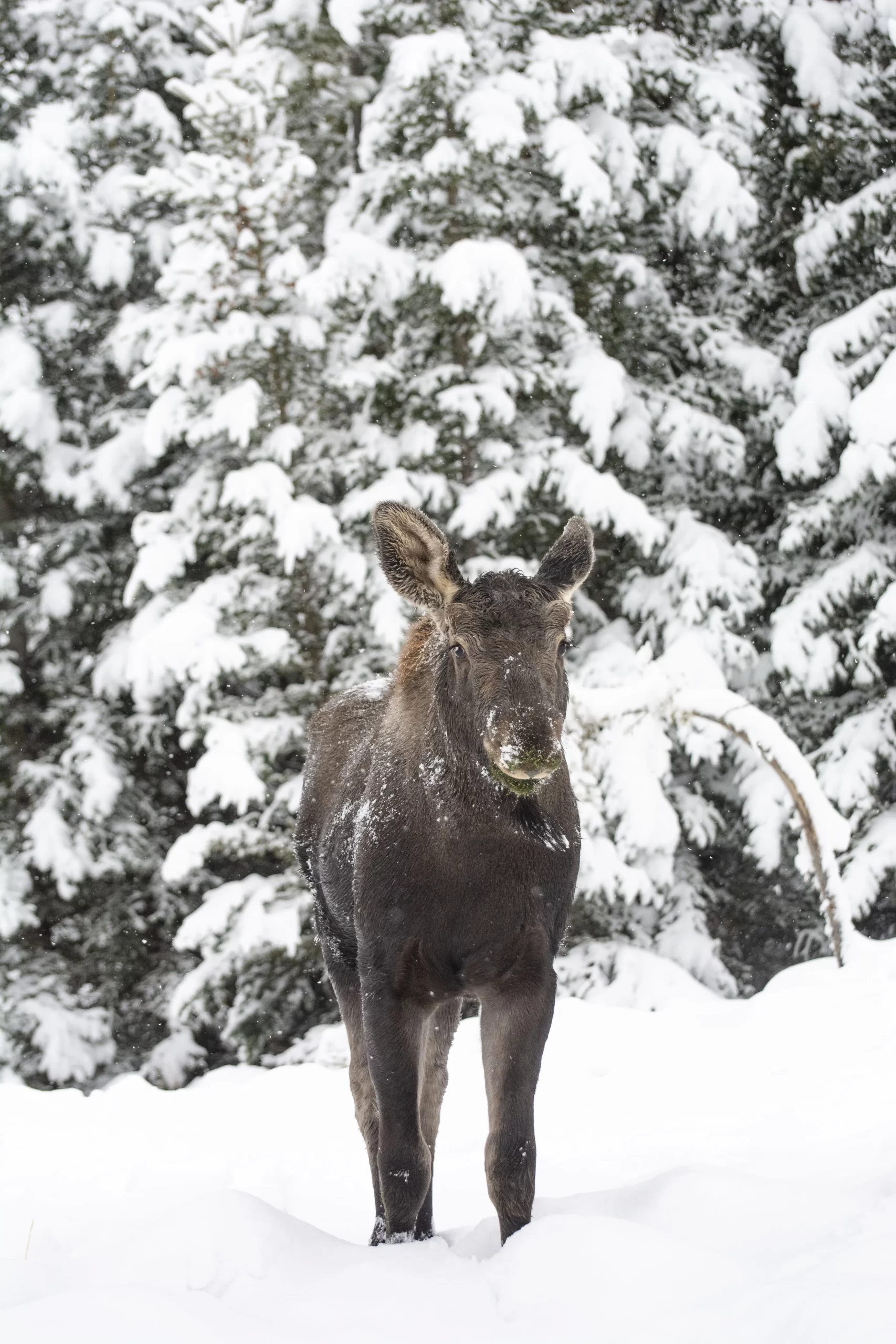
Moose September 2013 - Justine Benjamin. Cow and bull moose in rut season.

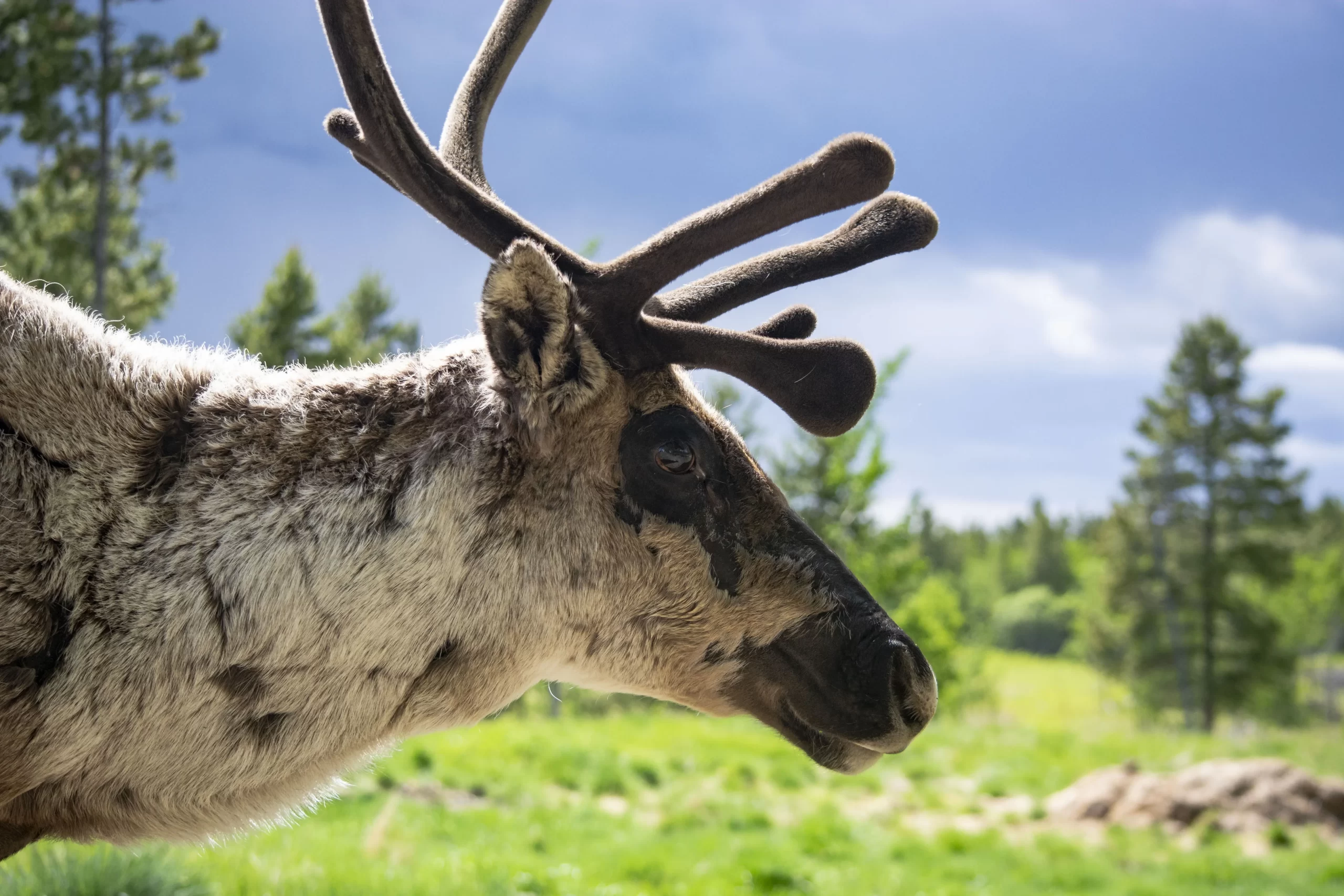
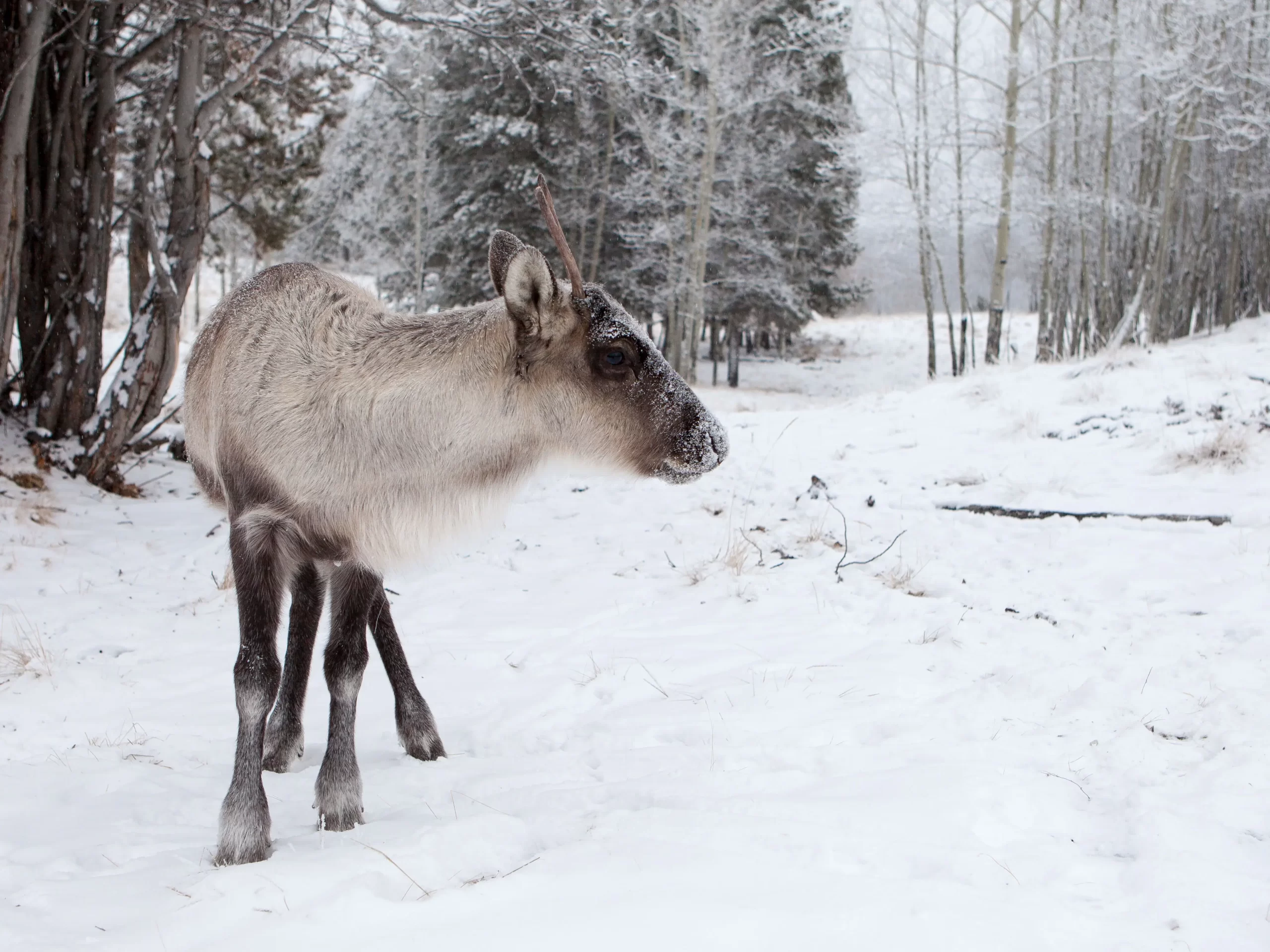
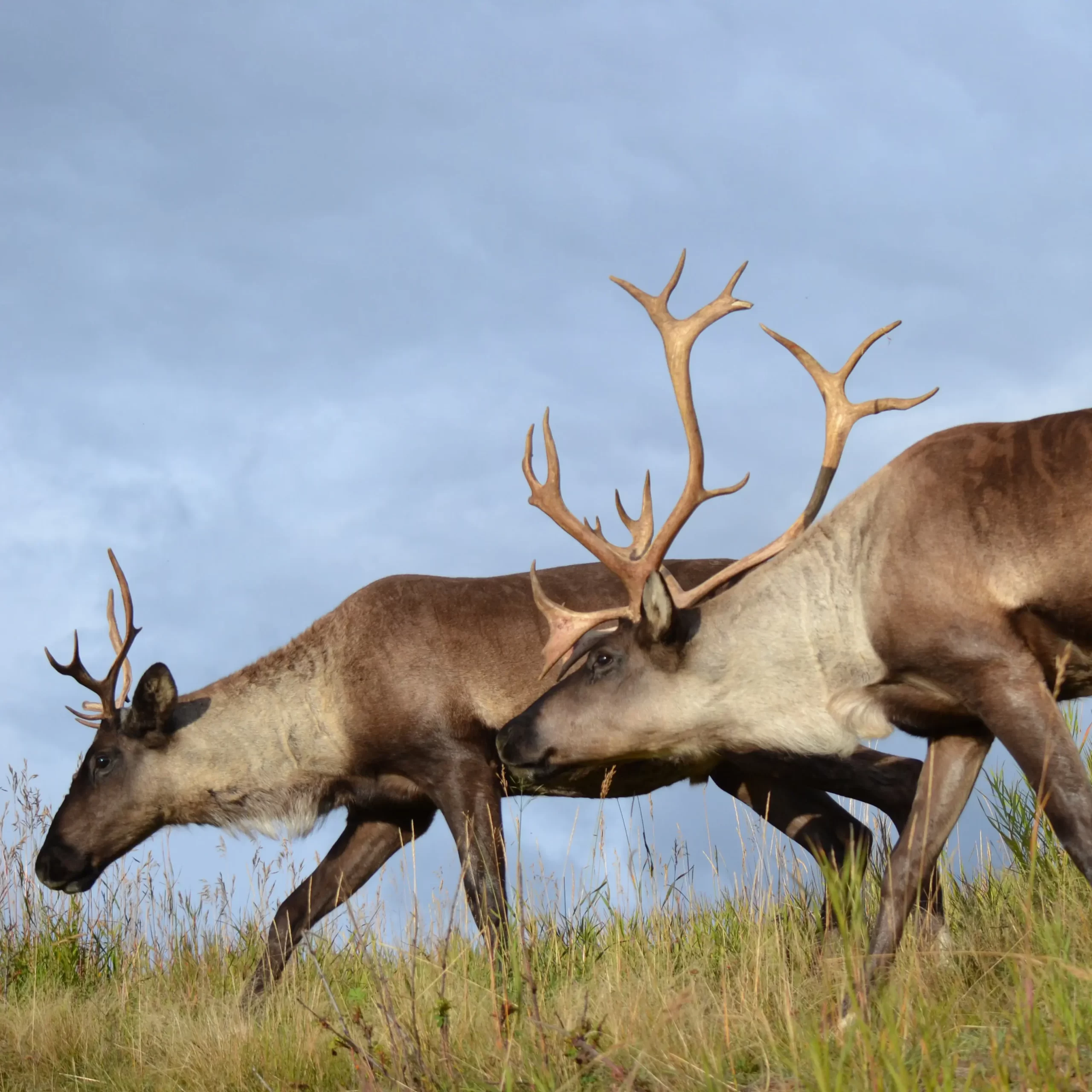
This statement might be contested by research from ungulates evaluated from Bro-Jørgensen given the need to thermoregulate (dissipate heat) is rather limited when you live in a more predominantly cold-climate than comparatively the eland antelopes of South Africa. Large ungulates like bison, elk, and yak do not present this caruncle; they may have evolved alternative, behavioural, cooling mechanisms that are less ‘cool looking’! But, wait, what about caribou? Technically, they fall under the 400kg threshold of the study and live in a cold climate and though they (males particularly) seem to rock the dewlap… sort of, theirs is more of a budget-friendly version compared to the moose’s deluxe mode.
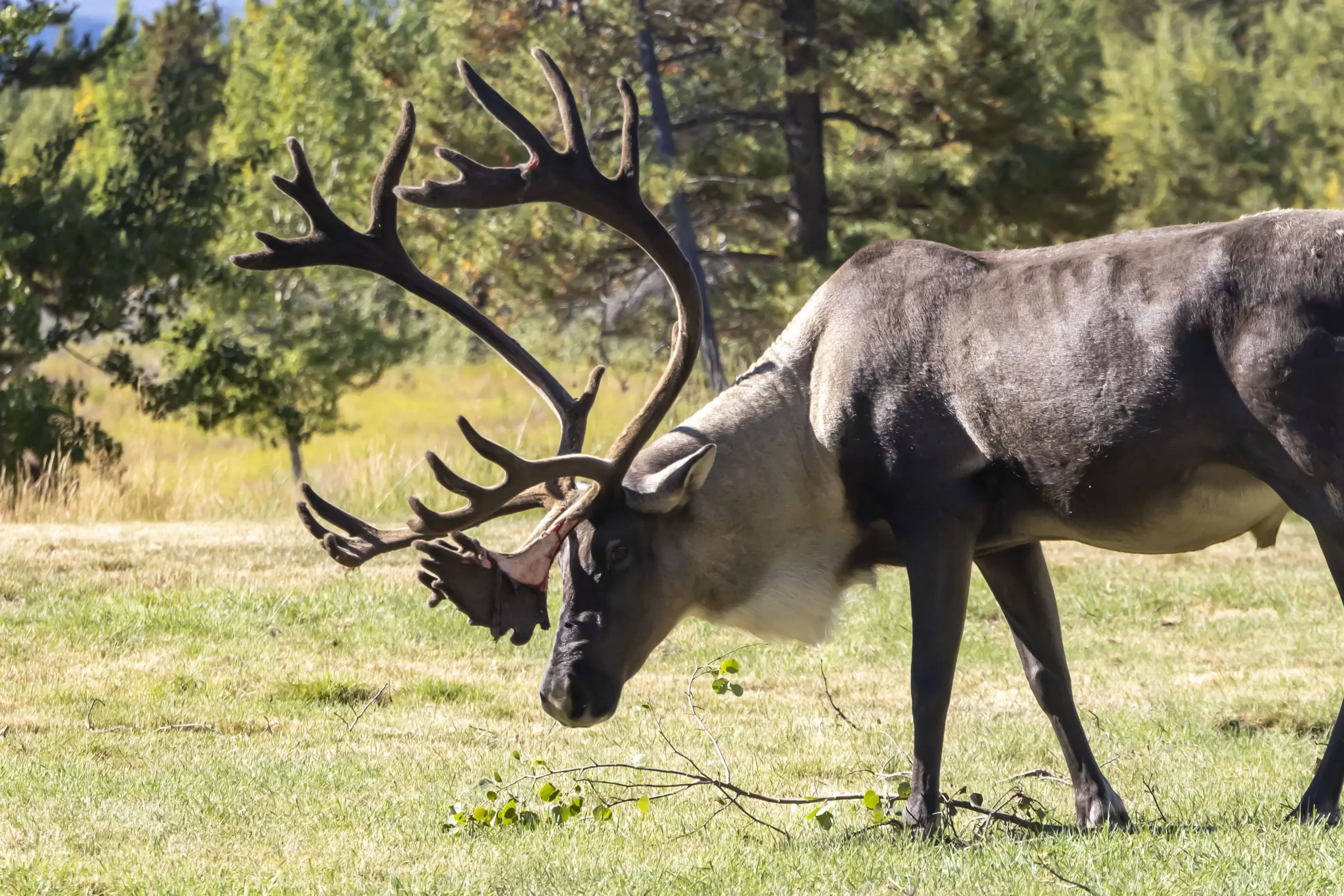
(We’ll admit we’re pretty perplexed that both moose and caribou have flappy neck skin but wouldn’t be considered in the list of animals with evolutionary cooling mechanisms as they both are amazing swimmers, spending a lot of time in water and thus being able to cool themselves via this method—alas we will stick to moose necks!)  We appreciate that Bro-Jørgensen recognizes investigations into ungulate dewlap purposes has been left largely unexplored and for some reason, lizards have stolen all the scientists' attention. 

Dewlaps and Courtship: The Moose Dating Scene

If you thought moose were all about antlers for impressing mates, think again. Dewlaps are also, or alternatively to thermoregulation, thought to be involved in courtship. During mating season, male moose seem to have enlarged dewlaps to make themselves appear more impressive. After all, what’s a little extra neck real estate if it helps you woo the ladies? This trait can also be found in male leopards—alongside aging the dewlap grows, similar to a lion’s mane thickening, scientists believe this growth helps in intra and inter-specific interactions—the important sexual selection kinds of interactions for attracting mates and staving off competitors.
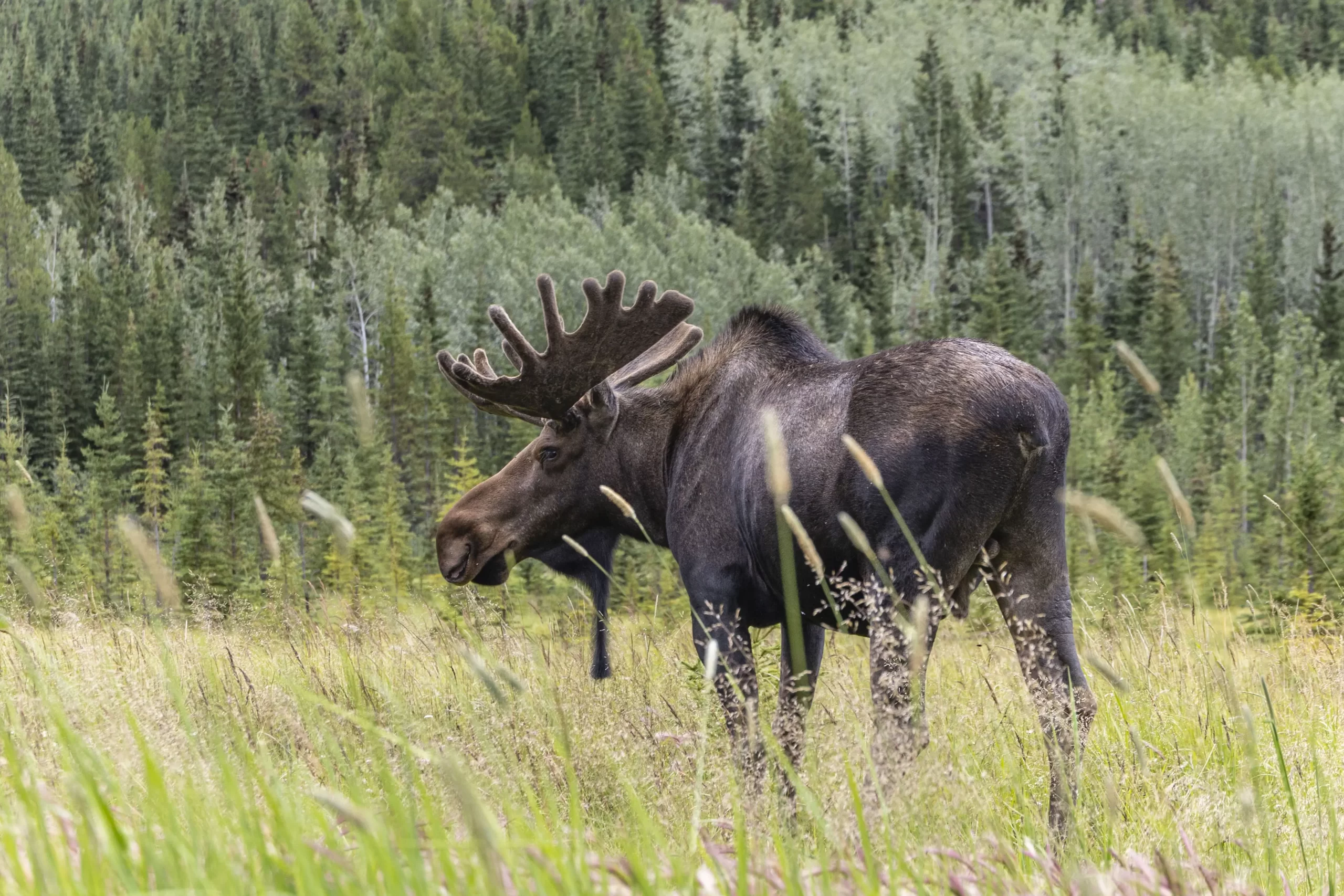


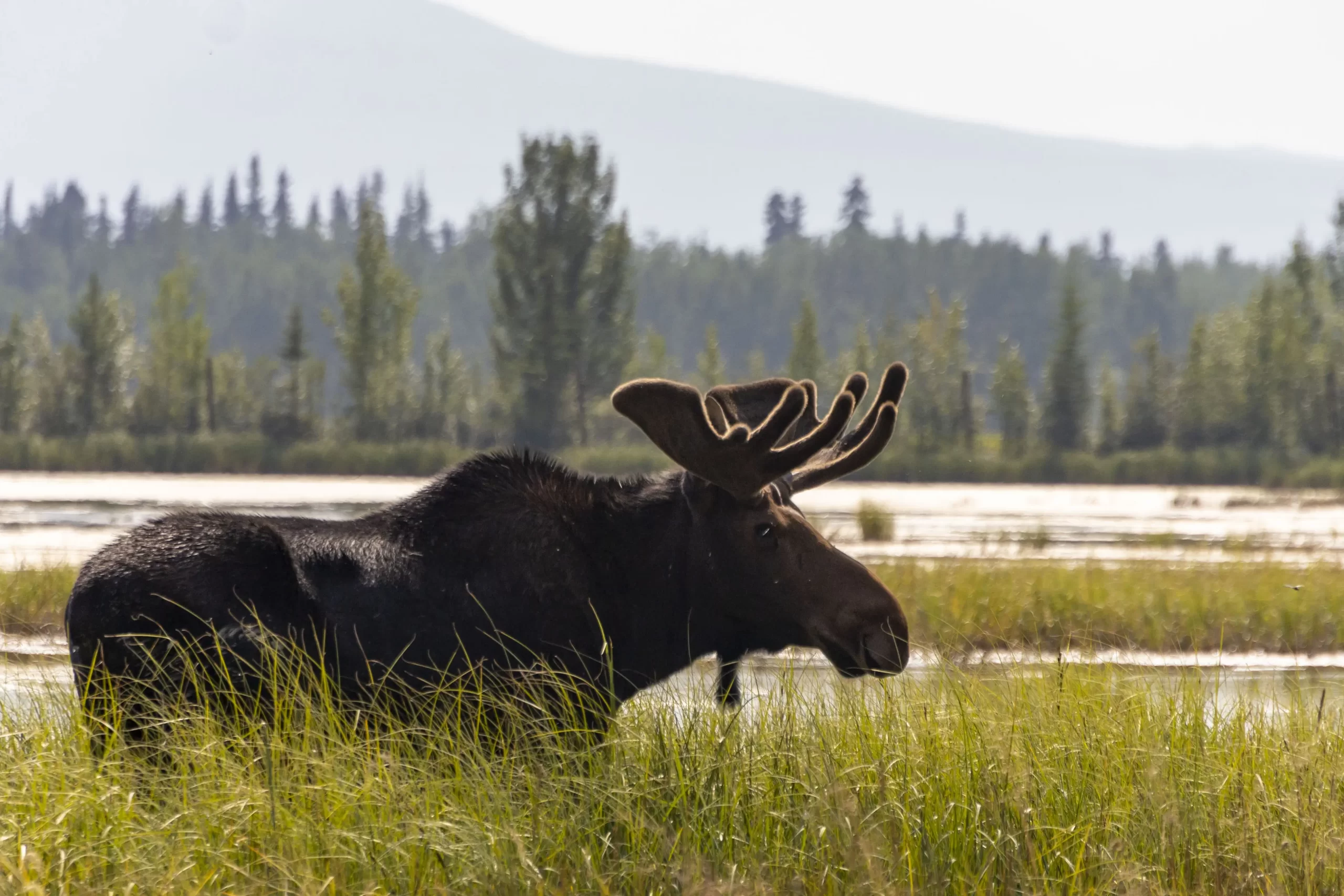
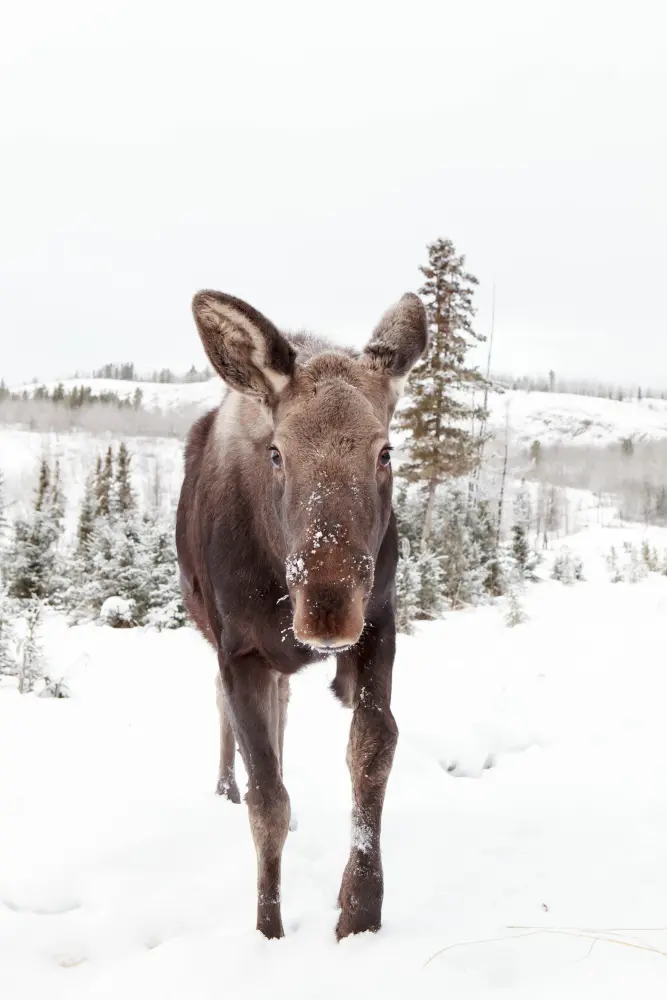
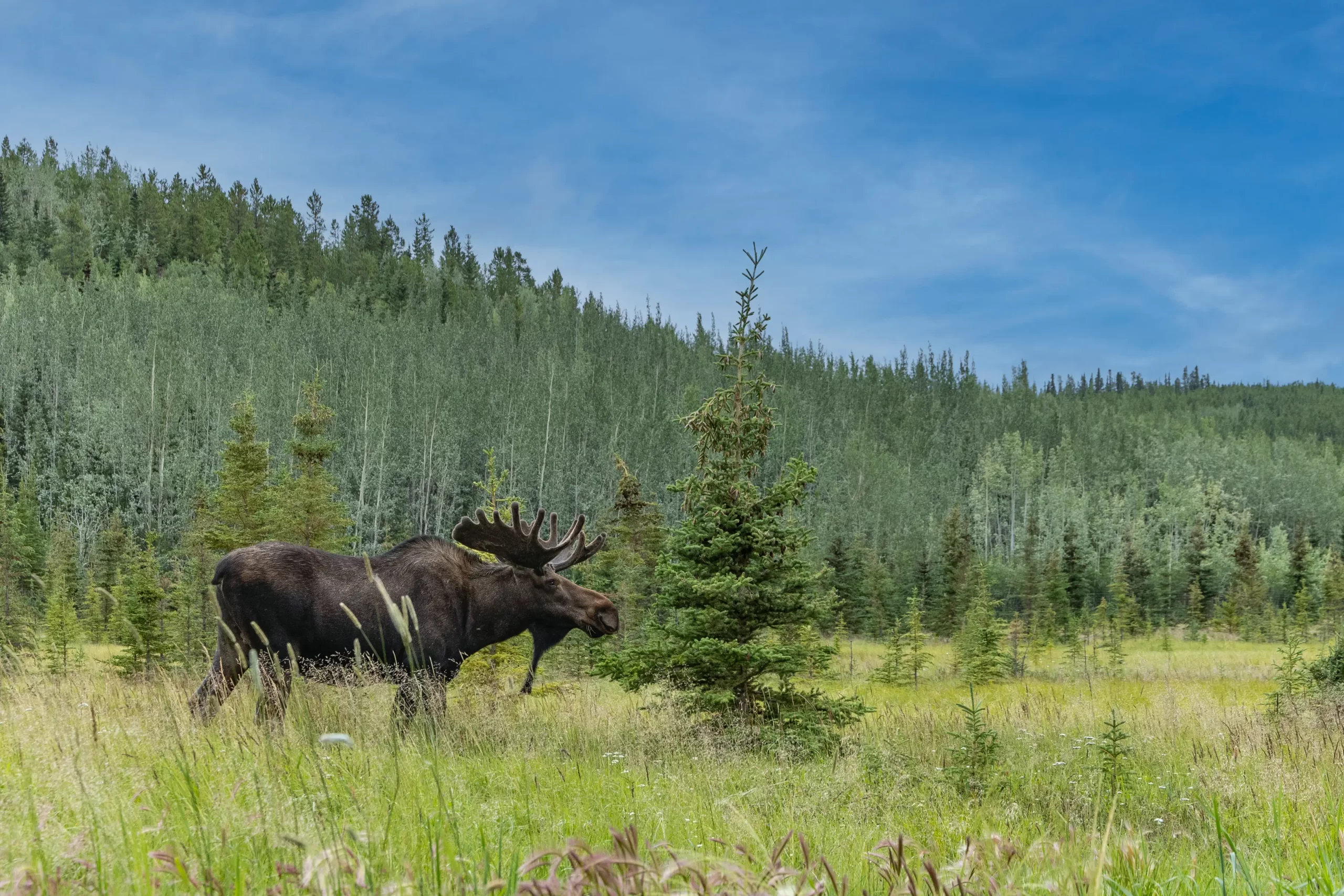
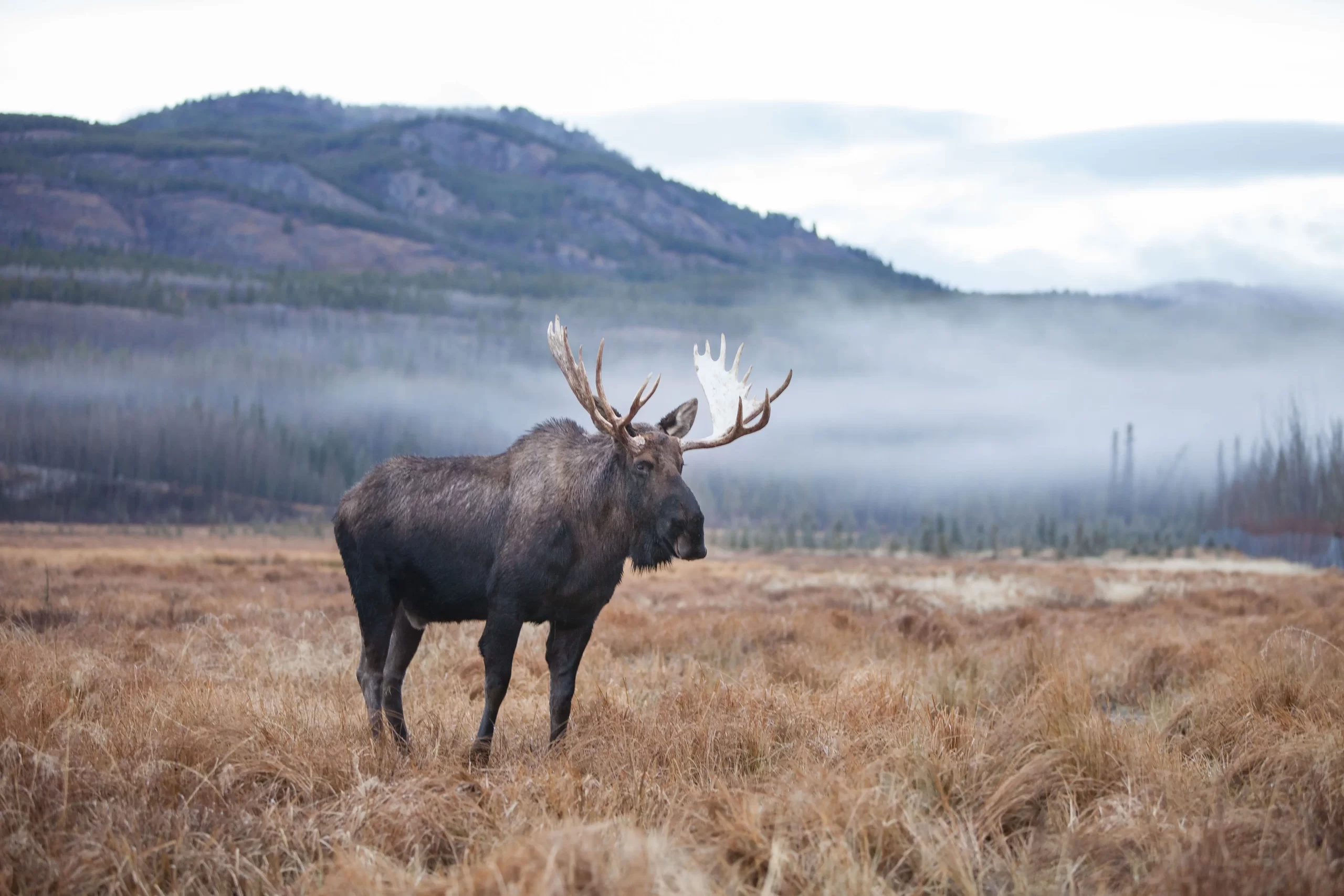
Moose Bull Watson in Summer 2024 and Winter 2024 show a side view of the animal and its dewlap. It appears larger by possibly being more hairy in the winter for protection of the extra skin. In summer lighter and able to dissipate heat like its less hair covered ears in the summer.

In some species (like lizards), males will flare their dewlaps out to signal dominance or interest in a mate. While moose don’t exactly go full "show-off" mode with their dewlaps, the extra skin could play a role in their mating rituals. After all, being a moose isn't all about looking tough with those antlers—it’s also about managing the subtler art of, well, neck presentation. 
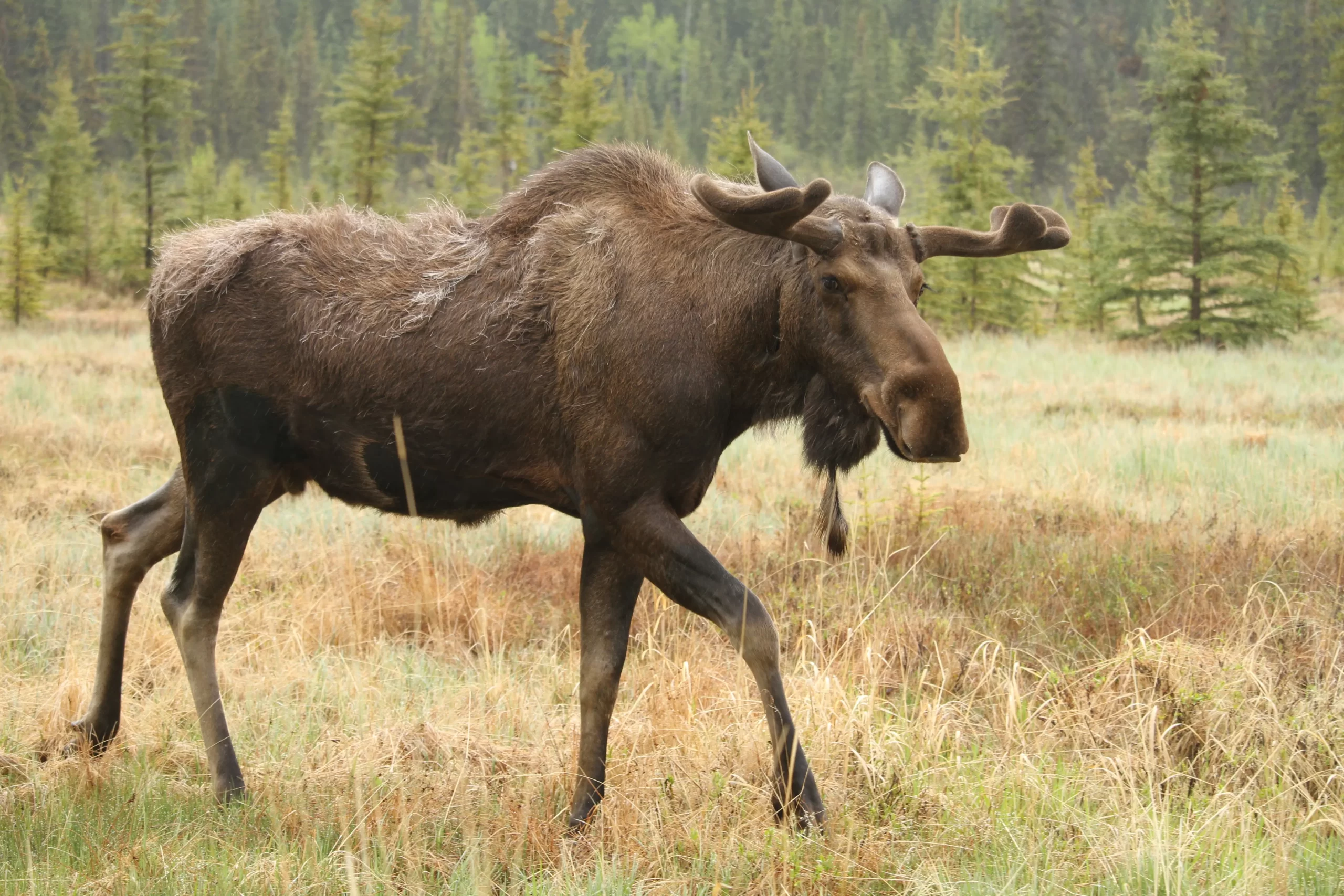
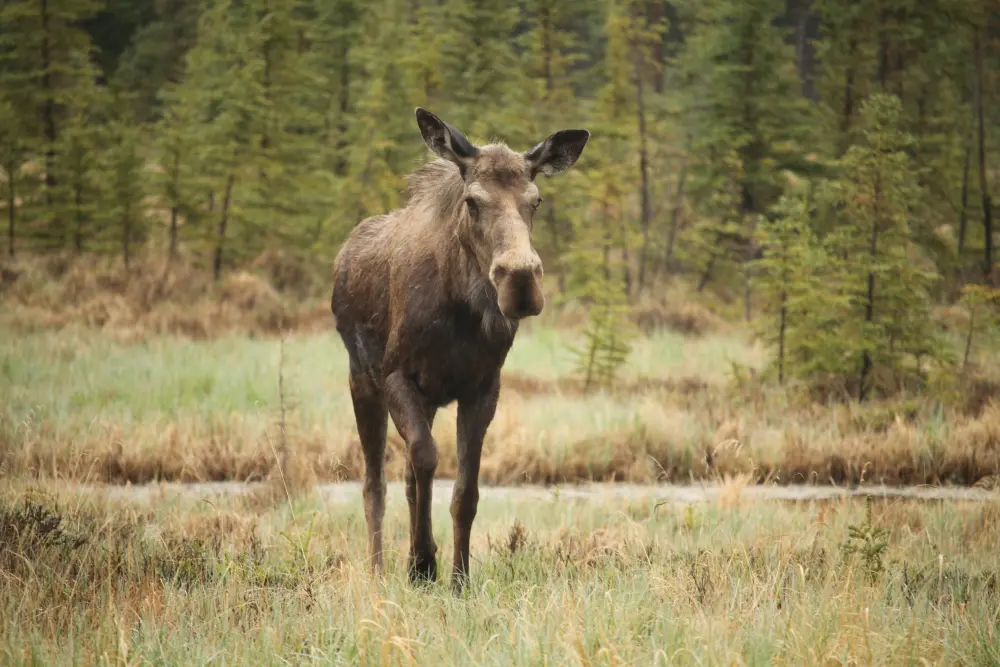
These photos from young to old, left to right, are of Watson. We see from photos, the size of the dewlap appears to become larger over time. Bro-Jørgensen also explores the idea of the dewlap (in elands) being a detterent to predators as the side view makes the animal look larger and perhaps more intimidating. This would align with mature, genetically inclined animals having a larger dewlap. Though this was taken further and scarring on the dewlap was tested, exploring its advantages or disadvantages to protecting the common area of attack on prey by predators in some inter-species interactions.

A "Dewlap-umentary" Moment

Imagine a scene straight out of a nature documentary: A lone moose stands amidst the wild, its dewlap gently swaying in the wind as it scans the horizon. It’s a thing of beauty, really. But then, a rival moose appears on the scene—let the neck flap show begin! Not much behaviour present in ungulates, as seen in lizards and birds, but the moose may posture, showing off their large body size and then bam - side view of an impressive neck dangle and their rival runs away in fear - perhaps a convincing illusion.

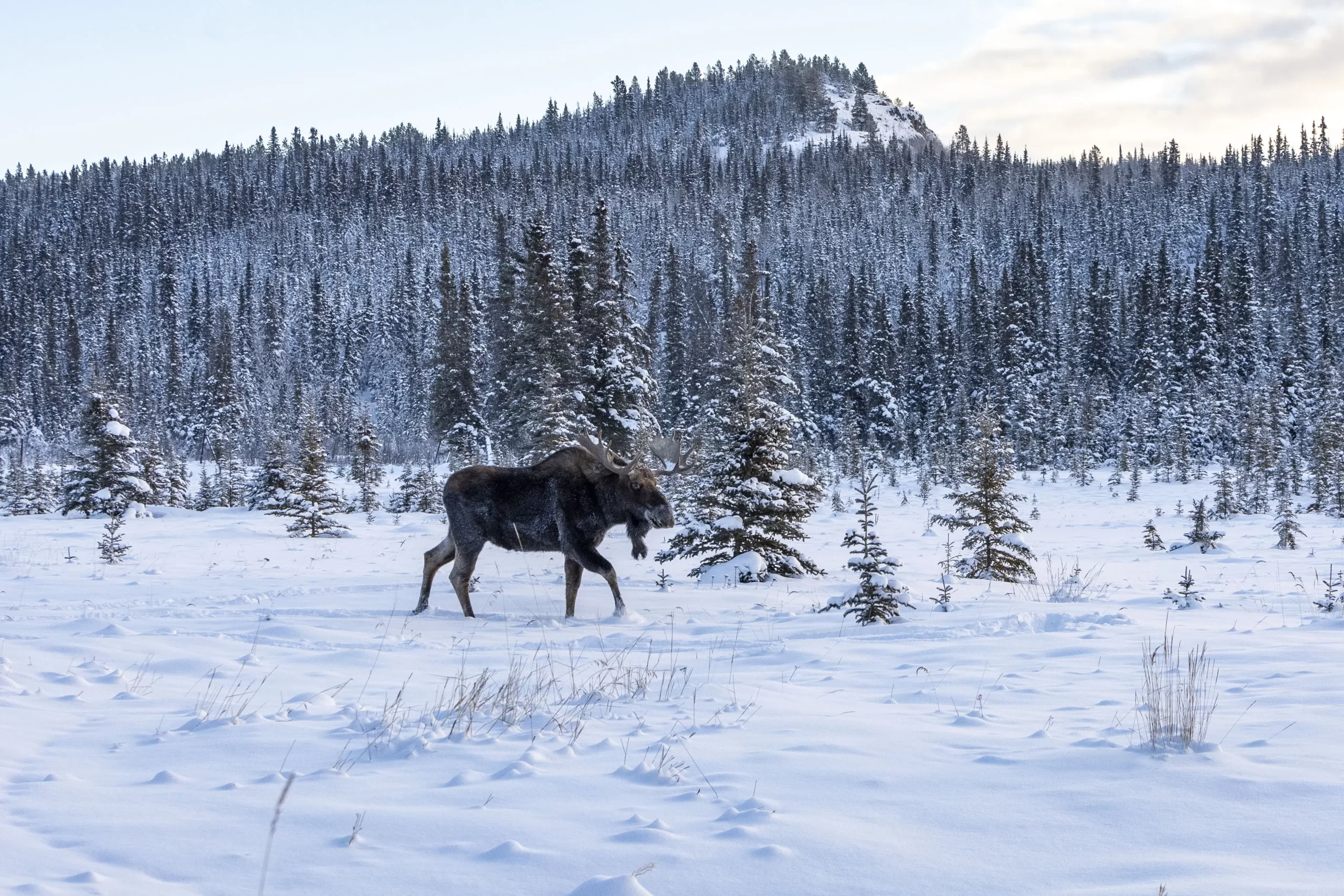
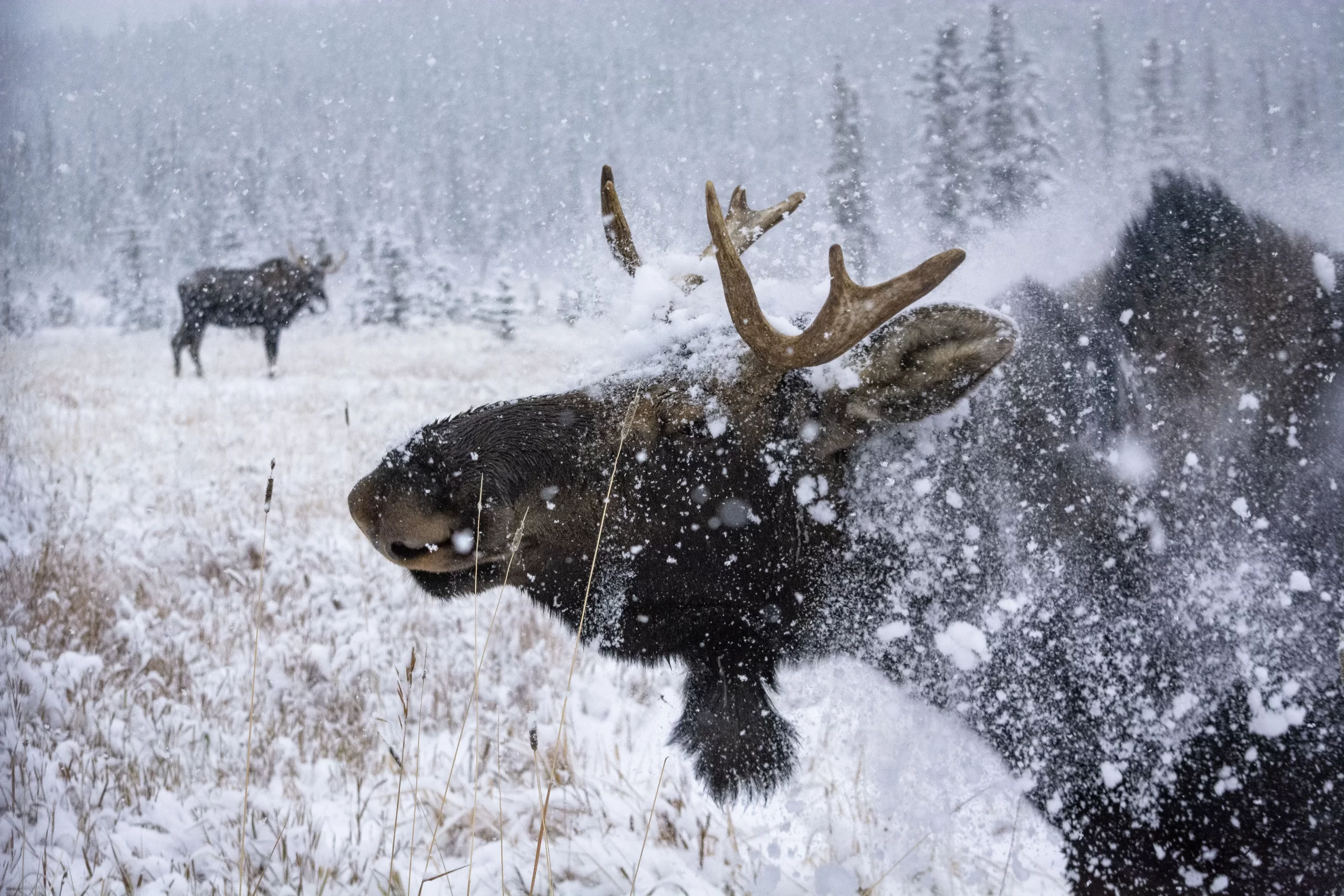
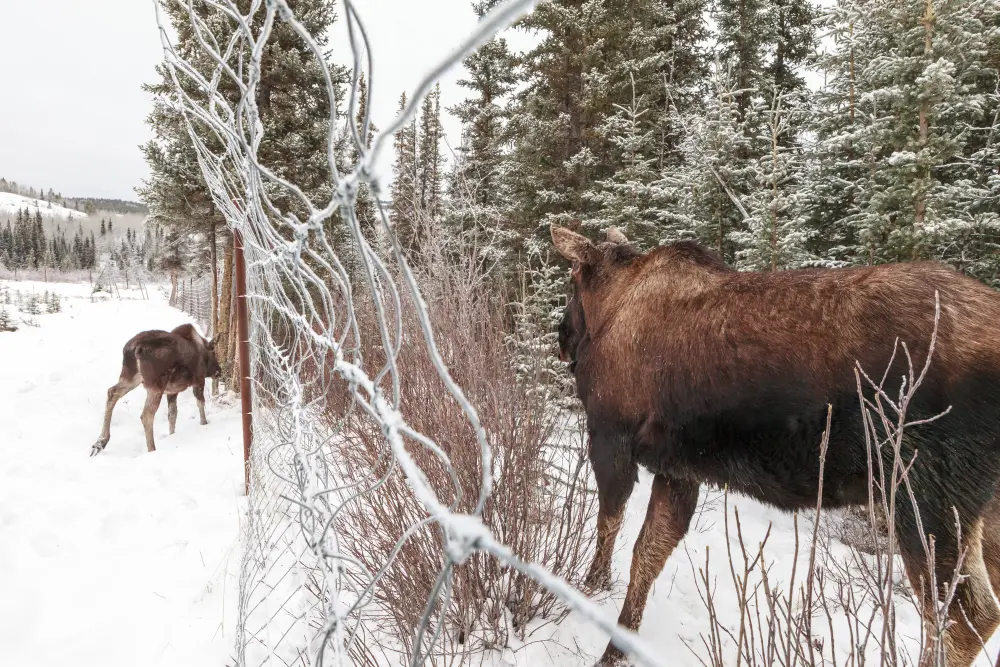
Winter Snow and two moose bull October 2020 29 YWP Lindsay Caskenette

Wrapping It Up: A Love Letter to the Dewlap

So, the next time you visit the Yukon Wildlife Preserve and you catch sight of a moose strolling majestically past, don't just look up at the antlers or marvel at their towering size. Look down (or, more accurately, look to the side) and take a moment to appreciate the dewlap. Despite all the brainpower spent pondering this, no one really knows why moose have dewlaps. Is it a fashion statement? A built-in scarf for chilly mornings? Who knows!
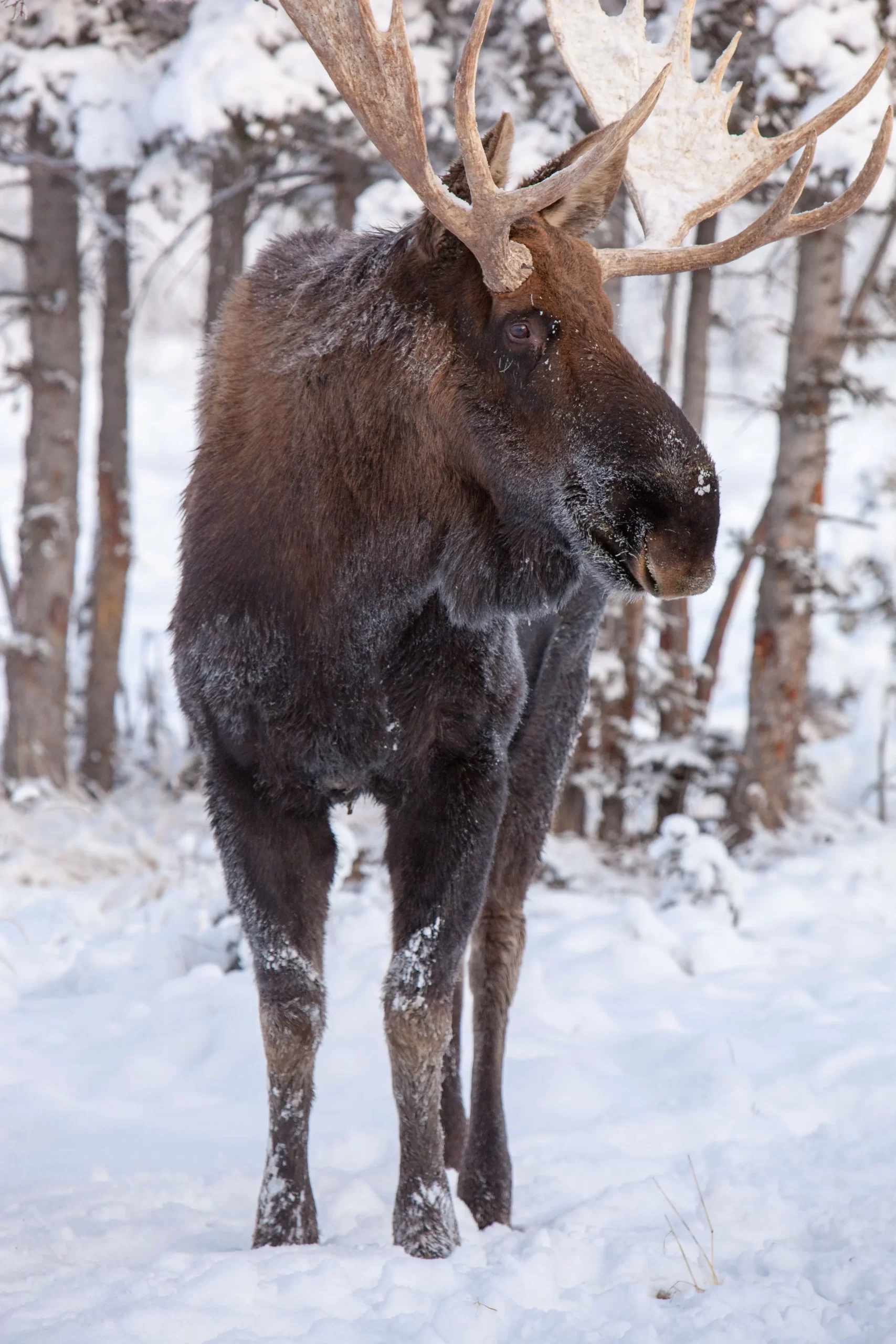
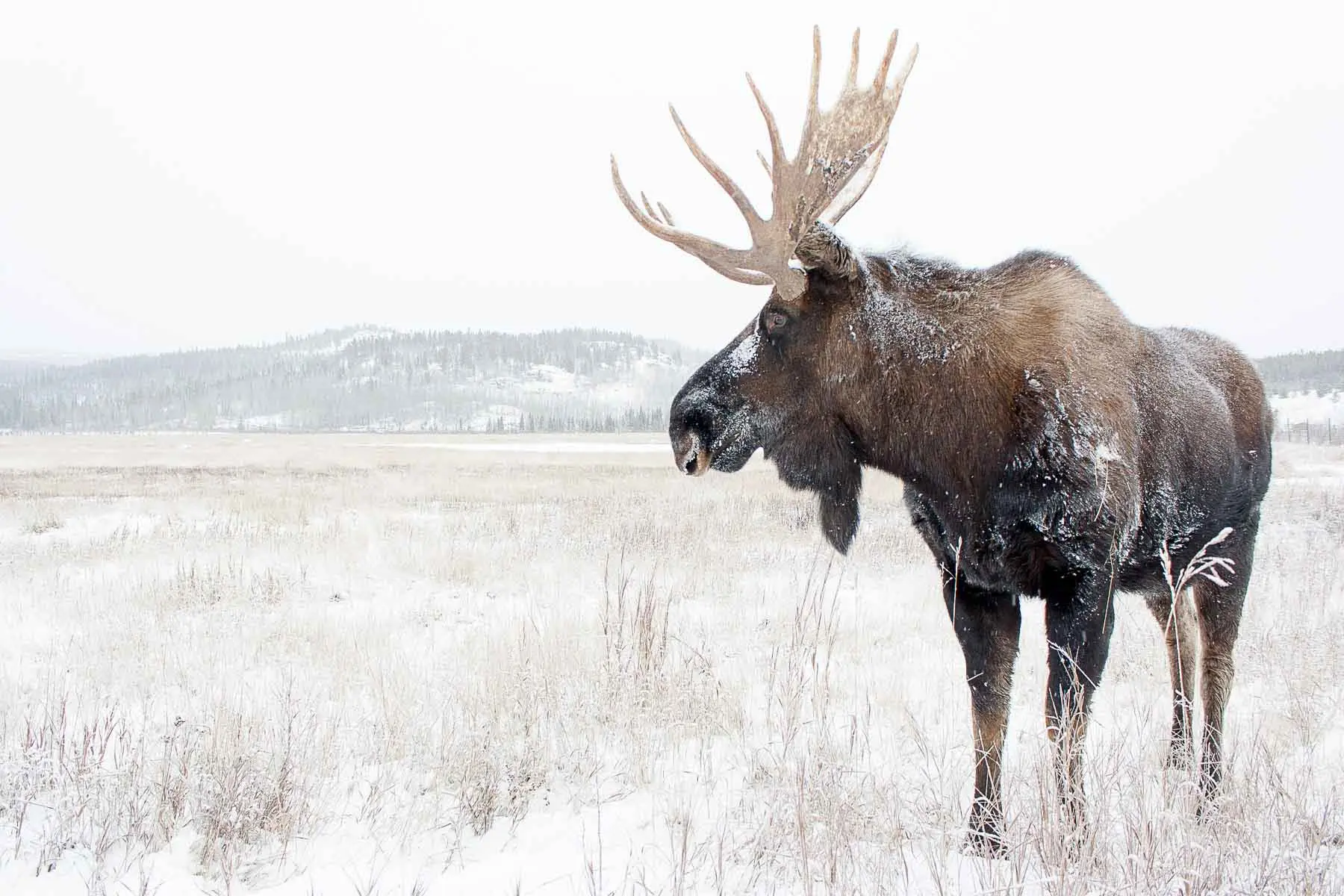
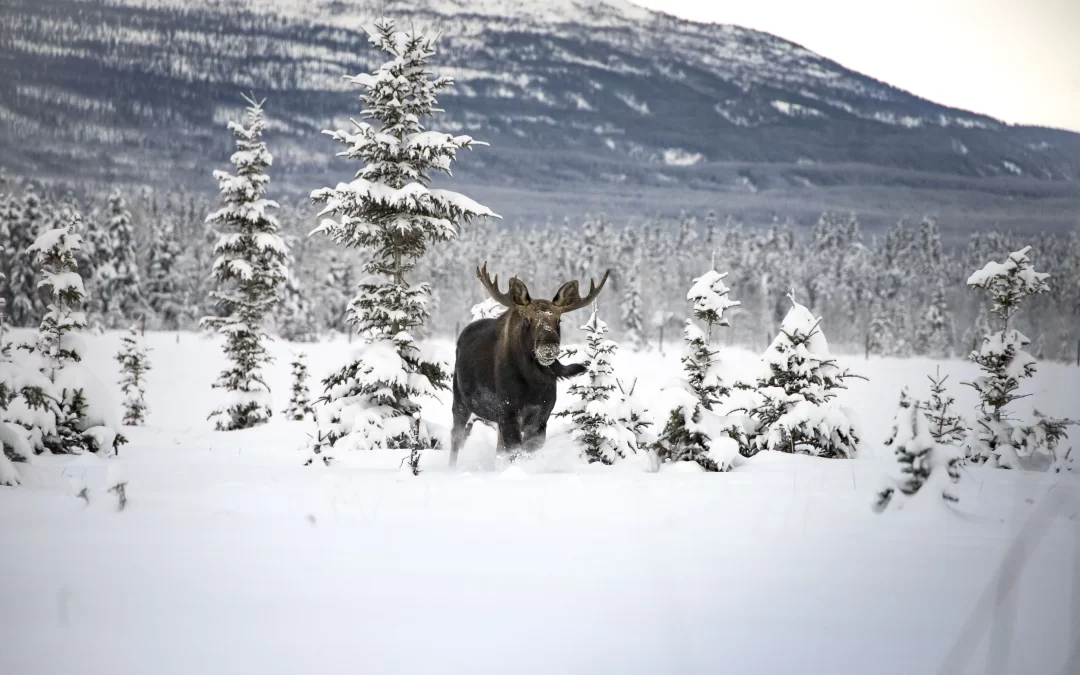
moose in snow . The bull shows off his impressive size, antlers and dewlap. Jake Paleczny.

Since both male and female moose have them and they don't seem to offer any major survival or dating perks, scientists think basically, ungulates got their dewlaps through evolutionary peer pressure, but not the same kind as lizards and birds. While birds and lizards are out there with their flashy, look-at-me neck bling for dating or drama, ungulates might’ve evolved their dewlaps for totally different reasons—like a mysterious club no one’s quite figured out yet. The dewlap might just be a leftover from moose ancestors—like a trendy accessory that’s fallen out of style but still hangs around (sciencey talk calls this a vestigial trait).
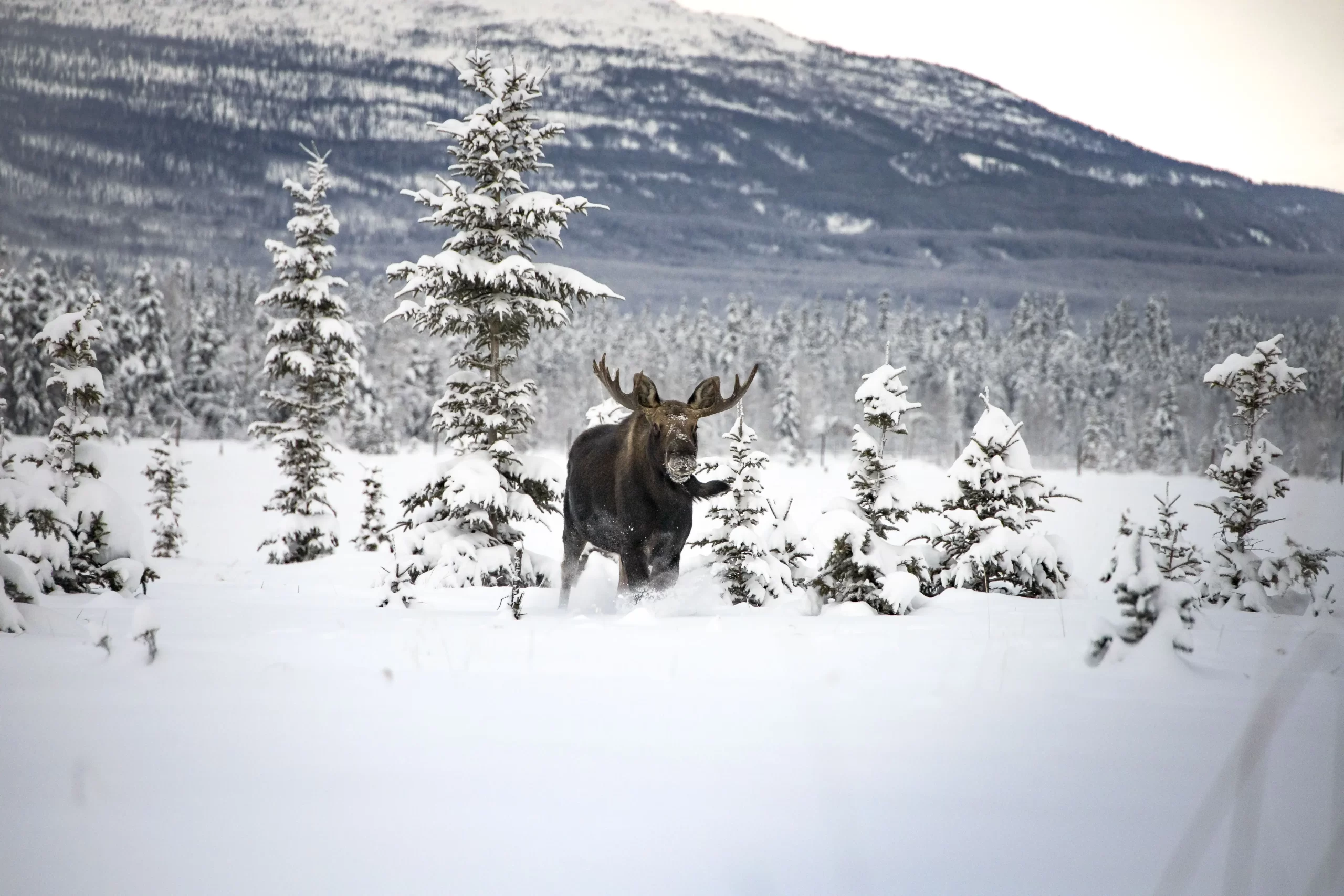
Moose watson Jan 22YWP winter L.Caskenette dewlap swing - would this intimidate or attract you - if of course you were a moose?

In the world of wildlife, the moose's dewlap is mysterious, beautiful, and—if we’re being honest—just a little bit stylish. Who knew that this flappy neck skin would be so fascinating? Certainly not us. But we’re glad we found out. Wait, what exactly did we find out!?

Resources:

Bro-Jørgensen, J. Evolution of the ungulate dewlap: thermoregulation rather than sexual selection or predator deterrence?. Front Zool 13, 33 (2016). https://doi.org/10.1186/s12983-016-0165-x

Baeckens, Simon et al. “The brown anole dewlap revisited: do predation pressure, sexual selection, and species recognition shape among-population signal diversity?.” PeerJ vol. 6 e4722. 8 May. 2018, doi:10.7717/peerj.4722

Jonathan Losos. How Many Times have lizard Dewlaps Evolved? August 12, 2011.

Photo credits: L.Caskenette, J.Benjamine, J.Paleczny, M. Mark., (unless otherwise noted).


Lindsay Caskenette

Lindsay Caskenette

Manager Visitor Services

Lindsay joined the Wildlife Preserve team March 2014. Originally from Ontario, she came to the Yukon in search of new adventures and new career challenges. Lindsay holds a degree in Environmental Studies with honours from Wilfrid Laurier University and brings with her a strong passion for sharing what nature, animals, and the environment can teach us.
867-456-7400
[email protected]

Explore by Category

Explore by Author

Carmacks Juvenile Bald Eagle Recovery

Carmacks Juvenile Bald Eagle Recovery

wildlife

by Lindsay Caskenette | Dec 11, 2024

2.5 minute read - 

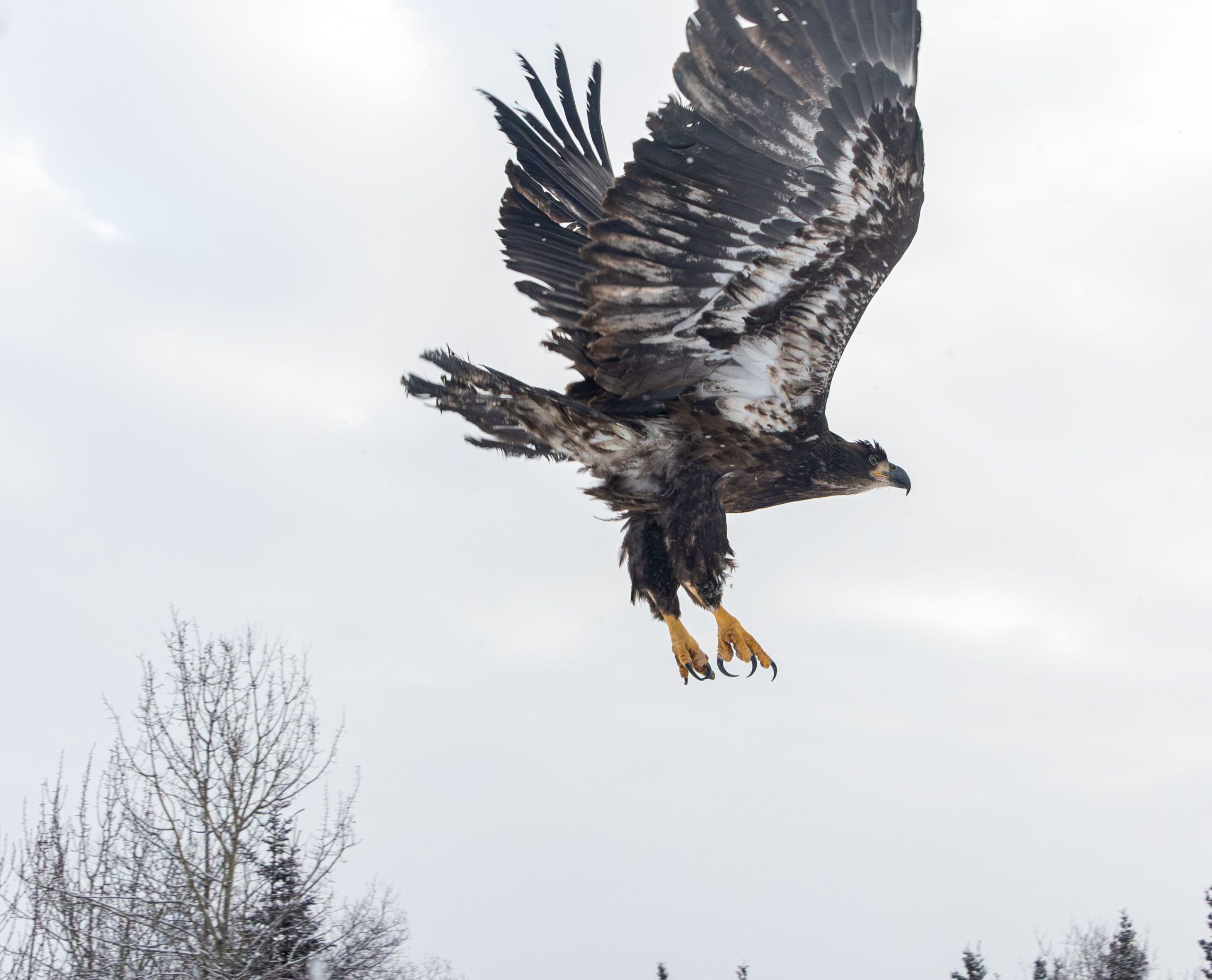
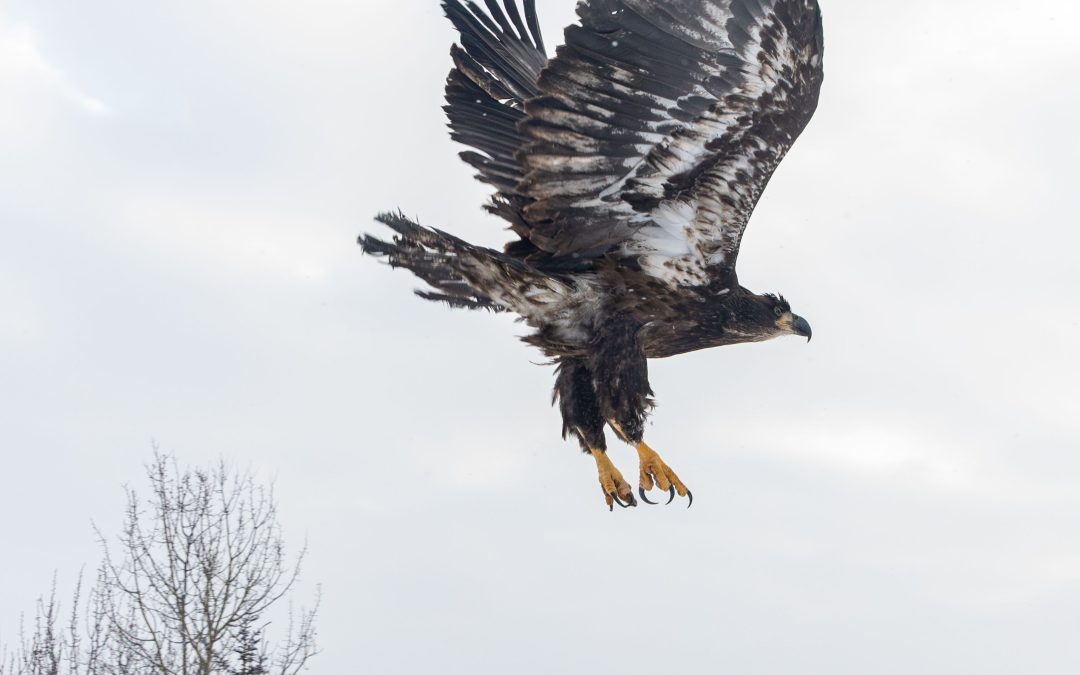
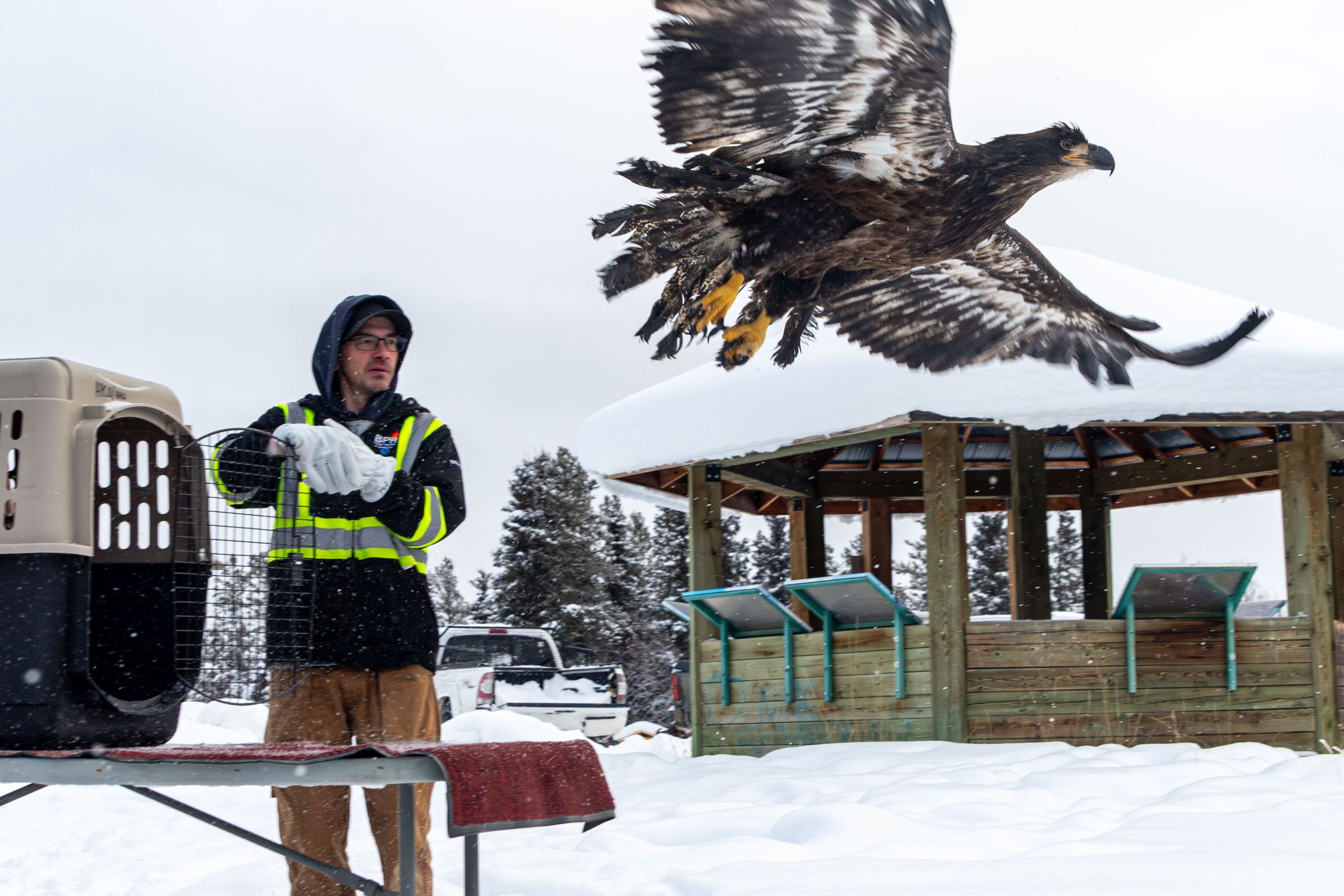
On November 27th another juvenile bald eagle made it way back to the wild, eagerly. A public release occurred with a very small group helping send it off. 

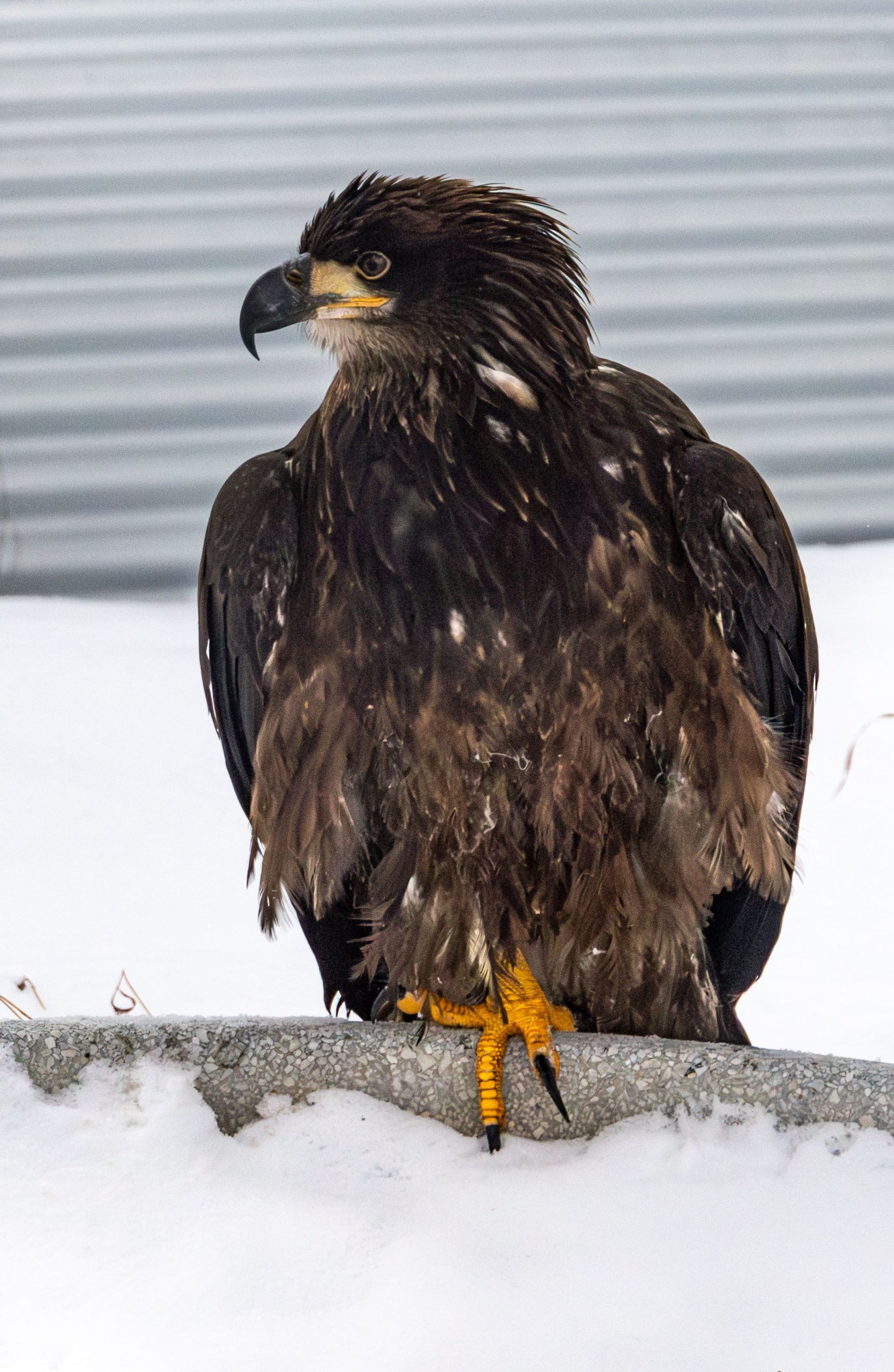
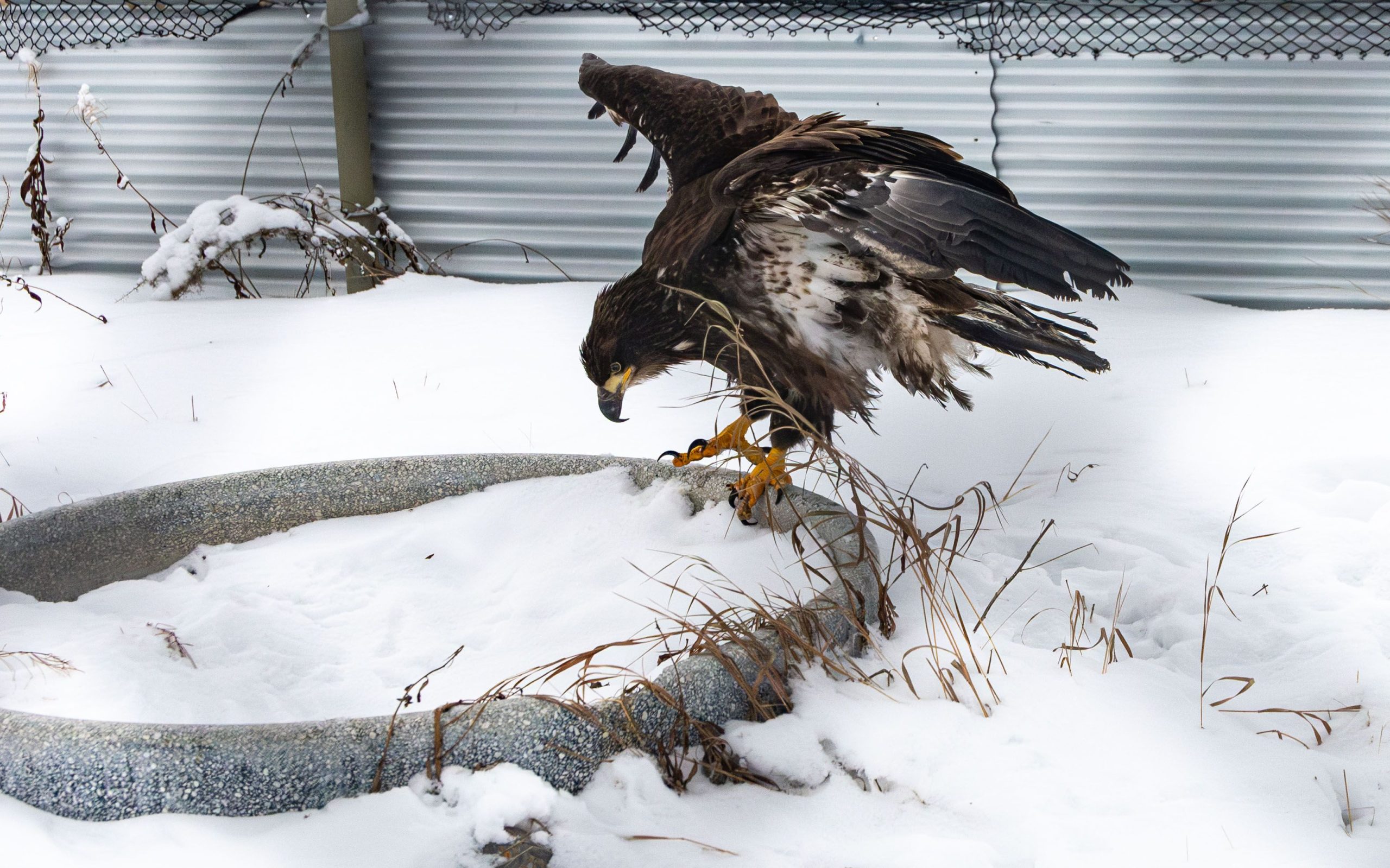
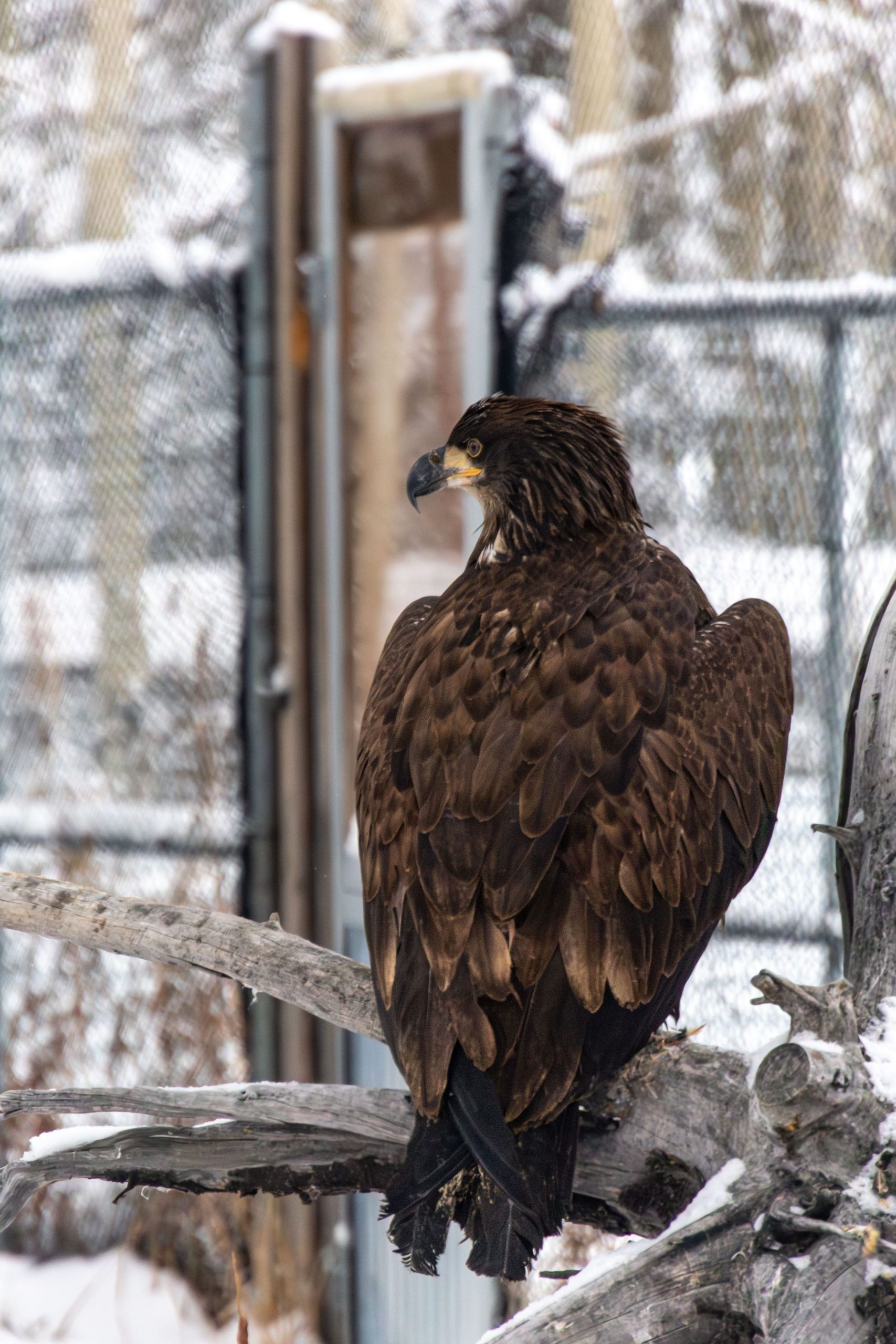
mature bald eagle in rehabilitation

On November 9th, A juvenile bald eagle was found struggling, entangled in barbed wire fencing in Carmacks. It was found thanks to Bob's dogs, who alerted him of the eagle stuck. Bob is a resident of Carmacks and would not have noticed the bird, behind a large shed, had it not been for his dogs. He managed to remove the bird from the fencing. He dropped to the ground and wasn't flying away after free. Bob approached it again and noticed it was shivering and lethargic. 

Old crow bald eagle upon arrival and admittance into the Wildlife Rehabilitation Centre at the Preserve. May 10th. Photo credit L.Caskenette

Bob called local Conservation Officer, Blake Vandecamp who eventually had the bird brought into care of the Wildlife Preserve's Wildlife Rehabilitation Centre. 

Old crow bald eagle upon arrival and admittance into the Wildlife Rehabilitation Centre at the Preserve. May 10th. Photo credit L.Caskenette

The eagle weighed only 4kg and had some minor laceration injury to the wing and some swelling in the feet (likely due to the talons being caught up in the fencing. Like the Dawson City eagle, it was very happy to eat, and successfully captured live quail. Shortly before release the bird weighed 5.2kg. 

The choice to release it more locally was for a few reasons, including it being a juvenile and underweight possibly indicating unsuccessful hunting in the area it was found. While we generally try to rerelease in the location found, during winter we have elected to release where there are other known successful groups of eagles. 

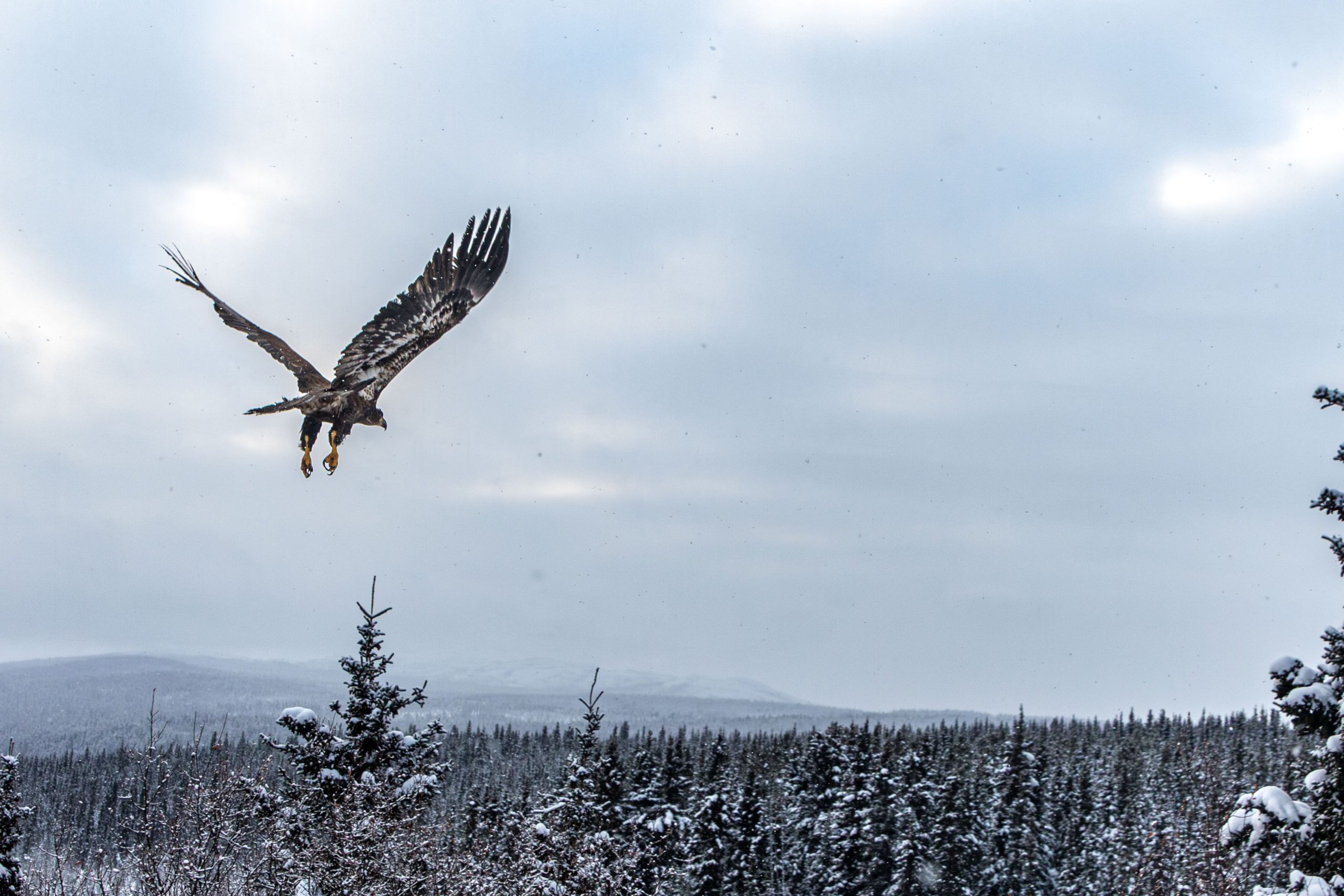
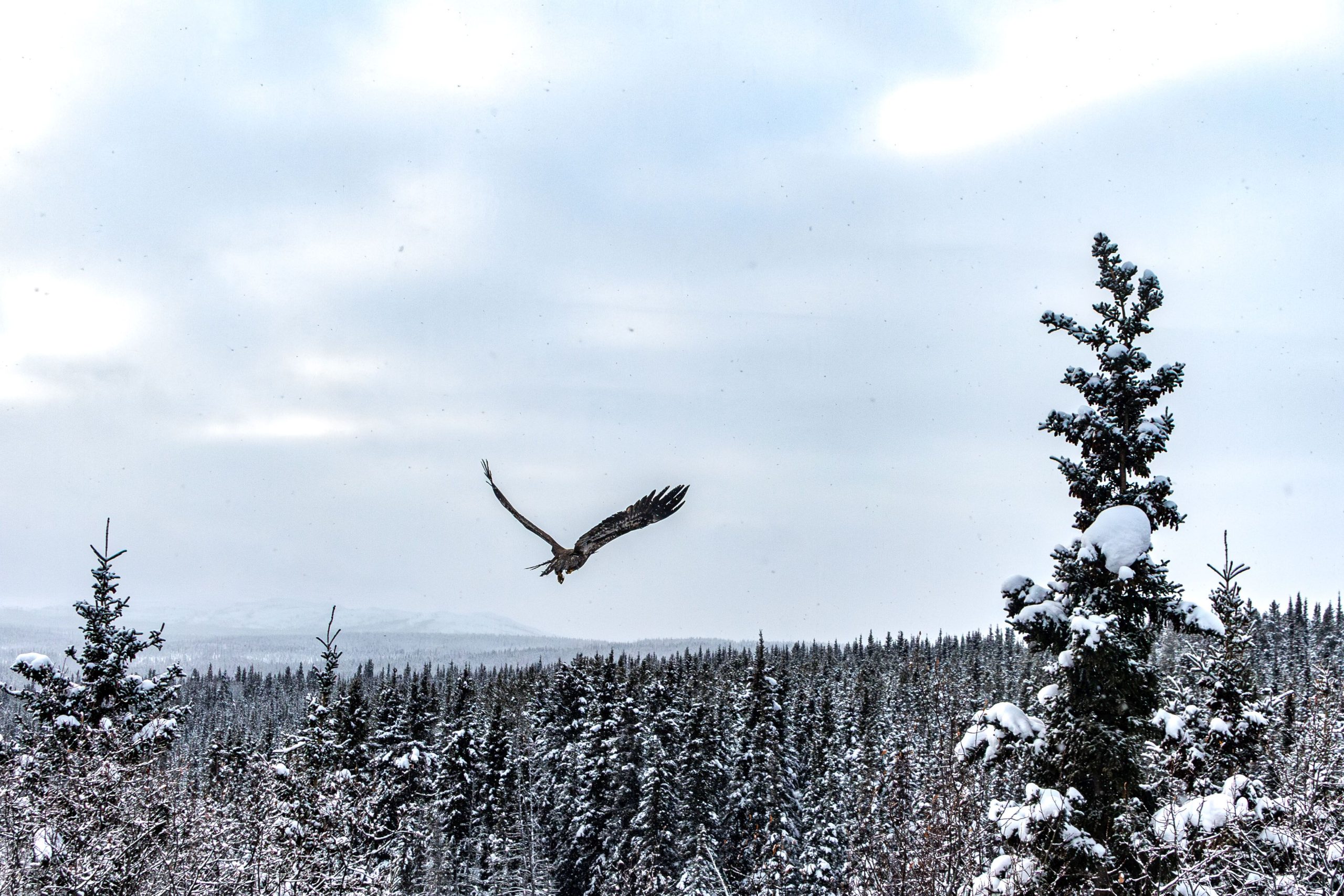
On November 27th, 2024, at 5.2kg in weight and less than a month in our care, the juvenile bald eagle was returned to the wild, at Chasàn Chùa (McIntyre Creek). Further, transport of an eagle long distances can be challenging due to limited personal to arrange this and it can add additional stress to the bird that we want to avoid if possible. While we are helping the animal while in our care, the animal doesn't necessarily see it this way and it can be a stressful time. Just consider how you feel when you're out of your comfort zone, your regular routines interrupted and you're in an unfamiliar place while also  possibly sick or injured. 

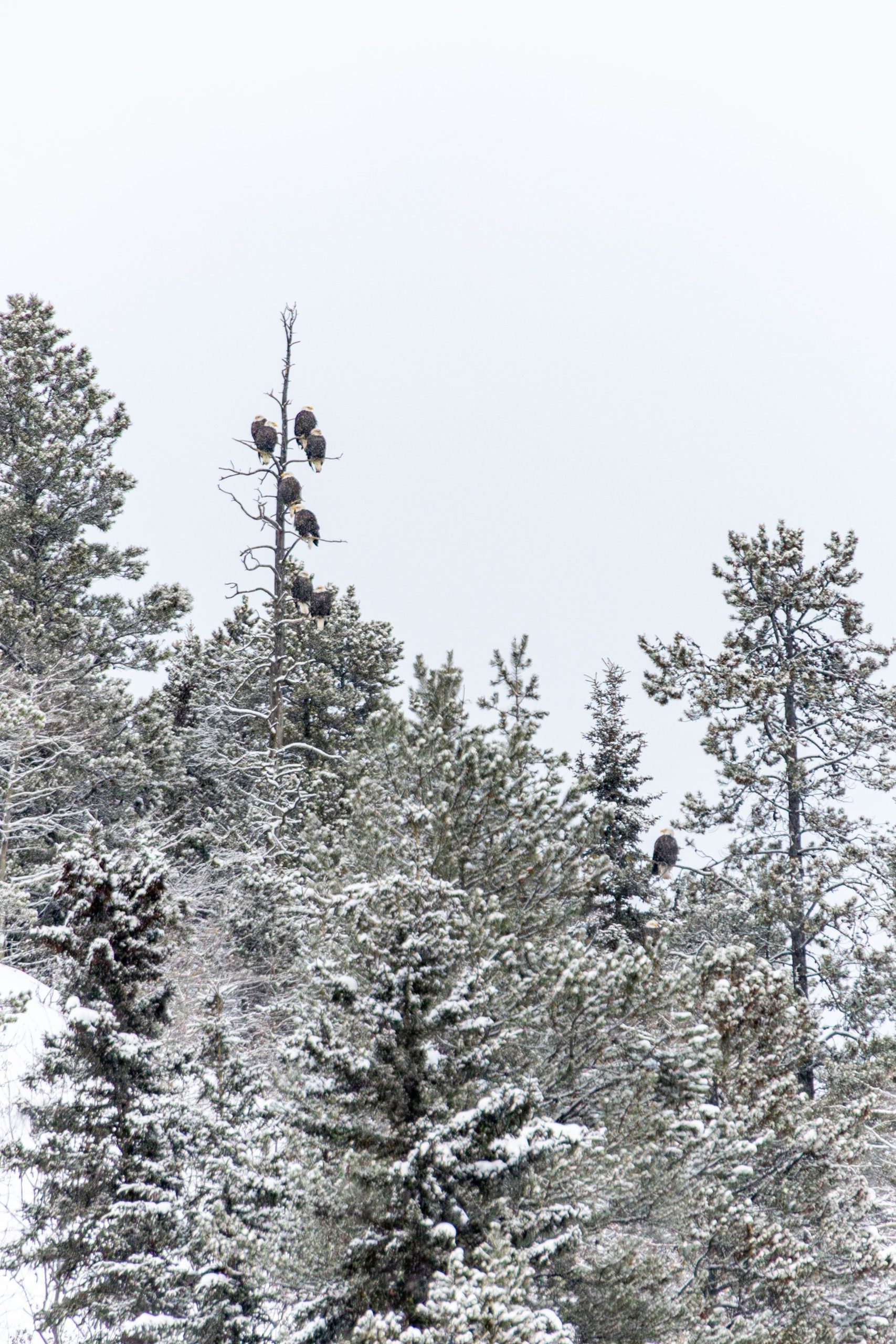
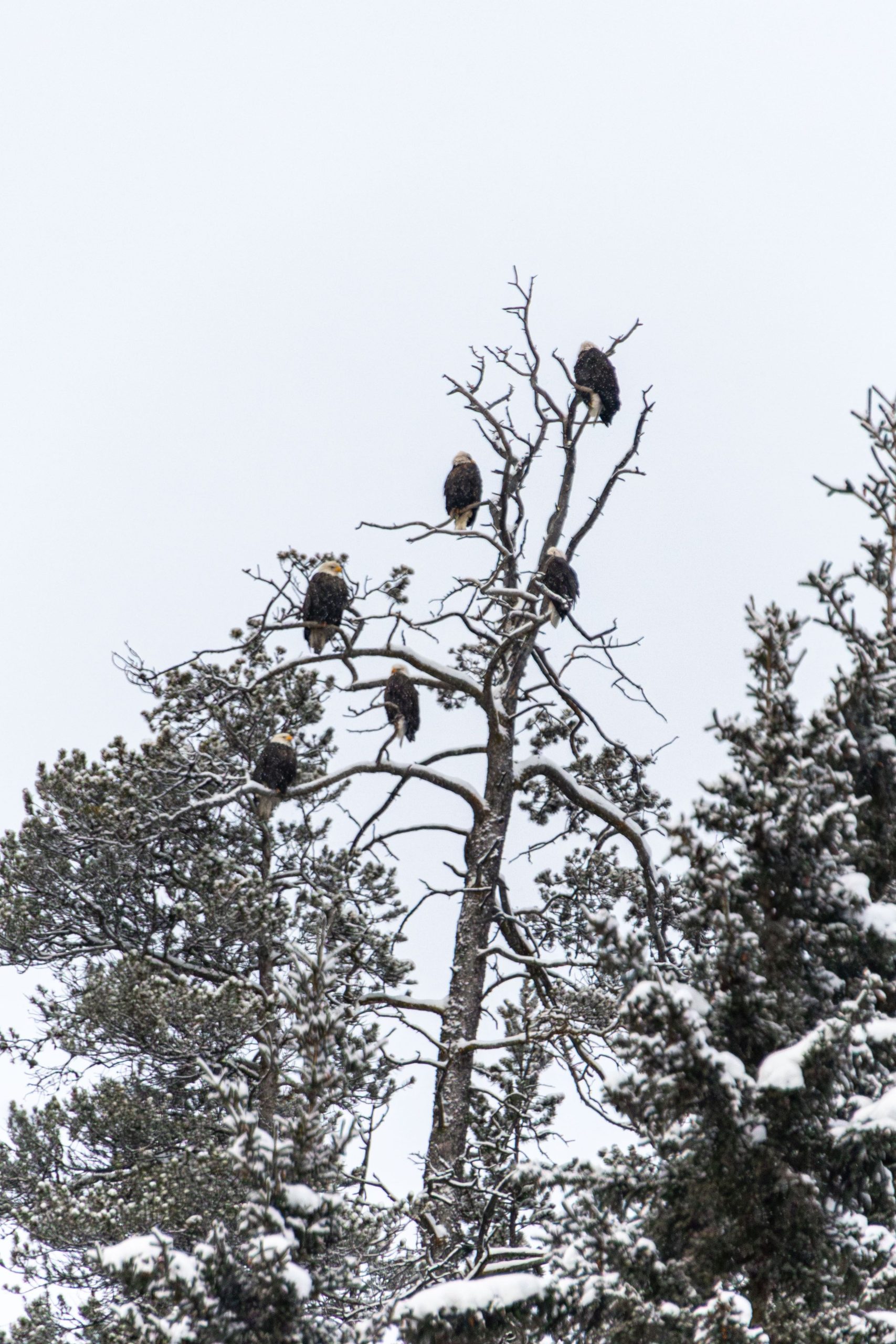
Several groups of bald eagle, mostly mature but a few immature are seen right near the release location. 📸L.Caskenette

Help us get them back on their wings. We could use your help. If you are able to support the care of these two animals, please consider donating. Every contribution makes a difference and as a non-profit charitable organization, you can receive a charitable tax receipt for your support. 

Photo credit: L. Caskenette

Lindsay Caskenette

Lindsay Caskenette

Manager Visitor Services

Lindsay joined the Wildlife Preserve team March 2014. Originally from Ontario, she came to the Yukon in search of new adventures and new career challenges. Lindsay holds a degree in Environmental Studies with honours from Wilfrid Laurier University and brings with her a strong passion for sharing what nature, animals, and the environment can teach us.
867-456-7400
[email protected]

Explore by Category

Explore by Author

Dawson City Bald Eagle

Dawson City Bald Eagle

wildlife

by Lindsay Caskenette | Nov 1, 2024

1 minute read - 

Imagine a bald eagle walking around, it’s like the fierce sky warrior forgot its wings. When it’s on the ground, its swagger is... questionable. Instead of the majestic glide we all picture, it’s more like a grumpy grandpa strutting through the yard, a bit hunched, stepping carefully as if it's got somewhere important to be. It’s as if it’s trying hard to act casual, but can’t quite hide the fact that it’s totally out of its element. You just know it’s thinking, “I’m supposed to be flying right now...”

mature bald eagle in rehabilitation

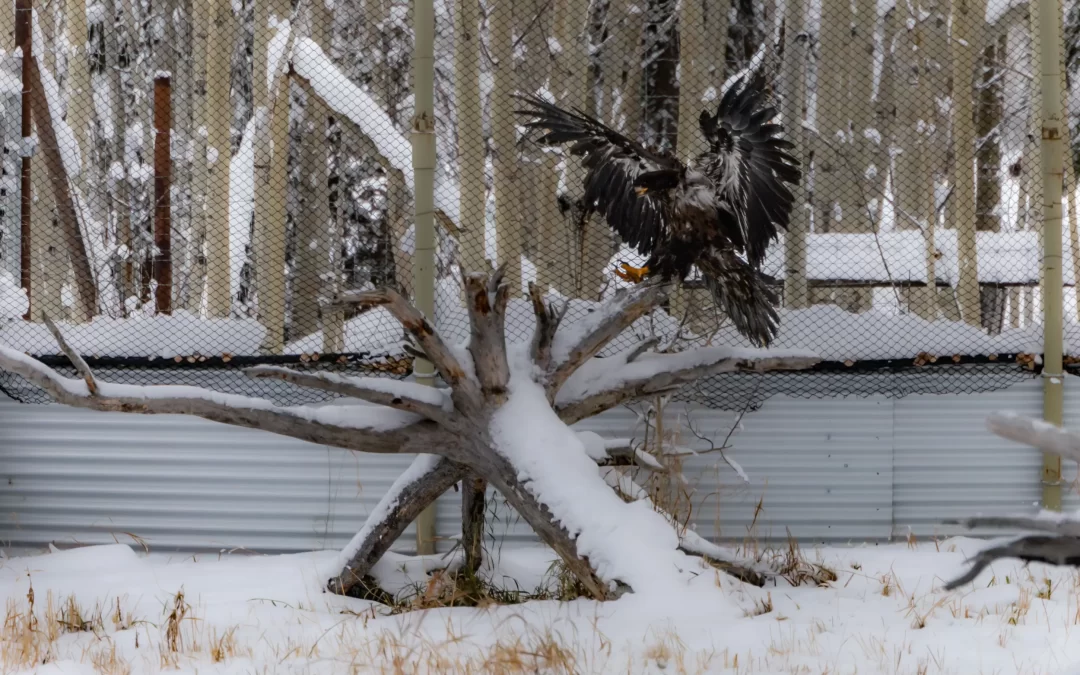
On October 18th, we admitted a juvenile bald eagle into the Wildlife Rehabilitation Centre. The young eagle came all the way from Dawson City. Apparently, this bird was found struttin' its stuff on the main street sidewalk of DC. This bird certainly was supposed to be flying but due to being slightly underweight, 4.4kg, not fueled well and muscles not strong enough, it was flightless. Damage to the tail feathers suggest it spent a fair amount of time, flightless. 

Old crow bald eagle upon arrival and admittance into the Wildlife Rehabilitation Centre at the Preserve. May 10th. Photo credit L.Caskenette

The eagle spent one week inside, eating well and gaining weight. The second week in care and until her release she is working on her flight hours, gaining strength before going back to the wild. 

On November 7th, 2024, at 6kg in weight and less than a month in our care, the juvenile bald eagle was returned to the wild, at Chasàn Chùa (McIntyre Creek). she was not transported back to Dawson City for the release.  This added travel can be stressful and Dawson City in the winter can be a challenging place for a young eagle to succed. 

Help us get them back on their wings. We could use your help. If you are able to support the care of these two animals, please consider donating. Every contribution makes a difference and as a non-profit charitable organization, you can receive a charitable tax receipt for your support. 

Photo credit: L. Caskenette

Lindsay Caskenette

Lindsay Caskenette

Manager Visitor Services

Lindsay joined the Wildlife Preserve team March 2014. Originally from Ontario, she came to the Yukon in search of new adventures and new career challenges. Lindsay holds a degree in Environmental Studies with honours from Wilfrid Laurier University and brings with her a strong passion for sharing what nature, animals, and the environment can teach us.
867-456-7400
[email protected]

Explore by Category

Explore by Author

Breaking Down that Stink

Breaking Down that Stink

wildlife

by Brittney Forsythe | Oct 18, 2024

2 minute read - 

Nestled in the heart of the Takhini River Valley on the traditional territory of the of the Kwanlin Dün First Nation and the Ta'an Kwäch’än Council, is a haven for nature enthusiasts seeking a unique, immersive experience with Yukon’s native flora and fauna. Beyond the breathtaking landscapes and magnificent animal encounters, the Yukon Wildlife Preserve offers a unique opportunity to engage ALL of your senses. 364 days a year (we give the animals Christmas off,) you are invited into a sensory masterpiece. Visitors can witness the magic of nature through sight, sound, touch, and “ewww! What’s that smell!!??”

If you have visited us – especially during freeze up – you may have noticed a pungent odor… a formidable scent, around the preserve. No, that’s not Sex Panther by Odeon - or the outhouse…. It does smell like a bad fart though.

A quote from the movie Anchorman


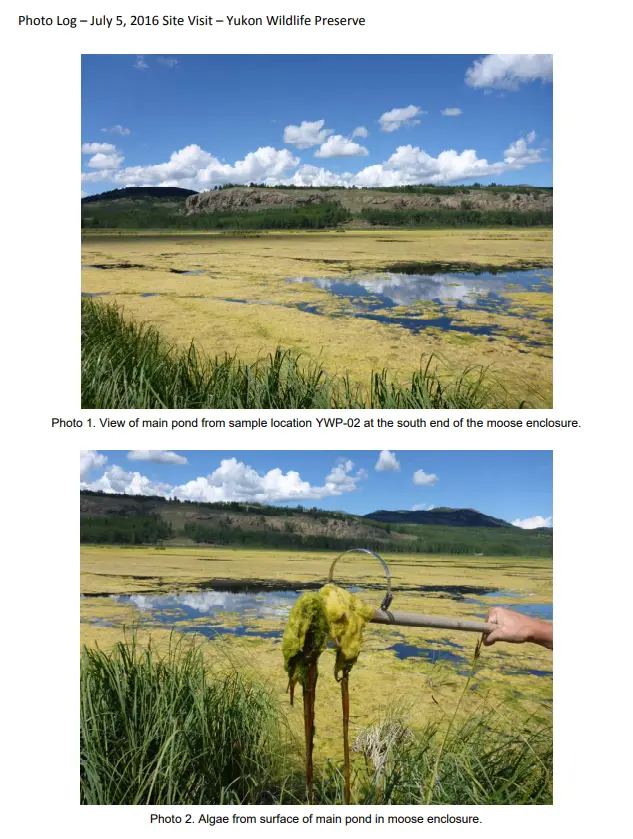
So, what is it? Well back in 2016 there was quite the algae bloom in the moose pond, which prompted a call to the scientists at the YG water department. They came out to investigate and what they found was quite interesting. I’ll admit that I’m no scientist, but I invite you to come along with me, as I do my best to “break this down” - This pun will make sense later...

Algea Bloom in the moose pond. Photo from the July 2016 report by John Minder Water Resource Technologist – Water Quality Crystal Beaudry A/ Water Quality Technologist

High Nutrient Availability with an absence of h2O:

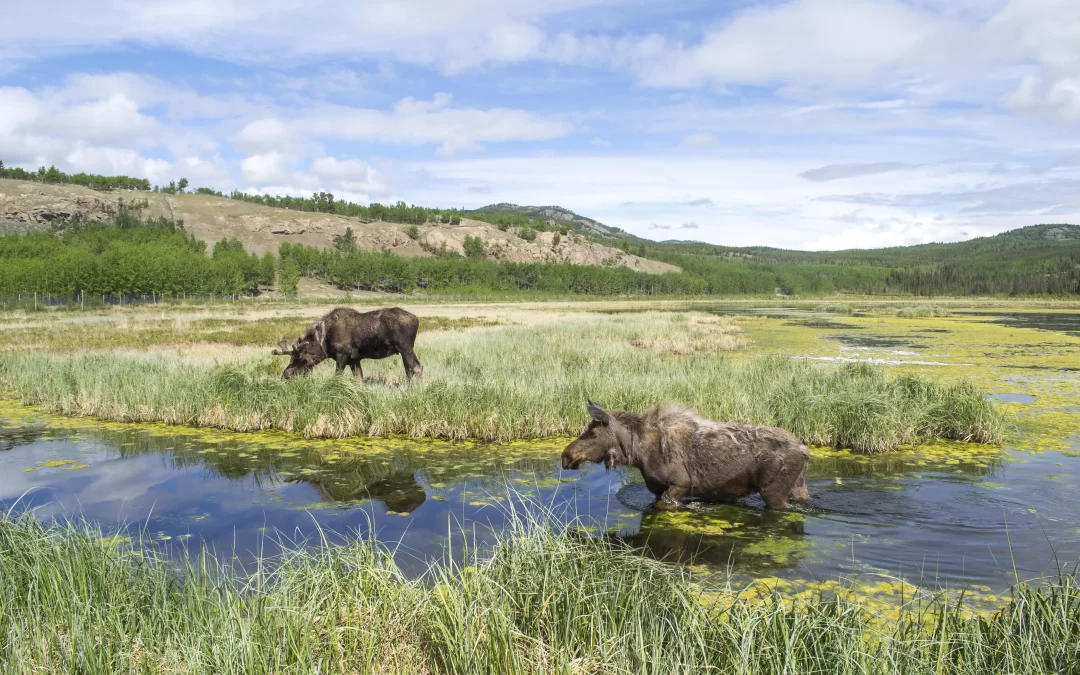
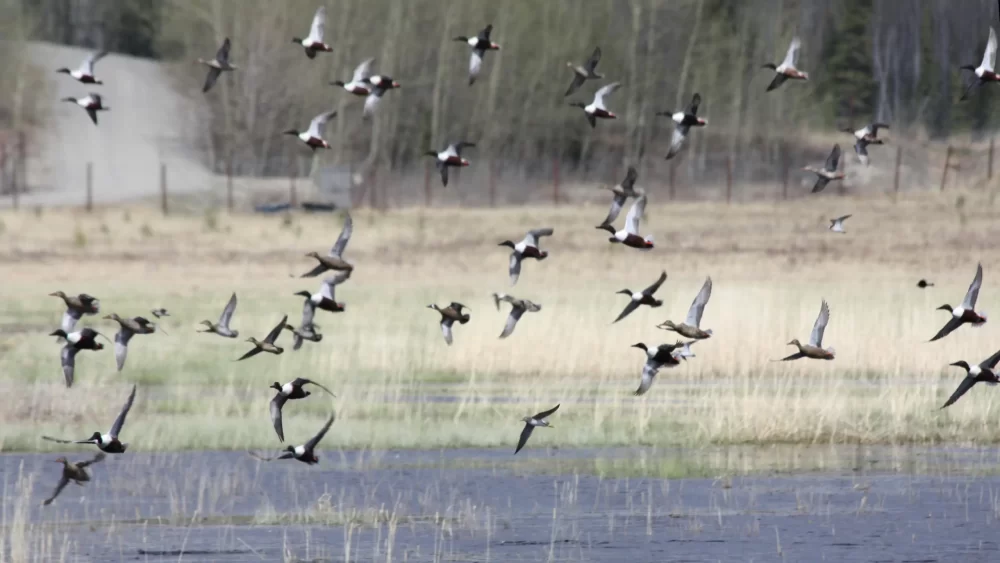
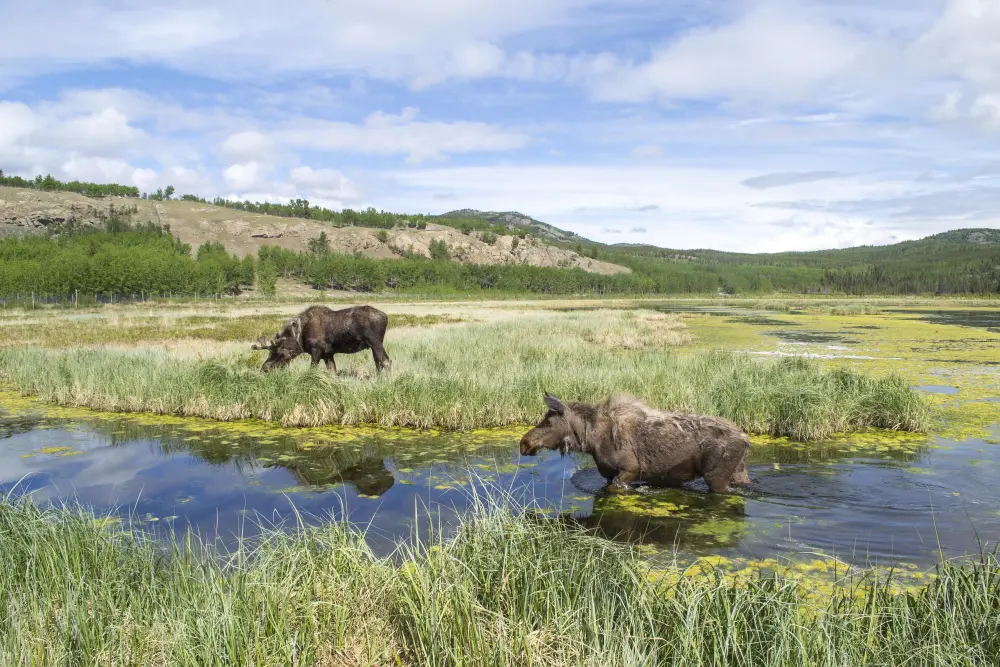
The moose pond at the preserve is a beautiful and diverse habitat. It supports much more than our annual moose swimming competition! Just kidding, although wouldn’t that be an event to witness? My money would be on Watson! Every year, migratory birds, from as far as South America, land on our very special pond. We have counted over 50 different species in the area at the height of spring.

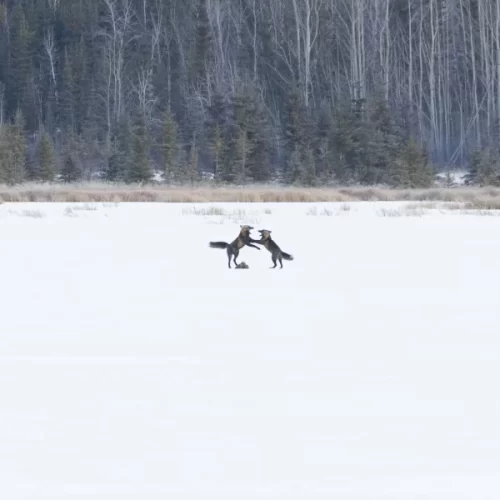
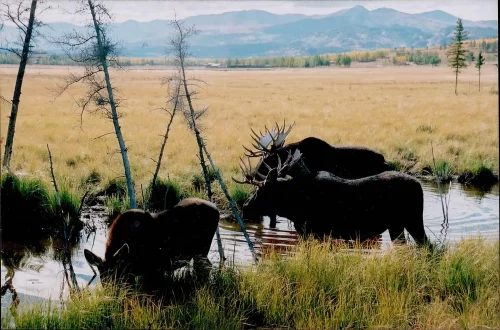
We also have muskrat, who call the pond home. You may have noticed their “push-ups” in winter (they look like a pile of dirt in the middle of the pond.) Our wild fox like to hunt the muskrat and will often use the frozen pond as a playground in the winter, checking each push-up and wrestling in between. Last but certainly not least, we have our Moose! For most of the year Jessie, Watson and its newest inhabitant Jake, reside in the moose habitat - using the pond to cool off in the summer heat and feasting on their favorite snacks that grow under water. So, needless to say, it’s a pretty happening place!

Migratory birds take off over the moose pond

Why is this so important? Well the scientists at YG discovered that the Moose pond exhibits characteristics of Hypereutrophic water, which is a fancy way of saying it's jam packed with nutrients - specifically phosphorus and nitrogen. Where do these nutrients come from? Well, the decay of natural organic matter like plants, moose feed, and … poop! Lots of poop, in the pond. This overabundance of nutrients allows plants and algae that thrive in this kind of environment, to fill the pond. When the plants and algae fill up the pond, oxygen levels deplete and this creates something called anoxic conditions – a crucial factor in the odorous equation.

an·ox·i·a - an absence of oxygen.

So, as the plants and algae take over the pond, there is less space for oxygen and this sets the stage for anoxic processes to begin. These conditions provide an ideal environment for the explosion of sulfate-reducing bacteria and these bacteria really get the party started. They are basically in there, having a massive feast, “breaking down” (remember that pun ) all the plants and poop, which ultimately leads to the production of hydrogen sulfide (H₂S) gas – the infamous "rotten egg" odor.

Sulphur Source:

Now our moose pond is special. Not only does it have the bacteria endlessly feasting on poop, but it also has another smelly source feeding the frenzy. High sulphate levels detected in 2016 pinpoint a substantial sulfur source in the area – we are located on the Hot Springs road after all!

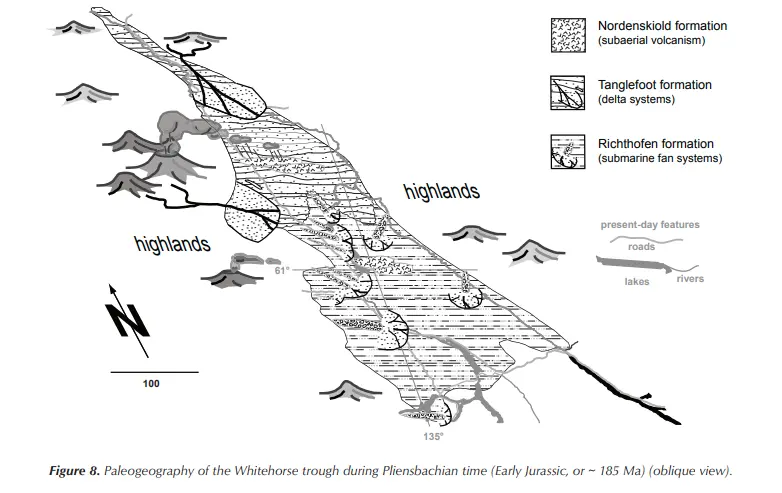
The potential origin of this sulfur lies in the surrounding rocks and beneath our feet.  The Richthofen Formation is a large rock formation, made up of sedimentary rock (think sandstone, limestone & shale) that was formed in the early Jurassic period. That’s around 200 million years ago! Sedimentary rock often starts as sediments carried in rivers and deposited in lakes and oceans. Eventually this sediment settled, the water dried up and it all became cemented to form rock.

Migratory birds take off over the moose pond

There is also groundwater and a local aquifer under our feet. As the ground water from rain, and spring melt flows over the mountains, into the valleys, into the ground and eventually to the aquifer, it slowly dissolves the sedimentary rock that was deposited here those millions of years ago. In this case, it's dissolving a lot of shale. As the water breaks down the shale, it actually causes a similar reaction as the pond, where sulphates are again the star. And what happens when the sulphates are the main course at the party? Anoxic conditions and fuel for H₂S-generating bacteria. AKA - Stink Bomb x2!

The Freeze-Up Factor:

Now another interesting factor here, are the seasons. Some parts of the year just stink more than others and freeze-up is generally the worst. The freeze-up of the ground, before the pond water, may hold the key to the intensified scent during this period. Normally, H₂S contained in groundwater would degas along its flowy journey. However, during freeze-up, the gas becomes trapped in the frozen ground. So instead of flowing along, this causes the gas to migrate up to the open water and makes an extra special smell around certain parts of the pond – this is noted mostly where the pond flows out and under the road, at the crossroads. This spot is always the last to freeze, therefore it offers a way out for the trapped gasses, concentrating the smell.

Conclusion:

When you combine low oxygen, nutrient abundance, water and 200-million-year-old rocks, we solve the great mystery of “What’s that smell??” at the Yukon Wildlife Preserve. So, you can stop side eyeing the other guests in your tour group. It's not the result of last night's taco Tuesday! Just nature being neat in all its complicated intertwined beauty!

This blog is my interperatation of the Monitoring Report – Yukon Wildlife Preserve Algae Bloom from 2016 conducted by Yukon Department of Environment Water Resources Branch Water Quality Section Prepared by: John Minder Water Resource Technologist – Water Quality & Crystal Beaudry A/ Water Quality Technologist

Explore by Category

Explore by Author

JB the Moose

JB the Moose

wildlife

by Lindsay Caskenette | Aug 23, 2024

6 minute read

On August 15th 2024 the Preserve's Animal Care team with the support of one of our veterinarians', Dr. Julianna Campbell made the difficult decision to say goodbye to JB the moose. Her condition had declined rapidly over the last 6 weeks when our team noticed she was starting to look thin. She developed diarrhea which dramatically impacted her body condition. She had lost a significant amount of weight (she was estimated to be 200-300 lbs under her normal weight). Unfortunately in that time, physical exams and fecal / blood tests did not reveal the cause. Nor did she respond to attempted treatments. Despite enthusiastically eating browse, our Animal Care Team was seeing her increasingly displaying signs of distress or pain. She also now lacked the body condition to handle colder winter temperatures (and now the ability to regain the necessary body condition in the next couple of months). In order to mitigate her suffering we made the decision to euthanize her.

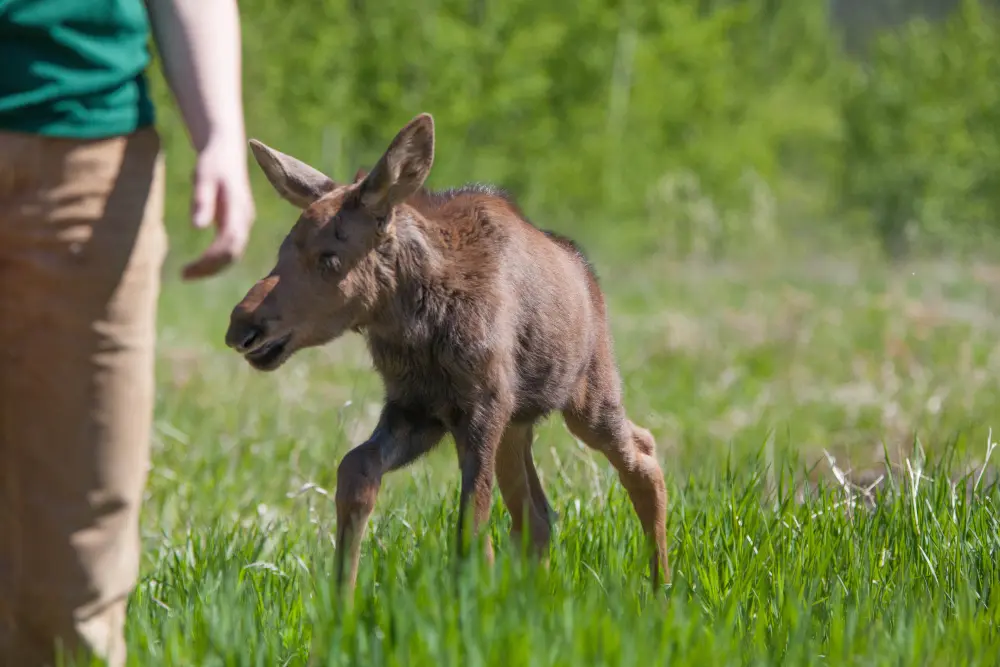
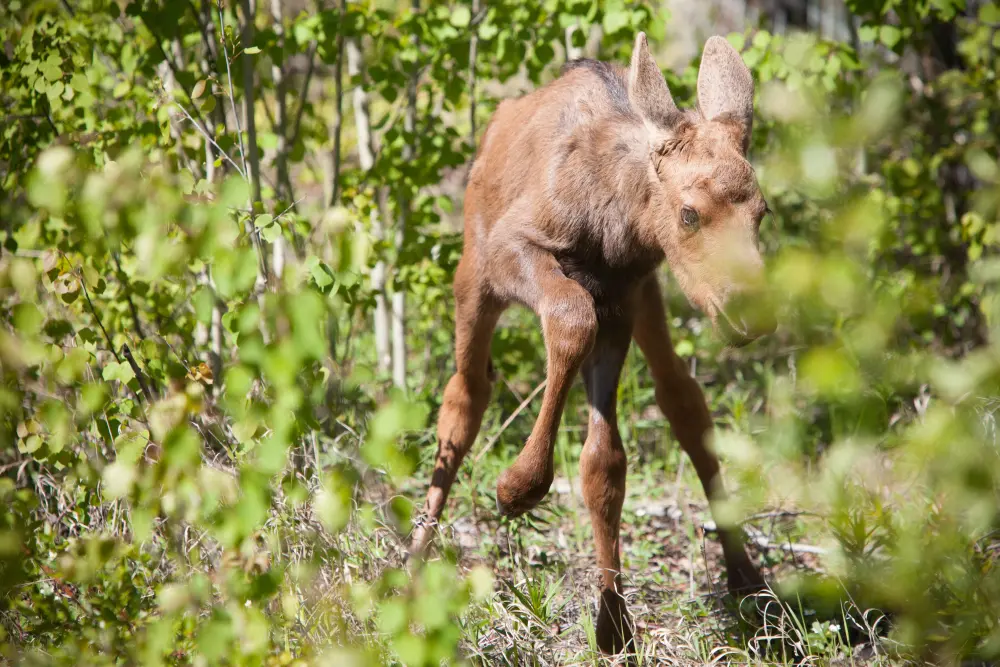
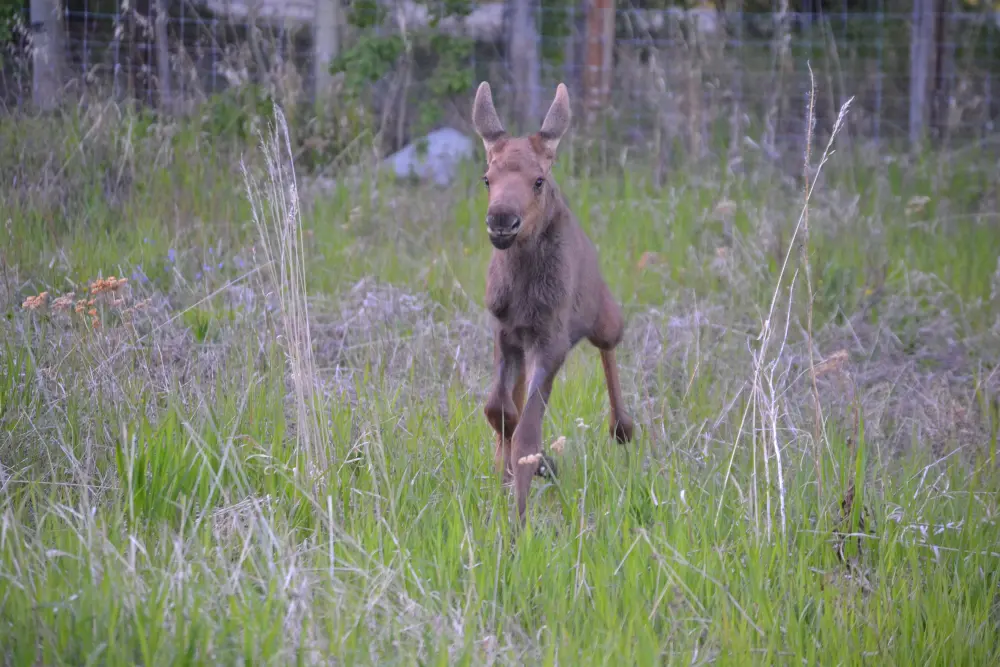
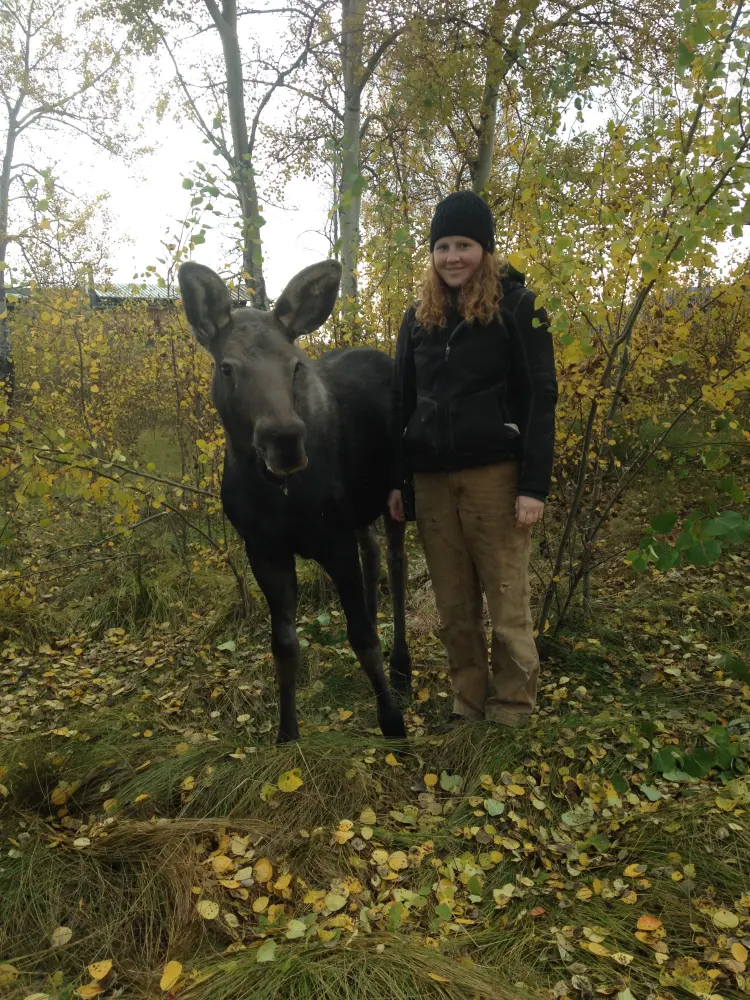
JB- Moose First Day May 26th, 2014 - Justine Benjamin

JB the moose. Summer 2024. Photo credit: Melissa Mark

The morning of the 15th, after she was immobilized the euthanizing drugs were administered and she passed away quickly and easily. Our Animal Care Team conducted a necropsy which includes a physical exam of the internal body systems as well as taking a series of tissue samples that will be sent out for testing. The goal is to understand the root cause of her sudden decline in health. Very preliminary necropsy results show hemorrhaging / ulcers in one of her stomachs and intestines, but understanding why will be more challenging. Once we have more information and a better understanding of what happened, we'll share more information. Testing of samples can take several weeks, so we won't know right away.

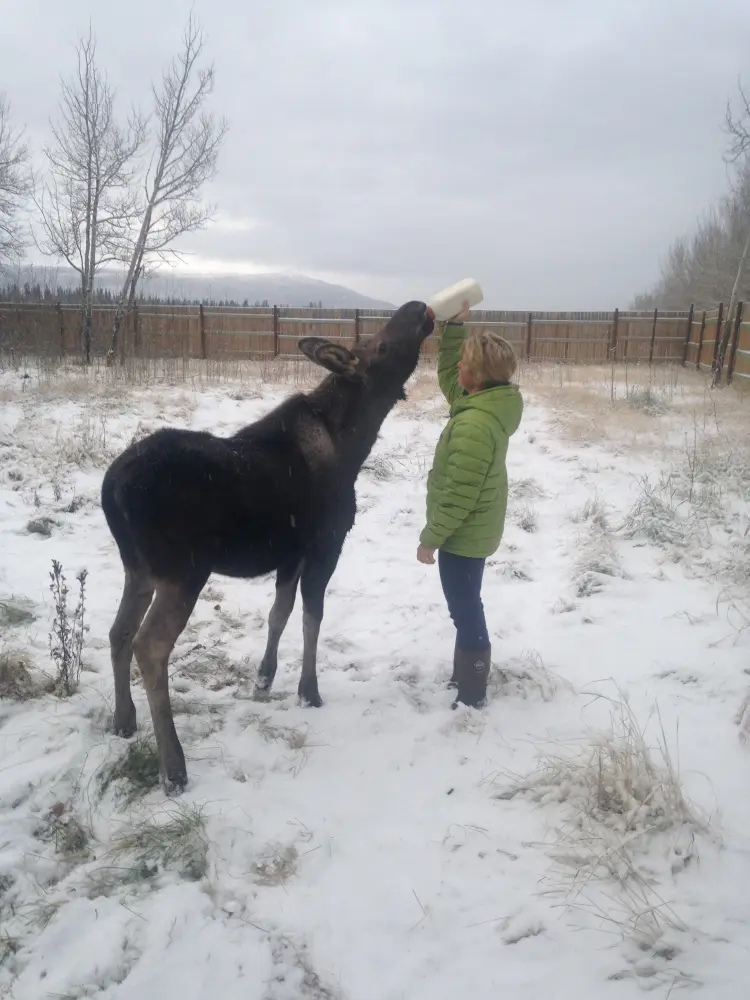
female, moose, snow, YWP - Whitehorse - Yukon JB the rehabilitated moose. Jake Paleczny

JB the moose. Winter 2016. Photo credit: Jake Paleczny

JB was well known to many visitors over the years. She was generally calm mannered and smaller than the other female moose, Jesse, who was 2 years younger than JB. Jesse has been known to have a lot more attitude and dominant behaviour.

JB- Moose First Day May 26th, 2014 - Justine Benjamin

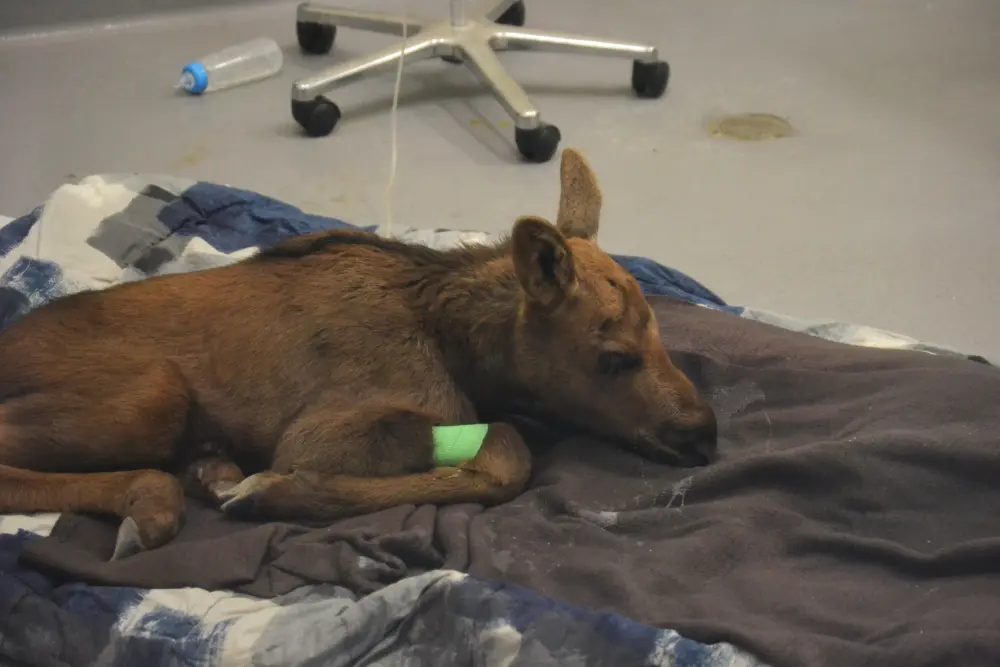
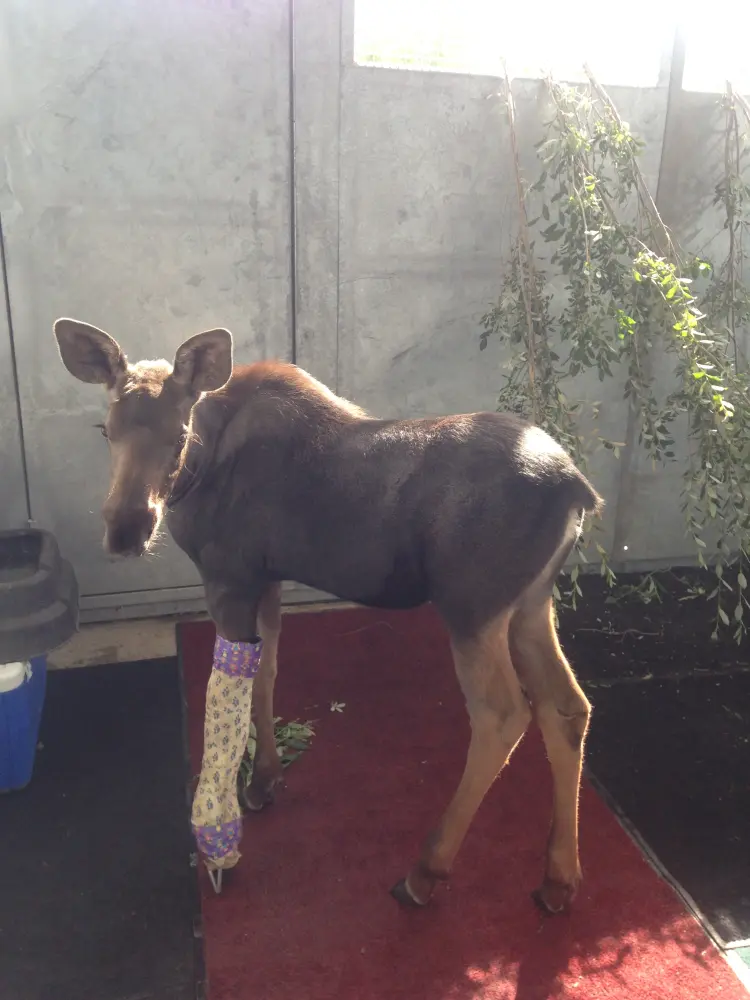
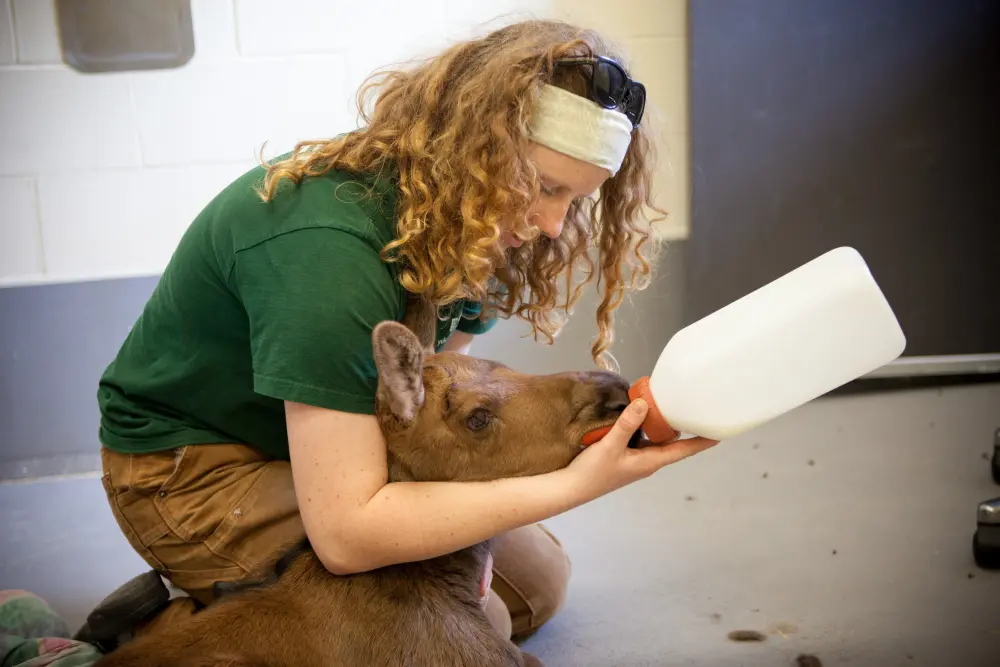
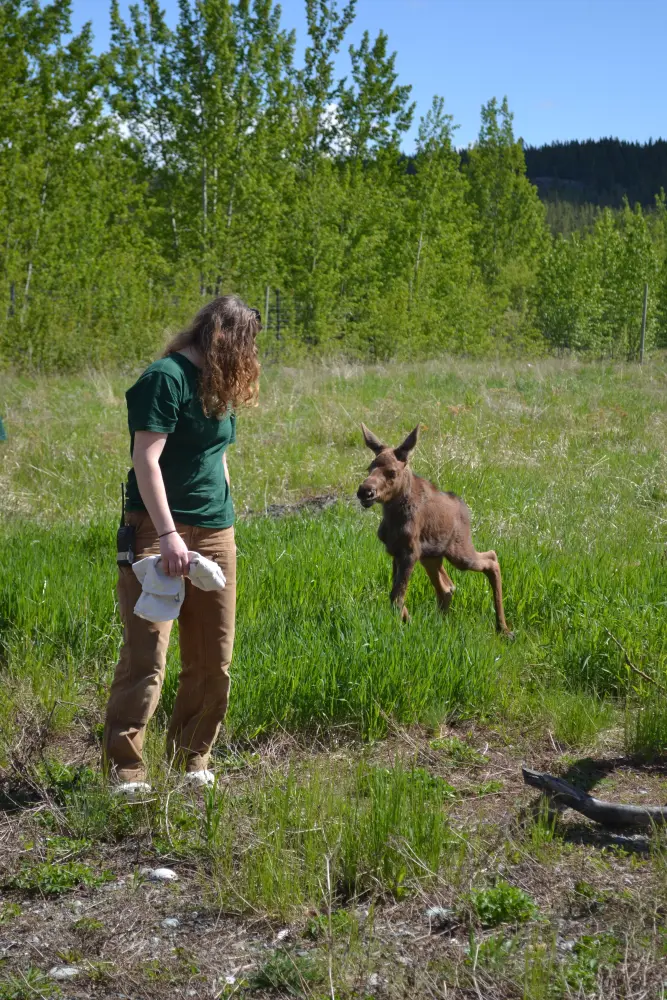
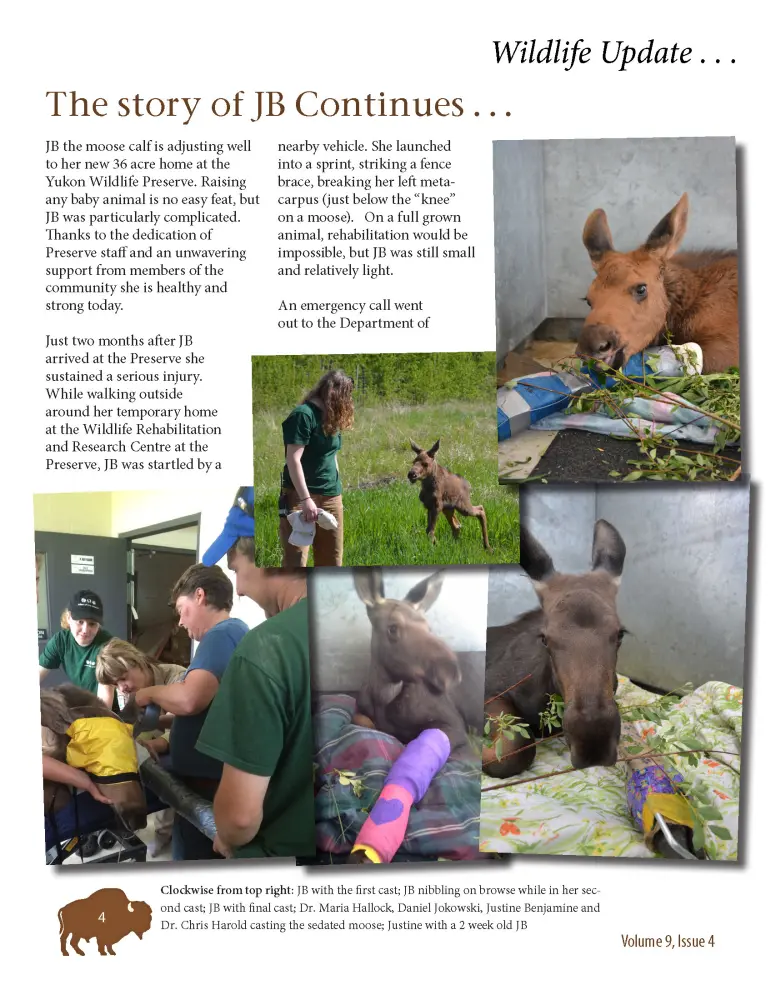
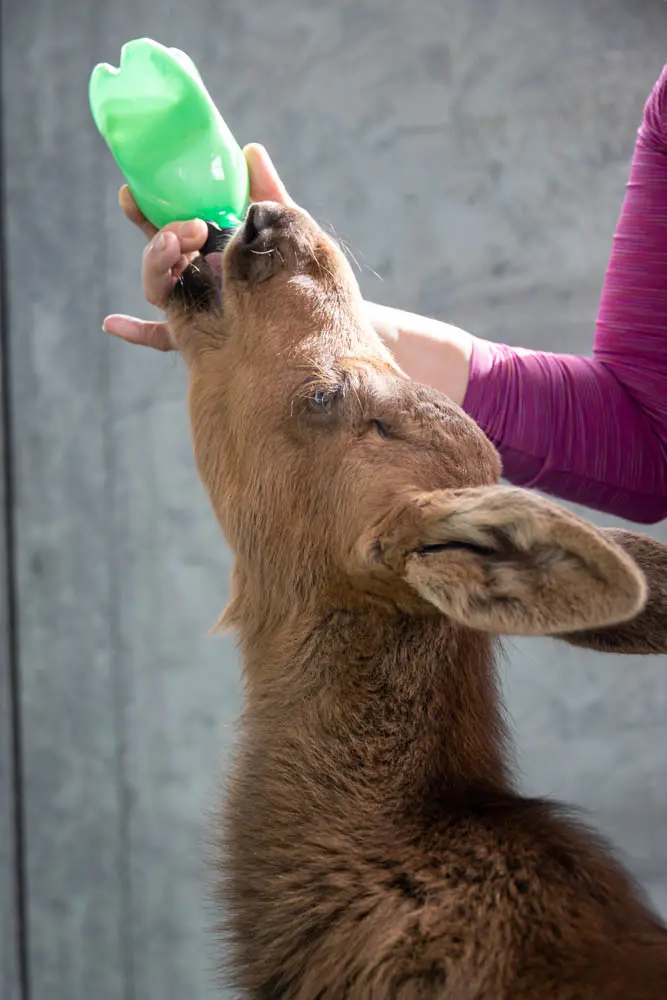
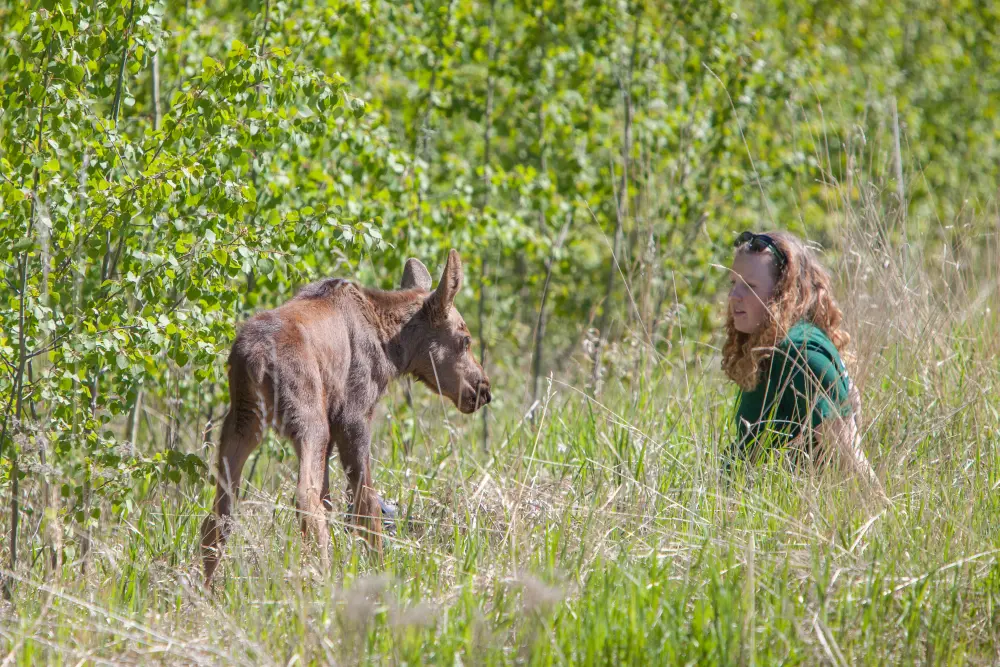
JB arrived as an orphaned moose in spring 2014. Orphaned moose are notoriously difficult to hand raise and we hadn't received an orphaned moose in many, many years. Under Dr. Maria Hallock, the Animal Care Team threw themselves at the situation - feeding every 3 hours at first, spending nights with her, etc.

JB- Moose First Day May 26th, 2014 - Justine Benjamin

JB the moose First Day. She arrived May 26th, 2014. Photo credit: Justine Benjamin

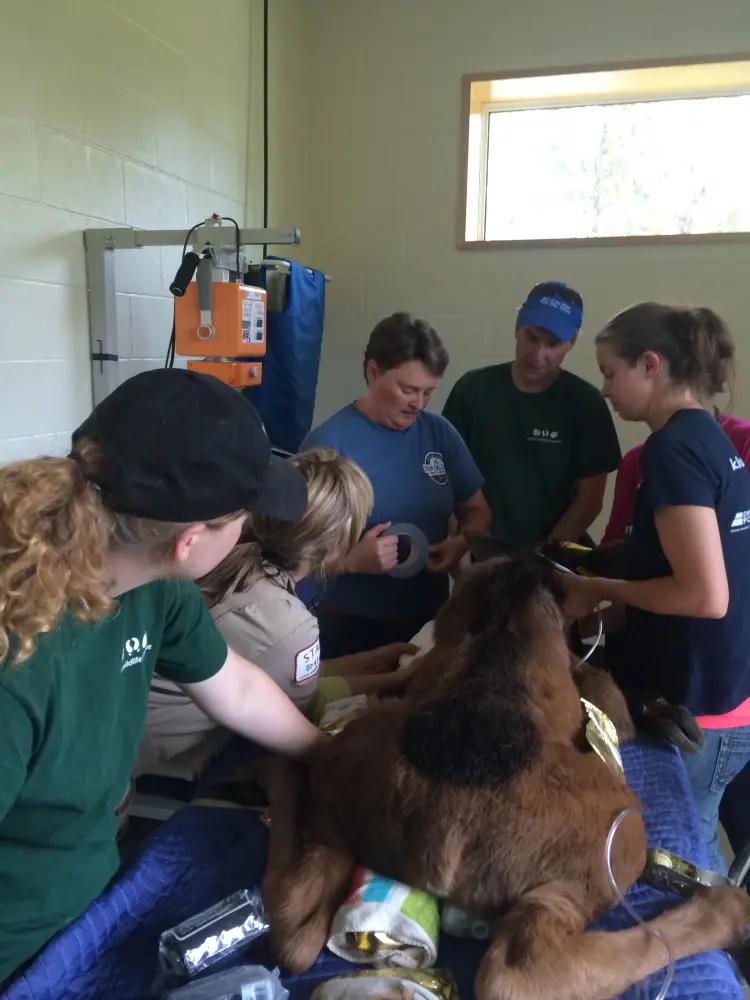
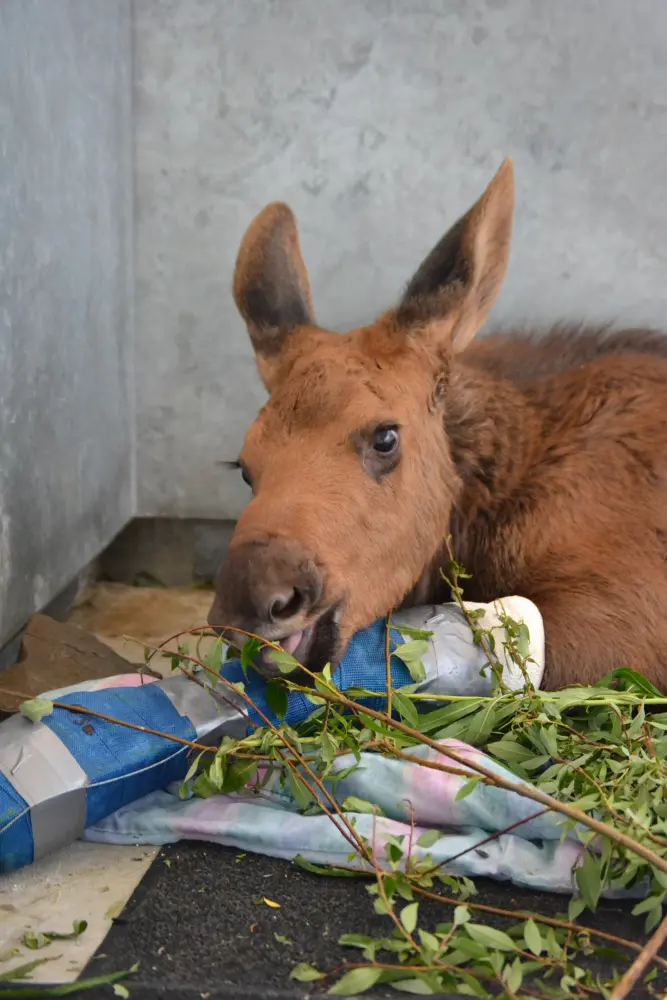
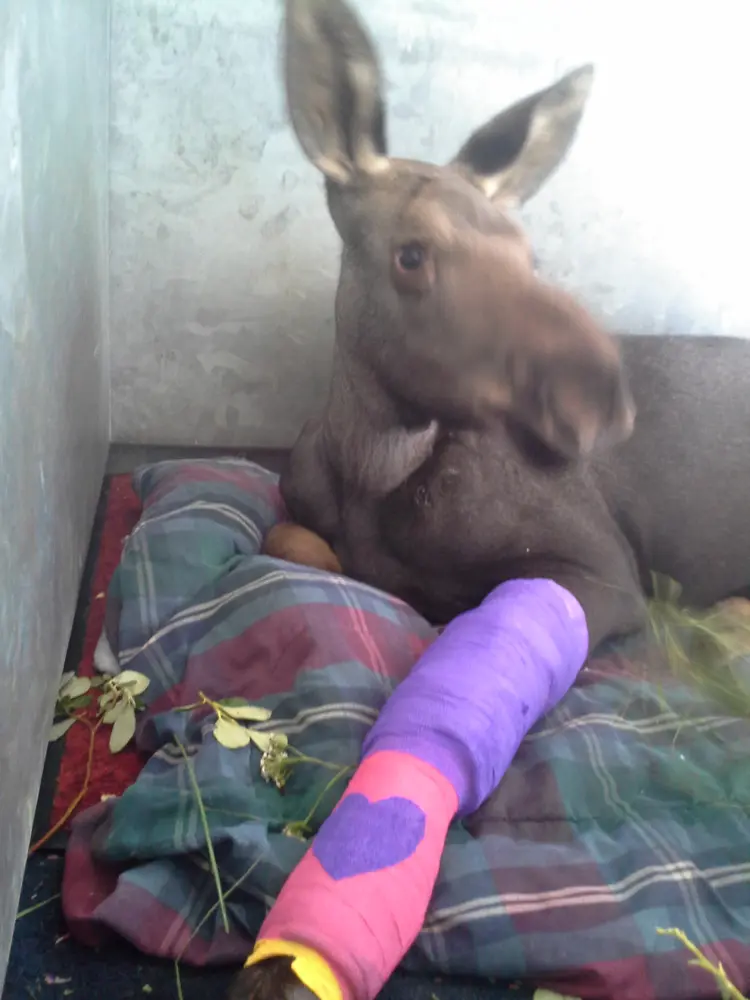
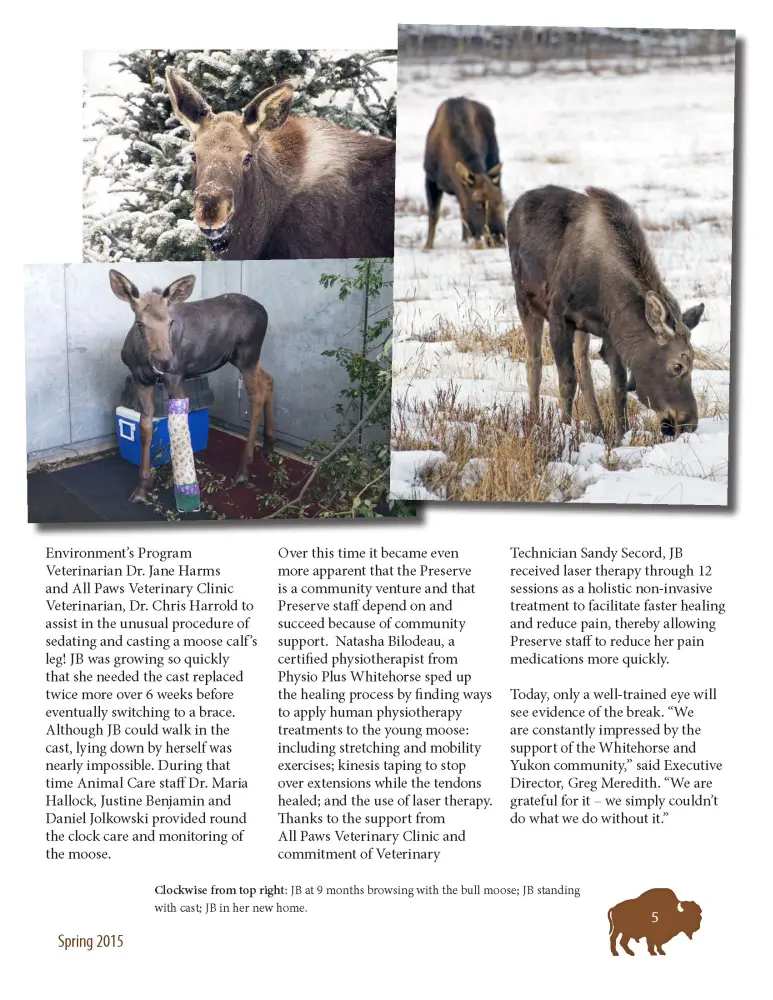
In a near-tragic twist, JB broke her leg. Although it might have been the end for any other moose, Maria put a cast on JB's leg. Because JB was growing so quickly the cast had to be cut off and redone just 2 weeks later, but eventually the cast came off. 

The Animal Care Team put in a huge effort that spring. Among others, Dr. Julianna was at the YWP as a summer student in 2014 and was part of the team that bottle raised JB.

Another person on the team that year was Justine Benjamin. Justine spent more time than anybody else with the young moose, right through to when she was moved into the main habitat in February 2015. 

Because of that special connection and dedication from Justine, Maria proposed we name the moose JB. Justine is now a part of our Board of Directors and Chair of the Animal Care Committee.

At that time we didn't have a laser therapy machine (for reducing inflammation) but All Paws Vet Clinic and their team continued their support of the moose, bringing out their machine for regular treatments. Further, we received support for a local physio therapist, Natasha Bilodeau after the brace was off to help continue the healing and recovery.  Normally we'd be starting to decrease our time spent with a calf, but with the cast leg she continued to need a lot of support. 

Later in the winter she was introduced into the main habitat with our bull moose. Years later as Jesse joined the group, the three of them roamed the 40 acre moose habitat. 

• • •

The following is an article created in our original newsletter, the Preserve Post in Spring 2015. 

• • •

The Yukon Wildlife Preserve is a zoological institution and a non-profit charity dedicated to connecting our visitors with the natural world. As ambassadors of the Yukon Wildlife Preserve’s animals, lands, and operations, the operating society proudly maintains populations of 10 species of Yukon wildlife in large natural habitats. The society also conducts educational programming and funds a wildlife rehabilitation program for Yukon’s injured and orphaned wildlife. The facilities and the level of care provided to the Preserve’s animals successfully meets the stringent criteria of Canada's Accredited Zoos and Aquariums, to which the Yukon Wildlife Preserve is a long-time member.

Lindsay Caskenette

Lindsay Caskenette

Manager Visitor Services

Lindsay joined the Wildlife Preserve team March 2014. Originally from Ontario, she came to the Yukon in search of new adventures and new career challenges. Lindsay holds a degree in Environmental Studies with honours from Wilfrid Laurier University and brings with her a strong passion for sharing what nature, animals, and the environment can teach us.
867-456-7400
[email protected]

Jake Paleczny

Jake Paleczny

He/Him - Executive Director/ CEO

Jake Paleczny is passionate about interpretation and education. He gained his interpretative expertise from a decade of work in Ontario’s provincial parks in addition to a Masters in Museum Studies from the University of Toronto. His interests also extend into the artistic realm, with a Bachelor of Music from the University of Western Ontario and extensive experience in galleries and museums.
867-456-7313
[email protected]

Explore by Category

Explore by Author