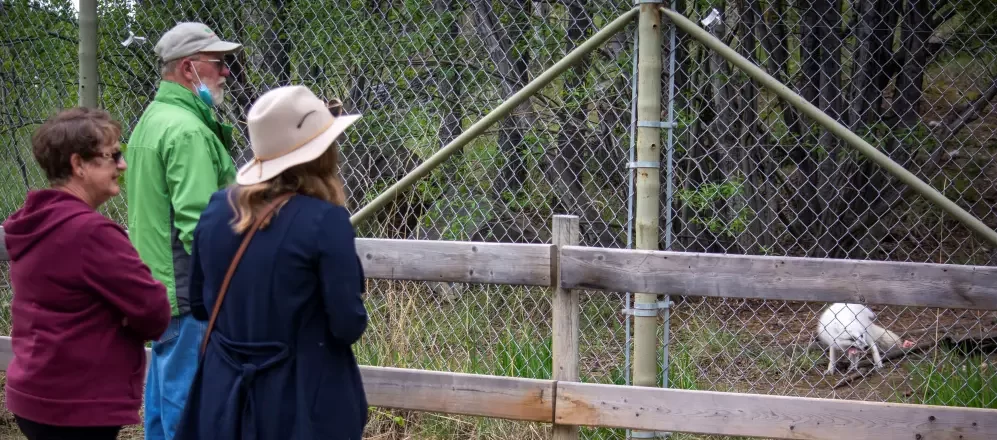
Faces of the Preserve: Doug

Faces of the Preserve: Doug

wildlife

by Doug Caldwell | May 12, 2023

12 min read -

It takes passion and love for Yukon’s wild spaces and the wildlife that inhabit it, to support the Yukon Wildlife Preserve - a non-profit organization dedicated to the education and protection of Yukon’s natural spaces. 

Meet our Wildlife Interpreter Doug! Here he shares his unique and fascinating life story that led him to not only to the Yukon but eventually to the Wildlife Preserve.
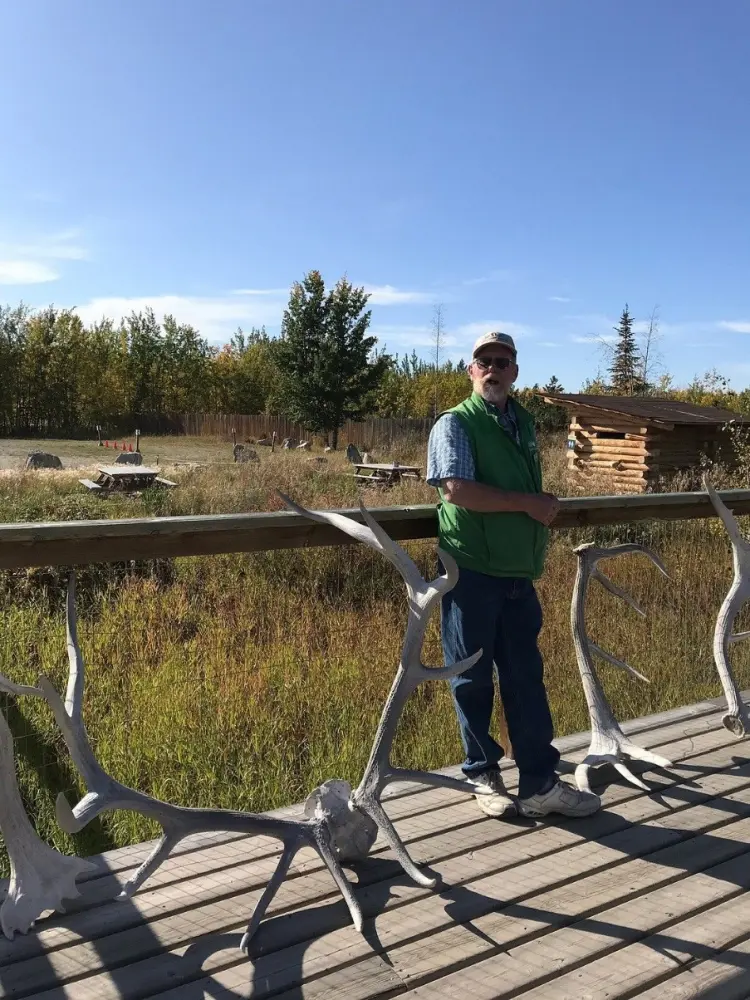
"I was born in Victoria, BC in the mid 50s and am the eldest of four children. Mom said I was born with an extra helping of curiosity. We were the typical nuclear family of the day. Both my parents enjoyed camping and the outdoors, so we did that a lot. I can remember wet, rainy days in a small tent on the beach near Tofino or in one of the provincial parks up island. When I was around seven, we quit the tent and graduated to a small travel trailer for our camping shelter.

We kids explored everything that did not run away as we got closer. Each year we would expand our knowledge of the forest plants and animals, the rocks, waterways and seashore to see what we could collect as we explored and combed the beaches with our shoulders sunburned from squatting in tidal pools observing all the life they contained. Mom was ever diligent to make sure nothing that was dead or could die found its way into the trailer or the back seat of the car. I had to empty my pockets into a plastic pail before I could enter…it was a rule!

One morning, my sister Sharon found a tiny grey kitten snuggled up to the warm rocks of the campfire at Ivy Green Provincial Park. That was the only creature we were ever permitted to take home with us and that cat named Smoky lasted a good long time as I recall, probably because it was spoiled terribly compared to the life of a feral animal trying to make a living in the wilderness.

My siblings and I lived in a time that is far removed from today. Back then flotsam on the beach may have included Japanese fishing floats hand-blown from coarse green glass and wrapped in netting woven from long eel grass. We hunted sand dollars of all colours & sizes (the best ones were at Tribune Bay on Hornby Island), crustacean shells, wave-polished glass and stones, crustaceans and hermit crabs out shopping for a new shell to call home, and the jetsam that washed in on the previous high tides. Each day was fresh and new waiting to be discovered, poked, prodded and inspected.
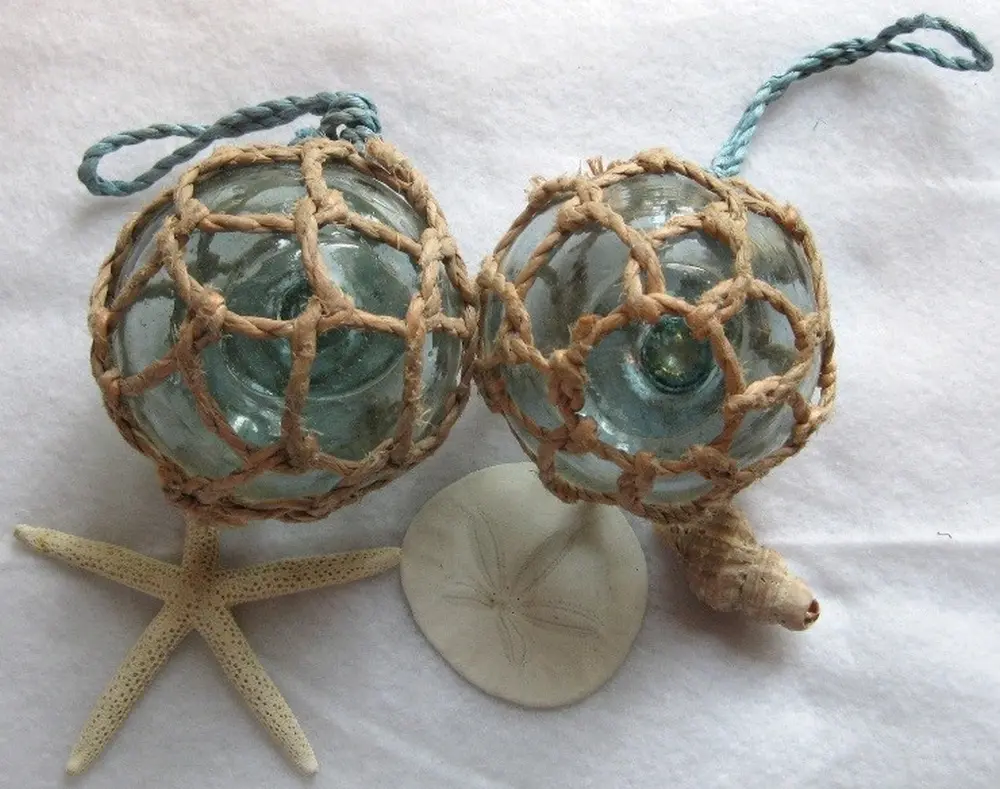
Flotsam on the beach may have included Japanese fishing floats hand-blown from coarse green glass and wrapped in netting woven from long eel grass

Sometimes we would find something that we had seen in a nature book our paternal grandfather had given as a gift, so returning home the book was found and we would learn more about our latest discovery.  My grandfather was hopeful that we kids would take an interest in the natural world, and he would buy us books to inspire our curiosity to all facets of the earth and all that crawls on it. He gifted us with the complete Time Life series of the natural world and an annual subscription to National Geographic. I still have those books and I will sometimes open one and be transported back to the big green chair in our living room sitting next to my grandfather’s spirit as I re-read the descriptions of animals or the planet and how it all works as a singular complex biological entity. 

My grandfather was a keen and accomplished angler who infected my dad as a kid with the same passion for testing wits with fish. Grandpa and dad passed this affliction to my brothers and I, and we would often be on the Malahat long before the sun came up; my brother Dave and I slept in the back seat while Dad and Uncle John navigated us to that day’s selected fishing spot. The Cowichan, or Englishman’s River, the Oyster and Gold Rivers, Sooke and Campbell River and many others, were flogged with fly patterns and spinners for rainbows, sea-run cutthroat, seasonal salmon and steelhead. Sometimes we drove along an old logging road to get to a special spot my dad fished with grandpa when he was our age.
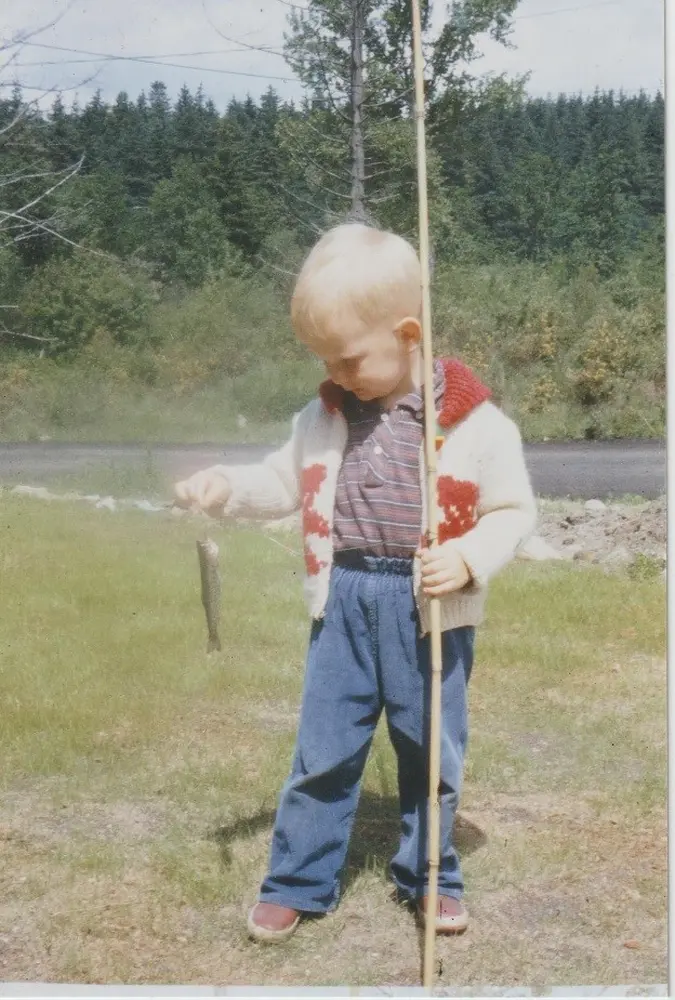
Doug's First Fish!

My first fish!

My grandfather was a significant contributor to my perspectives today and I often recall his comments from my childhood when I am telling our visitors about the wildlife here at the Preserve. Back then it was called ecology, today it’s called environmentalism. In each time frame it is still a profound love of our world and all the creatures that live with us.”

When I was twelve the family moved to the mainland and we settled in the cattle farming region of south Surrey. I won’t bore you with my teen years, suffice to say I was right and all those who opposed me were not.

After graduating high school at Lord Tweedsmuir High School in Cloverdale, I worked various jobs in the marine sector from maintenance to a deckhand on a salmon trawler to eventually a trained mechanic with the Mercury Marine in Burnaby, B.C.  

“Being a not-so-big-kinda guy I often got the jobs working down in the oily dank and sour bilges and honestly I quickly developed a dislike for that working environment, so I began to learn about navigational gear and other electronics that don’t live in the bilges, rather they cling high up on the masts and elevated superstructures where a skill-testing climb was required. I quit being a bilge rat and became a mast monkey. I spent a few years installing and repairing radio gear, radar systems, and similar equipment in boats, aircraft, cars and trucks.
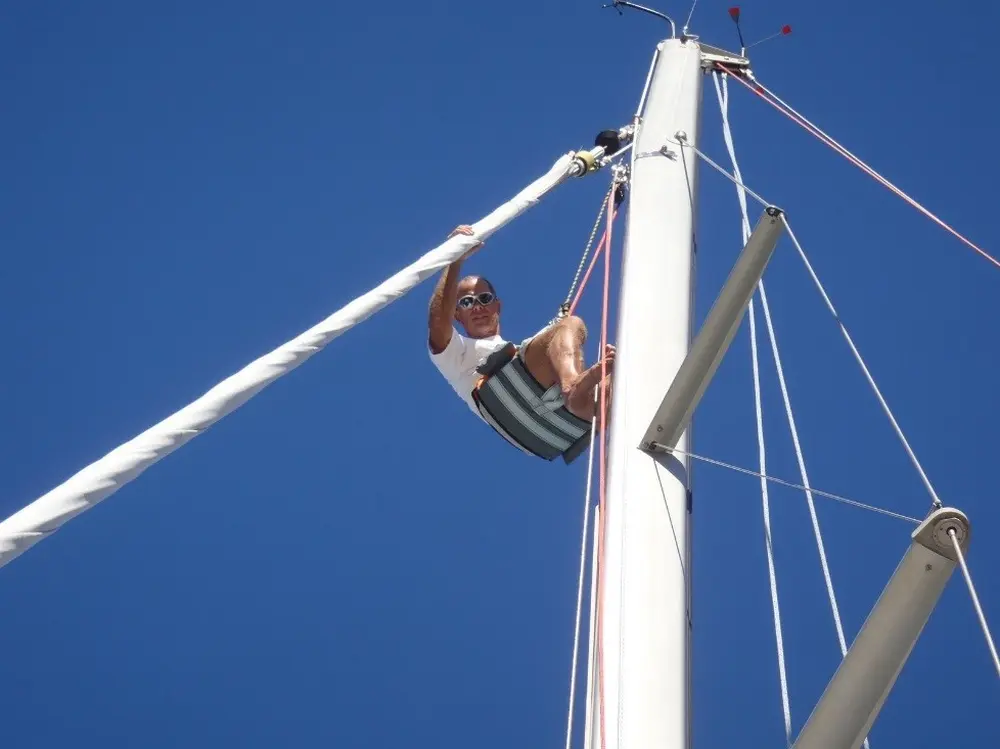
My mast monkey days!

Time passed and I met and married my wife Chris. In the fall of 1976, I was recruited for a job working as a marine mechanic for the National Geographic’s support depot in Perth, Australia. At the same time my dad had a business venture here in Whitehorse he wanted me to work in. Two job offers: One hot - one cold. My mom ended up making the choice for us as she quite passionately said she was not going to sit on an airplane for 15 bloody hours to visit her grandchildren. We moved to Whitehorse.

For our first two years in the Yukon, I spent working to get my dad’s business up and running, then I worked at Sea-Land Recreational fixing boats until I jumped out of one and injured my knee which would require 8 weeks in a cast. Thus began my four year gig at CKRW as an announcer/operator- a DJ in common terms. I loved that job; playing music and informing the audience of the day’s events. But we had another baby on the way which required more income, so without another job waiting, I quit the radio business in 1984 and looked for new employment opportunities which led me to a different kind of radio business.

Next, I accepted a job with Total North Communications which took me to many remote wilderness locations all across the North as we installed remote communications systems for mining camps, exploration ventures, governments, community radio and TV stations, and mountaintop repeater systems which put us right in the middle of the wilderness.
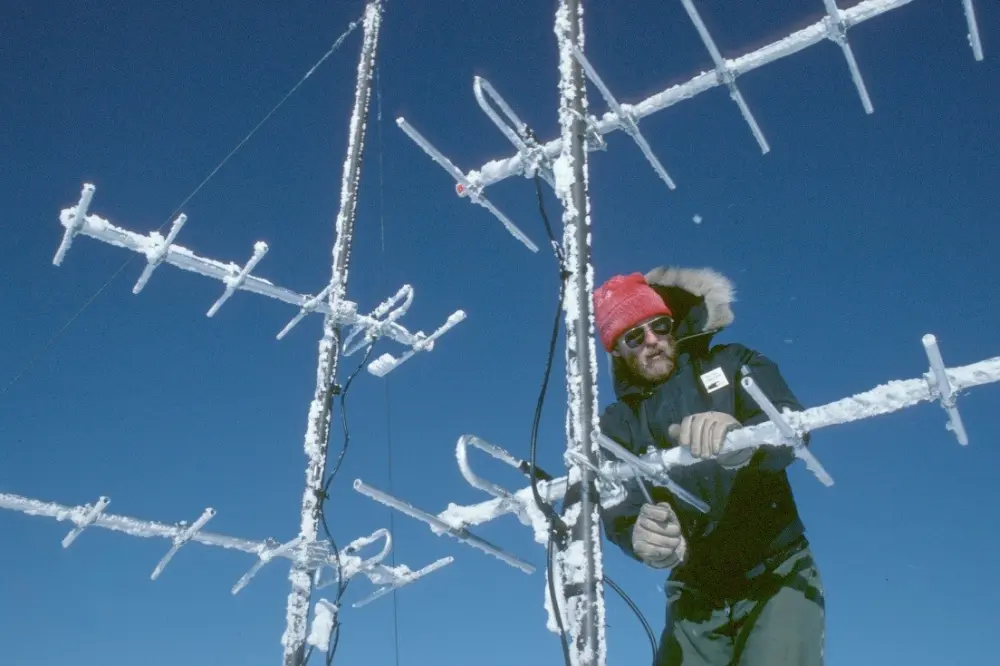
Repraing the Carcross TV system.

I got paid to travel to exotic remote northern places that people pay dearly to visit and experience. While working in the Kluane National Park area on a mountaintop, young Dall sheep would be sniffing in our toolboxes unafraid as we were quite probably the first humans they had ever seen. We watched from the safety of a helicopter as the namesake grizzly of the Golden Bear Mine south of Atlin tore apart a repeater box we thought would be bear-proof…we were wrong. One trip into the far north we had to land the Twin Otter on the frozen tundra, roll a couple fuel drums off the plane and pump the fuel into the plane as a group of caribou watched from some distance. Then we put everything back into the plane and resumed our travel before it got too dark.

Left to right: Refueling the Carcross TV systems on Caribou Mountain; Repeater cornshell Kluane National Park; Installing a repeater near Kluane Lake. 

This job took me to some awe-inspiring locations, often where humans had not yet made footprints. I met some truly amazing people and had some adventurous experiences, some of which prompted my wife to beg me to quit field work and find something safer. Hard landing a helicopter is not a crash, but she saw things differently than I, so after the third hard landing I gave up field work and moved upstairs into sales and marketing and got fat.

In 1991 I was hired on with the Yukon Government’s Executive Council Office to work in policy and communications and the next 25 years went by in a blur. In 2016, I retired from my formal working career with the government, but I don’t sit still very well and needed something to do.

After a month of completing chores around the house and finishing the ‘honey-do’ list, Up North Adventures called to ask if I would be interested in piloting their rough water support boat used to ferry canoe tour groups through the rough and dangerous waters of Lake Laberge and a few other Yukon water systems. Additionally, I would guide fishing parties in search of our local fish species. Inspired by working in that wilderness setting once again, I thought I was set for the rest of my working days. I had a portable office that met my needs very well.”
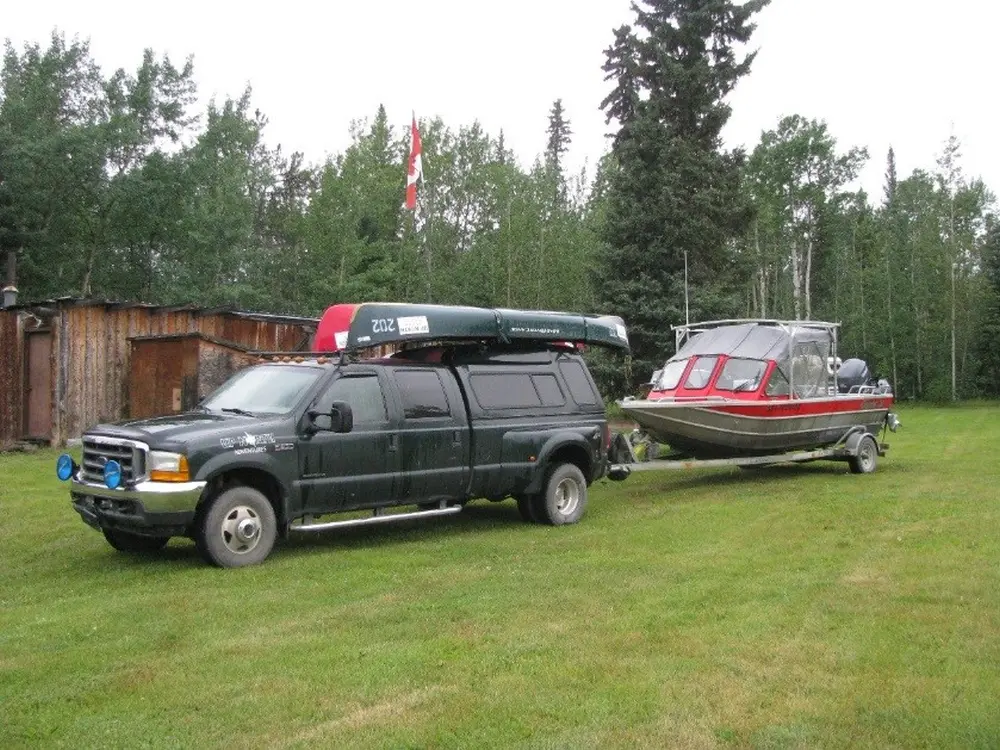
My portable office for a few years!

After an injury however, a change of pace was needed.

"I saw the job posting here at the Preserve and I considered this would be a great place to work based on previous visits with my grandchildren, and the lack of heavy lifting suited me as I hoped to grow gracefully into my autumn years.
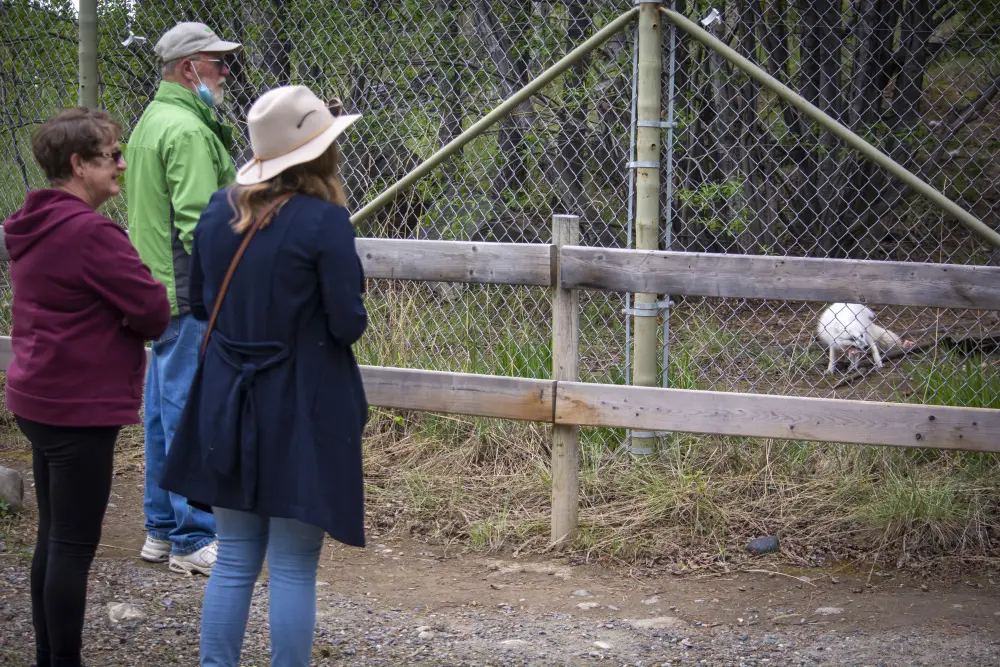
Doug shares stories with guests about the Arctic Fox.
Photo credit: L.Caskenette

When hired and oriented to my new role as a Wildlife Interpreter it took some time for me to become satisfied with the tour presentation I had created. There is so much to share in just the limited hour and a half of a bus tour. Then one day, my memory took me back to one of those chats with my grandfather explaining the world around us and I then knew what my goal here at the Preserve was and I have been refining my tour presentations ever since. I have a presentation now for each season focusing on what the animals are doing at that time in their lives.

I have made it my mission to try and inspire young people to have the same sense of awe and wonder of our natural world as I did when it was explained to me in ways I understood and appreciated. So that’s my focus today - I want to inspire the next generations to love, understand and admire our natural wilderness and the ecology that makes it work.
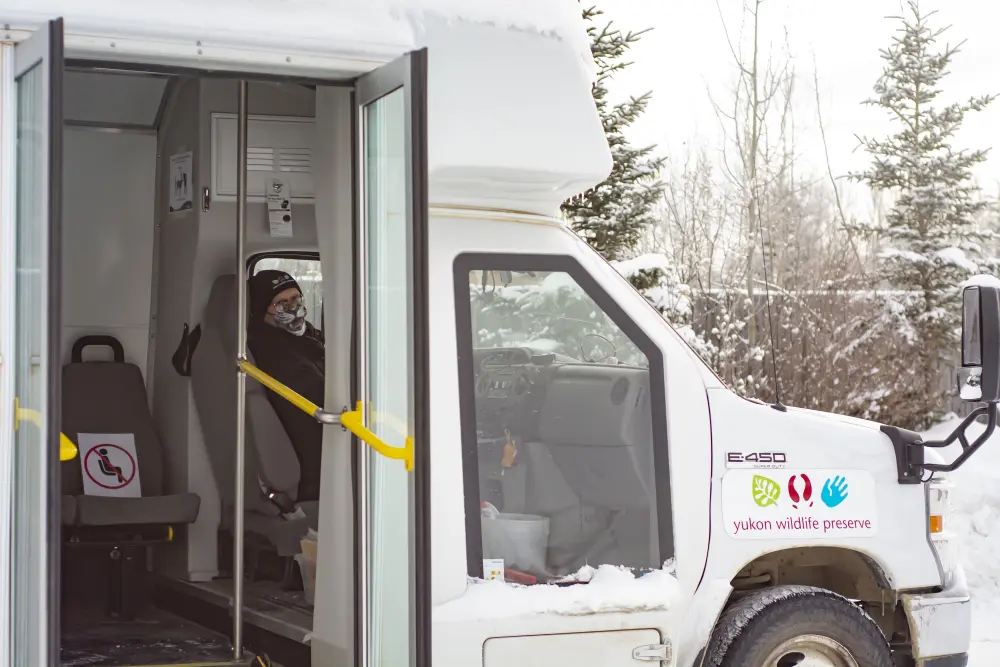
Guided bus tours are offered daily at the Preserve. Book online!
Photo credit: L.Caskenette

Getting to know our visitors is another part of the job I love. Our international visitors are often drawn here by the romantic stories of the Gold Rush and other days gone by in the North. Many of them hope to see the iconic animals of our unspoiled paradise and learn more about them. I am happy to report we often make some long-held wishes come true for these people as they see a real live moose, musk ox, or other favourite creature up close for the first time. Many visitors are already awestruck with the Yukon and have questions about living here and enduring the cold winters, viewing the Aurora and how we cope without all the big-city conveniences they are familiar with. Some of our elderly visitors are transported back to the memories of their childhood when indoor plumbing was a luxury few had in their homes, very few owned automobiles and the technologies of today were promoted in Popular Mechanics.”

Northern and Arctic icons, moose and muskox.
Photo credit: L.Caskenette

Over the past five years, Doug has met quite a number of people from different walks of life, but a few occasions have stuck out to him.

“One was in the winter of 2018 when a couple from Barcelona toured the Preserve. They were the only ones on the bus and it was around 20 below and we had stopped at the muskox platform for a closer look. I told them about the animals and their natural environment and answered their questions. The lady walked closer to the fence and Jesse, one of our cow musk oxen slowly walked through the snow towards her and stopped so they were only about ten feet apart, face to face with just the wire fence between them. They remained silently staring at each other this way for a bit of time until we got back on the bus. Seated behind me, I could hear the couple quietly speaking in Spanish with some very impassioned tones until the lady began to cry softly. Later in the tour she came to me and apologised for being so emotional.

She could not explain why she felt the way she did but was grateful she had connected with the musk ox and how it was meaningful for her and she would remember it always.
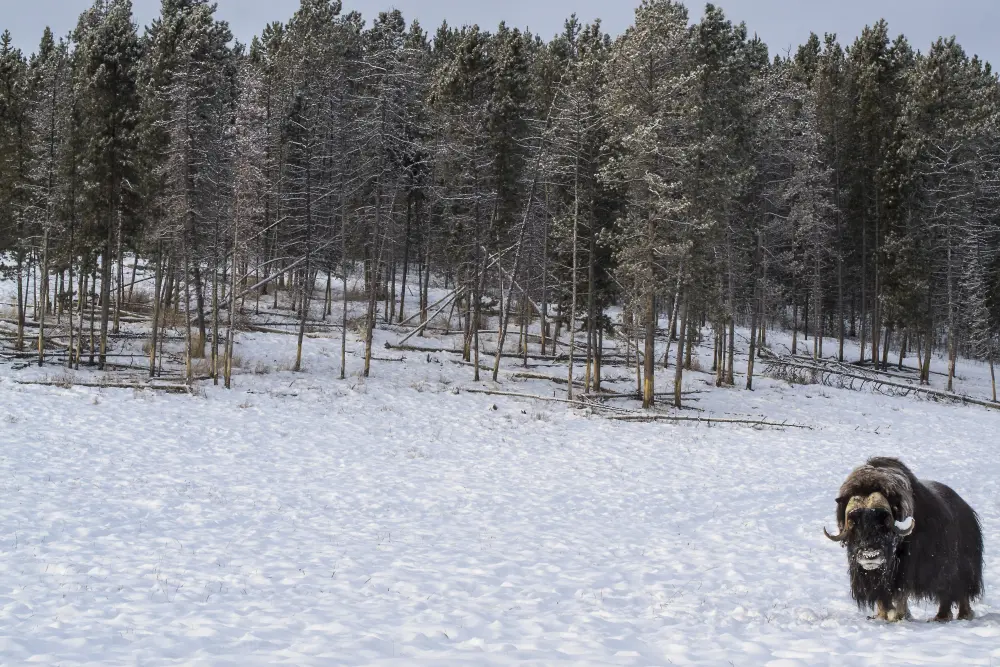
Face to face with Northern wildlife.
Photo credit: L.Caskenette

During my introductory comments on the bus I want people to relax and enjoy themselves and participate rather than just staring out the windows. So as an icebreaker to promote dialog I often point to one of them and ask “What’s your favourite animal in the whole world?” Some need some time to think about it before answering while others answer almost immediately. I have heard everything from horses, dogs and common pets to tarantulas, anacondas, giraffes and polar bears. Animals they adored as kids still have a special appeal for them. It’s that inner-child I want to connect with and helping them to recall being a kid helps to make that happen more easily. I often see the expression on people’s faces that says, “Ask me next!””
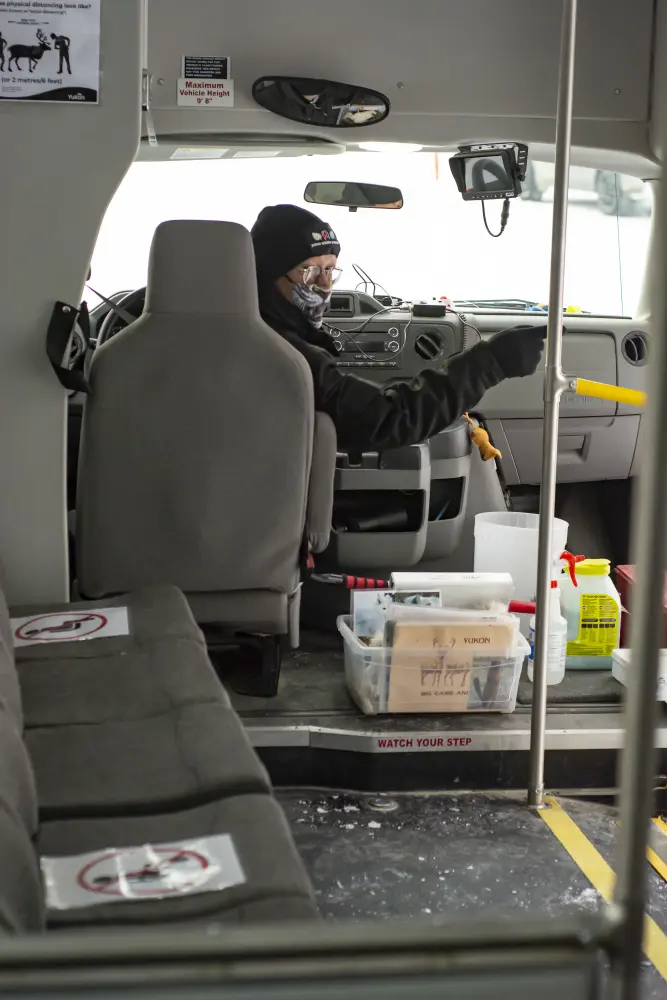
Join Doug for a guided bus tour
Photo credit: L.Caskenette

Doug is one of the integral members of the Yukon Wildlife Preserve and his passion helps to connect visitors to Yukon’s iconic wildlife and the habitat in which they live. Next time you visit, stop in and say hello to Doug or share your own story. 

“I have a wonderful opportunity to help our visitors to better understand and appreciate the natural world around us, how it came to be, how it works and how we can help to ensure it continues as it has for millions of years. Kids are keen to know more and I figure if I can help them to understand Nature better, they’ll be inspired to protect it better than previous generations have. As my grandfather demonstrated to me all those years ago, knowledge of our natural world is key to this success. So, I hope I do as good a job with our visitors as he did with me.”

Stories by Doug Caldwell. Read more from Doug. Photos - Doug Caldwell unless otherwise noted.
Doug Caldwell

Doug Caldwell

Wildlife Interpreter

Doug is one of the Interpretive Wildlife Guides here at the Preserve. An avid angler and hunter he has a broad knowledge of Yukon’s wilderness and the creatures that live here. With a focus on the young visitors to the Preserve, Doug takes the extra time to help our guests to better appreciate the many wonders of the animal kingdom here in the Yukon.

Explore by Category

Explore by Author

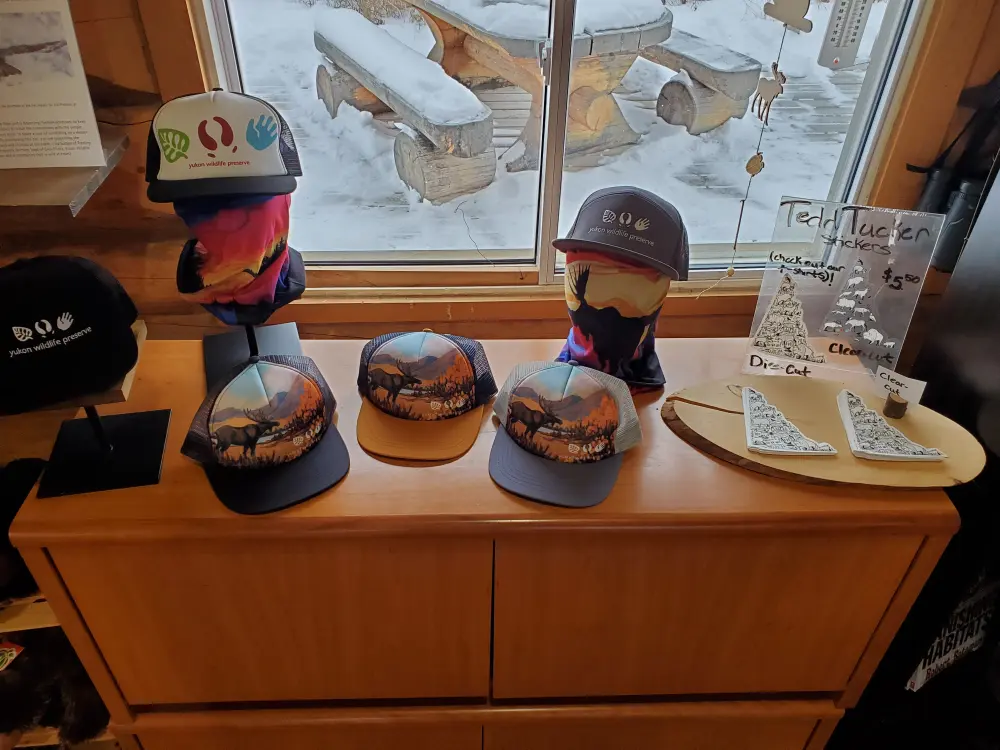
Artist Series Trucker Hats

Artist Series Trucker Hats

wildlife

by Lindsay Caskenette | Apr 25, 2023

6 min read

The Visitor Services team is working hard to connect with local artist to bring the connections to nature home with you. We strongly feel that by taking the time to explore these partnerships we can create unique items that guests to the Preserve can take home all while knowing their purchase in the Preserve's Little Gift Shop not only supports these northern talents but all revenue from the retail sales goes back into the operations of the Preserve, supporting the northern animals in our care.

Right now the Preserve does not do online sales. We're a really small team that is situated out of town, and with some staff also living out of town, doing online sales and shipping feels a bit outside our capacities for the time being. 

• • •

Photo of moose in water.

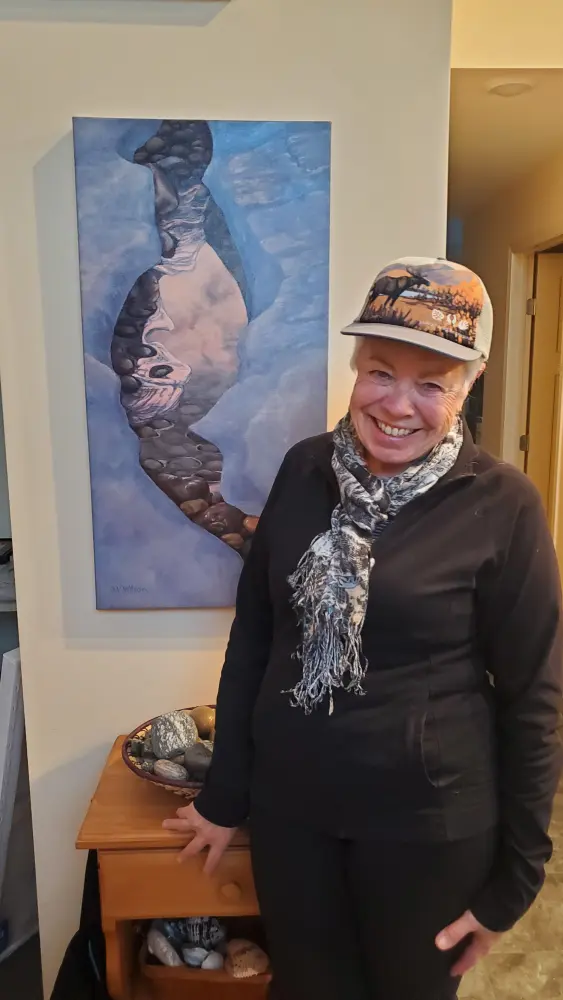
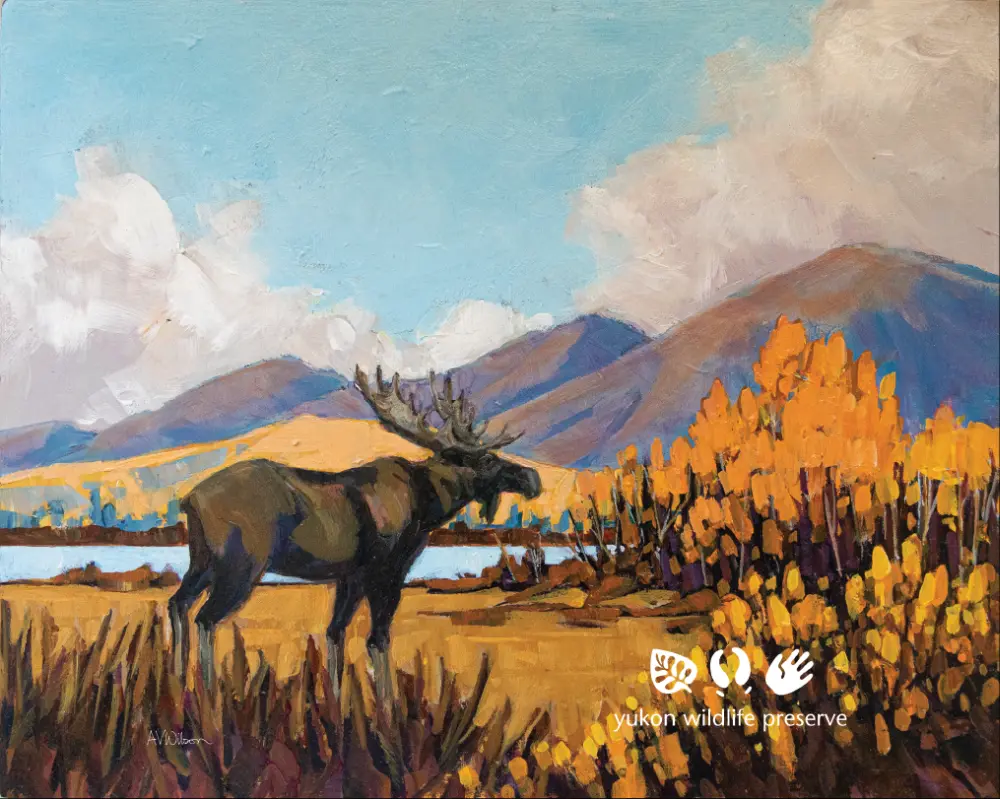
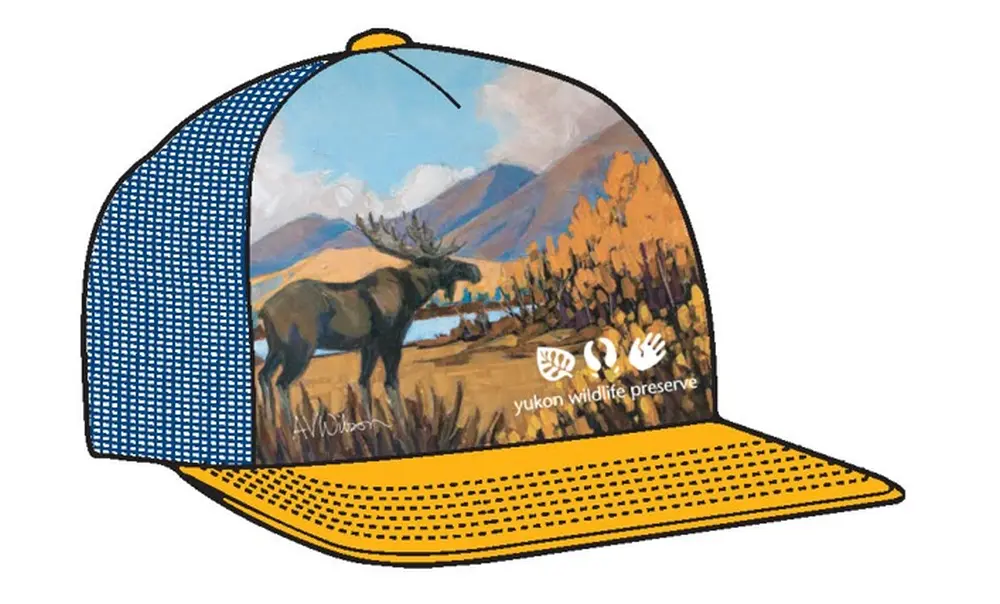
This artist collaboration with AV Wilson, better known as Virgina Wilson was incredible and humbling and might have involved a few evenings of conversation over wine to help get us to the final product! 

• • •

Yukon Wildlife Preserve's Manager of Visitor Services LOVES hats! It's rare to see Lindsay not in a hat. As Lindsay worked to evolve the products founds in the Preserve's Little Gift Shop she knew hats needed to be included in this. Although she heard the phrase "you are not your own customer" she ignored this (generally) and sought out a design and product that would inspire others to wear something with pride, even if hat's weren't really their 'thing'!

• • •

The first iteration of the Trucker style hat was in 2016 and came from some in-house design. One hat featured our classic logo and another from screen-printing a photo taken in 2013 by Executive Director, Jake Paleczny.

As those sold and we started working on other artists collaboration ideas in 2020 (like the bula's), we reached out to local artist who might be interested in a trucker hat specific project.


Photo credit: J.Paleczny

Lots of emails back and forth and the collaboration with Virginia started to take shape. We know these things don't happen overnight. It's about building connections with people to ensure the artist and artist process is honoured and the values of the Preserve are brought forward, in balance, to the final product.

• • •

Photo of team providing care for moose in the field.

Starting in December 2021, we chatted about ideas, inspiration and of course the worldly love of moose came front and centre for both parties. She paints because she loves to paint - no other reason, retirement life supports this love. Virigina shared she was interested in this project because "my family likes the wildlife park, I like your objectives, and they [my family] all want trucker hats with my art on them". What better collaboration when the story creates itself.

• • •

Photo of team providing care for moose in the field.

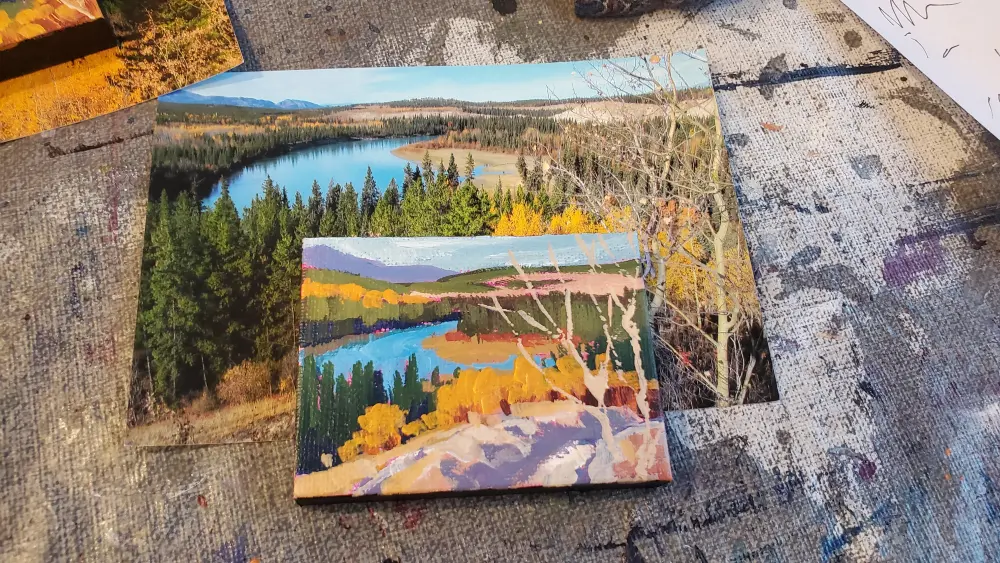
Her art work has incredible depth and range, from perfect windowsill pieces to multi canvas, larger than life sceneries. 

Virginia is a proud Yukoner, a Mother, Grandmother and an artist that loves painting landscapes as much as she loves hiking. The Yukon is a particularly special place to live out these pursuits and forever find inspiration. 

Virginia is originally from North of England having spent nearly the first quarter of her life there and then moving around Canada she has spent most of her life in rather beautiful places. 

• • •

Photo of staff using stethoscope to listen to moose heart rate.

The hats are a Yukon and Canadian production - from the landscape inspiration and artist development to the hat itself sourced with the help from Corina at Taku Sports Group Inc and printed on Canadian made brand Ambler.

• • •

Photo of staff using stethoscope to listen to moose heart rate.

The hats come in different colour combinations and are available only at the Preserve's Little Gift Shop beginning November 2022. Check out more of Virginia's work through her website and Instragram.


• • •

Trucker Hat                           $48

Photo of staff using stethoscope to listen to moose heart rate.
Lindsay Caskenette

Lindsay Caskenette

Manager Visitor Services

Lindsay joined the Wildlife Preserve team March 2014. Originally from Ontario, she came to the Yukon in search of new adventures and new career challenges. Lindsay holds a degree in Environmental Studies with honours from Wilfrid Laurier University and brings with her a strong passion for sharing what nature, animals, and the environment can teach us.

867-456-7400
Lindsay@yukonwildlife.ca

Explore by Category

Explore by Author

Yukon Wildlife Preserve
Box 20191
Whitehorse, Yukon
Y1A 7A2

Proud member of:

CAZA Logo

With the support of:

Yukon Government Logo
Bou, the caribou who flew

Bou, the caribou who flew

wildlife

5 min read / poem

Bou, the caribou who flew

The caribou is just the same
As reindeer, just another name

Why 2 names, I hear you cry?
Well, only reindeer can fly

Santa bestowed a magic gift
That gave reindeer enchanted lift

Bou, the caribou would roam
Across the snow around her home

Keen to learn & keen to know
Miles across the land she'd go

She watched the trees, she watched the sky
Watched as other animals passed by

One night as she was on her way
She came upon a giant sleigh

A man in red traversed the ground
A herd of reindeer stood around

What was wrong? mused Bou, then saw
A set of antlers on the floor!

“Oh what to do, oh my, oh my!
Without your antlers, you cannot fly!”

The man in red seemed most upset
Bou swallowed hard & up she crept

“Excuse me” said a nervous Bou
“Is there something I can do?”

“Without his horns, he cannot fly”
The man replied with heavy sigh

“The magic antlers aid his flight.
How can we solve this awful plight?

With so many gifts still on the sleigh
What will disappointed children say?”

Then, on spotting Bou’s antlers, said
“Why you can help us out instead!”

“But I can’t fly” young Bou retorted
“My magic will soon get that sorted”

Said the man to startled Bou
“I’m Santa Claus, how do you do”

Pulling a bag from his cloak of red
He sprinkled dust over Bou’s head

Her antlers tingled, then Bou found
Her body lifting from the ground.

“Good las “ said Santa. “We need to go.
Gifts to deliver, don’t you know”

Bou joined the reindeer & looking round
Watched the sleigh lift off the ground

“The antler-less reindeer must remain here
He will rejoin us, when new ones appear”

So off into the night, excited Bou flew
Delivering gifts with his reindeer crew

The children were happy, none of them knew
That Bou was the first caribou who flew

• • •

Photo of moose in water.

The Story Behind the Poem

"My husband & I visited the Preserve in Fall 2021 & the lovely gentleman who drove the tour bus was explaining about how caribou & reindeer are the same thing. Then, as we had children in the group, he suggested the the difference between reindeer & caribou was the ability of reindeer to fly ☺️ He then told us about Bou, the rescued caribou, who was flown in adding, “so I guess she was a caribou who flew!”

This comment made me laugh & inspired me to compose a Christmas rhyme, based on “Bou, the Caribou who flew”

Poem and message by Diane Gregory.

• • •

Photo of staff giving moose oxygen.

The Story of Bou - the magical caribou

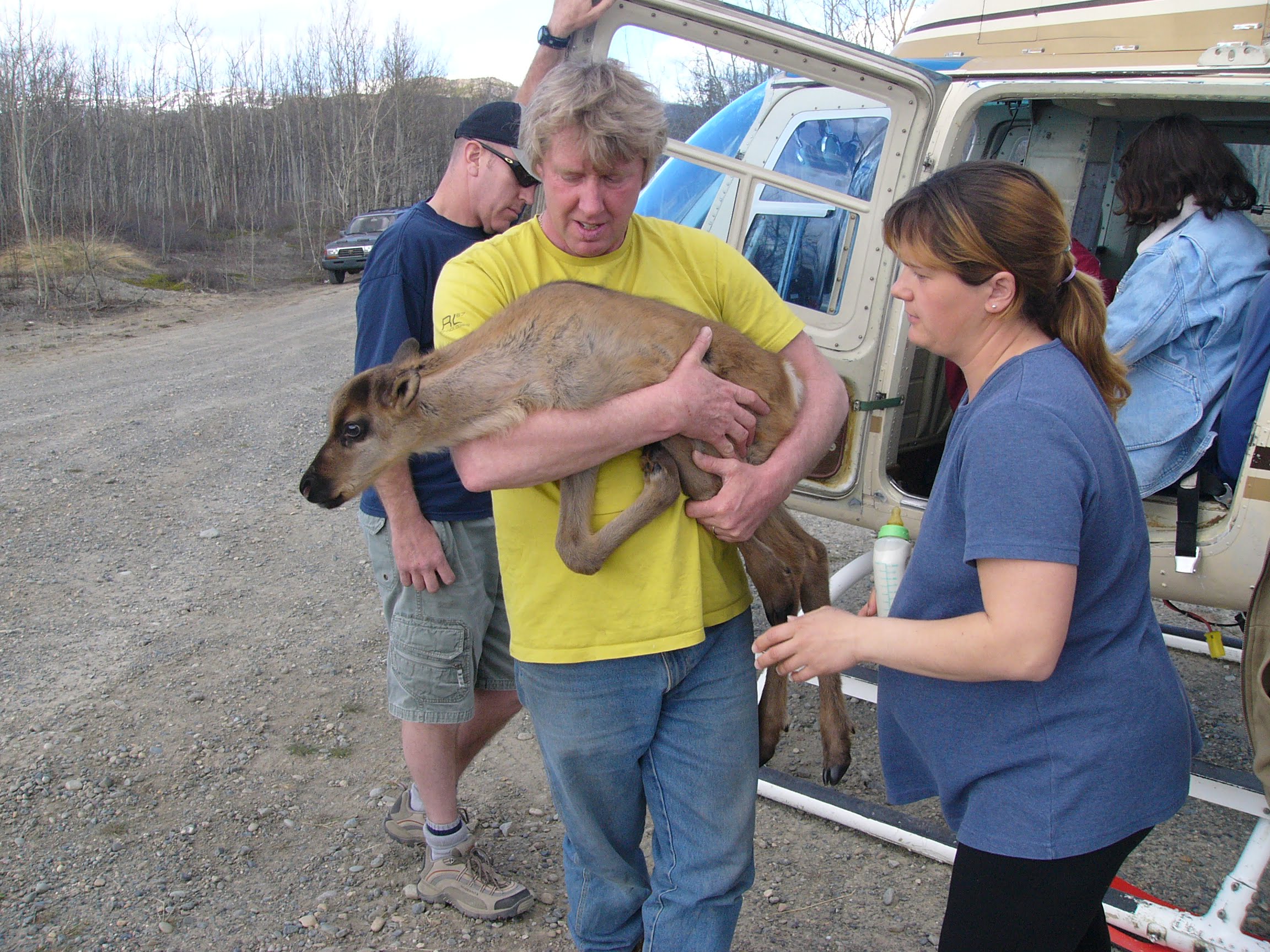
Bou the Caribou was flown to the Preserve as a tiny calf from the Chisana Herd in 2005. During this time, there was efforts protecting this herd from dramatic population decline from unprecedented calf predation. The efforts to improve calf survival was tested through maternal penning. When Bou was born her mother did not produce milk and Bou was at risk of death. Bou was brought to the Preserve's Wildlife Rehabilitation Centre via helicopter - a special flight for this very special caribou!

On December 25th, 2021 Bou passed away. She was absolutely a magical creature and the timing of her passing only reiterated this. We are touched by this incredible poem shared with us by Diane.

• • •

Randy & Dr. Maria Hallock with Bou the Caribou from the Chisana herd. 2005
Lindsay Caskenette

Lindsay Caskenette

Manager Visitor Services

Lindsay joined the Wildlife Preserve team March 2014. Originally from Ontario, she came to the Yukon in search of new adventures and new career challenges. Lindsay holds a degree in Environmental Studies with honours from Wilfrid Laurier University and brings with her a strong passion for sharing what nature, animals, and the environment can teach us.

867-456-7400
Lindsay@yukonwildlife.ca

Explore by Category

Explore by Author

Yukon Wildlife Preserve
Box 20191
Whitehorse, Yukon
Y1A 7A2

Proud member of:

CAZA Logo

With the support of:

Yukon Government Logo
Face to Face With the Wild: Kids

Face to Face With the Wild: Kids

wildlife

by Seth Brown | Dec 9, 2022

5 minute read 


Yukon Kids

It’s a warm and sunny Wednesday in July. After driving past Jesse the moose, some handsome sheep, and innumerable little squirrels I step off the bus with 22 eager campers following. We’re just about to head out for a little walk. But then... I catch one little camper frolicking around in her bare feet.

“Jasmine! Where are your shoes?”

“Shoes?! I don’t need those: I’m a Yukon kid!”

Campers sometimes teach the instructors at YWP school programs.

Sometimes it's the campers who teach us educators about their favorite plants and animals.

Hidden Kids

On a normal trip to the Preserve it’s easy to get lost in our own experiences. After all, how can you not? When you see golden sunshine through the grass; when you and the little muskox lock eyes; or when one of our guides tells a chilling story. These experiences are what we come for, but we aren’t the only visitors here.

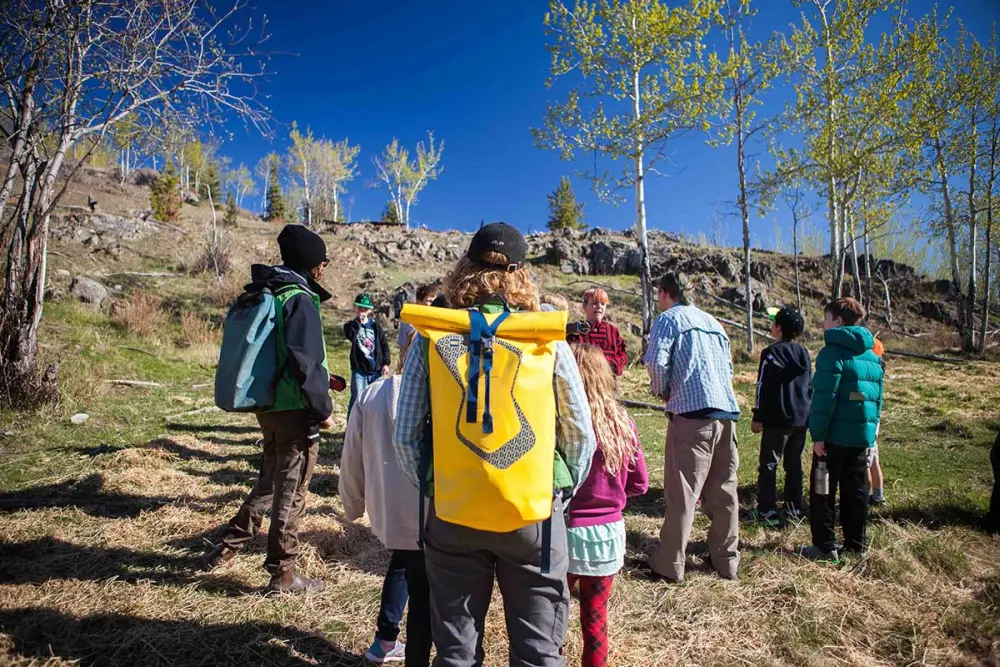
The Yukon Wildlife Preserve sees over one thousand students and campers come through our doors every year. Winter and spring school programs, Swan Haven programs, March Break Nature camp, and summer nature camps are all in our calendar. The Wildlife Preserve has its own department dedicated to bringing enriching and educational experiences to Yukon youth. As an outdoor educator this what first brought me to the Preserve, and it's also one of the things that I think makes the Preserve a very special place.

Unfortunately, the public doesn’t often get to hear about all of the incredible experiences we offer students and children. If you, like me, are a little too old to attend these wonderful programs I’m here to tell you that you’re also in luck! I’ve done all the running around – the booger wiping, rule giving, question answering, and “yes, you can go pee”ing – so you don’t have to. Join me as I take a walk down Memory Lane, looking back at this last year with our Education team. But be prepared to take chances, make mistakes, get messy. So let's tie up our shoes and get Face to Face with: The Wild Kids of the Yukon.
Kids holding up moose antlers outside in the snow.

A happy student trying on their new favorite hat.

Time to Plan

Though our ears are still ringing from a summer full of campers, it’s a very different story in our office this time of year. Our Manager of Education and Programming sits quietly and plans for the year to come.

‘Have we sent all the thank-you cards?’

‘How many more plastic animals do we need to buy?’

‘Where do I even buy a plastic muskox?’

We ruminate at length on these pressing topics. After all, one missing muskox now may break the heart of a muskox-loving little boy eight months later. And so, slowly, we debrief the past year and plan into the next.

Cool Kids

​February comes creeping up and at this point we (Education and Programming) are a very tiny snowball at the top of a very large hill. Our winter programs are the little kick that gets us going. A modest start to a full year of programming. This time of year, our programs focus on winter ecology and cold weather adaptations.

With a sizeable (750-acre) classroom, we bring students along our trails in order to teach through hands-on experience and keen observation. So, let’s throw on our jackets with the grade sevens and head out for our famous February caribou program!

Students have a positive close encounter with one of our bull caribou.

Campers getting a special experience with one of our caribou bulls.

March Break

​Slowly, March comes crawling along. By this time, we’re feeling ready for the busy spring and summer seasons. We have our programs all neat and tidy, but the Preserve has turned a somber shade of winter. We’re all aching for something: A little sunlight, some warm weather, a hot cup of cocoa… or, some more students! Last year's March Break Nature Camp hosted 10 campers, a real VIP experience.

Though we do plan and structure the days, it’s the campers who really have the final say in the day’s events. We want our campers fully engaged, so we try our best to tailor the camp to their interests. If that means spending some extra time with the caribou then we throw on an extra layer, step into the enclosure, and get a closer look at our campers' favorite ungulates.

Kids doing outdoor experiential programming in the outdoors in Yukon.
Educator Erin Cartan taking her campers to the Gunnar Nilsson & Mickey Lammers Research Forest.

We Talk Swan

As the snow starts to melt and the sun starts to burgeon it’s a HONK, of all things, that prompts our first drive out to Swan Haven. Working with the YG Department of Environment we move our operations to Marsh Lake and start talking Swans with grade two, three, and five classes at the beginning of April.

After our education team gets a Swan Masterclass from bird biologists Jukka Jantunen and Margaret Campbell, we welcome hundreds of students to share the joy of birding with some of our favorite feathered friends. Together we tell the story of Yukon swans, look through scopes to observe their behaviours, play dress-up, and make our own mock-migration. We do all this in hopes of fostering respect and appreciation for all Yukon wildlife.

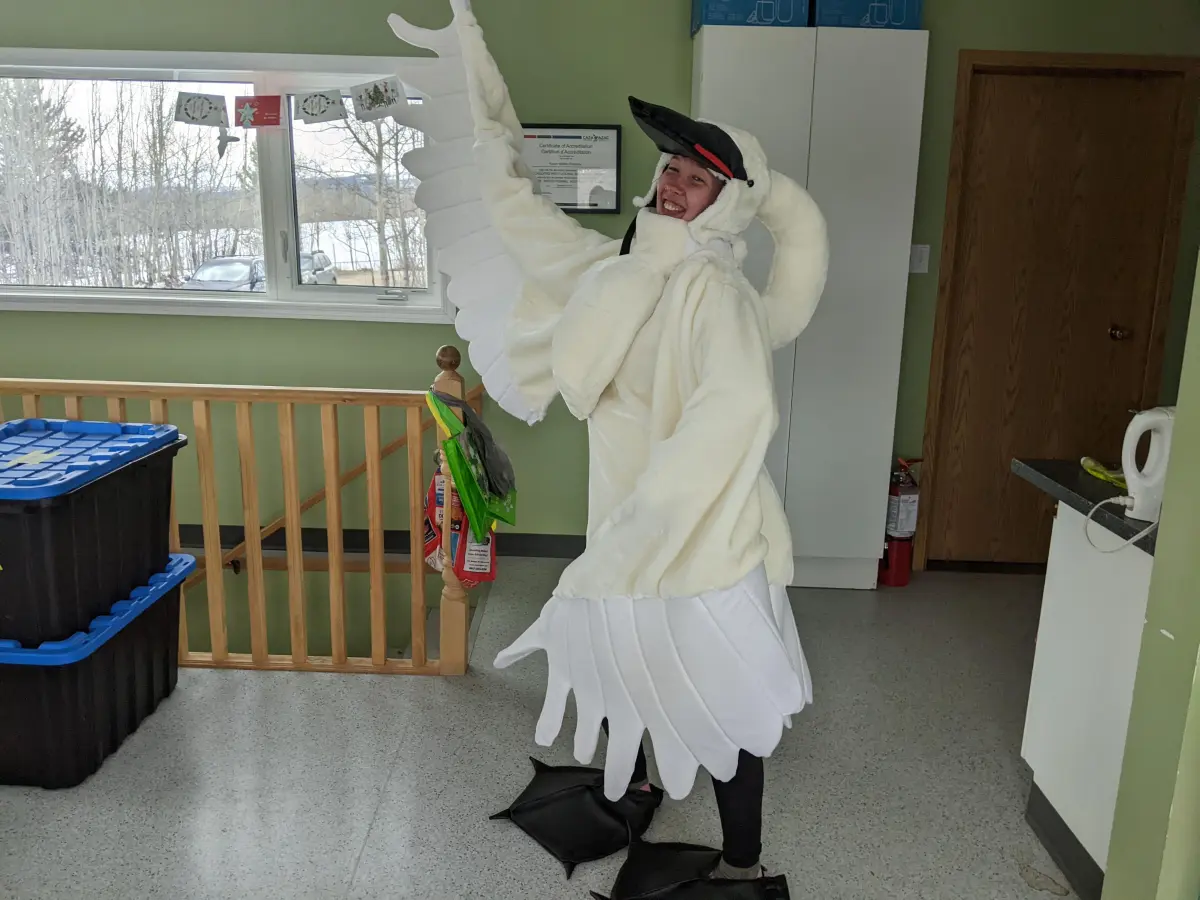
Swan Costume for Swan Haven Programming

Manager of Education and Programming, Madison Rushton, trying out our new and improved swan suit.

The Ball Gets Rolling

Though the snow on our peaks is slowly melting by early May, the snowball we call ‘Education and Programming’ is growing both in size and speed. It’s now time for our Spring Programs! Life is waking up and starting to buzz here on the Preserve. Together with the students we try to find each and every little buzz, bumble, and sign of life. Our Yukon-famous benthic macroinvertebrate studies (a.k.a. lookin' for bugs in the pond), large scale Predator vs. Prey game, and animal charades are crowd pleasers amongst the little ones. Lots of fun and games for these students, and they haven’t the slightest clue they’re actually learning.

Once that’s all over, snow is the last thing on anyone’s mind. But, our ‘Education and Programming’ snowball is reaching its crescendo with the YWP Summer Nature Camps! It’s all hands on-deck at this point; three wildlife educators, nine weeks of camp, and nearly two hundred campers. The whirlwind that ensues is filled with a tremendous amount of fun. Fishing, barbecues, forts, flower picking, popsicles, dress-up, story time, nap-time, camp-time, and eventually, home-time are all to be expected.

At last, our ears ringing from nearly seven months of outdoor education and nature programming, we pat each other on the back and have our own well-deserved nap-time. But don’t forget, once we’re ready to open our eyes and stretch our arms, we get to do it all over again!

Students dip-netting for all the bugs and critters they can find.

Students dip-netting for all the bugs and critters they can find.

Naptime

Though working with children can be exhausting it’s also extraordinarily rewarding. Moments of growth in our students fuel us educators with energy and inspiration. And the best part? We’re learning just as much from them as they do from us.

While teaching at the Preserve I often think back to my own outdoor education experiences as a child. Downtown Toronto certainly offered less opportunities than the pristine boreal, but the richness of those experiences was all the same.

Now that I think about it, I remember one particular experience at the Toronto Island Nature School. We were playing a game of Predator vs. Prey and I felt like the luckiest boy. I had the opportunity to play my favorite animal; the wolf. I ran under a bush, prepared myself, and waited eagerly for the game to start. TWEEEET went the whistle and THUMP THUMP went my feet.

“Seth! Where are your shoes?”

“Shoes?! I don’t need shoes, I’m a wolf!”

Seth Brown

Seth Brown

Visitor Services Coordinator

Passionate about the environment, art, and education, Seth has been working as an environmental educator since 2017. Off the preserve, you can find him playing in the mountains; on skis in the winter and with a paddle in the summer. Having moved to the Yukon and joined the preserve in April 2022, he’s excited to learn and explore!

867-456-7400
seth@yukonwildlife.ca

Explore by Category

Explore by Author

Muskox – I’m a Survivor!

Muskox – I’m a Survivor!

wildlife

by Lindsay Caskenette | May 27, 2022

4 minute read - 

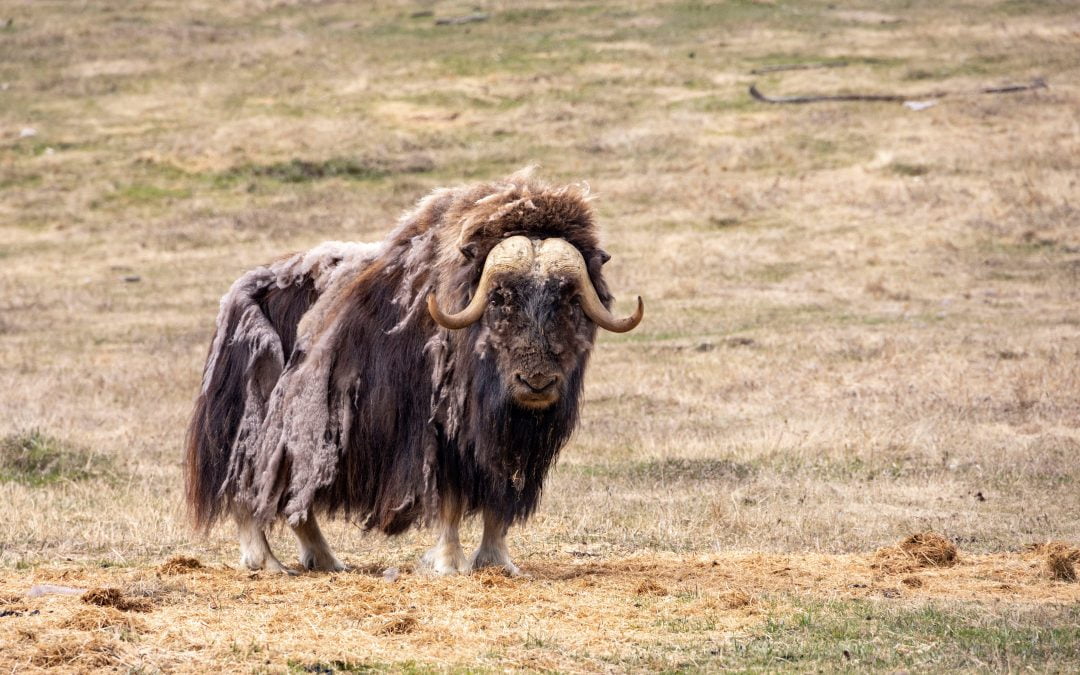
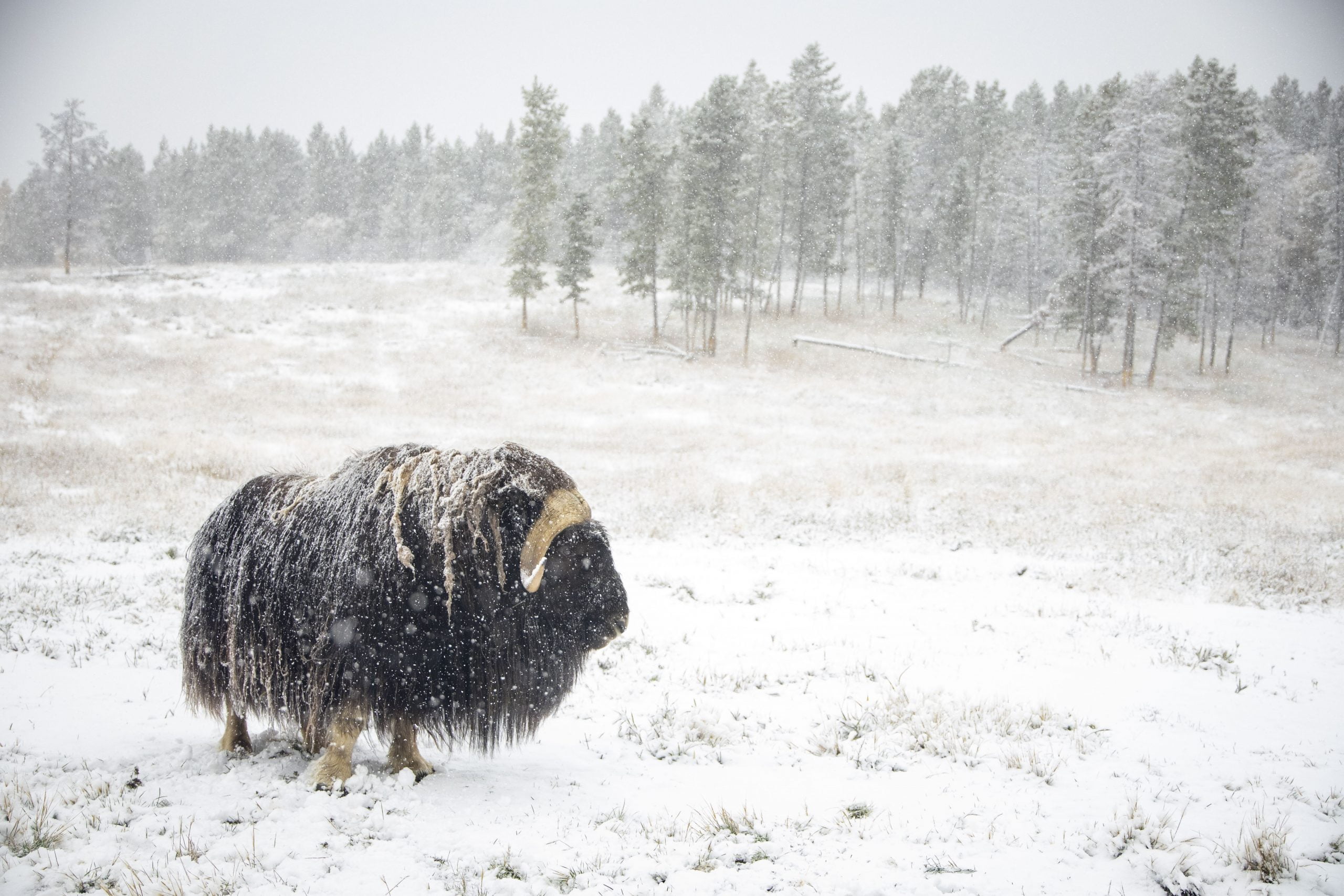
The muskox is an adaptable animal. In the face of climate change a generalist diet with a slow metabolism helped this species survive through the last ice age and to today while other megafauna, like woolly mammoths, went extinct.

During Beringia there were two types of muskox present on the extensive grassland biome - Ovibos moschatus, the tundra muskox that roams today, and Bootherium bombifrons, the helmeted muskox. 

The helmeted muskox did not survive the Pleistocene even though it was endemic to North America and had a wider range than its relative, the tundra muskox. If you could imagine this Beringian muskox was taller and more slender than those of the living tundra muskox and its wider range spanned an area from Texas all the way to Alaska. Like many of the horn and antler bearing animals of this era it was all about BIG, oversized, dramatic displays for sexual selection. The helmeted muskox had longer deeper skulls that supported higher and more flaring horns than the tundra muskox. But, size didn't get selected as most important for survival in this dramatically changing and climatically unstable landscape. It seems not only was smaller horns preferred through evolution but overall body size too - the less compact nature of this muskox might have played a role in its extinction along with many other large herbivorous mammals of its' time.  

The tundra muskox crossed the Bering land bridge from Eurasia into North America about 100,000 years ago. A more focused range and smaller size as well as thicker coat than that of the Bootherium, the Ovibos remains a resident of the Arctic landscape to this day. What's pretty incredible is that these muskox have changed, genetically, very little since their days on the Mammoth Steppe. The muskox of today's Arctic Archipelago are however much less genetically diverse than those that lived during the last Ice Age which suggests they were not completely unscathed during this time of climatic instability. Significant population and geographical range shrinkage restricted the tundra muskox to Greenland and much of the western Northern American Arctic populations are reintroductions from those limited genetics. The two types of muskox of the late Pleistocene did not mix genetically and the reduction of both species, including the extinction of the helmeted muskox, seem to exclude humans as a driving force behind these population dynamics into the Holocene.

Ovibos moschatus, the tundra muskox, was able to ride the waves of climate change over tens of thousands of years. Their adaptability to variability, including climate and thus vegetation quantity and quality, fostered this large Ice Age mammal to survive a formidable narrow niche of the Arctic biome to present day. What might the future hold for the muskox?

Photo credit L. Caskenette

Resources:

Thanks to Dr. Grant Zazula for taking the time share incredible insights into the past, into Beringia with the YWP crew! 

Ancient DNA analyses exclude humans as the driving force behind late Pleistocene musk ox (Ovibos moschatus) population dynamics. Paula F. Camposa, Eske Willersleva, Andrei Sherb, Ludovic Orlandoc, Erik Axelssona, Alexei Tikhonovd, Kim Aaris-Sørensena, Alex D. Greenwoode, Ralf-Dietrich Kahlkef, Pavel Kosintsevg, Tatiana Krakhmalnayah, Tatyana Kuznetsovai, Philippe Lemeyj, Ross MacPheek, Christopher A. Norrisl, Kieran Shepherdm, Marc A. Suchardn, Grant D. Zazulao, Beth Shapirop, and M. Thomas P. Gilberta.

Musk ox (Ovibos moschatus) of the mammoth steppe: tracing palaeodietary and palaeoenvironmental changes over the last 50,000 years using carbon and nitrogen isotopic analysis Maanasa Raghavan,, Gonçalo Espregueira Themudo, Colin I. Smith, Grant Zazula, Paula F. Campos

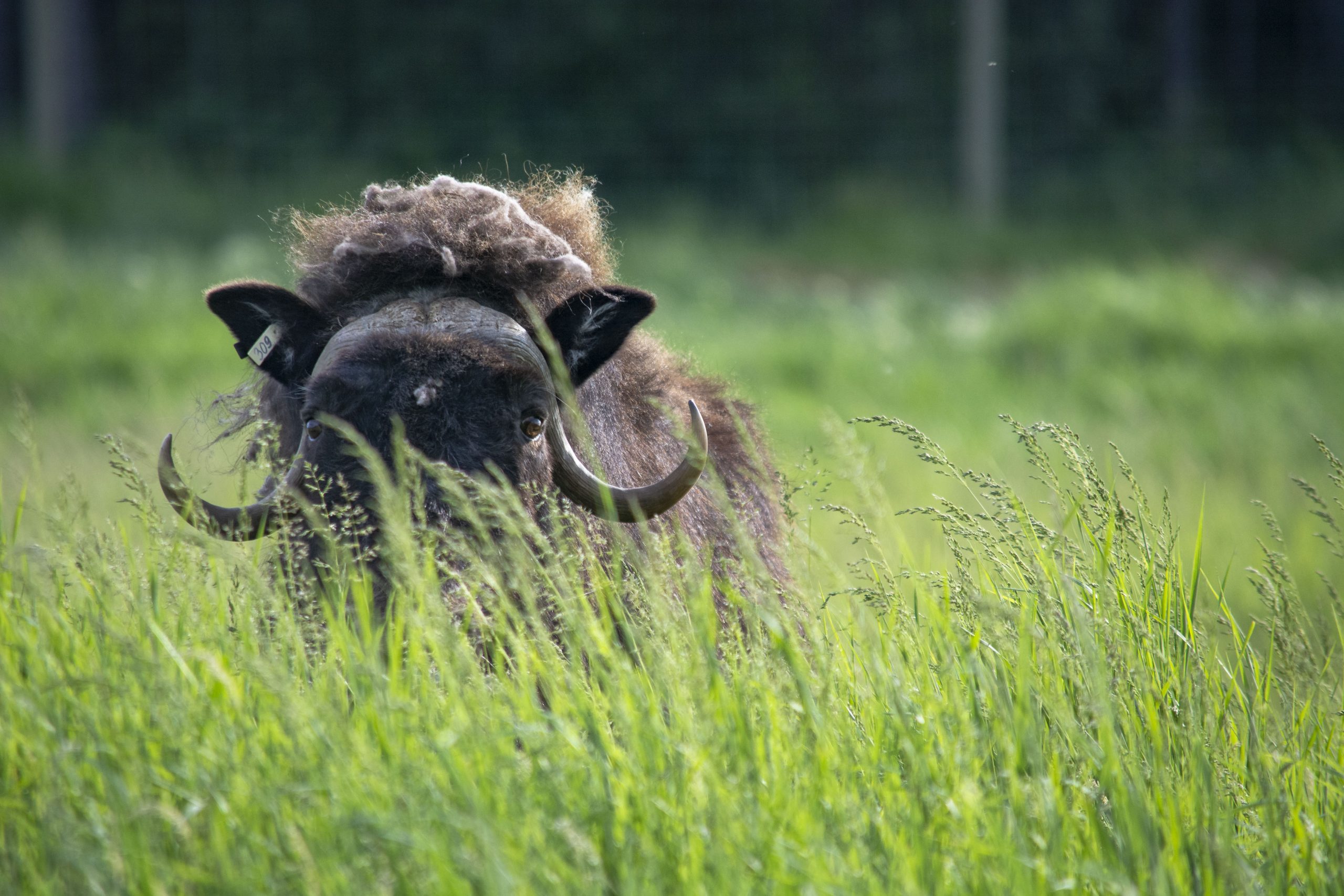
Tundra Muskox

Helemeted Muskox

Lindsay Caskenette

Lindsay Caskenette

Manager Visitor Services

Lindsay joined the Wildlife Preserve team March 2014. Originally from Ontario, she came to the Yukon in search of new adventures and new career challenges. Lindsay holds a degree in Environmental Studies with honours from Wilfrid Laurier University and brings with her a strong passion for sharing what nature, animals, and the environment can teach us.

867-456-7400
Lindsay@yukonwildlife.ca

Explore by Category

Explore by Author