Bou, the caribou who flew

Bou, the caribou who flew

yukon wildlife

5 min read / poem

Bou, the caribou who flew

The caribou is just the same
As reindeer, just another name

Why 2 names, I hear you cry?
Well, only reindeer can fly

Santa bestowed a magic gift
That gave reindeer enchanted lift

Bou, the caribou would roam
Across the snow around her home

Keen to learn & keen to know
Miles across the land she'd go

She watched the trees, she watched the sky
Watched as other animals passed by

One night as she was on her way
She came upon a giant sleigh

A man in red traversed the ground
A herd of reindeer stood around

What was wrong? mused Bou, then saw
A set of antlers on the floor!

“Oh what to do, oh my, oh my!
Without your antlers, you cannot fly!”

The man in red seemed most upset
Bou swallowed hard & up she crept

“Excuse me” said a nervous Bou
“Is there something I can do?”

“Without his horns, he cannot fly”
The man replied with heavy sigh

“The magic antlers aid his flight.
How can we solve this awful plight?

With so many gifts still on the sleigh
What will disappointed children say?”

Then, on spotting Bou’s antlers, said
“Why you can help us out instead!”

“But I can’t fly” young Bou retorted
“My magic will soon get that sorted”

Said the man to startled Bou
“I’m Santa Claus, how do you do”

Pulling a bag from his cloak of red
He sprinkled dust over Bou’s head

Her antlers tingled, then Bou found
Her body lifting from the ground.

“Good las “ said Santa. “We need to go.
Gifts to deliver, don’t you know”

Bou joined the reindeer & looking round
Watched the sleigh lift off the ground

“The antler-less reindeer must remain here
He will rejoin us, when new ones appear”

So off into the night, excited Bou flew
Delivering gifts with his reindeer crew

The children were happy, none of them knew
That Bou was the first caribou who flew

• • •

Photo of moose in water.

The Story Behind the Poem

"My husband & I visited the Preserve in Fall 2021 & the lovely gentleman who drove the tour bus was explaining about how caribou & reindeer are the same thing. Then, as we had children in the group, he suggested the the difference between reindeer & caribou was the ability of reindeer to fly ☺️ He then told us about Bou, the rescued caribou, who was flown in adding, “so I guess she was a caribou who flew!”

This comment made me laugh & inspired me to compose a Christmas rhyme, based on “Bou, the Caribou who flew”

Poem and message by Diane Gregory.

• • •

Photo of staff giving moose oxygen.

The Story of Bou - the magical caribou

Bou the Caribou was flown to the Preserve as a tiny calf from the Chisana Herd in 2005. During this time, there was efforts protecting this herd from dramatic population decline from unprecedented calf predation. The efforts to improve calf survival was tested through maternal penning. When Bou was born her mother did not produce milk and Bou was at risk of death. Bou was brought to the Preserve's Wildlife Rehabilitation Centre via helicopter - a special flight for this very special caribou!

On December 25th, 2021 Bou passed away. She was absolutely a magical creature and the timing of her passing only reiterated this. We are touched by this incredible poem shared with us by Diane.

• • •
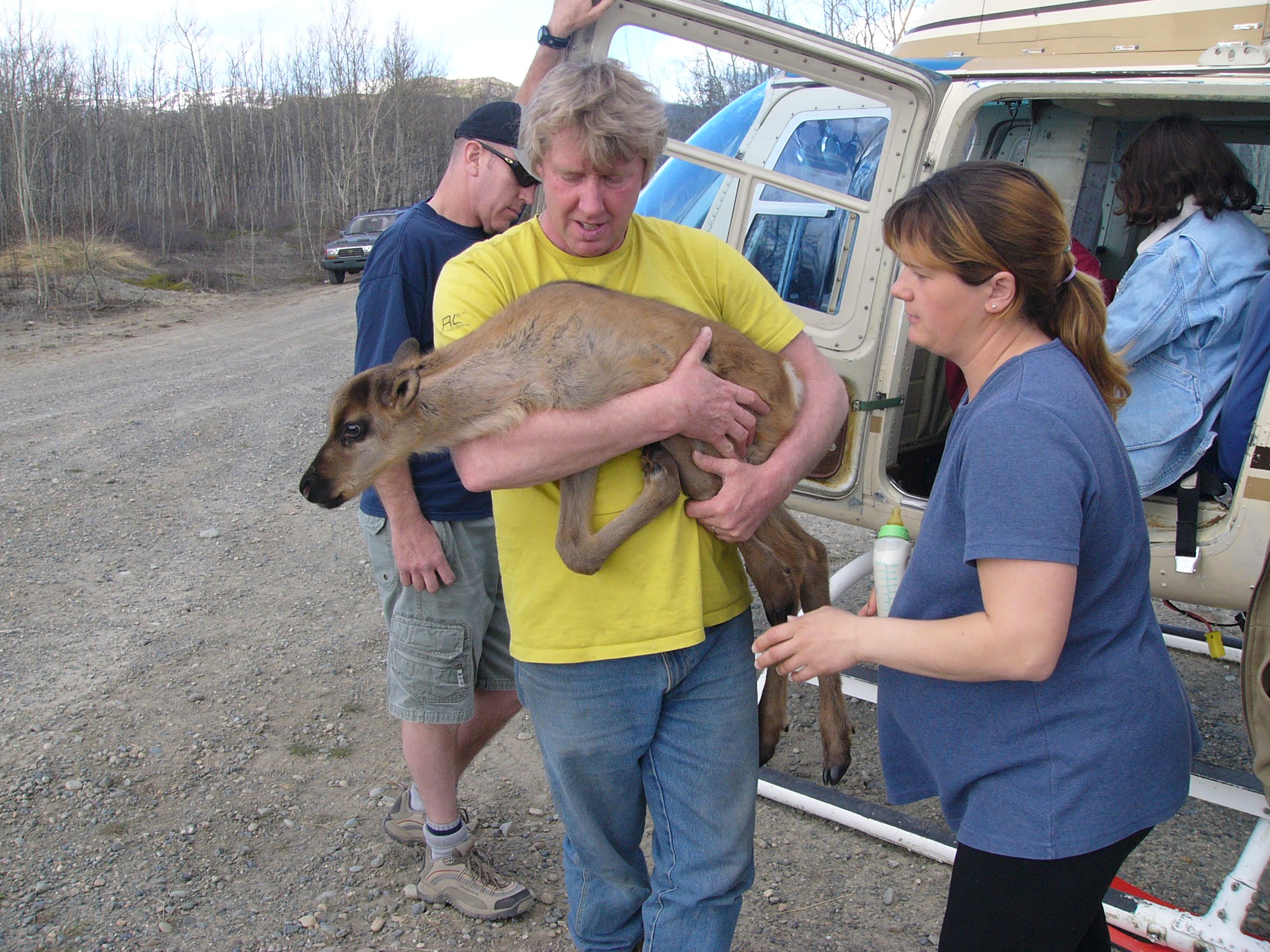
Randy & Dr. Maria Hallock with Bou the Caribou from the Chisana herd. 2005
Lindsay Caskenette

Lindsay Caskenette

Manager Visitor Services

Lindsay joined the Wildlife Preserve team March 2014. Originally from Ontario, she came to the Yukon in search of new adventures and new career challenges. Lindsay holds a degree in Environmental Studies with honours from Wilfrid Laurier University and brings with her a strong passion for sharing what nature, animals, and the environment can teach us.

867-456-7400
[email protected]

Explore by Category

Explore by Author

Yukon Wildlife Preserve
Box 20191
Whitehorse, Yukon
Y1A 7A2

Proud member of:

CAZA Logo

With the support of:
Yukon Government Logo
Muskox – I’m a Survivor!

Muskox – I’m a Survivor!

yukon wildlife

by Lindsay Caskenette | May 27, 2022

4 minute read - 

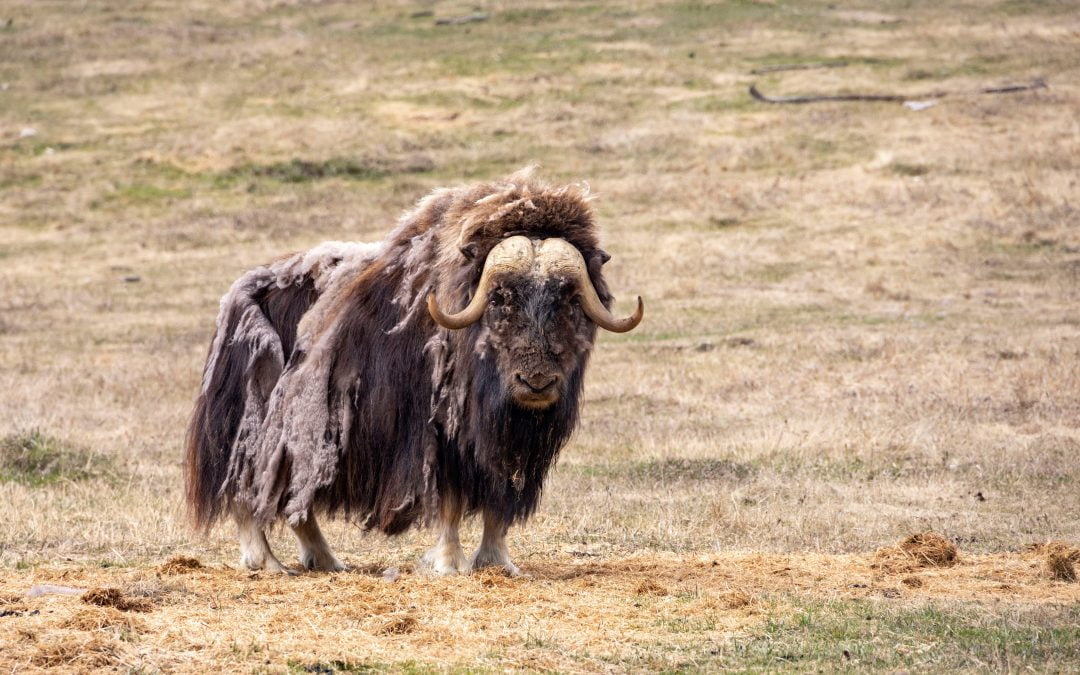
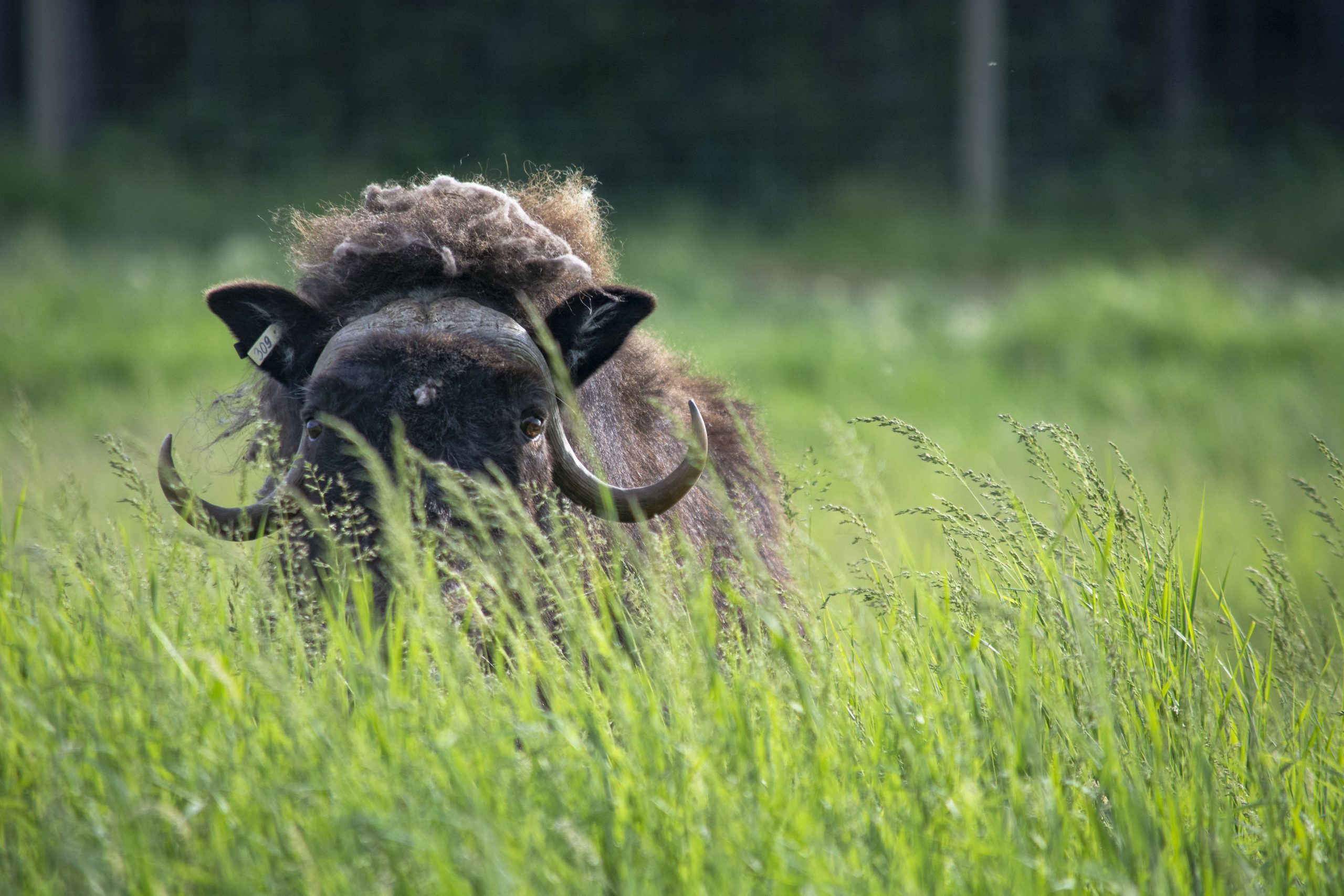
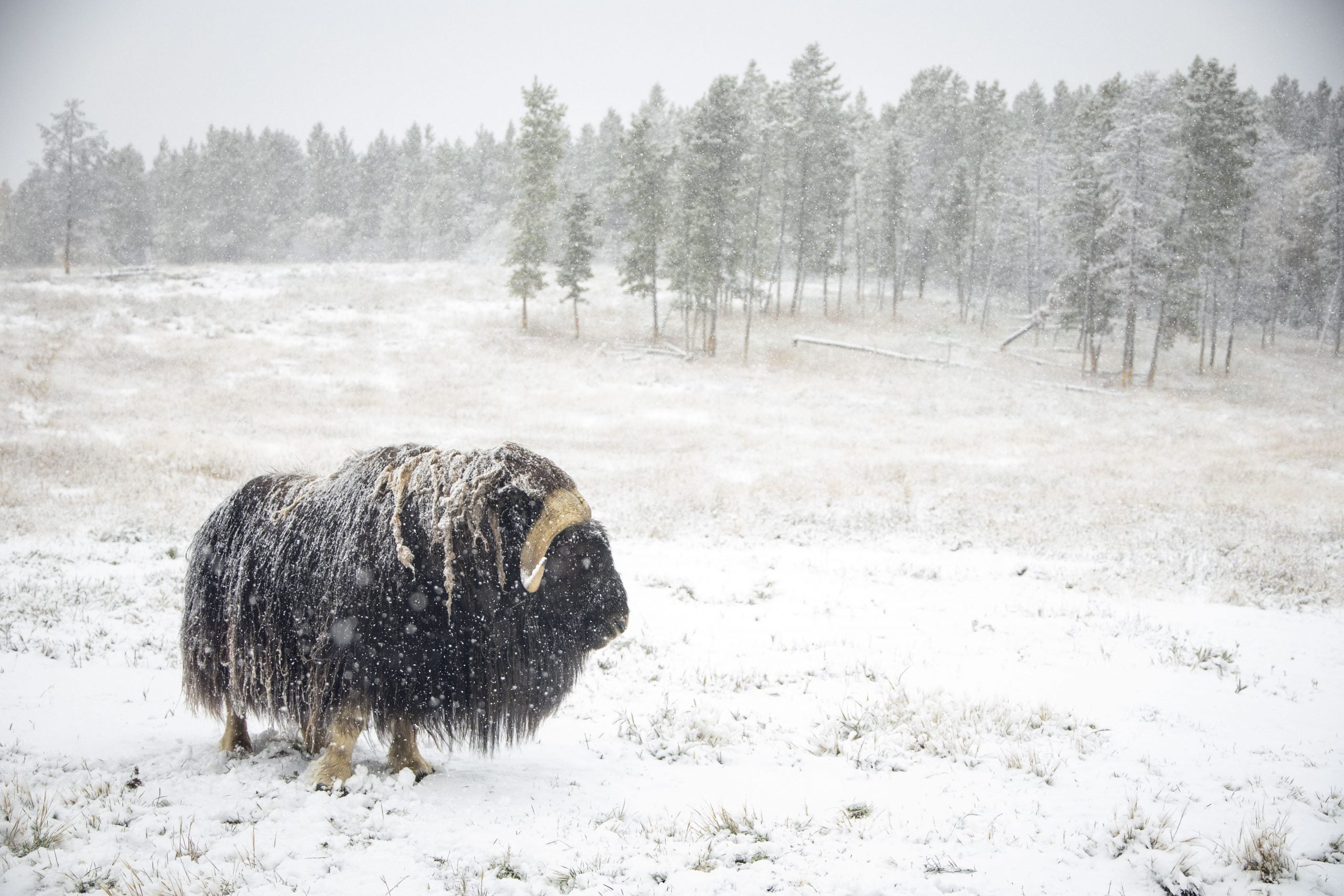
The muskox is an adaptable animal. In the face of climate change a generalist diet with a slow metabolism helped this species survive through the last ice age and to today while other megafauna, like woolly mammoths, went extinct.

During Beringia there were two types of muskox present on the extensive grassland biome - Ovibos moschatus, the tundra muskox that roams today, and Bootherium bombifrons, the helmeted muskox. 

The helmeted muskox did not survive the Pleistocene even though it was endemic to North America and had a wider range than its relative, the tundra muskox. If you could imagine this Beringian muskox was taller and more slender than those of the living tundra muskox and its wider range spanned an area from Texas all the way to Alaska. Like many of the horn and antler bearing animals of this era it was all about BIG, oversized, dramatic displays for sexual selection. The helmeted muskox had longer deeper skulls that supported higher and more flaring horns than the tundra muskox. But, size didn't get selected as most important for survival in this dramatically changing and climatically unstable landscape. It seems not only was smaller horns preferred through evolution but overall body size too - the less compact nature of this muskox might have played a role in its extinction along with many other large herbivorous mammals of its' time.  

The tundra muskox crossed the Bering land bridge from Eurasia into North America about 100,000 years ago. A more focused range and smaller size as well as thicker coat than that of the Bootherium, the Ovibos remains a resident of the Arctic landscape to this day. What's pretty incredible is that these muskox have changed, genetically, very little since their days on the Mammoth Steppe. The muskox of today's Arctic Archipelago are however much less genetically diverse than those that lived during the last Ice Age which suggests they were not completely unscathed during this time of climatic instability. Significant population and geographical range shrinkage restricted the tundra muskox to Greenland and much of the western Northern American Arctic populations are reintroductions from those limited genetics. The two types of muskox of the late Pleistocene did not mix genetically and the reduction of both species, including the extinction of the helmeted muskox, seem to exclude humans as a driving force behind these population dynamics into the Holocene.

Ovibos moschatus, the tundra muskox, was able to ride the waves of climate change over tens of thousands of years. Their adaptability to variability, including climate and thus vegetation quantity and quality, fostered this large Ice Age mammal to survive a formidable narrow niche of the Arctic biome to present day. What might the future hold for the muskox?

Photo credit L. Caskenette

Resources:

Thanks to Dr. Grant Zazula for taking the time share incredible insights into the past, into Beringia with the YWP crew! 

Ancient DNA analyses exclude humans as the driving force behind late Pleistocene musk ox (Ovibos moschatus) population dynamics. Paula F. Camposa, Eske Willersleva, Andrei Sherb, Ludovic Orlandoc, Erik Axelssona, Alexei Tikhonovd, Kim Aaris-Sørensena, Alex D. Greenwoode, Ralf-Dietrich Kahlkef, Pavel Kosintsevg, Tatiana Krakhmalnayah, Tatyana Kuznetsovai, Philippe Lemeyj, Ross MacPheek, Christopher A. Norrisl, Kieran Shepherdm, Marc A. Suchardn, Grant D. Zazulao, Beth Shapirop, and M. Thomas P. Gilberta.

Musk ox (Ovibos moschatus) of the mammoth steppe: tracing palaeodietary and palaeoenvironmental changes over the last 50,000 years using carbon and nitrogen isotopic analysis Maanasa Raghavan,, Gonçalo Espregueira Themudo, Colin I. Smith, Grant Zazula, Paula F. Campos

Tundra Muskox

Helemeted Muskox

Lindsay Caskenette

Lindsay Caskenette

Manager Visitor Services

Lindsay joined the Wildlife Preserve team March 2014. Originally from Ontario, she came to the Yukon in search of new adventures and new career challenges. Lindsay holds a degree in Environmental Studies with honours from Wilfrid Laurier University and brings with her a strong passion for sharing what nature, animals, and the environment can teach us.

867-456-7400
[email protected]

Explore by Category

Explore by Author

Short Eared Owl Release

Short Eared Owl Release

yukon wildlife

by Jake Paleczny | May 20, 2022

Video

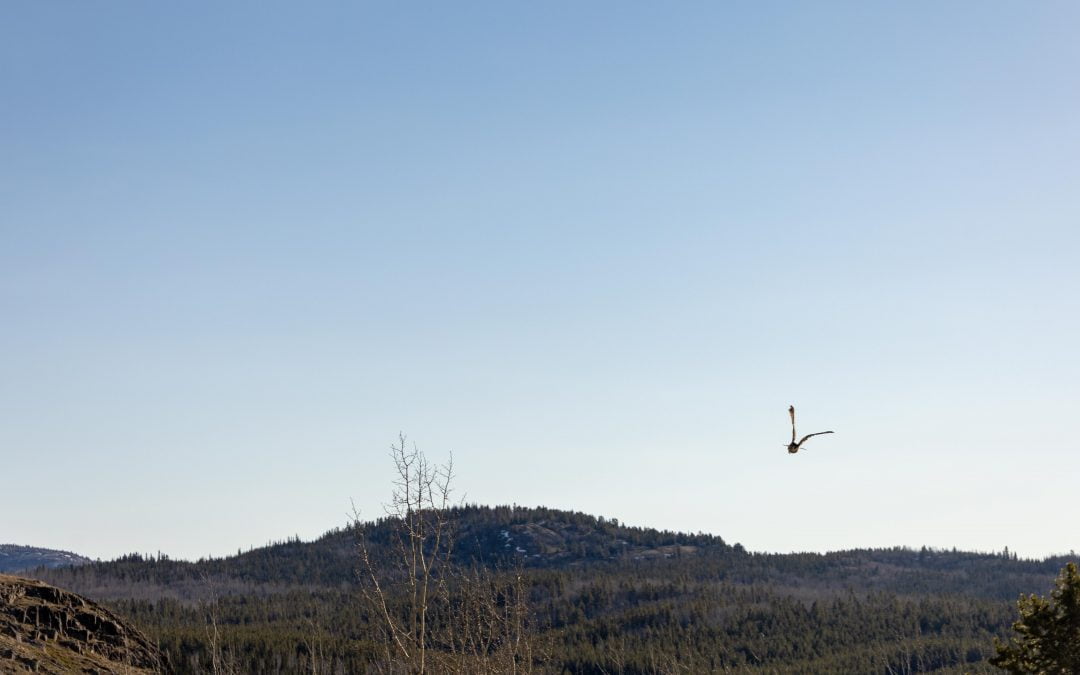
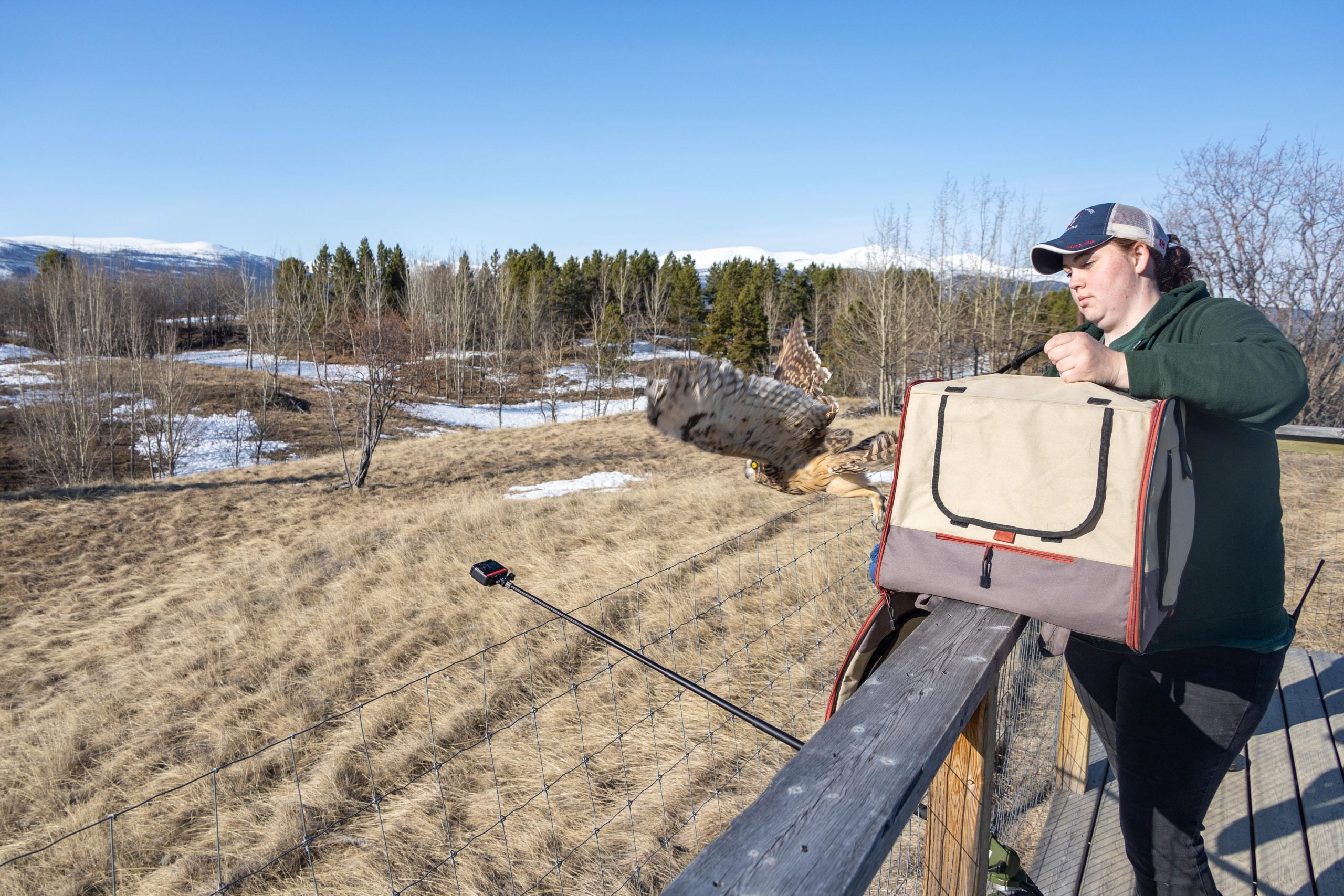
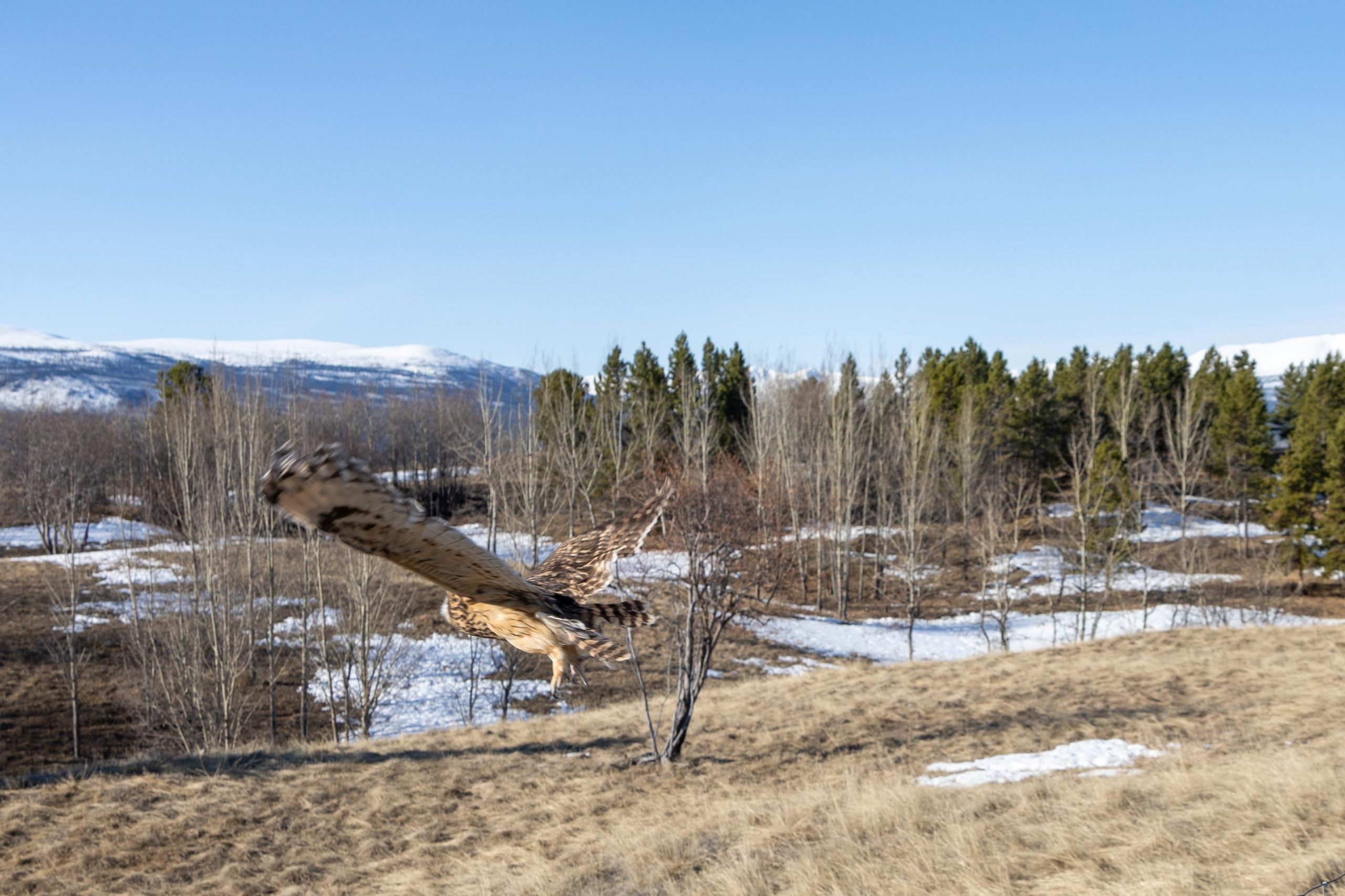
Join Animal Care Assistant, Erica as she shares the successful release story of a longer-term patient, a short-eared owl! 

The owl arrived in Fall 2021 and was released in Spring 2022.

Spring 2022 this owl was returned to the wild after being struck by a vehicle in August 2021 and suffering two broken legs.

It was a happy moment for Erica, as she spent the entire winter caring for the owl. At times it wasn't certain the owl would be able to return to the wild, to successfully be able to hunt after substantial injury to both its legs. 

Photo credit: J.Paleczny

Jake Paleczny

Jake Paleczny

He/Him - Executive Director/ CEO

Jake Paleczny is passionate about interpretation and education. He gained his interpretative expertise from a decade of work in Ontario’s provincial parks in addition to a Masters in Museum Studies from the University of Toronto. His interests also extend into the artistic realm, with a Bachelor of Music from the University of Western Ontario and extensive experience in galleries and museums.

867-456-7313
[email protected]

Explore by Category

Explore by Author

Northern Neck Tubes

Northern Neck Tubes

yukon wildlife

by Lindsay Caskenette | Oct 29, 2021

6 min read

The Visitor Services team is working hard to connect with local artist to bring the connections to nature home with you. We strongly feel that by taking the time to explore these partnerships we can create unique items that guests to the Preserve can take home all while knowing their purchase in the Preserve's Little Gift Shop not only supports these northern people but all revenue from the retail sales goes back into the operations of the Preserve, supporting the northern animals in our care.

Right now the Preserve does not do online sales. We're a really small team that is situated out of town, and with some staff also living out of town, doing online sales and shipping feels a bit outside our capacities for the time being. 

• • •

Photo of moose in water.

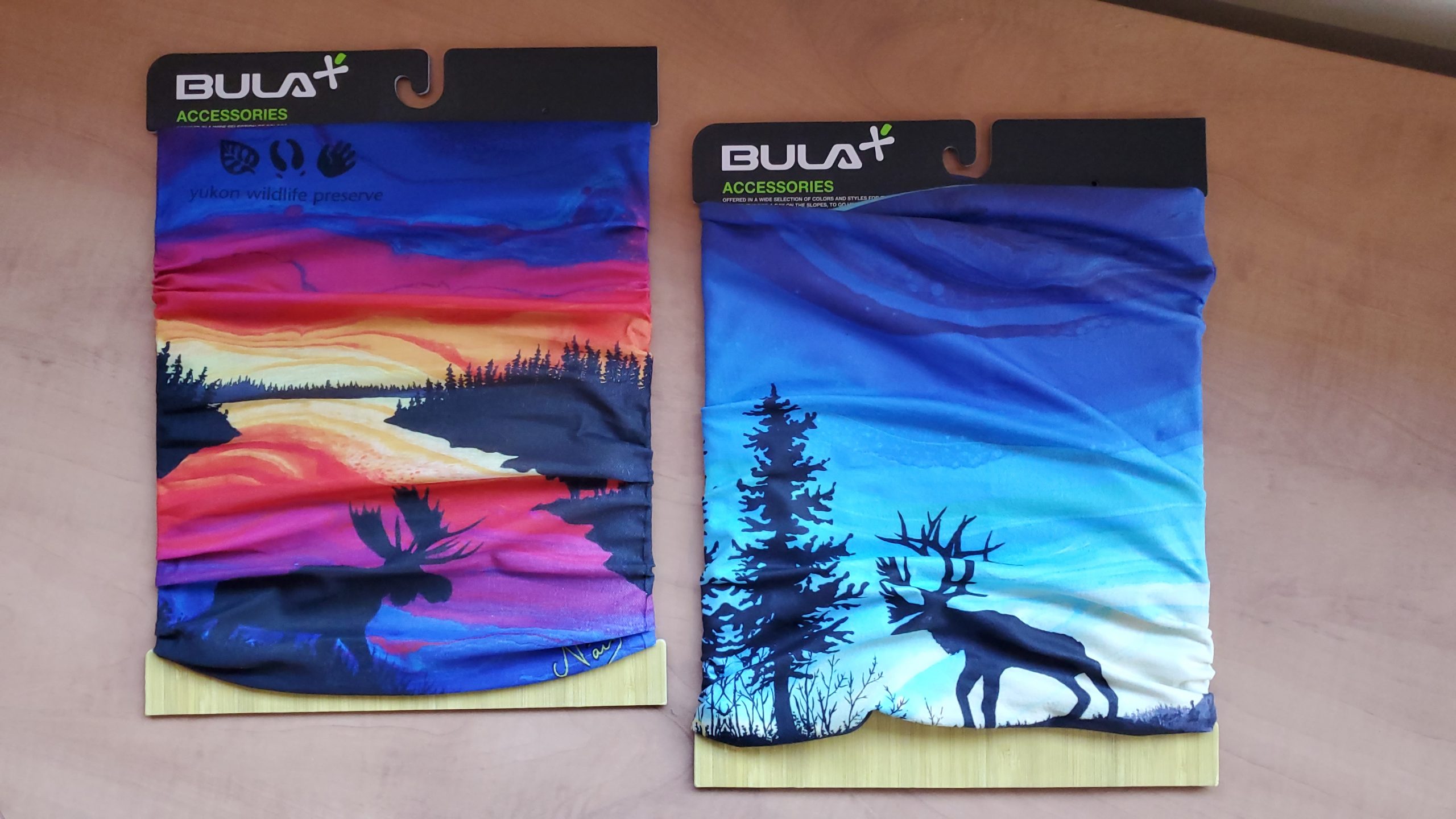
This artist collaboration was an incredibly fun and colourful one - Niki Parry was the perfect artist to do a neck tube collab with given her use of silhouttes on vibrant beautiful and colourful landscapes.

Whatever you call them - neck tubes, neck gaiters, buffs, neck warmers (and now, sometimes facemasks) they are a staple of year-round outdoor gear and you can never have too many.

• • •

We reached out to Niki in September of 2020 to see if she was interesed in working on this idea with YWP. Niki jumped on it and in the following months we started sorting out details of design ideas and applications. 

We sought after Yukon Wildlife Preserve inspiration from the landscape and the animals. 

Two photos inspired Niki especially once we decided what species we wanted to capture. 

• • •

Photo credit: J.Paleczny

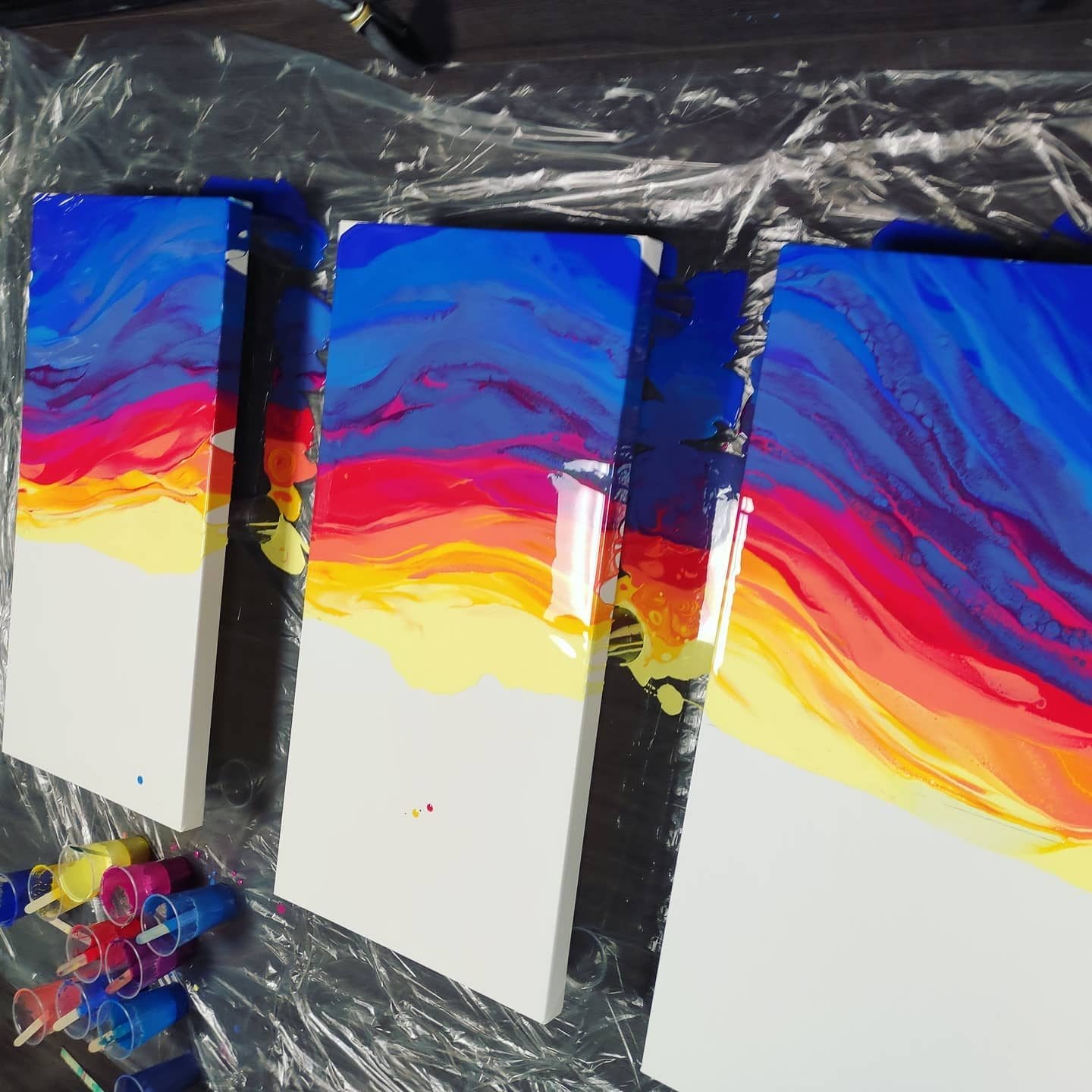
Niki Parry is a visual artist working primarily in acrylic paint.  Her artwork represents natural scenes with an element of abstract.  She works with bright vibrant colours and creates dynamic abstract landscapes utilizing silhouettes to create an intense contrast and bring the scene to life.    

Niki has worked with many different types of artwork throughout her life, drawn primarily to the projects where she can focus on and explore colour.  Niki was introduced to fluid acrylics six years ago and fell in love.  The combination of playing with colours in that dynamic fluid form and the process of creating joyful natural landscapes from these images had her hooked.  She has been intensively developing her painting skills and techniques ever since. 

• • •

Photo of team providing care for moose in the field.

Niki's artistic process involves two separate components, one for creating the background and the second for hand painting to complete the scene.  The backgrounds are created with fluid acrylic paint, where acrylic paint is diluted with mediums to become runny. 

• • •

Photo of staff using stethoscope to listen to moose heart rate.

The paint is then poured onto the canvas, rather than using a brush.  It is then manipulated by moving the canvas around with gravity and other tools to mix the paint on the canvas.   Once the background is completed, then it takes 24 to 48 hours to dry before it can be moved, or else the paint will slide off the canvas.

• • •

The secondary process involves working with the background to determine how the final painting will come together.  Generally there is a plan for the background; however, with fluid paint it can be difficult to completely control all the exact details of how it will come together.  This is part of the beauty of the process, the balance between control and working with what presents itself.  The design for the painting is finalized once the background is fully dried, and the final plan for the composition is created.  The final image is created with acrylic brush painting. 

• • •

Photo of staff using stethoscope to listen to moose heart rate.

We worked with Corina at Taku Sports Group Inc. and Bula Canada to take Niki's artwork and make it perfectly fit onto two different neck gaiters - one, a single layer do it all tube featuring two moose and a double layer, reversible fleece perfect for winter warmth featuring of course the northern iconic caribou!

• • •

These special neck tubes will be available at the Preserve's Little Gift Shop. Niki will also have a few on hand at both the Cranberry Fair and the Spruce Bog Christmas Boutique. Both are great events to check out and support local buinesses, and artists like Niki Parry! 

• • •

Photo of staff using stethoscope to listen to moose heart rate.

Niki's goal for creating artwork is to bring a smile to your face and lift your spirits.  She finds a great deal of happiness in creating these images and loves to share her uplifting artwork with others.

We are so grateful  (and pretty darn excited) to have worked with Niki and share her vision. We endeavour to source and support local and share a product that helps you tackle all the outdoor feats while looking extremely fashionable and warm.

From Bula - Stay Warm, Play Longer

• • •

Single Layer tube                           $38
Double Layer reversible tube       $44

Photo of staff using stethoscope to listen to moose heart rate.
Lindsay Caskenette

Lindsay Caskenette

Manager Visitor Services

Lindsay joined the Wildlife Preserve team March 2014. Originally from Ontario, she came to the Yukon in search of new adventures and new career challenges. Lindsay holds a degree in Environmental Studies with honours from Wilfrid Laurier University and brings with her a strong passion for sharing what nature, animals, and the environment can teach us.

867-456-7400
[email protected]

Explore by Category

Explore by Author

Yukon Wildlife Preserve
Box 20191
Whitehorse, Yukon
Y1A 7A2

Proud member of:

CAZA Logo

With the support of:

Yukon Government Logo
Northern Wildlife Inspired Artwork

Northern Wildlife Inspired Artwork

yukon wildlife

by Lindsay Caskenette | Sep 2, 2021

5 min read 

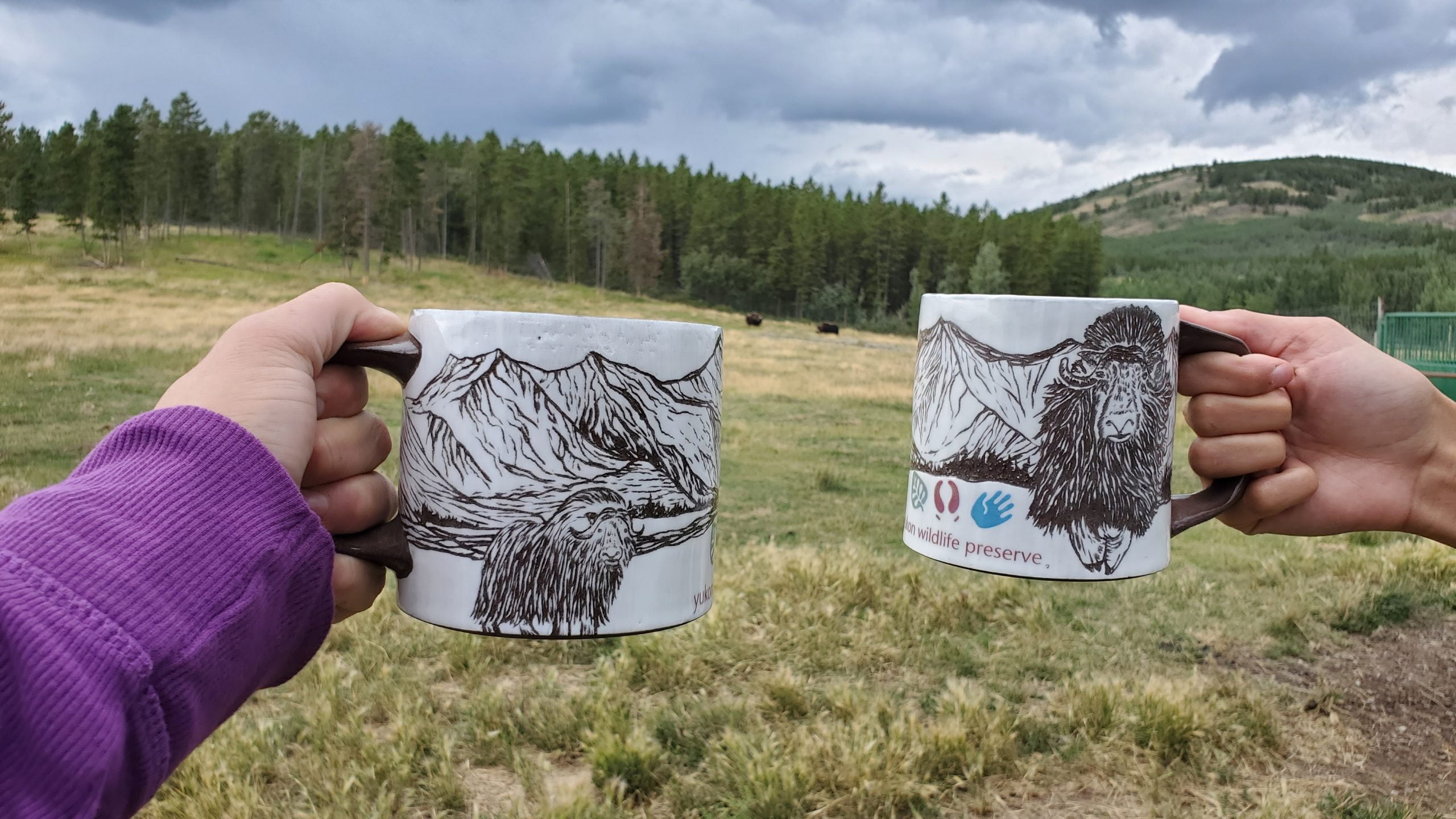
These mugs have literally been years in the making. Lindsay, Manager of Visitor Services has been working with local ceramic's artist Astrid Kruse to create something exceptionally unique for the Yukon Wildlife Preserve and its visitors. 

The Visitor Services team are working hard to connect with local artist to bring the connections to nature home with you. We strongly feel that by taking the time to explore these partnerships we can create unique items that guests to the Preserve can take home all while knowing their purchase in the Preserve's Little Gift Shop not only supports these northern people but all revenue from the retail sales goes back into the operations of the Preserve, supporting the northern animals in our care. 

• • •

Photo of moose in water.

Astrid has a strong connection to Canada's North, having grown up in Yellowknife, NWT she moved to the Yukon in 2016 and this is where the connection with the Preserve started. Her ceramic practice has taken her many places outside of the North, taking courses, providing workshops, and a year-long residency in Alberta. When family called, Astrid made the move out east but continued to work on this special ceramics project with the Preserve. 

Astrid's work has always been influenced by her physical environment, the land and animals so it was a natural fit to work together. 

• • •

Photo Credit: Astrid Kruse Instagram

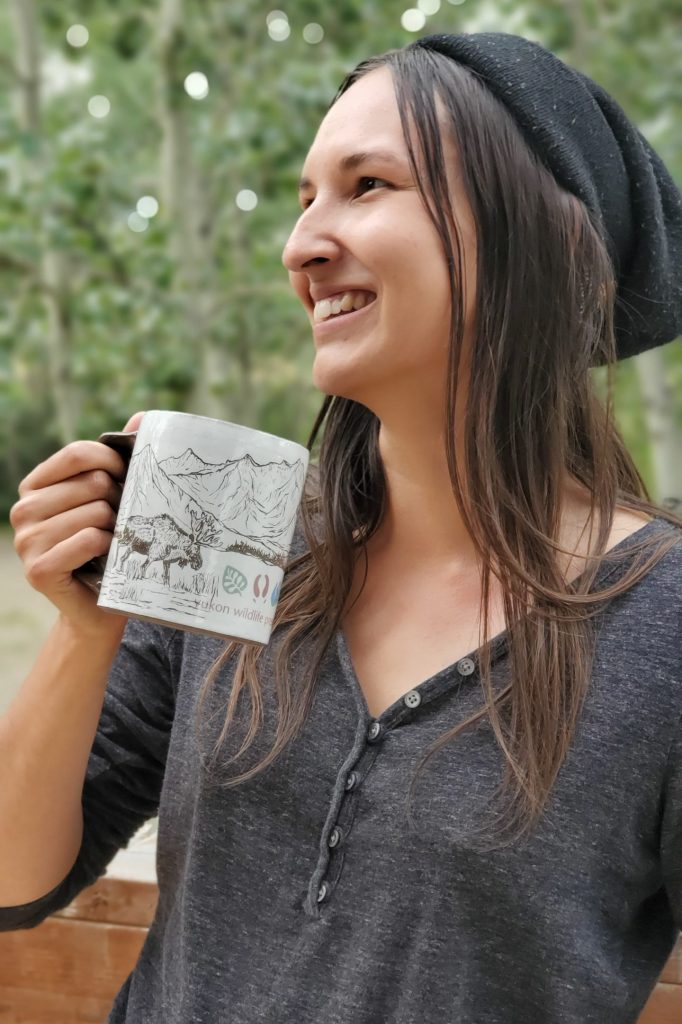
The mugs Astrid has created for the Wildlife Preserve are one-of-kind and limited! A custom order with our logo required two firings - making the mugs incredibly strong and durable and with a crystalline glasslike form. Each mug is unique from the size and shape to the design itself. Hand made and hand drawn using a special technique called sgraffito which is a delicate scratched design on the clay make each ceramic mug a one-of-a-kind, work of art. 

• • •

Photo of staff giving moose oxygen.

Just as Astrid is inspired by the land, she used the Preserve's animals and landscape to inspire her artwork. The small details of the mugs include species specific tracks on the handle and a large track on the bottom of the mug. 

• • •

Photo of team providing care for moose in the field.

The handle of each mug has a large thumb placement to ensure you can thoroughly enjoy that full morning cup of java.

• • •

Photo of staff using stethoscope to listen to moose heart rate.

Muskox approved!

These mugs can be purchased exclusively on-site at the Preserve's Little Gift Shop. They retail for $72.50.

• • •

Spring (mid-May) 2023, mugs are back! BUT, a very limited supply of Caribou design only! 

The mugs (43 of them) were first featured in the Little Gift Shop, August 14 2021. Two weeks after their debut they were half sold out! 

Photo of staff using stethoscope to listen to moose heart rate.
Lindsay Caskenette

Lindsay Caskenette

Manager Visitor Services

Lindsay joined the Wildlife Preserve team March 2014. Originally from Ontario, she came to the Yukon in search of new adventures and new career challenges. Lindsay holds a degree in Environmental Studies with honours from Wilfrid Laurier University and brings with her a strong passion for sharing what nature, animals, and the environment can teach us.

867-456-7400
[email protected]

Explore by Category

Explore by Author

Yukon Wildlife Preserve
Box 20191
Whitehorse, Yukon
Y1A 7A2

Proud member of:

CAZA Logo

With the support of:

Yukon Government Logo