Wild Spring Adventure!

Wild Spring Adventure!

yukon

6 minute read (and/or) watch the video!

Spring is the sign of new life! It’s the circle of life intertwined and flourishing from increased sunlight.

It’s a time of birds migrating. Some, like swans, stop only a short time on their way to nesting grounds further north; some stay for the season, like the chickadee and bluebird - they build nests, attract mates and raise their families.

There’s a saying - “Spring is in the air” - that implies a renewal of spirit and perhaps a bit of friskiness in certain species, like Red Foxes, that may lead to becoming parents to this year’s young (or perhaps they already ARE parents!). Of course, some species breed in the autumn, so that as spring progresses, we will start to see babies being born - at Yukon Wildlife Preserve we are hopeful that we will see Bison, then Caribou calves in the coming weeks and months. We expect to see wild fox kits and ducklings as well.

At the Preserve, Arctic Ground Squirrels started popping their heads above ground April 7 this year, with the males the first to break their winter hibernation. Juveniles and females are soon to follow their lead. We see, sitting on the cliffs and soaring above fields, birds of prey like bald eagles, coming in to hunt this prolific prey species. Spring is a notable return of the constant cry of alarm calls of ground squirrels, as their many predators hunt them from land or sky - displaying the full Circle of Life.

New growth has begun with grasses and early flowers like crocuses, to name only two plant species. This is important nutrition to many animals after a long cold winter, and grazers like Thinhorn Mountain Sheep can be found on south facing slopes, enjoying the tender new shoots, and the ease of eating, now that the deep snow has melted.

Crocuses are one of the first signs of spring - and important nutrition to many animals after a long cold winter.  Here we see a very early crocus found by the authors on their spring adventure hike at Yukon Wildlife Preserve.   Photo by Lindsay Caskenette

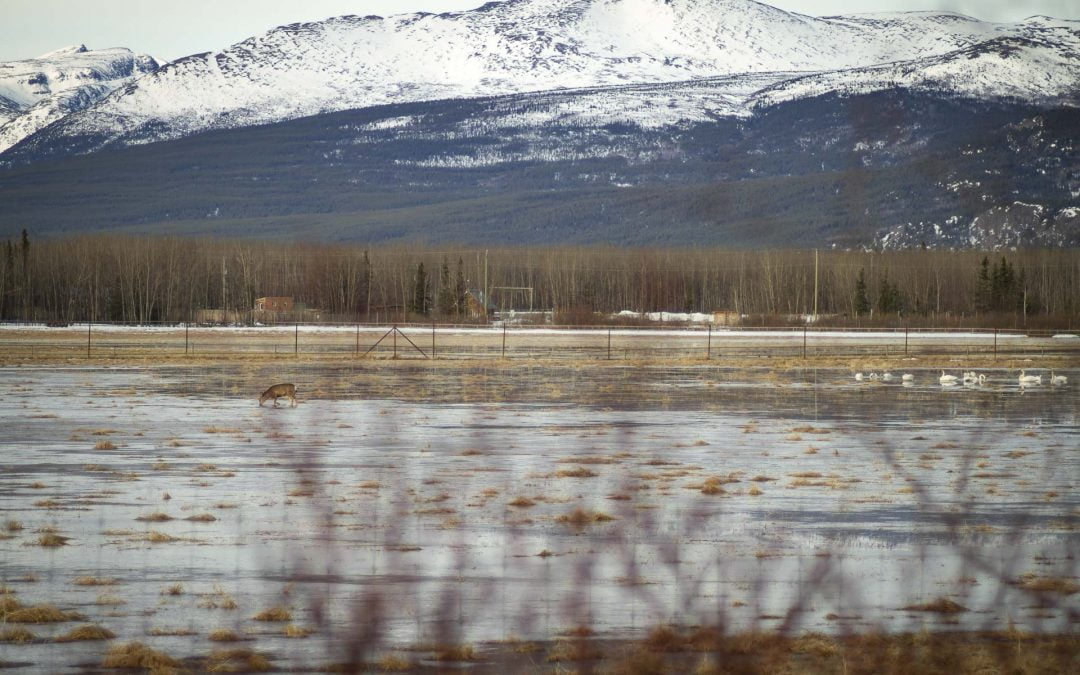
Water, water, water everywhere! Swans have returned with a splash - their honking fills the air with the best kind of noise as they stop over to feed while on their long migration to their northern nesting grounds . There is a year round marsh in the moose habitat at the Preserve, but the seasonal one next door in the mule deer habitat seems to be preferred by the swans - to the seeming curiosity of one of the female mule deer.  Everyone seems to love jumping and running through puddles, no matter how big or small the puddle…..or animal…..moose, humans and muskox! After a winter of conserving energy while food is scarce and energy is focused to survival, jumping in a puddle can lead to manic runs around the yard (or habitat). It seems spring can be about fun and burning off extra energy!

Swans have a long migration in the spring - open water at Yukon Wildlife Preserve is a frequent stop over for food and rest by migratory birds.  Some, like bluebirds, stay for the season, some, like the swan, typically move on to nesting grounds further north.  Photo Lindsay Caskenette

When you need a meal, sometimes you have to “spring” into action. Lynx are natural jumpers and we took the opportunity to provide enrichment to our resident lynx females by placing their food in trees. In the wild, lynx prefer snowshoe hare and will use powerful leaps to catch their meal within only a few “springs”....we mean jumps…..

Limited smells in winter mean that spring unearths a plethora of new scents on the air. Red Fox have an excellent sense of smell, making it easy for them to follow their nose to food sources. When they’ve eaten their fill, they will cache extra food as snacks for later. They keep an eye and ear out to avoid anyone following them to their cache site - other foxes and many birds in the Corvidae Family - grey jays, magpies, and ravens are known to steal their snacks.

Whether you’re human or animal, winter coats are shedding - and that wool, hair and fur can be found on the environment - rocks, trees, and fences (and sometimes finds its way into lining the nests of birds and small mammals like ground squirrels…..)  Shedding coats leads to a period of time not known for its fashion sense….and much shagginess in animals like bison.

Winter is over and the cycle of the year continues. Spring arrives, bringing increased sunlight and changes in everyone’s behaviour and appearance - humans and animals alike. We shed layers, feel the sun on our faces, enjoy the smells and the sounds of life renewing around us. We experience a rejuvenation of our spirits. Be well and enjoy spring, wherever you are.
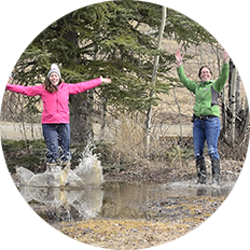
Lindsay Caskenette & Julie Kerr

Lindsay Caskenette & Julie Kerr

Visitor Services Manager and Visitor Services Coordinator

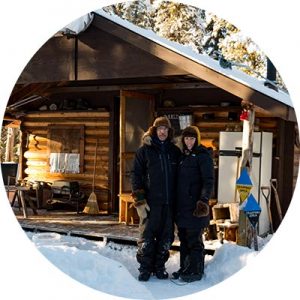
Lindsay and Julie love to share the Preserve the same way they explore life – full on and full of adventure!  They have a collective love of:  Animals....Lindsay dogs, Julie foxes; Adventure.... Lindsay dog mushing, Julie extreme camping;  both take on animal personas during story telling.  Together they support the Preserve with a strong Visitor Services presence and often, they even get work done (this happens most often when the other one is out of the office).   

867-456-7400
 info@yukonwildlife.ca

Explore by Category

Explore by Author

Wandering Wood Bison

Wandering Wood Bison

yukon

by Sarah Stuecker | Apr 28, 2020 | 2 comments

7 minute read - "Winter Is Here" series continues with the true behemoth of the north - Wood Bison! 

At first glance, the Wood Bison (Bison bison athabascae) seems to be ill-suited to live in the far North.  Especially when we think about its Southern cousin, the Plains Bison (Bison bison bison), which historically has made its home on the rolling hills and endless grasslands of the prairies.  It seems fairly safe to assume that compared to the prairies, it is a completely different game of horns to survive the winter in the Yukon.  Extended periods of extreme cold, a short growing season - hence relatively scarce food sources, combined with unforgiving, mountainous and swampy terrain pose a different set of challenges.  Yet bison are thriving - how do they do it?  Through a series of adaptations in structure, behaviour and physiology, we will see that Wood Bison are in fact quite at home in the far North.

The Wood Bison is a giant:  the largest living land mammal in North America.  Males can weigh up to 2000 pounds, which is up to 30% larger than its Southern relative; * roughly *  the difference between a SmartCar and a VW Golf.  In colder climates it actually pays to be bigger! Larger individuals (which have a smaller surface area-to-volume ratio) are better at retaining heat. This rule of nature is known as Bergmanns Rule. A pattern, where species tend to be larger in colder climates than similar species of the same genus living in warm climates, is certainly not law - not all species of nature comply with it.  Yet, bison do, and living large in a cold climate means the more fat you can store to help you get through winter. 1[Read more about the complexity of nature pertaining to Bergmanns Rule

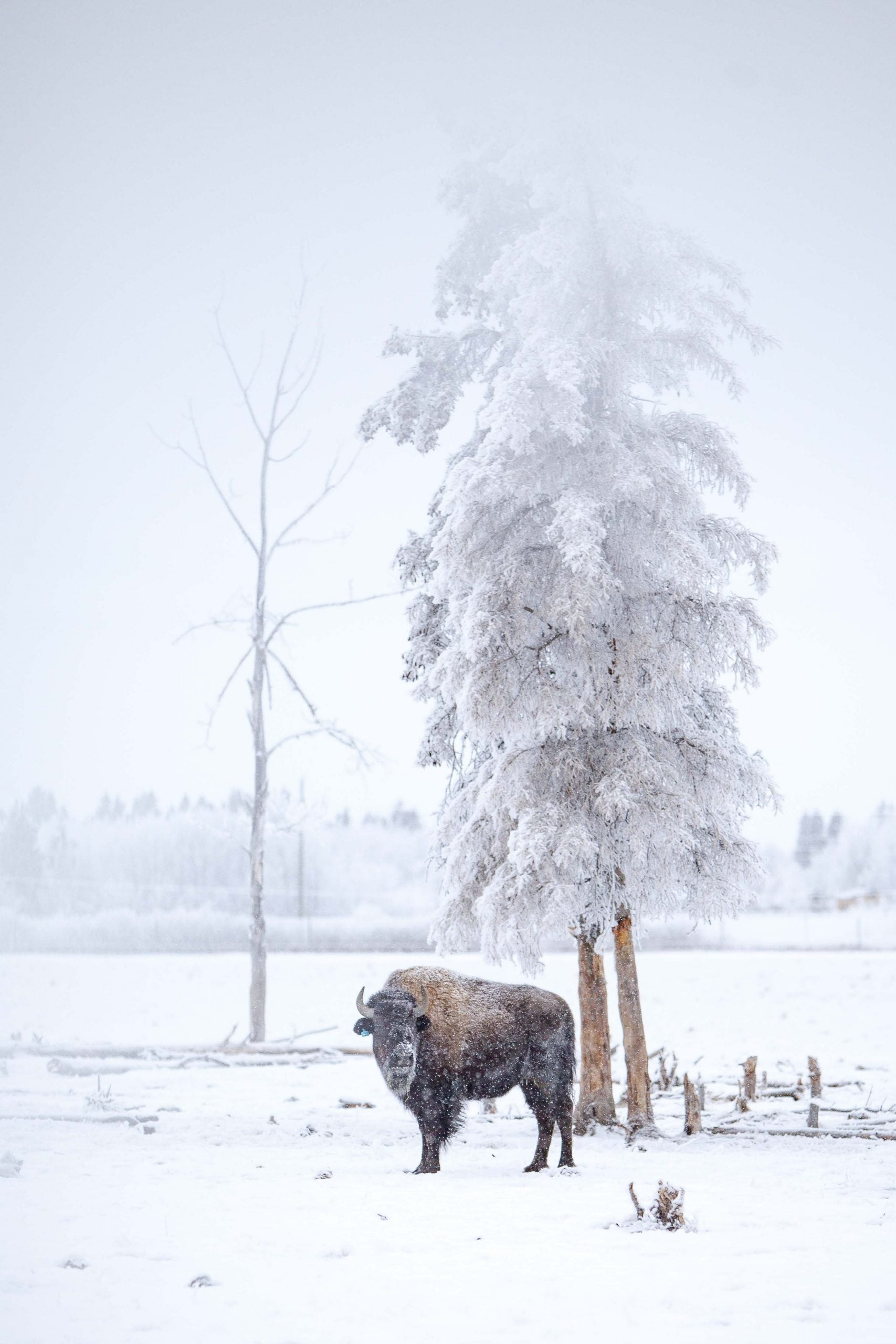
Two Wood Bison bulls at the Yukon Wildlife Preserve. Take note of the large shoulder hump and the massive head and broad face. 

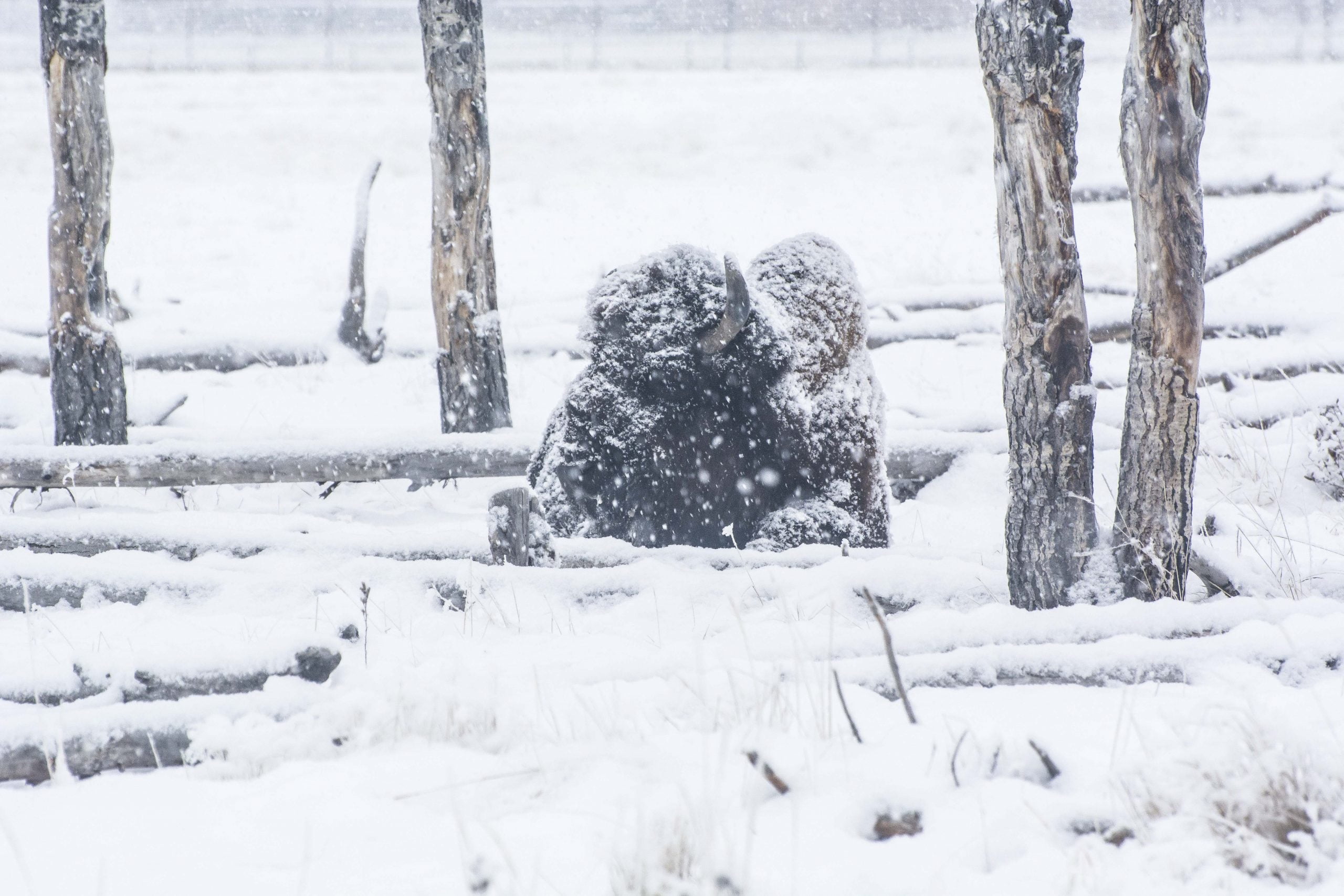
Beyond size, additional adaptations assure the success of Wood Bison including a very thick and woolly winter coat. This extremely dense coat of durable hair is so warm, combined with that retained body heat, and incredibly thick skin, falling snow that accumulates on its coat does not melt, thus keeping them dry and warm. 

Foraging for food in the winter is a challenge - summer vegetation is buried in deep snow and is of low nutritional value. Wood Bison “dig” for food by swinging their large, heavy heads. Within that big hump on their shoulders are long spines on the vertebrae, muscles and ligaments which support large neck muscles and the head. Now you know – that big odd hump on their shoulders is not just fat – it is a vital tool for their survival.

To manage decreased food availability and quality bison cannot just simply eat more food, more often, to sustain itself. As an ancillary adaptation, and most fascinatingly, Wood Bison are able to slow their metabolism during winter as a way to conserve energy. Just like cows, grass is a bison's staple food in the wild but it does not contain many nutrients in the winter. By slowing down their metabolism it also slows down digestion, thus the food is kept longer in the intestinal tract which allows them to draw more energy out of one feeding. Rather than putting out critical energy by digging through snow (with their giant head!) and foraging for food, they can instead conserve energy by slowing their metabolism and getting more available nutrition from one feeding. This slowed digestion is doing double duty for the bison. As they are able to squeeze every bit of nutrients from a feeding this anatomical process is also producing valuable internal body heat.

In the Yukon landscape, Bison have been roaming for millennia; first as the Steppe Bison, predecessor to the Wood Bison.  Due to a number of reasons however, they became extirpated in their Yukon homerange in the early 1900’s.  It is believed it may have been a combination of habitat loss due to climate change, disease and human predation.  In the 1980’s, the Yukon Government joined the National Wood-Bison Recovery Program and re-introduced a herd of about 170 bison.  Since then, Yukon’s wild Bison have re-adapted to life in the North - quite well too! Making best use of their terrain, they seek shelter in treed valleys when the weather gets nasty.  Interestingly, they can also be found on alpine plateaus up to 5000ft.  High altitude meadows are exposed to wind, which reduces the snow cover and allows the bison to find the underlying grass more easily. Typically good habitat for bison; however when winter weather patterns swing it can add additional challenges to these food driven behemoths. A sudden warming in the winter of 2018 caused peril for a few of these wandering bison.  2An odd case of bison death in the Yukon

Consciously or not, wood bison may make use of a weather phenomenon that sometimes occurs when temperatures drop:  the inversion layer. Under some conditions, a layer of cold dense air accumulates in the valleys and without wind, may stay there for days.  Meanwhile, on the mountain tops the air can be up to 20C degrees warmer - well worth undertaking the climb.  One could argue, with all science put aside and simply as the Kings and Queens of living large, they might like to hang out on top of their kingdom.  If this was me living out there, that’s what I would do!

These mighty large creatures might seem fairly sedentary but their numbers have grown strong and steadily since re-introduction. They have proven their adaptability to varying habitat; moving among forested stands and meadows, alongside caribou and moose, to wandering hill-side, among mountain sheep. They are a formidable ungulate, and one of the most, among the prey animals in the Yukon. Their massive size and mass consumption of greens is not to be mistaken for sluggish or unresponsive carriage. Wood Bison are intelligent animals that are quick on their feet when needed. Their ability to outrun predators such as wolves or humans is unprecedented. These monumental animals could quickly leave you in the snow-dust as they purposefully trek their northern landscape in order to thrive.

Sarah Stuecker

Sarah Stuecker

Wildlife Interpreter

As a wilderness guide, Sarah has spent many days out in the bush over the years. Sitting out there glued to the scope is just as fascinating to her as observing and following animal tracks in the depth of winter, trying to draw conclusions of what this particular critter might have been up to. Sarah is passionately sharing her stories as part of our team of wildlife interpreters. 


867-456-7300
 info@yukonwildlife.ca

Explore by Category

Explore by Author

Roam and Reign – “Winter is Here” Caribou Edition

Roam and Reign – “Winter is Here” Caribou Edition

yukon

by Sarah Stuecker | Mar 20, 2020 | 3 comments

6 minute read – “Winter Is Here” series begins with the "king of the tundra" – Caribou!

Here comes the king of the tundra. Being one of the few animals escaping the mass extinction of species after the last ice age, caribou are royally adapted to life in the North, which happens to be predominantly winter season! In the wild, they live all across the circumpolar region, including Europe and Russia, where they are called Reindeer. Both Caribou and Reindeer are the same species, only the Reindeer is generally a bit smaller and most herds on the Eurasian continent are actually domesticated. The Wildlife Preserve is home to a group of the Boreal Woodland Caribou, the largest representative of its kind. 


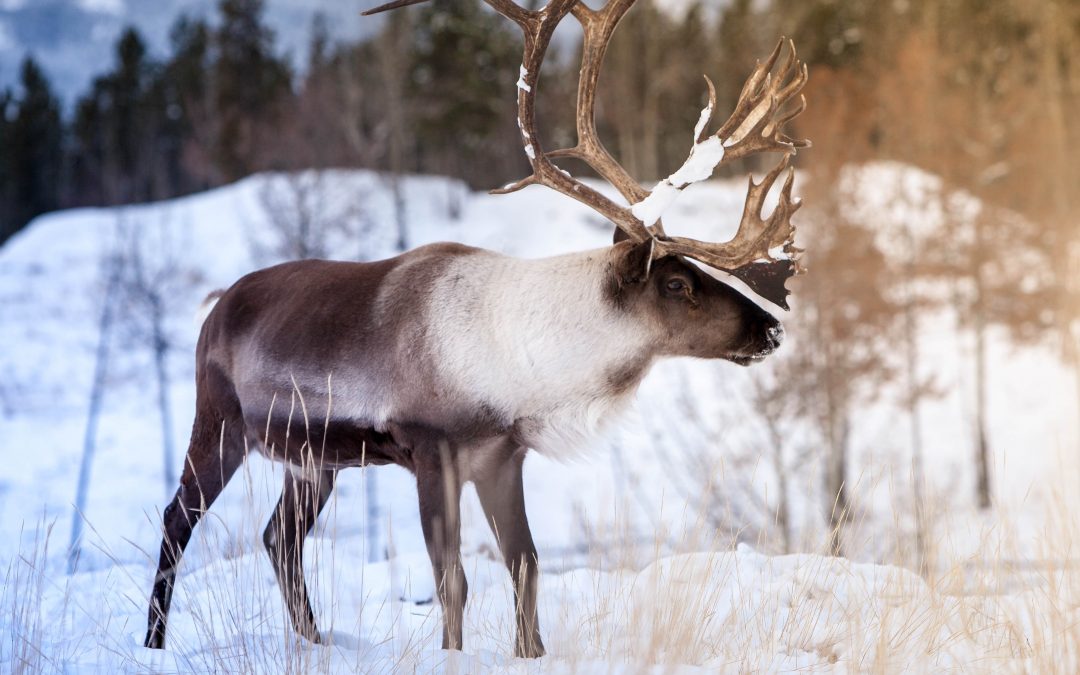
Compared to their body size, Caribou have relatively large, split-hooves which they can spread the toes out wide. This enables them to distribute their weight onto a larger surface and walk across snow, ice and sort-of-frozen swamps more efficiently. Their hooves also harden up in the winter and become overgrown by hair. The hair insulates the live, fleshy inside part of the hoof from the cold and the hardened horn on the outside helps them to paw through the snow cover to get to their food. 

Like most arctic animals, their posture is stocky and compact, in order not to lose too much body heat. A crucial addition to body shape is their coat. Like most dogs, caribou have a double coat with a softer underlayer and a coarse outer layer. This prevents heat loss but also from getting wet when they lie in the snow for example. Hairs of the outer coat are hollow, which offers further insulation. 

Even their noses are designed for the cold – the inner bones are shaped to increase the surface area inside the nostrils so when they breathe in the cold air, it has more time to warm up within the body before reaching the lungs. And on the way out, the air is cooled down on the way and most of the body heat is retained before breathing it out. Have you ever noticed steam coming out of a caribou’s nostrils? Neither have we and that’s why. 


Caribou and reindeer follow ancient migration routes throughout the seasons. Some just change a mountain range to get to their winter food supply and spring calving grounds, others travel over hundreds of miles to get to a different habitat. Their roaming is also believed to have evolved following environmental conditions. Compared to the storm-beaten, treeless tundra, the boreal taiga forest offers better shelter and easier access to food due to thinner snow cover. 

In the wild, the Caribou’s main diet is an algae-like organism called lichen. It grows on rocks and on specific soil conditions such as the wide pine tree stands of the boreal forest. The animal reaches its food by pawing away the snow on top of it with their hooves or scratching it away with their antlers, sometimes even pushing through thin ice layers. As well adapted as caribou have become over millennia, the – in evolutionary terms – recent climate change poses entirely new challenges. Temperatures don’t always remain below freezing all winter. There are so-called warm spells, where snow on the ground melts and re-freezes as a thick, impenetrable layer of ice once temperatures drop again. This can – and has been – detrimental to the survival of the caribou. While their technique with hooves and antlers works well in the fluffy, powder-like snow that falls in dry northern climates, intermediate melting of the snow cover, increased humidity from lack of sea ice and in some cases even freezing rain – make it impossible for caribou to punch through the thick layer of ice in order to get to their food. In 2016, tens of thousands of reindeer died of starvation during exceptional weather conditions. 

Caribou at the Preserve fare quite well even in those exceptional weather conditions. Staff monitor and feed animals daily. In the summer the individuals are able to bulk-up on plenty of high nutrient foods.  It's important that wild caribou populations have good summer food sources to consume for both the success of their offspring and ultimately their species! Protecting these special places so caribou can thrive has been an on-going effort in the territory and beyond. In the territory and specific to woodland caribou the rebounding Southern Lakes Caribou sub-population has been a long but successful story by many . We have been able to expand our learning and understanding to these animals' needs, movements and adaptations in a ever changing world.  

Sarah Stuecker

Sarah Stuecker

Wildlife Interpreter

As a wilderness guide, Sarah has spent many days out in the bush over the years. Sitting out there glued to the scope is just as fascinating to her as observing and following animal tracks in the depth of winter, trying to draw conclusions of what this particular critter might have been up to. Sarah is passionately sharing her stories as part of our team of wildlife interpreters. 


867-456-7300
 info@yukonwildlife.ca

Explore by Category

Explore by Author

Cliff Hanger at Dawn!

Cliff Hanger at Dawn!

yukon

Jan 17, 2020 | 2 comments

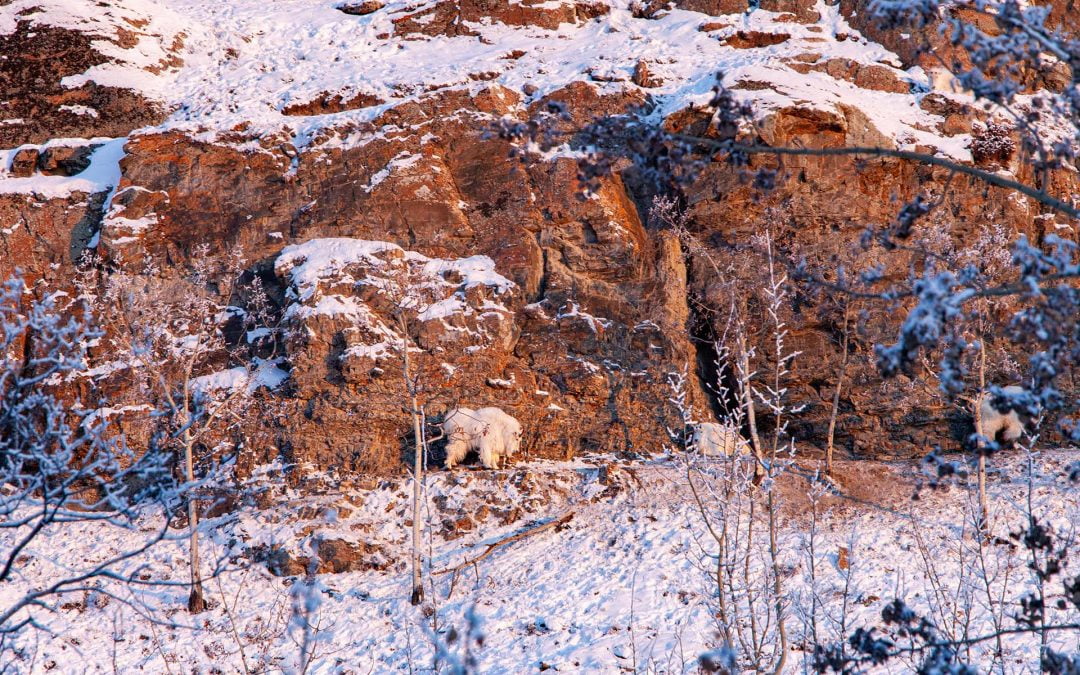
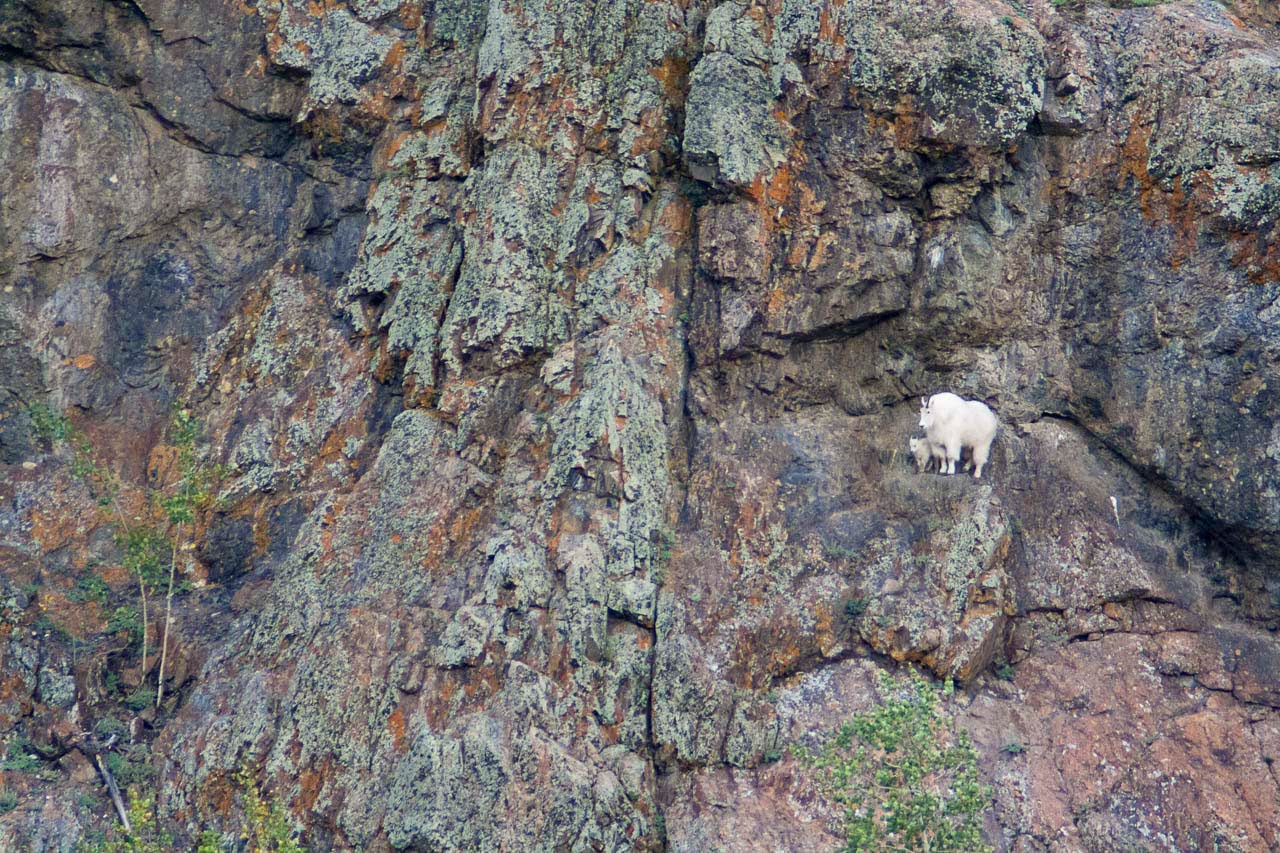
The rising sun bathes the cliffs in the rosy hues of dawn.  In a manner I can only describe as precarious, I watch, heart in mouth, as the billy goat stands on his back feet while on a sheer cliff slope.  His front legs dangle loose in the air, all the better to stretch and reach the last of this year’s leaves on the aspen before him.

Of course, the billy is the male of the Rocky Mountain Goat and for him, there is nothing precarious about the scene depicted above.  Mountain goats are renowned for their surefootedness and what seems reckless and foolhardy from a human perspective is, in fact, just another day for the mountain goat.

What makes a mountain goat so agile in rocky cliff terrain?  The truth is they are well designed for their natural habitat.

Mountain Goats have short legs in relation to their overall size, placed close together; their centre of gravity is close to the ground and at the front of their body.  These things help the goat travel on narrow ledges. Muscular shoulders provide great strength for climbing. Finally, the hooves are specialized with rough textured pads and the toes have the ability to spread wide – this distributes the goat’s weight over a larger area.  Conversely, the toes can pinch together, which helps with traction when travelling downhill.

The science adds some understanding to the magic unfolding before me.  I am in awe with this landscape, this animal, this moment in time.   

Come be amazed.  Yukon Wildlife Preserve. 

Julie Kerr

Julie Kerr

Visitor Services Coordinator

Julie is a Registered Veterinary Technologist, living and working in Whitehorse since 2012. She joined the team in May 2018. She is passionate about wildlife, nature and living in a conscious manner with both. Her free time is spent outdoors observing wild animals and ecosystems; her connection to the natural world around her brings great joy – joy she loves to share with anyone interested. Honestly? Work and life blend rather seamlessly.

Explore by Category

Explore by Author

Gifts of the North

Gifts of the North

yukon

by Lindsay Caskenette | Dec 17, 2019 | 4 comments

This time last year we released a very special limited edition hat (or toque as we Canadians like to call it). It was the product of generous Yukon businesses who care about Yukon's wildlife.  The 5 premium toques included a donation to the Preserve. They sold out in just a day and a half!

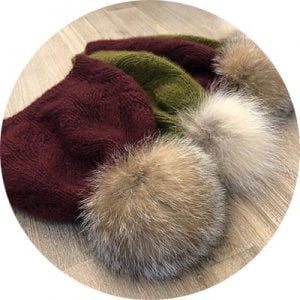
The partnerships have continued to grow and we're really excited to release 2 different limited edition toque styles (4 available of each style) again this Christmas! These toques were made exclusively in the north, inspired by the north. The Yukon is home to incredible people who love to celebrate and honour the uniqueness of this land. This hat directly supports the diverse community that makes this place and its people so unique!

These limited edition hats go on sale at the Preserve on Friday, December 20th.

Hand-knitted in Whitehorse

Last year we were fortunate enough to connect with a very under-the-radar knitting talent, Liz Sutton of Treeline Knits located right here in Whitehorse. Liz, like the other featured small business owners, weaved from passionate hobby into notable entrepreneurs. She balances this passion with a full time job, a love of running and sharing time with friends and her fluffy companions in Yukon’s grand landscapes. Each of these 8 hats were hand knitted and fashioned by Liz Sutton, especially for the Yukon Wildlife Preserve.


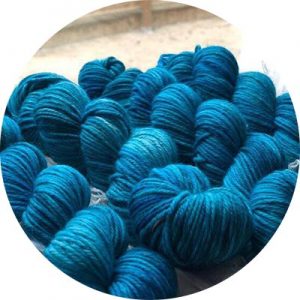
Toque 1: Local Hand Dyed 100% Candian Merino Wool

For the first toque, Liz sourced her wool from a little northern yarn shop with a big heart called Itsy Bitsy Yarn Store, located in downtown Whitehorse. The owner, Heather Sealey pours her heart into her store, into sharing her love and knowledge of knitting to every customer she encounters, and into encouraging and inspiring the local and northern flare.

Heather prides herself on working with other local proprietors who produce yarns, locally made wood and antler buttons, other Yukon made accessories, and in the case of this hat, local hand-dyed yarns. Crux Fibres is a product of local Brittany Vogt whose little hobby quickly turned into a business, “Dyeing yarn became an avenue for my deep desire to master creative arts. Playing with professional dyes and quality yarn isn’t easy, it’s a real challenge, but once you get over that crux, that difficult part and start to see the complimentary dance in the water, a real beautiful thing happens. A tapestry of colour emerges”. Who doesn’t love when passion turns into profit and pride in a beautiful piece of art. The wool Brittany uses is 100% Canadian merino wool.


Toque 2: Canadian Muskox Qiviut Blend

For the second toque, Liz worked with Itsy Bitsy Yarn Store to source qiviut from Nunavut Qiviut.

Nunavut Qiviut in turn sources arctic fibres from the Kugluktuk area of the Yukon’s more eastern territorial neighbour, Nunavut. Here, and across the circumpolar north, wonderfully woolly, ice-age creatures roam the barren landscape. Muskox are formidable animals of the arctic whom managed to survive an era that most animals (including the woolly mammoth) did not. Muskox are both a majestic and extraordinary creature, not only because of its luxurious fibre but its remarkable place in history. Today, muskox continue to provide an incredible and valuable support system to the people and communities of this shared landscape.

The Inuit name for muskox is Umingmack, “the animal with skin like a beard.” The undercoat wool belonging to this animal gives it the ability to thrive in the extreme arctic environment but also is an animal harvested by Inuit’s for traditional purposes like winter sleeping mats, protein for elders and families.

Nunavut Qiviut works with these local harvesters and community members to purchase the qiviut wool for fibre production. This on the ground activity by Nunavut Qiviut supports food security, a wage economy, cultural continuity and traditional Inuit lifestyles in an ethical and fair manner.

Sustainably Trapped in the Yukon

A toque isn’t complete without a pom-pom. This year, Liz sourced furs through the Yukon Trappers Association and Yukon Wild Furs. Yukon Wild Furs donated locally and sustainably harvested lynx from Indigenous trapper and educators, George Bahm and Chris Hobbis’ trapline located in the South Canol Road area.

Owner of Yukon Wildlife Furs, Vanessa Aegirsdottir, might possibly have the smallest gift shop in the Yukon in square feet. But her mission is huge: “being an education beacon for Indigenous culture and worldviews”.

Bahm also sees great value in sharing fur harvesting practices with consumers and their relationship with the land. Wild fur trapping can be sustainable, ethically sourced and support traditional lifestyle when a fair price is offered for the fur as opposed to farmed furs.

To the people who buy them, Bahm said they’re deepening their connection to the Yukon and the people who’ve trapped for generations.

I tell people that when they’re wearing fur we ask them to be mindful of the fact that an animal has given its life so we can adorn ourselves with its feathers, with its fur and by wearing those items they’re forever in a relationship with an animal. It’s more than just a pair of earrings.

A Community That’s Wild at Heart

The Yukon Wildlife Preserve is a non-profit charitable organization. In the 1970’s Danny Nowlan started accepting and caring for injured and orphaned wildlife at the Yukon Game Farm. Nearly 50 years later the Preserve continues to care for Yukon’s most vulnerable animals. Today we are a living centre of Yukon’s species that connects more than 30,000 visitors to the natural world, each year.

Find out more about what the  donation with the purchase of the hat means for the Preserve at donate.yukonwildlife.ca .

These toques represents so much more than fashion and warmth! It symbolizes the values and lifestyles of this unique territory and the people and animals that call it home. By purchasing this hat, you are supporting the people, their businesses and the land and animals of the north - Liz Sutton of Treeline Knits, Itsy-Bitsy Yarn Store, Yukon Wild Fur and local trappers, Brittany Vogt of Crux Fibres, Nunavut Qiviut, Yukon Wildlife Preserve - Wildlife Rehabilitation and a community that is wild at heart!

Lindsay Caskenette

Lindsay Caskenette

Manager Visitor Services

Lindsay joined the Wildlife Preserve team March 2014. Originally from Ontario, she came to the Yukon in search of new adventures and new career challenges. Lindsay holds a degree in Environmental Studies with honours from Wilfrid Laurier University and brings with her a strong passion for sharing what nature, animals, and the environment can teach us.

867-456-7400
Lindsay@yukonwildlife.ca

Explore by Category

Explore by Author