Coexisting Through The Cold

Coexisting Through The Cold

animal care

by Doug Caldwell | Aug 29, 2025 | 0 comments

4 minute read -

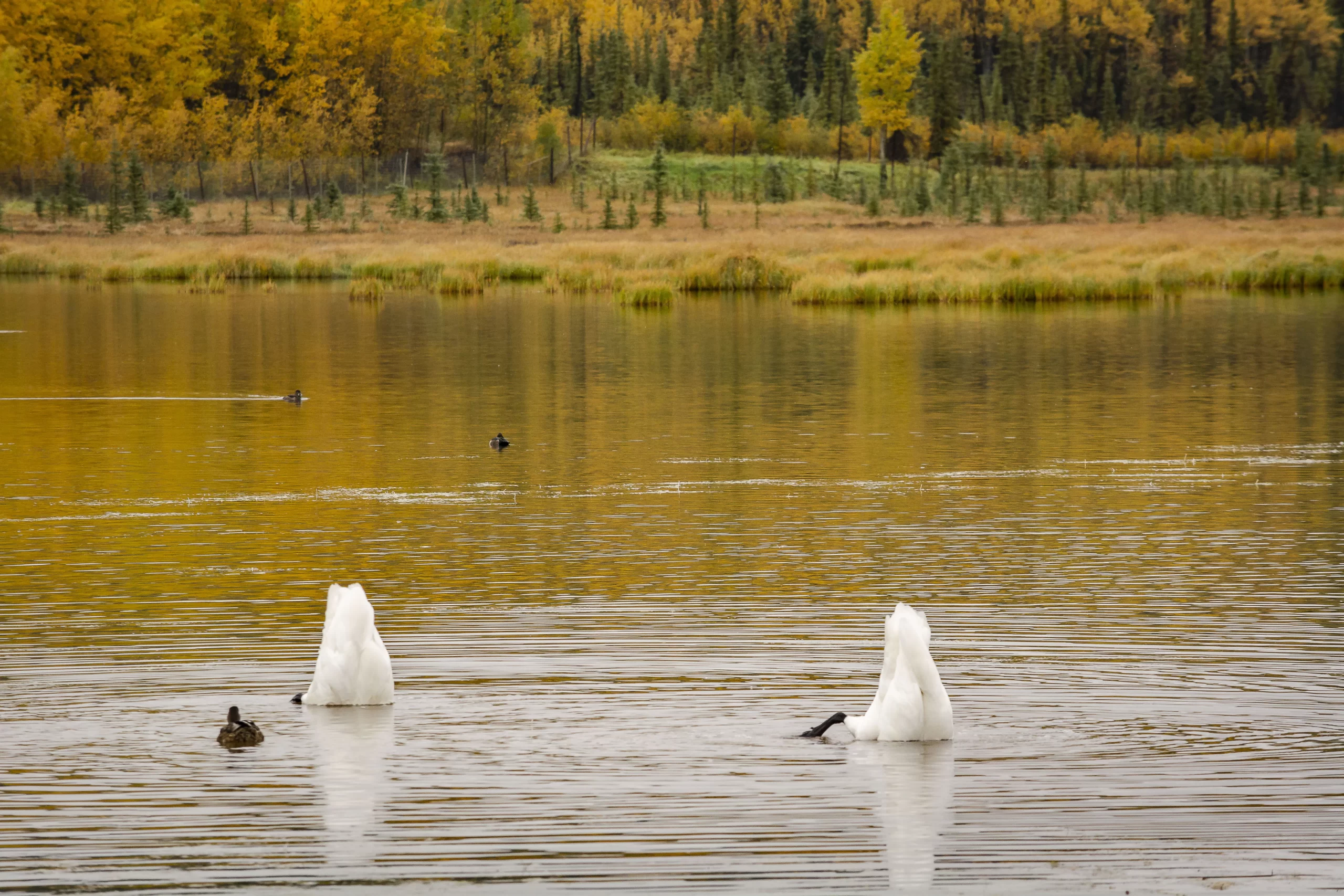
As the summer season gives way to autumn, creatures of all kinds will begin to prepare for the coldest time of year, when temperatures may become dangerous if appropriate shelter is not acquired.

Animals of course off-set the cold by growing thicker, denser coats to insulate against the chill. Also in preparation for this chill, the animals go into hyperphagia where they gorge on food to put on a layer of fat which provides two primary values: Fat can perform similar to an insulating blanket keeping the animal warmer against physical contact with the frozen ground and the cold breezes. The fat can also perform like a battery with energy stored in the form of carbohydrates providing the animal with the nutrients required during this challenging time of year to keep warm and muscles flexible.

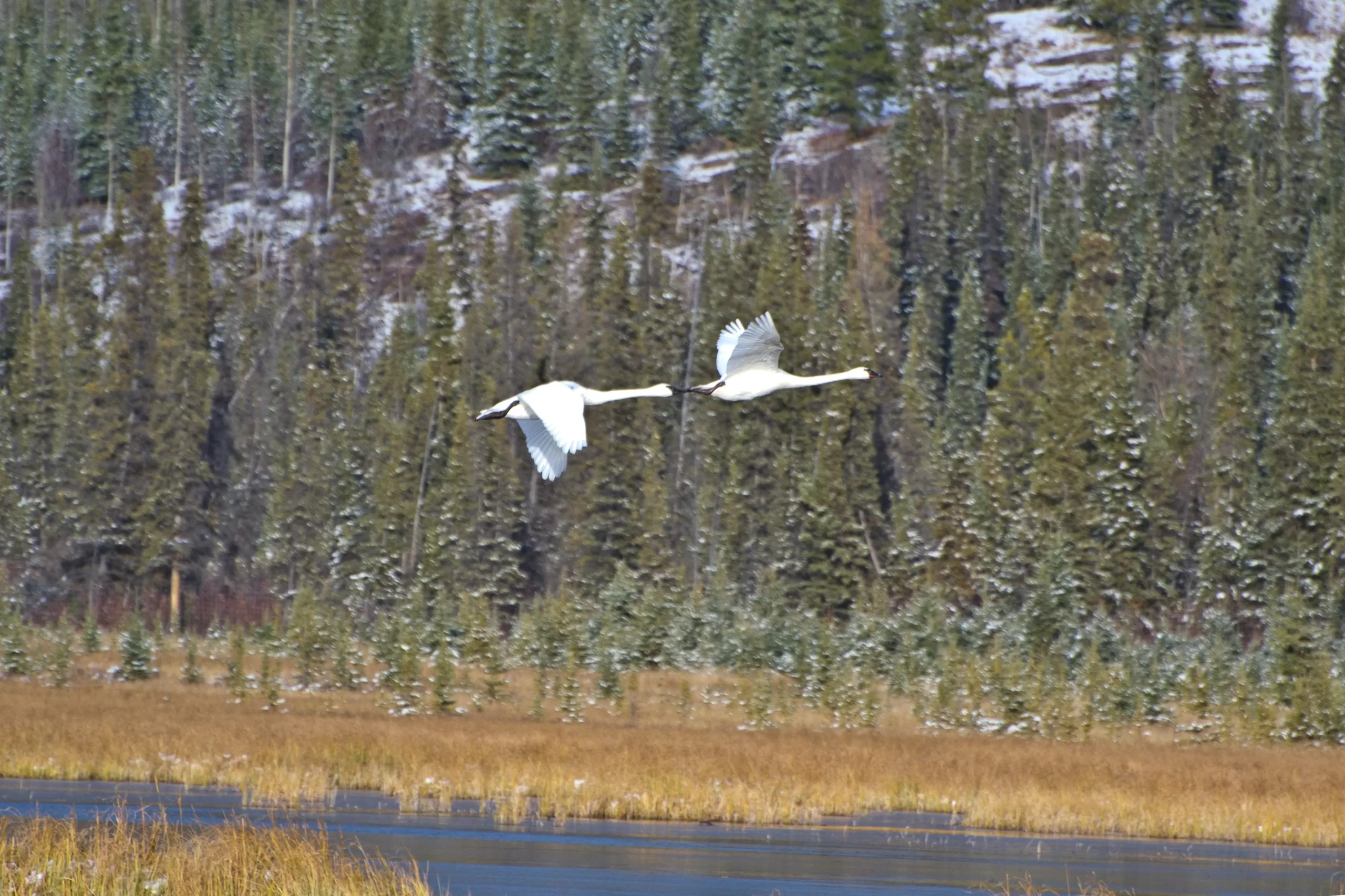
Some animals have evolved to avoid all the extra work and discomfort of the winter by either migrating to warmer climes in the south or hibernating in a cozy den or other shelter. 

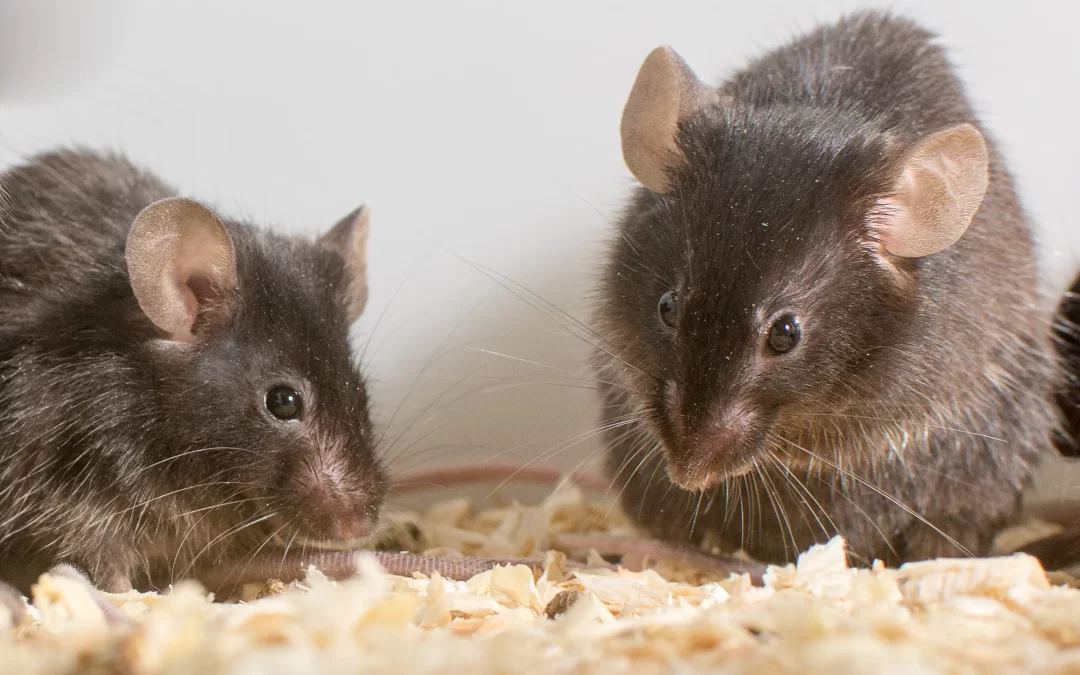
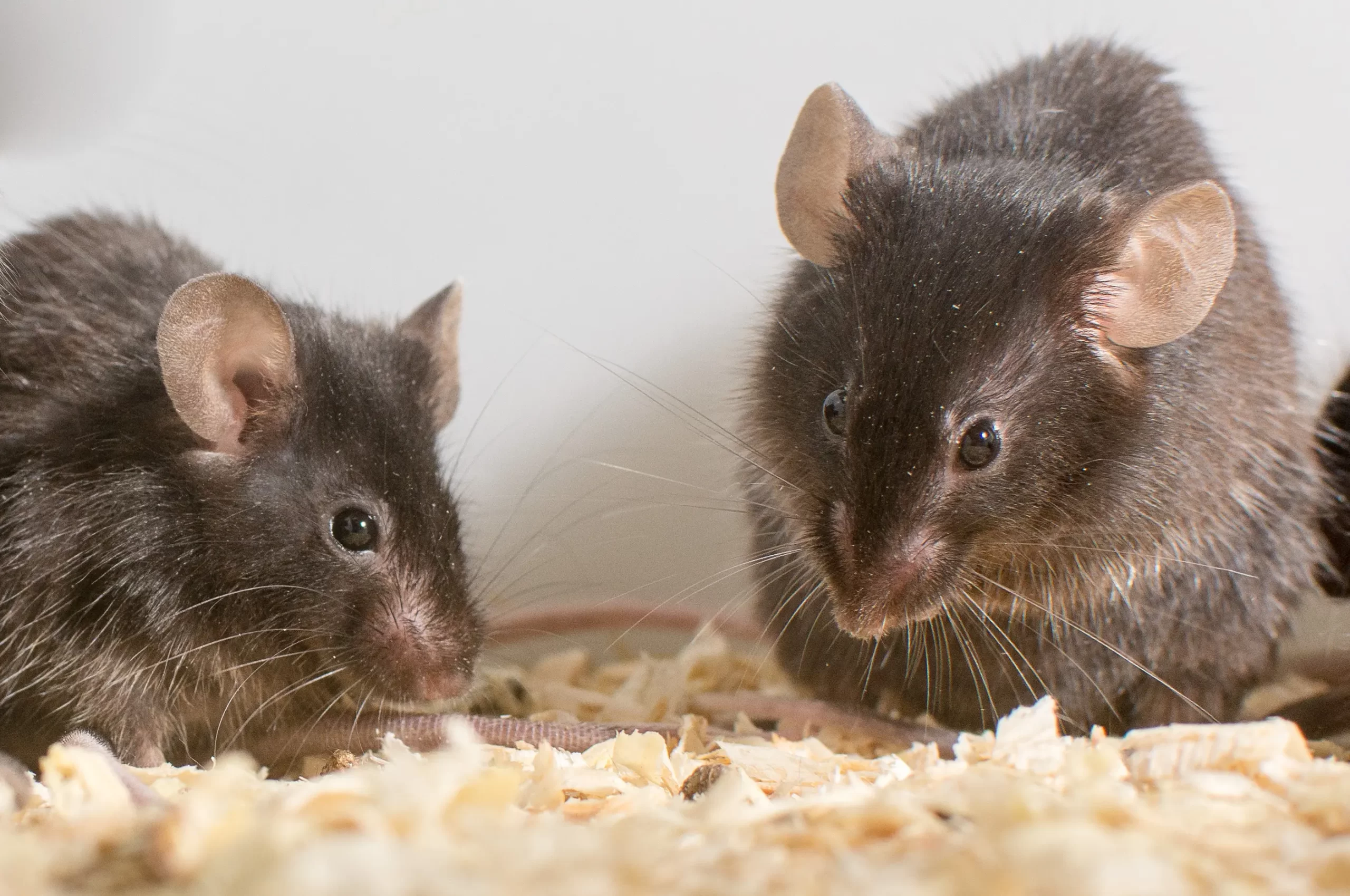
Autumn is the time when smaller creatures who do not hibernate go exploring for a warm, safe place to spend the winter, and human homes are very attractive for mice and similar rodents. Our homes have everything they desire including protection against the elements, water and if no food is available such as a pet's food in a bowl on the floor, the rodents will instinctively bring their own harvested supplies from outside your home.

Rodents can bring much more than seeds, grasses and dried berries into your home, they may also introduce infections as well as their copious droppings and urine tracks. Hantavirus is a virus that is found in the urine, saliva, or droppings of infected deer mice and some other wild rodents. Hantavirus may be fatal for some people exposed to it.

So the task is to prevent these little rodents from entering your home and there are a number ways it can be done successfully. Step one is to review the past history of finding mice in your home. If you have a cat, this problem may not exist for you as a good mouser can eliminate much of the problem before it gets into your home.

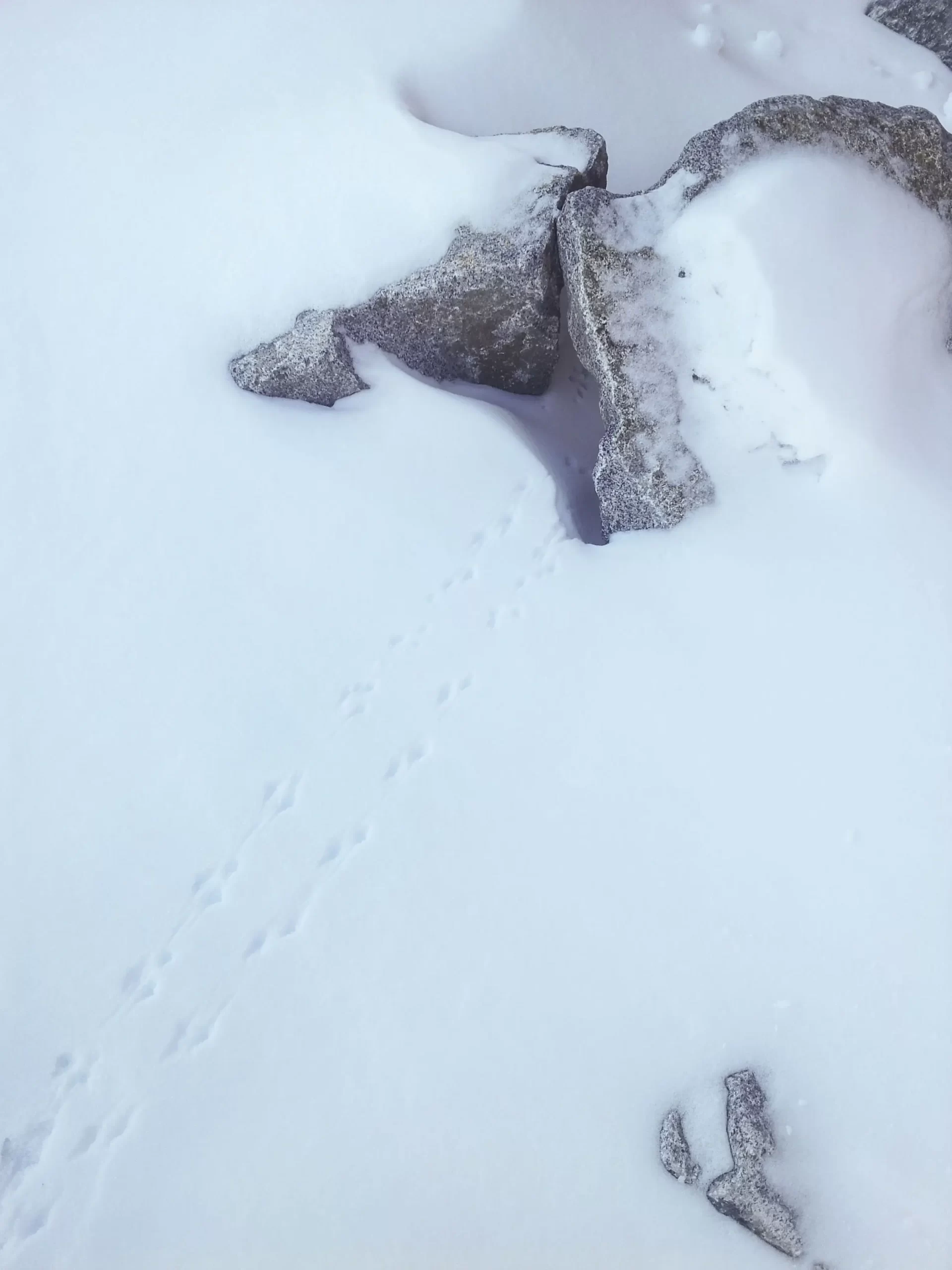
None-the-less, examine the outside perimeter of your home in search of places where the rodents may enter. Mice climb very well so look at the whole building, not just the foundation. A trick to help find the routes the mice take around your home may be accomplished in the dark of night with a ultra-violet light which will fluoresce the urine trails mice create, providing you with their most used routes and points of entry into your home

If mice are already living in your house, the task will be how to eliminate them effectively. Mankind has developed a number of ingenuous methods to dispatch rodents and we are always on the lookout for a “Better mousetrap”. Again, a kitty-cat works wonders, and natural solutions are most often the optimum.

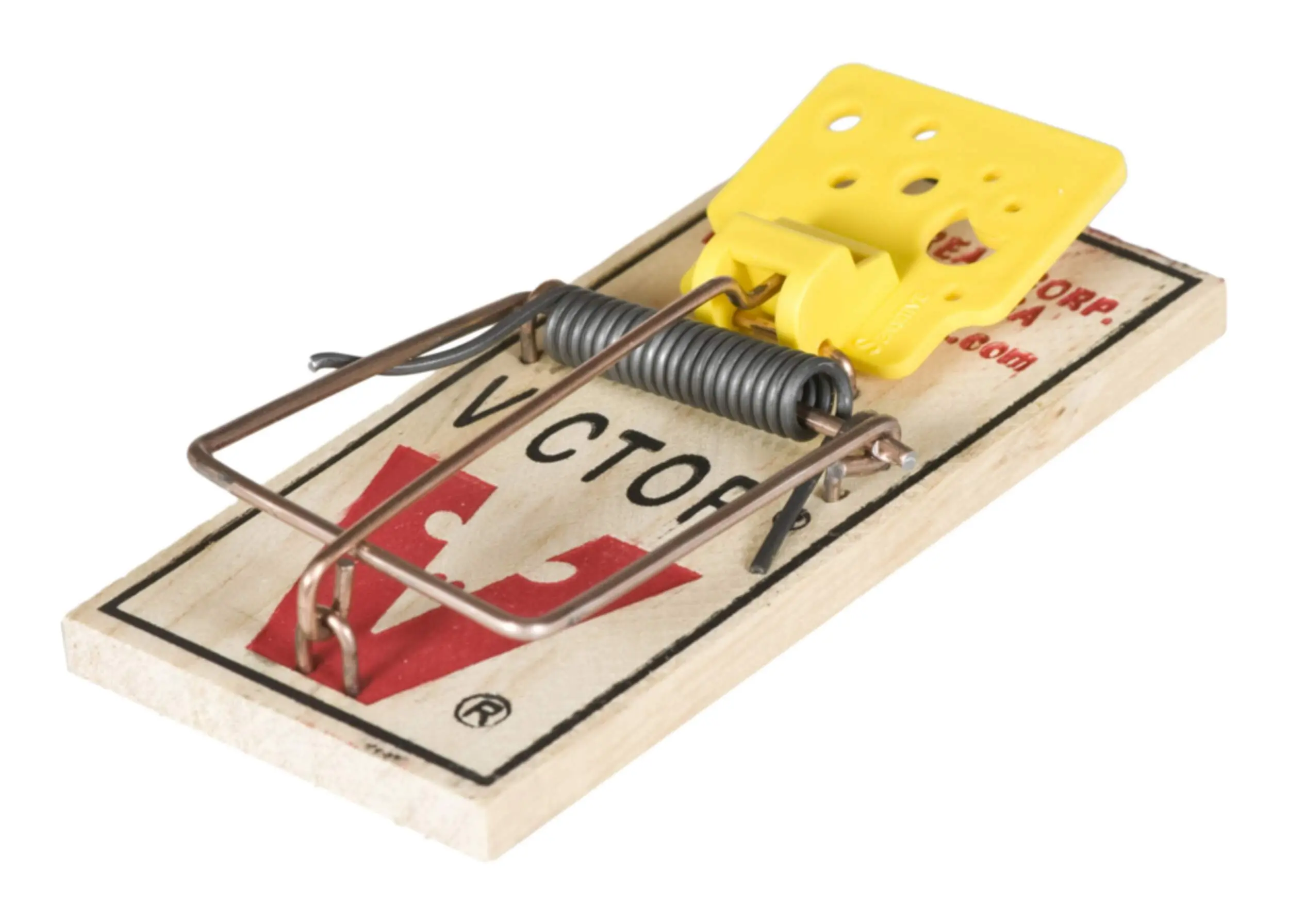
There are a variety of mouse traps available depending on your ethics in eliminating pest rodents. Oddly a greater concern for eradicating these small creatures leans to more humane ways to deal with the pests. Poison may appear to be more humane than the Victor snap trap or the morally superior live trap which allows live caught mice to be set free in another location. Whatever your position on humane pest trapping and eradication, the effects of the eradication methods used should not be transferred to other species to suffer from.

The old Victor snap trap is perhaps the most common and effective tool for this purpose, but if you prefer a more humane capture method, live traps are available and work well, but must be monitored to ensure the captured mouse does not perish if not released in due time.

It is wise to plan where you will release the captured mouse to ensure it will not trek back to your home. Some studies have shown that mice will travel up to 100 meters from their nests in search of food, while others have found they can travel several kilometers if necessary, to return to their nests

Sticky traps that immobilize the creature with a strong adhesive work well, but many consider them to be a cruel and punishing method as the animal will perish from starvation or dehydration. These sticky pads may also become attached to cat paws and dog noses and can be difficult to remove.

I must be honest here - I do not recommend poisons of any kind to eliminate pests of any species. Poisons are the weapon that keeps on killing even beyond the target species you originally wanted to remove.

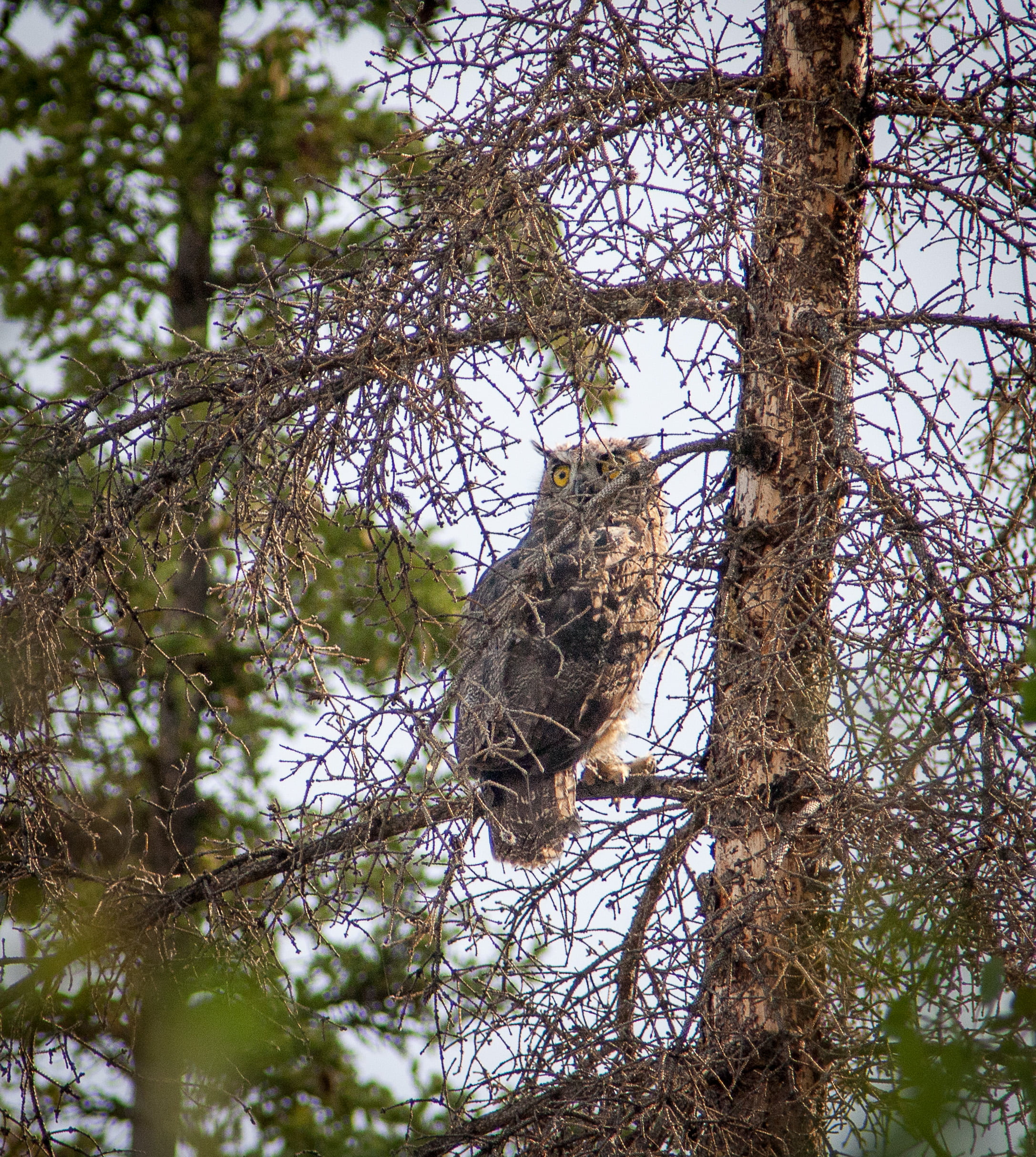
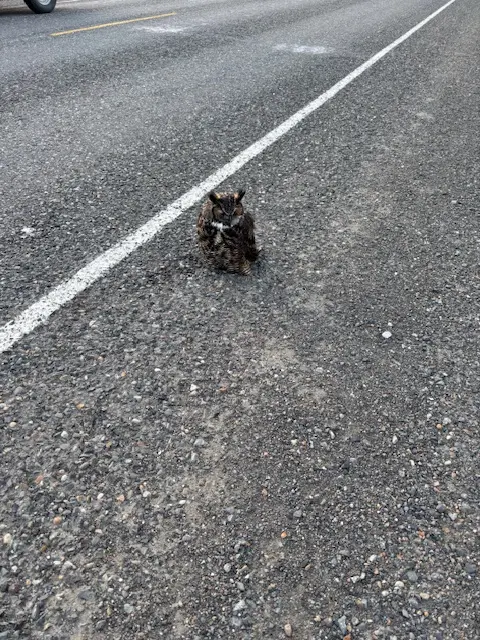
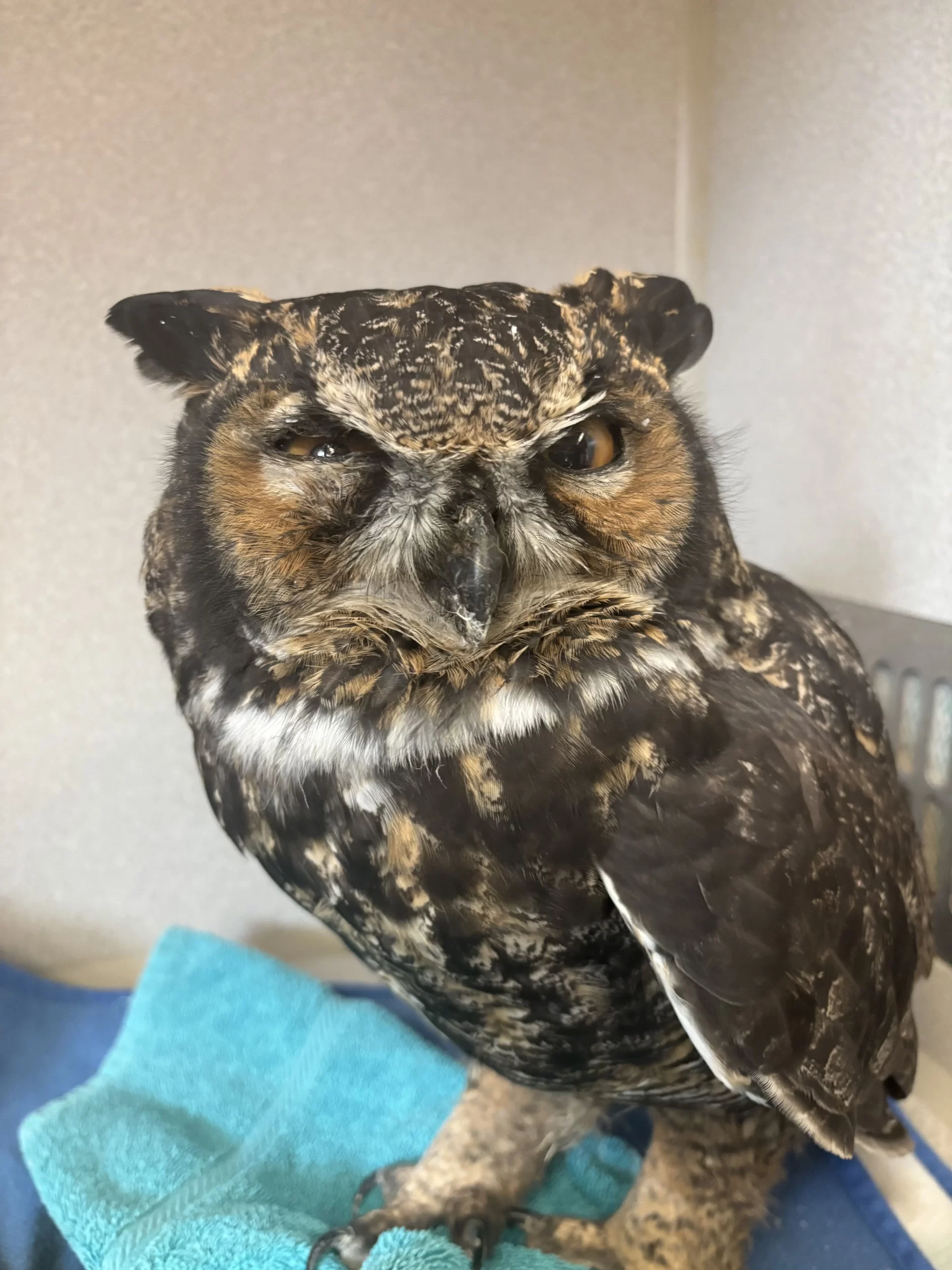
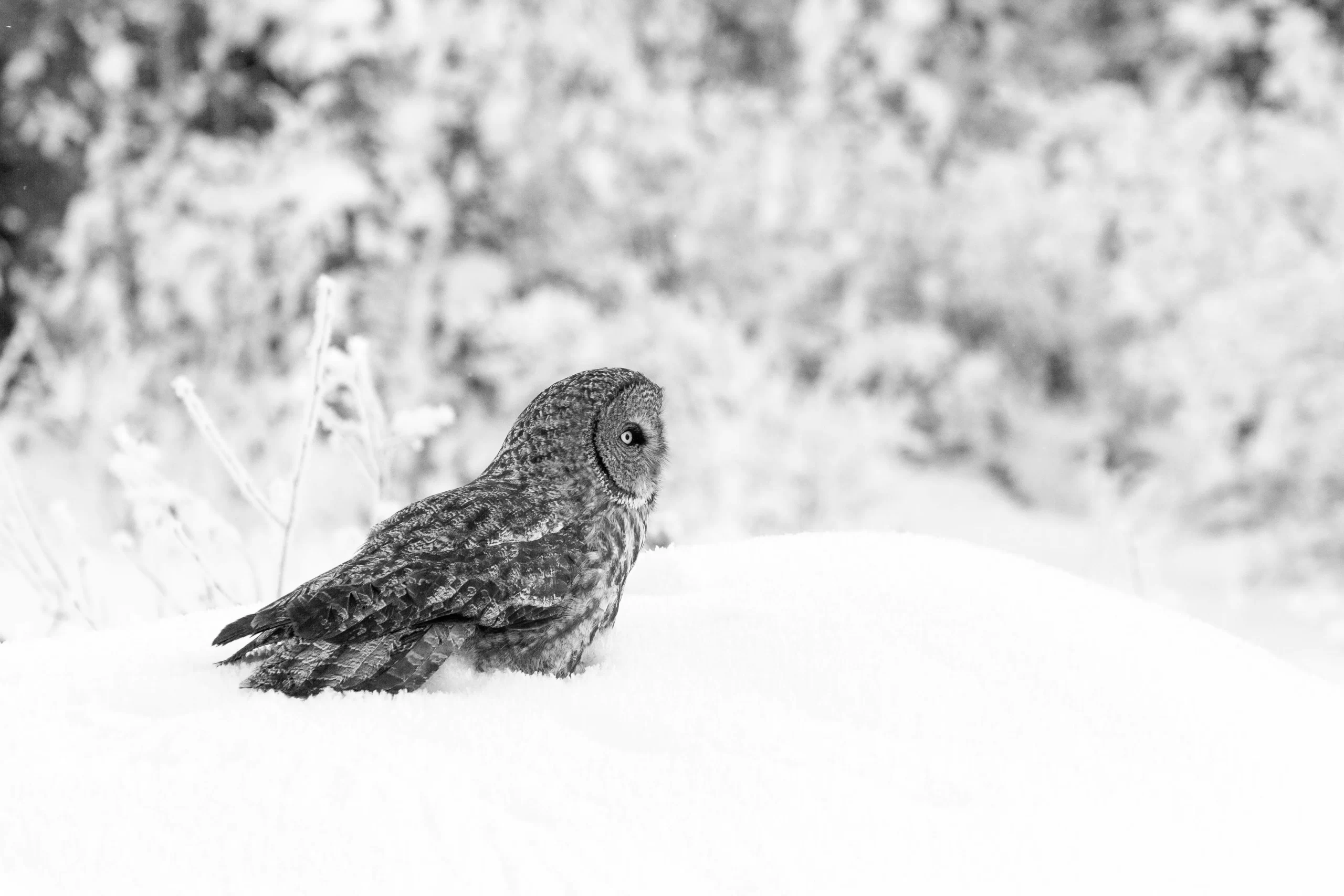
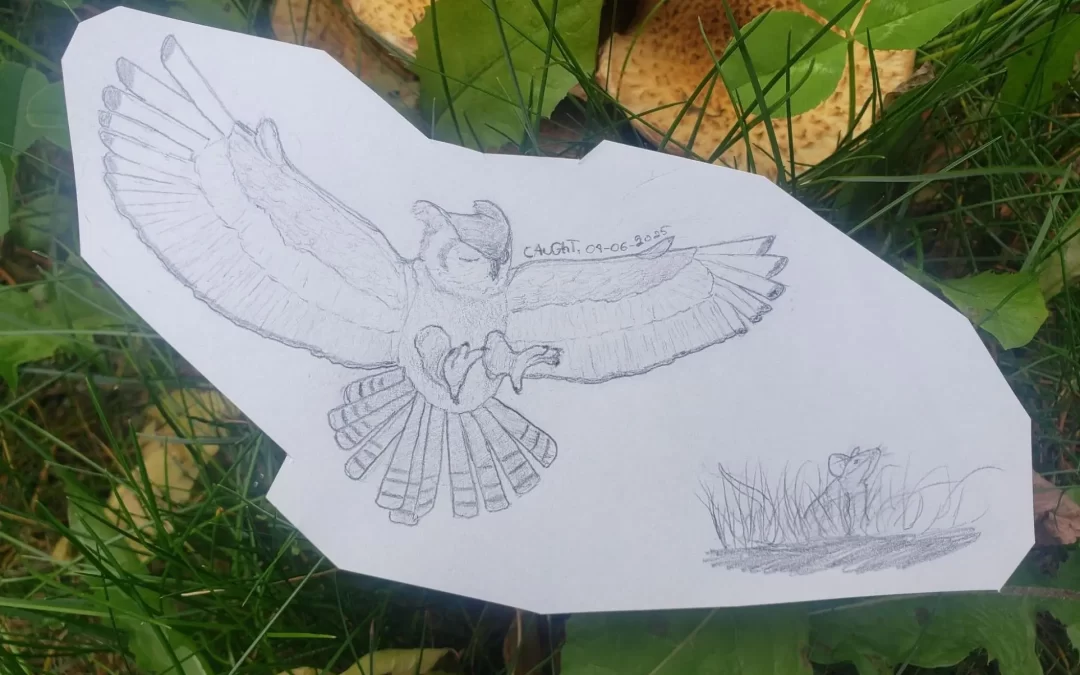
There is growing concern for the health of owls and other raptor species worldwide due to the increasing use of rodenticides to eliminate mice, rats and similar pests. It’s a simple thing to understand by connecting the dots: Mice eat the poison, owls and other creatures eat the poisoned mice, the poison levels build up in those that eat the mice leading to their eventual death, and it is not a quick and painless death either. Some poisons are anticoagulants causing the animal to bleed to death internally.

Other poisons alter the body chemistry, sometimes causing a slow painful death as muscles twist and contort while primary organs such as lungs, livers and kidneys stop functioning. Other poisons promote the rodent body to dehydrate, which is also a punishing and slow process for the animal to eventually succumb.

Poison is being used more often because it is easier for humans to set it and forget it. Deploy the poison, sit back and wait for things to die. I suspect some of this is because many people do not like to be involved with rodents either dead or alive, so the out of sight-out of mind effect outweighs using mechanical traps that require humans to remove the cadavers and reset the trap now covered in mouse germs. Disposable rubber gloves are an effective and affordable way of protecting yourself while clearing and resetting a trap. Remember to wash your hands thoroughly after all the dirty work is done.

As autumn shifts toward winter, all creatures adapt in their own way—whether by growing thicker coats, storing fat, migrating, or seeking shelter. For many small rodents, that shelter can unfortunately be our homes. Just as wildlife relies on natural strategies to survive the cold, we too have choices in how we manage their presence. By opting for thoughtful, humane methods of prevention and control, we can protect both our households and the health of the wider ecosystem that depends on balance and respect.

Doug Caldwell

Doug Caldwell

Wildlife Interpreter

Doug is one of the Interpretive Wildlife Guides here at the Preserve. An avid angler and hunter he has a broad knowledge of Yukon’s wilderness and the creatures that live here. With a focus on the young visitors to the Preserve, Doug takes the extra time to help our guests to better appreciate the many wonders of the animal kingdom here in the Yukon.

Explore by Category

Explore by Author

Jesse the Moose

Jesse the Moose

animal care

by Jake Paleczny | Jun 19, 2025 | 0 comments

2 minute read -

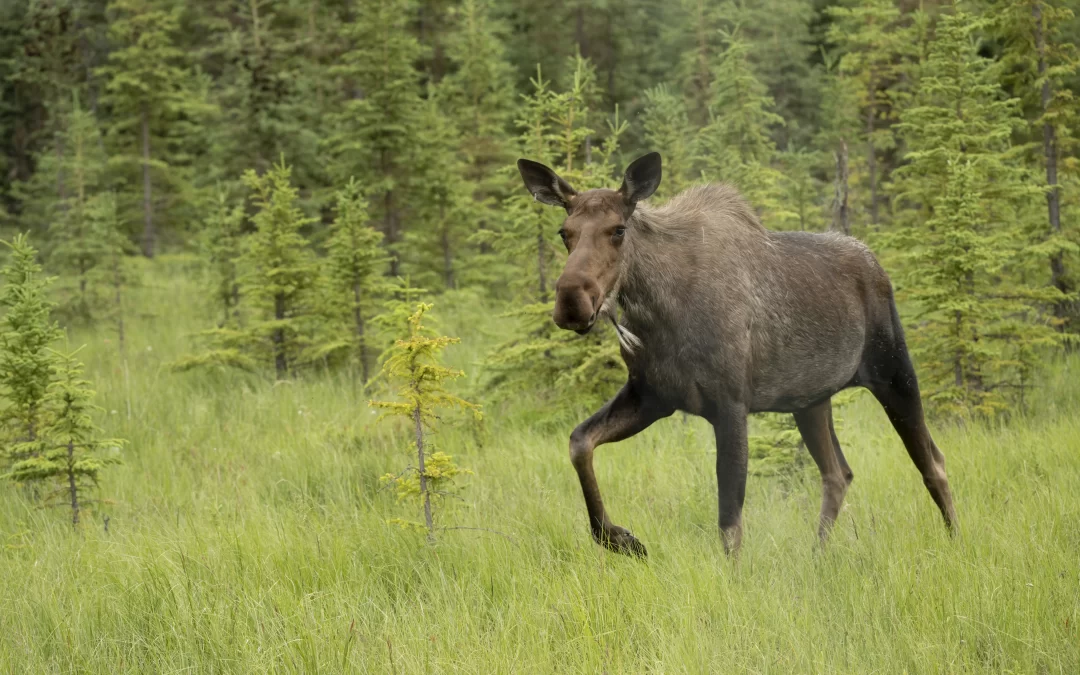
It was with profound sadness that the Yukon Wildlife Preserve (YWP) shared the death of Jesse, a cherished and iconic moose who had resided at the Preserve since 2016. The YWP’s Animal Care team made the difficult decision to euthanize Jesse on June 19, 2025 due to complications following a medical procedure.

An Old Injury

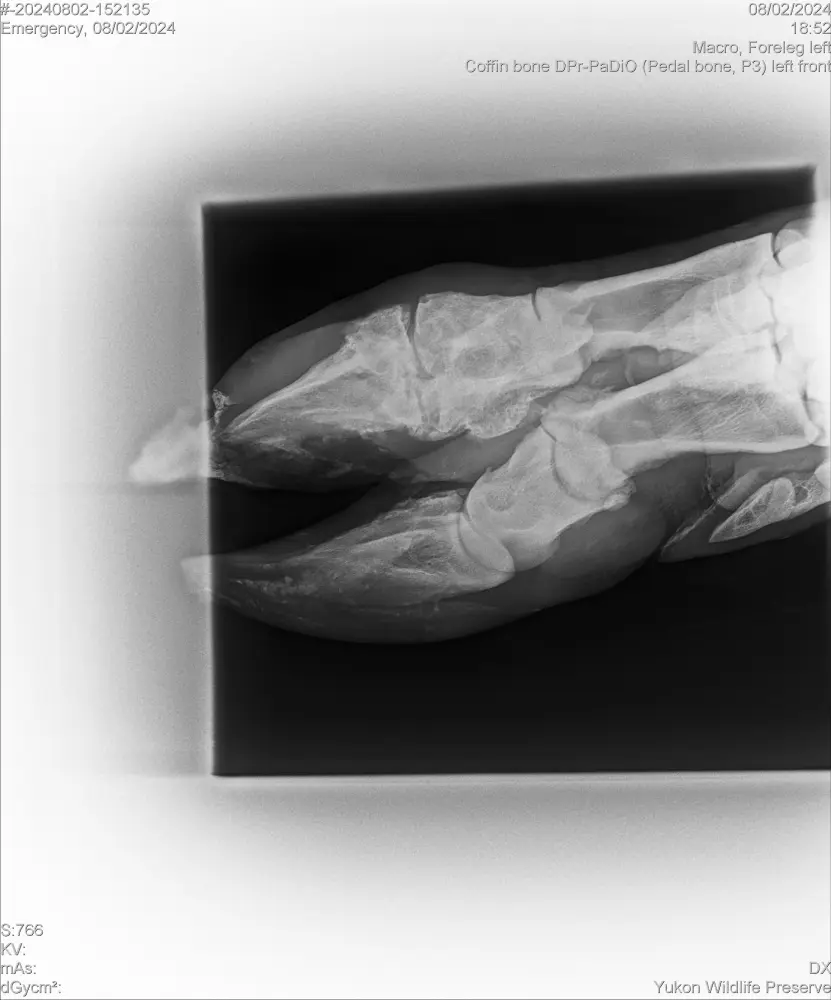
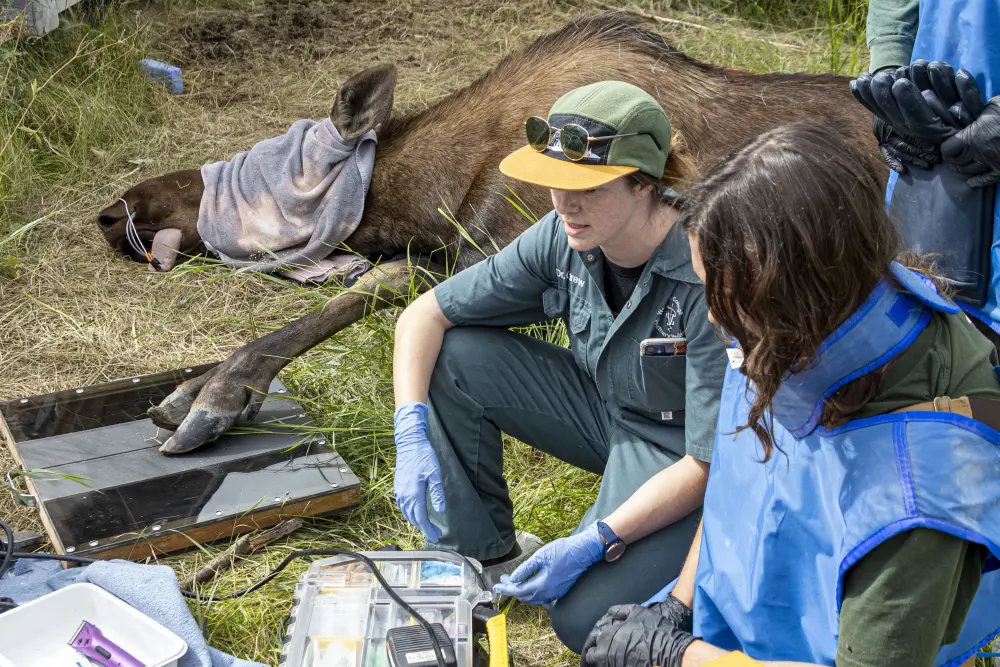
The YWP Animal Care team had been monitoring Jesse’s old hoof injury, which had become arthritic, causing her increasing discomfort and pain. The team had diligently monitored her condition, exploring options to alleviate her suffering and improve her quality of life. On Monday, June 17th, Veterinarian Dr. Cassandra Andrew and the YWP Animal Care team immobilized (anesthetized) Jesse to provide a targeted treatment for the affected hoof joint. While under anesthesia Jesse regurgitated contents from one of her stomachs - one of the risks of anesthesia in ruminants like moose. Recognizing the immediate risk, the team promptly cut the hoof treatment short, administered broad-spectrum antibiotics, and reversed the anesthesia.

Dr. Cassandra Andrew and the Animal Care Team check on Jesse's hoof during in summer 2024.

Complications and Consequences

Upon waking, Jesse exhibited signs of respiratory distress, including coughing and more rapid breathing than normal, indicating that she had inhaled some of the regurgitated material. Later that day, the team provided additional medication to help reduce fever and inflammation. By Tuesday, June 18th, Jesse appeared to be more relaxed and showed initial signs of improvement as the team continued to monitor her closely.

However, during the morning check-in on Wednesday, June 19th, it was clear that Jesse's condition had declined significantly overnight. She was suffering from what was suspected to be severe aspiration pneumonia (inhalation of foreign/food material into the lungs) and was struggling to breathe. Unfortunately treating such a severe condition can be quite invasive and would only be feasible with a domesticated animal in a clinical setting. The team made the difficult decision to euthanize Jesse without delay.

Dr. Andrew performed a gross necropsy, which confirmed extensive damage to her lungs and the severe pneumonia. The team is conducting additional tests to better understand Jesse's overall health and to reveal potential future treatments for similar hoof injuries in other animals.

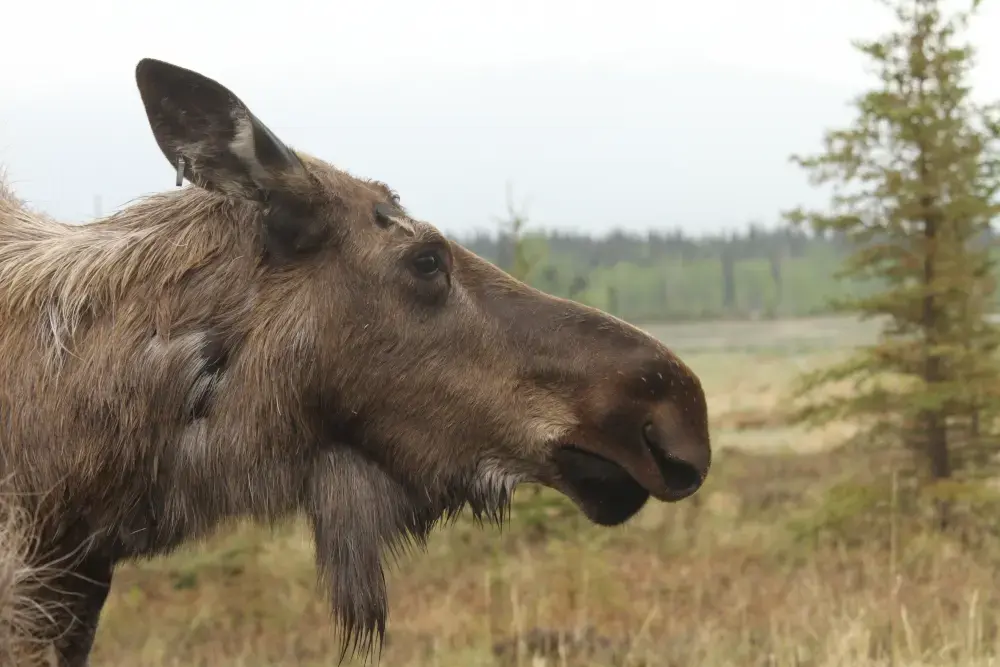
Jesse in June 2024

Jesse's Story

“Jesse was a really special animal with a remarkable story who touched the hearts of many, both our staff and visitors alike,” said Jake Paleczny, Executive Director, Yukon Wildlife Preserve. “Her death is a big loss for our team and so many of our visitors who got to know her so well over her 9 years here. Our team made every possible effort to provide her with the best care, and we will honour her legacy by learning what we can to inform what we do for our moose in the future.”

Jesse's remarkable journey at the Yukon Wildlife Preserve began in May 2016. At only a few weeks old and weighing just 47 pounds, dogs attacked her in the bush near Whitehorse, separating her from her mother. A quick-thinking teenager (named Jesse) carried the injured moose out and with some help, brought her to the Preserve. The dogs had gone after her neck, causing swelling that made it difficult for her to swallow and breathe. YWP staff provided 24-hour care, and for the first couple of nights, they were unsure if she would survive. For the first four days at the Preserve, Jesse couldn’t get up, and the team fed her via IV, offering small amounts of formula when she could manage it. With her injuries, it’s unlikely Jesse would have survived in the wild. Her comfort around humans meant she would reside at the Preserve permanently.

Jesse's Impact

If you have a story or memory you'd like to share about Jesse, send it to jake@yukonwildlife.ca  and lindsay@yukonwildlife.ca. We'd like to share and celebrate the impactful experiences and relationships she was a part of.

The crazy snow winter which had packed snow so high people's heads (and moose heads) were much closer to the top of the fence than normal and Jesse started stealing people's touques right off their heads. She especially loved to target hat wearers' taking selfies.
Pete, Wildlife Interpreter

We said our goodbye!
She knows and she listens—
She cried, I cried.
Michael, Senior Wildlife and Rehabilitation Technician

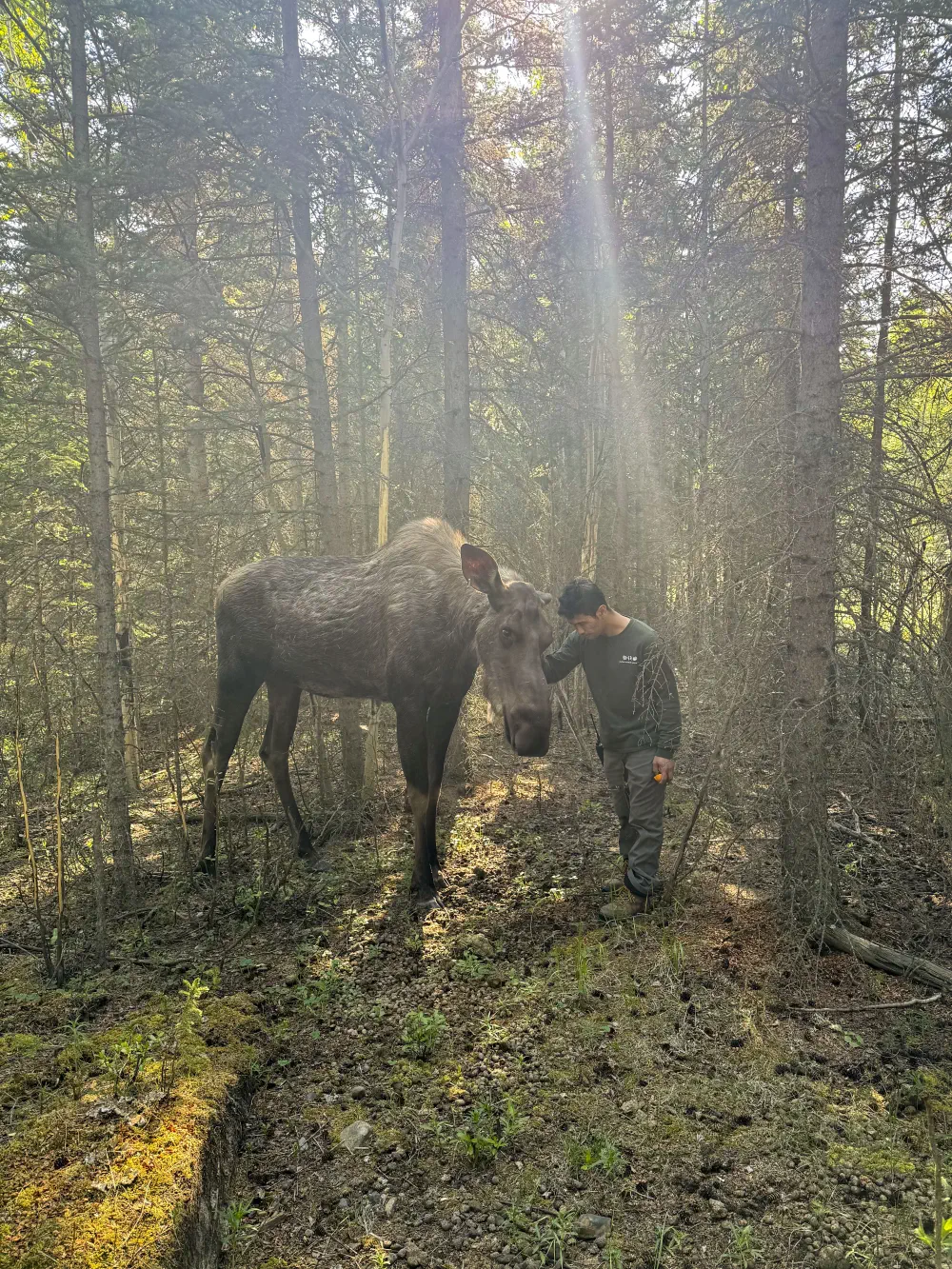
Above: Michael and Jesse on the morning of June 19.

Jake Paleczny

Jake Paleczny

He/Him - Executive Director/ CEO

Jake Paleczny is passionate about interpretation and education. He gained his interpretative expertise from a decade of work in Ontario’s provincial parks in addition to a Masters in Museum Studies from the University of Toronto. His interests also extend into the artistic realm, with a Bachelor of Music from the University of Western Ontario and extensive experience in galleries and museums.

867-456-7313
jake@yukonwildlife.ca

Explore by Category

Explore by Author

I Have to Sell!

I Have to Sell!

animal care

This article was made possible thanks to support from the Yukon 125 Fund. Learn the incredible history of the Yukon Wildlife Preserve, and Yukon Game Farm from the people of the past through this series of articles.

Danny Nowlan is one of Yukon’s colourful, and at times, notorious characters. He was a polarizing figure who cared deeply for animals and connecting them to kids. He was also the subject of one of Yukon’s most expensive trials ever. His work on the Yukon Game Farm would eventually result in the creation of the Yukon Wildlife Preserve. That is a legacy that is still experienced by many Yukoners – although many of the stories are not known or well understood. 

The stories of Danny Nowlan are important threads that are woven through the tapestry of Yukon’s recent history. This project gives us the opportunity to capture and share this history before its lost. This includes the opportunity to celebrate the positive lasting legacy and to learn about and grapple with the challenging aspects of this legacy. 

In 2023 historian Sally Robertson collected oral histories from more than a dozen people who knew Danny. Out of this work, Sally wrote a series of stories about Danny and his adventures.

(9 minute read)

Danny and Erika Nowlan had a dream, and the Yukon Game Farm was established in the mid-1960s. Danny had to struggle several times over the years to keep the Yukon Game Farm operating. It was never profitable until the falcon breeding program was in place. Until 1990, the Nowlans were in business to raise breeding stock and sell young animals to international zoos and wildlife farms. In the case of birds of prey, their market was falconers wherever they happened to live. A Dall’s sheep ram might occasionally bring $2,000 and a trained gyrfalcon might be sold for $13,000, but there were many animals on the Farm, and they all needed care and a constant supply of huge quantities of food.  

Danny considered selling the Yukon Game Farm in the 1970s, when it seemed there would be never-ending bank loans. This was a time when Danny had close friendships with Yukon Game Branch employees, both guardians (Conservation Officers) and biologists. Government biologist Dave Mossop came to Danny with a plan to replenish Yukon’s wild stock of peregrine falcons. This was successful and, building on that, the Yukon Game Farm purchased gyrfalcons from the government and embarked on a successful breeding program.

Danny with Gyrfalcon


Danny needed even more money to establish the infrastructure and so, instead of selling the whole property he tried to subdivide and sell some lots along the Hot Springs Road. The government prohibited the sale and Danny’s attitude toward bureaucracy started changing towards antipathy. In the end, the approach of a government official elicited a yell of ‘cops’ from Danny and furious barking from his well-trained dogs. Followed by Danny’s famous laugh.

Prohibited from selling titled property, Danny instead sold 999-year leases. The government challenged this sale, and Danny won in court, so the parcels became titled land. Selling the road frontage kept him in business for a while, and also had the advantage of providing some protection for the animals. Before they were moved away from the road, there were incidents of animals being injured and one ram sheep with trophy-sized horns was killed.

In the mid-1980s, Danny, his second wife Uli, and well-respected biologist Dave Mossop were arrested and dragged into court on charges associated with the capture and illegally selling of endangered falcons to wealthy Saudi Arabians.  Operation Falcon was an undercover operation that started in the United States and reached into the Yukon. The Yukoners were judged not guilty of all charges, but the trial affected reputations and bank accounts. After the trial, the Game Farm’s elaborate infrastructure for breeding, raising, and replenishing wild stocks was in shambles, and Danny and Uli were no longer able to realize a profit from selling the birds they were so successful at raising.

In the 1980s, elk farming became a profitable business in Canada and Danny was quick to acquire a herd of about 300 animals. He and a number of other Yukoners became successful elk farmers before the Korean market for Canadian elk antlers and velvet collapsed. Some elk farmers in the United States changed their operations to hunt farms, places where hunters could pay to shoot animals. The only legal option in the Yukon was the sale of elk meat, and that was not part of Danny’s vision of an educational preserve to showcase Yukon wildlife. He told a friend that the day he had to sell a pound of elk meat was the day he was out of business.

Elmer-1st and Danny especially favorite elk bull came from Chuck and Clara from California 1983 visit.


Fortunately, just at this time the Nowlans were approached by Holland America to provide a tourist attraction for the company’s bus tours. This was in line with Danny’s vision. He needed to upgrade the roads and fences, and acquire more northern species, but the Nowlans were still able to sell animals and care for the injured and abandoned ones that were constantly being dropped off at their door.  This change in direction was formalized by a change in name; the Yukon Game Farm became the Yukon Wildlife Preserve in 1989.

Original logo created by Peregrine Nowlan in 1989 when the name change occured from Yukon Game Farm. Later when the facility was sold and run as a non-profit the name remained and the logo updated to its current version.

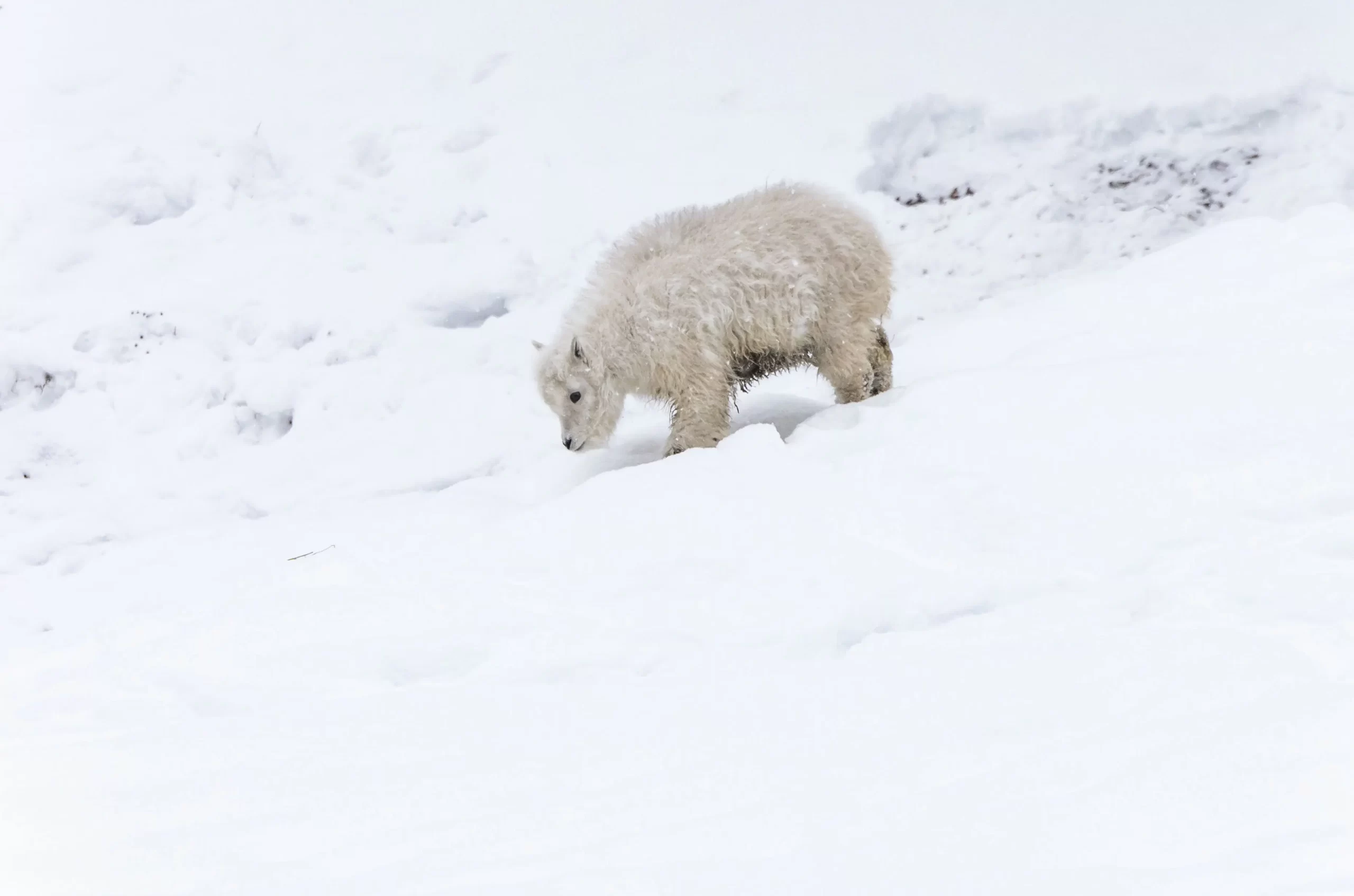
Around 2000, Danny was once again faced with the serious problem of keeping the operation in business. Animal sales were still an option, but there was a dawning awareness in Canada of spreading diseases affecting wildlife. Danny needed permits to move animals across borders, and these became increasingly difficult to obtain. The matter came to a head for the Yukon Wildlife Branch when public attention was drawn to one of Danny’s mountain goats that appeared on a steep hill across the North Klondike Highway from the sod farm. Government officials were worried about the transmission of disease from domestic animals to wildlife, and two escaped mountain goats could have travelled past agricultural farms containing domestic goats.

Danny was unable to recapture his animals, and the Yukon government’s Philip Merchant came to the rescue with a helicopter and a tranquilizer gun. The story of the capture is a harrowing tale for another time, but no animal (human or goat) was terribly injured, and Danny was presented with the bill. 

Danny said, “I want to go fishing” and he started looking for buyers. He could have made a lot of money by letting a developer divide the Game Farm into acreages. Many Yukoners were reluctant to see this happen, and the Friends of the Yukon Wildlife Preserve was established in 2002. The Board of Directors included successful businesspeople, educators, and wildlife biologists who recognized the Preserve’s potential economic, preservation, and educational worth to the Yukon. The society tried to raise funds to buy and operate the facility as a business, and they received support from individuals and potential partners.

In July 2003, the Yukon Fish and Wildlife Management Board wrote a letter to support a proposal where a not-for-profit society would run the facility with assistance from the Yukon Government, as long as the facility obtained accreditation from the Canadian Association of Zoos and Aquariums. The government, for many reasons, was reluctant to commit to any involvement at that time, and the Board of Directors dissolved the Friends of the Yukon Wildlife Preserve association in August 2003.

The public facing entrance to the Yukon Wildlife Preserve. Photo Rebecca August 2004.

There are many opinions about why the government persuaded a number of the original Friends and others to form an operating society, and then purchased the Yukon Game Farm in April 2004. Danny talked to the media and there was considerable public pressure in support of the sale. It was, and remains, a controversial decision especially for those opposed to seeing wildlife in pens. However, the Yukon Wildlife Preserve is a delight for children of all ages, and the expansive habitats created by Danny Nowlan make the residents very happy.

About his ability to get things done, Wendy Brassard says Danny would get these ideas and he wouldn't abandon them. He wouldn't just let them die or turn away from them. He'd think about it, he'd read because there was no Internet back then, he'd make phone calls, and the next thing you know, everything's changed. And he just kept evolving. He was such a good example of ingenuity and resourcefulness, and never say die. Just if you think it's right and it's going to work and it's a good thing? Do it.” David Smiley says Danny was an amazing character; that guy was different. Both good and bad. He had a rough side and he had a Grade 3 education. But he could develop a plan that somebody from a university would have trouble figuring out the nuances. He was a good planner. Randy Hallock concluded that Danny was interesting and always full of ideas. He just built the place and not much could stop him. He had ideas, and he made them work. People telling him ‘no’ just made him that much more driven. 

Minister Dixon, Department of Environment, Yukon Government and YWPOS board member Bill Klasson.
Photo taken 2013 on the signing of a 5 year agreement.

David Mossop is involved with the Game Farm in its current form as the Yukon Wildlife Preserve. He says it's interesting that all these years later, they haven't changed anything. It's basically exactly as Danny and Erika envisioned it – except brought to fruition a lot more. Their idea was to create something where the children of the Yukon could come and see the creatures that live here. And that's basically what happened.

The memories that were collected during this oral history project speak to the impact that Danny had on so many friends, kids, and animals - and the Nowlans’ legacy remains intact for Yukoners and Yukon visitors. We think Erika would be proud to see a fully realized wildlife preserve with its visitation of wide-eyed children. Uli Nowlan often visits the facility and keeps a watchful eye on the operation. Danny didn’t become an avid fisherman, but he did relax knowing his animals, and his legacy, were in good hands. 

• • •

On June 12, 2004, was the Grand Opening of the Preserve!

Danny Nowlan Life and Death - June 4th, 1929 - October 23rd, 2011.

Photos gratefully provided by Uli Nowlan.

Sally Robinson, October 2023
with words from interviews with Uli Nowlan, David Mossop, Philip Merchant, Wendy Brassard, Randy & Maria Hallock, David Ford. 

Sally Robinson

Sally Robinson

Vintage Ventures - Researcher & Writer

Sally is currently an independent consultant in the heritage field. Throughout her career, after working 20 years with Yukon museums as a researcher, curator and exhibit designer/producer, she joined the Yukon Government to work for 16 years as the Historic Sites Interpretive Planner.

Lindsay Caskenette

Lindsay Caskenette

Manager Visitor Services

Lindsay joined the Wildlife Preserve team March 2014. Originally from Ontario, she came to the Yukon in search of new adventures and new career challenges. Lindsay holds a degree in Environmental Studies with honours from Wilfrid Laurier University and brings with her a strong passion for sharing what nature, animals, and the environment can teach us.

867-456-7400
Lindsay@yukonwildlife.ca

Explore by Category

Explore by Author

Little Muskox, Big Journey

Little Muskox, Big Journey

animal care

by Brittney Forsythe | May 25, 2025 | 0 comments

2 minute read -

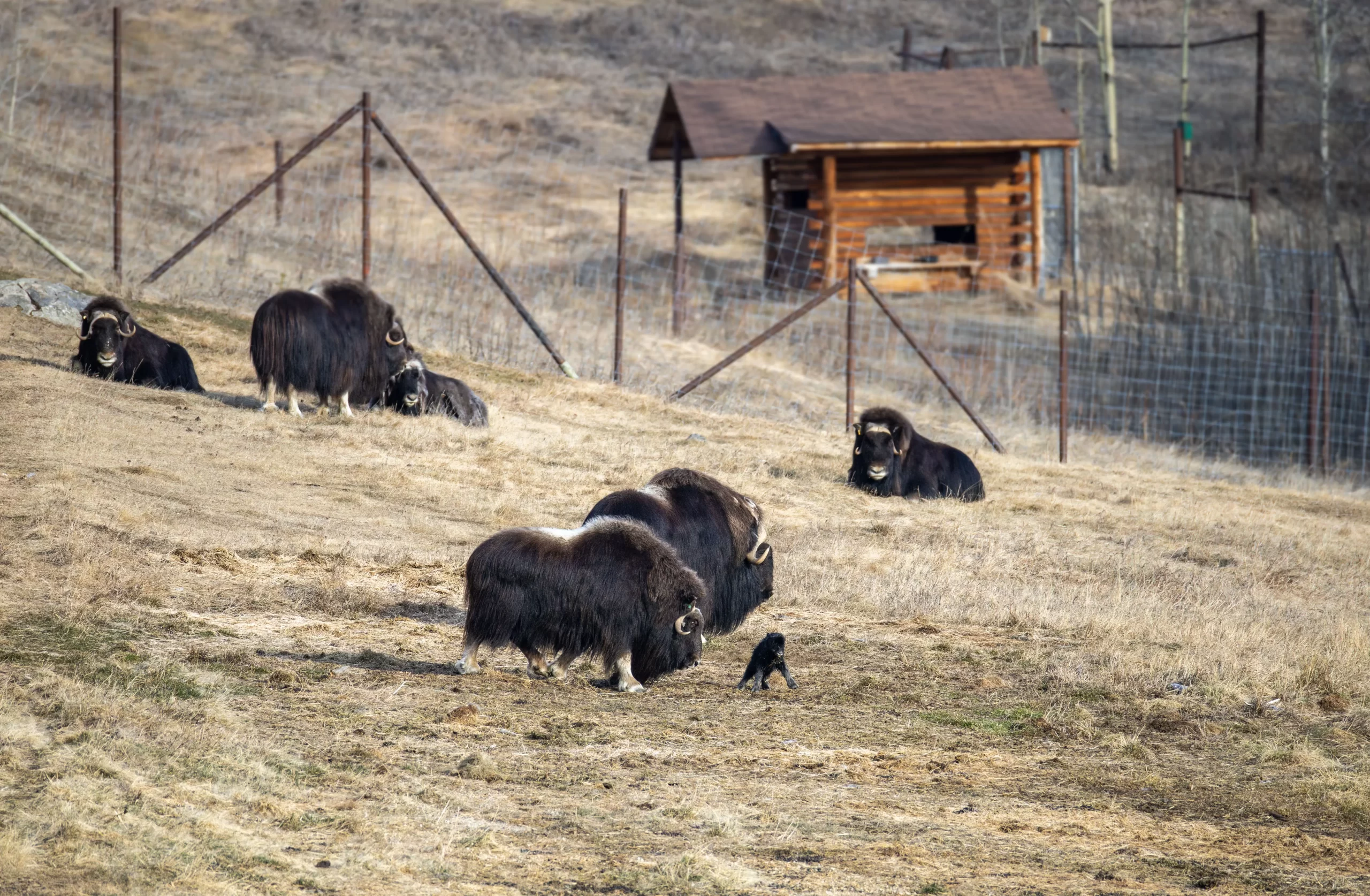
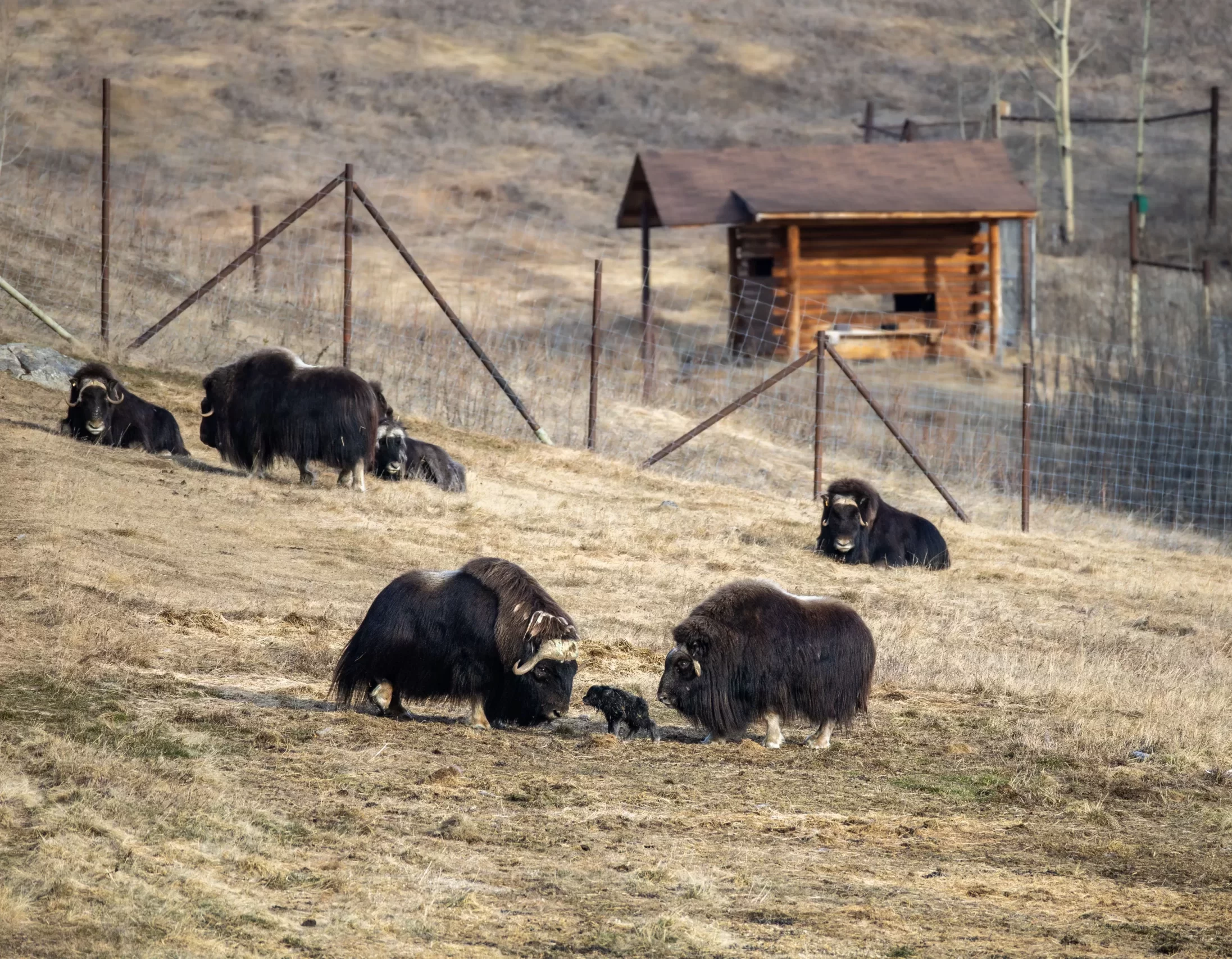
Nature is beautiful — and often unpredictable. On April 30th, the Yukon Wildlife Preserve welcomed its first muskox calf of the year. But shortly after his arrival, it became clear that something wasn’t quite right. Despite hopes for a strong maternal bond, the mother muskox wasn’t allowing the newborn to nurse. The reason for this rejection remained unclear —  the muskox bull was also seen interacting with the calf in a way that raised safety concerns.

Baby Muskox with Mom and Bull Photo Credit Jake Paleczny

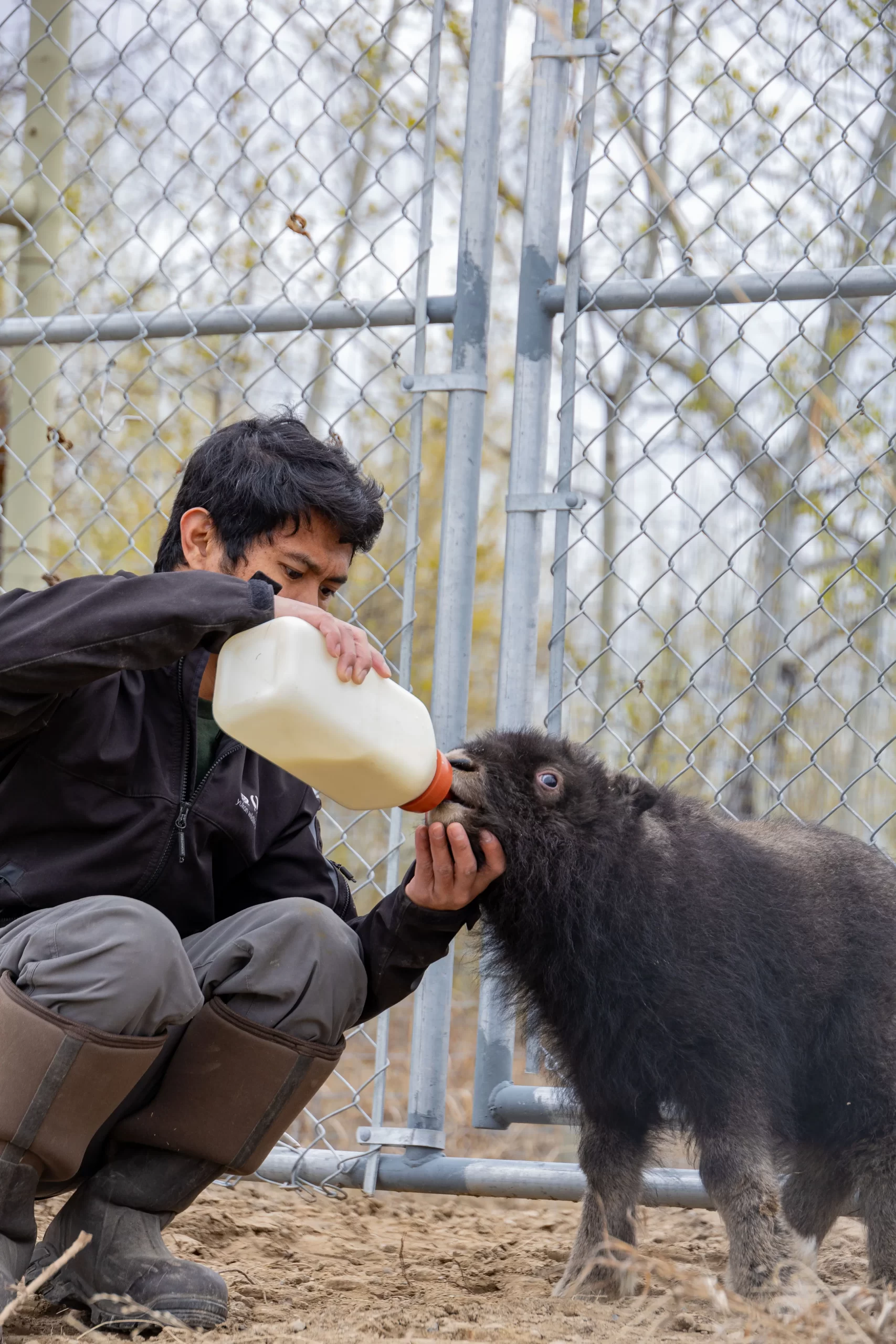
To protect the calf, our team made the decision to intervene. He was brought into our Wildlife Rehabilitation Centre, where he began receiving around-the-clock care and 1L of specialized milk replacer daily. While it wasn’t the beginning we’d envisioned for him, the calf showed resilience and strength from the very start.

At the same time, the veterinary team kept a close watch on the mother muskox. When it became apparent she hadn’t passed her placenta, she was safely immobilized and given medication to support the process. After several days of monitoring in a separate enclosure, she recovered well and was eventually reunited with the rest of the herd.

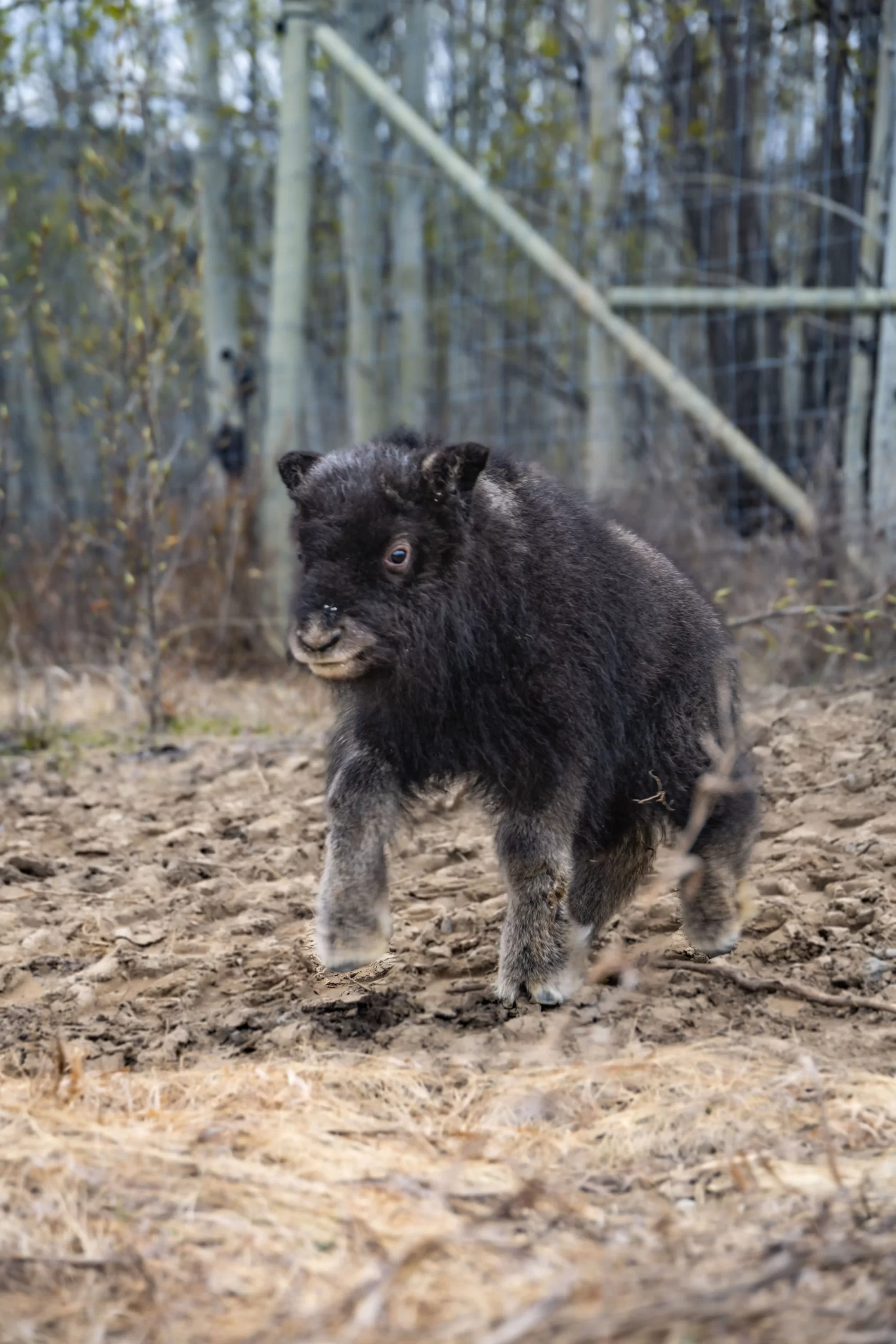
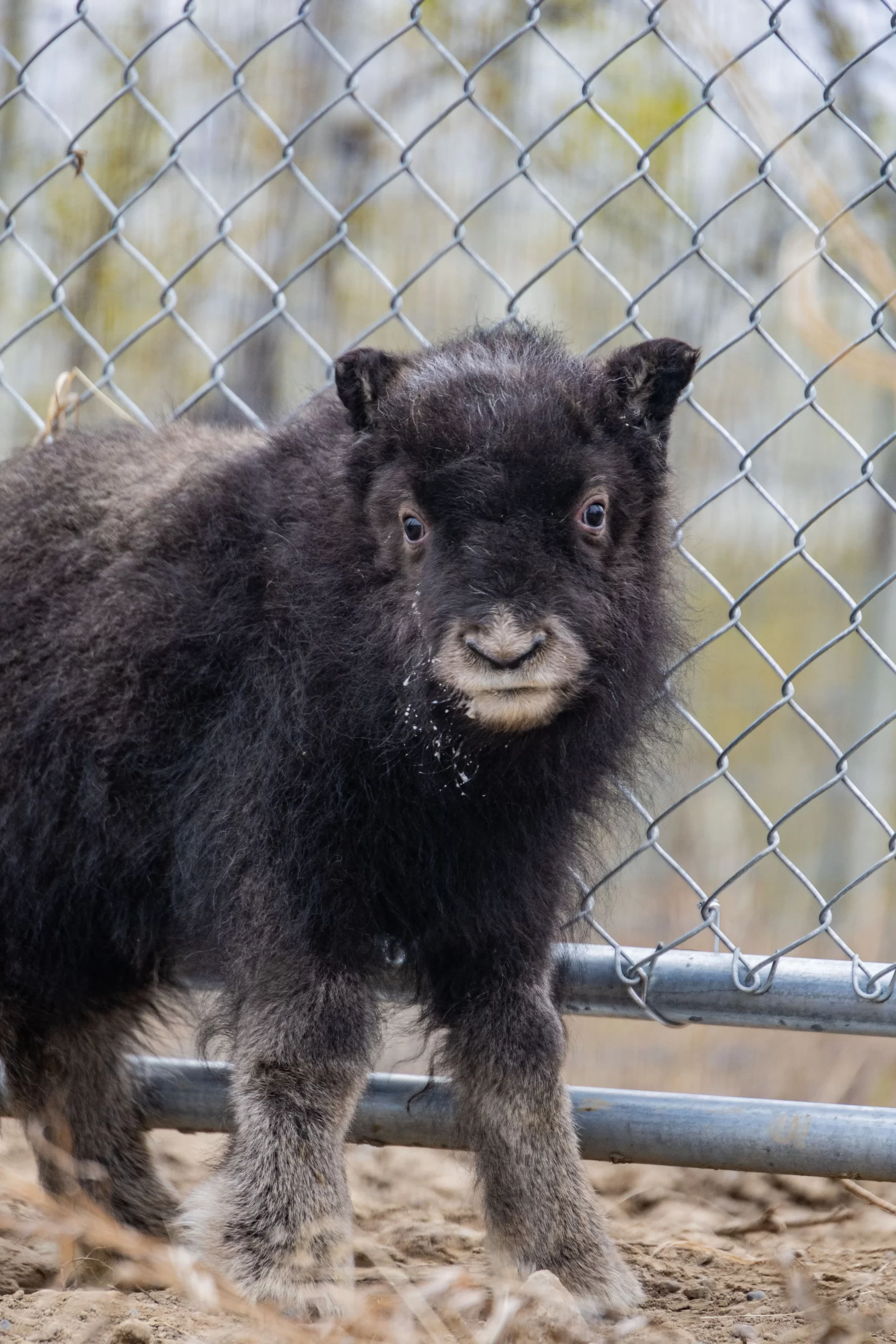
Baby Muskox Photo Credit Britt Forsythe

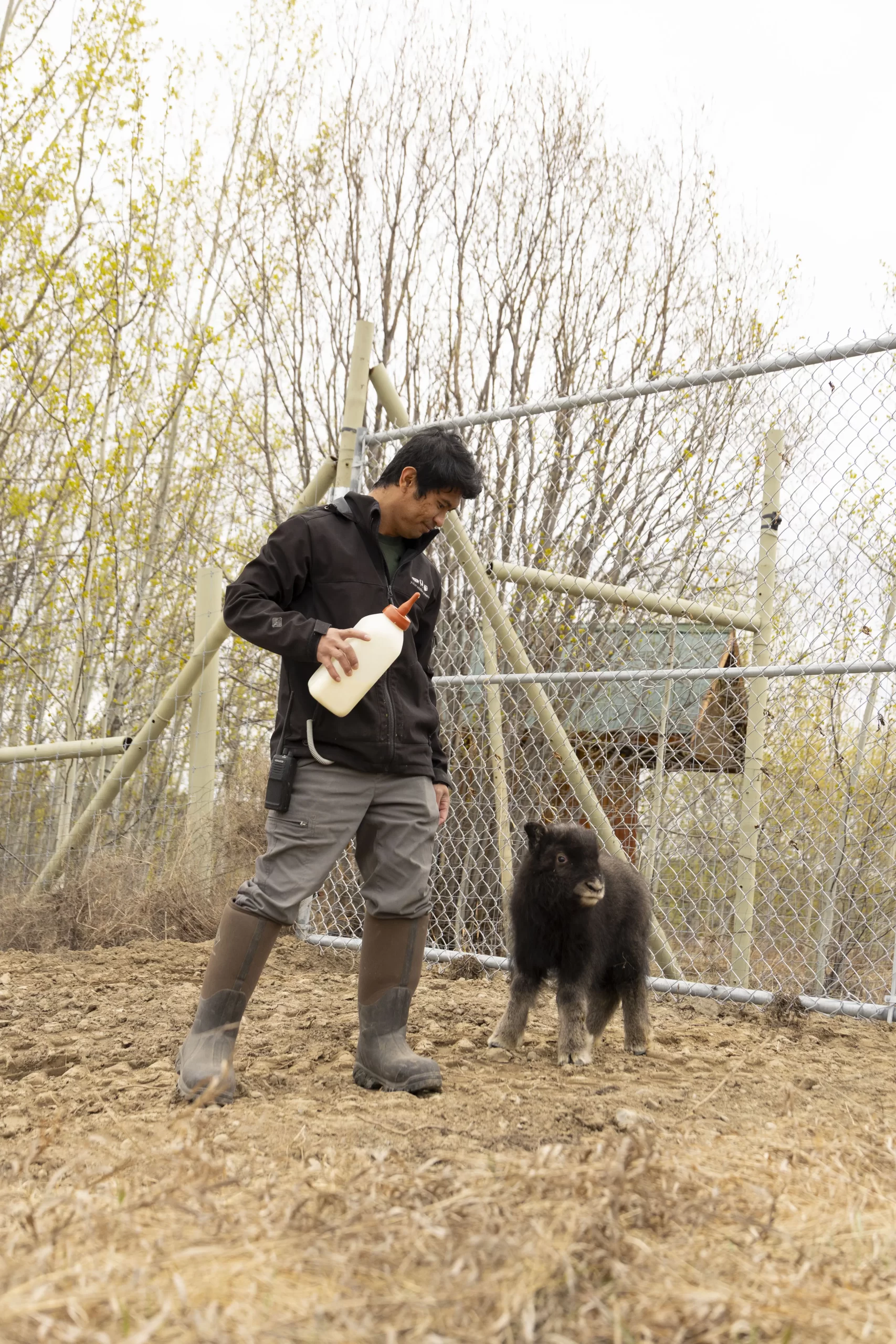
As for the little muskox calf — he’s growing quickly! On May 22nd, at just over three weeks old, he was moved out of the Rehabilitation Centre and into a transitional habitat adjacent to the main herd. This new space allows our team to continue feeding him safely while also helping him gradually reintroduce to his species — a gentle reminder that he is indeed a muskox, even if his first few weeks have looked a little different.

Though he’s still receiving bottle feedings and close care, he’s doing well. If you're visiting the Preserve, you might just catch a glimpse of him  — look up towards the office when standing at the Thinhorn Sheep Ewe's feeding station — but as always with muskox sightings, a zoom lens or binoculars will be your best friend!

Senior Wildlife Care and Rehabilitation Technician Michael Salilig feeding the baby muskox 

Photo credit: Britt Forsythe

Brittney Forsythe

Brittney Forsythe

She/Her - Visitor Services Coordinator

Brittney joined the Wildlife preserve in the summer of 2023. Growing up on Northern Vancouver Island, surrounded by the temperate rainforest, nature and animals have always been a part of her life. It exploded into a passion, when she started her dog walking business in 2017 and she began spending 6-7 days a week in the forest, rain or shine! This sparked an even deeper appreciation for the cyclical nature of the land and how all of the plants & animals work together symbiotically. She is forever ‘that girl’ on the hike, pointing out different rocks and plants, explaining their origin or what they could be used for medicinally. Brittney and her dog Cedar relocated to the Yukon to help care for 31 sled dogs. She is so excited to expand her local knowledge as a part of the Preserve team.

867-456-7400
 Brittney@yukonwildlife.ca

Explore by Category

Explore by Author

A Tale of Chasing the Sun and Losing the Clock

A Tale of Chasing the Sun and Losing the Clock

animal care

Mar 28, 2025 | 0 comments

6 min read - this is a crosspost from Avery's website Snail Tales.

I think about how my first few months living in the Yukon feel like the drawn-out, long sunrises and sunsets up here. They are often multicoloured, with bright hues and dark contrasts, and they seem to last ages. This is, apparently, all because of the Earth’s tilt and rotation. I was asking everyone about this my first few weeks here. I needed to understand why the sun seems to take longer to rise, fall and hover at the horizon compared to anywhere I’ve ever been. Turns out when you're farther north, the sun takes a much shallower angle as it rises and sets! Instead of popping straight up and down like it does near the equator, it moves more horizontally across the sky.

sunrise and mountain goat cliff. The skie is illuminating pink as the slow winter sunrise occurs.

Mountain goat cliff illumiated pink in the long winter sunrise. Photo credit: Jake Paleczny.

This makes the transition between night and day stretch out longer. Someone said to me, “Think of it like a ball rolling up and over a hill—if it goes straight up and down, it’s quick, but if it follows a more gradual slope, it takes longer. That’s basically what the sun is doing near the poles.” I’m thinking of making an animation of this to try to make more sense of it physically. This effect gets even more extreme as you go farther north. It’s why there is midnight sun near the summer solstice, and in winter, it gives us the long, drawn-out sunrises and sunsets that I have cherished and gawked at almost every day since I moved up. The territory is a mix of extremes: light and darkness, with a lot of expansive grey and blue sky in between. It’s 10am as I write this and the clouds are pink with sunrise.

drawing by Avery of her cabin home in the boreal forest.

Drawing by Avery Elias. The cabin I rent in the Boreal Forest. 

Sometimes I feel like time is flying and I can’t seem to muster the energy to chase it. But just as the sun moves differently up here, my sense of time has changed too. The other day I was working a shift at the Yukon Wildlife Preserve and I asked my coworkers what they think about our relationship to time versus other animal’s relationship with it. 

We got into a discussion about how time in the sense of minutes and hours is an abstract human-constructed concept. We are the only animals that track time like this. Every other animal seems to be deeply connected to their internal clocks and their circadian rhythms.

Humans are obsessed with time and trying to name it; we think we can control it, track it, chase it, kill it, steal it, make it and run out of it. The more time I spend with the wildlife in the Yukon, the more absurd and ridiculous these ideas become.

Illustration showing how we, humans think of time. By Avery Elias.

Illustration by Avery showing our connection with time. 

The sun lingering on the horizon up here sometimes gives me the illusion of time stretching. I’ve started to feel that slowness elsewhere, like when I’m alone observing the musk ox. Here’s what I wrote in my journal one morning:

Being around the musk ox, I leave my personal human sense of clock time. I feel something different. I wonder if it is “evolutionary time”. The musk ox are an ancient species — they are considered ice age survivors. I learned today that they are one of the oldest surviving large herbivores on Earth. I am pulled into the physical and spiritual around them. Maybe that’s a different place to be from the linear, the daily clock we all measure our “own” minutes, hours, days, weeks, years by. The musk ox is not keeping track of time in this way. They use their internal clocks. All the animals here do.

Muskox bulls in winter at the Preserve. photo credit Avery Elias.
They never let me get too close, which is probably best. The musk ox are able to run up to 60km/hour and can be an aggressive species.


After the discussion with my coworkers, I ponder this difference between the way we think of time and the relationship the musk ox have with it. Is it a contributor to the illusion of separation we’ve created between us and the wildlife? Between human beings and the natural world? It only took a few shifts working at the Yukon Wildlife Preserve to realize I was sensing something powerful and healing about the places I’ve been spending time in— the preserve, the North, and my cabin in the Boreal forest*.

I couldn’t stop thinking about the illusion I had been living under— the idea that we are separate from the animals and the wild. Far away in our cities, being raised to believe that humans are the centre of everything. We’ve elevated ourselves but we are simply part of nature like the rest of these animals. It feels silly to have to even state this and maybe many of you already understand it. But I grew up in a big city and it’s taken me living in a forest, in a territory with one of the lowest population densities in the world to really make some sense of it.

*The boreal forest, also known as the snow forest, is a biome characterized by snowy winters and freezing temperatures. It’s the world's largest land biome. This forest converts carbon dioxide into oxygen on a massive scale (the air is very good up here ☺ ). The snow stays on the ground for many, many months.


Muskox bulls in winter at the Preserve. photo credit Avery Elias.
A quote I wrote in a sketchbook that feels fitting.


Learning from the wild

I heard a term recently: Ecological Identity. It bears the questions: Who are we in relation to nature? How do we fit with what’s around us? I wrote that the musk ox are considered ice age survivors. When I give my tours to visitors at the preserve, people are often shocked and intrigued by this information. I like to remind them that we as homo sapiens are also ice age survivors! Multiple ice ages* in fact: at least two in the last 200,000 years. 

Yet our evolutionary paths have remarkably diverged. The lives of the musk ox are still closely attuned to the rhythms of nature, as they were during the ice age. When I’m around them, it feels evident that they are living in harmony with their surroundings. I sense that they are in a deep state of attention. In a way, are they living in the timeless? We’ve created cities and systems that can obscure the natural rhythms of day and night, the seasons, and the ecosystems around us. These differences highlight not just how far we’ve come, but also how much we might still learn from the creatures who remain deeply connected to this earth we share. The only time I’ve been able to feel this kind of harmony for an extended period is when I’m on long camping trips or boat rides where I feel almost lost in the sea. It makes me think that my over-structured, calendar relationship with time is like a surface-level experience of life. Like the restless, choppy waves at the surface of the ocean.

The musk ox relationship with time might be more like the water deep below the surface, where things appear calm and more still. In a way, I feel consoled by the lesson of the musk ox on this day. If the Yukon’s light has changed how I see time, the musk ox has helped how I feel it.

 *When people say “the last ice age”, they’re usually referring to the last glacial period (that ended around 10,000 years ago), when ice sheets covered much more of the planet. I recently learned from my coworker at the preserve, Danial, that scientifically speaking, we're technically still living in an ice age since there is permanent ice at the poles. What we're in now is an interglacial period, meaning a warmer phase within an ongoing ice age. If things followed the natural cycle, we'd eventually head back into a glacial period, but human-driven climate change is disrupting that pattern.

Min Height: auto
Min Height: auto
Width: auto
Width: auto
Illustrations by Avery of a muskox and a chinook salmon.
There are endless things I love about the musk ox, most importantly their horns in the shape of moustaches.


Anywho, that’s all the *time* I have for today. Maybe time isn’t something to track, chase, or control. Maybe, like the musk ox and the Yukon sun, it’s something to settle into.

Remember: there’s no time like the present!

I would love to hear any thoughts that are sparked from reading or tales of your own. There’s a comment section below.


Thanks for taking the scenic route with me,

Avery Elias

Avery Elias

She/Her - Wildlife Interpreter

Avery’s journey to the Yukon Wildlife Preserve began during a vacation in August 2024, when she was living in Vancouver and looking for a quieter, wilder life. Having spent the past two summers on farms in Oregon and the Vancouver area, Avery was drawn to the wild beauty and close-knit community of the Yukon. Now, she’s excited to join the team as a wildlife interpreter. Outside the preserve, Avery works as an illustrator, animator, painter, and digital designer, collaborating with local businesses and pursuing her own creative projects.

Explore by Category

Explore by Author