Feathered Friends in Rehabilitation

Feathered Friends in Rehabilitation

animal care

by Lindsay Caskenette | Nov 3, 2023 | 0 comments

1 minute read - 

Generally, this time of year, the Wildlife Rehabilitation Centre is a lot more quiet than in the months leading up to fall. But in the final days of October the Centre got feathered with some new arrivals. 

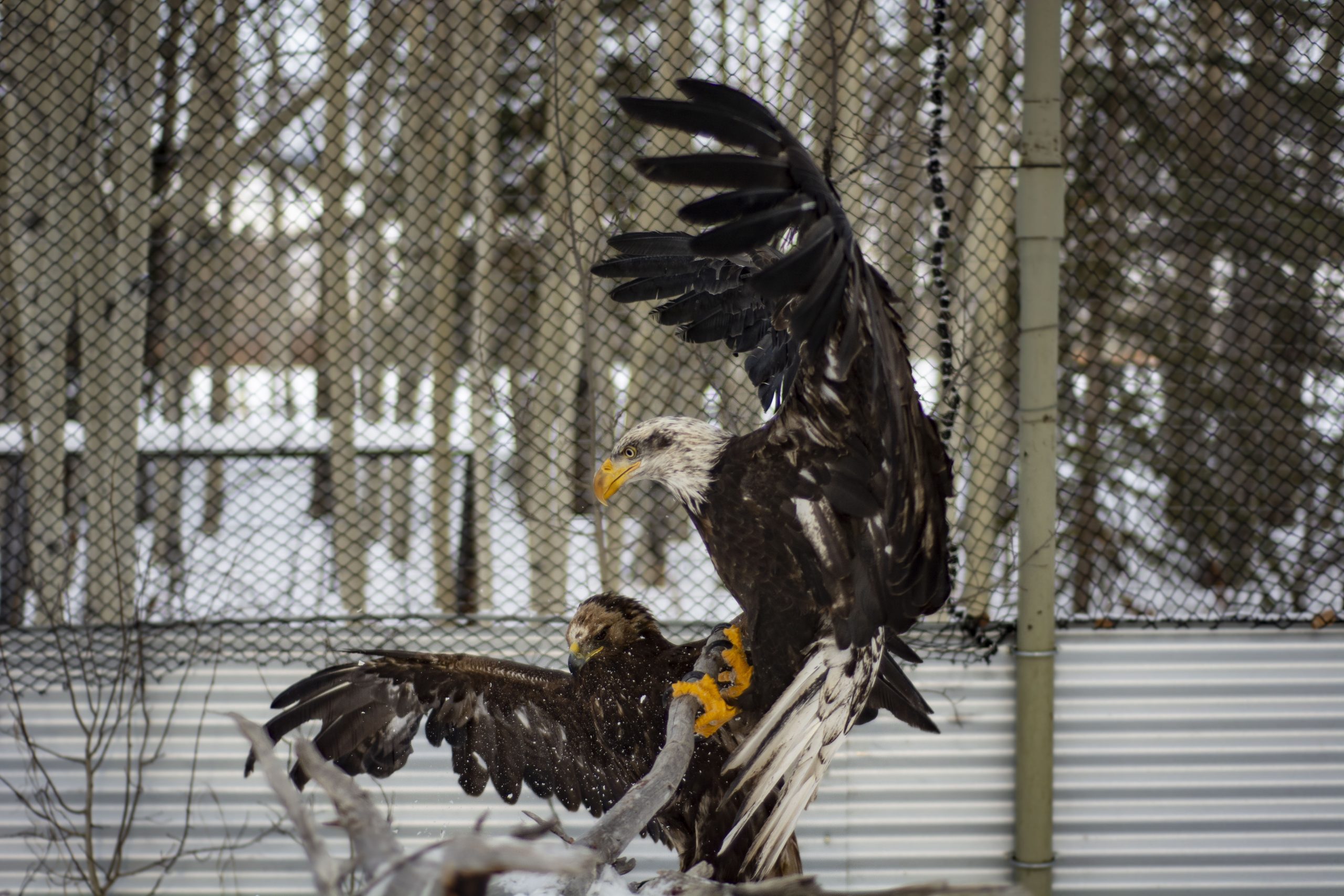
October 30th, 2023 Conservation Officers from Dawson brought in a mature bald eagle that was observed to be weak, unable to fly and found near a road being harassed by ravens and magpies. The bird was severely underweight. Being on the ground for an unknown amount of time, the birds tail feathers were damaged. Upon its admittance, the bird eagerly ate and some fluids were administered.

mature bald eagle in rehabilitation

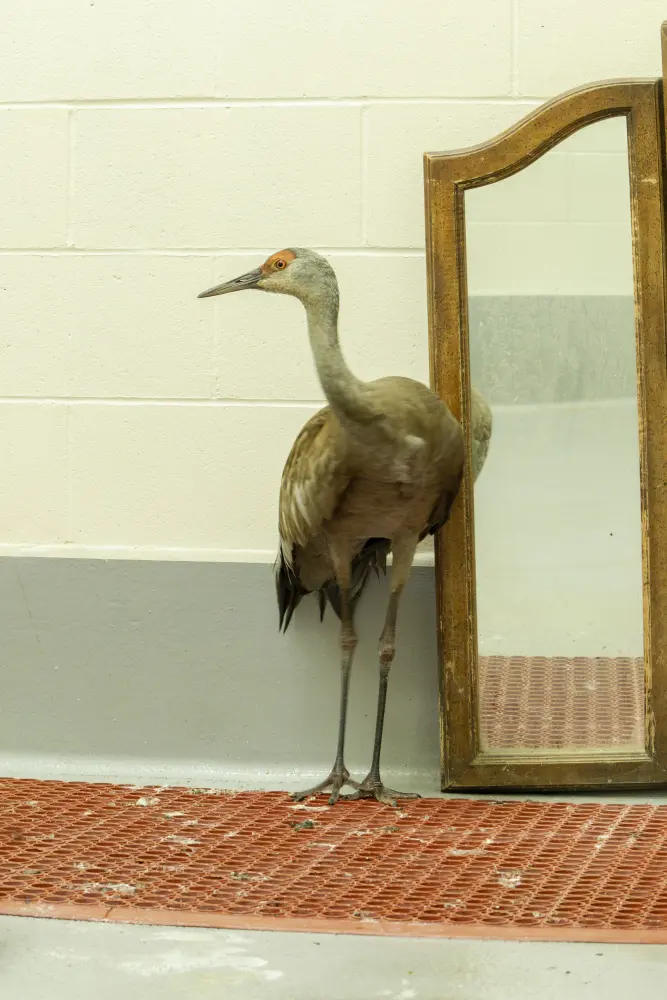
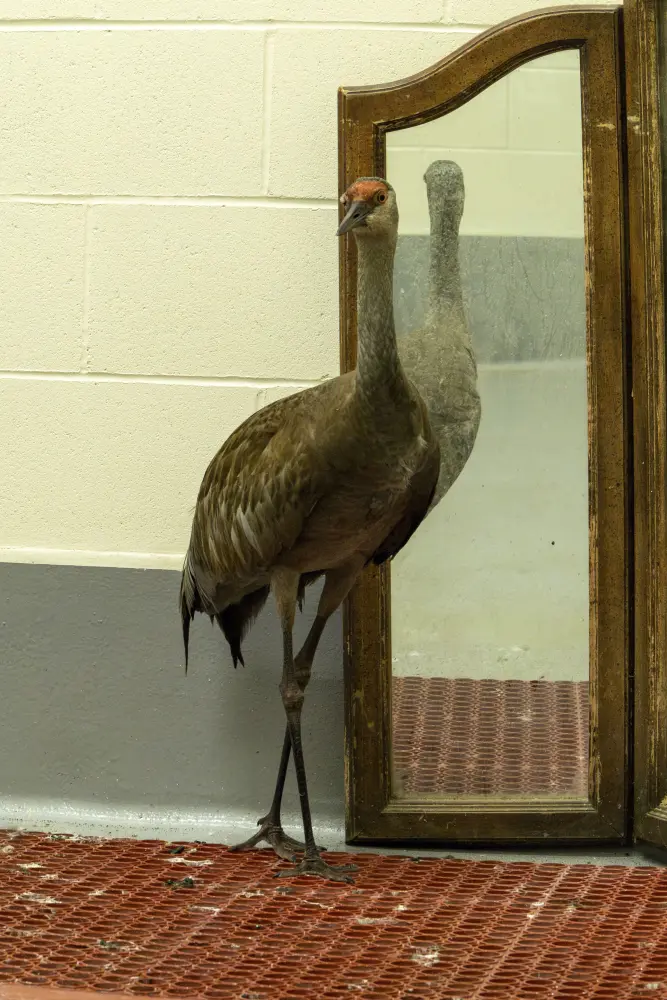
The next day, the Animal Health Unit of the Department of Environment brought a sandhill crane that was unable to fly. Similar to the eagle it was being harassed by scavenging birds. The bird has two lacerations, one of the left eyelid that is not affecting the eye and another on the left tip of the wing. Without much information to these injuries, Dr. Maria Hallock is ensuring they are cleaned and sanitized. The crane is given meloxicam, nonsteroidal anti-inflammatory drug (NSAID), to relieve pain and swelling. 

Now both birds just need time to heal, good food to gain weight and protection, while they return to normal health condition. We expect both animals to make a full recovery and be released back into the wild.

Since the crane should be already venturing down-south for Fall migration, the Preserve will look to some rehabilitation centres in B.C. that could admit the animal to provide its final phase of care after we give it a one-way ticket South via Air North!

Help us get them back on their wings. We could use your help. If you are able to support the care of these two animals, please consider donating. Every contribution makes a difference and as a non-profit charitable organization, you can receive a charitable tax receipt for your support. 

Photo credit: B.Forsythe

Lindsay Caskenette

Lindsay Caskenette

Manager Visitor Services

Lindsay joined the Wildlife Preserve team March 2014. Originally from Ontario, she came to the Yukon in search of new adventures and new career challenges. Lindsay holds a degree in Environmental Studies with honours from Wilfrid Laurier University and brings with her a strong passion for sharing what nature, animals, and the environment can teach us.

867-456-7400
Lindsay@yukonwildlife.ca

Explore by Category

Explore by Author

Bou, the caribou who flew

Bou, the caribou who flew

animal care

5 min read / poem

Bou, the caribou who flew

The caribou is just the same
As reindeer, just another name

Why 2 names, I hear you cry?
Well, only reindeer can fly

Santa bestowed a magic gift
That gave reindeer enchanted lift

Bou, the caribou would roam
Across the snow around her home

Keen to learn & keen to know
Miles across the land she'd go

She watched the trees, she watched the sky
Watched as other animals passed by

One night as she was on her way
She came upon a giant sleigh

A man in red traversed the ground
A herd of reindeer stood around

What was wrong? mused Bou, then saw
A set of antlers on the floor!

“Oh what to do, oh my, oh my!
Without your antlers, you cannot fly!”

The man in red seemed most upset
Bou swallowed hard & up she crept

“Excuse me” said a nervous Bou
“Is there something I can do?”

“Without his horns, he cannot fly”
The man replied with heavy sigh

“The magic antlers aid his flight.
How can we solve this awful plight?

With so many gifts still on the sleigh
What will disappointed children say?”

Then, on spotting Bou’s antlers, said
“Why you can help us out instead!”

“But I can’t fly” young Bou retorted
“My magic will soon get that sorted”

Said the man to startled Bou
“I’m Santa Claus, how do you do”

Pulling a bag from his cloak of red
He sprinkled dust over Bou’s head

Her antlers tingled, then Bou found
Her body lifting from the ground.

“Good las “ said Santa. “We need to go.
Gifts to deliver, don’t you know”

Bou joined the reindeer & looking round
Watched the sleigh lift off the ground

“The antler-less reindeer must remain here
He will rejoin us, when new ones appear”

So off into the night, excited Bou flew
Delivering gifts with his reindeer crew

The children were happy, none of them knew
That Bou was the first caribou who flew

• • •

Photo of moose in water.

The Story Behind the Poem

"My husband & I visited the Preserve in Fall 2021 & the lovely gentleman who drove the tour bus was explaining about how caribou & reindeer are the same thing. Then, as we had children in the group, he suggested the the difference between reindeer & caribou was the ability of reindeer to fly ☺️ He then told us about Bou, the rescued caribou, who was flown in adding, “so I guess she was a caribou who flew!”

This comment made me laugh & inspired me to compose a Christmas rhyme, based on “Bou, the Caribou who flew”

Poem and message by Diane Gregory.

• • •

Photo of staff giving moose oxygen.

The Story of Bou - the magical caribou

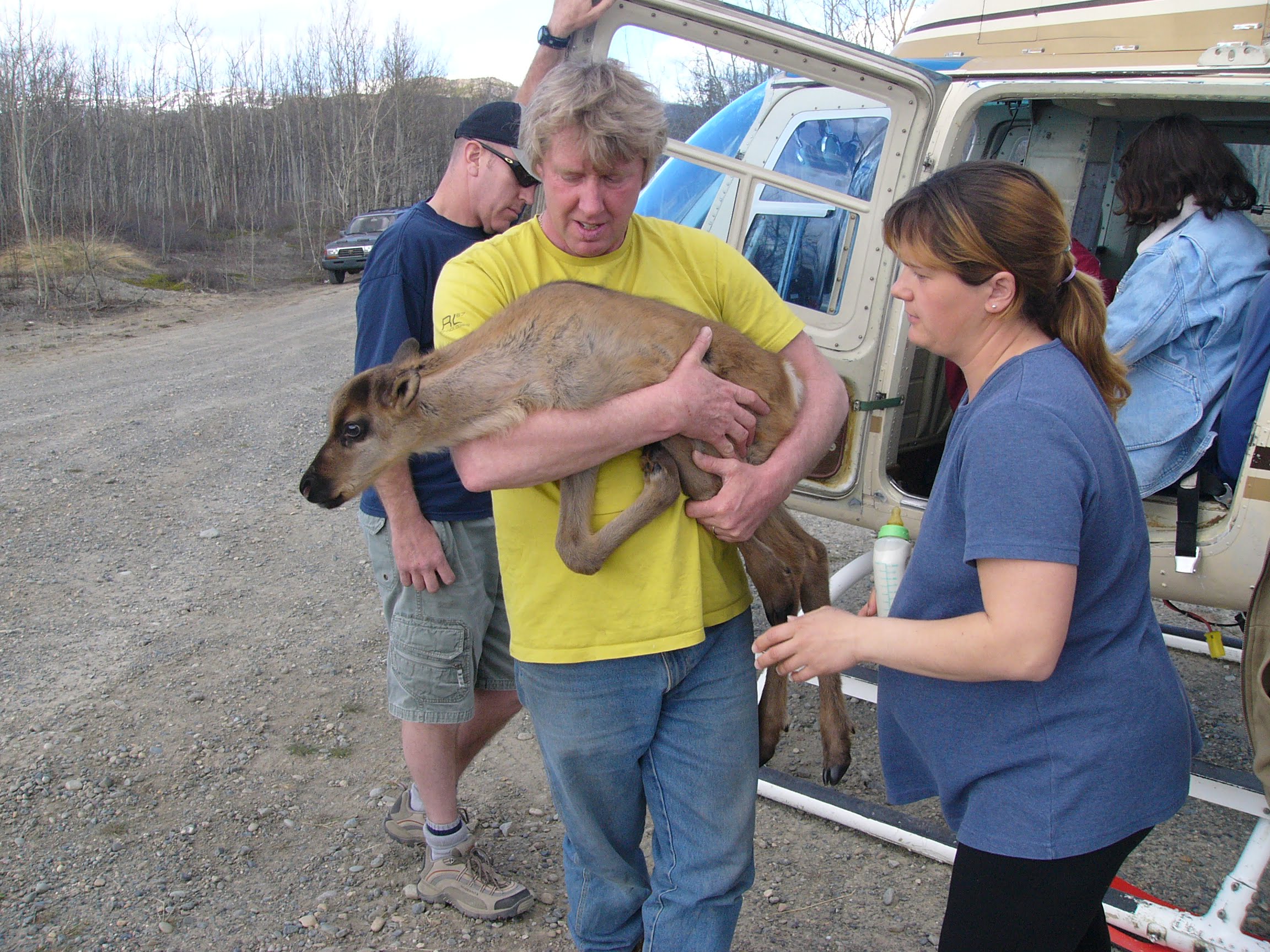
Bou the Caribou was flown to the Preserve as a tiny calf from the Chisana Herd in 2005. During this time, there was efforts protecting this herd from dramatic population decline from unprecedented calf predation. The efforts to improve calf survival was tested through maternal penning. When Bou was born her mother did not produce milk and Bou was at risk of death. Bou was brought to the Preserve's Wildlife Rehabilitation Centre via helicopter - a special flight for this very special caribou!

On December 25th, 2021 Bou passed away. She was absolutely a magical creature and the timing of her passing only reiterated this. We are touched by this incredible poem shared with us by Diane.

• • •

Randy & Dr. Maria Hallock with Bou the Caribou from the Chisana herd. 2005
Lindsay Caskenette

Lindsay Caskenette

Manager Visitor Services

Lindsay joined the Wildlife Preserve team March 2014. Originally from Ontario, she came to the Yukon in search of new adventures and new career challenges. Lindsay holds a degree in Environmental Studies with honours from Wilfrid Laurier University and brings with her a strong passion for sharing what nature, animals, and the environment can teach us.
867-456-7400
Lindsay@yukonwildlife.ca

Explore by Category

Explore by Author

Yukon Wildlife Preserve
Box 20191
Whitehorse, Yukon
Y1A 7A2

Proud member of:

CAZA Logo

With the support of:

Yukon Government Logo
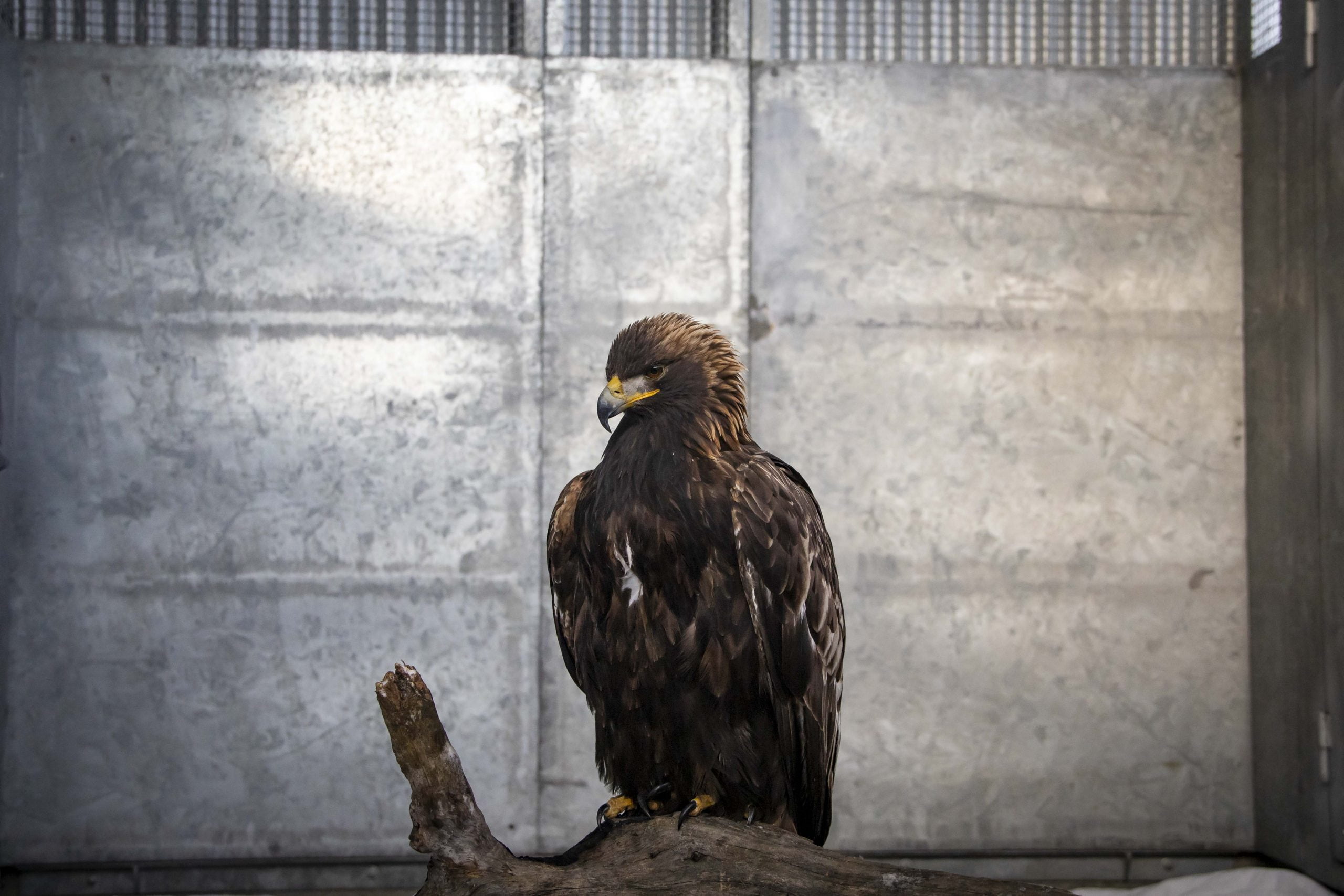
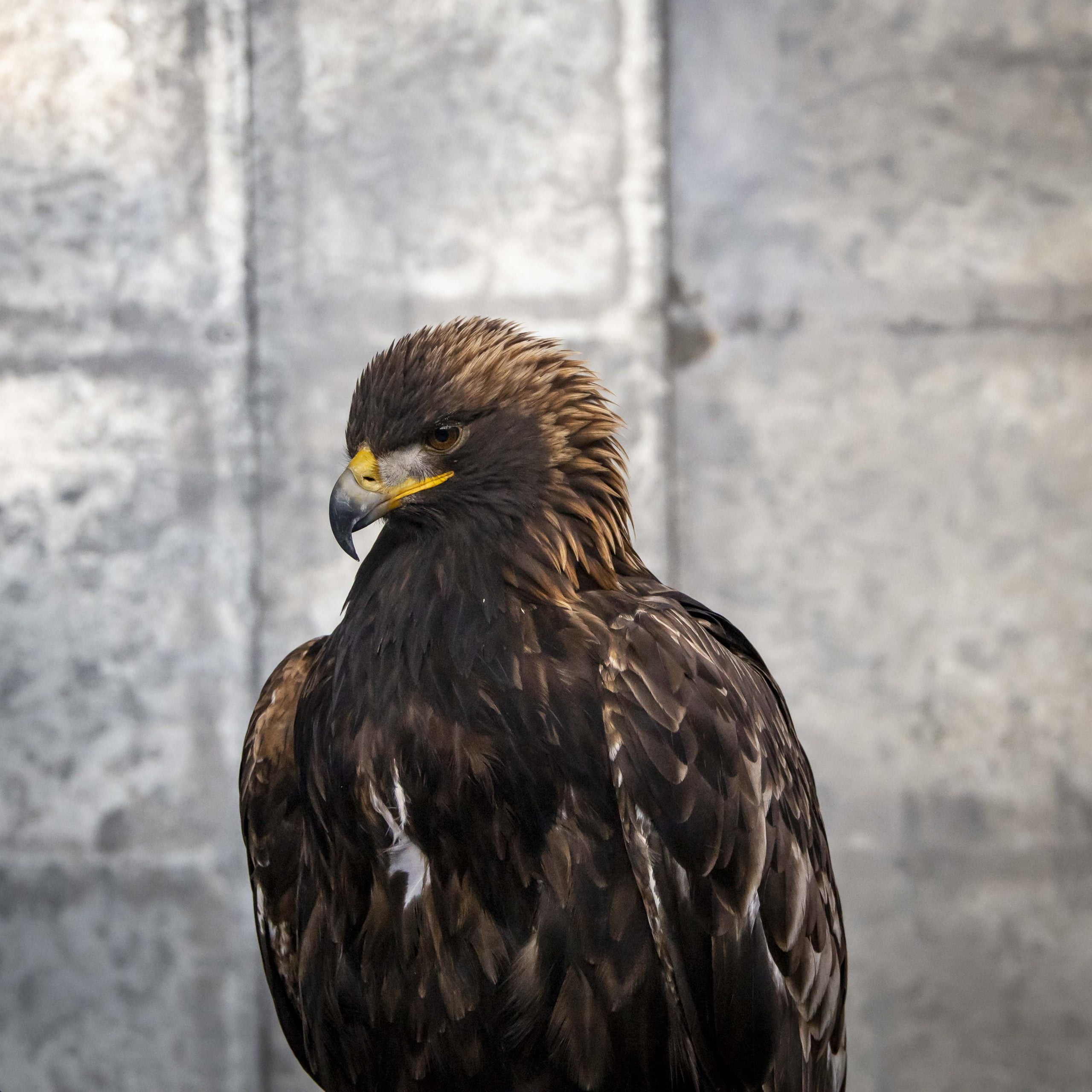
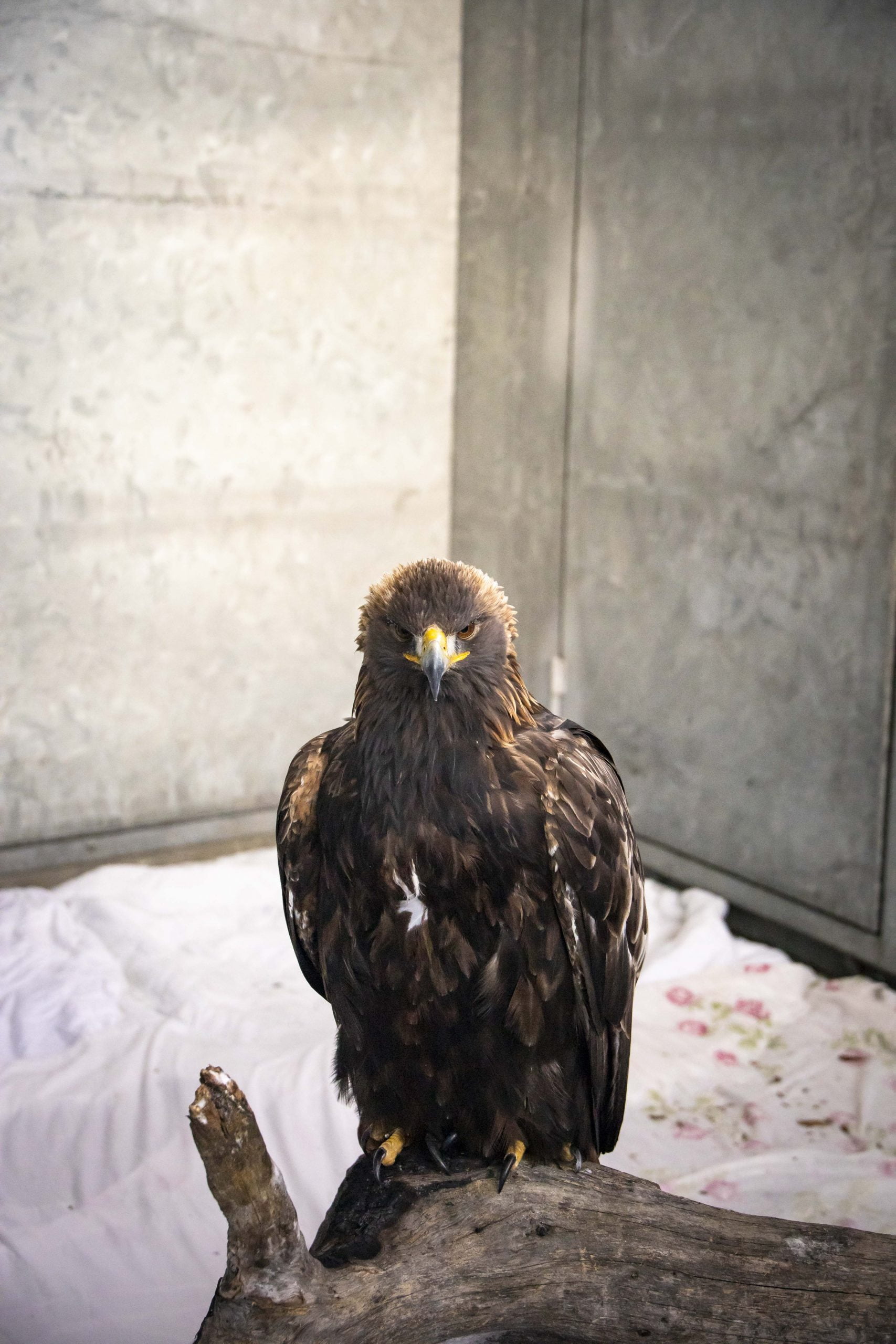
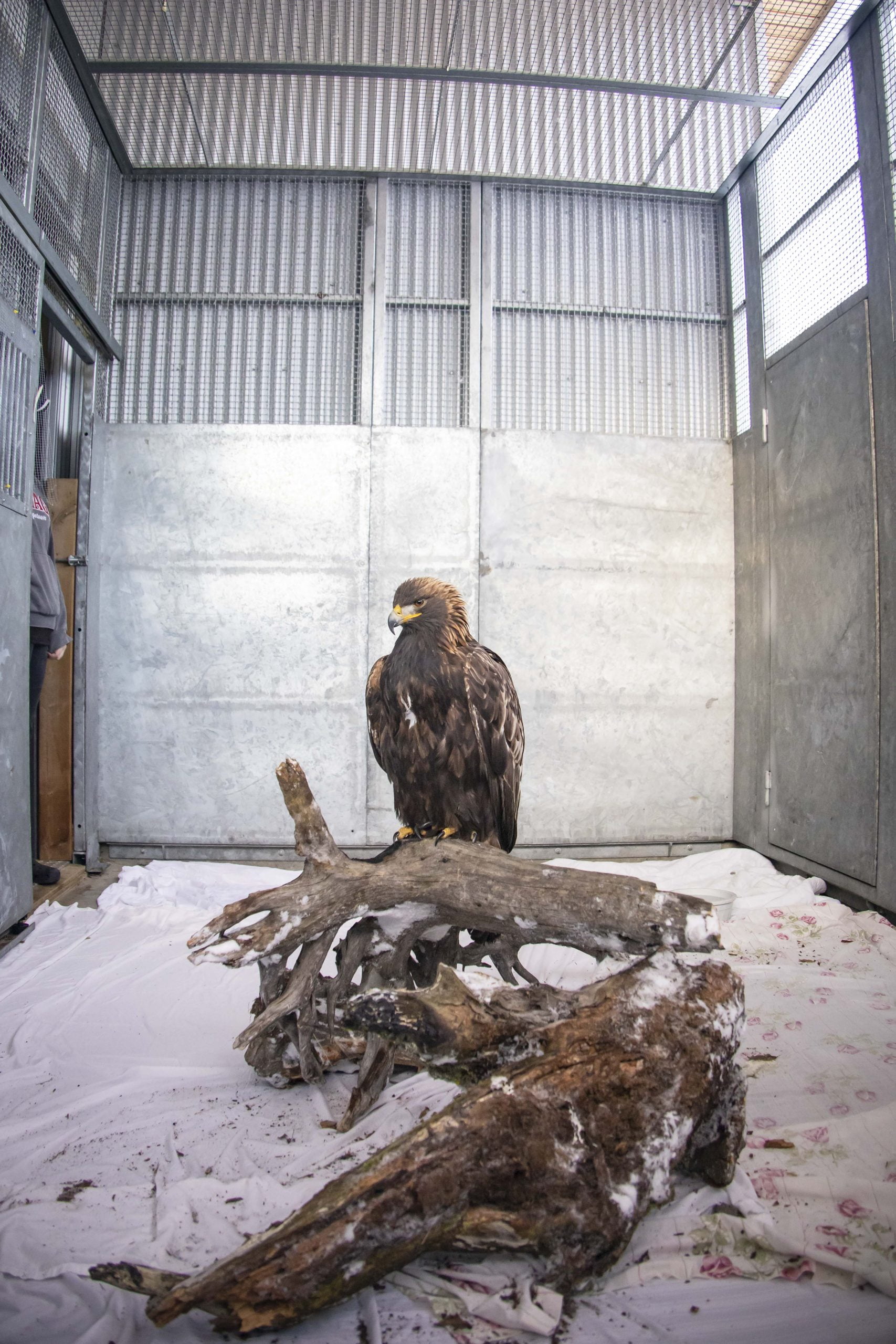
Golden Eagle Gets Second Chance

Golden Eagle Gets Second Chance

animal care

by Lindsay Caskenette | Nov 26, 2021 | 0 comments

Photo credit:  L. Caskenette

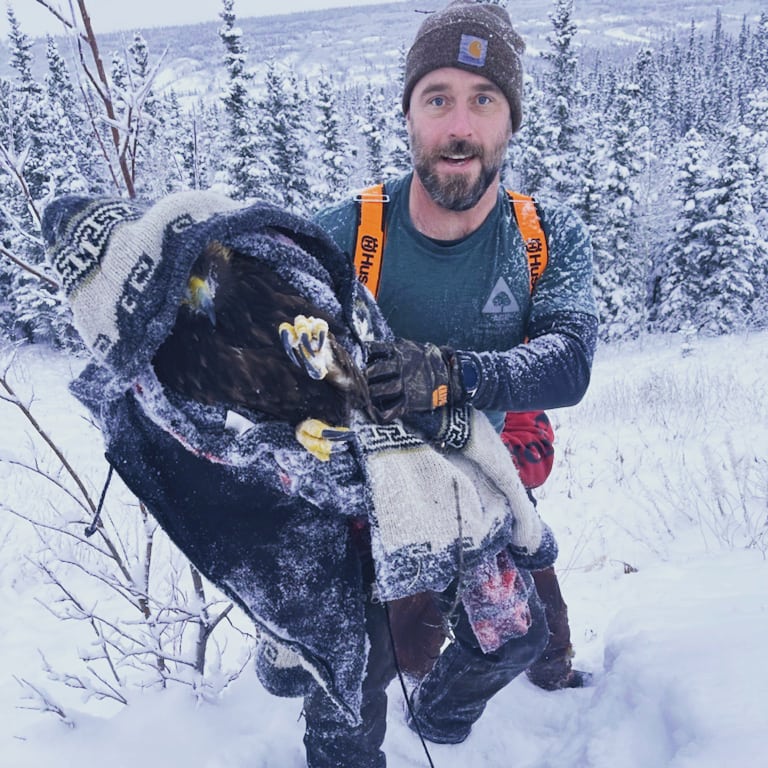
A golden eagle was admitted Wednesday evening, November 24th 2021, to the Wildlife Rehabilitation Centre. This individual, who is quite a bit bigger than the last golden eagle in our care, was found by a member of the public in the middle of the road, in between Haines Junction and Mendenhall area.

Upon initial assessment of the animal there appeared to be no broken bones but was severely hypothermic. Given it was found in the middle of the HWY, Dr. Maria Hallock guesses it was perhaps struck by a vehicle, concussed and resting in place but ultimately becoming weaker due to extended immobility in the extreme cold. While its not certain how long the animal was there for it was enough for the animal to be near frozen state upon its discovery. 

On Thursday morning the eagle was given additional fluids, on top of the fluids it received upon its arrival the evening prior. Some chicken was fed to the eagle in the later part of the Thursday along with a quail. 

On Friday the eagle appeared more responsive and alert and eager to eat by itself. This care and close observation occurred inside the Rehabilitation building where Dr. Maria Hallock waited for the animal to defecate - poop, for assessing continued signs of improvement and health in the GI tract - all good there by the way! 

The eagle will spend the next several days in the Centre being closed monitored. While during the day it will spend time in an outside care room, in the evenings it will come inside. 

If all continues well in its progress and recovery a release back to the wild could possibly happen sometime next week. 

Had this person and those that opted to stop and assist not taken the steps they did, including assessing the animals from a safe distance and calling Conservation Officers and subsequently the Preserve, this eagle would very likely have succumbed to the elements or get fatally struck by a vehicle.

Shaun, pictured here with the eagle, stopped on the hwy when he noticed the original rescuer swerv on the road. He and his crew, Dustin and Clayton helped secure the eagle using their jackets. While we recommend leaving it to the professionals to rescue capture animals, this crew of folks took a lot of precautions when they assessed the situation and decided to intervene and help the animal. Photo courtesy of Shaun Randall.

We are so grateful to live among a community that values wildlife, that cares about our natural world - it's our mission, to connect people to the natural world and everyday we're inspired by the landscape, animals and people that make this incredible territory, the Yukon, a place that is wild at heart <3

Lindsay Caskenette

Lindsay Caskenette

Manager Visitor Services

Lindsay joined the Wildlife Preserve team March 2014. Originally from Ontario, she came to the Yukon in search of new adventures and new career challenges. Lindsay holds a degree in Environmental Studies with honours from Wilfrid Laurier University and brings with her a strong passion for sharing what nature, animals, and the environment can teach us.
867-456-7400
Lindsay@yukonwildlife.ca

Explore by Category

Explore by Author

A Convocation of Eagles

A Convocation of Eagles

animal care

by Lindsay Caskenette | Jan 22, 2021 | 0 comments

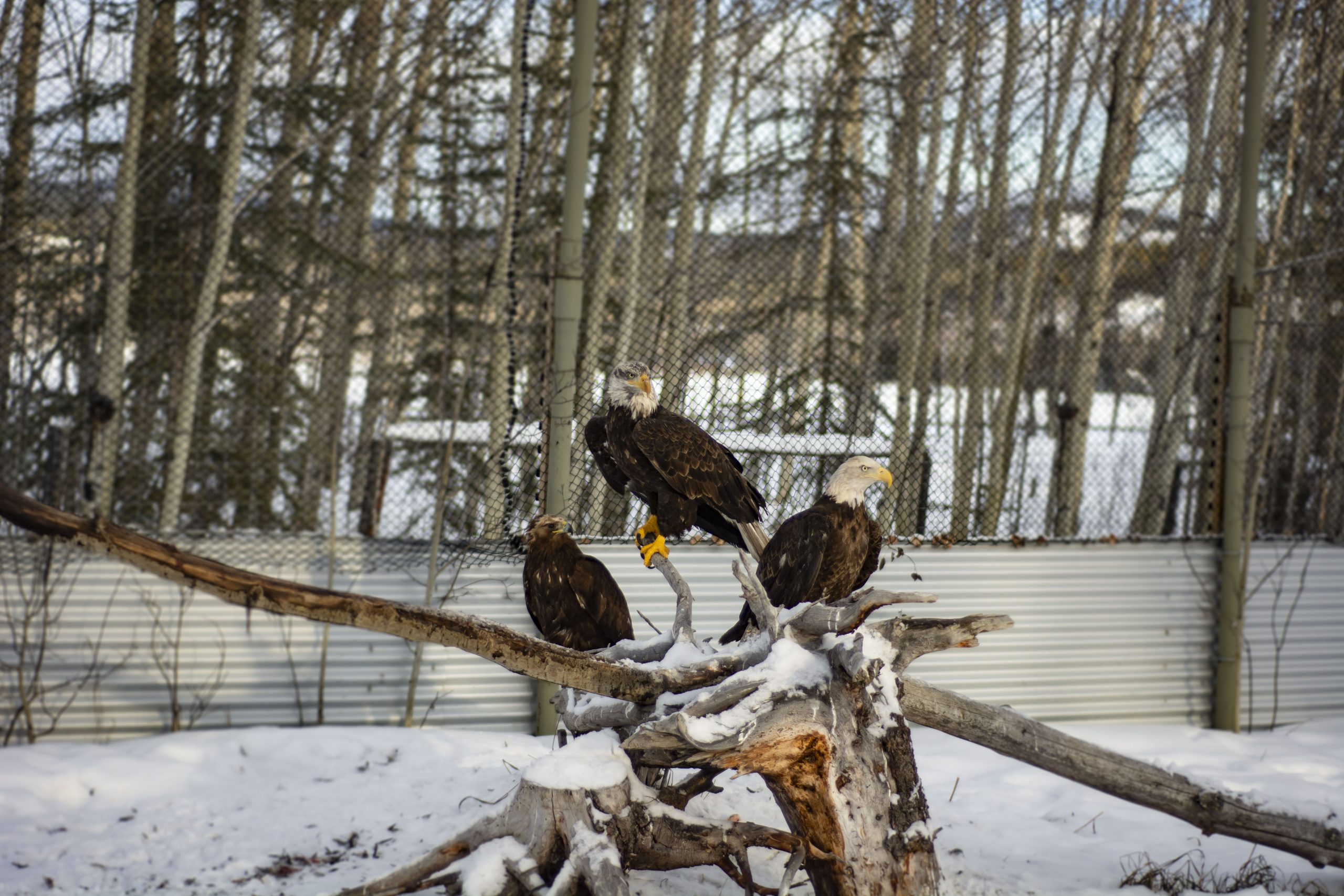
What do the dates; August 7th, September 21st, and October 20th have in common?  Well, each of these days the Yukon Wildlife Preserve's Wildlife Rehabilitation Centre received a new patient, with each those being an eagle. It started with the Golden Eagles arrival from Watson Lake, followed by a Bald Eagle from Jake's Corner, and another Bald Eagle from Mayo.  While an arrival of an animal, into the centre for care by the team at the Preserve, isn't distinctive; it is unusual to receive an influx of eagles in the fall.

Seen from left to right is the Golden Eagle, the younger Bald Eagle with scapular injury from Jake's Corner, and the older Bald Eagle with carpal infection from Mayo.

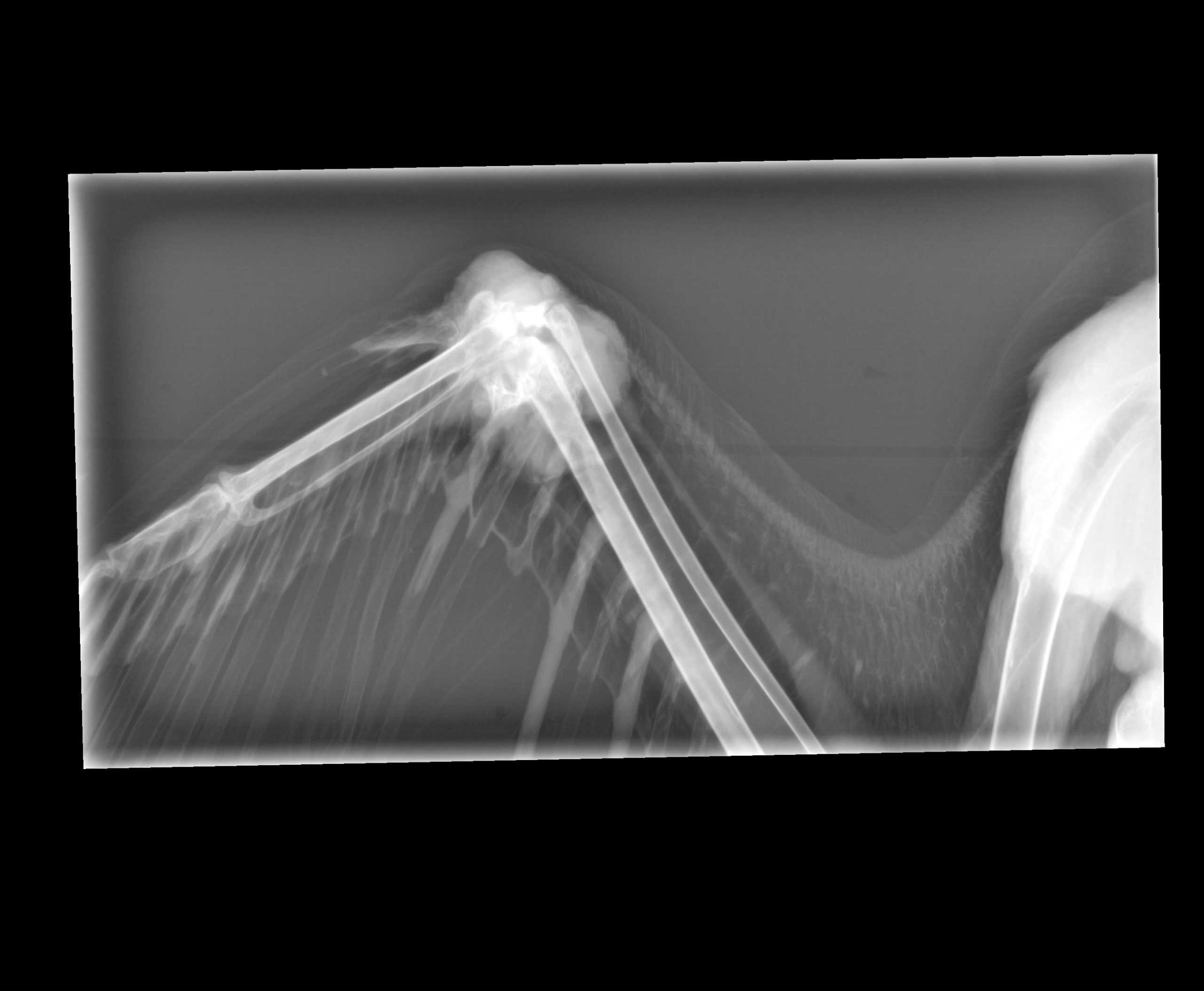
Over the years, the Rehabilitation Centre has admitted many eagles - both golden and bald. Some of these occasions have occurred to eaglets, some adults. Some of these have been due to injury to the individual - like from a nest blowing over in strong winds (they're nests are built over years and with time can weigh hundreds of pounds, which for our small northern trees can sometimes be just too much to support).1https://www.nationaleaglecenter.org/eagle-nesting-young/ Often times, we do not know the circumstances around an animals ailment but can gain insight from x-rays as to why an animal might be behaving differently than we might expect - like the successful juvenile bald eagle rehabilitation from summer 2020. A common thread for many of these eagles is admittance timing - usually in the Spring and Summer. 

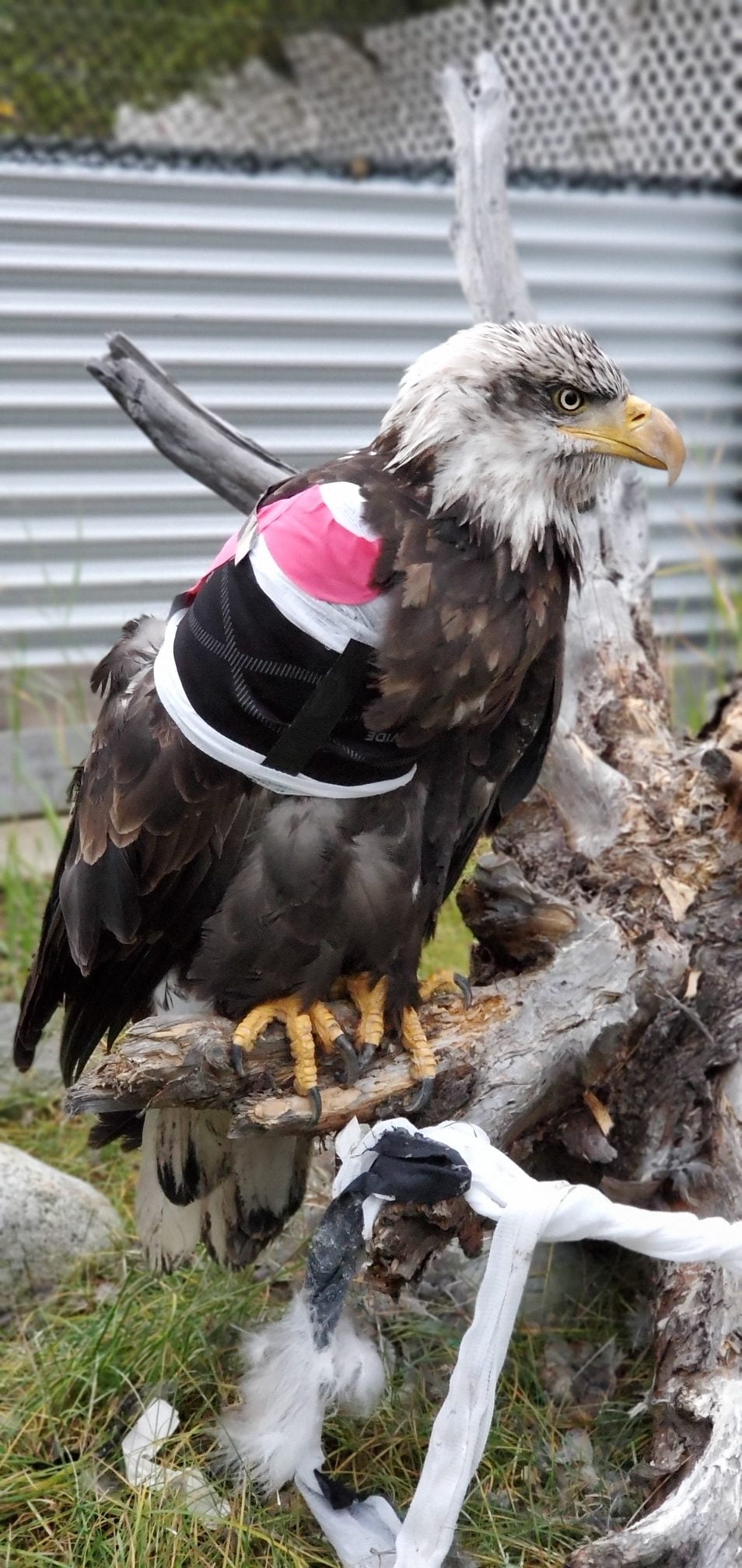
Several months have passed since the three birds Fall time admittance. This time has allowed each eagle recovery, to some degree but there's much road ahead still for them each. We'll start first with the younger, (white with brown head) Bald Eagle from Jake's Corner.  A fracture to the scapular caused the animal to be flightless in the wild. The injury has healed. The wing was wrapped for 2 months to immobilize the wing but this does cause muscle atrophy - just like in humans who are casted following a bone break. The eagle was contained in a small aviary to help reduce its movements to maintain fracture alignment and eventual bone fusion.

Once this stage of recovery was met, the eagle was moved into the large aviary. This is an important phase of the recovery process for the bird -  movement and flight tests. This individual can fly, and will spend the rest of the winter building up flight muscles in the aviary to support its probable return to the wild in the spring!

The older (full white head) Bald Eagle who suffered from severe chronic infection of the right carpal joint was initially treated with a small hope that even though the integrity of the joint was compromised the eagle might still be able to fly well enough and survive in the wild after the infection was controlled and the wing healed. However, based on most current radiographic imaging and physical exam, done by Dr. Maria Hallock and the Animal Care team, the prognosis is poor. While the infection is cleared and the joint has healed, its integrity is compromised - this will prevent the eagle from being able to fly uninhibited. Observations of the animal in the large aviary has seen it able to gain lift up to 6 feet and fly off the perch within the aviary but unable to maintain latitude for more than 20 feet. 

The Preserve will continue to care for this individaul through the remainder of the winter. We will continue to monitor and observe its behaviour.

Finally, the Golden Eagle has had the longest and most challenging recovery of the three. While we are happy to report that the left foot has recovered from the infection due to porcupine quills; the right foot is severely compromised due to the infection. This has resulted in multiple bone dissolution and loss of the skeletal and ligamentous integrity of the foot and consequently loss of its function. The bird can perch but cannot grasp effectively with the right foot. The bird still has a long way to its full recovery. At this time it does not look probable for the bird to be released back into the wild sucessfully due to this loss of functionality in the foot - an important tool for a bird of bird such as this to capture its food to survive.

The x-ray image of the Golden Eagle's feet shows significantly compromised structure between the right and the left. The left foot was imaged with the banadaging on his feet still. The Golden Eagle is observed to be perching, and with the other birds, more and more. This is a postive progression from when he was often observed resting on stomache and on the ground, rathern than higher perch.

Each of these birds are on their own path to recovery. The Preserve continues to provide care through, mostly now, feeding and observation. These birds eat a lot! If you are able to support the ongoing care of these animals please consider donating to the Wildlife Rehabiliation and Resaearch Centre Fund.

While we progress through winter and meet spring the Preserve's Animal Care team will reevaluate each individual and their release back to the wild or the alternative. The alternatives could include remaining at the Yukon Wildlife Preserve to live out their life and offer education and an opportunity to personally connect with such a magnificent creature. This will be a significant investment, up to a 25 year commitment, given the birds average lifespan and food requirements, however that the Preserve may not be able to provide this given the expenses. Another alternative may be to place them in another animal care facility or CAZA accredited institution.  Time will tell, to be continued . . .

Photo credits:  L. Caskenette

Lindsay Caskenette

Lindsay Caskenette

Manager Visitor Services

Lindsay joined the Wildlife Preserve team March 2014. Originally from Ontario, she came to the Yukon in search of new adventures and new career challenges. Lindsay holds a degree in Environmental Studies with honours from Wilfrid Laurier University and brings with her a strong passion for sharing what nature, animals, and the environment can teach us.

867-456-7400
Lindsay@yukonwildlife.ca

Explore by Category

Explore by Author

Doctor visit:  Mountain Goats!

Doctor visit: Mountain Goats!

animal care

by Julie Kerr | May 14, 2020 | 0 comments

8 min read - 

During daily rounds to check on the health of the residents, Animal Care staff notice that the eldest male goat, Geronimo, appears to have a cracked hoof. Staff veterinarian Dr. Maria Hallock is concerned he may have cracked it close to the blood supply. This leaves him open to the possibility of an infection, which is more likely with spring weather – melting snow and lots of mud.

The wildlife residents at Yukon Wildlife Preserve are not trained. This keeps them as wild as possible, but it does make medical procedures an interesting challenge. Most medical procedures are performed under general anesthesia to minimize stress to the animal as well as to ensure safety of the staff handling the animal. While some animals are cooperative enough to receive their sedative medication via hand injection, most of them require a distance delivery of the drug via various equipment such as jabpole, blowpipe and dartgun.

Randy, Director of Operations, uses a dartgun for distance delivery of sedative drugs to the young male, or billy, goat. 

The team gathers... but the mountain goats are not interested in participating. So, the team gathers the following day, to try again. Geronimo is successfully sedated – but here’s the thing about mountain goat personalities – their tolerance to their peers showing vulnerability is low to none. If a rival shows weakness, the other goats will come in to finish him off with his very sharp horns. Given the situation and the close proximity of a second male, or billy, there is a great safety concern to Geronimo during his recovery period. Therefore, Dr. Maria decides to use this opportunity to sedate and trim the younger billy’s hooves, as well as clean up any winter hoof overgrowth.

Hooves and horns are composed of keratin - the same protein as hair and nails. Just like in the wild, Rocky Mountain Goats at Yukon Wildlife Preserve will wear down their hooves by walking on the rocks in preferred cliff habitat. During winter, with snow covering the cliffs, it is more challenging for the goats to wear down their own hooves. Even so, not all the resident goats will require hoof trims, but some individuals do – things like older age, genetics and nutrition all contribute.

Hooves and nails are both composed of the same protein, keratin.  Trimming hooves is not unlike humans trimming their fingernails, or taking their pet dog to the vet for a nail trim. 

Dr. Maria and Randy begin trimming hooves, Julie monitors Geronimo's health while under general anesthetic as Ensio records times and values such as heart rate. 

Once the goats are sedated, we cover their eyes so they won’t be stimulated by light, and team members start taking and recording vital signs – heart rate, breathing rate, and temperature, to name a few. Since Geronimo is an older goat, he is also put on intranasal oxygen throughout the procedure. Dr. Maria and Randy get busy trimming the hooves, to make the procedure as quick and safe as possible, so we can wake the goats up, as soon as we can.

The eldest billy, Geronimo, receives intranasal oxygen. During the procedure to trim his cracked hoof, his eyes are covered to avoid stimulating him.  Here, Julie monitors vital signs such as heart rate, breathing rate and temperature as Dr. Maria works to quickly trim hooves.

We are happy to report that although Geronimo had indeed cracked his hoof, the crack did not communicate with the blood supply, so he’s at less risk of an infection from his hoof. Essentially…. he had a broken fingernail…

Geronimo's hoof after being trimmed.  The right toe was trimmed bluntly due to the crack in the hoof.  The left toe is the "normal" shape after trimming 

Both billy goats are woken up from sedation at the same time - we don’t want to risk any fighting of a rival!  In order to wake the goats up, they are given injections of sedative reversals.

Julie injects sedative reversal intramuscularly.

The time is noted and recorded so we know when to expect Geronimo to waken.  

Veterinary medical costs quickly add up. Even this simple, fast procedure cost $60 per goat for anesthetic drugs, antibiotics and pain control. Hidden costs include expertise, labour and supplies such as syringe and needles.  

We also administer an injection of antibiotics which will last for 3 days, to mitigate any potential infection arising from either hoof injury or the drug injection site.  Within minutes of waking up, both goats are heading their own way, to get back to the normal routine of being Rocky Mountain Goats.

Photo and Video Credit: L. Caskenette

Julie Kerr

Julie Kerr

Visitor Services Coordinator

Julie is a Registered Veterinary Technologist, living and working in Whitehorse since 2012. She joined the team in May 2018. She is passionate about wildlife, nature and living in a conscious manner with both. Her free time is spent outdoors observing wild animals and ecosystems; her connection to the natural world around her brings great joy – joy she loves to share with anyone interested. Honestly? Work and life blend rather seamlessly.

Explore by Category

Explore by Author