Old Crow Bald Eagle

Old Crow Bald Eagle

animals

by Lindsay Caskenette | Jun 12, 2024

1 minute read - 

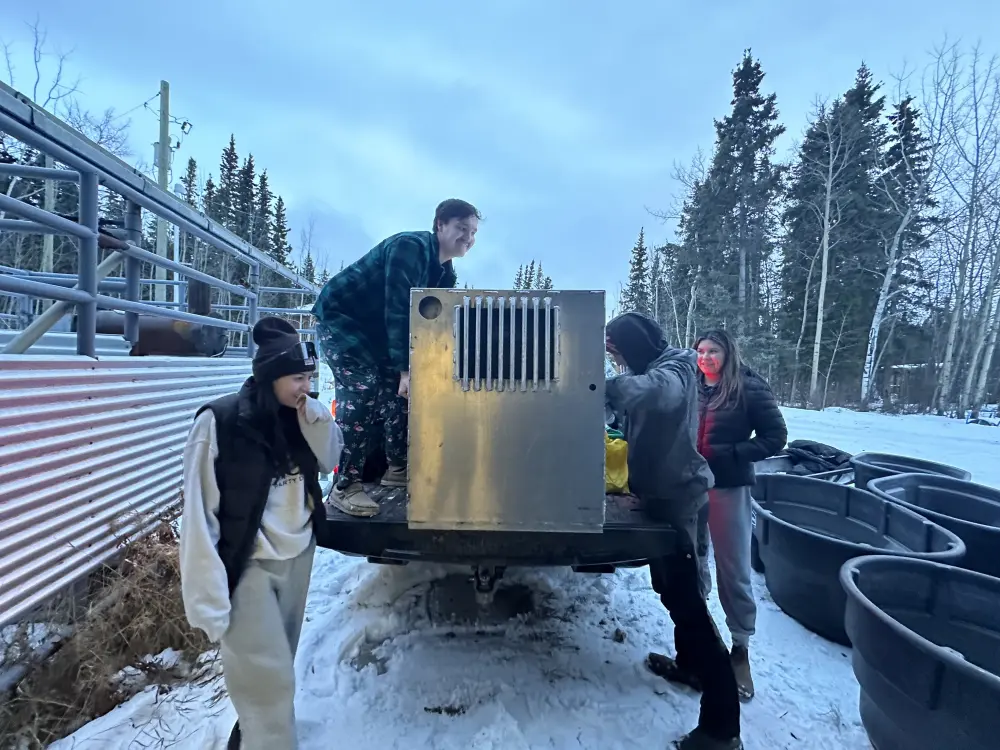
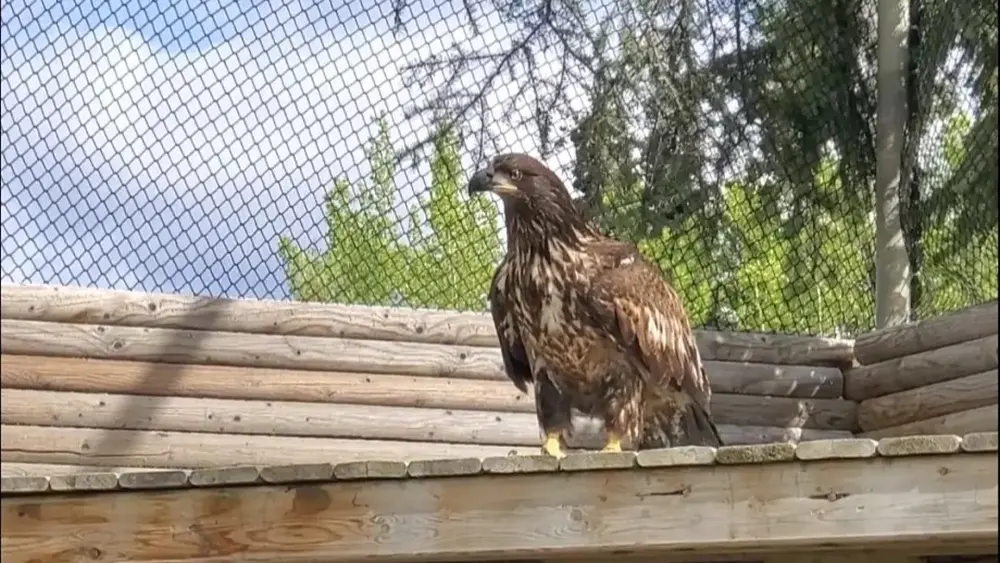
In the remote, fly-in community of Old Crow, on the Traditional Territories of Vuntut Gwitchin First Nations a juvenile bald eagle was found by Robert, at the dump, flightless and injured. The eagle was coaxed into a crate and eventually brought to the Yukon Wildlife Preserve after it made a stop in Dawson and caught a flight via Air North.  
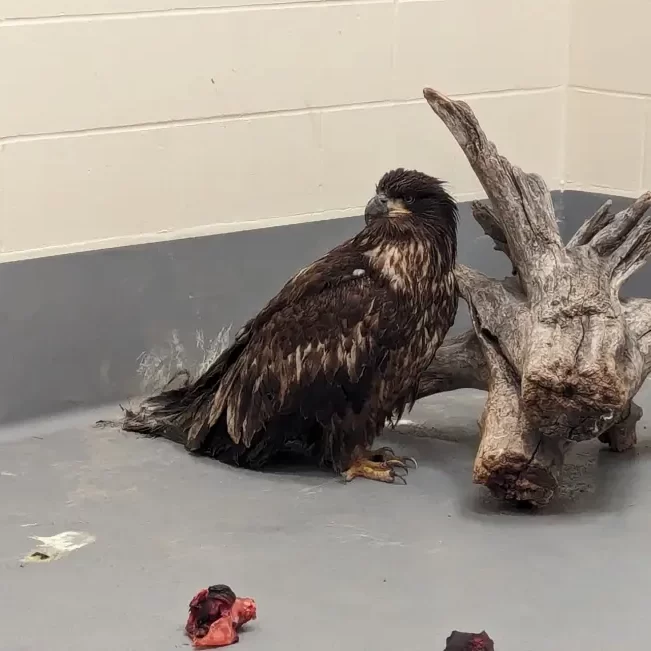
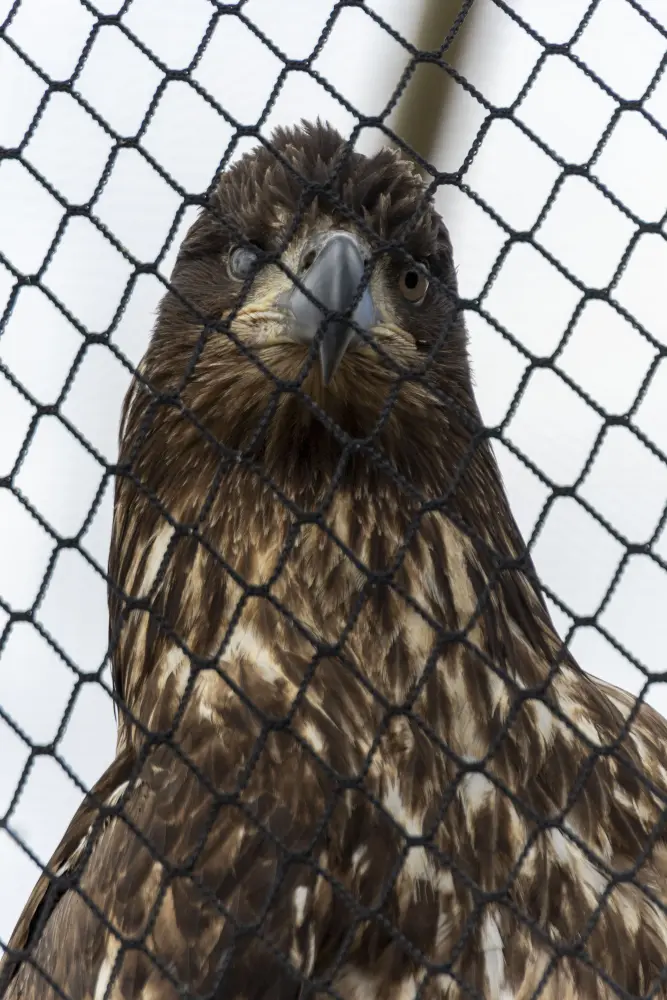
Old crow bald eagle upon arrival and admittance into the Wildlife Rehabilitation Centre at the Preserve. May 10th. Photo credit L.Caskenette

The bald eagle, thak tth'ak came to the Preserve's Wildlife Rehabilitation Centre on May 10th underweight (4.3kg) and with a OD (medical term for right eye) chronic corneal ulcer. 

mature bald eagle in rehabilitation

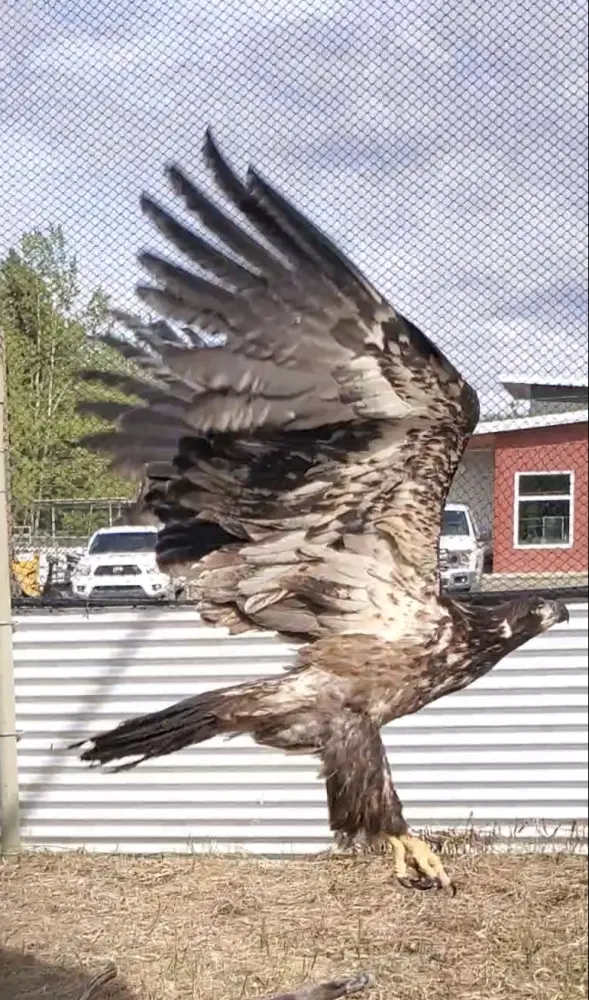
Likely a she, given the large size of the animal. She has gained sufficient weight, coming in at 4.83kg. She has been viewable in the aviary as she works to build up flight muscles. Now she is ready for her public release back to the wild this Friday. She has a cloudy eye but has been successful catching live food and as a predominantly scavenging animal she is likely to do quite alright back in the wild even with this limitation.
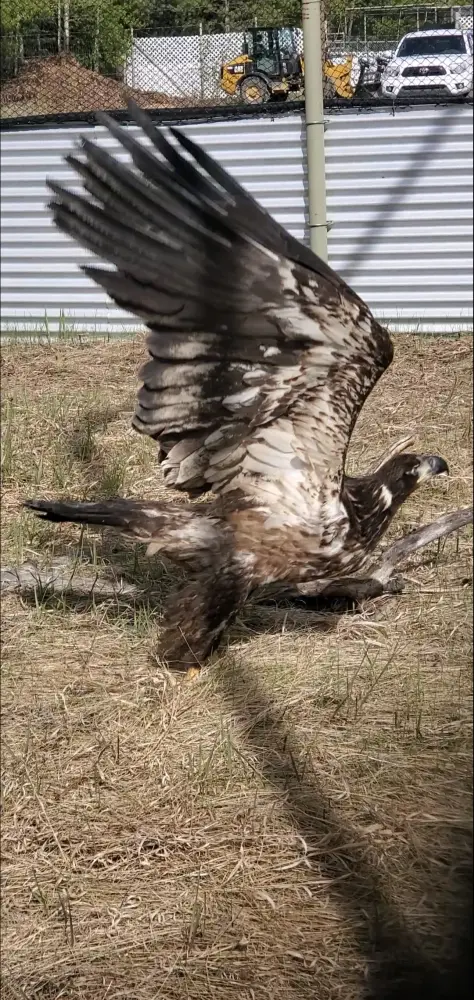
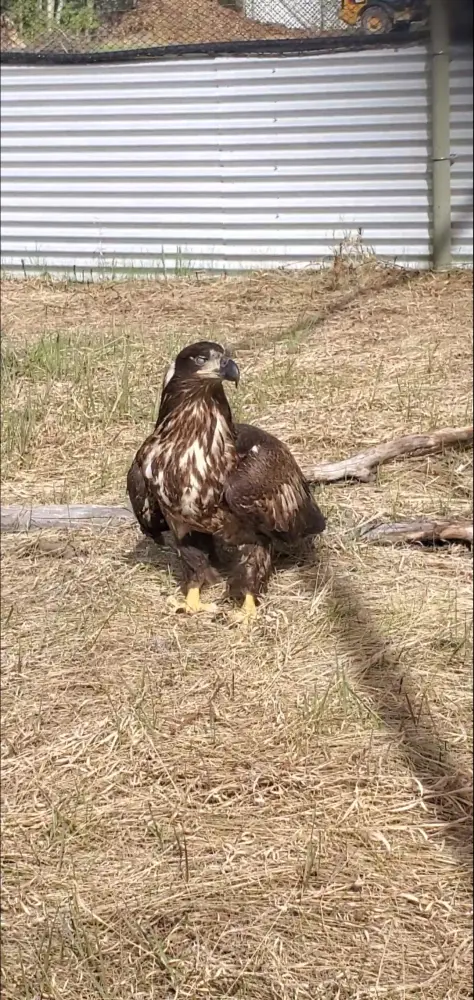
She will not be returned to Old Crow due to the long travel and stress concerns related to transfer. Instead, she was released outside of Whitehorse on Friday June 14th at 7pm. 

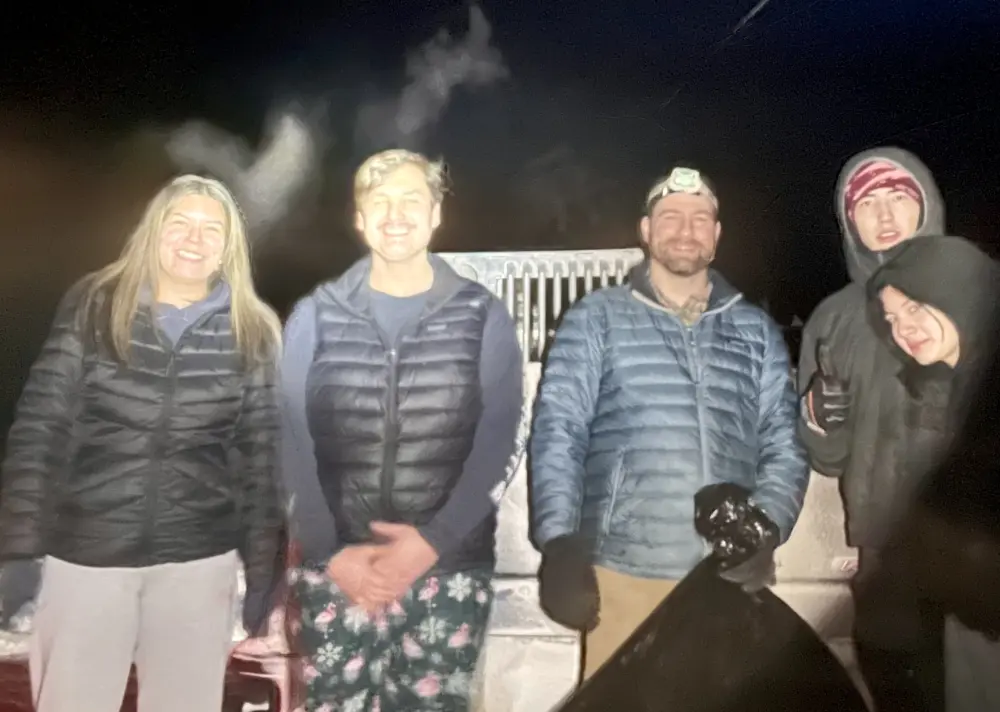
Around 40 people joined the event to send off the bird. Thank you to everyone who joined the release, it was a perfect evening. The sky welcomed us all without a drop of rain. Thank you to all who provided good vibes and sent off the eagle with strength and grace.

Thank you to Wylie, Corrine, and Thay K'i Anint'l for the prayer and blessing for this bird's return to the wild and resilience for a long eagle life. 

Thank you to everyone who helped this Eagle along its path to recovery. To Robert K who found the bird and ensured it got a second chance at life. To Norma, to the team at the Preserve that helped with the bird release event. To Air North for giving the bird some helping wings South to the Rehabiliation Centre.  Thank you, Masshi, Gunalchîsh????

She took her time deciding to soar but this allowed everyone to share in more details of her story, to practice patience and to grow our appreciation of her and others' incredible story of resilience. 

• • •

The beginning of June the Preserve welcomed a visitor who had, and later shared with us, an extraordinary experience with the eagle while it was recovering in the aviary. 

She shared with us the following:

I felt a very special spirit from her. A very conscious and intelligent bird.
I heard she didn't have a name. 
Horus came to mind for me because of her eyes and her mystical spirit.
"Horus, in ancient Egyptian religion, a god in the form of a falcon whose right eye was the sun or morning star, representing power and quintessence, and whose left eye was the moon or evening star, representing healing."
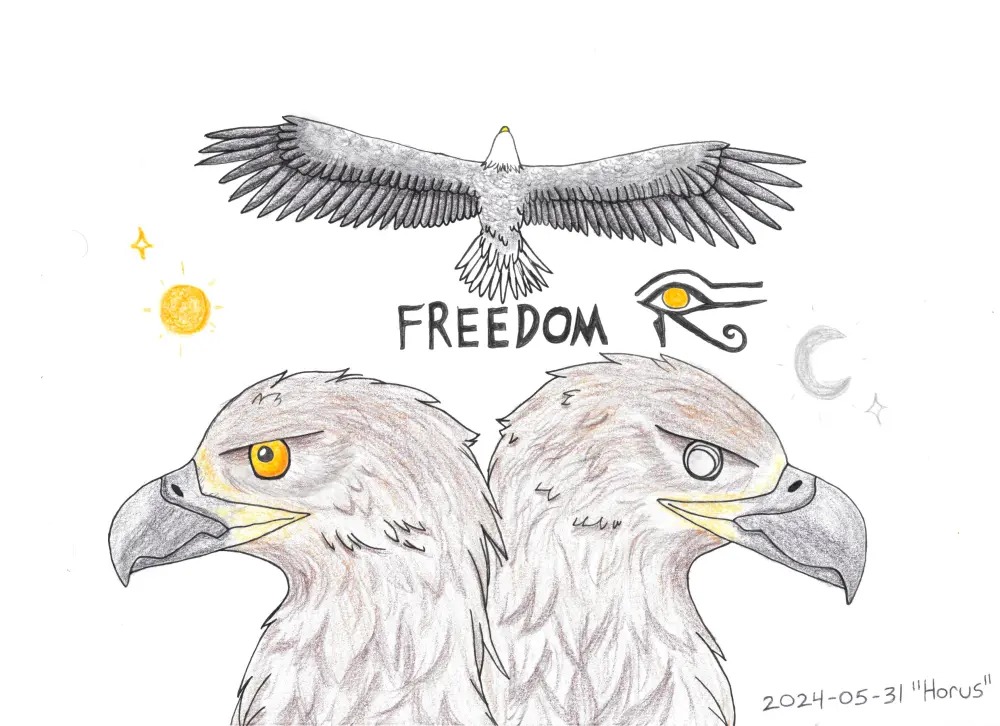
"Horus, in ancient Egyptian religion, a god in the form of a falcon whose right eye was the sun or morning star, representing power and quintessence, and whose left eye was the moon or evening star, representing healing." The old crow bald eagle was given and unofficial name by a visitor, Jasmine Colomby who also drew and shared this interpretation.

Help us get them back on their wings. We could use your help. If you are able to support the care of these two animals, please consider donating. Every contribution makes a difference and as a non-profit charitable organization, you can receive a charitable tax receipt for your support. 

Photo credit: B.Forsythe
Britt Forsythe

Britt Forsythe

Visitor Services Coordinator

Brittney joined the Wildlife preserve in the summer of 2023. Growing up on Northern Vancouver Island, surrounded by the temperate rainforest, nature and animals have always been a part of her life. It exploded into a passion, when she started her dog walking business in 2017 and she began spending 6-7 days a week in the forest, rain or shine! This sparked an even deeper appreciation for the cyclical nature of the land and how all of the plants & animals work together symbiotically. She is forever ‘that girl’ on the hike, pointing out different rocks and plants, explaining their origin or what they could be used for medicinally. Brittney and her dog Cedar relocated to the Yukon to help care for 31 sled dogs. She is so excited to expand her local knowledge as a part of the Preserve team.

 867-456-7400

 brittney@yukonwildlife.ca
 

Lindsay Caskenette

Lindsay Caskenette

Manager Visitor Services

Lindsay joined the Wildlife Preserve team March 2014. Originally from Ontario, she came to the Yukon in search of new adventures and new career challenges. Lindsay holds a degree in Environmental Studies with honours from Wilfrid Laurier University and brings with her a strong passion for sharing what nature, animals, and the environment can teach us.
867-456-7400
Lindsay@yukonwildlife.ca

Explore by Category

Explore by Author

Meet Elsa the Mountain Goat

Meet Elsa the Mountain Goat

animals

by Lindsay Caskenette | Apr 12, 2024

1 minute read - 

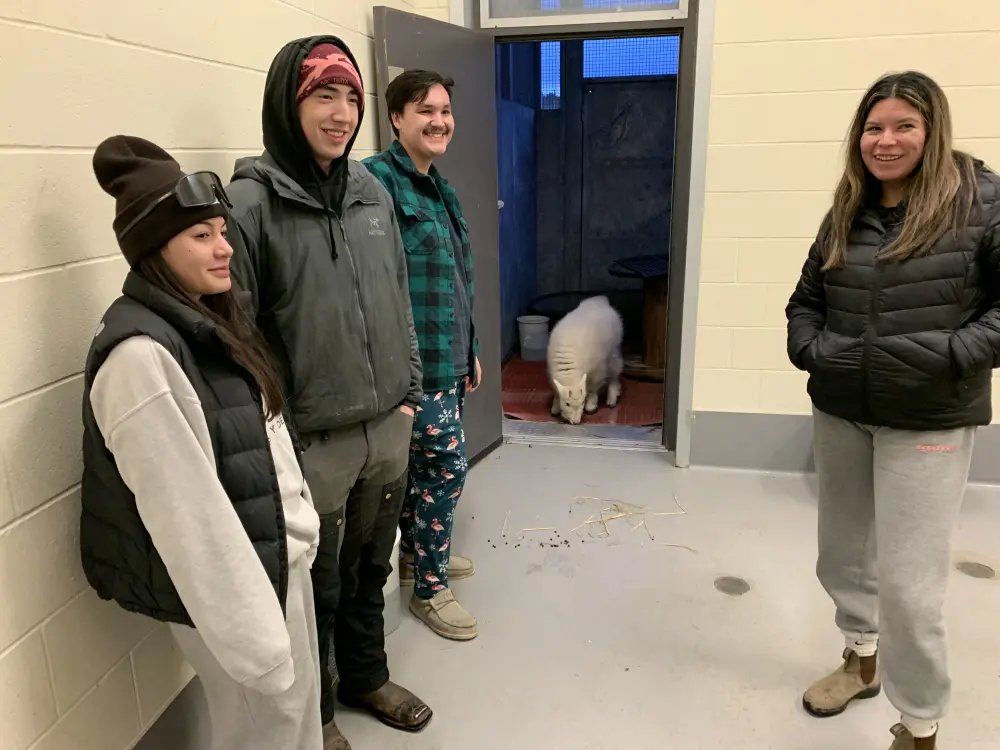
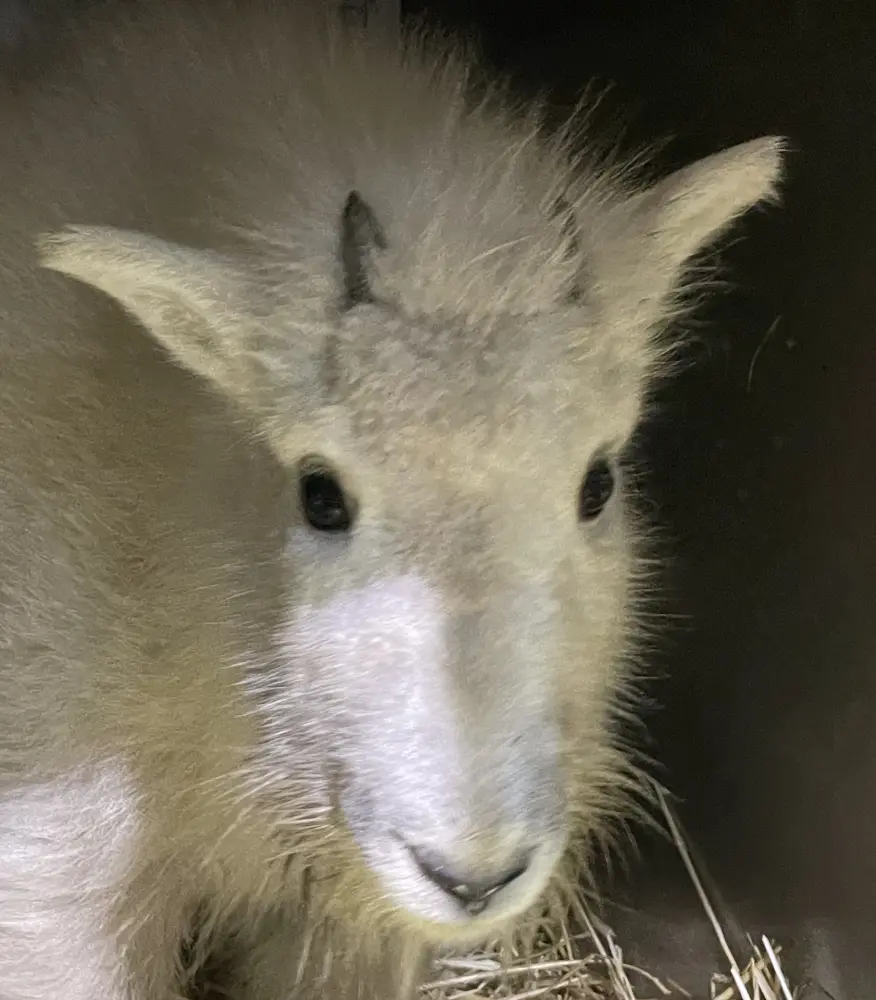
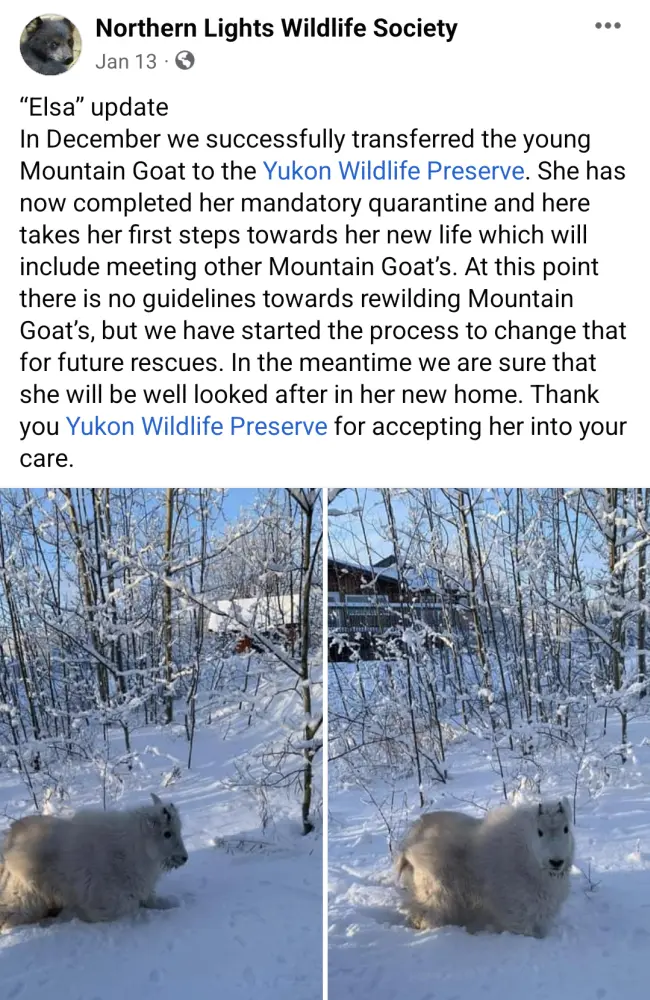
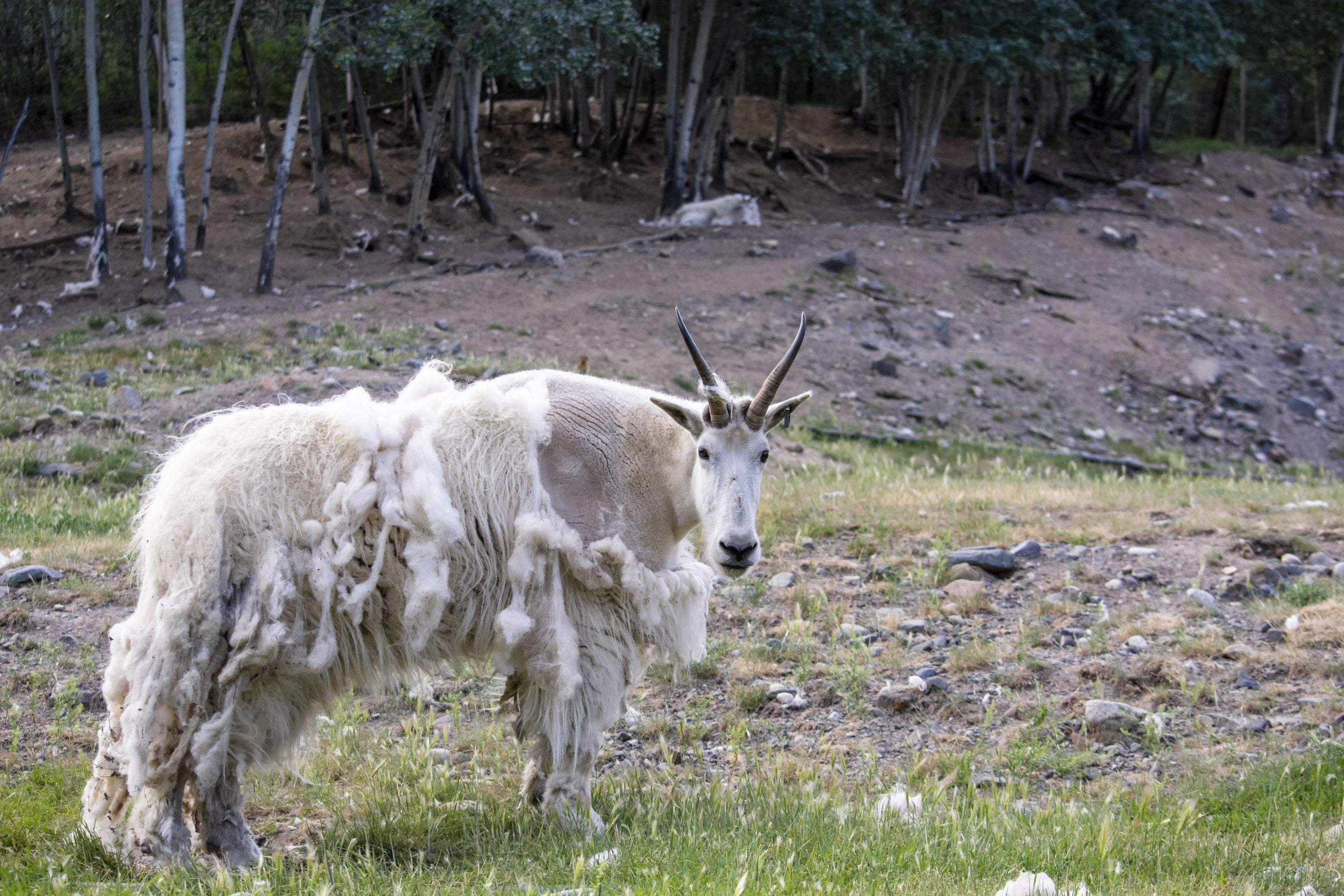
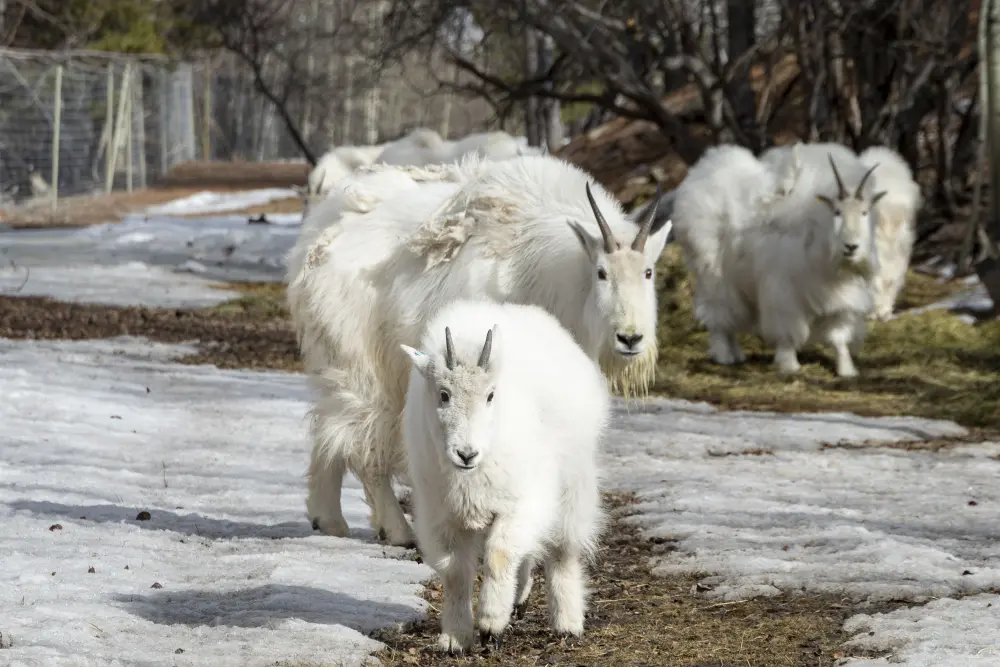
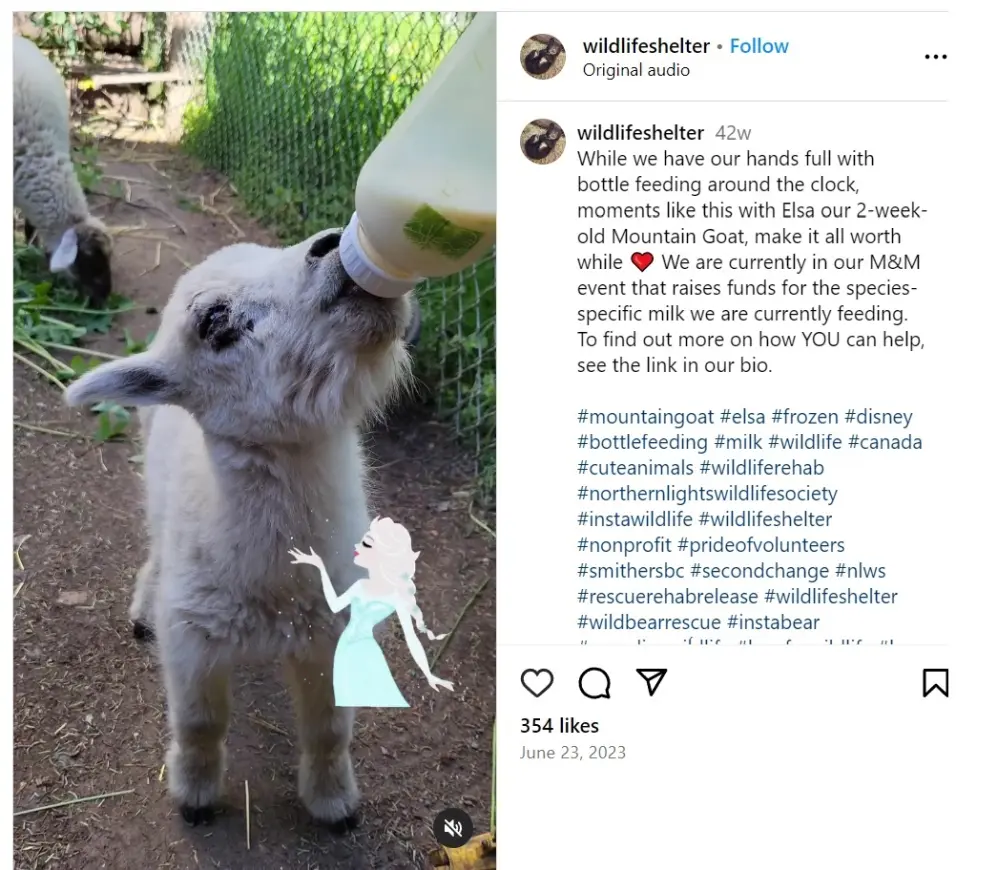
Meet Elsa, the mountain goat! She came from Northern Lights Wildlife Society in Smithers B.C located within The Witset First Nation is a First Nations band government of the Wet'suwet'en people of Witset, British Columbia, Canada. She was brought there in June, 2023 at about 1 week old.  She was brought to this wildlife shelter after she was swept down river - it's not sure, the details, how or why, but she was orphaned and injured at that point when she was found by rangers working on the land.

She had several cuts and lacerations, she lost a few baby teeth. She was taken care of incredibly well by the staff and volunteers at the Northern Lights Wildlife Society. 

You can watch a few of these videos of her care and progress via their social media.

Elsa the queen of the North. Mountain goat rescue from BC wildlife Shelter. Elsa 1 week june 2023

By August, Elsa recovered fully from her injuries and complications that came after. Such challenges are bound to happen with wildlife, especially with an animal so young and under considerable stress and change. 

Elsa the mountain goat ice queen of the North 2 months old and recovered and eating well.

The little queen, Elsa continued to grow and by early winter she was ready for transport to the Yukon Wildlife Preserve for her long-term home. Since the goat was coming from another jurisdiction, in fact, one outside of the Yukon Territory, necessary coordination and import permits were required before her transport and arrival. With all the 'red tape' out of the way the Preserve now needed to consider how to get her to the Yukon, the quickest and safest way. Since the Wildlife Shelter is in Northern British Columbia, an Air North Transport was not an option, as it has been with other rehabilitation animals, though those animals were mostly headed South and back to the wild, not North and into long-term care. 

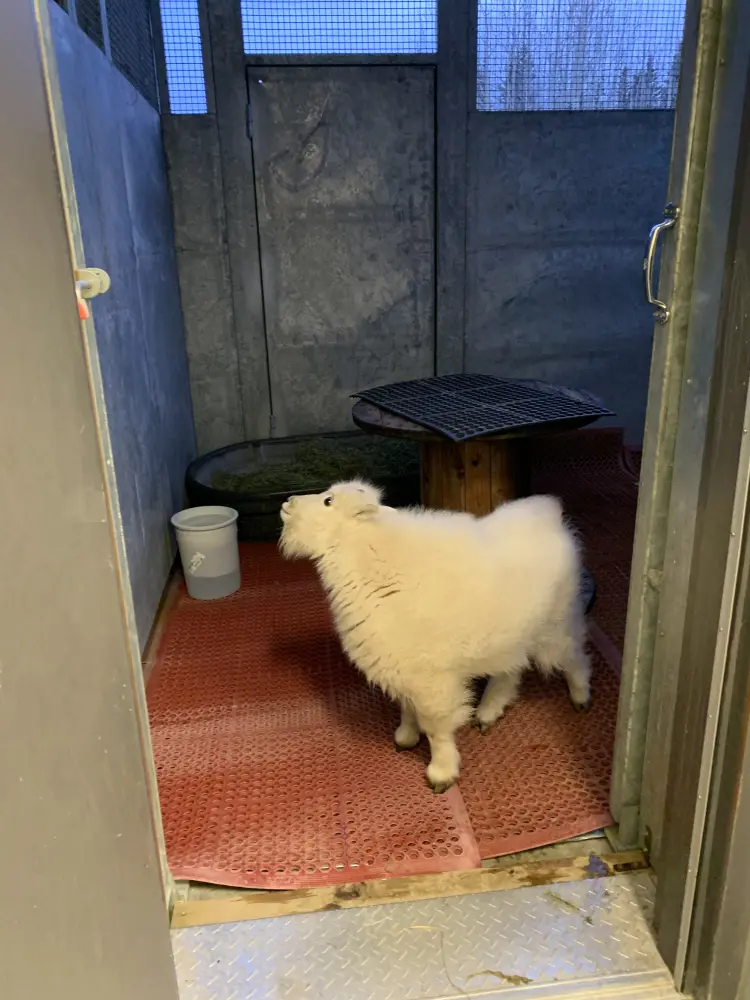
Elsa, the mountain goat, just a few days before her big move to the big leagues which means to the big cliff in the background with the nannies.

Community connections started this journey for Elsa and it continued through her successful transportation by an incredible offering as described below by Rebecca Bradford-Andrew, Manager, First Nation Education Advocates for Yukon First Nation Education Directorate. 

Wild orphaned Nanny goat Elsa from the remote mountains of Northen BC. transportation from her rescue facility to Whitehorse was provided by teenagers, a team of young wildlife enthusiasts from the Yukon First Nation Education Directorate (YFNED) ( a Jordan's Principle-funded Initiative).

These local teens work to build community and culture by supporting indigenous students in Yukon schools. They strive to be role models for youth by doing good deeds and stepping in where needed. Thank you Dr.Hallock and your team for including us in this wonderful opportunity to collaborate for our community!

The YFNED, an indigenous-led educational organization, supports traditional, land-based learning opportunities.

The YWP has been educating people for years, and Yukon students have much to learn about eco-systems, evolution, and herd dynamics, with a strong, healthy mountain goat population their textbooks, and the beautiful cliffs of the YWP their classroom.

Edone daga eti’e (For the good of the child).

Elsa arrived December 12, 2023 to the Wildlife Rehabiliation Centre where for the next 30 days would be in quarantine. This is a mandatory isolation while testing occurred and medication was administered by Preserve's Animal Care team to ensure her eventual integration to the collection of goats would not pose any risks. Of course, the ice queen of the North, passed with flying crystals . . . er., colours!

In mid January Elsa was brought to her temporary, small rocky mountain habitat as she got bigger, before joining the big leagues, on the big mountain cliff at the Preserve. She was a delight and distraction for staff at the office where she would be spotted through windows being a goat - bounding around, climbing the rocks and being unbelievably cute!  

Social media link to the posting by NLWS about Elsa's arrival.

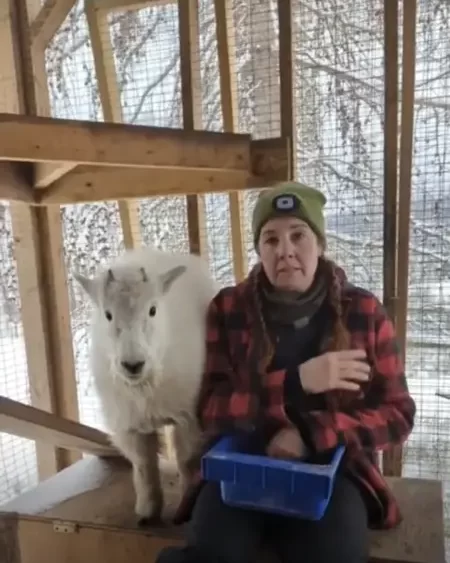
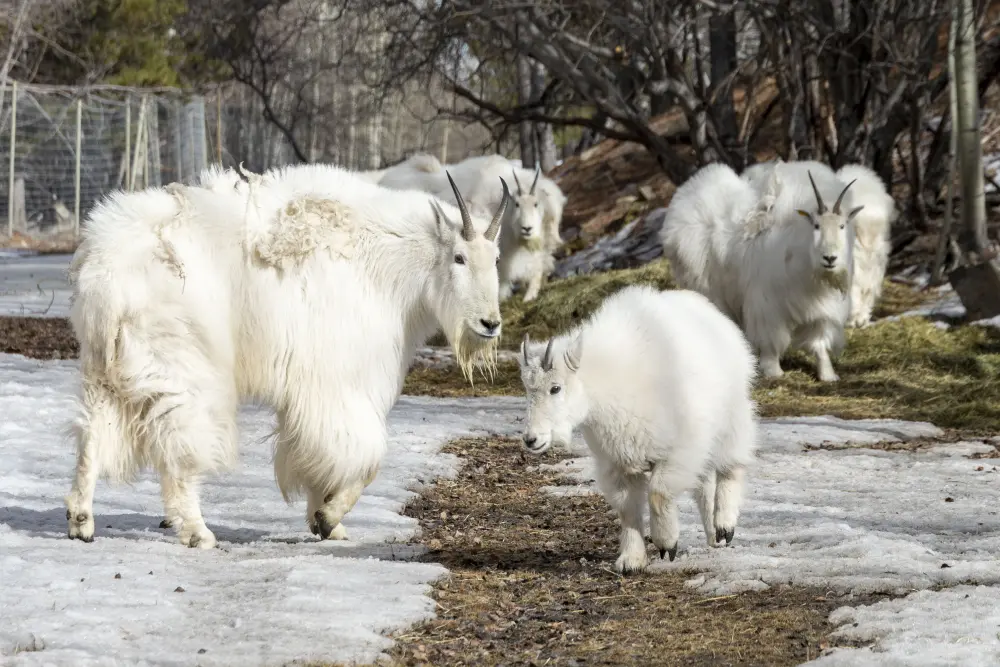
April 9th, 2024 Elsa joined the group of mountain goats at the Preserve and can be spotted living her best goat life thanks to people, community, collaboration and their great care of iconic North American wildlife in need of second chances.

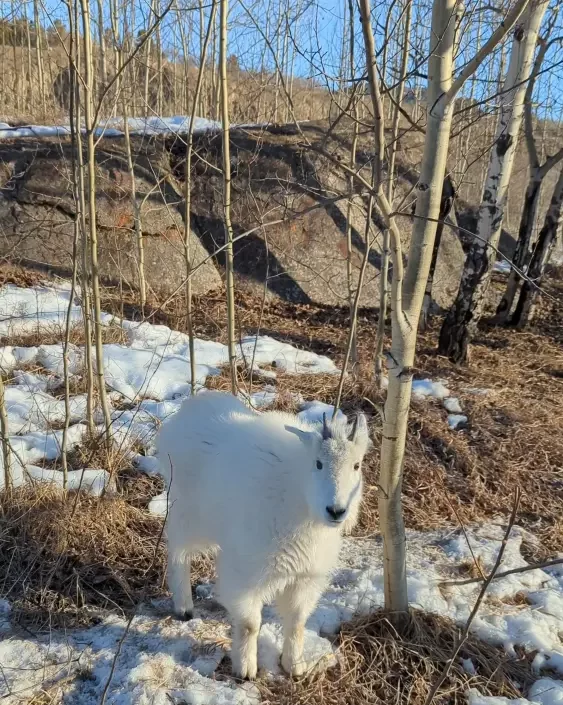
Elsa the mountain goat with the nanny group.

Elsa, the mountain goat lives at the Yukon Wildlife Preserve which is the Traditional Territory of the Kwanlin Dün First Nation and Ta’an Kwäch’än Council.

Elsa the mountain goat introduced to the nanny group. B.Forsythe

The 2 above photos were taken April 30, 2025 of Miss Elsa being a goat!

Photo credits: Northern Lights Wildlife Society, YFNED - Yukon First Nations Education Directorate, L.Caskenette, B.Forsythe.

Lindsay Caskenette

Lindsay Caskenette

Manager Visitor Services

Lindsay joined the Wildlife Preserve team March 2014. Originally from Ontario, she came to the Yukon in search of new adventures and new career challenges. Lindsay holds a degree in Environmental Studies with honours from Wilfrid Laurier University and brings with her a strong passion for sharing what nature, animals, and the environment can teach us.

867-456-7400
Lindsay@yukonwildlife.ca

Explore by Category

Explore by Author

Face to Face With the Wild: Kids

Face to Face With the Wild: Kids

animals

by Seth Brown | Dec 9, 2022

5 minute read 


Yukon Kids

It’s a warm and sunny Wednesday in July. After driving past Jesse the moose, some handsome sheep, and innumerable little squirrels I step off the bus with 22 eager campers following. We’re just about to head out for a little walk. But then... I catch one little camper frolicking around in her bare feet.

“Jasmine! Where are your shoes?”

“Shoes?! I don’t need those: I’m a Yukon kid!”

Campers sometimes teach the instructors at YWP school programs.

Sometimes it's the campers who teach us educators about their favorite plants and animals.

Hidden Kids

On a normal trip to the Preserve it’s easy to get lost in our own experiences. After all, how can you not? When you see golden sunshine through the grass; when you and the little muskox lock eyes; or when one of our guides tells a chilling story. These experiences are what we come for, but we aren’t the only visitors here.

The Yukon Wildlife Preserve sees over one thousand students and campers come through our doors every year. Winter and spring school programs, Swan Haven programs, March Break Nature camp, and summer nature camps are all in our calendar. The Wildlife Preserve has its own department dedicated to bringing enriching and educational experiences to Yukon youth. As an outdoor educator this what first brought me to the Preserve, and it's also one of the things that I think makes the Preserve a very special place.

Unfortunately, the public doesn’t often get to hear about all of the incredible experiences we offer students and children. If you, like me, are a little too old to attend these wonderful programs I’m here to tell you that you’re also in luck! I’ve done all the running around – the booger wiping, rule giving, question answering, and “yes, you can go pee”ing – so you don’t have to. Join me as I take a walk down Memory Lane, looking back at this last year with our Education team. But be prepared to take chances, make mistakes, get messy. So let's tie up our shoes and get Face to Face with: The Wild Kids of the Yukon.

Kids holding up moose antlers outside in the snow.

A happy student trying on their new favorite hat.

Time to Plan

Though our ears are still ringing from a summer full of campers, it’s a very different story in our office this time of year. Our Manager of Education and Programming sits quietly and plans for the year to come.

‘Have we sent all the thank-you cards?’

‘How many more plastic animals do we need to buy?’

‘Where do I even buy a plastic muskox?’

We ruminate at length on these pressing topics. After all, one missing muskox now may break the heart of a muskox-loving little boy eight months later. And so, slowly, we debrief the past year and plan into the next.

Cool Kids

​February comes creeping up and at this point we (Education and Programming) are a very tiny snowball at the top of a very large hill. Our winter programs are the little kick that gets us going. A modest start to a full year of programming. This time of year, our programs focus on winter ecology and cold weather adaptations.

With a sizeable (750-acre) classroom, we bring students along our trails in order to teach through hands-on experience and keen observation. So, let’s throw on our jackets with the grade sevens and head out for our famous February caribou program!

Students have a positive close encounter with one of our bull caribou.

Campers getting a special experience with one of our caribou bulls.

March Break

​Slowly, March comes crawling along. By this time, we’re feeling ready for the busy spring and summer seasons. We have our programs all neat and tidy, but the Preserve has turned a somber shade of winter. We’re all aching for something: A little sunlight, some warm weather, a hot cup of cocoa… or, some more students! Last year's March Break Nature Camp hosted 10 campers, a real VIP experience.

Though we do plan and structure the days, it’s the campers who really have the final say in the day’s events. We want our campers fully engaged, so we try our best to tailor the camp to their interests. If that means spending some extra time with the caribou then we throw on an extra layer, step into the enclosure, and get a closer look at our campers' favorite ungulates.

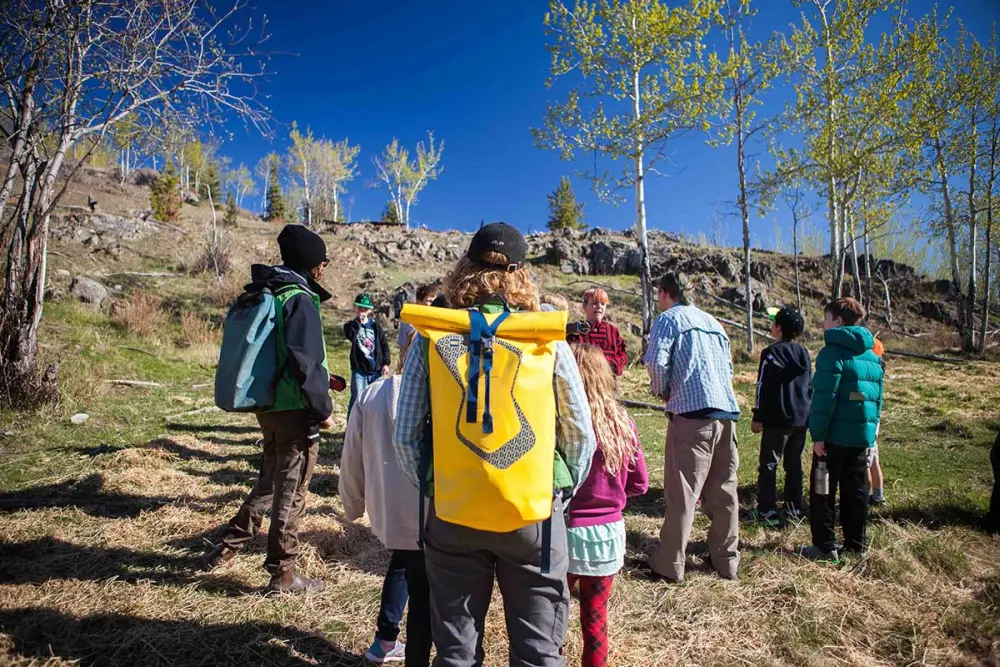
Kids doing outdoor experiential programming in the outdoors in Yukon.

Educator Erin Cartan taking her campers to the Gunnar Nilsson & Mickey Lammers Research Forest.

We Talk Swan

As the snow starts to melt and the sun starts to burgeon it’s a HONK, of all things, that prompts our first drive out to Swan Haven. Working with the YG Department of Environment we move our operations to Marsh Lake and start talking Swans with grade two, three, and five classes at the beginning of April.

After our education team gets a Swan Masterclass from bird biologists Jukka Jantunen and Margaret Campbell, we welcome hundreds of students to share the joy of birding with some of our favorite feathered friends. Together we tell the story of Yukon swans, look through scopes to observe their behaviours, play dress-up, and make our own mock-migration. We do all this in hopes of fostering respect and appreciation for all Yukon wildlife.

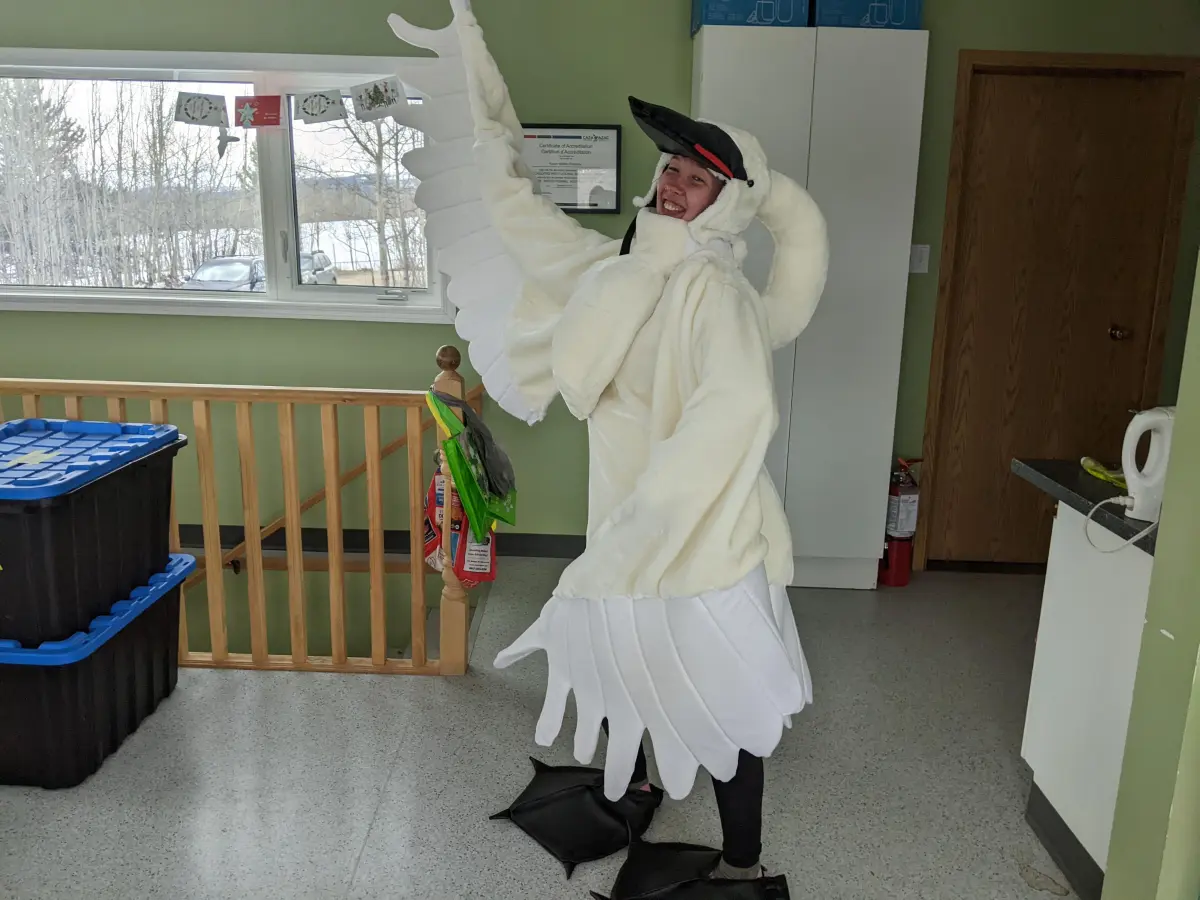
Swan Costume for Swan Haven Programming

Manager of Education and Programming, Madison Rushton, trying out our new and improved swan suit.

The Ball Gets Rolling

Though the snow on our peaks is slowly melting by early May, the snowball we call ‘Education and Programming’ is growing both in size and speed. It’s now time for our Spring Programs! Life is waking up and starting to buzz here on the Preserve. Together with the students we try to find each and every little buzz, bumble, and sign of life. Our Yukon-famous benthic macroinvertebrate studies (a.k.a. lookin' for bugs in the pond), large scale Predator vs. Prey game, and animal charades are crowd pleasers amongst the little ones. Lots of fun and games for these students, and they haven’t the slightest clue they’re actually learning.

Once that’s all over, snow is the last thing on anyone’s mind. But, our ‘Education and Programming’ snowball is reaching its crescendo with the YWP Summer Nature Camps! It’s all hands on-deck at this point; three wildlife educators, nine weeks of camp, and nearly two hundred campers. The whirlwind that ensues is filled with a tremendous amount of fun. Fishing, barbecues, forts, flower picking, popsicles, dress-up, story time, nap-time, camp-time, and eventually, home-time are all to be expected.

At last, our ears ringing from nearly seven months of outdoor education and nature programming, we pat each other on the back and have our own well-deserved nap-time. But don’t forget, once we’re ready to open our eyes and stretch our arms, we get to do it all over again!

Students dip-netting for all the bugs and critters they can find.

Students dip-netting for all the bugs and critters they can find.

Naptime

Though working with children can be exhausting it’s also extraordinarily rewarding. Moments of growth in our students fuel us educators with energy and inspiration. And the best part? We’re learning just as much from them as they do from us.

While teaching at the Preserve I often think back to my own outdoor education experiences as a child. Downtown Toronto certainly offered less opportunities than the pristine boreal, but the richness of those experiences was all the same.

Now that I think about it, I remember one particular experience at the Toronto Island Nature School. We were playing a game of Predator vs. Prey and I felt like the luckiest boy. I had the opportunity to play my favorite animal; the wolf. I ran under a bush, prepared myself, and waited eagerly for the game to start. TWEEEET went the whistle and THUMP THUMP went my feet.

“Seth! Where are your shoes?”

“Shoes?! I don’t need shoes, I’m a wolf!”

Seth Brown

Seth Brown

Visitor Services Coordinator

Passionate about the environment, art, and education, Seth has been working as an environmental educator since 2017. Off the preserve, you can find him playing in the mountains; on skis in the winter and with a paddle in the summer. Having moved to the Yukon and joined the preserve in April 2022, he’s excited to learn and explore!

867-456-7400
seth@yukonwildlife.ca

Explore by Category

Explore by Author

Meet The North: The Gift that Keeps Giving!

Meet The North: The Gift that Keeps Giving!

animals

by Lindsay Caskenette | Nov 12, 2021

Each of the last 2 years we have had the immense pleasure of connecting with northerners passionate about promoting local, connecting people and place and supporting the Yukon Wildlife Preserve and Yukon's wildlife.  The team is back again this year with new, special and very limited edition Yukon-inspired and Yukon-made wool wear.  

Only 3 hats available!

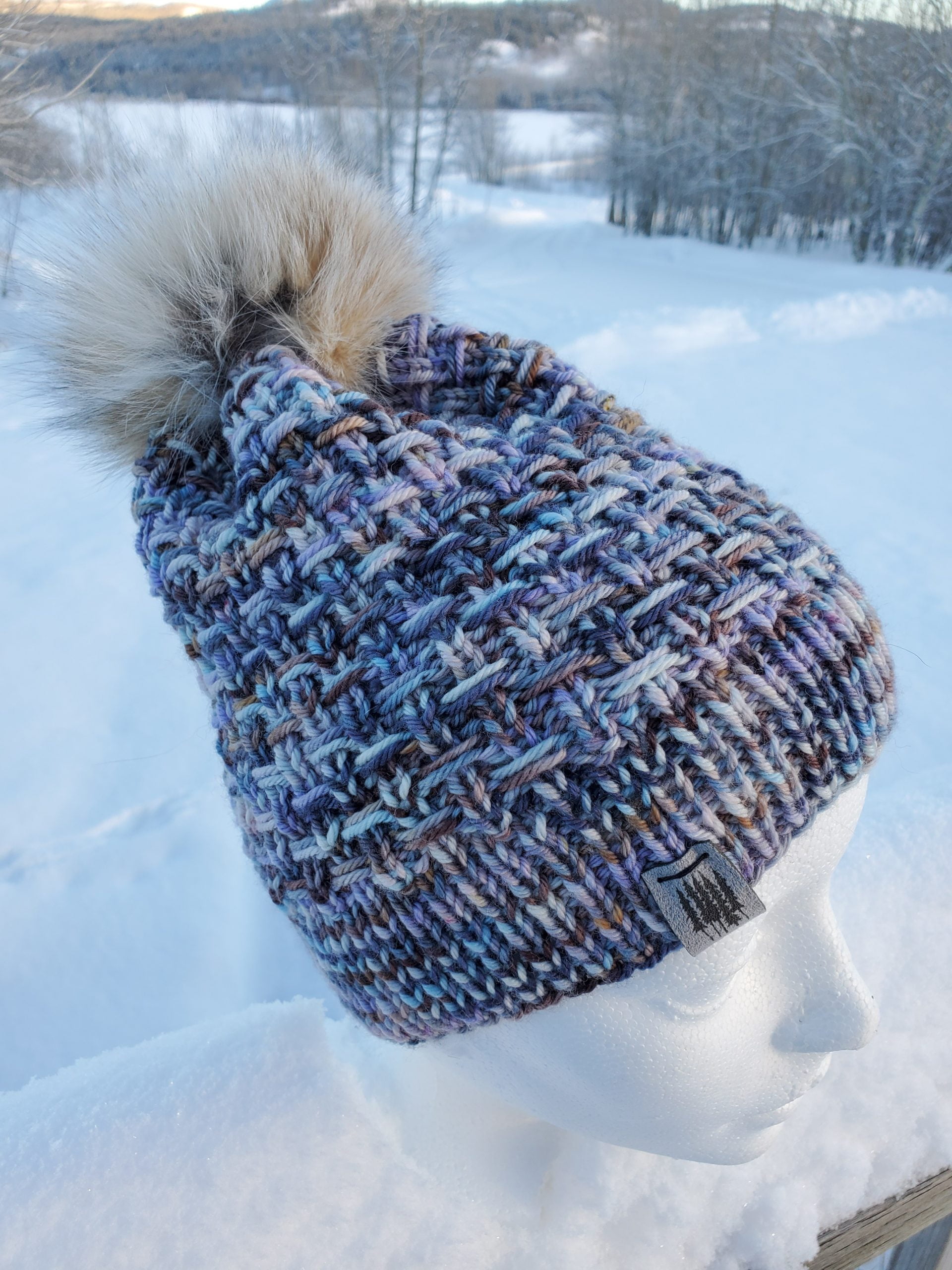
Birds Eye View small batch dye by Crux Fibres with pattern, Autumn Weaves beanie by Lindsay Faciane; hand knitted especially for the Yukon Wildlife Preserve by Liz Sutton adorned with indigenous Yukon-run trapline, sustainably trapped lynx fur pom.

SOLD!

The one-of-a-kind Borealis Hat and Mitt pattern by Liz Sutton can be found on Ravelry if you wish to do your own pattern yourself but the particular Aurora and Blue Lagoon hand-dye from Crux Fibre is one of a kind, especially for the Preserve adorned with sustainably and ethically Yukon trapped coyote fur pom!

The partnerships of these unique businesses and people have continued to grow and we're really excited to release a limited edition toque and special toque and mitt combo for this holiday season - gift giving that keeps giving! These beautiful wool items were made exclusively in the north, inspired by the north and are entwined with passions and care throughout the entire process. The Yukon is home to incredible people who love to celebrate and honour the uniqueness of this land. These knitting wonders directly support the diverse community that makes this place and its people so unique!

These limited edition hats go on sale at the Preserve only on Saturday November 13.

Hand-knitted in Whitehorse

For the 3rd year in a row we are working with the ever-expanding knitting talent, Liz Sutton of Treeline Knits located right here in Whitehorse. Liz has been the cornerstone of this annual project. Year after year, despite a full time job, dog-momming, life duties and personal outdoor passion and pursuits, Liz is eager to weave through it all and dedicate time and energy into lovingly producing one-of-a-kind hand knitted and fashioned wool products, especially for the Yukon Wildlife Preserve.

Northern Inspiration in Hand Dyed 100% Merino Wool

Crux Fibres is a truly northern inspired product of born and raised Yukoner, Brittany Vogt. Her knitting hobby and desire to create her own spectrum of colours inspired by Yukon places close to her heart quickly turned into a business for Brittany. 

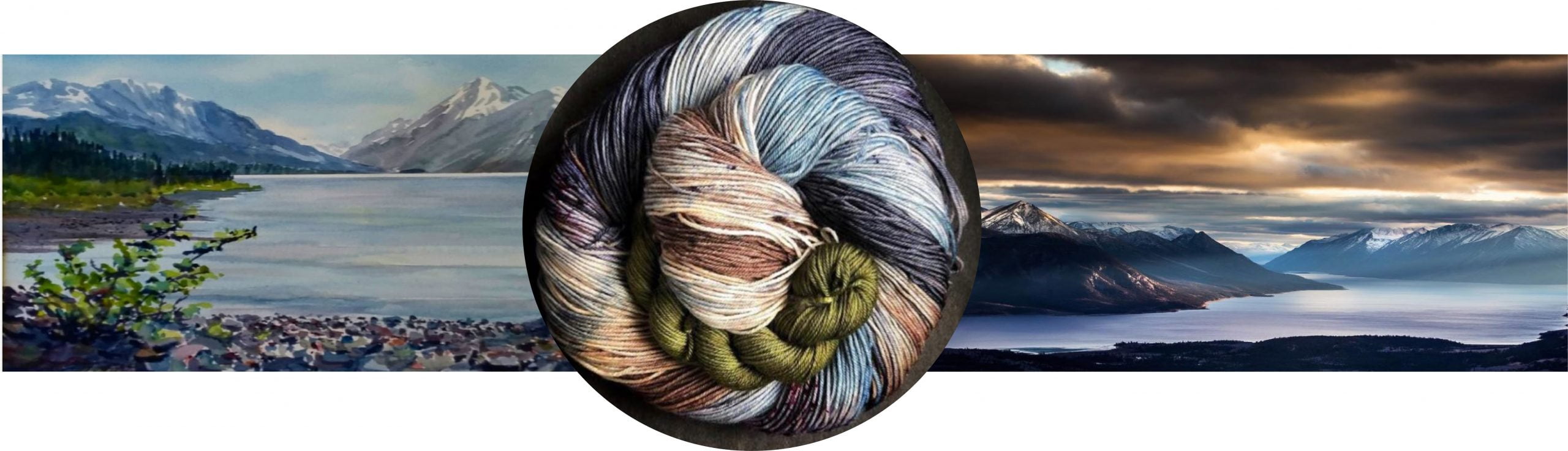
"The art of dyeing yarn has become a great avenue to continue my creative expression" and this particular small-batch dye was influenced by a place that holds an extra special connection for Brittany. The "Birds Eye View" she called this small-batch dye, in which Liz used to make the 3 toques, was inspired by place and time. Atop Caribou Mountain overlooking Bennett Lake, on the traditional territory of the Carcross Tagish First Nation,  Brittany realized she was going crazy for John, her now husband. Indeed, intertwined in love, years later a few pictures would further inspire the beauty and colour of this yarn. 

Brittany's inspiration supported through Bennett Lake art from
Left: Edna Bardell Right: Ben Nelms

Every small-batch dye of 100% merino wool yarn originates from South America. Brittany worked hard to source yarn ethically and extend her values of supporting small and mindful businesses like her own.  The one-of-a-kind Aurora Borealis Hat and Mitts used a special blue lagoon dye Brittany did. The very nature of hand-dying in small batches creates variations from skein to skein (even those dyed in the same dye bath) adding even greater uniquesness to each finished product. 

Trapping - In Love & Tradition 

The finishing touches of such a divine piece of art involves a trapline, and a commitment to love, learning, and educating. It may be just a fur pom that adorns these hats but for Vanessa of Yukon Wild Furs it’s an opportunity; it’s the decision to embark on a role as an educator; fulfilling a responsibility while generating a (somewhat unexpected) life from the bounty of the land. Vanessa, along with owning and operating a small store where she sells her art, tirelessly works towards educating and connecting people to a lifestyle rooted in tradition whenever she has the opportunity. This opportunity and responsibility is shared along-side her now husband, George Bahm who is Teslin Tlingit and harvests from the land on his trappline in southern Yukon.

Photo Credit: Alistair Maitland

I have merely glimpsed a fraction of the beauty and teachings that await on the trapline. But I know that this traditional practice, with its skill, stories and lessons, will be lost if the wild fur industry continues as it is. My hope is to protect the importance of what is out on the trail, in the quiet of a fresh snowfall, so that future generations of fur harvesters can reconnect with their ancestors and the teachings that have endured for thousands of years. Trapping is so much more than just harvesting fur.

Photo Credit: Erik Pinkerton

When the opportunity came to adorn these hats (for a second year in a row) with sustainable, locally and indegenous trapped wild fur, Vanessa did not hesitate to support. She’s only a single human in this world but one with a strong, deeply rooted goal of using this polarizing issue as a springboard into meaningful conversations wherever they can occur from her store to our Little Gift Shop where these hats will be sold.

To learn more about Vanessa, George and their shared goals check out Truth About Fur

A Community That’s Wild at Heart

The Yukon Wildlife Preserve is a non-profit charitable organization. In the 1970’s Danny Nowlan started accepting and caring for injured and orphaned wildlife at the Yukon Game Farm. Nearly 50 years later the Preserve continues to care for Yukon’s most vulnerable animals. Today we are a living centre of Yukon’s species that connects tens of thousands of people, from our backyard to across the world, to the natural world, each year.

Find out more about what the  donation with the purchase of the hat means for the Preserve at donate.yukonwildlife.ca 

 These toques represent so much more than just a (stunning) fashion accessory to keep your head warm! It embodies your choice to value the connections with the people and places of this territory; to support local; to share a love of something on a deeper level; to support Yukon’s wildlife. By purchasing this hat, you are supporting the people, their businesses and the land and animals of the north - Liz Sutton of Treeline Knits, Yukon Wild Fur and local trappers, Brittany Vogt of Crux Fibres, Yukon Wildlife Preserve - Wildlife Rehabilitation and a community that is wild at heart!

Lindsay Caskenette

Lindsay Caskenette

Manager Visitor Services

Lindsay joined the Wildlife Preserve team March 2014. Originally from Ontario, she came to the Yukon in search of new adventures and new career challenges. Lindsay holds a degree in Environmental Studies with honours from Wilfrid Laurier University and brings with her a strong passion for sharing what nature, animals, and the environment can teach us.
867-456-7400
Lindsay@yukonwildlife.ca

Explore by Category

Explore by Author

What’s That Scat?

What’s That Scat?

animals

by Sophia Slater | Jul 23, 2021

4 minute read.

As we are out enjoying some of the many trails the Yukon has to offer, we often have to watch our step to make sure we’re not putting our boots in something smelly! These unexpected trail obstacles can be great indicators of whose habitat we are walking into, what they are eating, and how they are digesting it. Just like us, many animals have dynamic diets, and will eat what is available. Scat can be interesting but can also spread diseases, even to humans, so it should be looked at and not touched, especially by our furry companions.

Bears

Black bears are opportunistic omnivores who will eat whatever food they can find, including fish, fruit, meat, insects, and herbs and grasses. Grizzlies have a similar diet, but tend to favour high-energy meat and insects more than the smaller black bears. Like their diets, bear scat appearance is quite varied, and often contains fragments of their last meal, like seeds, bits of berries, or small animal bones. Wildlife Interpreter Maureen recounts seeing a landscape covered in red wine-coloured piles that were actually scat from grizzlies that had eaten a lot of cranberries!

Light brown bear scat with seeds visible.

Bears are relatives of mammalian carnivores, they have a digestive system similar to carnivores, without a cecum or extended large intestine. This limits how efficiently they can process leafy plant material and they must eat a lot if they are relying on these foods, which is common in the spring. As a result, when a bear eats a lot of plant material their scat often has a green tinge from the undigested grasses or a fibrous appearance. Typically, their scat is brown or black and tapered, though sometimes it can appear as more globular if it is loose. Grizzly scat tends to be a bit wider and larger piles than black bear scat. It can be hard to distinguish between the two, but both should make a hiker cautious of the trail ahead. Remember bear spray and noisemakers and stay bear safe!

Left to right: Older bear scat; bear scat that is darker brown in colour with grasses visible.

If you’re interested in getting involved in bear research, the Operation Ursus Research using Scat (OURS) project is aimed at estimating the Yukon grizzly and black bear populations using DNA available in bear scat. Lucile leads the study and shares the project story Bear Poo and You with YWP.

Canines

Foxes, wolves, and coyotes are more exclusively carnivorous than bears, but may occasionally eat berries and seeds. Their digestive system is similar to that of a bear, as is their scat. Wolves' stomachs are specially adapted to hold a lot of food so that after a hunt they can get their share of the reward. Additionally, their stomach is very acidic to kill off any pathogens in the meat. It is tubular and tapered and may contain bits of bones, fur, or berries. It may be lighter, as it varies from tan to dark brown in colour. It is, however, smaller than bear scat: fox scat is about 1.25 cm in diameter, coyote scat is about 2 cm, and wolf scat is usually at least 2.5 cm in diameter.

Wolf scat with fur visible.

There will likely be much less of it as well. Foxes often defecate in obvious areas to mark their territory. The Wildlife Preserve exists as an ecosystem within a larger ecosystem and foxes are one of the many wild animals that visit. They seem to like to use the boardwalks at the front cabin to do their business!

Foxes often defecate in obvious places to mark their territory.

Left photo credit: L.Caskenette.

Feline - Lynx

Unlike generalist bears and canines, lynxes are specialists. Snowshoe hares are their primary food source, and can make up 75% of their winter diet. Meat is highly digestible, meaning that most of what is consumed can be broken down and absorbed easily. Lynx digestive systems, therefore, have shorter small intestines relative to body size and less developed caecum than canines.

Lynx scat of varying ages among grass.

Their scat is black, tubular and tapered, and does not have so much undigested material as the bears or canines. It is also very smelly. Like a house cat, they will cover their scat with dirt or snow, probably to hide their presence from nearby animals. Also like house cats, they often defecate in the same latrine over and over, which can be seen in our lynx habitat.

Lynx, like house cats, often poop in the same places every time. This is one of the latrines in the lynx habitat at the Preserve.

Cervids

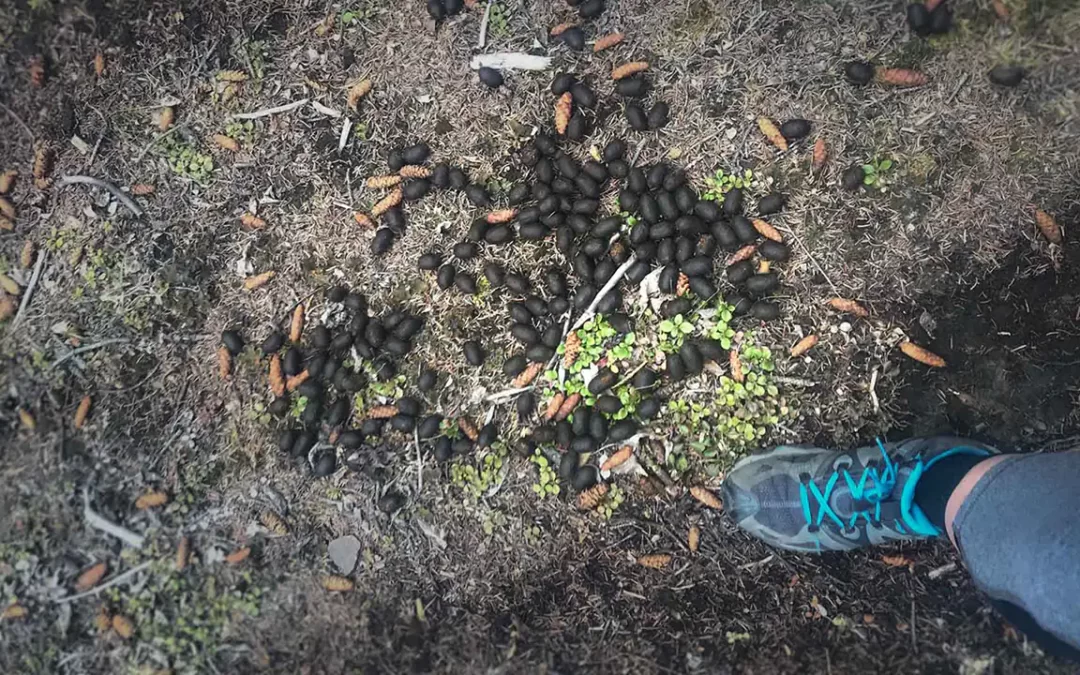
The Yukon has a great variety of cervids (antler bearing animals) or members of the deer family. Their diets, digestive systems, and scat have many similarities. In general, they produce uniform, dark brown or black oval-shaped pellets, which result from uniform movements of smooth muscles in the large intestine and its sphincters.

From left to right: Caribou, moose, mule deer and elk. Photo Credit: L.Caskenette & J.Paleczny.

Their diets are often high in fibrous, dry tree materials like leaves and twigs, which is why their feces forms pellets. If they are eating more grasses, in the summer, it may appear softer and more clumpy. Cervids are all ruminants which means that their stomachs have four compartments: the rumen, the reticulum, the omasum and the abomasum.  This allows for fermentation by bacteria and other processes that break down vegetation. This is part of the reason that cervid scat does not have as much undigested material as the carnivores’, despite their plant diet having less digestible material. In addition, they will regurgitate their food and chew it again, also called chewing their cud!

Left to Right: Soft caribou scat clumps together versus caribou scat in pellet form.

Deer pellets are small, about 1 cm in diameter, and are left in piles of many pellets. They defecate an average of 13 times per day! Elk scat is similar but 1-1.5 cm in diameter, and moose scat is even larger at 1.5-2 cm in diameter. Deer and elk pellets are rounder than moose pellets.

Softer deer scat often clumps together as seen here.

Moose are more strictly browsers, that eat only tree materials, so mostly their pellets are harder. Caribou scat appears somewhat more rough than deer or moose scat. It is often in harder pellet form in the winter when they eat a lot of lichens and sedges. In the summer, when their diet switches to grasses and vegetation with a high moisture content, their scat often forms larger soft clumps.

Moose scat in pellet form, darker brown because it's older.

Bovids

There are also a wide variety of bovids (horn bearing animals) in the Yukon. Our mountain sheep, mountain goats, muskox, and bison are all ruminants, just like the cervids. They are all herbivores who eat a variety of grasses, sedges, seedlings, and leaves.

Left to Right: Muskox, bison, mountain goat, thinhorn sheep. Photo Credit: L. Caskenette

Muskox, mountain goats, and thinhorn mountain sheep also form pellet scat, even when their diets consist largely of grass. That’s because their digestive tracts are highly evolved to reabsorb as much water as possible, likely an adaptation to their arid alpine (goats and sheep) and tundra (muskox) habitats.

Sheep scat forms pellets.

Goats have varied diets that includes browse, shrubs, lichens, grasses, and even trees. Their alpine foraging sites may be sparse, which doesn’t allow them to be picky eaters. Muskoxen eat grasses, forbs (herbaceous flowering plants), and willows, which they often have to dig out from the frozen arctic ground by smashing the permafrost with their heads and pawing the ice pieces out of the way. Mountain sheep eat mostly grasses and some other low growing sedges.

Muskox scat.

Bison scat is distinct from all the other ruminants mentioned above, because it forms an indistinct pile. Their diet is also primarily grasses and other low-lying herbaceous plants, but they may eat some willows and twigs. Grasses would make their scat more loose, but we’re taking suggestions for what makes their scat so different from the other grass-loving bovids!

Bison patty.

Hopefully after hearing all of these scat facts you can see scat as more than just something gross to be avoided on the side of the trail. It can tell you who’s habitat you are in, but also what they have been eating. It is interesting to watch it change throughout the season. Of course biologists may be able to find out way more about an animal through their scat, for instance genetic samples or presence of pathogens. There is so much to learn from the scat around us!

Although all the different scat we explored above is only a small number of animals, all species do it and we encourage you to:

1. Explore other species scat/defecation/poop - whatever you want to call it!

2. Pack out yours and your furry companions (yours domestic canines) poo in the backcountry and wilderness places you visit!

3. Sing the Scat Rap Song!  

It starts with an S and it ends with a T
It comes out of you
and it comes out of me
I know what you’re thinking
But don’t call it that
Let’s be scientific, and call it SCAT
It was a piece of scat
(PIECE OF SCAT!)

You can find it on the ground
It’s usually colored brown
It is shaped in a mound
It is a piece of scat
(PIECE OF SCAT!)

You can smell it with your nose
It’s gonna decompose
It’s where the fungus grows
It is a piece of scat
(PIECE OF SCAT!)

Birds flying through the air
Look out! Beware!
It landed in your hair
It was a piece of scat
(PIECE OF SCAT!)

I was hiking through the fog
When I saw a big log
It came from a dog
It was a piece of scat
(PIECE OF SCAT!)

I was tired of TV
I was checking out the trees
I could smell it on the breeze
It was a piece of scat
(PIECE OF SCAT!)

I know it’s kind of gory
But it’s a true story
It marks territory
It is a piece of scat
(PIECE OF SCAT!)

I picked up a chicken
And something was drippin’
It wasn’t finger-lickin’
It was a piece of scat
(PIECE OF SCAT!)

A squirrel ate a nut
Digested in its gut
It came out of its butt
It was a piece of scat
(PIECE OF SCAT!)

If you park your car
By the woods or a field
You might find something on your windshield
Full of berries
Both purple and white
You just got bombed by a bird in flight
It was a piece of scat
(PIECE OF SCAT!)

Photo Credit: Sophia Slater or as otherwise credited.

References:

Alaska Department of Fish and Game. Caribou (Rangifer tarandus granti) sign. ADFG. 

Blood, D.A. Mountain sheep. Hinterlands Who’s Who. 

Blood, D.A. (2000). Mountain Goat in British Columbia. British Columbia Ministry of Environment Land and Parks.

Bosch, G., Hagen-Plantinga, E., & Hendriks, W. (2015). Dietary nutrient profiles of wild wolves: Insights for optimal dog nutrition? British Journal of Nutrition, 113(S1), S40-S54. doi:10.1017/S0007114514002311

Keith, L.B. Canada lynx. Hinterland’s Who’s Who. 

Central Sierra Environmental Resource Center (2018, June 25). What scat can tell you about your wildlife neighbors. CSERC

Costello, C.M., Cain, S.L., Pils, S., Frattaroli, L., Haroldson, M.A., & van Manen, F.T. (2016). Diet and macronutrient optimization in wild Ursids: A comparison of grizzly bears with sympatric and allopatric black bears. PLoS ONE, 11(5).

Gray, D.R. Muskox. Hinterland’s Who’s Who. 

Hatch, K., Roeder, B., Buckman, R., Gale, B., Bunnell, S., Eggett, D., Auger, J., Felicetti, L., & Hilderbrand, G. (2011). Isotopic and gross fecal analysis of American black bear scats. Ursus, 22(2), 133–140. 

Howard, W.T., Hutjens, M., Kilmer, L., Linn, A., Otterby, D., & Shaver, R. (2021). The ruminant digestive system. University of Minnesota Extension

Winand, C.J. (2008, September). Deer Pelletology. Buckmasters Magazine

Sophia Slater

Sophia Slater

Wildlife Interpreter & Animal Care Assistant

Sophia is one of the Interpretive Wildlife Guides and animal care assistants at the Preserve. She is new to the Yukon and moved here from Ontario, where she just graduated with a Bachelor of Science in Biology from Nipissing University. Hiking mountains is her newfound passion while she’s here, and she’s hoping to summit as many as she can this summer. At the preserve, she loves getting to talk to and learn from guests who come from all over the Yukon and beyond about their experiences with wildlife.

Explore by Category

Explore by Author