Old Crow Bald Eagle

Old Crow Bald Eagle

nature preserve

by Lindsay Caskenette | Jun 12, 2024

1 minute read - 

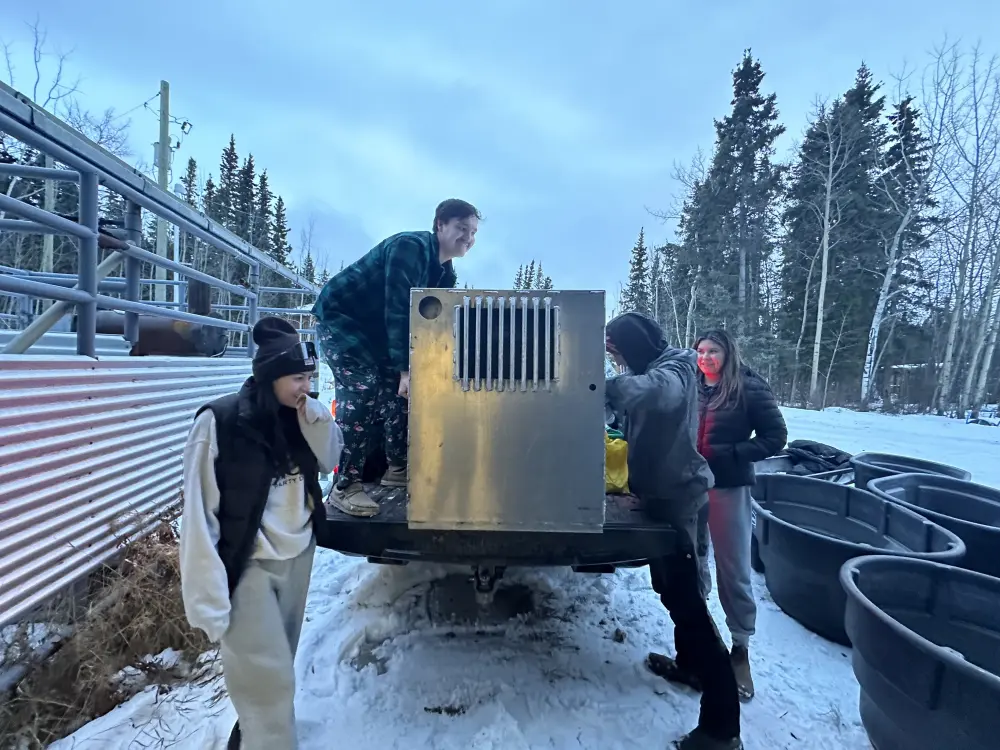
In the remote, fly-in community of Old Crow, on the Traditional Territories of Vuntut Gwitchin First Nations a juvenile bald eagle was found by Robert, at the dump, flightless and injured. The eagle was coaxed into a crate and eventually brought to the Yukon Wildlife Preserve after it made a stop in Dawson and caught a flight via Air North.  
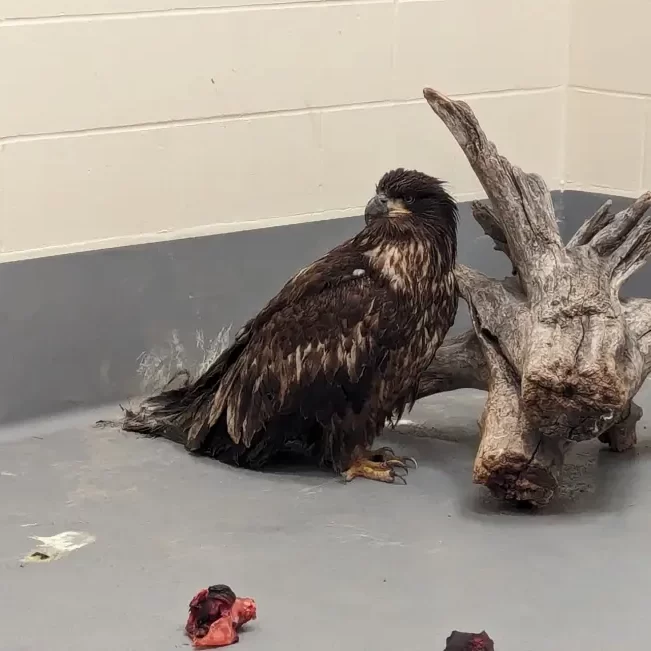
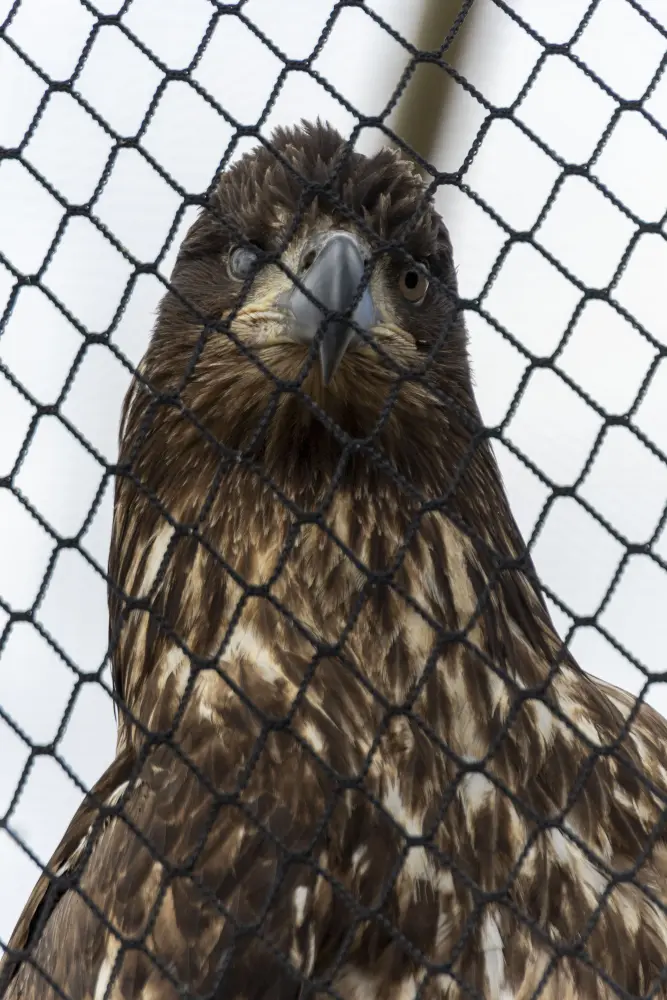
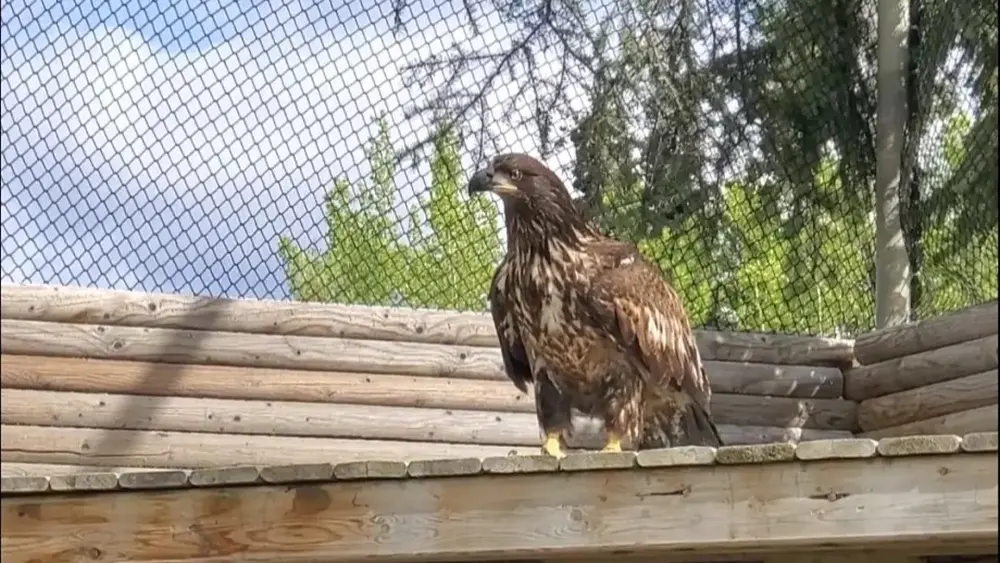
Old crow bald eagle upon arrival and admittance into the Wildlife Rehabilitation Centre at the Preserve. May 10th. Photo credit L.Caskenette

The bald eagle, thak tth'ak came to the Preserve's Wildlife Rehabilitation Centre on May 10th underweight (4.3kg) and with a OD (medical term for right eye) chronic corneal ulcer. 

mature bald eagle in rehabilitation

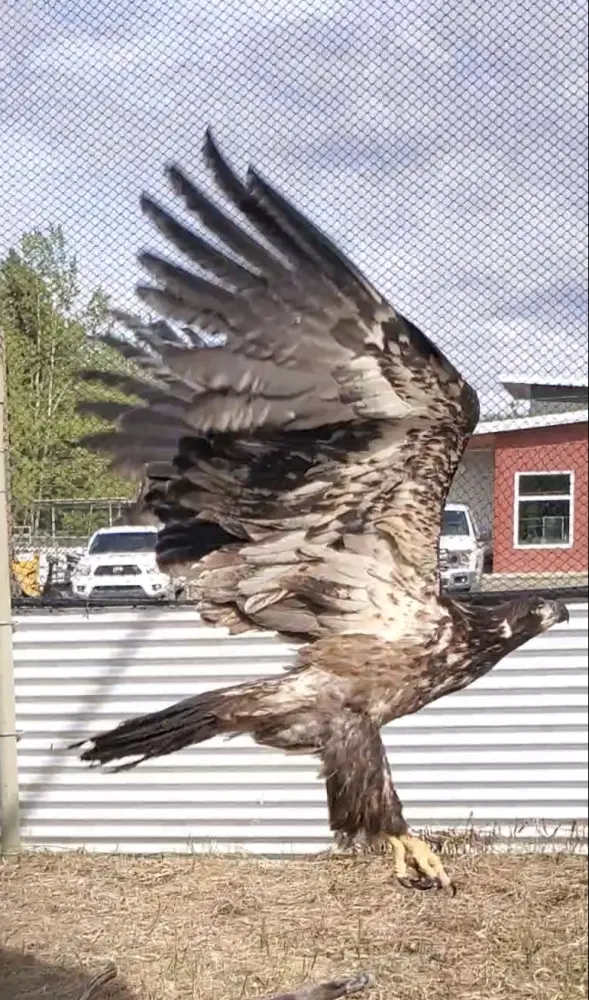
Likely a she, given the large size of the animal. She has gained sufficient weight, coming in at 4.83kg. She has been viewable in the aviary as she works to build up flight muscles. Now she is ready for her public release back to the wild this Friday. She has a cloudy eye but has been successful catching live food and as a predominantly scavenging animal she is likely to do quite alright back in the wild even with this limitation.
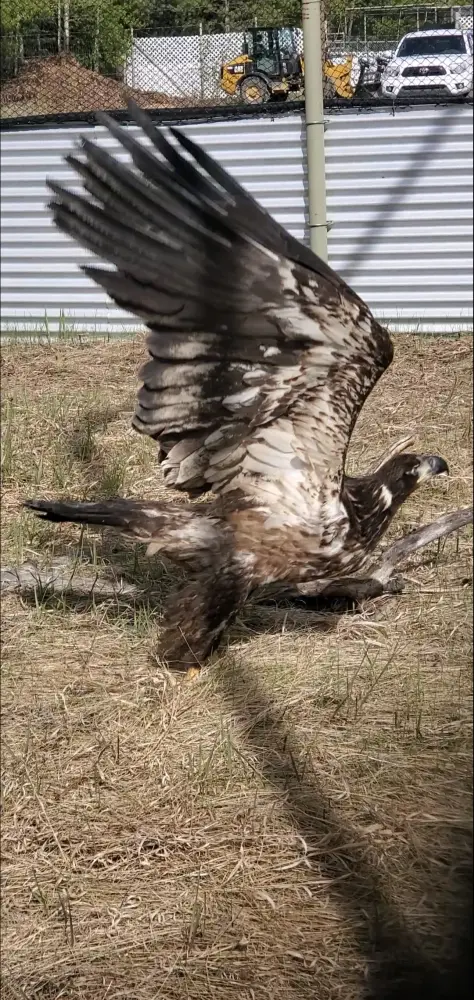
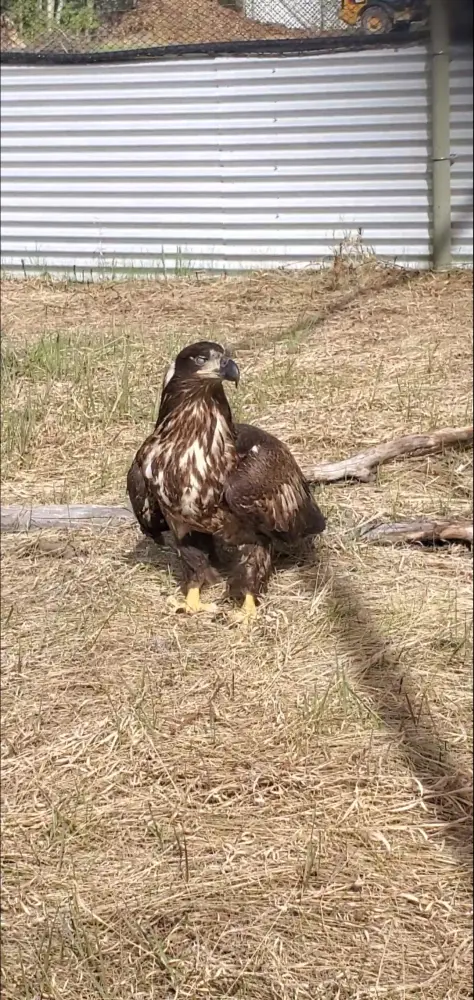
She will not be returned to Old Crow due to the long travel and stress concerns related to transfer. Instead, she was released outside of Whitehorse on Friday June 14th at 7pm. 

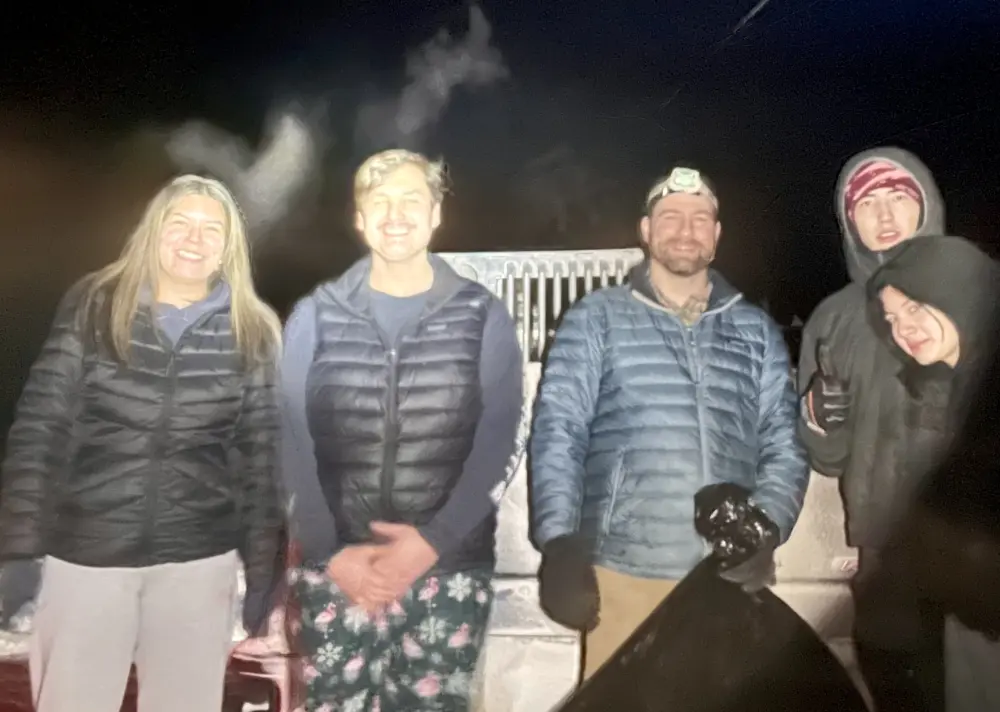
Around 40 people joined the event to send off the bird. Thank you to everyone who joined the release, it was a perfect evening. The sky welcomed us all without a drop of rain. Thank you to all who provided good vibes and sent off the eagle with strength and grace.

Thank you to Wylie, Corrine, and Thay K'i Anint'l for the prayer and blessing for this bird's return to the wild and resilience for a long eagle life. 

Thank you to everyone who helped this Eagle along its path to recovery. To Robert K who found the bird and ensured it got a second chance at life. To Norma, to the team at the Preserve that helped with the bird release event. To Air North for giving the bird some helping wings South to the Rehabiliation Centre.  Thank you, Masshi, Gunalchîsh????

She took her time deciding to soar but this allowed everyone to share in more details of her story, to practice patience and to grow our appreciation of her and others' incredible story of resilience. 

• • •

The beginning of June the Preserve welcomed a visitor who had, and later shared with us, an extraordinary experience with the eagle while it was recovering in the aviary. 

She shared with us the following:

I felt a very special spirit from her. A very conscious and intelligent bird.
I heard she didn't have a name. 
Horus came to mind for me because of her eyes and her mystical spirit.
"Horus, in ancient Egyptian religion, a god in the form of a falcon whose right eye was the sun or morning star, representing power and quintessence, and whose left eye was the moon or evening star, representing healing."
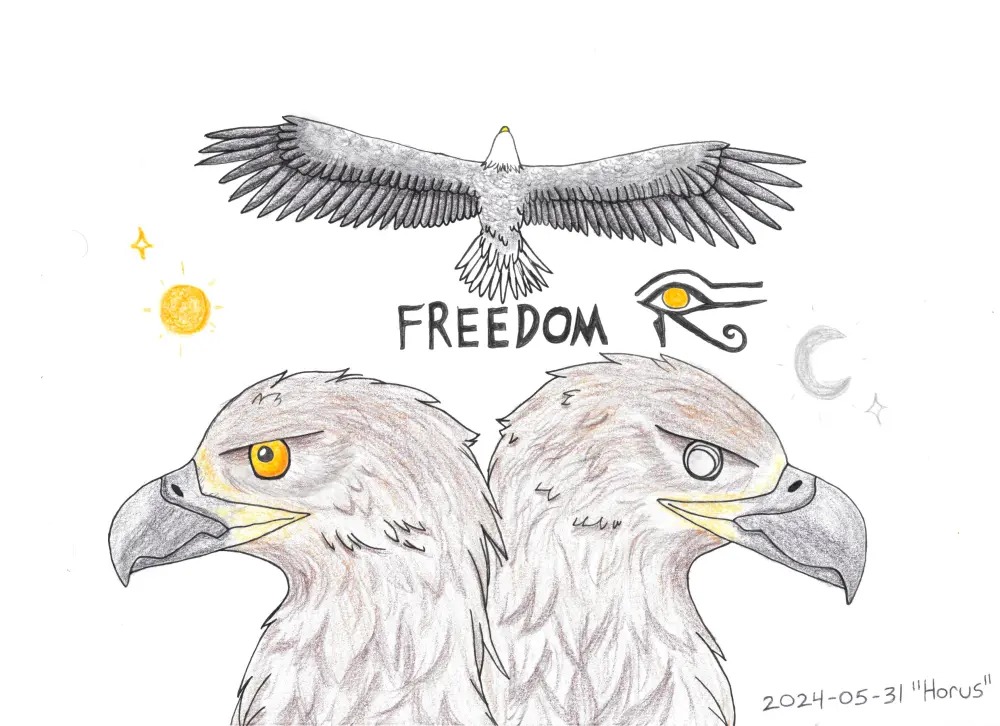
"Horus, in ancient Egyptian religion, a god in the form of a falcon whose right eye was the sun or morning star, representing power and quintessence, and whose left eye was the moon or evening star, representing healing." The old crow bald eagle was given and unofficial name by a visitor, Jasmine Colomby who also drew and shared this interpretation.

Help us get them back on their wings. We could use your help. If you are able to support the care of these two animals, please consider donating. Every contribution makes a difference and as a non-profit charitable organization, you can receive a charitable tax receipt for your support. 

Photo credit: B.Forsythe
Britt Forsythe

Britt Forsythe

Visitor Services Coordinator

Brittney joined the Wildlife preserve in the summer of 2023. Growing up on Northern Vancouver Island, surrounded by the temperate rainforest, nature and animals have always been a part of her life. It exploded into a passion, when she started her dog walking business in 2017 and she began spending 6-7 days a week in the forest, rain or shine! This sparked an even deeper appreciation for the cyclical nature of the land and how all of the plants & animals work together symbiotically. She is forever ‘that girl’ on the hike, pointing out different rocks and plants, explaining their origin or what they could be used for medicinally. Brittney and her dog Cedar relocated to the Yukon to help care for 31 sled dogs. She is so excited to expand her local knowledge as a part of the Preserve team.

 867-456-7400

 brittney@yukonwildlife.ca
 

Lindsay Caskenette

Lindsay Caskenette

Manager Visitor Services

Lindsay joined the Wildlife Preserve team March 2014. Originally from Ontario, she came to the Yukon in search of new adventures and new career challenges. Lindsay holds a degree in Environmental Studies with honours from Wilfrid Laurier University and brings with her a strong passion for sharing what nature, animals, and the environment can teach us.
867-456-7400
Lindsay@yukonwildlife.ca

Explore by Category

Explore by Author

Meet Elsa the Mountain Goat

Meet Elsa the Mountain Goat

nature preserve

by Lindsay Caskenette | Apr 12, 2024

1 minute read - 

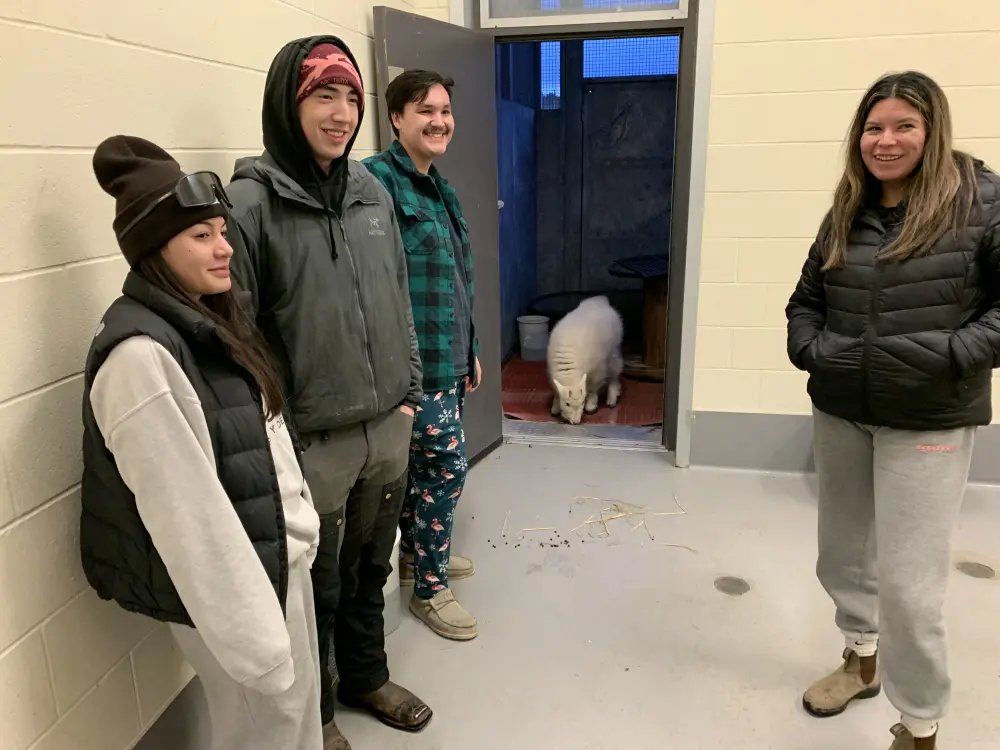
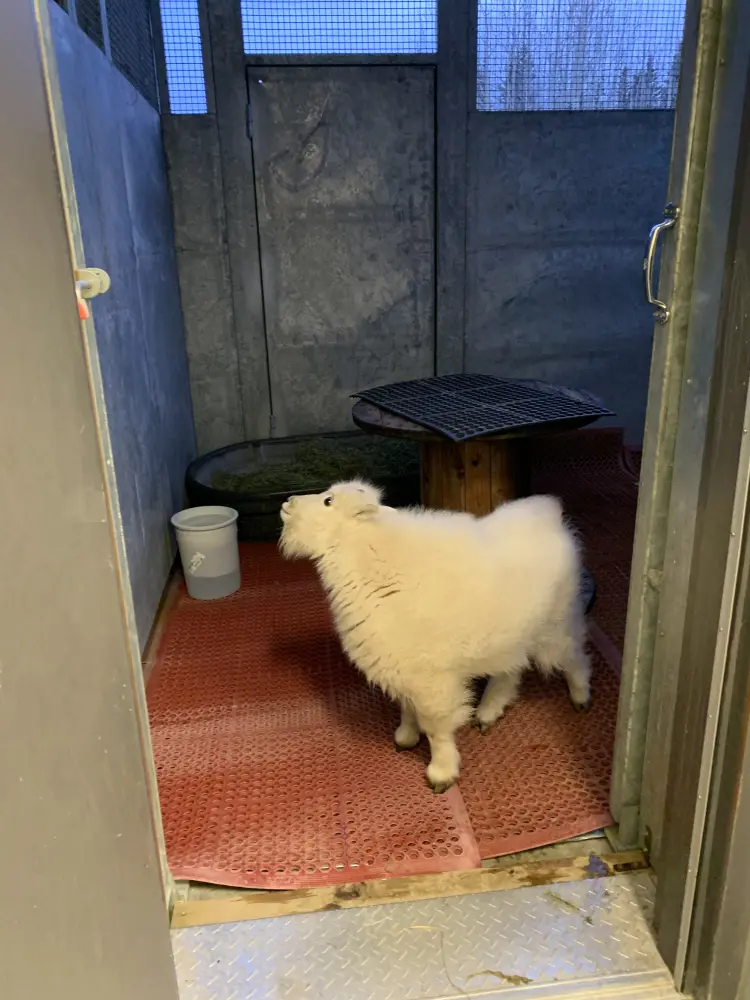
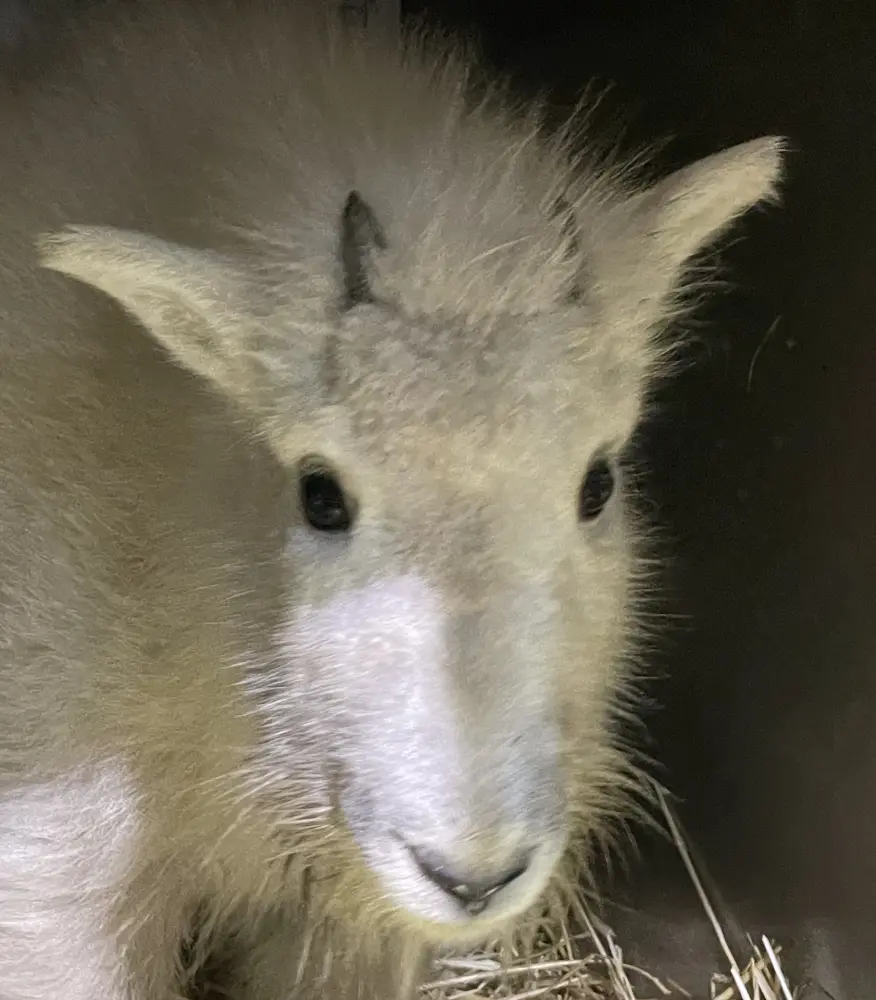
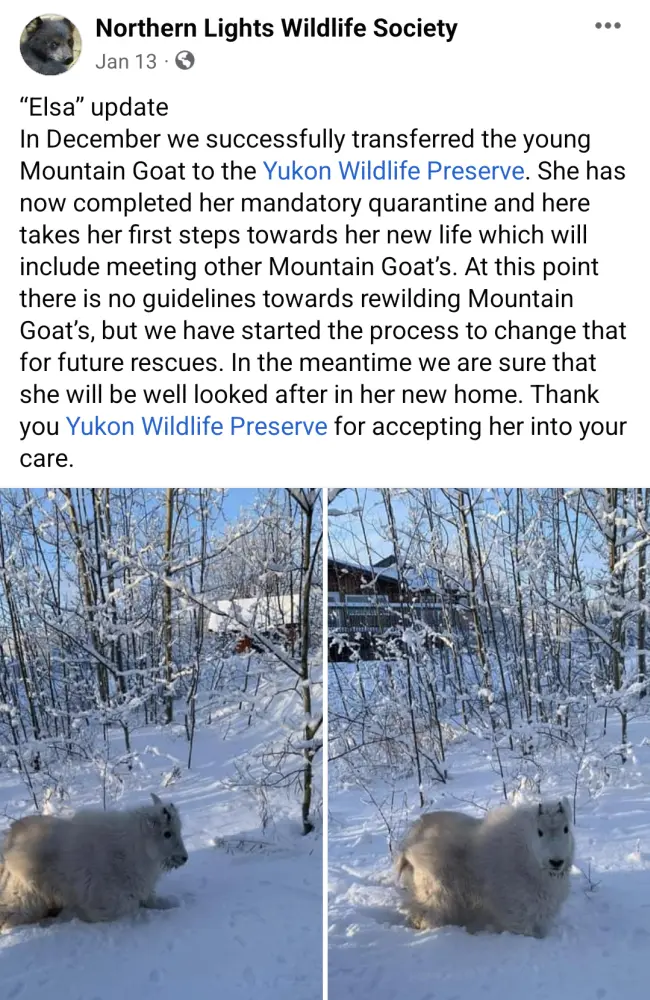
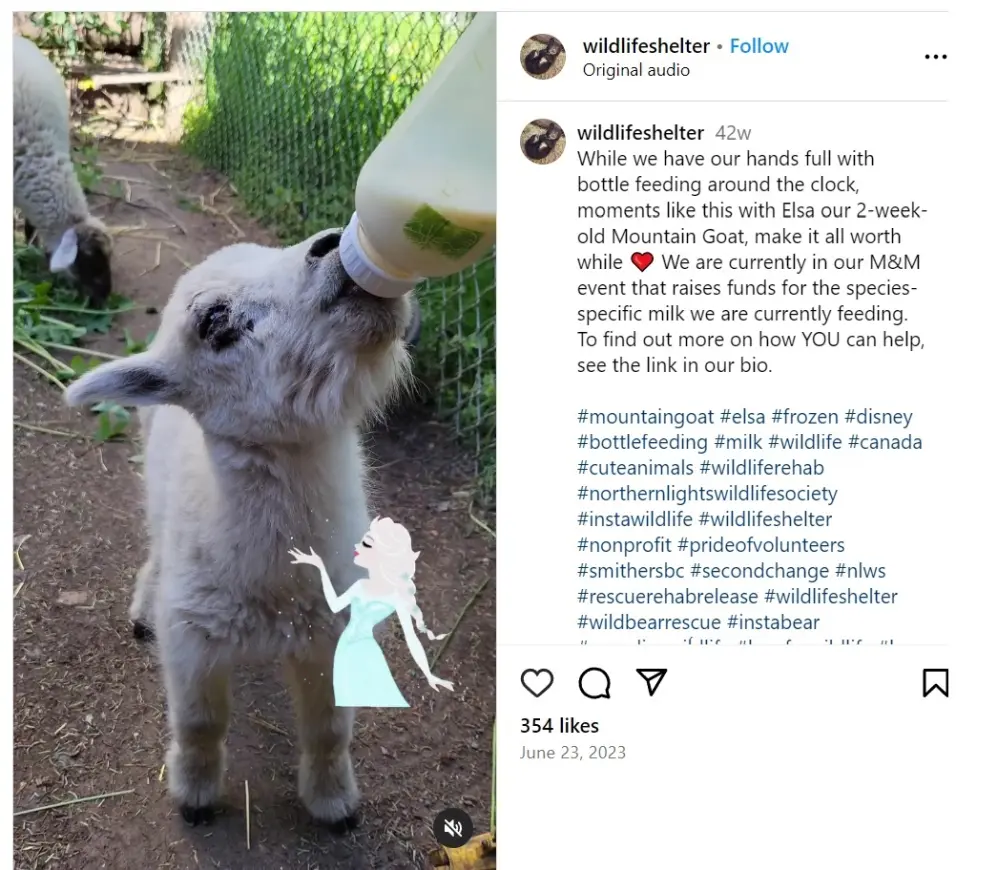
Meet Elsa, the mountain goat! She came from Northern Lights Wildlife Society in Smithers B.C located within The Witset First Nation is a First Nations band government of the Wet'suwet'en people of Witset, British Columbia, Canada. She was brought there in June, 2023 at about 1 week old.  She was brought to this wildlife shelter after she was swept down river - it's not sure, the details, how or why, but she was orphaned and injured at that point when she was found by rangers working on the land.

She had several cuts and lacerations, she lost a few baby teeth. She was taken care of incredibly well by the staff and volunteers at the Northern Lights Wildlife Society. 

You can watch a few of these videos of her care and progress via their social media.

Elsa the queen of the North. Mountain goat rescue from BC wildlife Shelter. Elsa 1 week june 2023

By August, Elsa recovered fully from her injuries and complications that came after. Such challenges are bound to happen with wildlife, especially with an animal so young and under considerable stress and change. 

Elsa the mountain goat ice queen of the North 2 months old and recovered and eating well.

The little queen, Elsa continued to grow and by early winter she was ready for transport to the Yukon Wildlife Preserve for her long-term home. Since the goat was coming from another jurisdiction, in fact, one outside of the Yukon Territory, necessary coordination and import permits were required before her transport and arrival. With all the 'red tape' out of the way the Preserve now needed to consider how to get her to the Yukon, the quickest and safest way. Since the Wildlife Shelter is in Northern British Columbia, an Air North Transport was not an option, as it has been with other rehabilitation animals, though those animals were mostly headed South and back to the wild, not North and into long-term care. 

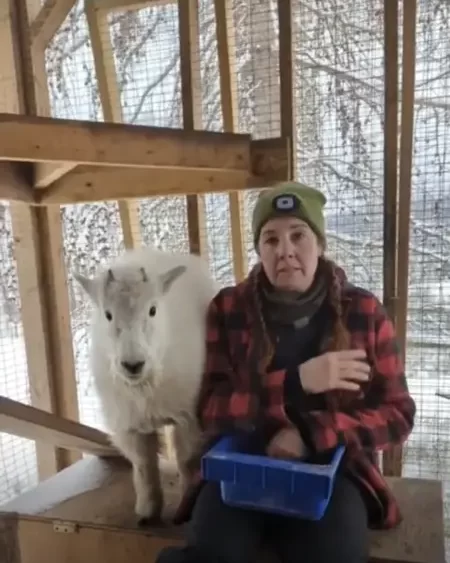
Elsa, the mountain goat, just a few days before her big move to the big leagues which means to the big cliff in the background with the nannies.

Community connections started this journey for Elsa and it continued through her successful transportation by an incredible offering as described below by Rebecca Bradford-Andrew, Manager, First Nation Education Advocates for Yukon First Nation Education Directorate. 

Wild orphaned Nanny goat Elsa from the remote mountains of Northen BC. transportation from her rescue facility to Whitehorse was provided by teenagers, a team of young wildlife enthusiasts from the Yukon First Nation Education Directorate (YFNED) ( a Jordan's Principle-funded Initiative).

These local teens work to build community and culture by supporting indigenous students in Yukon schools. They strive to be role models for youth by doing good deeds and stepping in where needed. Thank you Dr.Hallock and your team for including us in this wonderful opportunity to collaborate for our community!

The YFNED, an indigenous-led educational organization, supports traditional, land-based learning opportunities.

The YWP has been educating people for years, and Yukon students have much to learn about eco-systems, evolution, and herd dynamics, with a strong, healthy mountain goat population their textbooks, and the beautiful cliffs of the YWP their classroom.

Edone daga eti’e (For the good of the child).

Elsa arrived December 12, 2023 to the Wildlife Rehabiliation Centre where for the next 30 days would be in quarantine. This is a mandatory isolation while testing occurred and medication was administered by Preserve's Animal Care team to ensure her eventual integration to the collection of goats would not pose any risks. Of course, the ice queen of the North, passed with flying crystals . . . er., colours!

In mid January Elsa was brought to her temporary, small rocky mountain habitat as she got bigger, before joining the big leagues, on the big mountain cliff at the Preserve. She was a delight and distraction for staff at the office where she would be spotted through windows being a goat - bounding around, climbing the rocks and being unbelievably cute!  

Social media link to the posting by NLWS about Elsa's arrival.

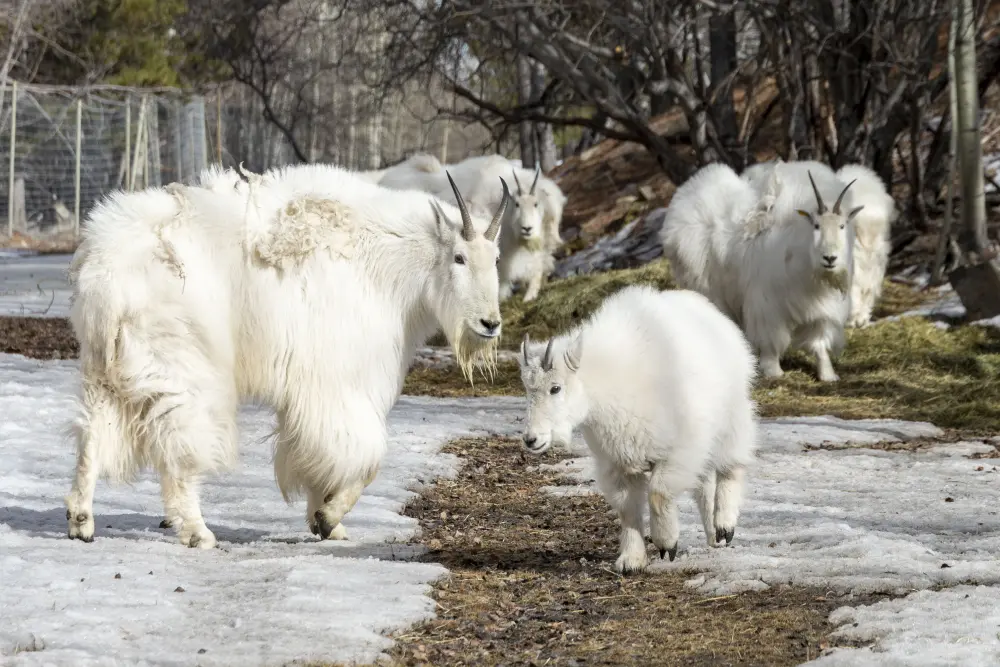
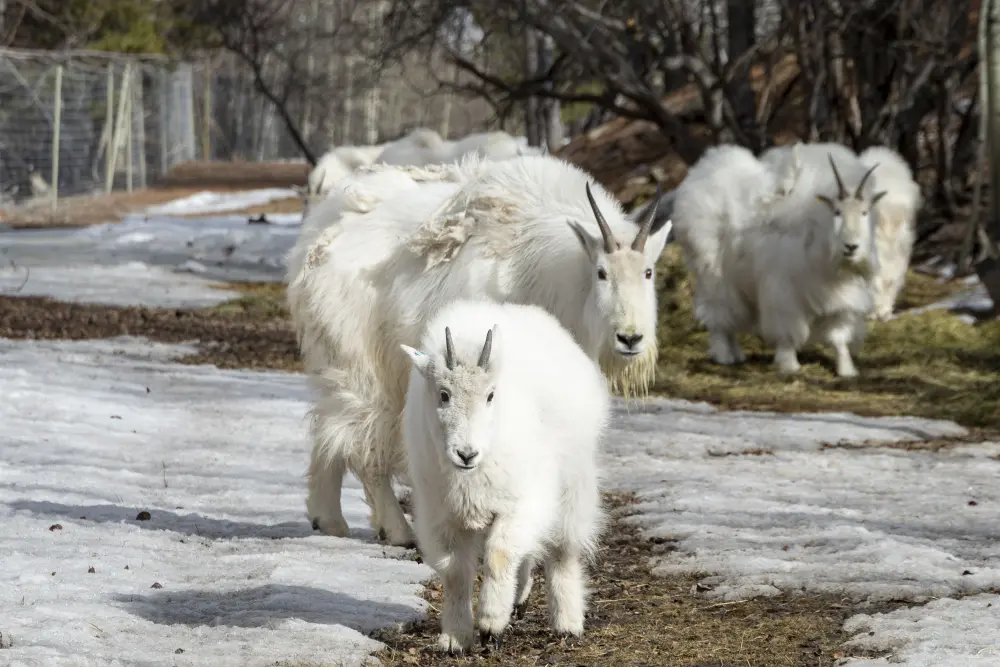
April 9th, 2024 Elsa joined the group of mountain goats at the Preserve and can be spotted living her best goat life thanks to people, community, collaboration and their great care of iconic North American wildlife in need of second chances.

Elsa the mountain goat with the nanny group.

Elsa, the mountain goat lives at the Yukon Wildlife Preserve which is the Traditional Territory of the Kwanlin Dün First Nation and Ta’an Kwäch’än Council.

Elsa the mountain goat introduced to the nanny group. B.Forsythe

The 2 above photos were taken April 30, 2025 of Miss Elsa being a goat!

Photo credits: Northern Lights Wildlife Society, YFNED - Yukon First Nations Education Directorate, L.Caskenette, B.Forsythe.

Lindsay Caskenette

Lindsay Caskenette

Manager Visitor Services

Lindsay joined the Wildlife Preserve team March 2014. Originally from Ontario, she came to the Yukon in search of new adventures and new career challenges. Lindsay holds a degree in Environmental Studies with honours from Wilfrid Laurier University and brings with her a strong passion for sharing what nature, animals, and the environment can teach us.

867-456-7400
Lindsay@yukonwildlife.ca

Explore by Category

Explore by Author

What’s That Black Stuff?

What’s That Black Stuff?

nature preserve

by Lindsay Caskenette | Feb 5, 2024

2 minute read - 

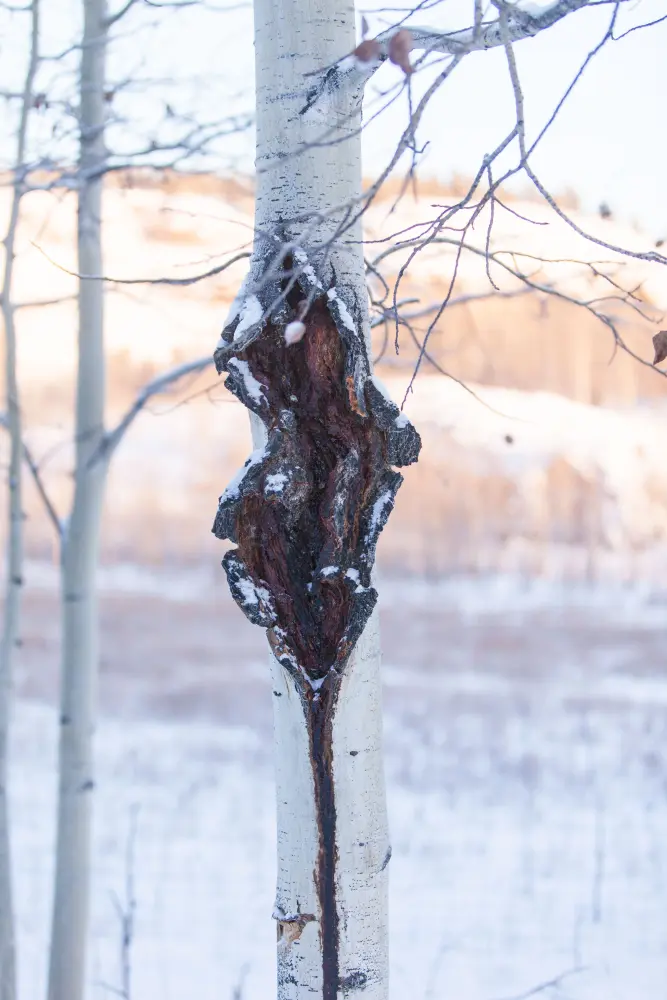
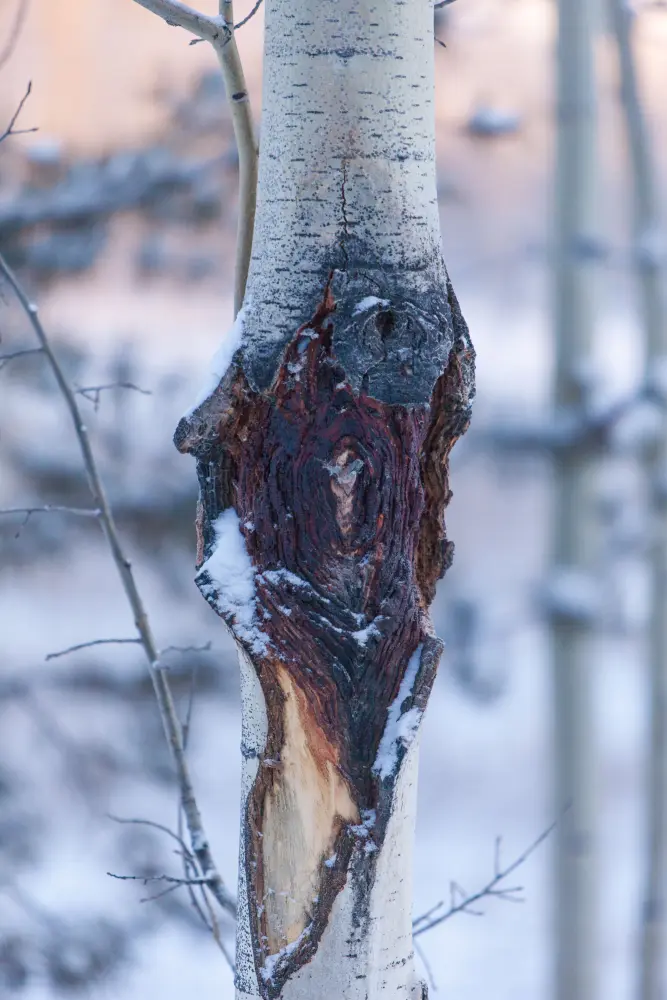
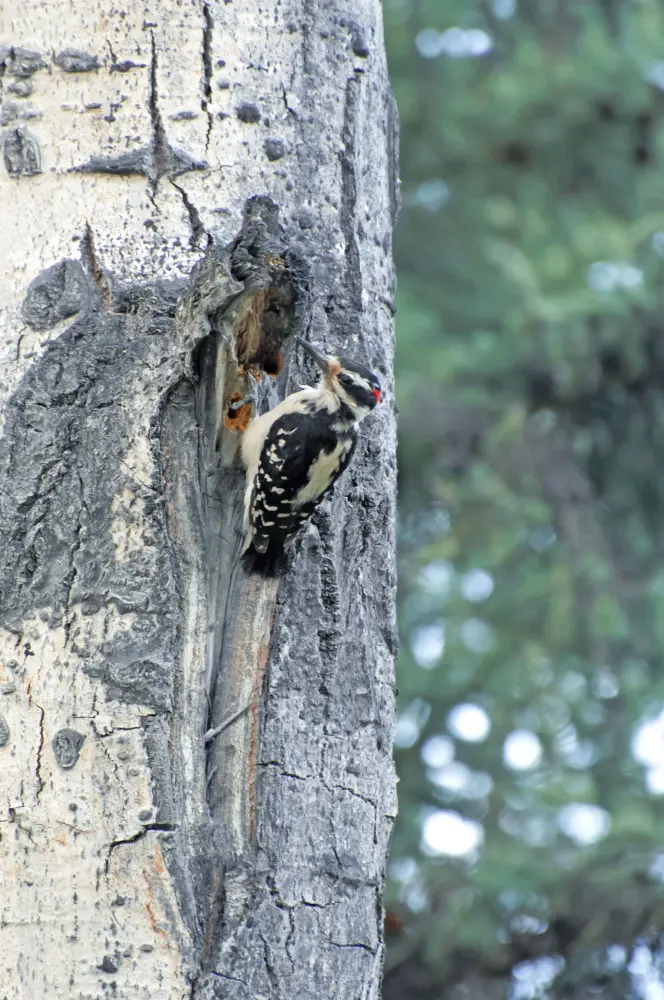
That ‘black stuff’ on the aspen trees is a common fungal infection called Black Canker.  Once infected, a circular dead area, or canker, develops on the trunk. Old cankers can develop large folds of black, dead bark. The blackened bark gives black canker its name.

The cold never bothered me anyway! This is not due to cold weather and will not actually kill the tree. One of the oldest known cankers is over 78 years old (in a 103 year old tree)! Black Canker develops slowly. It normally doesn’t kill the tree directly. 


Instead, cankers allow wood decay to weaken the trunk making the tree easier to break. Luckily, the broken trunks provide habitat for cavity nesting birds like woodpeckers. Cankers are an essential part of healthy, diverse forests.

Lindsay Caskenette

Lindsay Caskenette

Manager Visitor Services

Lindsay joined the Wildlife Preserve team March 2014. Originally from Ontario, she came to the Yukon in search of new adventures and new career challenges. Lindsay holds a degree in Environmental Studies with honours from Wilfrid Laurier University and brings with her a strong passion for sharing what nature, animals, and the environment can teach us.
867-456-7400
Lindsay@yukonwildlife.ca

Explore by Category

Explore by Author

Crane Gets A Flight South

Crane Gets A Flight South

nature preserve

4 minute read - 

Back in early November, a sandhill crane came into the Yukon Wildlife Preserve’s Wildlife Rehabilitation Centre with a number of wounds, including a laceration to its eyelid. We are pleased to say that it has been successfully released! But when a bird like this misses the migration, how exactly do you release it?

mature bald eagle in rehabilitation

Photo credit: Neil Tracey

With the help of the amazing folks at Air North, Yukon’s Airline and George C. Reifel Migratory Bird Sanctuary we were able to transport the crane all the way from Whitehorse to its new winter home outside of Vancouver.

George C. Reifel Migratory Bird Sanctuary is a federal Migratory Birds Sanctuary located in Delta, British Columbia (about an hour from downtown Vancouver). It has a small population of sandhill cranes that overwinter there, which we hoped would help this newly released bird transition back to the wild. We were a little nervous, as sandhill cranes can be quite unaccepting to newcomers, but in this case things went very well!

• • •

6:00am

Yukon Wildlife Preserve’s veterinarian, Dr. Maria Hallock, collects the crane from the rehabilitation centre. It will ride to Vancouver in a large dog kennel, specially equipped with barriers to limit visibility and help the crane stay calm on the long journey.

6:45am

The crane arrives at Air North Cargo at Erik Nielsen Whitehorse International Airport. Checking in a crane is more complicated than checking in a human. Permits and paperwork is processed and the kennel is given a final check to ensure it is secure.

7:30am

Neil checks in for the flight. Neil is the Manager of Programming and Education at Yukon Wildlife Preserve. Before moving to Whitehorse, he worked in wildlife rehabilitation in British Columbia. He was originally going on vacation to visit family; he added a crane release to his itinerary.

8:45am

Air North flight 521 departs for Vancouver. The weather is surprisingly good, and the flight is very smooth.

12:00pm

Air North flight 521 arrives in Vancouver.

12:30pm

Neil and the crane depart for the George C. Reifel Migratory Bird Sanctuary in Delta, British Columbia.

1:00pm

Kathleen Fry, Sanctuary Manager, meets the bird. She is a big fan of cranes. It shows. She escorts the crane and Neil to the release site, a beautiful lagoon between a set of dykes.

mature bald eagle in rehabilitation

Photo credit: Neil Tracey

1:01pm

The bird makes a break for it! While the team at the Sanctuary had set up a small fenced area to release the bird into - hoping to make the transition to a new environment smoother - the bird almost immediately ducked under the fence and ran off into the reeds.

1:02pm

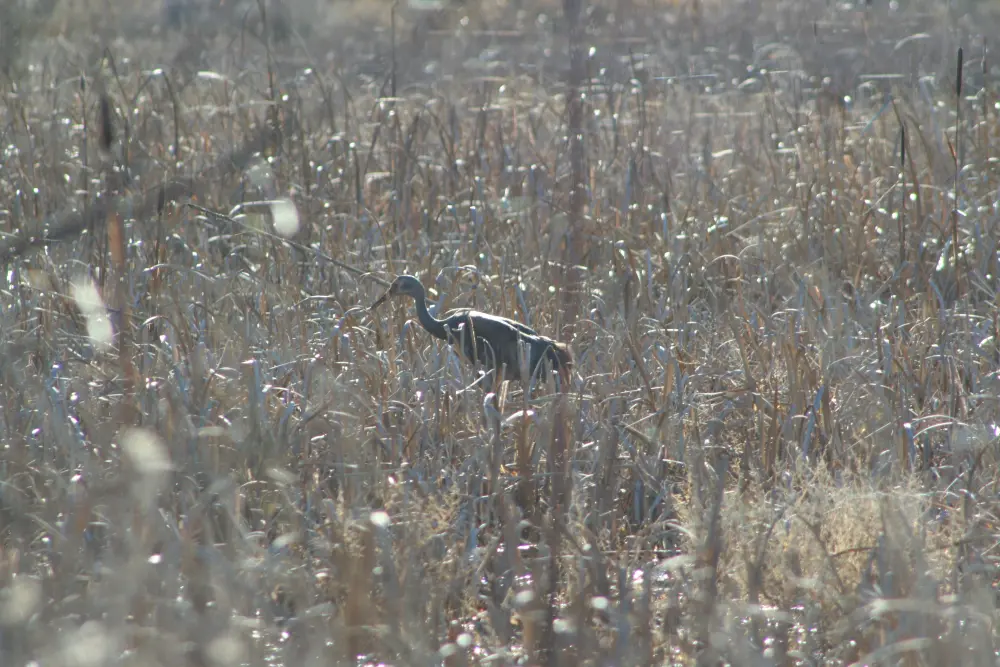
The crane stops moving and relaxes in the reeds. It blends in extremely well and is challenging to see.

3:00pm

The crane is still in the reeds, relaxing. It has moved a few steps, but is staying in the same protected area.

Normally, when an animal is released back to nature, we do not know exactly what happens next. This time, thanks to updates from the team at Reifel Sanctuary, we can not only tell you what happened next but we also have some amazing photos! Thanks to Kathleen Fry at the Sanctuary for giving us permission to share her photos.

mature bald eagle in rehabilitation

Photo credit: Kathleen Fry - Day 2

Day 2

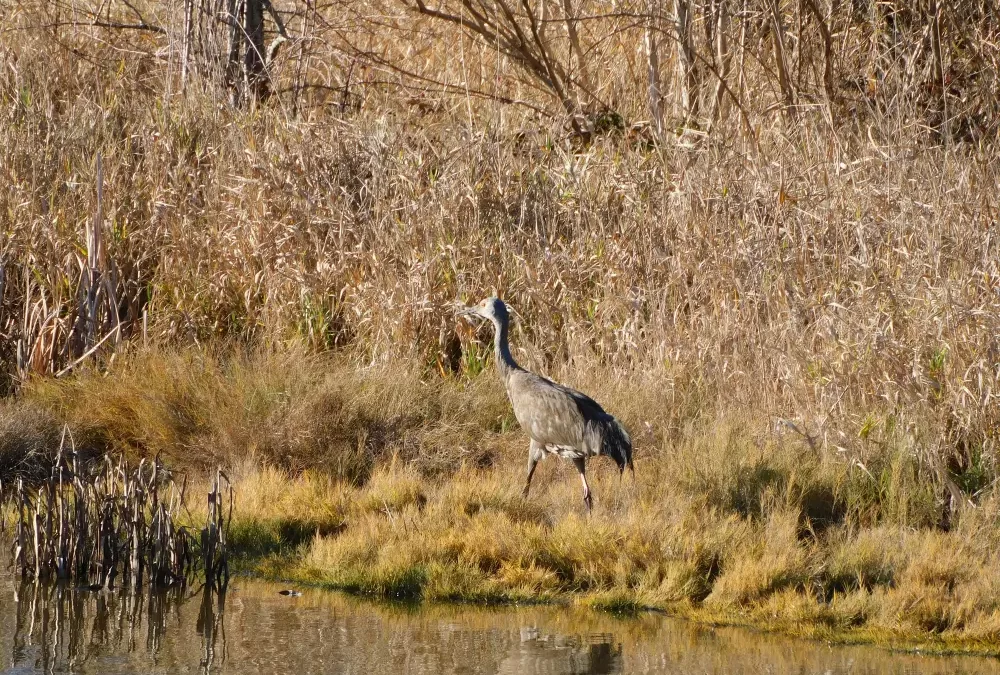
The crane visited with 15 local resident cranes in the morning before disappearing. This was a huge positive step, as the other cranes did not act aggressively toward the newcomer. In this photo from Kathleen, the rehabilitated crane is clearly identified by his small size and darker colours.

Day 3

The crane is slowly adapting to the wet coastal weather and seems to be keeping his feathers in better condition.

Day 5

Everything looks fine! The newly released crane seems to be hanging around the release area, is staying active, and is interacting appropriately with the other cranes in the area.

Photo credit Kathleen Fry - Day 5 after this crane was rehabilitation in the Yukon, flown South by Air North and released in BC.

Photo credit: Kathleen Fry - Day 5

If you are visiting the Vancouver area, you can reserve a spot to visit the Sanctuary. You might see the rehabilitated crane or some of the songbirds, waterfowl, and other species that call the Sanctuary home!

Wildlife rehabilitation doesn’t take a holiday! If you would like to support future rehabilitation efforts, donations are accepted all year round.

Neil Tracey

Neil Tracey

Manager Education and Programming

Neil is an interpreter and biologist who has worked in wildlife rehabilitation, interpretation, and education. He joined the team in early 2023 from Vancouver. In his spare time he teaches first aid and grows far more plants than he has space for at home.

Explore by Category

Explore by Author

Your Yukon NightHawks

Your Yukon NightHawks

nature preserve

by Lindsay Caskenette | Dec 14, 2023

This article was originally published in The Preserve Post newsletter in Spring 2016. More current information and contact for the regional project can be doing on WildResearch.

2 minute read - 

Is it true, that the early bird gets the worm? Not always!

COIN male. 
Credit: Anne Brigham

A group of highly camouflaged birds, called nightjars, spend their days resting, waking  up just in time for sunset. These birds are most active during twilight – not actually early birds!

The Common Nighthawk, the Yukon’s only nightjar, can often be found feasting on insects above the YWP wetlands during those twilight hours.


offspring nightjars nighthawk, wildlife research blog.

Common nighthawk chicks July 7.
Credit: Andrea Sidler

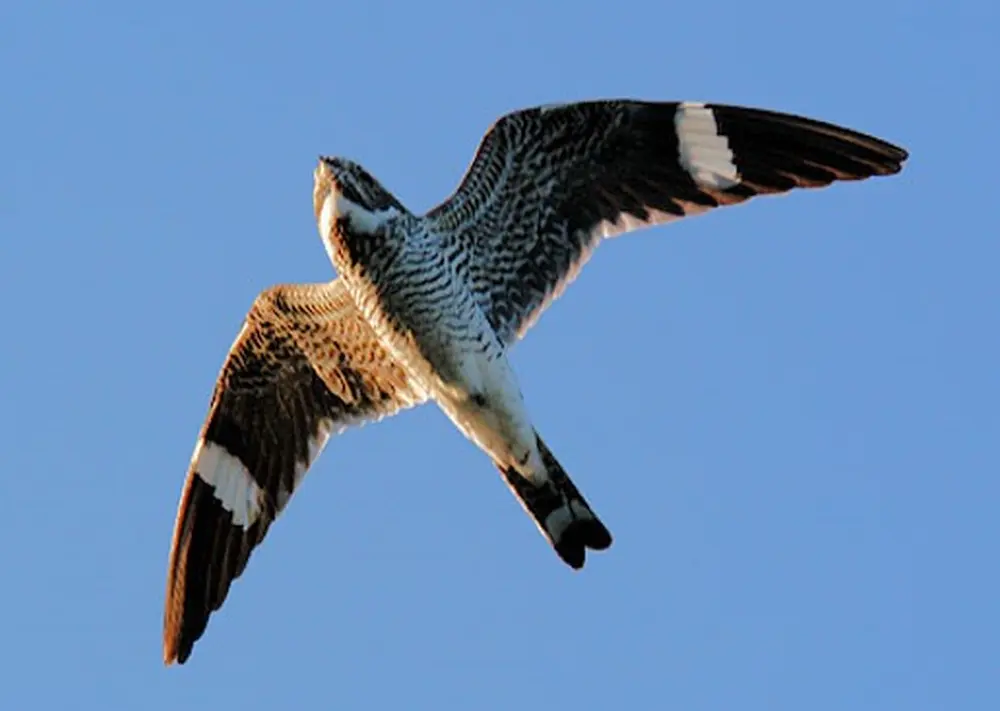
You’ve likely heard the electric peent calls of nighthawks filling the air, or maybe observed their silhouettes circling high above. Perhaps you’ve witnessed the males’ aerial maneuvers as he protects a territory. He shows off his white wing-bars to potential mates while performing spectacular dives toward the ground, pulling up at the last minute, and creating a  mechanical “booming” sound with his wings.

Nighthawk sound recorder. Audio wildlife research.

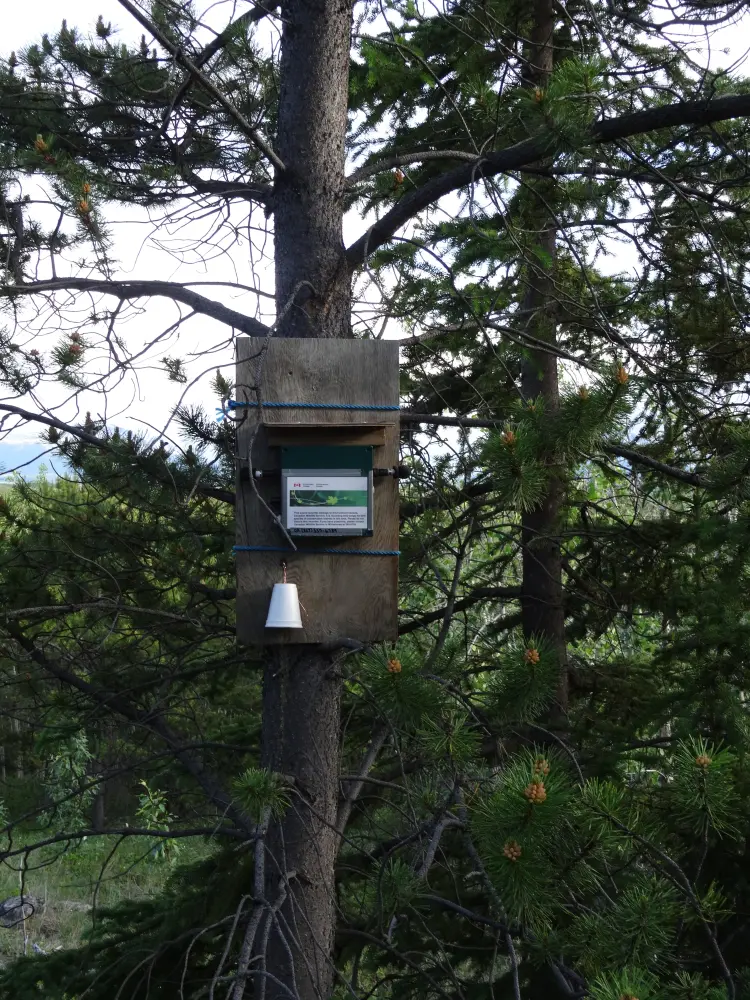
A sound recorder mounted to a tree with some information for a, human passerby. Credit: Andrea Sidler

In the Yukon, we are lucky we get to experience these unique birds. It is not like this everywhere. In fact, Canadian populations have declined by over 50% in just 30 years (status: Threatened). As a species, nighthawks are poorly understood, particularly here, on their boreal forest breeding grounds.

By using remotely recording sound meters, Canadian Wildlife Service investigated how the Norths’ perpetual daylight influenced the timing of nighthawk activity. For two summers, the YWP was home to recorders which, each night, recorded the calls of resident populations. During June, nighthawks were most active around 2:00 am. However, by the end of July, as true night returned to the YT, this changed.

female nighthawk, nightjars. wildlife research blog

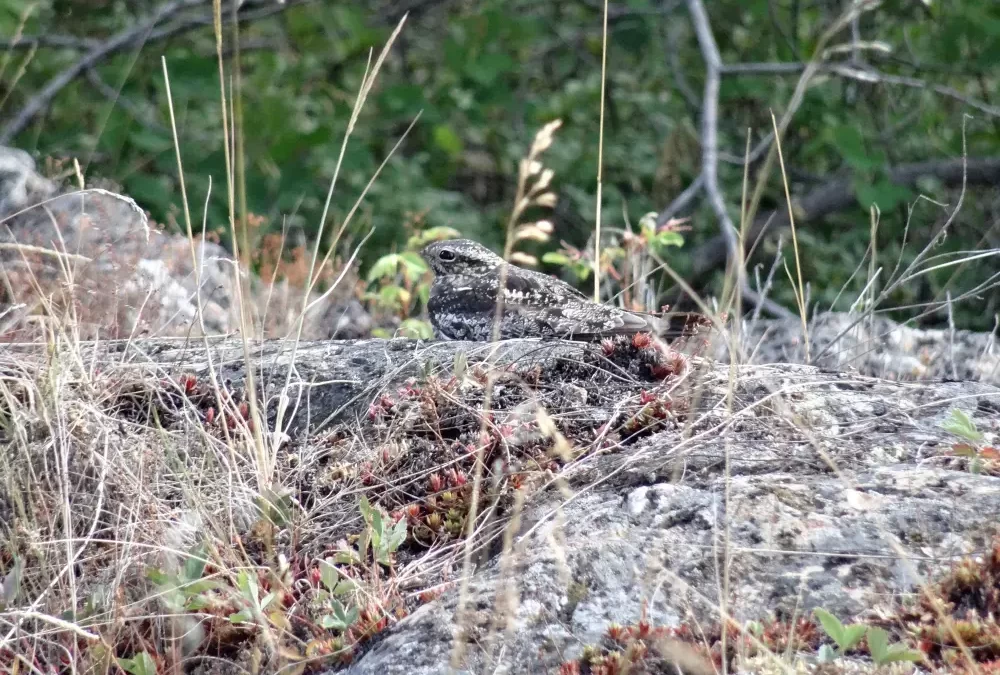
A well camoflauged female.
Credit: Andrea Sidler

There were two activity peaks, one at dawn (4:00 am) and one at dusk (11:30 pm) –similar to southern populations - demonstrating that nighthawks are indeed affected by the changing day-length!

We are trying to learn more about what landscapes our nighthawks use. To help address this, WildResearch is expanding their nighthawk surveying program to the Yukon this summer. WildResearch relies on the collective power of volunteer citizen scientists to conduct surveys (2-3 hrs), which contribute data to conservation efforts. If you’re interested in getting involved contact your regional coordinator. Find out who that is by visiting the WildResaearch site.

Andrea Sidler

Andrea Sidler

Guest Researcher / Author

Explore by Category

Explore by Author