How are Animals Named?

How are Animals Named?

nature preserve

Nov 22, 2023

11 min read -

Throughout history, various languages and cultures have contributed to a wide - and often confusing - vocabulary used to describe animals' genders, the young stages of their lives and what they may be called when they are gathered together in groups.

Mule deer:
Males are called bucks. Females are called does & young are fawns.
A group of deer are often called a herd but more fun versions include a bevy, a bunch, a rangale or a parcel
- though a parcel is often in reference to a group of young deer.

Historically, adjectives were the labels of choice to communicate animal gender identifiers. A broad selection of these labels has resulted - which are not universally applied, even within the same species. For example: in the deer family or Cervidae, males are identified as bucks and females are called does. In moose, and caribou - also members of the Cervidae family - males are called bulls and females are called cows while elk males are referred to as stags.
Cervids
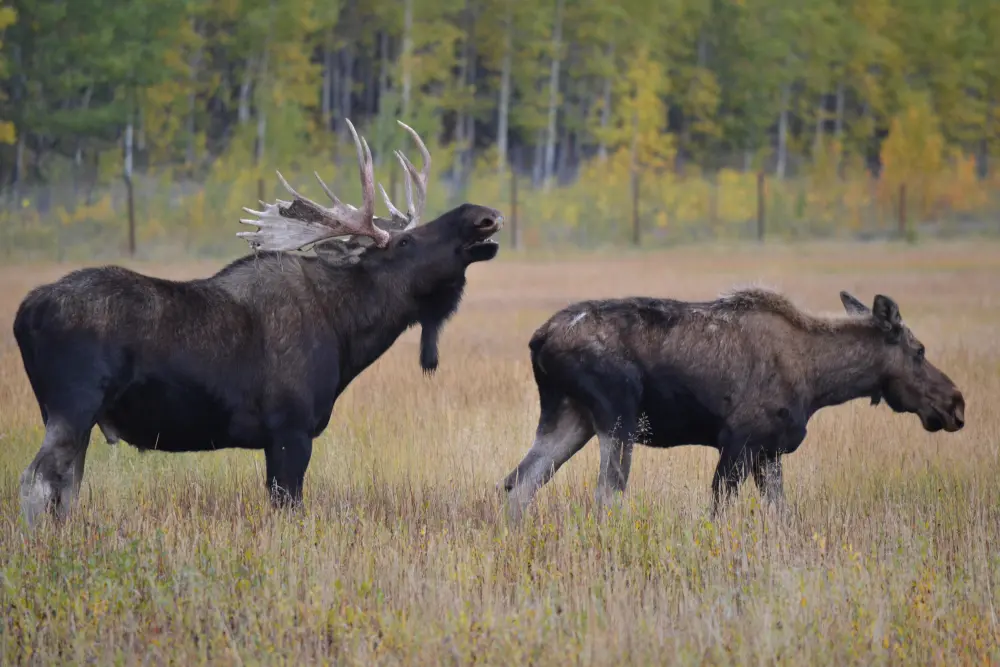
From left to right - moose, caribou and Elk.
Males are called bulls (elk are called stags) and females are called cows.

Generally these cervids in groupings would be called herds (though moose are not actually herd animals) while elk can be also called a gang - watch out!

Not limited to just fur-bearing creatures, these titles are applied to other species and there are often departures from the naming conventions used. Rabbits are called bucks and does while steelhead trout males are called bucks, with females being called hens rather than does.

There is also a vast difference in the scientific naming of all creatures. Over the centuries a number of early scientists attempted to establish a format to classify animal groups. Ancient Chinese created the first recorded reference in 2700 BC, but it was quite limited and focused primarily on flora (vegetation) of their geographic region. 

Check out our Facebook post to learn more about Vulpes vulpes; not all red foxes are created equally but all are a red fox!

  1. Remember Fox and the Hound? A male is called a tod (sometimes a reynard or a dog), while females are referred to as vixens.
  2. Young are most commonly called kits but can also go by cubs, or pups.
  3. The collective noun to describe a group of foxes are a skulk, earth or a leash! These names are related to fox behaviour corresponding respectively as a group hunting together, a mama fox with her kits, and a group of domesticated or captive foxes as a leash.

Now, there are other foxes including Arctic fox (Vulpes lagopus), swift fox (Vulpes velox), fennec fox (Vulpes zerda), and others across the world for a total of 12 species that comprise the largest genus, Vulpes.

Smaller classifications exist within the genus Urocyon which include the gray fox. The only extant species of fox belonging to the Otocyon genus is that of the bat-eared fox found in the African savanna.

Ancient Greek philosopher and scientist Aristotle described a large number of natural groups, and although he ranked them from simple to complex, his order was not an evolutionary one. He was far ahead of his time in separating invertebrate animals into different groups and was aware that whales, dolphins, and porpoises had mammalian characters and were not fish. The Aristotelian method dominated classification for many centuries. During this period, it provided a procedure for attempting to define living things through careful analysis, it neglected the variations between living things.

In 1758 Carolus Linnaeus, who is usually regarded as the founder of modern taxonomy and whose books are considered the beginning of modern botanical and zoological nomenclature, drew up rules for assigning names to plants and animals. He was the first to use binomial nomenclature consistently. Although he introduced the standard hierarchy of class, order, family, genus, and species, his main success in his own day was providing workable keys, making it possible to identify plants and animals from his cataloging. Linnaeus was the father of the Field Guide.
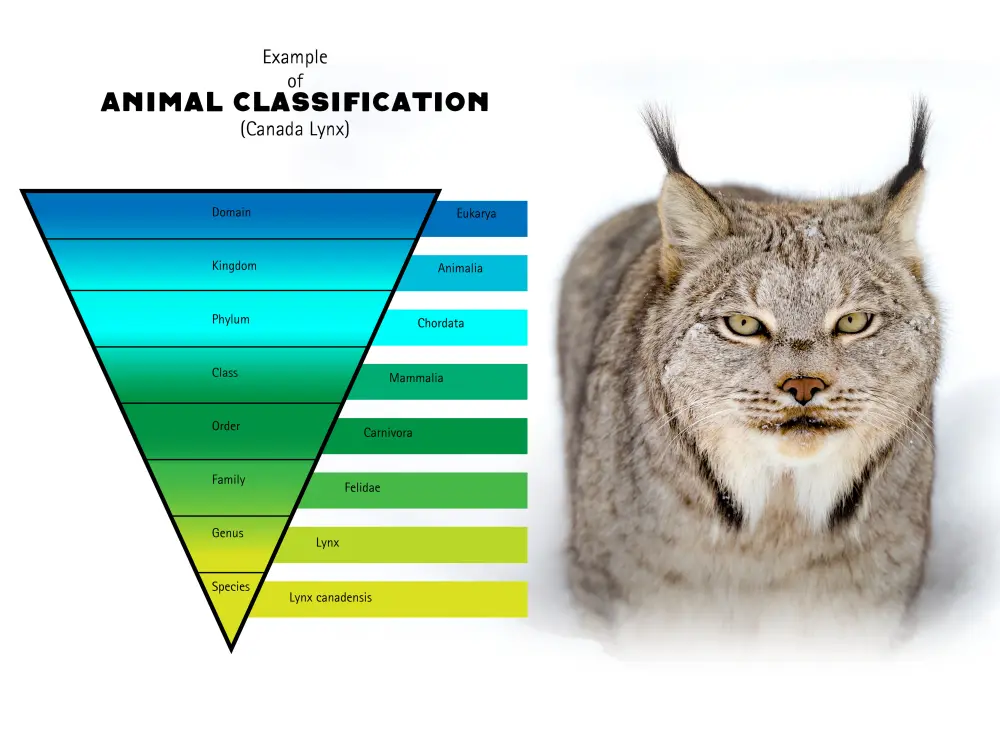
Lynx classification

Over the centuries a number of paleontologists, biologists, and scientists contributed to refining Taxonomy as we know it today. Perhaps the most notable of these was Charles Darwin - who explained his theory of evolution by describing how animals changed over time, yet still remained within specific categories in taxonomy.

Below is a table defining each classification of steppe Bison, the 15,000-year-old ancestor of today’s wood bison. As you can see, their classifications are not much different, other than identifying wood bison as a sub-species.

While their scientific classifications are very similar, the animals themselves were quite different. Steppe bison persisted through the great extinction of the last Ice Age up until about 5,400 years ago. A relatively recent find in Whitehorse city limits proves steppe bison persisted giving rise to the bison seen in the Yukon today but are not the direct descendants of the steppe bison.

Darwin’s famous illustration The Tree of Life displays the evolutionary relationships between species. This idea caused a great deal of controversy when he concluded that mankind evolved from the apes which was contrary to the religious teachings of the day.

Muskox and bison - both species are members of the Bovidea family. In this family, males are called bulls and females are called cows. The young are called calves and groups of both species are referred to as "herds". But that is where the line is drawn for their nomenclatures. The Inuit name for muskox is "omingmak," which means "the animal with the skin like a beard." Geographically, today's populations of muskox and bison do not overlap and their adaptions to winter survival as a result are very different.

We can see from this phylogenetic tree how bovids (horn bearing) and cervids (antler bearing) are related to each other. The animals with icons represent those species at the Yukon Wildlife Preserve. The Yukon has 9 of the 11 ungulates of North America, excluding the bighorn sheep and pronghorn antelope. What's also interesting to note is that mountain goats are their own genus and muskox are more closely related to sheep and goats than they are bison!

When we dive into the scientific name we can see how the classifications carry over. For instance muskox, Ovibos, share genus naming from sheep and cow. Caribou or Rangifer tarandus is reindeer in Latin, from the Greek tárandos, also meaning reindeer. So when someone asks you the difference between caribou and reindeer, you can say, nothing! (Except, reindeer fly!)

Classification tree for ungulates bovid and cervid

(Note: this a general phylogenetic tree; it is not complete and does not represent accurate branch length for amount of genetic change and complexities of sub-taxa).

Beyond the labels used for animal species, their offspring also suffer from a variety of descriptors to classify their young age. There are calves, fawns, foals, pups, cubs, kittens, chicks, hatchlings, fry and owlets to name a few. Yes, there is a lot to remember, but with practice you can master the various names used to identify animal difference.

These descriptor variations also extend to the words used to describe a group of an individual species. There are herds, colonies, congresses, tribes, swarms, flocks, droves, clutches, packs, murders, litters, pods, braces, convocations, gangs, schools, hordes, gaggles, bands, and numerous other words used to describe a group of same-species creatures. There are even names given to groupings of animals that are, in fact, unlikely to group together given their territorial and/or solitary nature - like owls, moose or wolverines.

Even within a class of animals like birds, its a complex web of classification and further to each species' grouping names.

Birds:

  • In general - Flock
  • Eagle - convocation
  • Falcon - cast
  • Owl - parliament, stare or wisdom
  • Swallows - flight, gulp
  • Swans - bevy, wedge
  • Ptarmigans - covey
  • Ravens - unkindness, rave, conspiracy
  • Magpies - tiding, mischief
  • Grouse - pack, covey
  • Crane - sedge
  • Ducks - raft in water and skein when flying
    • mallards on the ground can be called a sord
  • Geese - gaggle
  • Loons - asylum


Other mammals:

  • Squirrel - scurry
  • Wild canids, dogs - pack
  • Goats - tribe
  • Otters - romp
  • Porcupines - prickle
  • Voles - colony
  • Wolverines - mob
  • Martens - richness

Invertebrates:

  • Bees - grist, hive or swarm
  • Caterpillars - army
  • Flies - business

Amphibians (no reptiles in the Yukon):

  • Frogs - army
  • Toads - knot

Fish:

  • Trout - school
  • Salmon - bind, draught or run

It's an interesting read to understand the many different words used to describe an animal’s gender, how they are identified when they are youngsters and in groups together. Of course, the list above is centered on animals that make their home in the Yukon - imagine some of the animals that live in your neck of the woods, or places you've travelled to, and what those animals' naming classifications may be.

What is more, the naming of animal's as described by history must also recognize that many of these species, (beyond the few mentioned like Wapati and Omingnak), also hold Traditional and First Nation naming of animals that are descriptive, communicating the animals' place, use or spiritual significance.

Do you have any interesting or favourite animal classification terms/names? Share them with us in the comment section below!
Doug Caldwell

Doug Caldwell

Wildlife Interpreter

Doug is one of the Interpretive Wildlife Guides here at the Preserve. An avid angler and hunter he has a broad knowledge of Yukon’s wilderness and the creatures that live here. With a focus on the young visitors to the Preserve, Doug takes the extra time to help our guests to better appreciate the many wonders of the animal kingdom here in the Yukon.

Lindsay Caskenette

Lindsay Caskenette

Manager Visitor Services

Lindsay joined the Wildlife Preserve team March 2014. Originally from Ontario, she came to the Yukon in search of new adventures and new career challenges. Lindsay holds a degree in Environmental Studies with honours from Wilfrid Laurier University and brings with her a strong passion for sharing what nature, animals, and the environment can teach us.

867-456-7400
Lindsay@yukonwildlife.ca

Explore by Category

Explore by Author

Bison vs. Muskox

Bison vs. Muskox

nature preserve

by Lindsay Caskenette | Nov 15, 2023

2 minute read - 

Bison versus muskox! What's the same? What's different? Who is more cool? Top 5 reasons muskox and bison are NOT the same animal, at all.

One of the first animals visitors see when they explore the Preserve is bison. As folks continue to explore the Preserve they will later come upon another large, brown animal and often say, 'hey, look bison again!" In fact, they are looking at muskox. Both animals in their appearance can look similar but they are indeed quite different!

Similarities:

  1. Both animals belong to the Bovidae family.
    • These animals comprise the biological family of mammals that are cloven-hoofed and ruminants. A member of this family can be called a bovid.
  2. Both animals (and both males and females) have horns.
    • While shape and size differ the basic structure is always that of a pair of simple bony protrusions without branches, and each covered in a permanent sheath of keratin.
  3. It's a family affair.
    • both species form herds, and their social structure often involves a dominant individual. With this grouping the species is usually polygnous.
    • Safety is a game of numbers and larger groupings allow for greater protection of the herd than if they were solitary animals. 
  4. The Holocene, Ice Age and Pleistocene - History.
    • Both present day species, Ovibos moschatus and Bison bison athabascae were on the land during the Early Holocene (10,000 - 5,000). Both current day species were reintroduced in the Yukon.

Differences:

  1. Physical appearance
    • Bison are bigger and heavier. Males can be almost twice the weight of a muskox. As an Arctic specialist and ice age survivor it pays for muskox to be compact. Don't worry though, the biggest land mammal in North America is adapted well to survival in the North.
    • Muskox have a lot of hair, everywhere! Two coats including an exterior, thick and long guard hair layer called their skirt - 'cause it goes down to the ground. Underneath that, a soft, extremely warm wool called qiviut, keep the muskox warm in the wild Arctic. Now, wood bison have a massive build, a pronounced hump on their shoulders and shaggy hair around their head, face and forelimbs.
    • Horns grow differently - muskox sport almost mustache looking horns form on top of the head, with males having larger and denser helmet structure to absorb the headbutt actions that happen in rut season. On the other horn, er, hand . . . bison have horns grow from the sides of their head and quickly curve upwards.
  2. Bison are like wild cows, while muskox are more closely related to mountains goats.
    • This is represented in subfamily observation where the muskox is classified under the Caprinae subfamily.
  3. What happened when the cow and the goat walked into the bar?
    • Nothing - they wouldn't be in the same place at the same time! Muskox are a narrow niche specialist, occupying the high arctic tundra of the Circumpolar North! Wood bison roam grasslands, forest and mountain slope environments across northwestern North America.
  4. Fight or flight?
    • Bison choose flight - they will flee as a herd for safety when threatened.
    • Muskox fight - they form a defensive circle with young inside and adults facing outwards. This behaviour makes sense given we know that muskox live in an arctic tundra environment. Fleeing would be a near endless, waste of precious energy.
  5.  History is confusing but muskox are true Ice Age survivors.
    • While wood bison were present during the Holocene  it was a narrow window within this geological epoch that the Bison bison evolved from its predecessors Bison priscus (commonly known as Steppe Bison) and Bison occidentalis. Both subspecies of present day bison (plains and wood) are reintroductions to their current ranges. 
    • Muskox, Ovibos moschatus not only were present during the Holocene they were present during the Pleistocene. Muskox as we know them today - tundra muskox or Ovibos moschatus  persisted alongside other Ice Age animals like the Helmeted Muskox and other large megafauna like Steppe bison, and mammoths but they did not go extinct!

We say the winner is, Muskox! They are cooler! What do you think?

Bison versus muskox whats the same? Whats different? Who is cooler?
Lindsay Caskenette

Lindsay Caskenette

Manager Visitor Services

Lindsay joined the Wildlife Preserve team March 2014. Originally from Ontario, she came to the Yukon in search of new adventures and new career challenges. Lindsay holds a degree in Environmental Studies with honours from Wilfrid Laurier University and brings with her a strong passion for sharing what nature, animals, and the environment can teach us.

867-456-7400
Lindsay@yukonwildlife.ca

Explore by Category

Explore by Author

Feathered Friends in Rehabilitation

Feathered Friends in Rehabilitation

nature preserve

by Lindsay Caskenette | Nov 3, 2023

1 minute read - 

Generally, this time of year, the Wildlife Rehabilitation Centre is a lot more quiet than in the months leading up to fall. But in the final days of October the Centre got feathered with some new arrivals. 

October 30th, 2023 Conservation Officers from Dawson brought in a mature bald eagle that was observed to be weak, unable to fly and found near a road being harassed by ravens and magpies. The bird was severely underweight. Being on the ground for an unknown amount of time, the birds tail feathers were damaged. Upon its admittance, the bird eagerly ate and some fluids were administered.

mature bald eagle in rehabilitation

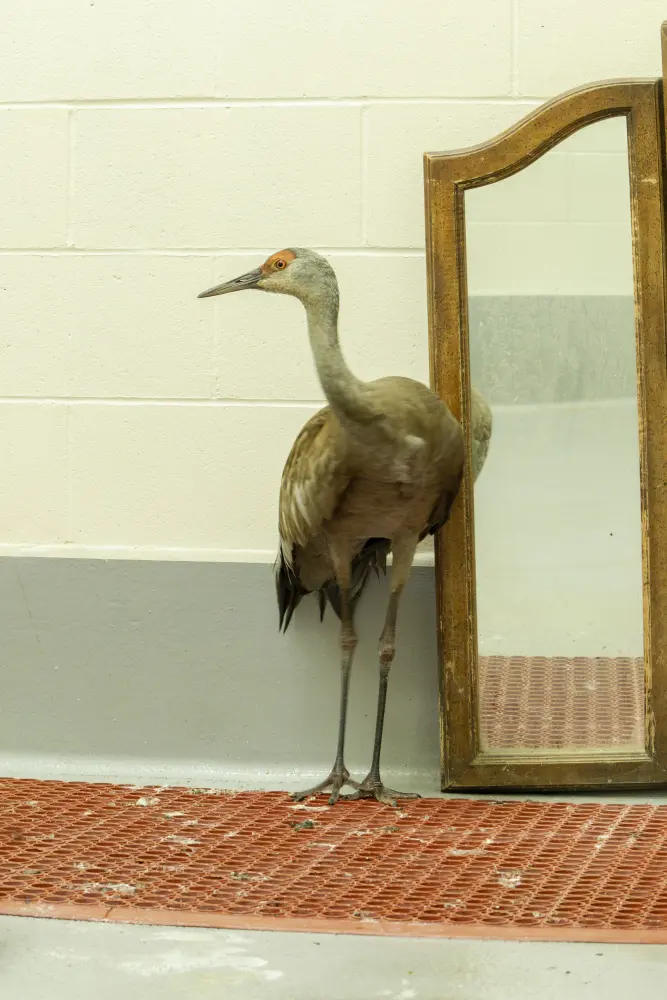
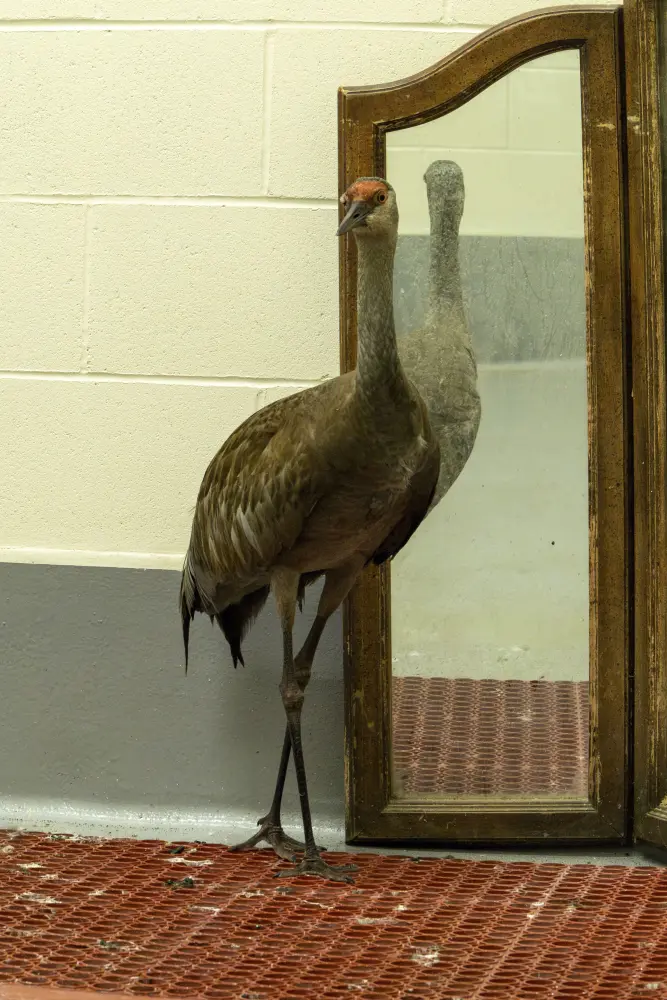
The next day, the Animal Health Unit of the Department of Environment brought a sandhill crane that was unable to fly. Similar to the eagle it was being harassed by scavenging birds. The bird has two lacerations, one of the left eyelid that is not affecting the eye and another on the left tip of the wing. Without much information to these injuries, Dr. Maria Hallock is ensuring they are cleaned and sanitized. The crane is given meloxicam, nonsteroidal anti-inflammatory drug (NSAID), to relieve pain and swelling. 

Now both birds just need time to heal, good food to gain weight and protection, while they return to normal health condition. We expect both animals to make a full recovery and be released back into the wild.

Since the crane should be already venturing down-south for Fall migration, the Preserve will look to some rehabilitation centres in B.C. that could admit the animal to provide its final phase of care after we give it a one-way ticket South via Air North!

Help us get them back on their wings. We could use your help. If you are able to support the care of these two animals, please consider donating. Every contribution makes a difference and as a non-profit charitable organization, you can receive a charitable tax receipt for your support. 

Photo credit: B.Forsythe

Lindsay Caskenette

Lindsay Caskenette

Manager Visitor Services

Lindsay joined the Wildlife Preserve team March 2014. Originally from Ontario, she came to the Yukon in search of new adventures and new career challenges. Lindsay holds a degree in Environmental Studies with honours from Wilfrid Laurier University and brings with her a strong passion for sharing what nature, animals, and the environment can teach us.

867-456-7400
Lindsay@yukonwildlife.ca

Explore by Category

Explore by Author

Artist Series Trucker Hats

Artist Series Trucker Hats

nature preserve

by Lindsay Caskenette | Apr 25, 2023

6 min read

The Visitor Services team is working hard to connect with local artist to bring the connections to nature home with you. We strongly feel that by taking the time to explore these partnerships we can create unique items that guests to the Preserve can take home all while knowing their purchase in the Preserve's Little Gift Shop not only supports these northern talents but all revenue from the retail sales goes back into the operations of the Preserve, supporting the northern animals in our care.

Right now the Preserve does not do online sales. We're a really small team that is situated out of town, and with some staff also living out of town, doing online sales and shipping feels a bit outside our capacities for the time being. 

• • •

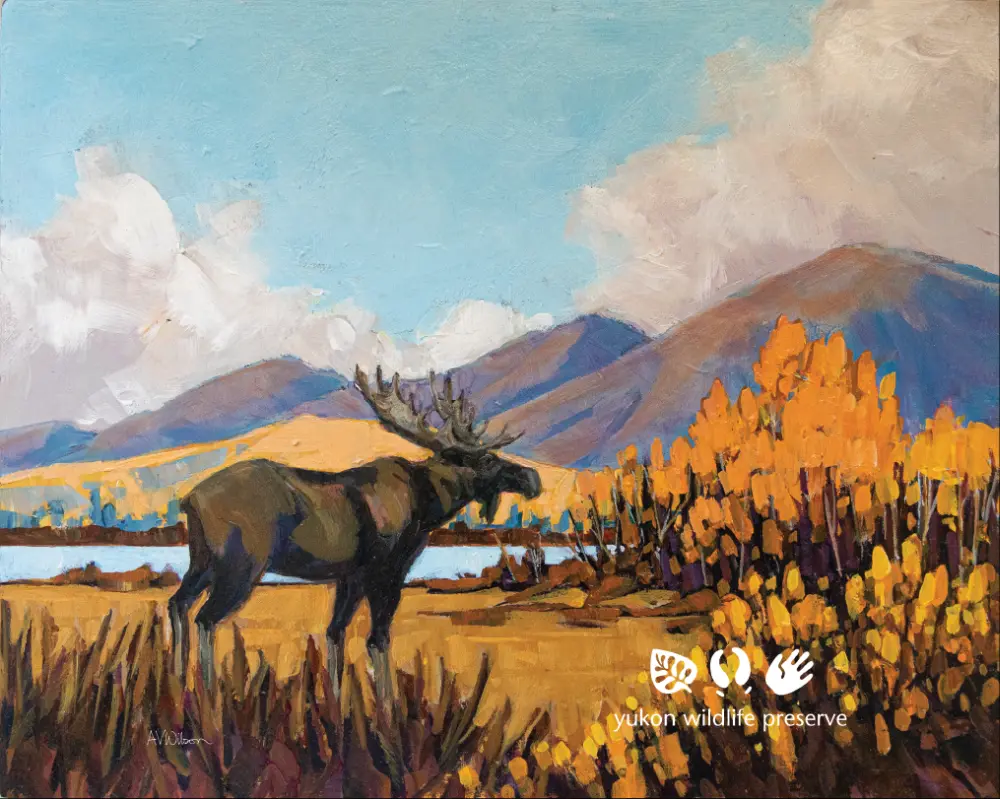
Photo of moose in water.

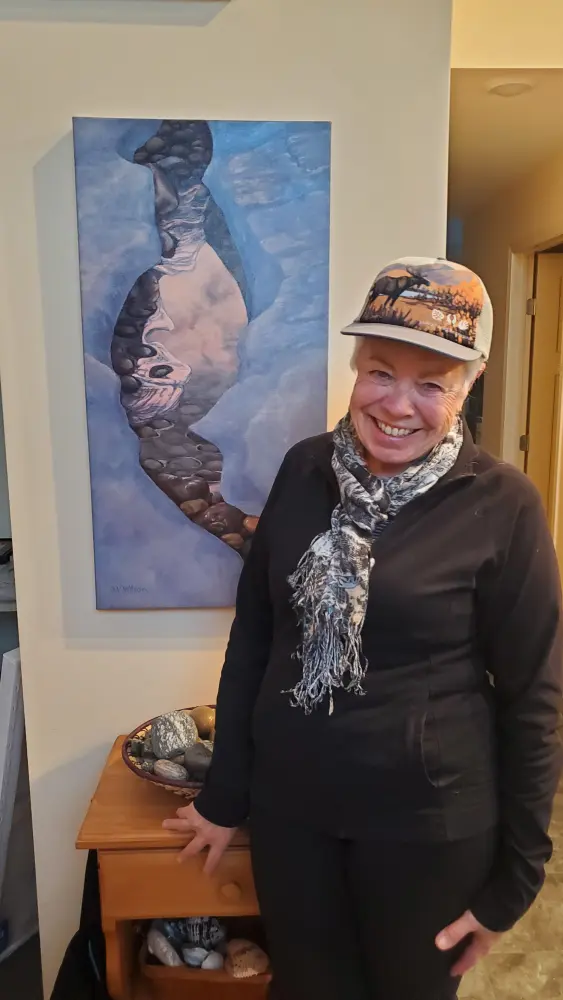
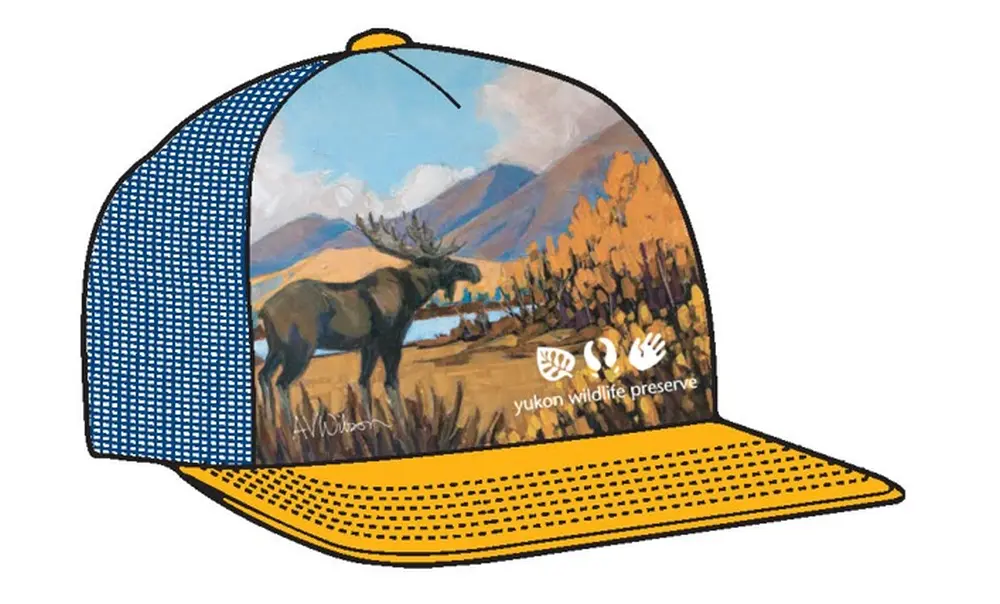
This artist collaboration with AV Wilson, better known as Virgina Wilson was incredible and humbling and might have involved a few evenings of conversation over wine to help get us to the final product! 

• • •

Yukon Wildlife Preserve's Manager of Visitor Services LOVES hats! It's rare to see Lindsay not in a hat. As Lindsay worked to evolve the products founds in the Preserve's Little Gift Shop she knew hats needed to be included in this. Although she heard the phrase "you are not your own customer" she ignored this (generally) and sought out a design and product that would inspire others to wear something with pride, even if hat's weren't really their 'thing'!

• • •

The first iteration of the Trucker style hat was in 2016 and came from some in-house design. One hat featured our classic logo and another from screen-printing a photo taken in 2013 by Executive Director, Jake Paleczny.

As those sold and we started working on other artists collaboration ideas in 2020 (like the bula's), we reached out to local artist who might be interested in a trucker hat specific project.


Photo credit: J.Paleczny

Lots of emails back and forth and the collaboration with Virginia started to take shape. We know these things don't happen overnight. It's about building connections with people to ensure the artist and artist process is honoured and the values of the Preserve are brought forward, in balance, to the final product.

• • •

Photo of team providing care for moose in the field.

Starting in December 2021, we chatted about ideas, inspiration and of course the worldly love of moose came front and centre for both parties. She paints because she loves to paint - no other reason, retirement life supports this love. Virigina shared she was interested in this project because "my family likes the wildlife park, I like your objectives, and they [my family] all want trucker hats with my art on them". What better collaboration when the story creates itself.

• • •

Photo of team providing care for moose in the field.

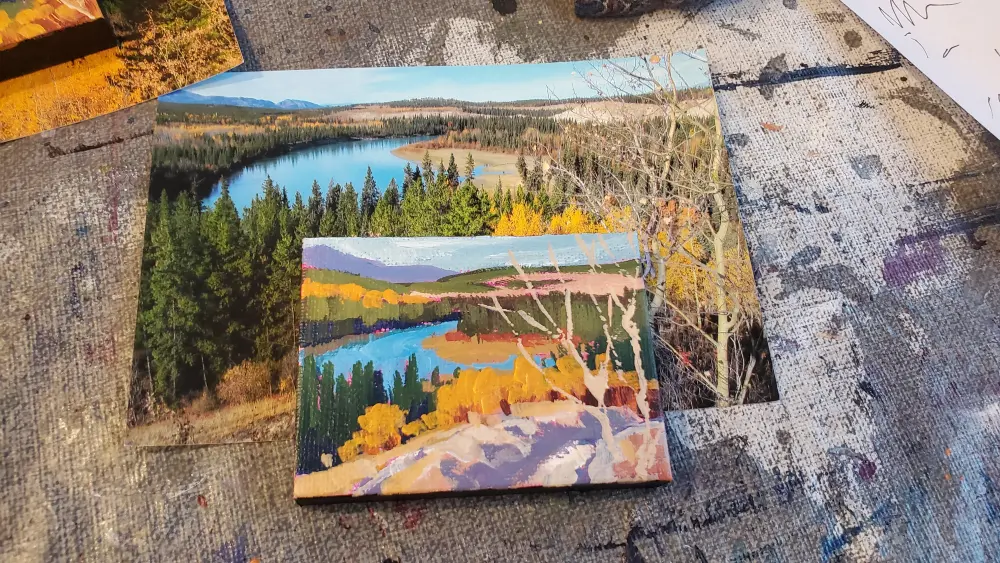
Her art work has incredible depth and range, from perfect windowsill pieces to multi canvas, larger than life sceneries. 

Virginia is a proud Yukoner, a Mother, Grandmother and an artist that loves painting landscapes as much as she loves hiking. The Yukon is a particularly special place to live out these pursuits and forever find inspiration. 

Virginia is originally from North of England having spent nearly the first quarter of her life there and then moving around Canada she has spent most of her life in rather beautiful places. 

• • •

Photo of staff using stethoscope to listen to moose heart rate.

The hats are a Yukon and Canadian production - from the landscape inspiration and artist development to the hat itself sourced with the help from Corina at Taku Sports Group Inc and printed on Canadian made brand Ambler.

• • •

Photo of staff using stethoscope to listen to moose heart rate.

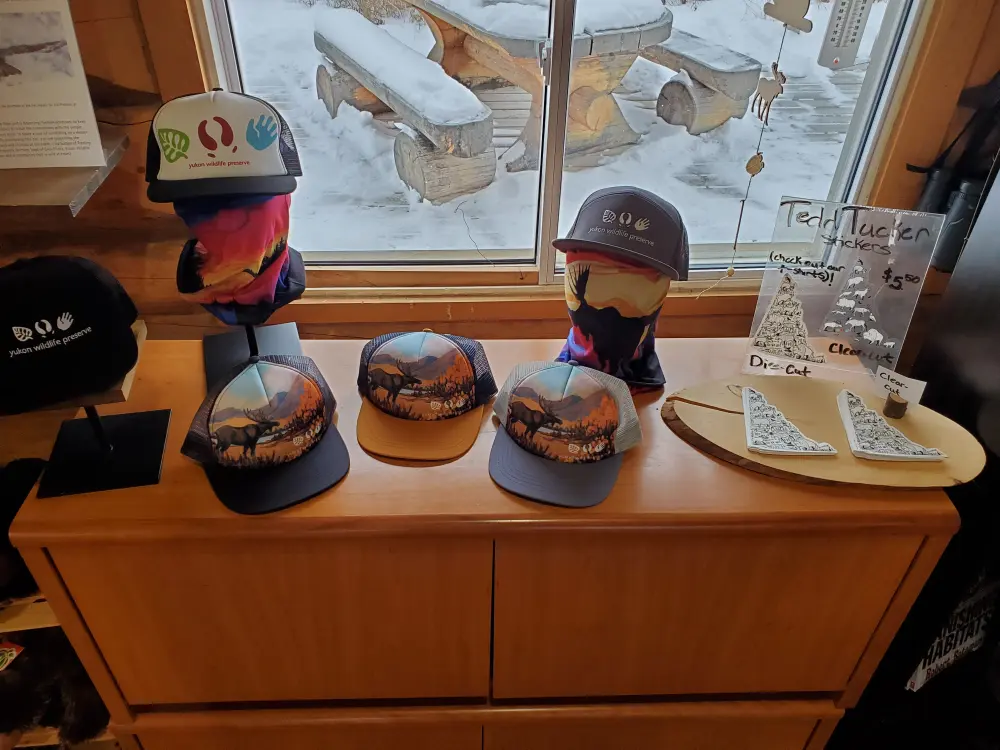
The hats come in different colour combinations and are available only at the Preserve's Little Gift Shop beginning November 2022. Check out more of Virginia's work through her website and Instragram.


• • •

Trucker Hat                           $48

Photo of staff using stethoscope to listen to moose heart rate.
Lindsay Caskenette

Lindsay Caskenette

Manager Visitor Services

Lindsay joined the Wildlife Preserve team March 2014. Originally from Ontario, she came to the Yukon in search of new adventures and new career challenges. Lindsay holds a degree in Environmental Studies with honours from Wilfrid Laurier University and brings with her a strong passion for sharing what nature, animals, and the environment can teach us.
867-456-7400
Lindsay@yukonwildlife.ca

Explore by Category

Explore by Author

Yukon Wildlife Preserve
Box 20191
Whitehorse, Yukon
Y1A 7A2

Proud member of:

CAZA Logo

With the support of:

Yukon Government Logo
Golden Eagle Gets Second Chance

Golden Eagle Gets Second Chance

nature preserve

by Lindsay Caskenette | Nov 26, 2021

Photo credit:  L. Caskenette

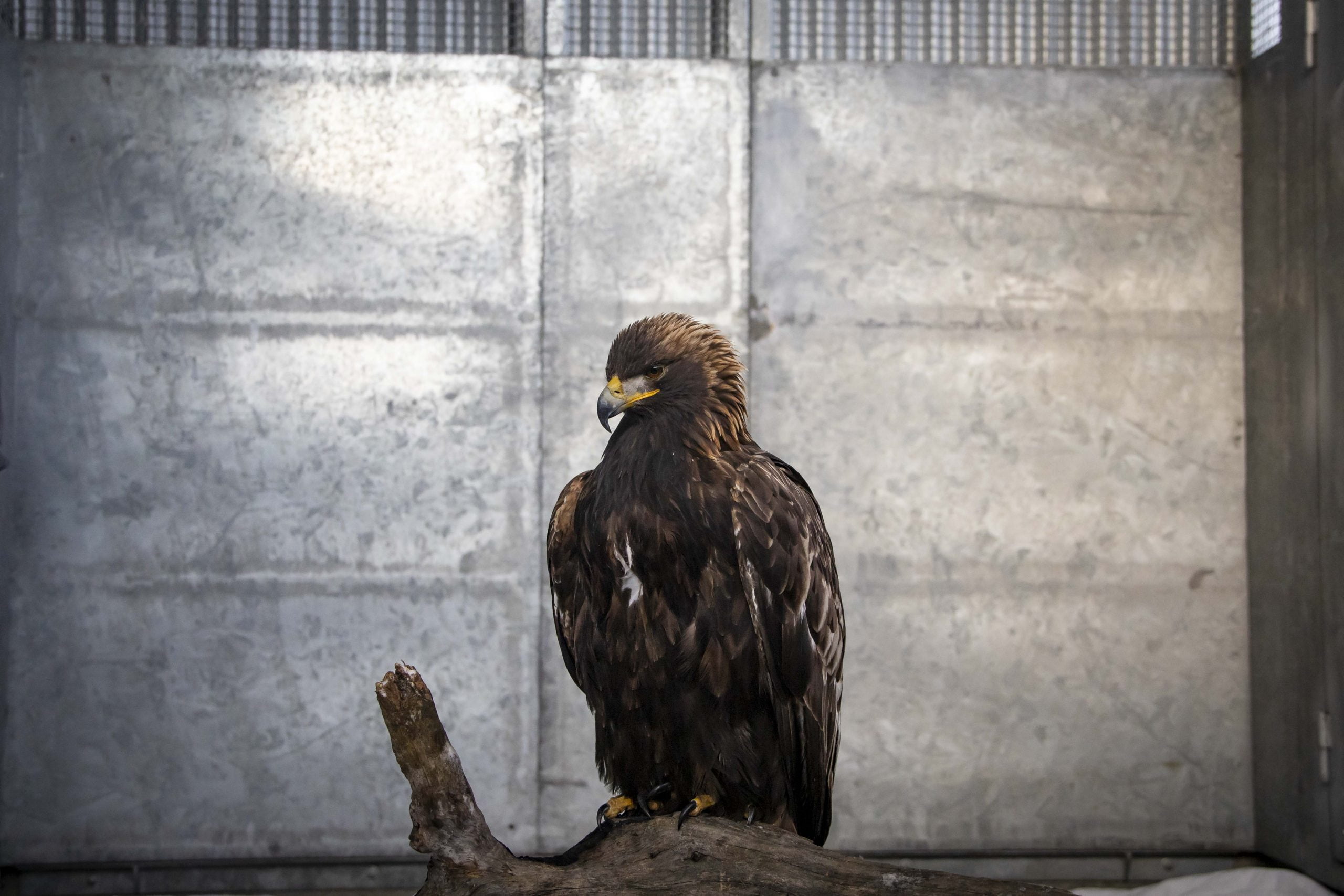
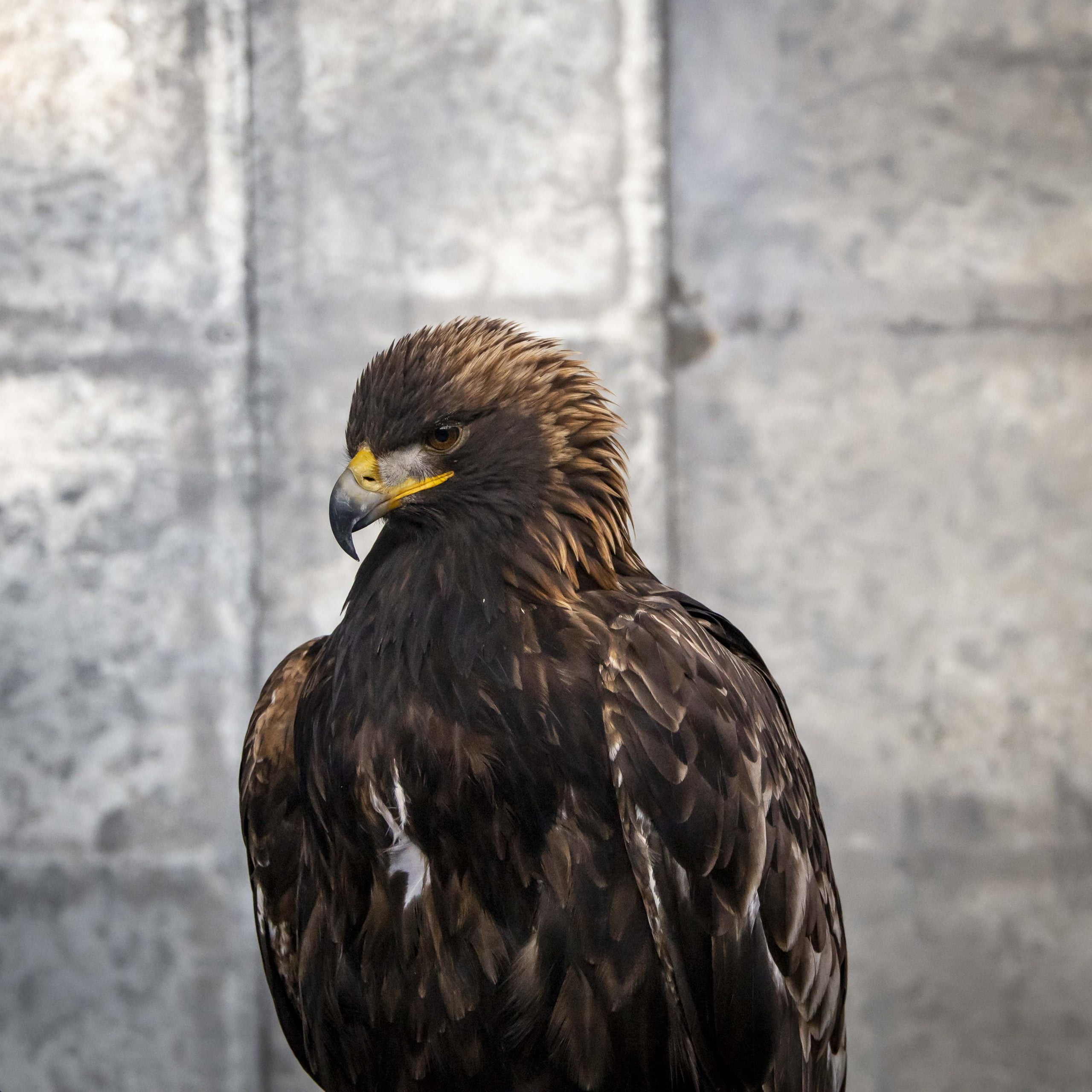
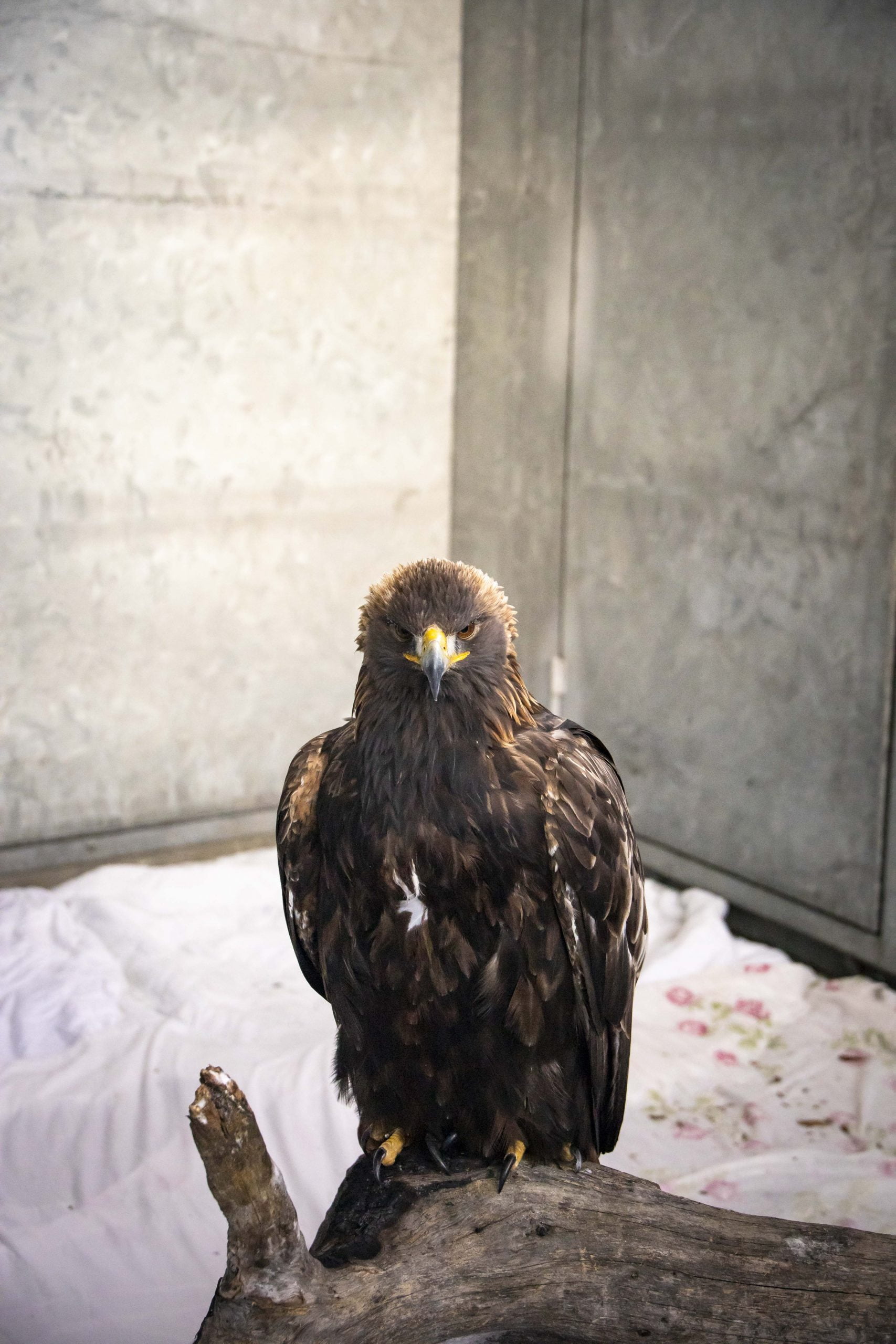
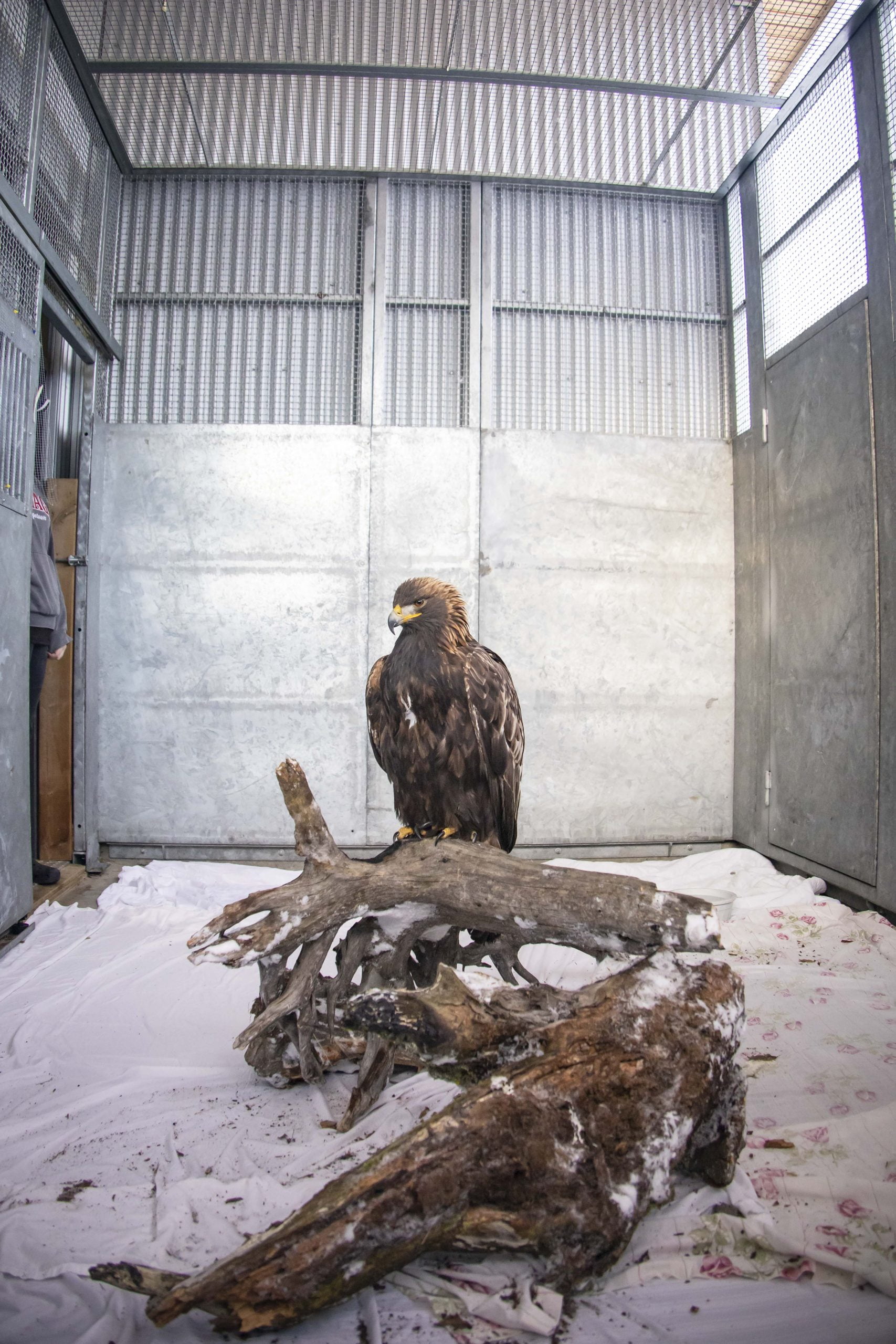
A golden eagle was admitted Wednesday evening, November 24th 2021, to the Wildlife Rehabilitation Centre. This individual, who is quite a bit bigger than the last golden eagle in our care, was found by a member of the public in the middle of the road, in between Haines Junction and Mendenhall area.

Upon initial assessment of the animal there appeared to be no broken bones but was severely hypothermic. Given it was found in the middle of the HWY, Dr. Maria Hallock guesses it was perhaps struck by a vehicle, concussed and resting in place but ultimately becoming weaker due to extended immobility in the extreme cold. While its not certain how long the animal was there for it was enough for the animal to be near frozen state upon its discovery. 

On Thursday morning the eagle was given additional fluids, on top of the fluids it received upon its arrival the evening prior. Some chicken was fed to the eagle in the later part of the Thursday along with a quail. 

On Friday the eagle appeared more responsive and alert and eager to eat by itself. This care and close observation occurred inside the Rehabilitation building where Dr. Maria Hallock waited for the animal to defecate - poop, for assessing continued signs of improvement and health in the GI tract - all good there by the way! 

The eagle will spend the next several days in the Centre being closed monitored. While during the day it will spend time in an outside care room, in the evenings it will come inside. 

If all continues well in its progress and recovery a release back to the wild could possibly happen sometime next week. 

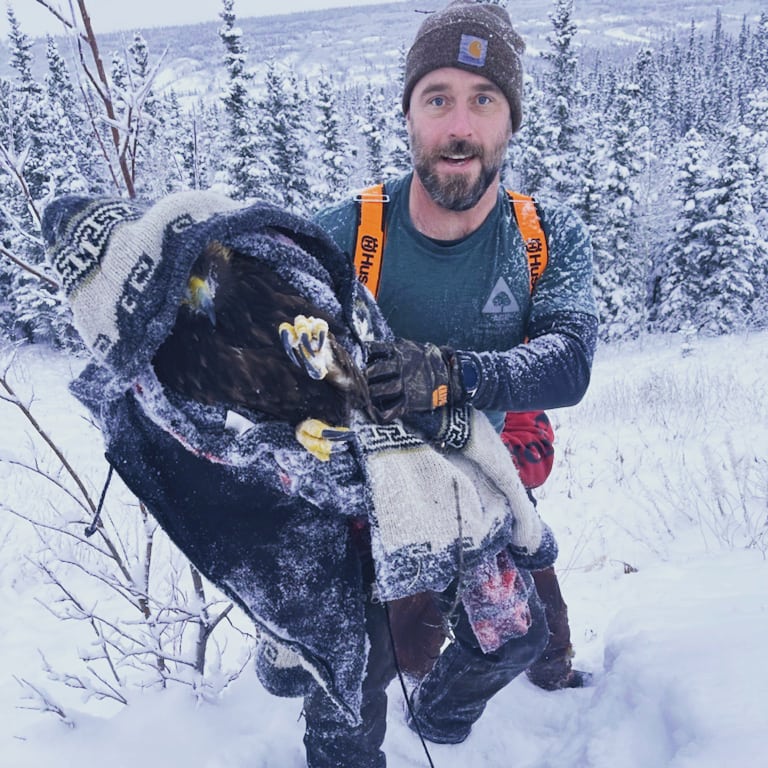
Had this person and those that opted to stop and assist not taken the steps they did, including assessing the animals from a safe distance and calling Conservation Officers and subsequently the Preserve, this eagle would very likely have succumbed to the elements or get fatally struck by a vehicle.

Shaun, pictured here with the eagle, stopped on the hwy when he noticed the original rescuer swerv on the road. He and his crew, Dustin and Clayton helped secure the eagle using their jackets. While we recommend leaving it to the professionals to rescue capture animals, this crew of folks took a lot of precautions when they assessed the situation and decided to intervene and help the animal. Photo courtesy of Shaun Randall.

We are so grateful to live among a community that values wildlife, that cares about our natural world - it's our mission, to connect people to the natural world and everyday we're inspired by the landscape, animals and people that make this incredible territory, the Yukon, a place that is wild at heart <3

Lindsay Caskenette

Lindsay Caskenette

Manager Visitor Services

Lindsay joined the Wildlife Preserve team March 2014. Originally from Ontario, she came to the Yukon in search of new adventures and new career challenges. Lindsay holds a degree in Environmental Studies with honours from Wilfrid Laurier University and brings with her a strong passion for sharing what nature, animals, and the environment can teach us.
867-456-7400
Lindsay@yukonwildlife.ca

Explore by Category

Explore by Author