Crane Gets A Flight South

Crane Gets A Flight South

rehab

4 minute read - 

Back in early November, a sandhill crane came into the Yukon Wildlife Preserve’s Wildlife Rehabilitation Centre with a number of wounds, including a laceration to its eyelid. We are pleased to say that it has been successfully released! But when a bird like this misses the migration, how exactly do you release it?

mature bald eagle in rehabilitation

Photo credit: Neil Tracey

With the help of the amazing folks at Air North, Yukon’s Airline and George C. Reifel Migratory Bird Sanctuary we were able to transport the crane all the way from Whitehorse to its new winter home outside of Vancouver.

George C. Reifel Migratory Bird Sanctuary is a federal Migratory Birds Sanctuary located in Delta, British Columbia (about an hour from downtown Vancouver). It has a small population of sandhill cranes that overwinter there, which we hoped would help this newly released bird transition back to the wild. We were a little nervous, as sandhill cranes can be quite unaccepting to newcomers, but in this case things went very well!

• • •

6:00am

Yukon Wildlife Preserve’s veterinarian, Dr. Maria Hallock, collects the crane from the rehabilitation centre. It will ride to Vancouver in a large dog kennel, specially equipped with barriers to limit visibility and help the crane stay calm on the long journey.

6:45am

The crane arrives at Air North Cargo at Erik Nielsen Whitehorse International Airport. Checking in a crane is more complicated than checking in a human. Permits and paperwork is processed and the kennel is given a final check to ensure it is secure.

7:30am

Neil checks in for the flight. Neil is the Manager of Programming and Education at Yukon Wildlife Preserve. Before moving to Whitehorse, he worked in wildlife rehabilitation in British Columbia. He was originally going on vacation to visit family; he added a crane release to his itinerary.

8:45am

Air North flight 521 departs for Vancouver. The weather is surprisingly good, and the flight is very smooth.

12:00pm

Air North flight 521 arrives in Vancouver.

12:30pm

Neil and the crane depart for the George C. Reifel Migratory Bird Sanctuary in Delta, British Columbia.

1:00pm

Kathleen Fry, Sanctuary Manager, meets the bird. She is a big fan of cranes. It shows. She escorts the crane and Neil to the release site, a beautiful lagoon between a set of dykes.
mature bald eagle in rehabilitation

Photo credit: Neil Tracey

1:01pm

The bird makes a break for it! While the team at the Sanctuary had set up a small fenced area to release the bird into - hoping to make the transition to a new environment smoother - the bird almost immediately ducked under the fence and ran off into the reeds.

1:02pm

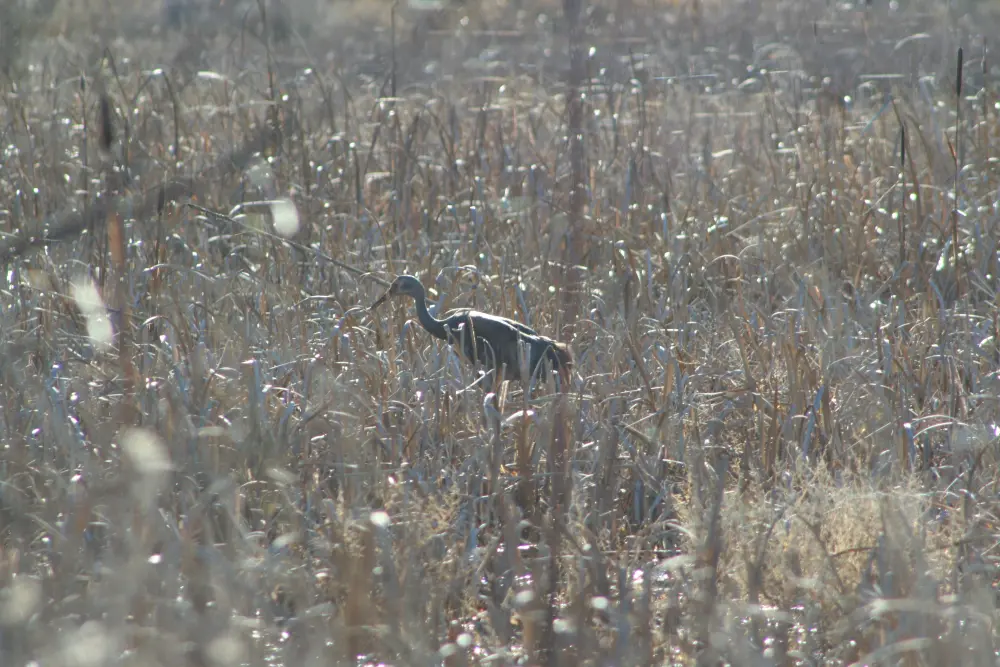
The crane stops moving and relaxes in the reeds. It blends in extremely well and is challenging to see.

3:00pm

The crane is still in the reeds, relaxing. It has moved a few steps, but is staying in the same protected area.

Normally, when an animal is released back to nature, we do not know exactly what happens next. This time, thanks to updates from the team at Reifel Sanctuary, we can not only tell you what happened next but we also have some amazing photos! Thanks to Kathleen Fry at the Sanctuary for giving us permission to share her photos.

mature bald eagle in rehabilitation

Photo credit: Kathleen Fry - Day 2

Day 2

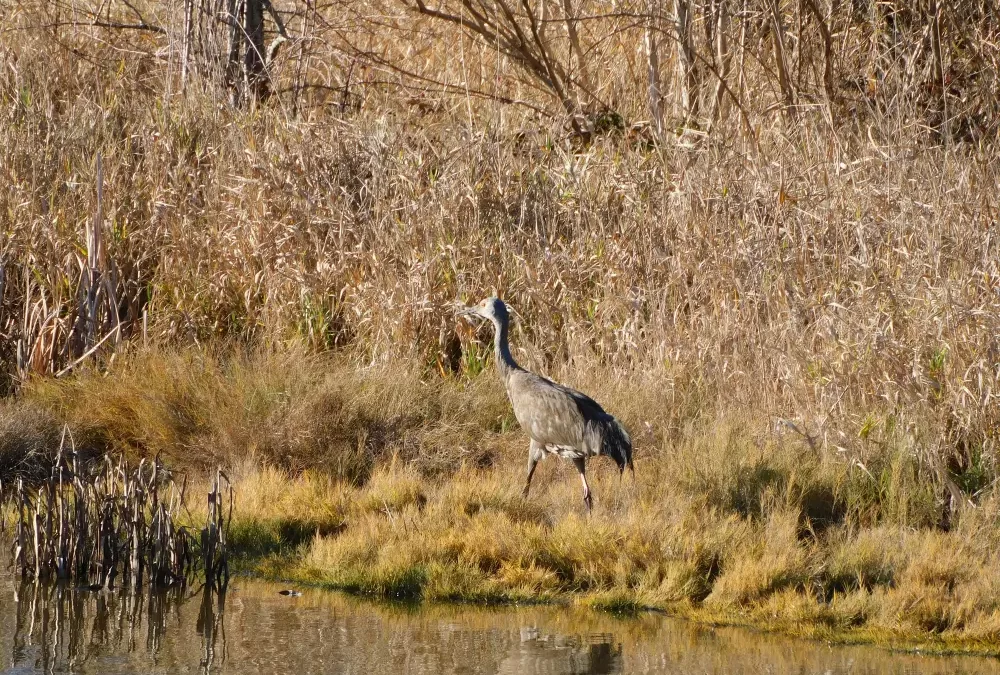
The crane visited with 15 local resident cranes in the morning before disappearing. This was a huge positive step, as the other cranes did not act aggressively toward the newcomer. In this photo from Kathleen, the rehabilitated crane is clearly identified by his small size and darker colours.

Day 3

The crane is slowly adapting to the wet coastal weather and seems to be keeping his feathers in better condition.

Day 5

Everything looks fine! The newly released crane seems to be hanging around the release area, is staying active, and is interacting appropriately with the other cranes in the area.

Photo credit Kathleen Fry - Day 5 after this crane was rehabilitation in the Yukon, flown South by Air North and released in BC.

Photo credit: Kathleen Fry - Day 5

If you are visiting the Vancouver area, you can reserve a spot to visit the Sanctuary. You might see the rehabilitated crane or some of the songbirds, waterfowl, and other species that call the Sanctuary home!

Wildlife rehabilitation doesn’t take a holiday! If you would like to support future rehabilitation efforts, donations are accepted all year round.

Neil Tracey

Neil Tracey

Manager Education and Programming

Neil is an interpreter and biologist who has worked in wildlife rehabilitation, interpretation, and education. He joined the team in early 2023 from Vancouver. In his spare time he teaches first aid and grows far more plants than he has space for at home.

Explore by Category

Explore by Author

Carrots for the Critters

Carrots for the Critters

rehab

by Lindsay Caskenette | Dec 12, 2020 | 0 comments

This story was originally published December 12, 2020 in the e-blast newsletter to Yukon Wildlife Preserve's membership.

Are you a member but don't receive these email Newsletters?  Contact us at info@yukonwildlife.ca to update your email preferences.

Banner photo credit L. Caskenette

This territory is full of incredible people of the north and without a doubt Steve and Bonnie Mackenzie-Grieve are among them!

Steve and Bonnie own and operate the Yukon Grain Farm, not far from the Preserve. They are pillars of the community and work hard to produce and provide local - they also immensely support local.

Every year, the Yukon Grain Farm donates a giant bag of, often brightly coloured but not considered beautiful, vegetables to the Preserve and its critters. This year, 1000lbs or so of carrots came in. While they are bright orange, grown right on the banks of the beautiful Yukon River, the carrots themselves are not deemed beautiful by the human eye. Instead of wasting this bounty the animals will gladly enjoy them, ground into their regular diet, as enrichment over the months to come!

Thank you Yukon Grain Farm for your ongoing support to the north!

Lindsay Caskenette

Lindsay Caskenette

Manager Visitor Services

Lindsay joined the Wildlife Preserve team March 2014. Originally from Ontario, she came to the Yukon in search of new adventures and new career challenges. Lindsay holds a degree in Environmental Studies with honours from Wilfrid Laurier University and brings with her a strong passion for sharing what nature, animals, and the environment can teach us.

867-456-7400
Lindsay@yukonwildlife.ca

Explore by Category

Explore by Author

A-Moosing Move

A-Moosing Move

rehab

by Lindsay Caskenette | Oct 24, 2020 | 0 comments

This story was originally published October 24, 2020 in the e-blast newsletter to Yukon Wildlife Preserve's membership.

Are you a member but don't receive these email Newsletters?  Contact us at info@yukonwildlife.ca to update your email preferences.

Banner photo credit:  J. Paleczny

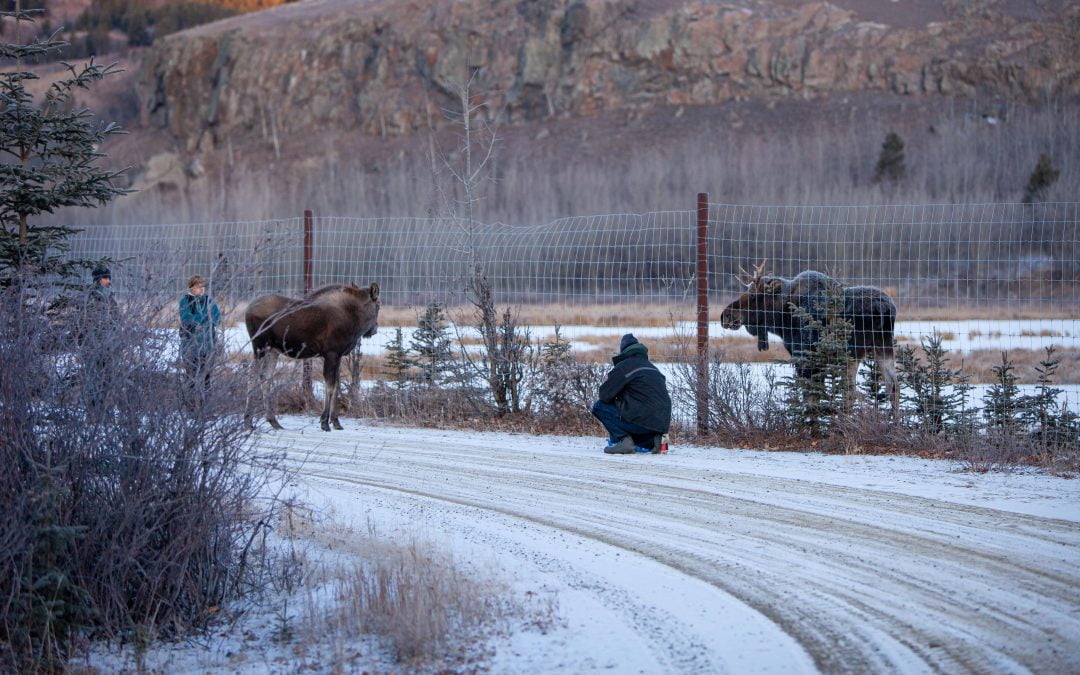
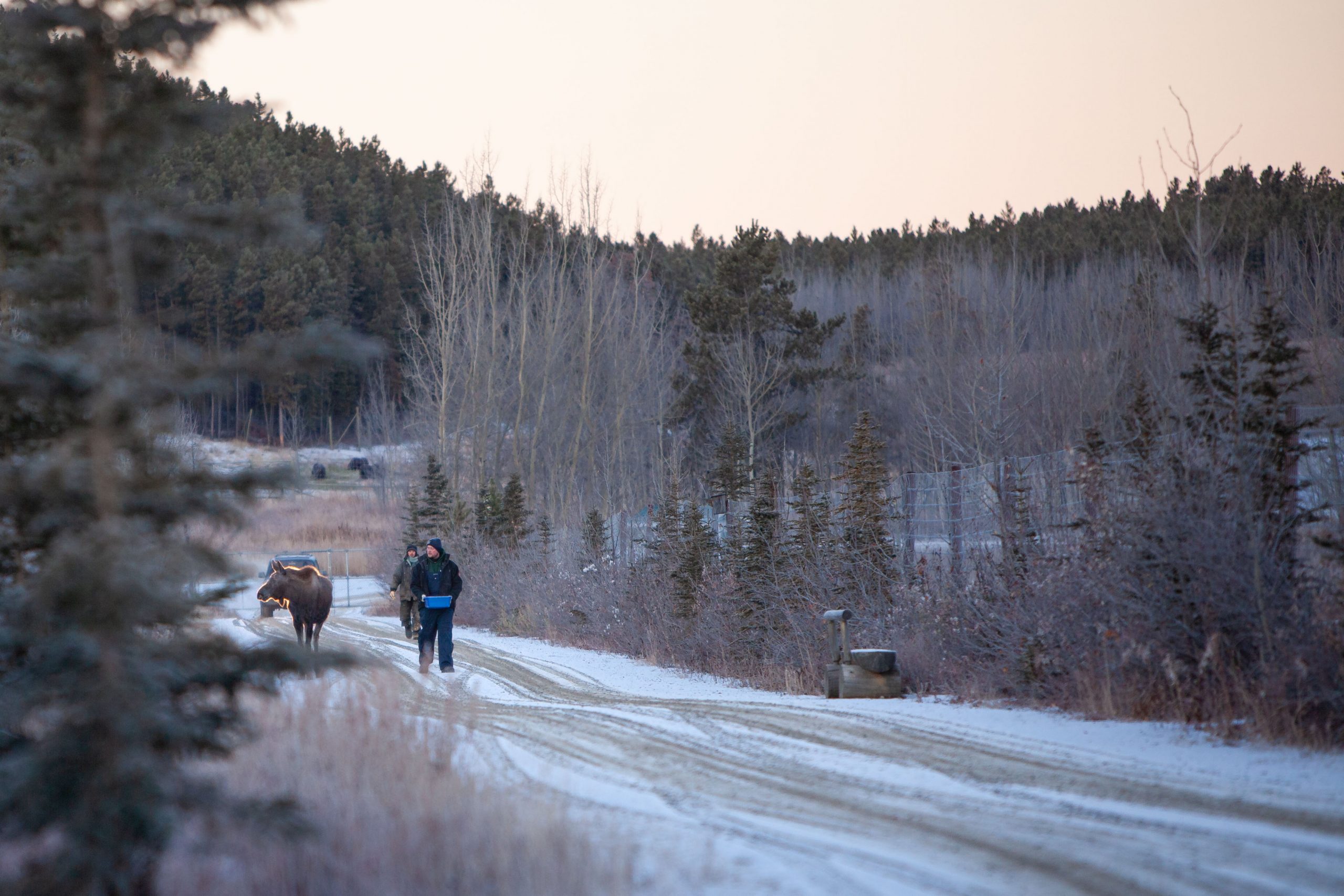
Early on Thursday morning (October 22), during those chilly hours before we are open to the public, the Animal Care team successfully moved the little male moose calf; walking from his temporary off-display habitat to the public viewing area near our other 4 moose.

Now you might be wondering how that happens, and safely. The wide roadways, snaking in a figure-8 through the Preserve are not only a means for you to explore the Preserve and its wildlife residents, they're also the way in which we, using a series of gates and the fencing for each habitat, guide animals from one area to another.

This little male moose will spend time alone in this intermediate habitat (in between the 2 other males in the marsh habitat and the 2 females in the adjacent habitat) before being introduced in with the females.

He's quite skittish, very cautious of new surroundings and people. While he remains in this secondary, temporary home a stand-off barrier is in place to ensure he feels he has enough space to be comfortable and explore his surroundings while reducing stress as he gets to know you, our visitors.

A trip down Memory Lane:  remember when this moose orphaned in July moved to his temporary off-display habitat?  And here's the early October pre-A-Moosing Move update thanks to CBC Yukon!

Lindsay Caskenette

Lindsay Caskenette

Manager Visitor Services

Lindsay joined the Wildlife Preserve team March 2014. Originally from Ontario, she came to the Yukon in search of new adventures and new career challenges. Lindsay holds a degree in Environmental Studies with honours from Wilfrid Laurier University and brings with her a strong passion for sharing what nature, animals, and the environment can teach us.

867-456-7400
Lindsay@yukonwildlife.ca

Explore by Category

Explore by Author

Bald Eagle:  Right Carpal Infection

Bald Eagle: Right Carpal Infection

rehab

This story was originally published October 24, 2020 in the e-blast newsletter to Yukon Wildlife Preserve's membership.

Are you a member but don't receive these email Newsletters?  Contact us at info@yukonwildlife.ca to update your email preferences.

Banner Photo:  Dr. Maria Hallock and the Animal Care team weigh the bald eagle upon it's arrival to Yukon Wildlife Preserve's Rehabilitation Centre.  Credit:  L. Caskenette

On Tuesday October 20 a bald eagle arrived at our Rehabilitation Centre from Mayo via CO services. It’s common that we do not know the circumstances surrounding an animal’s injury, as is the case with this bald eagle. In cases like this, CO services are the link between animals in the wild, human concerns for their health and welfare, and Yukon Wildlife Preserve’s Rehabilitation Centre. CO Services and YG’s Animal Health Unit will respond and evaluate an appropriate course of action (which may include bringing it to YWP). While the YWP can accept injured wildlife, we do not have a field response team to conduct rescues.

The good news is that while this bald eagle is underweight at 2.6 kg he has a good appetite, is alert and fairly strong. X-rays performed at Yukon Wildlife Preserve show no fractures. The challenge faced by this bald eagle while in our Rehabilitation Centre will be in overcoming and healing an infection in his right carpal joint (that’s a bird’s wrist!), and some other abscesses that have been drained by Dr. Hallock. The eagle will be on antibiotics, and will remain inside to give the team the ability to monitor him closely. Follow up x-rays will be taken in a week to assess how the eagle is progressing and his health plan will be tailored based on the findings. It’s early days on the road to this eagle’s hopeful recovery. The Preserve now has 3 eagles within the Rehabilitation Centre (1 Golden Eagle and 2 Bald Eagles). While this can be abnormal for this time of year, we do know that animals encounter illness and injury year-round. To help keep Yukon Wild at Heart, consider a donation. If you encounter an animal that you feel needs help, be informed. A good first step is to check our website for Wildlife Emergency protocols and contacts.

The following update was originally published January 23, 2021 in the e-blast newsletter to Yukon Wildlife Preserve's membership.

A Convocation of Eagles

Lindsay Caskenette & Julie Kerr

Lindsay Caskenette & Julie Kerr

Visitor Services Manager and Visitor Services Coordinator

Lindsay and Julie love to share the Preserve the same way they explore life – full on and full of adventure!  They have a collective love of:  Animals....Lindsay dogs, Julie foxes; Adventure.... Lindsay dog mushing, Julie extreme camping;  both take on animal personas during story telling.  Together they support the Preserve with a strong Visitor Services presence and often, they even get work done (this happens most often when the other one is out of the office).

 867-456-7400
 info@yukonwildlife.ca

Explore by Category

Explore by Author

Rehabilitation – A Wild Success

Rehabilitation – A Wild Success

rehab

by Jake Paleczny | Aug 22, 2020 | 0 comments

1 min video - 

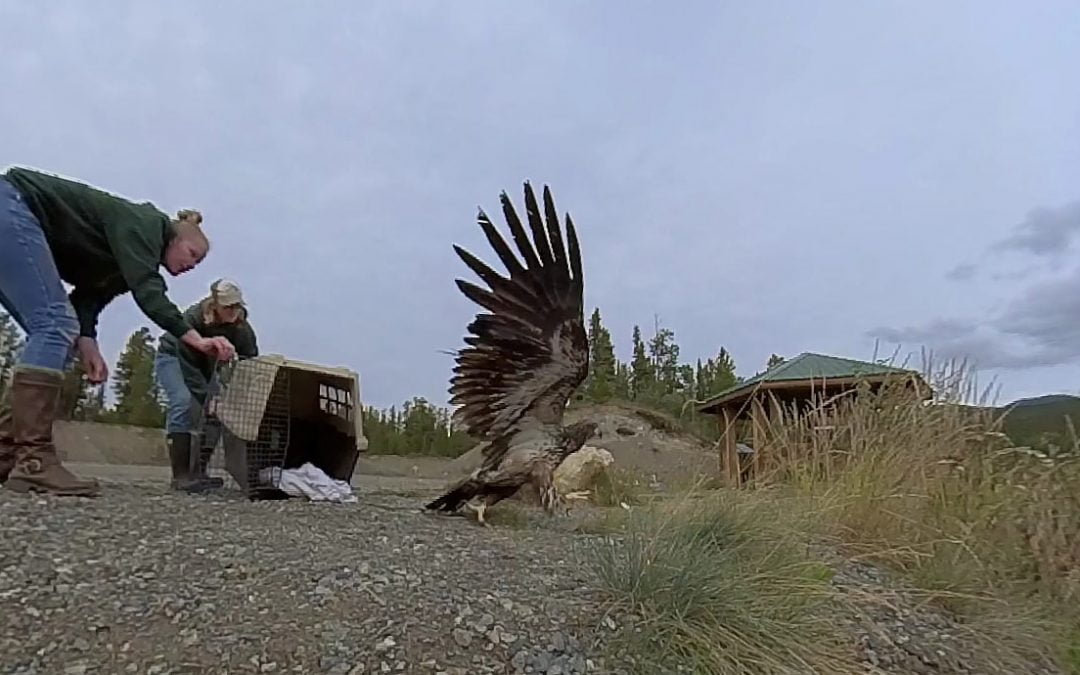
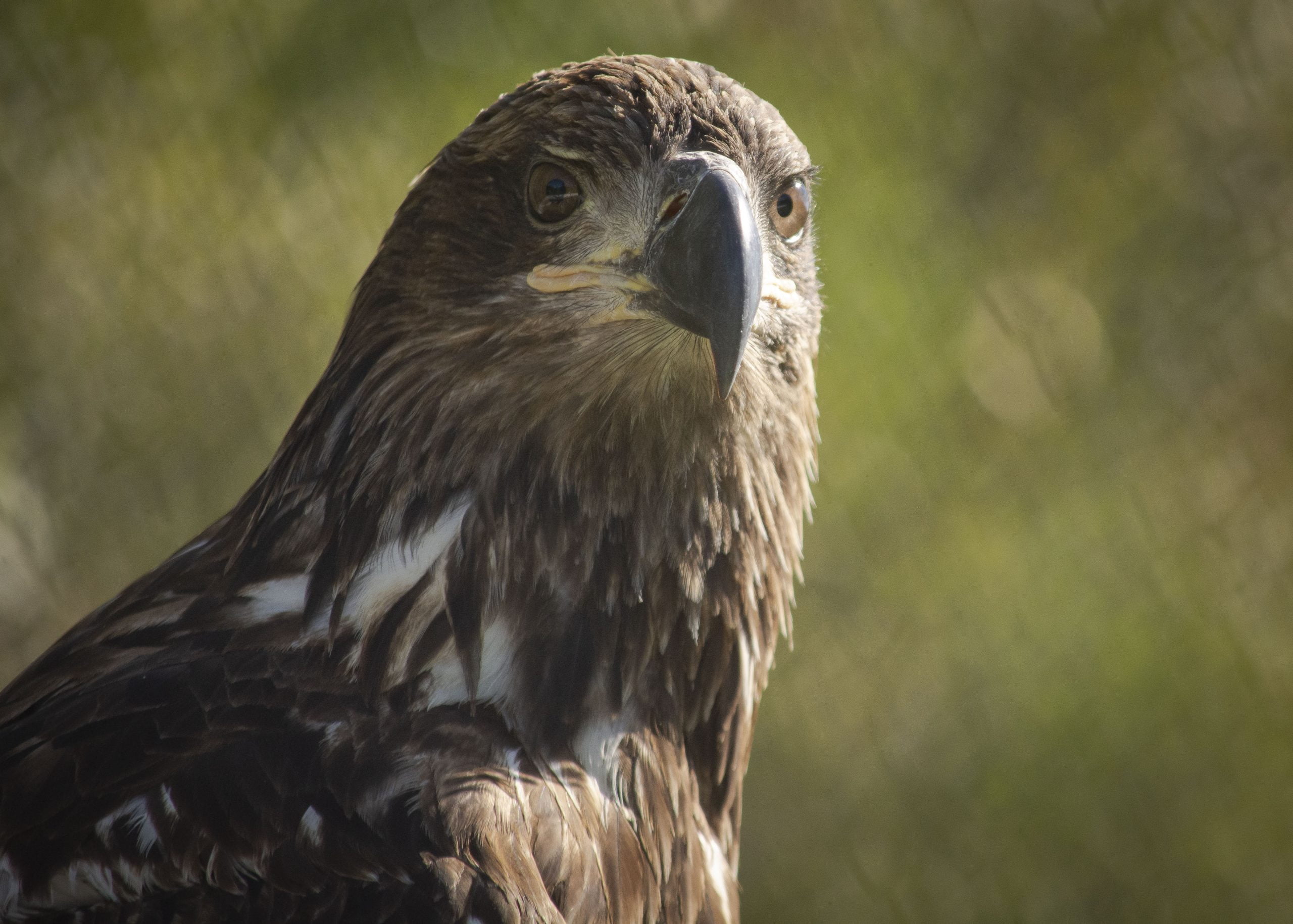
This juvenile bald eagle came to the Wildlife Rehabilitation and Research Centre in early July after it was found near Icy Waters on Fish Lake road, seemingly flightless. 

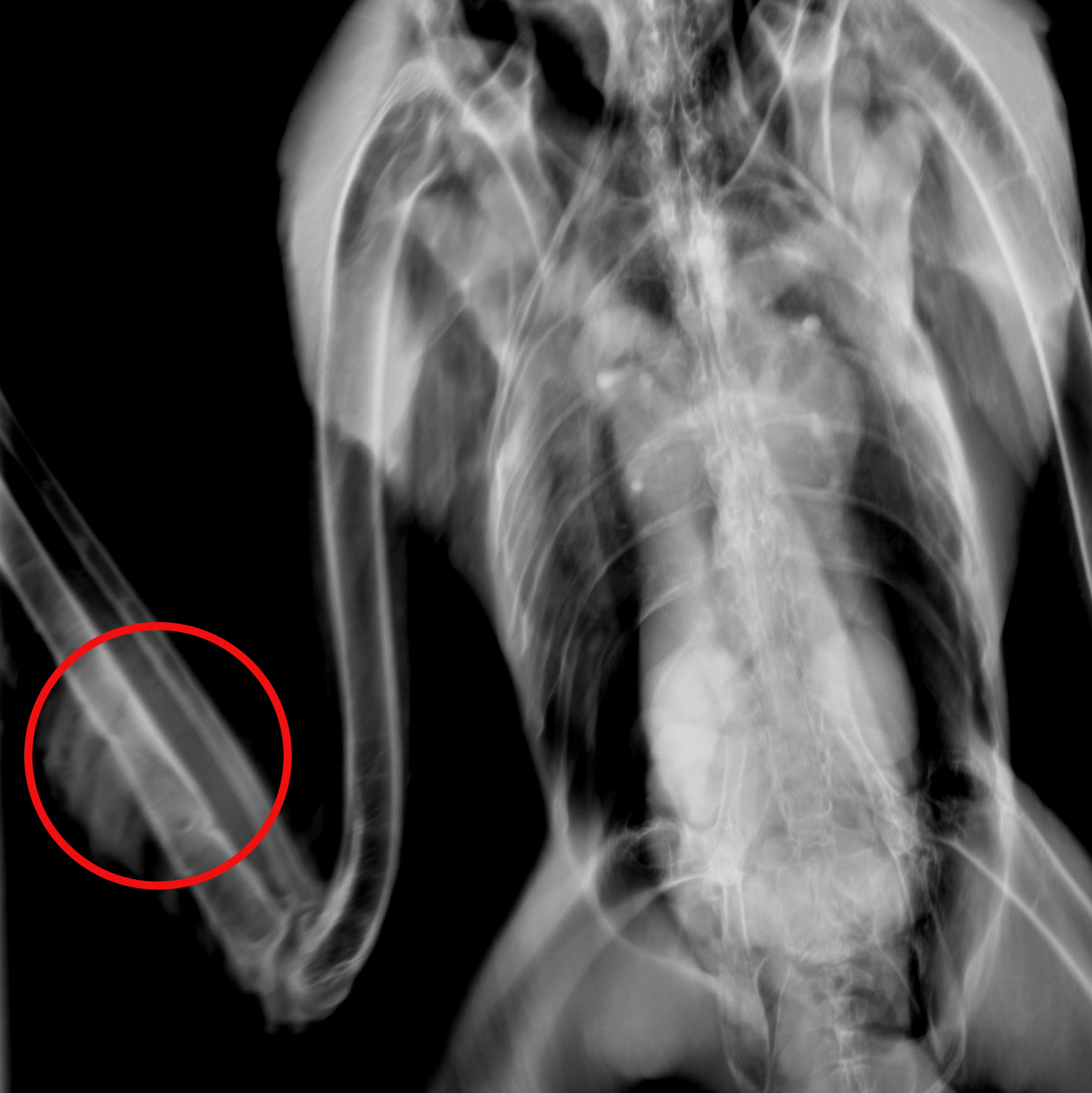
An X-ray revealed an infection.  Dr. Maria Hallock started the eagle on a course of antibiotics

The eagle was X-rayed upon arrival and it was noted that the eagle was suffering from an infection in the right wing. Dr. Maria Hallock started a round of antibiotics hidden in food.  The eagle was very reluctant to consume the medication - finding the pill in the food and spitting it out, making its recovery challenging, to say the least. 

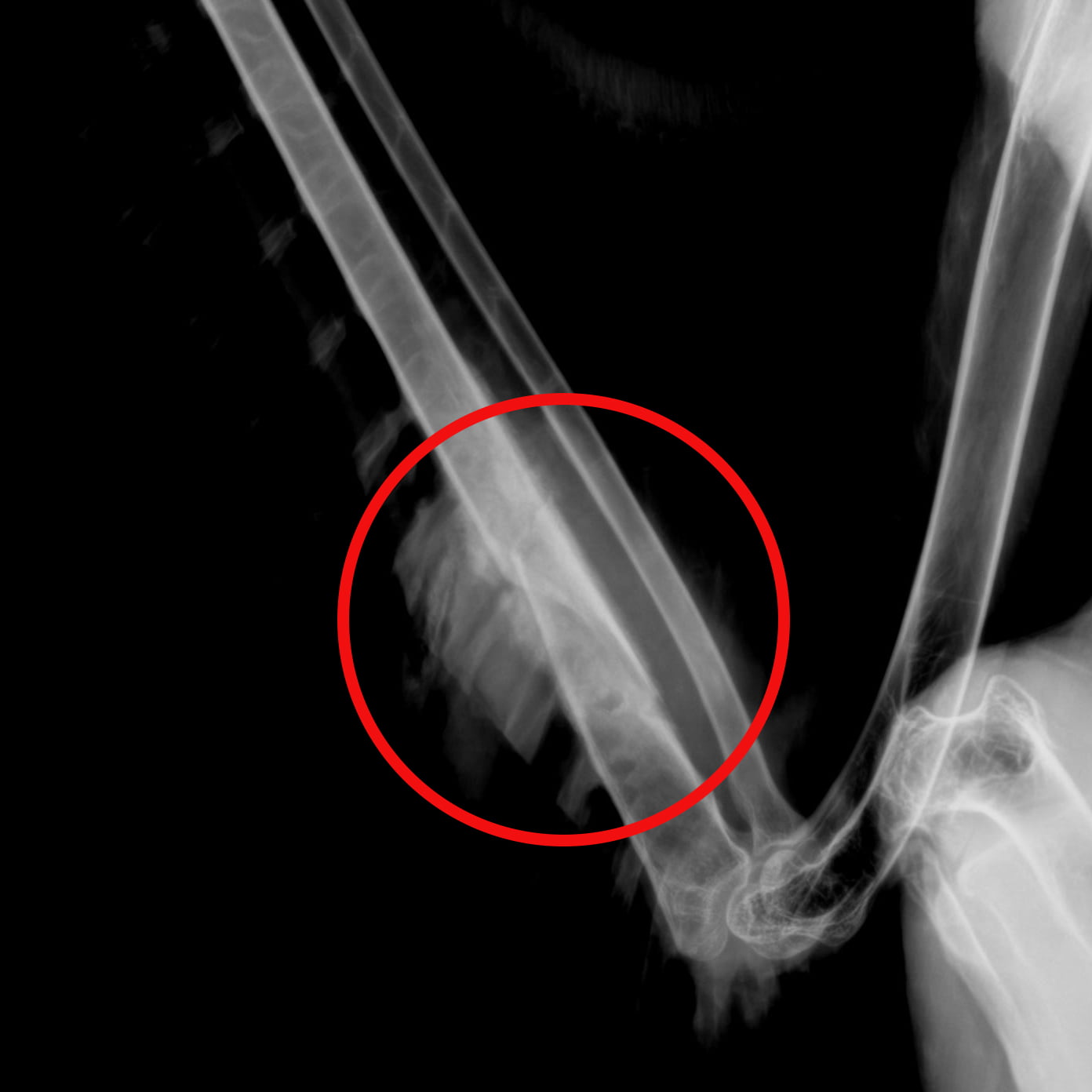
Performed after initial healing time and antibiotics bring down the infection that obscured the initial observation, this second X-ray showed a fracture to the ulna.

With more creative hiding of the medication, a week passed and a second x-ray was performed where the Animal Care team was able to see a clear fracture to the ulna, within a perfect setting and healing process.

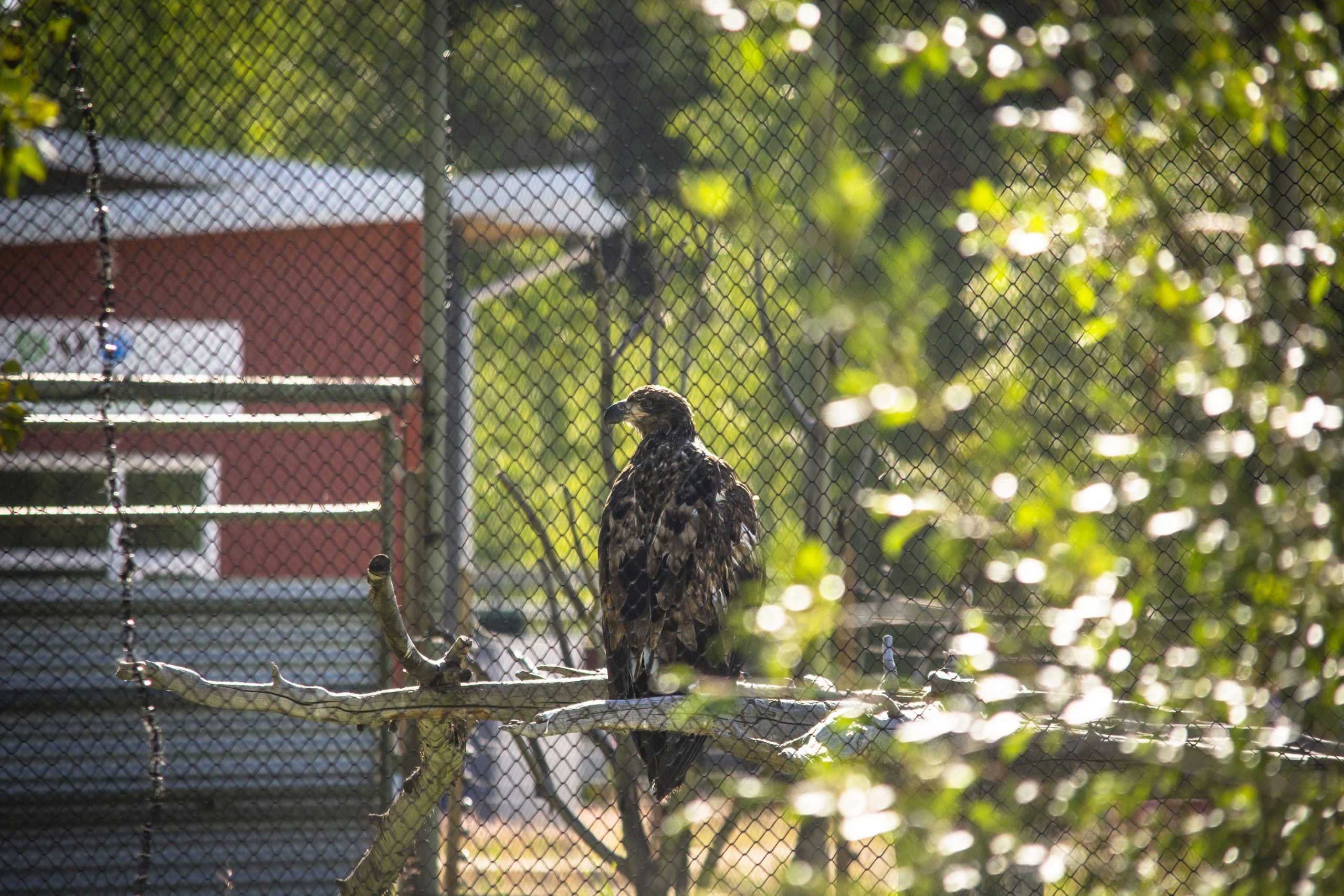
After a  couple more weeks of antibiotics and rest - the eagle was moved to our outdoor flight pen where the individual could be seen by public.

Over the next few weeks the eagle built its flight muscles and strength with the goal of being released back in to the wild.

On August 21, the Animal Care team released the eagle successfully to the wild, in the MacIntyre marsh area, near the same location it was found.  It's always incredibly rewarding to give wildlife a second chance at life in the wild.

Jake Paleczny

Jake Paleczny

He/Him - Executive Director/ CEO

Jake Paleczny is passionate about interpretation and education. He gained his interpretative expertise from a decade of work in Ontario’s provincial parks in addition to a Masters in Museum Studies from the University of Toronto. His interests also extend into the artistic realm, with a Bachelor of Music from the University of Western Ontario and extensive experience in galleries and museums.

867-456-7313
jake@yukonwildlife.ca

Explore by Category

Explore by Author