Golden Eagle:  Scapular Fracture

Golden Eagle: Scapular Fracture

rehab

by Lindsay Caskenette | Aug 8, 2020 | 0 comments

This story was originally published August 8, 2020 in the e-blast newsletter to Yukon Wildlife Preserve's membership.

Are you a member but don't receive these email Newsletters?  Contact us at info@yukonwildlife.ca to update your email preferences.

Banner photo credit:  L. Caskenette

The golden eagle is a young one - it arrived on August 7th. Conservation Officers brought the eagle from Watson Lake to the Yukon Wildlife Preserve's Wildlife Rehabilitation Centre.

Upon arrival the eagle weighed 2.3kg. It had a fracture to scapular (not much we can do just needs time to heal). With some rest time and observation the eagle was then moved to the large flight pen on August 11th. He weighed 2.6kg at that time. A healthy individual should weigh in around 4-5.5kg, while females are slightly larger and heavier.

This individual needs to gain some more weight to get stronger before it will attempt any flying. On Thursday, our Veterinarian, Dr. Maria Hallock weighed the eagle in at 3.25kg. Gaining 600g in the last two week is a positive sign of recovery. The eagle has been eating well - anywhere from 3-6 quail/day (each one weighing 200-250g). We will continue to monitor his weight and movement/behaviour. We expect to see him recover, fly and build up muscles to return to the wild, timing remains up to him!

The following update was originally published October 10, 2020 in the e-blast newsletter to Yukon Wildlife Preserve's membership.

 What's Up Yukon connected with us to get the latest story on the Golden Eagle that is in care at the Wildlife Rehabilitation Centre at the Preserve.  This eagle can be found working on his flight and recovering in the large outdoor aviary, as he overwinters with us at the Preserve!

The following update was originally published January 23, 2021 in the e-blast newsletter to Yukon Wildlife Preserve's membership.

A Convocation of Eagles

Lindsay Caskenette

Lindsay Caskenette

Manager Visitor Services

Lindsay joined the Wildlife Preserve team March 2014. Originally from Ontario, she came to the Yukon in search of new adventures and new career challenges. Lindsay holds a degree in Environmental Studies with honours from Wilfrid Laurier University and brings with her a strong passion for sharing what nature, animals, and the environment can teach us.

867-456-7400
Lindsay@yukonwildlife.ca

Explore by Category

Explore by Author

Moose on the Move

Moose on the Move

rehab

by Jake Paleczny | Jul 25, 2020 | 0 comments

3:47 video

Our young orphaned moose has outgrown his room in the Preserve's Research and Rehabilitation Centre. Today he's on the move to a new - much larger - outdoor enclosure.  He will spend the next few months in this larger space, with food to browse as he continues to grow .  But first, we have to get him to his new home.

Learn how the Animal Care team at Yukon Wildlife Preserve safely and successfully moves this moose calf.


Jake Paleczny

Jake Paleczny

He/Him - Executive Director/ CEO

Jake Paleczny is passionate about interpretation and education. He gained his interpretative expertise from a decade of work in Ontario’s provincial parks in addition to a Masters in Museum Studies from the University of Toronto. His interests also extend into the artistic realm, with a Bachelor of Music from the University of Western Ontario and extensive experience in galleries and museums.

867-456-7313
jake@yukonwildlife.ca

Explore by Category

Explore by Author

What’s in the Feed Station: Moose?

What’s in the Feed Station: Moose?

rehab

3:45 min Video -

Hello and welcome to the moose feeding station!

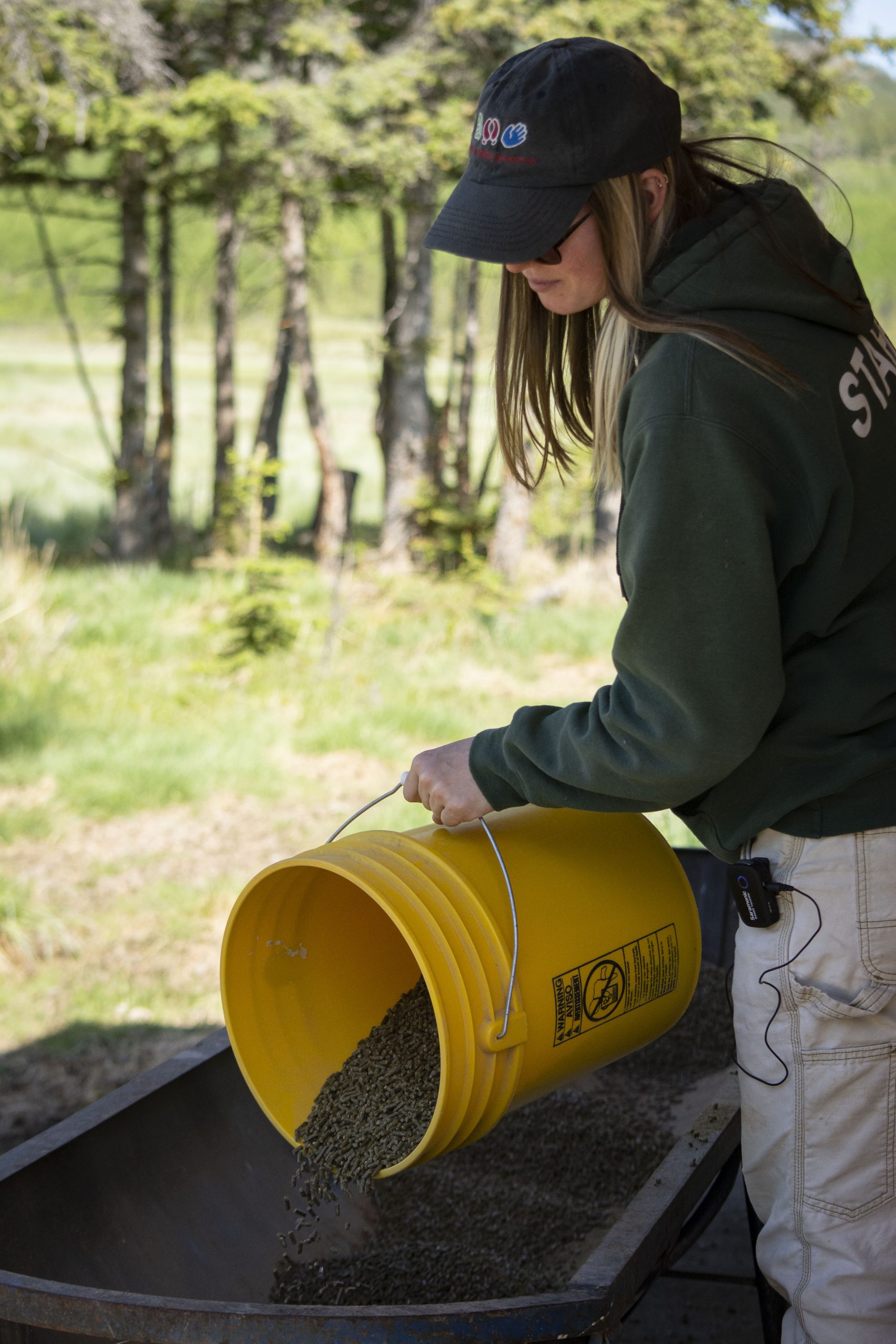
The feeding stations exist to make my job easier. Inside they have a big bag of pellets, a bale of hay, a bucket and scoop, a rake, a shovel, a pitchfork, a broom and a feeding chart.

The moose get 25 lbs of pellets a day as a supplement of vitamins and trace minerals in a form they like.  25 lbs may not sound like a lot for 4 moose, but there are lots of natural foraging opportunities in their habitat. In the wild, moose eat leaves, bark and twigs from trees and shrubs as well as aquatic plants. Our moose also have a bale of hay placed in the trees in the back corner of the 48.5 acre habitat and we give them browse, which are tree branches with lots of leaves. We also get produce from local grocery stores or other community members (things like lettuce and veggies) to feed the moose.

The tools in the feeding station are used to clean the area and also for protection. We never enter the moose habitat when they are nearby. It’s just too easy for something to go wrong, without the moose even meaning to hurt us. So when we feed them we take a tool with us. If the moose decide to come up too close, we can wave the rake and they perceive us as being larger than we are and hopefully they back off. If they are very hungry, and come towards us too close and too fast, we might be forced back into the feeding station. In that case, we can use the scoop to pour the pellets through the slat in the wall into the trough outside.

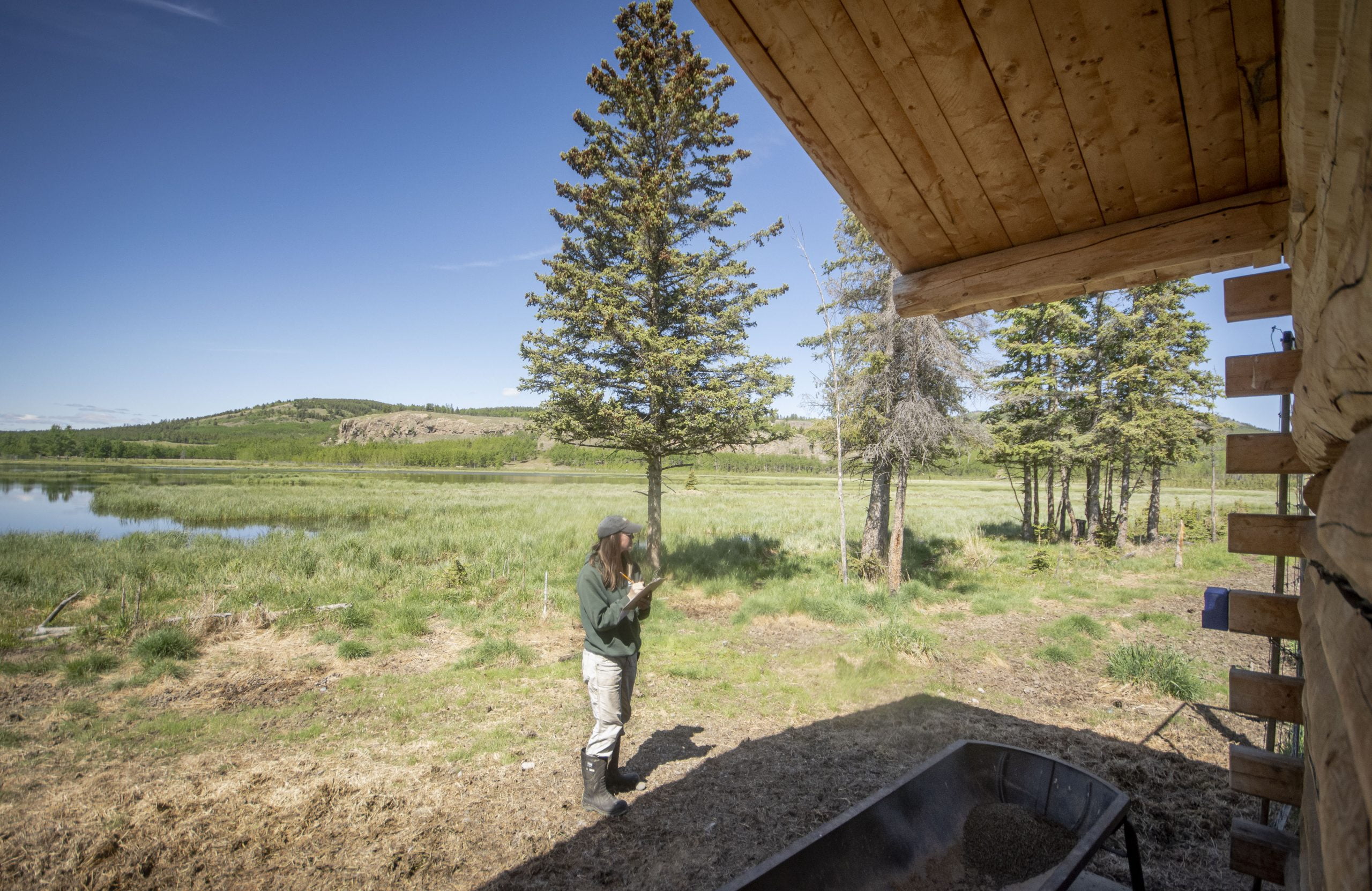
Each feeding station has a clipboard with a feeding chart. The feeding chart is a place for animal care staff to record information. Every day, we record the number of animals we saw, how much and what kind of food they got, and any comments or observations about the animals. If we ever go a couple days without seeing all the animals in a habitat, we let the veterinarian, Dr. Maria Hallock, know, and she will walk around the perimeter of the habitat to locate the animal or animals and make sure they’re ok.

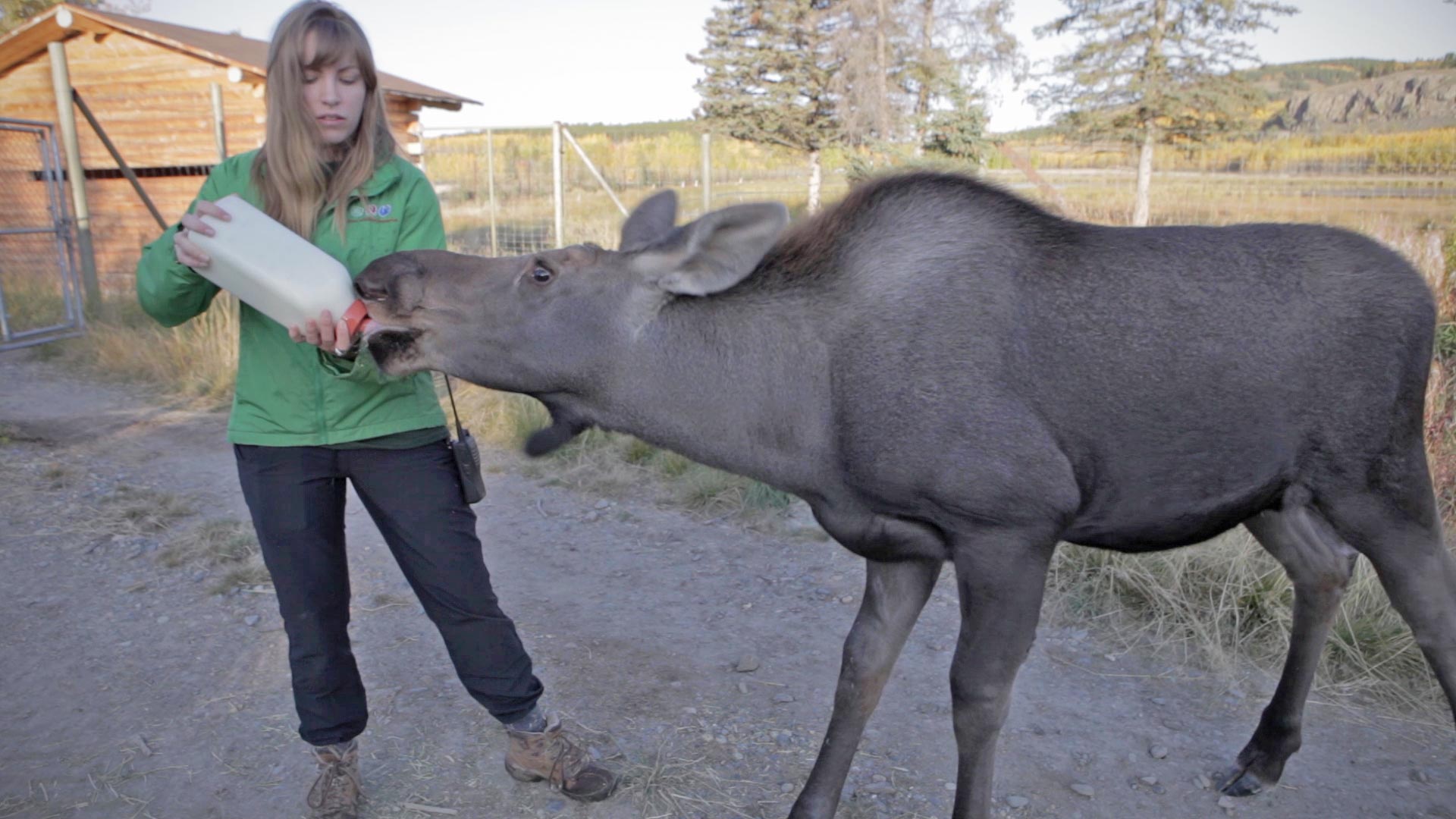
As an example, there was one time last fall when I was feeding Watson his bottle of formula, with my animal care coworker and we noticed he had a patch of green and red on one of his “knees” and we were concerned he may have hurt himself. We sent a picture to the veterinarian, and tried to think of anything that could have caused the discolouration. We then remembered that we had fed him some produce that had beets, lettuce, and celery and he must have knelt in it, causing the staining on his knee. We all got a little chuckle out of it, and were relieved it was nothing serious.

Read Watson's original story  and then watch the video of Watson taking the first steps to his larger habitat, after his initial rehabilitation.

Animal Care at Yukon Wildlife Preserve involves feeding, cleaning and diligent observations.  Thanks for joining me on this tour of the moose feeding station.

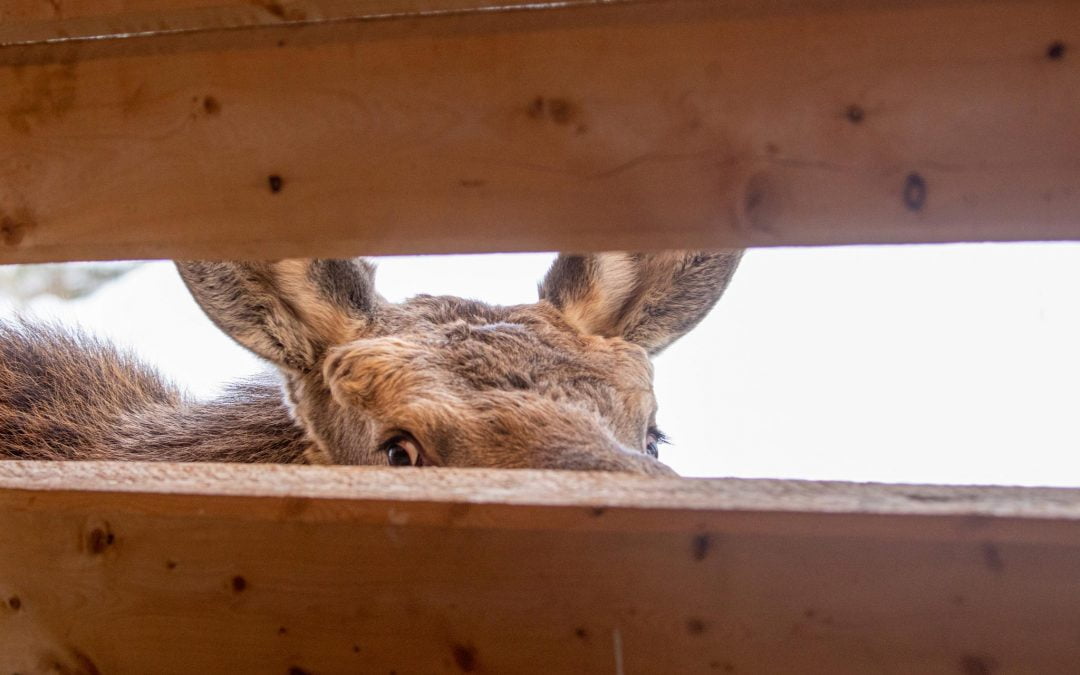
Banner photo credit Neil Zeller:  Watson gets curious and says hello through the slats in the Animal Feeding station.

Watch Bree explain how Yukon Wildlife Preserve feeds Wood Bison!

Learn as Dr. Maria Hallock provide hoof trims to Rocky Mountain Goats!

Bree Parker

Bree Parker

Animal Care Assistant

All animal lover to her very core! Bree has had a menagerie of pets over the years, including mice, crayfish and a hedgehog. After completing her Environmental Technician diploma at Seneca College, she realized her true calling was with animals, sending her back to Ontario this coming fall for University of Guelph Ridgetown Campus’s Veterinary Technology program. Bree is always eager to learn new facts about the animals at the Preserve that she can share with visitors.

Explore by Category

Explore by Author

Watson Grows

Watson Grows

rehab

by Lindsay Caskenette | Feb 27, 2020 | 0 comments

This story was originally published February 27, 2020 in the e-blast newsletter to Yukon Wildlife Preserve's membership.

Are you a member but don't receive these email Newsletters?  Contact us at info@yukonwildlife.ca to update your email preferences.

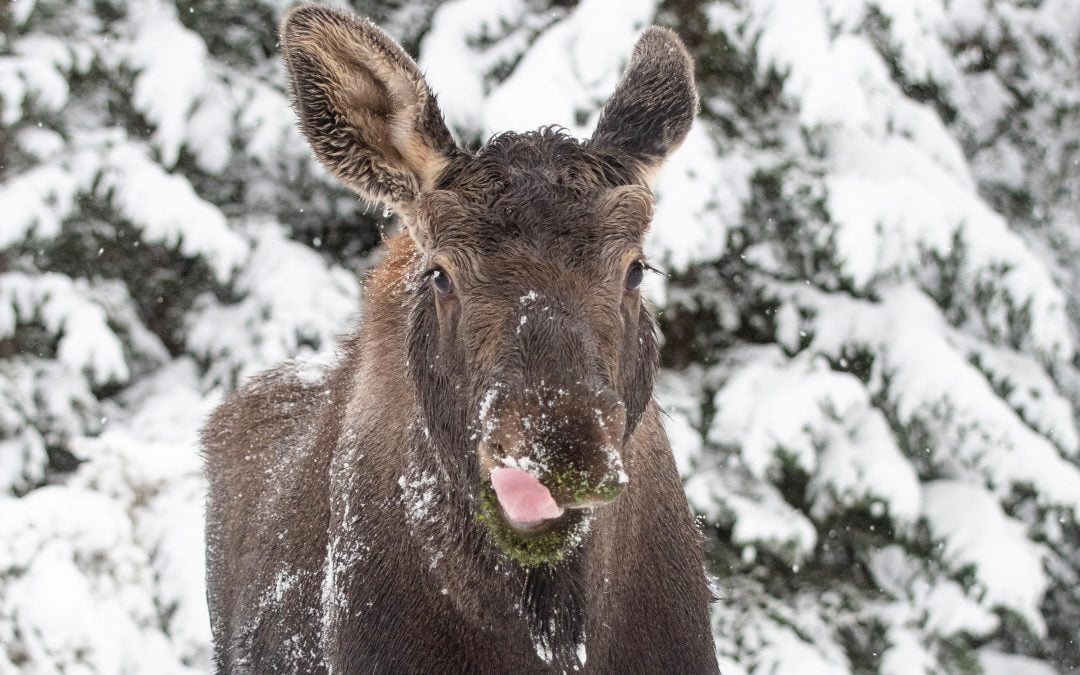
Banner photo Watson October 2019.  Credit:  L. Caskenette

Original Story:  Watson Arrives

Watson the Moose ❤
Is growing like a weed! The little orphaned moose calf that came into the Preserve's Wildlife Rehabilitation Centre this past summer, after his mother was struck and killed by a vehicle, is pretty grown up now at almost 10 months old.

He's been learning to live the life of a moose - browsing for food and ruminating alongside our other 3 resident moose including JB, Jesse and our 11 year old bull moose in the 36 acre marsh habitat.

You can see Watson's small developing antler nubs. When spring truly arrives those will start to grow at an impressive rate. We're all excited to see Watson continue to grow healthy and strong!

2020 Photo Updates below

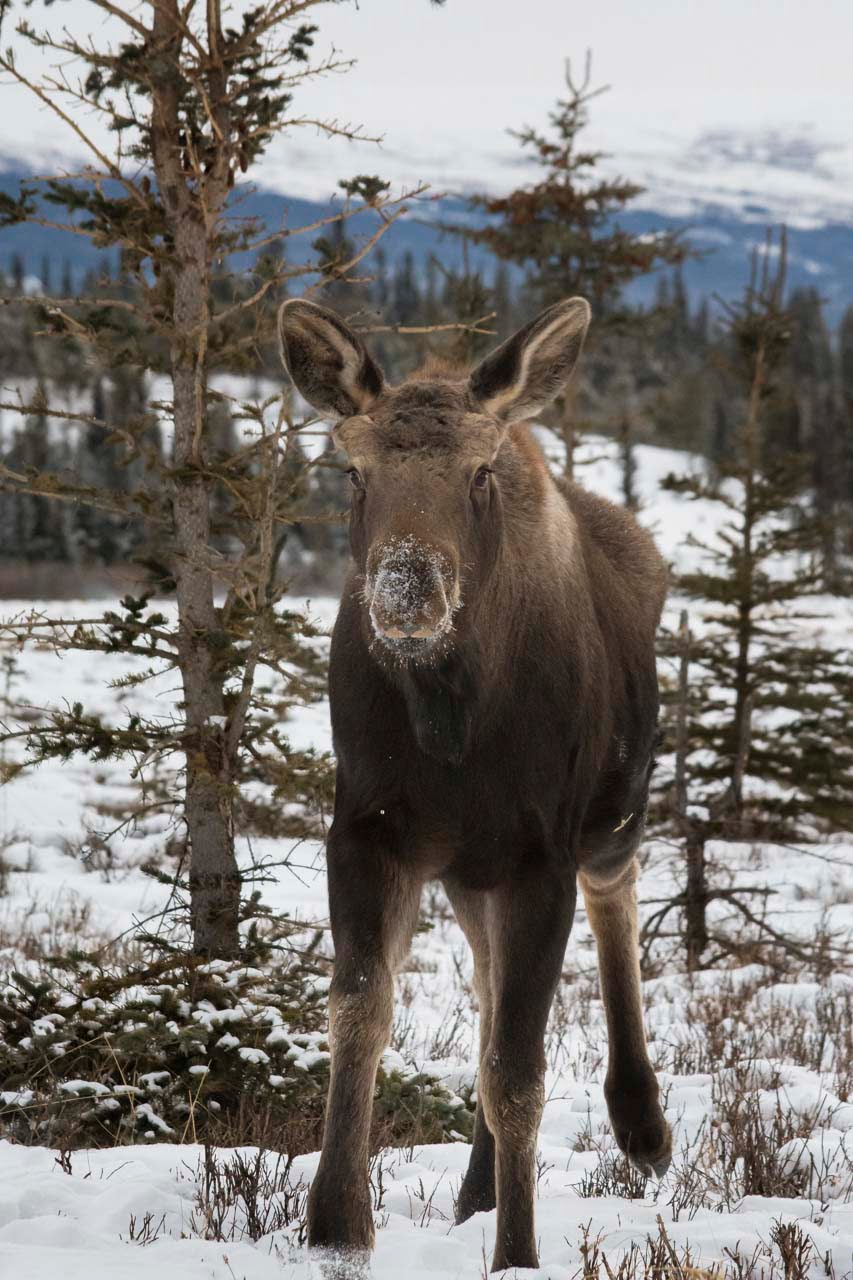
In 2020 Watson, L to R:  grew his first velvet-covered set of antlers August 2020; shed the velvet September 2020; gathered snow October 2020.

Lindsay Caskenette

Lindsay Caskenette

Manager Visitor Services

Lindsay joined the Wildlife Preserve team March 2014. Originally from Ontario, she came to the Yukon in search of new adventures and new career challenges. Lindsay holds a degree in Environmental Studies with honours from Wilfrid Laurier University and brings with her a strong passion for sharing what nature, animals, and the environment can teach us.

867-456-7400
Lindsay@yukonwildlife.ca

Explore by Category

Explore by Author

Watson Thrives

Watson Thrives

rehab

by Lindsay Caskenette | Sep 13, 2019 | 0 comments

This story was originally published September 13, 2019 in the e-blast newsletter to Yukon Wildlife Preserve's membership.

Are you a member but don't receive these email Newsletters?  Contact us at info@yukonwildlife.ca to update your email preferences.

Banner photo Watson September 2019.  Credit: J. Paleczny Video

Next update:  Watson Grows

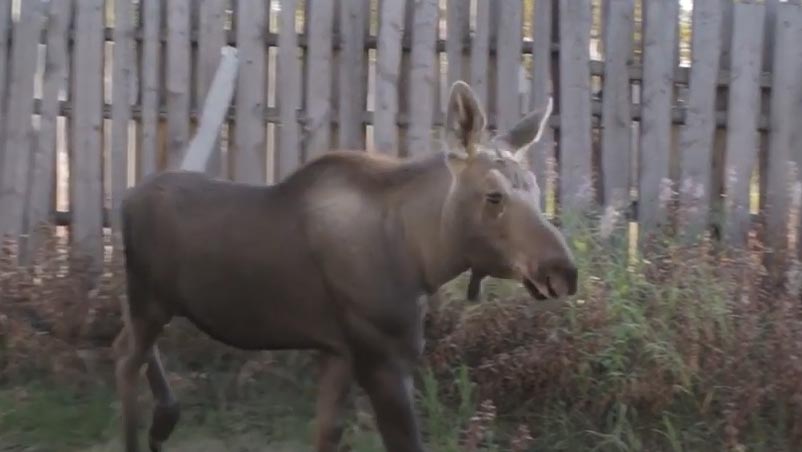
 Watson the moose calf is thriving! This moose was admitted to the Preserve's rehabilitation centre earlier this spring after his mother was struck and killed by a vehicle. This week we introduced him out to a publically view-able exhibit. Watch along here as Watson makes the journey to his new temporary home and introduction to his new moose family. He's double in size thanks to endless hours of care by our Veterinarian and Animal Care staff.

Lindsay Caskenette

Lindsay Caskenette

Manager Visitor Services

Lindsay joined the Wildlife Preserve team March 2014. Originally from Ontario, she came to the Yukon in search of new adventures and new career challenges. Lindsay holds a degree in Environmental Studies with honours from Wilfrid Laurier University and brings with her a strong passion for sharing what nature, animals, and the environment can teach us.
867-456-7400
Lindsay@yukonwildlife.ca

Explore by Category

Explore by Author