The Patience of a One-Eyed Owl

The Patience of a One-Eyed Owl

animal rehabilitation

by Connor Dennhardt | Sep 19, 2025

6 - 8 minute read

It is dusk turning to night, with darkness enveloping the forest. Stationed in a tree on the side of a road hides a predator, whose yellow eyes reflect with the passing headlights of cars driving by. This owl is currently listening, not only to the engines of vehicles and the sounds of gravel being kicked into the air, but for tiny rustling in the underbrush across this treacherous path.
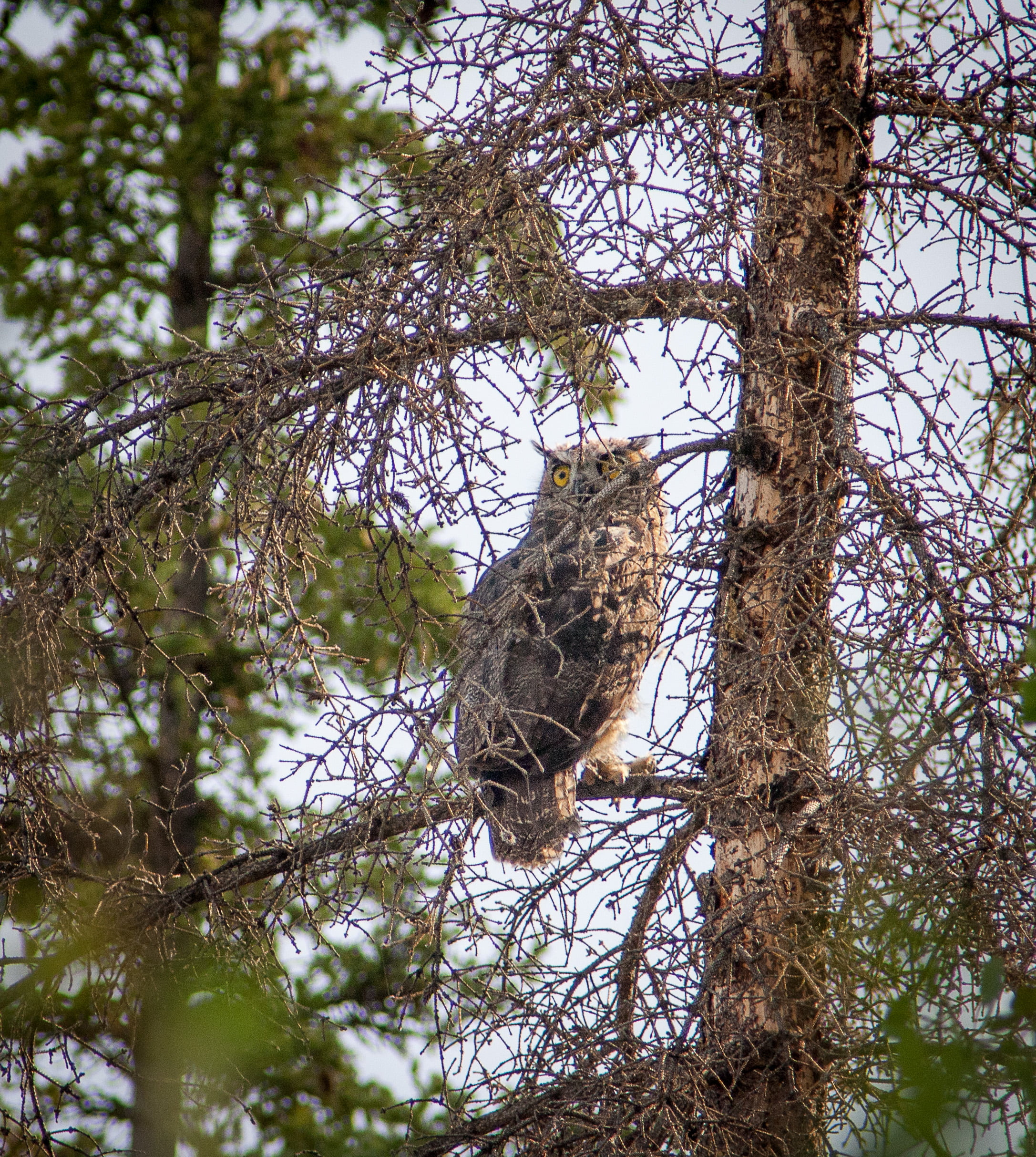
The ‘great horns’ on this owl are not their ears; instead, they have an opening on both sides of their head to take in the sounds bouncing off the facial disc of feathers around their face. One of these openings is slightly higher on their skull, allowing for the sounds of this noisy prey to enter one ear a fraction of a second faster than the other. As this owl twists their head, they finally pinpoint the location of their prey, following with their eyes to the exact location the creature is hiding. As they zone in and begin to take flight, all sounds except for the scurrying prey begin to fade. The great horned owl narrows its eyes on their target, taking in the flow of air around their silent wings whilst beginning the slight movements they need to grasp with their talons.

All of a sudden, in this brief moment of time, a life is imperiled; a flash of light enters the owl's vision from their right side and the world goes blacker than the night they surround themselves in.

The road is a deadly location for many animals; vehicles can collide with wildlife passing through, garbage and trash commonly finds itself on its side, and carnivores often use these areas to hunt those animals taking advantage of the weedy species growing in abundance. Not only do predators hunt those in the underbrush, but they also find themselves on the sides of roads waiting for foolish prey to cross the area with no cover.

This photo captures another rehabilitated and released great horned owl at the Yukon Wildlife Preserve. It highlights how roadways provide convenient hunting grounds for owls that perch where the forest and our roadways meet. Photo credit: B. Forsythe

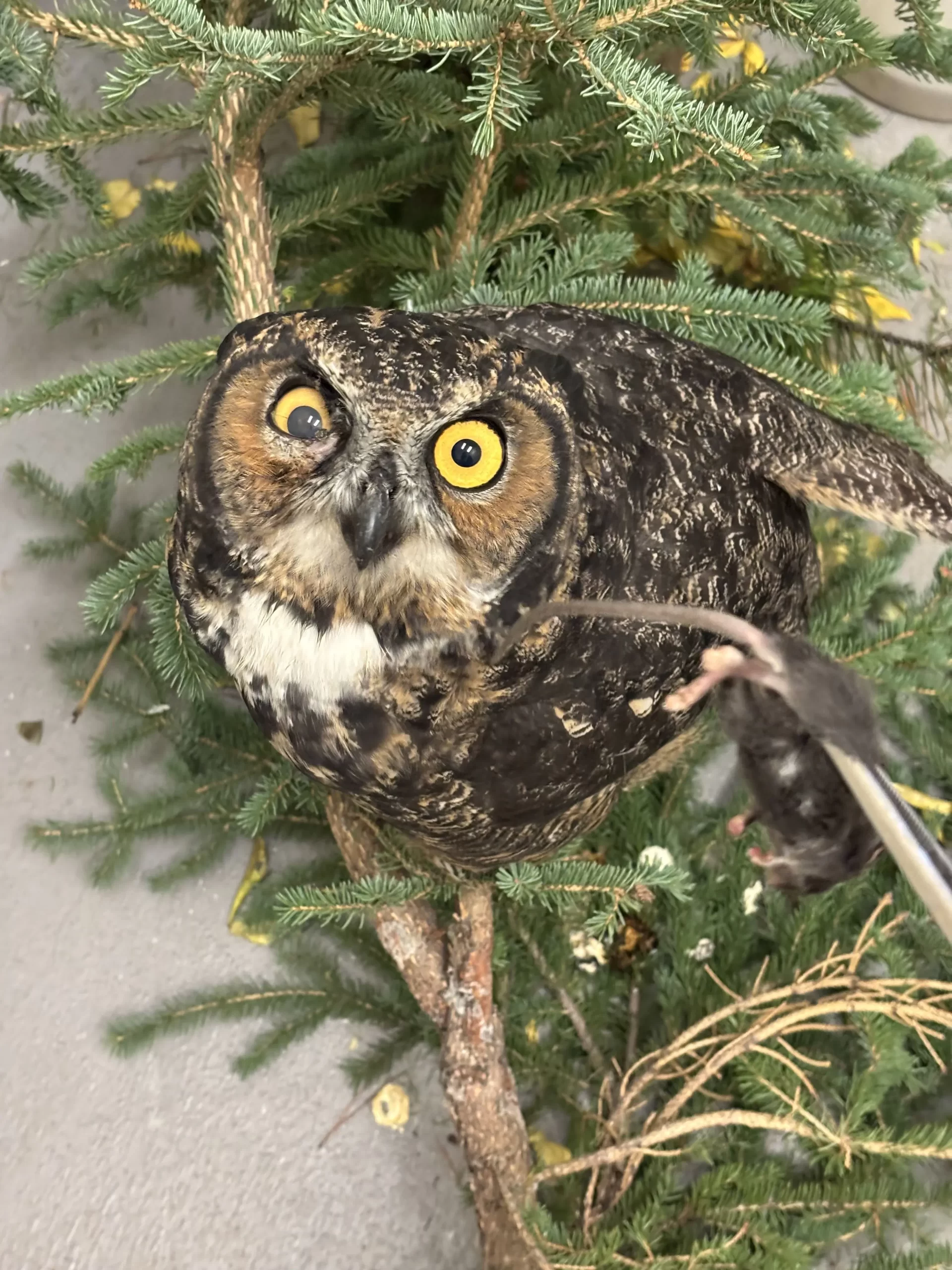
A great horned owl that has recently entered our rehab center was one such predator. When they were first admitted into our charge, our animal care team was told by rescuer Sonya Bingley that they were struck by a car, north of Braeburn, resulting in difficulty flying and their right eye remaining swollen shut.
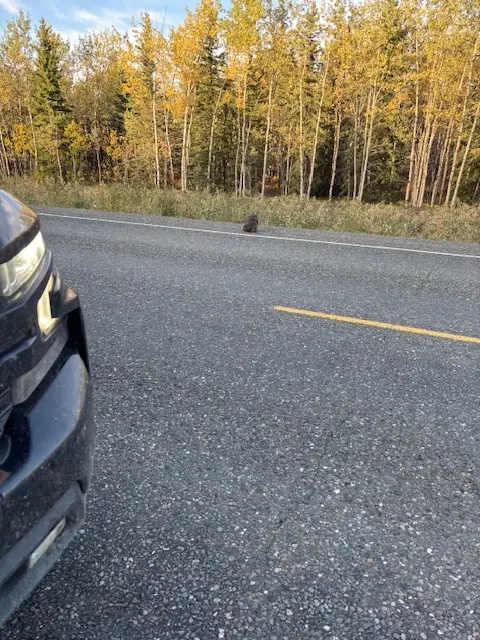
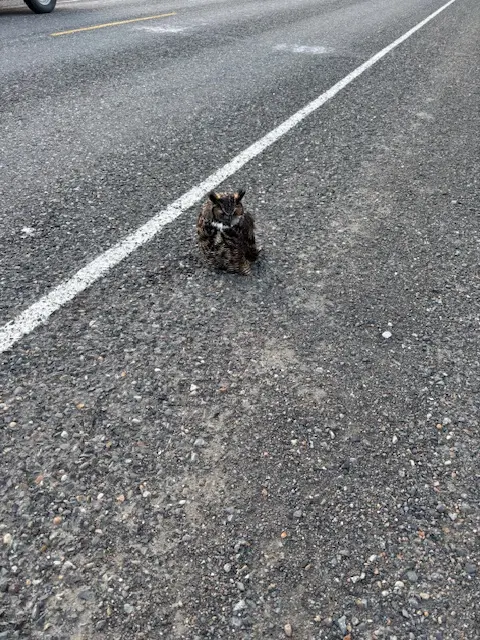
Photo by Sonya Bingley. Sonya spotted the owl on the side of the road while driving just North of Braeburn, Mayo/Klondike Hwy, Yukon. 

After some brief examinations led by the veterinarians at AlpineVet and initial attempts at feeding, the owl was visually responding to our team's actions using their left eye, but had a lack of ferocity that is normally expected from birds of prey. The intake exam looked at the owl’s entire body, determining that the only major injury was to their right eye.
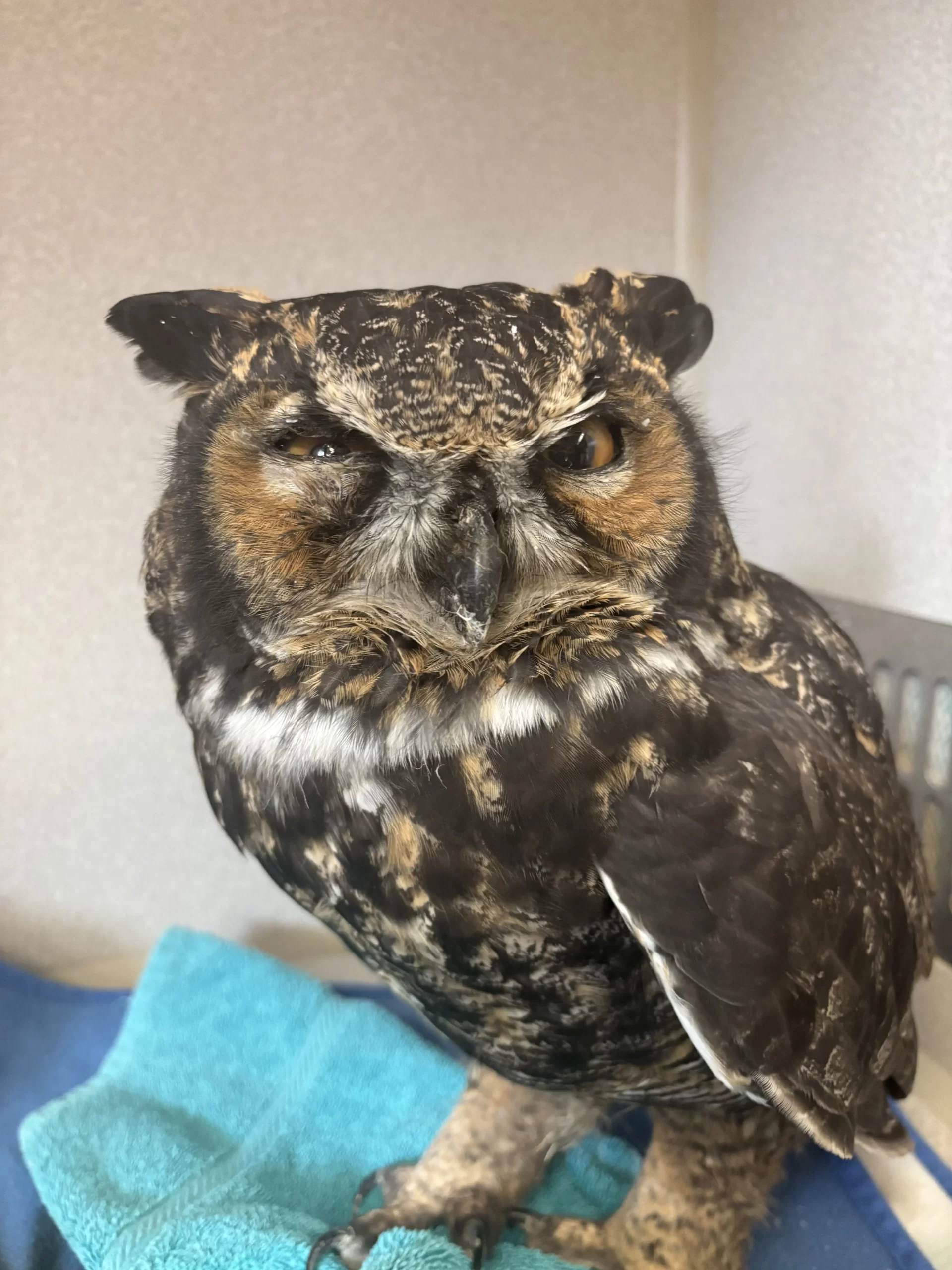
As there was most certainly head trauma, the lights were kept low while we gave them pain medication and encouraged them to eat. During this process they were extremely patient with being handled, prodded, and even picked up in their entirety. The meals they would eat were few and far between, and the rare times that they would flap their wings were when being picked up too briskly. Alongside this, their ability to balance when being picked up or placed down was lacking, often resulting in the bird tumbling when attempting to walk. 
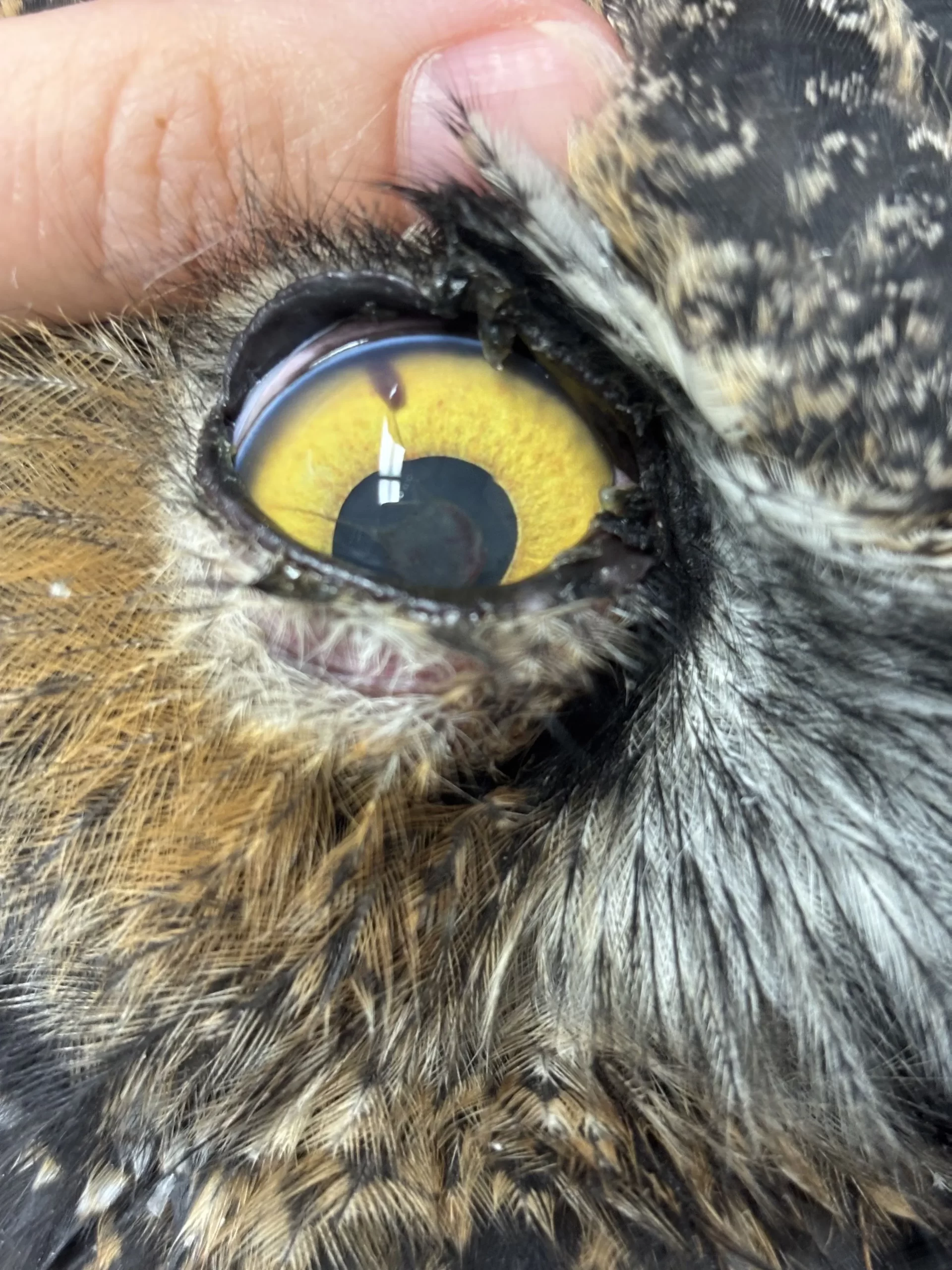
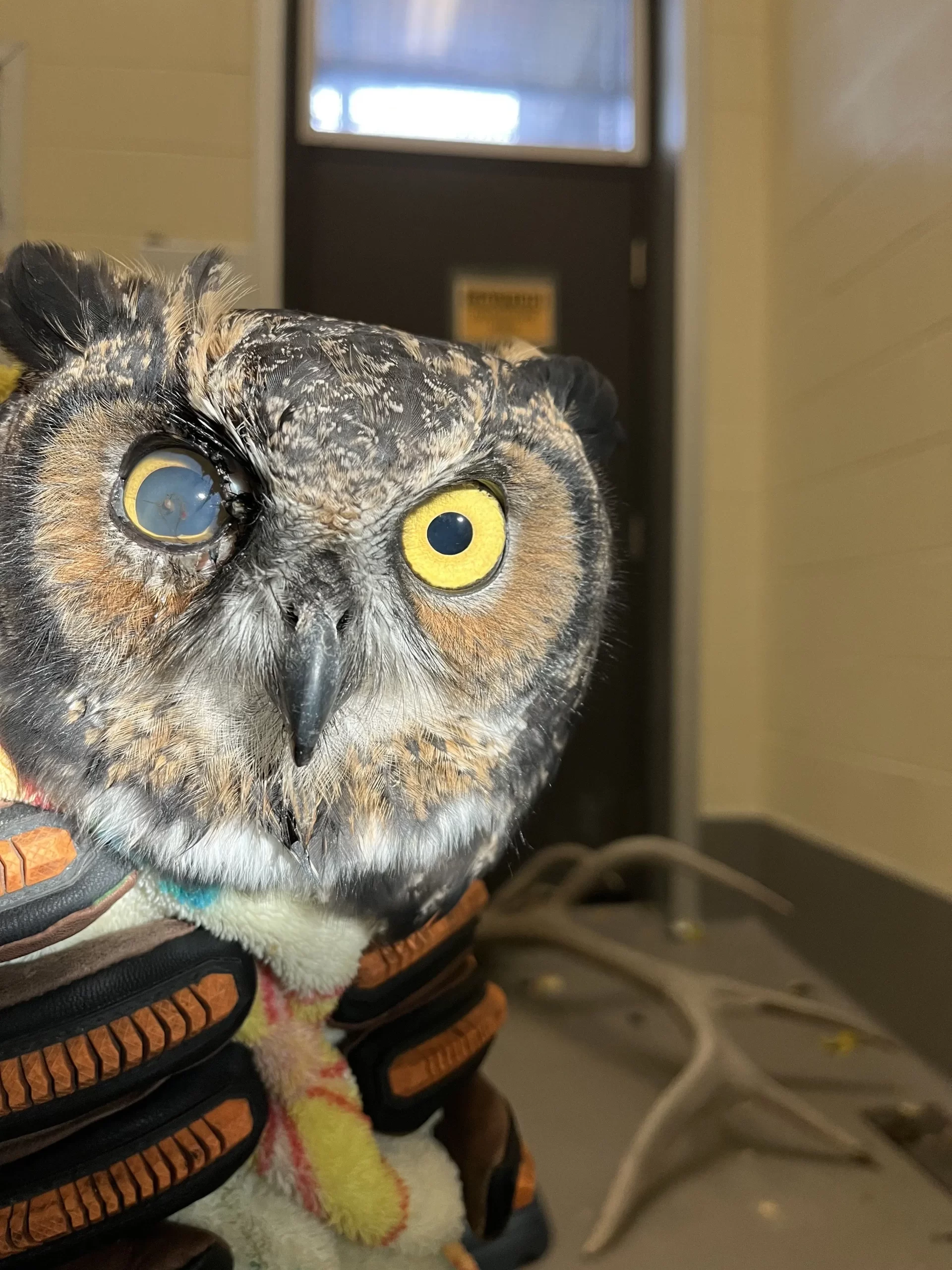
When the owl was initially received and the intake examination was concluded, a closer look at their right eye was needed, noting that it was swollen shut upon arrival. After opening the eye to get a brief look, both eyes were responsive to light and continued to be for multiple days in our care. Their right eye became less swollen as the days passed, however the owl kept squinting and their attitude remained dull with continuing signs of pain. Alongside this, the eye itself continued exhibiting changes each day, with signs of haemorrhaging and debris floating in front of the pupil, likely from a tear in the iris. Eventually the right eye lost its ability to react to light, and the owl was taken into another examination with AlpineVet, determining that the eye was now non-visual.
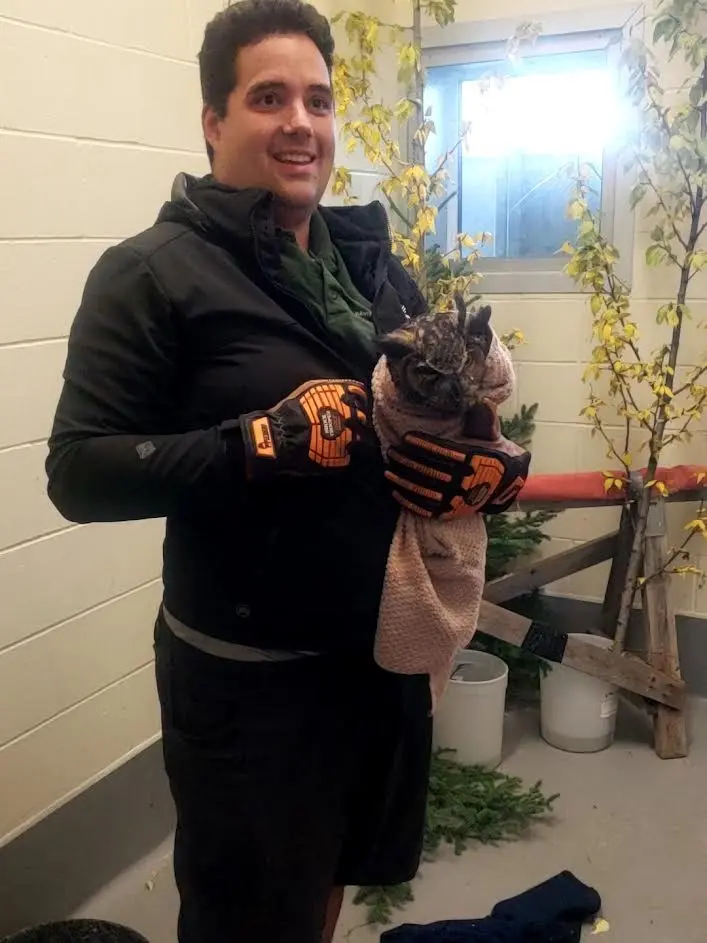
Neil explaining owl handling. Neil teaching the animal care staff how to properly pick up and wrap the owl to minimize injury during handling. Neil, Manager of Education and Programming, has history working in B.C., at an avian rescue centre.

Having concerns about a raptor being released into the wild with a single eye, inhibiting a key sense that they use to hunt, talks of all kinds were happening behind-the-scenes regarding eye surgery and the potential hazards of removing their eye completely.

Eventually, the preserve decided to reach out to experts in the field of raptor rehab in BC, an organization ironically known as OWL. The call we had was extremely informative, and we asked a few questions regarding the owl’s lack of hunger, balance, and whether or not a single-eyed owl could possibly be released successfully.

Their response eased our fears, they have had cases exactly like this one, and not only were owls with one eye common in their rehab center, they were also great candidates for successful release into the wild. 
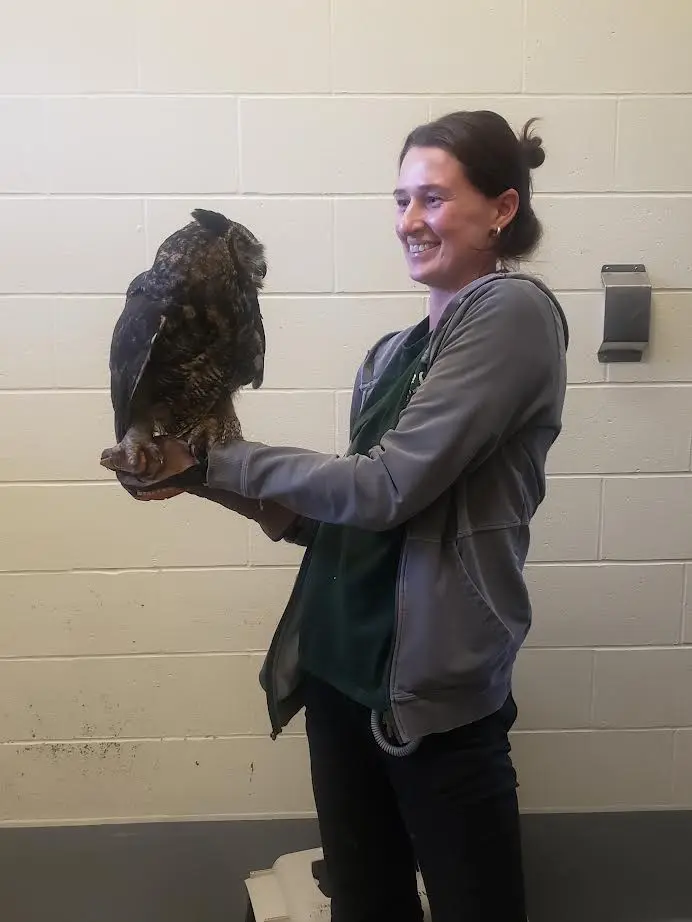
Alexis, Wildlife Care and Rehabilitation Technician and veterinary technician handles the bird during an examination. 

For owls struck by vehicles, eyes are commonly injured and need removal; however, through this call we found out that surgery to remove the eye is almost never necessary. Prior to this, we knew of two options for eye surgery that worked for owls: enucleation, the process of completely removing an eyeball from its socket by severing its connections with the brain; and evisceration, where the cornea of the eye and all of its inner contents are removed, leaving the sclera (white, fibrous outer shell of the eye) intact.

In terms of the successful release of an owl back into the wild, evisceration has a better success rate as that surgery minimizes the disruption to the owl’s facial disc. The facial disc of an owl is the concave formation of feathers around their face that directs sounds into their ears, which is what allows them to continue hunting prey in 3D space even when one eye is missing. However, through our call with OWL we learned of a third option for eye removal, simply leaving it.
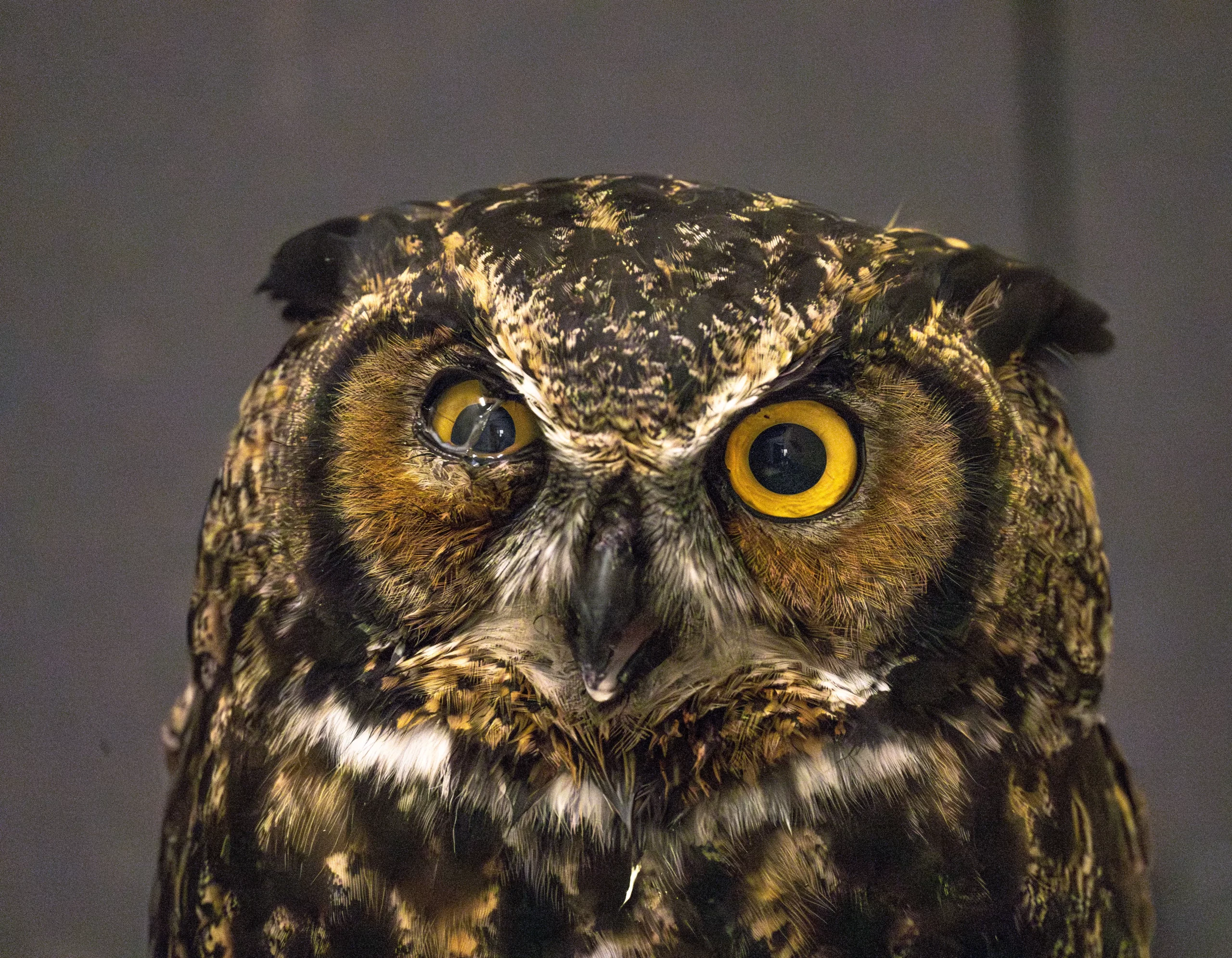
Close up view of the eye 3 weeks after being found and admitted to the centre. Great horned owl, Sept 2025 YWP. Photo Credit: L.Caskenette

Owls are able to allow their damaged eyeball to naturally degrade whilst in its socket, eventually making the orbital empty whilst not disturbing the fragile feathers around the owl's facial disc. With three options presented to our animal care team for handling this eye-boggling problem, we continue to weigh our options whilst allowing the owl to regain their strength. They have made incredible progress thus far but still need to recover from their injuries, work their flight muscles out, and try hunting live prey before we release them. Of course, plans for rehab always seem easier at the beginning, and many things can go awry; but we will continue to play it by ear as situations arise.

With patience, we hope this owl will recover slowly but surely, gaining their vigour and ferocity back so we can reintroduce them into the wild. 

• • •

Read an update on how the owl is doing - November 2025. 
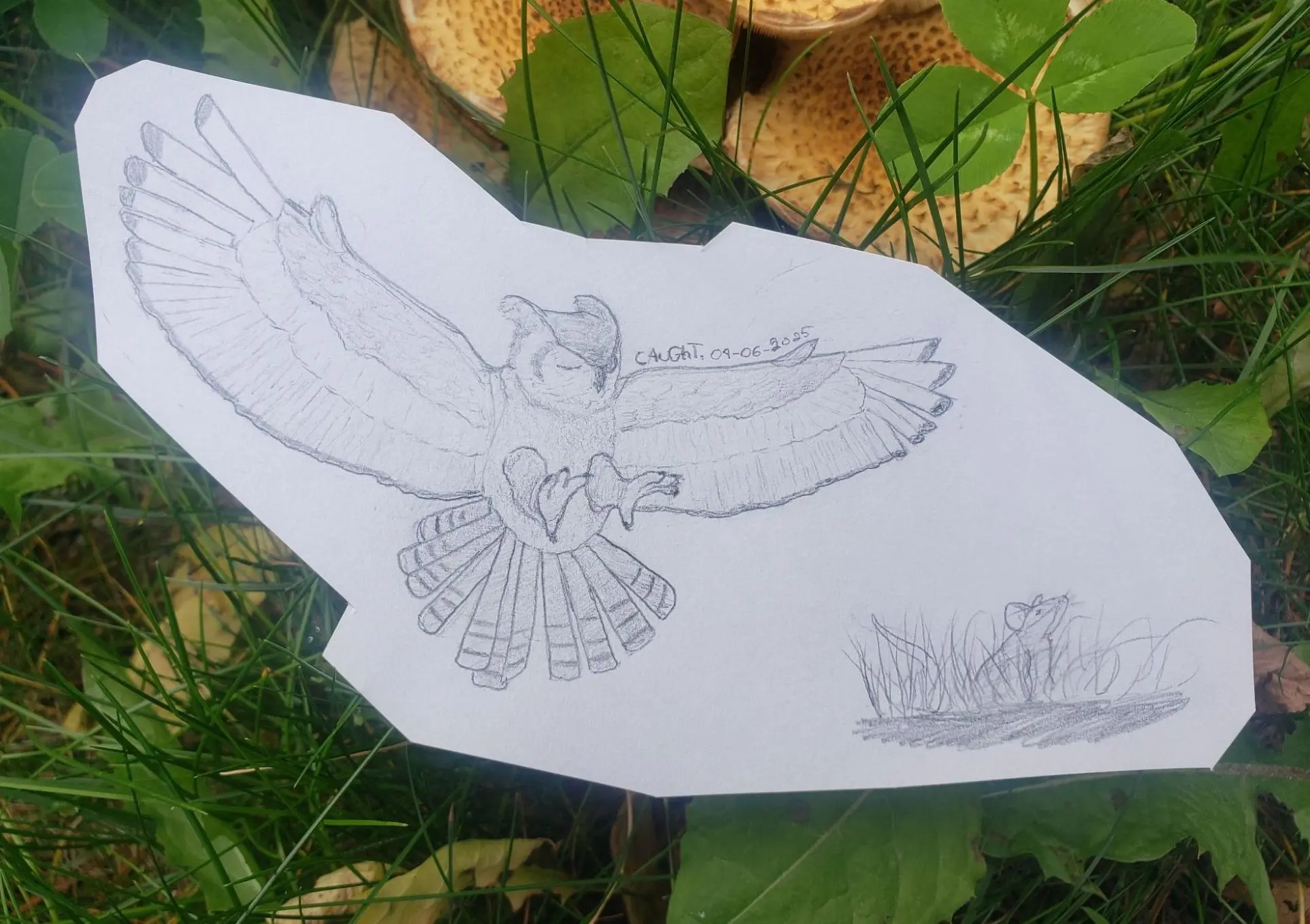
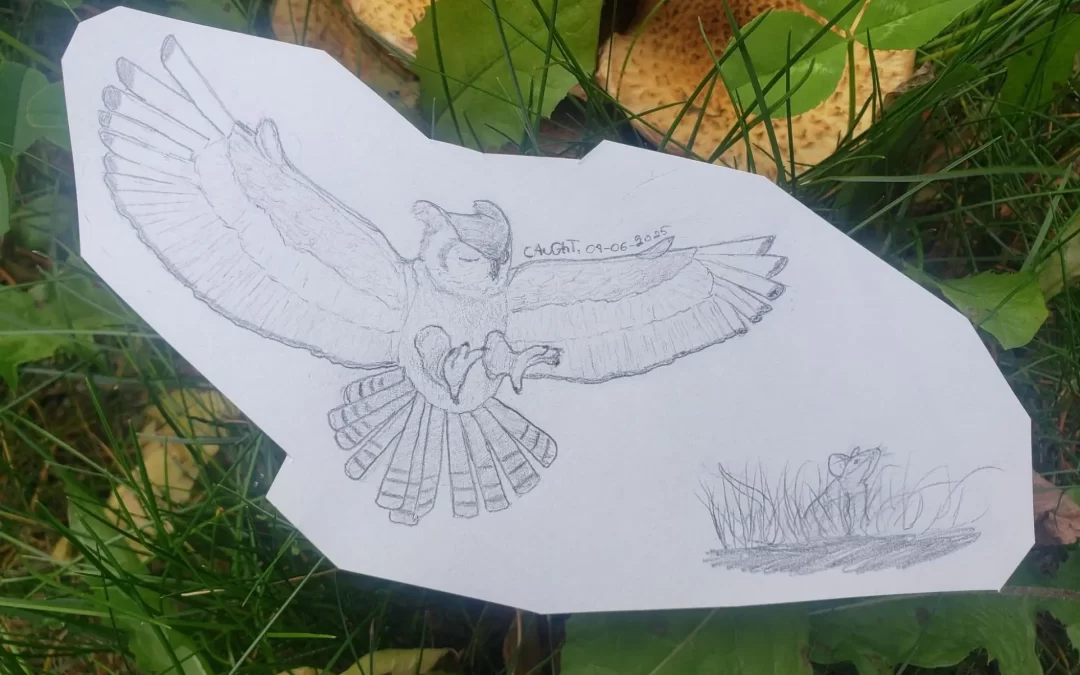
Created by Connor Dennhardt, titled ‘CAuGhT’.

All donations go towards the betterment of our rehab center and animal care team.

There is a comment section below for any thoughts that may have stirred from this story!

Thank you for your patience in reading this post.

Sonya Bingley was travelling the Klondike highway when they noticed an animal on the side of the road. Sonya was able to ensure the bird got the helped it needed. If you come across wildlife you suspect needs help check out what to do here! 
Connor Dennhardt

Connor Dennhardt

He/Him - Forester Educator

Connor grew up in Thunder Bay Ontario,  where he developed an interest in nature and exploring the outdoors. From his adventures, he learned how to thrive in the wilderness and learn to have fun even in the harshest of winters. His passion made him pursue an HBSa in Animal Sciences, where he earned the foundations of biology and found his love of science. His interests eventually led him to study in Svalbard, Norway; where he learned extensive amounts of information about the Arctic from researchers across the globe. From there, he has worked as a researcher within Quetico Provincial Park, a bee farm in Southern Ontario, and now has returned to the north as a Forester/Educator here at the YWP. He knows we aren't quite in the Arctic, but he's happy making it that much closer to his true calling.
Explore by Category

Explore by Author

Jesse the Moose

Jesse the Moose

animal rehabilitation

by Jake Paleczny | Jun 19, 2025

2 minute read -

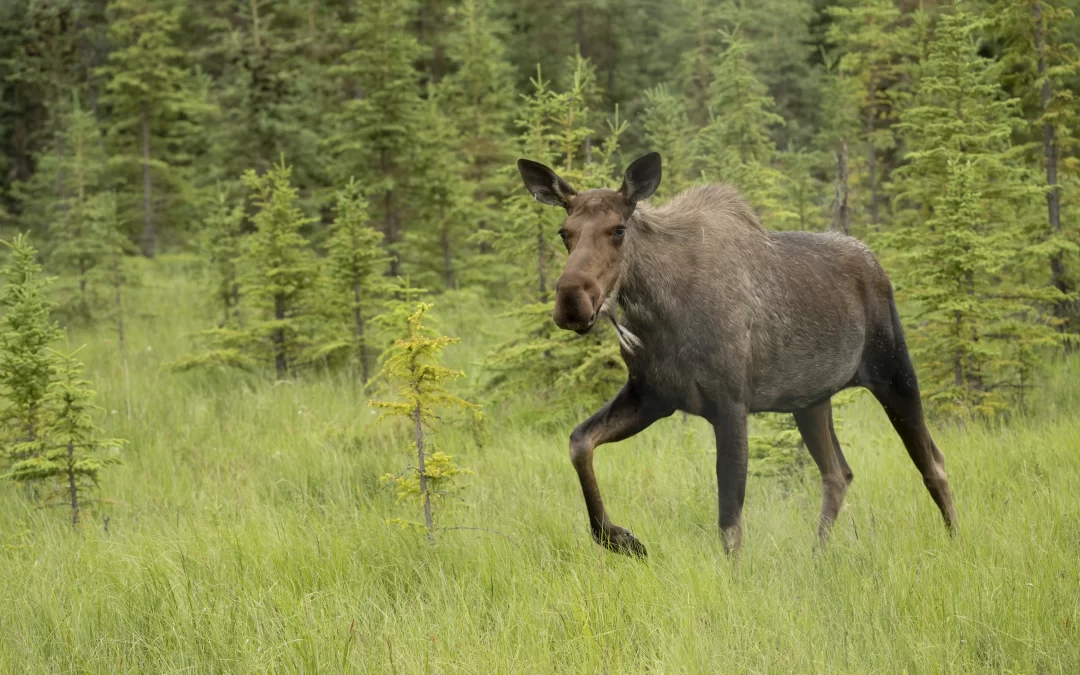
It was with profound sadness that the Yukon Wildlife Preserve (YWP) shared the death of Jesse, a cherished and iconic moose who had resided at the Preserve since 2016. The YWP’s Animal Care team made the difficult decision to euthanize Jesse on June 19, 2025 due to complications following a medical procedure.

An Old Injury

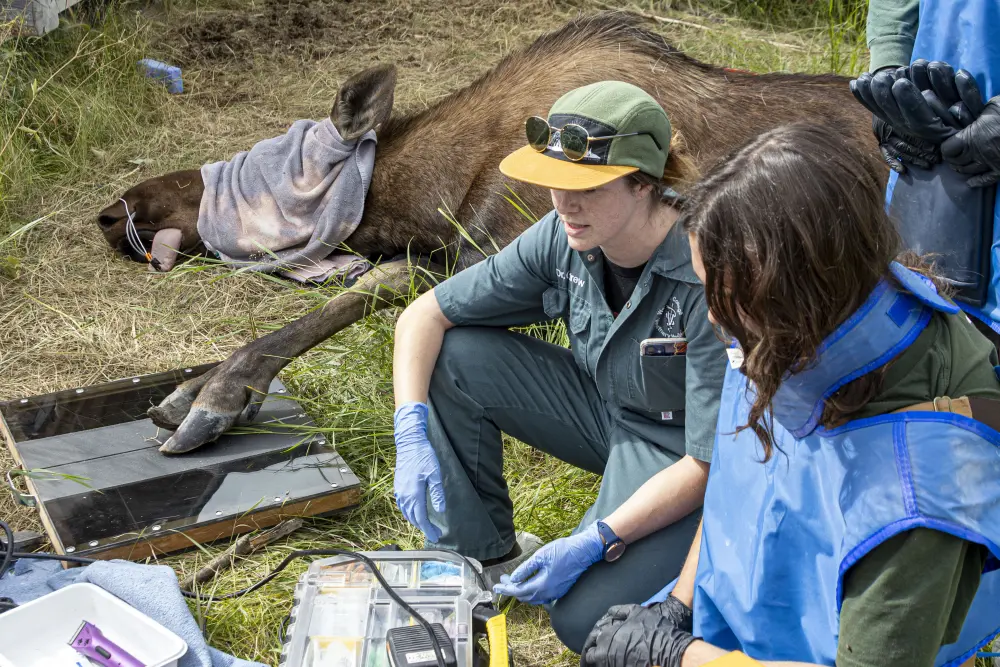
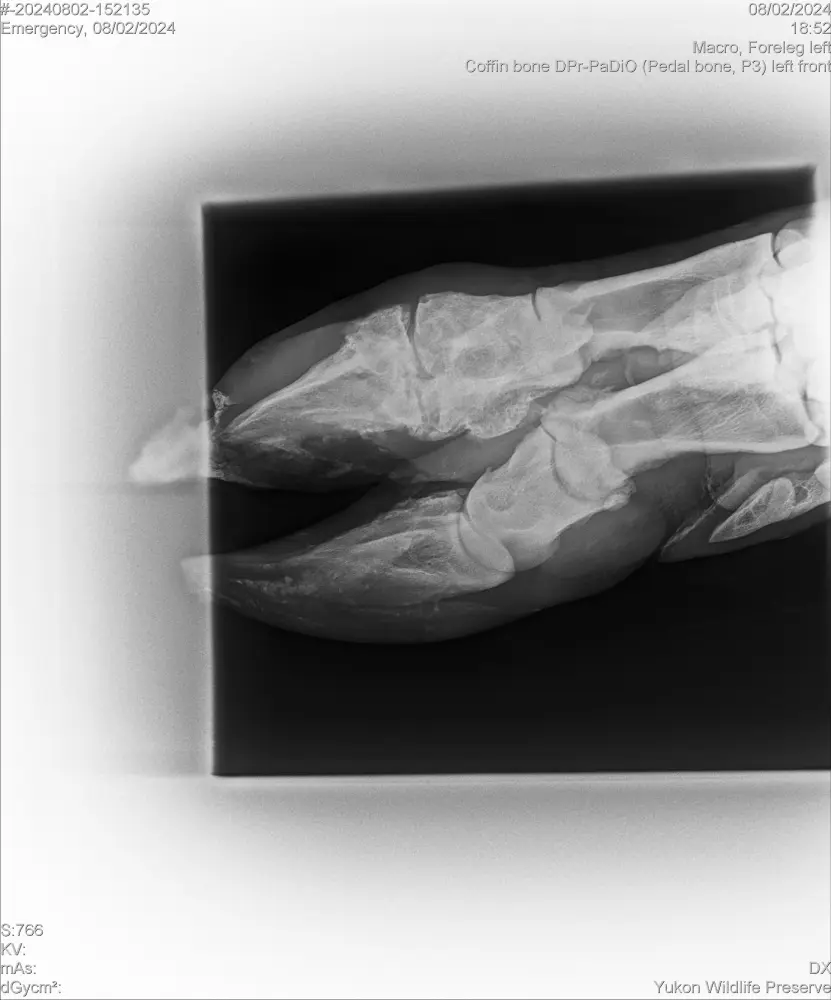
The YWP Animal Care team had been monitoring Jesse’s old hoof injury, which had become arthritic, causing her increasing discomfort and pain. The team had diligently monitored her condition, exploring options to alleviate her suffering and improve her quality of life. On Monday, June 17th, Veterinarian Dr. Cassandra Andrew and the YWP Animal Care team immobilized (anesthetized) Jesse to provide a targeted treatment for the affected hoof joint. While under anesthesia Jesse regurgitated contents from one of her stomachs - one of the risks of anesthesia in ruminants like moose. Recognizing the immediate risk, the team promptly cut the hoof treatment short, administered broad-spectrum antibiotics, and reversed the anesthesia.

Dr. Cassandra Andrew and the Animal Care Team check on Jesse's hoof during in summer 2024.

Complications and Consequences

Upon waking, Jesse exhibited signs of respiratory distress, including coughing and more rapid breathing than normal, indicating that she had inhaled some of the regurgitated material. Later that day, the team provided additional medication to help reduce fever and inflammation. By Tuesday, June 18th, Jesse appeared to be more relaxed and showed initial signs of improvement as the team continued to monitor her closely.

However, during the morning check-in on Wednesday, June 19th, it was clear that Jesse's condition had declined significantly overnight. She was suffering from what was suspected to be severe aspiration pneumonia (inhalation of foreign/food material into the lungs) and was struggling to breathe. Unfortunately treating such a severe condition can be quite invasive and would only be feasible with a domesticated animal in a clinical setting. The team made the difficult decision to euthanize Jesse without delay.
Dr. Andrew performed a gross necropsy, which confirmed extensive damage to her lungs and the severe pneumonia. The team is conducting additional tests to better understand Jesse's overall health and to reveal potential future treatments for similar hoof injuries in other animals.

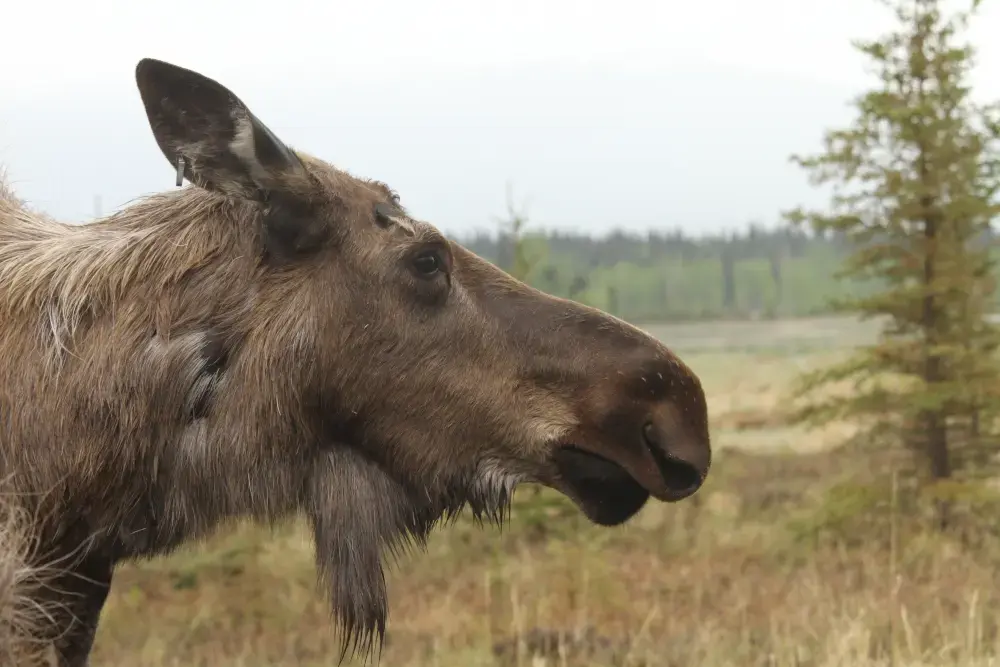
Jesse in June 2024

Jesse's Story

“Jesse was a really special animal with a remarkable story who touched the hearts of many, both our staff and visitors alike,” said Jake Paleczny, Executive Director, Yukon Wildlife Preserve. “Her death is a big loss for our team and so many of our visitors who got to know her so well over her 9 years here. Our team made every possible effort to provide her with the best care, and we will honour her legacy by learning what we can to inform what we do for our moose in the future.”

Jesse's remarkable journey at the Yukon Wildlife Preserve began in May 2016. At only a few weeks old and weighing just 47 pounds, dogs attacked her in the bush near Whitehorse, separating her from her mother. A quick-thinking teenager (named Jesse) carried the injured moose out and with some help, brought her to the Preserve. The dogs had gone after her neck, causing swelling that made it difficult for her to swallow and breathe. YWP staff provided 24-hour care, and for the first couple of nights, they were unsure if she would survive. For the first four days at the Preserve, Jesse couldn’t get up, and the team fed her via IV, offering small amounts of formula when she could manage it. With her injuries, it’s unlikely Jesse would have survived in the wild. Her comfort around humans meant she would reside at the Preserve permanently.

Jesse's Impact

If you have a story or memory you'd like to share about Jesse, send it to [email protected]  and [email protected]. We'd like to share and celebrate the impactful experiences and relationships she was a part of.

The crazy snow winter which had packed snow so high people's heads (and moose heads) were much closer to the top of the fence than normal and Jesse started stealing people's touques right off their heads. She especially loved to target hat wearers' taking selfies.
Pete, Wildlife Interpreter

We said our goodbye!
She knows and she listens—
She cried, I cried.
Michael, Senior Wildlife and Rehabilitation Technician

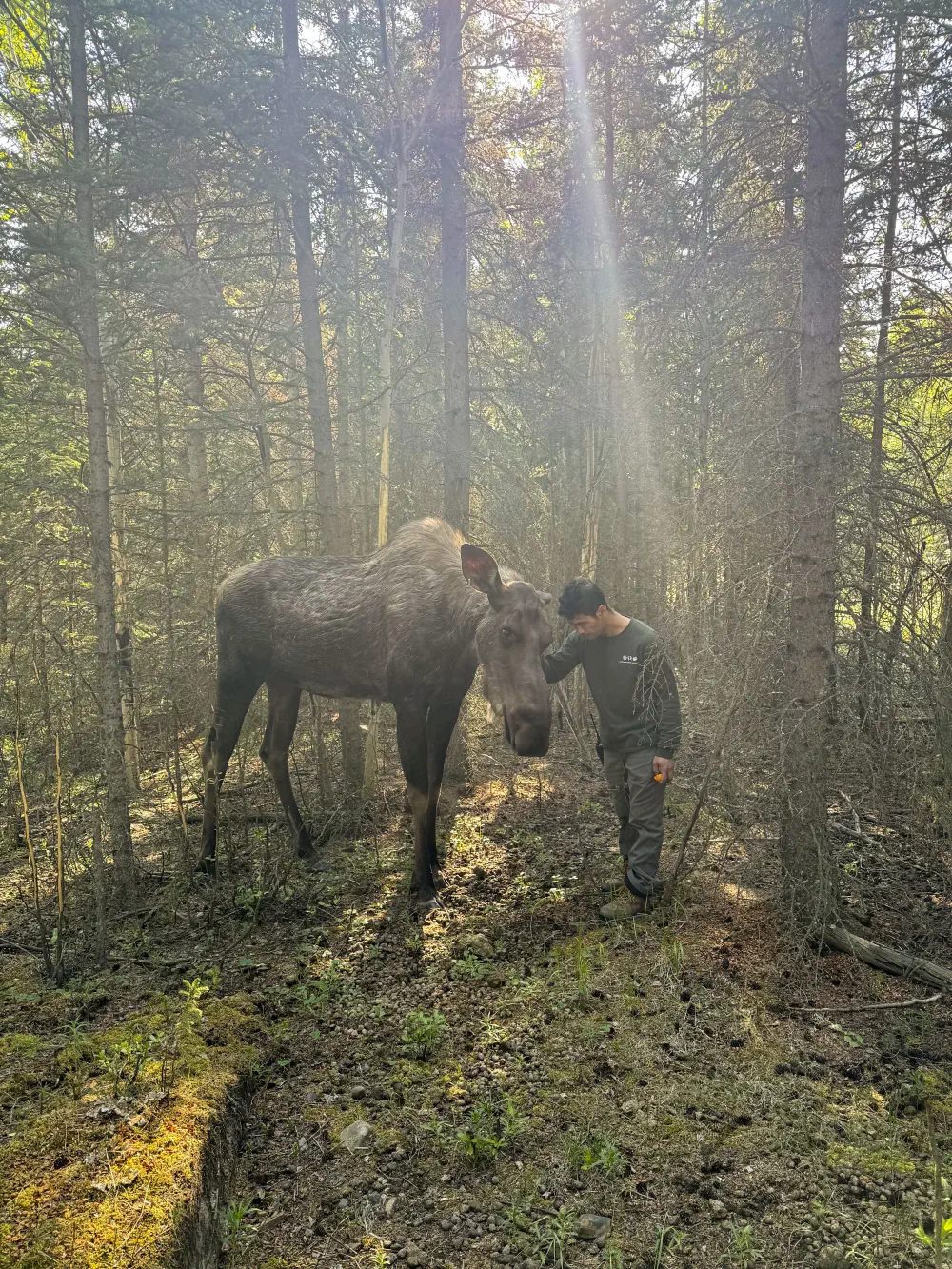
Above: Michael and Jesse on the morning of June 19.

Jake Paleczny

Jake Paleczny

He/Him - Executive Director/ CEO

Jake Paleczny is passionate about interpretation and education. He gained his interpretative expertise from a decade of work in Ontario’s provincial parks in addition to a Masters in Museum Studies from the University of Toronto. His interests also extend into the artistic realm, with a Bachelor of Music from the University of Western Ontario and extensive experience in galleries and museums.

867-456-7313
[email protected]

Explore by Category

Explore by Author

I Have to Sell!

I Have to Sell!

animal rehabilitation

This article was made possible thanks to support from the Yukon 125 Fund. Learn the incredible history of the Yukon Wildlife Preserve, and Yukon Game Farm from the people of the past through this series of articles.

Danny Nowlan is one of Yukon’s colourful, and at times, notorious characters. He was a polarizing figure who cared deeply for animals and connecting them to kids. He was also the subject of one of Yukon’s most expensive trials ever. His work on the Yukon Game Farm would eventually result in the creation of the Yukon Wildlife Preserve. That is a legacy that is still experienced by many Yukoners – although many of the stories are not known or well understood. 

The stories of Danny Nowlan are important threads that are woven through the tapestry of Yukon’s recent history. This project gives us the opportunity to capture and share this history before its lost. This includes the opportunity to celebrate the positive lasting legacy and to learn about and grapple with the challenging aspects of this legacy. 

In 2023 historian Sally Robertson collected oral histories from more than a dozen people who knew Danny. Out of this work, Sally wrote a series of stories about Danny and his adventures.

(9 minute read)

Danny and Erika Nowlan had a dream, and the Yukon Game Farm was established in the mid-1960s. Danny had to struggle several times over the years to keep the Yukon Game Farm operating. It was never profitable until the falcon breeding program was in place. Until 1990, the Nowlans were in business to raise breeding stock and sell young animals to international zoos and wildlife farms. In the case of birds of prey, their market was falconers wherever they happened to live. A Dall’s sheep ram might occasionally bring $2,000 and a trained gyrfalcon might be sold for $13,000, but there were many animals on the Farm, and they all needed care and a constant supply of huge quantities of food.  

Danny considered selling the Yukon Game Farm in the 1970s, when it seemed there would be never-ending bank loans. This was a time when Danny had close friendships with Yukon Game Branch employees, both guardians (Conservation Officers) and biologists. Government biologist Dave Mossop came to Danny with a plan to replenish Yukon’s wild stock of peregrine falcons. This was successful and, building on that, the Yukon Game Farm purchased gyrfalcons from the government and embarked on a successful breeding program.

Danny with Gyrfalcon


Danny needed even more money to establish the infrastructure and so, instead of selling the whole property he tried to subdivide and sell some lots along the Hot Springs Road. The government prohibited the sale and Danny’s attitude toward bureaucracy started changing towards antipathy. In the end, the approach of a government official elicited a yell of ‘cops’ from Danny and furious barking from his well-trained dogs. Followed by Danny’s famous laugh.

Prohibited from selling titled property, Danny instead sold 999-year leases. The government challenged this sale, and Danny won in court, so the parcels became titled land. Selling the road frontage kept him in business for a while, and also had the advantage of providing some protection for the animals. Before they were moved away from the road, there were incidents of animals being injured and one ram sheep with trophy-sized horns was killed.

In the mid-1980s, Danny, his second wife Uli, and well-respected biologist Dave Mossop were arrested and dragged into court on charges associated with the capture and illegally selling of endangered falcons to wealthy Saudi Arabians.  Operation Falcon was an undercover operation that started in the United States and reached into the Yukon. The Yukoners were judged not guilty of all charges, but the trial affected reputations and bank accounts. After the trial, the Game Farm’s elaborate infrastructure for breeding, raising, and replenishing wild stocks was in shambles, and Danny and Uli were no longer able to realize a profit from selling the birds they were so successful at raising.

In the 1980s, elk farming became a profitable business in Canada and Danny was quick to acquire a herd of about 300 animals. He and a number of other Yukoners became successful elk farmers before the Korean market for Canadian elk antlers and velvet collapsed. Some elk farmers in the United States changed their operations to hunt farms, places where hunters could pay to shoot animals. The only legal option in the Yukon was the sale of elk meat, and that was not part of Danny’s vision of an educational preserve to showcase Yukon wildlife. He told a friend that the day he had to sell a pound of elk meat was the day he was out of business.

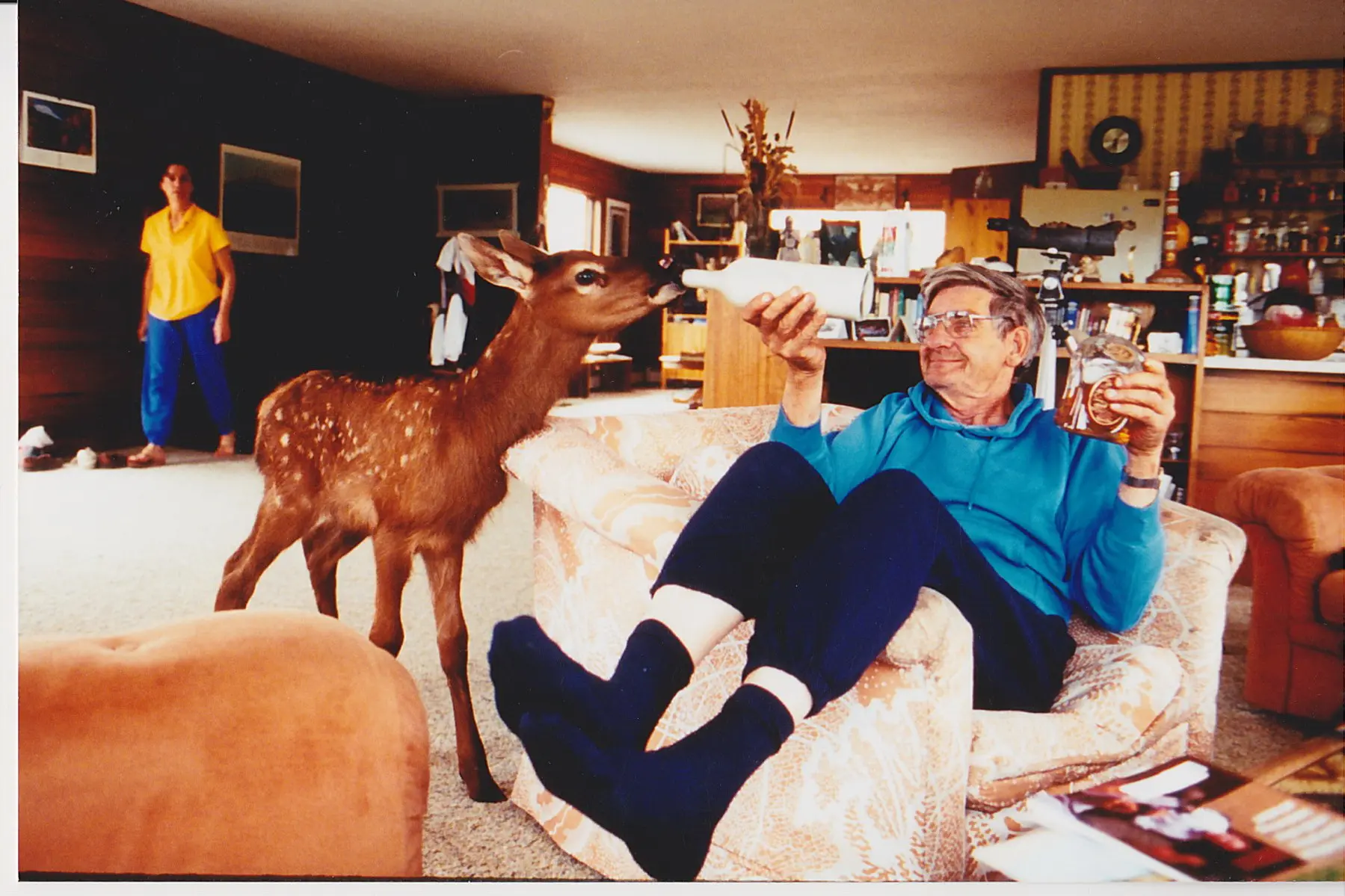
Elmer-1st and Danny especially favorite elk bull came from Chuck and Clara from California 1983 visit.


Fortunately, just at this time the Nowlans were approached by Holland America to provide a tourist attraction for the company’s bus tours. This was in line with Danny’s vision. He needed to upgrade the roads and fences, and acquire more northern species, but the Nowlans were still able to sell animals and care for the injured and abandoned ones that were constantly being dropped off at their door.  This change in direction was formalized by a change in name; the Yukon Game Farm became the Yukon Wildlife Preserve in 1989.

Original logo created by Peregrine Nowlan in 1989 when the name change occured from Yukon Game Farm. Later when the facility was sold and run as a non-profit the name remained and the logo updated to its current version.

Around 2000, Danny was once again faced with the serious problem of keeping the operation in business. Animal sales were still an option, but there was a dawning awareness in Canada of spreading diseases affecting wildlife. Danny needed permits to move animals across borders, and these became increasingly difficult to obtain. The matter came to a head for the Yukon Wildlife Branch when public attention was drawn to one of Danny’s mountain goats that appeared on a steep hill across the North Klondike Highway from the sod farm. Government officials were worried about the transmission of disease from domestic animals to wildlife, and two escaped mountain goats could have travelled past agricultural farms containing domestic goats.

Danny was unable to recapture his animals, and the Yukon government’s Philip Merchant came to the rescue with a helicopter and a tranquilizer gun. The story of the capture is a harrowing tale for another time, but no animal (human or goat) was terribly injured, and Danny was presented with the bill. 

Danny said, “I want to go fishing” and he started looking for buyers. He could have made a lot of money by letting a developer divide the Game Farm into acreages. Many Yukoners were reluctant to see this happen, and the Friends of the Yukon Wildlife Preserve was established in 2002. The Board of Directors included successful businesspeople, educators, and wildlife biologists who recognized the Preserve’s potential economic, preservation, and educational worth to the Yukon. The society tried to raise funds to buy and operate the facility as a business, and they received support from individuals and potential partners.

In July 2003, the Yukon Fish and Wildlife Management Board wrote a letter to support a proposal where a not-for-profit society would run the facility with assistance from the Yukon Government, as long as the facility obtained accreditation from the Canadian Association of Zoos and Aquariums. The government, for many reasons, was reluctant to commit to any involvement at that time, and the Board of Directors dissolved the Friends of the Yukon Wildlife Preserve association in August 2003.

The public facing entrance to the Yukon Wildlife Preserve. Photo Rebecca August 2004.

There are many opinions about why the government persuaded a number of the original Friends and others to form an operating society, and then purchased the Yukon Game Farm in April 2004. Danny talked to the media and there was considerable public pressure in support of the sale. It was, and remains, a controversial decision especially for those opposed to seeing wildlife in pens. However, the Yukon Wildlife Preserve is a delight for children of all ages, and the expansive habitats created by Danny Nowlan make the residents very happy.

About his ability to get things done, Wendy Brassard says Danny would get these ideas and he wouldn't abandon them. He wouldn't just let them die or turn away from them. He'd think about it, he'd read because there was no Internet back then, he'd make phone calls, and the next thing you know, everything's changed. And he just kept evolving. He was such a good example of ingenuity and resourcefulness, and never say die. Just if you think it's right and it's going to work and it's a good thing? Do it.” David Smiley says Danny was an amazing character; that guy was different. Both good and bad. He had a rough side and he had a Grade 3 education. But he could develop a plan that somebody from a university would have trouble figuring out the nuances. He was a good planner. Randy Hallock concluded that Danny was interesting and always full of ideas. He just built the place and not much could stop him. He had ideas, and he made them work. People telling him ‘no’ just made him that much more driven. 

Minister Dixon, Department of Environment, Yukon Government and YWPOS board member Bill Klasson.
Photo taken 2013 on the signing of a 5 year agreement.

David Mossop is involved with the Game Farm in its current form as the Yukon Wildlife Preserve. He says it's interesting that all these years later, they haven't changed anything. It's basically exactly as Danny and Erika envisioned it – except brought to fruition a lot more. Their idea was to create something where the children of the Yukon could come and see the creatures that live here. And that's basically what happened.

The memories that were collected during this oral history project speak to the impact that Danny had on so many friends, kids, and animals - and the Nowlans’ legacy remains intact for Yukoners and Yukon visitors. We think Erika would be proud to see a fully realized wildlife preserve with its visitation of wide-eyed children. Uli Nowlan often visits the facility and keeps a watchful eye on the operation. Danny didn’t become an avid fisherman, but he did relax knowing his animals, and his legacy, were in good hands. 

• • •

On June 12, 2004, was the Grand Opening of the Preserve!

Danny Nowlan Life and Death - June 4th, 1929 - October 23rd, 2011.

Photos gratefully provided by Uli Nowlan.

Sally Robinson, October 2023
with words from interviews with Uli Nowlan, David Mossop, Philip Merchant, Wendy Brassard, Randy & Maria Hallock, David Ford. 

Sally Robinson

Sally Robinson

Vintage Ventures - Researcher & Writer

Sally is currently an independent consultant in the heritage field. Throughout her career, after working 20 years with Yukon museums as a researcher, curator and exhibit designer/producer, she joined the Yukon Government to work for 16 years as the Historic Sites Interpretive Planner.

Lindsay Caskenette

Lindsay Caskenette

Manager Visitor Services

Lindsay joined the Wildlife Preserve team March 2014. Originally from Ontario, she came to the Yukon in search of new adventures and new career challenges. Lindsay holds a degree in Environmental Studies with honours from Wilfrid Laurier University and brings with her a strong passion for sharing what nature, animals, and the environment can teach us.

867-456-7400
[email protected]

Explore by Category

Explore by Author

Little Muskox, Big Journey

Little Muskox, Big Journey

animal rehabilitation

by Brittney Forsythe | May 25, 2025

2 minute read -

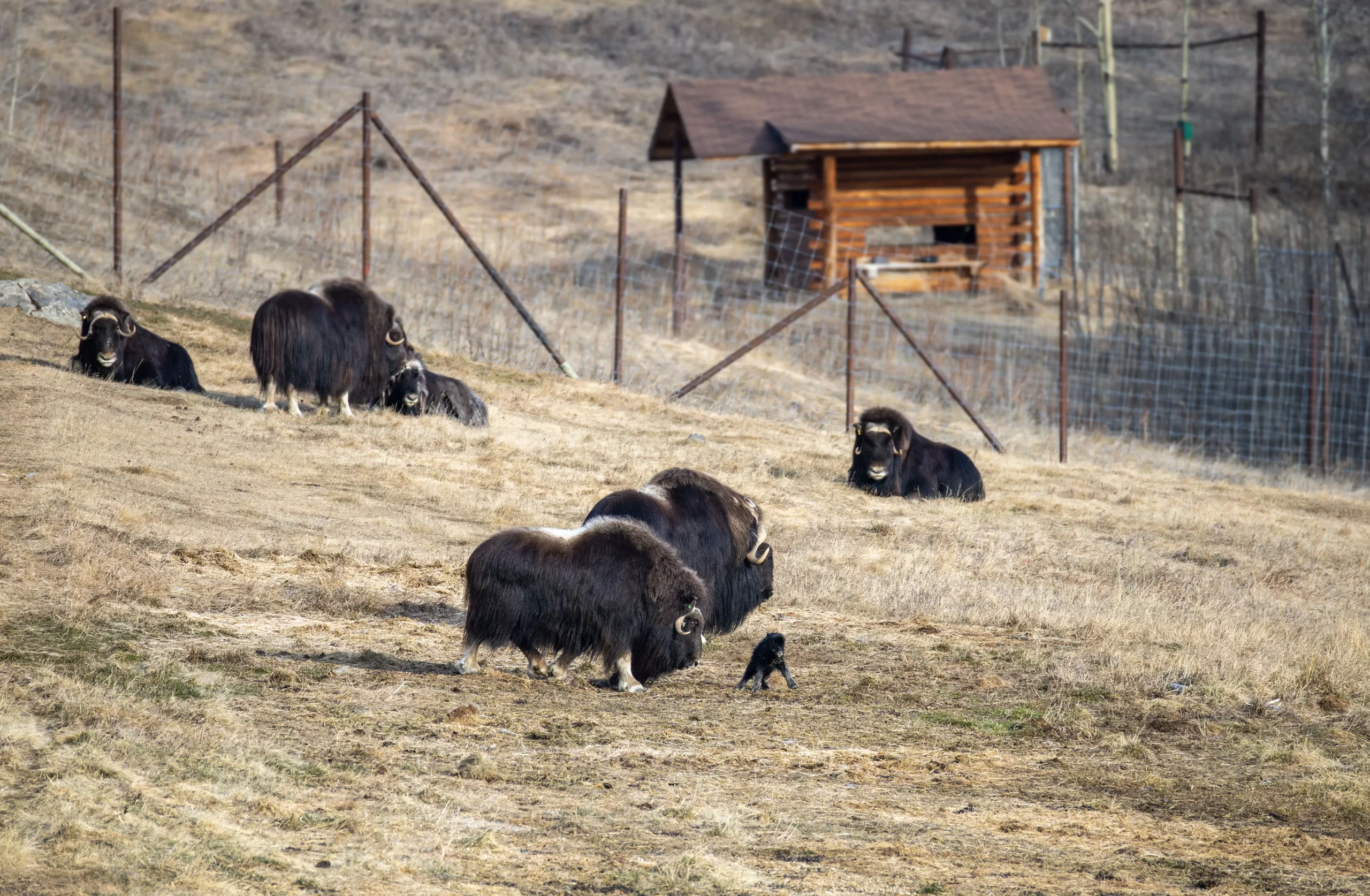
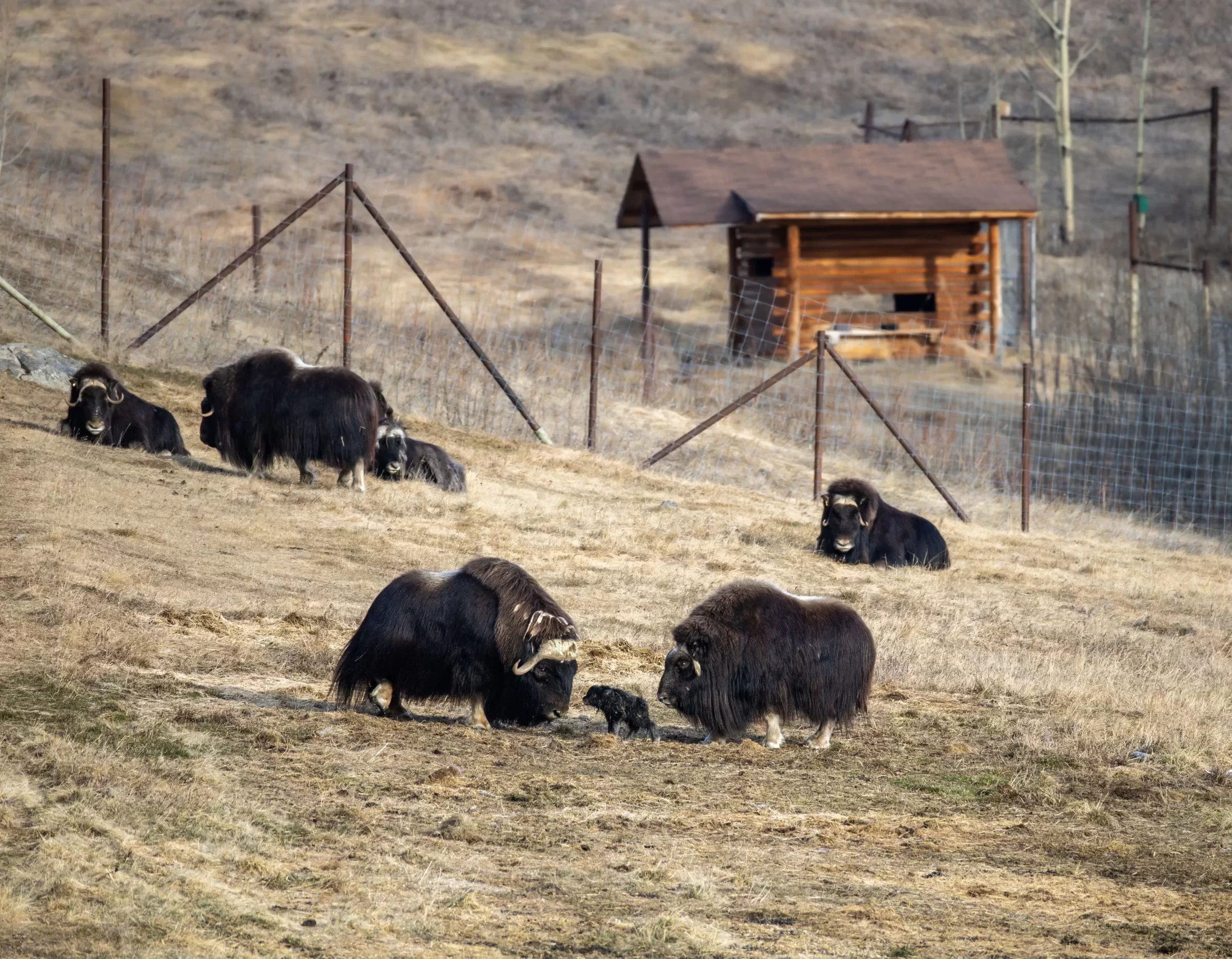
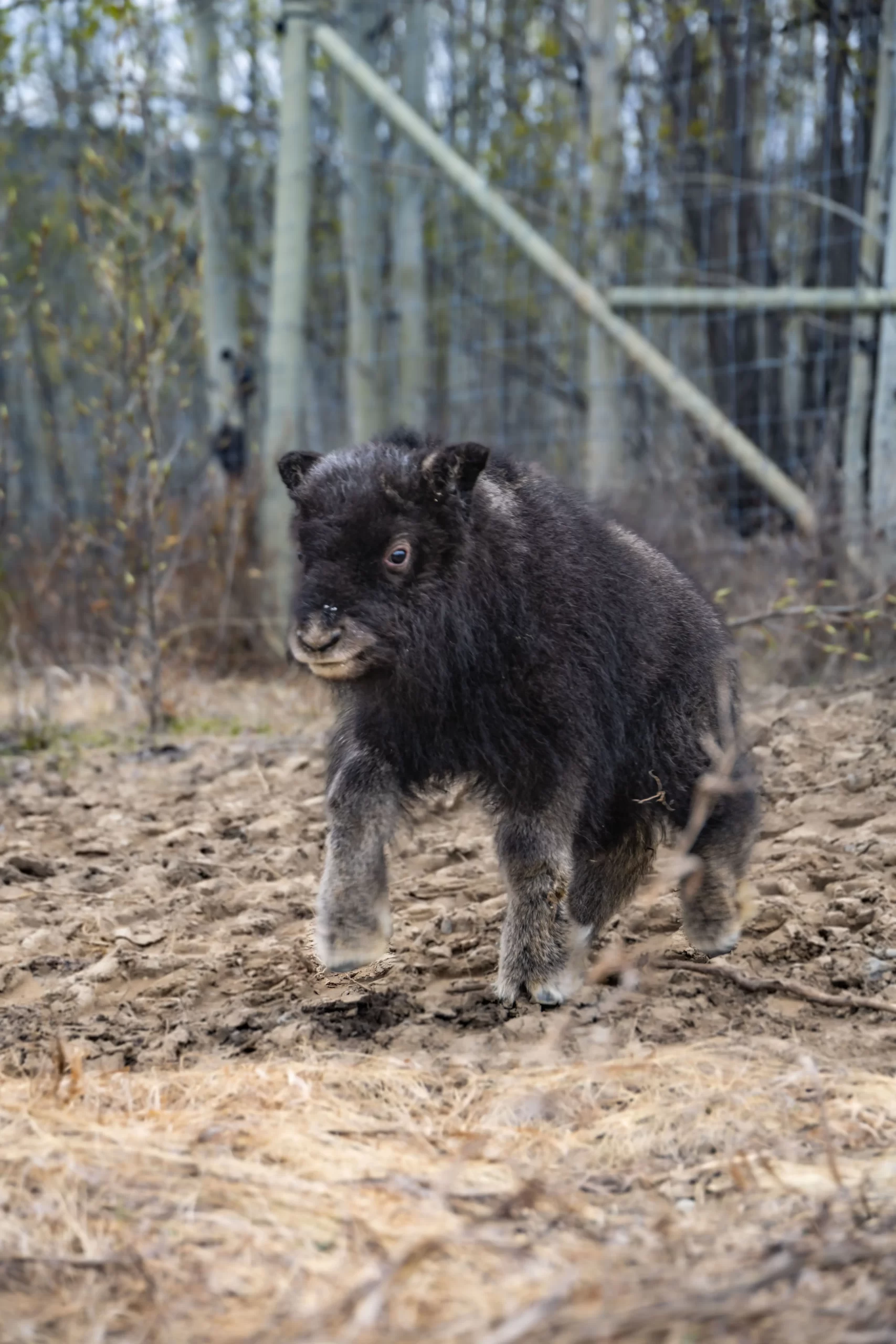
Nature is beautiful — and often unpredictable. On April 30th, the Yukon Wildlife Preserve welcomed its first muskox calf of the year. But shortly after his arrival, it became clear that something wasn’t quite right. Despite hopes for a strong maternal bond, the mother muskox wasn’t allowing the newborn to nurse. The reason for this rejection remained unclear —  the muskox bull was also seen interacting with the calf in a way that raised safety concerns.

Baby Muskox with Mom and Bull Photo Credit Jake Paleczny

To protect the calf, our team made the decision to intervene. He was brought into our Wildlife Rehabilitation Centre, where he began receiving around-the-clock care and 1L of specialized milk replacer daily. While it wasn’t the beginning we’d envisioned for him, the calf showed resilience and strength from the very start.

At the same time, the veterinary team kept a close watch on the mother muskox. When it became apparent she hadn’t passed her placenta, she was safely immobilized and given medication to support the process. After several days of monitoring in a separate enclosure, she recovered well and was eventually reunited with the rest of the herd.

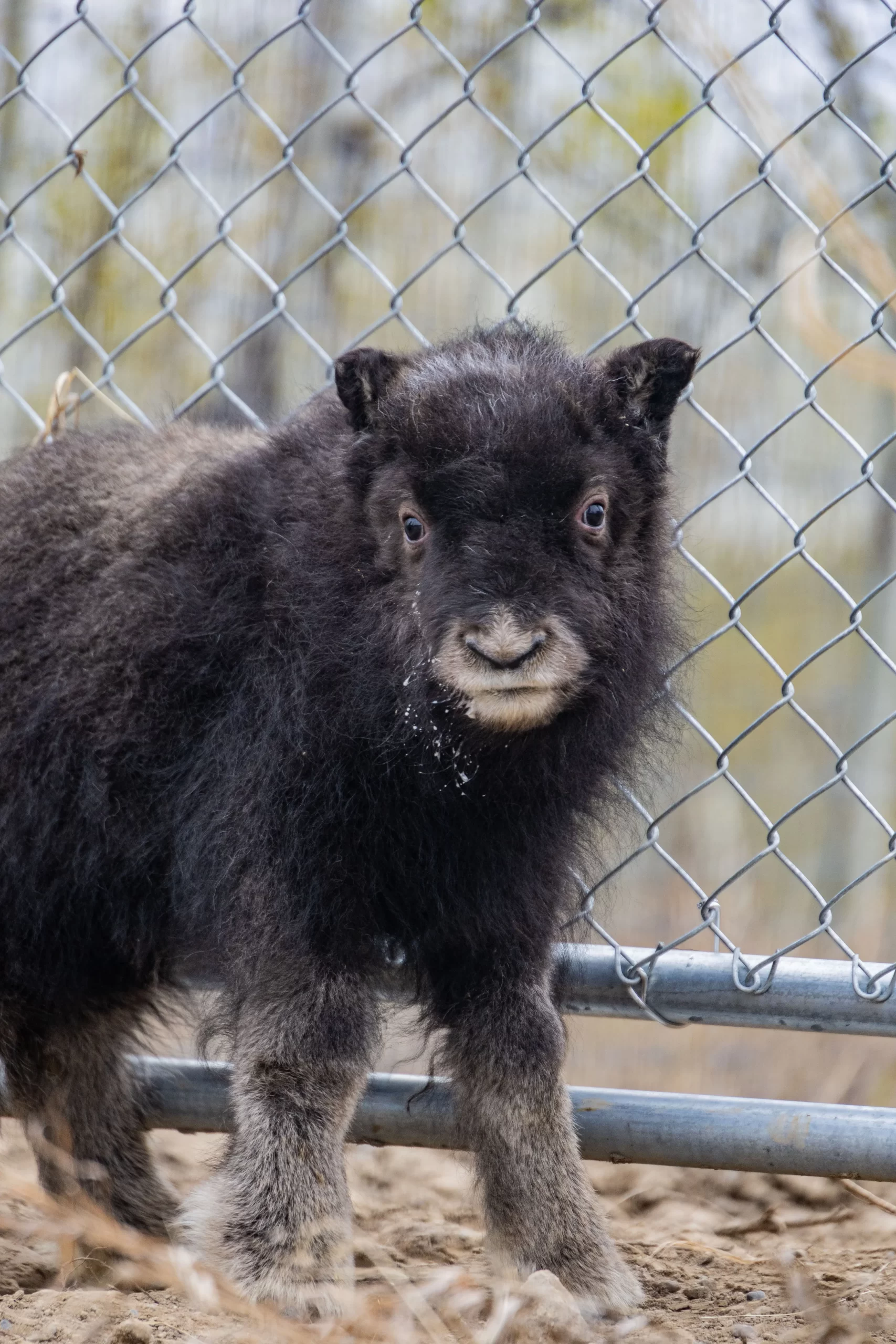
Baby Muskox Photo Credit Britt Forsythe

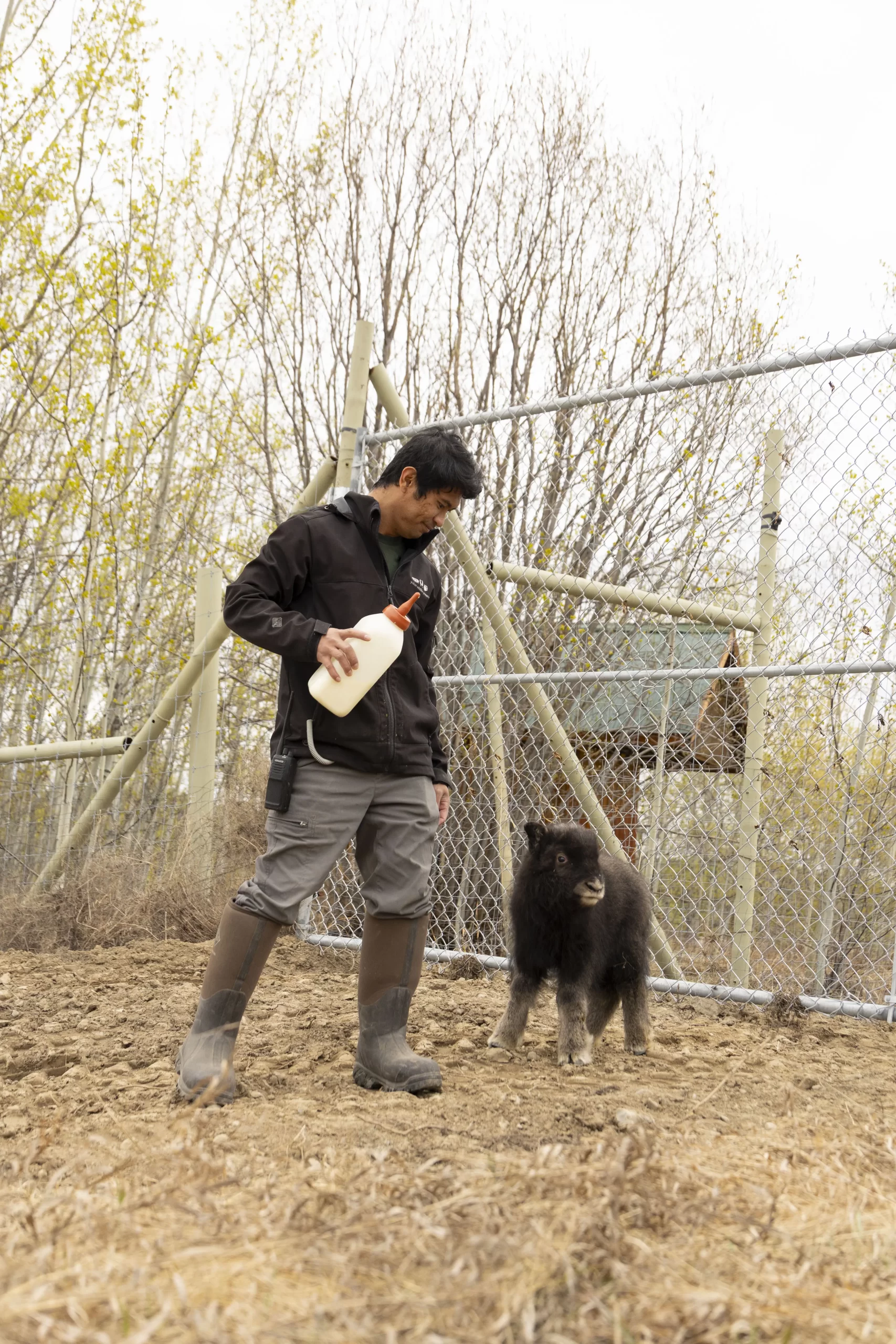
As for the little muskox calf — he’s growing quickly! On May 22nd, at just over three weeks old, he was moved out of the Rehabilitation Centre and into a transitional habitat adjacent to the main herd. This new space allows our team to continue feeding him safely while also helping him gradually reintroduce to his species — a gentle reminder that he is indeed a muskox, even if his first few weeks have looked a little different.

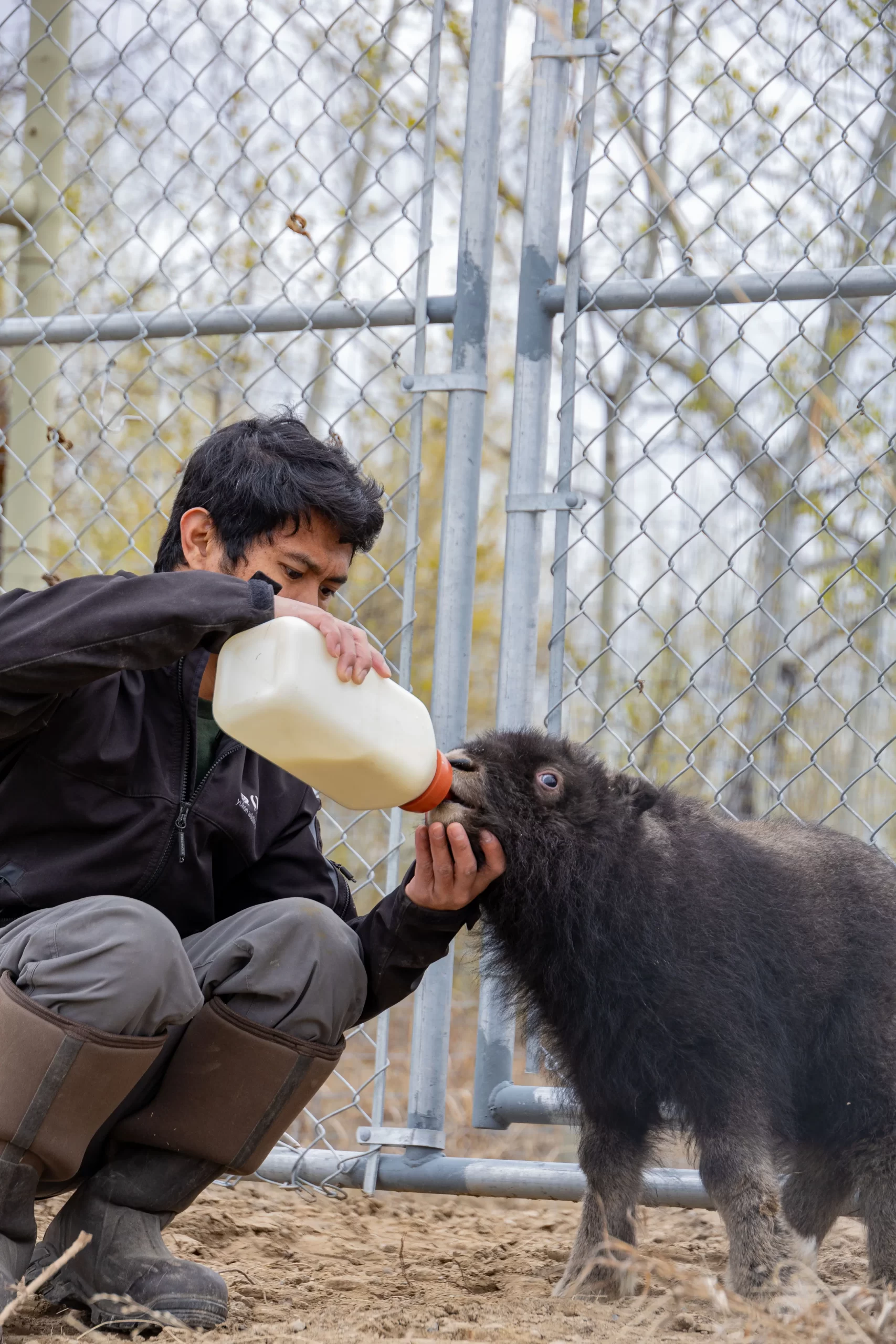
Though he’s still receiving bottle feedings and close care, he’s doing well. If you're visiting the Preserve, you might just catch a glimpse of him  — look up towards the office when standing at the Thinhorn Sheep Ewe's feeding station — but as always with muskox sightings, a zoom lens or binoculars will be your best friend!

Senior Wildlife Care and Rehabilitation Technician Michael Salilig feeding the baby muskox 

Photo credit: Britt Forsythe

Explore by Category

Explore by Author

The Humble Dzäna

The Humble Dzäna

animal rehabilitation

by Rebecca Carter | Apr 10, 2025

8 minute read -

When welcoming folks to the Yukon Wildlife Preserve, us interpreters in the Front Cabin often say something along the lines of “you'll find 10 Yukon animals here,” referring to the ones in our care and pictured on our map. But of course, so many other animals call the Preserve home too. Like the tsäl (sik sik/gopher/arctic ground squirrel) who are the 11th unofficial species that you can find above ground only in the spring and summer!

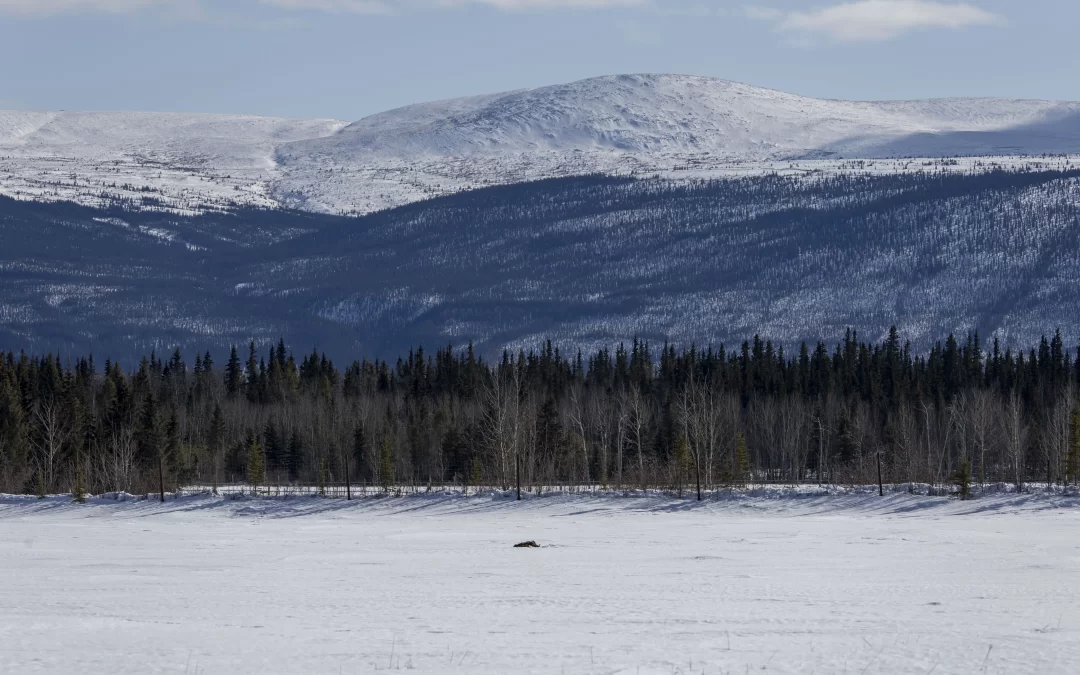
Another newer resident on the Preserve are the dzäna (muskrats). A mansion of a muskrat lodge has emerged in the moose pond over the past year and has remained visible even when covered by snow this winter! While guiding a bus tour recently, this seemling isolated home became the center of attention while we were looking for the elusive kanday (moose). The visitors and I mused “how many muskrats are in that thing?!” I did know a pair of muskrats had moved into the marsh a couple of years ago, and now maybe there’s a whole family living there hosting many parties (yes, I had to force that line so I can say that a group of muskrats are called a “party”). 

But while joking on my tour, I realised that I did not know much about this animal and this inspired me to dedicate some time to the humble muskrat.  

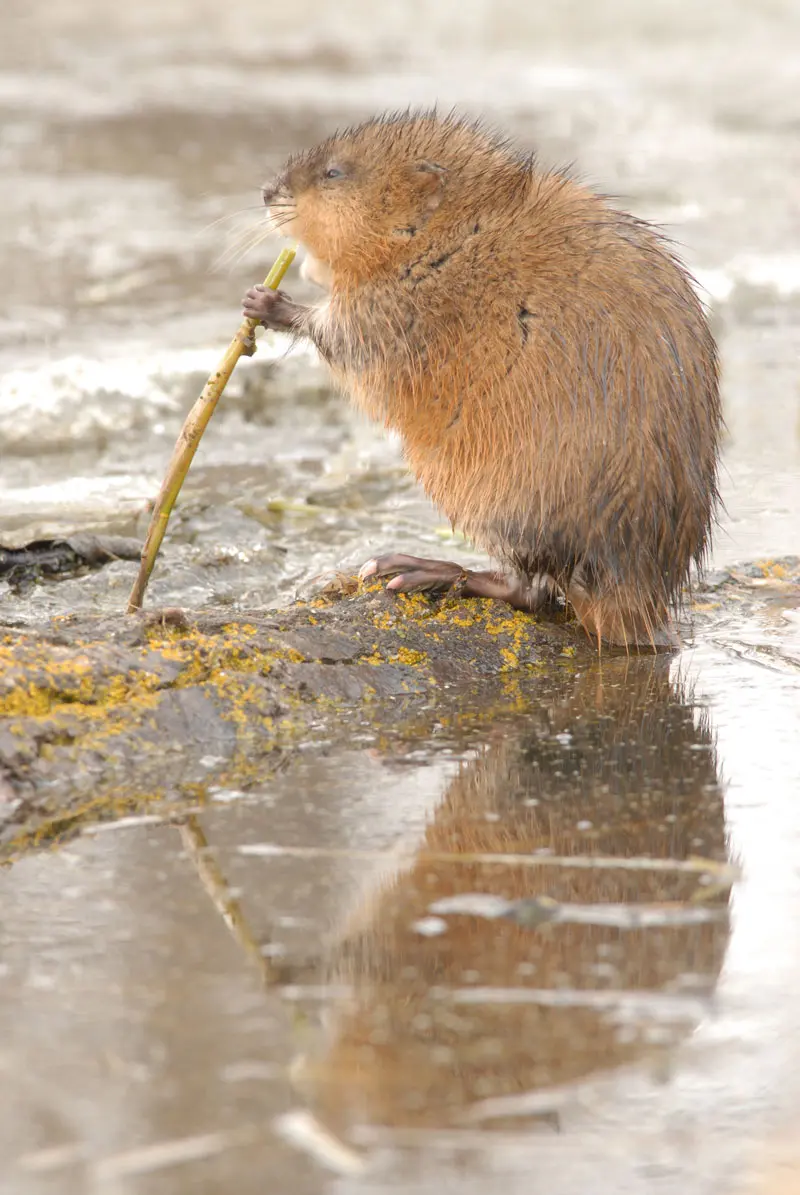
Muskrat copyright and photo credit: Derald-Lobay

Muskrats are often confused with tsà’ (beavers), and though they are very similar, they are not closely related at all. This is a neat example of convergent evolution: two animals may end up looking the same and acting in similar ways because of the shared environment that they live in. Both muskrats and beavers are semi-aquatic rodents, have water-resistant brown and sleek fur, build their lodges in shallow water or along the water’s edge, and forage on the surrounding plants.

When I told my partner that I was writing about muskrats, he made sure that I was including the story of muskrat’s heroic act. Growing up in Manitoba, we both learned about the special place the muskrat holds in Cree and Anishinaabe Creation stories.

Small details can vary with the storyteller but muskrat’s role remains the same. 

As written in his book Ojibway Heritage, elder Basil H. Johnston from Wasauksing First Nation begins the story with the Great Flood, where only the birds and water animals survived and Sky Woman came to rest on the back of a turtle. She asked the water animals to dive to the bottom and collect soil so that she can create land. Many animals - the loon, the mink, the beaver - dove down, down, down but none returned with soil. All seemed hopeless. Finally, the little muskrat softly said “I’ll go.” Everyone laughed as there was no way the tiny muskrat could make it to the bottom when all of the other animals had failed. Despite being ridiculed, the determined muskrat disappeared into the water and was gone for a long time. The animals and Sky Woman stared helplessly into the water until muskrat finally floated to the surface. Sky Woman lifted muskrat’s body onto the turtle and there, clutched tightly in muskrat's paw, was a small clump of Earth. She took the Earth and spread it on the back of the turtle. The wind began to blow while Sky Woman and the animals danced together, spreading the Earth farther until it grew into Turtle Island. The animals celebrated and mourned together for without muskrat’s great sacrifice, Earth and all life would not exist. I personally like the story ending with Sky Woman breathing life back into muskrat’s little body so that he can celebrate too.

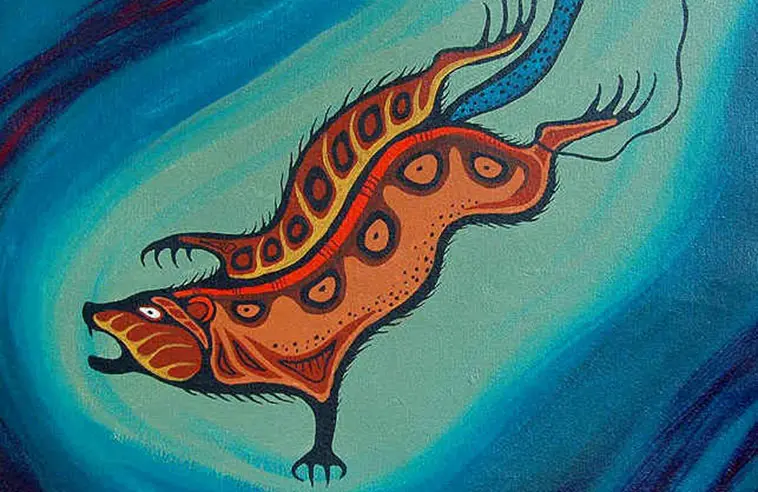
A traditional Anishinabe inspired Painting by: Carl Ray (1943 – 1979) of a muskrat. The Muskrat reminds us to be open to the creative possibilities of living in balance with Creation.

This story intertwines many moral and ethical values tied together with ecological knowledge. Muskrats are indeed very small, weighing only 2-to-4 pounds compared to the much larger 40-to-70 pound beavers. They are incredible swimmers and can dive underwater for 15-20 minutes at a time. When they dive, their heart rate slows and their body temperature plummets to help them conserve oxygen. Small hairs between their toes and their long, rat-like tail helps to propel them through the water. These are all helpful adaptations when you need to forage for plants and food all winter since muskrats do not store food like beavers. It’s no wonder that the small but mighty muskrat could swim to the bottom of the water with all of these traits.

Instead of building dams and lodges made from felling trees like beavers, muskrats build their lodge homes and feeding huts (called push-ups) out of plants like cattails, sedges, and reeds, packed together with mud. As in the story, their front paws are small with long claws for digging and holding building material, and their homes are shaped like the ball of Earth they held on to.

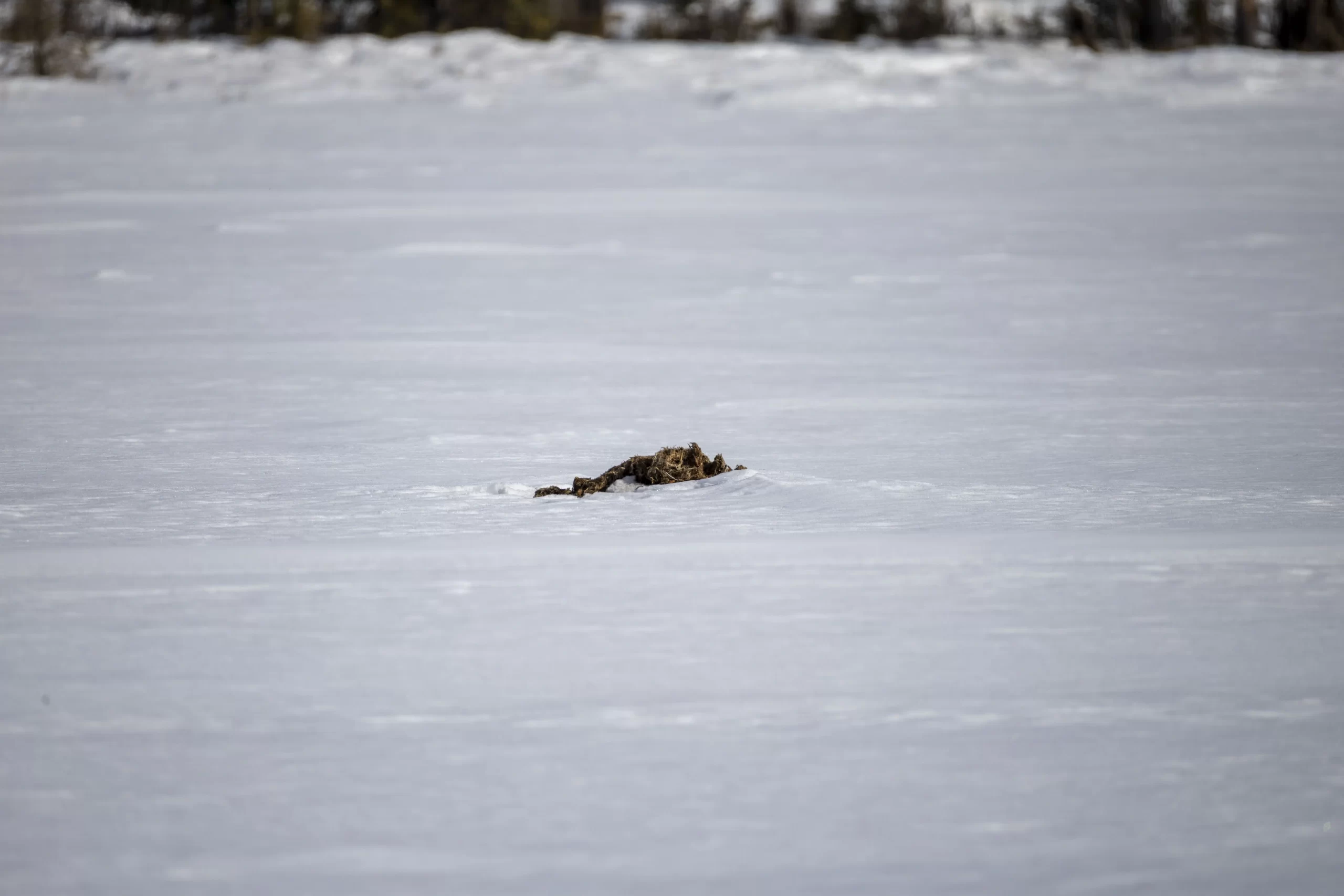
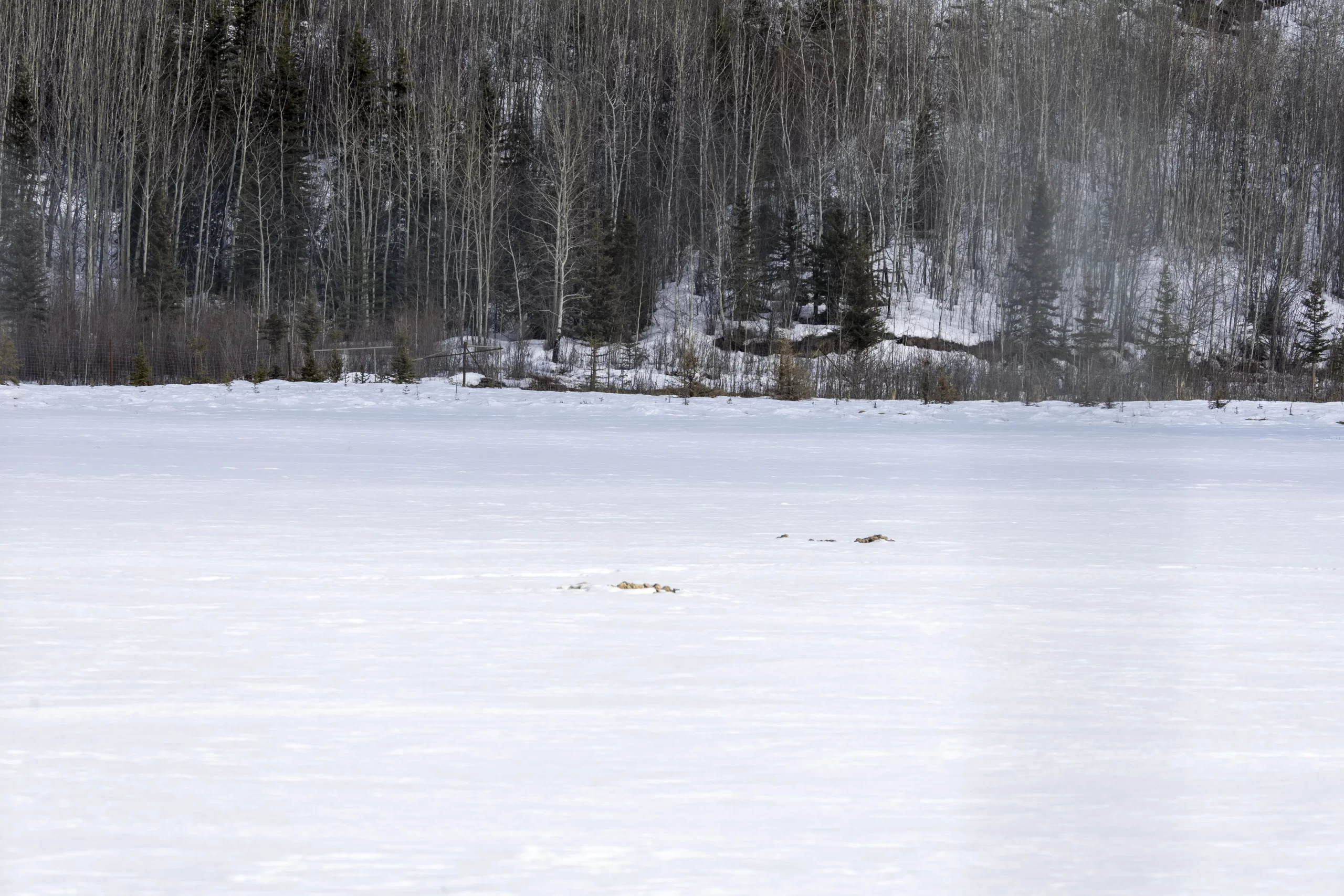
a brown blob of earth pushes up through the snowy icy surface of the moose habitat pond where a muskrat makes its home. Photo Credit; Rebecca Carter.

A brown blob of earth pushes up through the snowy icy surface of the moose habitat pond where a muskrat family makes its home. Photo Credit: Rebecca Carter.

In the winter, you may see push-ups on frozen ponds and lakes. When the water begins to freeze, muskrats will chew a hole in the ice and push up clumps of material, creating an enclosed and insulated resting hut on top of the ice. Like ice fishing shacks on a lake, muskrats can pop out of the water and take a break from swimming long distances, have some lunch and take a breather all while staying protected from the harsh elements and predators.

These push-ups are also fast frozen piles of fresh plants that offer higher levels of protein, nitrogen, and other nutrients that are lacking in the low quality winter plants. These push-ups are great food sources for caribou, moose and bison and may help them make it through the winter with a nutrient boost. In the summer, waterfowl and marsh birds lounge and nest on the lodges, while snakes and reptiles use the muskrat tunnels and homes for places to rest and thermoregulate. I can't help but think of muskrat's desire and determination to help collect Earth as a parallel to the muskrat’s push-ups and lodges for providing food and shelter for other animals throughout the year.

a brown blob of earth pushes up through the snowy icy surface of the moose habitat pond where a muskrat makes its home. Photo Credit; Rebecca Carter.

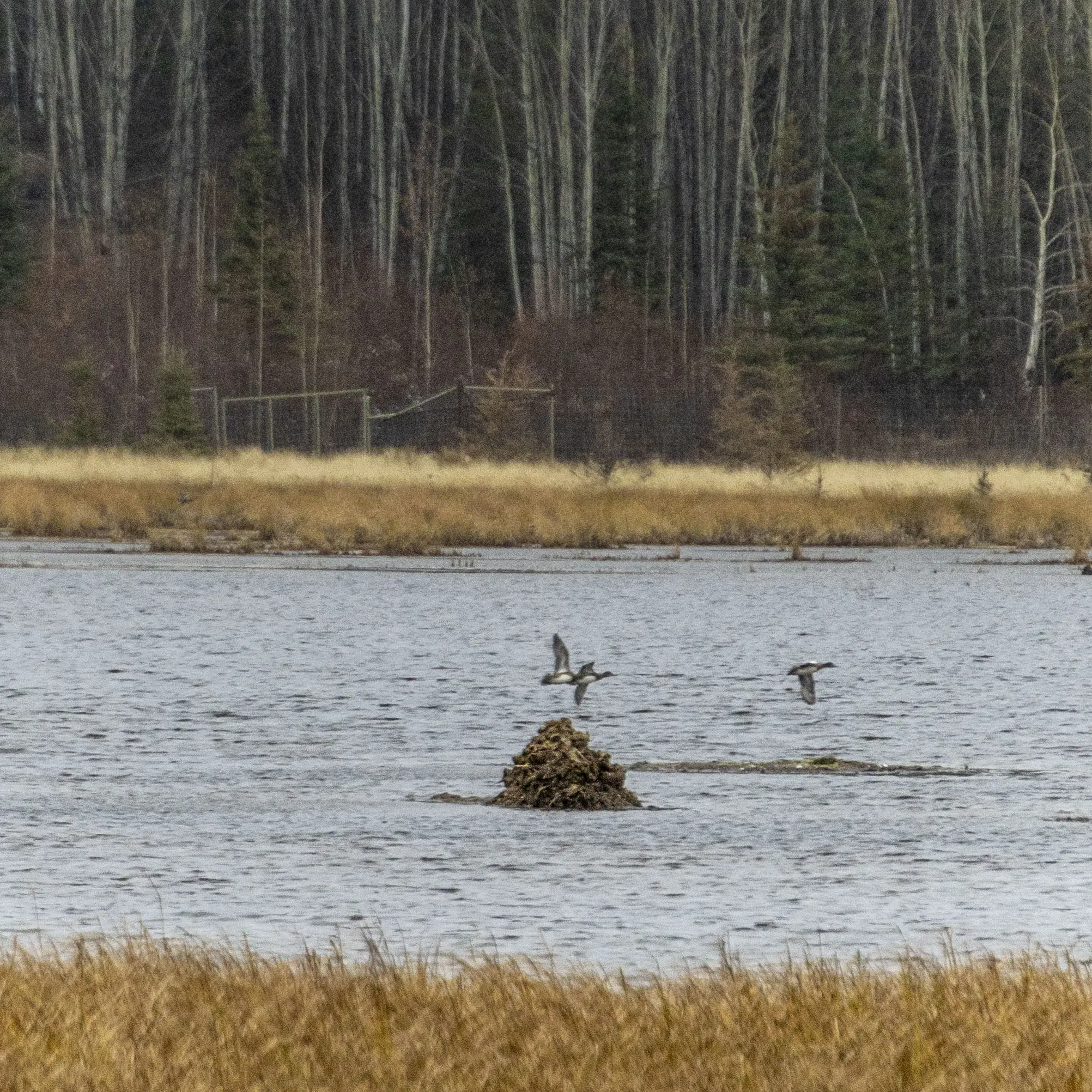
Fall, muskrat pushup with birds soaring above the pushup. Photo credit: Britt Forsythe.

Muskrats are also resilient and adaptable. They can have 2-3 litters per year with an average of 6 kits per litter making their population relatively resistant to disease, predation pressures, and they can survive through drought years by eating a variety of foods and getting water from the plants. Despite this resilience, there is emerging evidence that muskrat populations are declining across North America. The exact cause remains unclear for these declines, but a loss of critical wetland habitats and the connectivity between wetlands may have a large impact on populations.

I read this quote from elder Benton Banai that is fitting here:

 “No matter that marshes have been drained and their homes destroyed in the name of progress, the muskrats continue to grow and multiply. The Creator has made it so muskrats will always be with us because of the sacrifice that our little brother made for all of us many years ago when the Earth was covered with water.”

Muskrats play such an important role in the ecology of wetlands, Indigenous cultures and economic importance for trappers that we cannot overlook the muskrats and their habitat needs. One of the values that we can learn from the Creation story is that humans and animals are interconnected and living together harmoniously ensures the survival of all. 

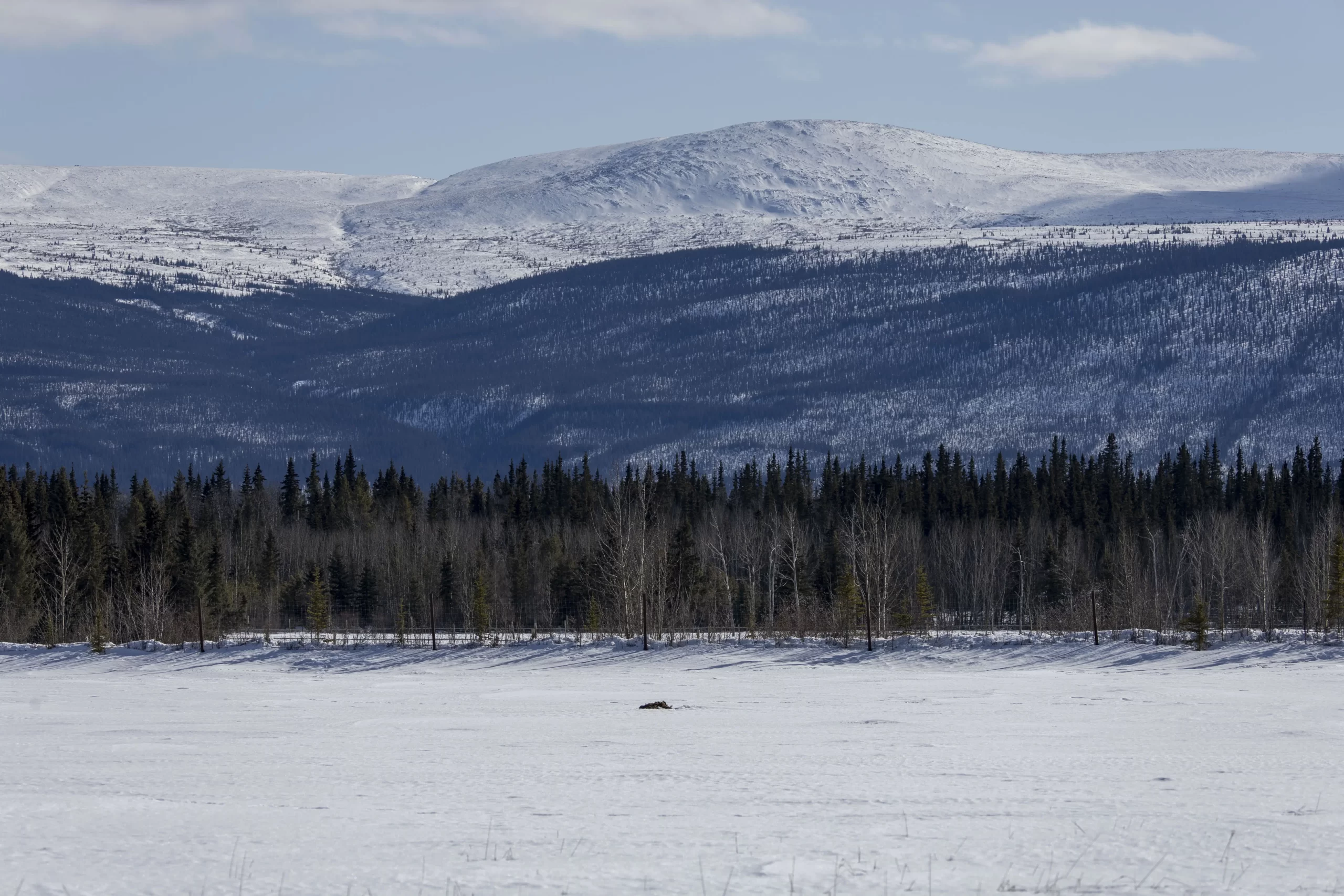
Pushup from a muskrat in the Preserve's Moose Pond with a wide view of the land including snowy mountains and boreal forest. Photo Credit; Rebecca Carter.

From the muskrat, we can learn to be determined and courageous when faced with a seemingly impossible task, to cooperate and help one another, to do acts not for the recognition but because it is the right thing to do, and to honour and respect all creatures regardless of their size. So the next time you visit the Wildlife Preserve, see if you could spot the small, humble, determined dzäna in the marsh. We can and do have a lot to learn from our wildlife companions.

References

Department of Environment. 2024. Common Muskrat. Yukon Government, Department of Enivronment. https://yukon.ca/en/common-muskrat

Errington, P.L. 1939. Reaction of muskrat populations to drought. Ecology, 20(2): 168-186. 

Hindle, A.G., et al. 2006. Body cooling and the diving capabilities of muskrats (Ondatra zibethicus) A test of the adaptive hypothermia hypothesis. Comparative Biochemistry and Physiology, 114: 232-241. https://sci-hub.se/10.1016/j.cbpa.2006.03.001 

Hinterland Who’s Who. 1986. Muskrat. Environment and Climate Change Canada, Canadian Wildlife Federation. https://www.hww.ca/en/wildlife/mammals/muskrat.html

Jung, T.S., Stotyn, S.A., and Larter, N.C. 2019. Freezer meals: comparative value of muskrat (Ondatra zibethicus) push-ups as late-winter forage for a northern ungulate. European Journal of Wildlife Research, 65:61.https://doi.org/10.1007/s10344-019-1301-7

MacGregor, D. 2013. Teachings from the Muskrat. Muskrat Magazine. https://muskratmagazine.com/teachings-from-the-muskrat/

Sadowski, C., & Bowman, J. 2021. Historical surveys reveal a long-term decline in muskrat populations. Ecology and Evolution, 11(12): 7557-7568. https://doi.org/10.1002/ece3.7588

Yukon Native Language Centre. 2002. Southern Tutchone Noun Dictionary. Retrieved from: https://ynlc.ca/

Rebecca Carter

Rebecca Carter

Senior Wildlife Interpreter

Rebecca joined the Wildlife Preserve in the summer of 2020 after moving from Manitoba to the beautiful and wild Yukon. Rebecca earned a degree in Biology with honours from the University of Winnipeg studying behaviour in mule deer (one of her top 20 favourite animals.. it’s hard to choose!). She loves connecting with others through nature and sharing stories and knowledge about the animals at the preserve with visitors.

867-456-7400
[email protected]

Explore by Category

Explore by Author