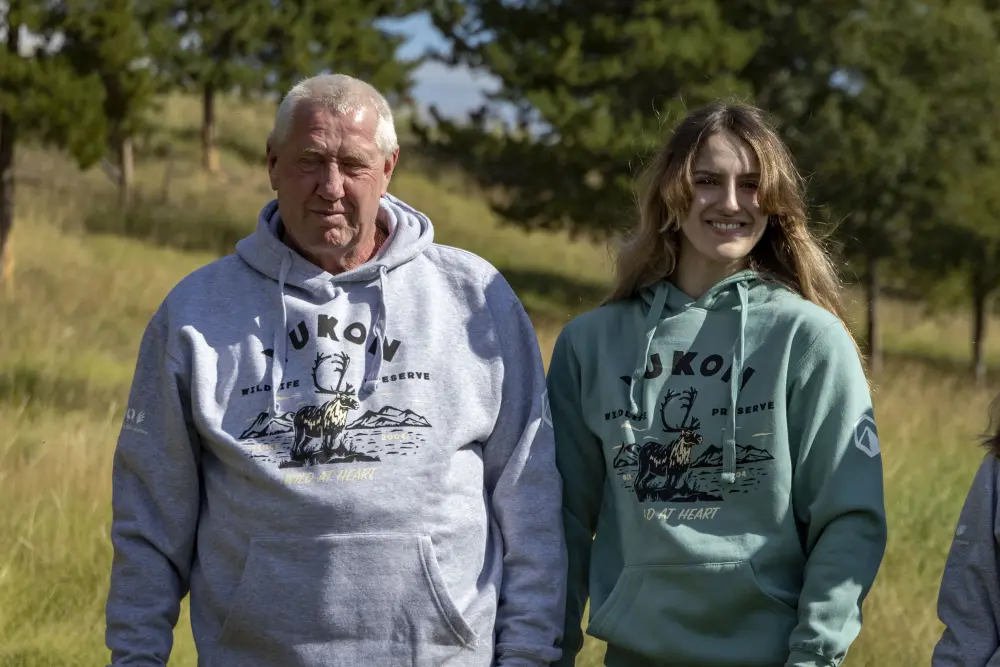
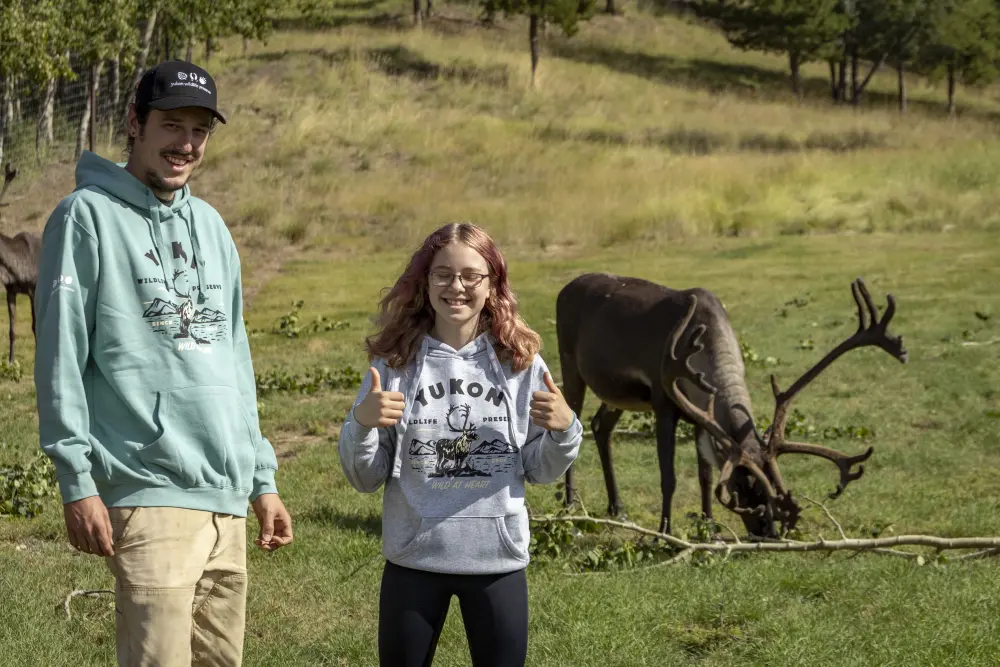
Yukon Collaboration Sweater

Yukon Collaboration Sweater

meet the north

by Lindsay Caskenette | Aug 18, 2023

6 min read

The Visitor Services team is working hard to connect with local artist to bring the connections to nature home with you. We strongly feel that by taking the time to explore these partnerships we can create unique items that guests to the Preserve can take home all while knowing their purchase in the Preserve's Little Gift Shop not only supports these northern people but all revenue from the retail sales goes back into the operations of the Preserve, supporting the northern animals in our care.

Right now the Preserve does not do online sales. We're a really small team that is situated out of town, and with some staff also living out of town, doing online sales and shipping feels a bit outside our capacities for the time being. 

Yukon Built is selling stock of these sweaters online - check it out!

• • •

Photo of moose in water.

Way back in 2020, when travel came to a near stand-stil, Lindsay, Manager of Visitor Services, started exploring ideas for the Preserve's Little Gift Shop to help diversify our products and bring them a little closer to home. We wanted products that celebrated our community and are inspired by anc created in the Yukon, the North. I had a bit more time then to explore connections with Yukon artist and from that over the years we created hats, mugs, and necktubes, and stickers and t-shirts.

• • •
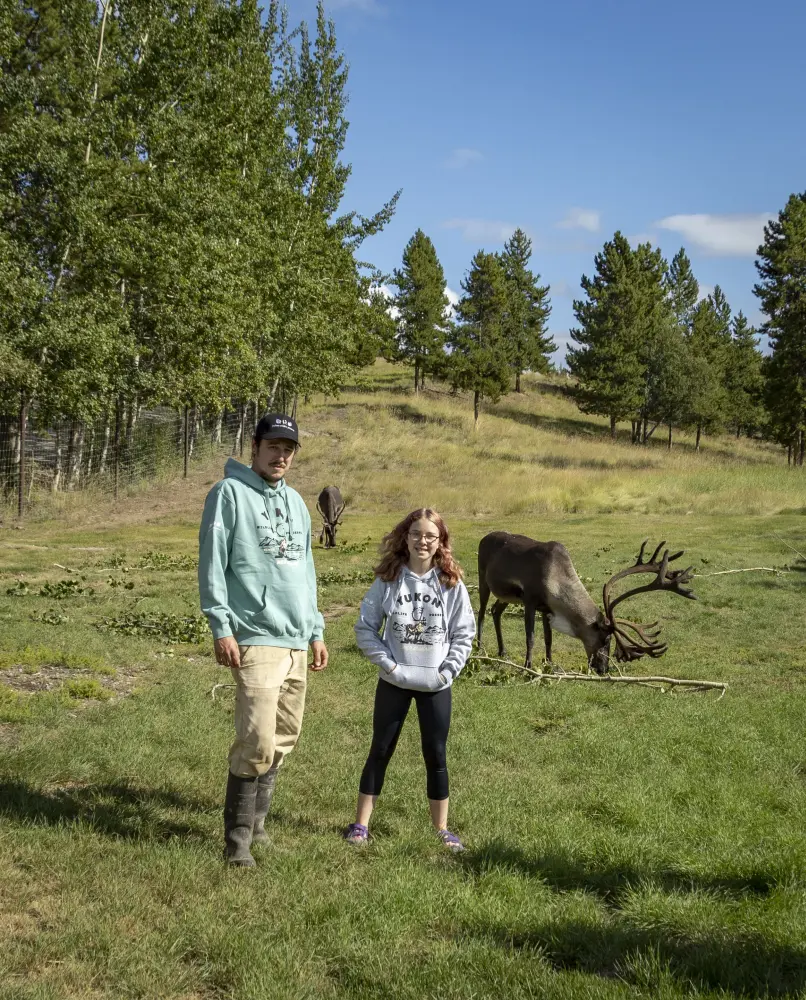
From this we started to connect with locals for the first time through our gift shop, previously, mostly non-local visitors were supporting the gift shop with purchases to commemorate their visit. We just didn't have items in the gift shop that seemed to spark the interest of our local community. 

• • •
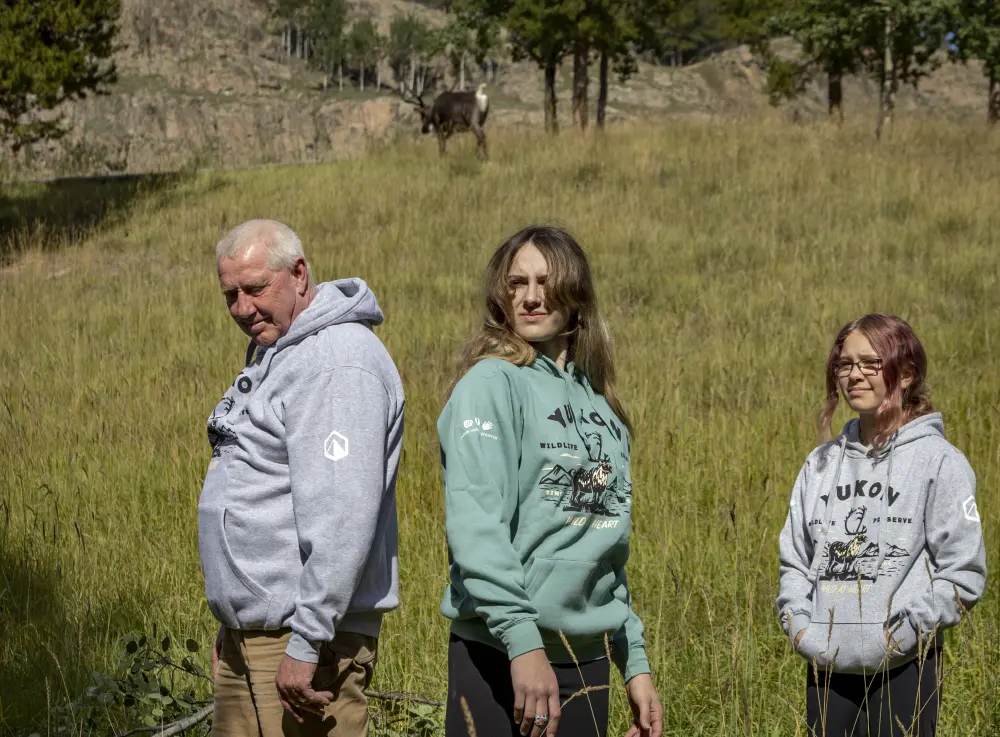
Photo credit: J.Paleczny

Over the years, I heard visitors and staff alike say we needed a sweater in the gift shop. After collaborating with Tedd Tucker for a YWP special design t-shirt, and the popularity of this, we knew we wanted to go back to this talent and get some help with some new design idea that would fit well on a sweater. 

• • •

Photo of team providing care for moose in the field.

We also knew there was a strong, well-loved local brand that dialed in the comfy minimalist hoodie style and also did other Northern collaborations with Air North and the Yukon Quest. So, you guessed it, we reached out to Yukon Built back in December of 2020 and started, what ended up being a long (but worthy) journey to this very perfect Northern collaboration sweater! 

• • •

Photo of staff using stethoscope to listen to moose heart rate.

Wild at heart - all the proceeds from the sweater sales will be going back into the Preserve, and directly support the Wildlife Rehabilitation program. The Preserve has been the place in the Yukon where injured and orphaned animal get a second chance at life. The support from our community, local and afar, has helped us give them the best possible veterinary care - and get that back on their feet or wings! Purchasing this sweater will also help us keep Yukon wild at heart! 

• • •
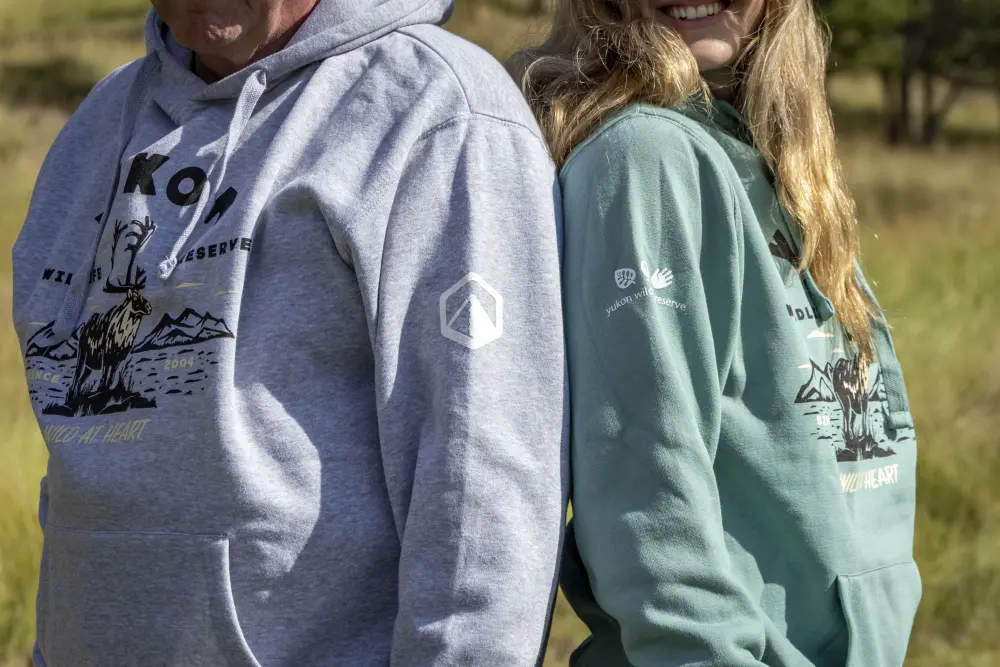
The Preserve has grey and sage colours for sale only at their Little Gift Shop. Yukon Built store in Whitehorse is selling grey and a sandy beige colour!  Yukon Built has also elected to take a portion of their sales from each sweater sale for wildlife rehabilitation at the the Preserve. 

Learn more about wildlife rehabilition at the Preserve! 

• • •

Photo of staff using stethoscope to listen to moose heart rate.

Whether you're camping, hiking, or just hanging out, this mid-weight fleece hoodie is up for the task.

  • Features: This classic hoodie features a special edition YUKON WILDLIFE PRESERVE print, a flat draw cord, and a double-layered fleece-lined hood

  • Fit: Unisex sizing with regular fit

  • Material: 60% cotton, 40% polyester ring-spun fleece

  • Care: Due to the cotton content, this hoodie may shrink a little! Wash in cold water with like colours and air dry.

Sweater                          $75
(with each sweater sale proceeds go towards Wildlife Rehabilitation). 

• • •

Photo of staff using stethoscope to listen to moose heart rate.
Lindsay Caskenette

Lindsay Caskenette

Manager Visitor Services

Lindsay joined the Wildlife Preserve team March 2014. Originally from Ontario, she came to the Yukon in search of new adventures and new career challenges. Lindsay holds a degree in Environmental Studies with honours from Wilfrid Laurier University and brings with her a strong passion for sharing what nature, animals, and the environment can teach us.

867-456-7400
Lindsay@yukonwildlife.ca

Explore by Category

Explore by Author

Yukon Wildlife Preserve
Box 20191
Whitehorse, Yukon
Y1A 7A2

Proud member of:
CAZA Logo

With the support of:
Yukon Government Logo
Faces of the Preserve: Doug

Faces of the Preserve: Doug

meet the north

by Doug Caldwell | May 12, 2023

12 min read -

It takes passion and love for Yukon’s wild spaces and the wildlife that inhabit it, to support the Yukon Wildlife Preserve - a non-profit organization dedicated to the education and protection of Yukon’s natural spaces. 

Meet our Wildlife Interpreter Doug! Here he shares his unique and fascinating life story that led him to not only to the Yukon but eventually to the Wildlife Preserve.

"I was born in Victoria, BC in the mid 50s and am the eldest of four children. Mom said I was born with an extra helping of curiosity. We were the typical nuclear family of the day. Both my parents enjoyed camping and the outdoors, so we did that a lot. I can remember wet, rainy days in a small tent on the beach near Tofino or in one of the provincial parks up island. When I was around seven, we quit the tent and graduated to a small travel trailer for our camping shelter.

We kids explored everything that did not run away as we got closer. Each year we would expand our knowledge of the forest plants and animals, the rocks, waterways and seashore to see what we could collect as we explored and combed the beaches with our shoulders sunburned from squatting in tidal pools observing all the life they contained. Mom was ever diligent to make sure nothing that was dead or could die found its way into the trailer or the back seat of the car. I had to empty my pockets into a plastic pail before I could enter…it was a rule!

One morning, my sister Sharon found a tiny grey kitten snuggled up to the warm rocks of the campfire at Ivy Green Provincial Park. That was the only creature we were ever permitted to take home with us and that cat named Smoky lasted a good long time as I recall, probably because it was spoiled terribly compared to the life of a feral animal trying to make a living in the wilderness.

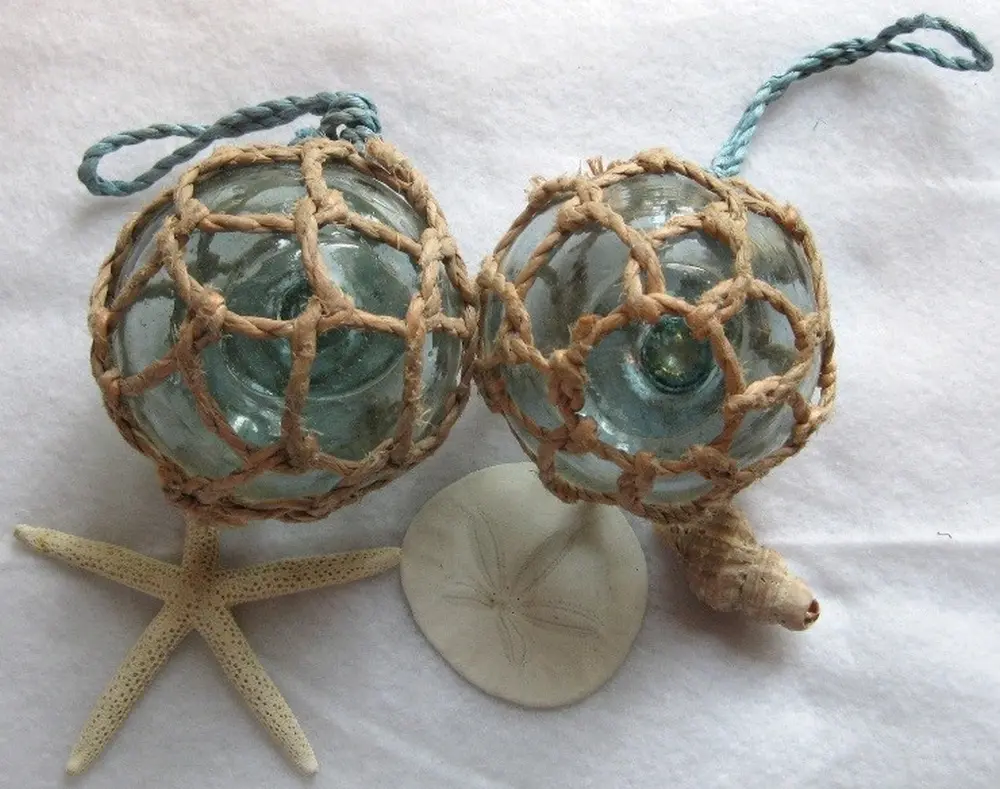
My siblings and I lived in a time that is far removed from today. Back then flotsam on the beach may have included Japanese fishing floats hand-blown from coarse green glass and wrapped in netting woven from long eel grass. We hunted sand dollars of all colours & sizes (the best ones were at Tribune Bay on Hornby Island), crustacean shells, wave-polished glass and stones, crustaceans and hermit crabs out shopping for a new shell to call home, and the jetsam that washed in on the previous high tides. Each day was fresh and new waiting to be discovered, poked, prodded and inspected.

Flotsam on the beach may have included Japanese fishing floats hand-blown from coarse green glass and wrapped in netting woven from long eel grass

Sometimes we would find something that we had seen in a nature book our paternal grandfather had given as a gift, so returning home the book was found and we would learn more about our latest discovery.  My grandfather was hopeful that we kids would take an interest in the natural world, and he would buy us books to inspire our curiosity to all facets of the earth and all that crawls on it. He gifted us with the complete Time Life series of the natural world and an annual subscription to National Geographic. I still have those books and I will sometimes open one and be transported back to the big green chair in our living room sitting next to my grandfather’s spirit as I re-read the descriptions of animals or the planet and how it all works as a singular complex biological entity. 

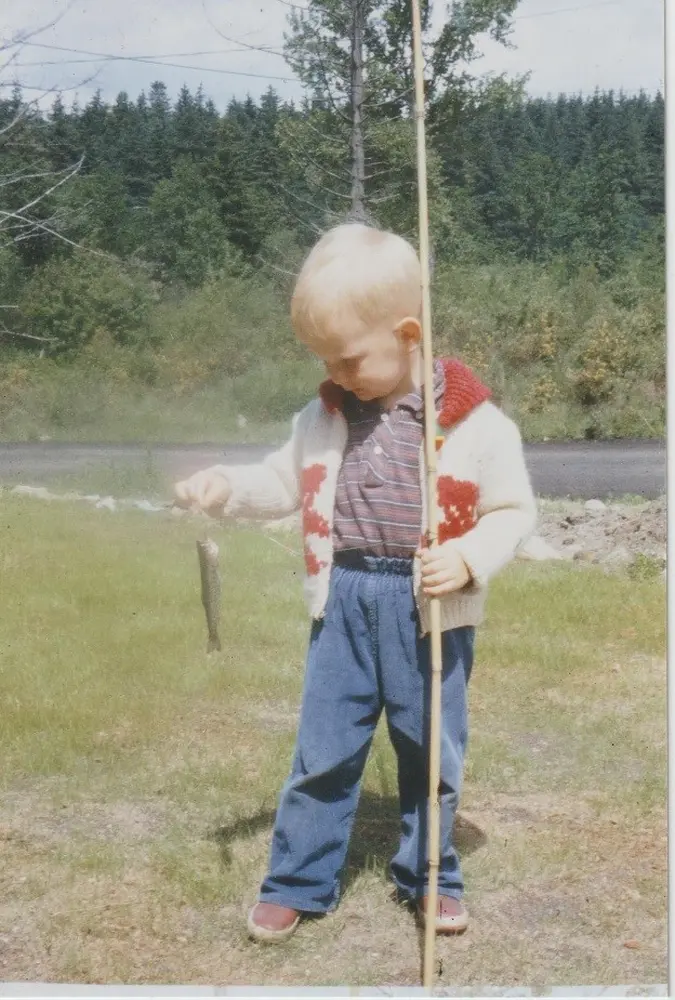
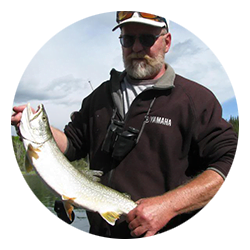
My grandfather was a keen and accomplished angler who infected my dad as a kid with the same passion for testing wits with fish. Grandpa and dad passed this affliction to my brothers and I, and we would often be on the Malahat long before the sun came up; my brother Dave and I slept in the back seat while Dad and Uncle John navigated us to that day’s selected fishing spot. The Cowichan, or Englishman’s River, the Oyster and Gold Rivers, Sooke and Campbell River and many others, were flogged with fly patterns and spinners for rainbows, sea-run cutthroat, seasonal salmon and steelhead. Sometimes we drove along an old logging road to get to a special spot my dad fished with grandpa when he was our age.

Doug's First Fish!

My first fish!

My grandfather was a significant contributor to my perspectives today and I often recall his comments from my childhood when I am telling our visitors about the wildlife here at the Preserve. Back then it was called ecology, today it’s called environmentalism. In each time frame it is still a profound love of our world and all the creatures that live with us.”

When I was twelve the family moved to the mainland and we settled in the cattle farming region of south Surrey. I won’t bore you with my teen years, suffice to say I was right and all those who opposed me were not.

After graduating high school at Lord Tweedsmuir High School in Cloverdale, I worked various jobs in the marine sector from maintenance to a deckhand on a salmon trawler to eventually a trained mechanic with the Mercury Marine in Burnaby, B.C.  

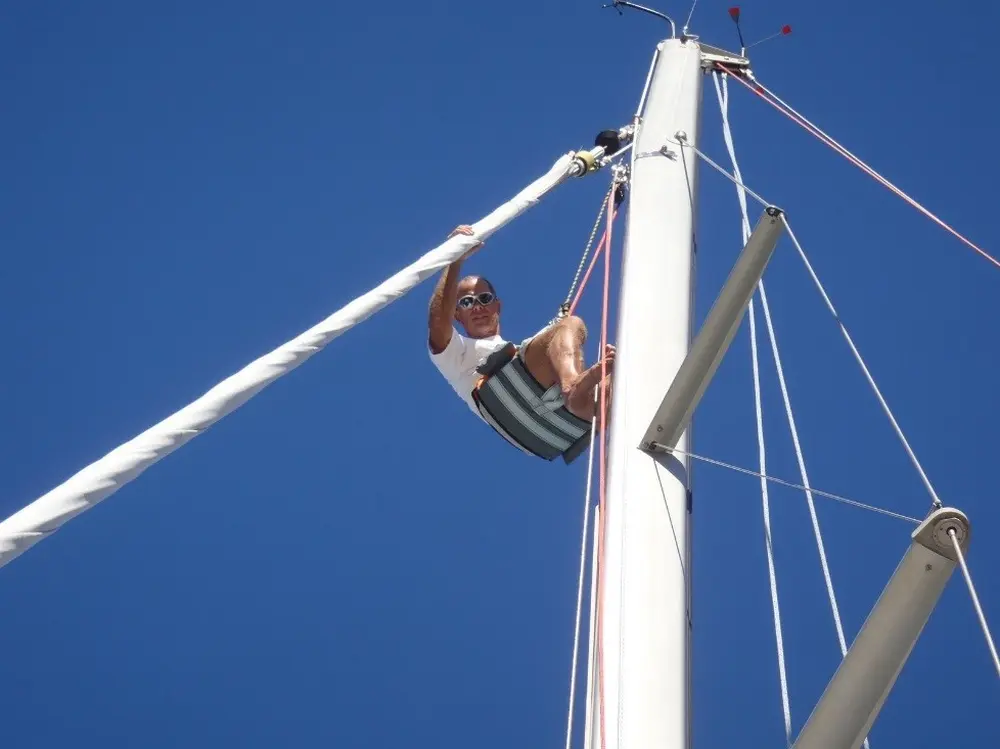
“Being a not-so-big-kinda guy I often got the jobs working down in the oily dank and sour bilges and honestly I quickly developed a dislike for that working environment, so I began to learn about navigational gear and other electronics that don’t live in the bilges, rather they cling high up on the masts and elevated superstructures where a skill-testing climb was required. I quit being a bilge rat and became a mast monkey. I spent a few years installing and repairing radio gear, radar systems, and similar equipment in boats, aircraft, cars and trucks.

My mast monkey days!

Time passed and I met and married my wife Chris. In the fall of 1976, I was recruited for a job working as a marine mechanic for the National Geographic’s support depot in Perth, Australia. At the same time my dad had a business venture here in Whitehorse he wanted me to work in. Two job offers: One hot - one cold. My mom ended up making the choice for us as she quite passionately said she was not going to sit on an airplane for 15 bloody hours to visit her grandchildren. We moved to Whitehorse.

For our first two years in the Yukon, I spent working to get my dad’s business up and running, then I worked at Sea-Land Recreational fixing boats until I jumped out of one and injured my knee which would require 8 weeks in a cast. Thus began my four year gig at CKRW as an announcer/operator- a DJ in common terms. I loved that job; playing music and informing the audience of the day’s events. But we had another baby on the way which required more income, so without another job waiting, I quit the radio business in 1984 and looked for new employment opportunities which led me to a different kind of radio business.

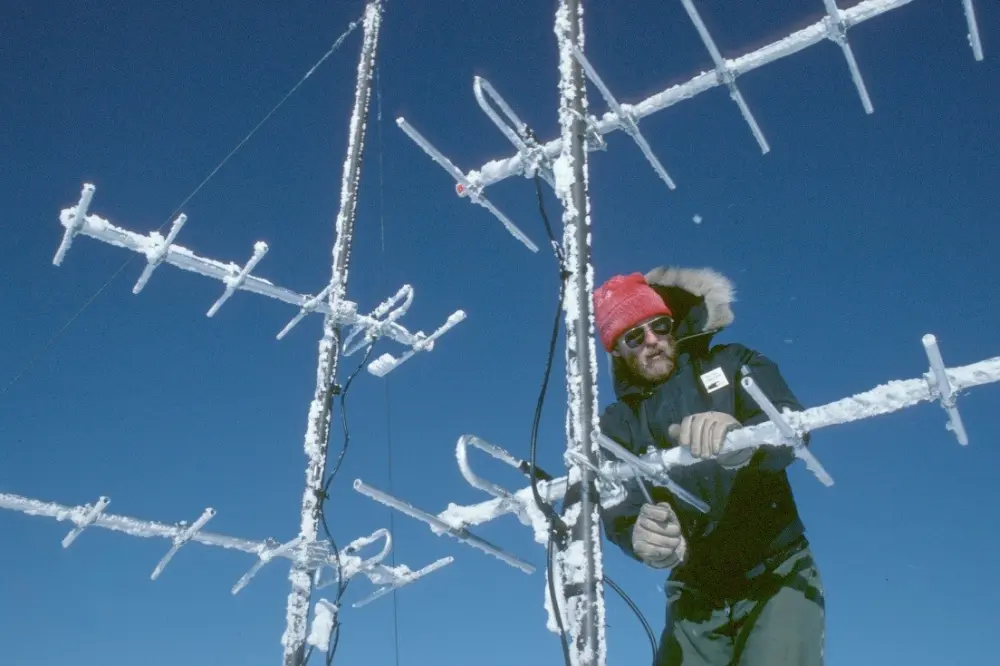
Next, I accepted a job with Total North Communications which took me to many remote wilderness locations all across the North as we installed remote communications systems for mining camps, exploration ventures, governments, community radio and TV stations, and mountaintop repeater systems which put us right in the middle of the wilderness.

Repraing the Carcross TV system.

I got paid to travel to exotic remote northern places that people pay dearly to visit and experience. While working in the Kluane National Park area on a mountaintop, young Dall sheep would be sniffing in our toolboxes unafraid as we were quite probably the first humans they had ever seen. We watched from the safety of a helicopter as the namesake grizzly of the Golden Bear Mine south of Atlin tore apart a repeater box we thought would be bear-proof…we were wrong. One trip into the far north we had to land the Twin Otter on the frozen tundra, roll a couple fuel drums off the plane and pump the fuel into the plane as a group of caribou watched from some distance. Then we put everything back into the plane and resumed our travel before it got too dark.

Left to right: Refueling the Carcross TV systems on Caribou Mountain; Repeater cornshell Kluane National Park; Installing a repeater near Kluane Lake. 

This job took me to some awe-inspiring locations, often where humans had not yet made footprints. I met some truly amazing people and had some adventurous experiences, some of which prompted my wife to beg me to quit field work and find something safer. Hard landing a helicopter is not a crash, but she saw things differently than I, so after the third hard landing I gave up field work and moved upstairs into sales and marketing and got fat.

In 1991 I was hired on with the Yukon Government’s Executive Council Office to work in policy and communications and the next 25 years went by in a blur. In 2016, I retired from my formal working career with the government, but I don’t sit still very well and needed something to do.

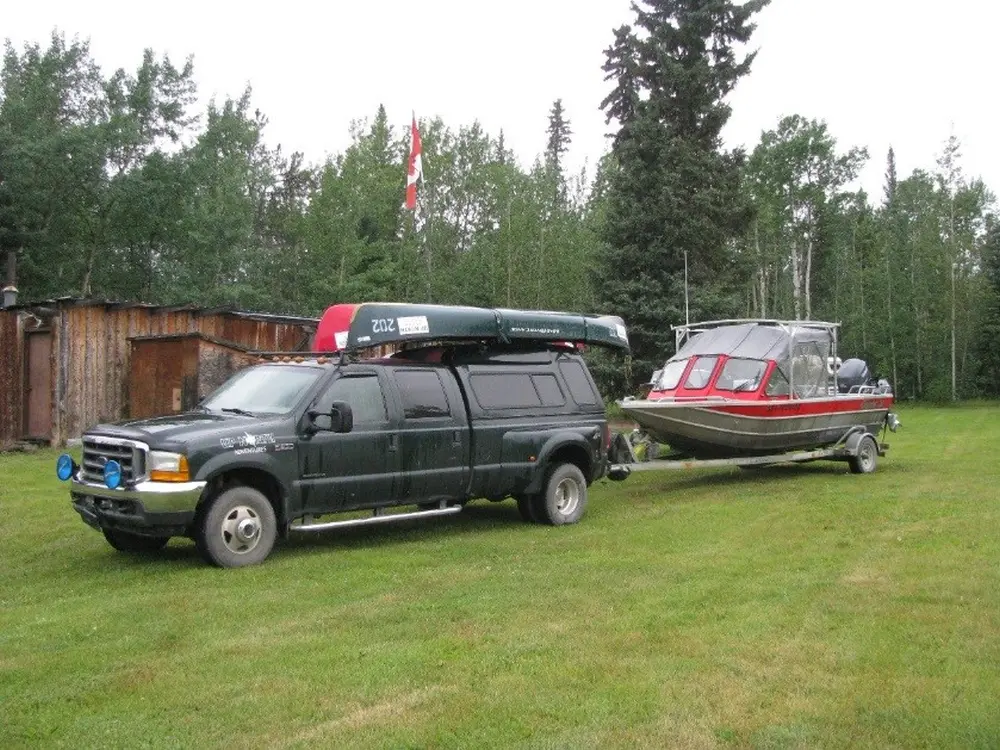
After a month of completing chores around the house and finishing the ‘honey-do’ list, Up North Adventures called to ask if I would be interested in piloting their rough water support boat used to ferry canoe tour groups through the rough and dangerous waters of Lake Laberge and a few other Yukon water systems. Additionally, I would guide fishing parties in search of our local fish species. Inspired by working in that wilderness setting once again, I thought I was set for the rest of my working days. I had a portable office that met my needs very well.”

My portable office for a few years!

After an injury however, a change of pace was needed.

"I saw the job posting here at the Preserve and I considered this would be a great place to work based on previous visits with my grandchildren, and the lack of heavy lifting suited me as I hoped to grow gracefully into my autumn years.

Doug shares stories with guests about the Arctic Fox.
Photo credit: L.Caskenette

When hired and oriented to my new role as a Wildlife Interpreter it took some time for me to become satisfied with the tour presentation I had created. There is so much to share in just the limited hour and a half of a bus tour. Then one day, my memory took me back to one of those chats with my grandfather explaining the world around us and I then knew what my goal here at the Preserve was and I have been refining my tour presentations ever since. I have a presentation now for each season focusing on what the animals are doing at that time in their lives.

I have made it my mission to try and inspire young people to have the same sense of awe and wonder of our natural world as I did when it was explained to me in ways I understood and appreciated. So that’s my focus today - I want to inspire the next generations to love, understand and admire our natural wilderness and the ecology that makes it work.

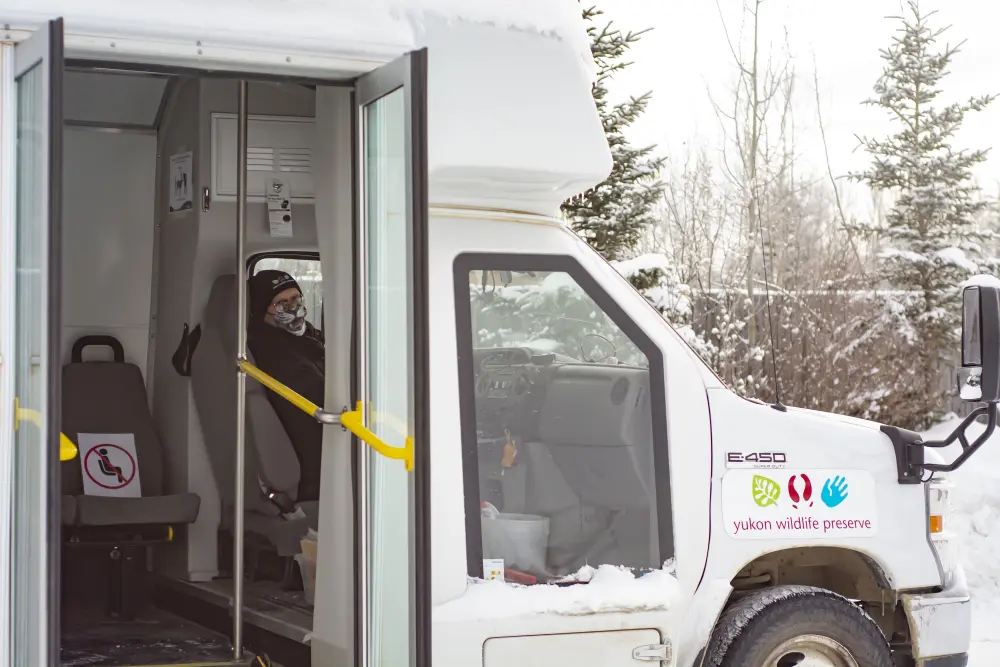
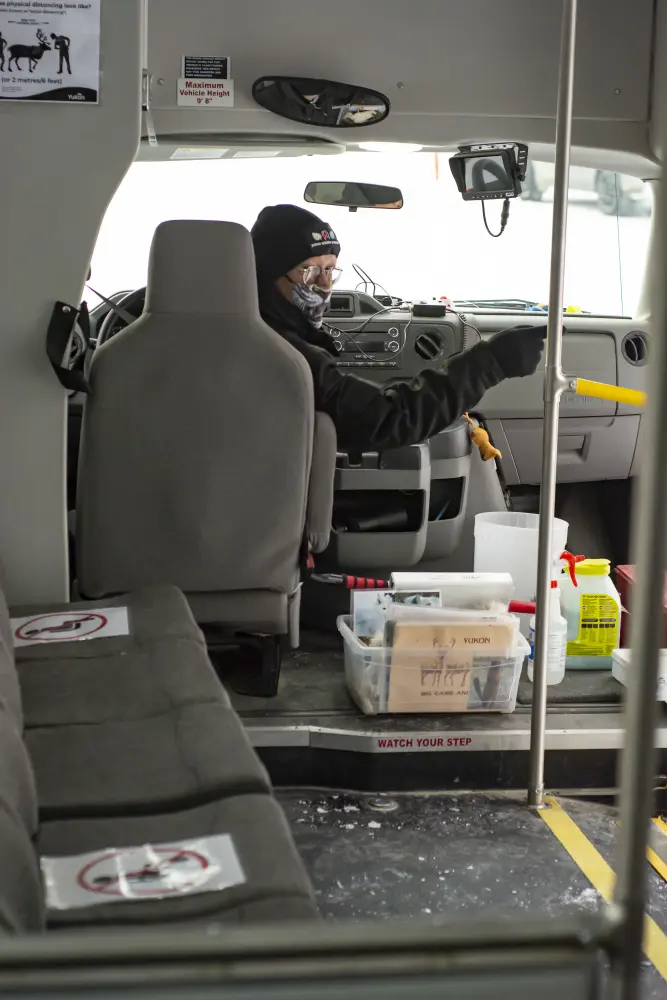
Guided bus tours are offered daily at the Preserve. Book online!
Photo credit: L.Caskenette

Getting to know our visitors is another part of the job I love. Our international visitors are often drawn here by the romantic stories of the Gold Rush and other days gone by in the North. Many of them hope to see the iconic animals of our unspoiled paradise and learn more about them. I am happy to report we often make some long-held wishes come true for these people as they see a real live moose, musk ox, or other favourite creature up close for the first time. Many visitors are already awestruck with the Yukon and have questions about living here and enduring the cold winters, viewing the Aurora and how we cope without all the big-city conveniences they are familiar with. Some of our elderly visitors are transported back to the memories of their childhood when indoor plumbing was a luxury few had in their homes, very few owned automobiles and the technologies of today were promoted in Popular Mechanics.”

Northern and Arctic icons, moose and muskox.
Photo credit: L.Caskenette

Over the past five years, Doug has met quite a number of people from different walks of life, but a few occasions have stuck out to him.

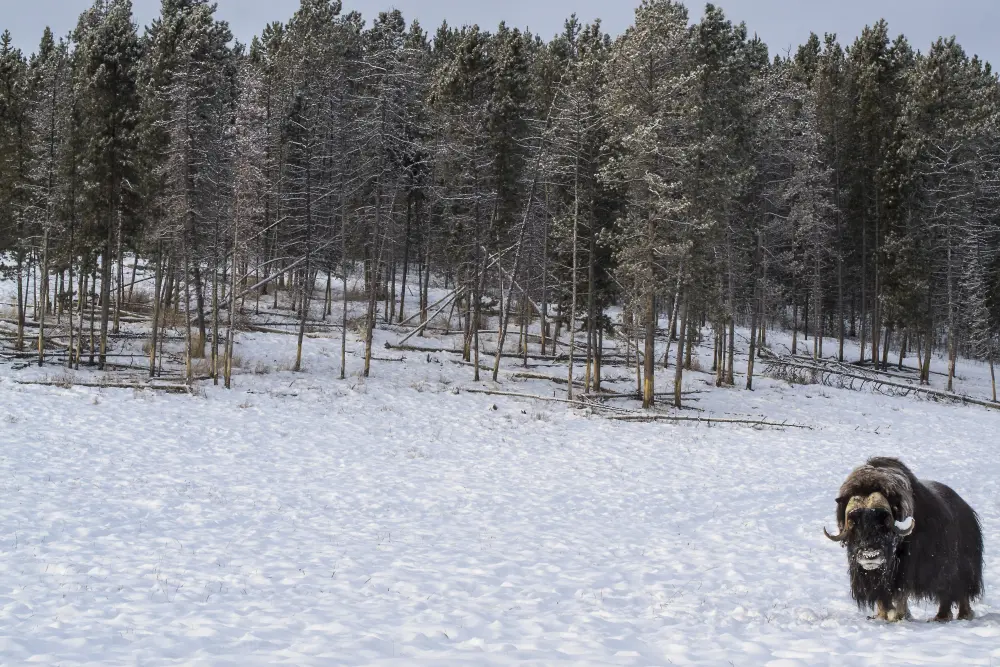
“One was in the winter of 2018 when a couple from Barcelona toured the Preserve. They were the only ones on the bus and it was around 20 below and we had stopped at the muskox platform for a closer look. I told them about the animals and their natural environment and answered their questions. The lady walked closer to the fence and Jesse, one of our cow musk oxen slowly walked through the snow towards her and stopped so they were only about ten feet apart, face to face with just the wire fence between them. They remained silently staring at each other this way for a bit of time until we got back on the bus. Seated behind me, I could hear the couple quietly speaking in Spanish with some very impassioned tones until the lady began to cry softly. Later in the tour she came to me and apologised for being so emotional.

She could not explain why she felt the way she did but was grateful she had connected with the musk ox and how it was meaningful for her and she would remember it always.

Face to face with Northern wildlife.
Photo credit: L.Caskenette

During my introductory comments on the bus I want people to relax and enjoy themselves and participate rather than just staring out the windows. So as an icebreaker to promote dialog I often point to one of them and ask “What’s your favourite animal in the whole world?” Some need some time to think about it before answering while others answer almost immediately. I have heard everything from horses, dogs and common pets to tarantulas, anacondas, giraffes and polar bears. Animals they adored as kids still have a special appeal for them. It’s that inner-child I want to connect with and helping them to recall being a kid helps to make that happen more easily. I often see the expression on people’s faces that says, “Ask me next!””

Join Doug for a guided bus tour
Photo credit: L.Caskenette

Doug is one of the integral members of the Yukon Wildlife Preserve and his passion helps to connect visitors to Yukon’s iconic wildlife and the habitat in which they live. Next time you visit, stop in and say hello to Doug or share your own story. 

“I have a wonderful opportunity to help our visitors to better understand and appreciate the natural world around us, how it came to be, how it works and how we can help to ensure it continues as it has for millions of years. Kids are keen to know more and I figure if I can help them to understand Nature better, they’ll be inspired to protect it better than previous generations have. As my grandfather demonstrated to me all those years ago, knowledge of our natural world is key to this success. So, I hope I do as good a job with our visitors as he did with me.”

Stories by Doug Caldwell. Read more from Doug. Photos - Doug Caldwell unless otherwise noted.

Doug Caldwell

Doug Caldwell

Wildlife Interpreter

Doug is one of the Interpretive Wildlife Guides here at the Preserve. An avid angler and hunter he has a broad knowledge of Yukon’s wilderness and the creatures that live here. With a focus on the young visitors to the Preserve, Doug takes the extra time to help our guests to better appreciate the many wonders of the animal kingdom here in the Yukon.

Explore by Category

Explore by Author

Face to Face With the Wild: Kids

Face to Face With the Wild: Kids

meet the north

by Seth Brown | Dec 9, 2022

5 minute read 


Yukon Kids

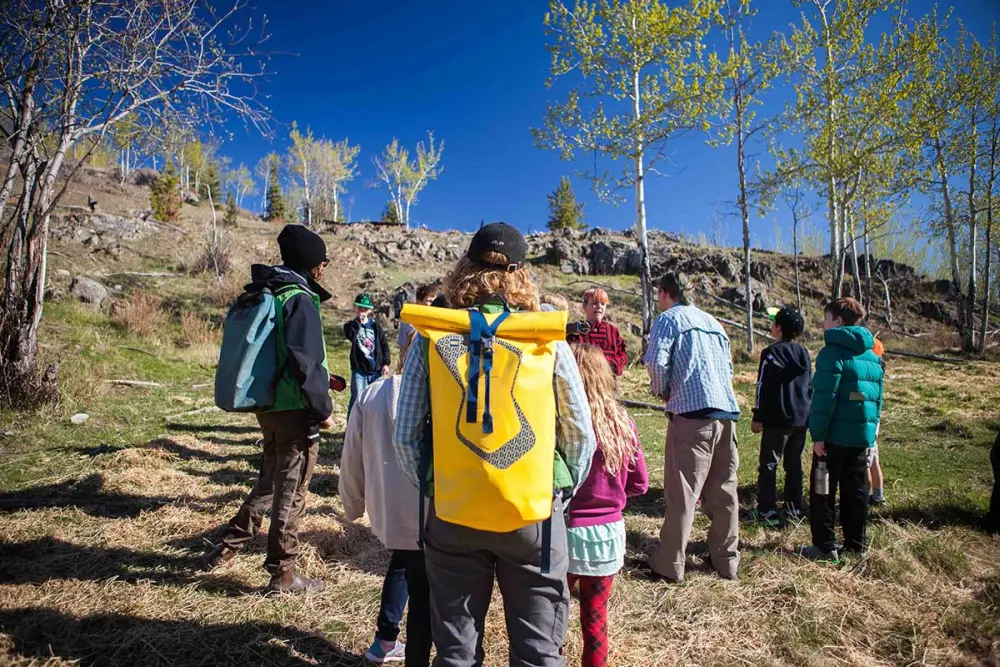
It’s a warm and sunny Wednesday in July. After driving past Jesse the moose, some handsome sheep, and innumerable little squirrels I step off the bus with 22 eager campers following. We’re just about to head out for a little walk. But then... I catch one little camper frolicking around in her bare feet.

“Jasmine! Where are your shoes?”

“Shoes?! I don’t need those: I’m a Yukon kid!”

Campers sometimes teach the instructors at YWP school programs.

Sometimes it's the campers who teach us educators about their favorite plants and animals.

Hidden Kids

On a normal trip to the Preserve it’s easy to get lost in our own experiences. After all, how can you not? When you see golden sunshine through the grass; when you and the little muskox lock eyes; or when one of our guides tells a chilling story. These experiences are what we come for, but we aren’t the only visitors here.

The Yukon Wildlife Preserve sees over one thousand students and campers come through our doors every year. Winter and spring school programs, Swan Haven programs, March Break Nature camp, and summer nature camps are all in our calendar. The Wildlife Preserve has its own department dedicated to bringing enriching and educational experiences to Yukon youth. As an outdoor educator this what first brought me to the Preserve, and it's also one of the things that I think makes the Preserve a very special place.

Unfortunately, the public doesn’t often get to hear about all of the incredible experiences we offer students and children. If you, like me, are a little too old to attend these wonderful programs I’m here to tell you that you’re also in luck! I’ve done all the running around – the booger wiping, rule giving, question answering, and “yes, you can go pee”ing – so you don’t have to. Join me as I take a walk down Memory Lane, looking back at this last year with our Education team. But be prepared to take chances, make mistakes, get messy. So let's tie up our shoes and get Face to Face with: The Wild Kids of the Yukon.

Kids holding up moose antlers outside in the snow.

A happy student trying on their new favorite hat.

Time to Plan

Though our ears are still ringing from a summer full of campers, it’s a very different story in our office this time of year. Our Manager of Education and Programming sits quietly and plans for the year to come.

‘Have we sent all the thank-you cards?’

‘How many more plastic animals do we need to buy?’

‘Where do I even buy a plastic muskox?’

We ruminate at length on these pressing topics. After all, one missing muskox now may break the heart of a muskox-loving little boy eight months later. And so, slowly, we debrief the past year and plan into the next.

Cool Kids

​February comes creeping up and at this point we (Education and Programming) are a very tiny snowball at the top of a very large hill. Our winter programs are the little kick that gets us going. A modest start to a full year of programming. This time of year, our programs focus on winter ecology and cold weather adaptations.

With a sizeable (750-acre) classroom, we bring students along our trails in order to teach through hands-on experience and keen observation. So, let’s throw on our jackets with the grade sevens and head out for our famous February caribou program!

Students have a positive close encounter with one of our bull caribou.

Campers getting a special experience with one of our caribou bulls.

March Break

​Slowly, March comes crawling along. By this time, we’re feeling ready for the busy spring and summer seasons. We have our programs all neat and tidy, but the Preserve has turned a somber shade of winter. We’re all aching for something: A little sunlight, some warm weather, a hot cup of cocoa… or, some more students! Last year's March Break Nature Camp hosted 10 campers, a real VIP experience.

Though we do plan and structure the days, it’s the campers who really have the final say in the day’s events. We want our campers fully engaged, so we try our best to tailor the camp to their interests. If that means spending some extra time with the caribou then we throw on an extra layer, step into the enclosure, and get a closer look at our campers' favorite ungulates.

Kids doing outdoor experiential programming in the outdoors in Yukon.

Educator Erin Cartan taking her campers to the Gunnar Nilsson & Mickey Lammers Research Forest.

We Talk Swan

As the snow starts to melt and the sun starts to burgeon it’s a HONK, of all things, that prompts our first drive out to Swan Haven. Working with the YG Department of Environment we move our operations to Marsh Lake and start talking Swans with grade two, three, and five classes at the beginning of April.

After our education team gets a Swan Masterclass from bird biologists Jukka Jantunen and Margaret Campbell, we welcome hundreds of students to share the joy of birding with some of our favorite feathered friends. Together we tell the story of Yukon swans, look through scopes to observe their behaviours, play dress-up, and make our own mock-migration. We do all this in hopes of fostering respect and appreciation for all Yukon wildlife.

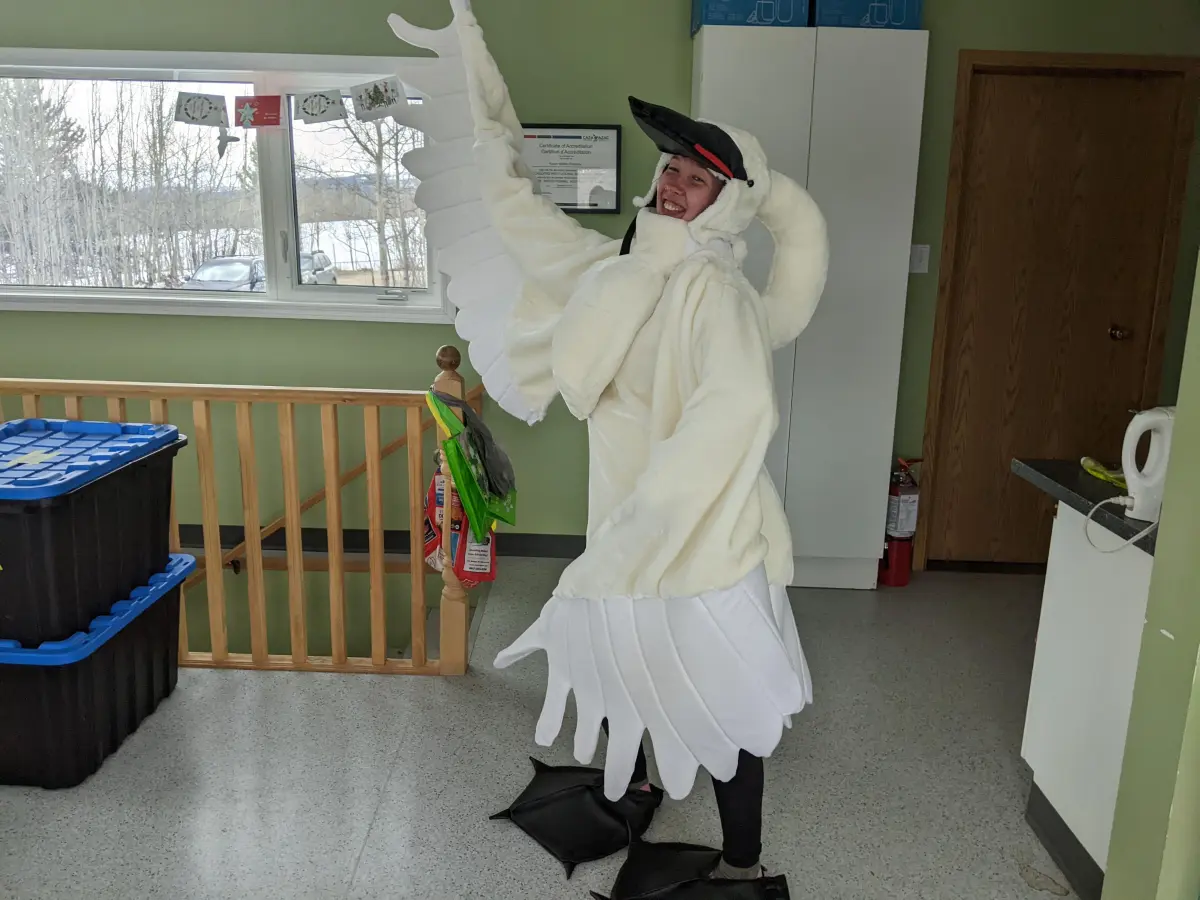
Swan Costume for Swan Haven Programming

Manager of Education and Programming, Madison Rushton, trying out our new and improved swan suit.

The Ball Gets Rolling

Though the snow on our peaks is slowly melting by early May, the snowball we call ‘Education and Programming’ is growing both in size and speed. It’s now time for our Spring Programs! Life is waking up and starting to buzz here on the Preserve. Together with the students we try to find each and every little buzz, bumble, and sign of life. Our Yukon-famous benthic macroinvertebrate studies (a.k.a. lookin' for bugs in the pond), large scale Predator vs. Prey game, and animal charades are crowd pleasers amongst the little ones. Lots of fun and games for these students, and they haven’t the slightest clue they’re actually learning.

Once that’s all over, snow is the last thing on anyone’s mind. But, our ‘Education and Programming’ snowball is reaching its crescendo with the YWP Summer Nature Camps! It’s all hands on-deck at this point; three wildlife educators, nine weeks of camp, and nearly two hundred campers. The whirlwind that ensues is filled with a tremendous amount of fun. Fishing, barbecues, forts, flower picking, popsicles, dress-up, story time, nap-time, camp-time, and eventually, home-time are all to be expected.

At last, our ears ringing from nearly seven months of outdoor education and nature programming, we pat each other on the back and have our own well-deserved nap-time. But don’t forget, once we’re ready to open our eyes and stretch our arms, we get to do it all over again!

Students dip-netting for all the bugs and critters they can find.

Students dip-netting for all the bugs and critters they can find.

Naptime

Though working with children can be exhausting it’s also extraordinarily rewarding. Moments of growth in our students fuel us educators with energy and inspiration. And the best part? We’re learning just as much from them as they do from us.

While teaching at the Preserve I often think back to my own outdoor education experiences as a child. Downtown Toronto certainly offered less opportunities than the pristine boreal, but the richness of those experiences was all the same.

Now that I think about it, I remember one particular experience at the Toronto Island Nature School. We were playing a game of Predator vs. Prey and I felt like the luckiest boy. I had the opportunity to play my favorite animal; the wolf. I ran under a bush, prepared myself, and waited eagerly for the game to start. TWEEEET went the whistle and THUMP THUMP went my feet.

“Seth! Where are your shoes?”

“Shoes?! I don’t need shoes, I’m a wolf!”

Seth Brown

Seth Brown

Visitor Services Coordinator

Passionate about the environment, art, and education, Seth has been working as an environmental educator since 2017. Off the preserve, you can find him playing in the mountains; on skis in the winter and with a paddle in the summer. Having moved to the Yukon and joined the preserve in April 2022, he’s excited to learn and explore!

867-456-7400
seth@yukonwildlife.ca

Explore by Category

Explore by Author

Northern Neck Tubes

Northern Neck Tubes

meet the north

by Lindsay Caskenette | Oct 29, 2021

6 min read

The Visitor Services team is working hard to connect with local artist to bring the connections to nature home with you. We strongly feel that by taking the time to explore these partnerships we can create unique items that guests to the Preserve can take home all while knowing their purchase in the Preserve's Little Gift Shop not only supports these northern people but all revenue from the retail sales goes back into the operations of the Preserve, supporting the northern animals in our care.

Right now the Preserve does not do online sales. We're a really small team that is situated out of town, and with some staff also living out of town, doing online sales and shipping feels a bit outside our capacities for the time being. 

• • •

Photo of moose in water.

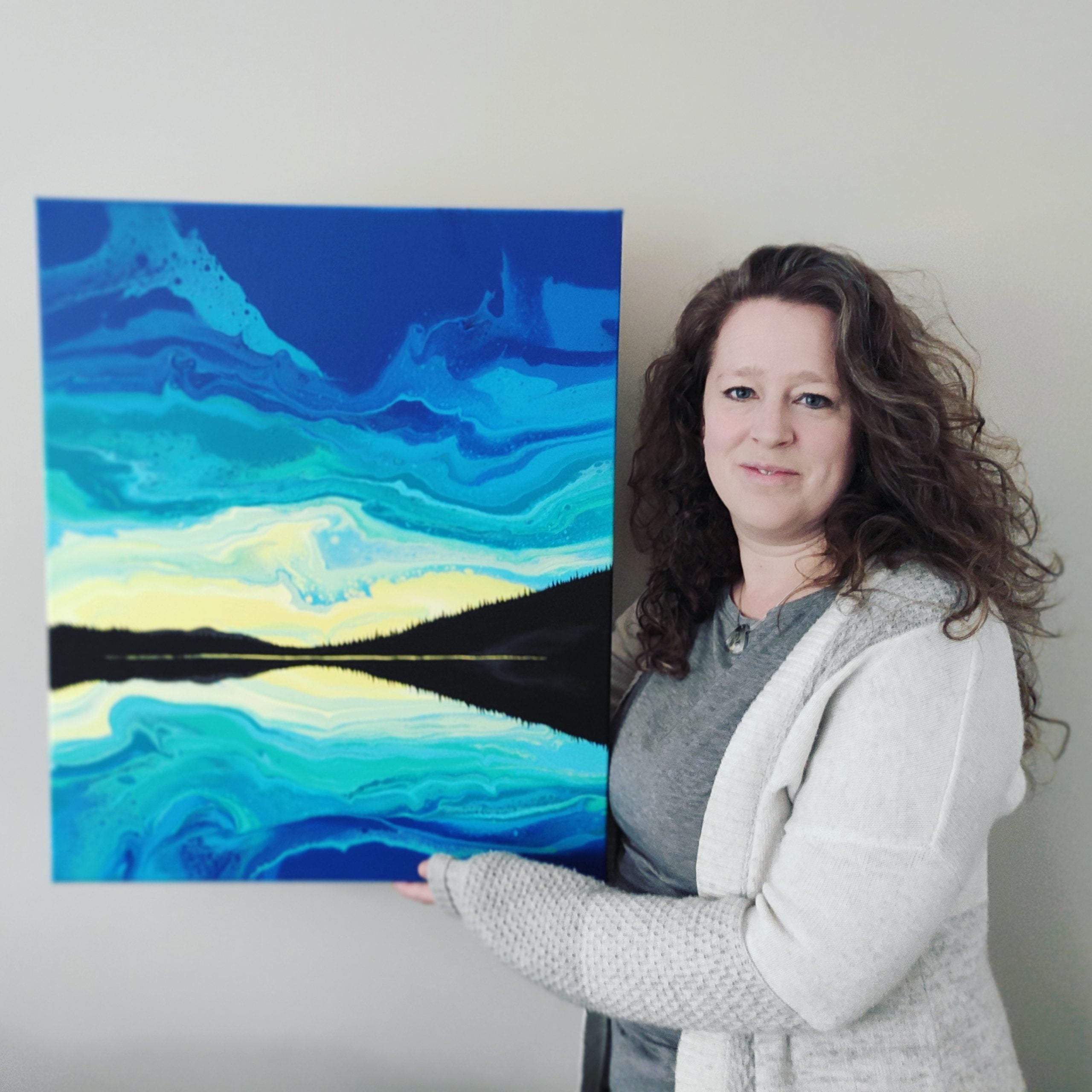
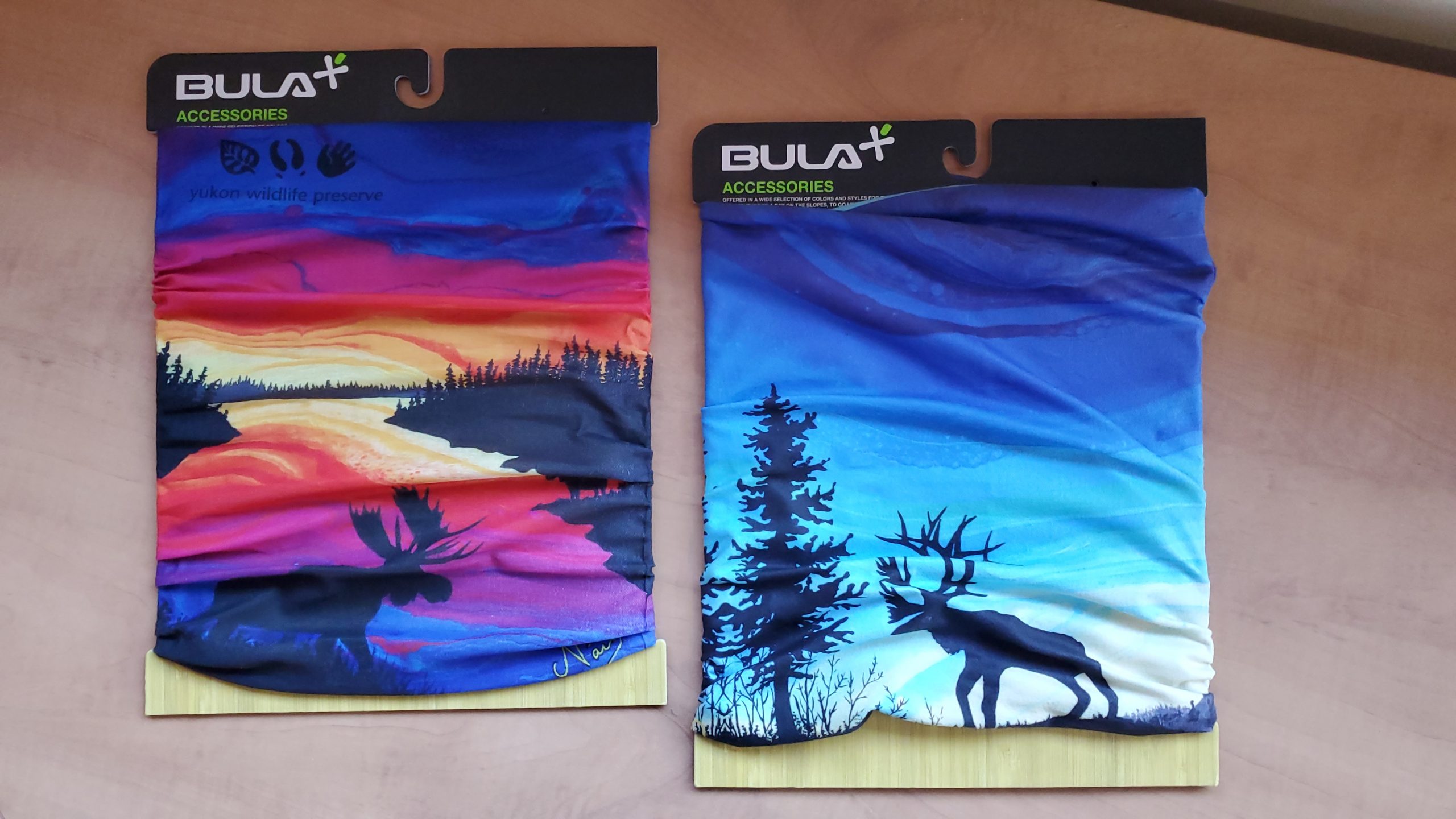
This artist collaboration was an incredibly fun and colourful one - Niki Parry was the perfect artist to do a neck tube collab with given her use of silhouttes on vibrant beautiful and colourful landscapes.

Whatever you call them - neck tubes, neck gaiters, buffs, neck warmers (and now, sometimes facemasks) they are a staple of year-round outdoor gear and you can never have too many.

• • •

We reached out to Niki in September of 2020 to see if she was interesed in working on this idea with YWP. Niki jumped on it and in the following months we started sorting out details of design ideas and applications. 

We sought after Yukon Wildlife Preserve inspiration from the landscape and the animals. 

Two photos inspired Niki especially once we decided what species we wanted to capture. 

• • •

Photo credit: J.Paleczny

Niki Parry is a visual artist working primarily in acrylic paint.  Her artwork represents natural scenes with an element of abstract.  She works with bright vibrant colours and creates dynamic abstract landscapes utilizing silhouettes to create an intense contrast and bring the scene to life.    

Niki has worked with many different types of artwork throughout her life, drawn primarily to the projects where she can focus on and explore colour.  Niki was introduced to fluid acrylics six years ago and fell in love.  The combination of playing with colours in that dynamic fluid form and the process of creating joyful natural landscapes from these images had her hooked.  She has been intensively developing her painting skills and techniques ever since. 

• • •

Photo of team providing care for moose in the field.

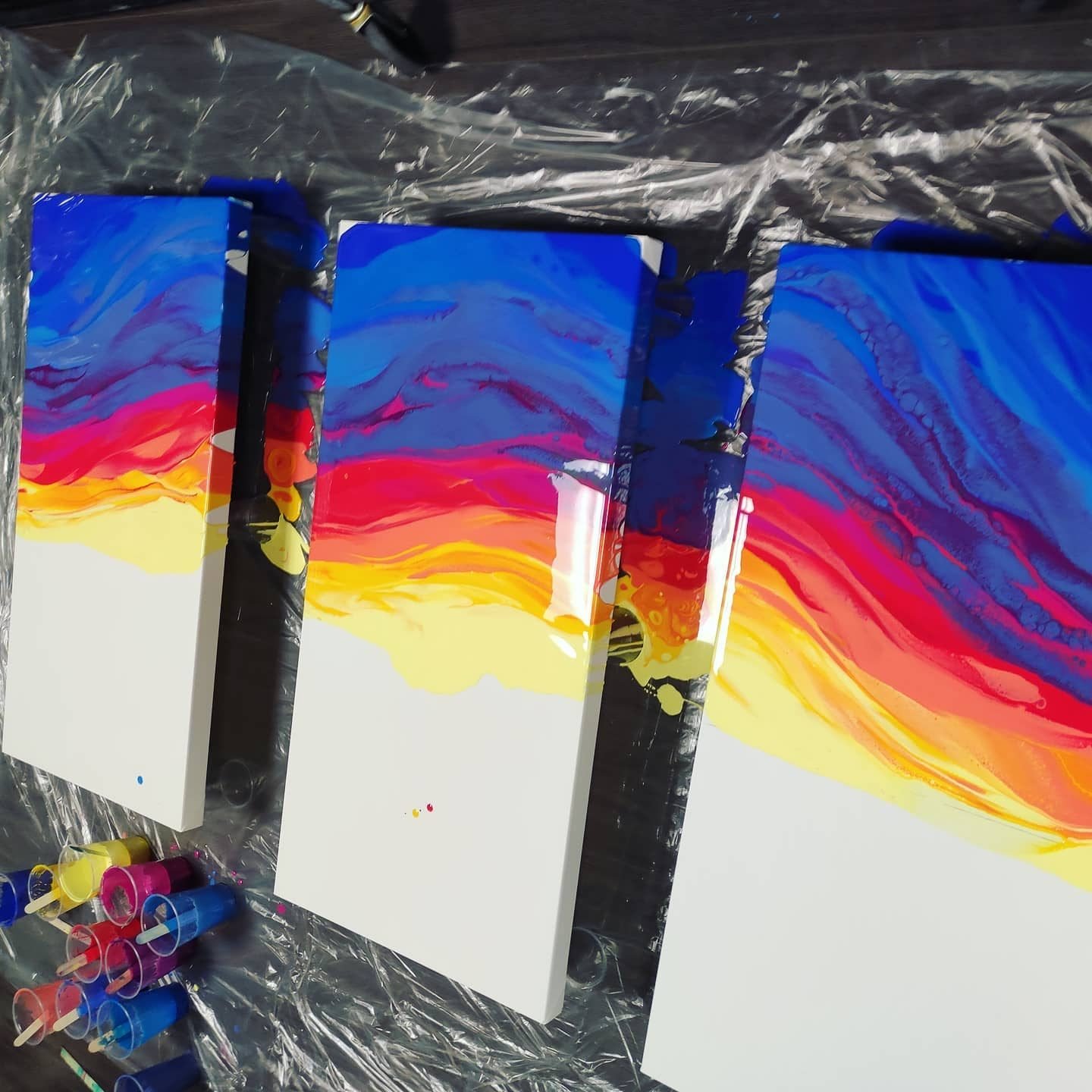
Niki's artistic process involves two separate components, one for creating the background and the second for hand painting to complete the scene.  The backgrounds are created with fluid acrylic paint, where acrylic paint is diluted with mediums to become runny. 

• • •

Photo of staff using stethoscope to listen to moose heart rate.

The paint is then poured onto the canvas, rather than using a brush.  It is then manipulated by moving the canvas around with gravity and other tools to mix the paint on the canvas.   Once the background is completed, then it takes 24 to 48 hours to dry before it can be moved, or else the paint will slide off the canvas.

• • •

The secondary process involves working with the background to determine how the final painting will come together.  Generally there is a plan for the background; however, with fluid paint it can be difficult to completely control all the exact details of how it will come together.  This is part of the beauty of the process, the balance between control and working with what presents itself.  The design for the painting is finalized once the background is fully dried, and the final plan for the composition is created.  The final image is created with acrylic brush painting. 

• • •

Photo of staff using stethoscope to listen to moose heart rate.

We worked with Corina at Taku Sports Group Inc. and Bula Canada to take Niki's artwork and make it perfectly fit onto two different neck gaiters - one, a single layer do it all tube featuring two moose and a double layer, reversible fleece perfect for winter warmth featuring of course the northern iconic caribou!

• • •

These special neck tubes will be available at the Preserve's Little Gift Shop. Niki will also have a few on hand at both the Cranberry Fair and the Spruce Bog Christmas Boutique. Both are great events to check out and support local buinesses, and artists like Niki Parry! 

• • •

Photo of staff using stethoscope to listen to moose heart rate.

Niki's goal for creating artwork is to bring a smile to your face and lift your spirits.  She finds a great deal of happiness in creating these images and loves to share her uplifting artwork with others.

We are so grateful  (and pretty darn excited) to have worked with Niki and share her vision. We endeavour to source and support local and share a product that helps you tackle all the outdoor feats while looking extremely fashionable and warm.

From Bula - Stay Warm, Play Longer

• • •

Single Layer tube                           $38
Double Layer reversible tube       $44

Photo of staff using stethoscope to listen to moose heart rate.
Lindsay Caskenette

Lindsay Caskenette

Manager Visitor Services

Lindsay joined the Wildlife Preserve team March 2014. Originally from Ontario, she came to the Yukon in search of new adventures and new career challenges. Lindsay holds a degree in Environmental Studies with honours from Wilfrid Laurier University and brings with her a strong passion for sharing what nature, animals, and the environment can teach us.

867-456-7400
Lindsay@yukonwildlife.ca

Explore by Category

Explore by Author

Yukon Wildlife Preserve
Box 20191
Whitehorse, Yukon
Y1A 7A2

Proud member of:

CAZA Logo

With the support of:

Yukon Government Logo
A Day with an Animal Care Assistant

A Day with an Animal Care Assistant

meet the north

by Abbey Mondor | Aug 13, 2021

8 minute read.

My name is Abbey, I am a part-time animal care assistant and part-time wildlife interpreter here at the Yukon Wildlife Preserve for the summer of 2021. I am a biology major at the University of Winnipeg. Fall 2021 I start my second year of my degree. One of my goals in life is to visit all three territories in Canada, with Nunavut already crossed off the Yukon was next on my list. The Wildlife Preserve offers me a chance to put my education to practice and help me decide which route in the biological field I want to pursue (I bet by the end of this post you can guess which route I am leaning towards). This post will discuss what I have experienced as an animal care assistant here at the Preserve and hopefully give some insight about what goes on behind the scenes for you the reader.

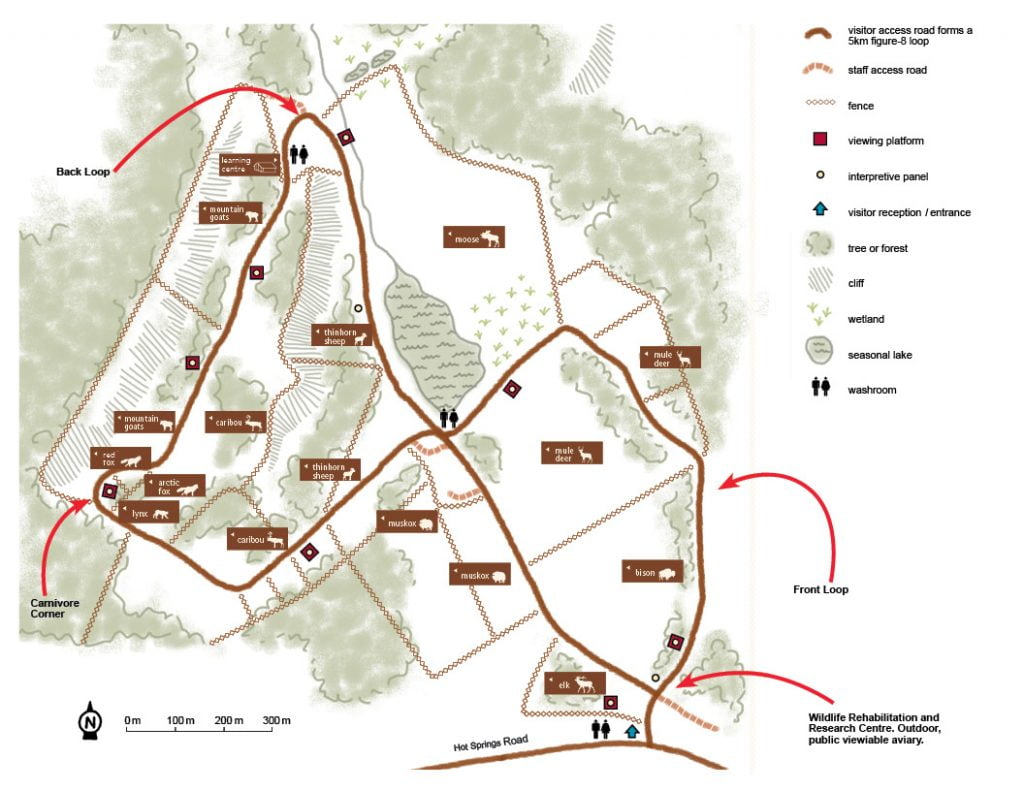
You may have been on the Preserve and been at the right place and time to see the animal care team at work. The animal care team works hard to keep the Preserve and rehabilitation animal’s happy and healthy. Working in animal care is never a stagnant job, animal needs change, babies are born, new rehabilitation animals arrive making this job ever changing. This post will follow my day around the preserve as an Animal Care Assistant starting in the Preserve’s Wildlife Rehabilitation and Research Centre, down to the first half of the lower loop up to the upper loop and back down to the second half to complete our figure eight.

This map shows the homes of each of the species in our collection located on the front and back loops of the figure 8 trail network. The Wildlife Rehabilitation Centre is located in staff access area.

Rehabilitation Centre

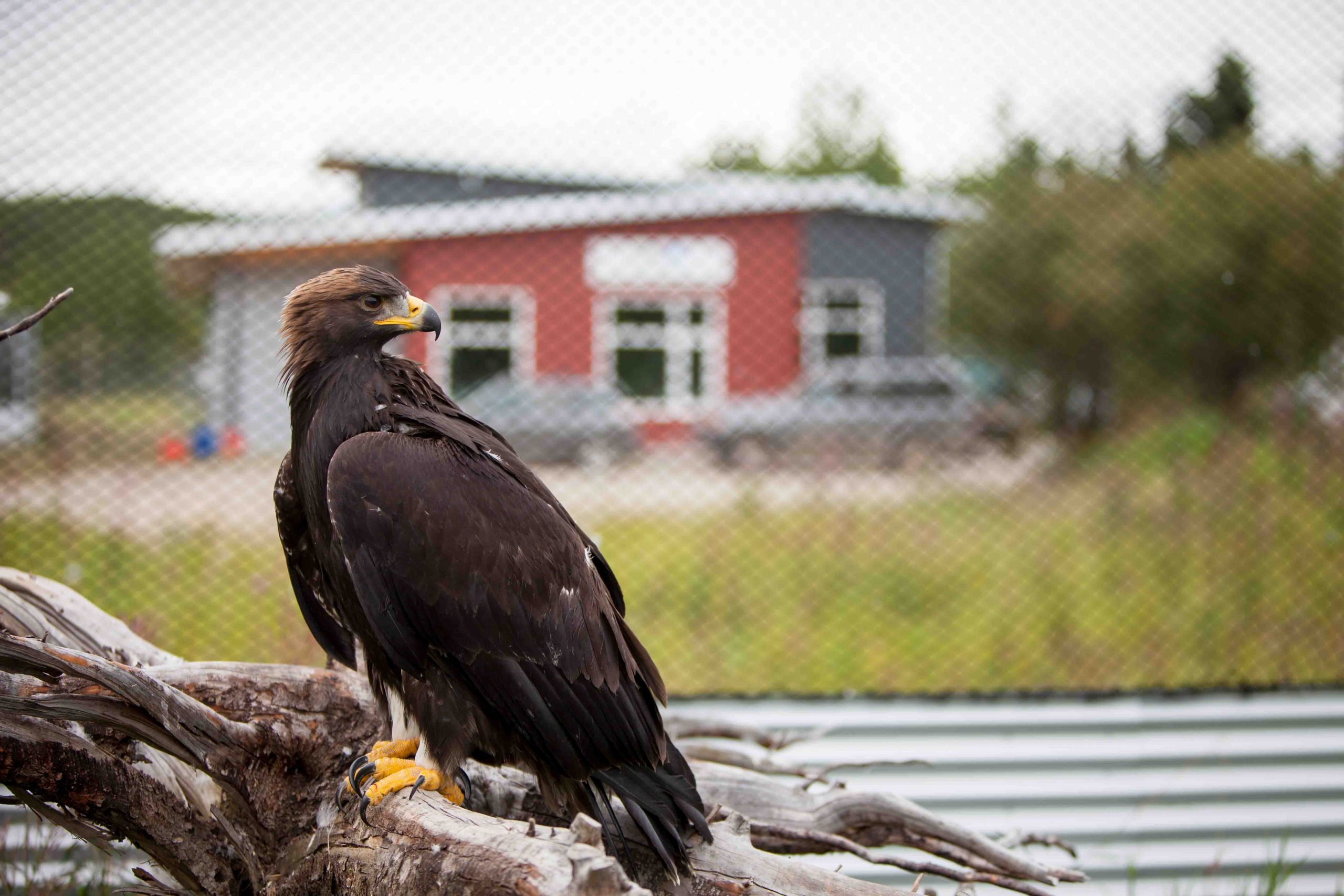
The Rehabilition Centre in the shadows of a golden eagle patient in the large outdoor aviary. Photo credit: J.Paleczny

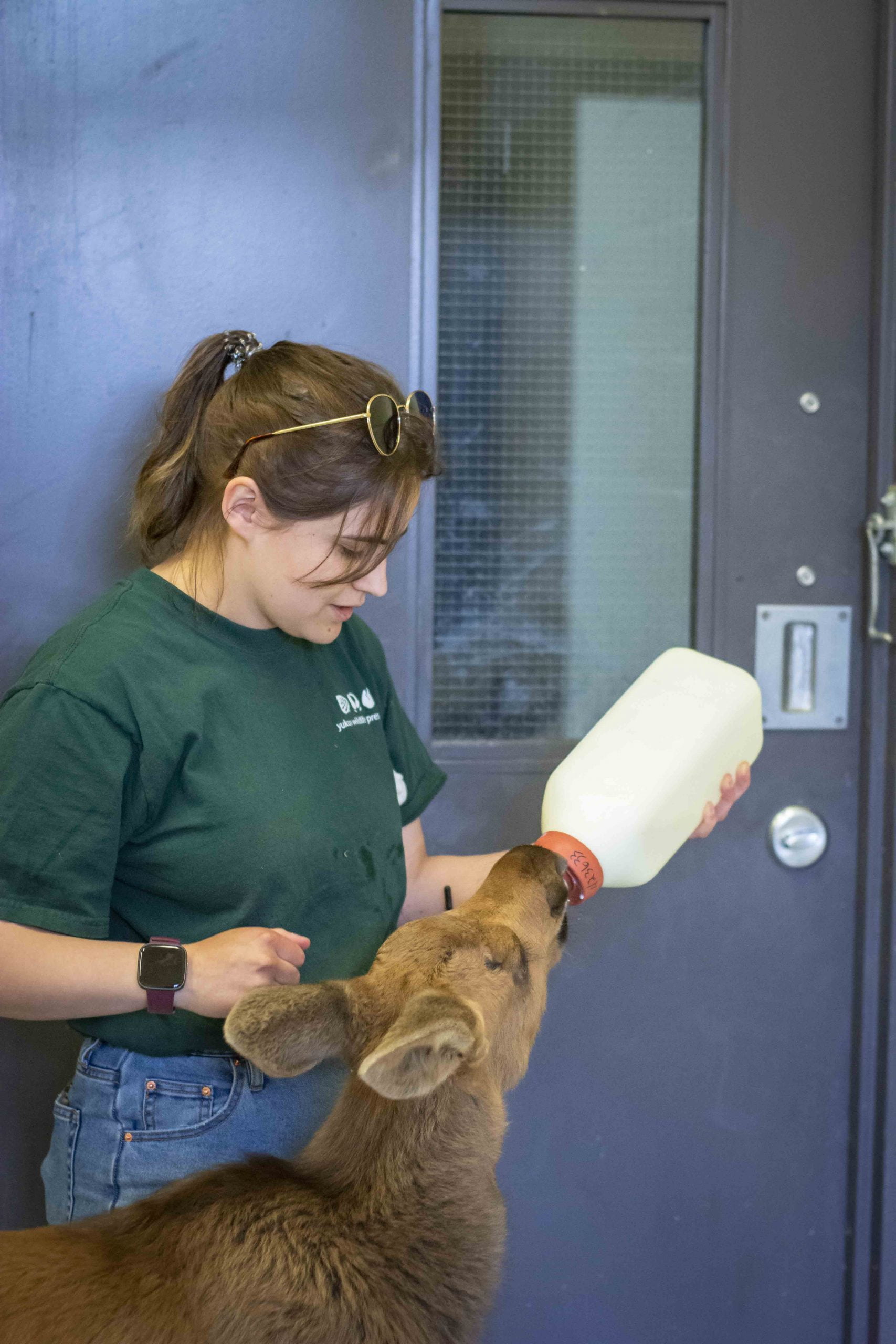
To start off the day I check the animals that are in rehabilitation care to make sure their habitats are clean and that the animals are well - observation of animal behaviour is a very important role in animal care.  In the rehabilitation center the animals we look after often have strict eating schedules which dictates what is done during my day and when. An example of this is the moose we received in late May of 2021. This calf is not shy and is always excited to eat! He gets almost too excited, so we have to slow him down. It's exactly like when your puppy eats way too fast and you have to find ways to slow them down. After feeding, we watch him until he defecates and lays down, this is an important step to ensure he is healthy and progressing how we would expect him to. As you continue reading this post you will recognize the particular theme of observing the animals' behaviors: this is to ensure the health of the animals in our care.

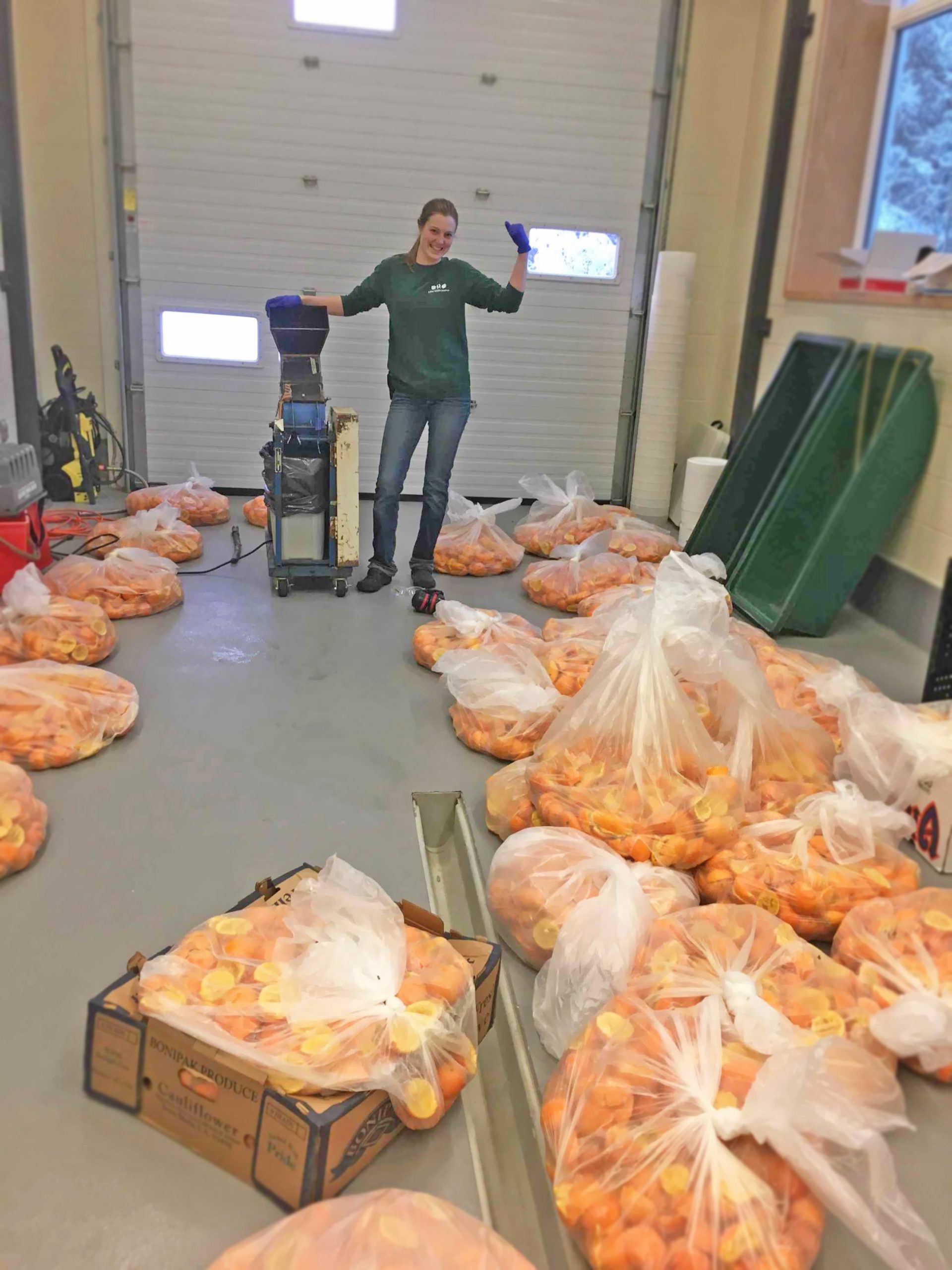
Next step is to prepare the feed for the collection animals. The caribou females eat a beet pulp mixture that you just add water to and it expands twice or three times the original amount. It almost looks like that elephant toothpaste science experiment but in slow motion! We also mix that with donated fresh fruit pulp. We’re very lucky to receive support from so many local organizations including grocery stores. Fun fact, caribou don’t like citrus or ginger, they’ll eat around it and leave it behind (so we sort that out and give it to the moose).

Oranges donated from Wykes Independent Grocer.

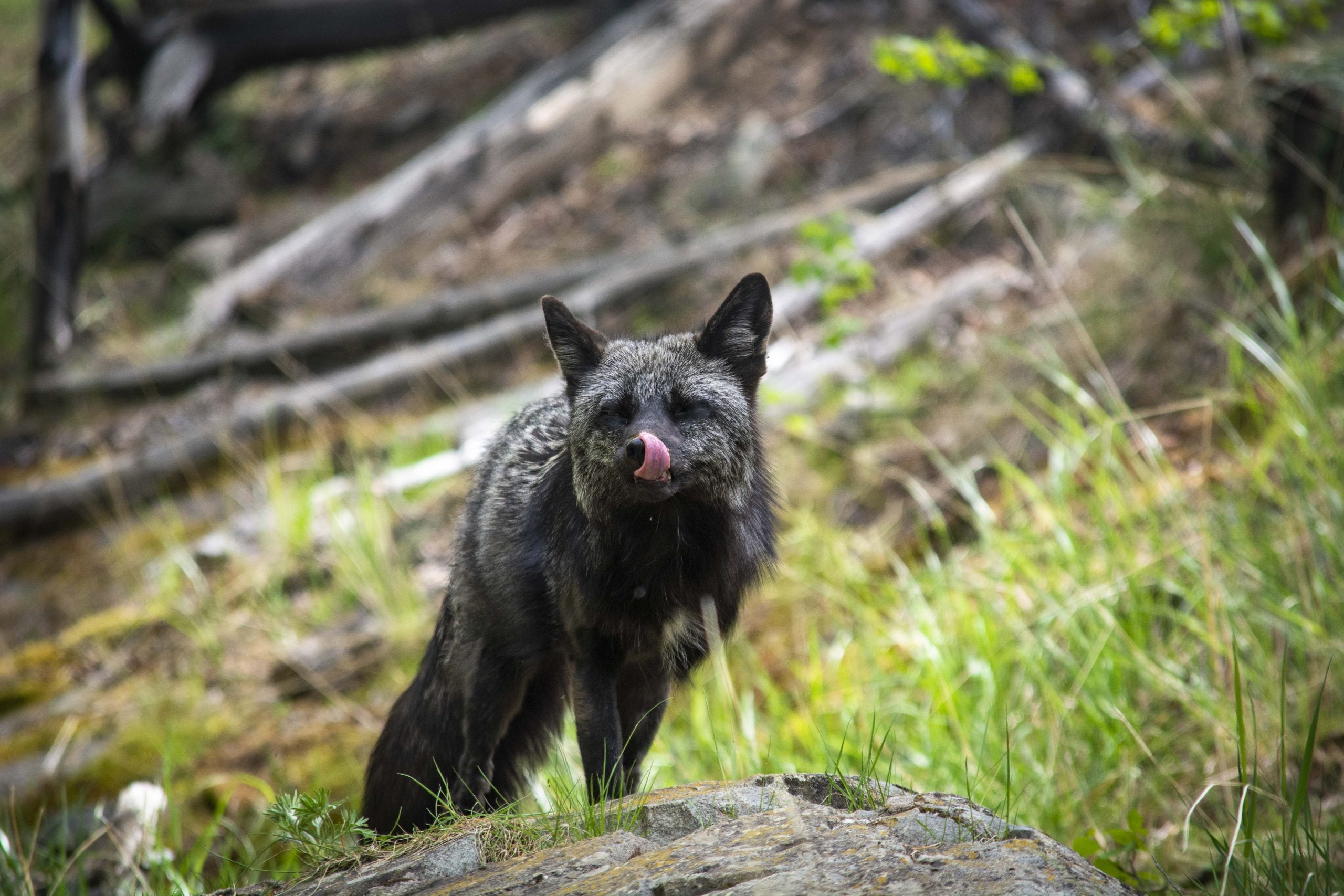
We then prepare the carnivore food. The arctic fox, red foxes and lynx all get a healthy amount of red meat and white meat. Once the food is prepared, which means to cut it up, weigh and portion it out per species it's placed in the fridge for later.

The silver fox enjoys lunch and is lip licking satisfied thanks to Animal Care staff food prep. Photo credit: L.Caskenette

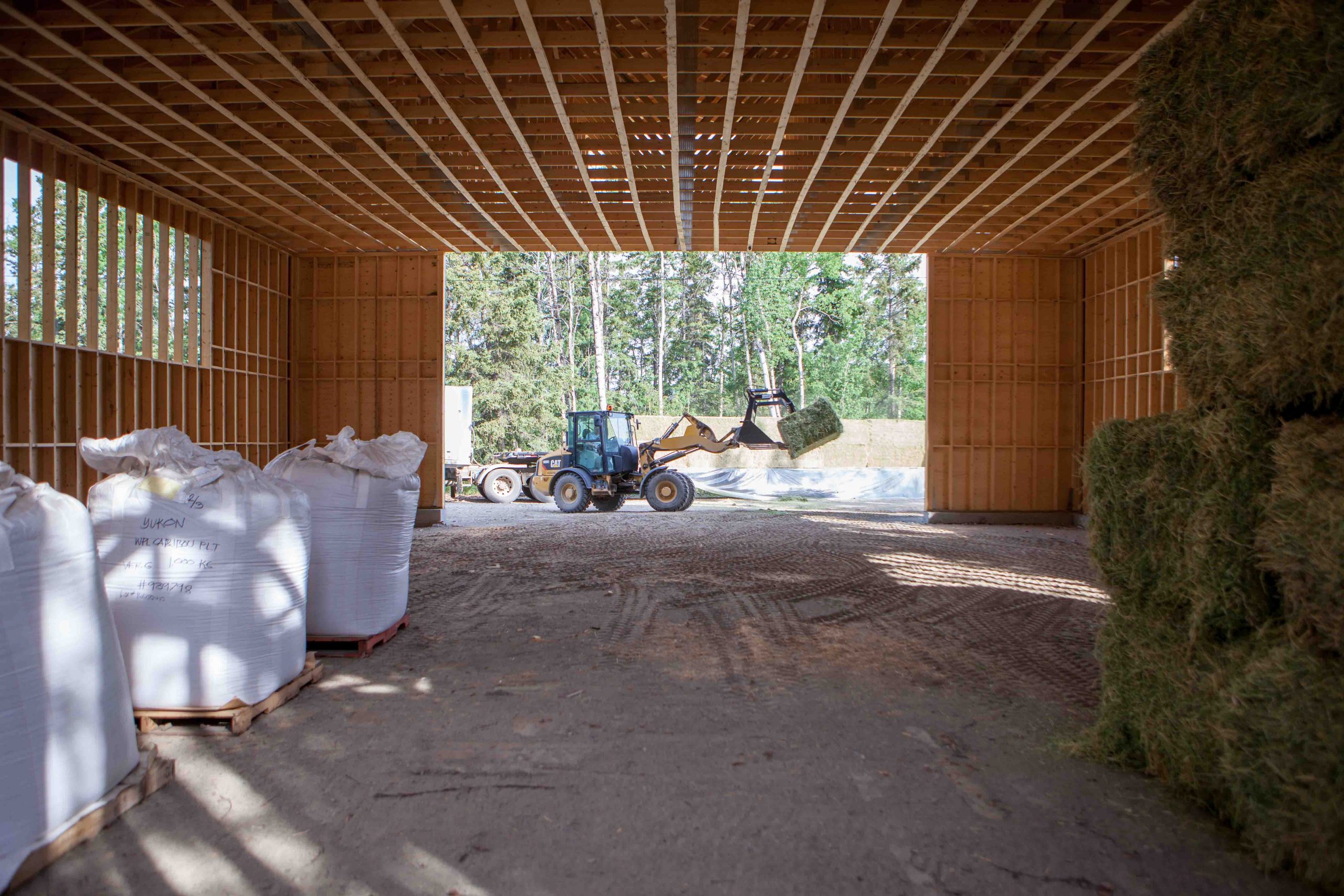
We then head to the hay barn to get pellets for the muskox and bison. These two species don’t have a feed station attached to their habitats like the other ungulates, they are a bit too rough on their surroundings, so that means pellets are not stored at the habitat in the protective feed stations. 

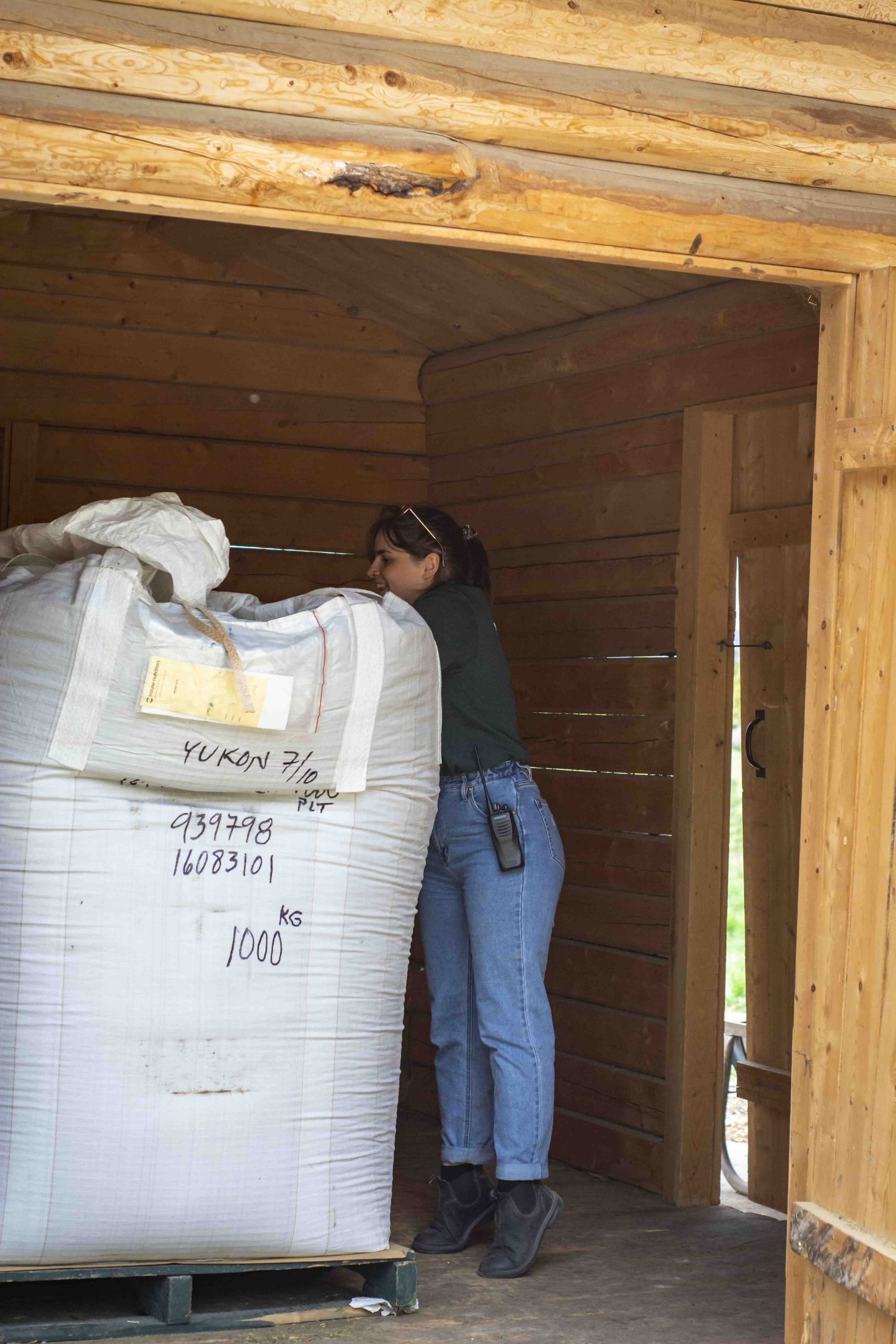
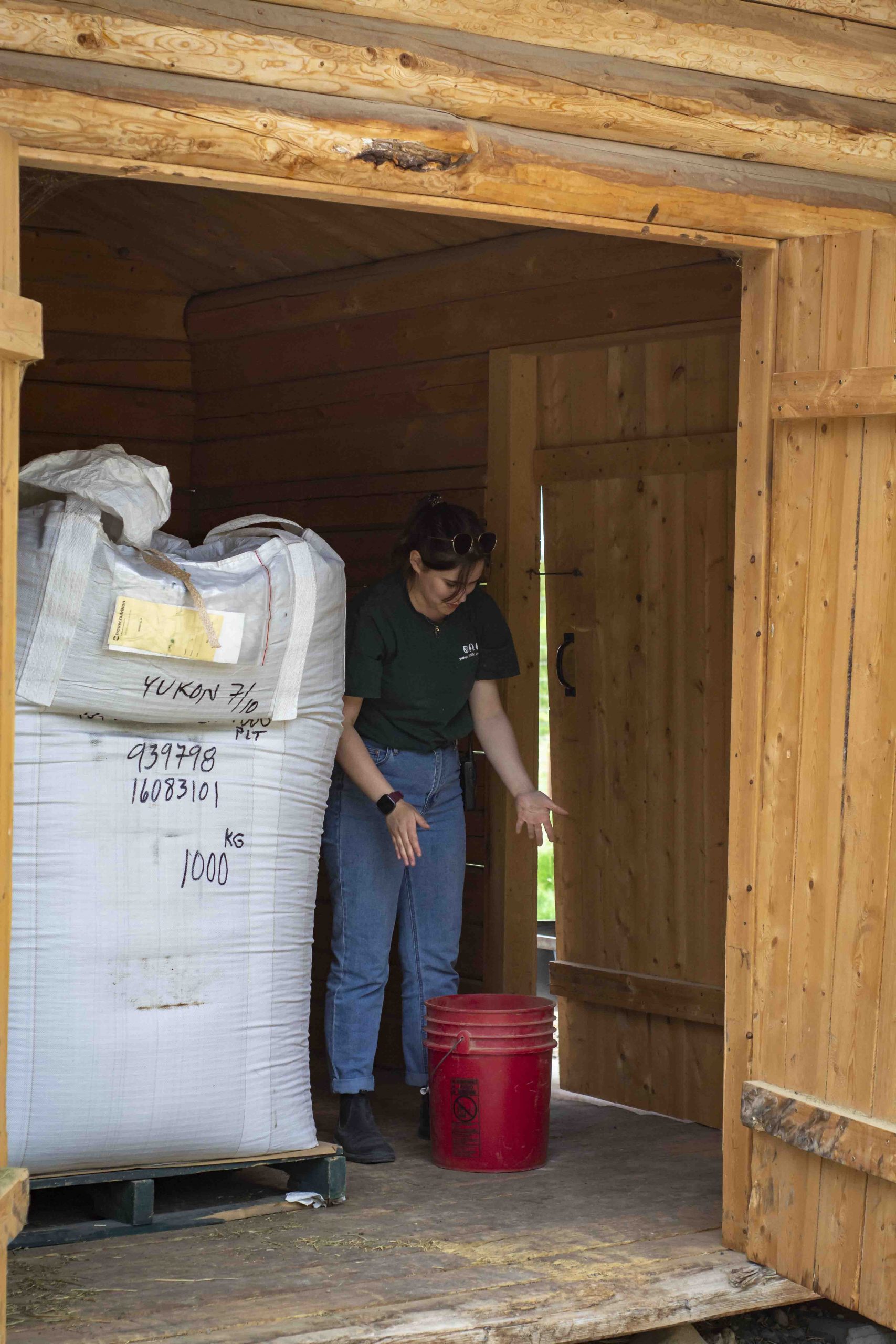
Getting pellets is no small feat, the first time I tried to fill a bucket it took me four tries to get a full bucket! For reference I am 5’0, and the bags are as tall as I am when they are full. Once we have our pellets ready, we load up the animal care truck and begin our tour around the preserve.

Front Loop

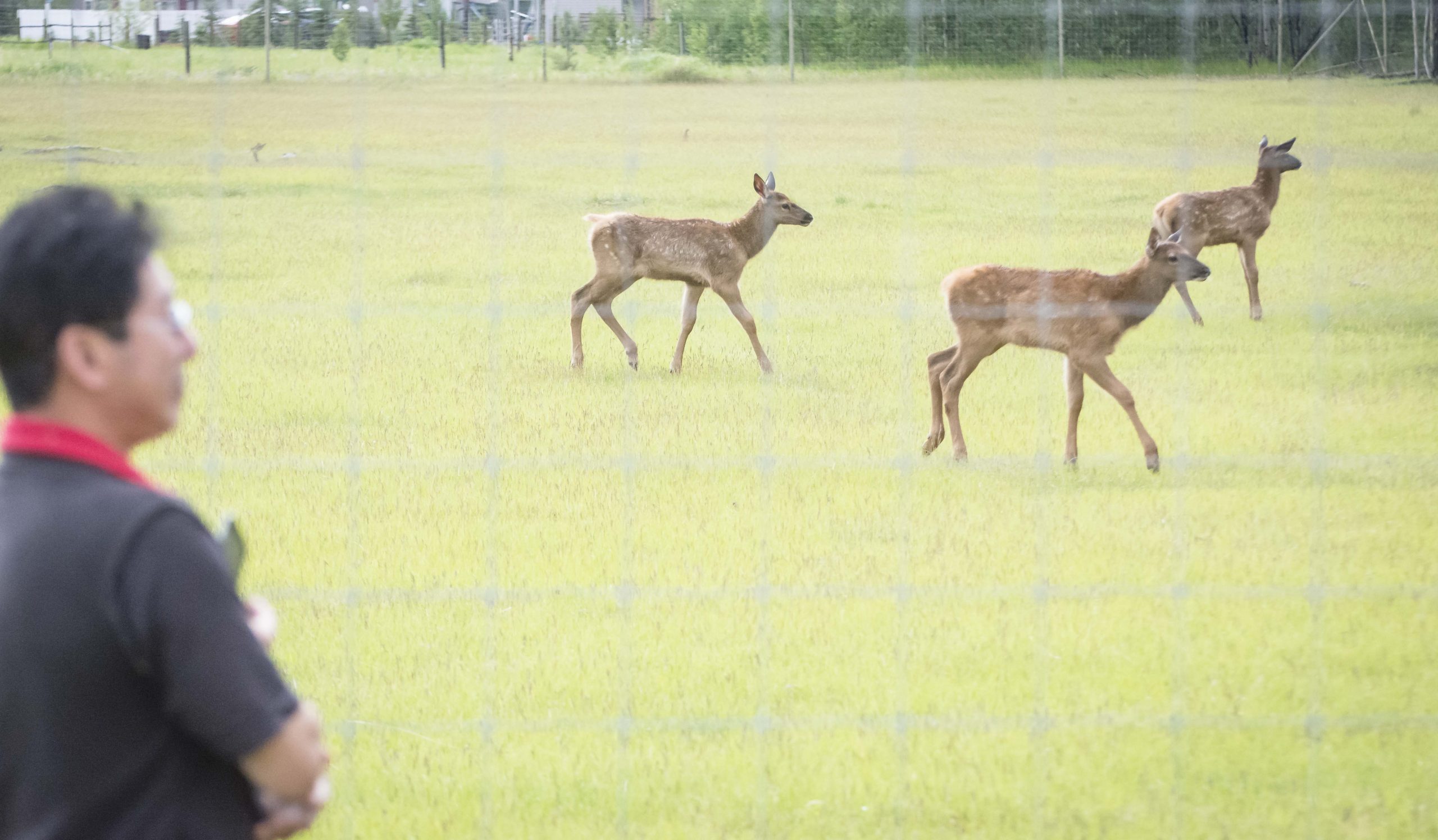
In this portion of the front loop or sometimes called the lower loop we will encounter the elk, bison, mule deer and moose in that order as we start counterclockwise on the loop. We begin first by making sure all the elk are present, look alert and healthy and then check their hay and water levels.

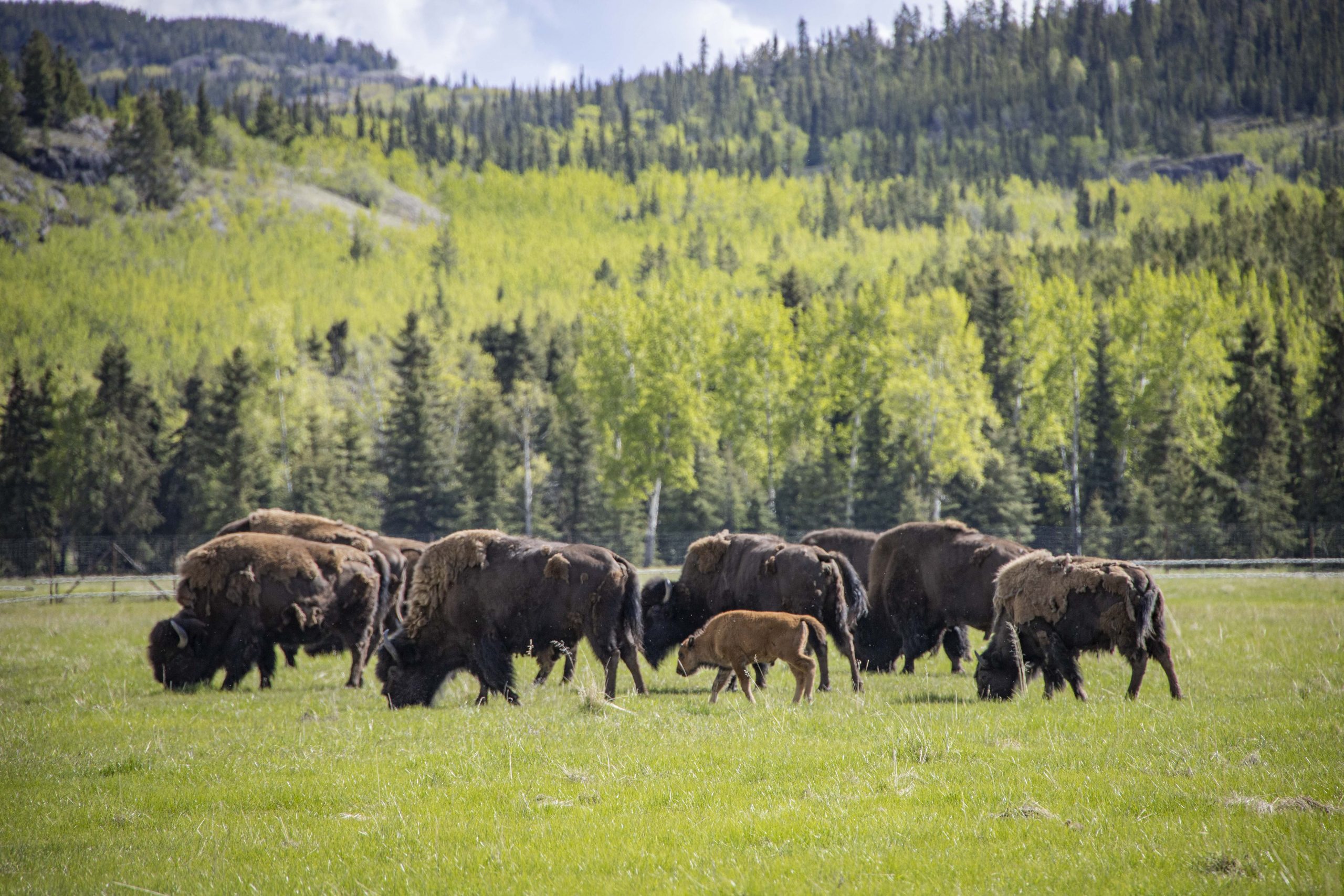
Then we stop at the bison who are usually laying or standing around as a group. These animals get their pellets poured in two straight, long lines on the ground so there is plenty of room to share between these big, big eaters. We hang around the habitat to count the animals and check them for any changes in behaviour. This is an important opportunity to make observations in any changes of health that can be reported to Dr. Maria Hallock, our full-time veterinarian. If anything is astray Dr. Hallock will investigate further but most days I get to see and learn the amazing behaviours of these animals.

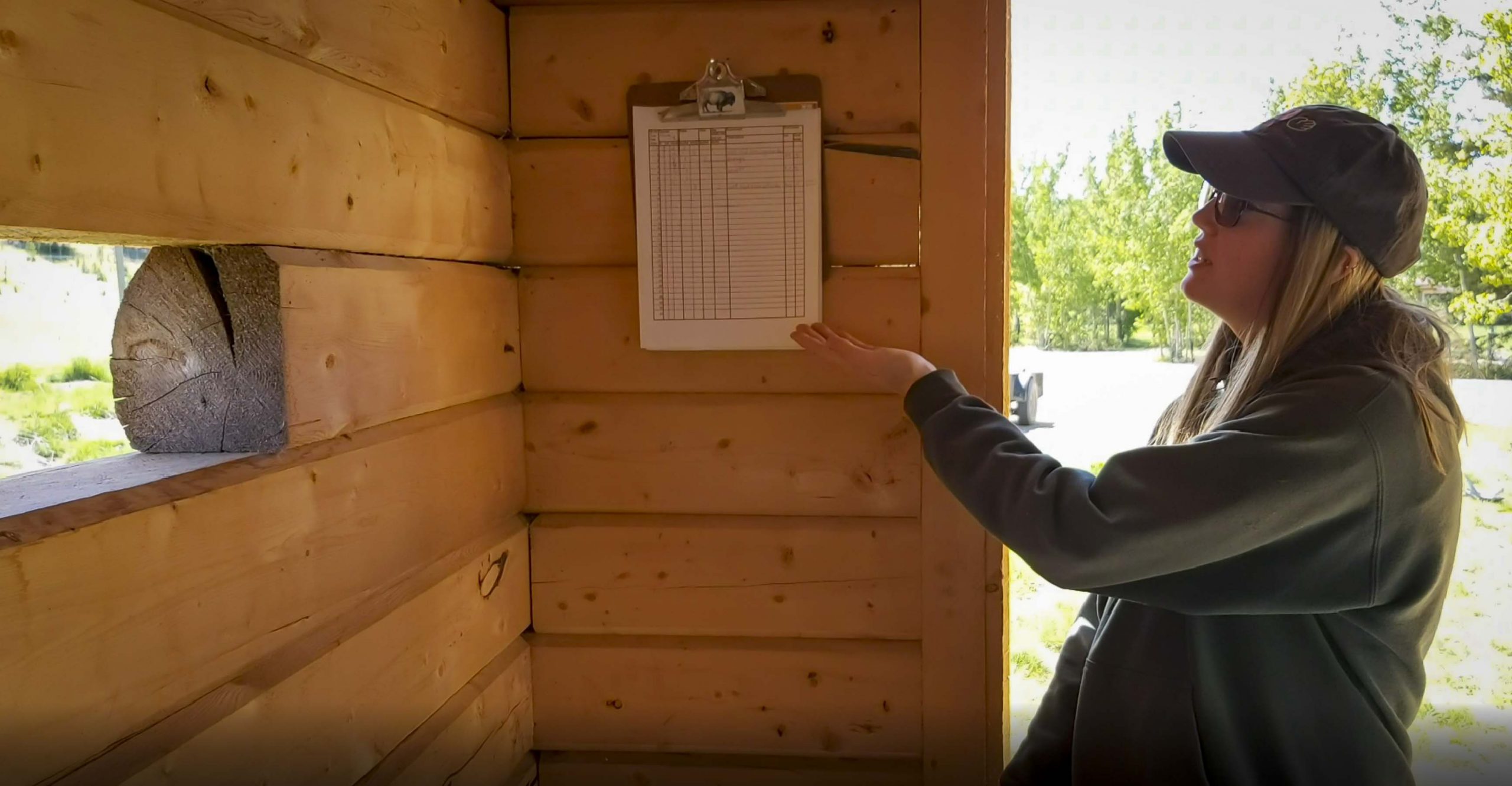
After that, we head over to the mule deer where we first check their water and then head into the feeding station where we find their stored feed, tools, and the animal information sheet. Each animal information sheet is specific to the species, we count how many animals we see and how much they are fed. We also take the time to write down any observations of the animals whether it’s a mule deer with diarrhea or a moose acting out of character all observations are recorded and forwarded to Maria.

We use a scoop instead of a bucket to pour feed into their troughs (thank goodness). In the same shed we also feed our moose and again we scoop their feed into their troughs although they have a much bigger scoop so it's important to keep everything separate.

Back Loop

In the back loop we will find our thinhorn sheep, caribou and mountain goats. We move to our thinhorn sheep where we wear booties and gloves to protect them from outside pathogens. This species tends to be more susceptible to bacteria's so the Preserve biosecurity is heightened here when entering their habitat.

Left photo shows a thinhorn sheep sedated for a check up and hoof trimming. Right shows Outdoor Operations staff working on fencing within the ewe habitat. Both photos show staff wearing booties and gloves to help protect the animals against pathogens. Photo credit: J.Paleczny

This species has both pellets and hay in their feeding station. Learning to use a pitchfork has been a learning curve! Who knew something with so much space between each prong could carry so much?

We clean and remove excess hay and feces from the feeding stations which we compost. We head on over to the caribou (who were hoping will have babies this year) and whose food we mixed earlier.

Caribou cow and calf from summer 2019. Photo credit: J.Paleczny

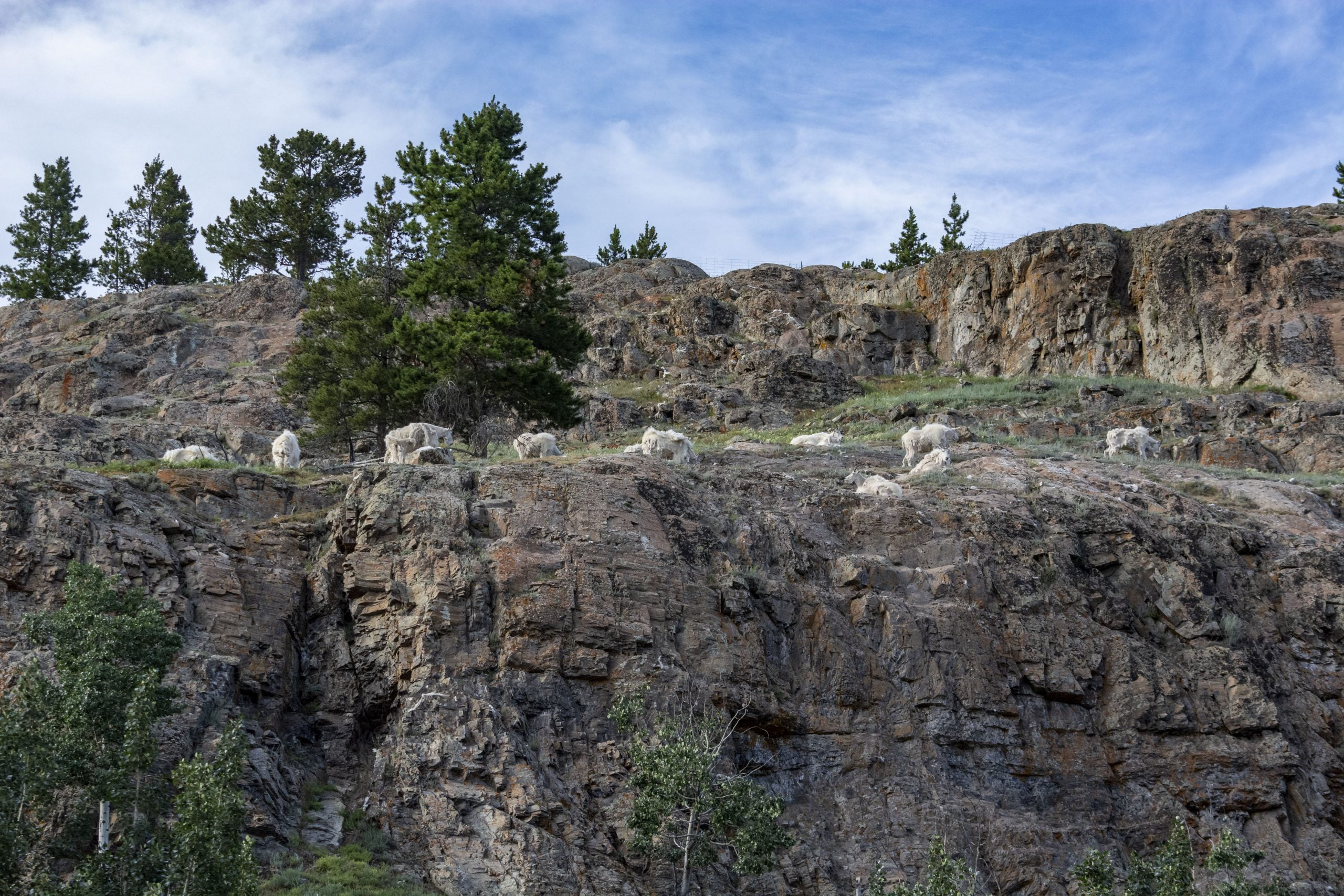
We go into their habitat and create piles of the beet pulp. We then head to the mountain goats who are usually high up in the cliffs making counting them a tricky task! This species gets hay and pellets and a clean up just like the sheep do.

Mountain goats hang out on the cliff - it's safety and sometimes sun bathing! Photo credit: L.Caskenette

Although beware of Geronimo whose patience for humans is very thin! Every animal has a personality and some are more memorable than others. The first time I met him I thought he was ill only to find out he was just in a bad mood (he always is - he's a goat). To be fair when I say bad mood, he’s really just displaying signs of normal defensive behaviour that has been somewhat elevated due to his story as a kid.

Carnivore Corner

The back loop can be further divided into the Carnivore Corner where we will find the lynx, arctic foxes, and red foxes. The carnivore corner is where the most fun feedings occur! Sometimes we do themed enrichment feedings - check out our Halloween one!

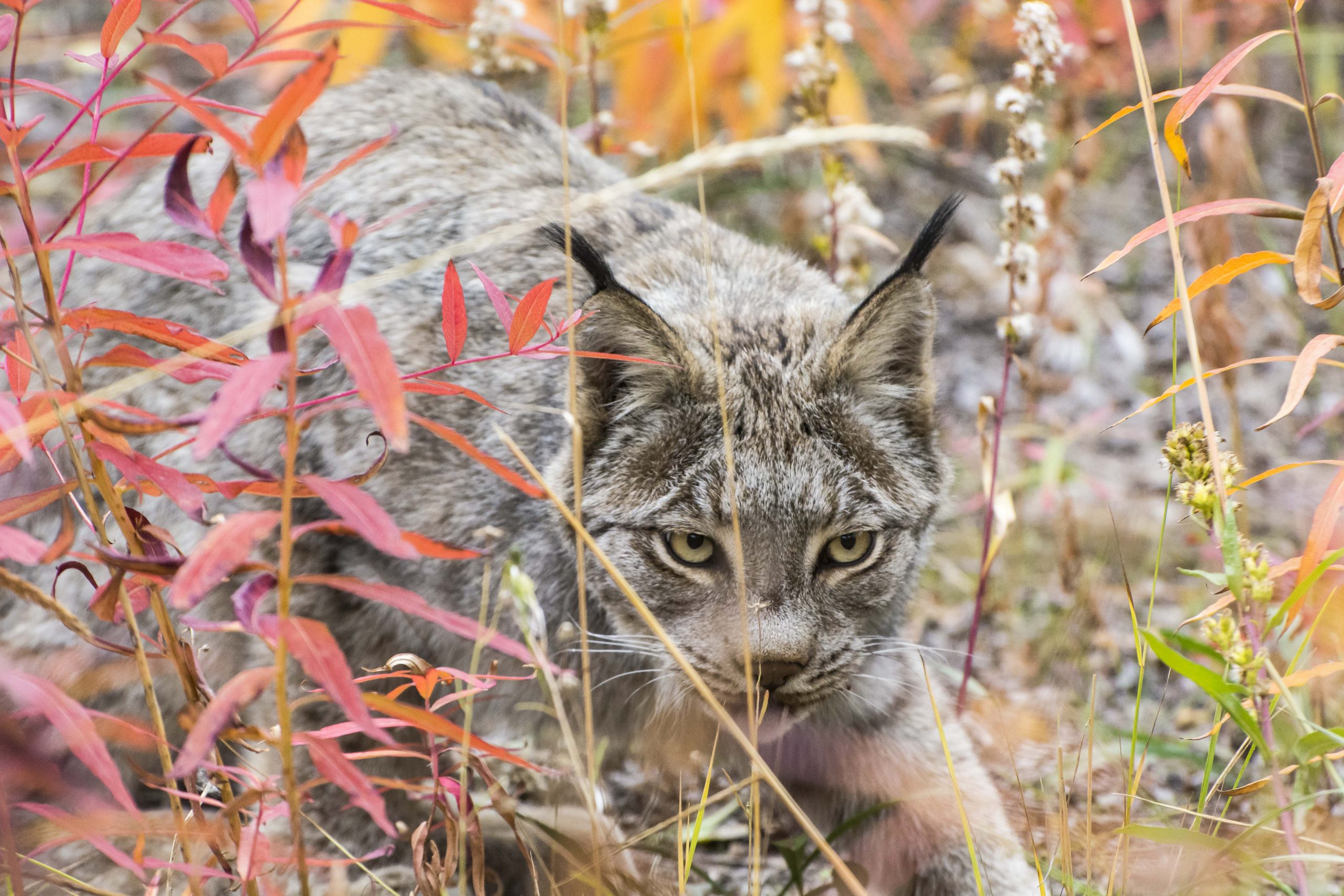
We stop at the lynx who are usually waiting by the fence for food, I swear they hear the truck and spot the green jackets and come running! The females are most expectant and the odd time the male will be waiting too but he’s a little more reserved.

Lynx come in for feeding, intent but smooth movement towards the food. Photo credit: L.Caskenette

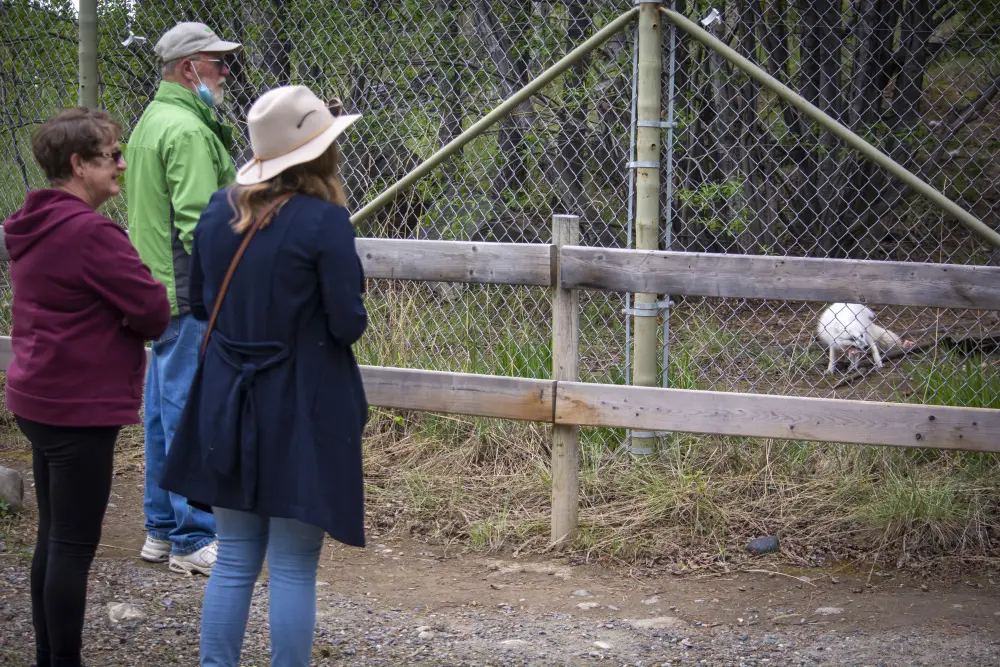
We head over to the arctic foxes who look super cute but throw in a piece of red meat into the mix and their carnivore side comes out. You can watch the arctic foxes feeding here! 

Very cute, but also very ready for food! Photo credit: L.Caskenette

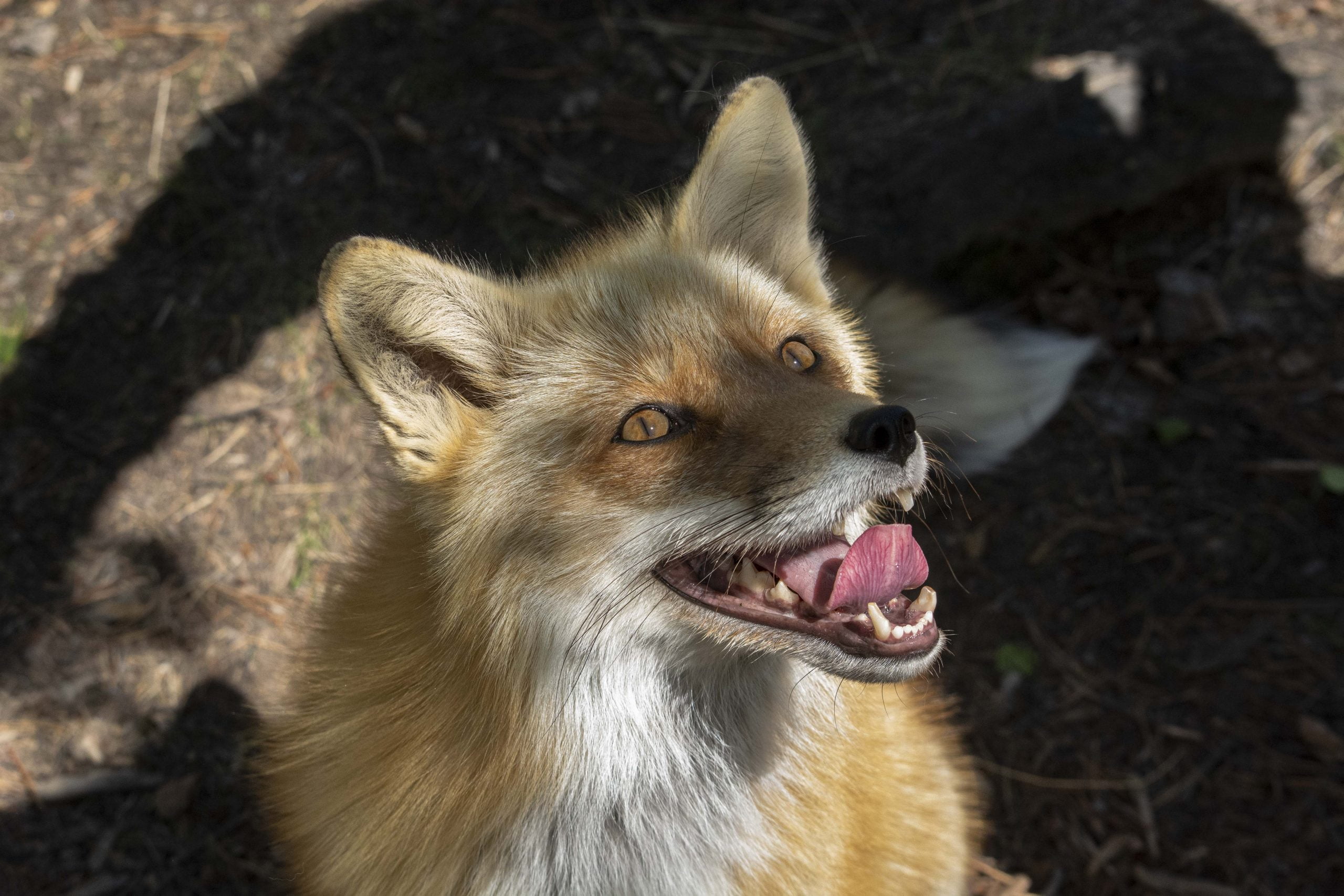
Next, we head over to the red foxes who are the funniest to feed! ‘Definitely’ the red fox makes the cutest yipping noises when he sees you pull up! What does a fox say you might ask? It sounds something similar to a yip and laugh mixed together. He will race around to get food before the silver fox does, I swear that silver fox has more patience than I’ve ever seen.

The red fox is always ready for food and will eat as much as he possibly can. What he can't, he will grab and go stash it. Don't worry, the silver fox gets his share - he goes and finds the red foxes stash in his own time. Photo credit: L.Caskenette

Front Loop - Round 2

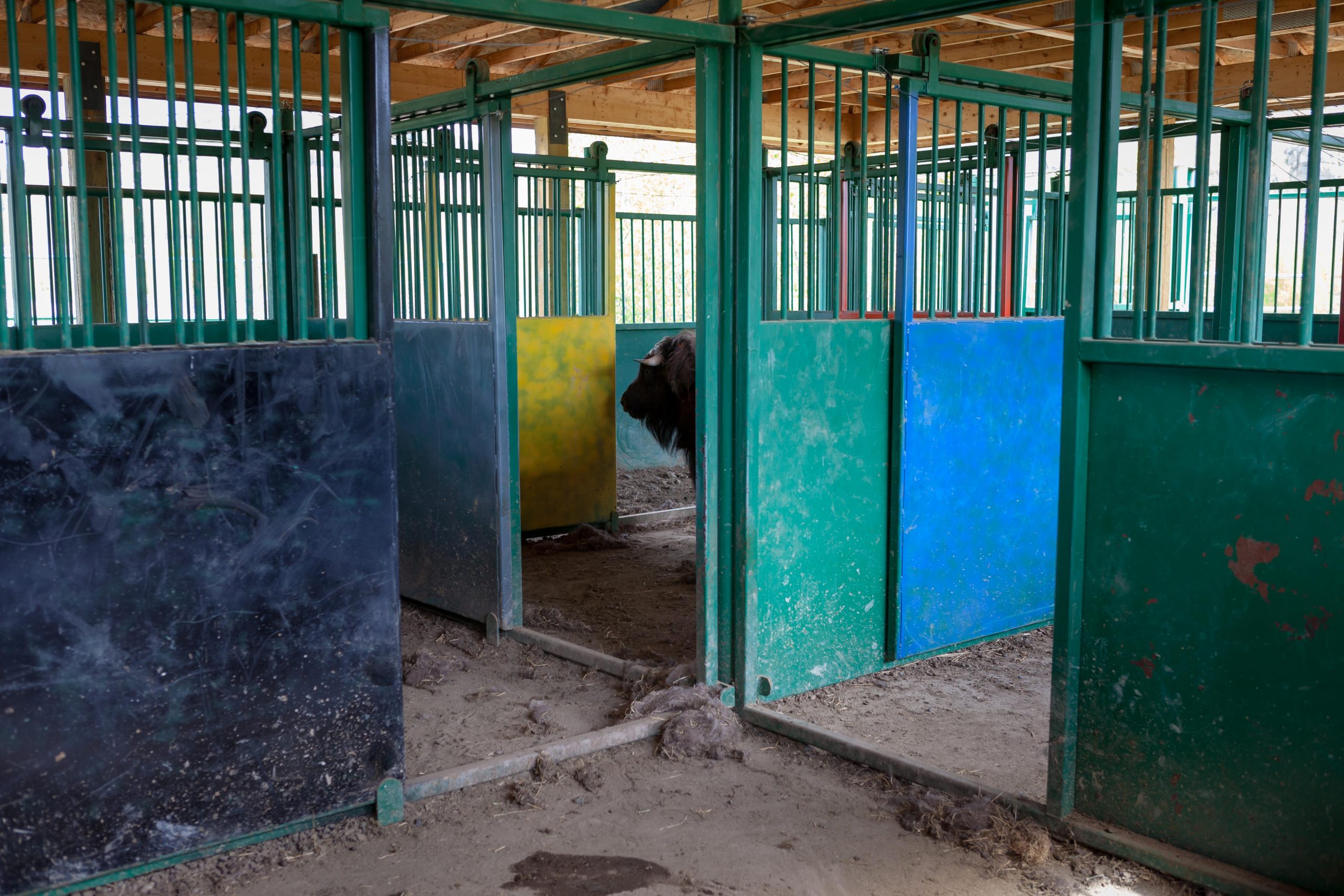
 In the second half of the lower loop we feed the muskox and check in on the elk and bison habitats as we head back to the animal care building. We then head to my favourite animal, the muskox, which is the best part of my day in animal care. These guys have a special metal structure for handling and feeding that limits contact, increases safety for staff and provides shelter for the muskox and muskox supplemental feed.

Muskox do not have feed stations. Instead, they have a metal handling and feeding structure to ensure the safety of both staff and muskox along with the longetivey of the building! Photo credit: J.Paleczny

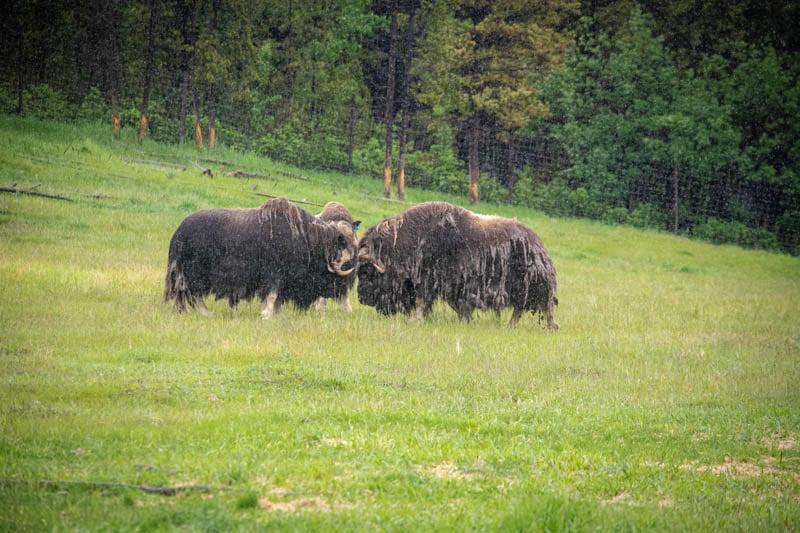
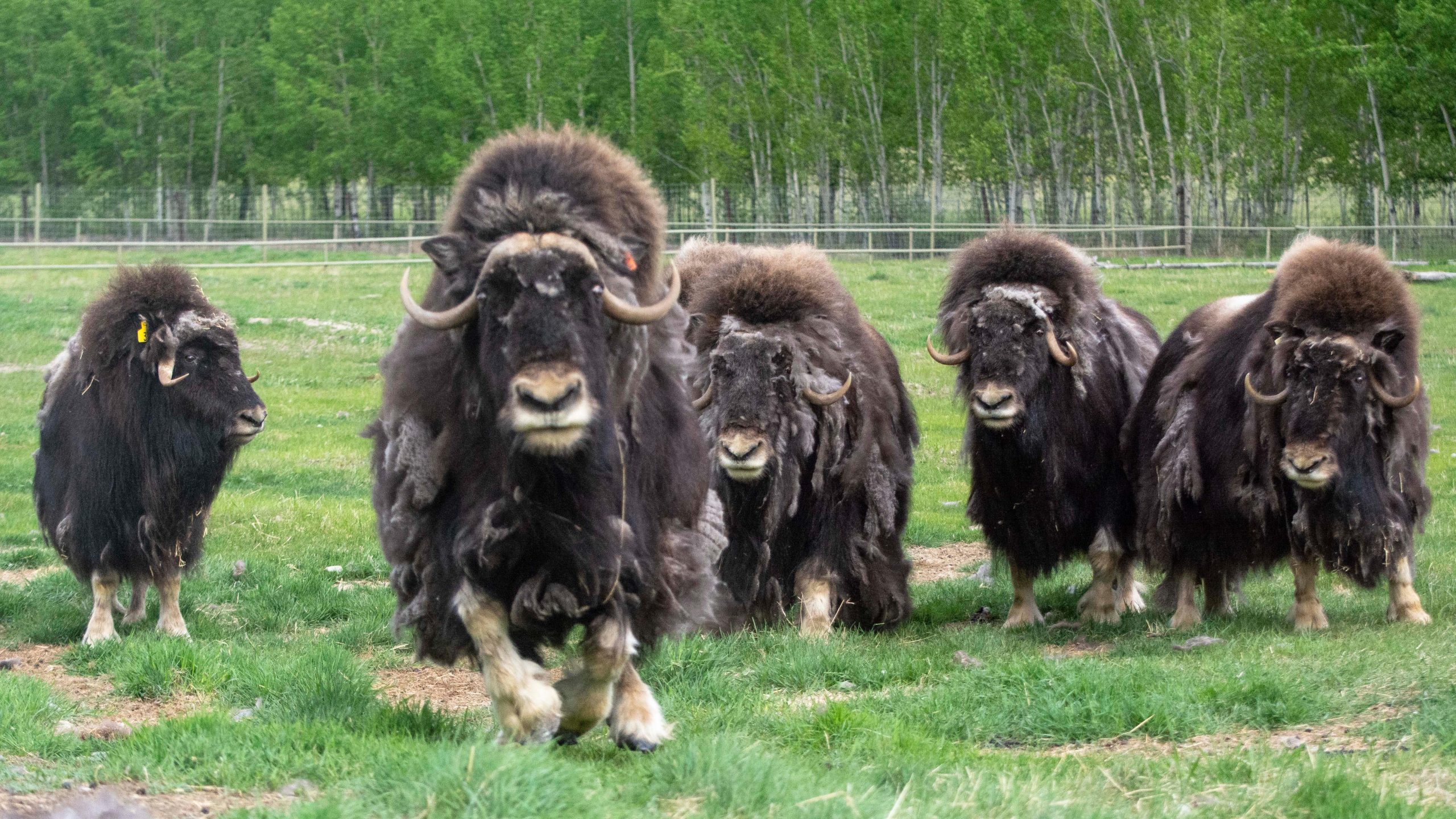
 Muskox are incredibly fierce with a social order that is largely based on an aggressive hierarchy but they are also protective of their herd. There's nothing more intimidating than a territorial, protective and potential in rut (mating season) muskox so it's best to keep your distance.

If the bison or the elk were too far away on my first look I will spend this time counting and watch for behavioral changes on this part of the loop. 

All while this is happening, we have to be wary of our time for feeding our rehab animals on tight schedules. There is also time during the day to do some other tasks like creating habitats for our rehabilitation animals or doing some spring cleaning in some of the collection animals’ habitats. By the time this is all done my arm and back muscles are jelly and I am ready to hand off the torch to the next animal care assistant. 

To conclude my time here at Yukon Wildlife Preserve is an experience I will never forget from feeding my favourite animal (the muskox) to finding a new passion in helping care for animals. While I came for a summer, for work, the Yukon and it's incredible fauna hold a strong place in my heart, summer 2022 can’t come soon enough!  In the meantime and year-round you can go behind the scenes and witness the extreme care and diligent work that is required by Animal Care staff to care for all the animals at the Preserve through a variety of experience and tour options - check it out! 

Abbey Mondor

Abbey Mondor

Wildlife Interpreter & Animal Care Assistant

Abbey joined the preserve the summer of 2021 to continue a lifelong dream of experiencing all three of Canada’s territories. With Nunavut already crossed off, the yukon was the next on her list! Abbey is currently studying biology at the University of Winnipeg making this experience a perfect place for her to put her education to practice! Abbey works both in visitor services and animal care where her desire to care for wildlife has grown. Her favourite part about working on the preserve is learning about all the personalities of the animals here.

Explore by Category

Explore by Author