Crane Gets A Flight South

Crane Gets A Flight South

nature

4 minute read - 

Back in early November, a sandhill crane came into the Yukon Wildlife Preserve’s Wildlife Rehabilitation Centre with a number of wounds, including a laceration to its eyelid. We are pleased to say that it has been successfully released! But when a bird like this misses the migration, how exactly do you release it?

mature bald eagle in rehabilitation

Photo credit: Neil Tracey

With the help of the amazing folks at Air North, Yukon’s Airline and George C. Reifel Migratory Bird Sanctuary we were able to transport the crane all the way from Whitehorse to its new winter home outside of Vancouver.

George C. Reifel Migratory Bird Sanctuary is a federal Migratory Birds Sanctuary located in Delta, British Columbia (about an hour from downtown Vancouver). It has a small population of sandhill cranes that overwinter there, which we hoped would help this newly released bird transition back to the wild. We were a little nervous, as sandhill cranes can be quite unaccepting to newcomers, but in this case things went very well!

• • •

6:00am

Yukon Wildlife Preserve’s veterinarian, Dr. Maria Hallock, collects the crane from the rehabilitation centre. It will ride to Vancouver in a large dog kennel, specially equipped with barriers to limit visibility and help the crane stay calm on the long journey.

6:45am

The crane arrives at Air North Cargo at Erik Nielsen Whitehorse International Airport. Checking in a crane is more complicated than checking in a human. Permits and paperwork is processed and the kennel is given a final check to ensure it is secure.

7:30am

Neil checks in for the flight. Neil is the Manager of Programming and Education at Yukon Wildlife Preserve. Before moving to Whitehorse, he worked in wildlife rehabilitation in British Columbia. He was originally going on vacation to visit family; he added a crane release to his itinerary.

8:45am

Air North flight 521 departs for Vancouver. The weather is surprisingly good, and the flight is very smooth.

12:00pm

Air North flight 521 arrives in Vancouver.

12:30pm

Neil and the crane depart for the George C. Reifel Migratory Bird Sanctuary in Delta, British Columbia.

1:00pm

Kathleen Fry, Sanctuary Manager, meets the bird. She is a big fan of cranes. It shows. She escorts the crane and Neil to the release site, a beautiful lagoon between a set of dykes.
mature bald eagle in rehabilitation

Photo credit: Neil Tracey

1:01pm

The bird makes a break for it! While the team at the Sanctuary had set up a small fenced area to release the bird into - hoping to make the transition to a new environment smoother - the bird almost immediately ducked under the fence and ran off into the reeds.

1:02pm

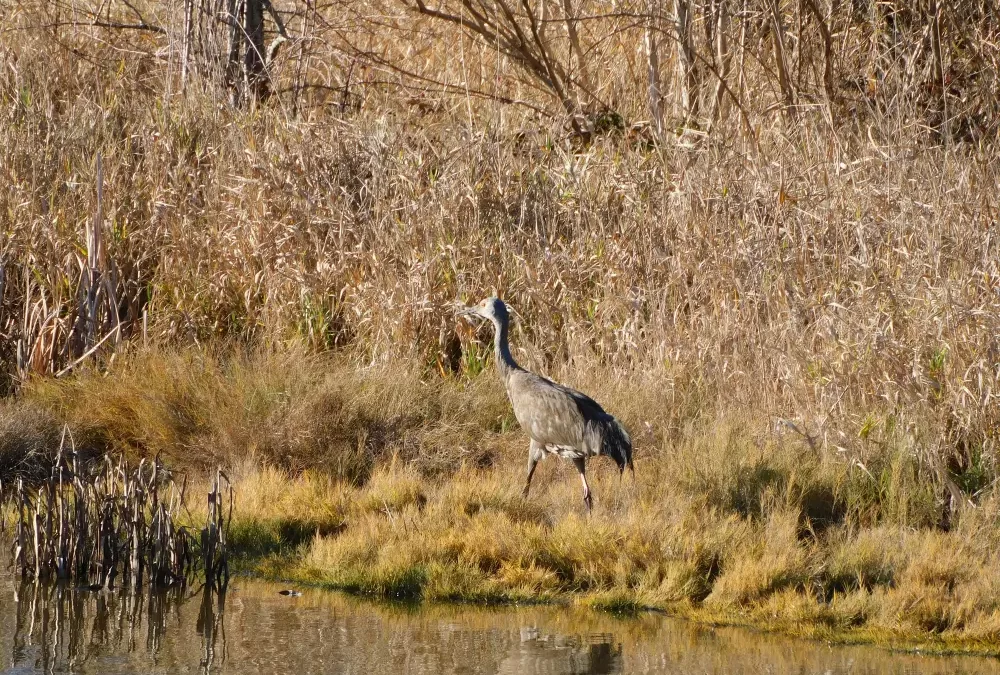
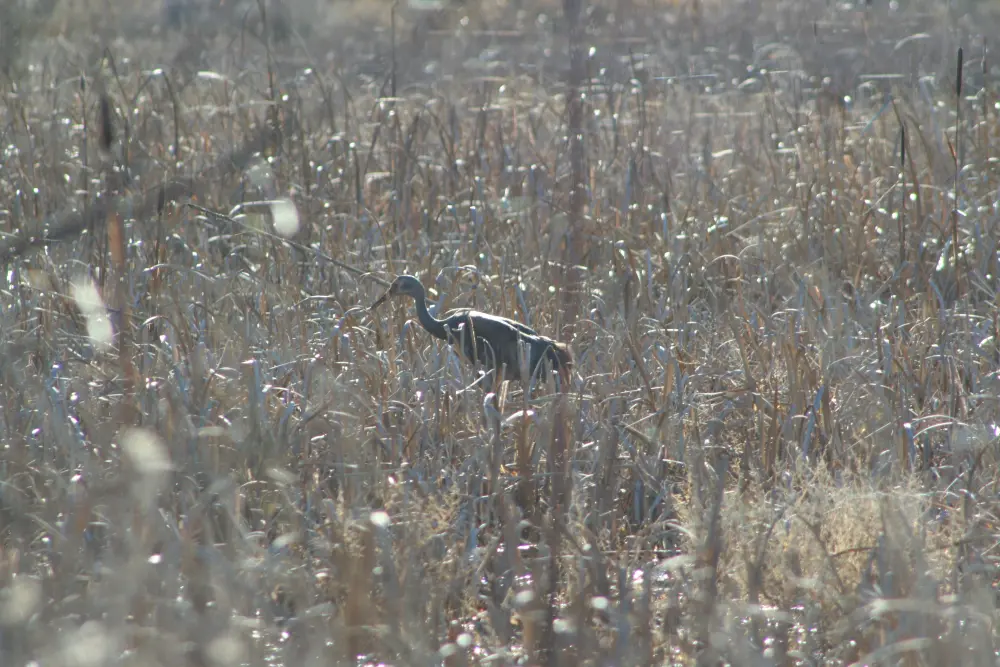
The crane stops moving and relaxes in the reeds. It blends in extremely well and is challenging to see.

3:00pm

The crane is still in the reeds, relaxing. It has moved a few steps, but is staying in the same protected area.

Normally, when an animal is released back to nature, we do not know exactly what happens next. This time, thanks to updates from the team at Reifel Sanctuary, we can not only tell you what happened next but we also have some amazing photos! Thanks to Kathleen Fry at the Sanctuary for giving us permission to share her photos.

mature bald eagle in rehabilitation

Photo credit: Kathleen Fry - Day 2

Day 2

The crane visited with 15 local resident cranes in the morning before disappearing. This was a huge positive step, as the other cranes did not act aggressively toward the newcomer. In this photo from Kathleen, the rehabilitated crane is clearly identified by his small size and darker colours.

Day 3

The crane is slowly adapting to the wet coastal weather and seems to be keeping his feathers in better condition.

Day 5

Everything looks fine! The newly released crane seems to be hanging around the release area, is staying active, and is interacting appropriately with the other cranes in the area.

Photo credit Kathleen Fry - Day 5 after this crane was rehabilitation in the Yukon, flown South by Air North and released in BC.

Photo credit: Kathleen Fry - Day 5

If you are visiting the Vancouver area, you can reserve a spot to visit the Sanctuary. You might see the rehabilitated crane or some of the songbirds, waterfowl, and other species that call the Sanctuary home!

Wildlife rehabilitation doesn’t take a holiday! If you would like to support future rehabilitation efforts, donations are accepted all year round.

Neil Tracey

Neil Tracey

Manager Education and Programming

Neil is an interpreter and biologist who has worked in wildlife rehabilitation, interpretation, and education. He joined the team in early 2023 from Vancouver. In his spare time he teaches first aid and grows far more plants than he has space for at home.

Explore by Category

Explore by Author

Face to Face With the Wild: Kids

Face to Face With the Wild: Kids

nature

by Seth Brown | Dec 9, 2022

5 minute read 


Yukon Kids

It’s a warm and sunny Wednesday in July. After driving past Jesse the moose, some handsome sheep, and innumerable little squirrels I step off the bus with 22 eager campers following. We’re just about to head out for a little walk. But then... I catch one little camper frolicking around in her bare feet.

“Jasmine! Where are your shoes?”

“Shoes?! I don’t need those: I’m a Yukon kid!”

Campers sometimes teach the instructors at YWP school programs.

Sometimes it's the campers who teach us educators about their favorite plants and animals.

Hidden Kids

On a normal trip to the Preserve it’s easy to get lost in our own experiences. After all, how can you not? When you see golden sunshine through the grass; when you and the little muskox lock eyes; or when one of our guides tells a chilling story. These experiences are what we come for, but we aren’t the only visitors here.

The Yukon Wildlife Preserve sees over one thousand students and campers come through our doors every year. Winter and spring school programs, Swan Haven programs, March Break Nature camp, and summer nature camps are all in our calendar. The Wildlife Preserve has its own department dedicated to bringing enriching and educational experiences to Yukon youth. As an outdoor educator this what first brought me to the Preserve, and it's also one of the things that I think makes the Preserve a very special place.

Unfortunately, the public doesn’t often get to hear about all of the incredible experiences we offer students and children. If you, like me, are a little too old to attend these wonderful programs I’m here to tell you that you’re also in luck! I’ve done all the running around – the booger wiping, rule giving, question answering, and “yes, you can go pee”ing – so you don’t have to. Join me as I take a walk down Memory Lane, looking back at this last year with our Education team. But be prepared to take chances, make mistakes, get messy. So let's tie up our shoes and get Face to Face with: The Wild Kids of the Yukon.

Kids holding up moose antlers outside in the snow.

A happy student trying on their new favorite hat.

Time to Plan

Though our ears are still ringing from a summer full of campers, it’s a very different story in our office this time of year. Our Manager of Education and Programming sits quietly and plans for the year to come.

‘Have we sent all the thank-you cards?’

‘How many more plastic animals do we need to buy?’

‘Where do I even buy a plastic muskox?’

We ruminate at length on these pressing topics. After all, one missing muskox now may break the heart of a muskox-loving little boy eight months later. And so, slowly, we debrief the past year and plan into the next.

Cool Kids

​February comes creeping up and at this point we (Education and Programming) are a very tiny snowball at the top of a very large hill. Our winter programs are the little kick that gets us going. A modest start to a full year of programming. This time of year, our programs focus on winter ecology and cold weather adaptations.

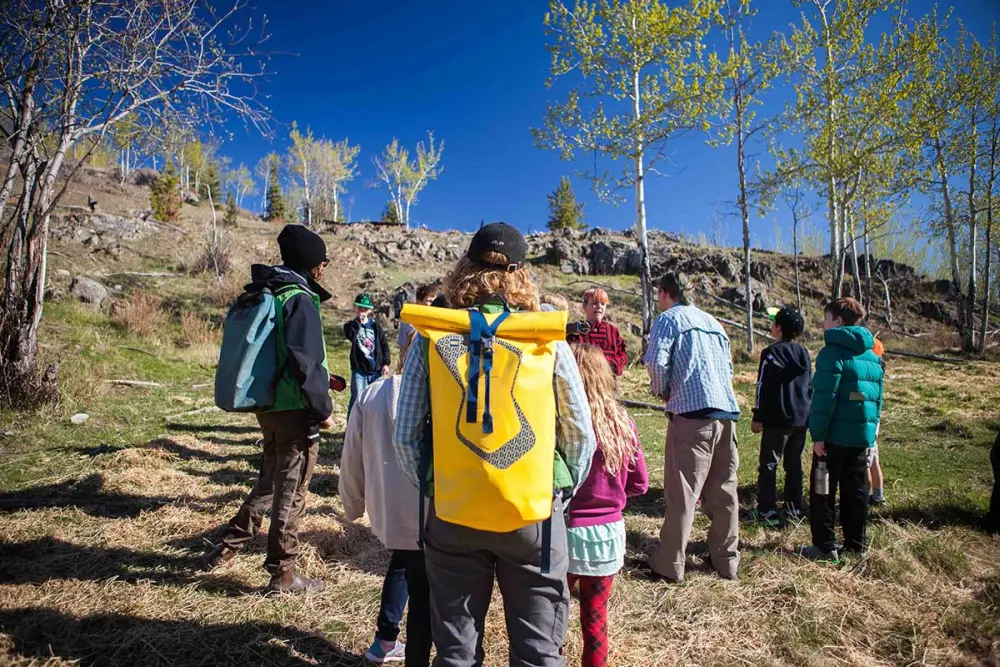
With a sizeable (750-acre) classroom, we bring students along our trails in order to teach through hands-on experience and keen observation. So, let’s throw on our jackets with the grade sevens and head out for our famous February caribou program!

Students have a positive close encounter with one of our bull caribou.

Campers getting a special experience with one of our caribou bulls.

March Break

​Slowly, March comes crawling along. By this time, we’re feeling ready for the busy spring and summer seasons. We have our programs all neat and tidy, but the Preserve has turned a somber shade of winter. We’re all aching for something: A little sunlight, some warm weather, a hot cup of cocoa… or, some more students! Last year's March Break Nature Camp hosted 10 campers, a real VIP experience.

Though we do plan and structure the days, it’s the campers who really have the final say in the day’s events. We want our campers fully engaged, so we try our best to tailor the camp to their interests. If that means spending some extra time with the caribou then we throw on an extra layer, step into the enclosure, and get a closer look at our campers' favorite ungulates.

Kids doing outdoor experiential programming in the outdoors in Yukon.

Educator Erin Cartan taking her campers to the Gunnar Nilsson & Mickey Lammers Research Forest.

We Talk Swan

As the snow starts to melt and the sun starts to burgeon it’s a HONK, of all things, that prompts our first drive out to Swan Haven. Working with the YG Department of Environment we move our operations to Marsh Lake and start talking Swans with grade two, three, and five classes at the beginning of April.

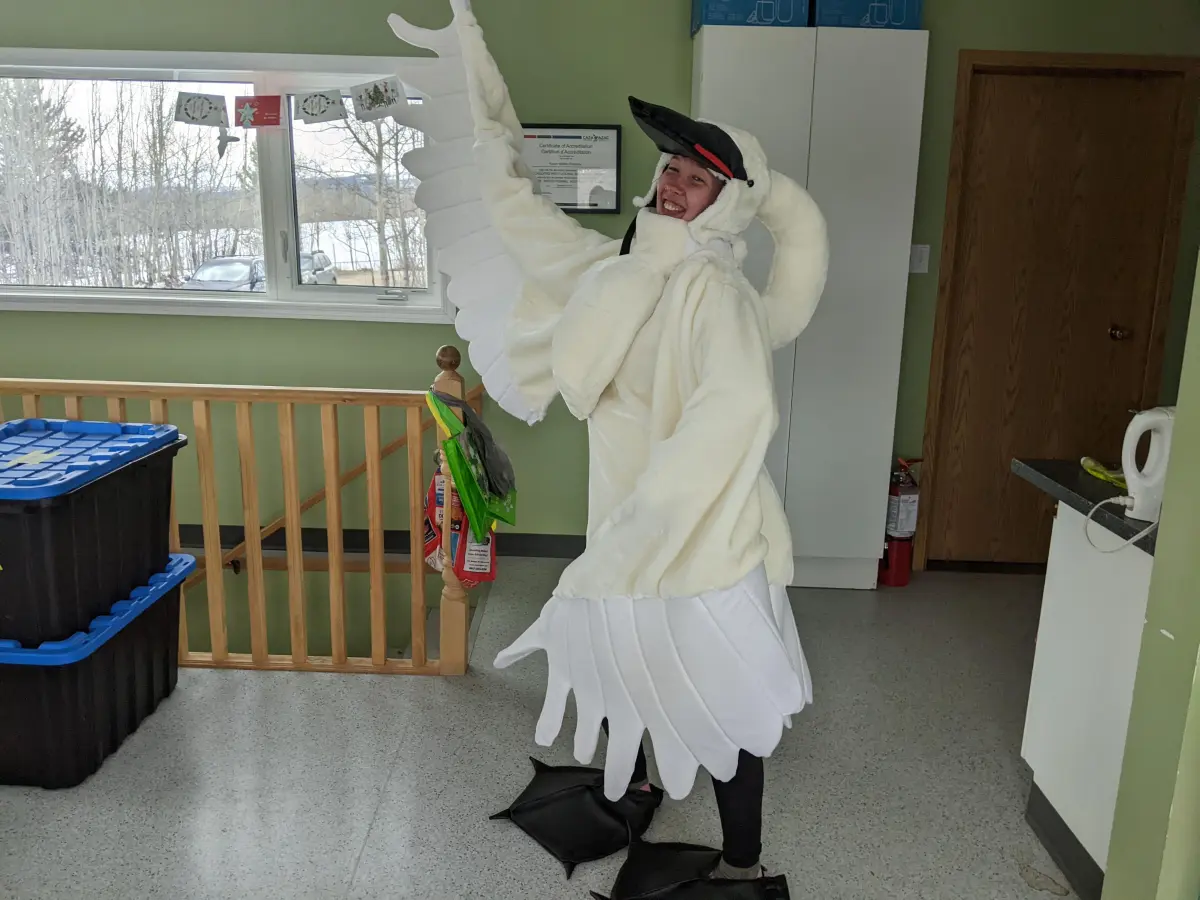
After our education team gets a Swan Masterclass from bird biologists Jukka Jantunen and Margaret Campbell, we welcome hundreds of students to share the joy of birding with some of our favorite feathered friends. Together we tell the story of Yukon swans, look through scopes to observe their behaviours, play dress-up, and make our own mock-migration. We do all this in hopes of fostering respect and appreciation for all Yukon wildlife.

Swan Costume for Swan Haven Programming

Manager of Education and Programming, Madison Rushton, trying out our new and improved swan suit.

The Ball Gets Rolling

Though the snow on our peaks is slowly melting by early May, the snowball we call ‘Education and Programming’ is growing both in size and speed. It’s now time for our Spring Programs! Life is waking up and starting to buzz here on the Preserve. Together with the students we try to find each and every little buzz, bumble, and sign of life. Our Yukon-famous benthic macroinvertebrate studies (a.k.a. lookin' for bugs in the pond), large scale Predator vs. Prey game, and animal charades are crowd pleasers amongst the little ones. Lots of fun and games for these students, and they haven’t the slightest clue they’re actually learning.

Once that’s all over, snow is the last thing on anyone’s mind. But, our ‘Education and Programming’ snowball is reaching its crescendo with the YWP Summer Nature Camps! It’s all hands on-deck at this point; three wildlife educators, nine weeks of camp, and nearly two hundred campers. The whirlwind that ensues is filled with a tremendous amount of fun. Fishing, barbecues, forts, flower picking, popsicles, dress-up, story time, nap-time, camp-time, and eventually, home-time are all to be expected.

At last, our ears ringing from nearly seven months of outdoor education and nature programming, we pat each other on the back and have our own well-deserved nap-time. But don’t forget, once we’re ready to open our eyes and stretch our arms, we get to do it all over again!

Students dip-netting for all the bugs and critters they can find.

Students dip-netting for all the bugs and critters they can find.

Naptime

Though working with children can be exhausting it’s also extraordinarily rewarding. Moments of growth in our students fuel us educators with energy and inspiration. And the best part? We’re learning just as much from them as they do from us.

While teaching at the Preserve I often think back to my own outdoor education experiences as a child. Downtown Toronto certainly offered less opportunities than the pristine boreal, but the richness of those experiences was all the same.

Now that I think about it, I remember one particular experience at the Toronto Island Nature School. We were playing a game of Predator vs. Prey and I felt like the luckiest boy. I had the opportunity to play my favorite animal; the wolf. I ran under a bush, prepared myself, and waited eagerly for the game to start. TWEEEET went the whistle and THUMP THUMP went my feet.

“Seth! Where are your shoes?”

“Shoes?! I don’t need shoes, I’m a wolf!”

Seth Brown

Seth Brown

Visitor Services Coordinator

Passionate about the environment, art, and education, Seth has been working as an environmental educator since 2017. Off the preserve, you can find him playing in the mountains; on skis in the winter and with a paddle in the summer. Having moved to the Yukon and joined the preserve in April 2022, he’s excited to learn and explore!

867-456-7400
seth@yukonwildlife.ca

Explore by Category

Explore by Author

Busy Times & Hungry Critters in Care

Busy Times & Hungry Critters in Care

nature

by Lindsay Caskenette | Aug 3, 2021

This story was originally published July 10 2021 in the e-blast newsletter to Yukon Wildlife Preserve's membership.

Are you a member but don't receive these email Newsletters?  Contact us at info@yukonwildlife.ca to update your email preferences.

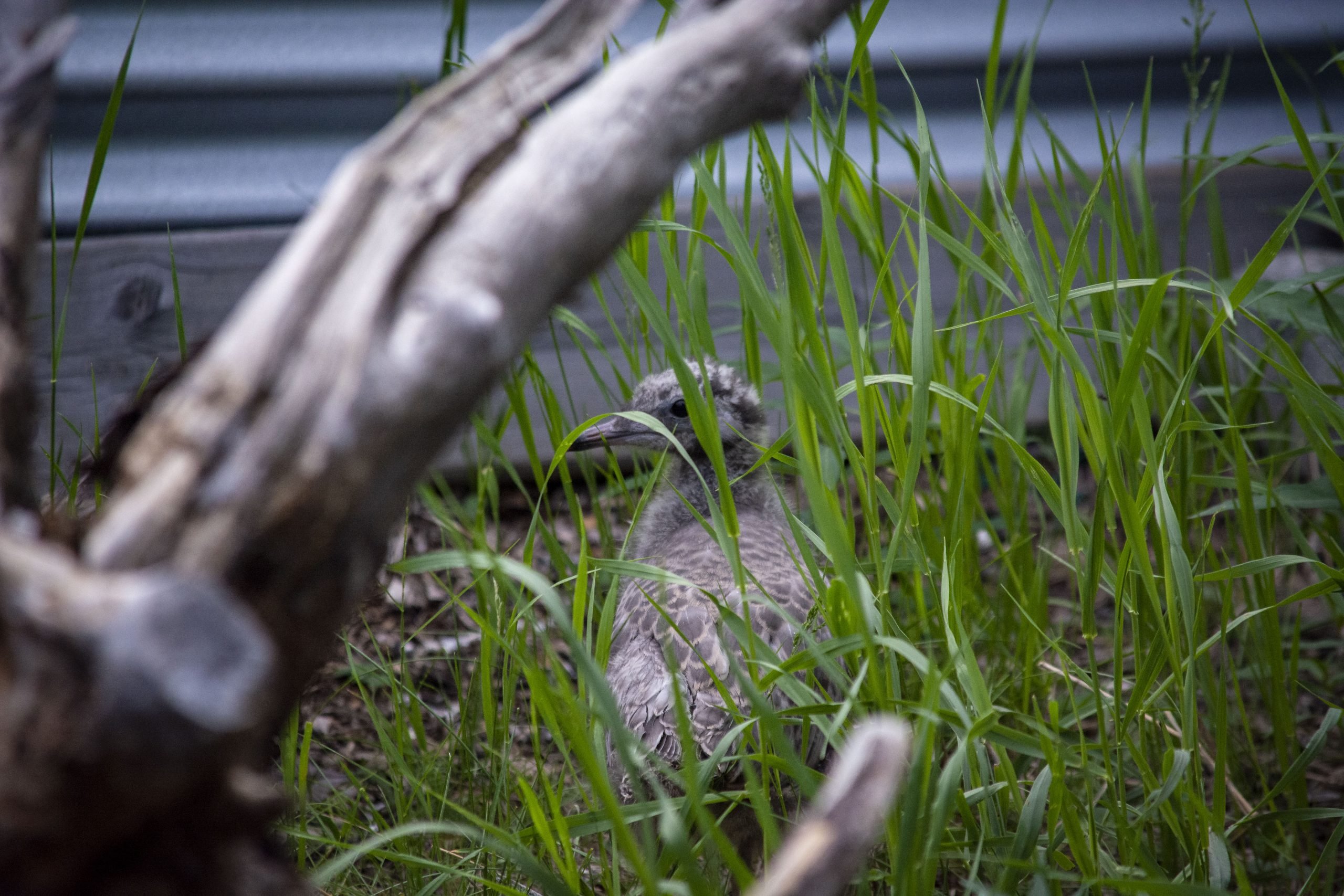
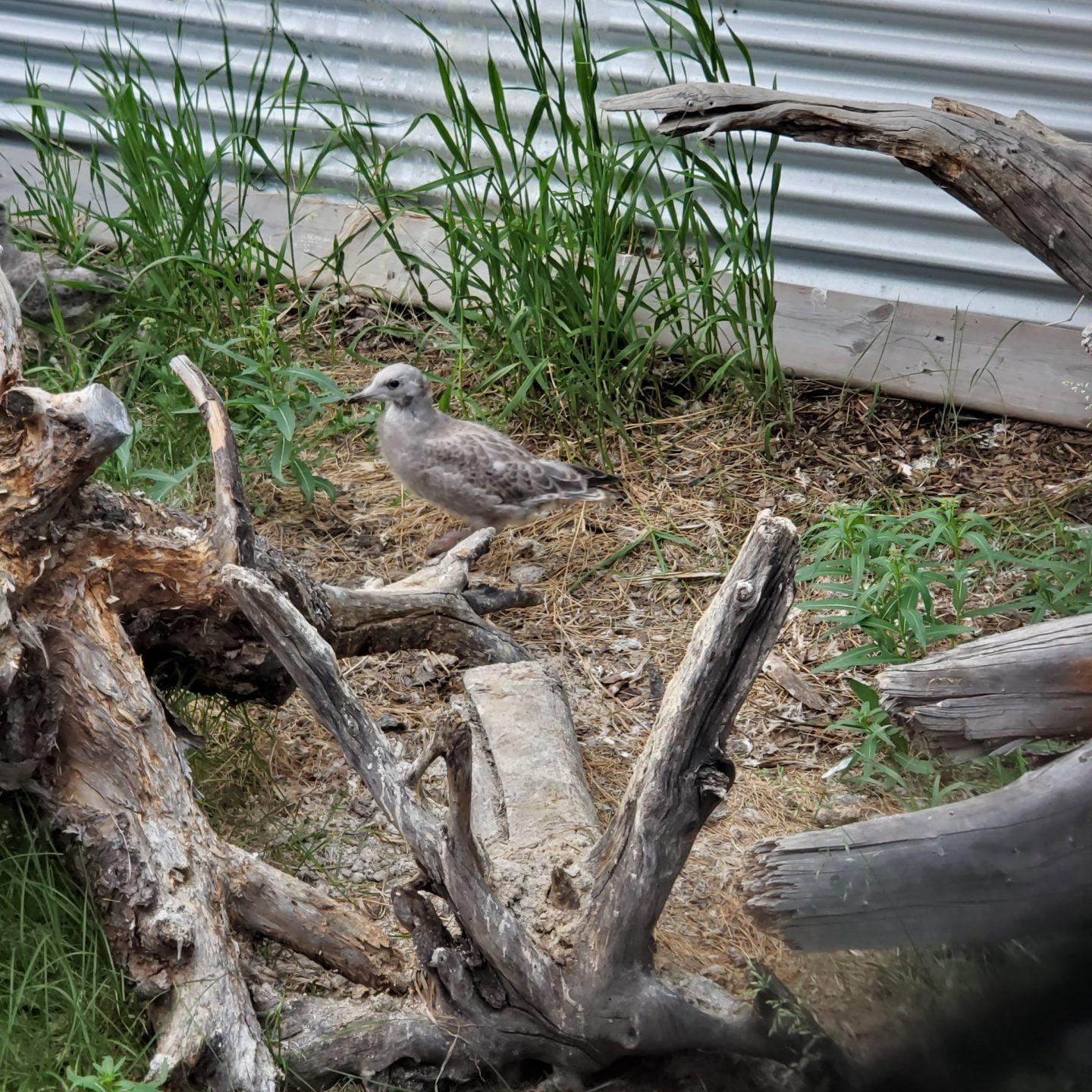
Mew Gull x2

Location found - Downtown.

Admitted on June 15th after the nest was lost. Conservation Officers brought the animals to the Preserve.

This pair are in an outdoor aviary where they are growing fast and eat mice 3 times a day.

• • •

Juvenile Mew Gull with Wing Injury

Also found downtown but admitted more recently on July 7th. This individual has fractures to its right wing and a large hematoma but depsite its injuries is in good body and remains active and alert. 

The animal is on low dose medication for pain and inflammation and the wing is immobilized. It remains under observation before it will move in with the other gulls outside. 

• • •

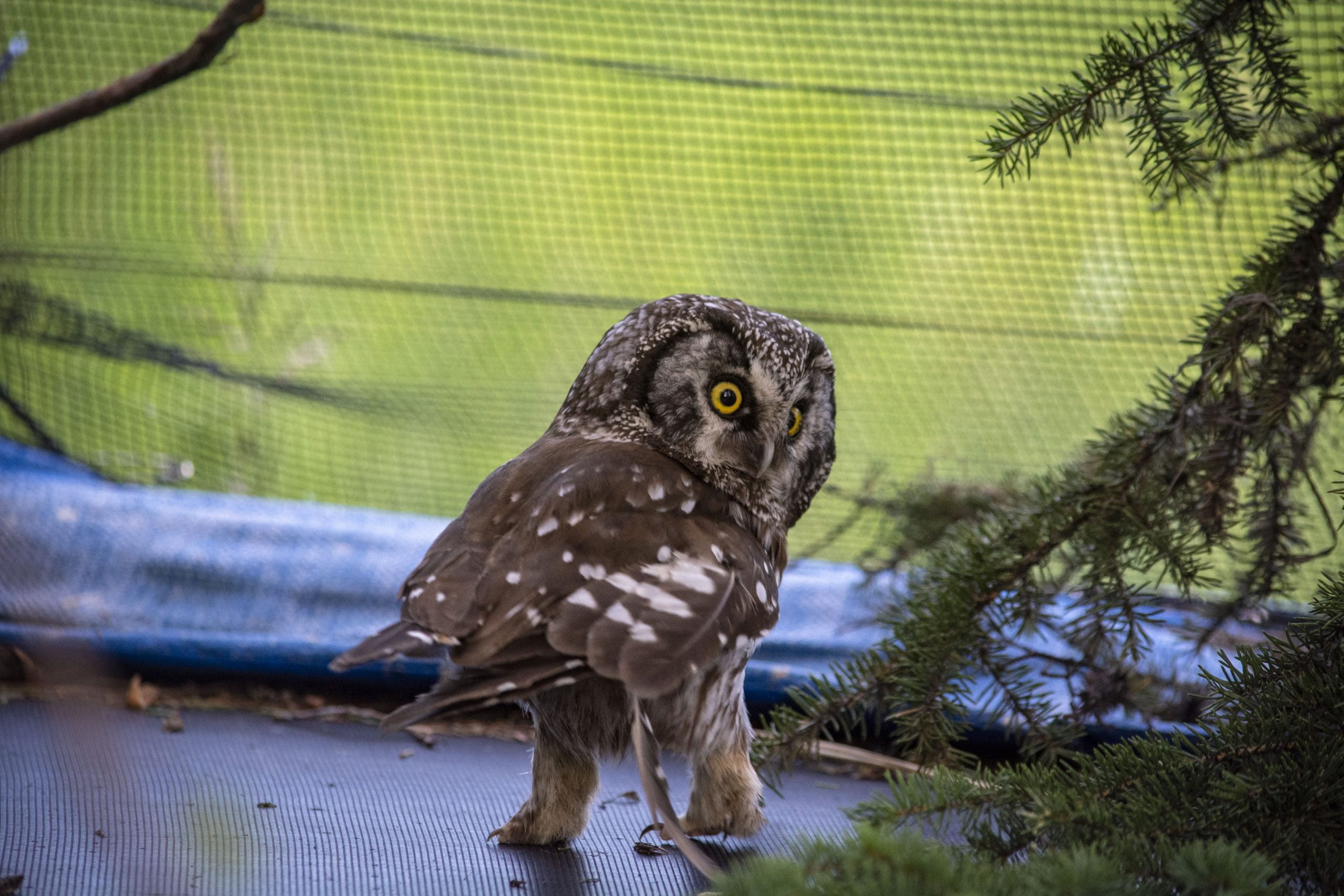
Boreal Owl

Admitted June 28th, this tiniest of Yukon owls was rescued from an attack by a domestic dog. While the animal came in with mild ataxia (lack of coordination) it's doing relatively well. It's missing primary and secondary feathers on both wings but with time and regular mice feedings twice a day the owl should be a good candidate for release when ready.

• • •

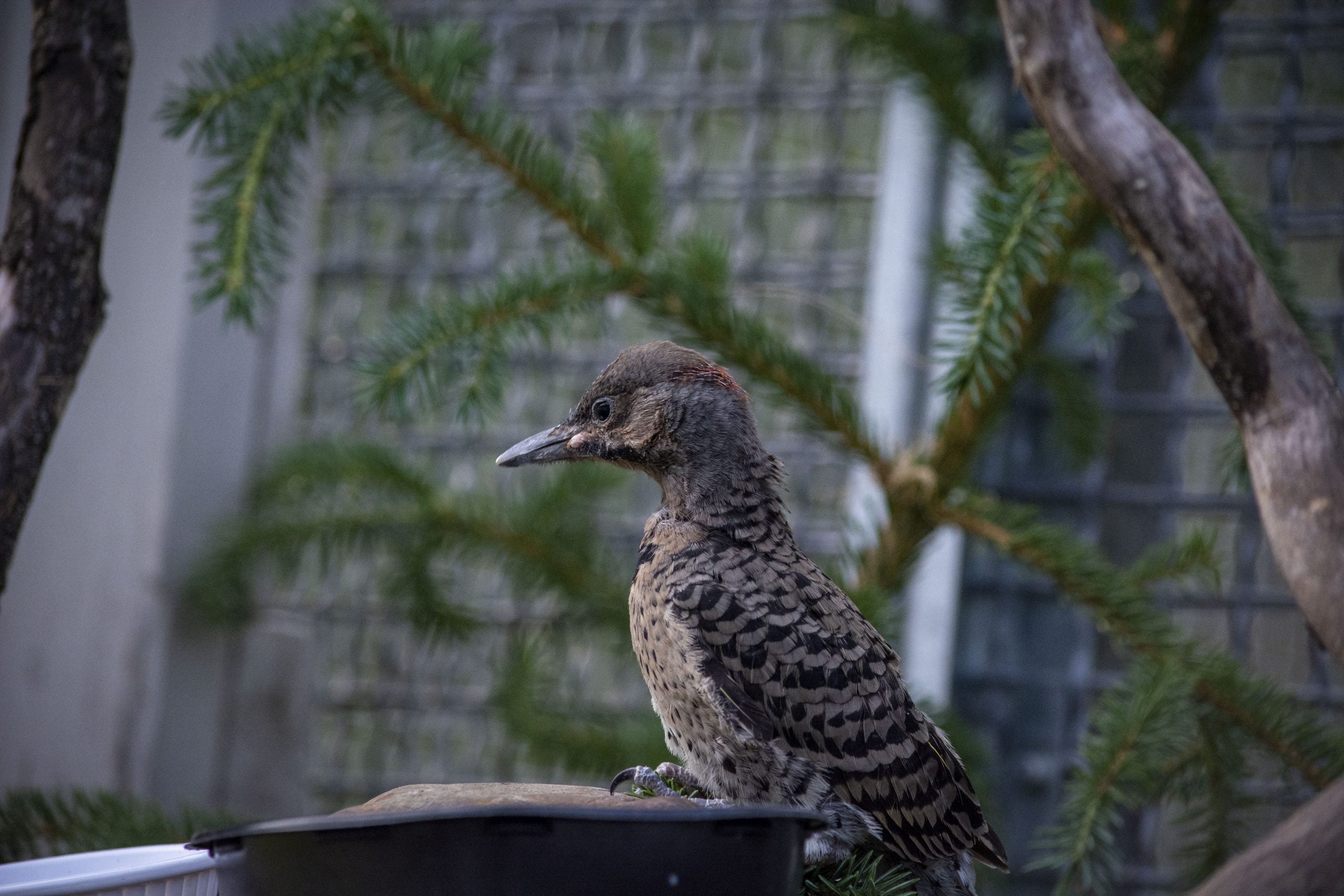
Juvenile Northern Flicker

Location found - Takhini Hot Springs Rd area. 

Admitted on June 27th after the young animal fell out of its nest and was at risk of predation. 

Plan for recovery and release with time and lots of mealworm feedings throughout the day and small mice.

• • •

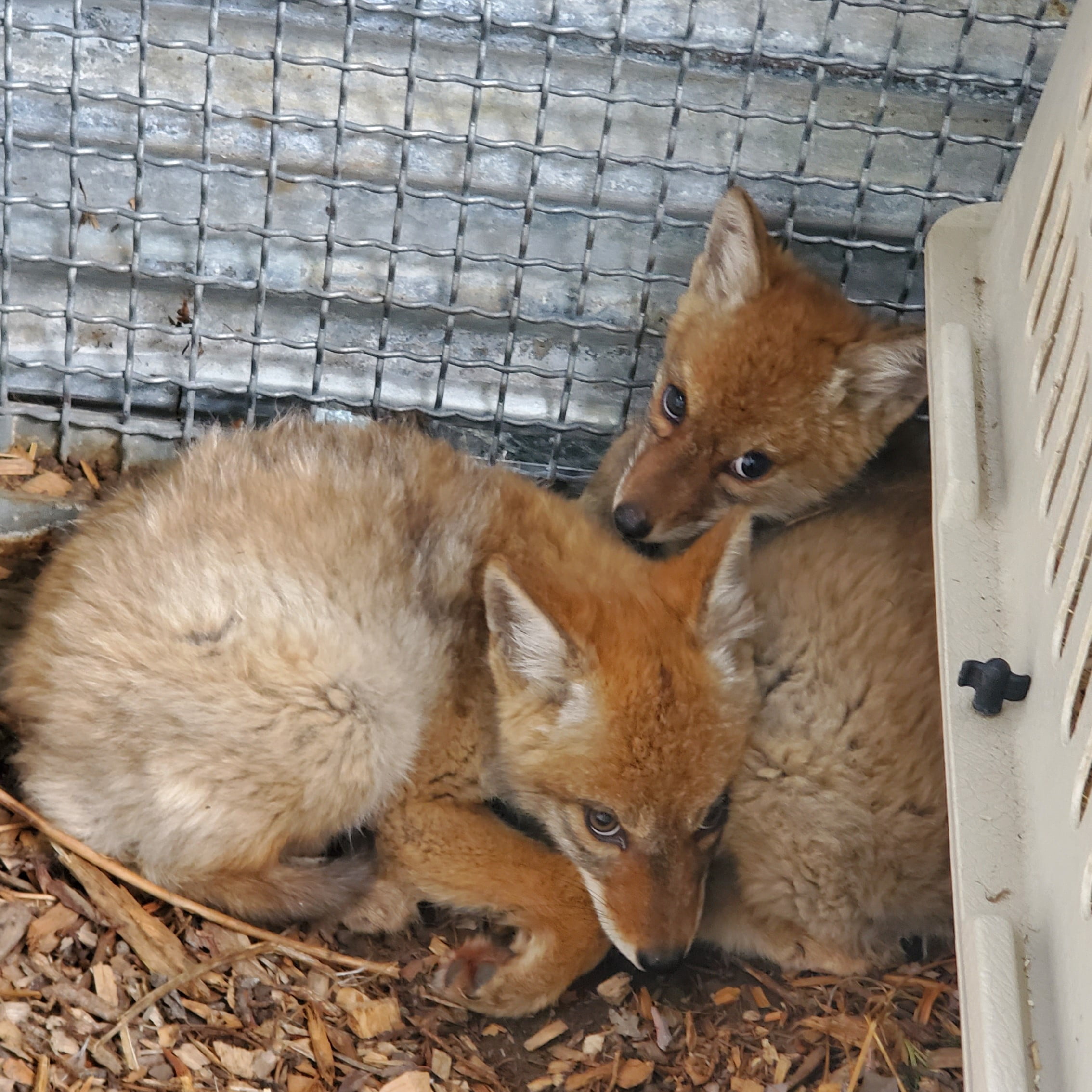
Coyote Pups

2 male coyote pups, about 6 - 8 weeks old, were admitted to the Rehabilitation Centre on July 5th after they were found, suspected to be orphaned, in the Marsh Lake area by members of the public. 

The pups eat 3 times a day and their appetites are growing. Along with a puppy formula, every feeding they consume 4 mice and 2 whole quail each. 

• • •

Each of these animals face challenging times ahead but the Wildlife Preserve Animal Care Team, including Veterinarian, Dr. Maria Hallock, are working 7 days a week, near 20 hours a day to ensure each of these animals are given the best possible chance for recovery and release back into the wild. 

We could use your support to aid in these animal's recovery - please consider donating. Help us keep Yukon wild at heart ♥

• • •

Lindsay Caskenette

Lindsay Caskenette

Manager Visitor Services

Lindsay joined the Wildlife Preserve team March 2014. Originally from Ontario, she came to the Yukon in search of new adventures and new career challenges. Lindsay holds a degree in Environmental Studies with honours from Wilfrid Laurier University and brings with her a strong passion for sharing what nature, animals, and the environment can teach us.

867-456-7400
Lindsay@yukonwildlife.ca

Explore by Category

Explore by Author

What’s That Scat?

What’s That Scat?

nature

by Sophia Slater | Jul 23, 2021

4 minute read.

As we are out enjoying some of the many trails the Yukon has to offer, we often have to watch our step to make sure we’re not putting our boots in something smelly! These unexpected trail obstacles can be great indicators of whose habitat we are walking into, what they are eating, and how they are digesting it. Just like us, many animals have dynamic diets, and will eat what is available. Scat can be interesting but can also spread diseases, even to humans, so it should be looked at and not touched, especially by our furry companions.

Bears

Black bears are opportunistic omnivores who will eat whatever food they can find, including fish, fruit, meat, insects, and herbs and grasses. Grizzlies have a similar diet, but tend to favour high-energy meat and insects more than the smaller black bears. Like their diets, bear scat appearance is quite varied, and often contains fragments of their last meal, like seeds, bits of berries, or small animal bones. Wildlife Interpreter Maureen recounts seeing a landscape covered in red wine-coloured piles that were actually scat from grizzlies that had eaten a lot of cranberries!

Light brown bear scat with seeds visible.

Bears are relatives of mammalian carnivores, they have a digestive system similar to carnivores, without a cecum or extended large intestine. This limits how efficiently they can process leafy plant material and they must eat a lot if they are relying on these foods, which is common in the spring. As a result, when a bear eats a lot of plant material their scat often has a green tinge from the undigested grasses or a fibrous appearance. Typically, their scat is brown or black and tapered, though sometimes it can appear as more globular if it is loose. Grizzly scat tends to be a bit wider and larger piles than black bear scat. It can be hard to distinguish between the two, but both should make a hiker cautious of the trail ahead. Remember bear spray and noisemakers and stay bear safe!

Left to right: Older bear scat; bear scat that is darker brown in colour with grasses visible.

If you’re interested in getting involved in bear research, the Operation Ursus Research using Scat (OURS) project is aimed at estimating the Yukon grizzly and black bear populations using DNA available in bear scat. Lucile leads the study and shares the project story Bear Poo and You with YWP.

Canines

Foxes, wolves, and coyotes are more exclusively carnivorous than bears, but may occasionally eat berries and seeds. Their digestive system is similar to that of a bear, as is their scat. Wolves' stomachs are specially adapted to hold a lot of food so that after a hunt they can get their share of the reward. Additionally, their stomach is very acidic to kill off any pathogens in the meat. It is tubular and tapered and may contain bits of bones, fur, or berries. It may be lighter, as it varies from tan to dark brown in colour. It is, however, smaller than bear scat: fox scat is about 1.25 cm in diameter, coyote scat is about 2 cm, and wolf scat is usually at least 2.5 cm in diameter.

Wolf scat with fur visible.

There will likely be much less of it as well. Foxes often defecate in obvious areas to mark their territory. The Wildlife Preserve exists as an ecosystem within a larger ecosystem and foxes are one of the many wild animals that visit. They seem to like to use the boardwalks at the front cabin to do their business!

Foxes often defecate in obvious places to mark their territory.

Left photo credit: L.Caskenette.

Feline - Lynx

Unlike generalist bears and canines, lynxes are specialists. Snowshoe hares are their primary food source, and can make up 75% of their winter diet. Meat is highly digestible, meaning that most of what is consumed can be broken down and absorbed easily. Lynx digestive systems, therefore, have shorter small intestines relative to body size and less developed caecum than canines.

Lynx scat of varying ages among grass.

Their scat is black, tubular and tapered, and does not have so much undigested material as the bears or canines. It is also very smelly. Like a house cat, they will cover their scat with dirt or snow, probably to hide their presence from nearby animals. Also like house cats, they often defecate in the same latrine over and over, which can be seen in our lynx habitat.

Lynx, like house cats, often poop in the same places every time. This is one of the latrines in the lynx habitat at the Preserve.

Cervids

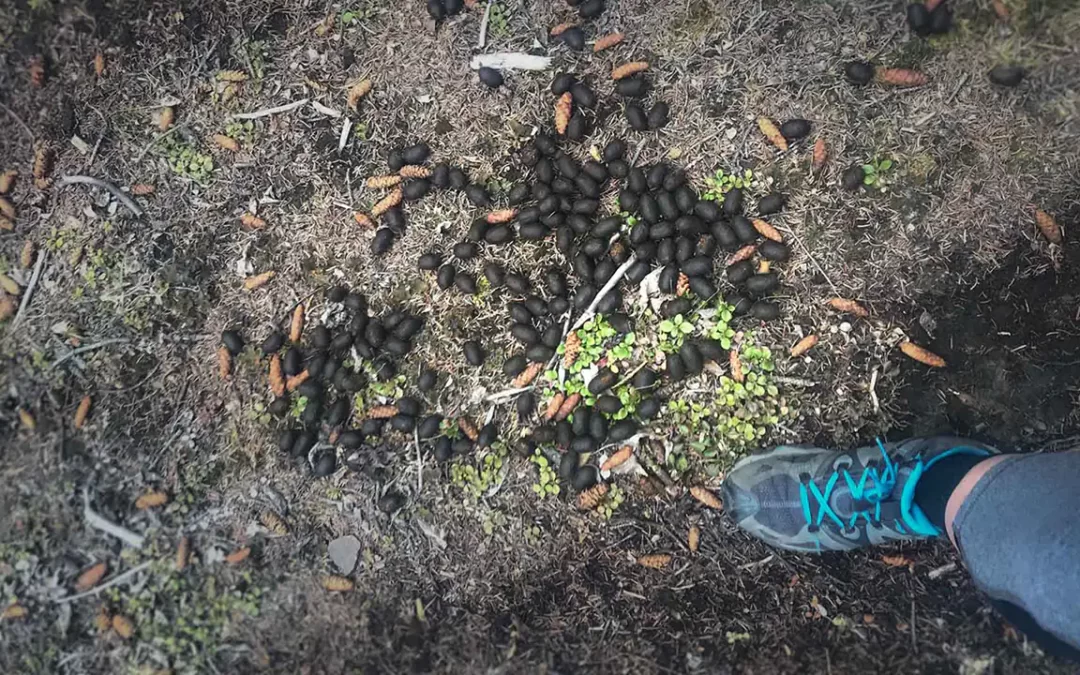
The Yukon has a great variety of cervids (antler bearing animals) or members of the deer family. Their diets, digestive systems, and scat have many similarities. In general, they produce uniform, dark brown or black oval-shaped pellets, which result from uniform movements of smooth muscles in the large intestine and its sphincters.

From left to right: Caribou, moose, mule deer and elk. Photo Credit: L.Caskenette & J.Paleczny.

Their diets are often high in fibrous, dry tree materials like leaves and twigs, which is why their feces forms pellets. If they are eating more grasses, in the summer, it may appear softer and more clumpy. Cervids are all ruminants which means that their stomachs have four compartments: the rumen, the reticulum, the omasum and the abomasum.  This allows for fermentation by bacteria and other processes that break down vegetation. This is part of the reason that cervid scat does not have as much undigested material as the carnivores’, despite their plant diet having less digestible material. In addition, they will regurgitate their food and chew it again, also called chewing their cud!

Left to Right: Soft caribou scat clumps together versus caribou scat in pellet form.

Deer pellets are small, about 1 cm in diameter, and are left in piles of many pellets. They defecate an average of 13 times per day! Elk scat is similar but 1-1.5 cm in diameter, and moose scat is even larger at 1.5-2 cm in diameter. Deer and elk pellets are rounder than moose pellets.

Softer deer scat often clumps together as seen here.

Moose are more strictly browsers, that eat only tree materials, so mostly their pellets are harder. Caribou scat appears somewhat more rough than deer or moose scat. It is often in harder pellet form in the winter when they eat a lot of lichens and sedges. In the summer, when their diet switches to grasses and vegetation with a high moisture content, their scat often forms larger soft clumps.

Moose scat in pellet form, darker brown because it's older.

Bovids

There are also a wide variety of bovids (horn bearing animals) in the Yukon. Our mountain sheep, mountain goats, muskox, and bison are all ruminants, just like the cervids. They are all herbivores who eat a variety of grasses, sedges, seedlings, and leaves.

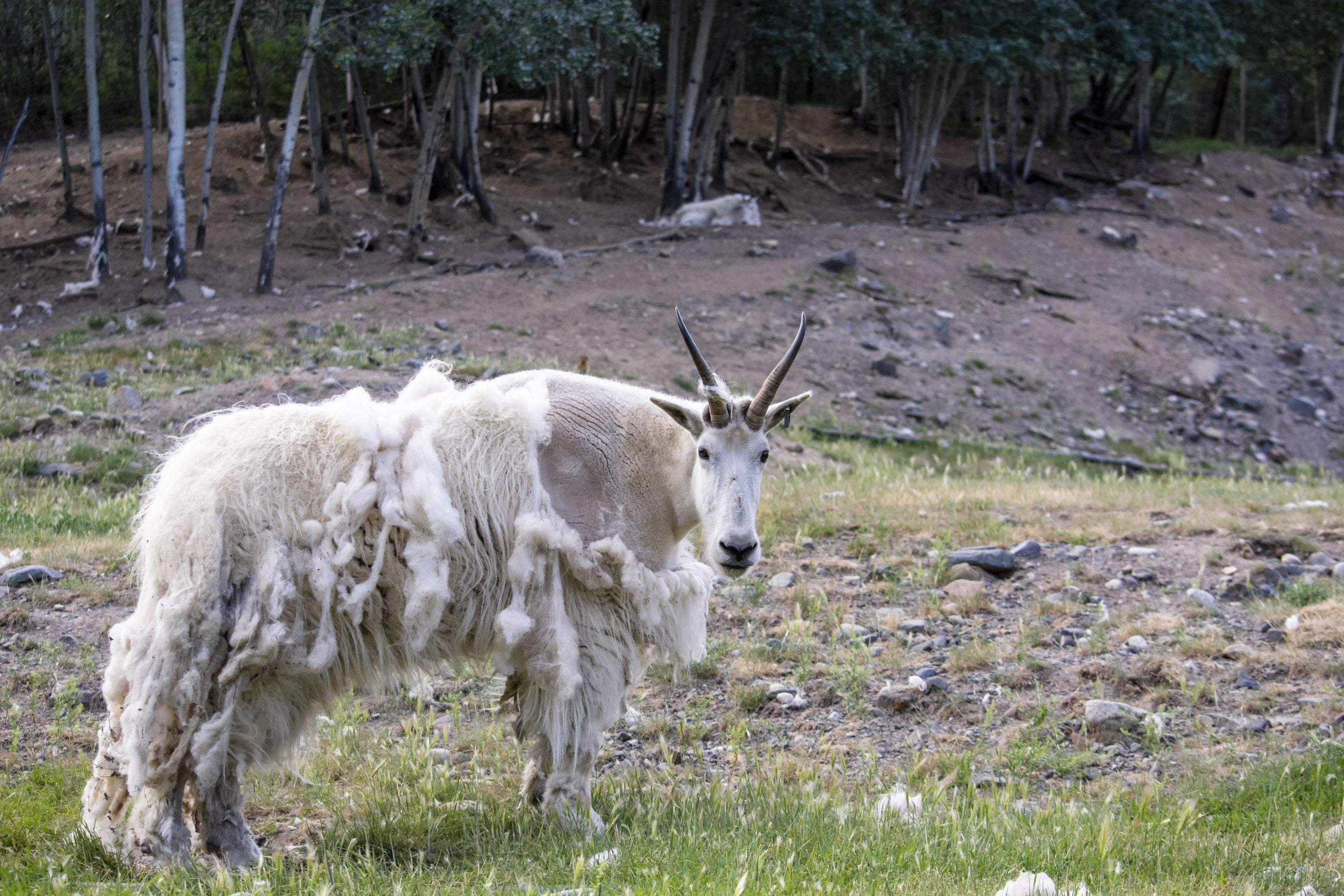
Left to Right: Muskox, bison, mountain goat, thinhorn sheep. Photo Credit: L. Caskenette

Muskox, mountain goats, and thinhorn mountain sheep also form pellet scat, even when their diets consist largely of grass. That’s because their digestive tracts are highly evolved to reabsorb as much water as possible, likely an adaptation to their arid alpine (goats and sheep) and tundra (muskox) habitats.

Sheep scat forms pellets.

Goats have varied diets that includes browse, shrubs, lichens, grasses, and even trees. Their alpine foraging sites may be sparse, which doesn’t allow them to be picky eaters. Muskoxen eat grasses, forbs (herbaceous flowering plants), and willows, which they often have to dig out from the frozen arctic ground by smashing the permafrost with their heads and pawing the ice pieces out of the way. Mountain sheep eat mostly grasses and some other low growing sedges.

Muskox scat.

Bison scat is distinct from all the other ruminants mentioned above, because it forms an indistinct pile. Their diet is also primarily grasses and other low-lying herbaceous plants, but they may eat some willows and twigs. Grasses would make their scat more loose, but we’re taking suggestions for what makes their scat so different from the other grass-loving bovids!

Bison patty.

Hopefully after hearing all of these scat facts you can see scat as more than just something gross to be avoided on the side of the trail. It can tell you who’s habitat you are in, but also what they have been eating. It is interesting to watch it change throughout the season. Of course biologists may be able to find out way more about an animal through their scat, for instance genetic samples or presence of pathogens. There is so much to learn from the scat around us!

Although all the different scat we explored above is only a small number of animals, all species do it and we encourage you to:

1. Explore other species scat/defecation/poop - whatever you want to call it!

2. Pack out yours and your furry companions (yours domestic canines) poo in the backcountry and wilderness places you visit!

3. Sing the Scat Rap Song!  

It starts with an S and it ends with a T
It comes out of you
and it comes out of me
I know what you’re thinking
But don’t call it that
Let’s be scientific, and call it SCAT
It was a piece of scat
(PIECE OF SCAT!)

You can find it on the ground
It’s usually colored brown
It is shaped in a mound
It is a piece of scat
(PIECE OF SCAT!)

You can smell it with your nose
It’s gonna decompose
It’s where the fungus grows
It is a piece of scat
(PIECE OF SCAT!)

Birds flying through the air
Look out! Beware!
It landed in your hair
It was a piece of scat
(PIECE OF SCAT!)

I was hiking through the fog
When I saw a big log
It came from a dog
It was a piece of scat
(PIECE OF SCAT!)

I was tired of TV
I was checking out the trees
I could smell it on the breeze
It was a piece of scat
(PIECE OF SCAT!)

I know it’s kind of gory
But it’s a true story
It marks territory
It is a piece of scat
(PIECE OF SCAT!)

I picked up a chicken
And something was drippin’
It wasn’t finger-lickin’
It was a piece of scat
(PIECE OF SCAT!)

A squirrel ate a nut
Digested in its gut
It came out of its butt
It was a piece of scat
(PIECE OF SCAT!)

If you park your car
By the woods or a field
You might find something on your windshield
Full of berries
Both purple and white
You just got bombed by a bird in flight
It was a piece of scat
(PIECE OF SCAT!)

Photo Credit: Sophia Slater or as otherwise credited.

References:

Alaska Department of Fish and Game. Caribou (Rangifer tarandus granti) sign. ADFG. 

Blood, D.A. Mountain sheep. Hinterlands Who’s Who. 

Blood, D.A. (2000). Mountain Goat in British Columbia. British Columbia Ministry of Environment Land and Parks.

Bosch, G., Hagen-Plantinga, E., & Hendriks, W. (2015). Dietary nutrient profiles of wild wolves: Insights for optimal dog nutrition? British Journal of Nutrition, 113(S1), S40-S54. doi:10.1017/S0007114514002311

Keith, L.B. Canada lynx. Hinterland’s Who’s Who. 

Central Sierra Environmental Resource Center (2018, June 25). What scat can tell you about your wildlife neighbors. CSERC

Costello, C.M., Cain, S.L., Pils, S., Frattaroli, L., Haroldson, M.A., & van Manen, F.T. (2016). Diet and macronutrient optimization in wild Ursids: A comparison of grizzly bears with sympatric and allopatric black bears. PLoS ONE, 11(5).

Gray, D.R. Muskox. Hinterland’s Who’s Who. 

Hatch, K., Roeder, B., Buckman, R., Gale, B., Bunnell, S., Eggett, D., Auger, J., Felicetti, L., & Hilderbrand, G. (2011). Isotopic and gross fecal analysis of American black bear scats. Ursus, 22(2), 133–140. 

Howard, W.T., Hutjens, M., Kilmer, L., Linn, A., Otterby, D., & Shaver, R. (2021). The ruminant digestive system. University of Minnesota Extension

Winand, C.J. (2008, September). Deer Pelletology. Buckmasters Magazine

Sophia Slater

Sophia Slater

Wildlife Interpreter & Animal Care Assistant

Sophia is one of the Interpretive Wildlife Guides and animal care assistants at the Preserve. She is new to the Yukon and moved here from Ontario, where she just graduated with a Bachelor of Science in Biology from Nipissing University. Hiking mountains is her newfound passion while she’s here, and she’s hoping to summit as many as she can this summer. At the preserve, she loves getting to talk to and learn from guests who come from all over the Yukon and beyond about their experiences with wildlife.

Explore by Category

Explore by Author

Vernal Species Migration

Vernal Species Migration

nature

Jul 2, 2021

11 min read -

Part of Nature’s plan involves animals moving to new locations for two primary reasons:.  One is seasonal migration when animals move to a summer location principally to give birth and raise offspring, and the other is permanent migration or colonized range expansion when animals or plants colonize a new range where the critical resources for their continued survival exist in sufficient quantity. Here they will call home and make themselves a part of the local flora and fauna populations.

Migration is a tool used by Nature and benefits many species of animals and the areas where they live. From Monarch Butterflies to Blue Whales, animals migrate back and forth between two primary ranges that support the animal at important stages of every given year. Species temporary absence also provides the area where they live with a break from grazing or predation on a single source of food.  Also, physical disturbances and predation is reduced so that grasses and other vegetation can grow back and prey species can rebuild their populations while the predatory species are away on their seasonal migration. Think of it as shift work, there is a split between where creatures work for almost half the year and where they make their home for the other half.

Let’s begin with spring seasonal migration, more properly called the Vernal (Latin for spring) migration when animals move to alternate locations typically in the north with the changing of the seasons only to return later in the year to the area or range they occupied before they migrated. These are often called winter and summer ranges and in many cases involve moving to a place to birth and raise offspring and when these offspring have adequately grown and become a bit more self-sufficient, they return to the other range with mom and dad to spend the rest of their year.

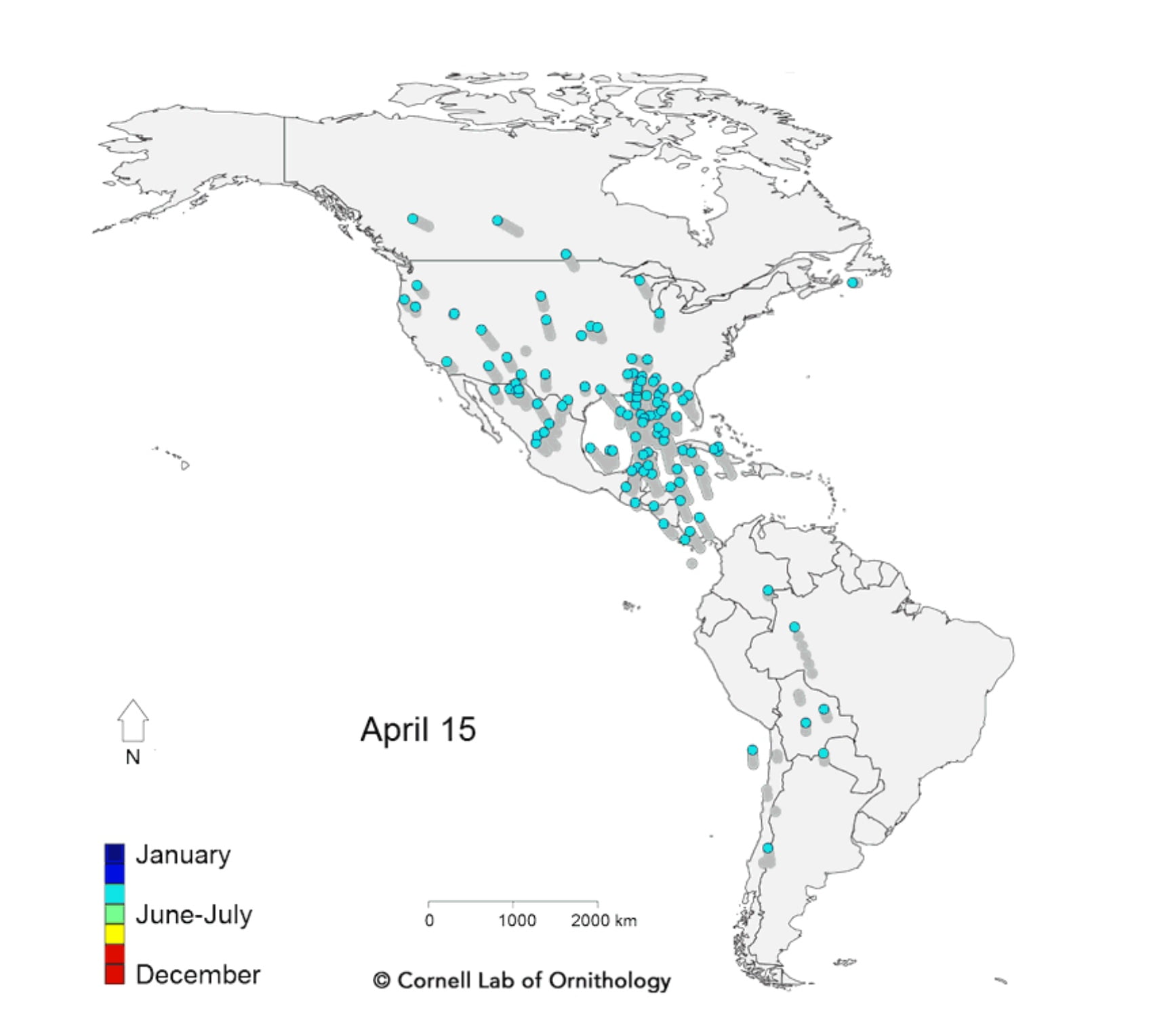
Click here to watch the seasonal movement of birds in North America.
Source Credit: All About Birds

The selection of the spring or winter ranges goes back many hundreds or thousands of generations by species. Some seasonal ranges evolved over time as animals sought out locations that provided the essential basics for them to thrive. Some species migrations have evolved over a tremendous period of time as far back as the Ice Ages, as migration routes are a complex undertaking involving weather conditions and distance to travel while ensuring there is adequate food resources with the right temperatures, humidity and water supply for those species to live comfortably and have the required foods to sustain them on their migration journey. Time is also a very important factor of migration as many other requirements must occur at critical times to ensure the continued health of the animals through all stages of their migrations.

For example, ice in the north must be sufficiently melted to permit arriving waterfowl to eat and remain secure from some predators, similarly, the plants and other vegetation migratory animals depend on should either be grown or growing well enough to sustain the creatures that depend on it when they arrive. These requirements are not just at the destination ranges, but also along the route the animals travel as some migrations may take weeks to complete.

Some species must also learn to endure through varied and sometimes lethal obstacles either created by natural events like landslides, earthquakes and floods, but also by human-made challenges like dams, habitat reduction and new developments and their supportive infrastructure where vital resources needed by the migratory animals have been removed or altered in some way. Ducks and geese must seek out new safe places to stop and reenergize when wetlands they have depended on in previous migrations have been turned into shopping malls and parking lots.

Migratory birds like swans and geese are probably the most visible migratory species as they fly overhead in great flocks honking as they go. Beneath the water’s surface, fish of all kinds like salmon migrate back to their natal streams to lay and fertilize the eggs that will produce their next generation- often within a couple meters of where they were born. Yukon’s rivers connect lakes where our common species of pike, grayling, whitefish and lake trout choose to spend their summers and winters, which may be greatly influenced by the insect hatches and changing water depths resulting from spring melt and freshet flooding. These short seasonal relocations are also considered to be migrations, but are not of the same scope other species like salmon or geese perform.

Photo credit: From Left, Lindsay Caskenette &  Jake Paleczny

Barren ground caribou like the Porcupine herd travel vast distances each year enroute to their calving grounds near the north coast. Their migration helps to distribute the impacts of their grazing so that they do not over-consume the vegetation causing harm to the landscape in any given location. Many thousands of caribou can eat a lot and their migration not only ensures more widespread grazing, but also their waste products (poop) are deposited over a greater area, thereby helping to fertilize more of the tundra they depend on each year.

Woodland Caribou at the Preserve.
While all caribou herd migrate the Barren Ground is know for more expansive journeys, particularly the Porcupine Barren Ground Caribou herd.  
Photo credit: Jake Paleczny

Insects also migrate usually in search of warmer temperatures and liquid water to lay their eggs and ensure there is an adequate food supply for the young to eat and grow healthy on. A queen honey bee will trigger a brief hive migration when she leaves the hive in search of a new location with better food resources nearby.

Migration is closely tied to a number of annual behavior traits as well. Some bird species may molt (shed their feathers) soon after arriving at their spring destination. Energetically expensive as migration itself molting and replacing feathers after a long journey north is important for the return trip. Also, the cast-off feathers can be used to line their nests against the cool winds of the tundra. However, while molting their ability to fly may be diminished which will put them at greater risk from predators. Just like migration and breeding, molting is ones of the vital parts of a bird's life. 

Video explores molt in the migratory species, the Rusty Blackbird in Southern Yukon.
Source Credit: International Rusty Blackbird Working Group.

Predator birds, raptors like falcons, owls, eagles and various hawks also migrate to these ranges to raise their families and they depend on the ducks, hares, lemmings and other ground-nesting birds as a resource for them and their offspring until it’s time to migrate south again.

Climate change is modifying many of the important conditions some species require to live in a region, the timing of the spring melt is one of the major ones. As warmer spring conditions arrive earlier in the year, some species may need to begin their migration northward sooner to ensure they arrive in time to get a good nesting location, or time their arrival to an important food resource like a caddisfly hatch where millions of little flying insects hatch from a river over a few hours. Both fish and birds gather for these short-lived but important high-protein energy feasts.

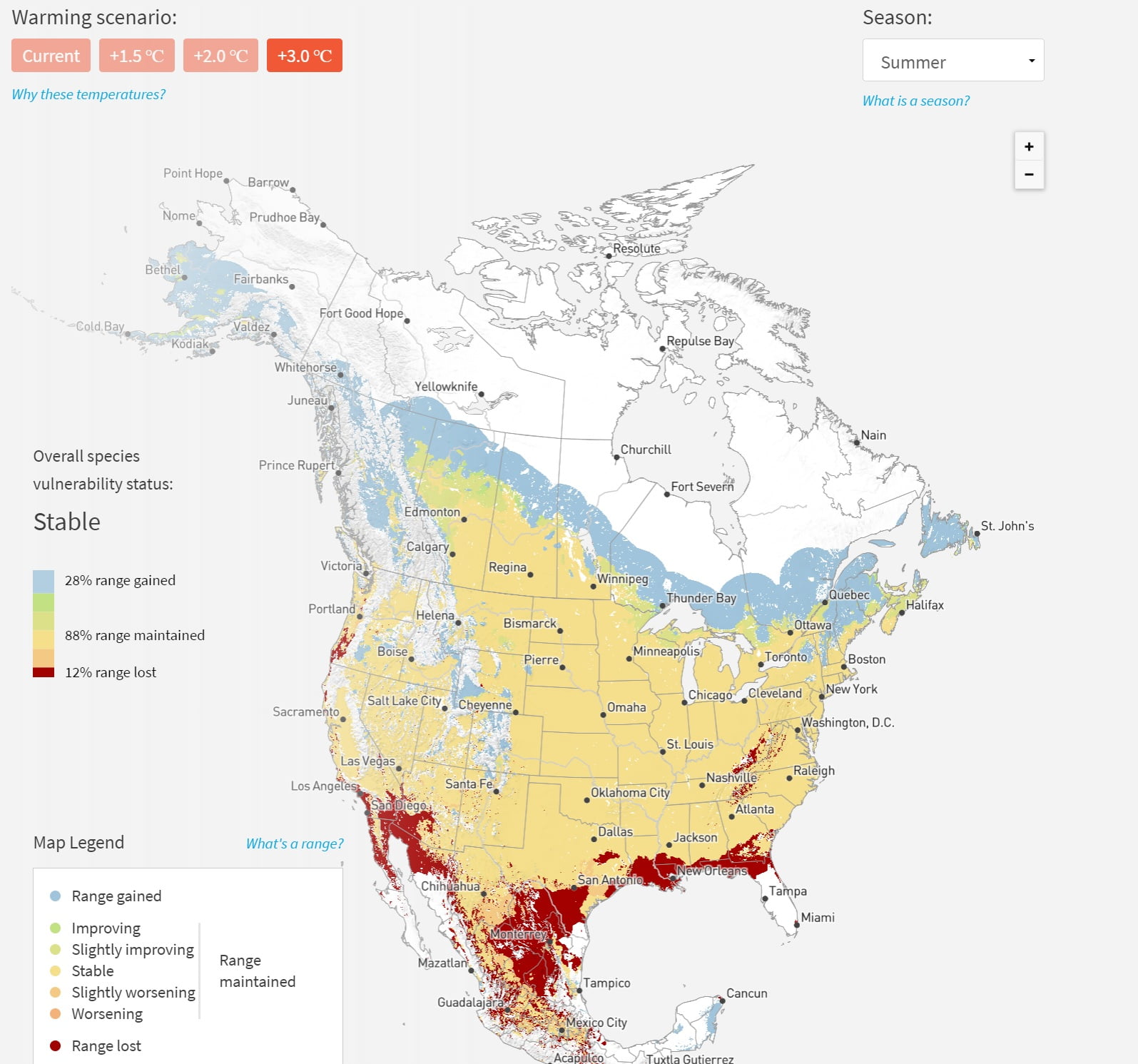
Visit Audonbon.org to learn more about shifting and actaully expanding range for the Barn Swallow in climate change warming scnarios.  Source credit: Audubon

Again time is a critical element that can determine success or failure especially when other elements are out of sync. Like a delayed arrival of the warmer spring weather will slow the growth of some vegetation or delay thawing of the ice from waterways which can also create problems if the spring melt happens too early or too dramatically where it may cause rapid snow melt and flood rivers and creeks along migratory routes and nesting locations that create new hazards for the animals. A long lasting winter will also influence how arriving animals settle into their summer homes and make their arrangements for the warmer days to come. Nesting locations and preferred hunting and fishing and grazing spots may be at a premium and first come-first gets is the rule if they are willing to defend their locations.

Migration can be a life or death test for some animals depending on the conditions of the travel route and their intended destinations. Some destinations may be unusable due to new predators making a home there, physical damages caused by floods, fires and the landslides which may cause the animals to seek a new location that meets their needs. They may have to fight to keep their new location as other groups or another species may compete for the same resources they need to survive.

Bird migration and cities

There are many ways human activity interferes with animal migrations in the Detours and Distractions: How Humans Impact Migration Patterns. Explore the educational PDF by National Geographic.

Some predators take advantage of the migratory creatures when they arrive in great numbers. Bears demonstrate this very well as they gather on the streams and rivers to capture migrating salmon returning to spawn.  Bears also follow the caribou herds in pursuit of newly born calves trying to keep up with the rest of the herd. Fledgling birds are common prey for Sharp-Shinned Hawks, Shrikes and other small raptors that also may have hungry hatchlings in their nests.  Foxes and weasels also prey heavily on eggs and young hatchlings of geese, ducks and other ground-nesting birds.

This photo slide from Yukon photographer, Peter Mather at Ni'iinlii Njik (Fishing Branch) Territorial Park shows the close relationship of predator and prey. Bears will remain active in this region as winter approaches to benefit from the abundance of food in the form of migrating salmon. 
Source Credit: Peter Mather Photography

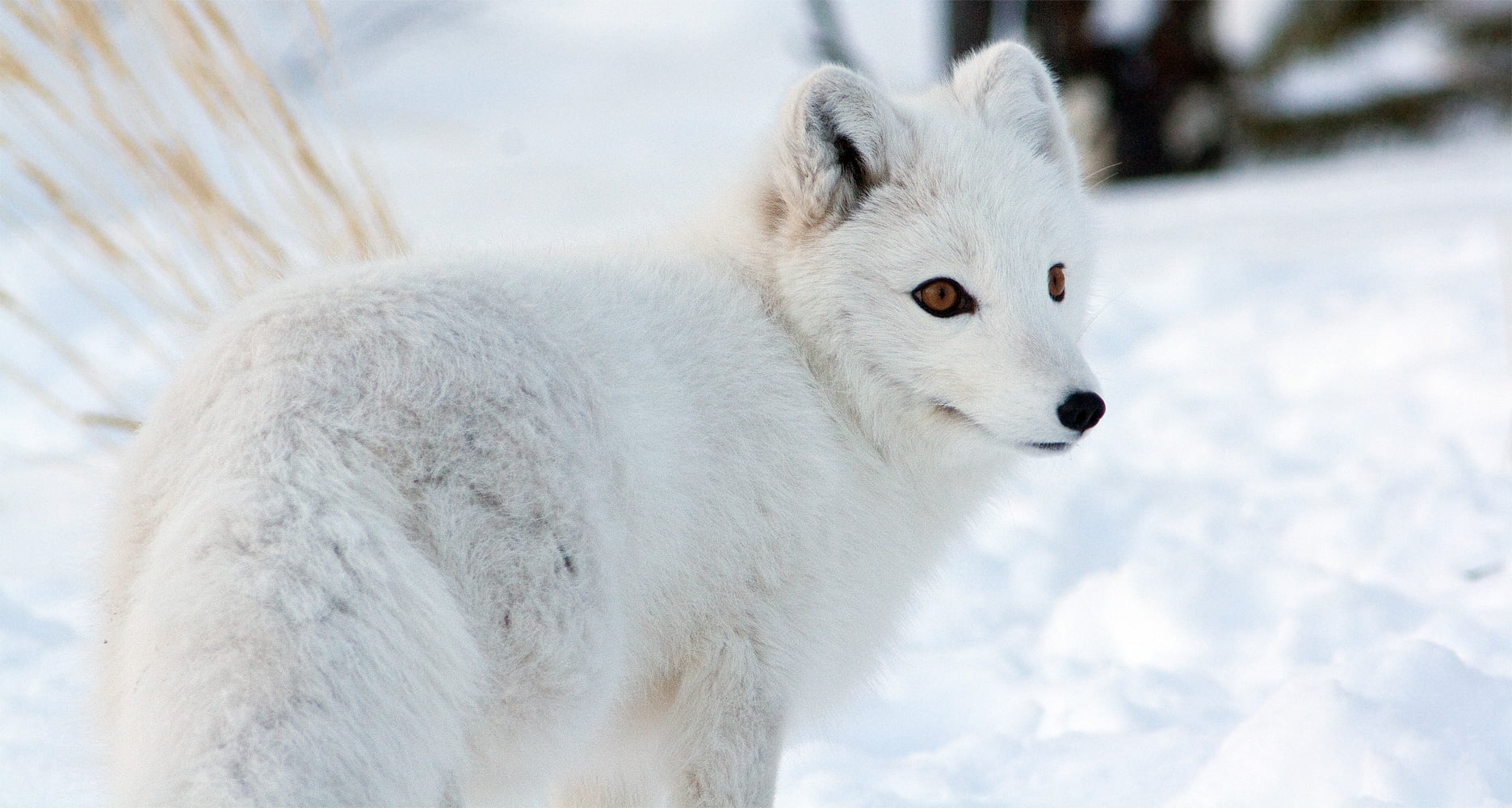
It works the opposite way as well as migratory animals depend on other species to sustain them and in some cases, their choice of destination may depend on resident species and the birthing of their offspring. An example can be found with Peregrine Falcons and other raptors who hunt the lemmings, hares and other rodents born in large numbers on the tundra each spring. Lemmings mature at 5 – 6 weeks of age. They are prolific breeders and may produce 8 litters of up to 6 young each throughout the summer. The gestation period of the female Lemming is 20 days making them one of the primary food resources for carnivorous species, like the Arctic Fox, spending their summer on the tundra.

Arctic Fox at the Yukon Wildlife Preserve.
Photo Credit: J.Paleczny.

Some species like Canada Geese and Tundra Swans mate for life so when they arrive at their springtime destination they can get right to work raising a family, However other species and those just reaching reproductive maturity will need to find a mate, build a nest, breed and raise their new offspring. All of this takes time and each animal is racing the clock and calendar to complete these basic requirements before they have babies which will demand a larger portion of their available time keeping them fed and protected as they grow to adolescence to commence preparations for the migratory trip back to their winter ranges before the winter season arrives, and some years it can come early or later as the present weather trends indicate.

Swan parents and their offspring at the Yukon Wildlife Preserve. In Spring, 2015 a pair built a nest in the moose habitat and had 5 cygnets.
Photo Credit: L.Caskenette

Waterfowl and other creatures that depend on water for their nutrition and safety pay close attention to falling temperatures and the return of ice on the surfaces of ponds and lakes. Other indicators warn of the returning winter conditions, insect populations fall dramatically; leaves change colour and other vegetation stops growing and goes to seed signalling it is time to move south once again.

Some years snow may fall early and in sufficient quantities to make searching for food a greater challenge. Often robins will be seen digging in the snow for insects and berries as they gather together in preparation for their journey south.

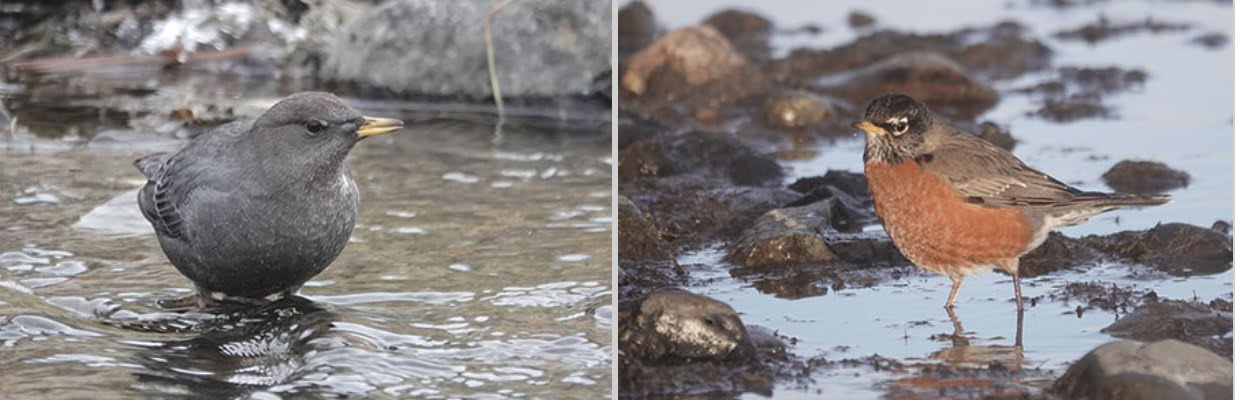
Left Photo: American dippers are a delightful winter sight, swimming and singing from icy or rocky perches in fast-flowing waters, such as the Yukon River below the Whitehorse dam.

Right Photo: Winter wannabes like this American robin find small bugs and animals to eat along the muddy shoreline of the Yukon River below the Rotary Centennial Bridge.

Photo Credit and Caption: Jenny Trapnell
Read more from Jenny - A Chance on Winter in What's Up Yukon.


Migration is an effective tool to ensure the seasonal health of many animal species, but also migration provides habitats some time to regrow while the species are away in their other ranges. Nature’s clock is the movement of the planets and the tilting of the Earth which determine the seasons as winter gives way to spring and new generations are being born. Climate change is also influencing animal species that are well-tuned into these seasonal changes which can be very subtle but are important signs for creatures that need to pay attention to subtle weather changes and the potential impacts on their migration requirements.

Doug Caldwell

Doug Caldwell

Wildlife Interpreter

Doug is one of the Interpretive Wildlife Guides here at the Preserve. An avid angler and hunter he has a broad knowledge of Yukon’s wilderness and the creatures that live here. With a focus on the young visitors to the Preserve, Doug takes the extra time to help our guests to better appreciate the many wonders of the animal kingdom here in the Yukon.

Explore by Category

Explore by Author