Artist Series Trucker Hats

Artist Series Trucker Hats

wildlife preserve

by Lindsay Caskenette | Apr 25, 2023

6 min read

The Visitor Services team is working hard to connect with local artist to bring the connections to nature home with you. We strongly feel that by taking the time to explore these partnerships we can create unique items that guests to the Preserve can take home all while knowing their purchase in the Preserve's Little Gift Shop not only supports these northern talents but all revenue from the retail sales goes back into the operations of the Preserve, supporting the northern animals in our care.

Right now the Preserve does not do online sales. We're a really small team that is situated out of town, and with some staff also living out of town, doing online sales and shipping feels a bit outside our capacities for the time being. 

• • •
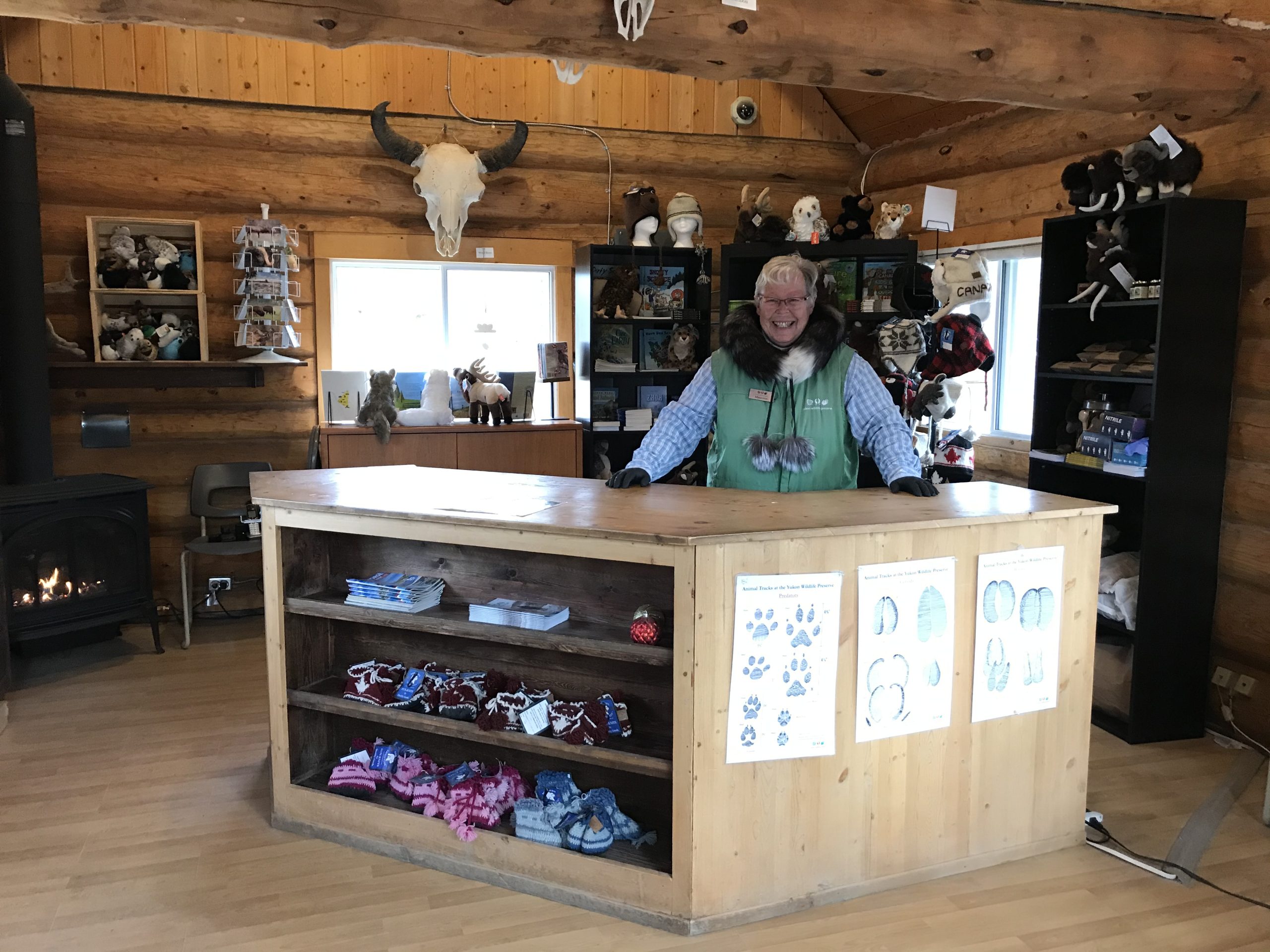
Photo of moose in water.

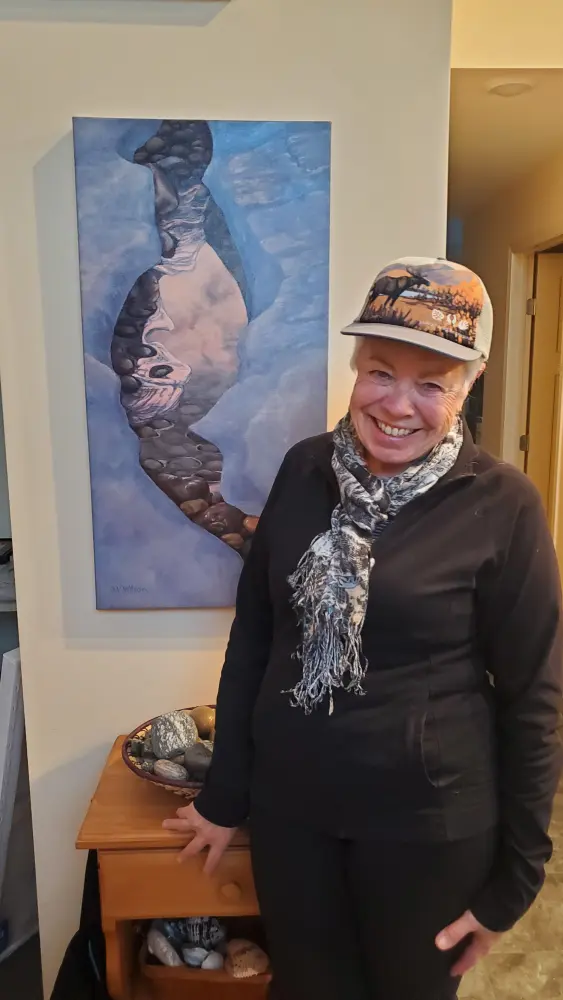
This artist collaboration with AV Wilson, better known as Virgina Wilson was incredible and humbling and might have involved a few evenings of conversation over wine to help get us to the final product! 

• • •
Yukon Wildlife Preserve's Manager of Visitor Services LOVES hats! It's rare to see Lindsay not in a hat. As Lindsay worked to evolve the products founds in the Preserve's Little Gift Shop she knew hats needed to be included in this. Although she heard the phrase "you are not your own customer" she ignored this (generally) and sought out a design and product that would inspire others to wear something with pride, even if hat's weren't really their 'thing'!

• • •

The first iteration of the Trucker style hat was in 2016 and came from some in-house design. One hat featured our classic logo and another from screen-printing a photo taken in 2013 by Executive Director, Jake Paleczny.

As those sold and we started working on other artists collaboration ideas in 2020 (like the bula's), we reached out to local artist who might be interested in a trucker hat specific project.


Photo credit: J.Paleczny

Lots of emails back and forth and the collaboration with Virginia started to take shape. We know these things don't happen overnight. It's about building connections with people to ensure the artist and artist process is honoured and the values of the Preserve are brought forward, in balance, to the final product.

• • •
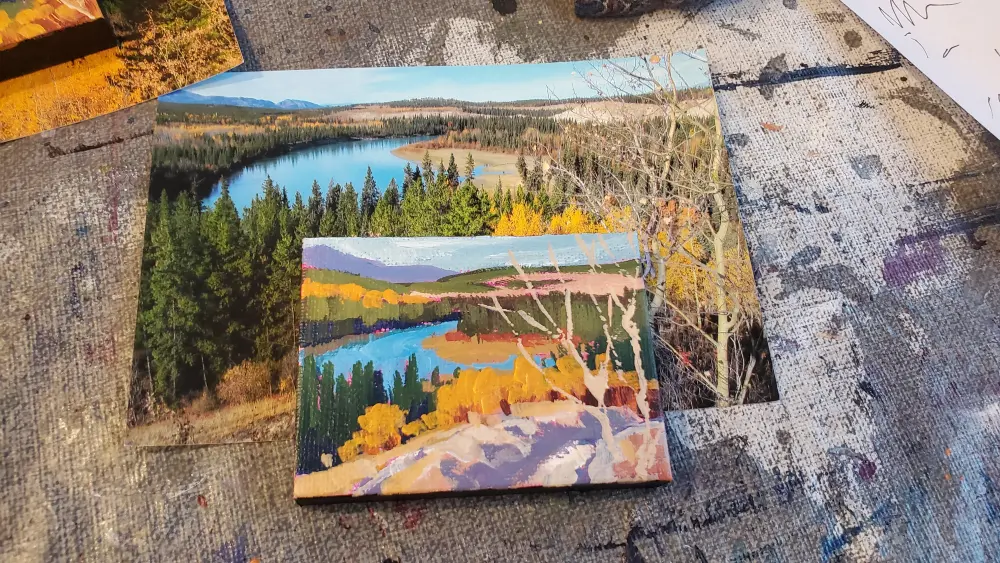
Photo of team providing care for moose in the field.

Starting in December 2021, we chatted about ideas, inspiration and of course the worldly love of moose came front and centre for both parties. She paints because she loves to paint - no other reason, retirement life supports this love. Virigina shared she was interested in this project because "my family likes the wildlife park, I like your objectives, and they [my family] all want trucker hats with my art on them". What better collaboration when the story creates itself.

• • •
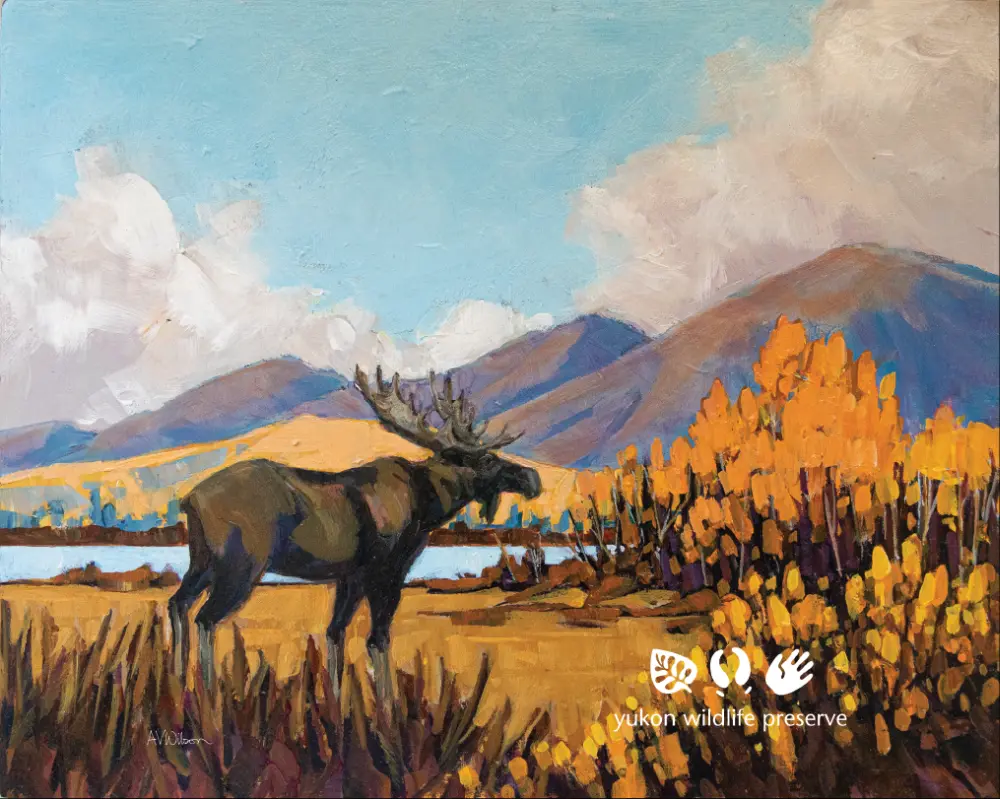
Photo of team providing care for moose in the field.

Her art work has incredible depth and range, from perfect windowsill pieces to multi canvas, larger than life sceneries. 

Virginia is a proud Yukoner, a Mother, Grandmother and an artist that loves painting landscapes as much as she loves hiking. The Yukon is a particularly special place to live out these pursuits and forever find inspiration. 

Virginia is originally from North of England having spent nearly the first quarter of her life there and then moving around Canada she has spent most of her life in rather beautiful places. 

• • •

Photo of staff using stethoscope to listen to moose heart rate.

The hats are a Yukon and Canadian production - from the landscape inspiration and artist development to the hat itself sourced with the help from Corina at Taku Sports Group Inc and printed on Canadian made brand Ambler.

• • •
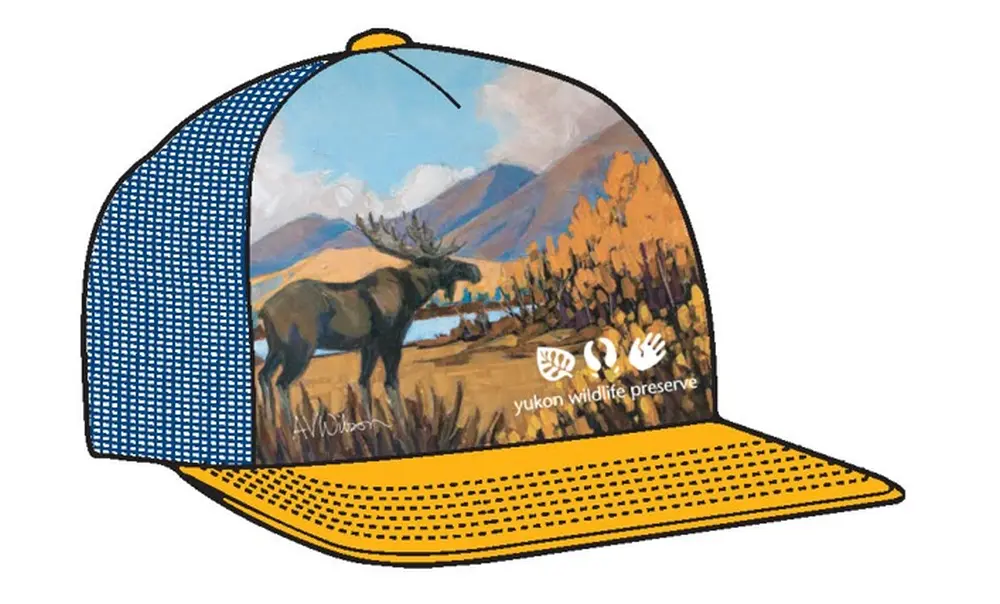
Photo of staff using stethoscope to listen to moose heart rate.

The hats come in different colour combinations and are available only at the Preserve's Little Gift Shop beginning November 2022. Check out more of Virginia's work through her website and Instragram.


• • •

Trucker Hat                           $48
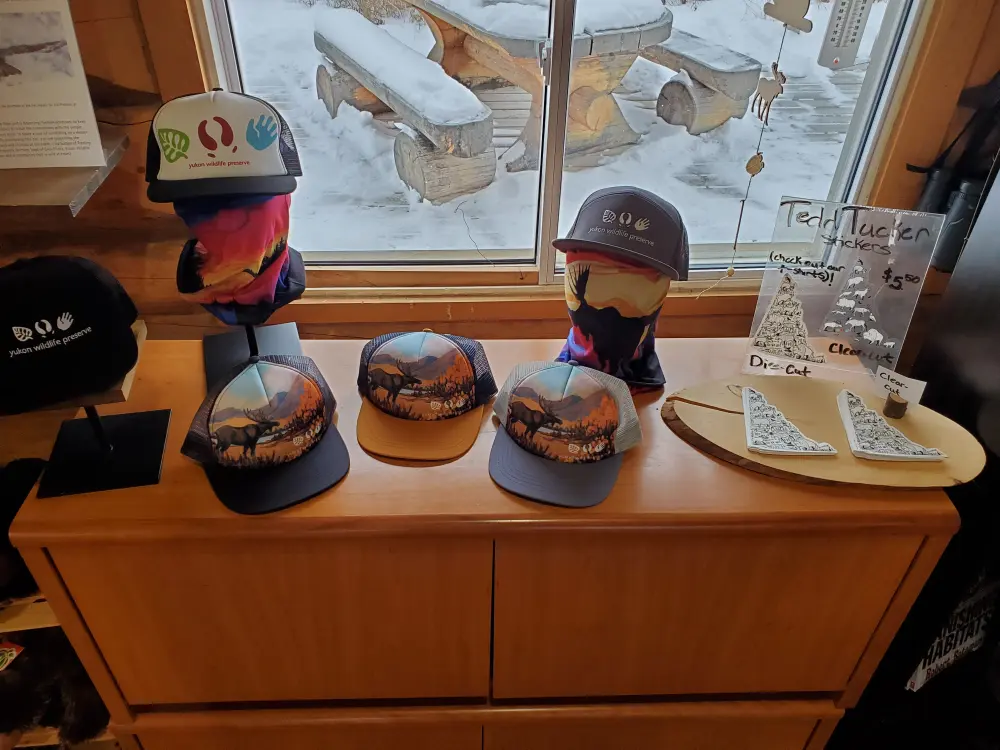
Photo of staff using stethoscope to listen to moose heart rate.
Lindsay Caskenette

Lindsay Caskenette

Manager Visitor Services

Lindsay joined the Wildlife Preserve team March 2014. Originally from Ontario, she came to the Yukon in search of new adventures and new career challenges. Lindsay holds a degree in Environmental Studies with honours from Wilfrid Laurier University and brings with her a strong passion for sharing what nature, animals, and the environment can teach us.

867-456-7400
Lindsay@yukonwildlife.ca

Explore by Category

Explore by Author

Yukon Wildlife Preserve
Box 20191
Whitehorse, Yukon
Y1A 7A2

Proud member of:

CAZA Logo

With the support of:

Yukon Government Logo
Those Things On Their Heads – Antlers Vs. Horns

Those Things On Their Heads – Antlers Vs. Horns

wildlife preserve

by Doug Caldwell | Jan 27, 2023

10 minute read -

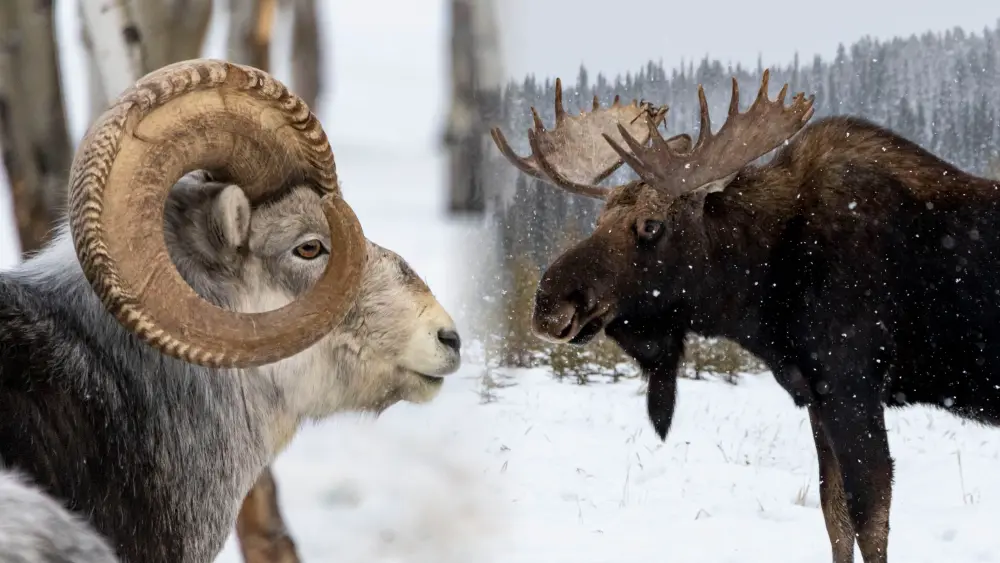
In our modern language usage, some terms or words may be incorrectly applied when describing an item. For example: some people do not always distinguish between horns and antlers where they incorrectly refer to all animal headgear as horns. Antlers and horns are very different in a number of ways and these variations are the result of millions of years of evolution and adaptation for the animal species to live a healthy life in the environment they occupy.

Bovids, or members of the horn-bearing group of animals versus cervids, or members of the deer, antler-bearing group of animals. 
Photo left to right:  Mountain goat, bison, moose, caribou. 
Credit: L.Caskenette & J.Paleczny

Headgear has influenced many aspects of some species and how they conduct themselves through the year; including the obvious breeding cycle but also their comfort in the heat of summer and how they communicate and identify themselves visually.

Let’s begin with construction materials: Horns are made from keratin- the same material as your hair and fingernails- whereas antlers are made from bone. Horns are a two-part structure. An interior portion of bone (an extension of the skull) is covered by an exterior sheath grown by specialized hair follicles called keratin.

Horns grow from the base where it attaches to the animal’s skull, antlers grow from the tips. Antlers are grown only by males of the deer species except for Caribou where females grow lightweight antlers, an adaptation for their grazing in snow for lichen. Horns are present on both male and females of most horned species with the males typically having larger horns than the females. 

Bovid family of animals have horns and both females and males with grow these horns. Typically female horn growth is smaller than males. Sexual selection plays a role here for large displays in both horn and antler bearing animals.

Perhaps the greatest difference between horns and antlers is that antlers are shed and regrow each year, where horns are permanent and remain and grow with the animal for all its life, or until they get broken off. Once they are broken, they do not grow back. The animal will carry a damaged or missing horn for the rest of its life.  Antlers also factor into the breeding cycles of the males who employ them to demonstrate their virility and to impress the females.

Antlers too may become broken or removed completely due to carelessness or fighting. These will grow back, but not right away. The animal must wait for the annual antler shed-regrow cycle for that year to conclude, usually in mid-winter before a new antler will form during the next year’s cycle, this may cause the animal to be without an antler for up to a year. 

Horns appear to form earlier than antlers on younger animals such as goats or bison, where Mountain Goat kids will be displaying small pointed black horns within a few short weeks of its birth, while antler buds appear at several months or so after a calf or fawn is born. But once they are in place and growing, they grow quickly.

Left to right: Mountain goat kids show horn formation, easily seen against the white; Watson the moose shows nubs of antlers developing in his first winter of life in 2019. Bison calves also show horn development early on in life. 

Antler is the fastest growing tissue of any mammal on the planet. With a healthy diet and high caloric intake, a moose can put on as much as a pound of antler in a single day. In the scope of just eight months' growth, moose antler can grow from tiny buds as big as your thumb to gigantic antler racks measuring up to six feet across or 1.8 meters from tip to tip. A large moose’s antlers can weigh up to forty pounds or nearly 20 kilograms on average. Some very large moose antlers may weigh up to 75 pounds or 35 kilograms.

Credit Alaska News Source

Source credit: Alaska News Source

Back to construction for a moment; another key difference between horned and antlered animals is how the physiology of horns and antlers differ.

Horns have a central, conical bony core or cornual process that grows out from the frontal bone of the skull. On close examination of a horn you will see what appears to be layers of horn material (keratin) growing a new layer at the base which will grow longer over time and become thicker with subsequent new layers of keratin forming as the animal ages.

After 6 months of age, the bone becomes hollow and the space within it is continuous with the frontal sinuses. The surface of the bone is rigid and porous and is covered with an internal surface which keratinizes and forms the protective covering of the horn. The new horn produced at the base is soft and often transparent giving the horn a glossy appearance. Horn growth function is similar to how the cuticle on your fingers and toes produce the nails.

Source credit: Talmudology

Antlers however attach to the animal’s skull between the eye and ear at a place called the pedicel where they will grow to full size for that year over about eight to ten months. The antlers separate from the skull at the point of attachment, the pedicel.

Antlers separate from the skull at the pedicel, typically in the winter months.

The antler side is called the corona and forms a bone to bone connection with the pedicel on the skull that is remarkably strong until the its time to shed that year’s antlers. There is a chemical influence when the animal’s hormones change following the rut and seasonal progress that causes the bone between the corona and the pedicel to dissolve where eventually it weakens enough that the skull can no longer support the weight of the antler and it falls off. Both antlers may fall off at the same time, but it is common for both antlers to fall off over a couple of days.

Horns are mostly hollow, white antlers are made up of less dense, sponge-like bone called the trabecular that has been highly vascularized during formation allowing blood to flow to the tips of the antlers to facilitate their growth. Antlers require blood to grow while horns do not.

While antlers are covered in velvet, they are also engorged with blood which provides another important benefit besides growing the antler. As animals do not perspire or sweat in any way, they must expel excessive body heat by panting as many animals do. Antlers perform like radiators where body heat is expelled by the blood-filled antlers.

Ears of most deer species shed the fur and hair off them in the warmer months so they too can dissipate body heat. If they would let you, you could take the pulse of an antlered animal by finding a blood vessel on their fuzzy antler and placing your fingers on it to feel the beat of his heart. Don’t try this at home…or anywhere else.

Both horns and antlers have also been used by people since prehistoric times for tools of various kinds.   The hollow nature of horns has made them desirable for spoons, scoops and hand shovels or scrapers while the strength and hardness of antlers has often found them to be the material of choice for making hunting points for spears and arrow heads. Antler has also been a popular material for handles of tools like knives and axes.

Creativity and need, guided the early peoples to adapt and modify both horns and antlers for a wide variety of tools and other purposes to better their quality of life. They have often been used to make buttons for clothing or ornamentation. Antlers have been carved into needles for sewing of clothes, shelter and similar products, Horns were popular as gun powder containers as they would prevent the powder from getting wet and were easy to carry and measure the appropriate amount of powder into the firearm.

Yukon art Hints of Easter by Faye Chamberlain, 2021. Yukon Permanent Art Collection.

Both antlers and horns provide important functions for the animals that grow them so they may live healthy, secure lives. Their headgear has also influenced many of their social behaviors that have developed and evolved over the centuries. These include mating rituals and protective activities against potential predators.

Most of us have seen sheep rams rearing up on their hind legs and pounding their horns against another ram in courtship competitions, but they may use their horns to communicate in less violent ways. Rams may interlace their horns and gently rub ear to ear as a form of communication that we can only guess what it means.

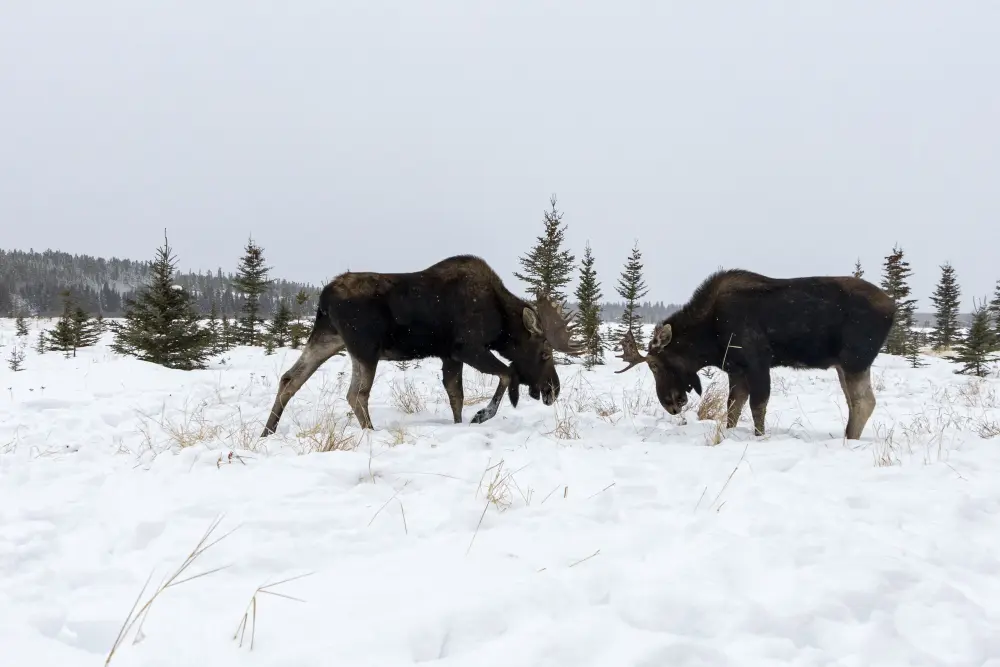
Antlered animals also employ their antlers as a means to communicate for example when two young bulls will use their antlers to joust or push each other around like a game of reverse tug o war.

Antlers are also a means of displaying size and age which will determine their social order of who is dominant and who is subordinate. From a distance the size of the antler rack quickly displays the animal’s placement in the local social order, typically around the breeding season or rut when many male moose may gather in an area for an opportunity to breed with cow moose drawn to the area by pheromones carried in the wind.

Bulls with smaller antlers will size each other up based on their antler racks and determine their chances of winning a fight with a larger bull.

Animal headgear serves a number of important benefits for the creatures that grew them. Humans have also found inventive and beneficial uses for both antlers and horns once the animals are finished using them. Humans often use antlers and horns for tools, but they can also be transformed into wonderful works of art. Nature provides.

Doug Caldwell

Doug Caldwell

Wildlife Interpreter

Doug is one of the Interpretive Wildlife Guides here at the Preserve. An avid angler and hunter he has a broad knowledge of Yukon’s wilderness and the creatures that live here. With a focus on the young visitors to the Preserve, Doug takes the extra time to help our guests to better appreciate the many wonders of the animal kingdom here in the Yukon.

Explore by Category

Explore by Author

A Day with an Animal Care Assistant

A Day with an Animal Care Assistant

wildlife preserve

by Abbey Mondor | Aug 13, 2021

8 minute read.

My name is Abbey, I am a part-time animal care assistant and part-time wildlife interpreter here at the Yukon Wildlife Preserve for the summer of 2021. I am a biology major at the University of Winnipeg. Fall 2021 I start my second year of my degree. One of my goals in life is to visit all three territories in Canada, with Nunavut already crossed off the Yukon was next on my list. The Wildlife Preserve offers me a chance to put my education to practice and help me decide which route in the biological field I want to pursue (I bet by the end of this post you can guess which route I am leaning towards). This post will discuss what I have experienced as an animal care assistant here at the Preserve and hopefully give some insight about what goes on behind the scenes for you the reader.

You may have been on the Preserve and been at the right place and time to see the animal care team at work. The animal care team works hard to keep the Preserve and rehabilitation animal’s happy and healthy. Working in animal care is never a stagnant job, animal needs change, babies are born, new rehabilitation animals arrive making this job ever changing. This post will follow my day around the preserve as an Animal Care Assistant starting in the Preserve’s Wildlife Rehabilitation and Research Centre, down to the first half of the lower loop up to the upper loop and back down to the second half to complete our figure eight.

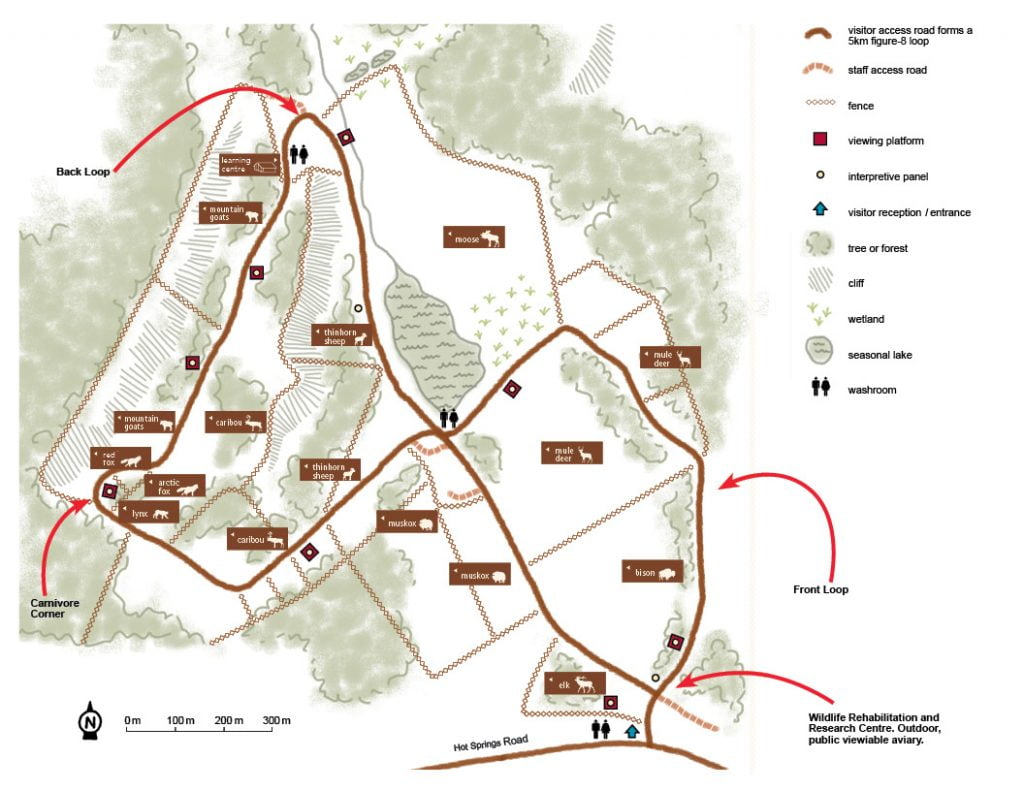
This map shows the homes of each of the species in our collection located on the front and back loops of the figure 8 trail network. The Wildlife Rehabilitation Centre is located in staff access area.

Rehabilitation Centre

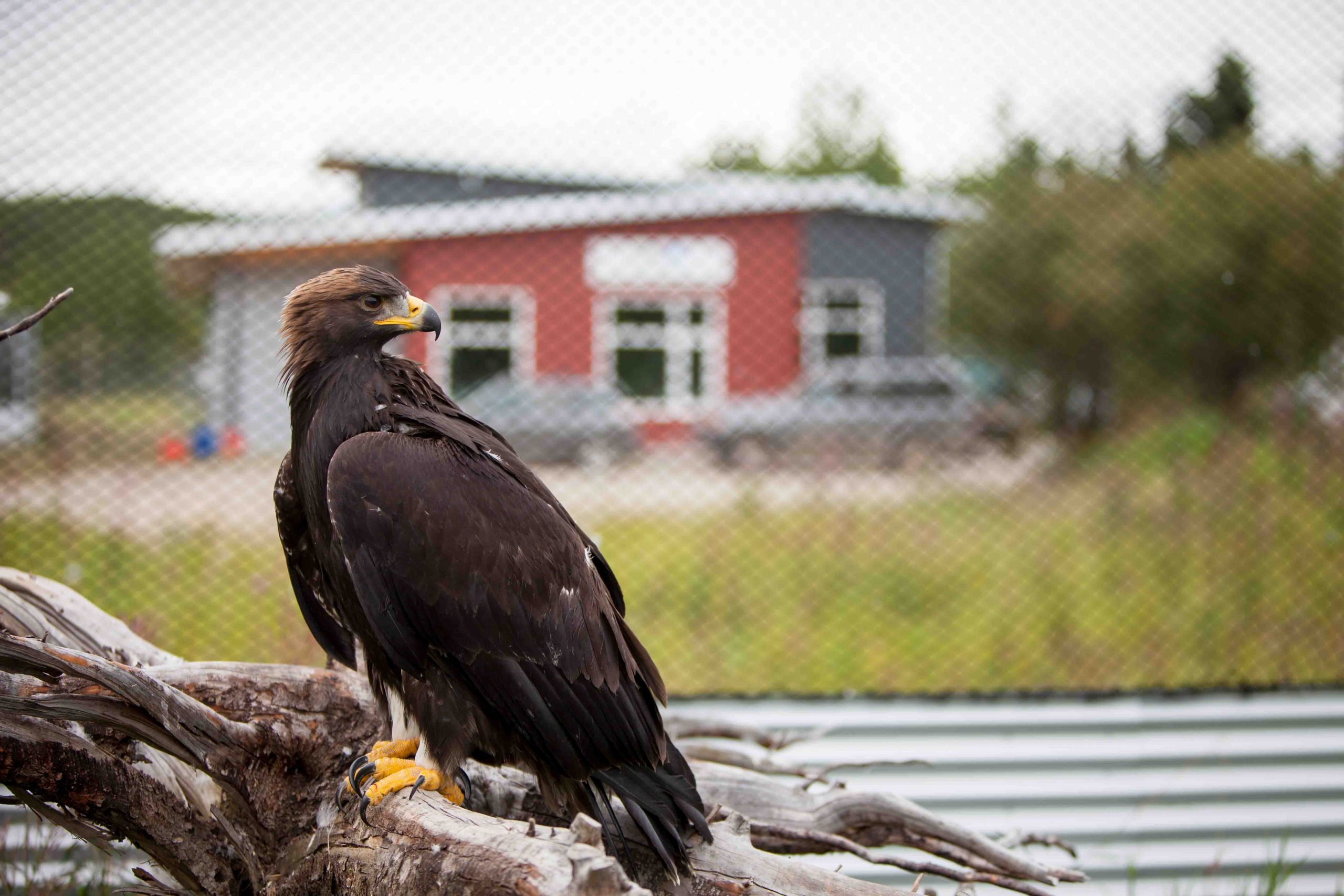
The Rehabilition Centre in the shadows of a golden eagle patient in the large outdoor aviary. Photo credit: J.Paleczny

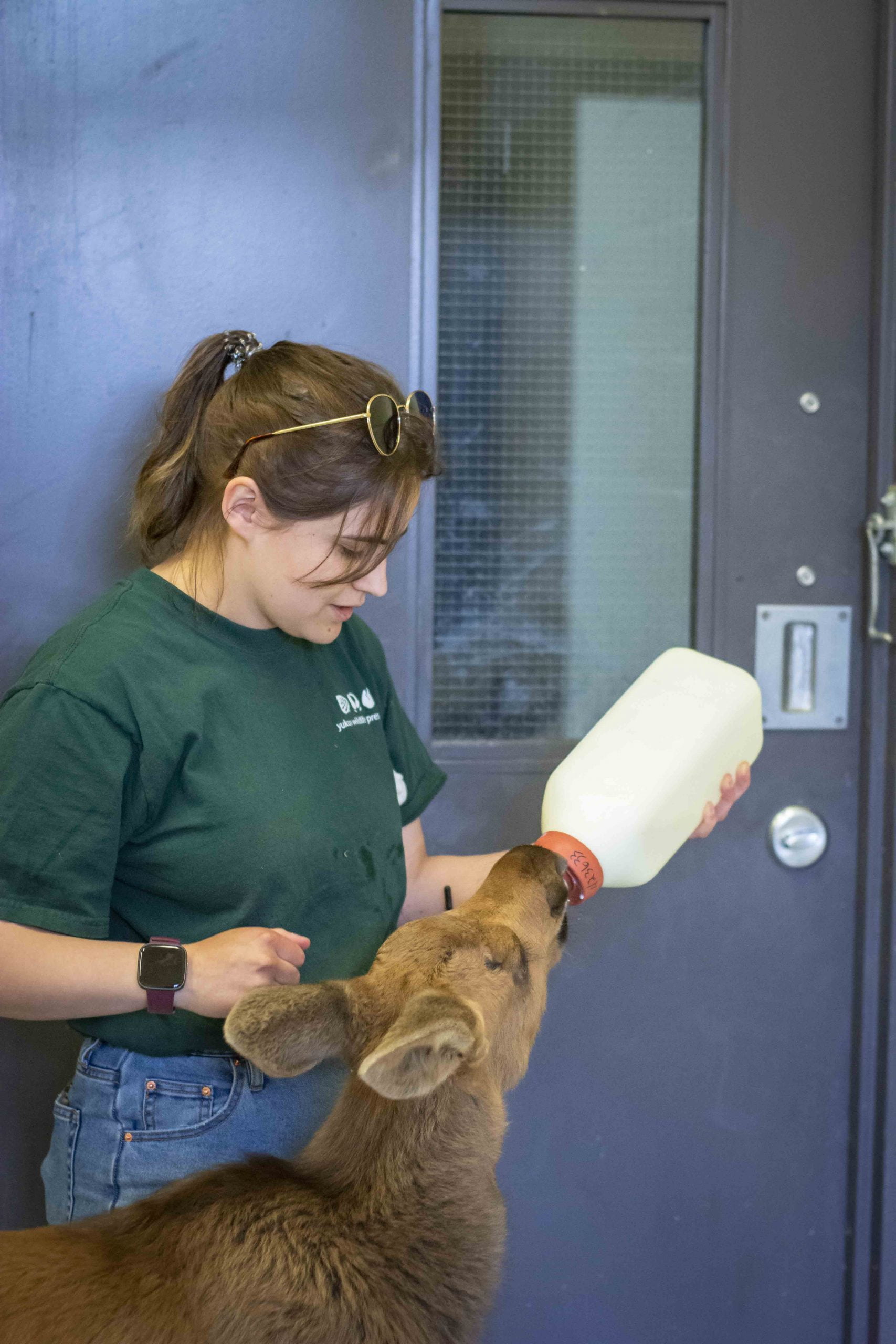
To start off the day I check the animals that are in rehabilitation care to make sure their habitats are clean and that the animals are well - observation of animal behaviour is a very important role in animal care.  In the rehabilitation center the animals we look after often have strict eating schedules which dictates what is done during my day and when. An example of this is the moose we received in late May of 2021. This calf is not shy and is always excited to eat! He gets almost too excited, so we have to slow him down. It's exactly like when your puppy eats way too fast and you have to find ways to slow them down. After feeding, we watch him until he defecates and lays down, this is an important step to ensure he is healthy and progressing how we would expect him to. As you continue reading this post you will recognize the particular theme of observing the animals' behaviors: this is to ensure the health of the animals in our care.

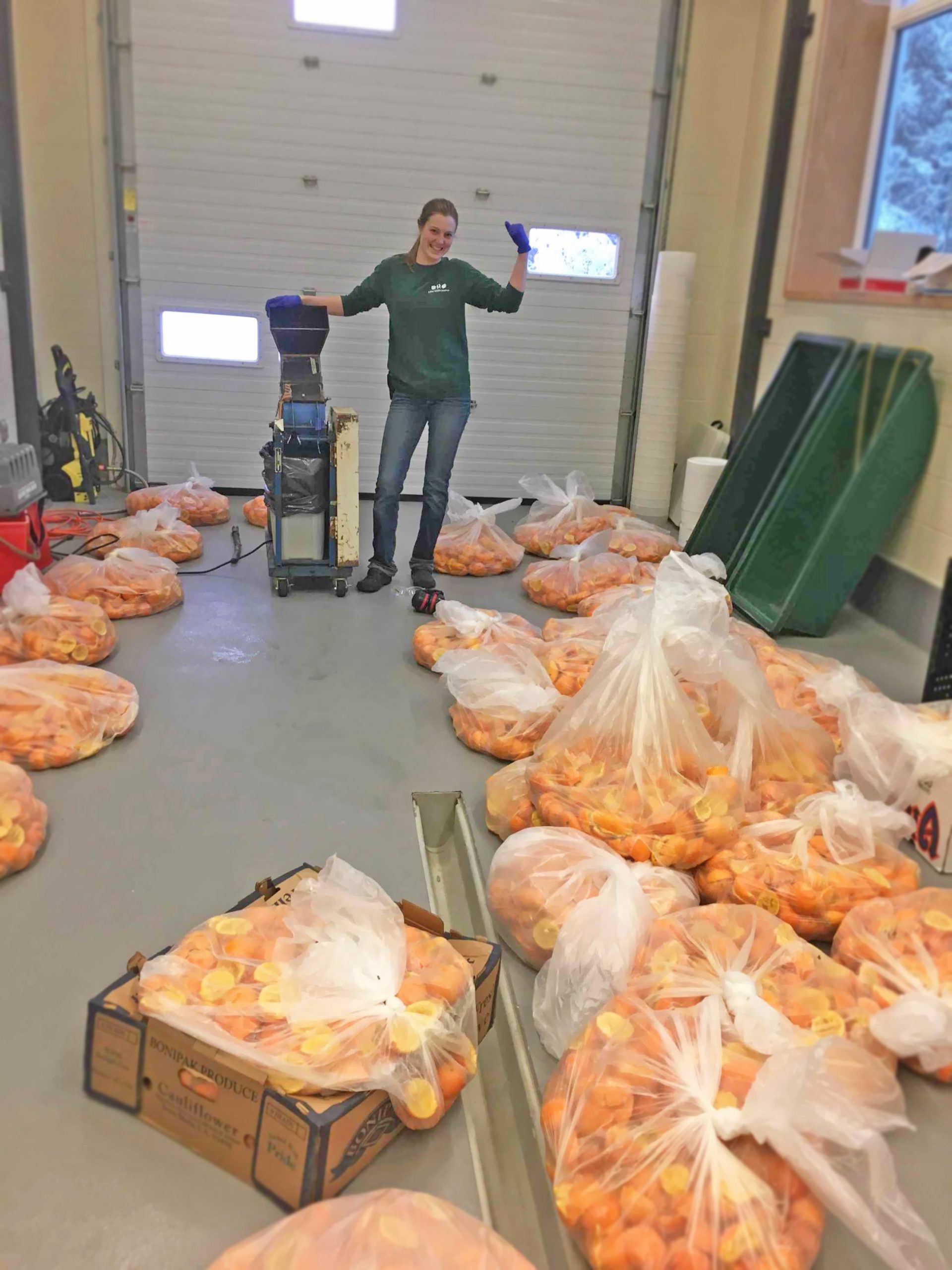
Next step is to prepare the feed for the collection animals. The caribou females eat a beet pulp mixture that you just add water to and it expands twice or three times the original amount. It almost looks like that elephant toothpaste science experiment but in slow motion! We also mix that with donated fresh fruit pulp. We’re very lucky to receive support from so many local organizations including grocery stores. Fun fact, caribou don’t like citrus or ginger, they’ll eat around it and leave it behind (so we sort that out and give it to the moose).

Oranges donated from Wykes Independent Grocer.

We then prepare the carnivore food. The arctic fox, red foxes and lynx all get a healthy amount of red meat and white meat. Once the food is prepared, which means to cut it up, weigh and portion it out per species it's placed in the fridge for later.

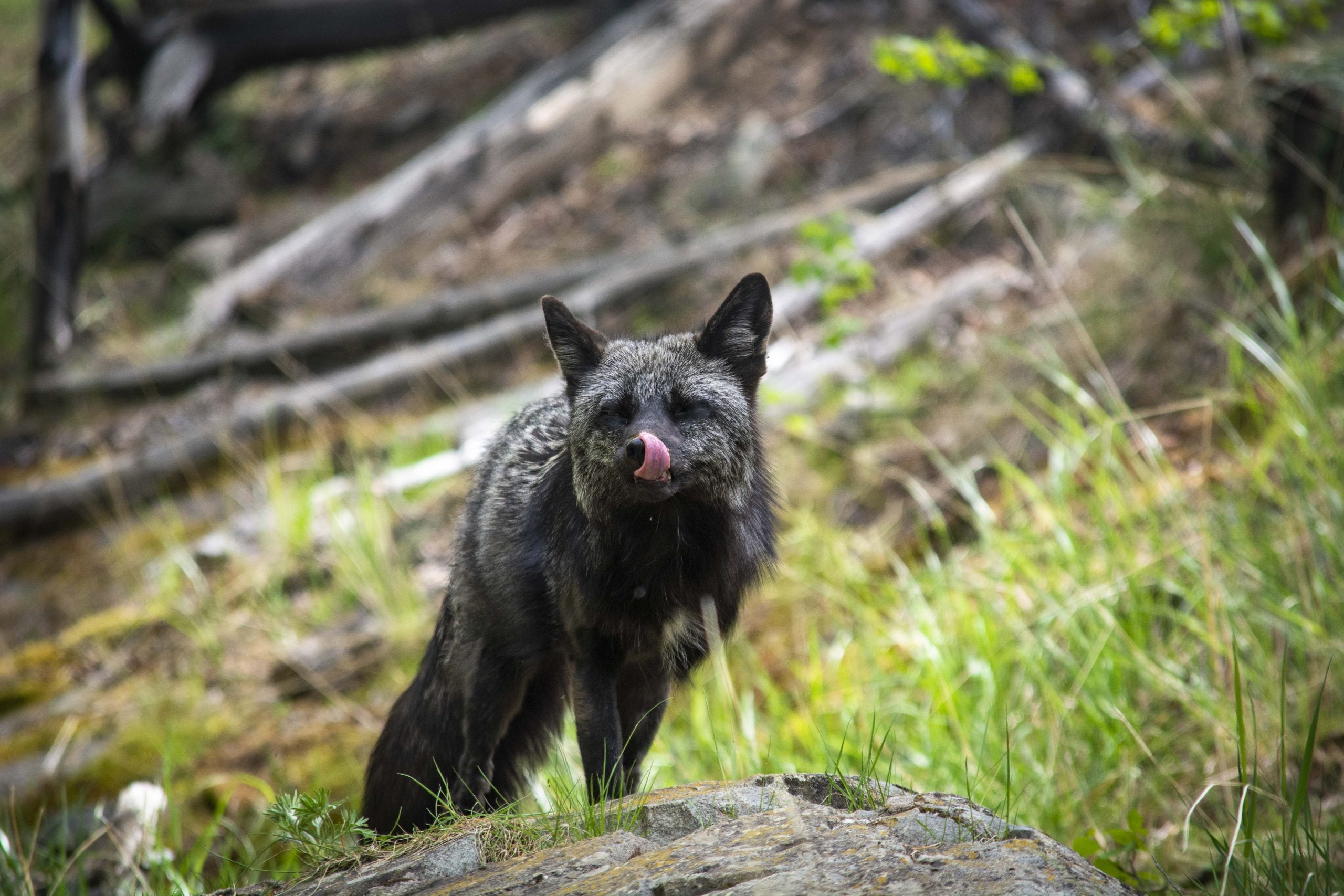
The silver fox enjoys lunch and is lip licking satisfied thanks to Animal Care staff food prep. Photo credit: L.Caskenette

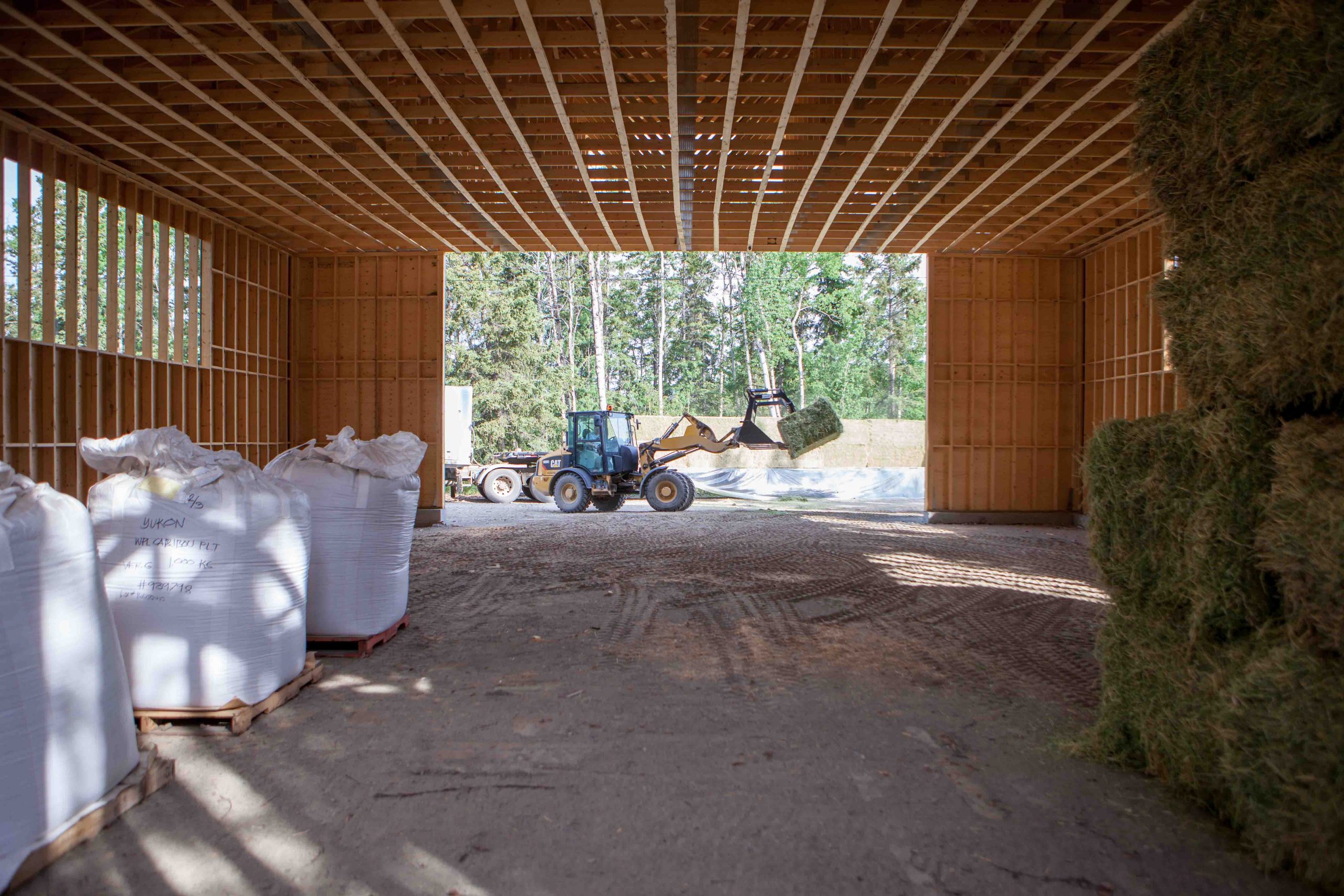
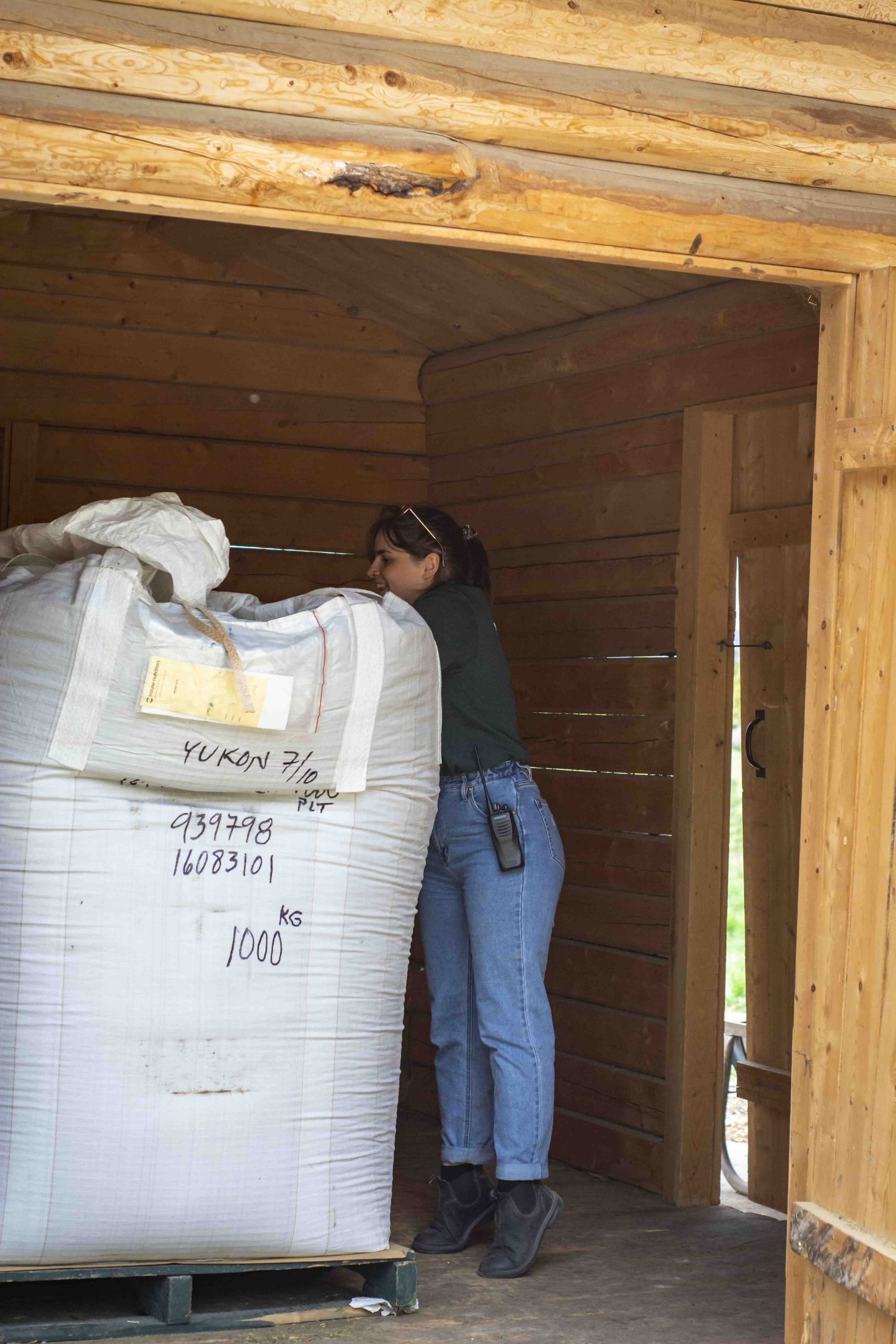
We then head to the hay barn to get pellets for the muskox and bison. These two species don’t have a feed station attached to their habitats like the other ungulates, they are a bit too rough on their surroundings, so that means pellets are not stored at the habitat in the protective feed stations. 

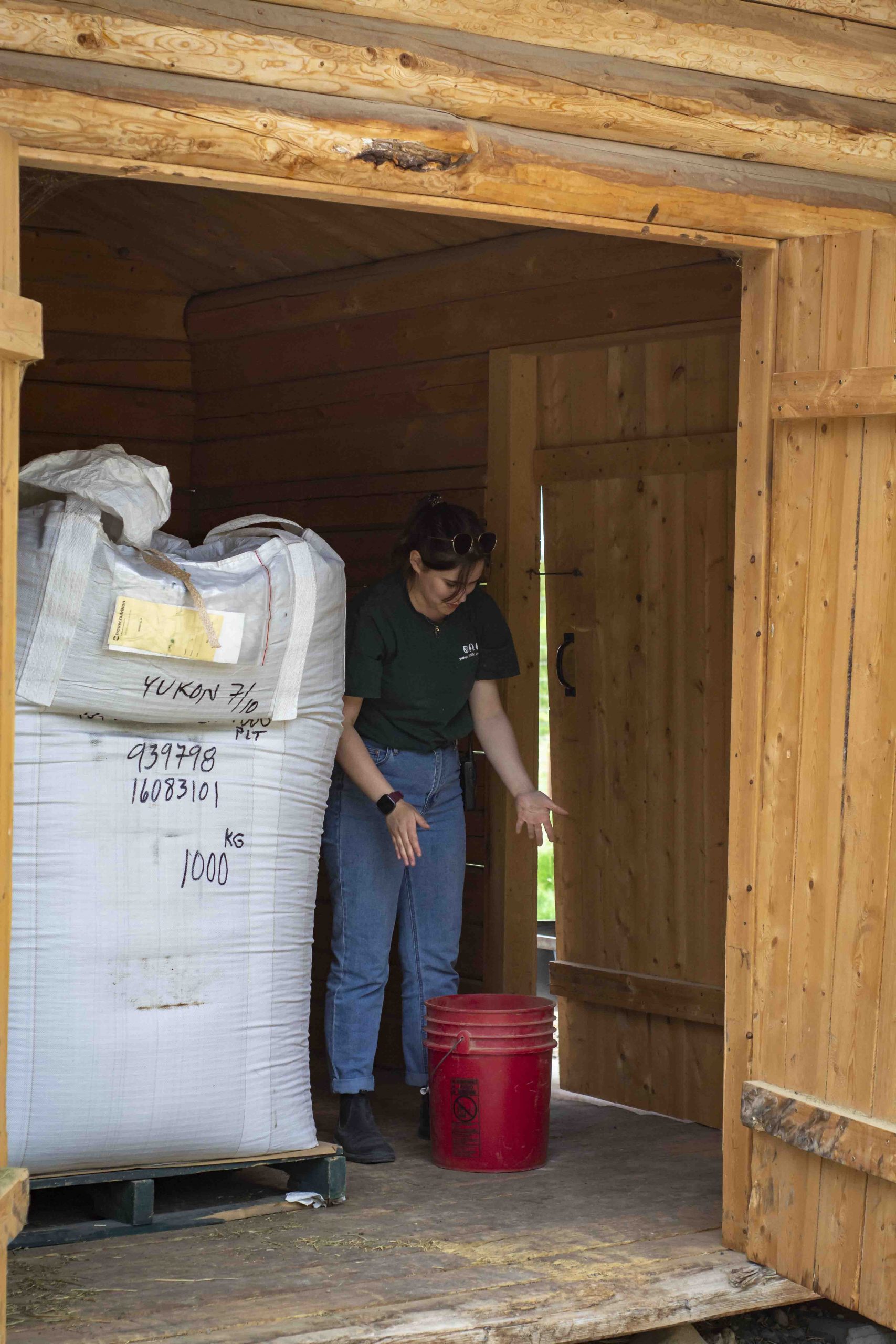
Getting pellets is no small feat, the first time I tried to fill a bucket it took me four tries to get a full bucket! For reference I am 5’0, and the bags are as tall as I am when they are full. Once we have our pellets ready, we load up the animal care truck and begin our tour around the preserve.

Front Loop

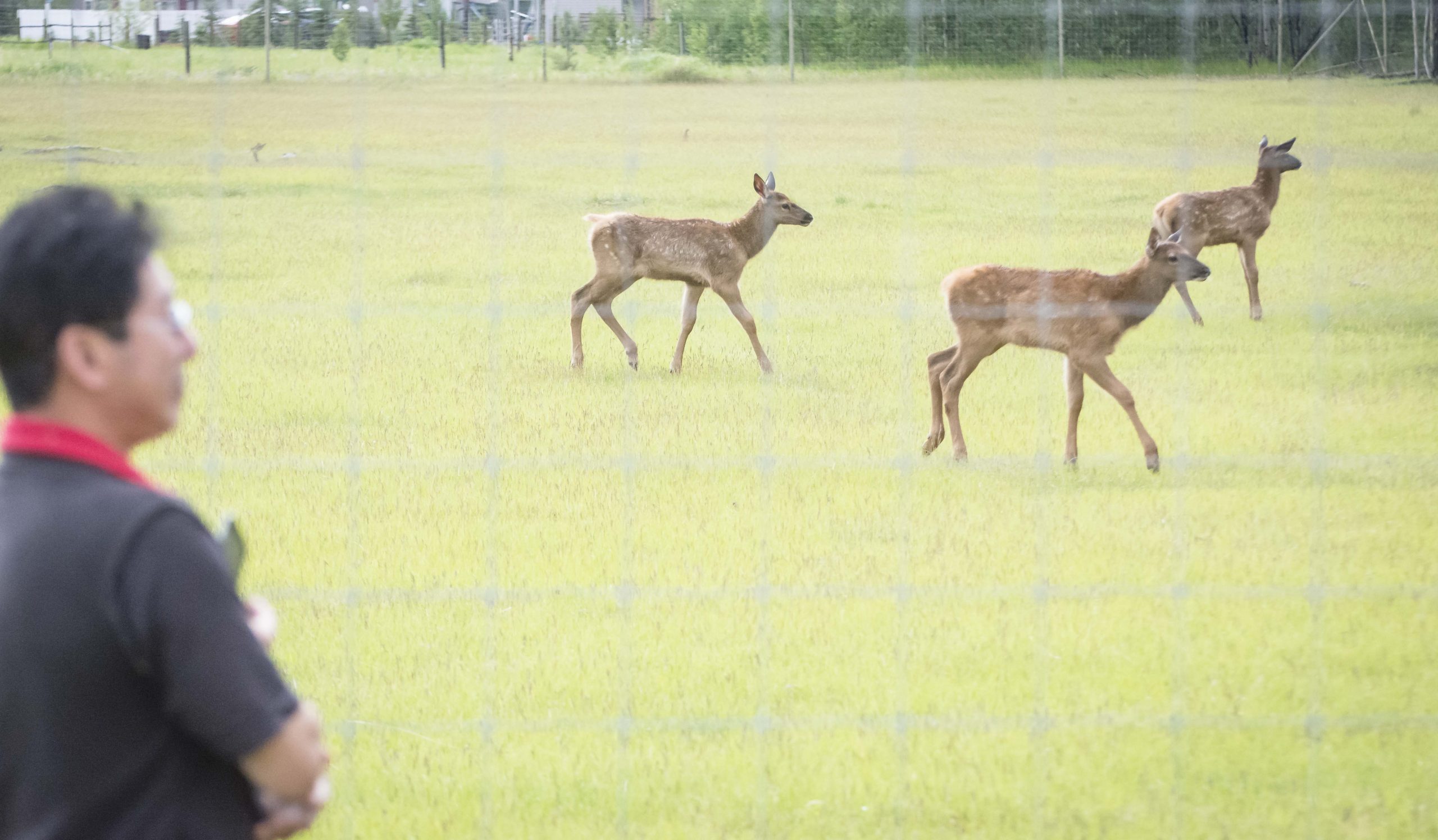
In this portion of the front loop or sometimes called the lower loop we will encounter the elk, bison, mule deer and moose in that order as we start counterclockwise on the loop. We begin first by making sure all the elk are present, look alert and healthy and then check their hay and water levels.

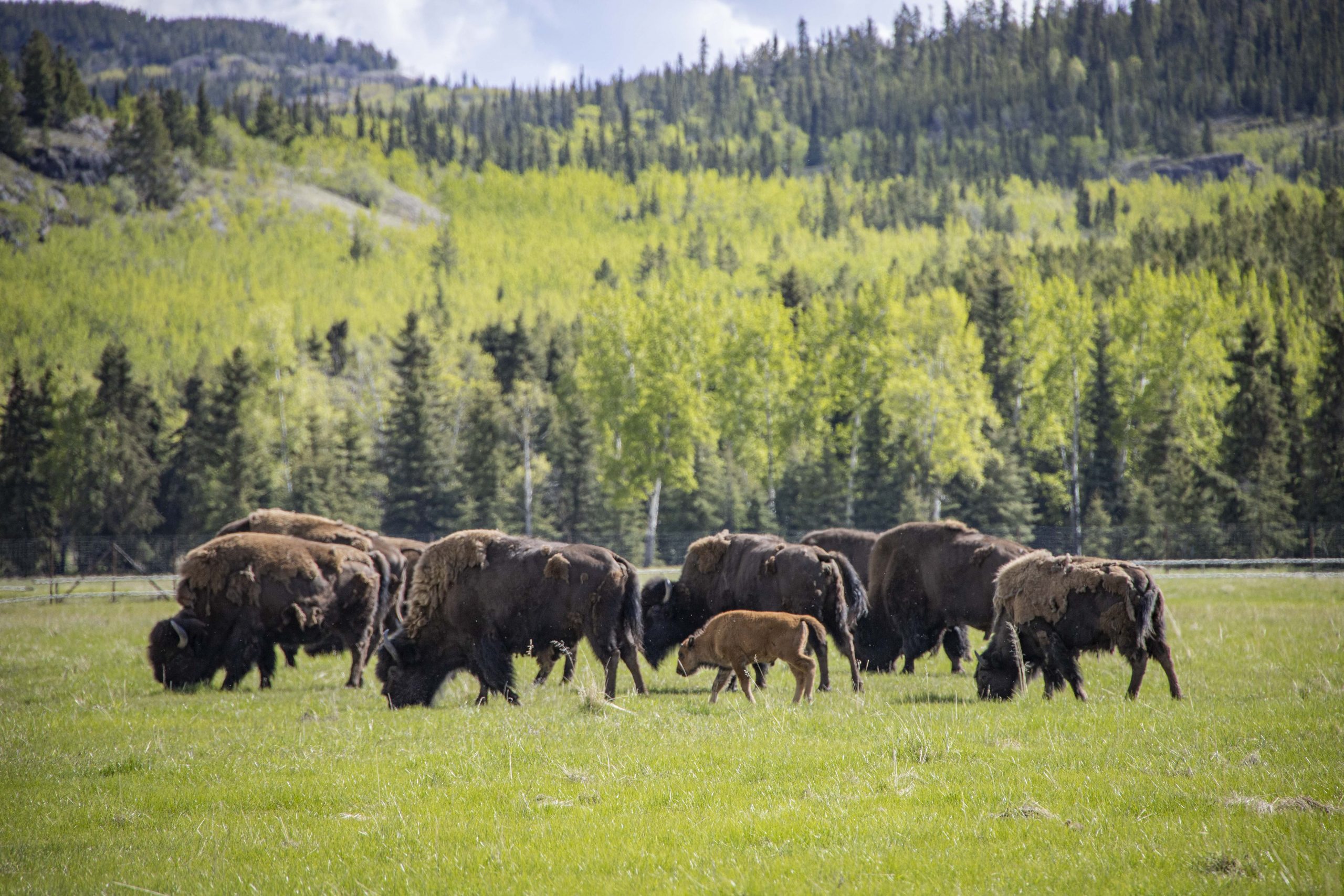
Then we stop at the bison who are usually laying or standing around as a group. These animals get their pellets poured in two straight, long lines on the ground so there is plenty of room to share between these big, big eaters. We hang around the habitat to count the animals and check them for any changes in behaviour. This is an important opportunity to make observations in any changes of health that can be reported to Dr. Maria Hallock, our full-time veterinarian. If anything is astray Dr. Hallock will investigate further but most days I get to see and learn the amazing behaviours of these animals.

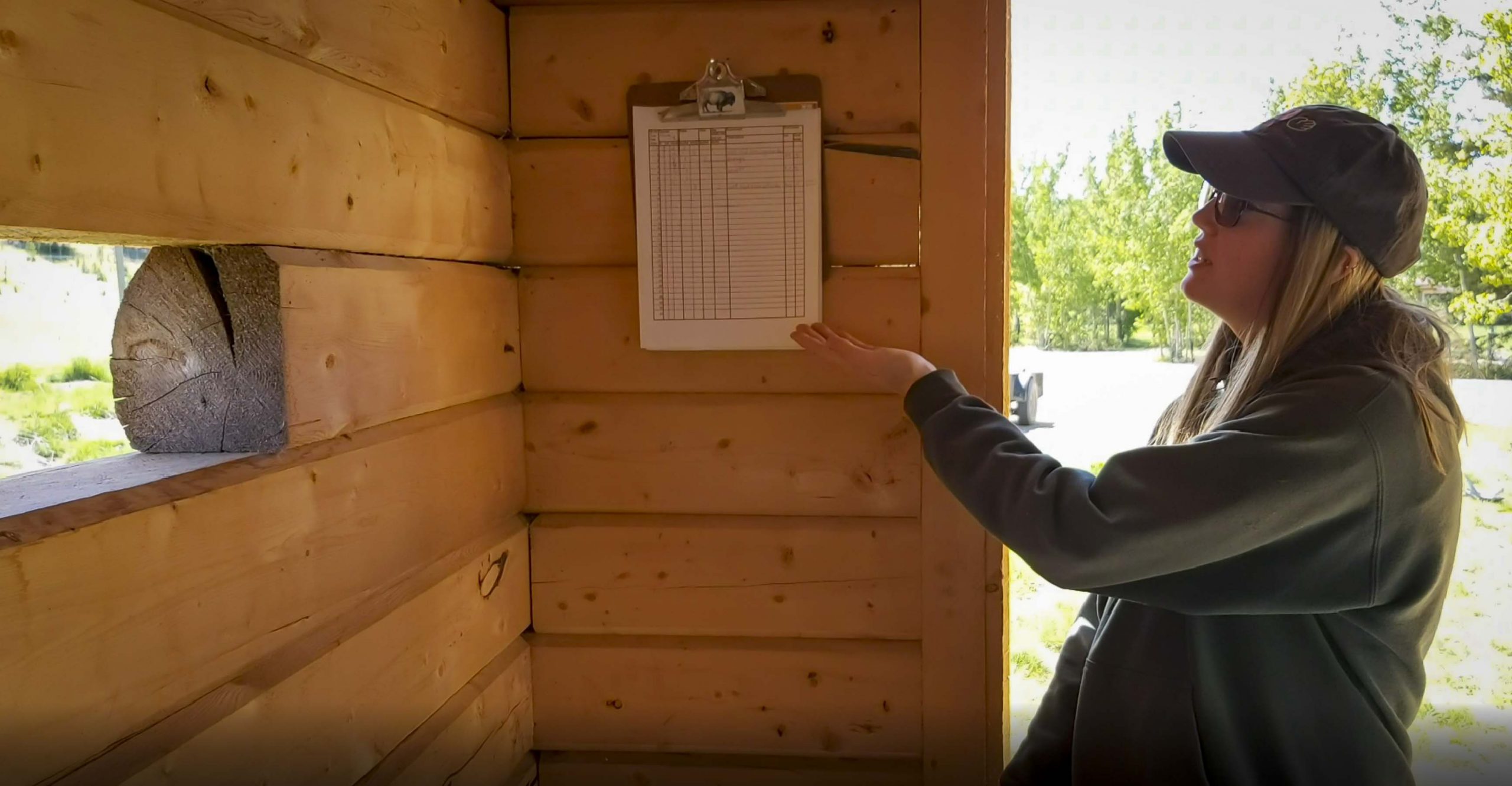
After that, we head over to the mule deer where we first check their water and then head into the feeding station where we find their stored feed, tools, and the animal information sheet. Each animal information sheet is specific to the species, we count how many animals we see and how much they are fed. We also take the time to write down any observations of the animals whether it’s a mule deer with diarrhea or a moose acting out of character all observations are recorded and forwarded to Maria.

We use a scoop instead of a bucket to pour feed into their troughs (thank goodness). In the same shed we also feed our moose and again we scoop their feed into their troughs although they have a much bigger scoop so it's important to keep everything separate.

Back Loop

In the back loop we will find our thinhorn sheep, caribou and mountain goats. We move to our thinhorn sheep where we wear booties and gloves to protect them from outside pathogens. This species tends to be more susceptible to bacteria's so the Preserve biosecurity is heightened here when entering their habitat.

Left photo shows a thinhorn sheep sedated for a check up and hoof trimming. Right shows Outdoor Operations staff working on fencing within the ewe habitat. Both photos show staff wearing booties and gloves to help protect the animals against pathogens. Photo credit: J.Paleczny

This species has both pellets and hay in their feeding station. Learning to use a pitchfork has been a learning curve! Who knew something with so much space between each prong could carry so much?

We clean and remove excess hay and feces from the feeding stations which we compost. We head on over to the caribou (who were hoping will have babies this year) and whose food we mixed earlier.

Caribou cow and calf from summer 2019. Photo credit: J.Paleczny

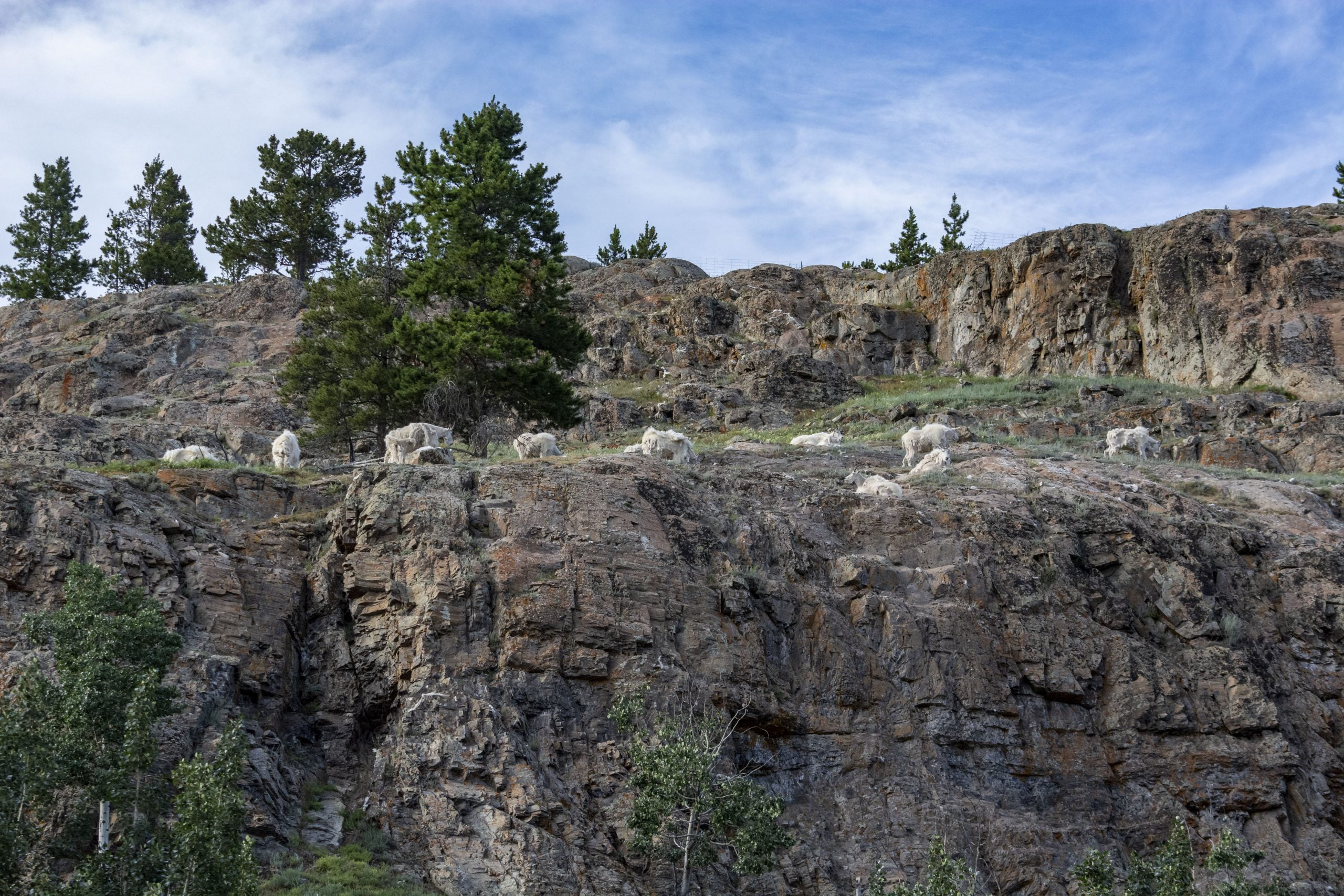
We go into their habitat and create piles of the beet pulp. We then head to the mountain goats who are usually high up in the cliffs making counting them a tricky task! This species gets hay and pellets and a clean up just like the sheep do.

Mountain goats hang out on the cliff - it's safety and sometimes sun bathing! Photo credit: L.Caskenette

Although beware of Geronimo whose patience for humans is very thin! Every animal has a personality and some are more memorable than others. The first time I met him I thought he was ill only to find out he was just in a bad mood (he always is - he's a goat). To be fair when I say bad mood, he’s really just displaying signs of normal defensive behaviour that has been somewhat elevated due to his story as a kid.

Carnivore Corner

The back loop can be further divided into the Carnivore Corner where we will find the lynx, arctic foxes, and red foxes. The carnivore corner is where the most fun feedings occur! Sometimes we do themed enrichment feedings - check out our Halloween one!

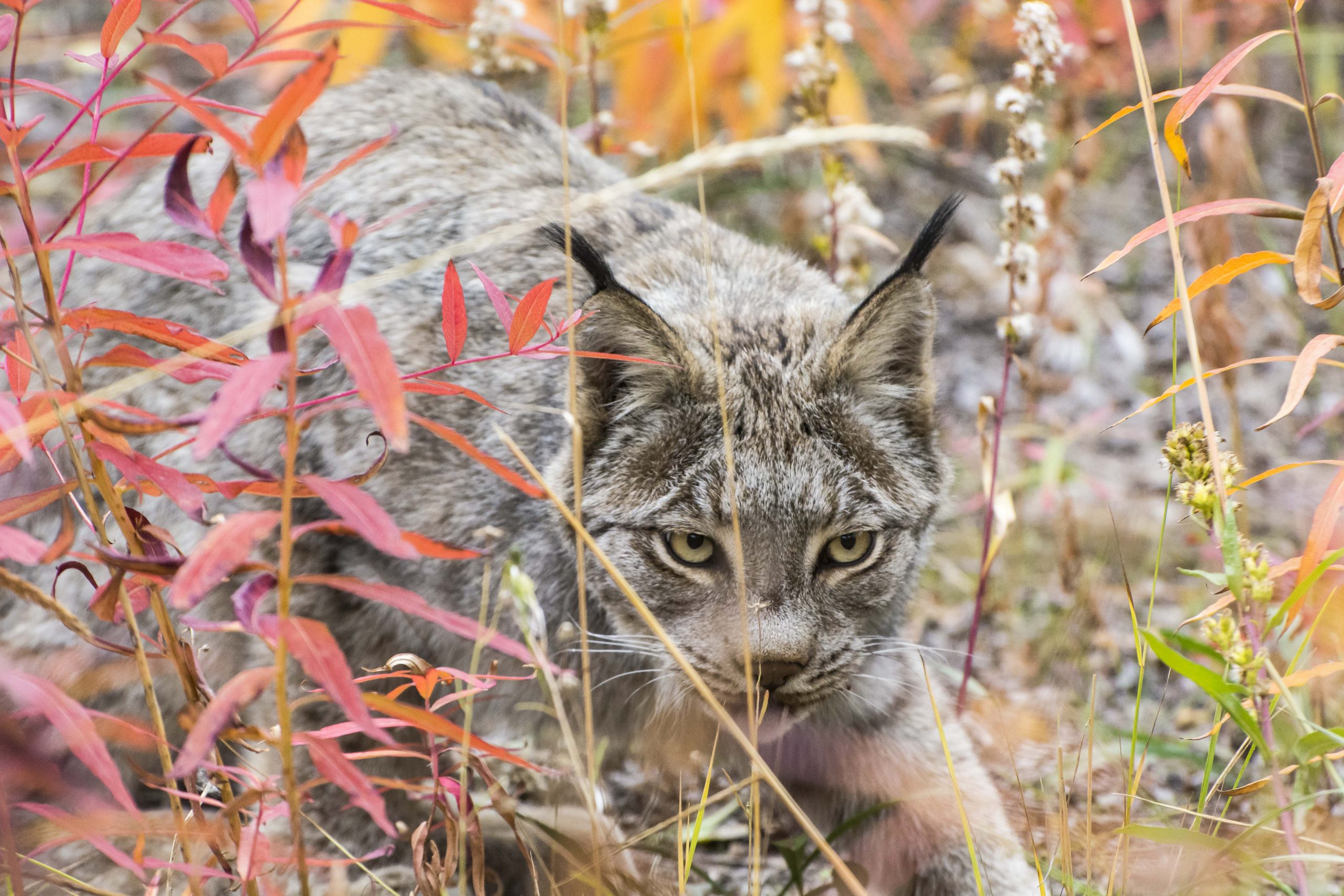
We stop at the lynx who are usually waiting by the fence for food, I swear they hear the truck and spot the green jackets and come running! The females are most expectant and the odd time the male will be waiting too but he’s a little more reserved.

Lynx come in for feeding, intent but smooth movement towards the food. Photo credit: L.Caskenette

We head over to the arctic foxes who look super cute but throw in a piece of red meat into the mix and their carnivore side comes out. You can watch the arctic foxes feeding here! 

Very cute, but also very ready for food! Photo credit: L.Caskenette

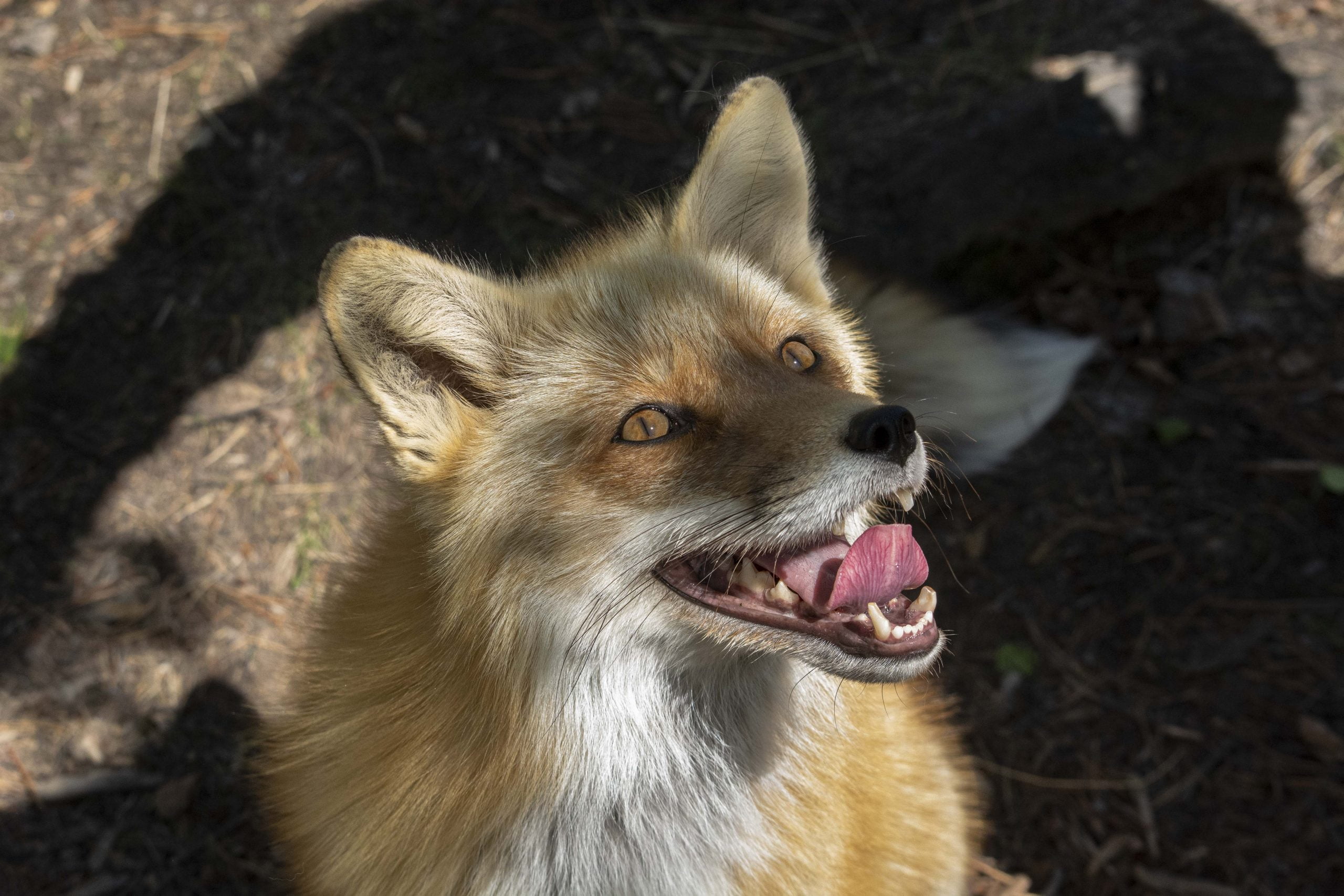
Next, we head over to the red foxes who are the funniest to feed! ‘Definitely’ the red fox makes the cutest yipping noises when he sees you pull up! What does a fox say you might ask? It sounds something similar to a yip and laugh mixed together. He will race around to get food before the silver fox does, I swear that silver fox has more patience than I’ve ever seen.

The red fox is always ready for food and will eat as much as he possibly can. What he can't, he will grab and go stash it. Don't worry, the silver fox gets his share - he goes and finds the red foxes stash in his own time. Photo credit: L.Caskenette

Front Loop - Round 2

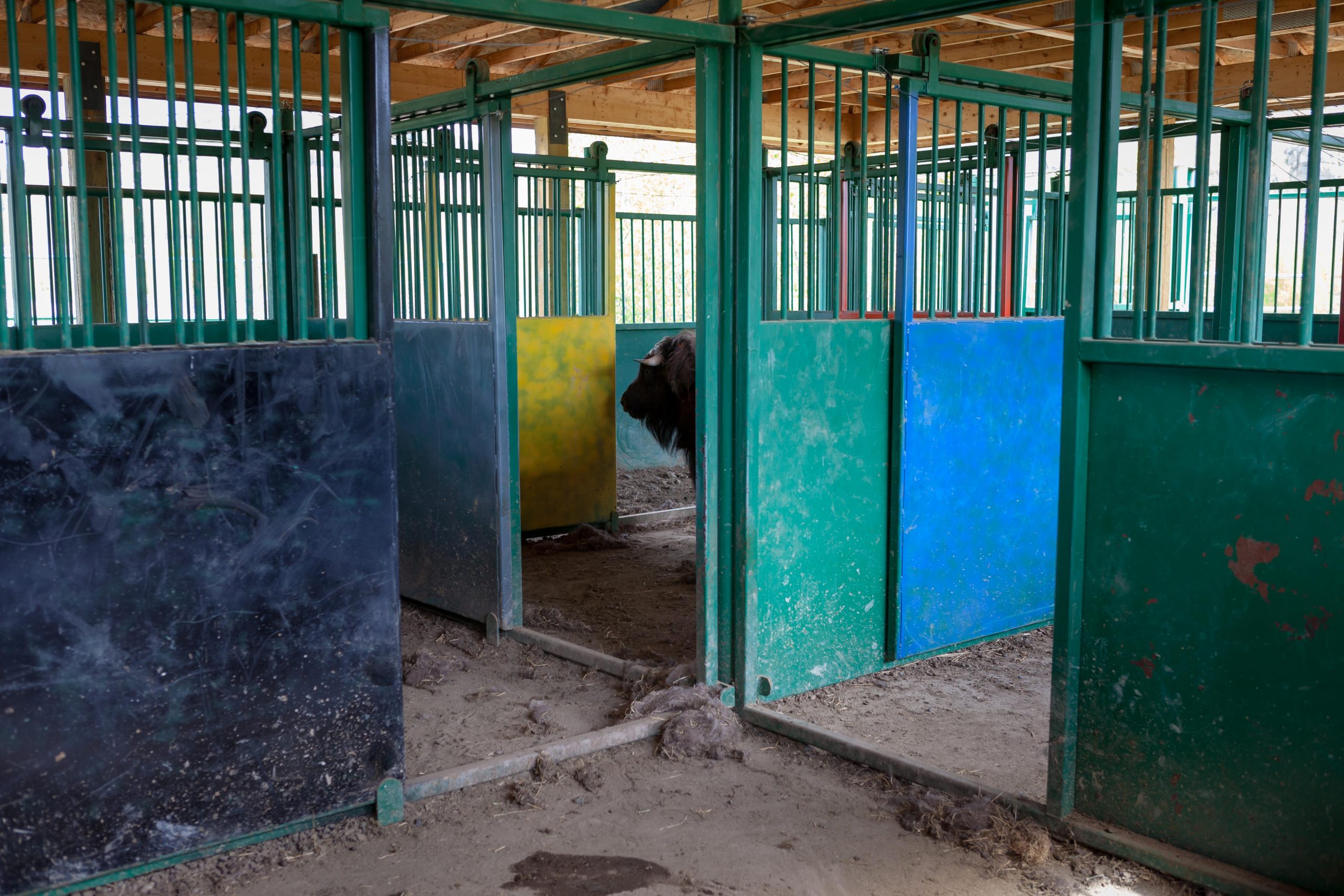
 In the second half of the lower loop we feed the muskox and check in on the elk and bison habitats as we head back to the animal care building. We then head to my favourite animal, the muskox, which is the best part of my day in animal care. These guys have a special metal structure for handling and feeding that limits contact, increases safety for staff and provides shelter for the muskox and muskox supplemental feed.

Muskox do not have feed stations. Instead, they have a metal handling and feeding structure to ensure the safety of both staff and muskox along with the longetivey of the building! Photo credit: J.Paleczny

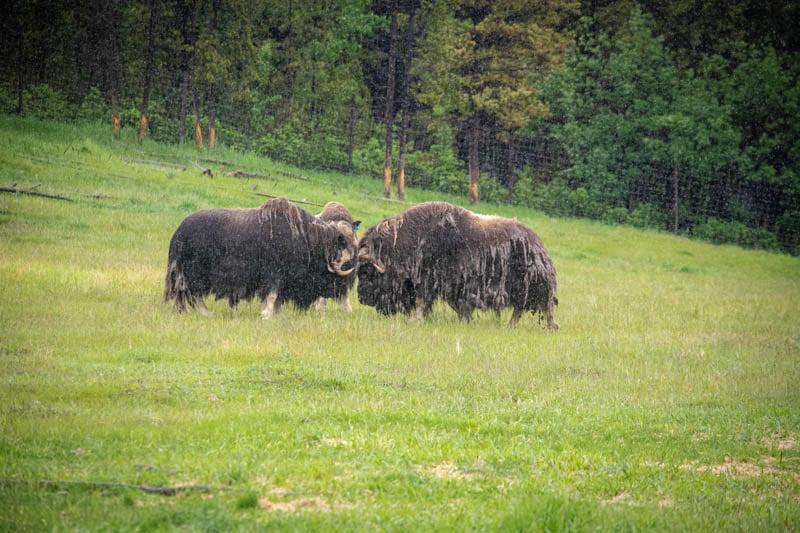
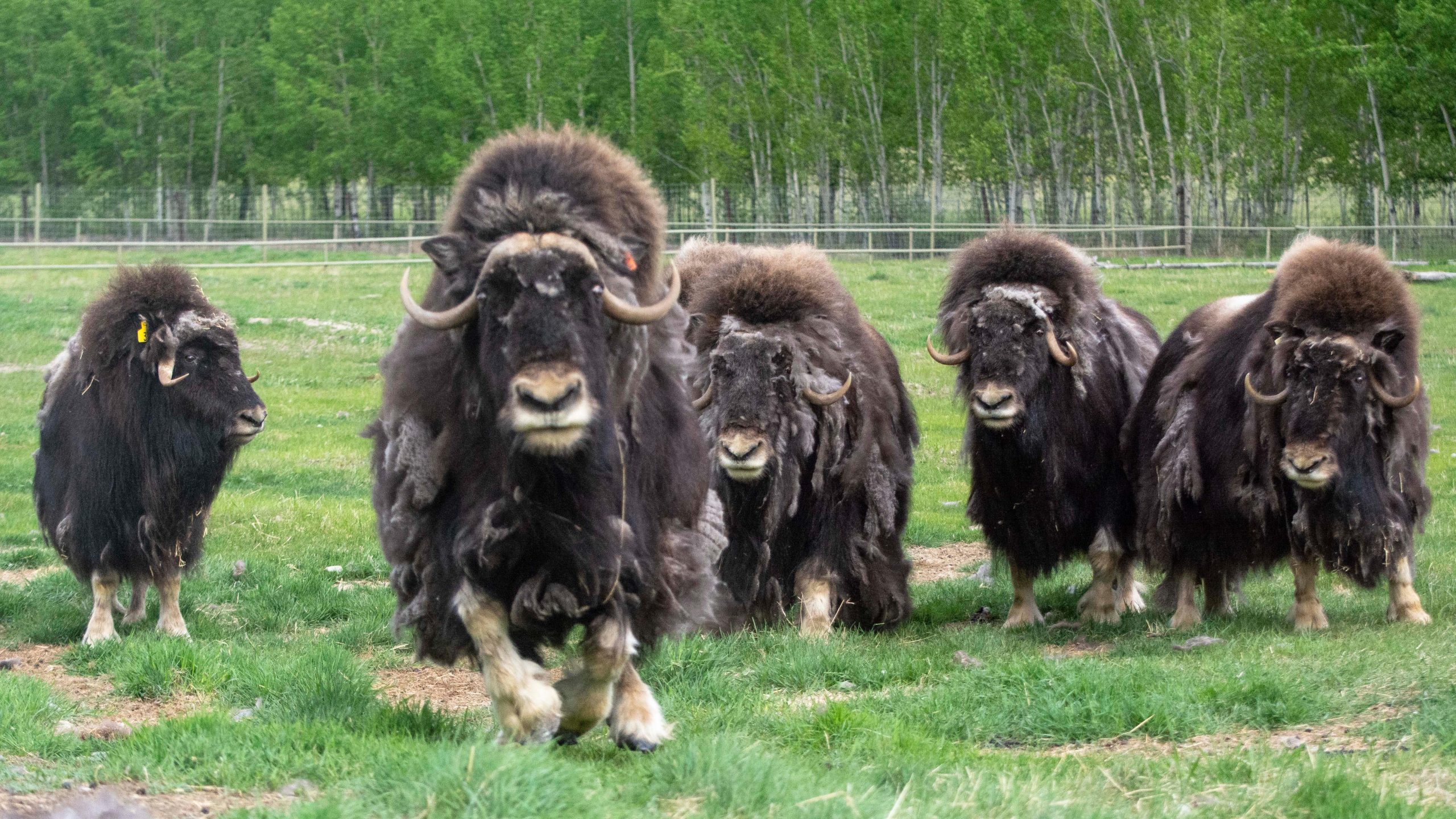
 Muskox are incredibly fierce with a social order that is largely based on an aggressive hierarchy but they are also protective of their herd. There's nothing more intimidating than a territorial, protective and potential in rut (mating season) muskox so it's best to keep your distance.

If the bison or the elk were too far away on my first look I will spend this time counting and watch for behavioral changes on this part of the loop. 

All while this is happening, we have to be wary of our time for feeding our rehab animals on tight schedules. There is also time during the day to do some other tasks like creating habitats for our rehabilitation animals or doing some spring cleaning in some of the collection animals’ habitats. By the time this is all done my arm and back muscles are jelly and I am ready to hand off the torch to the next animal care assistant. 

To conclude my time here at Yukon Wildlife Preserve is an experience I will never forget from feeding my favourite animal (the muskox) to finding a new passion in helping care for animals. While I came for a summer, for work, the Yukon and it's incredible fauna hold a strong place in my heart, summer 2022 can’t come soon enough!  In the meantime and year-round you can go behind the scenes and witness the extreme care and diligent work that is required by Animal Care staff to care for all the animals at the Preserve through a variety of experience and tour options - check it out! 

Abbey Mondor

Abbey Mondor

Wildlife Interpreter & Animal Care Assistant

Abbey joined the preserve the summer of 2021 to continue a lifelong dream of experiencing all three of Canada’s territories. With Nunavut already crossed off, the yukon was the next on her list! Abbey is currently studying biology at the University of Winnipeg making this experience a perfect place for her to put her education to practice! Abbey works both in visitor services and animal care where her desire to care for wildlife has grown. Her favourite part about working on the preserve is learning about all the personalities of the animals here.

Explore by Category

Explore by Author

Busy Times & Hungry Critters in Care

Busy Times & Hungry Critters in Care

wildlife preserve

by Lindsay Caskenette | Aug 3, 2021

This story was originally published July 10 2021 in the e-blast newsletter to Yukon Wildlife Preserve's membership.

Are you a member but don't receive these email Newsletters?  Contact us at info@yukonwildlife.ca to update your email preferences.

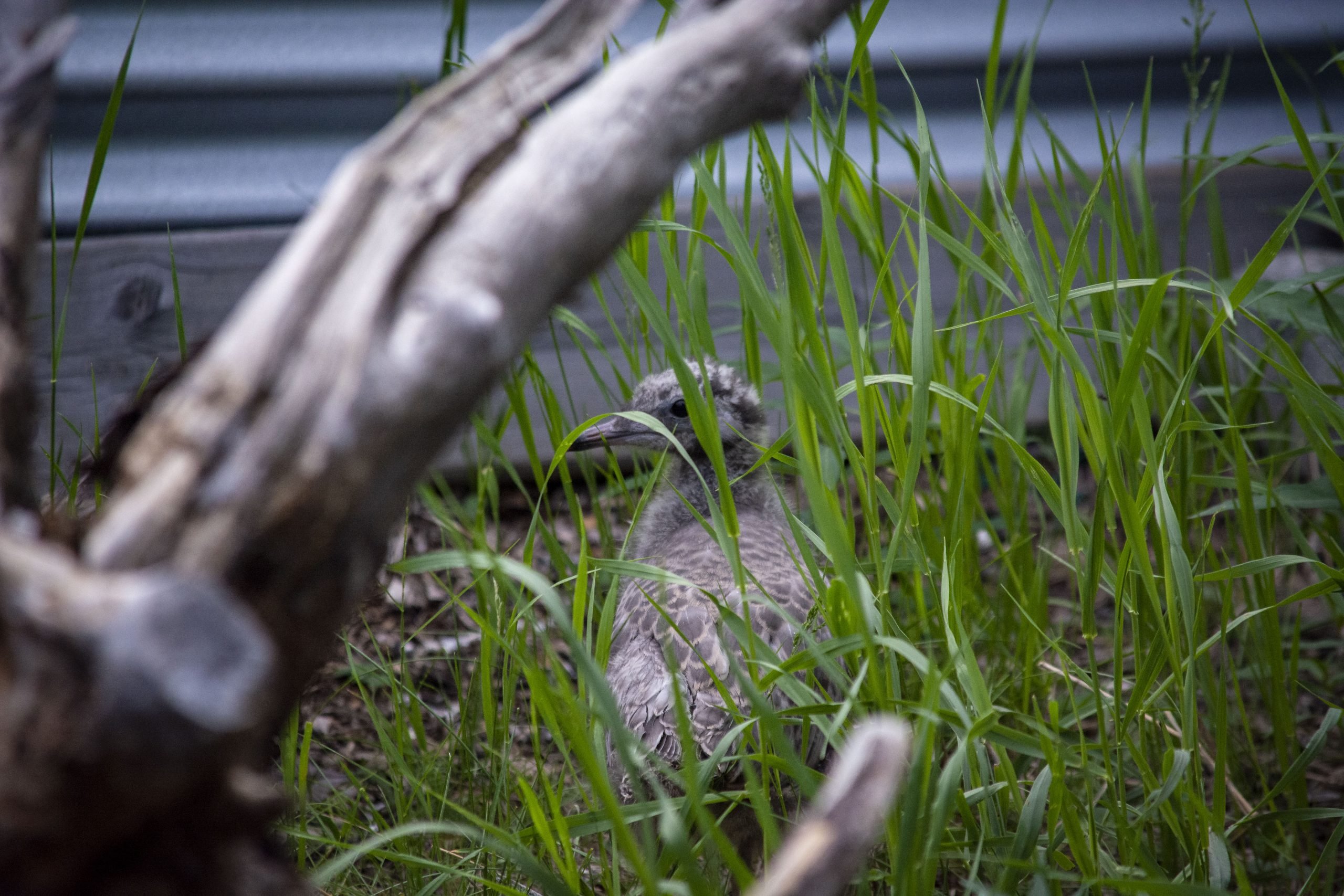
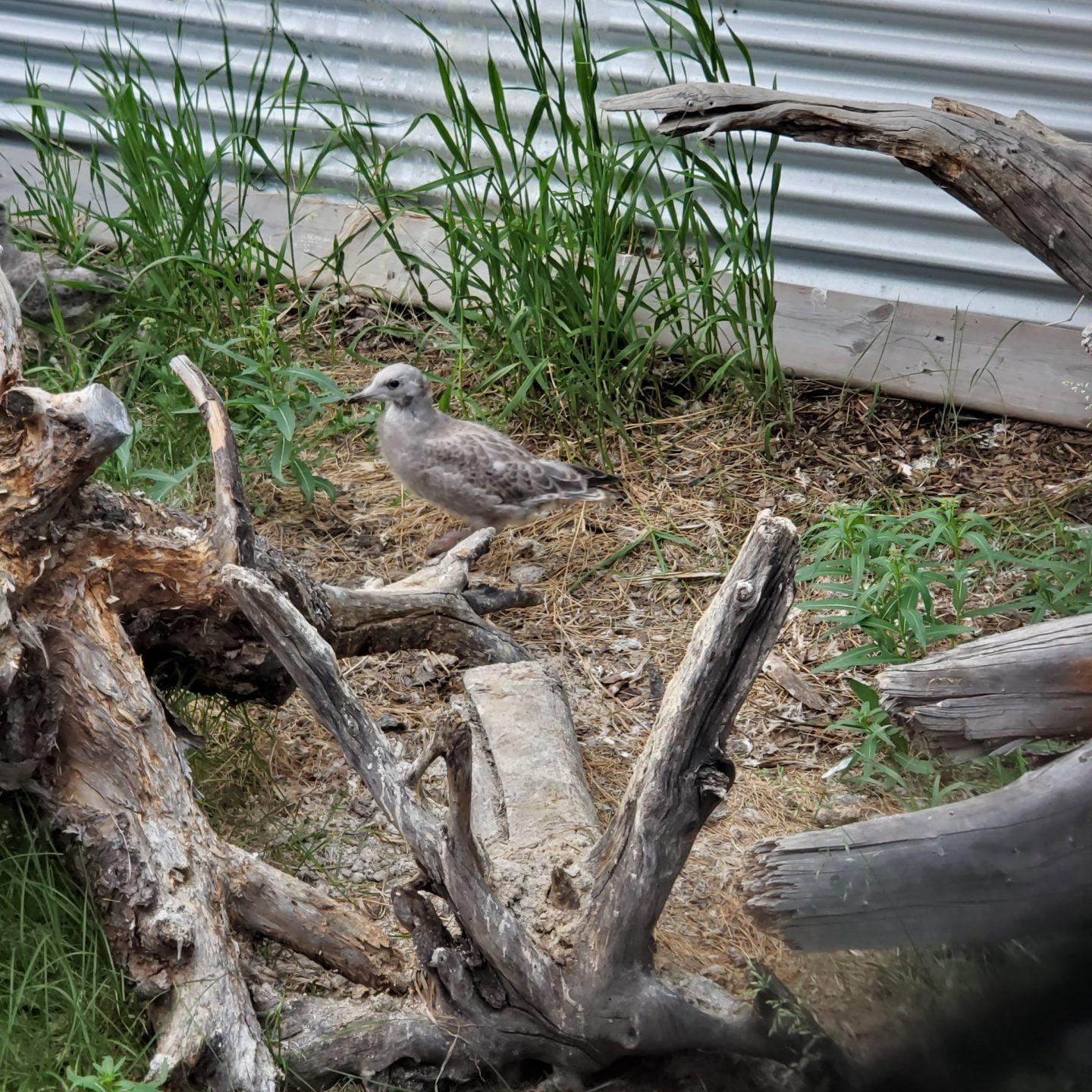
Mew Gull x2

Location found - Downtown.

Admitted on June 15th after the nest was lost. Conservation Officers brought the animals to the Preserve.

This pair are in an outdoor aviary where they are growing fast and eat mice 3 times a day.

• • •

Juvenile Mew Gull with Wing Injury

Also found downtown but admitted more recently on July 7th. This individual has fractures to its right wing and a large hematoma but depsite its injuries is in good body and remains active and alert. 

The animal is on low dose medication for pain and inflammation and the wing is immobilized. It remains under observation before it will move in with the other gulls outside. 

• • •

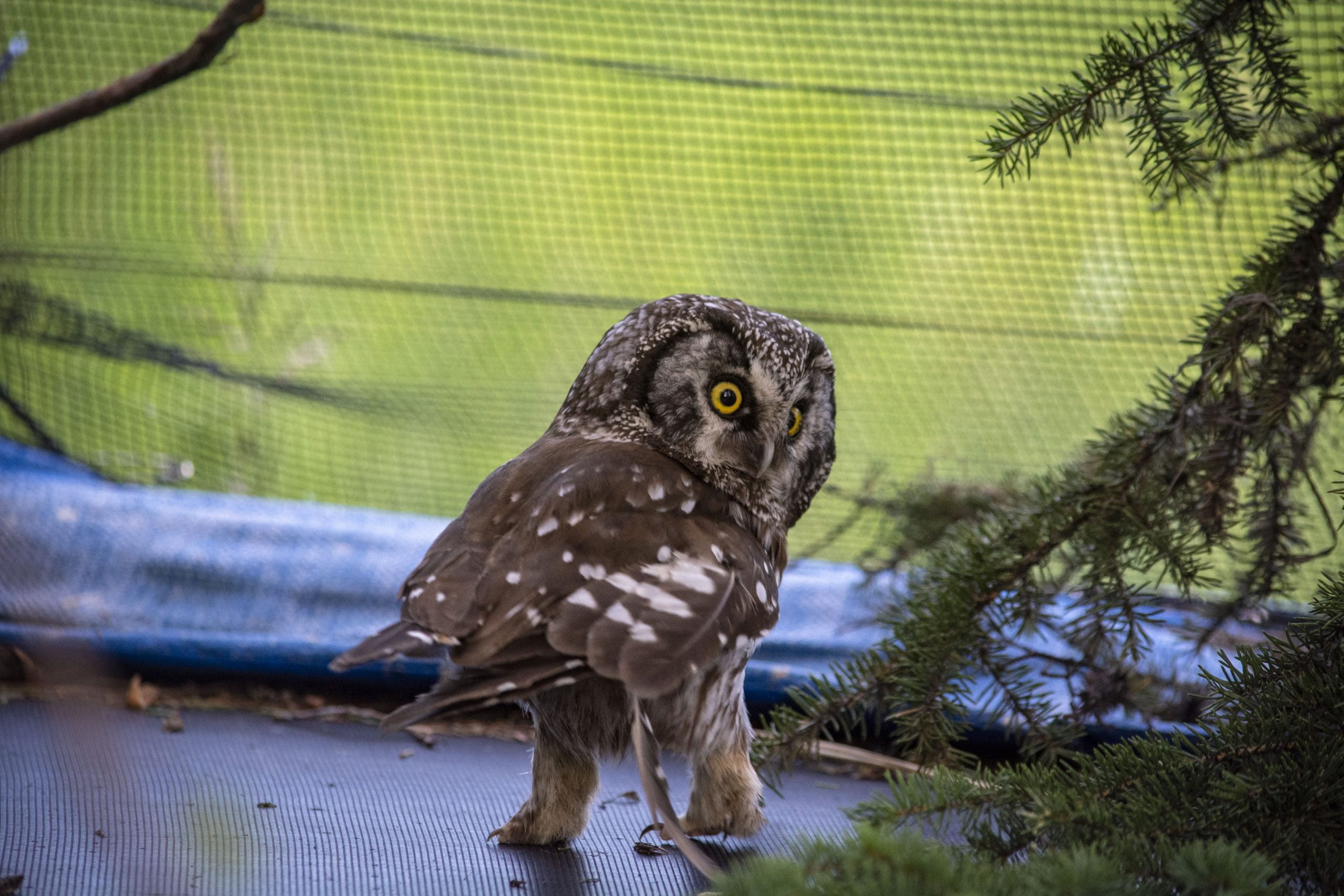
Boreal Owl

Admitted June 28th, this tiniest of Yukon owls was rescued from an attack by a domestic dog. While the animal came in with mild ataxia (lack of coordination) it's doing relatively well. It's missing primary and secondary feathers on both wings but with time and regular mice feedings twice a day the owl should be a good candidate for release when ready.

• • •

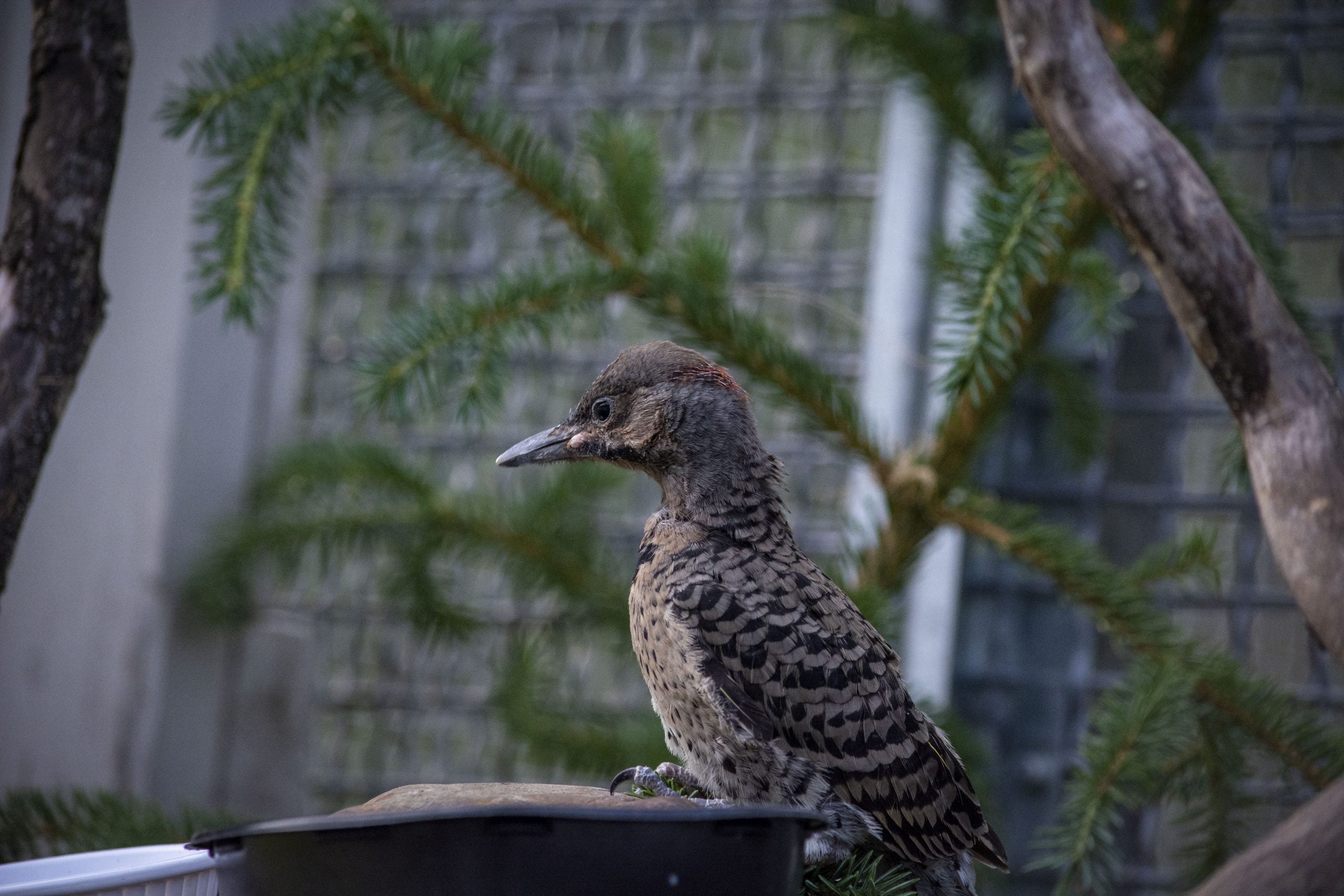
Juvenile Northern Flicker

Location found - Takhini Hot Springs Rd area. 

Admitted on June 27th after the young animal fell out of its nest and was at risk of predation. 

Plan for recovery and release with time and lots of mealworm feedings throughout the day and small mice.

• • •

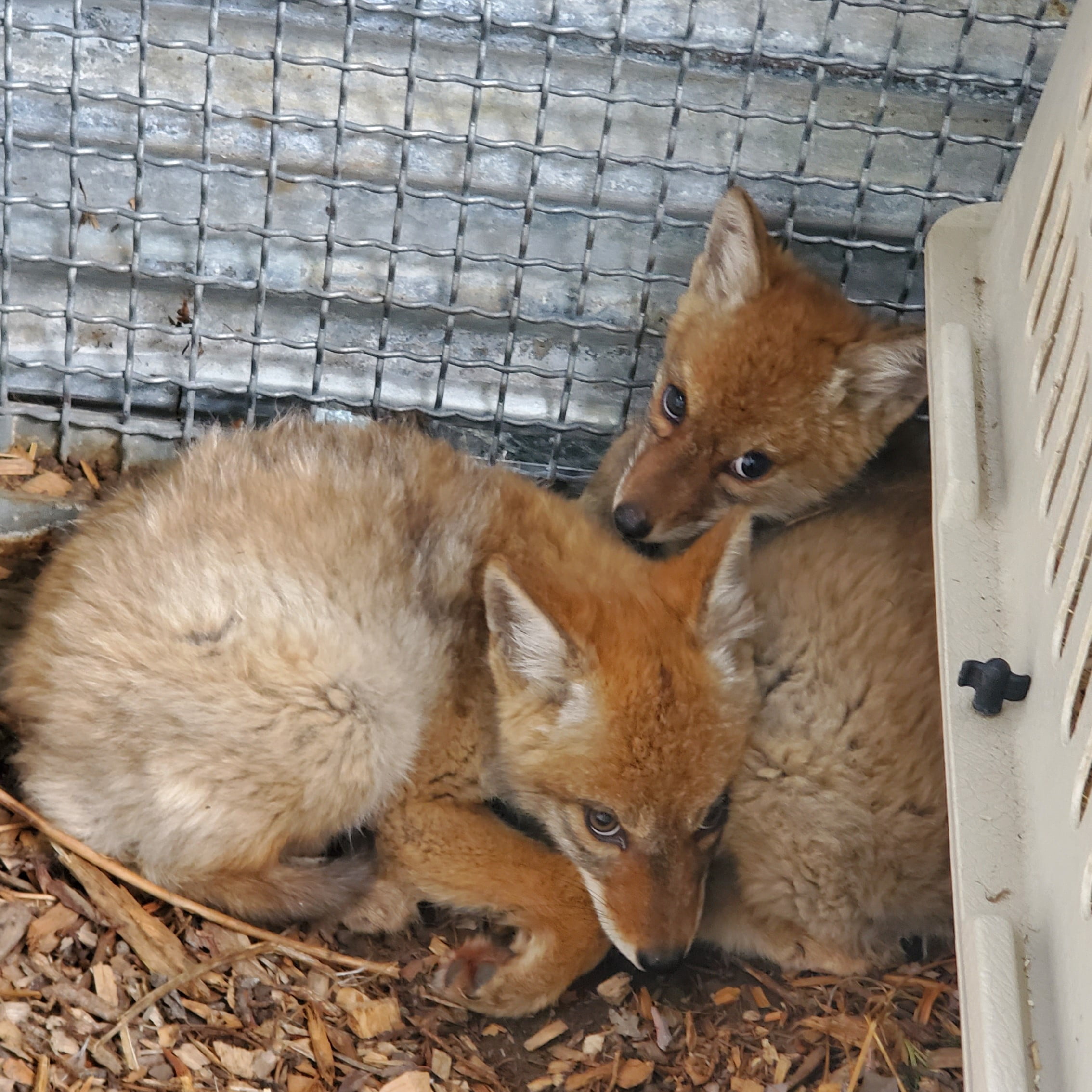
Coyote Pups

2 male coyote pups, about 6 - 8 weeks old, were admitted to the Rehabilitation Centre on July 5th after they were found, suspected to be orphaned, in the Marsh Lake area by members of the public. 

The pups eat 3 times a day and their appetites are growing. Along with a puppy formula, every feeding they consume 4 mice and 2 whole quail each. 

• • •

Each of these animals face challenging times ahead but the Wildlife Preserve Animal Care Team, including Veterinarian, Dr. Maria Hallock, are working 7 days a week, near 20 hours a day to ensure each of these animals are given the best possible chance for recovery and release back into the wild. 

We could use your support to aid in these animal's recovery - please consider donating. Help us keep Yukon wild at heart ♥

• • •

Lindsay Caskenette

Lindsay Caskenette

Manager Visitor Services

Lindsay joined the Wildlife Preserve team March 2014. Originally from Ontario, she came to the Yukon in search of new adventures and new career challenges. Lindsay holds a degree in Environmental Studies with honours from Wilfrid Laurier University and brings with her a strong passion for sharing what nature, animals, and the environment can teach us.

867-456-7400
Lindsay@yukonwildlife.ca

Explore by Category

Explore by Author